Tag: YouTube

  • Blue chip stock plummets after YouTube ‘incident’

    Blue chip stock plummets after YouTube ‘incident’

    YEG shares of Vietnam’s Yeah1 Group lost over $22 million in Monday’s trading session following a YouTube incident. The incident arose after YouTube claimed SPRINGme Pte. Ltd, a Thailand-based company, indirectly owned by Yeah1 (16.93 percent), had violated its policies with some of its channel management activities, according to YouTube.

    While a series of stocks surged in Monday’s trading session, YEG was one of the few that lost out the most, down seven percent by the end of the session.

    This was equivalent to a drop of VND17,100 ($0.74) per share, down to VND227,900 ($9.82), bringing YEG’s market capitalization down by VND520 billion ($22.42 million).

    YEG shares plummeted in response to YouTube announcing it was terminating all Content Hosting Services Agreements (CHSA) after March 31 with all YEG’s subsidiaries or investment companies with business activities related to YouTube Adsense, the program that allows publishers on the video channel to serve advertisements by third parties, which in turn generate revenue for the content provider.

    The termination would apply to several of YEG’s multi-channel network (MCN) companies it has control over, such as Thailand-based SPRINGme, US-based ScaleLab, and organic Yeah1 Network Pte Ltd.

    The Yeah1 Group management has said it is seeking further clarification with YouTube regarding this action, and actively working with the video hosting website to prolong the CHSA’s after March 31.

    In 2018 alone, YEG’s YouTube AdSense business contributed about $1 million to its revenue, equivalent to 13 percent of the group’s after-tax profit. However, the digital conglomerate has also diversified and pledged to generate revenue through different channels to ensure its overall development.

    At the end of 2018, Yeah1 reported VND1.66 trillion ($71.58 million) in revenue, up 97 percent over the previous year; and VND180 billion ($7.76 million) in after tax profits, up 119 percent.

    Founded in 2006, Yeah1 is Vietnam’s largest multi-channel media ecosystem, operating TV channels, movie studios, Youtube networks, and digital news.

    It was also the first media company to go public, listing on the Ho Chi Minh Stock Exchange (HOSE) last June.

    YEG shares are currently the second most expensive stock on HOSE, behind SAB shares of Vietnam’s largest brewer Sabeco.

  • Naver to open up TV service, take on YouTube

    Naver to open up TV service, take on YouTube

    Local IT giant Naver announced plans Thursday to make its Naver TV service an open platform where anybody can freely upload videos, pitting it in direct competition with YouTube. The company said it would apply the change during this year’s first half. Originally, only people with more than 300 subscribers on other video platforms were permitted to create a channel on Naver TV.

    Unlike YouTube, considered the playground of individual creators, most traffic at Naver TV is to come from short videos from TV shows uploaded by broadcasting or cable channels, like TvN or JTBC. Lowering the bar is intended to draw in the legions of individual creators who have begun to emerge in Korea over the last two years.

    “Naver TV was originally focused on offering video from TV for users that flow in via our search engine,” said a company spokesperson.

    “We gradually had small- or mid-sized studios upload web dramas or famous beauty creators joining our platform and by that experience we learned the patterns of how original content is consumed. Now we want to make it accessible to more creators.”

    Last week, Naver lowered the bar to 100 subscribers and simplified the process required to set up a channel, as a first step to earn feedback and find areas that need improvement before fully opening the door to everyone.

    As a strategy to boost users, Naver is devising a compensation system to reward creators according to their performance. Channels with more than 300 subscribers and whose videos were played for more than 300 hours will be offered the choice to roll advertisements.

    Naver CEO Han Seong-sook publicly stressed the importance of online videos multiple times last year, expressing a will to develop that sector.

    “The internet market is rapidly restructuring to be centered on videos – Naver will also invest more in line with this change,” she said in a conference call in July, pointing out how the younger generation no longer spends time on portal sites or social networks, but on video platforms.

    Naver’s traditional strengths are not in video but other services, such as its search engine, blogs and online communities. Regardless, the company has invested in its video services. Apart from Naver TV, its other main video service is V LIVE – a platform via which K-pop idols can host live streamed videos with fans. Around 70 to 80 percent of users at V LIVE are based overseas.

    “Instead of running a single platform like YouTube, our direction at the moment is to divide platforms according to usage and optimize the service that fits their respective purposes – V LIVE for fans and Naver TV for general creators,” said the Naver spokesman.

  • Vietnam digital media giant acquires US network

    Vietnam digital media giant acquires US network

    Media giant Yeah1 Group has acquired ScaleLab, a U.S. Youtube multi-channel network, for $20 million. ScaleLab is expected to receive $12 million upfront and another $8 million later if business targets are achieved two years after the merger. ScaleLab executives have said the company agreed to the sale because it requires an infusion of funds to expand operations and desired to integrate with Yeah1’s media ecosystem.

    ScaleLab plans to expand into Asia, where Yeah1 connects Asian talents and influencers with the international market.

    Tri Dao Phuc, CEO of Yeah1, said the strategy over the next three years is to “acquire premium social media brands, optimize our existing channels to boost viewership and performance.”

    Headquartered in Hollywood, the U.S., ScaleLab is best known as the Youtube partner of Jake Paul, Jimmy Donaldson, Mariale Marrero, Erika Costell, Katie Angel, and many other YouTube stars.

    It has a roster of 1,750 influencers and 400 million subscribers, and gets three billion Youtube views a month.

    The five-year-old company was recognized as the fastest-growing media company in the U.S. by Inc. Magazine last September.

    This is not Yeah1’s first acquisition in the social media field. Last year it had bought two multi-channel network (MCN) companies, SPRINGme of Thailand and Something Big of France.

    Founded in 2006 it is Vietnam’s largest multi-channel media ecosystem, operating TV channels, movie studios, Youtube networks, and digital news.

    It was also the first media company to list when it got into the Ho Chi Minh Stock Exchange (HOSE) last June.

  • TikTok plans to expand in Vietnam

    TikTok plans to expand in Vietnam

    Short-form video hosting service TikTok is planning to step up its Vietnam operations, targeting a wider Vietnamese customer base. TikTok, a product of Bytedance, a Chinese software company headquartered in the U.S., offers a short video sharing application, 15 seconds per video for basic accounts. It’s initial content is primarily lip syncing, dancing, or recording with fancy stickers and other effects.

    The TikTok app has quickly attracted the attention of many young people, particularly at school age, but is yet to appeal to older adults.

    Diep Que Anh, national director of communications for TikTok Vietnam and other emerging markets, said that the application is trying to “age” its content to widen its user coverage.

    It has to do this before it can become an advertising platform that can satisfy the demands of its client brands, some experts and industry insiders have said.

    Not revealing specific numbers, Que Anh estimated that Vietnamese users spend an average of 28 minutes per day on TikTok. Its prime time, when the app sees the highest traffic in the country, is 6 p.m.-8 p.m. every Friday and Saturday.

    The platform is still in its ad-free phase. “There have been brands who have approached us regarding advertising, but we do not intend to monetize our service at the present time,” Que Anh said, adding that they were waiting for the market to mature.

    TikTok has opened its first representative office in Ho Chi Minh City with around 70 employees. Que Anh said this number will continue to grow to several hundred employees.

    “After just one year, Vietnam has become our biggest market in Southeast Asia,” she said.

    According to Que Anh, TikTok now covers Singapore, Thailand, Indonesia, Malaysia and the Philippines.

    The Telegraph reported that in October, after receiving an additional $3 billion in capital from firms led by Softbank, KKR & Co and General Atlantic, Bytedance boosted its valuation to $75 billion, officially surpassing Uber to become the most valuable technology startup in the world.

    The Telegraph and many other newspapers call Bytedance a Chinese tech firm, although Que Anh noted TikTok’s headquarters is in Los Angeles, the U.S., and that its products are already in 150 markets.

    TikTok’s strength in the global advertising market is growing rapidly. According to Google’s ‘Best of 2018’ list, TikTok is the only social networking application named in User’s Choice Awards App of the year, while Facebook, Instagram or Youtube are no longer in the list.

    Some reports estimate that the global audience for this app this year is about 500 million.

    In Vietnam, the most successful content trend of the year – the 2018 AFF Cup, resulted in more than 120,000 videos released on the event, which attracted 54.8 million views.

  • Google Korea office raided by tax agency

    Google Korea office raided by tax agency

    The National Tax Service (NTS) launched an investigation into Google Korea on Wednesday, sending an official to secure accounting documents at the company’s office in Gangnam District, southern Seoul. The investigation is thought to be into YouTubers suspected of avoiding taxes, as NTS Commissioner Han Sung-hee previously promised during the National Assembly’s annual questioning session in October to take measures to “prevent tax evasion” by well-paid YouTubers.

    Commissioner Han revealed that the NTS had advised 513 YouTubers to pay income taxes in the past, and was open to launching investigations into those who have not declared taxes.

    The raid comes just a day after global IT giants like Google and Amazon were ordered to start paying 10 percent value-added tax (VAT) in Korea from next July.

    The National Assembly passed a bill to revise the country’s Value-Added Tax Act in a move to impose VAT on foreign IT firms, the Assembly announced Tuesday. Specifically, the revision means IT firms will have to pay 10 percent in taxes for revenue made from business-to-consumer services, which include online advertisements and cloud computing services.

    Also subject to VAT will be revenue made from online-to-offline services like hotel booking platforms that market online to raise sales in physical stores, as well as sharing economy services, which are spearheaded by companies like Airbnb. The revision will go into effect from July 1 next year.

    “We will continue discussing the issue of taxing business-to-business transactions between Korean and overseas firms, which could not be agreed on in this revision,” said Rep. Park Sun-sook of the minor opposition Bareunmirae Party, who submitted the bill for the revision.

    Like in other countries, the issue of taxing global IT giants has been the subject of fierce debate in Korea. Politicians have long raised concerns over how little IT giants like Google are being taxed in Korea, while domestic IT firms have bemoaned how the “reverse discrimination” was allowing overseas competitors to thrive at the expense of domestic companies.

    Google Korea is estimated to have paid less than 20 billion won ($17.7 million) in corporate taxes in 2016, when it raised nearly 5 trillion won in revenue in Korea in the same year through the Google Play store and YouTube advertisements. In 2017, however, Naver, which earned slightly less at around 4.67 trillion won, paid a total of 423 billion won in taxes, or 20 times more than Google.

    Strengthening regulations on corporate taxes will be much more difficult to achieve than changing VAT rules, however.

    Current international agreements like the OECD Model Tax Convention and tax treaties protect enterprises from paying income tax to foreign countries if they do not have permanent establishments in those countries. Though the definition of permanent establishments is often questioned, by current standards, Korea is not home to permanent establishments of any of the major IT firms – they mostly operate small affiliates here and conduct most of their business online from headquarters in the United States and other countries.

    These global IT firms only need to fulfill the corporate tax requirements for revenues made by their Korean subsidiaries, which is not much.

  • New fashion inspiration for young South Koreans

    New fashion inspiration for young South Koreans

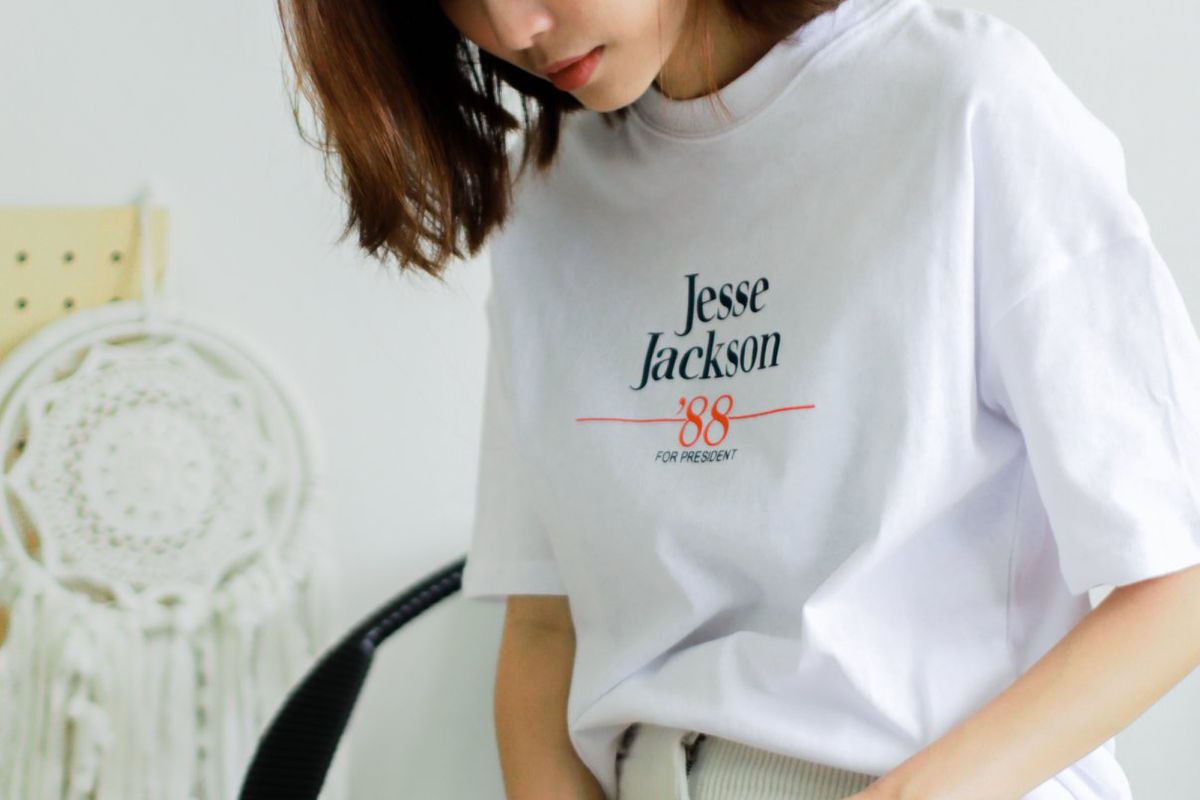
    Among young South Koreans, civic rights activist and Democratic presidential nominee Jesse Jackson’s 1988 campaign T-shirts and French fashion brand Balenciaga’s Bernie Sanders-inspired caps are some of the hottest fashion items at the moment. “What size is it?” “Has it been sold yet?” Comments like these quickly appear when well-kept secondhand Bernie Sanders caps are put up for sale in online communities, as a brand new one could cost nearly US$310.

    Celebrities like actor Ha Yeon-soo and singer HyunA have been seen sporting the Balenciaga cap, the design of which has been inspired by US politician Bernie Sanders’ 2016 presidential campaign logo.

    The Jesse Jackson-inspired T-shirts appear within reach for a wider demographic, as they are sold at a much cheaper price, ranging between 10,000 and 20,000 won.

    Other than being seen as fashionable, the two items share another thing in common. They are both inspired by progressive US presidential campaigns from the past, yet their origins receive little to no attention from South Korean consumers.

    The comments from major Web portal Naver speak volumes.

    “It hugs my body perfectly,” one comment about Jesse Jackson T-shirts read, while another said, “It goes well with my denim.”

    YouTuber Seni, who specializes in makeup and fashion, did a video on a hip-hop festival look in September, which she complete with the Bernie Sanders-inspired Balenciaga cap.

    During the video, the YouTuber got ready for a music festival but the background knowledge behind the cap’s design did not take center stage.

    Online fashion retailer Yuiiyuii, which sells Jesse Jackson T-shirts, says it’s mostly the design of the shirt that has gained popularity despite its originally political nature.

    “Not just Jesse Jackson but other T-shirts with similar fonts and colors gained popularity beginning around last summer.”

    While the two figures once contended for the leadership of the United States, their profile in Korea is not as strong as other US political figures such as President Obama and former Democratic presidential nominee Hillary Clinton.

    On a rare occasion in September, Jesse Jackson met with President Moon Jae-in during his visit to New York to attend the United Nations General Assembly.

    During the meeting, Jackson praised Moon’s North Korea policy and called the South Korean president a “breath of fresh air,” adding Moon was following in the footsteps of South African President Nelson Mandela and South Korean President Kim Dae-jung.

  • YouTube banking on premium subs to raise revenue

    YouTube banking on premium subs to raise revenue

    Research firm emarketer forecasts that video ad spend will reach $20 billion by 2020. Unfortunately for YouTube, rival video advertisement platforms (media types) are expanding.

    YouTube’s competition is increasingly coming from specialist platforms, such as Twitch and Instagram. Apple iTunes is also drawing from the population of music-video viewers who have traditionally helped differentiate YouTube from its ad-supported competitors.

    To address rising competition in the advertising market, Google-owned YouTube is diversifying its business model by rebranding and expanding its YouTube Premium subscription service and other measures to raise revenue, while maintaining the company’s position as the world’s leading online video platform.

    The current markets for YouTube Premium, excluding the music-only tier, are expected to generate revenue of nearly $2 billion in 2022, according to research firm IHS Markit.

    “To date, online video advertising growth has been fueled by the movement of advertising budgets, particularly from traditional TV – a rising tide that has lifted all the major platforms,” said Dan Cryan, the company’s executive director of digital media.

    “At some point, this budget migration will slow, however, and the battle for audiences will be intensified as a battle for ad spending.”

    Revenue generated by YouTube Premium in 2022 equates to 7% of the $27 billion the company is expected to make worldwide from advertising. Nearly three-quarters (73%) of YouTube Premium subscription revenue will come from the United States, followed by Europe with 13%, Asia-Pacific with 6%, and Mexico and Canada making up the remaining 9%.

    Content monetization methods outside of advertising will help to deliver higher revenues to its content producers, keeping them loyal to the platform and by extension, their audiences. Examples of these methods include paid individual channel subscriptions, an integrated merchandise store and the recently expanded and rebranded YouTube Premium subscription.

    “The YouTube Premium subscription leans into its position as a music platform, to drive uptake and expand its offer,” said Max Signorelli, home entertainment research analyst for IHS Markit.

    “[This is] a well justified move considering the exceptional growth of Spotify and Apple Music subscriptions, which between them gained 3.5 million subscribers per month in the first quarter of this year.”

  • YouTube hires Derek Blasberg

    YouTube hires Derek Blasberg

    YouTube is forming a new division dedicated to fashion and beauty content partnerships, led by Derek Blasberg.

    The appointment comes less than a week after Instagram launched its long-form video app, IGTV, in a clear bid to compete with the Google-owned platform.

    Blasberg will be based in New York and report to a team led by YouTube’s Kelly Merryman, vice president of content partnerships. He is tasked with cultivating relationships with brands and high-profile people in the industry so that they will use the platform more often, more effectively and build audiences there.

    Merryman’s team has similar divisions dedicated to news, sports, television, gaming and other categories and had been looking for the right person to lead its fashion and beauty industry relationships. A different division at YouTube will continue to focus on fashion and beauty influencers who built their followings on the platform.

    Instagram hired Eva Chen, the former editor-in-chief of Lucky Magazine, in 2015 to play a similar role as head of fashion partnerships at Instagram. Since then, the platform has deepened its connection with the fashion and beauty sectors by working with designers, brands, stylists, makeup artists and influencers to ensure they get the most out of Instagram. Chen’s team assists in creating content and helps these industry players engage with their audiences.

    With Blasberg, YouTube has found a popular, well-connected frontman to court fashion and beauty leaders. A former columnist and editor for Style.com, Harper’s Bazaar and other fashion and lifestyle publications for over a decade, Blasberg is leaving his role as the host of CNN Style on CNN International after two years and heading to YouTube full time. He will retain a role as a contributing editor at Condé Nast’s Vanity Fair, where he was appointed the title of Our Man on the Street in 2015.

    “I am looking forward to bridging the world of YouTube creators with the global style and beauty industries in this newly created role and department,” said Blasberg in a statement.

    Blasberg is a smart hire, but he has his work cut out for him. Instagram has an outsized influence in the highly visual fashion world. The platform and its fashion partnerships team have become an active part of the industry scene, most recently sponsoring a table at the Met Gala and supporting tentpole events like the CFDA Awards by installing and running Instagram-friendly photo sets. With the launch of IGTV, brands and influencers have a new outlet for vertically aligned videos for up to one hour in length, edging closer to something more typically found on YouTube.

    “Vertical video is ideal for fashion and it’s a format that younger audiences are really comfortable with,” said Jim O’Neill, principal analyst at Ooyala, a video and analytics technology company. “The whole idea of up to an hour-long option is potentially really big for Instagram influencers, more so than even brands.”

    YouTube has some advantages, including a larger user base — 1.8 billion unique monthly visitors to Instagram’s 1 billion — who are already trained to search for videos on the platform. On YouTube, Chanel has 1.1 million subscribers; a recent campaign video for its Bleu de Chanel Parfum was seen 3.8 million times. On Instagram, where the house has 28.5 million followers, the same commercial was viewed 250,000 times in the feed post format.

    “In this newly created role, Derek will collaborate with our incredible creators and diverse portfolio of brands to achieve even more success,” said Merryman in a statement.

    YouTube already has some fashion trailblazers: model Karlie Kloss launched her own channel, Klossy, in 2015 and now has over 700,000 subscribers. She recently released a series sponsored by Ford as part of a partnership with her nonprofit Kode with Klossy, that features her interviewing trailblazers in science and technology.

  • 10,000 Google staff set to police YouTube content

    10,000 Google staff set to police YouTube content

    Google is to deploy a staff of 10,000 to hunt down extremist content on its YouTube platform following recent criticism, the video-sharing site’s chief executive told Tuesday.

    Susan Wojcicki, YouTube’s CEO admitted in the broadsheet that “bad actors” had used the website to “mislead, manipulate, harass or even harm.”

    British Prime Minister Theresa May has put pressure on internet giants to root out online radical material following a spate of terror attacks, while YouTube last week pulled 150,000 videos of children after lewd comments about them were posted by viewers.

    Wojcicki claimed that her company had developed “computer-learning” technology to identify extremist videos, and that it could also be used to identify content that risked children’s safety.

    “We will continue the growth of our teams, with the goal of bringing the total number of people across Google working to address content that might violate our policies to over 10,000 in 2018.”

    Last week’s move to take down suspect content came after a British newspaper reported that ads for big-name brands were displayed alongside videos of children or teens which, while innocent on their own, drew viewer comments that seemed paedophilic in nature.

    Media reports indicate the situation made advertisers skittish, with some halting YouTube advertising.

  • Video ads a menace to brand safety in Vietnam

    Video ads a menace to brand safety in Vietnam

    Regional rankings place Vietnam as the second-most at risk country from harmful content in Southeast Asia. Video advertisements in Vietnam, mostly on YouTube, are a serious threat to brand safety, and the second most dangerous in Southeast Asia after Indonesia, according to global technology and data company Integral Ad Science (IAS).

    Indonesia’s video ads were at the highest risk, with 15.3 percent of ad impressions flagged for appearing alongside content deemed unsafe, while its display ad risk was second highest in the region at 5 percent after Malaysia, citing IAS data on brand risk in the online environment during the second half of 2016.

    Following closely behind Indonesia for video brand safety risks was Vietnam, with 13.2 percent of video ads dubbed as a risk to brand safety, while its display ad risk was relatively low at 4.2 percent, the report said.

    Malaysia’s brand safety risk was the highest for display ads at 6.7 percent, while its brand safety risk for video ads was also relatively high at 7.1 percent.

    Thailand’s online environment posed the lowest threat to brand safety in Southeast Asia, with only 1.6 percent of display and 2.2 percent of video ads appearing on unsafe websites.

    Singapore had the second safest online environment after Thailand, with only 2.7 percent of its display ads and 4.6 percent of its video ads featuring in unsafe environments.

    In February, Vietnam’s Ministry of Information and Communications found more than 8,000 videos containing distorted historical facts about the country on YouTube. These videos featured advertisements for several major Vietnamese brands but the companies in question said they did not control where there ads appeared.

    The government subsequently called on all companies doing business in the country to stop advertising on YouTube, Facebook and other social media until they find a way to halt the publication of “toxic” anti-government information.

    “We withdrew our ads from YouTube as soon as we were being warned by the authorities. We do not want our brands to appear alongside toxic content,” Nguyen Tran Hung Long, senior media manager at Masan Group Corporation, told VnExpress.

    These warnings have reminded businesses to pay more attention to brand safety on the internet, said Vinamilk marketing manager Pham Minh Tien.

    Nearly 49 million people in Vietnam, or more than half of the country’s population, are online. A Nielsen survey released last September found that 92 percent of them watch online videos at least once a week, and 64 percent are daily viewers.

    YouTube and Facebook account for two-thirds of the digital media market share in Vietnam, according to Nguyen Khoa Hong Thanh, operations director at digital marketing agency Isobar Vietnam.

  • Many businesses stop advertising on YouTube

    Many businesses stop advertising on YouTube

    Some major brands in Việt Nam had to stop advertising on the world’s largest online video site, YouTube, when these brands’ advertisements were linked to clips containing poor content.

    According to information from the Authority of Broadcasting and Electronic Information under the Ministry of Information and Communications, the authority received official dispatches from Vietnam Airlines, Mead Johnson Nutrition Việt Nam and Vinamilk explaining an incident in which their brands appeared in clips with pornographic, slanderous or anti-government content on YouTube.

    At the same time, businesses have also confirmed that they stopped advertising on the online video site.

    A Vinamilk’s representative told media that the company signed a co-operation contract with WPP Media Company Limited (Mediacom) to promote the brand to consumers through mass media.

    According to a commitment between the two parties, Mediacom has to conduct communication services in compliance with Vietnamese laws, as well as take responsibility in monitoring and reporting for Vinamilk, if there are problems affecting its images and reputation.

    After receiving the dispatch from the Authority of Broadcasting and Electronic Information regarding the incident, Vinamilk asked Mediacom to coordinate with YouTube to remove advertisements on clips with unwanted content, at the same time, suspending all advertisement plans on YouTube until the media partner and the site send reports to Vinamilk to find solutions for the problem.

    Earlier, the Authority of Broadcasting and Electronic Information sent dispatches to several large enterprises in Việt Nam asking for reports about these brands or their products appearing in clips with improper contents posted on YouTube.

    The authority found 17 clips with advertising inserted into videos on YouTube that had contents violating the country’s law.

    Additionally, the Ministry of Information and Communications has coordinated with the Ministry of Culture, Sports and Tourism to decide upon a fine for YouTube for not obeying the regulations on advertising for cross-border advertising activities on websites in Việt Nam.

    The ministry also invited YouTube and Google representatives to cooperate in resolving these violations.

  • You Tube Pre-school Smash Hit ChuChu TV partners with Dream Theatre

    You Tube Pre-school Smash Hit ChuChu TV partners with Dream Theatre

    ChuChu TV, Asia-Pacific’s most watched YouTube channel for toddlers from India, with over 6 billion views and 6 million subscribers, has partnered with Dream Theatre to launch the global Consumer Products business for the brand. In terms of watch time, ChuChu TV is the most watched channel in Asia Pacific and is amongst the top 20 YouTube channels in the world. Originated in Chennai in 2013, ChuChu TV is a truly global phenomenon with a wide audience from around the world averaging around 300 million views per month. Given its global appeal and audience, ChuChu TV has now partnered with Dream Theatre to launch the ChuChu TV Consumer Products business globally.

    Dream Theatre, India’s premier entertainment firm with licensing as a core business, is creating the brand architecture and is and making ChuChu TV “license ready”. Having worked with iconic international brands like Angry Birds, DreamWorks Animation, Pokemon, Femina and numerous others on the licensing front, Dream Theatre is creating the brand architecture and Go-To-Market plan for ChuChu TV by upgrading the creative assets, creating style guides, business templates and also charting the launch strategy and rollout plan across territories for ChuChu TV.  Toys, Gaming, Publishing, Apparel will form the core categories and will be rolled out first, starting summer 2017. US, Europe and Asia will be the leader markets with Dream Theatre collaborating with best in class licensing agencies, toy players, publishing houses and gaming companies to roll out the consumer products program in a synchronized fashion. 

    “ChuChu TV’s huge popularity across the world propelled us to create a consumer products business on a global scale. Our target audience loves the ChuChu TV characters. Parents and care takers around the world trust us and our content. Hence we wanted to channel this into creating equally loved and trusted ChuChu TV products for our cute little fans. The real time feedback we receive from the parents, points to a huge demand for merchandise of our key characters ChuChu, ChaCha, Chika, Chiku, and Mr. Harlo who are loved and adored across the world. We have found the right partner in Dream Theatre who has a wealth of experience in licensing. We felt this is right time to enter the licensing arena and take our brand to the next level”, says Vinoth Chandar, Founder, CEO & Creative Director, ChuChu TV.

    “Chu Chu TVs phenomenal success is a testimony to its popularity and it is very exciting for us to work with a brand originated in India and adored across the world by the young and old alike.  We are thrilled to create a world class licensing program that enables fans to engage with the brand in a products and services form and will be engaging with top international licensing agents, toy companies and retailers to launch and grow the business across the globe” says Jiggy George, CEO and Founder Dream Theatre. 

  • Maxis taps YouTube for 360° film series

    Maxis taps YouTube for 360° film series

    Maxis is partnering with YouTube and Malaysia’s best storytellers to produce a Merdeka-themed film series, shot entirely using the latest cutting edge 360° cameras.

    Maxis will be working with award-winning filmmakers that include The Ming Thing, YouTube superstars with over 20 million video views; Junad Mohd Nor, whose film Ikal Mayang’s Odah premiered at Busan International film festival; and Denes Kumar & Vimala Perumal, the filmmakers behind Tamil’s box office hit, Vetti Pasanga.

    The company said that, using YouTube 360° video, it wants to empower Malaysians to be the first to “see Malaysia from different angles.”

    “Instead of premiering in a traditional physical cinema, these films will premiere exclusively via the YouTube platform to an estimated audience of 15 million via their mobile screens starting August 25,” said Sulin Lau, Maxis’ head of marketing services.

    “Because 360 films are truly immersive video, it’s a great way to demonstrate how great the Maxis 4G network is for seamless, buffer-free video,” said Lau.

    For this film series, the filmmakers are drawing inspiration from Malaysia’s diversity and will tell stories showing that even though we are made up of many different people, we can still come together and embrace each other’s differences.

    Maxis and YouTube are also inviting students and the public to submit their own Merdeka film and stand a chance to be premiered alongside the films of these award-winning filmmakers.

  • New finger ‘food’ from KFC Hong Kong

    New finger ‘food’ from KFC Hong Kong

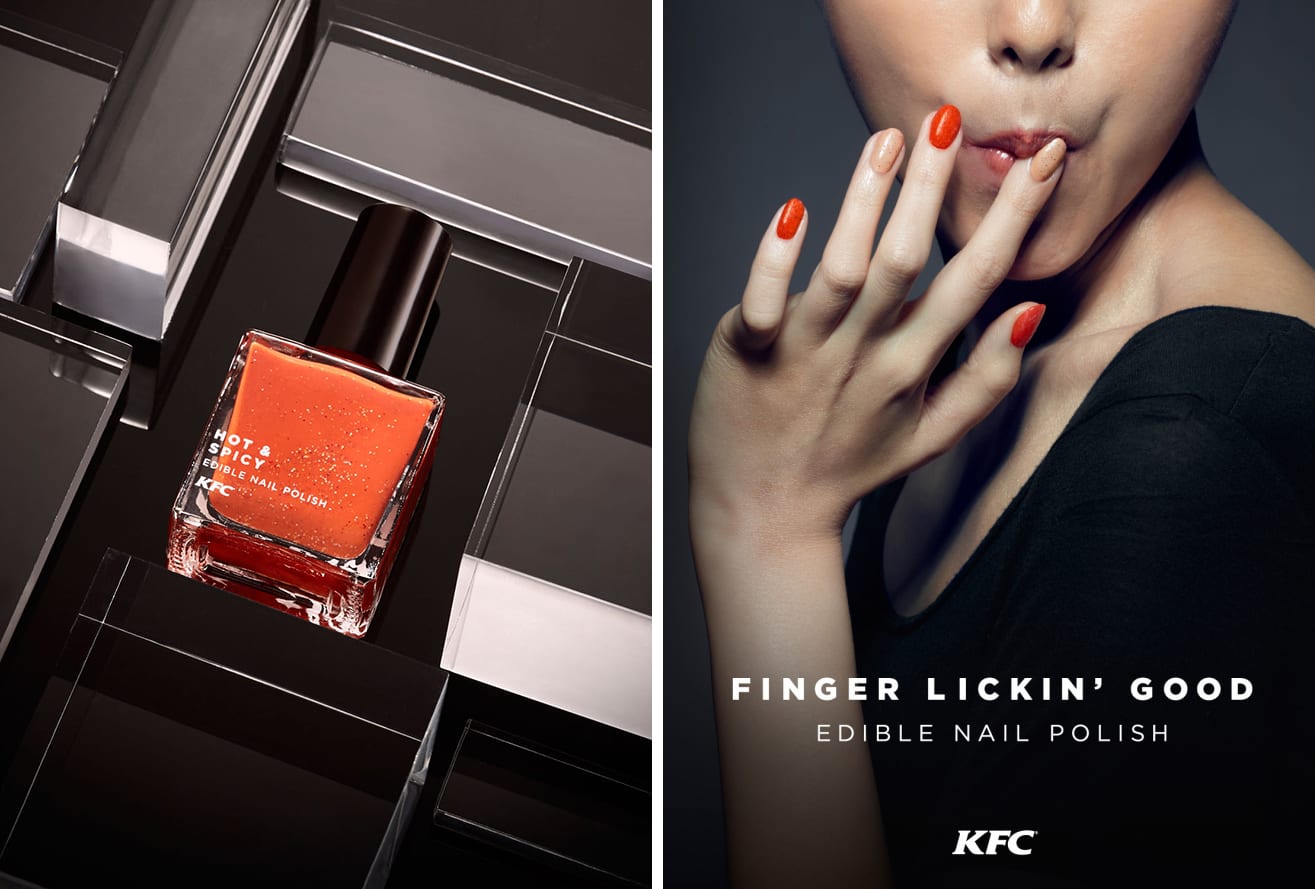
    Advertising agency Ogilvy & Mather (Ogilvy) has pushed the boundaries of creativity by launching two edible nail polishes for KFC Hong Kong, bringing the fast-food giant’s tagline “Finger Lickin’ Good” to life.

    Working with food technologists at flavour giant McCormick, which makes KFC’s 11 secret herbs and spices mix, Ogilvy used natural ingredients for the edible nail-polish flavours, basing them on the brand’s popular recipes, Original and Hot & Spicy.

    6f140136666203.572492e5d5713-1074x787

    Packaged in a designer bottle and box, the product has been teased on social-media platforms, including Facebook and YouTube, for the past two weeks ahead of an exclusive launch and tasting.

    An online music video has also been released, asking Hong Kongers to choose which flavour to go into mass production.

    KFC Finger licking good nail polish 2

    Ogilvy creative director John Koay says the recipe for the nail polish was designed to hold the flavour yet also dry with a glossy coat similar to normal nail polish.

  • Luxury brands’ missed opportunity: YouTube

    Luxury brands’ missed opportunity: YouTube

    Luxury fashion brands sashayed their way to substantially more YouTube views in 2014. But they still have a lot of runway ahead for growth on the social media platform.

    According to a new report by think tank L2, conducted in partnership with YouTube ad buying platform Pixability, fashion brands increased views on the video site by 204 percent as of October, as compared to the prior year’s total. The 90 brands examined also boosted their subscriber base by 87 percent, with Chanel, Dior and Burberry leading the way.

    Despite this improvement, the report noted fashion brands “consistently fail to optimize their YouTube presence,” in part because the majority of their content fails to appear in the top slot of search results for their respective brands.