Tag: yuan

  • China Launches Offshore Government Bond Futures to Boost Yuan Usage

    China Launches Offshore Government Bond Futures to Boost Yuan Usage

    China has initiated offshore trading in government bond futures from Hong Kong, a pivotal step in its ongoing efforts to internationalise the yuan. This new financial instrument is expected to enhance the currency’s appeal by offering improved stability and hedging capabilities, particularly to investors outside Western markets.

    Expanding Yuan’s International Reach

    The introduction of offshore government bond futures is part of China’s broader strategy to gradually open its financial system to foreign participation. By providing more avenues for investors to engage with yuan-denominated assets, Beijing aims to bolster the currency’s global standing and reduce reliance on other major currencies for trade and investment.

    This development follows a series of measures designed to integrate China’s markets with the global financial system. Recent years have seen increased foreign investment in Chinese bonds and stocks through various connect schemes with Hong Kong, fostering a more accessible environment for international capital. The new futures contracts offer an additional layer of sophistication for portfolio management, enabling investors to mitigate interest rate risks associated with Chinese government debt.

    Implications for Asian Markets

    For retailers, consumer brands, and technology companies operating across Asia, a more widely used and stable yuan could simplify cross-border transactions and investments. As trade flows within the Asia-Pacific region continue to grow, a stronger international yuan provides an alternative to traditional reserve currencies, potentially reducing foreign exchange volatility for businesses with significant exposure to the Chinese market.

    RetailNews Asia has been tracking China’s deliberate steps to expand its financial influence, including the increasing issuance of yuan-denominated bonds by other nations and the growth of ‘panda bonds’ within its domestic market. This latest move with offshore bond futures reinforces China’s ambition to position the yuan as a major currency for global finance and trade, impacting how businesses structure their financial operations across the region.

  • Riding the Yuan Wave: Global Companies Amplify Chinese Currency Adoption, Says StanChart Report

    Riding the Yuan Wave: Global Companies Amplify Chinese Currency Adoption, Says StanChart Report

    Companies across the globe are progressively employing the Chinese yuan in an array of contexts, as noted in a recent study by Standard Chartered. These contexts range from settling trade transactions to financing supply chains.

    A growing number of international corporations are adopting the use of the Chinese renminbi (RMB). Statistics from a Standard Chartered study reveal that 23% of revenues and 25% of costs are subject to the influence of this currency. However, the report also points out that only 14% of debt is in RMB, indicating a discrepancy between operating exposure and the currency employed for financing.

    The study suggests that the uptake of RMB is increasingly motivated by operational necessities of corporations rather than currency positioning. The main factors encouraging its adoption are trade settlement, supply chain financing, alignment of balance sheets, and management of foreign exchange and interest rate exposure.

    Diverse Regions, Diverse Adoption Trends

    The adoption patterns of the RMB vary across different regions. For instance, corporations in Greater China and North Asia are extending their use of RMB beyond settlement to include funding and liquidity management. The uptake in Southeast Asia is primarily driven by supply chain needs, whereas in the Middle East and parts of Africa, the usage is concentrated in the energy and infrastructure trade sectors. In Europe and the Americas, the capital market issuances and selective funding diversification are emerging as significant starting points.

    Karen Ng, the head of China opening and RMB internationalization at Standard Chartered, stated, “Many corporations already have significant RMB exposure through trade, procurement, and supply chains. As the market infrastructure deepens and liquidity expands, the adoption is increasingly being driven by operational needs, including trade settlement and balance sheet alignment.”

    The report titled “Renminbi in Motion for Corporates” is based on a survey involving nearly 300 global corporations across 19 sectors.

    Questions & Answers

    Why are corporations worldwide increasingly using the Chinese yuan?
    The use of the Chinese yuan is growing due to operational needs including trade settlement, supply chain financing, balance sheet alignment, and managing foreign exchange and interest rate exposure.

    How does the adoption of the Chinese yuan vary across different regions?
    Adoption patterns differ by region. Corporations in Greater China and North Asia are expanding its use beyond settlements to include funding and liquidity management, while in Southeast Asia, adoption is largely driven by supply chain needs.

    What is the percentage of revenues and costs carrying exposure to the Chinese yuan, according to the report?
    The report indicates that 23% of revenues and 25% of costs are subject to the influence of the Chinese yuan.

  • Mastercard Eyes Digital Yuan Opportunities

    Mastercard Eyes Digital Yuan Opportunities

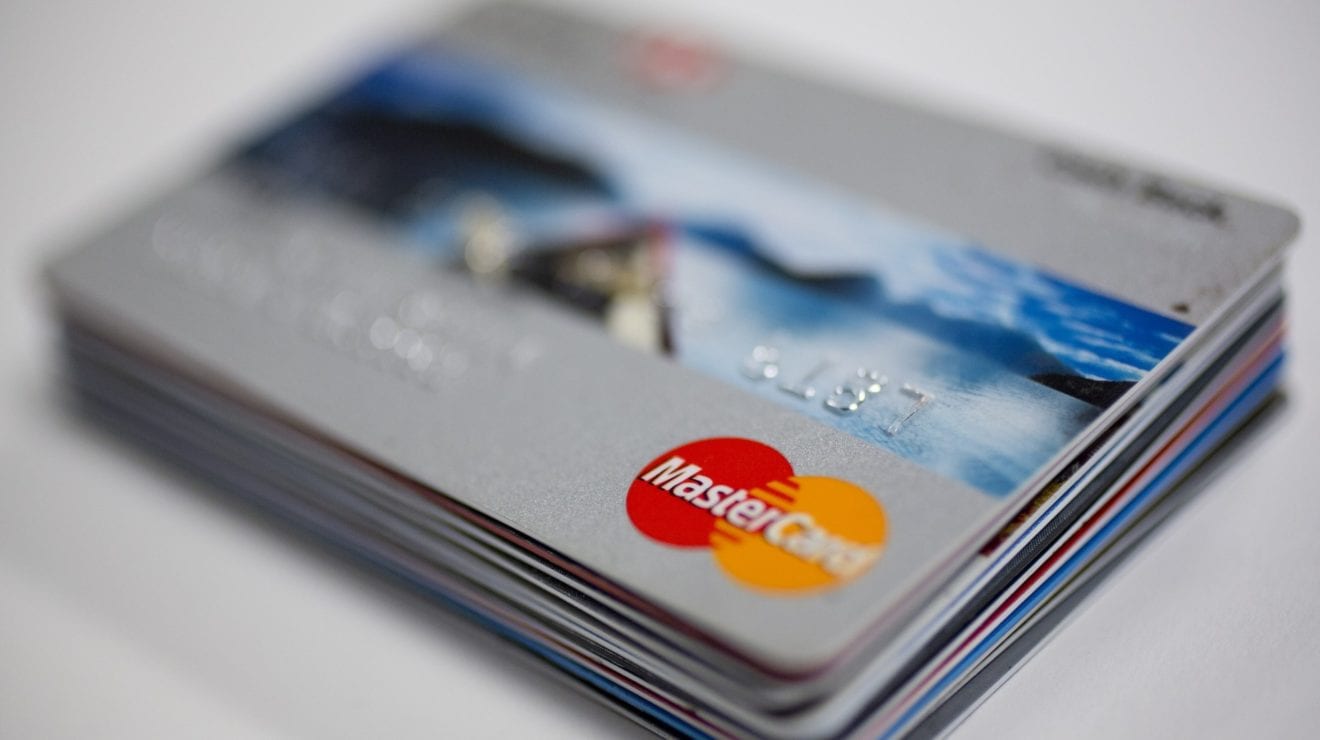
    Global payments giant Mastercard is in talks with various central banks with an eye on opportunities in central bank digital currencies.

    Amongst the central banks in discussion with Mastercard is the People’s Bank of China, according to a report citing APAC co-president Ling Hai.

    Circulation of central bank digital currencies (CBDC) outside of their home country could be converted into foreign currencies with a card clearing network acting as the conversion agent, Ling explained.

    While central banks can address their domestic issues associated with digital sovereign currencies, the role we can always play is on interoperability when the payment goes beyond a country’s borders, he said. For us, supporting a central bank digital currency is similar to adding another fiat currency onto our network.

    Mastercard is already increasingly establishing its digital currency capabilities with an existing partnership with the Bahamas where it provides prepaid card services to help travelers convert their CBDC – the Bahamas Sand dollar – into other fiat currencies.

    Centralized digital currencies aside, Mastercard also announced plans to increase support for select decentralized cryptocurrencies.

    Within China, it is also awaiting final approval for a license to conduct its card business onshore.

  • Vietnam allows use of yuan at Chinese border

    Vietnam allows use of yuan at Chinese border

    Vietnamese can trade in yuan at the border with China, the State Bank of Vietnam has decreed.

    It means the transactions that traders and residents have been doing informally in the yuan for long along the border gets legal sanction from October 12.

    Economist Nguyen Tri Hieu said “There have not been any specific regulations on using the yuan in transactions. This will be the first.”

    The new regulation would also allow Chinese tourists to pay for goods and services in their own currency in border areas, he added.

    Vietnam recently became China’s largest trade partner in Southeast Asia. Bilateral trade in the first half of this year rose 17 percent year-on-year to $46.82 billion, with Vietnam’s exports accounting for $16.62 billion.

    Exports to China had risen 61.5 percent against 2016 to $35.46 billion in 2017, according to data from the International Monetary Fund.

    The Ministry of Industry and Trade said it is likely that two-way trade would hit $100 billion this year.

  • Transaction app Alipay launches first non-yuan version in Hong Kong

    Transaction app Alipay launches first non-yuan version in Hong Kong

    Chinese online and mobile payment platform Alipay on Wednesday launched in Hong Kong its first app to handle transactions not denominated in the yuan currency, moving closer to its ambition of widening currency payment options.

    Payments through AlipayHK, which handles mobile payments in Hong Kong dollars, will be accepted at more than 2,000 stores in the city from Thursday, said Ant Financial Services Group, an Alibaba Group affiliate that runs the platform. “Introducing local currency mobile payments to Hong Kong is an important step forward in Ant Financial’s mission to bring our services to more users in more markets,” said Douglas Feagin, the company’s president of global business.

    The effort will help the company, which competes against Tencent Holding’s WeChat Pay, to extend its reach in offline commerce beyond mainland China. Alipay now has more than 450 million active users and payments through it are accepted at more than 2 million brick-and-mortar merchants across China, the company says.

    Its standard app is already supported in more than 120,000 retail stores in 70 overseas markets via local partners, including the United States, but transactions are executed in yuan.

    As many as 8,000 retailers in Hong Kong already accept Alipay’s yuan-based app, and the new app will soon extend to them, said Alipay Hong Kong’s general manager, Venetia Lee.

  • China will bounce back and continue to drive global growth for decades

    China will bounce back and continue to drive global growth for decades

    Economists have often said “when America sneezes, the world catches a cold” reflecting the importance of the US to the global economy.  But the past 12 months suggest the world’s immune system is more sensitive to China’s sniffles than was previously thought.

    The country’s economic slowdown and the overdue lancing of the bubble in its stock market have made the world’s central bankers and policymakers realise that China now has a huge influence on global markets.

    I was in Beijing and Shanghai last week in part to attend the G20 summit in my role as a board member of the Institute of International Finance but also to see for myself what is happening in China. There is no substitute for visiting a country if you really want to understand what is going on there. Get there, meet companies and policymakers and listen to what the people you meet have to say.

    This is especially the case with somewhere like China because it can be opaque and a lot of what is written about the country is nonsense. You can only get so much information to form a view from sitting in an office 6,000 miles away.

    One of my most interesting meetings was with Dr Pan Gongsheng, deputy governor of China’s central bank. It is true that the economy is slowing. Never mind the validity of the official figures, the 6.9pc growth achieved last year is a far cry from the double-digit expansion achieved a few years ago.

    But is this slowdown really so bad? The change in the pace of growth is as much by design as by accident. China’s policymakers made a deliberate decision a few years ago, to move the economy away from an investment-led, export-driven model towards one in which domestic consumption plays the dominant role. The country’s leaders want growth that is sustainable.

    For a long time investors have focused on China’s manufacturing data as an indicator to how well or badly the economy is doing. Recent weakness in the manufacturing data has been interpreted as a big negative and has ignored the growth of service industries, especially in the private sector.

    Real estate, finance, hospitality, retail, transport, construction and other services accounted for some 55pc of GDP in 2014, up from 47pc in 2006, according to data compiled by CLSA and Citic Securities.

    As the economy continues to move to a more domestic focus, this share will continue to rise. This is not to say everything is rosy in China. In recent years, western leaders watched with wide-eyed wonder at their Chinese counterparts’ handling of the economy. They looked on in envy at Beijing’s ability to manage the economy at a time when the world seemed to be closing in.

    That reputation has taken a major dent recently. They successfully deflated a bubble in the property market but that meant that China’s army of retail investors piled into the domestic stock markets. The authorities should not have tried to prop this over-leveraged and speculative bubble. They should have let it pop but chose to intervene and then did so in a messy, unclear and unsuccessful way.

    While they were bungling the rescue of the stock market, the authorities made a mess of communicating a loosening in renminbi policy, which fuelled suspicions the country was seeking to devalue its way out of trouble. This is prompting wealthy locals to move their cash offshore and in response the government is making it harder for money to be moved overseas.

    Local government and corporate debt are big problems, the state sector is bloated and inefficient, while the property market remains fragile. Whilst my trip provided comfort on the state of the economy, my views on the stock market remain unchanged. We have always been very cautious about investing in Chinese companies because so many are opaque and many have woeful corporate governance.

    It’s obvious if you spend time in China to see that the Shanghai and Shenzhen stock markets operate like casinos. Trading activity is dominated by retail investors who buy on rumours and flee at the first sign of trouble. It’s much more sensible to expose yourself to China’s growth by investing in companies which aren’t based there but do business there.


    It’s a much easier way of investing in companies with decent growth prospects, that have quality management and adhere to good levels of transparency and accounting standards. From speaking to companies, economists and analysts in China, it’s clear to me that the country is heading for a softer, rather than harder, landing. You need to look beyond the stock market for the clues of why, though. China’s consumer spending is still motoring. Consumers have taken to internet shopping at a startling pace.

    Barely 15pc of the population had shopped on the internet a few years ago. Now over 40pc have. Chinese shoppers spent nearly $8bn (£5.7bn) in the first 10 hours of the country’s equivalent of Cyber Monday or Black Friday. Chinese authorities might have lost some of their reputation for financial competency, but they have $3.4 trillion in foreign exchange reserves to soften the blow of a slowing economy.

    Unlike many policymakers in the West, those in Beijing still have plenty of tools at their disposal to avert economic disaster and to help the country to develop. The announcement last week of the opening up of the bond market to long-term international investors is a prime example and is a step in the right direction.

    Ultimately China will shake off its current sniffles to continue to be a driver of global growth for decades to come.

  • China’s Central Bank says no reason for yuan to slide further

    China’s Central Bank says no reason for yuan to slide further

    China’s central bank governor said there was no basis for continued depreciation of the yuan as the balance of payments is good, capital outflows are normal and the exchange rate is basically stable against a basket of currencies, according to an interview published Saturday in Caixin magazine.

    Zhou Xiaochuan dismissed speculation that China planned to tighten capital controls and said there was no need to worry about a short-term decline in foreign-exchange reserves, adding that the country had ample holdings for payments and to defend stability.

    The comments come as Chinese financial markets prepare to reopen Monday after the week-long Lunar New Year holiday.

    The country’s foreign-exchange reserves shrank to the smallest since 2012 in January, signalling that the central bank sold dollars as the yuan fell to a five-year low. The weakening exchange rate and declining share markets in China have fuelled global turmoil and helped send world stocks to their lowest level in more than two years.

    The bank will not let “speculative forces dominate market sentiment,” Zhou said, adding that a flexible exchange rate should help efforts to combat speculation by effectively using “our ammunition while minimising costs.”

    Policy makers seeking to support the yuan amid slower growth and increasing outflows have been using up reserves. The draw-down has continued since the devaluation of the currency in August and holdings fell by $US99.5 billion in January to $US3.23 trillion, according to the central bank on February 7. The stockpile slumped by more than half a trillion US dollars in 2015.

    China has no incentive to depreciate the currency to boost net exports and there’s no direct link between the nation’s gross domestic product and its exchange rate, Zhou said. Capital outflows need not be capital flight and tighter controls would be hard to implement because of the size of global trade, the movement of people and the number of Chinese living abroad, he added.

    The country will not peg the yuan to a basket of currencies but rather seek to rely more on a basket for reference and try to manage daily volatility versus the dollar, Zhou said. The bank will also use a wider range of macro-economic data to determine the exchange rate, he said.

    Meanwhile China’s retail sales grew 11.2 per cent during the week-long Lunar New Year vacation compared with the same holiday period last year, Ministry of Commerce data showed on Saturday.

    Revenues of retailers and catering firms grew to about 754 billion yuan ($US115 billion) during the Feb 7-13 “Golden Week” holiday, a ministry statement said.

    The holiday is especially important for retailers, which vie for customers by launching promotions and discounts. Millions of people take time off work to travel and generally spend more than usual during the break.

  • China is facing into a period of painful economic adjustments

    China is facing into a period of painful economic adjustments

    On February 8th, China will celebrate the Year of the Monkey. The monkey is famously a smart, naughty, wily and vigilant animal, and anybody trying to make money in the rest of 2016 will have to learn how to outsmart the animal.

    A useful barometer of the Chinese economy is always to look on the streets and see what cars are clogging up the dual carriageways and main roads of the big cities like Beijing, Shanghai and Guangzhou.

    By this measure, the world’s second largest economy is doing pretty well.

    Sentiment is not good as far as monkeys go – it has remained below 90 since June 2014, far below the 100 breakeven level. According to the China Auto Purchase Sentiment Report, people are buying cars, but they are buying smaller, cheaper vehicles. Despite the fall in sentiment, this sees more Chinese households reporting that they currently own a vehicle.

    The Car Purchase Indicator is a composite indicator designed to gauge future demand for cars and it fell 4.5 per cent to 83.2 in December from 87.1 in November, the lowest reading since April 2012.

    But yet there is still obvious strength in the market. Despite a damaging emissions scandal, Volkswagen continues to lead the passenger car market in China, with deliveries of 2.63 million units from January to December. And while this is down 4.6 per cent, the fourth quarter of 2015 was a very successful one for the carmaker.

    But then you look at the stock market.

    With the nightmare of summer 2015 still fresh in the minds of badly burned retail investors, China’s stock market opened 2016 with a stark reminder that the fundamental situation in the markets remained deeply unstable.

    China was forced to twice deploy its “circuit breaker” mechanism to halt trading as stock markets nose-dived by 10 per cent in the first week of the year.

    After the second time, Beijing scrambled to abandon the mechanism, which the markets, especially overseas, had always considered a weak and useless measure. By abandoning the “circuit breaker”, the regulators appeared clueless on how to stabilise the market and the situation appeared to go back to square one.

    Unlike many western economies, the stock market in China does not offer a bellwether of the overall health of the economy and even a massive slide on the stock market would be tolerable were the data coming out of the world’s second largest economy inspiring confidence on the future outlook.

    New normal

    However, these are the days of the “new normal” when the Chinese government is trying to sell the idea of slower, consumption and services-based growth and move away from the heady days of double-digit expansion which defined the economy for the past two decades.

    Gross domestic product growth fell to a six-year low of 6.9 per cent in the July-September quarter and is forecast by the International Monetary Fund to decline further to 6.3 per cent in 2016. This level of growth is not enough to keep generating new jobs – there are more than 7.5 million graduates expected to enter the labour market later this year and robust growth is needed to keep the economy expanding at a rate that will maintain stability for the ruling Communist Party.

    Cheng Shi from ICBC international research group expects growth to continue to slow in 2016.

    “Firstly, the global economic recovery means weaker external factors for China’s economic growth. Secondly, for the last 30 years, China has accumulated massive capacity and the difficulty of keep on growing is increased and the growth rate declines naturally. Thirdly, it is affected by the ageing population and the labour cost has been growing for a long time. Fourth, the real estate market is going through an adjustment period,” said Cheng.

    In the short term, the risks caused by structural economic adjustments will keep on showing and the pain is unavoidable, said Cheng.

    “In the long run, the opportunities brought by deepening economic reform will gradually start to appear and the rise won’t stop,” he said.

    “I think at the bottom of this is a fundamental story about a slowdown in China,” Peter Oppenheimer, chief global equity strategist at Goldman Sachs told CNBC. “The focus at the moment is the ongoing weakness in the manufacturing sector but also the lack of evidence that traditional policy easing is really stabilising the economy.”

    He underlined concerns about further weakness in exchange rates, and the possibility for that to flow through the broader markets.

    The collapse in growth shows that investors are reluctant to buy into the government vision of the “new normal”.

    China’s stock market more than doubled between late 2014 and June, then dived by 30 per cent, an event that caused deep pain among retail investors.

    “We expect growth momentum to slow in the first half of 2016, and for headline growth to fall to 6.4 per cent in the second quarter of 2016, before recovering in the second half of 2016 as more easing measures kick in,” HSBC said in a research note.

    “Policymakers need to strike a balance between financial and SOE reforms and the need to reflate the economy,” HSBC said.

    To this heady brew, add in the slide in the Chinese yuan currency to a five-year low against the dollar, which has forced the government to spend tens of millions of dollars from its foreign currency stockpile to defend it, and you can see a perfect storm of negative factors clouding the outlook for the Monkey Year.

    Overall it was the worst beginning to the year for the Chinese yuan since 1994, on growing concerns that the economy is weakening further.

    The government last week guided the yuan 1.5 per cent lower to give a boost to the country’s export sector, which is bearing the brunt of China’s goods becoming expensive overseas compared to other Asian neighbours. The move to lower the yuan was not deftly done, and the resulting nervous reaction further weighed on share prices.

    “Upbeat trade data could go some way to reassure global investors that China’s economy is stabilising,” said Tom Rafferty, lead China analyst at the Economist Intelligence Unit. “The data is in line with other indicators that suggest China’s economy is stabilising on the back of sustained stimulus measures, some of which have been targeted at the external sector.”

    “There will be some qualms expressed about the reliability of the data, given the weaker performance in December of other major Asian exporters. However, China has consistently outperformed the region in what was a difficult year for global trade,” he said.

    Then you have other anomalies.

    During 2015, seven property developers reported annual sales of more than 100 billion yuan (€14 billion) as the property market continued to perform strongly, despite a slowdown, while a total of 104 developers reported annual sales of over 100 billion (€1.4 billion) in the same period.

    The top three by sales were Vanke, with 261 billion yuan (€36.6 billion), Greenland with 230 billion (€32.3 billion) and Evergrande with 200 billion yuan (€28 billion). All involved will be hoping they can outsmart the monkey again in 2016.