Retail News CRM

Tag: Yum Brands

  • Alibaba to take stake in Yum China

    Alibaba to take stake in Yum China

    Yum! Brands has agreed with two partners to invest $460 million into Yum China, following its spinoff from the American fast-food giant.

    Also involved are China-based global private equity firm Primavera Capital Group and online and Alibaba subsidiary, mobile financial services provider Ant Financial Services Group, which runs the Alipay mobile payments platform.

    The spinoff and concurrent finalisation of the investment are expected to occur on October 31, with Yum China to start trading on the New York Stock Exchange the next day as an independent company.

    Under the terms of the agreements, Primavera and Ant Financial will invest $410 million and $50 million respectively in Yum China.

    Primavera founder Dr Fred Hu, former greater China chairman at Goldman Sachs, will be non-executive chairman of the board of Yum China.

    “Yum China is an established leader in the retail and restaurant industry, which we believe is poised for continued strong growth and unit expansion as cities across China invest in new transportation hubs, shopping malls and other physical and electronic infrastructure,” says Dr Hu, describing the Yum China moves as a “new and exciting chapter”.

    Membership services

    “Through this collaboration, we aim to help Yum China provide world-class mobile payment services for tens of millions of customers across its brands,” says Ant Financial Service Group president Eric Jing. “These services include hassle-free Alipay for customers to help shorten queues at the cashier, as well as membership services for Yum China designed to help manage its customer relations and promotions.”

    He says Yum brands KFC and Pizza Hut have seen promising marketing results through promotions on multiple Ant Financial platforms.

    “Primavera and Ant Financial both have deep insights into the rapid urbanisation and digital transformation that is driving the evolution of China’s economy,” says Yum China CEO Micky Pant.

    “The investments from Primavera and Ant Financial in Yum China mark another important milestone in our plans to separate the China business and create a solid foundation for Yum China as it prepares to become an independent restaurant powerhouse,” says Yum! Brands CEO Greg Creed.

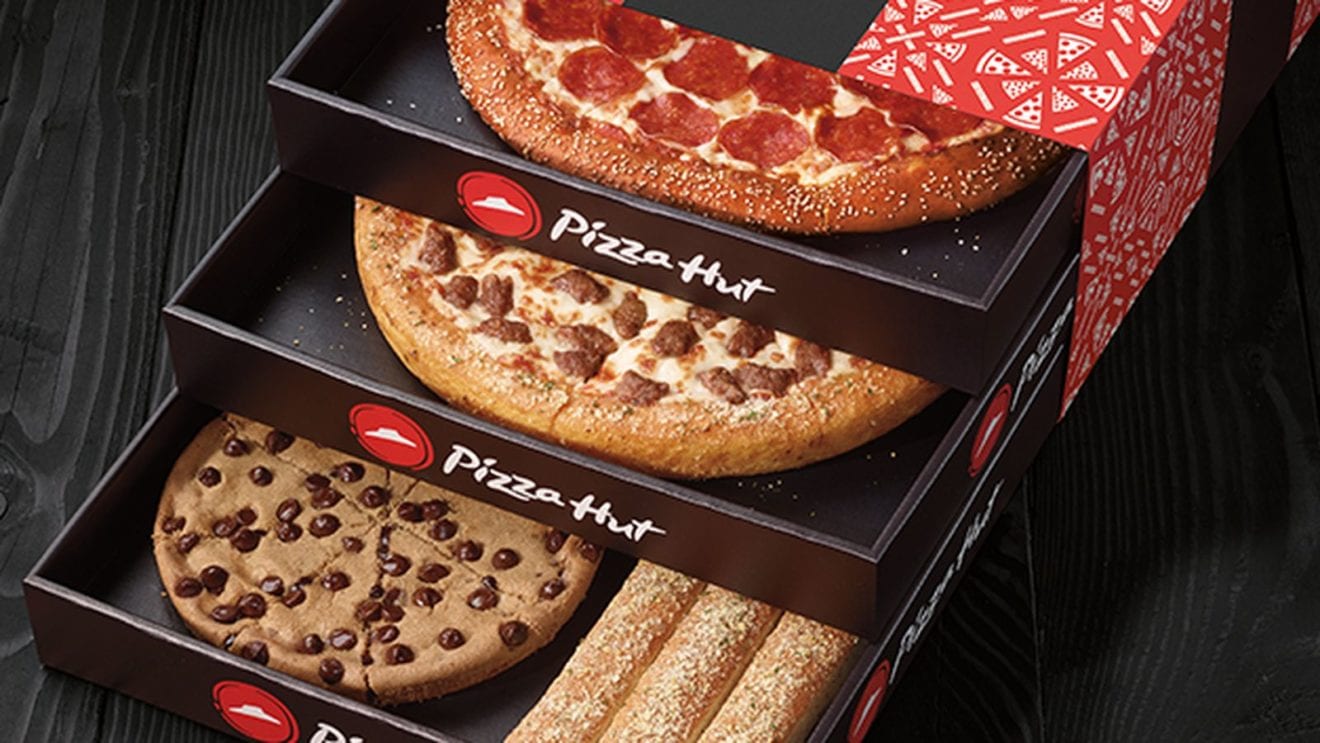
    As a licensee of Yum! Brands in China, Yum China Holdings will have exclusive rights to KFC, Pizza Hut and Taco Bell, which has yet to expand to China. KFC and Pizza Hut have more than 7200 restaurants in more than 1000 cities in China.
  • Yum! Brands China sale falters

    Yum! Brands China sale falters

    Following a missed deadline by potential investors, the sale of a minor stake in Yum! Brands China business has been delayed.

    Yum runs KFC and Pizza Hut outlets in China, while the potential bidders include Singapore state investment company Temasek Holdings and Chinese private equity firm Primavera Capital.

    One report says the suitors held off submitting bids after Yum tried to impose new terms on the investments. The investors have also indicated they disagree with Yum’s proposed valuation of $10 billion for the China unit.

    After a prolonged sales slump caused by food-safety scandals, Yum last year decided to spin off its China business into a separate publicly traded company. Since this was announced in October, Yum has had stronger same-store sales results from KFC in China.

    With the terms change, Yum would not be obliged to pay royalties to the China business for any products it developed, plus it would not share the burden for some of the Chinese unit’s advertising spend.

    Yum told potential investors of the new conditions just days before the bid deadline, and the company has yet to set a revised deadline.

    Meanwhile, Yum spokeswoman Virginia Ferguson says the company is making “great progress” toward the separation of the China business.

    At an investor conference this month, CEO Greg Creed said he expects the China separation to occur around the end of October.

    A group backed by sovereign wealth fund China Investment Corp withdrew a bid for control of the China business after failing to agree on a price. It claimed that initial due diligence showed Yum’s profit margins were under pressure in an increasingly competitive market.

    Yum’s market share in China fell to 24 per cent last year from 39 per cent in 2010, data from Euromonitor International shows.

    According to its website, the company plans to add 600 outlets this year to its more than 7200 restaurants across China.

  • Bidding starts for McDonald’s China business

    Bidding starts for McDonald’s China business

    Beijing Tourism Group, ChemChina and Sanpower are among bidders for McDonald’s China restaurants and the 20-year master franchise covering China and Hong Kong.

    The deal is said to be worth about US$3 billion, and bids close on Monday.

    Restrictions on the franchise agreement have discouraged such buyers as private equity firms, but others have entered the auction, reports CNBC.

    McDonald’s China partner Beijing Capital Agribusiness Group has been reported to be among companies preparing first-round bids ahead of the deadline, but an official has said the company is not participating in the bidding.

    Illinois-based McDonald’s has hired Morgan Stanley to run the sale of about 2800 restaurants in China, Hong Kong and South Korea. The South Korea sale is being run separately.

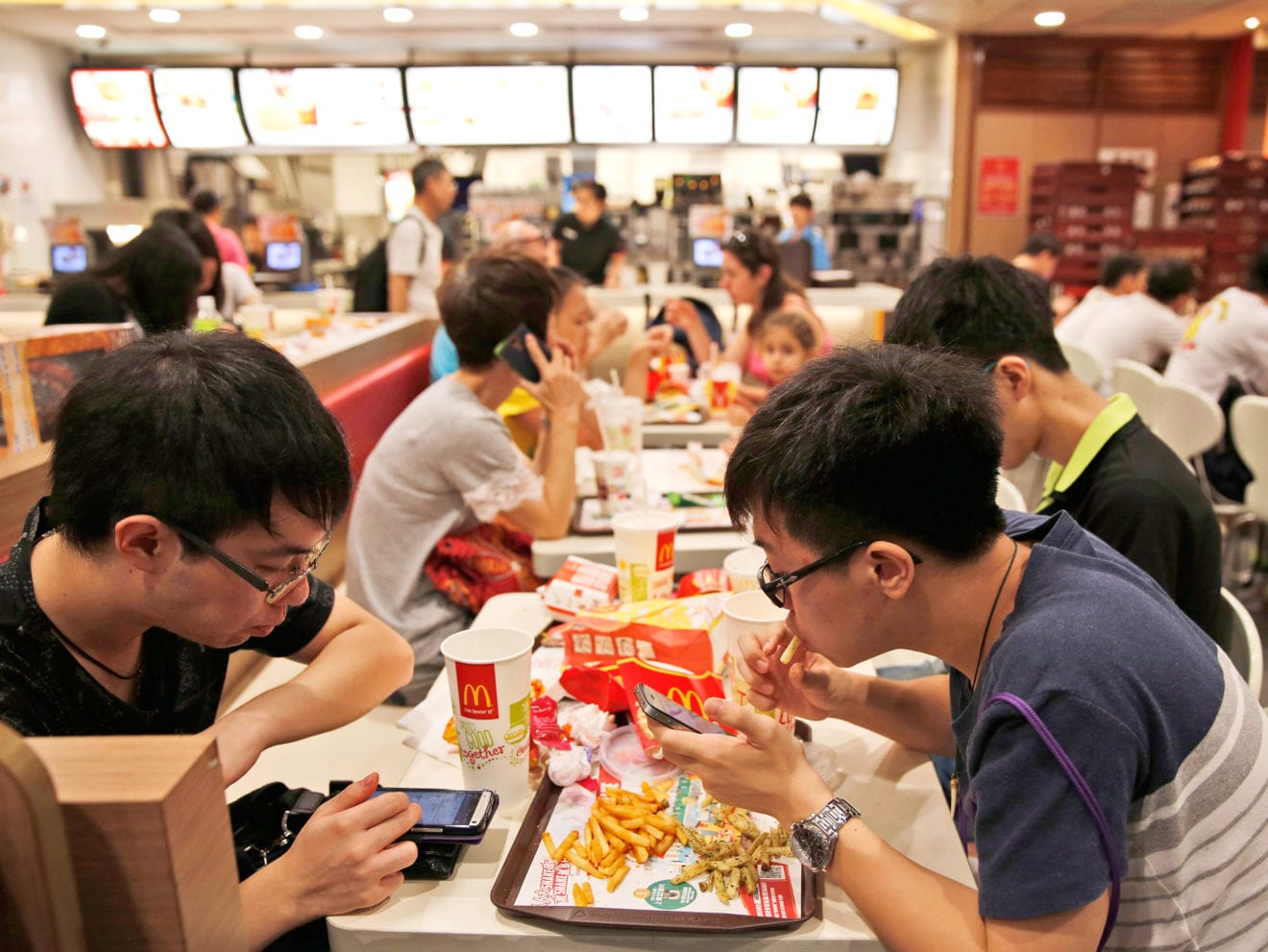
    McDonald’s announced in March that it was reorganising in Asia by bringing in partners to own restaurants within the franchise business. Competitor Yum Brands, which has the KFC and Pizza Hut chains, is also restructuring in China.

    Domestic rivals are becoming more competitive, and the two international fast-food giants have had food-safety scares.

    “Given the difficulties Western chains have had recently with public perception, local players have become a serious competitive threat,” says Euromonitor International foodservice analyst Elizabeth Friend.

    Meanwhile, McDonald’s will draw up a shortlist of bidders for the next round in the coming weeks.

    McDonald’s China and Hong Kong business posted about $200 million in earnings in its latest financial year.

  • KFC owner Yum profits boosted by China sales

    KFC owner Yum profits boosted by China sales

    Yum Brands, the parent company behind fast-food chains KFC, Pizza Hut and Taco Bell, has reported a surprise 8% rise in first-quarter net operating profit. One-time gains in the quarter from a Chinese New Year chicken bucket promotion helped boost sales in China and bring in profits of $391m (£273m; €346m) in the January to March period.

    Adjusted earnings per share came in at 95 cents, beating analyst forecasts for earnings per share of 83 cents. Sales at restaurants that have been open for at least a year in China — the company’s biggest profit-driving region — were up 6% from the same period a year ago, helped by a 12% sales jump at KFC China.

    Yum chief executive Greg Creed said 2016 was a “transformational year” for the company and announced that the China division would split into a separate business by the end of the year.

    The firm also upped its core operating profit growth forecast for the year to 12% from 10%. Yum shares jumped nearly 4% in after-hours trading in New York following the earnings release.

    Global sales up

    Worldwide same-store sales were up 2% in the quarter, with sales at KFC and Pizza Hut up 1% and 3% respectively. Same-store sales at the US Pizza Hut division were up 5%.

    “KFC China had an outstanding Chinese New Year bucket promotion,” Creed said in a statement. “While it’s early in the year and there may be bumps in the road, we’re confident in raising core operating profit growth guidance to 12% from 10% previously.

    Pizza Hut

    “This is a transformational year for our company as we remain on track to finalise the separation of our China business by year end. We look forward to establishing two powerful, independent, focused growth companies dedicated to building on our brand strengths and rewarding our shareholders.”

    Yum opened 68 new restaurants in China during the quarter, bringing the total number of its outlets in the country to nearly 7,000. It is the largest western restaurant brand in China and plans to spin-off the division into a separate publicly-traded company by year end to modernise services and streamline operations in other markets.

  • McDonald’s Asia to sell 2800 restaurants

    McDonald’s Asia to sell 2800 restaurants

    McDonald’s Asia is preparing to sell some 2800 restaurants across Asia as it introduces a new business model in its fastest growing major market.

    And Reuters has named frontrunning investors in what looks to be a spin-off business in much the same nature as Yum! Brands is selling off its Chinese KFC, PIzza Hut and Taco Bell operation.

    Early contenders as partners with McDonald’s US include state-backed China Resources and private equity investors Bain Capital, TPG Capital, Baring Private Equity Asia and MBK Partners. China Resources already has street cred in the food sector, operating Pacific Coffee chains in Hong Kong, Macau, Singapore and China.

    McDonald’s is planning to create a new Asian business which would own restaurants as master franchisee, using local market knowledge and capital to expand networks in respective markets.

    Operations in China, Hong Kong, Macau and South Korea would be rolled into the new entity, although it is highly likely separate businesses could be created for each market – one for China, one for Hong Kong-Macau and another for Korea.

    McDonald’s has a stand-alone, listed business in Tokyo which encountered huge market problems several years ago and last year lost US$310 million after a major cull of its network. The company is trying to sell down its stake in that business from 49.99 per cent to 20 per cent.

    Inside Retail Hong Kong expects that McDonald’s Asia would likely be funded by a cashed-up investment partner for about five years before potentially being floated, most likely in Hong Kong.

    A fortnight ago, McDonald’s Chicago-based CEO Steve Easterbrook revealed plans to open 1500 new stores across China, Hong Kong and Korea within five years – 1300 of those in Mainland China. Globally, the company plans for 95 per cent of its restaurants to ultimately be franchised.

    In China’s mainland, McDonald’s already operates some 2200 restaurants – its new target is 3500.

    Easterbrook says strategic partners could “add value and unlock growth potential in key markets” in Asia.

    “This will allow McDonald’s to accelerate our growth and scale faster across diverse markets placing us closer to our customers and the communities we serve,” he said on March 31.

    Reuters quotes sources revealing McDonald’s has engaged Morgan Stanley to run the sale of the restaurants in China, Hong Kong and South Korea, with a formal, public sale process to be launched in mid-May.

    The final business model is subject to negotiations with potential buyers, but McDonald’s expects a one-time franchise payment and ongoing royalties based on sales – the typical industry rate running between 3 per cent and 5 per cent. Capital investment required to roll out new stores would be the responsibility of the franchisee.

    Reuters said McDonald’s declined further comment beyond its March 31 statement from Easterbrook and the private equity companies named, China Resources and Morgan Stanley all also refused to comment.

  • Private Equity eyes Yum! China

    Private Equity eyes Yum! China

    US private equity company KKR & Co tops a growing list of potential investors in Yum! China, the fast food giant’s planned spin-off.

    Bloomberg has named KKR, Baring Private Equity China and sovereign fund China Investment Corp as potential bidders for cornerstone stakes in the Chinese fast food company which will operate some 9000 franchised restaurants under the KFC, Pizza Hut and Taco Bell brands.

    Yum! Currently has 7100 restaurants in Mainland China and plans to open 600 more this year. It has also just announced plans to launch Taco Bell in China.

    Yum! Is reportedly planning to retain a controlling stake in the spun-off entity, perhaps limiting the stake sold to 20 per cent. That sized stake could attract an investment of US$2 billion.

    Bloomberg also identified Chinese private-equity firm Hopu Investment Management as another potential buyer.

    Such investments – still speculative at this stage – may offer Yum! Another means of raising capital without a formal float

    Yum! Prevously said it believes that where one united company would have targeted 10 per cent earnings per share growth, each of the two separated companies would achieve a 15 per cent growth rate independently (based on EPS growth and dividend yield).

    “We believe this transaction is a classic example of ‘one plus one equaling more than two’ as it will enable each company to realise its full potential and achieve greater value on a standalone basis,” said Greg Creed, Yum! Brands CEO, announcing the spin-off plan last December..

    “We continue to make solid progress on our planned separation into two independent, publicly-traded companies… each with compelling growth strategies, distinct investment characteristics, and optimised capital structures,” he said.

  • Taco Bell China on the way

    Taco Bell China on the way

    Mexican-inspired fast food is about to tickle Asian palettes, with the first Taco Bell China restaurant scheduled to open this year.

    Yum Brands! CEO Greg Creed, speaking at a consumer and retail conference in New York, says the first taco Bell China outlet will open in Shanghai.

    US-headquartered Yum! Is in the process of separating its China business into an independent, publicly traded company this year. It has about 7000 KFC and Pizza Hut restaurants in China and believes the spin-off will boost returns and increased asset value for shareholders of both companies post-split.

    Yum! plans to franchise 96 per cent of its outlets by the end of next year, and believes that model will enable it to nearly treble the store network from the present 6900 stores to 20,000.
    A subsidiary of Yum, Taco Bell is an American chain of fast-food restaurants based in Irvine, California. Founded in 1962 by Glen Bell, it has more than 6600 stores across mainland US with 175,000-plus employees.

  • Yum! China fortunes rebound

    Yum! China fortunes rebound

    Yum! China has showed progress with a system wide sales increase of 3 per cent in the latest quarter – or 7 per cent on a constant currency basis.

    Same restaurant sales are now in positive growth, although by a fairly meagre 2 per cent given the 16 per cent decline in the same quarter last year. Nevertheless, the strong pace of 743 new restaurant openings, combined with some good productivity gains, helped to swell operating profit by 200 per cent.

    Given the big differential in growth prospects and the fact that China faces a very different set of problems and opportunities, it is hardly surprising that Yum! is looking to split its business into two separate companies. This is a sensible step that will allow Yum! and Yum! China to focus on their respective priorities. However, without the boost to growth provided by China, the legacy business will need to work much harder to reestablish its relevance if it is to grow in a much more competitive market.

    Globally, Yum! produced a set of results that exactly mirrors those of last quarter.

    KFC has ended its fiscal year with a fairly solid set of numbers. That said, the growth figures are expressed on a constant currency basis and so exclude the negative impact of the strong US dollar. When this is factored in the outcome is a little less rosy with total revenue for the quarter falling by 1.2 per cent over the prior year.

    Behind the numbers, both KFC and Pizza Hut continue to struggle with system wide sales, including the impact of exchange rates, falling by 5 per cent and 2 per cent respectively. Fortunately this has been somewhat offset by the rebuilding of restaurant margins, but not by sufficient enough a degree to prevent profits at KFC dipping and profits at Pizza Hut virtually flatlining. Across the quarter, these two traditional engines of growth simply failed to propel the company forward.

    One of the key issues for both brands is the relatively slim growth within the US, which in the case of KFC is the division’s single largest market, and in the case of Pizza Hut accounts for the majority of the division’s sales. In our view both suffer from the challenge of maturity and, while they remain popular, the rather tired nature of the brands and a lack of meaningful menu innovation means they struggle to compete against rivals like Chick-Fil-A which are seen as more interesting by consumers. In many ways, both brands need to take a leaf out of the McDonald’s playbook in terms of reinventing themselves to become more relevant to diners.

    In contrast the Taco Bell division saw a strong rise in sales on at both total and same restaurant level. Restaurant margins also increased thanks to some favorable cost changes for commodities. While the combination of these things should have resulted in a good uplift in operating profit, a number of one-off costs – which included investment spending, legal fees, and the creation of a scholarship program – put pay to that. For the quarter Taco Bell operating profit declined by 7 per cent.

  • JV plans 20 Pizza Hut Myanmar stores

    JV plans 20 Pizza Hut Myanmar stores

    Hong Kong’s Jardine Group says its Myanmar joint venture will open up to 20 Pizza Hut restaurants across the new market within five years.

    With the first outlet just opened in Yangon, the Jardine CM Restaurant Group plans a second in early 2016 with a gradual expansion thereafter as it tests the market. If sales are high, the rollout may be sped up, according to a company spokesman.

    Jardine CM Restaurant Group is a joint venture between Jardine Restaurant Group Myanmar and City Mart Holding, which owns the Pizza Hut Myanmar franchise.

    Simon Arnold (left), Daw Win Win Tint, UMFCCI chair U Win Aung, Henry Yip and Vipul Chawla (right) hold up pizzas at the launch of Pizza Hut Myanmar.

    Vipul Chawla, MD of Pizza Hut, Asia for parent Yum! Brands, says the company sees huge potential across Asia.

    “Pizza Hut has 25 restaurants for every million people in the US. In Asia we have 11 restaurants per million people. Myanmar has huge potential with a population of more than 50 million,” he said during the opening ceremony for the first restaurant.

    Jardine Restaurant Group operates more than 680 Pizza Hut and KFC restaurants across Vietnam, Taiwan, Hong Kong and Macau.

    Henry Yip, Jardine Restaurant Group CEO, says 97 per cent of the first store’s staff are local and a majority of its ingredients are sourced locally.

    “We are also investing heavily in training and career development to ensure global best practices.”

    Recipes in the restaurant have been tailored to the local palate without removing options which those who have dined in Pizza Huts elsewhere in the world will find familiar.

    “We have researched the tastes preferred by local customers, and tailored our recipes accordingly,” said Simon Arnold, Pizza Hut Myanmar GM.

    Jardine will not be taking KFC into Myanmar – that franchise partnership was secured by Yoma Strategic Holdings, chaired by Serge Pun.

  • KFC China sales bounce back

    KFC China sales bounce back

    Yum! Brands has revealed same store sales figures for its KFC China and Pizza Hut China networks.

    The US company, which last month revealed plans to spin off its Chinese operations into a separate company, said total Chinese October same-store sales grew an estimated five per cent, compared to same-store sales growth of six per cent in September.

    In October, KFC China sales rose 10 per cent but Pizza Hut China sales declined nine per cent.

    “We are reiterating our guidance for the fourth quarter of China Division same-store sales growth of zero to four per cent, with positive same-store sales growth at KFC and negative same-store sales at Pizza Hut Casual Dining,”the company said in a statement.

    “As previously stated, same-store sales remain difficult to forecast in China, and our overlaps become more difficult for the balance of the year.”

    Yum China has 6900 KFC and Pizza Hut restaurants, but has struggled for more than two years after high profile food safety scares involving suppliers.

    Mid last year, a Chinese TV network screened footage of a supplier mixing allegedly expired meat with fresh meat. The company, a subsidiary of OSI Group, was a minor supplier to Yum! and its contract was cancelled immediately. But the TV news footage was sufficient to spook Chinese customers, many of whom stopped eating at KFC China outlets.

  • Yum Brands boosted by China sales growth

    Yum Brands boosted by China sales growth

    Investors sweetened towards shares in Yum Brands, the owner of KFC, Pizza Hut and Taco Bell, after the company reported stronger-than-expected October same-store sales growth in China. The Louisville, Kentucky-based company said same-store sales, a key industry metric, grew 5 per cent last month.

    However, Yum reiterated its fourth-quarter guidance for comparable sales growth of zero to 4 per cent, noting that it remains “difficult to forecast in China”.

    “While an early sign of perhaps some stabilisation in the market, investors should avoid being overly buoyed by the magnitude of the beat, as China sales have been extremely volatile, and we were not provided with the year-ago monthly compares,” according to Jason West, an analyst at Credit Suisse.

    The news comes a month after Yum announced plans to spin off its Chinese operations, which accounted for about half the company’s overall revenue last year, into a separate company.

    Shares in Yum gained more than 2 per cent to $68.64, trimming its year-to-date decline to 5.8 per cent.

    Retail stocks continued to get punished ahead of the key US shopping season after Nordstrom cut its full-year profit forecast a day after Macy’s.

    The S&P 500 department stores index, which includes just Nordstrom, Kohl’s and Macy’s, fell 8 per cent on Friday and is down nearly 17 per cent for the week. The broader S&P 500 retail index declined more than 5 per cent over the week.

    Retailers have attributed weak results to warm weather and the strength of the US dollar, which has hurt tourist spending. Analysts said weak customer traffic has resulted in higher inventory and that could drive more promotional activity during the key shopping season

    Nordstrom shares tumbled more than 16 per cent to $53.05 after the upmarket retailer said it now sees earnings in the range of $3.40 to $3.50 a share, compared with its previous outlook for $3.70 to $3.80. This missed analysts’ estimates for $3.80.

    Meanwhile, the retailer expects to increase same-store sales for the year by 2.5 per cent to 3 per cent, below its previous forecast.

    Nordstrom said profits fell nearly 43 per cent to $81m or 42 cents a share, shy of analysts’ estimates for 72 cents a share. Adjusting for one-time items earnings of 57 cents a share also missed. Total revenues rose 6 per cent to $3.3bn.

    Despite reporting better than expected results, shares in JC Penney fell nearly 14 per cent to $7.59 amid the broader sell-off in the sector.

    Mylan shares jumped 13 per cent to $48.99 after the drugmaker’s attempt to buy rival Perrigo in a $26bn deal failed. Perrigo shares fell 7 per cent to $145.98.

    The S&P 500 declined for the third consecutive day led by a sell-off in the consumer discretionary sector.

    At midday, the S&P 500 was 0.8 per cent lower to 2,030.37, the Dow Jones Industrial Average had declined 0.9 per cent to 17,295.14. The Nasdaq Composite fell 1 per cent to 4,957.21.