Author: Mei Ling Tan

  • UBS Optimus Foundation Launches Singapore Office

    UBS Optimus Foundation Launches Singapore Office

    UBS Optimus Foundation has established its first office in the city-state to expand its philanthropic offerings to clients in Asia. This is the foundation’s seventh office worldwide and third in Asia, after Hong Kong and Beijing.

    UBS said the Singapore office will engage the bank’s clients on philanthropic activities related to health, education and the protection of children, as well as sustainable and environmental causes. The foundation, which counts as one of the world’s largest international donors in China, supports over 200 programs around the world that are worth more than 200 million Swiss francs (S$274.5 million).

    Philanthropy and sustainable investing are an increasing focus of our clients in the region, many of whom are seeking investment opportunities in sectors including healthcare, oncology, and affordable education, said August Hatecke, co-head of UBS Wealth Management Asia-Pacific and the country head of UBS Singapore in a media statement on Monday.

    To mark the launch of the new office, UBS employees in Singapore raised a sum exceeding S$100,000 which, together with matching contributions from UBS, will fund the foundation’s first program in Singapore. Last year, the UBS Optimus Foundation raised 65 million Swiss francs (S$89.2 million) and committed to 92 new programs to reach out to close to 3 million children.

    We expect unprecedented amounts of wealth in Asia to be transferred across generations over the next 20 years. This will be a significant boost on philanthropy as many entrepreneurs are committed to using their wealth to create a legacy that has a positive social impact, said Desmond Kuek, the chairman of the UBS Optimus Foundation Singapore.

  • Vietnam aims to free tourist areas of plastic waste

    Vietnam aims to free tourist areas of plastic waste

    Vietnam will cut down 75 percent of its marine plastics and stop generating plastic waste in coastal tourist areas by 2030, the government says.

    Prime Minister Nguyen Xuan Phuc has issued a national action plan on the management of plastic waste in the ocean until 2030, which aims to fulfill the country’s international commitment to resolve the issue of marine plastics.

    According to the plan, by 2030, Vietnam would have reduced the amount of plastic waste being dumped into the ocean and collected 100 percent of lost or discarded fishing equipment. Additionally, 100 percent of coastal tourism service providers would stop using disposable plastic products and non-degradable plastic bags, and 100 percent of marine protected areas would be free of plastic waste.

    The government has asked the Ministry of Natural Resources and Environment to expand its annual monitoring activities and evaluate the current status of marine plastics at river mouths and in 12 island districts every five years.

    To achieve its goals, the government will work to promote and raise public awareness on the issue of plastic waste; change the public’s behavior and treatment of plastic products and marine plastics; collect, sort, store, transport and treat plastic waste generated by activities in coastal areas and on the seas.

    The PM asked the Ministry of Natural Resources and Environment to work with authorities of coastal provinces and municipalities to develop and pilot models for managing, reducing and eventually stopping the use of disposable plastic products and hard-to-degrade plastic bags in coastal areas.

    According to the United Nations Environment Program, Vietnam is the world’s fourth-largest marine plastic polluter after China, Indonesia and the Philippines. It has been estimated that Vietnam dumps an average of 300,000-700,000 tons of plastic waste into the ocean per year, accounting for six percent of the world’s marine plastics.

  • American diner chain Chili’s makes Vietnam debut

    American diner chain Chili’s makes Vietnam debut

    American diner chain Chili’s Grill & Bar has opened its first Vietnam store in Saigon, looking to tap the country’s growing middle-class market.

    The restaurant, located in SV VivoCity mall in District 7, was launched in Vietnam as a part of the Golden Gate Restaurant Group, an operator of over 20 restaurant chains in the country.

    David Weston, a representative of Chili’s, said that Vietnam was an important part of its business in Asia, where over 60 Chili’s outlets have been opened in eight countries.

    Ha Thuc Tu, CEO of Golden Gate Red Hots, a unit of Golden Gate Restaurant Group, said that the chain targets middle-income customers, especially office workers and families.

    These customers have high standard demands in food and entertainment and prefer a multi-functional location that suits the needs of all family members, he added.

    Chili’s, operated by Texas-based hospitality company Brinker International, was founded in 1975, and specializes in Texas and Mexican food, with steaks, ribs and burgers among its signature dish.

    It has over 1,670 restaurants and serves over one million customers a day in 29 countries and territories.

    Market research firm Euromonitor said an increasing number of international chains are entering Vietnam, seeing it as a lucrative market.

    Popular American brands such as McDonald’s, KFC and Starbucks have already established their presence in the country.

    Vietnam had around 540,000 food and beverage businesses as of last year, 80 percent of the street vendors, according to Dcorp R- Keeper, a global company that provides technological solutions to food and beverage businesses.

  • Vietnam second among ASEAN members in attracting fintech funding

    Vietnam second among ASEAN members in attracting fintech funding

    Vietnam’s fintech firms secured $410 million, or 36 percent of the global capital pouring into Southeast Asia between January and September, behind Singapore.

    The country’s share of regional venture capital funding devoted to fintech soared from just 0.4 percent in 2018, according to a report prepared by the United Overseas Bank (UOB), PwC and the Singapore Fintech Association (SFA).

    Singapore remained the top destination for regional fintech investment, with 51 percent, down from 53 percent in 2018, with Indonesia in third place with 12 percent, down from 37 percent last year.

    ASEAN Fintech Funding 2019PercentageSingaporeVietnamIndonesiaOthersSource: Tracxn

    By the end of the third quarter this year, ASEAN had received $1.14 billion in funding for fintech firms, up sharply from $35 million in 2014, the report said.

    The surge in investments in Vietnam this year is attributable to two large deals, both in digital payments. In July, digital payment firm VNpay received $300 million in investment from Japanese multinational conglomerate SoftBank and Singaporean sovereign wealth fund GIC.

    And in January, e-payment app MOMO Pay landed $100 million from investors led by American private equity firm Warburg Pincus in its Series C funding round. The two deals accounted for 98 percent of Vietnam’s total fintech funding in the first nine months.

    In terms of the number of funding deals in 2019, Vietnam came third in ASEAN at 8 percent of total deals, up from 2 percent in 2018, behind Singapore and Indonesia with 51 percent and 28 percent respectively.

  • A third of Southeast Asian e-commerce traffic happens in Vietnam

    A third of Southeast Asian e-commerce traffic happens in Vietnam

    Vietnam accounted for 30.9 percent of e-commerce web traffic in Southeast Asia in Q3, second only to Indonesia, a report says.

    Compared to the second quarter, e-commerce web traffic in Vietnam has risen by 5.2 percentage points, the highest growth in the six countries studied, while that of top market Indonesia fell 10.6 percentage points, according to Malaysia-based iPrice Group.

    Both foreign and local companies are seeking to expand in Vietnam, but domestic firms account for 72 percent of the traffic, while that of international players, mostly Singapore-based Shopee and Lazada, make up the remaining 28 percent, according to “The Map of Southeast Asian E-Commerce Q3 2019” report.

    This makes Vietnam second only to Singapore in the share of local players in web traffic, far exceeding Thailand, Malaysia and the Philippines, where foreign companies dominate, accounting for at least 78 percent.

    Although Shopee still topped the chart in Q3 with 34.6 million visits in Vietnam, home-grown player Sendo for the first time climbed to the second place with 30.9 million visits, up 10 percent from Q2.

    Mobile World climbed two places to third place with 29.3 million visits, while both Tiki and Lazada fell to the fourth and fifth place respectively.

    Vietnam’s internet economy will reach a value of $12 billion this year, with an annual growth rate of 38 percent since 2015 and is expected to surge to $43 billion by 2025, according to the “e-Conomy Southeast Asia report 2019” by Google, Temasek – a holding company owned by Singapore’s government, and U.S.-based global management consultancy Bain.   A

  • BMW Group Registers A Growth Of 1.4 Percent In Sales Globally In November 2019

    BMW Group Registers A Growth Of 1.4 Percent In Sales Globally In November 2019

    The BMW Group registered worldwide deliveries of 2,25,662 units in the month of November this year. The company registered an increase in sales of 1.4 percent over the same month last year. Deliveries in the year to the end of November were up 1.7 percent year-on-year, with a total of 22,96,174 units sold by the Group. Total sales of BMW brand vehicles grew by 2.9 percent in November to 1,94,690 units. In the year to date, BMW brand sales increased by 2.4 percent to 19,72,394. The 3 Series sedan and Touring registered double digit growth in the month of November.

    Electrified vehicles continued to draw the attention of the customers. In November, sales of BMW Group electrified models reached a new all-time high of 17,480 units. This includes 13,590 plug-in hybrid models which were a bump in sales of more than 20 percent. The BMW i3 and the BMW i8 too registered a growth of 18 percent in sales. Sales of the MINI Cooper S E Countryman ALL4 Plug-in Hybrid climbed almost 50 percent in November with 1,950 vehicles sold worldwide.

    Worldwide MINI brand sales for the year to the end of November trended lower at 319,125 units, a drop of 2.7 percent. In November, 30,509 units were sold which marked a decline in sales of 6.8 percent. In addition to its core models, John Cooper Works variants proved especially popular with customers.

    BMW Motorrad continued to post solid sales growth. In the first eleven months of 2019, a total of 161,368 BMW motorcycles and maxi-scooters were delivered to customers around the globe, marking a growth of 6 percent. However, sales in November were down by -4.4 percent.

  • Maruti Suzuki Records Production Growth In November 2019 After Eight Months

    Maruti Suzuki Records Production Growth In November 2019 After Eight Months

    Gaining volumes from a strong festive season sales, Maruti Suzuki has managed to record a growth in production numbers in the month of November, after cutting down volumes for eight months straight in a row. India’s largest carmaker manufactured 141,834 units in November 2019 as compared to 135,946 units it manufactured in the same month last year, posting a year on year (YoY) growth of 4.33 percent. The company had cut its production by 20.70 percent at 119,337 units in October 2019 as compared to 150,497 in the same month last year.

    To cash in the festive season demand, the carmaker had rolled out some attractive discounts and benefits of up to ₹ 1.5 lakh on its highly popular models like the Vitara Brezza and Swift which helped the company to pull off decent sales amidst the slowdown in the auto industry. Both the compact and utility vehicle (UV) segments have recorded double-digit production growth, after the revival in sales.

    The compact segment which includes models like the Swift, Dzire, new Wagon R, Baleno, Celerio, Ignis, and the Baleno dubbed Glanza that is supplied to Toyota grew at 18.83 percent at 78,133 units as compared to 65,754 units which were manufactured a year ago. The UV segment which has models like the Vitara Brezza, S-Cross, Ertiga and XL6 was up by 18 percent at 27,187 units as against 23,038 units which rolled off the assembly line in the same month a year ago.

    The mid-size sedan, Ciaz also recorded an uptick of 25 percent in production at 1830 units as compared to 1460 units which were manufactured in the same month a year. That said, the Mini segment and Vans segment witnessed a slump of 20 percent at 24,052 units (30,129 in November 2018) and 42.76 percent at 7882 units (13,768 units in November 2018), respectively. The total production of passenger vehicles grew by 3.67 percent at 139,084 units as compared to 134,149 units in the same month last year. The production of its only commercial vehicle, the Super Carry went up by 53.03 percent at 2750 units as compared to 1797 units in the same month a year ago.

    Maruti Suzuki had witnessed a YoY sales growth of 4.5 percent in October 2019 at 153,435 units as compared to the 146,766 units sold during the same month last year and that has reflected in its November production numbers as the company tends to maintain its inventory level. That said, in November, the domestic sales again dropped by 3.2 percent at 141,400 units last as compared to 146,018 units in the same month last year. This leaves us wondering about how the decline in November sales will reflect on its December production numbers.

  • Billionaire Lawrence Stroll Seeks Big Stake In Aston Martin

    Billionaire Lawrence Stroll Seeks Big Stake In Aston Martin

    Canadian billionaire Lawrence Stroll, owner of Formula One team Racing Point, is preparing a bid for a major stake in Aston Martin , Autocar magazine reported, sending the luxury sports car maker’s battered shares up 17 percent on Thursday.

    Aston Martin, the drive of choice for fictional British secret agent James Bond, has seen its shares slump since its flotation in October 2018 as sales have failed to meet expectations.

    Stroll, who is the father of Formula One driver Lance Stroll, is heading up a consortium looking to take a “major shareholding” in the British company, Autocar and the racefans.net website reported on Thursday.

    Racefans.net said Racing Point could be rebranded as Aston Martin if Stroll succeeded in taking a controlling stake.

    Aston Martin declined to comment and Racing Point said Stroll was unavailable for comment.

    The carmaker’s shares were up nearly 17% at 5.88 pounds ($7.54) at 1414 GMT, valuing the business at about 1.3 billion pounds, but still far below their initial public offering (IPO) price of 19 pounds.

    As the car industry consolidates through deals such as the Peugeot-Fiat merger, Aston has said it does not need to belong to a bigger automotive group, pointing to the success of stand-alone rival Ferrari .

    But the sale of a stake could help boost the company’s prospects as it seeks to turn around a poor performance, which pushed it to a 92.3 million pound ($118.4 million) loss in the first nine months of the year.

    In August, Aston’s biggest investor, Strategic European Investment Group, acquired an additional 3% stake in the company.

    A month later, Aston raised $150 million in debt at 12% interest, hiking its borrowing costs, to bolster its balance sheet for the launch of its DBX sports utility vehicle next year, with the option for another $100 million.

    The company’s hopes rest on almost doubling sales with its first SUV, which enters production in 2020, particularly by attracting more female buyers to the brand.

    Aston is also the title sponsor of the Honda-powered Red Bull team, former world champions who won three races this year with Dutch 22-year-old Max Verstappen.

    Aston will be competing in the World Endurance Championship and the Le Mans 24 Hours with its Valkyrie hypercar from 2021.

    Mercedes’ parent Daimler also has a small stake in Aston.

    Stroll, a collector of vintage Ferraris, has been involved in Formula One and motor racing for years and also owns Canada’s Mont Tremblant circuit in Quebec.

    He made his money through investing in fashion brands such as Tommy Hilfiger and Michael Kors, but came to wider prominence in motor racing circles after bankrolling his son’s career.

    Lance Stroll, 21, moved to Racing Point from Williams this season after a consortium led by his father bought the Force India team, which was co-owned by financially troubled Indian magnate Vijay Mallya and had fallen into administration.

    The Silverstone-based team, which uses Mercedes engines, finished seventh overall this season but is planning a factory expansion.

  • Japan’s Markets Watchdog Likely To Recommend $22 Million Fine Against Nissan

    Japan’s Markets Watchdog Likely To Recommend $22 Million Fine Against Nissan

    Japan’s markets watchdog will likely recommend soon that the financial regulator fine Nissan Motor Co Ltd about 2.4 billion yen ($22 million) over false reporting on its financial statement, public broadcaster NHK reported on Sunday.

    Nissan’s former Chairman Carlos Ghosn was arrested in Tokyo in November last year over allegations of financial misconduct, including understating his salary by around 9.1 billion yen ($84.71 million) over a period of nearly a decade and temporarily transferring personal financial losses to the books of Nissan, Japan’s No. 2 automaker.

    Reuters reported in June that Nissan would be fined up to 4 billion yen and it may receive a reduced fine of around 2.4 billion yen if the automaker filed documentation to the Securities and Exchange Surveillance Commission (SESC) before the formal investigation begins, citing a source.

    The fine would cover a four-year period through March 2018, the source previously told Reuters.

  • SM Markets launches 24-seven shopping in 29 stores

    SM Markets launches 24-seven shopping in 29 stores

    Selected SM Markets stores in the Philippines are to open 24 hours a day to take advantage of the holiday buying surge.

    The Filipino food retailer said shoppers, especially night workers and those leaving holiday shopping to the last-minute, will now be able to shop at its 29 stores even during the wee hours.

    “Morning people can finish their groceries even before getting ready for work and those who hate crowds can now choose to shop at later hours for their convenience,” added SM markets.

    The 24-hour shopping has kicked off at SM Hypermarket located at SM Mall of Asia, which will be open around the clock until December 30 except for on Christmas Day.

    And from December 16 until 23, SM Hypermarket stores in Fairview, North Edsa, Pasig, Marketmall, Jazz, Las Pinas, Sucat, Lopez, Bicutan, Clark, Taytay, Novaliches, Monumento, Cainta, Antipolo and Cherry Congressional will also start operating 24 hours a day. Those stores will also trade nonstop from December 28-30.

    The complete list of 29 stores is available here.

    SM Markets has more than 300 stores nationwide across SM Supermarket, SM Hypermarket and Savemore brands.

  • VW’s German Plants Need To Shape Up

    VW’s German Plants Need To Shape Up

    Volkswagen’s German plants need to boost efficiency to match overseas operations, production chief Andreas Tostmann was quoted as saying, targeting 2 billion euros ($2.2 billion) in savings by 2023. German carmakers, including Volkswagen’s Audi brand, have announced thousands of job cuts in recent weeks to address an expected 5% drop in global auto sales this year, with declines likely to spill into 2020.

    “The pace of improvement is better abroad. In Germany, despite all the successes we’ve achieved, we have to do better,” Tostmann told trade journal Automobilwoche.

    Tostmann wants to implement the savings in the production of VW branded cars through a bundle of measures on top of automation, including a leaner logistics operation.

    “The result is that we need 15% less space, 60% fewer logistics vehicles and are able to move 20% more product,” said Tostmann, according to extracts from his Automobilwoche interview.

    VW’s luxury Audi division last month said that it would cut up to 9,500 jobs, equating to 10.6% of total staff, by 2025 in a move to free up billions of euros to fund the shift towards electric vehicle production.

    Rival Daimler, as well as car suppliers Continental, Robert Bosch and Osram, have also recently announced staff and cost cuts.

  • How Visitor Engagement Starts with Identification

    How Visitor Engagement Starts with Identification

    As shopping malls strive to connect business and customers on a more personal level, retailers are making technology investments to help them learn about their customers and to provide services and transactions that are tailored to the individual. Customers expect easy access to information nearly everywhere they go. They talk to digital assistants in their homes to get answers to questions, to automate many of life’s tasks and to transact shopping. This raises the bar for facility managers to more easily connect visitors with the information they are seeking when they are outside of the home.

    Interactive digital signage and next generation kiosks are being deployed across Australia and the Asia Pacific region at an increasing rate, but what does this mean for retail managers? How can they ensure visitors are able to get information and a personalised experience even when there is not a person available to assist them?

    Kiosks and digital signage devices can provide a more personal experience if they can identify the customer. This is commonly done by reading a mobile coupon that is presented on the display of a mobile phone. In other cases, barcodes that appear on paper statements are often used to link to a customer’s account. For more secure transactions, a kiosk can verify a user’s identity by imaging a driver’s license or an identification (ID) card.

    New digital portals can capture the identity of a user with higher accuracy. Customers can “opt in” to being identified when they present their driver’s license or ID card, or have their features matched against a profile in a database. But which technology is best suited to helping identify individuals so that personalised service can be offered through next generation digital signage or kiosks?

    Facial Recognition Technology

    Personal engagement starts by identifying the person. Facial recognition by machines has been used in many applications. A camera captures an image of the person and compares features of the face to a database to find the closest match. However, this technology has several drawbacks. The first limitation is social acceptance. Some people in other cultures may consider it a violation of their privacy to be watched, identified, or tracked by cameras. They often prefer to be in control and to present their ID when they want to be identified. Another limitation is that facial recognition cannot achieve the same accuracy as many competing technologies.

    Two-Dimensional Image Reading Technology

    2D image readers are ubiquitous in access control applications where it is essential to identifying the people who want to gain admittance. No other machine-readable technology has the accuracy of 2D barcodes because the inventors of these codes built in powerful mathematical codes that can detect and correct reading errors. The accuracy of 2D technology is so reliable that the technology is used to detect and correct errors in communication with satellites in deep space. Mathematicians have shown that the probability of a decode error is roughly 1 in 100 million.

    Mobile Coupons

    Retail facility managers will understand coupons have been used for decades to entice shoppers with incentives, but only recently have they been able to pinpoint individual shoppers. Before the technology for mobile coupons was developed, it was common for retailers to print pages of coupons with various offers to serve a wide group of would-be customers. Shoppers who were looking for a bargain would have to search through dozens of paper coupons to find offers that interested them.

    Mobile coupons that are delivered to a person’s smartphone and tailored to their individual preferences are typically more likely to be seen and acted upon. In many cases, these coupons are used as a link between the digital world and the physical store. To complete the link, many retailers are installing 2D image readers in the store, whether it be in the check-out lanes or in a tablet computer that an employee carries. Sometimes shoppers are unable to find a store employee, but they can often find a price checker device that is mounted in store aisles to answer basic questions, like price. Retailers would like to reduce their labour costs, but they risk damage to customer loyalty if it becomes too difficult for a customer to get answers to questions quickly and easily.

    Enriching the Customer’s Experience

    Kiosks and digital signage solutions are often being deployed in retail facilities to provide rich information about products. Instead of simply displaying the price of a product, if the kiosk is also showing a promotional video about the product, it is possible that the visitor’s interest will be roused and they may visit the promoted retailer to purchase the product. By incorporating an advanced 2D image reader the kiosk could scan a mobile coupon that is displayed on the customer’s phone, instantly identifying the customer and the personalised offer. Once the customer is identified, the kiosk could look up the customer’s preferred size and colours. It could advise the customer about inventory and store location.

    Secure Transactions

    Security is a concern to all retailers. The need for security is especially important where a kiosk may be set up to access sensitive personal data, or where a kiosk is used for a financial transaction. In these cases, a person may self-identify by scanning their ID card at the kiosk, and then the system performs a secondary authentication.

    A common practice today is to send a unique code to the person’s smartphone. The code is displayed on the smartphone, which is scanned at the kiosk as a second level of authentication. Most people carry their smartphone with them, so while it may be possible for a thief to skim a credit card number, it is less likely that the thief will also have the victim’s smartphone and the ability to unlock the phone.

    Facility managers responsible for a range of fashion or entertainment retailers commonly found in large-scale malls, can promote to stores the queue-busting benefits of new digital kiosks. For instance, movie-goers could purchase tickets for a show at home, and have a secure 2D code sent to their smartphone. When they arrive at the theatre, they can scan the code at a kiosk and it will print tickets, saving them from having to wait in line for the new blockbuster movie.

    Next generation kiosks enhance visitor experiences

    The adoption of smartphones and tablets is strong evidence that people are more comfortable using technology to access information on the Internet. A kiosk offers a similar user interface, and through the technology’s ability to securely identify individuals using a 2D code on an ID card, a mobile coupon, or a mobile ticket; facility manages can securely provide messages that are relevant to the individual to foster a positive customer service experience.

    Claudio Bratovic is a retail technology leader and the ANZ Regional Manager for Honeywell. With 23 years of industry experience, Claudio is committed to helping retailers fulfil their potential through innovation. For more information www.honeywellaidc.com




  • Tiffany in ‘a difficult position’ on lacklustre Hong Kong, home market sales

    Tiffany in ‘a difficult position’ on lacklustre Hong Kong, home market sales

    Both overall and comparable-store sales growth at Tiffany came in flat during the last quarter, neither metric helped by the challenges in Hong Kong which overshadowed strong trading in the Chinese mainland.

    However, putting Asia to one side, it is clear that Tiffany’s main difficulties are coming from the US and European markets where it is struggling to generate growth.

    Similar to last quarter, sales in the Americas were down by 4 percent on both a total and same-store basis. Much of the slide is down to lower spending by tourists – something that has dogged the company for a few quarters and which we see as an ongoing issue as the firm enters the holiday period. Domestic demand slipped, mostly among middle-income shoppers who are cutting back on expensive, unnecessary purchases. Tiffany has not been able to entice them with its latest collections and we continue to see defections away from luxury to niche mid-priced brands which are less expensive but still offer stylish and fashionable products.

    While Tiffany’s customer share among the more insulated higher-income groups remains stable, the ongoing decline in share among middle-income shoppers is worrying. Tiffany is reliant on these customers to drive growth and the future trajectory of the economy suggests that shoppers in this segment are likely to become even more cautious and reluctant to spend next year. This includes more affluent millennial consumers that Tiffany has been trying to court.

    While brand awareness and favorability among this cohort has increased, this has not translated into purchases, partly because of a reluctance to spend large amounts of money and partly because some of the early sparkles of more youthful marketing has started to wear off.

    All of this leaves Tiffany in a difficult position. Within its core markets, sales to tourists are falling, a large part of its customer base has become more reticent about spending, and it is not replacing these losses with new customer groups. The softer sales numbers that result from such a dynamic are also having an impact on the bottom line where net income fell by 17 percent over the prior year.

    LVMH is inheriting challenges

    Tiffany’s weakness does not undermine the various changes the group has made over recent years, nor do they devalue the brand. However, they show that LVMH, which will take control of the company in the first half of next year, is inheriting a group where much more effort is needed to engineer future growth.

    The hope of LVMH will be that this position can be counterbalanced by driving higher sales overseas via a more effective distribution strategy. However, this will take time to engineer so in the short term Tiffany will remain exposed to a weaker performance.

    Unfortunately, it does not look like the holiday period will provide any respite for Tiffany. Our data continues to show that jewelry will not be a winning category over the holiday period, mostly because of rising economic concerns and prioritisation of more practical gifts. Fortunately, this will be mitigated, at least in part, by the softer comparative results that Tiffany will come up against. Even so, we are not optimistic that growth will return to the levels being delivered a year or so ago.

    In short, LVMH has bought a solid brand that will nicely complement its existing portfolio. However, it paid full price for a business that still needs a lot of work to reach its potential.

  • Nok Air gets new staff and planes

    Nok Air gets new staff and planes

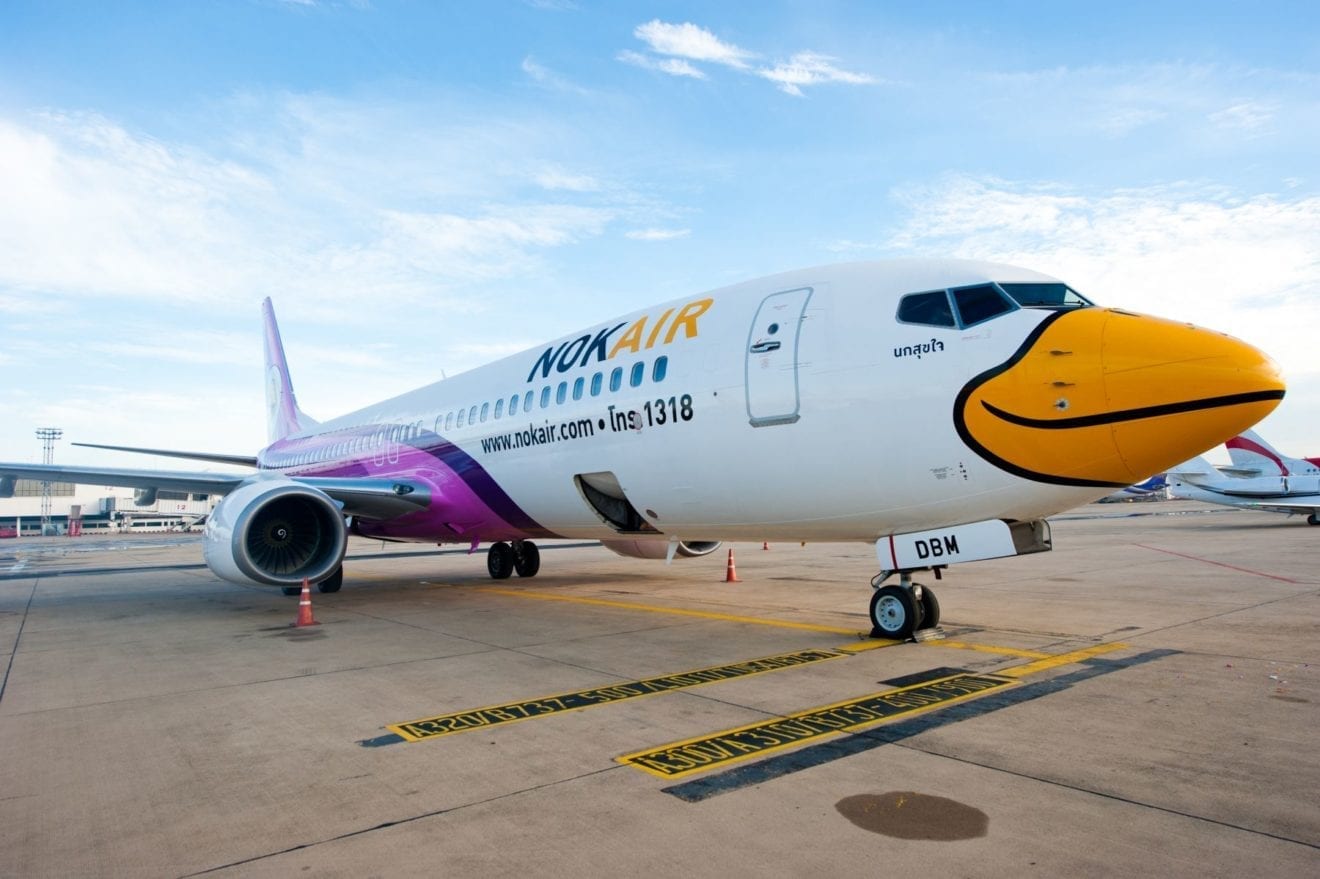
    Loss-ridden budget airline Nok Air is recruiting pilots and flight attendants and will acquire two new planes to serve high-season demand as its rehabilitation plan shows positive effects, its chief executive Wutthiphum Jurangkool said on Wednesday.

    He said that the airline’s recruitment of about 800 new pilots and flight attendants is evidence that its rehabilitation plan has been effectively implemented and has strengthened its financial status.

    Apart from staff recruitment, the airline would acquire two new aircraft to add to its 22-plane fleet by the end of the year.

    Mr Wutthiphum added that Nok Air will launch direct service between Bangkok (Don Mueang) and Hiroshima, Japan. It has increased domestic flight frequencies from three to four daily on the Don Mueang-Buri Ram route and from four to seven flights a week on the Chiang Mai-Ubon Ratchathani route.

    Nok Air’s passenger load factor stood at 88% in the first half this year, down from 91% year-on-year because of the reduction in aircraft numbers from 28 to 22, he said. The reduced fleet saw flight and passenger volume in the second quarter drop by 10.3% and 8.18 respectively.

    Nok Air reported a loss of 470 million baht in the second quarter, down from a loss of 742 million in the same period last year, and a net loss of 751 million for the first six months, down from a loss of 774 million year-on-year.