Author: Mei Ling Tan

  • Indian online lingerie retailer Zivame to launch network of physical stores

    Indian online lingerie retailer Zivame to launch network of physical stores

    Online lingerie retailer Zivame will launch 60 physical stores in major Indian cities within the next 12–18 months.

    The firm has been gradually controlling its losses over the past financial year and is set to achieve break-even by the end of next year.

    “Last one year has been phenomenal as we have strengthened our position across categories and deepened our presence in the markets,” said Zivame’s CEO Amisha Jain to PTI News. “With tech, data and innovation at the heart of everything we do, we are set up for exponential growth over the next few years.

    “We have more than 40 retail stores in tier-1 markets and we are looking at taking that number to 100 over the next 12-18 months. We will deepen our presence in these markets.”

    Zivame hit a US$47.48 million annual run rate for financial year 2020. The app contribution for the brand’s gross sales increased from 50 per cent in the last financial year to 65 per cent this year. Online channel accounts take up about 80 per cent of Zivame’s business.

    Zivame, counts Zodius Capital, Unilazer Ventures and Khazanah Nasional Bhd among its investors, and may seek additional financing of about $50 million this year.

  • 7-Eleven Malaysia plans to take control of Caring Pharmacy

    7-Eleven Malaysia plans to take control of Caring Pharmacy

    Convenience store operator 7-Eleven Malaysia Holdings is to boost its stake in Caring Pharmacy Group and take control of the chain.

    7-Eleven Malaysia says it plans to buy a further 25.35 percent of the Caring Pharmacy business, taking the total shareholding under control of its related parties and itself to 38.57 percent. That would require a mandatory general takeover offer under Malaysian stock exchange regulations as it takes the combined stake over the 33-per-cent threshold.

    The founder of Berjaya Group, Tan Sri Vincent Tan, is a major shareholder of 7-Eleven Malaysia Holdings and has shares in Caring Pharmacy Group.

    Caring Pharmacy was established in 1994 by five pharmacists, who were course-mates in the School of Pharmacy, Universiti Sains Malaysia. The first outlet opened in Taman Muda, Cheras and the chain has now grown to 121 stores.

    In a stock-exchange filing, 7-Eleven Malaysia said it wants to take its shareholding above 50 per cent, but will maintain Caring Pharmacy’s independent listing.

    Caring is a profitable player in the retail-pharmacy category and has a successful online business. Acquiring a majority stake in the pharmacy retailer would allow 7-Eleven Malaysia to expand its e-commerce operations using Caring’s expertise, as well as generally add to its product offer, networks and customer base.

    The process will be completed in the first half of next year.

  • Retailers in Singapore Driving Efficiencies to Free Up More Time for Customers

    Retailers in Singapore Driving Efficiencies to Free Up More Time for Customers

    In today’s fast-paced and constantly changing retail sector, where consumer activity is always evolving, there is much conjecture about the state of the Singapore market.

    While there has been talk of slumping retails sales, a Department of Statistics Singapore Retail Sales Index report in September 2019 showed that total sales value was up 1.9 percent month-on-month, and some retail categories had grown year-on-year, including apparel & footwear by 4.2 percent, computer & telecommunications equipment by 8.7 percent and medical goods & toiletries by 3.2 percent.

    In the current market, a number of retailers in Singapore are reporting success in a challenging operating environment. And a key focus for these retailers is optimising a number of areas of their operations to reduce costs and deliver an enhanced consumer experience.

    Freeing up more time for customers

    Behind the scenes, retailers spend a large amount of time and budget on administration tasks and optimising their staff – hiring and onboarding staff, training staff, rostering, covering shifts due to sickness or holiday leave, diverting staff to tasks such as stocktake, as well as payroll.

    Time spent on administration tasks takes away from the time that managers have available to concentrate on enhancing the customer experience. And in an ever-shifting retail environment, managers need to be investing as much time as possible on understanding and meeting the desires of consumer if they are to achieve success into the future.

    Additionally, with the rising popularity of online shopping, retailers need to focus a lot of time and effort on enhancing the in-store experience of customers, to ensure they still get foot traffic through the doors.

    In order to free up more time to prioritise the customer experience, many retailers are moving from manual or outsourced methods of managing their staff, to automating and handling it all in house on one single automated digital platform.

    Optimising operations

    Given the complexity of the modern retail environment, managers need to have full visibility of staff across multiple stores so they can optimise their operations. Solutions, such as automated workforce management, helps to reduce costs, cuts time spent on admin and provides a better service to employees, all of which allows retail managers to spend more time and budget on meeting the needs of their end customer.

    By accessing a central solution, retailers can also respond quickly and effectively to staffing needs for a few, a few hundred, or thousands of staff, across every store and department, during every retail season. This ensures retailers have the right level of staff rostered so they can have peace of mind that their customers are always being looked after.

    With automated rostering, staff can access their roster anytime online, which reduces errors and confusion that might lead to understaffing. And, with a POS integration, a manager can make staffing changes on the go, such as moving workers from stocktake to the shop floor, or increasing worker numbers during a lunch-time rush and then reducing them during quieter periods.

    Retailers finding success

    Many retailers are working hard to find success in the current Singapore market, and a big focus for them is becoming more efficient and cost effective in many areas of their businesses. Improving the way in which the workforce is managed is one way in which many retailers are reducing costs and finding more time to concentrate on enhancing the retail experience to ensure customers continue visiting their stores.

    Humanforce is a global provider of workforce management solutions for companies who need a flexible solution to manage complex workforces. For more information: www.humanforce.com


  • How to Invest Online in Best SIP Plans

    How to Invest Online in Best SIP Plans

    Investing in a systematic investment plan (SIP) is a smart thing. In SIP, an investor invests a pre-determined amount into a mutual fund scheme each month. These investments could be made on a weekly, quarterly, or even on monthly basis. Further, they have the flexibility of diversifying your investments by investing in different SIPs.

    Key Benefits of Investing in a SIP

    Investing in a mutual fund, and especially in a SIP scheme comes with its own benefits. Some benefits which you can reap by investing in a mutual fund SIP online include:

    • Cost-efficiency

    By planning the amount of money, you want to invest in different SIP schemes each month, you can eliminate the need to invest a lump sum amount, thus, cutting down on the costs involved in your investments. So, by starting a SIP online, you don’t have to invest huge sums of money at once, but you can still reap huge benefits.

    • Low Average Cost

    One of the biggest benefits you can get out of these investments is a low average cost. That is, investing in such schemes tend to improve your average cost of investment as they work in both bullish and bearish market trends.

    • Disciplined Investments

    With SIP online, it’s possible for the investor to make controlled investments. This means the investor doesn’t have to time the markets for making the investments. He or she can invest even during volatile market conditions.

    • Professional Management

    One other major advantage of investing in mutual fund SIP online is that most of the mutual funds are managed by experienced experts. Therefore, you don’t have to do all the work.

    Achieve your Goals with SIP investments

    To get the most out of your SIP investments, you need to ensure that you have set goals. You also need to ensure you have calculated the amount you must save each month from achieving these goals. Next, you must determine the amount you are going to invest each month or quarter in the scheme, so it can help you achieve all your financial goals.

    Once you are done deciding on your savings and the amount you are going to invest each month or quarter, it’s now time to do some homework on the different schemes available. When conducting your research, make sure you check and compare different schemes that have performed well in the markets in the last couple of years. By comparing the different schemes, you can determine which scheme you should be investing.

    When you have finished doing all the above steps, you can actually start investing. But before you do that, you must complete all the Know Your Customer or KYC documentation processes, in addition to other formalities, including submission of cheques and forms. Also, always try to choose long-term SIP plans so that you can reap maximum benefits. Don’t forget to diversify your investments to get optimal returns.

    Choose the Best Mutual Funds

    In India, there are currently over 5,500 different types of mutual funds available. Mutual funds that come under the equity scheme alone are over 300 in number. There are other types of schemes including gold and debt schemes. So, while choosing a scheme to invest can be hard, here are a few things you must keep in mind before investing.

    • Objective of Investment

    Ensure that all your investments are objective-oriented. These objectives could range from buying a house to marriage to simpler things like buying a car or funding your children’s education. Based on your objectives you must then decide whether to invest in a short-term or a long-term scheme. For example, planning your retirement is a long-term goal; therefore, you must invest in a long-term scheme.

    • The Fund House

    The second thing you should know is who your fund manager is. Your fund manager is usually a fund house that helps you manage your mutual fund investments. So, you must have adequate knowledge about them as they are the ones who take different investment decisions on your behalf.

    • Expense Ratio and Load

    The expense ratio and loads are small costs you must pay for making investments in SIP online. However, they tend to have a huge impact on your returns, especially for long-term investments. You can know more about them by reading the scheme documents or fund fact sheets.

    • Experience of the Fund Manager

    Your fund manager is the one who manages all your investments. So, besides knowing about your fund house, you should conduct thorough research on your fund manager. A good fund manager can help you get better returns for your investment. Hence, it is important that you choose a fund manager with expertise in handling diverse types of mutual fund investment schemes.

    Investing in SIP online has its own advantages. So, before making an investment, ensure that you are investing in a fund that has performing well in the past. These funds can be either equity funds, liquid funds, debt funds or tax-saving funds. Also, ensure you choose the right manager for your fund, and more importantly, ensure you choose the right funds for your investments, so you can reap higher benefits from them.

  • China’s Xtep arrives in five more Indian cities

    China’s Xtep arrives in five more Indian cities

    Hong Kong activewear firm Xtep will open new locations in five Indian cities by the end of next year.

    The firm launched in Bengaluru last year, going on to open stores in Chennai, Gurugram, and Thrissur (Kerala). It is expected to open its new locations in Hyderabad, Goa, Kochi, Pune, and Mysuru.

    According to an Economic Times report, the brand’s local director Vijay Chowdhary said the firm will expand next year by “introducing products through a mix of exclusive and multi-brand outlets”.

    Xtep India is preparing to “bring high-tech consumer sports technology and after that will invest in sports infrastructure after assessing the market demand”.

    Xtep currently operates outlets in 20 countries

  • Malaysia’s Go Noodle House opens first Singapore restaurant

    Malaysia’s Go Noodle House opens first Singapore restaurant

    Malaysian restaurant brand Go Noodle House has launched in Singapore – and is now preparing to enter five other Asia-Pacific markets.

    The new Somerset outlet is the brand’s second overseas location and is a step forward in its plans to expand throughout the region to New Zealand, Vietnam, South Korea, Indonesia, and the Philippines. It already operates a restaurant in Melbourne.

    Co-founder Lee Hon Wai based the business on a yellow rice wine noodle soup broth traditionally prepared by fellow co-founder Alvin Tan Kok Meng’s mother.

    The franchise has since seen extensive queues at all its locations in Malaysia, where it sells 18,000 bowls daily since opening in Kuala Lumpur in 2014.

  • Hong Kong International Airport launches online concierge shopping service

    Hong Kong International Airport launches online concierge shopping service

    Hong Kong International Airport has launched an online concierge service called Luxury Reserve.

    The concierge concept allows customers to choose duty-free purchases at home via HKIA’s e-Shop Luxury Reserve and collect it the items at the airport.

    Luxury Reserve features exclusive items and limited editions from more than 40 luxury brands including Alexander McQueen, Breitling, Chloe, Roger Vivier, Saint Laurent, and Stuart Weitzman.

    According to a statement, reservations can be made from two weeks to 48 hours before the customer’s flight departs.

  • Singapore’s Supergreek fast-casual concept opens

    Singapore’s Supergreek fast-casual concept opens

    Singapore’s first Greek fast-casual concept, Supergreek, has opened at Raffles City.

    Supergreek’s menu features a wide selection of healthy Greek dishes, including the popular Geek street food Souvlaki and homemade authentic Geek yogurt.

    “At Supergreek, we follow traditional Greek cuisine which is predominantly plant-based, and focused on lean meats, seafood and heart-healthy olive oil that is also fresh,” says Cheng Hsin Yao, owner and founder of Supergreek.

    He says he wants Supergreek to demonstrate that the cuisine has healthy, nutritious qualities.

    Located in the basement of Raffles City, Supergeek features a predominantly white-and-blue interior, inspired by Greece’s national flag.

  • Filipino kiosk chain Fruitas opened more than stores after IPO

    Filipino kiosk chain Fruitas opened more than stores after IPO

    Manila-based food-and-beverage kiosk operator Fruitas has grown its store network to 1036.

    The company, with a portfolio of banners, including Buko ni Fruitas, Juice Avenue, Black Pearl, and Johnn Lemon, has added 106 new stores this year to the 930 it ended last year with.

    Fruitas recently raised 896.55 million Philippine pesos (US$17.6 million) through an IPO, which it says will be used to further expand its network, upgrade existing outlets, develop new concepts, acquire new brands and repay debts.

    “We are happy with the results of the offering of Fruitas. The broker tranche was more than 2.5 times oversubscribed, while the local small investor tranche was a record amount for a Philippine IPO,” says Daniel Camacho, EVP of First Metro Investment Corporation (FMIC), the lead underwriter for the Fruitas listing.

    “The exceptional performance and positive response from the market prove that the public believes in Fruitas’ strong fundamentals and aggressive expansion plans in the country,” added Camacho.

    The company’s expansion plan includes opening 150 to 250 new stores per year through to 2022, as well as two new food parks by 2021.

    Founded in 2002 by Lester Yu, Fruitas now has 24 brands, making it a top player in fruit shakes, lemonade, buco and meat kiosk categories.

    Last year it acquired the Sabroso Lechon business.

  • IoT-enabled smart barista coffee machines set for SEA roll out

    IoT-enabled smart barista coffee machines set for SEA roll out

    Noble Vici Group is planning to deploy smart IoT-enabled self-service barista coffee machines throughout Southeast Asia.

    The V-More Xpress machines perform real-time analytic data collection through the firm’s IoT platform and connect customers to the machines online.

    The firm has been developing its own ecosystem from e-commerce to IoT infrastructure for the past two years while tapping on internal resources and capital to expedite the installation of smart IoT-enabled barista machines across Southeast Asia within the next 18 months.

    “We aim to be the fastest player to deploy these self-service machines in Asia,” said NVGI CEO Sir Eldee Tang. “NVGI is targeting uplisting to the mainboard in the US near the end of 2020. We intend to further strengthen the mix of the management team in preparation for the future prospect ahead.”

    In conjunction with the latest round of funding initiatives, NVGI has begun the rollout of its smart barista coffee machines, partnering with Barista Uno, which sells roasted coffee sourced from Java. V-More Xpress will be able to monitor the consumption of each machine to ensure operating uptime.

  • Label technology launched to foil counterfeiters

    Label technology launched to foil counterfeiters

    Security-label technology has been launched in South Korea that can prevent “label replacement” on clothing preventing counterfeit items being disguised as genuine.

    The state-run Korea Minting, Security Printing and ID Card Operating Corp (Komsco) say its security-label technology can make labels for clothing using fibers containing special security materials.

    If the label is placed in front of a special security material detector, an alarm sounds to confirm it is genuine.

    On the contrary, fake labels do not generate sound because sensors cannot recognize the presence of security materials.

    The technology can be used not only for labels attached to clothes but also for embroidery attached to uniforms or sports club uniforms, officials from Komsco explained.

    Eco-friendly containers for products such as instant noodles can be developed using eco-friendly cotton fiber of the same type used to make banknotes,

    “The key to money manufacturing is anti-forgery technology,” Komsco CEO Cho Yong-man said, adding that “the technology can be used in various areas of society, not just money”.

  • APAC driving Fortnum & Mason growth

    APAC driving Fortnum & Mason growth

    Upmarket British department store firm Fortnum & Mason has enjoyed double-digit growth this financial year largely driven by its operations in Asia.

    The company’s 2018/19 financial statements show strong international growth of 16 percent, while growth in Hong Kong and Japan stands at 28 percent.

    The store recently launched a new flagship branch in Hong Kong (encompassing a shop and restaurant) as its first standalone location in Asia, intending to reduce its reliance on the UK and capitalize on international demand for British goods.

    ‘‘Fortnum & Mason has delivered another year of strong sales growth, with revenue rising to £138 million as its proposition proves to be the right cup of tea for shoppers,” said GlobalData Retail analyst Emily Salter. “Though total revenue was bolstered by the opening of its new Royal Exchange restaurant in November 2018, it is clear that its premium and unique products enhanced by its strong British identity resonate well with domestic shoppers and tourists, even in the tough UK trading environment.”

    The company is coming under increased pressure from premium department-store competitors, with Selfridges and Harrods investing significantly in their stores. Harrods has restored its food halls, and Selfridges has renovated numerous areas of its flagship London location to boost footfall, as well as improving the experiential elements of its store, adding restaurants and a cinema.

    The brand’s Hong Kong launch coincides with a period of heavy political turmoil for the territory, prompting some criticism of Fortnum & Mason’s sense of timing.

    “It’s not our place to get overly political,” said Fortnum & Mason CEO Ewan Venters. “We are an English brand that goes out into the world to sell tea, biscuits and jam. We are continuing to trade as we would normally but we are being respectful of what is going on in the country – there was no launch party for example as it just wouldn’t have felt right.” Venters added.

  • Esprit launches JV to run Mainland China business

    Esprit launches JV to run Mainland China business

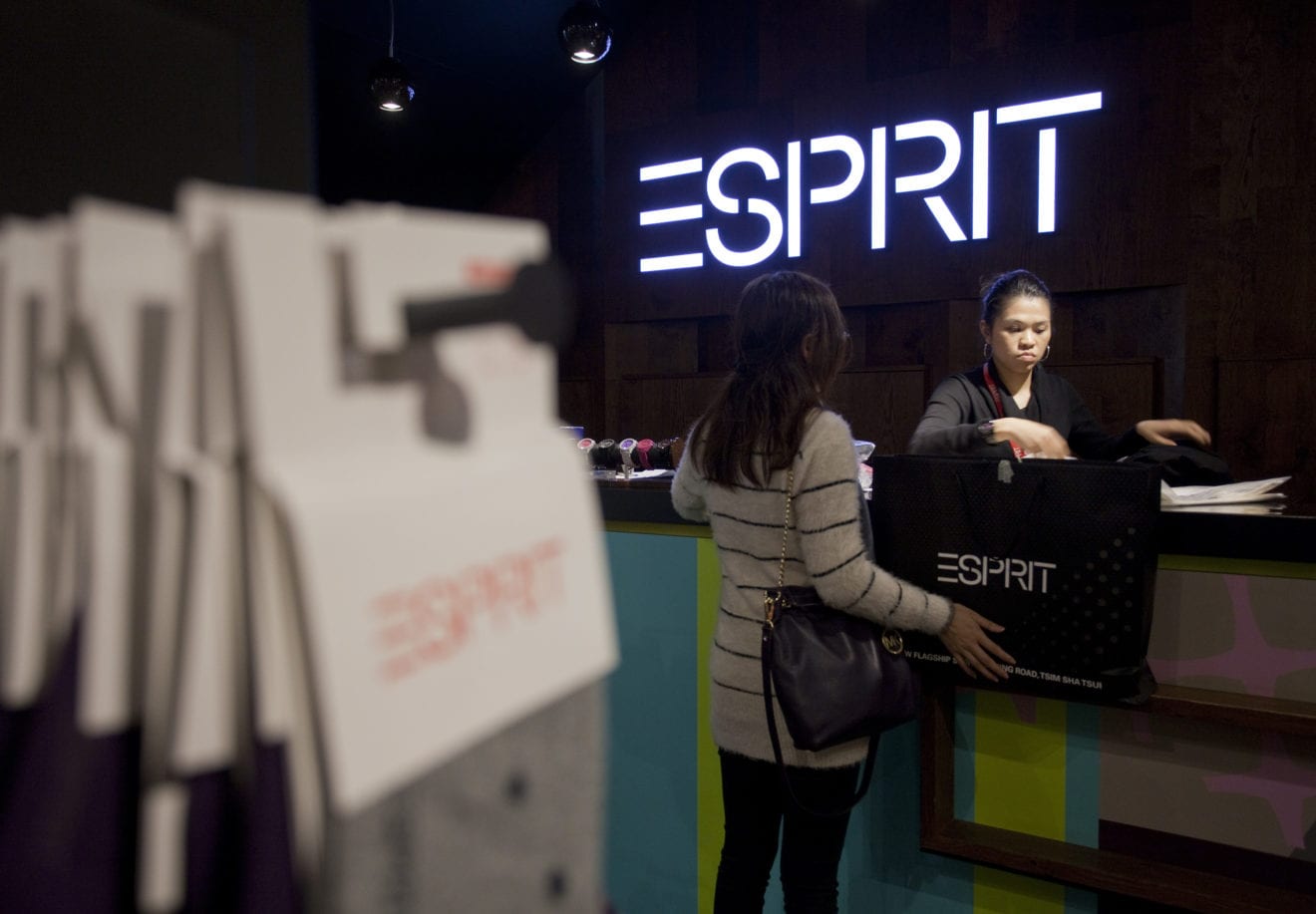
    Hong Kong-listed fashion retailer Esprit has announced a joint venture business to take over the marketing and retailing of its products in Mainland China.

    Through a subsidiary called Million Success, the fashion retailer will hold a 40 percent stake in the Esprit China business, with the majority partner being Mulsanne Group, a company listed in Hong Kong last May. The deal covers the mainland only, not Hong Kong, Macau or Taiwan.

    In a stock-exchange filing on Sunday, Esprit company secretary Patrick Lau Yiu Pong said Mainland China had always been “an important pillar” of Esprit’s strategic plan.

    Subject to regulatory approvals, the joint venture is expected to launch in June next year. Prior to that, Esprit will be closing some underperforming mainland stores, before transferring the assets of the remainder to the JV company.

    “The directors believe that the deal creates a strong base for the Esprit brand to improve the relevance and accelerate growth,” said Pong in the filing.

    Mulsanne Group is an investment holding company engaged in retail and online platforms for menswear, as well as product development. The company’s brands include GXG, GXG Jeans, GXG. Kids, Yatlas and 2XU. The group operates more than 2000 stores across Mainland China.


  • Vietnam needs more qualified workers

    Vietnam needs more qualified workers

    Vietnam should improve its workforce quality and create better jobs if it’s to escape the middle-income trap, experts say.

    As of 2018, only 12 percent of jobs in Vietnam were high-skilled, while 54 percent were medium-skilled jobs and the remaining 34 percent were low skilled ones, Valentina Barcucci, an economist with the International Labour Organization (ILO), said at the Vietnam Labour Forum 2019 on Wednesday.

    The percentage of high-skilled jobs was low compared to the global average for upper-middle-income countries, who have 20 percent of their jobs in this category, she said.

    “Vietnam does not need more jobs but needs better jobs. Although its unemployment rate is very low, job quality is still a challenge,” Barcucci said.

    The unemployment rate stood at 1.99 percent in the first nine months of the year, according to the General Statistics Office.

    With the rise of Industry 4.0, a large amount of low-quality, low-cost labor in Vietnam would stop being an advantage. As such, developing high-quality labor is an inevitable requirement to ensure Vietnam can develop strongly, said Vo Tan Thanh, Vice President of the Vietnam Chamber of Commerce and Industry (VCCI).

    “To become a high-middle-income country by 2030, Vietnam needs social improvements in parallel with economic development. Fortunately, Vietnam is taking the right steps such as improving the skills for the workforce, expanding social security coverage, and modernizing labor institutions,” said Chang-Hee Lee, ILO Vietnam Director.

    The Ministry of Labour, Invalids and Social Affairs estimates Vietnam’s current workforce at 56 million people.

  • Making cars costs more in Vietnam than other ASEAN countries

    Making cars costs more in Vietnam than other ASEAN countries

    Cars assembled and produced in Vietnam cost 20 percent more than in Thailand and Indonesia because a large number of parts have to be imported.

    Do Thu Hoang, Vice President of Toyota Vietnam, said at a forum Thursday that suppliers in the country are capable of making simple parts such as seats and wires, but for other parts like fuel caps, costs in Vietnam are 2-3 times higher than in Thailand and Indonesia.

    The country has to import about $2 billion worth of car parts each year, mostly components like the breaking and steering system, from countries like Japan, China and South Korea, according to a report submitted at the forum by the Ministry of Industry and Trade.

    Pham Tuan Anh, deputy head of the ministry’s industry department, said that the large portion of imports puts the localization rate of cars with nine seats or less at 7-10 percent, even though the country had targeted a 60 percent rate by 2010.

    Anh said that the reason for the imports is the country’s small market size, making suppliers unable to produce large volumes to lower prices.

    Hoang proposed that the government provides financial support for suppliers to upgrade their machinery and equipment to produce more advanced parts.

    “Without support, local car producers will continue to rely on imports, and local suppliers will struggle to grow.”

    Pham Van Tai, CEO of Truong Hai Auto (THACO), suggested that the country should scrap imports tax on car parts that local producers are not capable of producing.

    Vietnam began developing its car industry in 1991, 30 years later than other countries in the region.

    The sales of imported cars in the first 10 months surged 2.2 times to 106,100 units, while that of locally-assembled ones fell 12 percent to 153,100, according to the Vietnam Automobile Manufacturers Association (VAMA).