Author: Mei Ling Tan

  • Hyundai Korea’s employees to be more casual at office

    Hyundai Korea’s employees to be more casual at office

    Jeans and T-shirts will be allowed at Hyundai Motor offices from March 4 as the auto group’s heir apparent Chung Eui-sun looks for new ways to give the automaker a younger, trendier feel. On Monday morning, Hyundai Motor employees at its headquarters in southern Seoul were told that they are free to dress however they want from next month. Unlike a no-tie day, Hyundai’s new dress code didn’t include any special rules or guidelines.

    The free dress code applies to all Hyundai office workers, according to the company spokesperson, but not for workers at production facilities due to safety issues.

    While some time will be needed for Hyundai employees, who are much more familiar with formal suits, to get used to their new fashion freedom, industry sources say the move is likely to spread to Hyundai affiliates soon.

    Hyundai has long been considered one of most conservative Korean companies, as with most other companies in the traditional manufacturing sector like shipbuilding and steel. However, the automaker has been trying to rebrand itself as a mobility technology company given the growing importance of digital technology in the auto industry.

    Hyundai Motor Group Executive Vice Chairman Chung Eui-sun stressed in his New Year’s message that he will ramp up investment in the sharing economy, artificial intelligence and smart mobility to keep up with the radical paradigm shift.

    LG also started to shift its dress culture earlier last year. LG Electronics and LG Corp. adopted free dress codes from September.

  • Build-A-Bear to open more stores in next 10 years in India

    Build-A-Bear to open more stores in next 10 years in India

    For more than 21 years, U.S. based personalized experiential toy retail brand Build-A-Bear has been sharing hearts and bear hugs globally, and after a long wait, Tablez – the retail arm of LuLu Group International, has launched the first Build-A-Bear store in India, at Toys”R”Us, Phoenix Marketcity in Bangalore. Build-A-Bear is a global customized stuffed-animal retail entertainment brand that aims to reach as many as 9 million households in the top 15 cities in India by 2025. Besides standalone stores, shop-in-shop formats of Build-A-Bear would be launched within Toys“R”Us.

    On this special occasion, Adeeb Ahamed, MD, Tablez said: “The Build-A-Bear concept is a one-of-a-kind retail experience, and we are thrilled to open the first store in Bangalore. Build-A-Bear is synonymous with creativity and novelty for children. I am sure that each child that enters our store will cherish their experience and leave with an indelible memory.

    “From standalone stores to shop-in-shop formats, Build-A-Bear is ready to reach out to families and kids in India and help loved ones create memories and spend more time together. We plan to open 20 standalone stores of Build-A-Bear across key cities in India over the next 10 years, along with shop-in-shop formats across all our Toys”R”Us stores as well.”

    Dorrie Krueger, Build-A-Bear Workshop Chief Strategy Officer, said, “Together with Tablez India, we are excited to open the first Build-A-Bear store in India and continue to expand into this important global market. We look forward to introducing the Build-A-Bear brand and sharing the joy of making a new furry friend with millions of families.”

    Build-A-Bear is a global brand that kids love and parents trust for fantastic family experiences. The ‘Choose Me’ wall at every Build-A-Bear store is where the empowerment journey begins as each guest chooses an unstuffed animal to bring to life. Accessories give customers the freedom to customize their creation. The heart ceremony is where one can add special wishes to their friend. During the stuffing process, a heart is placed in the bear along with special wishes, and the guest promises to care for their new furry friend once they are given the birth certificate. This signature ceremony brings each stuffed animal to life in a personal way, further ensuring a greater attachment.

    Established in 1997, Build-A-Bear has helped millions find their own meaning in a new furry friend. The brand has nearly 500 stores worldwide and more than 180 million furry friends have been made globally in its 21-year history. Build-A-Bear helps guests mark special occasions, start friendships, and inspires people to make their own adventures. At Build-A-Bear, one is empowered to feel that anything is possible.

    Further, a Build-A-Bear shop-in-shop format will follow in Vega City Mall, Bangalore; City Centre Mall, Mangalore and Phoenix Marketcity, Pune. Build-A-Bear plans to expand to as many as 65 shop-in-shop format stores and 20 standalone stores in India over the next 10 years.

  • Men make-up driving K-beauty boom

    Men make-up driving K-beauty boom

    Men wearing makeup – once a practice unique to TV stars and celebrities – is becoming a part of popular culture in South Korea. As an increasing number of South Korean men are purchasing clothes, cosmetics, and other beauty products to take care of their looks, cosmetics goods for men are expanding both in terms of variety and sales. Olive Young, a major South Korean cosmetics store, said sales of cosmetics for men increased by 30 per cent last year compared to the year before.

    Cosmetics for men are going beyond BB creams and cushions to include coloured lip balms, eyebrow products, concealers and eyebrow-hair scissors.

    A coloured lip balm for men, for instance, has seen sales skyrocket 16-fold over the last two years, according to Olive Young. Sales of makeup cushions and BB creams have increased by 30 per cent as the number of men wearing make-up burgeons.

    Drawing eyebrows, once a practice unique to women, is now spreading among men, as seen by the fact that sales of eyebrow products for men have increased by 25 per cent over the last two years.

    An increasing number of eyebrow-hair scissors, nipple bands, and body hair removers are being developed for men as well.

    “Makeup is now becoming a tool to express one’s confidence, leading to increased demand for various cosmetic products for men,” said Olive Young.

  • Foreign investors return to surging Vietnamese stock markets

    Foreign investors return to surging Vietnamese stock markets

    At over VND3 trillion ($129.21 million), foreign buying in the local bourses from February 1-25 is three times the January figure. Foreign investment since the beginning of the year has been worth over VND4.3 trillion ($185.16 million). They have been focusing on blue chips like Hoa Phat (HPG), one of Vietnam’s leading steel producers. The company, ignored for the last several months, returned to the portfolio of foreign investors and saw millions of shares traded every day in February.

    In the 11 sessions after the market reopened February 11 after the nine-day Lunar New Year (Tet) holiday from Feb 2-10, foreigners bought 20 million shares for more than VND600 billion ($25.8 million). A month earlier they had been net sellers of over 10 million shares.

    Other blue chips like Vietnam’s biggest dairy company Vinamilk (VNM), private conglomerate Masan Group (MSN) and the biggest bank by assets Vietcombank (VCB) have all run up quite sharply as a result of buying by foreign investors.

    The benchmark VN-Index has gained more than 100 points this year, equivalent to over 11 percent. On Monday it closed at 994.43 points, within touching distance of the psychological 1,000-point mark.

    Foreigners have played a significant role in the recovery, having invested over VND4.3 trillion ($185.16 million) in the period, almost half of it since Tet.

    According to Rong Viet Securities Company, foreign investment this year could actually go down as a result of the reduction in monetary easing and fiscal stimulus across the globe this year, meaning there is less foreign cash available to invest in marginal markets such as Vietnam.

    But it also points out that Vietnam is on the verge of being upgraded to ‘emerging’ market, which could be a positive sign for foreign investors.

  • Newest Esprit stores reveals new concept

    Newest Esprit stores reveals new concept

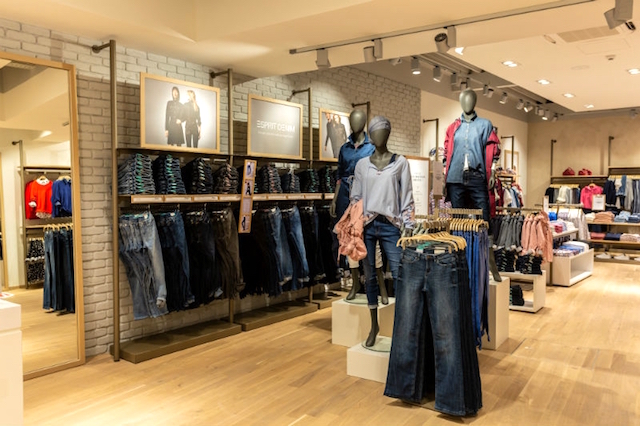
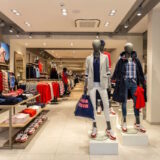
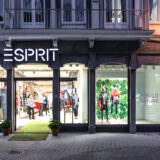
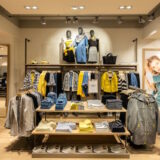
    Two new Esprit stores opened in Europe this month give an insight into the new direction of the embattled brand as it rebuilds. In the historic centre of Liege in Belgium a new 400sqm boutique stocks only womenswear. According to an understated news release issued in Germany, the “modern and bright store design creates a pleasant and warm atmosphere”.

    A standout feature is a denim wall standing in front of a brick wall painted in light grey. The floor comprises terrazzo tiles and oak parquet.

    The new store also reflects a growing focus on Esprit’s e-commerce offer, with a click & collect area for customers to pick up items they have ordered online.

    The second of the Esprit stores to open in Europe this month is an outlet store at Wolfsburg in Germany.

    The 400sqm store is described by Esprit as “an important location” in its outlet portfolio. It offers both women’s and men’s apparel.

    Michael Ernst, centre manager of Designer Outlets Wolfsburg, says customers have been asking for an Esprit store at the centre for several years.

    “We are delighted to be able to fulfil this wish now. The new store offers an attractive range of fashion at excellent value.”

    Designer Outlets Wolfsburg is the first inner-city outlet centre in Germany, home to more than 70 designer and lifestyle brands.

    After ongoing losses, Esprit last year launched a massive overhaul of its business with a new management team at the helm, promising changes to product, its retail network and its e-commerce offer.

    The company is due to release its interim results this week.

  • India’s V-Bazaar opens 1st outlet in Lalitpur

    India’s V-Bazaar opens 1st outlet in Lalitpur

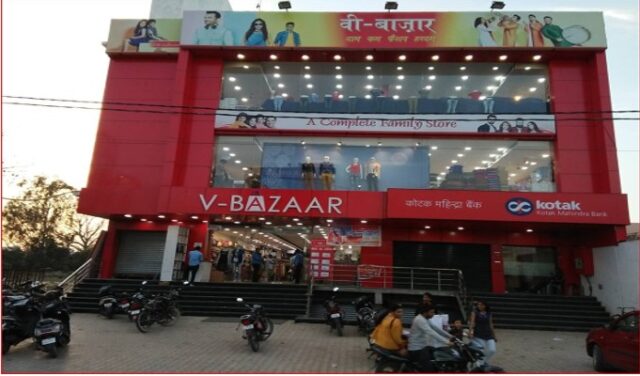
    V-Bazaar has announced the launch of its 1st store in Lalitpur and 30th in Uttar Pradesh. V- Bazaar is a complete family fashion store which brings trendy and fashionable merchandise to every category of people, at reasonable prices by eliminating the middleman between manufacturers and customers. The store is spread over 8,856 sq.ft. area.

    Announcing the launch, Hemant Agarwal, CMD of V-Bazaar said, “It is a very happy and proud moment for us to open our 1st store in Lalitpur. Looking at the overwhelming response of our other store, we thought of providing the convenient shopping experience to the customers of the city. It has been our attempt to provide our customers the superior merchandise, service and the overall international shopping experience. This 1st new store in Lalitpur is a significant achievement for us. Our new store is fashionable and individualistic, showcasing a collection of the finest quality merchandise at unbelievably pocket-friendly prices.”

    The new showroom has been spread over large area with spacious interiors. The new store offers a vibrant trendy line for the youth which includes shirts, pants, sherwanis, kurta pyjama, jackets for men and fancy wedding sarees, wedding designer suits, cotton suits, pants, half sleeve and full sleeve t-shirts for women. There is large variety of dresses for your young ones too.

    The range offers funky, stylish, and incredibly comfortable garments that are a must in every teenagers and young adult’s wardrobe. Created while keeping current international trends in mind, the collection is trendy, fashionable and is available at unbelievably low prices. Customers can make their shopping fun with special opening offers at V-Bazaar as on every purchase they get assured gifts.

    V-Bazaar primarily operates in Tier II and III cities. It is chain of value retail fashion stores offering apparels for men, women, kids, home furnishing, footwear and accessories catering to the entire family.

  • Seoul to get its first Emart Traders branch next month

    Seoul to get its first Emart Traders branch next month

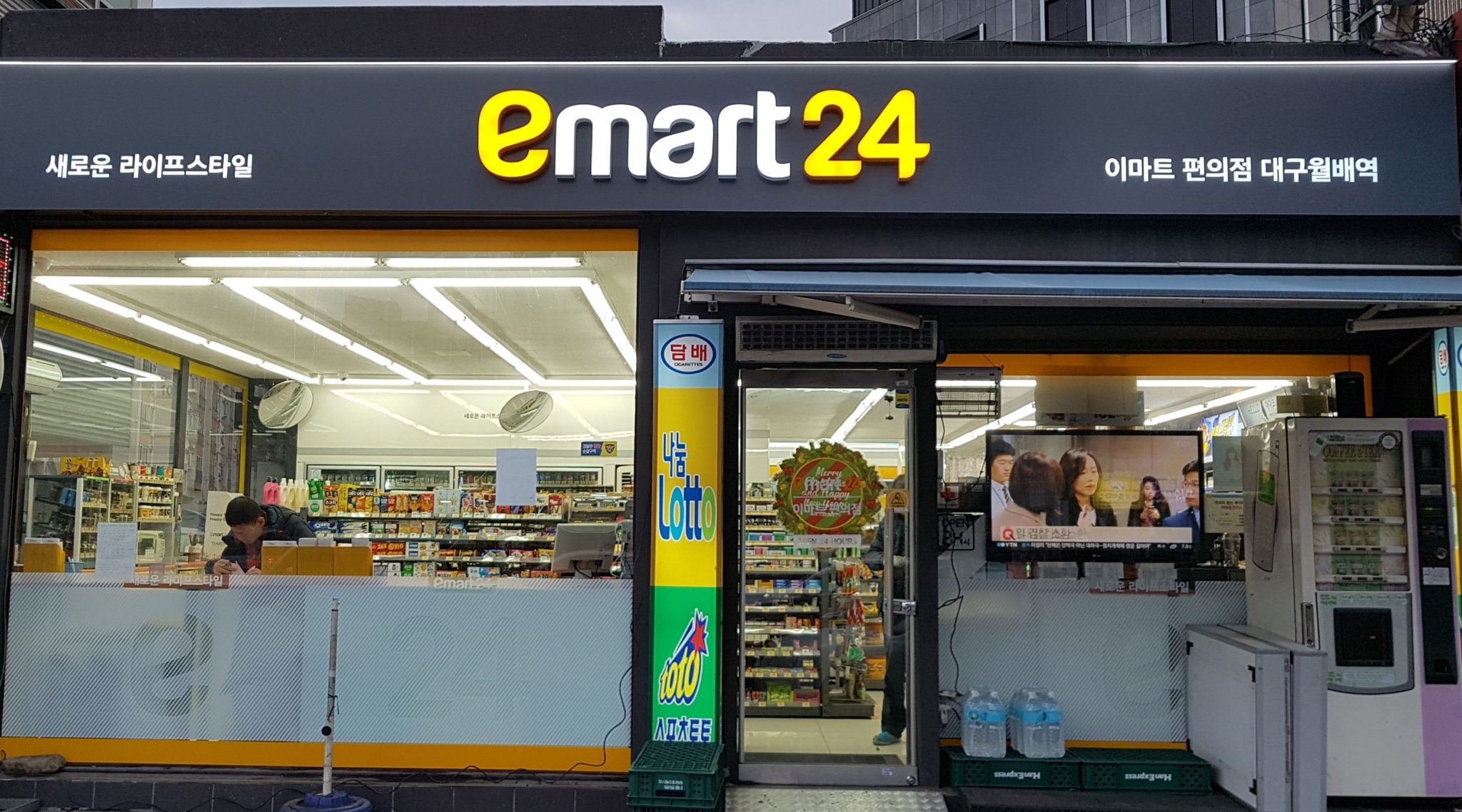
    Emart, a Shinsegae Group company, will open a new branch of Traders, its big-box warehouse chain, in Seoul next month. It will be the first branch in the capital. The outlet will be located in Wolgye-dong, Nowon District, northern Seoul, with the opening scheduled for March 14. The Wolgye Traders is being built in the parking lot of Emart’s Wolgye store. The warehouse store will be 9,917 square meters (106,746 square feet) in size, with 45,302 square meters of floor area.

    Emart said the annual sales goal for the first Seoul branch of Traders is 140 billion won ($12.6 million). The company is planning to raise the new branch’s competitiveness by offering instant and fresh food at prices that could be 45 to 50 percent lower than the average price at department stores.

    There are currently 15 Traders branches nationwide, and Emart is planning to expand the number to 18 by the end of this year.

  • Wayne’s Coffee debuts in China

    Wayne’s Coffee debuts in China

    Swedish cafe chain Wayne’s Coffee has opened its first outlet in China. The new store on Shanghai’s Nanjing Xi Lu serves coffee, sandwiches and Swedish pastries to consumers. The move represents a courageous first step in a market dominated by international and local competitors. China is Wayne’s second market in Asia after the brand launched in Vietnam in June last year. It currently operates seven locations in Ho Chi Minh City.

    While the brand has been criticised for lacking a distinctive look and presumed by some observers to be a local Starbucks clone, the brand has in fact been running in Sweden since 1994, where it was the first venue in the country to serve cafe latte. It was also the first to serve the latte in Saudi Arabia when it opened there in 2010.

    Wayne’s more aggressive expansion phase was recognised when the brand won “Franchise chain of the year 2017” in Stockholm. It currently operates more than 140 locations internationally.

  • Hanoi businesses do brisk business with Trump-Kim summit specials

    Hanoi businesses do brisk business with Trump-Kim summit specials

    Several enterprising businesses have cashed in on the Trump-Kim summit with signature products – craft beer, cocktails, haircuts and T-shirts. A standing bar on Tran Vu Street has already gained a lot of attention with a craft beer named Kim Jong Ale, a kimchi flavored beverage concocted in Saigon.

    Huong Anh, who manages the bar, has waxed lyrical about the beer for the occasion. “Kim Jong Ale is a customers’ favorite here. The inspiration behind this beer is the pure streams of Mount Paektu, which is located between North Korea and China,” she told reporters.

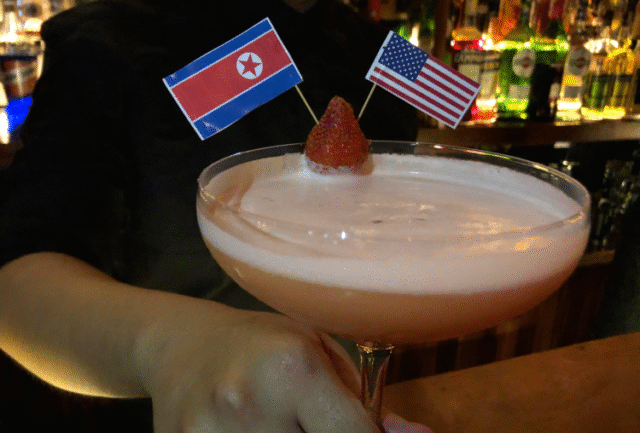
    Yet another bar on Hang Than Street brought out a cocktail called “Make the world great again”, mixing soju, bourbon and Fireball Cinnamon Whisky, pineapple juice, vanilla and grenadine.A wine bar in the capital city has also helped itself to some publicity and increased business with a cocktail called “Peace Negroniations,” a variation of the classic Negroni, made with pink-grapefruit soju, vermouth and bitters. We replaced gin with soju for this special cocktail,” bartender Chau said.

    It took two days to complete this recipe, said Ngo Dinh Tien, a bartender.

    A pizzeria has been offering free pizzas to people with names similar to that of Kim Jong-un and Donald Trump, and to those sporting the distinctive haircuts of both leaders, from February 20-28.

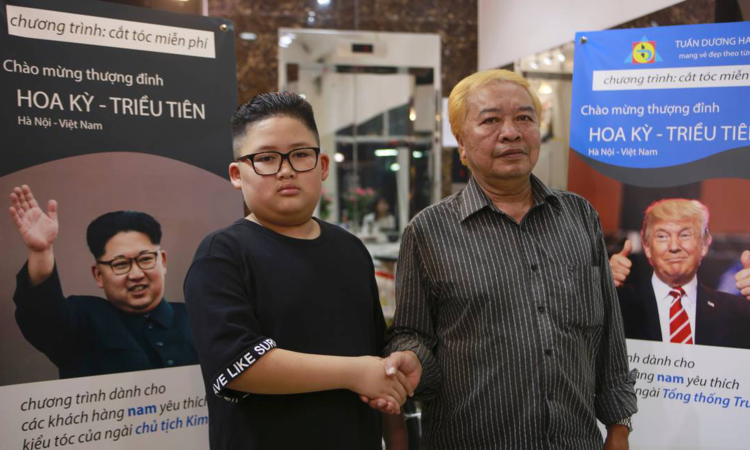
    To get such haircuts, the place to go to is the one on De La Thanh Street that has been offering these for free. The salon is even organizing a contest for people getting such haircuts, with the grand prize being free haircuts for three years.

    A South Korean restaurant in the My Dinh area has hung a banner on their door, featuring Kim Jong-un and Donald Trump and welcoming the summit. The owner said the poster has attracted a lot of attention with many customers taking selfies with it.

    An Old Quarter restaurant has hogged some attention for itself with hamburgers named after the two leaders – “Durty Donald” and “Kim Jong Yum,” served with U.S. and North Korean flags.


    Perhaps the hottest summit item has been souvenir T-shirts. Truong Thanh Duc’s small shop on Hang Bong Street has been operating at full capacity, making 500 shirts a day with a design that says peace and carries pictures of both leaders. Each T-shirt costs less than $5


    .

  • Convenience drives Chinese smart-home market

    Convenience drives Chinese smart-home market

    New research from market intelligence agency Mintel has suggested that convenience will drive the future of the Chinese smart-home market. However, affordability is the biggest barrier to purchasing, in an environment where today’s Chinese consumers are growing increasingly familiar with smart home devices. According to Mintel, as many as 68 per cent of urban Chinese consumers who have purchased or are interested in smart-home devices say that convenience is a primary reason for their interest. Meanwhile, 60 per cent attribute their interest in smart-home devices to trying new technology and half because smart home devices make them feel more relaxed at home.

    “Chinese consumers are now increasingly knowledgeable about how smart-home appliances can help to simplify daily lives,” said Mintel China research analyst Kaye Huang. “Convenience as well as an interest in trying new technology are big reasons for Chinese consumers to purchase smart-home devices. Parents are showing more interest in smart-home devices than those without children; which is likely to be attributed to how the devices can help parents save time and effort. On the flip side, price, more so than privacy, is what is keeping Chinese consumers from purchasing these devices. This indicates that companies in the smart-home market need to put more effort into communicating why these products are value for money.”

    Meanwhile, Mintel research reveals that automatic adjustment to environmental changes is a big opportunity for players in the smart home devices market; more than half of urban Chinese consumers think that this function is a necessity.

    “What will stand out in the smart-home market is the ‘automatic adjustment of parameters’ which enables smart-home devices to automatically respond to environmental changes, such as temperature and humidity. Today’s Chinese consumers have higher expectations on their living conditions and automation is an important part of making the living environment ‘smarter’,” said Huang.

    “Voice control has been a popular area of development in recent years especially since the industry believes that it could be the next generation of user interaction,” continued Huang. “Yet, our research finds that voice control, while widely-known, is a less-used smart home function. While playing music and asking for general information are two main functions that Chinese consumers are using for voice control, in reality this only counts for a handful of consumers, suggesting consumers’ habit of using voice control is far from being firmly established. In the future, brands can look at rolling out strategies and initiatives to instil the habit of using voice control among consumers in China.”

  • Singapore’s VeganBurg plans US expansion with franchising

    Singapore’s VeganBurg plans US expansion with franchising

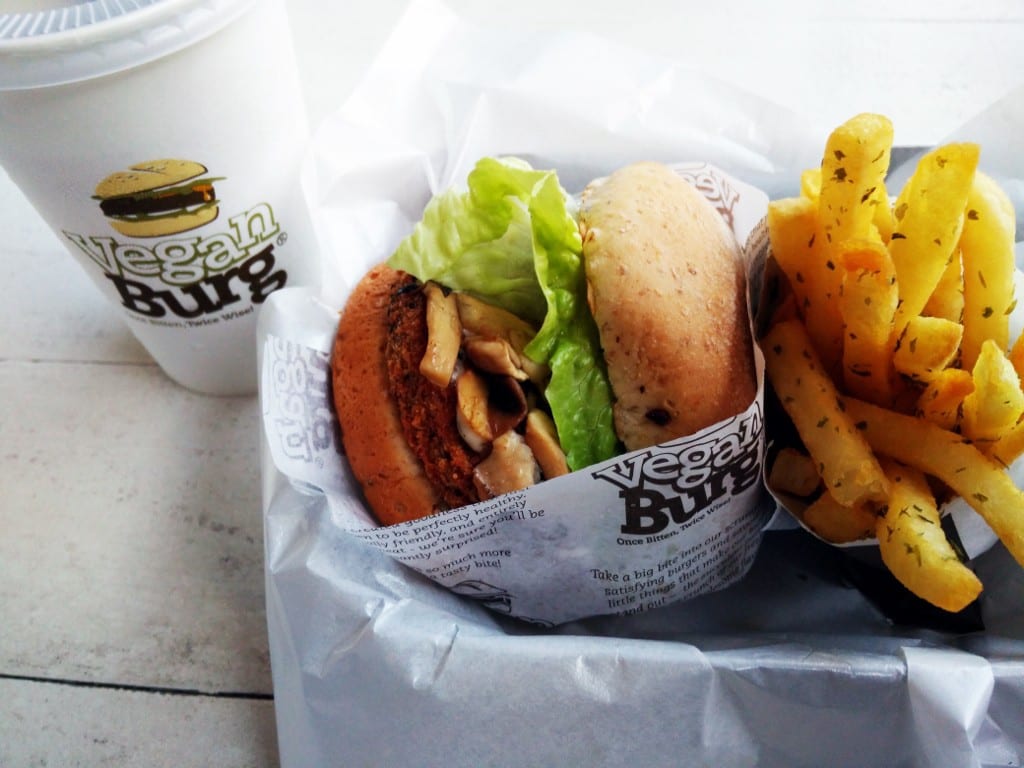
    Singapore-based burger chain VeganBurg is seeking new franchisees to expand its business in California. The company will hold a franchising conference in Las Vegas next month, expected to be attended by many Californian companies and individuals evaluating franchise concepts. “VeganBurg has developed a passionate following from customers in Singapore and internationally and we have spent the last few years refining operations and investing in what has made VeganBurg a winner — our juicy burgers, fantastic staff, and world-class customer service,” said Alex Tan, VeganBurg CEO and founder.

    “We are interested in meeting enthusiastic and dedicated people who are passionate about the environment and impeccable people support,” he added.

    VeganBurg’s franchisees can be assured of support from pre-opening and training. An operations team will help new partners establish supplies of proprietary ingredients and products, assist with site selection and interior design, initial training and ongoing training support, product research and development, branding and marketing assets, systems, tools and processes.

    Founded in 2010, VeganBurg has been redefining food pop culture and comfort food in Asia and North America with its 100-per-cent plant-based menu.

  • Tencent-backed AI startup checks students’ math homework

    Tencent-backed AI startup checks students’ math homework

    In China, there is a big culture of ‘practice makes perfect’. As such, school homework is a battlefield not only for Chinese children, but also for their parents, and teachers, who have the task of reviewing assignments. Technology is increasingly lending a helping hand, though, and now, a Beijing-based online education startup has developed an artificial intelligence-powered math app that can check children’s arithmetic problems through a simple snap of a photo. Based on the image and its internal database, the app automatically checks whether the answers are right or wrong.

    Known as Xiaoyuan Kousuan, the free app launched by the Tencent Holdings-backed online education firm, has gained increasing popularity in China since its launch a year ago. It claims to have checked an average of 70 million arithmetic problems per day, saving users around 40,000 hours of time in total.

    Yuanfudao is also trying to build the country’s biggest education-related database generated from the everyday experiences of real students. Using this, the six-year-old company, which has a long line of big-name investors, including Warburg Pincus, IDG Capital, and Matrix Partners China, aims to reinvent how children are taught in China.

    “By checking nearly 100 million problems every day, we have developed a deep understanding of the kind of mistakes students make when facing certain problems,” said Li Xin, co-founder of Yuanfudao (which means “ape tutor” in Chinese) in a recent interview. “The data gathered through the app can serve as a pillar for us to provide better online education courses.”

    Yuanfudao is China’s second largest online education unicorn by valuation, according to CB Insights. It is behind VipKid, which uses an online platform to connect Chinese students with North America-based teachers to learn English via livestreaming.

    Yuanfudao’s flagship app covers different subjects including math, English, and chemistry. Li said the firm has built a database with student answers to 6 billion questions. He said this know-how has enabled Yuanfudao to better analyze individual students, helping it towards the ultimate goal of providing tailor-made courses and homework.

    Li said the company’s aim is to “dramatically improve education efficiency in China.”

    “Giving different homework to different students even if they study in the same class is even more difficult than providing different news to different readers based on their individual interests and tastes,” said Li. “What we do requires a more accurate profiling of students.”

    Li said that the company’s flagship online tutoring app can produce a basic profile of a student’s strengths and weaknesses based on their answers to three to five questions.

    Founded in 2012, Yuanfudao, which has 200 million users (2 million of whom are paid users) bagged US$300 million in a round of funding in late December, valuing the company at more than US$3 billion. The Chinese online education market is hot, attracting increased interest from technology giants such as Tencent, Baidu, and NetEase in recent years.

    “We don’t really need money, but investors insist […] [on offering more funds]. We still had US$100 million in our bank account before landing this round,” said Li. He said the company was immune to the so-called tech winter, which has seen the venture capital pool almost dry up in China recently.

    Despite a recent slowing of China’s economy, the country’s online education market – covering children from kindergarten age to high school – is set to triple to 150 billion yuan (US$22.33 billion) by 2022, according to data from iResearch, fueled by ambitious “tiger” parents who are prepared to invest heavily in their children’s after-school education.

    Li said it was not his intention to make children work harder.

    “We don’t want children to drown in a sea of homework,” he said. “In the old days, you needed to put in lots of work and practice to stand out. But now technology can make a change.”

    Using AI technologies, the company has already made it possible to recommend different courses to students based on their individual progress on a certain subject. Li said the company can even help to close the educational gap between developed and underdeveloped regions in China through a deep analysis of students’ homework.

    The company has another popular homework assistant app, Xiaoyuan Souti, which uses similar image recognition technology to find answers to student questions across a range of subjects, guiding them through the steps needed to solve particular problems.

    “Through the app, we know exactly what kind of questions teachers in Shanghai assign as homework to students,” Li said. “By collecting the information and studying it, we can enable students in the rest of China to have access to Shanghai’s education resources, in the long run [providing] a fair education environment for all children.”

    “At the end of the day, the only thing that matters in education is one’s curiosity and cognitive ability,” he said.
  • Foreign investment crucial to Vietnamese banks in 2019: Moody’s

    Foreign investment crucial to Vietnamese banks in 2019: Moody’s

    Most Vietnamese banks fall short of international capital adequacy norms and have to focus on attracting foreign capital this year, Moody’s has said. The credit rating agency said in a release Monday that “the underdevelopment of the domestic capital markets” means the banks would have to look to foreign investors to meet the capital requirement of 8 percent of risk-weighted assets to cover operational risks.

    Raising capital has been a struggle for Vietnamese banks in recent years. Major state-owned banks such as BIDV and Vietinbank have for long been making plans to increase charter capital but in vain.

    BIDV, the second largest listed bank, has had charter capital of nearly VND34.19 trillion ($1.46 billion) unchanged since 2015.

    Last November it planned to sell a 17.65 stake to South Korea’s KEB Hana Bank to increase it to over VND40.22 trillion ($1.73 billion), but the deal has not been consummated.

    Vietinbank, the fourth largest listed bank, has seen its capital remain unchanged since 2014 at VND37.23 trillion ($1.59 billion).

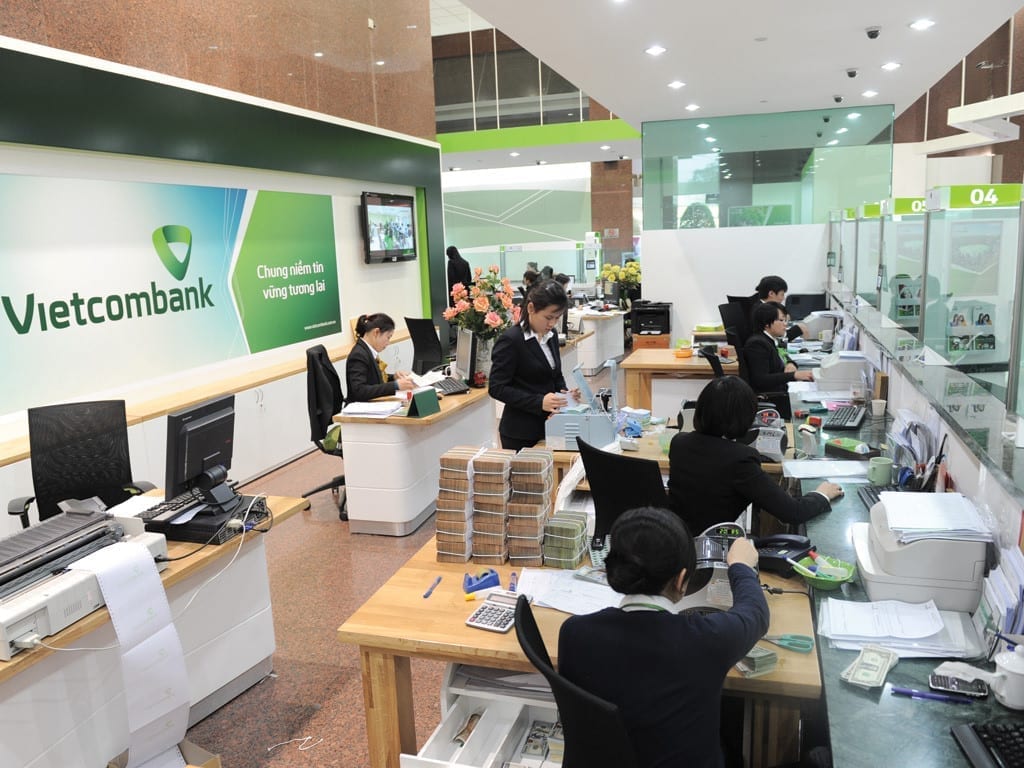
    Only Vietcombank, the largest listed bank in the country, last month raised VND6.2 trillion ($265.86 million) from selling a 3 percent stake to foreign investors, as part of its plan to ultimately sell 10 percent.

    BIDV and Vietinbank had offered to pay its largest shareholder, the State Bank of Vietnam (SBV), the previous year’s dividends in stocks and not cash to increase their capital, but the central bank refused saying it needed the cash.

    Moody’s added that the banks’ capitalization will strengthen this year because of stronger profitability and stable credit growth.

    It said that Vietnamese banks last year achieved a higher aggregate return on assets for a second year running, registering a rise of 1.1 percent from 0.9 percent in 2017.

    Aggregate net income for the banks rose 35 percent to VND70 trillion ($3 billion) in 2018 from the previous year, it said.

    “For 2019, Vietnamese banks that Moody’s rates will achieve a further improvement in profitability, again because of wider net interest spreads and lower credit costs,” said Rebaca Tan, a Moody’s analyst.

    “Credit growth will stay stable over the same period because of tighter control by the State Bank of Vietnam, and asset quality will improve further, as the banks continue cleaning up their balance sheets.”

  • Longines Masters of Hong Kong 2019 – a recap

    Longines Masters of Hong Kong 2019 – a recap

    Three days of action brought with them a life’s worth of memories as the curtain came down on the Asian stage of the Longines Masters Paris – Hong Kong – New York intercontinental series. More than 35,000 people gathered across the three days of this year’s Longines Masters of Hong Kong.

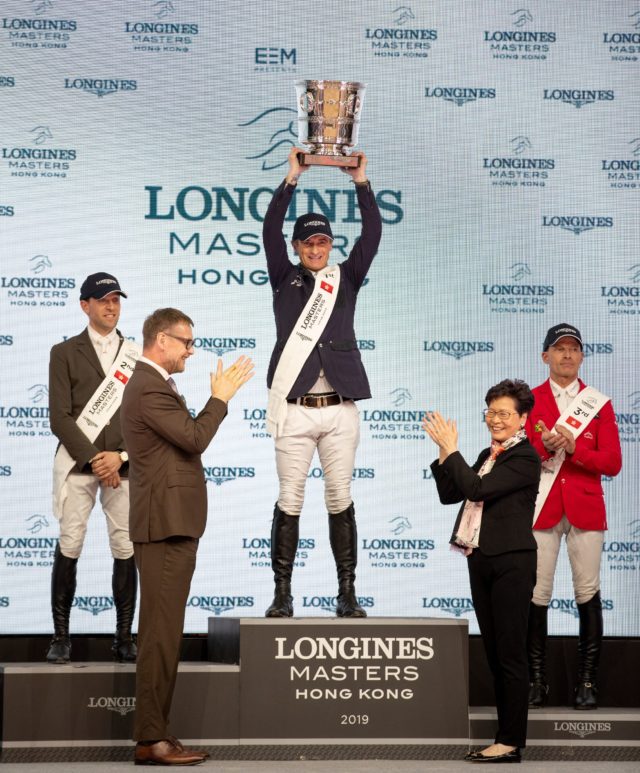
    Fittingly, the final day was graced by Hong Kong Chief Executive Carrie Lam Cheng Yuet-ngor, who met the riders and presented the Longines Grand Prix of Hong Kong trophy. Longines Ambassador of Elegance, horse lover and entertainment super star Aaron Kwok was also on hand for the final press conference and to share his thoughts on the sport he loves so dearly – and like one of his live shows, the thrills came from start to glorious finish. The action began with The HKJC Asian Junior Grand Prix, excitement rose with the staging of the DBS Trophy, and then came the event everyone had been waiting for all week – the Longines Grand Prix of Hong Kong. And the premier event brought out the very best from Denis Lynch on Chablis as the Irish rider and his stable newcomer flew around the course. It proved a fitting way to end a fabulous week – and now it’s on to American stage in New York, which among other things will feature the rematch of the Riders Masters Cup, from 25 to 28 April 2019.

    Denis Lynch claims the Longines Grand Prix of Hong Kong!

    The glory on this final day came with the Longines Grand Prix of Hong Kong and a stunning effort from Denis Lynch on Chablis as they finished in front of Simon Delestre on Uccello de Will. But there was so much more also on offer all day.

    It began – at 9.30am – with The HKJC Asian Junior Grand Prix, an initiative from partners EEM, The Hong Kong Jockey Club and the Hong Kong Equestrian Federation that showcased the rising stars of Asian showjumping. It was Hong Kong’s Vincent Zi-Xiang Capol on It’s A Gamble who lit up the main arena on the day, capturing the title after a two-round competition with jump heights raised from 1.00m to 1.10m.

    Next – at 12pm – came the DBS Trophy, a one-round competition that set riders a simple task. On paper at least. To win you had to be the fastest from eight riders to complete a clear round – and on this day the fastest was Roger Yves Bost on Castleforbes Talitha.

    Then it was time for the ultimate event at the world’s ultimate show jumping series. The Longines Grand Prix tests the world’s best against jumps at Olympic height heights of 1.60m, and it provides a true test of technique, of skill and of bravery from both rider and horse.

    In the end it came down to a ride for the ages from Denis Lynch on Chablis, as they cleared all the fences over two rounds. Second place went to Simon Delestre on Uccello de Will – the only other pair to clear all the fences. Along with the US$400,000 in price money the Paris, Hong Kong and New York Longines Grand Prix offers something very special – a Super Grand Slam Bonus of €2,250,000 rewarding a victory in each round of the Series in the same season and a €1,000,000 additional bonus for three successive victories at The Longines Grand Prix straddling two Longines Masters seasons. Irishman Lynch will now head to New York for the next leg in April with that huge bonus in his sights.

    While the show jumping action kept fans glued to their seats all day long, there was plenty more to entertain in the main arena. Presented by MGM, equine artists Frédéric Pignon and Magali Delgado and their Iberian horses continued to leave the audience spellbound with dazzling shows combining music, dance and multi-media. Then there was the appearance of the “golden girl” of the HKJC Equestrian Team as Jacqueline Siu celebrated her history making gold medal performance at last year’s Asian Games with a dressage performance the relived the glory.

    Reflections on three days of fun and fanfare

    Over three days – and nights – the Prestige Village came alive, allowing visitors to indulge and be entertained thanks to fabulous collaborations with the Longines Masters of Hong Kong’s partners and exhibitors.

    Among the many and varied highlights were the first staging of the Asian Hobby Horse Competition and the wild after party hosted by DJ Henri PFR, while visitors were able to immerse themselves in luxury offering from a wide array of brands, while being tempted by gastronomic delights. While visitors were treated to the latest from the likes of Title Partner Longines, Kingsland, Fieldstone, Horse Pilot, Equicty, Hermès Sellier, Asia Marine, Baccarat, Lightfoot Travel, Robert Mark Safaris, KEF, La Mod and Maserati. There were also themed gifts and novelties inside the Longines Masters Boutique, one lucky guest walked away with a trip (flight and accommodation) to New York to visit the Macey & Sons Gallery and the Longines Masters of New York in April 2019, courtesy of Macey & Sons Gallery.

    Save the Children

    Dedicated to promoting equestrian sports on an international scale as well as making a difference by contributing to socially constructive causes, Longines Masters series organizers EEM this year chose to support deprived children around the globe, especially in Hong Kong and China. The Hong Kong leg of the intercontinental show jumping event joined hands with the Sole Beneficiary Charity Partner, Save the Children Hong Kong, with parts of the net proceeds generated from the charity auction lunch, various VIP Hospitality Experiences in a specific period of time and kids’ activities in Prestige Village donated to sustain these marginalized children’s ongoing education, health, protection and emergency relief programs.

  • Shinsegae to launch SSG.com as separate unit

    Shinsegae to launch SSG.com as separate unit

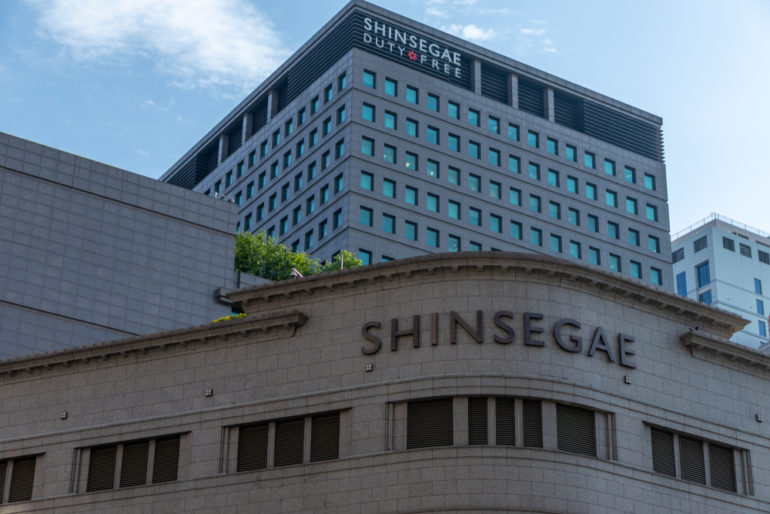
    Shinsegae Group will launch a brand new entity that specializes in e-commerce next month in an effort to become Korea’s answer to Amazon. Titled SSG.com, Choi Woo-jung, vice president of Shinsegae’s e-commerce division, will be the CEO. “[Through the new entity], we hope to maintain the existing SSG.com brand and maximize brand power by raising [people’s] awareness of our professionality in the online market,” the company said in a statement.

    The latest move reflects Shinsegae’s ambition to become the country’s top e-commerce company by gathering its scattered online businesses.

    Shinsegae Group in December spun off Emart Mall and Shinsegae Mall from Emart and Shinsegae. The board of directors in January voted to merge the two new entities.

    It has already been running SSG.com as an e-commerce website that offers access to its various online malls, but it is currently only a customer-facing interface, not a company in its own right.

    SSG.com’s sales goal for this year is 3.1 trillion won ($2.8 billion), which is 29.1 percent higher than the sales recorded by the online platform last year.

    The company hopes to reach its ambition through aggressive marketing, especially on raising the efficiency of delivery services.

    It will make a heavy investment on raising the delivery speed by establishing an additional distribution center in Gimpo, Gyeonggi. It will be the third distribution center, and is scheduled to open in the second half of this year.

    “With the official launch of SSG.com, we are getting ready to become the country’s top e-commerce enterprise,” said Choi in a statement.

    “Instead of just selling goods online, we are also planning to function as a ‘Linker’ by connecting consumers online and offline like [offering them the platform to] share their lifestyles on the internet.”