Author: Mei Ling Tan

  • Visa and Fitbit launch Fitbit Pay in Thailand

    Visa and Fitbit launch Fitbit Pay in Thailand

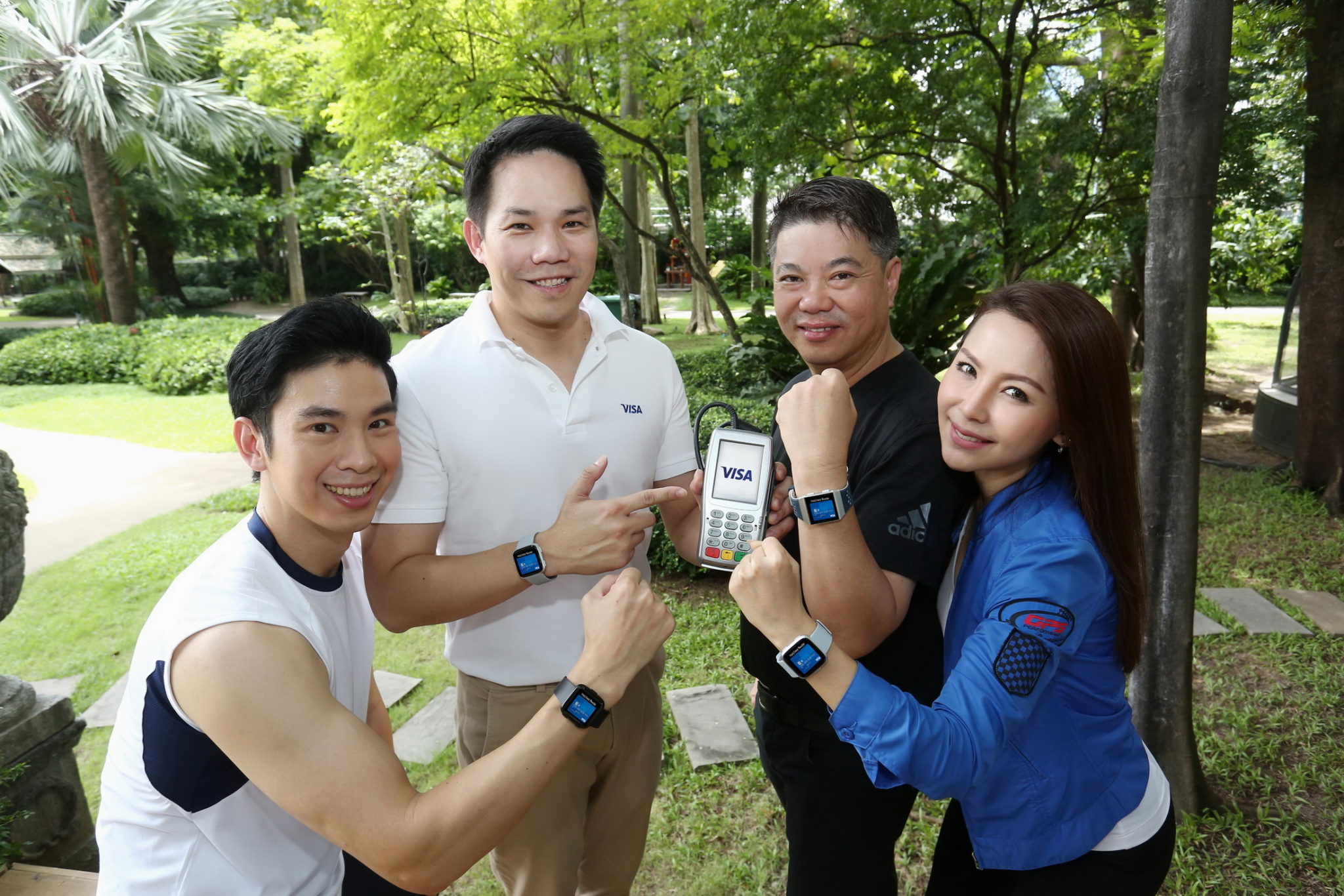
    Visa, the world’s leader in digital payments and Fitbit, the leading global wearables brand, today announced that Fitbit Pay™ will be available to its customers in Thailand on Fitbit Ionic or Fitbit Versa and starting November 2018, on  its newest tracker, Fitbit Charge 3. Customers of Kasikornbank, KTC and Siam Commercial Bank can add their Visa credit or debit card to their device, enabling them to make payments on the go directly from their wrist.

    The continuous rise in mobile connectivity has led to the proliferation of digital payments, with Visa helping to offer more ways to pay through devices such as phones, watches and now fitness trackers. According to Visa’s Consumer Payment Attitudes Study, seven in ten Thais (67%) said they preferred using electronic payments, including cards, mobile devices and wearables, more often than cash, deliberately moving away from notes and coins.

    Suripong Tantiyanon, Country Manager, Visa Thailand said: “At Visa, we continue to provide payment experiences across a wide range of form factors and are pleased to partner with Fitbit as well as our financial partners.  There is much potential and opportunity for such wearables to create convenient and relevant payment experiences that truly change the way people make their day-to-day payments, particularly at places that are traditionally heavy on cash.  This is another step forward in the growth of Internet of Things and shows how Visa is enabling companies across the technology industry to help us all move towards a cashless future.”

    Fitbit Pay can be easily set-up on Fitbit Ionic or Fitbit Versa by following simple steps in the Fitbit mobile app on Android or iOS devices to add a credit or debit card to the Fitbit Wallet. Fitbit Pay brings convenience and freedom to users to leave their smartphone and wallet at home, and easily make purchases at thousands of stores where contactless payments are already accepted.

    Fitbit Pay provides secure payments through the Visa Token Service. Tokenization is a payment security technology that replaces card account information, such as account numbers and expiration dates, with a unique digital identifier (“token”) that is used for payment without exposing a cardholder’s more sensitive account information.  A user’s card information is never revealed or shared with merchants. Plus, a protected PIN is chosen by the user during device set-up for an added layer of protection.  Users can leave their wallet at home and pay with a touch of their wrist.

  • Zong 4G partners with Instagram

    Zong 4G partners with Instagram

    Pakistan’s No. 1 Data Network Zong 4G and the World’s Leading Photo Sharing Network Instagram, announced the availability of an integration between the two digital service providers. Zong 4G’s prepaid subscribers who sign up on Instagram for the first time will be able to enjoy picture viewing for free in the first 3 days. Followed by WhatsApp, IMO, and free Facebook service, Zong 4G once again has risen up as the first telecom operator partnering with another social media giant, Instagram. The one of kind and exclusive offer by Pakistan’s fastest 4G network, Zong 4G for its customers is unmatched offer, which no other telecom service provider in Pakistan is offering.

    This is a new highpoint for the Pakistani customers. Their connected journeys across both the digital service providers allows for a superior experience that is unmatched in the telecom sphere. Subscribers can get to experience the fastest 4G service, wherever and whenever over free picture viewing. To add to their convenience, Zong 4G has ensured that subscribers get a seamless 4G experience as they do not need to activate the offer via a code. All they have to do is sign up on Instagram and enjoy this offer.

    The strategic partnership is a natural one, given the existing partnership between Zong 4G and Facebook. Facebook is a social networking service that also owns Instagram and WhatsApp. Apart from this, Zong 4G has created ripples across Pakistan’s telecom spectrum in recent months with its technological supremacy by launching state of the art e-commerce applications. Since inception, Zong’s three E-commerce channels: E-Care, Online Recharge and Online Shop have hit the telecom world with a bang – to facilitate its subscribers that have exceed the massive 8 million mark in the shortest possible time.

    With diverse lifestyle choices of its customers, Zong, Pakistan’s largest 4G service provider, promises to continue to play a significant and impactful role towards faster, smarter and better services towards user data experience in its own aspiring style.

  • KBank to launch USD100-million sustainability bonds to finance green and social projects

    KBank to launch USD100-million sustainability bonds to finance green and social projects

    KASIKORNBANK (KBank) is the first Thai and ASEAN bank to issue sustainability bonds totaling USD100 million, where the proceeds will be used to finance green and social projects. Such bond issuance is aimed at supporting the development of Thai and regional capital markets and promoting investments that generate returns in parallel with driving sustainable growth of Thailand and global communities.

    Mr. Banthoon Lamsam, Chairman of the Board of KBank, said KBank has adhered to the Sustainable Development concept in relation to the economic, social and environmental aspects as a foundation of its operations, to create maximum benefits for all stakeholders. Recently, KBank issued sustainability bonds totaling USD100 million for foreign investors, which has made KBank the first bank in Thailand and Southeast Asia to offer such bonds. The proceeds of bond issuance will be used to finance projects that will bring about environmental and social benefits in accordance with international standards set up by the International Capital Market Association (ICMA) and the ASEAN Capital Markets Forum (ACMF).

    Sustainability bonds of KBank are senior, unsecured bonds, with floating interest rate based on LIBOR plus 0.95 percent. Under a five-year term, the maturity will be in 2023. The entire amount was offered to foreign institutional investors via KBank’s Hong Kong Branch. Related parties include BNP Paribas that acts as the Sustainability Bond Framework Structuring Advisor and Sole Lead Manager, and Sustianalytics – an independent global provider of ESG and corporate governance research – that has provided a second party opinion on the sustainability bond framework.

    Mr. Banthoon added that the success in the sustainability bond sale reinforces KBank’s core concept of sustainable development. The fact that the bonds were fully subscribed within only one day reflects KBank’s ability to create a balance between the return and the policy of the bond which is up to international standards, thus being widely accepted by institutional investors who have placed their trust in KBank. KBank is strongly confident that the issuance of the sustainability bonds – the first time in Thailand and in ASEAN – will set a new benchmark for domestic and regional capital markets. The initiative will be a prelude for the launch of capital products offering attractive returns to investors while also driving sustainable growth for the nation and the world.

    KBank’s business operations are based on being a bank of sustainability under appropriate risk management, good governance and balance in economic, social and environmental dimensions. Given the adherence to the Sustainable Development concept, KBank is the first bank in Thailand and ASEAN that has been granted membership of the Dow Jones Sustainability Indices (DJSI) in both their DJSI World Index and DJSI Emerging Markets 2018 for the third consecutive year. In addition, KBank has been selected as a member of the FTSE4Good Emerging Index for three straight years.

    At the national level, the Stock Exchange of Thailand has included KBank in the Thailand Sustainability Investment List 2018 (THSI List) and the SET THSI Index, the first-of-its-kind index in Thailand, among other 45 companies. In addition, KBank is the first and only commercial bank in the country that has been granted the Carbon Neutral Certification by Thailand Greenhouse Gas Management Organization (Public Organization).

  • Korea’s Skinfood getting close to bankruptcy

    Korea’s Skinfood getting close to bankruptcy

    South Korean cosmetics firm Skinfood has filed for court receivership after increasing financial losses.

    The company’s former popularity of a decade ago was hit by the 2015 Middle East Respiratory Syndrome (MERS) outbreak and diplomatic disputes between Seoul and Beijing, both events affecting the brand’s core overseas markets.

    A company spokesperson said: “We are having temporary difficulty in securing liquidity due to excessive debt. We sought the court restructuring as we thought settling the debt and promptly normalising management will benefit everyone, including the creditors.”

    The company has plans to sell off some of its overseas business rights and expand its online channels to improve its standing.

    Skinfood’s sales reached KRW126.9 billion (US$111.96 million) last year, a drop of 25 per cent from the year previous, with an operating loss of KRW98 billion ($86.46 million).

  • Philippines island Boracay reopens for test run following huge cleanup

    Philippines island Boracay reopens for test run following huge cleanup

    Boracay, one of the world’s most famous beach destinations, has reopened for a limited-numbers test run almost six months after closing for a cleanup operation to reverse the fortunes of the resort island once labeled a “cesspool” by Philippines President Rodrigo Duterte. The sun was out to welcome a small group of tourists from the province of Aklan, where the island is located, and other parts of Western Visayas. The group was invited to test the newly improved facilities, which include a comprehensive overhaul of the island’s outdated and insufficient sewerage.

    The resort island, which was shuttered in April for six months for rehabilitation work, is scheduled to reopen further later this month — labeled a “soft opening” by authorities. Its famous white-sand beaches were signed off in August as “very clean” and safe for swimming, according to Environment Secretary Roy Cimatu. While the cleanup has left the beaches immaculate and the waters crystal clear, significant work needs to be done to get the road system up to speed before larger numbers of tourists are allowed back on the island.

    Tourists asked to manage expectations

    On Monday, Cimatu told  in a Facebook Live-broadcast panel, which featured the four secretaries who make up an inter-agency task force, that the sewerage and drainage for 68 accommodation establishments cleared to open was “100%” complete. The system overhaul cost over 1 billion pesos ($18.5 million), Tourism Secretary Berna Romulo-Puyat said during the discussion. While some road surfaces were not yet completed they would be “significantly finished” — 75-80% — by the wider opening on October 26, Public Works and Highways Secretary Mark Villar said.

    The full rehabilitation could take up to two years, the panel said, and while Romulo-Puyat praised reform efforts she said tourists should “manage expectations” during this period. Interior and Local Government Secretary Eduardo Año told Coren and Webb that almost 200 illegal structures had been demolished, many voluntarily and by their owners.

    Strict laws

    The new-look Boracay will be subject to rigorously enforced by-laws, the panel said, including limits to combustion engine transport, a ban on single-use plastics and offshore zones for watersports, providing a 100-meter (328-feet) swimming area from shore. Deckchairs and tables, as well as beachside entrepreneurs like masseuses and snack and drink vendors, will be banned from the beach, as will the famous fire dancers, who will have to make do with LED lights instead of the kerosene-soaked torches they used before the shutdown.

    The island should be a model of sustainable tourism, Romulo-Puyat said, and the panel stated that following the overhaul the famous island could regain its crown as one of the world’s best beach resorts.

    “We can make Boracay one of the most prestigious tourist destinations in the world,” Año said. Romulo-Puyat added that “when (the rehabilitation) is all done,” Duterte will visit the island, perhaps next year.<

    Economy needs a kickstart

    The island’s residents have been eagerly awaiting the return of the tourists and were thrilled to welcome the advance party — the last six months have been a struggle for many, especially the large numbers who rely on tourism for their livelihoods.

    During the cleanup operation, many of the 11,000 residents participated in the government’s “cash for work” program, which paid a daily minimum wage of 323 pesos ($6). In August, Lilibeth Panganiban, who sells rice cakes on a street corner, told that she’s seen her daily income drop from 1,800 pesos to 500 pesos, or even less.

    Overdue cleanup

    The archipelago nation of the Philippines boasts well over 7,000 islands. Among them, Boracay had become almost a byword for white-sand beach paradise.

    But with the influx of tourists that began in the 1980s, the island has struggled to maintain its idyllic allure. Last year almost 1.7 million tourists, including a significant number of cruise line passengers, visited the island during a 10-month period, according to the governmental Philippines Information Agency. Among the problems caused by the island’s long-running tourism boom were unregulated development, and pipes carrying raw effluence directly into the sea.

    In a survey of the island’s sewerage facilities prior to the closure, the vast majority — 716 of 834 — of residential and business properties were found to have no discharge permit and were presumed to be draining waste water directly into the sea, according to a report by the official Philippines News Agency.

    In February Duterte directly called out the alleged mismanagement of the island, accusing those responsible of turning it into a “cesspool.”

    “As long as there is shit coming out of those pipes draining to the sea, I will never give you the time of the day (to return)” to the island, he said at the time.

  • Singtel and Starhub to offer Google Pixel 3 in Singapore

    Singtel and Starhub to offer Google Pixel 3 in Singapore

    The local telcos will include Google merchandise as part of their promo. Both Singtel and Starhub will offer Google’s flagship phone Pixel 3 as it launches in Singapore. Google itself will sell the handset through its online store starting 1 November.

    With price ranging from $1,249 for its 5.5-inch model and $1,399 for the 6.3-inch XL model, Google’s flagship will be sold in three colours including Just Black, Clearly White, and new colour Not Pink which will be sold exclusively by Singtel.

    Those who will buy from Singtel will also get a free Google Pixel Stand worth $119 when they additionally purchase certain data subscriptions. Meanwhile, those who will buy from Starhub will get Google Assistant worth $189 as a freebie.

    “Pixel users can gain an edge while streaming high-definition videos and chatting with the Google Assistant,” Starhub vice president of segment and marketing Donovan Kik said.

    Singtel launched the phone for pre-orders on 10 October.

  • Singtel, StarHub and M1 must keep innovating to stay in the game

    Singtel, StarHub and M1 must keep innovating to stay in the game

    Signs have not been good lately for Singtel, StarHub and M1, the country’s three large telecommunications companies. Technological innovations, as well as changes in regulations, have sent shock waves through the big three companies, and virtual mobile telcos such as MyRepublic, Zero1 and Circles.Life have also posed a threat to the larger players.

    But with new kid on the block, TPG Telcom, set to launch later this year, the question remains whether there is still a place for one more large telecommunications company in an already crowded market.

    The existing telcos say that since the country is small and has a mature mobile market with very high rates of penetration, perhaps three’s a company, but four would be a crowd.

    In other places such as Germany, Denmark and the UK there is consolidation of only three mobile network operator (MNO) providers. Indonesia, whose population of 250 million is huge, compared to Singapore’s 5 million, is also leaning toward consolidation.

    Three years ago, the  Info-communications Development Authority of Singapore (IDA) asked whether expanding mobile services in the country is a viable option. Today, opinions still are divided as to whether or not there is room in Singapore for a fourth telco.

    One concern is that tougher competition will lead to fewer revenues in the mobile sector, which would in turn discourage service innovation, and even investments as well.

    On the opposite side is the IDA, which has evolved into the Infocomm Media Development Authority (IMDA), says that there is space for telcos to innovate their services, as well as room for more competition in the market.

    When a new MNO enters the market, this may also spur existing ones to further invest in innovating their networks in order to stay competitive.

    TPG Telecom, which is based in Australia, is already making quite a splash in Singapore, with a special offer for seniors, an audience not often catered to by telcos. TPG is giving a fee mobile plan for people aged 65 and above, complete with a SIM card, 3GB of data and unlimited mobile calls.

    Other telcos are greeting TPG’s launch as a splash of cold water on their faces, to get them to innovate their strategies. The telco industry is marked by both competition and innovation, and companies have to work hard to keep up. Their strategies must remain both quick and agile to remain enticing to existing customers as they attract others.

    For example, telcos have been threatened by over the top (OTT) voice, text and messaging options that only require WiFi for consumers to make calls and send messages. This has meant that telcos can no longer rely on old revenue streams that depended on subscription plans, infrastructure and bandwidth, as consumers ceased to need them as much.

    Big players in the tech market such as Apple, Amazon and Google offer such OTT services merely using data connections, which removes the need for additional infrastructure.

    Industry experts predict that WhatsApp, Skype and different OTT applications will cause telcos the loss of around US$400 billion in revenue for this year alone.

    How then can telcos, which have invested millions on infrastructure, secure their future despite fewer returns on those investments, or else, face the possibility of growing redundant in the industry.

    Perhaps the bigger question here is not whether there is room in the country for yet another mobile telecommunications company, but to ask whether the existing companies are doing enough to innovate in order to maintain relevance in a quickly evolving industry.

  • Singpost Links up With Axa Insurances

    Singpost Links up With Axa Insurances

    AXA Insurance and Singapore Post Limited (SingPost) have announced the launch of a pilot for AXA@POST Virtual Assist, a digital sales advisory service that virtually connects SingPost customers with AXA Financial Consultants who can provide high quality advice and services. This is the first advisory service in Singapore that provides financial advice to customers remotely, coupled with the ease and convenience of online application for insurance solutions for their car, home, family, travel, business, savings, health, and life protection and investment needs.

    With AXA@POST Virtual Assist, SingPost customers will receive end-to-end sales advisory services via a live, interactive video feed – from having their financial needs and goals ascertained, to receiving advice on insurance solutions based on suitability, and completing the entire insurance application online in one sitting. Onsite SingPost Financial Services Ambassadors (FSAs) will guide customers to the AXA@POST Virtual Assist booth, where they will begin their discussion with an AXA Financial Consultant via a video interface.

  • AirAsia’s Spencer Lee takes CEO title at travel360.com

    AirAsia’s Spencer Lee takes CEO title at travel360.com

    AirAsia’s head of commercial, Spencer Lee, has been named CEO of travel360.com, the digital expansion of the airline’s inflight magazine travel360. The airline declined to comment on A+M‘s queries on whether he will be helming a dual role or who his replacement will be.

    According to his LinkedIn, Lee has been the head of commercial since 2015, overseeing all commercial functions covering Asia markets. Before that, he was the head of marketing for a year, during which he was responsible for all marketing activations including digital and social strategy and partnerships for all short-haul routes. Lee also helmed the role of regional head of marketing.

    Travel360.com recently partnered with non-profit grassroots community organisation Yellow House and the Dewan Bandaraya Kuala Lumpur to further beautify the city and empower its people. It hopes to provide an even more experiential travelling journey by integrating real communities and their stories.

    It also tied up with Malaysian film company We are KIX to launch a new travel series titled “VitaminSEA” that aims to inspire people to explore the lesser known islands and beaches around Southeast Asia. The series showcases six amazing yet relatively unknown beach destinations in Southeast Asia served by AirAsia.

    Meanwhile, the airline also recently appointed IPG Mediabrands’ BPN to manage media and communications planning, buying, and analytics on a global level for AirAsia and AirAsia X. This followed a pitch process that spanned 23 markets. The account will be managed via a dedicated team called Red Wings in Malaysia.

  • Bus Boost For AirAsia X’s New Avalon Service

    Bus Boost For AirAsia X’s New Avalon Service

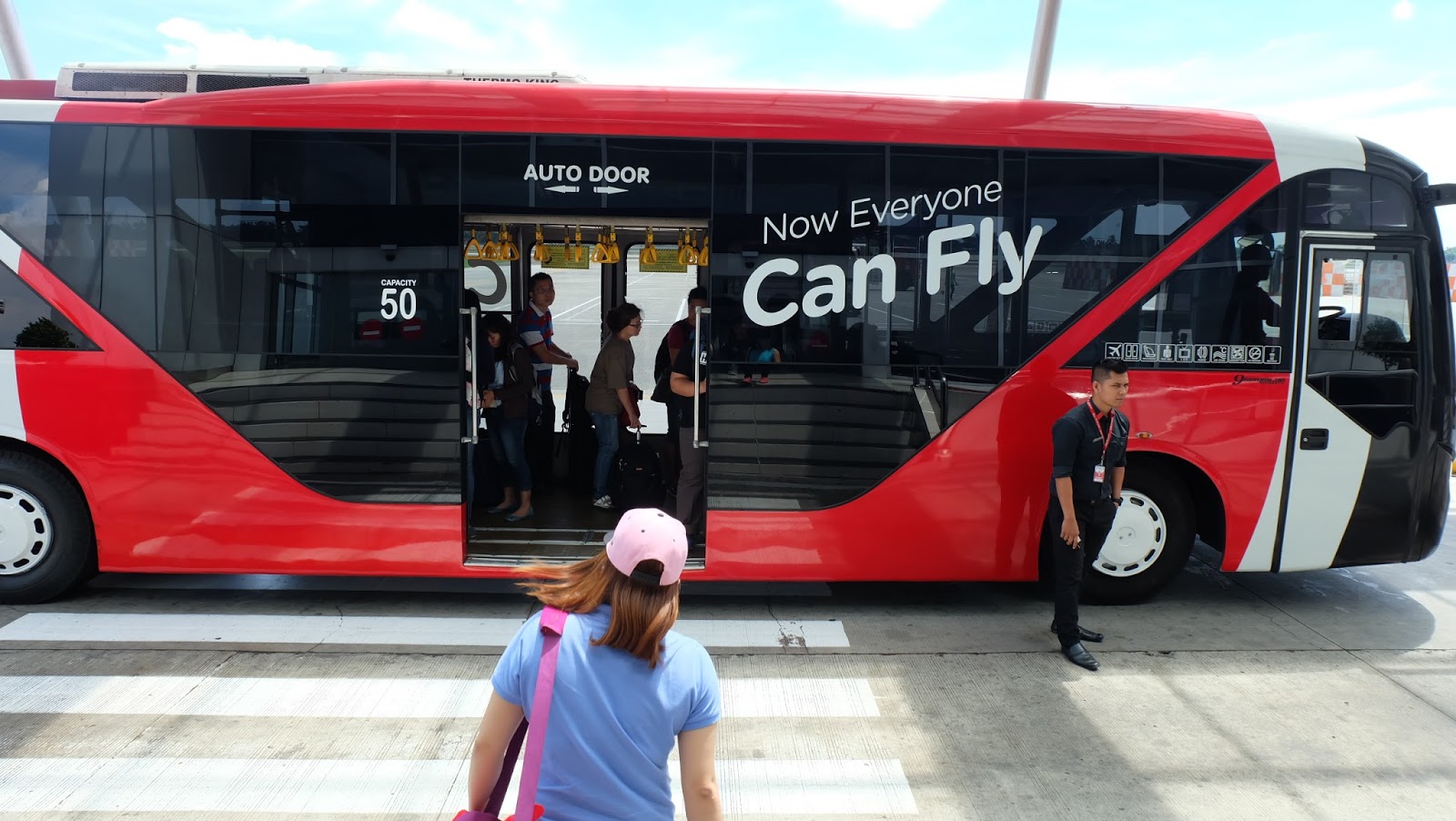
    A deal between AirAsia and Skybus will deliver about 4500 additional buses a year to Avalon Airport and almost double the number of services from the centre of Melbourne.

    Avalon, near the regional city of Geelong, is about 55kms south-west of the Melbourne CBD and will be home to AirAsia X flights to and from Kuala Lumpur from December 5.

    It is the airport’s first international service and comes after a concerted campaign to convince the long-haul, low-cost carrier to move its operations from Melbourne’s main airport at Tullamarine.

    Airport officials are hoping it will prove a catalyst for additional overseas operators to consider as an alternative to Melbourne airport.

    The Malaysian carrier will operate more than 500,000 seats on twice-daily flights to and from its Kuala Lumpur home base, connecting to more than 130 destinations served by the overall AirAsia Group.

    Avalon, which was leased by the Linfox Group in 1997, had been talking to AirAsia for a decade as part of attempts to attract international flights that had also included HNA Group and the Philippines government.

    The announcement of the 10-year agreement in February 2018 was attended by a slew of dignitaries and was described by AirAsia Group boss Tony Fernandes as an exciting milestone.

    The trip to Avalon takes about 45 minutes, depending on the traffic, compared to 25-30 minutes to Melbourne Tullamarine, depending on traffic.

    The new Skybus services will meet all AirAsia flights arriving and departing Avalon’s new international terminal and will offer discounted travel in the first two months of the airline’s move from Tullamarine. That will see one-way fares of $A19.50 and return fares of $37.

    The fares take passengers to Melbourne’s Southern Cross Station where they can also avail themselves of the free “Skybus Link” to 12 city stops servicing about 100 hotels.

    Passengers booked between December 5 and December 12 will also get complimentary SkyBus transfers between the two airports.

    “Customers who travel on the new Avalon services can take advantage of free Wi-Fi, luggage racks, reliable running times, as well as online, mobile and kiosk ticketing options,” SkyBus director Michael Sewards said.

    AirAsia is also offering conditional sale fares as low as $A199 one-way to promote its new service.

  • Indian telco sector facing three more quarters of losses

    Indian telco sector facing three more quarters of losses

    India’s telecoms sector is facing at least three more quarters of losses due to the ongoing price war, according to industry body the Cellular Operators’ Association of India (COAI).

    The Indian GSM industry body’s director general Rajan Mathews told that he believes the market’s current tariffs are unsustainable in the long term.

    The industry’s woes are being added to by high license fee and spectrum charges, including high upfront payments, which has guaranteed that the current fiscal year will be tough for the industry.

    The current situation commenced in 2016 when disruptive new entrant Reliance Jio Infocomm entered the market with entirely free services during an extended promotion period. The operator continues to charge only for data, at low rates.

    Jio’s strategy prompted established operators to cut prices to compete, and prompted a wave of consolidation that has seen the market reduced to just three private operators – Jio, Bharti Airtel and the combined Vodafone India and Idea Cellular (now Vodafone Idea).

    Mathews said that there is light at the end of the tunnel, and clarity I expected to emerge in the fiscal year 2019-2020, which begins in April next year.

    But he warned that if tariffs continue to decline it will be detrimental to the health of the industry as it will threaten operators’ ability to invest in emerging technologies and in expanding coverage.

  • Optus Business expands managed solutions portfolio

    Optus Business expands managed solutions portfolio

    Australia’s Optus, through subsidiary Optus Business, has expanded its line-up of fully managed ICT solutions for enterprises.

    The operator has added contact center, security and storage solutions to its Optus GO portfolio of managed services.

    Optus GO Contact Centre provides cloud based contact center capabilities including management of inbound and outbound calls, chat and email. Optus GO Security includes email and web protection based on cloud security architecture, and Optus GO Storage provides as-a-service flash storage for data centers.

    The Optus GO managed ICT solutions suite, which launched in February, already included connectivity, collaboration and cloud services for businesses of all sizes.

    “The Optus GO solutions were created in response to our customers who are looking for the benefits of ICT solutions without the cost or burden of ownership and management,” Optus Business managing director John Paitaridis said.

    “We designed Optus GO to save our customers time and money by simplifying technology, delivering connectivity and ICT as an end to end solution in a secure and managed environment.”

    He said Optus GO aims to provide enterprise customers with the core computing foundations to support the business opportunities that will be afforded by emerging technologies including IoT, advanced analytics, AI and 5G.

    Optus is a wholly-owned subsidiary of Singapore’s Singtel Group.

  • Thai Airways extends partnership with WFS in France

    Thai Airways extends partnership with WFS in France

    Thai Airways has extended its long-standing cargo handling contract with Worldwide Flight Services (WFS) in France.

    The new agreement covers cargo, mail and express handling at airports across France and extends the business relationship between the two companies to 35 years.

    WFS will also provide cargo security services and trucking operations between regional airports and Paris CDG for the south east Asia carrier.

    In addition to handling cargo carried onboard the airline’s daily Airbus A380 flights between Paris and Bangkok, WFS will also provide offline handling at a further 12 airports in France; Orly, Lyon, Marseille, Bordeaux, Nantes, Lille, Toulouse, Strasbourg, Mulhouse, Nice,  Montpellier and Rennes.

  • Ericsson CEO talks 5G with US FCC

    Ericsson CEO talks 5G with US FCC

    Ericsson president and CEO  Börje Ekholm recently met with FCC Chairman Ajit Pai to talk about how the US is making more millimeter wave spectrum available for 5G, its progress in reducing the time involved in tower siting and clearing the way for network slicing, a key component of 5G.

    Ekholm applauded the FCC’s recent order removing barriers to infrastructure investment and expressed appreciation for the chairman’s focus on releasing spectrum, particularly millimeter wave spectrum, to help fuel increased innovation and investment in 5G. Ekholm also noted that the Internet Freedom order clears away a cloud of uncertainty over network slicing, according to an ex parte filing(PDF).

    Also present during the October 3 meeting were Niklas Heuveldop, president and CEO of Ericsson North America; Lynn Starr, senior director for Ericsson Government Affairs; Jared Carlson, vice president for Ericsson Government Affairs; and Rachael Bender, Chairman Pai’s wireless and international legal adviser.

    Importantly, Heuveldop covered some of the investments Ericsson is making in the US, including Ericsson’s decision to begin manufacturing in the US in the fourth quarter of this year. The Swedish vendor plans on providing volume production of next-generation radios in order to introduce products into the US market faster.

    Ericsson is also opening a new software development center with a baseband focus in 2018, eventually employing more than 200 software engineers when it’s fully operational.

    In addition, Ericsson said it will increase its investment in artificial intelligence and automation, employing about 100 specialists in North America by the end of this year. The team will work on using AI technologies to accelerate automation, examine product road maps and explore new business opportunities.

    It’s worth noting that Heuveldop joined a chorus of other industry leaders in urging the FCC to move forward with plans to make more midband spectrum available for 5G. He also stressed that the US mobile industry will need significantly more than 100 MHz in the 3.7-GHz to 4.2-GHz band for operators to offer the combination of speed and coverage they need for 5G.

    Midband spectrum also is of great interest to Ericsson’s rival Nokia, whose CEO Rajeev Suri met with Chairman Pai earlier this year. Suri and other Nokia executives stressed the urgency of making spectrum available in the 3.7-GHz to 4.2-GHz band as the centerpiece for nationwide 5G deployment in the U.S.

    This past summer, the FCC adopted an Order and Notice of Proposed Rulemaking that identifies new opportunities for flexible use in up to 500 megahertz of midband spectrum between 3.7-GHz and 4.2-GHz. The notice proposes to add a mobile allocation to all 500 megahertz in the band and seeks comment on various proposals for transitioning part or all of the band for flexible use, including market-based, auction and alternative mechanisms.

  • China Telecom enters Philippines third telco fray

    China Telecom enters Philippines third telco fray

    China Telecom and Telekom Austria’s Mobiltel have become the latest companies to purchase bid documents for the selection process for the Philippines’ third telco player.

    The operators purchased bid documents from regulator NTC on Saturday.

    The two overseas companies have joined six others, including Norway-based Telenor and fixed line operator Philippine Telegraph and Telephone (PT&T), in purchasing the application documents for the beauty contest style section process.

    China Telecom was approached by Philippines president Rodrigo Duterte last yearwith the opportunity of being awarded the third telco license, before the government elected to hold the selection process instead.

    Any overseas entity winning the third telco license will need to establish a joint venture with local companies in order to comply with the Philippines’ restrictions on foreign ownership in telecoms infrastructure.

    Meanwhile local company NOW Telecom, which has been vying to become the market’s third telco and has been fighting a legal battle to disrupt the selection process, has had its application for a temporary restraining order against the selection process rejected by a Manila court.

    The court reportedly found no basis for the restraining order on the grounds that NOW’s case does not meet the requirements such as a clear right to be protected, or an urgent need for an injunction due to the risk of irreparable injury.

    Bidders will have until early November to submit their bids for the selection process, which will be judged on criteria including guaranteed investment and rollout commitments.