Author: Mei Ling Tan

  • China’s JD.com vying with Alibaba to woo Western brands

    China’s JD.com vying with Alibaba to woo Western brands

    China’s JD.com Inc has partnered Gap Inc to sell the US clothing retailer’s apparel online in China, as the Beijing-based e-commerce company goes head to head with Alibaba Group Holding Ltd to woo big foreign fashion names.

    Alibaba and JD.com, China’s number one and two e-commerce companies respectively, are vying to ink deals with some of the world’s most recognised brands, which offer big boosts in both sales and image at home and overseas.

    By announcing its partnership with JD.com in a joint statement on Thursday, Gap, which already has a store on Alibaba’s Tmall website, would be the latest foreign company to sign with some of China’s biggest Internet firms, including Tencent Holdings Ltd.

  • Myanmar’s automotive market to grow nearly 8pc in 2019

    Myanmar’s automotive market to grow nearly 8pc in 2019

    Myanmar’s automotive market is likely to grow at a compound annual growth rate (CAGR) of 7.8 percent from 2013 to 2019, driven by a growing economy, infrastructure development and increasing income, new analysis from Frost & Sullivan showed.

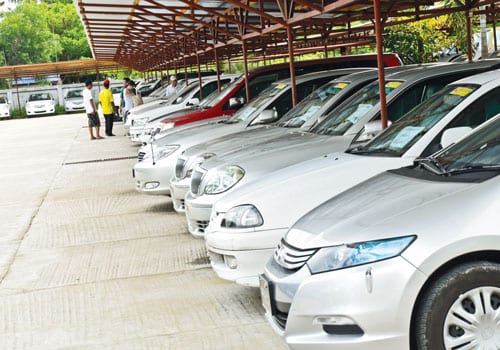
    Currently dominated by used vehicles, the market is expected to reach 95,300 in 2019 also due to greater integration with ASEAN.

    Dushyant Sinha, Associate Director, Automotive Practice, Asia-Pacific at Frost & Sullivan, however, said that factors such as unpredictable regulatory changes, high car prices, under-developed auto service market and inadequate road infrastructure might hinder the potential growth.

    Myanmar is highly dependent on two-wheelers, accounting for more than 80 percent of the market while passenger cars represent 11 percent. Meanwhile, trucks and buses only make up 3 percent and 1 percent, respectively. A young labour force with a high two-wheeler ownership promises a potential car buying group in the long term.

    Dushyant said Japanese brands are expected to continue dominating the passenger vehicle market even in 2019, with Honda, Suzuki and Nissan gaining popularity thanks to their small car offerings (such as Honda Fit/Brio, Suzuki Swift, and Nissan March) which would appeal to Myanmar customers. Chinese and Korean brands will also see growth due to their more affordable prices and smaller engine sizes compared to their Japanese counterparts.
  • China Mobile eyes 250 million 4G customers next year

    China Mobile eyes 250 million 4G customers next year

    China Mobile, China’s largest telecommunication service provider, has forecast that it will have 250 million 4G customers in 2015.

    The company has experienced robust 4G business growth in 2014 and had more 50 million 4G users as of the end of October, China Mobile chief executive officer Li Yue said on Friday.

    China’s 4G is powered by the homegrown technology, Time-Division Long-Term Evolution (TD-LTE), one of the two major international standards in the mobile telecom industry, the other being Frequency Division Duplex.

  • Zalora offers same-day delivery in 5 ASEAN nations

    Zalora offers same-day delivery in 5 ASEAN nations

    Zalora, Asia’s online fashion destination, on Thursday announced its new same-day delivery service, making it the only regional online fashion retailer to offer such a facility.

    Its regional managing director Michele Ferrario said in a statement that customers can choose the same-day delivery option at checkout on selected items for a nominal fee.

    “With the new service, we are further committing ourselves to customers who lead busy lives. It also comes with other customer-centric services such as free shipping for orders over a certain amount, self-collection and cash on delivery.”

  • Samsung to hit back at Xiaomi with budget phone

    Samsung to hit back at Xiaomi with budget phone

    Samsung Electronics is gearing up to release a low-cost Tizen-powered smartphone in the USD100 price range, according to local media reports, responding to intensifying competition from Chinese budget smartphone makers shaking up the market.

    The phone will be launched in India, the world’s third largest smartphone market, by end-January, South Korea’s Yonhap news agency reported on Sunday, citing industry sources.

    Tizen is Samsung’s homegrown operating system which seeks to lessen its reliance on Google’s Android. While the majority of Samsung’s mobile devices run on an Android platform, the Tizen platform has been used to power some of its wearables, including its first smartwatch products.

  • Australia’s slow economy puts brakes on online retail

    Australia’s slow economy puts brakes on online retail

    Online retailing has been belted by Australia’s economic woes, with November’s sales figures recording the slowest monthly and annual growth since the series was first compiled.

    And some bricks-and-mortar retailers are also doing it tough, with shares in outdoor equipment retailer Kathmandu plunging 20 percent after poor Christmas sales forced the company to issue a profit warning.

    According to National Australia Bank, not only are November’s online sales down 0.2 percent on October, they are only 3.9 percent higher year-on-year.

  • Tesco masterplan? New boss keeps investors and staff guessing

    Tesco masterplan? New boss keeps investors and staff guessing

    When Phil Clarke was sacked as Tesco’s CEO, senior executives hoped his 0700 strategy meetings would go with him. They did – new boss Dave Lewis starts his at 0630.

    Parachuted in from Unilever in September, Lewis soon faced the task of making the shock announcement that a GBP250 million (USD391 million) hole had been found in Tesco’s profits, in an accounting scandal that led to the departure of several senior executives.

    Now the CEO – despite having no direct retail experience – is keeping management on a tight rein and personally taking charge of key areas of the business, sources say. And as he conducts a vast review of Tesco’s operations to come up with a strategy to revive its fortunes, he is giving little away – even to insiders.

  • Matahari department store opens its 130th store in Jakarta’s Cyberpark

    Matahari department store opens its 130th store in Jakarta’s Cyberpark

    Matahari Department Store opened its 130th outlet in Cyberpark, North Lippo Karawaci, last week to tap growing demand of consumers in the Tangerang region, the retailer said in a statement.

    Matahari currently operates in 62 cities across the archipelago and the Cyberpark outlet would be its sixth in Tangerang.

    “With a shopping area of almost 5,000 square metres, we strive to provide consumers with a fun and unique experience while shopping,” the statement read.

  • Tiffany to improve lustre in emerging Asia

    Tiffany to improve lustre in emerging Asia

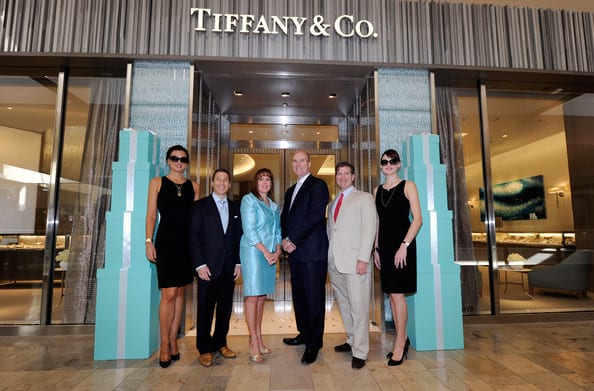
    Tiffany & Co., the world’s second largest jewellery retailer by sales aims to improve its lustre in emerging Asia, where demand for gold and gems appears to be insatiable.

    While Americans and Japanese remain the high-end brand’s biggest customers, their share of sales has fallen to a combined 62 percent, from over 80 percent a decade ago. Asian shoppers, excluding Japan, now account for 23 percent of Tiffany’s total net sales. The company’s jewellery sales have more than doubled to USD4 billion over the past 15 years.

    China, where the Nasdaq-listed firm owns 24 stores and plans to open three a year for the foreseeable future, is the biggest sales generator. But Tiffany is not forsaking Japan.

  • Consumers in Malaysia grappling with rising cost of living

    Consumers in Malaysia grappling with rising cost of living

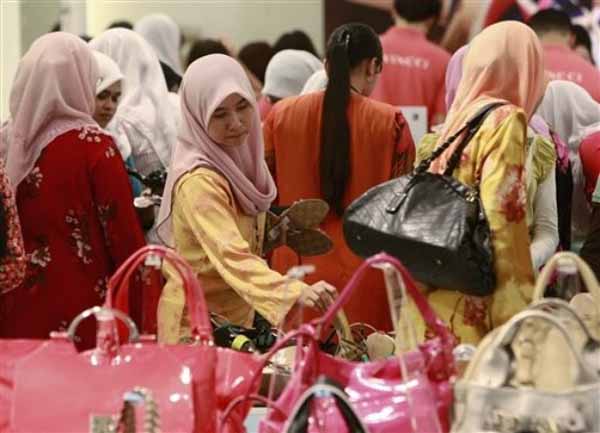
    While most consumers grappled with the escalating cost of living, the Malaysian government’s subsidy rationalisation programme and the impending introduction of the goods and services tax (GST) also took centre stage.

    The government’s decision to reduce subsidies, effective 3 September 2013, was generally aimed at strengthening the nation’s economic position and ensuring that subsidies reached the target groups.

    In 2014, the government allocated about MYR40.5 billion (USD11.61b) for its various subsidy schemes. Out of that amount, MYR21 billion went towards subsidising RON95 petrol, diesel and cooking gas or liquefied petroleum gas.

  • MPP to build 20 new Hypermart outlets in Indonesia

    MPP to build 20 new Hypermart outlets in Indonesia

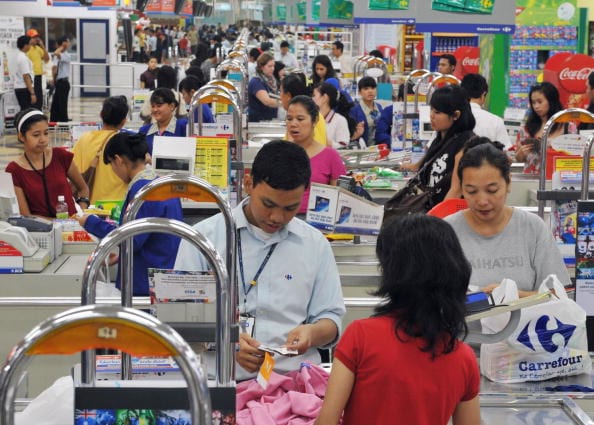
    Matahari Putra Prima, the operator of the supermarket chain Hypermart, is setting aside up to IDR882 billion (USD71 million) to beef up its retail network next year in another sign of confidence for the country’s burgeoning middle class.

    Danny Kojongian, a director at Matahari Putra Prima, said that the listed company aims to build 20 new Hypermart outlets and renovate 10 existing outlets next year. The 20 additional outlets will primarily target cities in the eastern region of Indonesia, he added.

    Danny said that there are also plans to build up to eight additional stores for grocery market chain Foodmart, as well as a high-end version of the grocery market chain next year, which will be called Foodmart Primo.

  • Operators call for lower e-commerce taxes in Thailand

    Operators call for lower e-commerce taxes in Thailand

    Thai e-commerce operators are urging the government to impose lower rates of taxation in order to encourage them to enter the revenue system and pay proper taxes.

    Offering lower rates to small and medium-sized enterprises could also encourage them to go online and promote the development of the digital economy, says Somwang Luangphaiboonsri, secretary of the Thai e-Commerce Association.

    E-commerce in Thailand is burgeoning and the government’s policy to move towards a digital economy is expected to paint a rosy picture for the sector, he said.

  • Wumei seals majority stake in B&Q China

    Wumei seals majority stake in B&Q China

    Beijing based supermarket chain Wumei Holdings will pay CNY1.4 billion (USD225 million) for a majority stake in home decorating chain B&Q China whose parent Kingfisher failed to spur growth in the home decoration market in the world’s second-largest economy.

    The all-cash takeover will be subject to approval from China’s Ministry of Commerce, and is set to complete in the first half of 2015, Kingfisher said in a statement yesterday.

    Xu Zhicheng, an analyst with Guotai Junan Securities, said Wumei could leverage its overall data management system and dealers’ network within the country to boost B&Q’s performance.

  • Gucci to check Chinese suppliers after TV exploitation charges

    Gucci to check Chinese suppliers after TV exploitation charges

    Italian fashion house Gucci said on Monday it would strengthen controls on its suppliers after a television program showed Chinese employees working more than three times their official hours to assemble its handbags.

    The head of a Gucci subcontractor told an investigative program broadcast by RAI state television on Sunday that Gucci was aware it irregularly employed Chinese workers.

    Aroldo Guidotti of subcontractor Mondo Libero (Free World) said the employees toiled away for as long as 14 hours a day, while they were supposed to work only for four hours, to assemble handbags that he sold to Gucci for EUR24 (USD29).

  • Christmas shopping: Consumer anxiety falls in time for retail season

    Christmas shopping: Consumer anxiety falls in time for retail season

    Consumers in Australia are less anxious than at any time in the past 18 months amid signs of a robust finale to the Christmas shopping season.

    The National Australia Bank’s consumer anxiety index, released on Tuesday, has fallen for a second straight quarter to its lowest mark since mid-2013. It also revealed households have increased spending on non-essentials.

    New spending data pointed to solid retail spending growth in December, despite the hit to consumer confidence caused by last week’s siege in Martin Place. Commonwealth Bank figures, released on Tuesday, show the volume of debit and credit card transactions made in stores across Australia in the first three weeks of December was 10.7 percent higher than the same period last year. The total value of transactions was five per cent higher in that period.