Author: Mei Ling Tan

  • Emart24 opens its first store in Singapore

    Emart24 opens its first store in Singapore

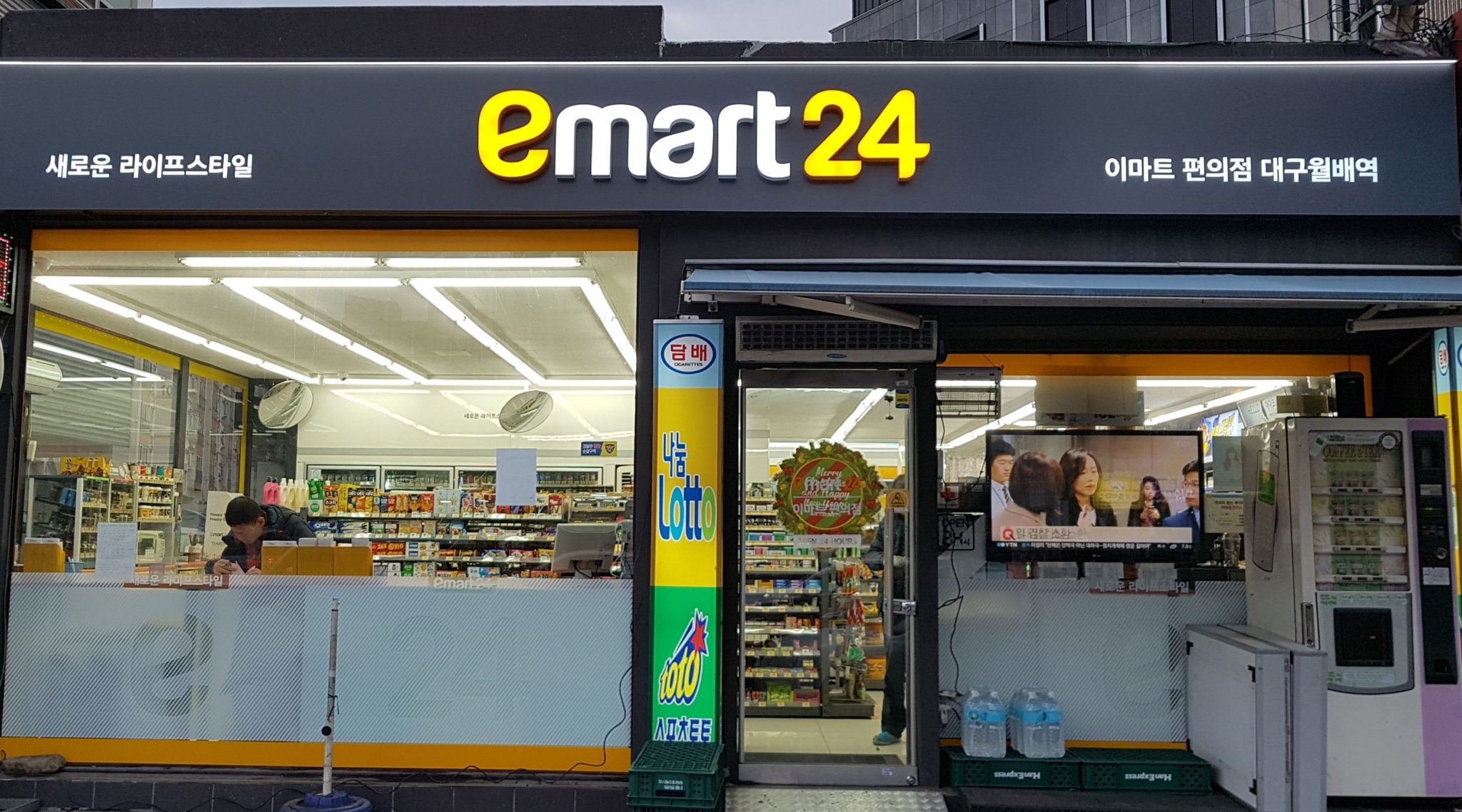
    E-Mart’s convenience store chain Emart24 has opened its first store in Singapore, becoming the first Korean convenience store chain to operate in the city state amid the retailer’s push for overseas expansion.

    The first store is located in the Jurong Point shopping centre, west of Singapore. The second store is set to open Saturday in Nex Mall, a shopping mall in the city’s northeastern region.

    A joint venture company called Emart24 Singapore Pte Ltd will operate Emart24 convenience stores through a master franchise agreement, it said.

    Singapore-based food and beverage giant Fei Siong Group is one of the investors in the joint venture, the South Korean retailer said.

    The two stores will focus on Korean-style fast foods and ready-to-eat meals, such as tteokbokki and gimbab, seaweed rice rolls with vegetables. The retailer plans to add up to 300 stores over the next five years, it said.

    Singapore is the second country for Emart24 to enter after it opened its first convenience store in Malaysia in June last year.

    Further reading, earlier this year, Emart disclosed its plan to open 20 hypermarkets in Vietnam by 2026 and generate US$1 billion in sales, becoming the hypermarket chain with the largest market share in the country.

  • Indonesia To Offer $5,000 Subsidy On Electric Car Sales

    Indonesia To Offer $5,000 Subsidy On Electric Car Sales

    Indonesia’s government plans to offer a subsidy of more than $5,000 on every sale of an electric car, a minister said on Wednesday.

    It will also offer incentives to encourage purchases of electric motorbikes as well as hybrid cars, Industry Minister Agus Gumiwang Kartasasmita said, as part of plans to reduce carbon emissions in Southeast Asia’s largest economy.

    The incentives will offered to buyers of EVs produced by firms with factories in Indonesia, he said in a video statement.

    A subsidy of around 80 million rupiah ($5,131) will be offered on every sale of an electric car, 40 million rupiah on hybrid cars and 8 million rupiah on fully electric motorbikes, the minister said.

    The government will also cover 5 million rupiah of the cost to convert a combustion engine motorbike into an electric one, he added.

    He did not provide a timeline for when the scheme will be implemented nor the total budget it will require.

    Senior Minister Luhut Pandjaitan said previously that the program may start next year.

    Indonesia has a target of at least 1.2 million electric bikes and 35,000 electric vehicles in use by 2024.

  • Apple files patent application for a third-generation Apple Pencil

    Apple files patent application for a third-generation Apple Pencil

    The late Steve Jobs introduced the touchscreen Apple iPhone in January 2007 by famously saying, “Who wants a stylus? You have to get them and put them away and you lose them. Yuck! Nobody wants a stylus.” But in 2015, the Apple Pencil was unveiled for the iPad Pro. Of course, the Apple Pencil is much more advanced than the simple stylus that Jobs was familiar with back in the day. Three years later, Apple’s second-generation Pencil was announced.

    And now Apple appears ready to take its digital writing instrument to another level. According to Patently Apple, the company recently filed patent application number US 20220413636 A1 with the US Patent & Trademark Office for an optical sensor that would be used with the next-generation Apple Pencil. The sensor would allow the pencil to copy the texture and the color found on the surface of an item. It also would be able to wirelessly send this data to a laptop so it could be used with a drawing program.

    According to the patent application, the pencil would contain a light sensor and a light emitter which would help the device “sample” the color and texture of a surface. Yanko Design created some renders showing what the Apple Pencil would look like with the optical sensors included in the design of the new digital stylus.
    Apple has applied for or received a patent for other ideas and innovations related to the Apple Pencil. In 2021, it received a patent for an Apple Pencil with interchangeable nibs (the writing tip on the end of the accessory). The nib can be changed to replace one that is worn down, or could be changed to change the capabilities of the nib based on “a color, a shape, a thickness, a size, a brightness, or an opacity.” While you can currently replace a worn-out tip, it doesn’t add any new features to the accessory.
    Nearly three years ago, Apple filed a patent application for an Apple Pencil with a biometric security feature, a method to use the number of times the pencil is tapped on the screen as  an input that could be used to initiate a copy function, a paste function, an undo function, and/or a redo function.” Other possible additions to the Apple Pencil that we’ve seen mentioned in a patent application include “a speaker, a rotary input device, a microphone, an on/off button, a mute button, a biometric sensor, a camera, a force and/or touch-sensitive trackpad, and so on.”
    If we do see a new Apple Pencil, it might not be until the 2024 iPad Pro is introduced, which could be the first iPad to sport an OLED display. When you think about it, that might be the perfect time to offer a new digital stylus with the ability to sample colors and textures lifted by the pencil, and include features such as a microphone and a camera.
    Just because you see something in a patent application or even a patent, it doesn’t mean you should expect it to be used in a consumer device right away. In fact, of the large number of patents that Apple receives every year,  many are never used. So we can’t say for certain that the technology covered in a patent application or a patent will be used by the company. However, it does make sense that Apple would want to keep improving the capabilities of the Apple Pencil.
    In 2021, a tipster shared a video of what he claimed was the third-gen Apple Pencil and it showed a glossy body with a magnetic flat edge for charging. A new Apple Pencil would be expected to offer longer battery life and improvements in latency and precision.
  • Google testing new look for Android YouTube app

    Google testing new look for Android YouTube app

    Some Android users employing the YouTube app might have noticed that a change has been made to the progress bar on the video player when in Dark mode. This is the line under the video that appears when watching streaming content in portrait orientation. The bar moves to the right as a video plays and also shows how much of a video has loaded. Typically, the progress bar is red although some Android users, including this writer, now see a white or gray progress bar instead.
    With the white/gray progress bar showing, you will no longer see the part of the line that shows how much of a particular video has been loaded on the app. Touching the line to move ahead or to go back (an activity known as scrubbing) will bring back the red color as will tapping on the video to get back the controls. When the progress bar returns to the original red color, it will once again show how much of the currently selected video has been loaded.
    When watching in landscape orientation, you don’t see the progress bar unless you tap the screen, and then it will appear for a second. The progress bar in landscape is in red and hasn’t been changed-at least not yet. And we need to point out again that the change to the color of the progress bar in portrait is seen only when you are watching YouTube in Dark mode. In Light mode, the progress bar is red so it can stand out. It makes sense that a white/gray progress bar would be more easily seen with a dark background.

    If your YouTube app doesn’t exhibit this change, don’t fret. This could be the usual A/B test that Google is famous for running. For what it’s worth, the Pixel 6 Pro used by yours truly does have the white/gray progress bar but it is running Android 13 QPR2 Beta 1.

  • Vietnam reaps new fruit export benefits

    Vietnam reaps new fruit export benefits

    Several Vietnamese fruits have found their way to major markets in China and the U.S. in 2022, opening up the door for Vietnam to send more high-quality produce overseas.

    After four years of negotiation, Vietnam finally exported its first batch of fresh durian to China for the first time in September The fruit came from the central highlands province of Dak Lak.

    In October alone, durian exports to China surged 4,000% year-on-year to $50 million, according to Vietnam Customs. It exceeded dragon fruit as the top fruit exported to China.

    China has so far approved 113 codes for durian farming and packaging areas in Vietnam, up from 76 in September. The figure is set to increase as there are still 300 codes awaiting approval.

    “If China approves all of these codes, Vietnam will have an abundant durian supply to China,” said statement by the Plant Protection Department at the Ministry of Agriculture and Rural Development.

    Durian prices in Vietnam have nearly doubled year-on-year to VND70,000-90,000 per pound in southern provinces.

    “Durian has become a new rising star replacing dragon fruit exports to China,” said Dang Phuc Nguyen, General Secretary of the Vietnam Fruit & Vegetables Association (VinaFruit).

    He added that thanks to Vietnamese trade agreements and protocols with China and the latter’s relaxing of Covid-19 policies, durian and other Vietnamese fruits are easily exported to China.

    This all stands in stark contrast to last year when hundreds of fruit containers were stuck at Vietnam’s northern border gates due to Covid-19.

    Agriculture, forestry and seafood exports surged 11.8% year-on-year to $49.04 billion in the first 11 months. Agriculture alone accounts for more than 42% of that figure, according to the Ministry of Agriculture and Rural Development.

    Vegetables and fruits are among Vietnam’s top eight biggest agriculture export items, along with coffee, rubber and rice.

    Grapefruit in November became the seventh fruit officially exported by Vietnam to the U.S., one of the most difficult markets globally.

    Industry insiders say that Americans consume about 12 million tons of fruit a year, but domestic supply accounts for only 70% of demand.

    Vietnamese exporters have been trying to take advantage of this opportunity. Exports to the U.S. surged 18% year-on-year in the to $240 million in the first 11 months. This is a quadruple from the total figure of $59 million in 2015.

    Other fruits that have also found the way to the global market include lime and pomelo shipments to New Zealand starting from November 15, 2022. This country has already been buying mango, dragon fruit and rambutan from Vietnam.

    Nguyen said that now that more Vietnamese fruits have found their way to overseas, it is even more important that buyers’ demands are met in terms of farming and delivery.

    “Whether these markets and opportunities last is up to the farmers and the exporters.”

    Ngo Tuong Vy, CEO of exporter Chanh Thu, warned that China is not yet a sustainable market for Vietnam as some regions are still struggling with Covid-19 and their safety measure policies are unpredictable.

    The agriculture ministry has set a surging $5 billion target for fruit exports by 2025, up from last year’s $3.1 billion forecast.

  • Exports to China no longer subject to Covid testing

    Exports to China no longer subject to Covid testing

    Vietnamese exports to China will no longer be subject to Covid testing from January 8th, the Ministry of Industry and Trade has announced.

    The ministry urged localities and businesses to update goods clearance processes at border gates in order to streamline trade according to the new easing of restrictions.

    The government has asked major agricultural producers and other exporters to coordinate with northern border province authorities to better facilitate the transport of exports — especially fresh and frozen agricultural products – to China.

    The northern neighbor had previously tightened quarantines to curb the spread of the Covid 19 pandemic, leading to congestion and the bottlenecking of Vietnamese exports at border gates in northern provinces, including Lao Cai, Lang Son and Quang Ninh.

    On Dec. 26, China’s National Health Commission announced that it would downgrade it’s “Covid-19 response level,” suspending mandatory isolation for passengers entering the country from January 8, 2023.

    Michael Kokalari, chief economist at investment fund VinaCapital, said China’s reopening would have less of an impact on Vietnam’s economy than other Southeast Asian countries because Vietnam’s exposure to China’s domestic market was still modest.

    The most important upcoming economic event for Vietnam is that the number of tourists is likely to return to normal in the second half of 2023, Kokalari said, adding that this will be a driving force behind Vietnam’s GDP growth for the year.

    Vietnam’s GDP expanded 8.02% in 2022, the fastest pace annually since 1997, backed by strong domestic retail sales and exports. The country has targeted GDP growth of 6.5% in 2023.

    Vietnam is China’s biggest trade partner in Southeast Asia and sixth biggest globally.

    China is Vietnam’s biggest trade partner. Their bilateral trade topped US$165.8 billion in 2021, up 24.6% from 2020.

  • Streaming in Southeast Asia Gains Pace

    Streaming in Southeast Asia Gains Pace

    Streaming has become a global phenomenon in the last few years, as people from every part of the planet have started watching TV shows and series whenever it suits them. The Asian market has been slower to take off than other places, but recent signs suggest that this is now on the way to becoming a huge industry.

    What Are the Latest Figures?

    Streaming in SE Asia has been in the news lately because Media Partners Asia has released a report that shows a 6% uplift in viewer figures in the third quarter of 2022. They attribute this partly to Amazon Prime Video’s marketing activity, as well as to the excellent content being released by rivals like Netflix and Disney+.

    The number of Netflix viewing hours rose in all of the countries covered in the report, which are Malaysia, Indonesia, Singapore, Thailand, and the Philippines. This service made up more than 40% of the hours viewed on premium streaming services in the region. Viu is far behind in second place with 13% and WeTv from Tencent got 10% of the market share. Overall, two and a half million new subscribers have joined the streaming revolution here, making a total of over 43 million paying customers.

    The Asian streaming market is still far behind the likes of Europe and North America. This 2022 streaming wrap up confirms the size and importance of the global streaming market, with more than 25 million views for the big-budget production of The Lord of the Rings: The Rings of Power by Amazon Prime. This year has also seen Netflix spend $200 million on their most expensive movie so far and Stranger Things smashed viewing records when the fourth series came out in 2022.

    Sport is often a big driver in the switch to streaming, and this has proven to be the case in Indonesia, where the Video service has been focusing on the national soccer league as well the English Premier League and the Spanish La Liga tournament. Vidio was the fastest-growing name in the sector in this quarter, as it rocketed up to four million subscribers, which makes it the fifth-most popular platform overall.

    The localization aspect is also crucial, as global brands like Netflix and Amazon Prime need to find ways to make their content as attractive in Asia as possible. In this respect, the Amazon service has pushed ahead with its local content strategy that helped it gain about 400,000 new subscribers in this quarter.

    Interestingly, viewers here prefer Korean content, particularly drama series, which is ahead of American and then Chinese series and movies. An example comes from Netflix’s Extraordinary Attorney Woo, a Korean series that has been popular across the region.

    <iframe width=”1280″ height=”720″ src=”https://www.youtube.com/embed/MxeXECe2t-c” title=”Extraordinary Attorney Woo | Official Trailer | Netflix [ENG SUB]” frameborder=”0″ allow=”accelerometer; autoplay; clipboard-write; encrypted-media; gyroscope; picture-in-picture” allowfullscreen></iframe>

    What Can We Expect in the Future?

    It’s clear that the streaming market is heating up here, with the recent arrival of the Disney+ service ramping up the competition levels. This means that all of the big names are now present and ready to battle it out for SE Asian viewers. Each of the major platforms has a plan in place to attract more customers thanks to aggressive marketing, strong content, and a localized approach, so we can expect to see the market grow even more quickly in the future thanks to this investment strategy.


  • Secret Tips for Making Money at Online Casino

    Secret Tips for Making Money at Online Casino

    Online casinos are the latest revolution in the gambling world. The accessibility and fun that comes with an online casino are what makes it popular. Gaming has been made easier than before. If you play it right, situs judi slot online can even be a good source to help you boost your bank balance as you enjoy yourself from the comfort of your home. Why don’t you try your luck and become the next millionaire in town? However, beating the banker needs a lot of strategies and experience. Here are hidden tips that will help you make money at the slot online without struggling to continue reading for more insight:

    Set limits and abide by it

    Having a strong strategy is one of the key factors in the success of online gambling. Unfortunately, sometimes you can have an unprecedented day. When that happens, accept that luck isn’t on your side for that day and leave it for another time. Have a set limit that you’ll deposit each day, week, or even month, and stick to it. By so doing, you won’t get a shock when you check your bank balance at the end of the day.

    Be satisfied with what you get

    The greatest mistake that people make with online casinos is not quitting when they’re ahead. Winning big can be exciting and it can make you thirst to push your luck for the chance of a bigger jackpot at the end. Chances are that you will gamble away all the winnings you have made. Hence, it’s advisable to bet wisely and pocket your winnings instead of reinvesting them into the online machine.

    Make use of the offers given

    Online casinos often post offers, promotions as well as gifts to entice you to sample their casino games; therefore, you don’t have to be afraid to take them up on the offer. There is no problem with that at all; what they simply want is your custom and this can be a free shot at the jackpot for you.

    Have a definite gambling strategy

    Winning online casino games is often easier with the lower jackpots since they tend to pay out more frequently. If you decide to master two games, select one high and one low jackpot game to strike the balance between big wins and those smaller bonuses that will improve your bank balance. Work out the strategy for each one and play it at its own game by finding the odds and evaluating how much you can afford to deposit against your odds of winning.

    Select the best game to bet

    Rather than taking many different approaches when playing slot online terpercaya, games. It’s ideal to concentrate on one or two games that you really love and learn them well. Read properly on the terms and conditions, including the rules. Once you do that and practice more and more, you will find a system that will increase your chances of winning. This approach can work in different games.

    Conclusion

    Creating real money at online casinos comes down to game selection. Provided you follow the above tips, there are millions of dollars to be made from online casinos. However, you must also understand that there are a few other rogue sites whose aim is to rob your hard-earned money. So choose wisely.


  • Rich Asians on the Lookout for Easier Alternatives to Acquire EU Residency and Citizenship

    Rich Asians on the Lookout for Easier Alternatives to Acquire EU Residency and Citizenship

    Immigration is something that has happened for centuries, with people moving around the globe and putting down roots in a different country. But residency and citizenship can be very difficult to come by depending on the country a person wants to move to, which has led to people being a bit more creative.

    One of the biggest trends of the moment is wealthy Asians who are now on the lookout for easier alternatives to getting EU residency and citizenship, but do those alternatives exist? Let’s take a closer look.

    The Malta Residency by Investment Program is Proving Very Popular

    It’s not every country that offers people a simplified way to move there and get citizenship but thanks to the Malta residency by investment program, this is the door that has been opened to those that have money for it. And because Malta is a part of the EU, it has positioned itself as a very attractive option.

    The Malta citizenship by investment program may not be something you’ve even heard of, and much of that can be attributed to the fact that it is relatively new. The program makes it possible for individuals and family dependents to make a direct investment in the country and then become naturalised as Maltese citizens. Wealthy Asians looking to get their foot in the door can immigrate to Malta and enjoy all it has to offer.

    The program is described as an “expedited route for citizenship” which benefits Malta in a couple of ways. First, there is the investment portion, wherein the country will benefit from the influx of money and there is the fact the people the program is attracting can come from anywhere in the world and tend to be quite affluent – as they need to be able to afford this option.

    There are a few direct investments that are required, which are the government contribution, a property investment, and a compulsory donation. It’s important for anyone considering this route to look at the full costs/investment involved to ensure they have the full picture. It’s also worth noting there is a 12 or 36-month route to residency, which affects the steps and costs involved.

    Malta’s Location Makes It a Convenient Option

    The residency through investment program can make EU citizenship a much more viable option, but what about Malta itself? Why move to a small country that for some may seem very removed from mainland Europe?

    Malta boasts many benefits for those looking to immigrate to the EU. Take, for example, its location, which is the middle of the Mediterranean Sea. This makes it easy to travel to all kinds of other cities such as Rome, London, Barcelona, Paris, and Frankfurt. The furthest is London, which is only a three-hour flight. From each of these key airports, you can then get connecting flights to other major cities around the world.

    Wealthy Immigrants Will Appreciate the Fast Growing Economy

    While the main reason to move to Malta may be to get EU citizenship, it’s well worth noting that Malta’s economy is doing very well. From 2014 through 2016, Malta had one of the fastest-growing economies in the EU. The biggest industries in the country are finance, tourism, and online gaming.

    Let’s Talk Real Estate

    This category is especially important since you will need to purchase a property to qualify for citizenship by investment. There is a minimum amount that must be spent on the property too, which wealthy Asians should have no problem meeting. Relatively speaking, property prices are considered quite affordable, with higher-end exclusive properties also being available.

    Just like with most other countries, property prices have risen in the past decade but remain on the lower end in comparison with some other European countries.

    What About a Language Barrier?

    Concerned about a potential language barrier when moving to Malta? While it’s true that Maltese is spoken, so is English. English is widely used across all the Maltese islands which makes a language barrier much less likely.

    Enjoy Beautiful Weather Year-Round

    One would be remiss to talk about moving to Malta without also mentioning its weather. For those who enjoy sunny days with comfortable temperatures, Malta will be perfect. You can be outdoors year-round and the country boasts a whopping 3,000+ hours’ worth of sunshine per year. The daytime highs reach 30°C in the middle of summer (July) and dip to about 15°C in the middle of winter (January).

    Rich Asians Have Found the Door Worth Opening

    So for rich Asians who are keen on EU citizenship and are looking for an easier, faster, and more direct solution, Malta’s residency by investment program is well worth looking into. It provides people with all the comfort and security of living in the EU in a rather timely manner.

  • Crypto Exchange Kraken Closes Japan Business

    Crypto Exchange Kraken Closes Japan Business

    The service shutdown in Japan follows in the wake of the collapse of FTX and adds more uncertainty to the global crypto market.

    Kraken, the US-based cryptocurrency exchange and bank, indicated that it is closing its exchange services in Japan.

    In a blogpost issued Wednesday in Japanese and English, the company said that current market conditions in the country combined with a weak crypto market globally were the main reasons for its decision. Given that, it was not in a position to justify the resources needed to grow the business.

    The company added that it would take steps to deregister itself from the Japan Financial Services Agency (JFSA) effective 31 January 2023.

    It also indicated that it is adhering to JFSA’s guidance and that clients will have time until the date of deregistration to withdraw fiat and crypto holdings from its platform.

    Clients can withdraw assets to an external wallet or liquidate their portfolios and transfer the remaining Japanese yen to a domestic bank account during that time.

    On the 9th of January, Kraken indicated that deposit functionality would be removed from accounts, although trading functionalities will remain. Withdrawal limits have also been removed to ensure that all assets can be transferred.

  • Digital Banks Are Not Making it in Singapore

    Digital Banks Are Not Making it in Singapore

    They got here late and when they did arrive, they faced fierce rivalries from strongly entrenched incumbents. And given that they have to follow all the regulations traditional banks do, they are not getting a break from regulators either.

    It was just a short while ago, in December 2020, after months of waiting, that the Monetary Authority of Singapore (MAS) announced four successful digital bank applicants, GXS Bank, owned by Grab and Singtel, MariBank, a unit of gaming and e-commerce group Sea, ANEXT, part of China’s Ant Group; and Green Link Digital Bank (GLDB), held by a consortium comprising Greenland Financial, Linklogis Hong Kong and Beijing Co-operative Equity Investment Fund Management.

    And, they appear to be experiencing much the same fate that neobanks have elsewhere. In short, they won’t put any incumbents out to pasture anytime soon.

    That same view now appears to be forming in the city-state itself, with The Business Times on Thursday also clearly telegraphing the fact in a stark headline that the four new digital entrants are not the game changers they initially promised to be. Their impact on the market has turned out to «be underwhelming, with limited utility for the average consumer», the newspaper indicated.

    From the outset, Singapore intended to avoid any market disruption and regulators required digital banks to provide clear value propositions. Moreover, besides using innovative technology, they also needed to reach under-served segments of the Singapore market.

    That has limited their availability – and impact. GXS Bank, for example, solely takes deposits from a select group of employees and customers, and MariBank is only available to employees of its parent company, Sea.

    Another kind of digital bank, Trust Bank, is showing more impact, which is likely because it is supported by industry incumbents. It has a full bank license and is owned by Standard Chartered and FairPrice Group and only started to take deposits this past September, yet it was in a position to report 400,000 customers by the time the BT article appeared.

    Moreover, another issue could potentially be in one of the key strategies used by digital entrants. Initially, in order to take a larger chunk of the market, Trust Bank and GXS tried offering higher interest rates than the main industry players.

    But they quickly came up against one of the largest interest rate pivot cycles in recent memory, with more restrictive central bank policies worldwide forcing the wider financial industry to successively ratchet up rates in short order.

    Not only have they been too late to the market, but the fact is that most traditional banks have significantly improved their digital offerings in the past two years. Any innovations offered by the new digital banks, such as financial planning and cheaper foreign exchange transactions, have become increasingly common.

    Simon-Kucher’s banking lead in APAC, Silvio Struebi said in the earlier article that digital banks have accomplished a great deal, but that they are not going to be great disrupters.

    It has just provided more options for consumers and prompted vast improvements in traditional banks, Struebi said.

  • Housing liquidity in 2022 lowest in 5 years

    Housing liquidity in 2022 lowest in 5 years

    The number of house and apartment transactions in the north and the south in 2022 fell to the lowest level in 5 years, according to report by real estate agencies.

    The report said that the apartment market in Ho Chi Minh City and in some southern provinces has been on the decline throughout the year.

    In the first two quarters, nearly 14,000 new apartments were put up for sale, and some 75% were sold. In the third quarter, 1,250 apartments went on the market, and the absorption rate dropped to about 52%.

    In the fourth quarter, 100 new apartments were sold, the lowest number for the year. Furthermore, the number of units sold during the peak sales season at the end of this year was far below the expectations of investors.

    According to Batdongsan, this is an unprecedented situation in the pre-Tet period over the past 5 years. The period before Tet (Lunar New Year holidays)is the peak time for yearly real estate transactions. Many businesses have already increased discount rates to 40-50%, but the liquidity has not shown any improvement. Tet falls in late January 2023.

    According to a market report by real estate services provider DKRA Vietnam, the apartment market showed that 1,385 units were sold in HCMC in the first quarter of this year, down 68% compared to the previous quarter. The liquidity improved in the second quarter, but weakened in the third quarter.

    In August, in the primary market, only 177 apartments in the city were sold, the lowest number in three years, and down 4.6 times against July. The absorption rate in December was around 20%, the lowest in three years.

    Over 200 apartments were sold in November in HCMC and southern provinces, dropping nearly 90% against the same period last year.

    In the south, just four houses were sold in August, down 23 times against July, and down over 70 times compared to April.

    In the secondary market in the south, many apartment and house investors have offered high discount rates to cut their losses, but liquidity has remained low in the second half of this year, according to VnExpress’ observation. The housing market remained quiet in December.

    In the north, housing liquidity has also decreased sharply this year.

    According to Savills Vietnam, in Hanoi, some 4,000 apartments were sold in the first quarter, while sales dropped 45% in the second quarter against the previous one, and decreased 10% in the third quarter.

    In the third quarter, 299 semi-detached houses and villas in Hanoi were sold, down from 666 units in the first quarter.

    Nguyen Van Dinh, president of the Vietnam Association of Realtors, said since the second quarter, the real estate market in the north has decelerated due to the impact of the credit tightening policy.

    The market’s absorption rate in the third quarter decreased 66.5% against the first half of the year, and the number of transactions dropped over 50% against the same period last year.

    The cash flow has slowed down in the real estate market, causing a marked decrease in liquidity, Dinh said.

    Batdongsan’s southern regional manager Dinh Minh Tuan explained that transactions were frozen because some investors and buyers had difficulty accessing bank loans, while others were shocked at increasing interest rates. This situation has caused people to delay purchases in the short term while they assess the market.

    Many well-off people are hesitant to disburse money, expecting housing prices to fall further and discount rates to increase in the coming time, Tuan said.

  • Amazon taxes 10 million products in Vietnam

    Amazon taxes 10 million products in Vietnam

    Vietnamese vendors have sold nearly 10 million products on Amazon this year, totaling an export value over 45% more than 2021, according to a report by the American e-commerce giant.

    During the pandemic, there were “thousands” of Vietnamese vendors on Amazon, and their top-selling products were in the categories of kitchen ware, home appliances, garment and textile and healthcare.

    Several Vietnamese brands such as AnEco (maker of compostable garbage bags), Lafooco (cashew exporter), Sunhouse (home appliances manufacturer) and HMG (3D card manufacturer) have been hailed by Amazon for succeeding in their e-commerce initiatives and creating jobs for locals.

    Nguyen Le Thang Long, deputy director of An Phat, which makes AnEco products, said that sales through Amazon have surged nearly five times from 2021.

    Phung Minh Thuy, founder of HMG, said that her company receives hundreds of orders through Amazon each day.

    Vietnam ranks fifth among the top 10 markets globally in terms of e-commerce and retail sales growth at 19%, behind the Philippines, India, Indonesia and Brazil, according to market research firm eMarketer.

    Vietnam’s e-commerce exports revenue is set to rise 20% annually between 2021 and 2026, according to consultancy firm AlphaBeta.

    With a strong national policy to support exports, abundant production capacity, and rapid development of e-commerce, Vietnam is at a golden stage for online exports to take off, said Gijae Seong, managing director of Amazon Global Selling Vietnam.

  • Apple’s Crash Detection sent 71 notifications to one 911 center last weekend

    Apple’s Crash Detection sent 71 notifications to one 911 center last weekend

    Last September, a new feature was introduced for these devices while unveiling the iPhone 14 series, the Apple Watch Series 8, the Apple Watch Ultra, and the Apple Watch SE (2022). Any of these products will detect when you have been in a severe car, SUV, or pickup truck crash. Unless you shut down the process with a tap, after 10 seconds the phone will contact your emergency contacts and give them your current location.
    Two days after introducing the feature, Apple turned Crash Detection into an ad for the new iPhone 14 line that shows an iPhone flying through the air amid a shower of broken glass. “It looks like you’ve been in a crash,” says the screen. “iPhone will trigger Emergency SOS if you don’t respond.” Apple states that the Crash Detection feature is driven (no pun intended) by advanced Apple-designed motion algorithms trained with over a million hours of real-world driving and crash record data.”
    We should point out that a similar feature was made available to the Google Pixel line in 2019. Regardless, while this sounds like a useful, helpful, and potentially life-saving feature, technology can backfire every now and then. For example, at the Summit County 911 Center, dispatchers received an incredible 71 automated crash notifications this past weekend from skiers carrying an iPhone or wearing one of the three newest Apple Watch models.
    The notifications came in from the area’s four ski areas but none of the notifications received had to do with a real emergency. Skiers making quick stops and falling into the snow set off the Crash Detection feature even though there was not one true emergency in the bunch. And if Crash Detection wasn’t set off by a fall into the snow, the Apple Watch’s fall detection feature, which essentially has a similar process to run through when someone wearing the timepiece hits the ground, was responsible for unnecessary notifications.
    None of the 71 notifications could be disregarded. And if the device owner did not respond to a return call, a special operations deputy had to contact ski patrol to visit the location where the impact happened to make sure no one was seriously hurt. This was a time-consuming activity but had to be done.
    Trina Dummer, the interim director of the Summit County 911 Center, said, “We are not in the practice of disregarding calls,. These calls involve a tremendous amount of resources, from dispatchers to deputies to ski patrollers. And I don’t think we’ve ever had an actual emergency event.” All 71 notifications were set off by an impact…into the soft snow.
    And since calls are handled by the 911 Center based on the time the call is received, a bogus accident that sends out a notification from an Apple device could delay the arrival of medical help to a real emergency in the area. Dummer notes that “We are absolutely diverting essential resources away from people who need it toward a feature on a phone.” A comment worded like that sounds like someone is upset with Apple.
    Another 911 Center, this one in Pitkin County, receives 15 to 20 calls a day from Apple’s Crash Detection feature that come from the county’s four main ski areas. The 911 Center’s director, Brett Loeb, says every notification generates a return call although sometimes a skier’s phone is too deep inside a coat pocket for the user to hear it ringing. At that point, the ski patrol has to check out the area which delays things.
    Similar to what happened in Summit County, in Pitkin County not one notification from Apple’s Crash Detection was the result of a real emergency.
  • Vietnam consumes 50 tons of gold annually

    Vietnam consumes 50 tons of gold annually

    Vietnam consumes nearly 50 tons of gold jewelry each year, with 80% absorbed by HCMC, according to the Saigon Jewelry Association (SJA).

    The country imported more than 1,000 tons of gold in the 1991-2012 period.

    Businesses have not been allowed to import raw gold since May 2012, but consumption of the precious metal has still increased stealthily every year, said SJA.

    In recent years, the export turnovers of Vietnamese gold jewelry have stood at $20-30 million per year.

    The jewelry is mainly exported to Asian and European markets such as Germany, Denmark and France.According to the World Gold Council, Vietnam’s demand for gold bars, coins and jewelry ranks first in Southeast Asia.

    Vietnam gold companies churn out more than 11 million gold products weighing over 40 tons, thanks to an industry that employ over 38,000 jewelers, according to SJA.

    However, the ban on importing raw gold has caused difficulties for gold companies because there are differences between gold prices in international and local markets.