Author: Mei Ling Tan

  • Uber starts to annoy some users by sending them ads as push notifications

    Uber starts to annoy some users by sending them ads as push notifications

    Everyone hates ads, but they are the price we pay for all the free apps out there. However, it’s one thing to watch them when you are using a free app, and it’s a whole other story to be bombarded with ads through push notifications even when you are not actually using your phone.

    Recently, Uber launched a new advertising division and is now displaying banners in its app. However, it appears that the company is also currently testing a way to advertise various things through push notifications, which is something it didn’t even mention when it announced its decision to put ads in its app.

    In recent days, many users shared on Twitter that the Uber app has started sending them push notifications for ads of other companies. This would be somewhat ok if users were using the app at this time; however, it appears that Uber was sending them these notifications when they weren’t.

    Thankfully, Uber said that these push notifications were part of a limited test, and users can always set their notification preferences in the app’s settings. However, the company needs to specify how many people have been included in the test, how long it will last, and whether it would decide to make push notification ads a permanent experience.

    At the moment, Uber is using the so-called “journey ads,” which advertise one single brand throughout a user’s travel. Usually, users see an ad while waiting for their ordered car to arrive, while traveling, and when they reach the designated destination. Advertisers personalize ads to users based on their travel history. Currently, there is no information on whether Uber used the same data to choose what ads to display as push notifications.

  • Google is ending support for its dedicated Street View app next year

    Google is ending support for its dedicated Street View app next year

    It appears that another app will soon see its demise. One of Google’s plans for the next year is to shut down its dedicated Street View application.

    The app does exactly what its name suggests: it lets you browse the world’s streets in 360-degree photos directly from your smartphone. However, if this sounds familiar, it’s because the more popular Google Maps app also lets you do that by just tapping on the image of the place you want to see.

    The dedicated Street View app is mostly used by people who want to contribute their own 360-degree shots, but since Google now offers a “Street View Studio” web app, the Street View app just becomes redundant. So, it’s no surprise that Google has decided to end it.

    The news of the Google Street View app’s demise first came from 9to5Google. The folks there found out that in version 2.0.0.484371618 of the app, the tech giant has composed a few — still hidden from the public — shutdown notices, which say that the application will be shut down on March 21st, 2023.

    A little after 9to5Google’s report, a spokesperson, Madison Gouveia, confirmed that Google is indeed planning to shut down the Street View app in March 2023. However, we must note that the Street View service will continue to function, so you will still be able to explore the streets of your favorite cities, but only through the Google Maps app.

  • Most blue chips close in red

    Most blue chips close in red

    Vietnam’s benchmark VN-Index dropped 1.02% to 1023.19 points Wednesday, with two-thirds of blue chips falling.

    The index closed 10.56 points lower after gaining 5.81 points on Tuesday. Trading on the Ho Chi Minh Stock Exchange (HoSE) fell by 6% to VND10.10 trillion ($406.29 million). The VN-30 basket, comprising the 30 largest capped stocks, saw 22 tickers dropped.

    MSN of conglomerate Masan Group plunged 6.4%, followed by MWG of electronics retail chain Mobile World with a 4.2% decline.

    ACB of Asia Commercial Bank dropped 2.9%, and SSI of leading brokerage SSI Securities Corporation fell 2.7%. Other decliners included VNM of dairy giant Vinamilk, GVR of Vietnam Rubber Group and FPT of IT giant FPT Corporation.

    Five blue chips gained, including VIB of Vietnam International Commercial Bank, up 2.7%, and HPG of steelmaker Hoa Phat Group, up 2.3%.

    Foreign investors were net sellers to the tune of VND251.20 billion, mainly selling HPG and KBC of industrial real estate developer Kinh Bac City.

    The HNX-Index at the Hanoi Stock Exchange, where mid and small caps list, was down 0.33% while the UPCoM-Index at the Unlisted Public Companies Market was down by 0.63%.

  • E-commerce platforms free from filing tax on vendor behalf

    E-commerce platforms free from filing tax on vendor behalf

    E-commerce platforms like Shopee, Tiki or Lazada will not have to file tax on vendors’ behalf and instead only provide authorities with their revenue and other details.

    Every quarter the platforms will need to submit vendor details including name, tax ID, personal ID, address, phone number and revenue, according to a new decree.

    This means a previous proposal by tax authorities to make these platforms pay tax on behalf of their vendors was not approved, with vendors instead responsible for their own tax payments.

    Insiders since last year have voiced concern over the proposal, saying that taxing vendors’ behalf will increase costs, and that they do not have enough resources to fulfill this task.

    Around 100 e-commerce platforms are operating in Vietnam with hundreds of thousands of vendors. In 2020, Shopee had 210,000 vendors and Tiki 8,800, according to tax authorities.

  • At UBS A Machine Knows What Clients Want

    At UBS A Machine Knows What Clients Want

    UBS is launching one online service after another in Switzerland, with a system discreetly analyzing customer behavior in the background. Now, its digital efforts are themselves under scrutiny.

    New digital offerings every quarter is what Sabine Magri, chief operating officer (COO) of UBS’s Swiss business, promised in May when UBS launched its purely digital product line Key4. Since then, it has been rolling out new offerings in its home country. After pension and corporate client product launches, an investment solution went live this month.

    With UBS expanding its digital offerings to clients, their behavior is registered on the new channels as inputs for a system working behind the scenes. This approach analyzes customer behavior and turns it into recommendations. Advisors receive tailored suggestions as to which products they can offer their customers.

    Next Best Action» has been operating in UBS Switzerland’s wealth management business for about a year and is now being used in the retail business with private clients. In many cases, the tool is based on classic data analyses following simple rules not requiring a complex model. Nevertheless, it makes use of machine learning. The longer the system runs and the more data it can tap and make tailored recommendations.

    These opportunities are then brought to client advisors through the bank’s internal interface. For now, this is a thought exercise, which the bankers can use if they think it appropriate. Notably, recommendations do not appear on the customer’s smartphone app but take a detour via the advisors.

    In an environment where bank customers are generally reluctant to make transactions, the machine’s suggestions could soon gain influence. This means walking a tightrope not only for UBS but also for all other Swiss banks that specifically evaluate customer engagement.

    This is not only because the huge amounts of data have only just begun to be made usable for business. Unlike search engines and social media platforms, which use highly sophisticated algorithms to spy on user behavior and send out targeted advertising, banks are subject to special rules, both from a regulatory perspective and because of the special relationship of trust.

    Former UBS Chairman Axel Weber, warned in 2017 that customers should not feel like they are being spied on. Otherwise, there would be a rapid loss of trust.

    His successor Colm Kelleher is now having his say on the digital strategy. It was rumored he was the one who pushed for pulling the plug on the acquisition of American robo-advisor Wealthfront in September. Through Wealthfront, UBS CEO Ralph Hamers wanted to reach the mass of wealthy customers in the United States.

    That makes Switzerland all the more important as a test bench for the group’s digital transformation. Over the past nine months, UBS spent over 1.7 billion francs on operations, the lion’s share going toward upgrading technology. The bank cut back staff and real estate after closing 44 branches over the last year, another measure of the success of the digital transformation.

    It seems to be working. Over 74 percent of UBS clients in Switzerland were active on the bank’s digital channels at the end of September, with nearly 58 percent using smartphones. It is no coincidence the bank highlights these figures every quarter. The bank’s progress with digitalization plays a key role in its stock market valuation. Having a machine that knows what customers want could be decisive.

  • Tax break assists Belgian brewery to ‘Australianise’ its beers

    Tax break assists Belgian brewery to ‘Australianise’ its beers

    Queensland brewery Madocke Beer Brewing Co is set to brew its Belgian-style beer with Australian ingredients as part of a tax incentive program.

    The Research and Development (R&D) Tax Incentive program supports businesses that undertake R&D initiatives benefitting Australia, by providing a tax offset on eligible activities.

    It is administered by the Industry Innovation and Science Australia (IISA) and the Australian Taxation Office (ATO).

    The Gold Coast brewery – which predominantly produces traditional European-style beer – will now replace its European malts and hops with Australian ingredients.

    “So in our research and development claim that we did with the Australian government, we deliberately put forward that we are going to try to recreate traditional Belgian beers with Australian ingredients,” said Annelies Nijskens, Madocke’s co-founder and brewery manager said.

    “If we can change over more beers with Australian malts, it’s beneficial for Australian agriculture and the economy and the ecological footprint, which is very important these days.”

    The brewery began experimenting last year with Australian native honey to produce a Blonde beehive beer and a Belgian-style Blonde beer with Australian-grown Border Pale Malt from Barrett Burston Malting.

    The latter won the European-style ale category at this year’s Indies award.

    “Even though we are a Belgian-style brewery, we do not just bring everything in from Europe, we do try to work on Australian ingredients as well,” said Nijskens.

    Since ingredient sourcing and freight delays are ongoing problems facing businesses’ supply chains, the brewery aims to localize its source while helping the economy under this program.

  • Vietnamese rice prices surpass Thailand’s in global markets

    Vietnamese rice prices surpass Thailand’s in global markets

    Vietnamese 5% broken rice, which usually costs less than its Thai peers in export markets, raced past them in October to reach record levels. It fetched $425-430 per ton, $48-51, and $18-25 higher than similar varieties from India and Thailand, according to the Ministry of Agriculture and Rural Development.

    Vietnam exported over six million tons of various kinds of rice for nearly $3 billion in the first ten months, up 17% and 7% year-on-year.

    According to local businesses, this is not the first time Vietnamese rice has fetched higher prices than Thailand’s, but its brand recognition is growing in the world market.

    “Vietnamese fragrant rice is still behind Thailand, but it is becoming increasingly popular with foreign consumers,” Pham Thai Binh, general director of Trung An Hi-tech Farming Joint Stock Company based in the southern city of Can Tho, said.

    His company exports some 30 containers of rice to Europe every month at $700-1,250 per ton, he said.

    Australia recently registered the ‘Gao Ong Cua Vietnam’ trademark for ST24 and ST25 rice varieties developed by agricultural engineer Ho Quang Cua.

    ST25 won the World’s Best Rice Contest in 2019 and ST24 came second in 2017.

    Loc Troi Group’s rice with the trademark ‘Com Vietnam Rice’ is sold at 4,000 supermarkets in France.

    Local firms expect rice exports to remain big and fetch high prices for the next three years since the world is facing climate change and the food supply is falling.

    Thailand’s rice production is declining.

    Vietnam is the world’s third-biggest rice exporter after India and Thailand and accounts for 7.8% of the global rice trade.

    Its rice is sold in 28 countries and territories worldwide, mainly in Asia and Europe.

  • Steelmakers report biggest-ever losses

    Steelmakers report biggest-ever losses

    Leading steelmakers in the country have reported the biggest-ever Q3 losses in amidst low sales, rapidly falling prices, and high inventories.

    The nation’s biggest steelmaker, Hoa Phat, incurred a negative after-tax return of VND1.79 trillion ($72 million), the first loss it has reported in 13 years. This is also the third consecutive quarter that its revenues have dropped, down 12% over the same period last year and down nearly 8% against the previous quarter.

    Nam Kim reported Q3 losses of over VND400 billion, a record high, with revenues down nearly 1.7 times over the same period last year.

    Steelmaker Hoa Sen racked up losses of VND887 billion in the last quarter of the 2021-2022 fiscal year, compared with a profit of more than VND940 billion in the same period last fiscal year. It reported a loss for the first time since the fourth quarter of the 2017-2018 fiscal year.

    Companies under the Vietnam Steel Corporation (VnSteel) also posted record losses or minuscule profits in the third quarter.

    Thu Duc Steel saw its biggest-ever Q3 loss of VND22 billion, nearly 37% higher than the same period last year; and Vicasa Steel reported its biggest loss since the third quarter of 2020.

    Thai Nguyen Steel and Ho Chi Minh City Metal incurred losses of VND25 billion and VND12 billion. Meanwhile, two other VnSteel affiliates, Melin Steel and Cao Bang Steel, gained very small profits, down 95% and 99%, respectively, against the third quarter of last year.

    Like steelmakers, many steel distributors and traders also suffered losses, with the SMC Trading Investment Joint Stock Company reporting its biggest-ever quarterly loss of nearly VND220 billion, compared with a profit of nearly VND130 billion in the same period last year.

    Steel companies said they faced low domestic sales and export turnovers, a rapid decline in product prices, and high inventories in the third quarter. According to Vicasa Steel, the Vietnamese steel industry was affected by the Russia-Ukraine conflict, China’s “zero Covid” policy, and global inflation.

    Higher input costs, credit tightening, high lending interest rates, and fluctuating exchange rates were other contributing factors. Hoa Phat said coal prices had trebled.

    From mid-May to late August, steel prices declined 15 consecutive times from around VND19 million per ton to VND14.5-15 million. After a slight increase at the beginning of September, the prices fell twice to some VND14 million per ton, equivalent to the levels in late 2020.

    According to the Vietnam Steel Association, the country’s finished steel output was 2.4 million tons in September, but sales were only 1.99 million tons. In the first nine months, it had steel inventories of some 1.6 million tons.

  • 1,200 workers lose jobs as Taiwan footwear firm runs out of orders

    1,200 workers lose jobs as Taiwan footwear firm runs out of orders

    A Taiwanese shoemaker in HCMC’s Binh Tan District has laid off 1,185 workers and blamed it on a drying up of orders.

    In an announcement, Monday Ty Hung Co. Ltd, said its customers face financial issues and have not placed new orders.

    Despite trying everything it could, it is unable to maintain production as planned and has no choice but to terminate labor contracts with 1,185 people on Dec. 1, the statement said.

    It will pay a severance allowance to employees who have worked since 2008 and two months’ salary to all employees whose social insurance premiums are now cut due to losing their job.

    It will also pay one month’s salary as a bonus to those who worked for the entire year until being laid off and make pro rata payments to others.

    The Taiwanese firm has 1,800 employees and makes shoes for export to Europe.

    According to the Ho Chi Minh City Labor Confederation, textile, footwear, and electronic factories have lost orders due to difficulties in finding raw materials and falling demand.

    To cope, many factories in the city have cut workers’ hours or furloughed or laid them off, it added.

  • Bamboo Airways’ 9-month loss exceeds last year’s total

    Bamboo Airways’ 9-month loss exceeds last year’s total

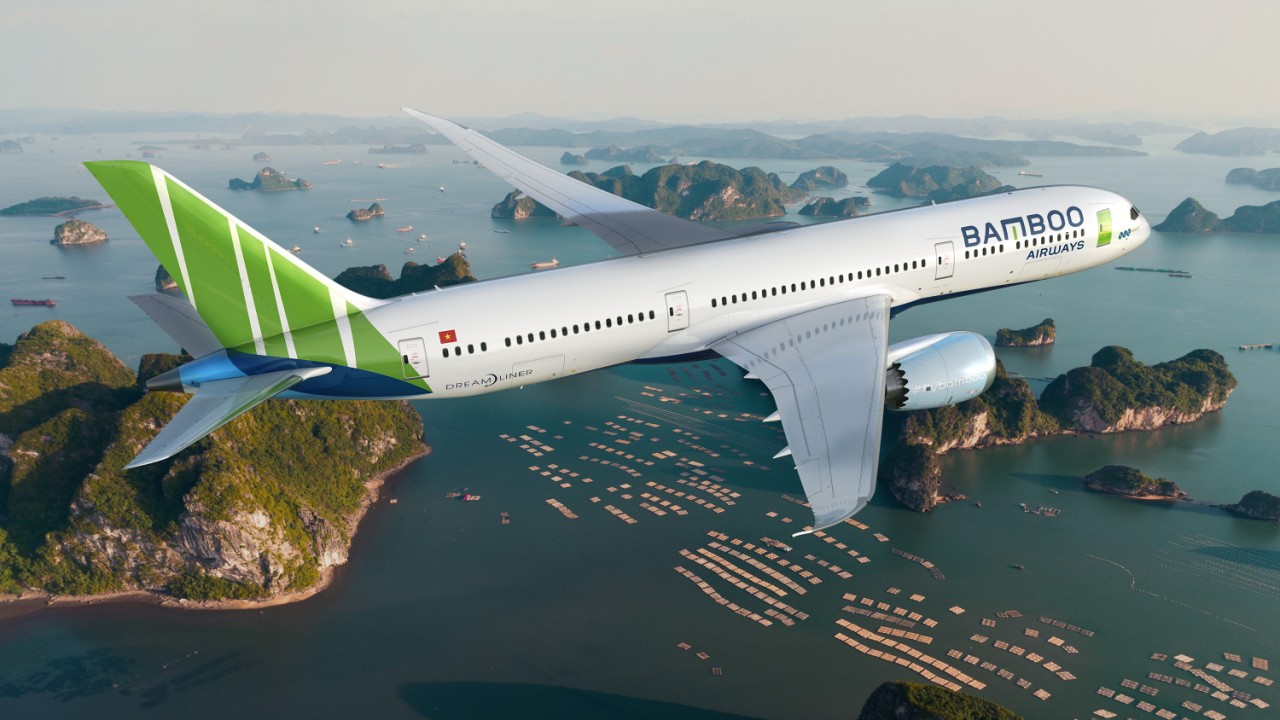
    Bamboo Airways posted a loss of VND3.54 trillion ($142.38 million) in the first nine months, exceeding the total loss it recorded last year by 54%.

    Its loss has been increasing this year, from VND691 billion in the first quarter to VND1.39 trillion in the second and almost VND1.45 trillion in the third, according to calculations from a financial report of FLC, which owns a 21.7% stake in the airline.

    Bamboo Airways went through major restructuring in the second and third quarter after its chairman was arrested in March for alleged stock manipulation.

    Nguyen Ngoc Trong, who has been with the airline since its establishment in 2018, became its chairman in August, while Nguyen Manh Quan, who joined the airline in 2020, took over the CEO chair from Dang Tat Thang.

    The airline in October moved its Ho Chi Minh City office from FLC’s building in District 3 to a Novaland building in District 1 after the property developer signed a strategic partnership with the airline.

    Bamboo Airways said in July that it planned to triple its fleet size to 100 by 2028. The airline at the time operated 29 jets, comprising 21 narrowbody aircraft, three Boeing B787s and five Embraer 190 regional aircraft, according to aviation data website Planespotters.

  • Central Bank Buying Boosts Gold Demand

    Central Bank Buying Boosts Gold Demand

    Central Bank buying and increased consumer demand lifted gold demand to pre-Covid levels.

    With inflation rising sharply, it comes as no surprise that gold demand in the third quarter was 28 percent higher than a year ago. A year-to-date comparison shows an 18 percent increase, returning demand to pre-pandemic levels, according to the latest report from the World Gold Council on Tuesday.

    Overall demand for gold was 1,181 tons in the third quarter, with central banks accumulating an estimated 400 tons, which is a record. The Swiss National Bank (SNB) was not among the central banks adding to its gold hoard. While it said it had a valuation loss of 1.1 billion Swiss francs on its gold holdings in the third quarter, the volume was unchanged.

    The total supply of gold increased by 1,215 tons, up a marginal 1 percent. Although mining output increased for a sixth consecutive quarter, growth in the current quarter was partly tempered by lower levels of recycling for the period.

    There were countervailing forces for investors as retail investors purchased gold as an inflation hedge, while ETF investors reduced holdings on rising interest rates. Overall investment demand was 47 percent lower in the third quarter than a year ago. While retail investors increased bar and coin investment by 36 percent, ETFs unloaded 227 tons, according to the report.

    Despite a slowing global economy, jewelry consumption rose 10 percent to 523 tons. On the flip side, demand for electronics fell, leading to an 8 percent drop in the need for gold in the technology sector.

    India was behind much of the demand for jewelry, as «urban consumers were the engine of Indian demand,» with economic activity returning to pre-COVID levels. In China, retail demand firmed as lockdown restrictions were eased in major cities.

  • Deutsche Bank Launches Advisory Board with Henry Kissinger

    Deutsche Bank Launches Advisory Board with Henry Kissinger

    Deutsche Bank’s Management Board has created a new Global Advisory Board comprising experts from business, academia and politics.

    The Board’s task it is to advise the Management Board on fundamental macroeconomic, geopolitical and technological developments that have a significant impact on the bank’s operating environment, the bank announced in a media release Wednesday.

    The Management Board appointed Paul Achleitner, former Chairman of the bank’s Supervisory Board, as the founding Chairman of the Global Advisory Board. Other members are:

    • Henry Kissinger, former US Secretary of State
    • Eric Schmidt, former CEO of Google and Executive Chairman of Alphabet
    • Indra Nooyi, member of the Board of Directors of Amazon, member of the Supervisory Board of Philips, former Chair and CEO of PepsiCo
    • Rafael Reif, President of the Massachusetts Institute of Technology (MIT)
    • Jim Hagemann Snabe, Chairman of the Supervisory Board of Siemens, former Co-CEO of SAP

    The Global Advisory Board meets for the first time this Wednesday in New York. In the future, there will be two official meetings per year. Advisory Board members are also available to the Management Board with their advice between the meetings.

    Regular guests at the Advisory Board meetings will be Deutsche Bank Supervisory Board Chairman Alexander Wynaendts, Chief Executive Officer Christian Sewing and Chief Economist David Folkerts-Landau.

    Technological Revolution

    «Economic activity is shaped more than ever by the technological revolution of our time. The Advisory Board will develop ideas and proposals on how the bank and its clients can best navigate this environment, manage risks and seize the opportunities that arise,» Board Chairman Achleitner said.

  • A2 Milk takes Care A2+ to court over a trademark dispute

    A2 Milk takes Care A2+ to court over a trademark dispute

    A2 Milk Company has taken legal action in the Federal Court against an Australian competitor, Care A2 Plus, and its associated companies for infringing its trademarks.

    In a filing, A2 Milk sought a permanent injunction restraining Care A2 Plus from selling or advertising its products with A2 Milk’s registered trademarks in Australia.

    “The A2 Milk Company protects its intellectual property rights, including trademarks. We will not be commenting further at this stage given the matter is before the court,” an A2 Milk spokesman told The Australian.

    The company lodged the case one week after A2 Milk’s lawyers sent a cease and desist letter to Care A2 Plus – which had already launched its own Federal Court action to “strike out” the trademarks concerned.

    A2 Milk has taken action against several other companies in Australia and abroad in the past to prevent them from using the term A2 in their brand names or marketing.

  • The Evolution of Online Casinos

    The Evolution of Online Casinos

    Change is inevitable in the dynamic industry of online gambling. Because of the ever-increasing number of competitors and the innovative new approaches taken by upstarts, the gaming industry is in a perpetual state of evolution. We will examine the development of internet casinos in this article.

    How Online Gambling Came to Be

    It was in the late 90s that many major corporations flooded the market, sparking the industry’s explosive growth. These businesses pioneered the internet gambling market thanks to their extensive background in the land-based gambling sector. They added new features, including reward programs and bonuses, encouraging people to try out online casinos.

    The start of the 2000s was a game changer for the evolution of online gambling establishments. When live dealer games got introduced, gamers could communicate with other gamers in live time. This added a new level of realism and excitement to gambling online.

    The internet gambling market is booming right now. Today, it is effortless for a potential bettor to locate the best online casinos—casinos that offer a wide variety of entertaining options, secure environment to wager in, generous incentives, prompt payouts, overall excellent service, and a commitment to keeping their word. They provide several gaming options, bonus deals, and special offers to retain customers. 

    Developments In the World of Online Gambling

    Live Dealer Games

    This game allows players to engage with a live dealer, creating a more personal and authentic experience. Live dealer games are top-rated among big spenders because their limits are typically higher than other standard casino games.

    Mobile Wagering 

    Gamer’s access to and use of casino games is one area that has undergone a radical transformation. A small handful of games were available to gamers during the period and were all available solely on computers. Most individuals still used dial-up connections when online casinos became available.

    Gamers are increasingly turning to mobile devices, such as tablets and smartphones, to place bets on various games. Because of this, several casinos now provide mobile-optimized variants of their apps and web pages.

    Gaming in HTML 5

    The transition from Flash to HTML5 gambling was the subsequent significant development for online casinos. This resulted in quicker response times, improved visuals, and more consistent platform gameplay.

    Deposit Bonus

    Online casinos have realized the merit of distributing incentives to new signups. It had a profound impact on the vast majority of internet users. This is especially true for deposit bonuses, which have spread throughout numerous virtual casinos. This is an excellent option for those looking to increase their playing funds.

    What’s Next for Online Casinos?

    Virtual casinos will likely do well in the years ahead. Their popularity will rise as modern tech and innovation are used in casinos. Brand-new features and games are regularly being added to the best online casinos. This is an excellent time for one to start wagering in online casinos.

    Final Thoughts

    When mobile casinos first appeared online, they were only available on a handful of handsets; today, however, many provide games tailored for mobile devices such as tablets and smartphones.  

    Technologies like cloud technology hold great promise for the game industry’s future. Poker and blackjack are just a couple examples of the many casino games that anyone can play on any gadget at the time of their liking.

  • E-Commerce Trends to Watch in 2022

    E-Commerce Trends to Watch in 2022

    Not only does e-commerce represent the largest single commercial retail sector, but also one of the fastest evolving. With new technologies, modalities and platforms emerging constantly, it can be challenging to stay ahead of the curve.

    If you’re a business looking to keep up with the latest movements in e-commerce in 2022 and beyond, take a look at these prevailing trends below and explore ways of integrating them into your operations.

    Let Customers Have Their Say

    The standards for accountability and customer feedback have developed significantly over the past decade. Now, more than ever, consumers are turning to third party review platforms to assess the quality of service and support provided by your organization.

    In line with the maxim that “if you can’t beat them, join them”, a beneficial strategy is to assist your customers in leaving reviews on these platforms. Not only does this cast your store in a beneficial light by demonstrating that you’re open to criticism and accountability, but it enables users to more quickly vet your brand for customer satisfaction.

    While some many argue this can be a double-edged sword, particularly if your business has struggled with achieving satisfactory ratings in the past, the reality is that the likes of Trustpilot and Yelp are now part of the ecosystem of modern e-commerce and any steps you can make to facilitate that process are going to beneficial to your brand identity and impact in the long run.

    Online Comparison Platforms (OCPs)

    OCPs have been among the fastest growing e-commerce sectors in the 21st century, and for good reason. With so much choice now available to consumers, an entire industry has grown up around pairing down the options and providing targeted recommendations for customers accosted with information overload.

    Online comparison platforms are mostly closely associated in people’s minds with securities and investments, and it’s true that, to date, the largest and most recognisable platforms belonging to this sector have been focused on connecting people with good rates on financing.

    Yet if one looks further afield, it becomes easy to see that online comparison platforms exist, and are operating, within diverse market sectors around the world. One of the most popular applications for these platforms is in retail, with companies like Amazon Marketplace and Pricerunner vying to connect online shoppers with the best deals and offers on thousands of products, from consumer electronics to apparel.

    Elsewhere, online comparison platforms have emerged as a leading means by which iGaming aficionados select providers to patronize. For example, Emiratis looking for recommendations on the best online casinos in the UAE have come to rely on ArabianBetting as a leading resource of this information.

    This is because this platform not only collates the best casinos available in their market, but, like other comparison platforms, aims to connect them with the most competitive deal – in this respect in the form of special promotions and sign-up bonuses.

    Give Patrons Payment Options

    The emergence of e-wallets, Fintech banks, and cryptocurrencies have all contributed to impacting people’s spending habits online. While, in the past, it was reasonable to simply provide a secure card payment processor for your customers to use when paying at check-out, increasingly nowadays people have to expect a wider array of options.

    While we wouldn’t recommend a brand offer payments in crypto unless it makes up a key part of their marketing strategy, offering alternative payment providers like PayPal, Venmo and CashApp can go a long way in decreasing friction for customers shopping from their smartphones.

    Additionally, the rise of Buy Now, Pay Later platforms like Klarna mean that such financing options have come to be expected as the norm in certain sectors such as apparel.

    Failing to match features like these if they’re offered by your rivals is a sure-fire way to drive business away from your brand.

    Sustainable Focus

    Any e-commerce brand worth their salt in 2022 must be doing more than paying lip service to sustainability and green values.

    There are many ways that brands can decrease their carbon footprint and environmental impact, from substituting wasteful packaging for recycled cardboard, to offering bundled deliveries or store pick-ups to decrease emissions.

    Consumers are coming to expect these measures, and signaling your commitment to improving sustainability can be a determining factor in attracting new customers to your platform.


    Words: 721