Author: Mei Ling Tan

  • AirAsia to ramp up China services

    AirAsia to ramp up China services

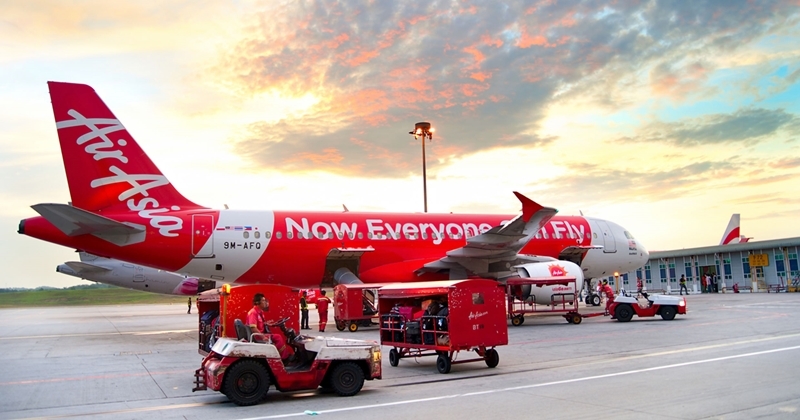
    AirAsia is all set to elevate its flight offerings between Malaysia and China as it anticipates a continuous surge in forward sales over the upcoming months.

    The travel landscape has been undergoing a remarkable transformation, with travel demand bouncing back after the challenges posed by the pandemic.

    As part of its strategic response, AirAsia is poised to tap into this burgeoning demand and cater to the increasing number of travelers between these two countries.

    July reports have revealed that the average load factor, representing the number of guests carried per flight, for AirAsia Malaysia (AK) and AirAsia X Malaysia (D7) flights to and from China, has reached an impressive 80 percent.

    This marks a substantial rebound and signals a positive momentum for the aviation industry.

    Notably, several key routes such as Kuala Lumpur-Shanghai, Kota Kinabalu-Guangzhou, Kuala Lumpur-Nanning, and Kota Kinabalu-Wuhan have witnessed load factors soaring as high as 95 percent, showcasing the strong resurgence in travel interest.

    Between March and early July this year, both airlines have successfully sold over 320,000 seats for flights connecting China and Malaysia. This remarkable figure constitutes around 30 percent of the equivalent period pre-Covid in 2019.

    Notably, about 75 percent of these seats have been purchased by Chinese nationals, reaffirming Malaysia’s status as a preferred destination for tourists from China. This trend underscores the nation’s allure and underscores the rekindled traveler enthusiasm.

    AirAsia Malaysia (AK) is geared to reintroduce another route, offering flights from Kota Kinabalu to Hangzhou, with a three-flight-per-week schedule commencing on September 2, 2023.

    In parallel, AirAsia X Malaysia (D7) is preparing to bolster its services, increasing flights from Kuala Lumpur to Beijing (Daxing) from four to five flights weekly, starting September 1.

    Additionally, flights between Kuala Lumpur and Shanghai will elevate from four to seven flights per week, commencing September 15, and services from Kuala Lumpur to Hangzhou will escalate from three to four flights weekly, beginning September 30, 2023.

    Riad Asmat, the CEO of AirAsia Malaysia, was pleased with the heightened travel interest between the two countries. He emphasized the airline’s commitment to serving second-tier cities and expanding connectivity.

    The additional flights to Hangzhou and plans for further frequency increases reflect AirAsia’s dedication to accommodating growing demands and boosting both international and domestic travel.

    Benyamin Ismail, CEO of AirAsia X Malaysia, also acknowledged the persistent strong demand for China travel across their network. The move to add more frequencies and optimize popular Chinese routes underscores their commitment to trade, tourism, and investments between the two nations.

    This approach aligns with the company’s goal of enhancing guest experiences, maximizing fleet utilization, and providing greater exploration opportunities for travelers.

    In tandem with its route expansions, AirAsia is also launching discounted fares for travelers. These fares extend to North Asian destinations, encompassing Guilin, Guangzhou, Nanning, Shantou, Beijing, and Shanghai, with prices starting from RM319 all-in one-way.

    AirAsia Malaysia (AK) is currently operating 14 routes to and from China, boasting over 104 weekly flights. These routes connect Kuala Lumpur to various destinations such as Guilin, Quanzhou, Guangzhou, Kunming, Shenzhen, Nanning, Shantou, and Macao.

    Additionally, flights from Kota Kinabalu to Guangzhou, Shenzhen, Wuhan, Beijing, and Macao and Johor Bahru to Guangzhou further solidify the airline’s comprehensive connectivity.

    AirAsia X Malaysia (D7) is also making its mark, offering four routes to and from China with more than 22 weekly flights.

    The routes include Kuala Lumpur to Chengdu (Tianfu), Beijing (Daxing), Shanghai, and Hangzhou, all of which contribute to AirAsia’s mission of bridging nations and fostering unparalleled travel opportunities.


  • Vietnam to impose anti-dumping duties on Thai sugarcane products

    Vietnam to impose anti-dumping duties on Thai sugarcane products

    Vietnam has imposed anti-dumping and countervailing duties on sugarcane products from several Thai companies from August 18 to June 15, 2026.

    The duties will be imposed on the Mitr Phol Sugar group, Asia’s largest sugar and bioenergy manufacturer, along with four affiliated companies and Czamikow Group Limited.

    The Thai Roong Ruang Industry group, Thailand’s second-largest sugar manufacturer, along with its five affiliated companies, will also see duties imposed, according to the Ministry of Industry and Trade.

    The lowest rate of anti-dumping duties will be 25.73% and the highest at 32.75%. The highest rate of countervailing duties will be 4.65%.

    In June 2021, Vietnam officially began to impose anti-dumping and countervailing duties on sugarcane imported from Thailand. At the time, the rate was 47.64%. In August 2022, the ministry decided to keep this rate.

    Investigations revealed that Thailand’s sugarcane products entering the Vietnamese market have caused great damage to local production, resulting in 3,300 people losing their jobs and 93,225 farmer’s families affected, authorities have said.

  • Meta faces new legal hurdles in Europe

    Meta faces new legal hurdles in Europe

    Social media platforms have often faced issues with European laws, particularly regarding data privacy and tracking. Recently, TikTok had to change its privacy rules to match the new Digital Service Act (DSA). Some time ago, Meta got hit with a $423 million fine from Ireland’s Data Protection Commission, which made the tech company allow EU users to turn off ad tracking.

    Now, Meta is facing legal troubles again in Europe, this time in Norway. Starting from August 14, Meta will be fined $97,700 per day for privacy breaches. The fine comes from the Norwegian data regulator, Datatilsynet, and will be in effect until November 3.

    With the timeframe and amount of money at stake, the fine might be challenging, even for a tech giant like Meta. As a result, Meta is reaching out to a court in Norway, seeking to put a stop to the fine. A petition for a temporary injunction against the order will be put forth on August 22 during a two-day hearing. Whether the court leans in favor of Meta or not is still up in the air.

    Datatilsynet says that Meta can’t gather users’ data in Norway, like their physical locations, and then use it to aim ads at them, known as behavioral advertising. Behavioral advertising is a strategy that tailors online ads to users based on their web activity and interests. It uses data analysis to create personalized ads for better engagement but also raises privacy concerns about user data usage.

    The regulator also dangles the possibility of turning the fine into a long-term fixture by passing its judgment to the European Data Protection Board, which has the authority to take such action if it aligns with the Norwegian regulator’s stance. If the board backs this move, it could imply that the decision starts to have an impact across Europe.

    In May of this year, the EU slapped Meta with a whopping $1.3 billion fine for breaching privacy rules. It appears that European lawmakers aren’t exactly aiming to be gentle with the big tech giant.

  • Verizon confirms price changes for older Unlimited phone plans

    Verizon confirms price changes for older Unlimited phone plans

    There have been reports about possible price changes of Verizon’s grandfathered plans last month, but the carrier has only confirmed those reports this week. Unfortunately, monthly prices of specific legacy Unlimited and Single Basic Phone plan will be higher beginning August 29.

    The price increase impacts all of Verizon’s older Unlimited mobile phones, so unless you have a tablet or smartwatch plan, you’ll have to pay more for the carrier’s services come August 29.

    That being said, the following older Verizon plans will have their prices adjusted, so you’ll see an added charge of $3/month per mobile phone line:

    • Go Unlimited 2.0
    • Beyond Unlimited 2.0
    • Above Unlimited
    • 5G Start

    Additionally, Verizon confirmed that starting August 29, the Single Basic Phone plan will see an added charge of $5/month per mobile phone line. As per Verizon’s statement, the first month, customers may see a partial Plan Rate Adjustment charge in the One-time charges & credits section of their bills.

    However, the changes for the coming month can also be seen in the Plans section since customers usually pay for their monthly mobile service plan in advance. Lines with tablets, smartwatch and other devices will not be affected by the price hikes, as mentioned earlier.

    As far as the reasoning behind the price increases go, your guess is as good as ours. Verizon says that “it’s committed to bringing you the best experience for your Verizon mobile phone service,” but that’s standard practice in this type of situation.

    Those who want to avoid the price increase have two options: switch to another carrier or move to a current Unlimited plan, which aren’t subject to these new charges. A third option would be switching to a Verizon prepaid plan.

  • Netflix turns your iPhone into a game controller

    Netflix turns your iPhone into a game controller

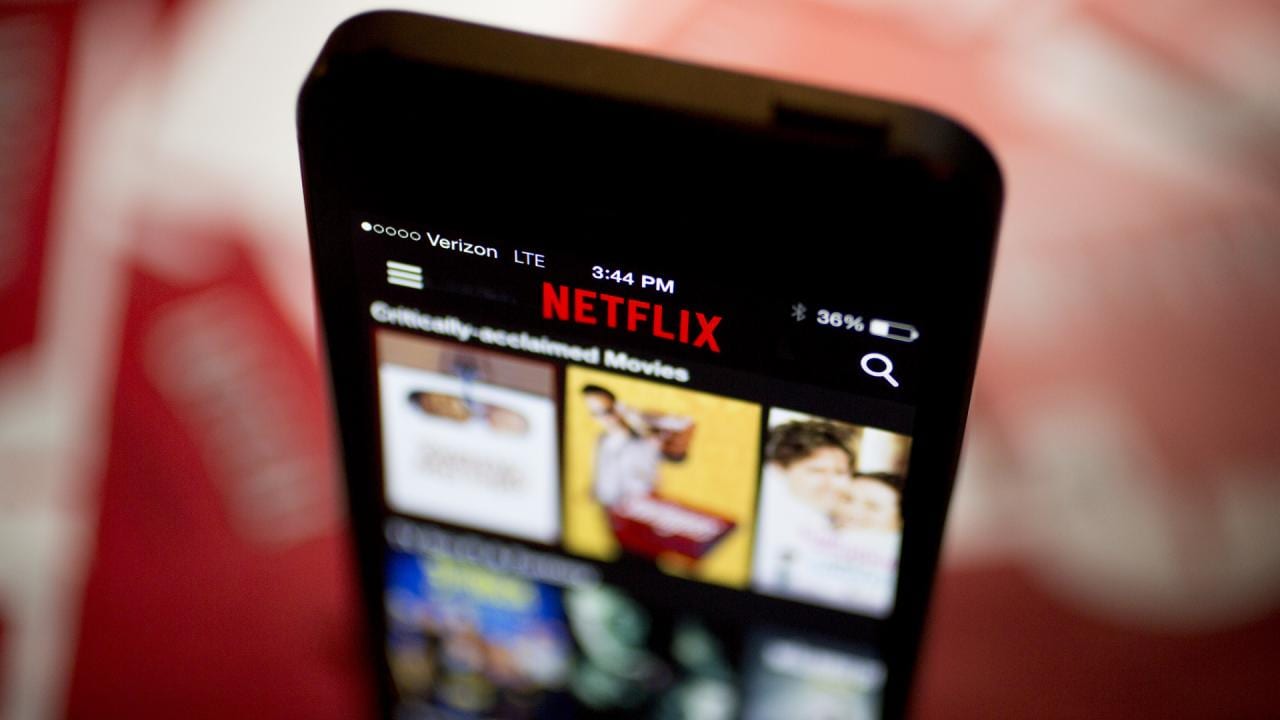
    A couple of years back, in 2021, Netflix rolled out games on its mobile app. At first, the mobile games collection was kinda tiny, but over time, it got bigger and loaded with loads of free mobile games for Netflix subscribers. Netflix is also getting ready to toss games onto the TV scene too, and it looks like it is getting closer to the launch day by introducing its new Netflix Game Controller app.

    The new app will allow you to play games on TV by using your phone as a controller. You will have to pair your phone with the TV to play the games when they become available on Netflix. The company says it will happen soon. The app is only available for iOS in the App Store.

    Using your iPhone or iPad as a controller sounds like a pretty cool idea because you wouldn’t need to purchase an extra controller to play on your TV.

    There are dozens of games you can play on the Netflix mobile app. The streaming service is adding 40 new mobile games this year and stating that 70 titles are currently in development with its partners. Some of the most popular games on the platform are based on hit shows like Stranger Things and Queen’s Gambit.

    Lately, Netflix has stopped offering its Basic plan in the US and UK, pushing users to opt for pricier options to keep using the service. Meanwhile, Netflix hasn’t raised its plan prices for over a year, likely in an effort to retain more paying subscribers following its password-sharing crackdown.

    As games make their way onto TV screens, we’ll find out whether the prices will remain unchanged or if this new feature will bring about a price hike.

  • Disney hikes pricing of its ad-free streaming services, plans to stop password sharing in 2024

    Disney hikes pricing of its ad-free streaming services, plans to stop password sharing in 2024

    Some big changes are coming to Disney’s streaming services as ad-free Disney+ and Hulu prices are getting hiked. At the same time, Disney says that it wants to start  “actively exploring” how it can better police password sharing just as Netflix is now doing. The company might feel some pressure since the number of global Disney+ subscribers declined for just the second time during the second quarter to 157.8 million, a 4 million decline from the first quarter figure.
    As for ways to combat password sharing, the other day during Disney’s quarterly conference call, CEO Bob Iger said, “We are actively exploring ways to address account sharing and the best options for paying subscribers to share their accounts with friends and family. Later this year, we will begin to update our subscriber agreements with additional terms and our sharing policies. And we will roll out tactics to drive monetization sometime in 2024.”
    Iger added, “We already have the technical capability to monitor much of this, and I’m not gonna give you a specific number except to say it’s significant. We certainly have established this as a real priority, and we actually think that there’s an opportunity here to help us grow our business.”
    If Iger is right about the timing, those Disney+ users viewing the platform thanks to a shared password have at least until the end of this year to continue this behavior.
  • Spotify enables patron-exclusive podcasts via new Patreon integration

    Spotify enables patron-exclusive podcasts via new Patreon integration

    Spotify is the most recent company starting to offer content creators financial incentives. The music streaming service announced this week that it has added Patreon integration to allow creators to monetize their content via exclusive podcasts.

    Patreon, a membership platform that offers the business tools for content creators to run a subscription service, was in the middle of a controversy early this month when major technical issues led to paused payouts and canceled subscriptions.

    Thankfully for the millions of creators using the platform, these issues have been solved (at least for many of them), so the company can now go live with the announcement.

    Starting today, connecting Spotify and Patreon accounts to access patron-exclusive podcasts direction from the music streaming service’s app is possible. This is a follow-up of Spotify’s March announcement that it’s teaming up with Patreon to allow creators to publish their subscriber feeds to Spotify via its API.

    “Many podcasters use Patreon to connect with their fans, and for the first time ever, they can link their accounts so fans can access and listen to these shows on Spotify. This partnership gives podcasters a new opportunity to reach Spotify’s global audience, over 551M users, to increase their income and grow their show,” said Gustav Söderström, Co-President and Chief Product and Technology Officer at Spotify.

    Patreon integration has been in testing for months at Spotify, as select creators have been enrolled in a beta program that helped them promote and gain new members to their Patreon through Spotify.

    Thanks to the new feature, Spotify users will be able to listen to all their favorite content in one place, while Patreon podcasters tap into new audiences on Spotify. The new partnership feels like a win-win situation, at least on paper.

  • Tesla Appoints Vaibhav Taneja As Chief Financial Officer

    Tesla Appoints Vaibhav Taneja As Chief Financial Officer

    Tesla has announced that they have appointed Vaibhav Taneja as a new Chief Financial Officer (CFO). He will succeed Zachary Kirkhorn who has stepped down from the position. Taneja is of Indian descent and has been serving as the Chief Accounting Officer (CAO) of Tesla since March 2019. In addition to his new role as CFO, he will also retain his responsibilities as CAO.

    Kirkhorn will continue to support a smooth transition until the end of the year. Kirkhorn himself took to LinkedIn to announce his departure from the role of Tesla’s CFO. He shared his pride in the accomplishments made during his tenure and expressed his appreciation towards the employees and the leadership of CEO Elon Musk. Kirkhorn’s transition underscores Tesla’s steps to sustaining its momentum while integrating new leadership. Zachary served as CFO for 4 years and as a Vice President for 4 months at Tesla.

    Vaibhav Taneja’s journey within Tesla is marked by a series of progressively responsible roles. He has held the position of Corporate Controller since May 2018 and previously served as Assistant Corporate Controller from February 2017 to May 2018. His association with Tesla traces back to its acquisition of SolarCity Corporation in 2016. Taneja held various finance and accounting positions since March 2016 in SolarCity.

    Before joining Tesla, he worked at PricewaterhouseCoopers in both India and the US over a period of nearly two decades. Taneja is an alumnus of Delhi University where completed his Bachelor of Commerce (B.Com). He gained a license to practice as a Chartered Accountant (CA) from the Institute of Chartered Accountants of India in 2000.

  • Microsoft extends AI-powered Bing Chat to Chrome and Safari mobile

    Microsoft extends AI-powered Bing Chat to Chrome and Safari mobile

    Six months ago, Microsoft announced its AI-powered Bing search engine and Edge browser, and the tech giant certainly does not intend to stop there. Microsoft has the ambition to implement AI in all of its products and services, and not only that but also to go beyond its own products.

    Microsoft shared that Bing Chat will soon be available in Chrome and Safari on both web and mobile. Bing Chat is also available as a standalone Android and iOS app, which will also receive some new features. The company’s goal is to allow more people to access Bing’s capabilities, such as summarized answers and image creation.

    While Microsoft may open Bing Chat for usage in third-party browsers, it still recommends using the Microsoft Edge browser if you want to experience the AI chatbot capabilities at their best. Chrome and Safari will have limitations, such as offering only 2,000 words per prompt on Chrome and Safari, compared to 4,000 on Edge. Features such as longer conversations and chat history will be available only on Edge.

    Along with announcing the availability of Bing Chat for Chrome and Safari, Microsoft also shared that the AI-powered Bing mobile app will now have a dark mode option. The company also reminded users of the newest Bing Chat features that were recently added, such as Visual Search.

    Visual Search is a feature powered by AI that allows you to enter a visual prompt. For example, you can take a picture of the inside of your fridge with all the products you have at the moment and ask Bing Chat to give you some ideas on what to cook. In other words, Bing Chat can understand the context of an image, interpret it, and answer questions about it.

    These new features and updates to Bing Chat availability were announced in a blog post celebrating 6 months of the new AI-powered Bing. Microsoft shares that during this time, more than 1 billion chats were initiated, and people generated over 750 million images.

    AI is undoubtedly developing rapidly, entering more and more products daily. One of the most popular AI chatbots, OpenAI’s ChatGPT-4, actually powers Bing Chat, but the latter offers even more accurate and up-to-date information since it has access to Bing Search. With Microsoft working hard to improve its AI products, its biggest competitor, Google is also stepping up its game with its Google Bard and updating its Assistant using AI.

  • SingPost’s Li Yu on e-commerce, logistics and more

    SingPost’s Li Yu on e-commerce, logistics and more

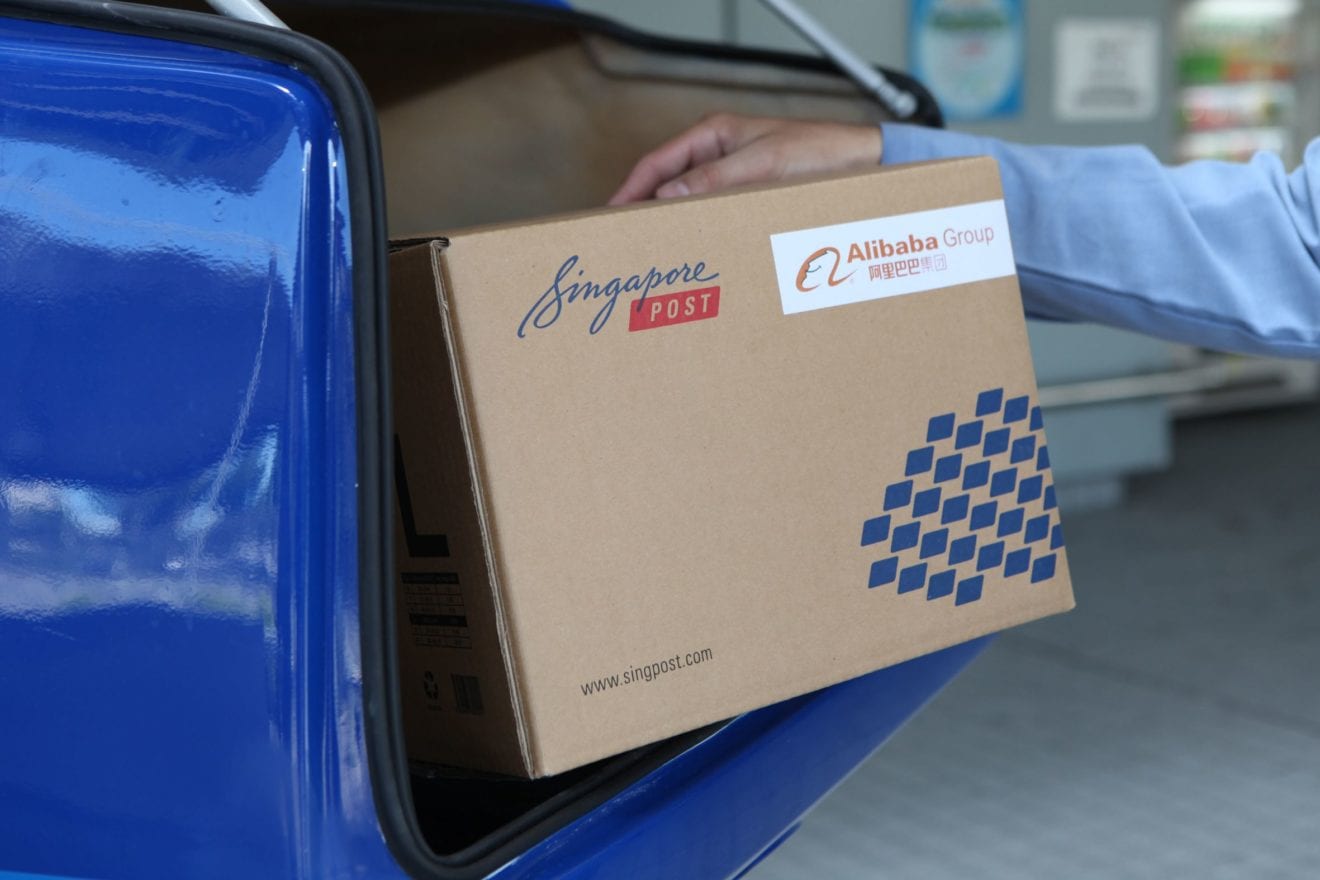
    Singapore Post announced dividends in May as the group posted a record revenue of S$1.9 billion for the financial year 2022/2023, with the international business contributing around 90 percent of the total. In an unpredictable market environment, SingPost’s logistics unit contributed 90 percent of the total operating profit, serving as a buffer for the decline in the postal segment. The postal group is on the verge of transforming into a global e-commerce logistics enterprise with its recent expansion in Australia, newly formed partnerships and the development of international cross-border e-commerce logistics. In this interview, Payload Asia catches up with Li Yu, CEO international at SingPost, to discuss the company’s performance this year as well as the Group’s strategy to capitalise on growing demand for e-commerce logistics.

    What can you say about the company’s full-year performance?

    The Group achieved a record revenue of S$1.9 billion for the financial year 2022/2023. Seventy percent was contributed by logistics versus just 38 percent back in FY2020. More importantly, logistics contributed 90 percent of the total operating profit. Our growth in the logistics segment has mitigated the structural decline of the postal segment, a trend that is prevalent globally.

    The other key highlight is 86 percent of our revenue was generated internationally. With our expansion into Australia and the development of our international cross-border e-commerce logistics business, SingPost is transforming into a global e-commerce logistics enterprise and is well positioned in high growth markets across the Asia Pacific region.

    Can you give us a rundown of your division’s top priorities? Where does e-commerce sit in your priorities and growth strategy?

    According to McKinsey’s projections between 2023 and 2026, the Southeast Asian eCommerce market is expected to triple, boasting a compound growth rate of 22 percent. It is estimated that the market will reach approximately US$230 billion in gross merchandise volume. In a separate report from June 2022, Statista’s forecasts underlined significant growth in the ecommerce market across Asia, Australia, and the Americas.

    At SingPost, we will continue to build on our strengths and establish ourselves as a leading eCommerce supply chain and logistics provider within the 4PL space across Asia Pacific region. Internationally, we have expanded into offering our global customers inbound Australia services, expanding the China/Hong Kong to Singapore lane with efficiencies and offering Europe to Asia services with direct line-haul, and establishing a dual hub system using Hong Kong alongside Singapore to facilitate seamless e-commerce delivery.

    Strategically, we are focusing on three growth drivers. First is enhancing our digital capabilities and leveraging the 4PL model as a supply chain orchestrator, to support the continuous eCommerce growth across Asia Pacific. Second is expanding our hubs in Singapore, Hong Kong and Europe to shorten delivery times and better serve e-commerce flows and delivery into, out of and within Asia. One of the recent partnerships is with SATS to address a growing demand for e-commerce transshipment by leveraging our combined expertise. Third is expanding our infrastructure in domestic markets through pick-up, drop-off (PUDO) network growth to provide convenience and efficiency to our merchants and users, handling the increasing volume of eCommerce parcels

    International business contributed an enormous 86 percent of the Group’s overall revenue? Can you share more about your business in Australia? What makes this market special?

    Australia is the major contributor to our transformation and growth of the logistics business. Over the last 3 years we have seen the business grow three times in size. The logistics business we have built down under caters to both the B2B and B2C segments. The move to go big in logistics is already underway. In December 2020, SingPost took a 28 percent stake in Australia’s Freight Management Holdings (FMH) for A$58.9 million. The stake was eventually raised to 51 percent just over a year later and to a further 88 percent this March. The acquisition of FMH places 4PL (fourth-party logistics) technology at our core. We intend to expand with this asset-light approach in mind, powered by the 4PL digital platform. FMH has performed outstandingly since our initial investment and is a key growth driver in the group’s logistics business.

    Besides FMH, SingPost also owns CouriersPlease, a first and last-mile delivery courier network covering 90 percent of Australia’s population. FMH’s digitally enhanced logistics capabilities, together with our CouriersPlease last-mile delivery network allows us to provide technology-driven, fully integrated logistics solutions for both business-to-business and business-to-consumer operations in the Australian market.

    Does it make sense for big e-commerce players to enter logistics or at the very least insource it? What’s your take on this move?

    There are always two sides of a coin. By undertaking their own logistics, big e-commerce players may gain more control over their supply chain and enjoy more seamless operations. However, substantial initial investment costs are required to set up the logistics systems and infrastructure. Expertise in logistics management, time and resources will need to be devoted to manpower training and technology to provide high-quality logistics services. Fluctuations in e-commerce volumes would also call for the ability to scale their operations efficiently. The decision to establish in-sourcing of its logistics should be based on a thorough analysis and alignment to the company’s long-term growth and strategic objectives.

    In many cases, it is more practical and cost-effective to establish partnerships with reliable logistics providers, increasingly to a 4PL player. Merchants gain immediate access to advanced technologies, established networks, and scalable operations. This allows them to focus on core business functions while the 4PL handles day-to-day logistics tasks, reducing operational burdens.

    The 4PL’s global reach also facilitates international expansion and efficient cross-border shipments, enhancing overall supply chain efficiency, improves customer service, and contributes to the merchant’s business growth in a cost-effective manner.

    With your recent MoU with SATS, what kind of services or enhancements are you looking to unveil in Singapore based on your recent trials in February?

    The partnership with SATS is designed to harness our unique strengths in order to meet the changing demands of e-commerce companies. With a cutting-edge transshipment hub facility, we aim to decrease delivery times and lower operating expenses and labour requirements. By eliminating the need for transportation between SATS and SingPost facilities, we will streamline cargo logistics workflows, reduce reliance on conventional cargo vehicles, and optimise warehouse space usage.

    Based on a 3-month joint operations trial with SATS, we achieved a remarkable 60% reduction in the time taken from arrival to departure. The new approach cut the initial processing time of 21.8 hours to just 8.5 hours. With our extensive air connectivity and flights in Singapore, logistics players who partner us can expect an expedited delivery of products to Asia within a total timeframe of 15.5 hours. The Global eCommerce Hub is poised to disrupt the eCommerce logistics industry by enabling end-to-end delivery within 1-3 days in Asia.

  • Apple Pay launched in Vietnam

    Apple Pay launched in Vietnam

    Apple Pay has arrived in Vietnam, enabling users to make contactless money transactions through an iPhone or Apple Watch.

    Vietnam is the third country in Southeast Asia to allow Apple Pay after Malaysia and Singapore.

    Several lenders such as MB Bank and Techcombank now support Apple Pay services at some establishments such as Starbucks, Phuc Long, Mc Donald’s, Highlands Coffee, CGV, and Winmart.

    Users can add their credit or debit card information to Apple Pay using the Apple Wallet app.

    At least an iPhone 6 or Apple Watch Series 4 is required to use it.

    Apple Pay was first launched in the U.S. in 2014.

    Apple assures that users’ credit data is only stored on their devices and not transmitted to Apple’s servers.

    In Vietnam, Samsung Pay was launched in 2017 and Google Wallet in November 2022.

  • Netflix is making rating shows and movies on mobile much easier

    Netflix is making rating shows and movies on mobile much easier

    Many of us, including myself, often forget to rate a show or movie after watching it. While not necessary, it can help improve your suggestion list. Now, Netflix is simplifying the process for users to rate movies and shows on mobile devices.

    Netflix has updated the rating feature on its mobile app, enabling you to rate a show while still watching it. Instead of returning to a show or movie page to give a thumbs-up or thumbs-down, you can now tap the screen while watching, whether it’s in the middle or at the end. You can click the thumbs buttons at the top and keep watching.

    The new update will probably encourage more users to use the feature, which will help Netflix suggest more personalized recommendations based on users’ watch history and what they have liked or disliked. Or, to put it in a few words, you are helping Netflix’s algorithm understand you better by rating what you are watching.

    The system that suggests new movies and shows on Netflix uses two different data sets to make personalized recommendations for what you might want to watch. The first data comes from what you’ve watched before and the kinds of genres you prefer, while the second is based on your ratings.

    On the mobile app, you can rate using three reaction buttons: a thumbs up, a thumbs down, and a double thumbs up button. The latter was introduced last year to teach Netflix’s algorithm not only which movies or shows you like or don’t like but also which you love.

    Based on which movies and shows received your double thumbs-up reaction, Netflix’s algorithms will better recommend similar ones. With the improved rating feature, now more user-friendly on mobile devices, starting to use it could lead to receiving more accurate and tailored suggestions.

  • Fuel imports rise over 60% this year

    Fuel imports rise over 60% this year

    Vietnam spent nearly $5 billion importing fuel in the first seven months of 2023, up 61% year-on-year, to ensure adequate supply as its biggest refinery Nghi Son is set to shut down for major maintenance.

    Its biggest import markets were South Korea, Singapore and Malaysia.

    Nghi Son in the central province of Thanh Hoa, which accounts for around 35-40% of domestic fuel supply, will undergo its first major maintenance since establishment starting from August 25. The maintenance will last around two months.

    The Ministry of Industry and Trade said it has carefully monitored fuel supply this year to prevent shortages.

    Vietnam exported 1.26 million tons of fuel worth around $1 billion in the first seven months of this year.

  • Citizen database helps reduce credit default risks

    Citizen database helps reduce credit default risks

    A trial credit scoring model that encompasses the national citizen database has proven useful for lenders as it reduces lending risks by up to 20%.

    The model, which is built on the standards of global credit scoring company FICO, is now almost complete with 18 citizen data fields, Vu Van Tan, deputy head of the citizen administration unit under the Ministry of Public Security, said at a meeting on August 7.

    The model was tested by MB’s consumer loan unit MCredit on 10,000 data fields, PVcombank with 20,000 fields, and fintech firm Datanest with 60,000 fields.

    These companies saw their credit risks reduced by 7-20%.

    “After the trial, these companies all want to encompass the model in their operations officially,” Tan said.

    Banks and the Ministry of Public Security have long been working together to authenticate and synchronize the personal ID and credit information of over 40 million bank customers.

    The partnership also helped banks to launch money withdrawal services using ID cards at ATM. Bank customers can also use their electronic ID account to confirm identity.

    But as this partnership had its limitations in building an effective credit scoring system, the Ministry of Public Security has collaborated with the Hanoi University of Science and Technology to build the trial model using FICO standards.

    Deputy governor of the State Bank of Vietnam Pham Tien Dung said that credit scoring in Vietnam is gaining popularity among banks as it helps them to predict the probability of getting their money back from a borrower, and this only works with a precise database.

    A representative of state-owned lender BIDV said that the authentication of a third-party organization, especially a state-owned entity, plays an important role in credit scoring, ensuring that the data bank employees have collected is precise.

  • American cherry prices fall to new low in Vietnam

    American cherry prices fall to new low in Vietnam

    American cherry prices have fallen to a new low of VND250,000 ($10.53) per kilogram in Vietnam.

    Loan in Ho Chi Minh City, who usually consumes imported fruits, said she recently bought half of last year’s American cherry prices.

    Stores now sell red cherries at VND250,000-340,000 and yellow cherries, considered more premium, at VND350,000.

    My Hanh, a seller in HCMC’s Tan Binh District, said she now sells a box of five kilograms for VND1.2 million, the lowest price at which she has ever sold.

    “I imported 500 boxes this year, 30% more than last year. The low prices attract many customers.”

    Lan Anh, another seller in Binh Thanh District, said sales are up 30% year-on-year.

    She added that even low-income people could now afford the fruit, which is usually considered expensive.

    Retail chains such as Co.opmart, MM Mega Market and Go! are selling it at around VND300,000 per kilogram.

    Importers said it is the cherry season now in the U.S. and supply is high.

    According to the USDA National Agricultural Statistics Service, output is expected to be 371,000 tons this year, up 60% from 2022.

    The U.S. consulate in HCMC said American authorities are working with their partners in Vietnam to introduce high-quality American products to consumers.