Author: Mei Ling Tan

  • EU lifts safety restrictions on Vietnamese noodles

    EU lifts safety restrictions on Vietnamese noodles

    Starting July 3, the EU will remove Vietnam’s rice noodles, glass noodles and vermicelli from the list of goods subjected to safety controls.

    Announcing this, the Ministry of Industry and Trade said Vietnamese exporters will no longer have to provide safety certificates for these products.

    However, some local herbs including coriander, mint and parsley will be subjected to a temporary increase in safety controls at border posts.

    Vietnamese dragon fruit and instant noodles containing spices/seasonings or sauces will also be subjected to special entry conditions in the EU market to check for contamination risks.

    Vietnamese instant noodles have been under the EU scanner since January after some were found containing ethylene oxide, a substance banned in the union.

  • Vietnam Airlines expects financial difficulties until 2023-end

    Vietnam Airlines expects financial difficulties until 2023-end

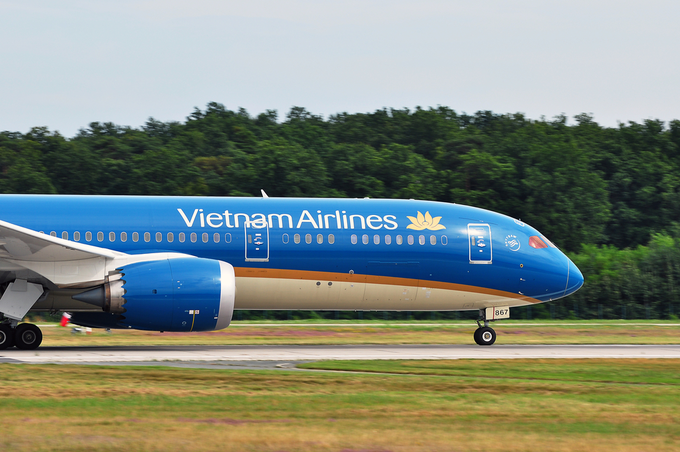
    Vietnam Airlines expects financial difficulties to last until the end of 2023, amid aftermath of the Covid-19 pandemic.

    The flag carrier targets to be profitable and turn around its negative equity this year, it said in a filing to the Ho Chi Minh Stock Exchange, on which its stock HVN is still restricted to trading in the afternoon due to loss reports.

    The airline has recorded an accumulated loss of over VND24.5 trillion ($1.05 billion) as of March, and it wants to turn this situation around and become profitable by 2024 onward.

    It had recently sold a 35 percent stake in Cambodia Angkor Air for $35 million and will sell the remaining stake (14 percent) this year.

    It is set to issue more shares to pump up its capital in 2023 or 2024. In September last year, it raised nearly VND8 trillion by share issuance. The airline said it has been benefiting from a strong rebound in domestic travel.

    Last month, it operated nearly 12,000 flights and transported two million passengers, exceeding its plan by 42 percent.

    International travel, however, has been affected by the Russia-Ukraine crisis and rising fuel prices, the airline said.

    The Vietnamese government owns a more than 86 percent stake in Vietnam Airlines through two entities. Japan’s ANA Corporation owns a 5.6 percent stake.

  • Finance ministry seeks further gasoline tax cut

    Finance ministry seeks further gasoline tax cut

    The Ministry of Finance is set to propose a further environment tax reduction on gasoline amid surging prices.

    It wants to scrap the tax altogether after the National Assembly approved a 50 percent reduction to VND2,000 ($0.086) per liter starting April. The finance ministry on April 21 sought official feedback on a proposal to lower gasoline import prices from 20 percent to 12 percent.

    Although such a reduction won’t bring down gasoline prices, it will help to diversify gasoline import markets and avoid dependence on South Korea and ASEAN, which are offering incentive import taxes.

    These proposals show the effort of the Vietnamese government in containing inflation, which has become a topic of concern this year as prices of key commodities surged globally.

    The World Bank has recently slashed global growth forecast by nearly a third to 2.9 percent for this year due to concern of elevated inflation.

    Vietnam’s Consumer Price Index (CPI), which measures inflation, in the first five months rose 2.25 percent year-on-year, compared to 1.29 percent in the first five months of last year.

    Standard Chartered Bank expects Vietnam’s inflation to be at 4.2 percent this year, slightly higher than the central bank’s cap of 4 percent.

  • Skoda Auto India’s Sales & Service Network Crosses 205 Outlets

    Skoda Auto India’s Sales & Service Network Crosses 205 Outlets

    Skoda Auto India has announced expanding its total customer touchpoints to over 205 outlets, across 123 cities. The carmaker says that it has 175 touchpoints in India in December 2021, and in the last six months the company has added more than 30 outlets. However, we must tell you that these are not just the larger dealerships, but rather also include Skoda’s low-cost sales and service touchpoints, which the company has been launching in tier 2 and tier 3 cities to have a wider network. Compared to a traditional dealership, these smaller outlets are 2- or 3-car showrooms with 2-bay workshops.

    Zac Hollis, Brand Director, Skoda Auto India said, “By rapidly increasing our customer touchpoints and expanding our network, we have the largest ever-presence of the Skoda brand in India. Not only have we expanded in quantity but have also focused on quality with our revolutionary digitalised showrooms.”

    In December 2021, Skoda had around 175 touchpoints in India, across 117 cities, and the company had set a target to reach 225 outlets by the end of 2022. However, given the number of new launches like – Skoda Slavia, Kodiaq and Kushaq Monte Carlo, the company ramped up its expansion plans, and now it is targeting 250 touchpoints by the end of this year. The company aims to add over 10 touchpoints in each of the four zones across India.

    Skoda wants to establish its presence in both metro and non-metro centres, covering important market clusters. In fact, Skoda will soon be opening its first touchpoints in Nagaland at Dimapur, and at Dibrugarh in Assam. In addition to these, the company will be entering or adding centres in other regions like Gandhidham and Morbi, in Gujarat, Ambala in Haryana, Amritsar in Punjab, Warangal in Telangana, Pollachi in Tamil Nadu, Haldwani in Uttarakhand and Tirur is Kerala.

  • MasterFoods releases two new blends for brunches

    MasterFoods releases two new blends for brunches

    With cost of living on the rise, more Aussies are looking to recreate their favorite meals at home. MasterFoods is helping to recreate brunch favorites from home, with two new herb and spice blends.

    The Cafe Style range features two products: Everything Eggs Spice Blend and Avocado Smash Spice Blend, to help home cooks create their own cafe quality brunches.

    The new range is aimed at Millennials and those who love brunch culture. Cafe Style Everything Eggs Spice Blend is made with paprika and chives, made to pair with eggs – scrambled, fried or poached.

    Cafe Style Avocado Smash Spice Blend is zesty with parsley and dill, for sprinkling over avocado, or adding to your favorite avo dip, smash or spread.

    Research by Mars Food Australia, the manufacturer of MasterFoods, has found more and more people are recreating their favorite brunch occasions from home.

    MasterFoods senior brand manager Dominique Caruana said brunch accounted for 20 percent of out of home meal occasions, with eggs and avocado smash as the signature dishes of the great Aussie brunch.

    “Over the past few years, scratch cooking occasions have nearly doubled, and with more people working from home these days, a delicious brunch does not have to be only for weekends,” said Caruana.

    Mars Food Australia portfolio marketing manager Rachel Humphrey said this was a significant milestone for the company, marking the first foray for herbs and spices outside of dinner.

    MasterFoods has been blending herbs and spices for over 75 years, with our spice blends helping Aussies transform everyday meals into flavoursome dishes. But this is the first time we have targeted the millennial weekend staple of brunch, ”Humphrey said.

    The new Cafe Style range is vegan friendly, with no artificial colors, flavors or preservatives and is available nationally in Coles, and in Woolworths from August.

  • Zalando takes control of Highsnobiety

    Zalando takes control of Highsnobiety

    Zalando says the two companies will join forces to lead the way in engaging and inspiring customers, leveraging each other’s complementary strengths by bringing together Highsnobiety’s cultural relevance and insight, fashion authority and storytelling expertise with Zalando’s fashion network, e-commerce know-how and operational capabilities.

    While continuing independent operations, Highsnobiety will act as a strategic and creative consultant helping Zalando develop new inspiration-focused spaces and formats on its platform. In turn, joining the Zalando Group allows Highsnobiety to leverage Zalando’s expertise and resources to fuel its own e-commerce capabilities.

    Highsnobiety was founded in Berlin in 2005 by David Fischer as a blog that heralded the convergence of streetwear and high-end luxury fashion. Today, Highsnobiety comprises a publishing arm, creative consultancy, and a curated commerce platform. Teaming up with Highsnobiety will accelerate Zalando’s ambition to be a top destination for streetwear, new luxury, and fashion inspiration, especially for the younger, fashion-forward consumers.

    “Both of our companies share a passion for building strong brand partnerships and enabling brands to inspire audiences with their products and stories. Partnering with Highsnobiety will allow us to execute much faster on our ambition to offer the most relevant and engaging – as well as convenient – shopping experience to our customers,” says David Schneider, Zalando’s founder and co-CEO.

    As part of the deal, Highsnobiety will retain its editorial and curational autonomy, with the publishing and agency work remaining fully independent. Highsnobiety will continue to be led by its two managing directors, Fischer and Jürgen Hopfgartner, and Fischer will retain a minority stake in the business.

    Last month, co-CEO of Zalando Robert Gentz said the company remains confident it will achieve its ambition to reach more than EUR30bn (US$31.8bn) Gross Merchandise Volume (GMV) by 2025, despite the impact of macroeconomic factors in the first quarter.

  • Shopee culls staff across SE Asia, Europe

    Shopee culls staff across SE Asia, Europe

    Sea Group’s e-commerce arm Shopee is laying off staff across multiple markets as it seeks to rationalize its e-commerce business, DealStreetAsia has learned.

    The layoffs have affected employees across several of the company’s Southeast Asian markets including Indonesia, Thailand and Vietnam, sources told DealStreetAsia. The company is said to have emailed employees affected by the layoffs, the sources added.

    Shopee’s payments arm ShopeePay and food delivery business ShopeeFood are also said to be facing cuts. A general meeting was also reportedly held on Monday to address the job cuts with Shopee employees.

    The extent of the job cuts and the number of employees affected could not be confirmed at the time of publishing. DealStreetAsia has reached out to Shopee for comment.

    Two sources aware of the matter said nearly half of Shopee Thailand’s payment and food delivery teams have been affected by the downsizing. One of the sources noted that the email was said to have been managed in an off-handed manner, with the company asking staff members to return home and await further notice of termination.

    A separate source told DealStreetAsia that Shopee has stopped hiring, with several job offers for regional roles rescinded.

    While Sea Group’s business continues to show signs of improvement in overall profitability, most of its revenue continues to come from its gaming arm Garena.

    Sea Group’s first-quarter 2022 financials reflected a 64.4% year-on-year increase in Generally Accepted Accounting Principles revenue at $2.9 billion, with gross profits soaring 81.3% to $1.2 billion over the same period.

    Shopee’s business, while still losing money, has also reflected improvements, with a 71.3% year-on-year increase in orders to $1.9 billion in the first quarter of 2022 while gross merchandise value rose 38.7% to $17.4 billion. Importantly, Shopee’s gross profit margin for e-commerce increased year on year, with faster growth in transaction-based fees and advertising income generating higher margins versus other value-added services.

    Shopee, however, continues to face several macro headwinds, including rising inflation and interest rates, that may dampen retail and consumption sectors.

    The company also appears to be facing setbacks on some of its ambitious internationalization plans, including its forays into Europe and Latin America. Shopee, which has operations in Poland and Spain, decided to pull out of France after only five months as it was not meeting expectations.

  • WhatsApp users will soon be able to transfer their data from Android to iOS with ease

    WhatsApp users will soon be able to transfer their data from Android to iOS with ease

    We have good news for those WhatsApp users who are thinking of leaving the Android realm to join Apple’s ecosystem. Soon, the transition between the two platforms will be easier.

    The latest version of the Move to iOS app for Android will now check if you have a WhatsApp account on your Android phone, and if you do, it will open WhatsApp and offer you the option to transfer your data to your iPhone as an encrypted package. This will keep all of your messages and threads fully intact.

    However, don’t get too excited just yet. In order for the feature to work, it must be supported by both the “Move to iOS” app and WhatsApp. It is currently available in the former, but it is supported only by the beta version of the WhatsApp application. Presumably, it will be available in the public version soon as well. Also, for the feature to work, your Android phone must be running on Android 12, and your iPhone must be on the latest version of iOS.

    Mark Zuckerberg, Meta’s CEO, said in a statement that the ability to transfer your WhatsApp data from Android to iOS with ease was a “top requested feature.” WhatsApp users can already move data from iOS to Android, so it was only a matter of time until Meta added a feature to do the opposite.

  • Sandeep Raj, Senior Vice President, Affiliate Marketing, Lazada (Alibaba) answering questions from Retail News

    Sandeep Raj, Senior Vice President, Affiliate Marketing, Lazada (Alibaba) answering questions from Retail News

    As a Senior Vice President for the Affiliate business for Lazada Southeast Asia, I look after the channels user growth and revenues. I was fascinated by the potential of e-commerce in Asia as I was fortunate to be part of the International expansion team for Amazon. Over the past 10 years I have been part of early launch and scaling teams in e-commerce industry.

    Could you give us a short introduction about yourself and what you do at Lazada? As the Senior Vice President for Affiliate business for Lazada Southeast Asia, I look after the channels user growth and revenues. I was fascinated by the potential of e-commerce in Asia when I was part of the International expansion team at Amazon. Over the past 10 years, I have been part of early launch and scaling teams in the e-commerce industry.

    What recommendations do you have for product owners to successfully promote a product to stay on top of consumers mind?

    Product owners should think of the end to end customer journey and how to wow them at      every touch point. Since digital touch points are a significant portion of the customer journey       these days, product owners should measure impact and carefully assess the RoI in each step.

    How does Alibaba tap on affiliate marketing to drive customers to their website? By nurturing and growing high quality channels present in the Southeast Asian market, we work very closely on expanding all types of partners in the eco-system from programmatic partners, advertising networks, news, gaming and utility portals, KOLs to micro and nano influencers.

    What are some ways retailers can grow their affiliate programmes?

    We work with many retailers and help them onboard as affiliate partners. We are creating       a win-win model with the brands and sellers, helping them tap on their loyal customers who shop on the Lazada platform and stand out from their competitors. We also give them the       access to tools that takes them from x to y very fast.

    How do you measure the success of Lazada’s affiliate marketing program?

    The  number one method to measure the success is if you’re able to create a win-win model between sellers, retailers, and brands as one entity, the affiliate partners as the second entity and the customers as the third entity.  Firstly, you would want to make sure that the retailers are gaining additional traffic and additional sales by working with our affiliate partners. Secondly, the affiliate partners should be getting the best Roi in terms of diverting or channeling traffic and their customers to Lazada’s portal. Last but not the least, the customers need to find the best value by engaging with our platform. They should be able to find the products that they want, reach them on time etc.

    Can you talk us through the approaches used to grow your Affiliate Program?

    I think affiliate marketing is still in early stages in Southeast Asia compared to other developed markets. We want to grow content creators in Southeast Asia, making sure that we’re able to tap into the best and high-quality content creators, making sure that they work with us.

    We give them the right support and incentives so that they continue to work with us. We want to ensure that we tap into different communities in the SEA markets for credible sources of passive income or income opportunities.  We work with YouTubers, Instagram influencers, influencers on Twitter or KOLs on different social media platforms, young students, fresh graduates and different communities of women from different parts of SEA. We really want to double down on that segment and then grow those segments for our partners and at the same time, we’re also quite conscious that there are many frauds, fraudulent partners surfacing in the market and then calling themselves as affiliate programs. We are conscious that this exists and we want to spread the message that all our content creators come directly through Zeta’s Portal and sign up. We never work with any third-party agencies that are promoting through SMS and other mechanisms.

    How has eCommerce Affiliate Marketing changed over the years and what are some new things we will see in 2022 and beyond?

    The three points I summarized earlier is testament to what has really changed in the past few years. A couple of changes took place. Number one, the top e-commerce companies came up with the affiliate program that that kickstarted the affiliate marketing revolution then a lot of new players in the market attempted affiliate marketing. Most of whom were primarily blogs and then a couple of other advertising tech companies which were trying to do affiliate marketing in the recent past, especially after COVID, since they realized that affiliate marketing is a credible way to make revenue. We had a lot of new segments of partners that came into the ecosystem. Yes, number one, we see that it’s going to be a rapid proliferation of the influencers and the key opinion leaders and content creators, which is in line with the creative economy boom that is happening across the world.

    How effective is affiliate marketing in recruiting new customers?

    Affiliate marketing is a great channel for new customers of eCommerce or someone who’s not familiar with an eCommerce model to try online shopping for the first time Primarily, because this is a channel which works on building trust with partners. Second is price – we also work with a lot of cashback sites in SEA, which takes away the inhibition of making that first purchase. We also work with a lot of fintech companies, payment companies and banks which gives good vouchers and incentives for new buyers.

    In the hopes of supporting your staff and moving them forward decisively and productively, what are the key characteristics for being an effective leader? How has this proven successful for you?

    Having had the good fortune of working in big tech companies like Amazon and running my own startups, I’ve seen how employees or the current generation of the workforce that is coming into the companies are thinking about work and what work means to them. Also, how they look at leaders – I think number one is they definitely look for authenticity. And second, they want to see that they are learning, that value being added to them to their day to day lives. Thirdly, they’re the kind that values two-way connection.  I feel a leader should be conscious of these three items before they go and recruit or build their team.

    How do you evaluate where to prioritize digitalisation across different areas of the business?

    As a retailer or a B2C brand, the first area that they should really prioritize digitalization is their is their supply chain. We see a lot of retailers kind of missing that out, which of course can add a huge value because that’s the first part in the overall supply chain or overall chain of selling their products or goods. I would say the second area to digitize would be the customer acquisition or the marketing trend, making sure that they’re using the right tools to track the customers and their behavior and ensuring that the buyers are getting the best value for the money that they are spending.

    What is your vision for the future of Lazada and which verticals do you foresee the most growth?

    Think for Lazada, it’s still very early stage not just for Lazada but all all e-commerce companies   in SEA.  Unlike the developed economies where e-commerce accounts for easily 25% to 30% of   the total retail in a specific market, e-commerce is still in single digits in SEA which I would say is possible to grow in the coming few years. In fact, a Google report predicts that the e-commerce economy will be worth $1,000,000,000,000 by 2030 which is quite a significant achievement. $1,000,000,000,000 would probably be the top in economy of top ten countries in the world by  GDP. Lazada is doing the right things for the partners and for the customers so that they can also enjoy the fruits of the good opportunities available in the e-commerce market.

  • AirAsia Will Use Descent Optimization Technology For More Efficient Flights

    AirAsia Will Use Descent Optimization Technology For More Efficient Flights

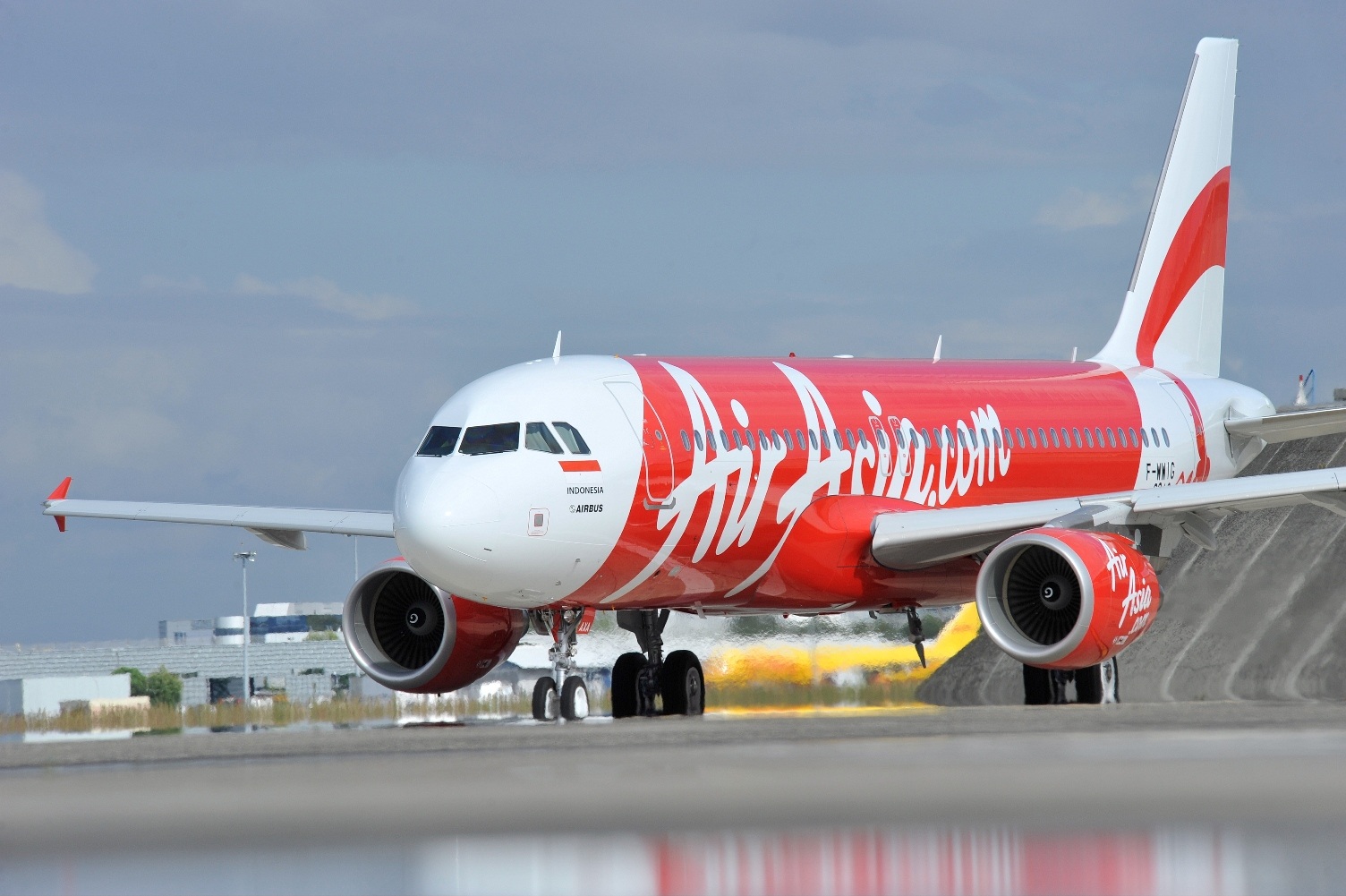
    AirAsia plans to introduce Airbus’s innovative fuel-saving software modification known as Descent Profile Optimization (DPO) to its A320ceo aircraft commencing this month.

    The airline said the enhancement to the aircraft’s on-board flight management system (FMS) performance database offers the ability to generate fuel savings and reduce carbon dioxide (CO2) emissions. The improvement has been previously introduced in LATAM Airlines’s operations, and the FAA has introduced new optimized descent profiles into some US operations.

    Optimization of an aircraft’s flight trajectory is one of the key factors in improving flight operations efficiency. The DPO function allows the aircraft to optimize the descent phase of the flight and descend from cruise altitude using only idle engine thrust. This minimizes the amount of time spent at an inefficient level off (when the aircraft’s engines generate thrust to maintain level flight in dense air before final landing approach), resulting in the reduction of fuel consumption and proportional CO2 and NOx emissions.

    AirAsia commented on the initiative, saying,

    “The new initiative is set to reduce fuel consumption and improve the fuel efficiency by up to 0.75% of fuel burn, which is equivalent to saving 101 kg of CO2 emissions per flight. … This could reduce CO2 emissions by over 221 tonnes per aircraft per year, representing a considerable contribution to more sustainable flight operations,”

    The airline also confirmed that the DPO will be installed initially on 17 A320ceo aircraft. It is expected to save 3,764 tonnes of CO2 per year, or the equivalent of 62,700 urban trees planted.

    AirAsia has set its goal to reach carbon neutrality by 2050. And as the traveling market is recovering, AirAsia expects to get back to pre-pandemic levels by the end of 2022.

    Bo Lingam, Group CEO of AirAsia Aviation Group Limited (AAAGL), said:

    “Given the reality of climate change and the airline industry’s contribution to emissions, reducing our carbon footprint is currently one of our top sustainability priorities and we look forward to further reducing an additional 221 tonnes of CO₂ emissions per aircraft each year with the DPO system we are implementing.”

    AirAsia also plans to gradually upgrade its fleet to a higher capacity and more fuel-efficient A321neo in the longer term.

    Besides the DPO, AirAsia said it has implemented several other key efficiency initiatives from Airbus to reduce fuel consumption and carbon emissions, such as”

    • SETWA (Single Engine Taxi Without APU) which allows the aircraft to operate only one engine during the taxi phase of flight instead of both engines,
    • Idle Reverse Landing, which allows the aircraft to use idle engine thrust upon landing instead of powered thrust to reduce noise and fuel burn, and
    • the Required Navigation Performance-Authorization Required (RNP-AR) approach, which allows the airline uses the aircraft’s advanced navigation capabilities instead of conventional ground-based equipment for the shortest landing approach.

    Bo Lingam, Group CEO of AirAsia, commented,

    “It is important that we review our climate strategy and put in place new mechanisms and processes that will help to minimize the environmental impact of our flight operations.”

    In 2021, it was estimated that by applying the above improvements, AirAsia would avoid emitting 11,175 tonnes of CO2, equivalent to planting 186,250 urban trees.

  • ZTE Lands Largest Share of China Mobile 10G GPON ONT Tender

    ZTE Lands Largest Share of China Mobile 10G GPON ONT Tender

    Bandwidth-intensive 4K video, gaming and IPTV applications, coupled with emerging 5G and IoT services, spur unprecedented demand for higher bandwidth.

    According to the Global System for Mobile Communications Association (GSMA), the number of IoT connections will reach close to 25 billion by 2025. In addition, a surge in connected devices in homes and across industries makes it pressing for operators to evolve toward gigabit broadband, through the adoption of passive optical networking (PON) technology, to deliver gigabit experiences.Data from the consultancy Global Market Insights shows that global shipments of GPON products crossed 250 million units in 2021. The GPON market is forecasted to grow at a compound annual growth rate (CAGR) of over 10% from 2022 to 2028. A market segment that contributes to significant GPON growth is fiber-to-the-home (FTTH), which is essential for the implementation of smart home applications like home automation and home security.

    Large-scale deployment of newer services requires the evolution of GPON to 10G GPON. Many operators across the globe are deploying 10G GPON to provide higher bandwidth and lower latency. In China, which is a frontrunner in gigabit construction, the three major operators have been accelerating 10G GPON deployment in recent years.

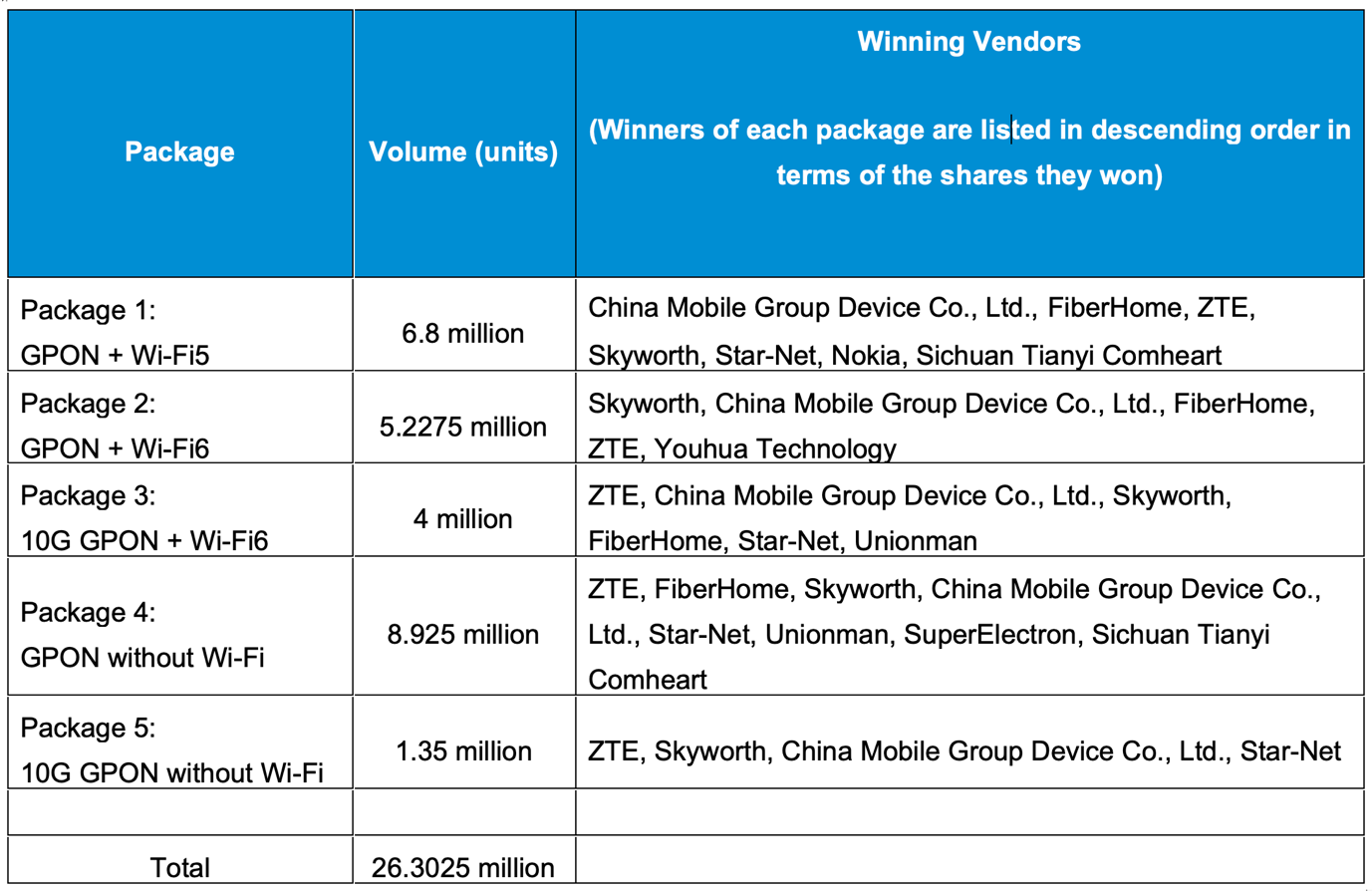
    In May 2022, China Mobile announced the results of its optical network terminal (ONT) tender for 2022-2023. With a total volume of 26.3025 million units, the tender represented the largest centralized procurement of ONTs by any operator in the Chinese market this year, drawing participation from numerous vendors.

    Based on the tender results, ZTE clinched a portion of all the five bidding packages and was the top winner in three of them. In the two packages for 10G GPON with Wi-Fi 6 and 10G GPON without Wi-Fi, ZTE landed the largest share, which testifies to its leadership in the commercial deployment of 10G GPON technology.

    ZTE ranked first for shipments of PON ONT devices with a 33% share of the global market in 2021, according to research firm Dell’Oro Group.

  • Apple suppliers competing for workers in Vietnam

    Apple suppliers competing for workers in Vietnam

    Apple’s major Chinese suppliers are competing for Vietnamese workers as they seek to expand operations outside their country.

    Young Liu, chairman of Foxconn’s flagship unit Hon Hai Precision Industry Co., told reporters in Taipei Saturday that his firm’s Chinese competitors have set up operations near its facilities in Vietnam just to poach workers.

    “The move should not be condoned,” he said without naming any companies.

    In recent years Foxconn’s competitors like Luxshare, GoerTek and BYD have flocked to Vietnam to avoid U.S. tariffs.

    Foxconn employs around 60,000 workers in Vietnam, which is its largest manufacturing base outside China.

    Liu said Foxconn would “significantly” increase the numbers of employees in Vietnam over the next one to two years.

    Earlier reports said Apple would mass produce its iPads for the first time in Vietnam as part of efforts to diversify its supply chain and reduce dependence on China.

  • Google Maps adds another nifty feature for Android and iOS users

    Google Maps adds another nifty feature for Android and iOS users

    Google Maps has already become a trusty companion for many Android and iOS users as the app is no longer just helps them navigate busy traffic. Less than a week ago, Google announced that Maps will be able to monitor air quality across the United States so that you can plan your outdoor activities accordingly.

    We’re pretty sure many more new features that might not have something to do with navigation will be added to the app, but the most recent one will definitely help you fully focus on your driving without having to think about … tolls.

    Starting today, Google Maps will show toll pass prices on both Android and iOS platforms. It’s a nifty feature that will allow users to choose which road to take, either it’s going to be the shorter route needing a toll pass, or the longer road that won’t cost you a dime.

    According to Google, the new feature will display the estimated toll price to your destination before you even start driving, which is possible thanks to the company’s partnership with local tolling authorities. The algorithm that presents you with the road choices and toll prices factors different variables such as having a toll pass or not, what the day of the week it is, as well as how much the toll is expected to cost at the specific time you’ll be crossing it.

    More importantly, the new feature comes with a toggle within settings that will allow users to make it show toll prices with or without having a toll pass, since the price changes based on the payment method you use in many regions.

    Also, Google Maps users will retain the ability to avoid routes crossing toll road completely, if possible, by choosing the “Avoid tolls” option within settings.

    As far as availability goes, Google announced that Maps users on Android and iOS should start seeing toll prices for about 2,000 toll roads in the United States, India, Japan, and Indonesia. It’s probably not much, but Google said more countries will be added in the not-so-distant future.

  • Why mattress disruptor Koala is getting in bed with homewares

    Why mattress disruptor Koala is getting in bed with homewares

    After success with both its mattress and furniture ranges, Australian company Koala is now moving into homewares.

    Koala decided to add décor to its product staple to encourage consumers to consider more sustainable options. The homewares collection features 34 pieces, including cushions, throws and the first wool rug range in Australia to use certified responsible wool.

    Other sustainable materials used in the new products are 100 per cent organic cotton and recycled plastic bottles.

    These designs are all inspired by Australia’s flora and fauna, art, culture or lifestyle and designed in-house. This means the pieces feature neutral colours and earthy tones, as well as nature-inspired textures and patterns.

    Koala said years of research has gone into creating the range, which has been designed to stand the test of time.

    The homewares are also built to withstand our hectic and messy lives with the throws and cushions machine washable and the rugs easy to clean.

    “With homewares, we want to celebrate Koala’s uniqueness whilst doing something meaningful and timeless for the brand. We’ve created a real sense of something special you can’t get anywhere else, with all colours and material finishes inspired by the Australian landscape, from outback red dirt to beautiful coral reefs,” Alexandra Owen, Koala design director said.

    You can feel good about supporting the environment while refreshing your home with this rug. It is made from 100 per cent recycled bottles and is super soft to the touch. There are two sizes and four colours available, with each colour inspired by Australia’s native foliage.

  • New Nike concept store opens in Hong Kong

    New Nike concept store opens in Hong Kong

    The new store has been launched by GMG as part of the company’s plans to ramp up its investment in the Asia market.

    The new Nike store spans over 2171sq ft and is situated in the East Point City shopping mall in Hang Tau district. It is home to sportswear for both men and women, in various categories including running, basketball and training.

    GMG has partnered with Nike in other markets since 1982, and entered the Asia market in 2020 after buying Royal Sporting House, a leading multi-sports retailer and recently purchasing Nike retail stores from SUTL Corporation, expanding its presence in Singapore and Malaysia.

    Mohammad A Baker, Deputy Chairman and CEO, GMG, said: “Asia is propelling the retail industry forward, generating a substantial portion of global growth in the sector and offering immense potential and expansion opportunities for GMG. The opening of our new Nike store in a key market such as Hong Kong, the first in two years, further signifies the recovery of a post-pandemic economy while allowing us to strengthen our physical retail presence in Asia.”