Author: Mei Ling Tan

  • Lamborghini returns to Vietnam

    Lamborghini returns to Vietnam

    Luxury car brand Lamborghini is set to return to Vietnam in the second quarter after disappearing for over a year.

    The Italian company has selected S&S Automotive as its new distributor in Vietnam to replace CT Wearnes. It did not state why the partnership with CT Wearnes ended.

    S&S Automotive, which also distributes luxury brands Rolls-Royce and McLaren, said the new Lamborghini showroom is being constructed and will begin operation in the second quarter.

    The showroom will be in District 1, Ho Chi Minh City, where the other two brands Rolls-Royce and McLaren are available.

    S&S Automotive has also put into operation a new maintenance facility in Tan Binh District for both Lamborghini and Rolls-Royce cars.

    Lamborghini was considered the first luxury car brand to enter Vietnam when it launched a showroom in Hanoi, which was open until 2018.

    The brand then opened a new showroom in District 7, HCMC, by the end of 2020 via CT Wearnes.

    As most car import activities shut down early last year, CT Wearnes showrooms in District 7 stopped displaying cars of French brand Renault and Lamborghini.

  • HSBC lowers Vietnam growth forecast

    HSBC lowers Vietnam growth forecast

    HSBC has lowered its GDP growth forecast for Vietnam from 6.5 percent to 6.2 percent due to inflationary pressures amid rising global energy prices.

    “Vietnam is facing multiple challenges given elevated global energy prices. It will increase its energy bills, deteriorating its terms of trade position,” the bank said.

    The country’s imports of crude oil and petroleum in March were double and four times the 2021 monthly averages, and the rising trend seems set to continue.

    This is likely to shrink Vietnam’s external metrics, making it run a second consecutive current account deficit, and higher oil prices would increase the cost of living, dampening recovery in private consumption, the lender said.

    It raised its inflation forecast for the year to 3.7 percent due to the high energy prices, saying this would increasingly call for the need for monetary normalization. The government targets inflation of not more than 4 percent.

    The bank pointed out that the GDP growth of 5 percent in the first quarter was higher than its forecast of 4.7 percent, indicating the country is firmly back on the recovery track.

    The manufacturing sector remained the key driver of growth in the first quarter, driven by a double-digit increase in electronics production.

    Exports grew by 13 percent year-on-year thanks to increased demand for electronics products though strong figures were reported across sectors like textile, footwear, machinery, and wooden products.

    With Vietnam reopening its borders on March 15, HSBC expects a “small rebound” in tourism this year.

    Authorities are hoping to get 8-9 million foreign tourists this year, 40-50 percent of the 2019 numbers.

    Economic growth of 6.2 percent will however make Vietnam one of the region’s top performers.

  • Waymo Offers Driverless Rides To San Francisco Employees, Expands In Phoenix

    Waymo Offers Driverless Rides To San Francisco Employees, Expands In Phoenix

    Alphabet Inc unit Waymo said on Wednesday it has started offering driverless rides to employees in San Francisco, accelerating a race with General Motors Co-backed rival Cruise to commercialize the technology in the dense city.

    Waymo also introduced autonomous rides to employees in downtown Phoenix with safety drivers behind the wheel, with a goal to open it to public testing.

    “Operating fully autonomously in multiple markets – in addition to Waymo’s growing trucking operations – is a critical validator of the scalability of Waymo’s operations and technology,” it said in a statement.

    A self-driving technology pioneer, Waymo started the first U.S. driverless taxi service in 2020, over a decade after it was born in 2009 as a project inside Google. While it gives paid rides to hundreds of people a week using Chrysler minivans, Waymo’s service has not expanded beyond suburban Phoenix areas that cover about 50 square miles (129.5 square kilometers).

    Waymo in August started giving autonomous rides free of charge to a limited number of people in San Francisco with safety drivers on board, using its Jaguar electric vehicles equipped with sensors such as spinning lidars on the top.

    Waymo needs to receive at least two more permits from the California Department of Motor Vehicles (DMV) and the California Public Utilities Commission (CPUC) to start charging passengers for driverless rides in San Francisco.

    Waymo declined to comment on whether it had applied for the permits.

    Cruise already is giving fully driverless rides to employees and members of the public free of charge in San Francisco. The company is seeking CPUC approval for commercial driverless service, with a goal to get permitted this year.

    Self-driving technology firms, which have attracted billions of dollars of investments, face challenges of scaling up their technology, after missing their earlier targets to launch commercial services.

  • Vietnamese honey gets a sweet deal in Taiwan

    Vietnamese honey gets a sweet deal in Taiwan

    Vietnam’s honey exports to Taiwan rose by 57 percent last year to US$1.64 million, thanks to competitive prices and growing quality.

    Oanh, a woman from the northern province of Hai Duong who is working in Taiwan, said Taiwanese increasingly prefer Vietnamese honey due to its better prices than Thai products.

    Last year Vietnam was the second largest natural honey exporter to Taiwan, accounting for nearly 10 percent of the latter’s total imports. Its export volumes rose by 44 percent to 382 tons, according to statistics from Taiwan’s Bureau of Foreign Trade.

    In the first two months of 2022 exports quadrupled year-on-year to 46 tons. Vietnam exports 54,000 tons of honey annually, 95 percent of it to the U.S.Exporters said Taiwan is a promising market for honey due to growing demand.

    But the U.S. has imposed a preliminary anti-dumping tax of over 410 percent on Vietnamese honey.

    Its import tax on honey from other countries is around 30 percent.

  • Vietnam Airlines accumulated loss nears charter capital

    Vietnam Airlines accumulated loss nears charter capital

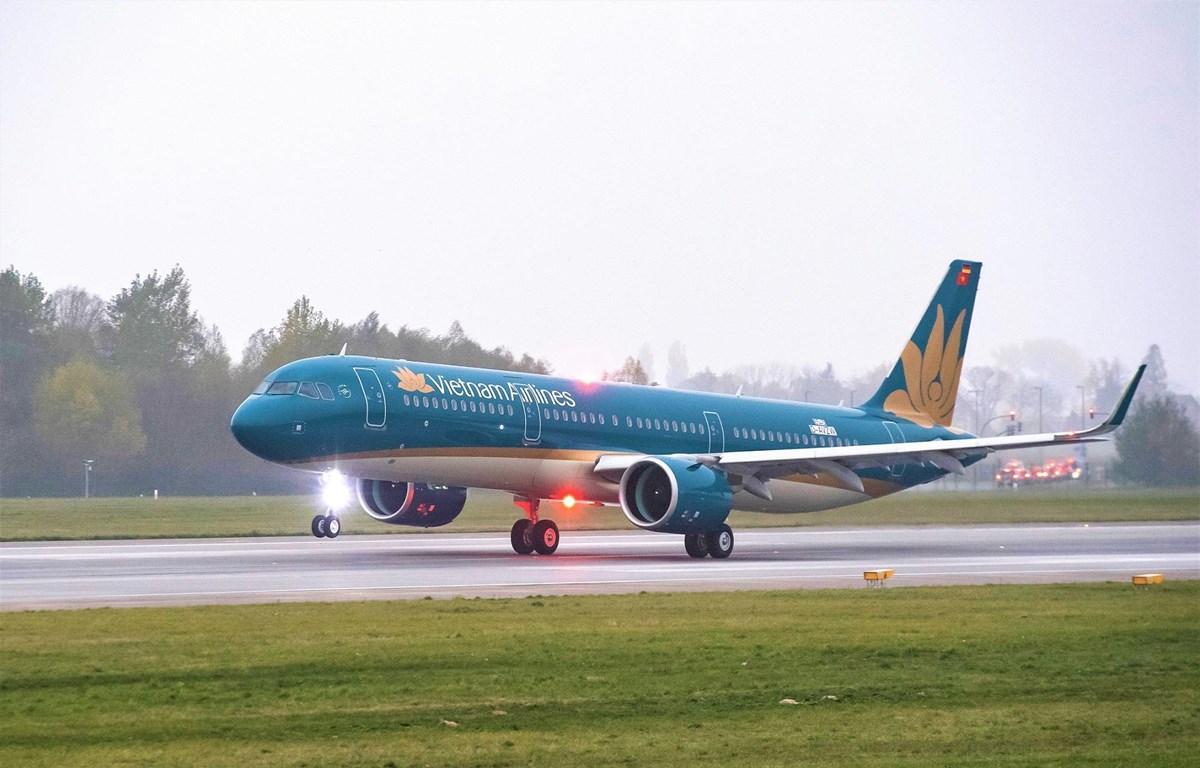
    The accumulated loss of national flag carrier Vietnam Airlines climbed to VND21.98 trillion ($928.39 million) last year, roughly the same as its charter capital.

    The airline was hit hard by the Covid-19 pandemic that saw borders closed and commercial flights suspended for two years.

    It posted a loss of VND13.02 trillion last year alone, with revenue dropping 31 percent year on year to VND28.09 trillion.

    The airline increased its charter capital by 56 percent to VND22.14 trillion last year by issuing 800 million shares, with the State Capital Investment Corporation (SCIC) contributing an additional VND6.89 trillion.

    The Commission for Management of State Capital at Enterprises (CMSC) now holds a 55.2 percent stake in the flag carrier, the SCIC 31.14 percent, and Japan’s ANA airline 5.62 percent.

    The airline has been increasing the number of flights it operates since the beginning of this year as the government began lifting restrictions based on rising vaccination rates.

    It operated 7,314 flights last month, up nearly 21 percent year-on-year.

    The airline has proposed that the government raises the price cap for domestic travel from April 1 and add a fuel surcharge for local routes as fuel prices have soared in recent months.

  • Bamboo Airways not affected by ex-chairman’s arrest

    Bamboo Airways not affected by ex-chairman’s arrest

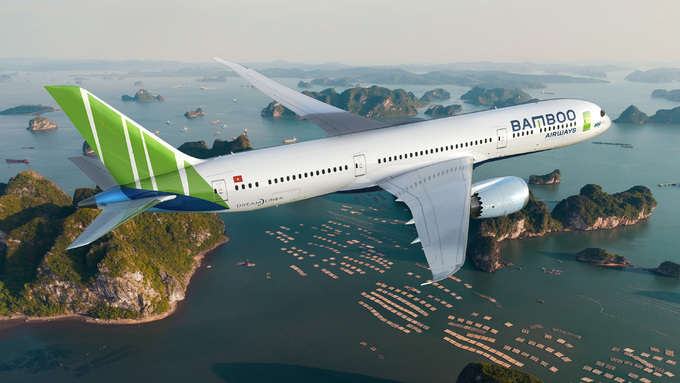
    The Civil Aviation Authority of Vietnam says carrier Bamboo Airways is operating normally, unaffected by the recent arrest of its ex-chairman Trinh Van Quyet.

    The carrier’s key personnel, including pilots, cabin crew, and technical staff are complying with all regulations, it reported to the Ministry of Transport Thursday, after an emergency meeting with the airline’s management.

    The meeting happened a day after the arrest of real estate giant FLC and Bamboo Airways chairman Trinh Van Quyet for alleged manipulation of his company’s share prices by using 20 different trading accounts to create fake demand.

    Quyet is the largest shareholder of the airline, holding 55.5 percent of its charter capital, or VND3.89 trillion ($170.3 million). Bamboo Airways has a charter capital of VND7 trillion.

    The aviation authority also assured that in the case Quyet’s assets were frozen, the carrier would still operate normally operational, as it meets the government’s minimum capital requirement of VND700 billion.

    But it will keep a close watch on the carrier for the next three to six months to ensure safety and assess the impacts of Quyet’s arrest.

    “The Civil Aviation Authority of Vietnam will support Bamboo Airways when necessary to help the airline overcome current difficulties, and maintain development,” it said.

    On Thursday, FLC deputy chairman and Bamboo Airways’ general director Dang Tat Thang replaced Quyet as the airline’s new chairman until shareholders and the board of directors make a final decision.

    Thang continues to retain his position as general director.

  • Thais Turn To EVs At Motor Show As Petrol Prices Soar

    Thais Turn To EVs At Motor Show As Petrol Prices Soar

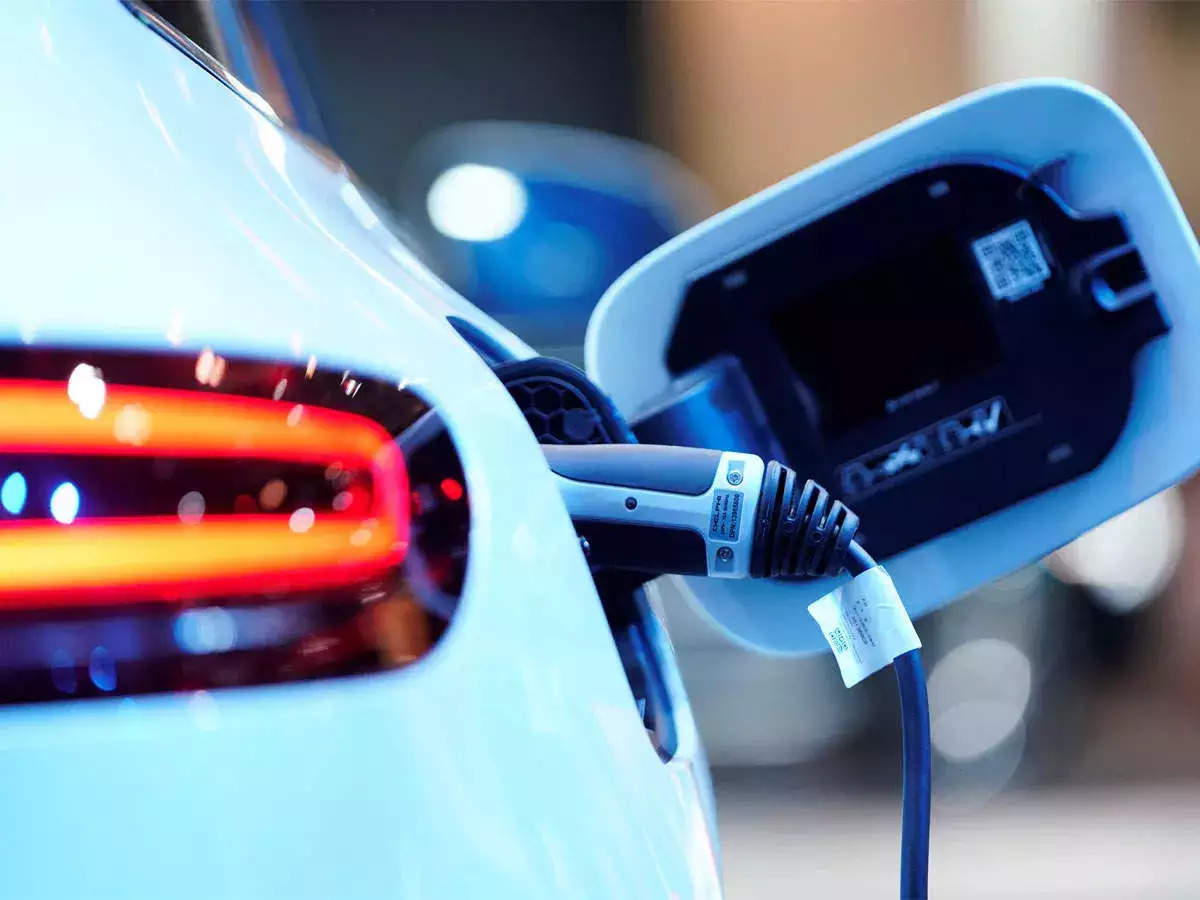
    Thousands attended the Bangkok International Motor Show this week where electric vehicles (EVs) were in the spotlight due to rising petrol prices and a government subsidy taking 15% off the price of some EV cars.

    Thailand, along with most other countries in Southeast Asia, has been slow off the blocks to embrace EVs, but demand is starting to gain momentum with Chinese carmakers, in particular, producing cheaper models and increasingly targeting the region.

    “I can’t handle paying for the price of gas anymore, so I’m here looking to buy an electric car,” said Natnicha Srimuang, who purchased an EV at the motor show. Thai gasoline prices are around 40 baht ($1.20) per litre, up 50% from last year.

    Some see a switch to EVs as a way to save money longer-term.

    “I (want) to invest my money in a good electric car that fits my lifestyle,” said Patricia Duangcham, who said she expects to save thousands of baht a month from the purchase.

    The combination of energy price concerns and more affordable models will help spur EV adoption, said Michael Chong, general manager of Great Wall Motor Thailand.

    This year’s motor show was also the first since government subsidies for EV buyers were introduced.

    While many global car makers displayed EVs, there were long queues to take a peek inside Great Wall Motor’s competitively priced ‘ORA Good Cat’ model.

    Domestic demand for EVs is a crucial part of a Thai government strategy to preserve its status as a major regional automaker. The government is targeting production of 725,000 EV units a year, or 30% of total vehicle output, by 2030.

    Thailand is Asia’s fourth-largest auto assembly and export hub for companies like Toyota Motor Corp and Honda Motor Co Ltd.

    State-owned energy firm PTT Pcl has teamed up with Taiwan’s Foxconn to produce EVs in Thailand by 2024.

    China’s Great Wall Motor also plans to produce EVs in Thailand in two years’ time.

    The demand for EVs has been picking up in Thailand, though from a low base. Last year, the number of registered fully electric cars doubled to about 4,000, though that still pales in comparison with total domestic car sales of 759,119 last year.

    Despite the hype around EVs, some attending the motor show intend to stick to combustion engines due to concerns about the new technology.

    “(The) EV car is only starting, and no one knows what kind of problems are going to happen,” said Ponchai Lertlai, 59.

  • AIS, Qualcomm and ZTE debut world’s first 5G NR-DC showcase with 2.6GHz and 26GHZ in Thailand

    AIS, Qualcomm and ZTE debut world’s first 5G NR-DC showcase with 2.6GHz and 26GHZ in Thailand

    AIS, Qualcomm Technologies, Inc. and ZTE have jointly announced the world’s first 5G NR-DC (new radio dual connectivity) showcase in the field with 2.6GHz and 26GHz, achieving 8.5Gbps peak downlink speed and 2.17Gbps peak uplink speed with a single mobile device. As part of the joint effort, this collaboration combines two major 5G frequency bands, sub-6 and 5G mmWave, to enhance the capabilities of Thailand’s 5G network and extend the 5G application landscape.

    The test was conducted at the AIS commercial 5G site in Korat, Thailand, using a smartphone form-factor test device powered by Snapdragon® X65 5G Modem-RF System, and ZTE’s latest mmWave AAU network infrastructure equipment.

    The NR-DC was implemented with one 100MHz carrier in 2.6GHz, and four 200MHz carriers in 26GHz. The test achieved 8.5Gbps peak downlink speed and 2.17Gbps peak uplink speed demonstrating the extraordinary capability and flexibility of NR-DC for diversified requirements from individual consumers and industry leaders.

    This NR-DC showcase drives the commercial progress of 5G mmWave into the fast lane in Thailand. AIS, Qualcomm Technologies and ZTE are together committed to accelerating and growing 5G for capability enhancement, efficiency improvement and application boundary extension.

    “AIS’s key goal is to develop the smart 5G network as a national infrastructure with investments of 30,000-35,000 MB,” Wasit Wattanasap, head of nationwide operation and support business unit at Advanced Info Service Pcl. (AIS), commented, “We are the licensee holding the most spectrum in low band, mid band and high band or mmWave, which has the outstanding feature of rapid data transmission with low latency. We have never stopped deploying innovations to level up the network, including 5G Non NSA/SA Voice over new radio (VoNR) and 5G carrier aggregation (CA), to provide increasingly improved experiences to Thai customers, which was our intention when we joined the auction for spectrum.”

    “Most recently, we have continued our collaboration with ZTE and Qualcomm Technologies, to jointly trial 5G NR-DC technology. It is a crucial step to combine different 5G spectrum, 2600 MHz (mid Band) and 26GHz (high Band) in a world-first. This enables downloads of up to 8.5 Gbps, and uplinks of up to 2.17 Gbps. This trial gave us a wider channel for the signal and extremely low latency. For instance, there could be streaming games online (cloud game), controlling driverless vehicles and commanding robots remotely in real-time. Moreover, the trial supports the development of new models of chipsets in the future, to speed up data transfer even more.”

    “This cooperation highlights how AIS is the only provider using its licensed spectrum of every waveband for development to support business growth in various dimensions. It is also continuous transformation and updates for Thai consumers. Taking this joint-trial as a good start, we are confident that AIS 5G network is ready to expand the use of mmWave technology and support growth of the business sector in various aspects,” concluded Wasit.

    “Our collaboration with AIS and ZTE proves the feasibility of deploying 5G mmWave in Thailand,” said ST Liew, vice president, Qualcomm CDMA Technologies Asia-Pacific Pte. Ltd. and president, Qualcomm South East Asia. “Qualcomm Technologies believes that 5G mmWave will be the key to unlocking the full potential of 5G. The possibility is endless and we are proud to take the first step in bringing the full benefits of 5G mmWave to the country.”

    “We’re pleased to work with AIS and Qualcomm Technologies to achieve this milestone, which lays a technology validation foundation for 5G mmWave commercialization,” said Mei Zhong Hua, senior vice president, ZTE Corporation. “With broader 5G opportunities enabled by mmWave, we will join hands with partners to continuously drive mmWave development, create ultimate experiences and usher in a wonderful 5G era.”

  • Bamboo Airways to be monitored for safety following chairman’s arrest

    Bamboo Airways to be monitored for safety following chairman’s arrest

    The Civil Aviation Authority of Vietnam said it would closely monitor Bamboo Airways for the next three to six months to ensure safety following the arrest of its chairman.

    Its aircraft maintenance and operations and training would be closely supervised, deputy head of the Civil Aviation Authority of Vietnam (CAAV), Ho Minh Tan, said at an emergency meeting with the airline’s management Wednesday.

    The meeting came a day after real estate giant FLC and Bamboo Airways chairman Trinh Van Quyet for alleged manipulation of his company’s share prices by using 20 different trading accounts to create fake demand.

    He had earned VND530 billion (US$23.19 million) in this manner between Dec. 1 and Jan. 10, investigators said.

    Deputy general director Nguyen Ngoc Trong said banks and financial institutions are committed to fulfilling all contracts they have signed with the carrier, which would in turn fulfill all its responsibilities and obligations. Bamboo Airways began flying in 2019.

    On Thursday, Dang Tat Thang was named the new chairman to replace Quyet until shareholders and the board of directors make a final decision. He also remains the general director.

  • Dragon fruit sold for $1 per 6 kilograms as China remains inaccessible to exporters

    Dragon fruit sold for $1 per 6 kilograms as China remains inaccessible to exporters

    Watermelon, dragon fruit, and other agricultural produce are being sold for VND 3,000-8000 ($0.13-0.35) per kilogram in HCMC and Hanoi since the China export situation remains grim. In HCMC’s Districts 12, Binh Thanh, Go Vap, and others, vendors can be seen on sidewalks selling large piles of fruits at extremely low prices.

    “This type of watermelon was typically sold at VND25,000 ($1.09) per kilogram in recent years, but this year we are selling it at half price because farmers cannot export it,” Cuong, a vendor in Tan Binh District, said.

    Cuong and his wife buy the fruit from farmers in Long An Province at VND8,000 and sell them at VND12,000.

    A vendor in Go Vap District, Hoang, said he was selling at almost no profit because of the high transportation costs.

    The container pileup at the Chinese border has persisted for three months now, forcing drivers to return to cities and sell them at half or a third of the export price.

    In the northern province of Lang Son, which has some key border gates, 1,378 trucks were stuck as of Monday, with more than three-fourths of them carrying fruits, according to the customs agency.

    Local customs officers said the number of trucks turning around has increased in the last few days and could continue to rise.

    They typically go to Hanoi and try to sell them there.

    Thanh, a vendor in Long Bien District, said he recently sold 200 cases of banana at “super low” prices, and would sell jackfruit and watermelon in the coming days.

    “Export prices of fruit have been dropping in the last three months, and so we sell them at low profits mostly to support the drivers and export companies”.

    The fruits are also sold online at around VND5,000 per kilogram of watermelon, VND6,000 per kilogram of banana and VND4,000 per kilogram of dragon fruit.

    Some exporters are considering abandoning China altogether and focusing on other markets.

    “After this batch, we will stop buying from farmers for a while to find new markets. Exports will continue to be difficult if China keeps its Covid-19 regulations tight for the rest of the year,” the head of a banana export company, who asked not be named, said.

    China is one of the biggest importers of Vietnamese fruits. Exports of agriculture, forestry and fishery to this country in the first two months surged 20.9 percent year-on-year to $8 billion, according to the Ministry of Agriculture and Rural Development.


  • Vietnam food company acquires French poultry firm

    Vietnam food company acquires French poultry firm

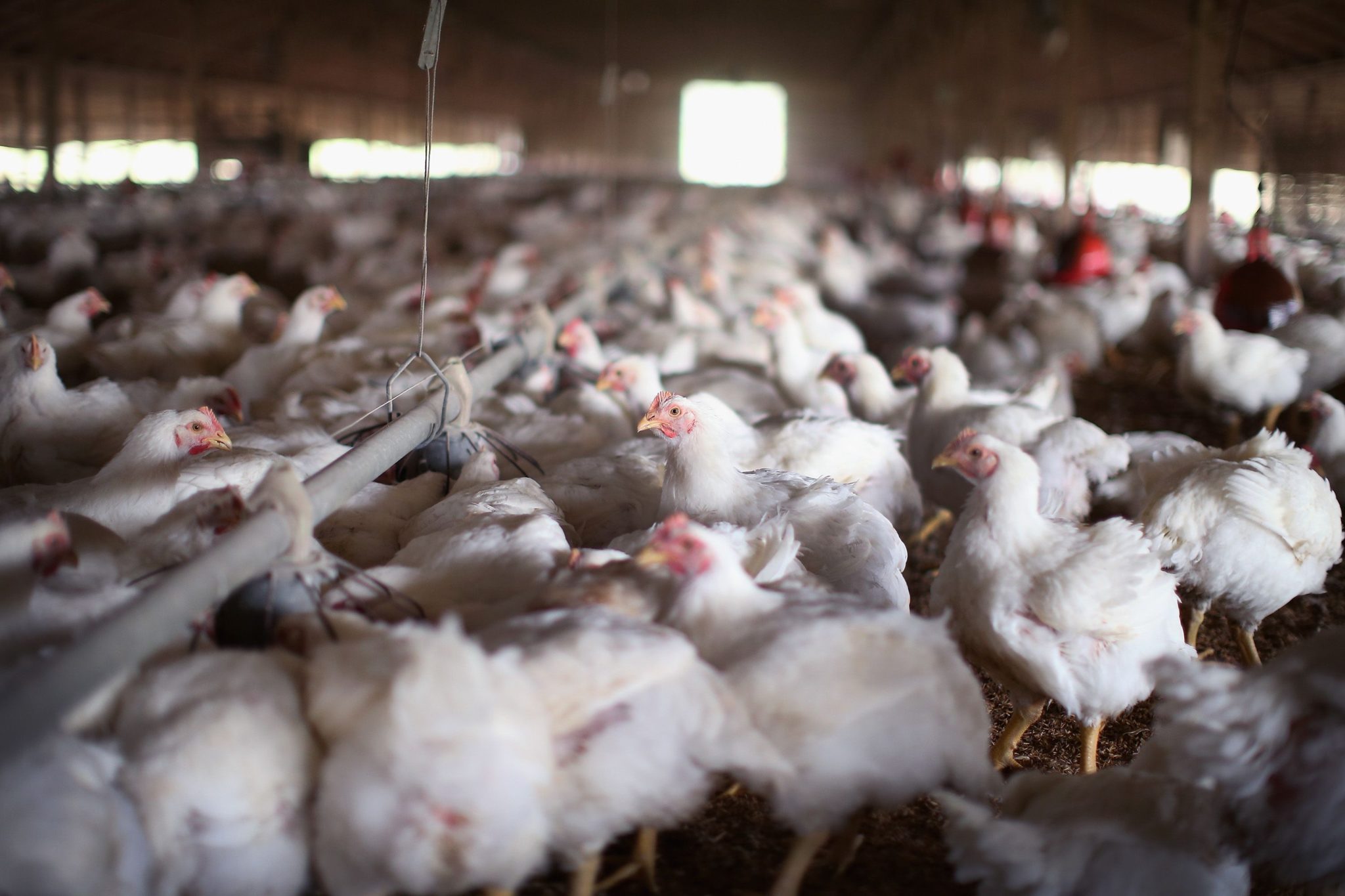
    GreenFeed Vietnam, a Vietnamese food chain company, has acquired the Mekong Delta-based French chicken supplier LeBoucher. The value of the deal has not been disclosed.

    GreenFeed owns G Kitchen, a meat and processed products retailer. Quang Thanh Cuong, head of its food segment, said the acquisition would complement the company’s ecosystem with a new source of protein.

    LeBoucher, a poultry supplier with a factory in the southern province of Long An, is the fifth food brand added to GreenFeed’s portfolio, the other three being MaMaChoice (fresh meat), Wyn (processed food) and G.Lala (broken rice).

    LeBoucher was owned by Alain Glon Holding Asia, a French food company with $110 million in annual revenue that has been operating in Vietnam for over 25 years. It supplies chicken to McDonald’s Vietnam operations.

    According to German data portal Statista, Vietnam poultry consumption was nearly 17 kilograms per capita in 2021; and is expected to rise to more than 20 kilograms by 2029.

  • Vietnam faces electricity shortages from April

    Vietnam faces electricity shortages from April

    Vietnam may face a power shortage from April due to tight coal supplies, Vietnam Electricity (EVN) reported.

    Some thermal power plants are operating at 60-70 percent capacity, which has led to a decline in electricity supply as the high-demand season nears.

    The decline in power production is seen at Nghi Son 1, Vung Ang 1, and Vinh Tan 2 thermal power plants in the central region and Duyen Hai 1 in the Mekong delta, EVN said in a report Wednesday. Hai Phong thermal plant in the north has shut down three out of four turbines, it added.

    This has led to a shortage of 3,000 megawatts of electricity. The decline came as coal delivery to EVN plants was 23 percent short of its need for the first quarter.

    As the country’s two biggest coal miners Vinacomin and Dong Bac struggled to have enough supply, there could be an electricity shortage starting April, EVN stated. Vietnam, especially the northern region, usually has high power demand between May and July due to high heat.

    The state-run Vinacomin reported earlier this month that the shortage of miners in the first two months due to Covid-19 and surging import prices have caused its supply to fall. As of March 14, the company had provided only 74 percent of what it promised to thermal power plants for the first quarter.

    The company has also sought official approval to raise selling prices as import rates increase. It has not hiked prices for the last two years. The Ministry of Industry and Trade has ordered Vinacomin to ensure that there would be no coal shortage under any circumstances. Coal-fired plants accounted for 43.6 percent of total power generation in February, according to EVN.

    Vietnam promised to target net-zero emissions by 2050 at the 2021 U.N. Climate Change Conference (COP26) in Scotland last November.

  • YouTube TV brings picture-in-picture (PiP) feature to devices running iOS 15+

    YouTube TV brings picture-in-picture (PiP) feature to devices running iOS 15+

    YouTube confirmed back in February that it will bring picture-in-picture to YouTube TV on iOS devices. At that time, YouTube’s officials didn’t provide an ETA nor any details about what devices will be available with PiP.

    One month after the initial announcement, YouTube TV confirmed that picture-in-picture is now rolling out to iOS 15+ devices. As to why this feature is only available on iOS 15+ devices, your guess is just as good as ours, but since Apple typically keeps all its iPhones and iPads up to date, it’s only the older devices (older than iPhone 6s) that won’t have access to this specific feature.

    Picture-in-picture works with both on demand and live TV content, so you won’t have to worry about that. To use it, simply select a video that you wish to watch and swipe up from the bottom of the screen to return to the device’s homepage. As soon as you do that, the video will scale down and move across the screen.

    It’s unclear if the feature is available right now to everyone or YouTube TV has decided to go for a staged rollout. Either way, iOS users should start seeing picture-in-picture on their phones and tablets very soon.

  • Apple releases minor updates that could fix major iPhone and Apple Watch issues

    Apple releases minor updates that could fix major iPhone and Apple Watch issues

    Two weeks after updating iOS to 15.4, iPadOS to 15.4, watchOS to 8.5, and tvOS to 15.4, Apple dropped a minor update meant to exterminate bugs on the iPhone, iPad, the Apple Watch, and Apple TV. Right off the bat, we can think of some bugs that might be exterminated by these updates including one for the Apple Watch that broke fast charging on the Series 7 timepiece once watchOS 8.5 was installed.

    Apple iPhone users complained about the battery on their phones draining rapidly after iOS 15.4 was downloaded and installed. Naturally, we would expect Apple to fix this issue with a software update as fast as possible. Apple made some huge improvements to the battery life on the iPhone 13 Pro and iPhone 13 Pro Max, but the batteries went from hero to zero after iOS 15.4 was installed on these models. So once you have iOS 15.4.1 driving your iPhone, you might want to check to see if your battery life has returned to normal.

    Another problem that iOS 15.4.1 might repair is one that affects the quality of webcam images from Apple’s Studio Display. As many have noticed, the Studio Display runs a full version of iOS 15.4 which means that problems with Apple’s expensive display can be fixed with a software update. That certainly beats lugging the product on the subway and taking it back to the store to fix the hardware.

    With the updates, the build number for iOS and iPadOS moves from 19E241 to 19E258. The build for watchOS goes from 19T242 to 19T252, and with tvOS, the OS build goes to 19L452 from 19L440.

    To update your iPhone or iPad go to Settings > General >Software Update. To update the Apple Watch, open the Watch app and go to Settings > General > Software Update. Most updates will automatically be taken care of overnight which is when typical Apple Watch users have their timepieces on the charger.

    To install tvOS on Apple TV, follow these directions:

    • Click on the Settings app from your Apple TV Home screen.
    • Click on System.
    • Click on Software Update.
    • Click on Update Software.
    • Click on Download and Install.
    • Click on Update Now.
    • Wait for your Apple TV to finish the update.

    Hopefully, the major issues affecting the iPhone and the Apple Watch are now a thing of the past. Let us know by dropping your comments in the box below.

  • Swiss Re, Baidu Team Up In Autonomous Driving Business

    Swiss Re, Baidu Team Up In Autonomous Driving Business

    Swiss Re and Chinese tech group Baidu are teaming up to help advance autonomous driving, the Swiss reinsurer said on Friday.

    Swiss Re will provide risk management expertise and insurance products for Baidu’s autonomous driving business, it said without giving any financial terms.

    “This partnership will advance risk management research and insurance protection for autonomous vehicles, representing an important step forward in building a comprehensive ecosystem of mobility services,” Swiss Re said in a statement.