Author: Mei Ling Tan

  • Coding For Kids: The Ultimate Guide For Parents

    Coding For Kids: The Ultimate Guide For Parents

    Most children these days love computers and electronic gadgets. It wouldn’t be a surprise if coding (or computer programming) for kids would come in naturally as an interest or as a passion for them.

    Society has become more productive because of technology and it is but expected that coding for kids Singapore would be a perfect base for your children to learn this advanced skill and way of thinking which will equip them professionally for a lifetime.

    Most parents (who are themselves computer literate) have this hidden desire for their kids to be passionate about coding. In recent surveys, 90 percent of parents in the USA would want coding to be a part of the general school curriculum.

    Most parents of a generation ago have had this idea of devoting a life to computers which were just in their infancy but their own parents rejected the idea because they didn’t see that the programming revolution would take over the world.

    Now it’s their chance to see this desire passed down to their own kids.

    When your youngsters start to learn code at a very early age, you are setting them up to a life of professional and financial stability. As online learning becomes more the norm, almost all kids are amenable to the idea of learning coding through online classes after their traditional school hours or during weekends.

    Get ready because we are going to discuss why coding as part of your children’s computer literacy is so vital for them as they create lives of their own as they grow up.

    WHAT DO YOU MEAN BY CODING?

    If you think that coding would prepare your kids well for their future, you should understand it deeply.

    The other name for coding is programming. It is an elaborate process with both opportunities for creativity and routine to work hand in hand. The computer programmer, in this case, your kid, tells the computer to execute a specific task by writing workable scripts with the use of programming languages like Python or Java. In the future, expect more programming languages to be created and make your kid more excited to learn.

    Your child will give the computer instructions through a specific language which the computer understands. The computer then works on carrying out the command.

    There are a lot of possibilities with coding. Your kid can create games, websites, apps, software and even interactive digital content. It is an endless realm of potential which will come from the hearts and minds of your incredible kids! That’s why, if your child loves digital games and mind twisting games, it will be no problem to transform them into coders.

    IS CODING BENEFICIAL FOR YOUR KIDS?

    Definitely. Their minds are still malleable and open to be filled up, like a sponge. When they are exposed to the rudiments of coding at ages as early as 5, they have the advantage to critically evaluate for themselves scenarios, choose from different options, and create surprisingly effective solutions.

    Best of all, they learn to undergo failure and then attempt repeatedly until they can create coding that is productive and usable. In effect, they experience the trial and error process of getting up every they fall down (in this case, when their coding process is erroneous, they simply have to try again).

    When they’re very young when they start, especially at Maker Kids Camp in Singapore, the easier it will be for them to master the coding skill, no matter what new languages in the future come their way.

    AT WHAT AGE CAN YOUR KIDS START LEARNING TO CODE?

    Swiss psychologist Jean Piaget concluded that when children teach the age of 5 which is the preoperational stage, they begin to understand the world through mental symbols like words and pictures.

    If we stand by this theory, kids can learn coding by the time they are 5.

    Coding basics at the Makers Kids Camp in Singapore are simplified and even explained through games so that these young kids can understand the foundations of coding.

    CODING MAKES KIDS THINK LOGICALLY AND CRITICALLY

    There have been several studies that discovered the positive connection between coding and cognitive skills. Kids who have learned or acquired computer programming skills scored higher on cognitive ability exams than those who have little or zero coding experience.

    KIDS LEARN A SKILL CALLED DECOMPOSITION

    Decomposition is a process wherein the children are taught how to break down complicated problems into smaller and better to manage chunks so that they can write functional scripts. Kids will find this skill applicable when they confront hard to comprehend situations in the world.

    THE YOUTH LEARN PROBLEM SOLVING

    When they code, a problem is identified, then analyzed, created a workable solution. Then the said solution is tested and retested and revised until the problem is solved.

    In technical terms, the kids write, rewrite, troubleshoot, debug lines and lines of code until they get the program working right and productively.

    CODING ENHANCES BOTH CREATIVITY AND FOCUS

    Coding has a reputation of being a routine activity and not aligned with creativity because it is methodical and process oriented.

    But that is far from the truth and true blooded programmers can attest to that. This is especially true when the kids create programs from scratch.

    Think about it. How else could kids create new digital games, apps, animation, websites and more if they don’t have innate creative skills which could be nurtured through coding?

    They are made to write down lines of codes or snap together blocks (note: block coding is an alternative form of coding for kids), but the actual idea came from depths of their imagination.

    But parallel to execution of their imagination, coding requires rigid focus so that all the details of the program are not neglected and infused directly so that the end result will be perfect.

    When kids acquire experiences from the real world or from other digital concepts, they piece them all together and unify them through the coding skills that they will learn from Maker Kids Camp in Singapore. The result is a new app, a brand new video game or an exciting animation – all unique results from the coding which the kids will work on. They make hypothetical ideas into workable coding masterpieces.

    CODING IS AN ALTERNATIVE OUTLET FOR THEIR UNIQUENESS.

    To express themselves, some kids paint, sketch, sing, draw, play a musical instrument, build things or indulge in sports.

    But some children excel in coding which can enable them to create digital and physical (like robots) products which express their own unique personality.

    EXAMPLE OF THE CHALLENGES OF CODING TO THE KIDS

    Let’s say for example your kids will be developing a video game. They are required to write code that will make their character do all kinds of movements.

    Walk forward, go backward, move from side to side, jump or crouch. The kids also need to write code so that the character can interact with the digital environment. Plus also code for the possible outcomes from that interaction. For examine, when the character drops an object or when the character bumps into a wall, etc.

    There is a lot of thinking involved. So, if the children don’t have the patience to analyze it through or to organize their thoughts, they may end up coding in fillers or bugs into their scripts.

    YOU CAN LEARN CODING WITH YOUR KIDS

    To make your kids feel secure, you can accompany them to the Maker Kids Camp for Coding.

    It will be a new learning experience for you too! Even though the children will want to feel that they are all grown up and independent, they will still always crawl up to you when they feel any insecurity.

    Most kids would prefer that you spend time with them in this challenging and fun endeavor. Coding would seem less daunting and less intimidating when they see in the premises people they trust like you.

    CODING IS A WORTHY INVESTMENT INTO YOUR KIDS’ FUTURE

    Even if your kids will not become professional computer programmers eventually, coding will still be a skill that is much valued in all kinds of industries. This is because, each sector will continue and will heavily rely on the internet and technology for their continue growth and your kids’ coding background will come in handy.

    Construction, medicine, finance, food, retail…all of them require a certain degree of programming knowledge and so your youngsters will have a distinct advantage over their peers who have no knowledge about it.

    There was a market analysis which concluded that coding skills paid an individual more than $20,000 more per year than people who don’t have the expertise. The same study concluded that coding jobs grew 12 percent more than other types of work available.

    Coding is rapidly becoming a required skill that is being given importance by employers when they announce job openings in their companies.

    Slots are fast filling up at the Maker Kids Camp in Singapore. Why don’t you give us a call or pay us a visit and see what coding can offer to your kids.


  • AirAsia partners with Avolon to create ride sharing platform in Southeast Asia

    AirAsia partners with Avolon to create ride sharing platform in Southeast Asia

    AirAsia has signed a non-binding memorandum of understanding to lease a minimum of 100 VX4 eVTOL aircraft from Avolon. The eVTOL aircraft is expected to enable AirAsia to further revolutionize air travel by providing advanced air mobility to a whole new range of passengers.

    In addition to the eVTOL aircraft, Avolon, through its investment and innovation affiliate Avolon-e, will partner with AirAsia to commercialize zero-emissions eVTOL aircraft and develop an industry-leading urban air mobility (UAM) platform in Southeast Asia. Avolon and AirAsia will form a working group to pursue local certification, research potential market opportunities and infrastructure requirements for UAM. AirAsia will also leverage its successful travel and lifestyle mobile app, the AirAsia Super App, to help support and build an eVTOL ride-sharing platform with Avolon.

    Tony Fernandes, CEO, Capital A, formerly AirAsia Group, commented: “Innovation has always been in our DNA and using technology to look at more efficient and sustainable ways of doing things is a core focus across Capital A (formerly AirAsia Group). We are now much more than just an airline with over 20 products and services on our super app leveraging off each other including flights, hotels, food, retail, delivery, ride-hailing and more. I am truly excited about this partnership between Avolon and AirAsia and the potential for zero-emissions ultra-short-haul air travel in Southeast Asia. The digital era is now. In the VX4, we have identified what we believe will be the eVTOL aircraft of choice and we are thrilled to be the launch airline for the aircraft in Southeast Asia. We are also delighted to extend our long-standing relationship with Avolon, which has a proven track record of delivering for its customers and is in sync with our goal to become the leading one-stop travel and delivery platform in Asean.”

    Dómhnal Slattery, CEO, Avolon, added: “Tony Fernandes is an aviation pioneer who has built AirAsia into one of the leading airlines in the world and has now also created Southeast Asia’s fastest-growing Super App anchored on travel. We are delighted to partner with AirAsia and share our vision of revolutionizing the future of air travel. We look forward to working with Tony, and the AirAsia team, on their eVTOL journey. Together we will develop a ride-sharing platform and bring the zero-emissions VX4 aircraft into service, positioning AirAsia as the operator of choice for sustainable air travel in the region.”

    In June 2021, Avolon ordered 500 VX4 eVTOL aircraft from Vertical Aerospace, valued at US $2 billion. Since announcing that order, Avolon placed 250 VX4 aircraft with Gol and Grupo Comporte in Brazil, up to 100 aircraft with Japan Airlines in Japan, and a minimum of 100 aircraft with AirAsia. As a result, Avolon has now placed up to 90% of its initial order book, underlining the demand for VX4 aircraft from the world’s leading airlines.

  • Safari on iPhone and iPad might soon get much needed quality of life improvements

    Safari on iPhone and iPad might soon get much needed quality of life improvements

    Who doesn’t love a well-made Dark Mode on their screen? But let’s be honest, not all websites have a decent one and what do we normally do in that case? Well, one option is to use your device’s internal Dark Mode feature.

    On iPhones and iPads, as with other phones and tablets, whichever of the two modes you choose is applied to all of the systems, apps, and therefore—websites.

    More specifically, the report states that new code was found inside WebKit, the browser engine powering Safari, indicating the app might soon get support for per-website Dark Mode. In other words, no matter the color scheme of a website or your device, you will be able to control in which of the modes (Light and Dark) said website appears.

    What’s more, an equally, if not even more useful feature has also been found inside the new code. Apparently, Apple is also working on a way to give users the ability to block modal pop-ups for specific websites. These pop-ups are usually disguised as system alerts with the aim to trick you into tapping on them.

    If it really comes to fruition, being able to block these pop-ups would serve as a welcome boost in security while browsing through Safari. In addition to that, Apple is also seemingly preparing a new API for managing “Cookie Consent.”

    All of the features mentioned above, however, have not been commented on officially by Apple in any way. For now, they have a “to be announced” status in the WebKit code. That said, Apple’s Spring Event is probably nearing, with WWDC following after, so it shouldn’t be too long for us to find out. There is some probability that the tech giant is saving those for the release of iOS 16.

  • Google tests new feature for Gboard that delivers sticker recommendations based on text

    Google tests new feature for Gboard that delivers sticker recommendations based on text

    More than two years ago Google introduced Android users to the Emoji Kitchen. This feature delivers sticker recommendations that are the combination of two different emojis. Think of it this way, the emotions from one emoji are combined with the characteristics from a second emoji.

    The combinations are created by Google and are played strictly for laughs. What is interesting is how your Android phone decides which delicacies to serve you. These Emoji fusion stickers are based on the text you have been tapping out along with any emoji you selected for your missive.

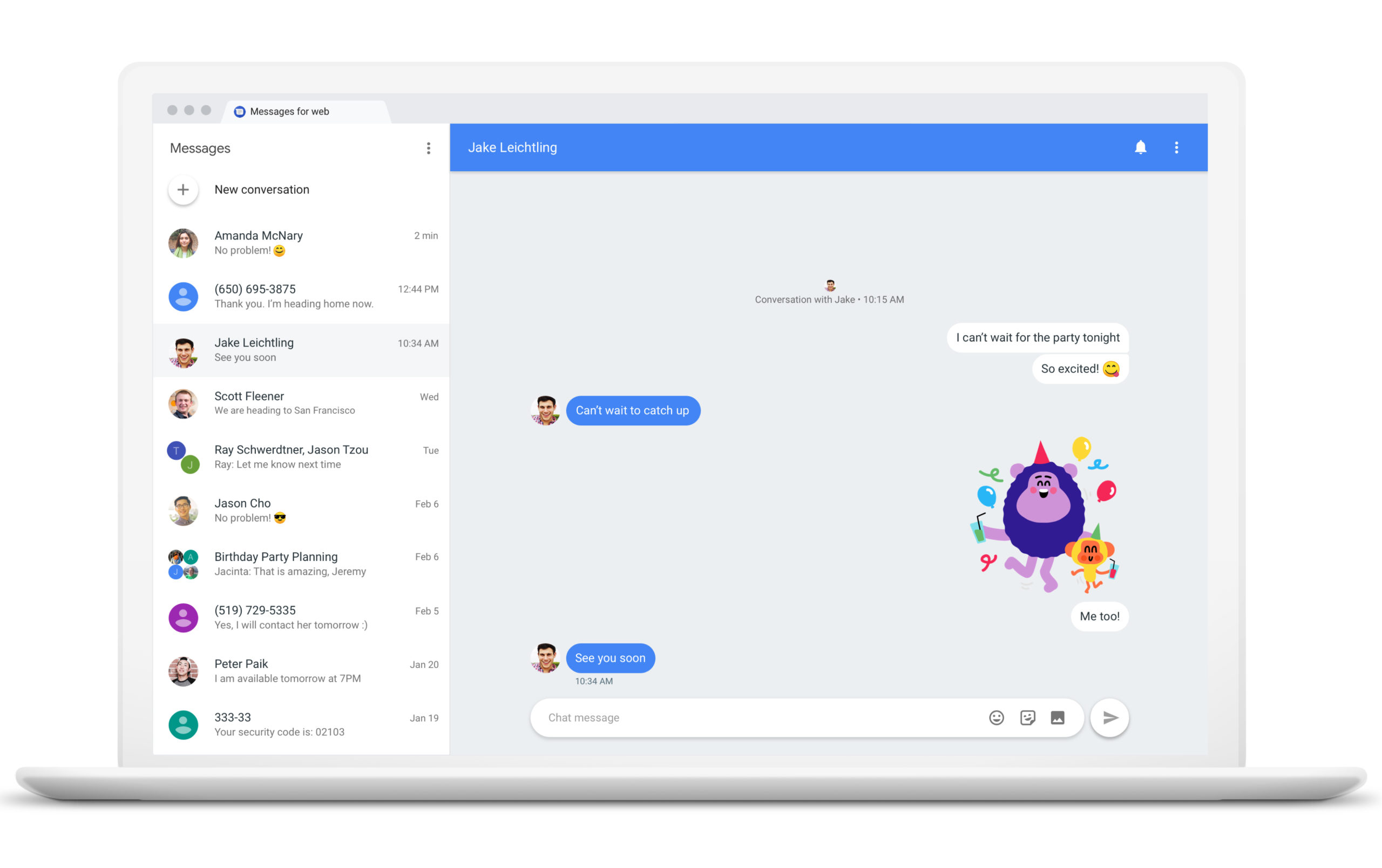
    Now, Google is testing another new Gboard feature that presents users with sticker suggestions based on what they are writing. This time, the color and style of suggested stickers are based on the words and emoji you are entering into your text. Some Reddit users spotted the feature back in November but it remains in beta.

    Examples show a text exchange between spouses with one writing to the other “See you soon ” with a heart emoji. Underneath that field, where suggested words are, well, suggested, you will see a sticker. Tap on it and in that same location, horizontal scrolling sticker options will appear. Some have the exact text that you typed while others might not show any text at all.

    These contextually-based stickers appear to be available only when using this feature and do not show up when looking at the full library of emoji and stickers on your phone. With, the feature still in beta, if you’re using the public stable version of the app, you will not be able to use this feature yet.

    If you want to join the Gboard beta and get access to this feature now, you can Google “Gboard beta” and you should see a page that will allow you to join the beta program. You can leave the beta at any time by repeating the directions above and tapping on the box at the lower right corner that says “Leave The Program.”

    If you enjoy testing out new features for apps before the rest of the Android users on your block get to use them, Google has options for you. For a more comprehensive way to join the beta versions of all Android apps, go to the Google Play Store and tap the profile icon in the upper right corner. Tap on Manage apps & devices and then Installed. Tap on an app to get to its detail page and under “Join the beta,” tap on “Join” and then “Join.”

    If you don’t see an option to “join the beta,” it means that the developer is not offering public beta testing for that particular app. To return to a public or stable version of the app, open the Play Store and tap the profile icon. Go to Manage apps & devices and then Beta.

    Tap on the app whose beta program you want to leave to see its detail page and you’ll see a notice that you are a beta tester. Under the “You’re a beta tester” notice, tap on “Leave.” But that isn’t the end. If you want to continue using an app’s public version on Android after leaving the beta, uninstall the app and reinstall it from the Google Play Store.

    The point of offering beta tests is for the developer to get feedback from users before a new feature is disseminated to all users of a particular app. So if you do have feedback to share with a developer, once again you open the Play Store and tap on the profile icon followed by Manage apps & devices and then Beta. Tap on the app you want to provide feedback on to see its detail page.

  • UBS Revamps Family Office

    UBS Revamps Family Office

    The architect of UBS’ family office business and top banker, Joe Stadler, is stepping aside as the unit gets an overhaul.

    UBS is reshuffling its global family office division, which caters to the needs of its wealthiest clients, citing an internal memo.

    The prestigious unit will become part of the new global family and institutional wealth (GFIW) unit, which will combine various services including Lombard lending, trading, hedge fund services (prime brokerage) and private market activities. Changes are effective April, the report said.

    The new unit will be headed by investment banker George Athanasopoulos, who will report to both investment bank chief Rob Karofsky and the two co-heads of global wealth management (GWM), Iqbal Khan and Tom Naratil.

    Athanasopoulos will continue to continue to serve as co-head of UBS trading and will report to both investment bank chief Rob Karofsky.

    As executive vice chair in GWM, placed directly under divisional head Khan, Stadler will be responsible for individual clients in the division.

  • J&T Express Expands Global Network Coverage to Include Mexico

    J&T Express Expands Global Network Coverage to Include Mexico

    J&T Express, an international express logistics company, announced last week that it has officially entered the Latin American market and successfully launched its network in Mexico.

    This latest expansion brings J&T Express’ global network coverage to a total of eleven countries, enabling the logistics leader to support its customers to further tap into the e-commerce boom by reaching global markets beyond Asia.

    With 12 sorting centers and 26 distribution centers in Mexico, the network covers key regions in all 32 Mexican states. As an important aspect of its courier service, the Mexican version of the J&T Express mobile application will also be launched soon.

    “As part of a new generation of express logistics companies with increased focus on internationalization, J&T Express attaches significant importance to the Latin American market,” said Charles Hou, Group Vice President of J&T Express. “The launch in Mexico is an integral step in the expansion of our global network, which further demonstrates the benefits of the regional sponsorship model in our global expansion. In the future, we hope to continue building our competitive advantage through refined local operations, our unique management model and technological improvements, to provide customers with quality logistics experience.”

    Ryan Zhang, Head of J&T Express Mexico, said, “Mexico is a logistics hub in Latin America, and home to the headquarters of many Latin American companies. It serves as an important strategic channel for J&T Express to continue its expansion in the market. This network launch is another milestone in J&T Express’ international strategy, and we hope to create a pleasant courier and shipping experience for our Mexican customers through efficient and high-quality services.”

    Previously, J&T Express’ delivery network covered ten countries and regions including China, Indonesia, Malaysia, Thailand, the Philippines, Cambodia, Singapore, the UAE and Saudi Arabia. Following the successful launch of the network in Mexico, J&T Express’ first stop in Latin America, the company aims to further cultivate emerging markets and expand its global footprint in the future to connect the world with greater efficiency and bring the benefits of logistic services to all.

    Andrew Sim, CEO of J&T Express Singapore, said, “With e-commerce becoming more cross-border, the expansion of J&T Express’ global network coverage to include Mexico will bring greater opportunities for J&T Express customers in Singapore. Alongside strengthening our international delivery capabilities here, our expanding network will enable our customers to ride a growing wave of e-commerce internationally by opening new doors to reach wider markets beyond Asia.”

    This milestone is one of several strategic initiatives undertaken by J&T Express recently as it aggressively expands its global coverage to offer customers extensive e-commerce reach. In Singapore, as the one-stop e-commerce solutions expert, J&T Express has built its current suite of offerings including last-mile delivery, fulfilment, sales channel management, and international shipping which has been enhanced to cover over 220 countries and regions worldwide. The newly launched warehouse at Changi Airfreight Center will ensure greater efficiency and security of quality international delivery services offered to both local and regional customers.

  • 5 Benefits of Living in Dubai

    5 Benefits of Living in Dubai

    In the United Arab Emirates, more than 80% of the inhabitants are immigrants, but even now there are people in many parts of the world who are planning to move here. Local authorities are creating more and more comfortable living conditions. Many migrants establish and run businesses here, investing in the economy, acquiring housing, enriching construction companies and the state treasury, or simply work in positions that UAE citizens do not want to occupy. In addition, highly qualified specialists come to Dubai and have good incomes here, especially when compared with earnings in other countries. Life in any country has its pros and cons. Therefore, we decided to find out about the main advantages of moving to Dubai.

    Inexpensive movable objects

    Inexpensive movable objects. There are many cars in the country, since their cost is low here. After the car has served its owner for about 3 years, it is considered old, so it can be easily changed to another. The frequent change of cars is also affected by the fact that it is not difficult to conclude a deal, and the purchase does not take much time. And even if you do not have the necessary amount to buy a personal car, you can always choose one of the car leasing offers Dubai. Many will be surprised how such great deals are possible in the world’s luxury capital, but today this service has become incredibly affordable to everyone.

    A constantly evolving real estate market

    For the past 10 years, construction has not stopped in Dubai, new residential and commercial buildings are constantly being built. All this has led to the fact that there is no shortage of either office space or housing. For many years foreigners have had the right to acquire real estate in certain areas and take possession of it: rent, resell, bequeath to heirs. The cost of one square meter is different. It all depends on the area of ​​​​the premises, its age, the area in which the housing is located, etc. Real estate in seaside areas and in the center is much more expensive than in other sectors. Nevertheless, it is quite easy to choose a suitable option for a real estate object, both for life and for business at an affordable price. If you don’t want to buy it, you can always rent it.

    Health care system

    After the formation of a new country, it was necessary to solve the key issues of ensuring the normal life of its citizens. The first step was to create (almost from scratch) a healthcare system. The authorities allocate a lot of money for its development, so doctors use the latest developments in the field of medicine. Medical care here is one of the best on the planet, and at the same time it is free for local citizens. Foreign citizens working in the Emirates get an insurance policy every year, the cost of which depends on what is included in its package.

    Security

    In all big cities, especially those with large numbers of immigrants, there are security problems. Dubai has not followed the example of megacities and still remains one of the safest cities in the world. Serious crimes, such as murder or rape, are extremely rarely committed here, most of the incidents are petty thefts, and even then they are committed only in certain, not very rich regions. The city is patrolled by a lot of police, so you can walk at any time of the day. Sufficiently severe punishments to which criminals are sentenced stop those who intend to break the law. It is especially pleasant to live in such a safe city for families with small children.

    No need to learn Arabic

    The Arabic language is quite difficult to learn, especially the written one. Luckily for expats, living in Dubai, you can do business here and work in a high-paying position just with a good knowledge of English. Without exception, all locals know English, documentation is often kept in two languages, road signs, menus in cafes and much more are understandable for English-speaking citizens. True, in order not to face problems in Dubai, you will have to improve your knowledge of the English language (both oral and written) to a high level. But your children will be able to learn not only English, but also Arabic, since this subject is compulsory in all private schools. Fortunately, there are no exams for it.

    Still, it is important to understand that no matter where you move to live, any major move requires serious preparation. It is important to respect foreign culture and its traditions.


  • Miniso opens New York 10 N’ Under flagship

    Miniso opens New York 10 N’ Under flagship

    Chinese discount retailer, Miniso, has set foot in Soho, New York’s most expensive borough, with a 10 N’ Under flagship store as part of its North America expansion.

    Spanning 7974 sqft, the flagship is located at 490 Broadway within a heritage-listed building, offering 3000 products, most of which cost less than US$10. The product range includes over 100 types of Miniso’s signature plush toys, along with licensed products from Disney and Marvel.

    Inspired by the NYC skyline, the store’s interior design is designed by GH+A Design Studio, which has also previously worked with Canada Goose, Aeropostale, and Mercedes-Benz.

    “New York City is critical to our expansion plans in North America,” said Andrew Xie, general manager of Miniso North America. “The flagship store gives us the opportunity to bring well-designed, functional, and fun products to New Yorkers—all under $10 n’—in historic, trendy SoHo neighborhoods.”

    “Our success with the Soho pop-up store last year proved that there is a market for us here,” he said.

    Currently, Miniso has over 100 stores in North America that operate under the 10 n’ Under concept and 5000 outlets worldwide. The retailer said it was eyeing higher growth this year.

    #Miniso #opens #York #10N #flagshi#Source #Miniso opens New York 10N under the flagship.

  • Blue Bottle makes Mainland China debut

    Blue Bottle makes Mainland China debut

    Blue Bottle Coffee opened its first store in the Chinese mainland on Friday in Shanghai, a city boasting the highest number of coffee shops worldwide.

    Naming its Shanghai debut “Yutong Cafe”, the American coffee chain selected a historic venue by Suzhou Creek, a river that passes through the Shanghai city center, symbolizing its resonance with the local market.

    The two-storey, vintage-looking building houses a selection of classic drip coffee and its signature espresso-based drinks. It also provides snacks inspired by an iconic portfolio from its worldwide operations.

    Unique to the Shanghai store are offerings from merchandise co-created with a local illustrator to a pastry palette featuring local specialties.

    The California-headquartered coffee brand was founded in 2002. Apart from the US, it currently has over 100 branches in markets like Japan, South Korea and Hong Kong.

    A study by Shanghai Jiao Tong University said Shanghai has the most coffee shops of any city globally by January 2021, with more than 6,900 coffee shops in the metropolis.

    Shanghai has vowed to build itself into an international consumption city, promoting the concept of a ‘debut economy’, meaning that businesses from home and abroad are attracted to open their first stores and launch new products in Shanghai.

    Local authorities expect 1,000 such “first stores” in the city to open last year.

  • Russian liquor pulled from shelves in response to invasion

    Russian liquor pulled from shelves in response to invasion

    British Columbia is removing Russian spirits from liquor store shelves, and putting a halt to importing more, in solidarity with Ukraine as Russia continues to wage war on the country.

    “Our province stands with those who understand Europe’s peace following two world wars depends on respecting international law,” Deputy Premier Mike Farnworth said in a media release Friday afternoon.

    Premier John Horgan says efforts are underway to help the people of Ukraine after the Russian invasion began this week.

    “My intergovernmental officials are working with Ottawa to see what we can do with respect to sanctions and what we can do with respect to providing safe harbour for those that are fleeing with the violence that’s been beset upon them by a government that has clearly lost its way.”

    Farnworth said the province is donating $1 million to the Red Cross campaign in support of Ukrainian people.

    Several provinces pulled Russian products from liquor store shelves Friday as a sign of solidarity with Ukraine.

    Opposition Leader Kevin Falcon called for the removal of Russian liquor from B.C. store shelves Friday morning.

    “What is going on in Ukraine is so totally unacceptable to all our democratic values and the things we hold dear,” he said.

    “I just think the province of British Columbia needs to do everything we can do to lend our support against those that are supporting Putin.”

  • Renault To Produce New Alpine Model At Dieppe Site

    Renault To Produce New Alpine Model At Dieppe Site

    French carmaker Renault will produce the new electric model of its Alpine brand at its Dieppe site in northern France, Chairman Jean-Dominique Senard said on Friday.

    “There was uncertainty over the future of that plant a few years ago and now thanks to the work of Renault’s teams…we will be able to really secure the future of that plant,” Senard told France Inter radio.

    Renault, Nissan and Mitsubishi Motors on Thursday said they planned to deepen co-operation in electric vehicle (EV) production as their two-decade-old alliance positions itself to compete as auto markets switch to EVs.

    Senard also told France Inter radio that Renault hoped to hire a further 2,500 staff for its French factories.

  • Toyota Gears Up Its First EV With Safer, Longer-lasting Battery

    Toyota Gears Up Its First EV With Safer, Longer-lasting Battery

    Toyota Motor Corp, a late-comer to the battery electric vehicle (BEV) market, is weaving in all efforts to make sure its first mass-market model is safer and lasts longer than rivals’ products when it goes on sale later this year.

    BEVs have grown in popularity globally, but some consumers have been put off by EV battery-related fire risks and rapid degradation.

    General Motors and Hyundai Motor were forced last year to recall EVs, carrying batteries manufactured by LG Energy Solution, after reports of fires.

    “We focused on balancing three factors: cruising range, battery degradation, and charging speed,” Masaya Yamamoto, a project manager at Toyota, said at a test-drive event for the bZ4X sport utility vehicle (SUV) prototype last week.

    BEVs typically take hours to charge and using quick-charging methods often causes the battery’s cells to heat up, leading to degradation. That, in turn, reduces cruising range over time, hurting a vehicle’s resale value.

    Toyota said its batteries, developed with Panasonic Corp, contain a special coolant that does not conduct electricity easily. Battery packs are also structured to keep the cells and coolant separated in case of a leak.

    This and other innovations mean the new BEV series’ batteries would retain more than 90% of their capacity after a decade, Toyota said.

    For consumers in Japan, where EVs have been slow to take off, Toyota is considering offering the EVs only through “subscription” – a bid to address worries over battery life and resale value. The subscription fee would cover the cost of maintenance and battery replacement among other features.

    Toyota has said it would start selling the SUV model in Japan and other major markets in mid-2022.

    Toyota has set a goal of selling 3.5 million BEVs annually by 2030 through an 8 trillion yen ($70 billion) investment to electrify its vehicles.

  • TikTok expands its maximum video size to 10 minutes in possible challenge to YouTube

    TikTok expands its maximum video size to 10 minutes in possible challenge to YouTube

    The length of videos created on the platform can now run as long as 10 minutes which more than triples the previous maximum length for videos recorded on the app. Last July TikTok raised the limit on video length to three minutes from 60 seconds. So in less than one year, TikTok subscribers went from recording videos no longer than 1-minute to recording videos that run as long as 10 times that length.

    We aren’t sure that we can continue to call TikTok a short-form video app with the new expanded 10-minute maximum video length. But with the longer recording capabilities available to TikTok creators, users now have a reason to spend more time in the app, watching videos. The Wall Street Journal says that according to people familiar with the matter, ByteDance told some unnamed people back in January that TikTok took in $4 billion in ad revenue for 2021.

    TikTok has over 1 billion monthly active users who receive short-form videos that are sent to their TikTok feed thanks to an algorithm that matches subscribers’ interests with the subject of the videos sent to their feeds. Social Media consultant Matt Navarra made an interesting point when he sent a tweet that said, “TikTok creeping in on YouTube territory. I can now upload videos up to 10 minutes long.”

    Navarra’s tweet included directions from TikTok about the update and it told users to make sure that they have downloaded the latest version of the TikTok app before setting out to record content as long as ten minutes. In a statement, TikTok said, “We’re always thinking about new ways to bring value to our community and enrich the TikTok experience.”

    “Last year, we introduced longer videos, giving our community more time to create and be entertained on TikTok,” the statement continued. “Today, we’re excited to start rolling out the ability to upload videos that are up to 10 minutes, which we hope would unleash even more creative possibilities for our creators around the world.”

    Last August, we told you that TikTok was working to increase the cap on video length to 5 minutes or longer which would have been a 67% hike from the 3 minutes that TikTok was allowing at the time. While the tipsters were right about what ByteDance was working on, they were wrong about how much longer users would get to record their content.

    Content created on TikTok includes dancing, lip-syncing, singing, comedy, and more. But where the extra time really comes in handy is with video tutorials that viewers might be able to watch in full without having to watch it in different parts. For example, a TikTok video showing users how to explain baseball’s complex “Infield Fly Rule” might take just one long 10-minute video to explain instead of forcing users to view three or four shorter clips instead.

    While Social Media consultant Navarra mused about TikTok quietly making a move on YouTube, the former has a long way to go to come close to YouTube’s advertising revenue. Google’s streaming video app took in $28.8 billion in revenue last year, more than seven times the amount that TikTok did.

    Still, YouTube felt threatened enough by TikTok that it created a short-form video service of its own called YouTube Shorts. Other social media apps went after TikTok including Instagram which launched its short-form Reels feature in 2020. Facebook and Snapchat also developed their own short-form video platforms in an attempt to attract TikTok users and convert them to their own video apps.

    The new 10 minute video recording cap will start rolling out to TikTok users worldwide during the upcoming weeks. Users will receive a notification when the update containing the new cap is available to be downloaded.

    You can download the TikTok app for Android and iOS from the Google Play Store and the App Store respectively. TikTok remains one of the most downloaded apps in the world.

  • Car imports fall in January

    Car imports fall in January

    Vietnam’s auto imports fell by 70 percent last month to 4,524 units, but the industry dismissed it as a normal January phenomenon after a surge in imports in December.

    The passenger car segment saw a 53 percent decline to 4,008.

    Though down by more than half from December, Thailand remained the largest seller, shipping 2,488 units.

    Indonesia followed with 472 vehicles.

    Truck imports plunged by 93.5 percent to 260, almost all of it from China and Thailand.

    Auto companies said companies usually import large numbers of vehicles in December to prepare for the New Year and Tet shopping season, and so numbers fall in January before recovering again in February and March.

    Imports of car parts and equipment fell by 7.8 percent to $395 million.

    South Korea, China and Thailand were the biggest exporters.

  • Sanctions Hit First Banks

    Sanctions Hit First Banks

    The first Eurozone Banks get hit by sanctions while Switzerland is waiting to see if the Federal Government follows in the EU’s steps.

    To some degree or another, Swiss banks will not be able to escape sanctions against Russia, whether they affect corporate loans, commodity trade financing or business with wealthy clients from Russia.

    Switzerland’s second-largest bank, Credit Suisse, has stopped financing of commodity trades out of Russia, for example.

    Swiss financial watchdog Finma told finews.com it is in talks with banks about the risks posed by sanctions on their Russian business. It is unclear to what extent subsidiary institutions operating in Switzerland such as Sberbank (Switzerland), Gazprombank (Switzerland) and VTB Capital, primarily in financing commodity deals, will be affected.

    Sberbank, Gazprombank and the Association of Foreign Banks in Switzerland declined comment to finews.com on the current situation.

    In the Eurozone, Russia’s Sberbank subsidiaries are teetering on bankruptcy due to sanctions imposed by the EU, the U.S. and U.K.. According to the ECB’s banking regulator, they are no longer able to service their debts or other liabilities, and the parent company is also prohibited from injecting funds.

    According to the report, Vienna-based Sberbank Europe and its two euro-area subsidiaries, Sberbank in Croatia and Sberbank Banka in Slovenia, are affected.

    Sberbank Europe and its subsidiaries experienced significant deposit outflows as a result of the impact of geopolitical tensions on their reputations,» the banking regulator said in a statement. «As a result, their liquidity position has deteriorated. Moreover, no measures are available where there is a realistic prospect that this position will be restored at the group level and at the level of individual subsidiaries in the banking union.

    The Austrian Financial Market Authority (FMA) also reacted, temporarily suspending nearly all business operations of Sberbank’s European subsidiary. The Vienna-based bank is «not allowed to carry out any withdrawals, transfers or other transactions.» Depositors, however, are allowed to withdraw 100 euros per day to cover daily needs.

    We are making every effort and fully support the authorities to use their powers to address this unprecedented situation in the best interest of customers, Sberbank Europe CEO Sonja Sarkoezi wrote in a statement.

    Several banks in the group have seen a significant outflow of customer deposits within a very short period of time, she said, resulting in daily cash withdrawals being restricted in some cases.