Author: Mei Ling Tan

  • The Philippines to loosen restrictions on foreign retailers

    The Philippines to loosen restrictions on foreign retailers

    President Rodrigo Duterte has signed into law a measure that would further open up the Philippine retail sector to more foreign retail businesses by lowering their required paid-up capital.

    Republic Act (RA) 11595, which amends RA 8762, also known as the Retail Liberalization Act of 2000, was signed by Duterte on Dec. 10, 2021, and was released to reporters on Thursday.

    Duterte earlier certified the bill as urgent as part of efforts to encourage the entry of more investors and further boost economic recovery amid the prevailing coronavirus disease 2019 (Covid-19) pandemic.

    Under the law, “a foreign retailer shall have a minimum paid-up capital of PHP25 million.”

    The current law sets the required capital at USD2.5 million or PHP119.67 million.

    The law also mandates the entry of foreign retailers coming from countries that do not prohibit the entry of Filipino retailers.

    In the case of foreign retailers engaged in retail trade through more than one physical store, the minimum investment per store must be at least PHP10 million “provided that this requirement shall not apply to foreign investors and foreign retailers who are legitimately engaged in retail trade and were not required to comply with the minimum investment per store at the time of the effectivity of this Act.”

    The Department of Trade and Industry, Securities and Exchange Commission, and the National Economic and Development Authority shall review the required minimum paid-up capital every three years and their recommendations should be submitted to Congress.

    Foreign retailers are encouraged to have a stock inventory of products that are made in the Philippines.

    As for penalties, violators may face imprisonment of not less than four to six years and a fine of not less than PHP1 million but not more than PHP5 million.

    In the case of partnerships, associations, or corporations, the penalty shall be imposed upon its partners, president, directors, general manager, and other officers responsible for the violation.

    If the offender is not a citizen of the Philippines, he or she shall be deported immediately after the service of sentence.

    If the Filipino offender is a public officer or employee, he or she shall, in addition to the penalty prescribed, suffer dismissal and permanent disqualification from public office.

    RA 11595 is a consolidation of House of Representatives Bill 59 and Senate Bill 1840 passed by the House and the Senate on September 21 and 20 last year, respectively.

  • Vietnam car maker VinFast to build US battery factory as it goes all-electric

    Vietnam car maker VinFast to build US battery factory as it goes all-electric

    Vietnam’s VinFast plans to build electric vehicle battery cells and packs in a new U.S. manufacturing complex, its global chief executive told Reuters, as the company pledged to transform itself into an all-electric automaker by the end of this year.

    VinFast, part of Vingroup JSC, the largest conglomerate in the country, became the country’s first full-fledged domestic car maker when gasoline-powered models built under its own badge hit the streets in 2019.

    The company, which began selling electric vehicles (EVs) in Vietnam at the end of 2021, said in a statement on Thursday it planned to become what it said would be the first car company to cease making gasoline-powered cars and transition to all-electric vehicle production from late 2022.

    VinFast is betting big on the U.S. market, where it hopes its electric SUVs and a battery leasing model will be enough to tempt consumers away from the likes of Tesla and General Motors.

    “We will build our gigafactory in the U.S. as well,” Le Thi Thu Thuy, Vingroup vice chair and VinFast Global CEO said, referring to the new battery facility in an interview during her U.S. visit to attend the Consumer Electronics Show in Las Vegas.

    The company will continue to source batteries from its suppliers, she added. Thuy said VinFast will initially assemble battery packs with cells sourced from its supplier at its U.S. complex before starting its own production there.

    “We have narrowed down from I think, over 50 sites to about three sites,” she said.

    She will visit some sites during her trip before making a decision this year, adding that the “mega site” would also include an electric bus factory.

    In December, Vingroup said it had started building a battery cell plant in Vietnam. The company is looking to initially produce 100,000 battery packs per year, with $174 million in investment, and then upgrade capacity to one million.

    VinFast previously said it had plans to start producing electric cars in the U.S. in the late 2024. The company said that on Thursday it was seeking to establish an EV plant in Germany.

    “The era of shipping cars around the world is over, especially since Covid-19. You must have the factory close to the market in order to win over your customers,” VinFast said in a statement.

    VinFast said prices for its VF8 sport utility vehicle (SUV) started from $41,000 in the United States, and that it would apply blockchain technology to record orders and confirm ownership. By comparison, a Tesla SUV sells for around $50,000. Vingroup said it was targeting global electric vehicle sales of 42,000 in 2022. Shares of Vingroup rose as much as 5.8 percent on Thursday after it revealed VinFast’s EVs line-up and the plans to go all-el

  • AirAsia scaling new heights with drone training

    AirAsia scaling new heights with drone training

    AirAsia Group has become the first in Malaysia to obtain a license to conduct drone training: a game-changer in the drone delivery revolution in the country. This would, at the same time be a boost to the fast-growing domestic e-commerce industry.

    Group chief executive officer of AirAsia Aviation Ltd Bo Lingam said the move to train drone pilots would drive drone delivery. AirAsia Aviation Ltd is a unit of AirAsia Group.

    “It’s a lucrative and incredibly fast-growing market. Globally, the industry has already taken off and is projected to reach US$7.39bil (RM31bil) by 2027.

    “This new training program provides an opportunity to upskill our ‘Allstars’ and offer exciting new programs for the broader community, as well as supporting the drone industry in providing quality training to have more qualified remote pilots in Malaysia.

    “No prior experience is necessary, making this a great opportunity for everyone to learn to fly,” he told StarBiz.

    Ultimately, he said this would support the company’s vision to launch urban drone delivery for goods and retail items from airasia’s e-commerce platforms.

    The sky is the limit as the company could also potentially scale up to support remote areas for essential supplies during natural disasters, he added.

    President AirAsia Group (digital), Aireen Omar said: “Innovation has always been in our DNA and we can’t wait to launch our AirAsia Drone Academy through our digital edutech arm, airasia academy, as we continue to support the digitalization of Malaysia through a broad range of innovative tech-based training programs.

    “Drone delivery will soon become our latest logistics solution, providing a strong boost to support the ever-growing e-commerce industry.

    “Most importantly, this innovation will allow us to create new high-tech job opportunities for Malaysians.

    “The ability to pivot is part of our culture and while some are losing their jobs in aviation, we offer a second chance for them to build a new career with us through e-commerce,” she said.

    As a disruptive leader, Aireen said AirAsia is ready to take on new innovative challenges and embrace the wave of Industry Revolution 4.0 to its advantage.

    AirAsia Group chief safety officer and head of unmanned aircraft system (UAS) Captain Ling Liong Tien said the company is thrilled to be the first in Malaysia to win approval from the Civil Aviation Authority of Malaysia (CAAM) for the accreditation of the remote pilot training organisation (RPTO).

    He said the team has been working closely with CAAM for months and looks forward to starting its first class in the coming weeks.

    “The idea behind becoming an RPTO is to support the industry by providing quality remote pilot training leveraging our strong aviation background and decades of expertise. The UAS has become an important element in many industries driving cost effectiveness and numerous efficiencies.

    “Our commitment is to develop a strong foundation, supported by our existing robust safety management system, crew resource management and human factors training programs along with the remote pilot training modules – both in the class and out in the field,” he said.

    Commercial remote pilot training classes would commence from Jan 24.

    Interested candidates may register to enrol for one of the courses through the airasia academy website.

  • 300,000 tonnes of dragon fruit have no buyers

    300,000 tonnes of dragon fruit have no buyers

    Around 300,000 tonnes of dragon fruit will soon be ripe for harvest but without buyers, as China clamps down on border trade, industry insiders said. With the northern provinces of Quang Ninh and Lang Son having both restricted trade at the border with China due to containers pilling up, many Chinese buyers have stopped purchasing Vietnamese dragon fruit, Phan Van Tan, deputy director of Binh Thuan’s Department of Agriculture and Rural Development, told a forum Thursday.

    Dragon fruit prices have dropped in the last few weeks as China tightened its Covid-19 measures that caused thousands of container trucks to get stuck at the border.

    Some exporters said they have tried to transport goods via sea but this is not a sustainable solution as shipping fees have surged three times from before.

    China has been the biggest buyer of Vietnamese agricultural produce and dragon fruit for years. Dragon fruit exports to China exceed that of 50 other markets, said Nguyen Khac Huy, CEO of Hoang Phat Fruit in Long An Province.

    China’s proximity to Vietnam explains why exporters prefer to send their fruit there over other destinations like Europe, which could take up to 42 days. Vietnam produces around 1.4 million tonnes of dragon fruit every year. Eighty percent comes from the three provinces of Binh Thuan, Long An, and Tien Giang.

    Deputy Minister of Industry and Trade Tran Thanh Nam suggested supermarkets nationwide buy the fruit to support farmers.

    The ministry will also hold a forum with trade offices in Europe to diversify output, he added.

  • Do not install this fake Flash Player Android app even if a friend urges you to

    Do not install this fake Flash Player Android app even if a friend urges you to

    What do you get when you combine the untimely death of a hugely popular piece of software once used on everything from smartphones to PCs with the insatiable thirst for unlawful financial gains of highly skilled hackers?

    A scary new malware campaign that, to be perfectly honest, should be pretty easy to avoid by now for anyone who’s done even the least amount of research possible on this sort of stuff before. Of course, it’s never too late to start educating yourself on the daily dangers of modern mobile life, and the first thing you need to keep in mind is that you should never, ever, ever, EVER download an Android app from an untrusted source.

    Unfortunately, because the bad actors behind this latest “FluBot” distribution scheme know exactly what they’re doing, you might receive a link to a shady website trying to feed you the vicious aforementioned banking trojan via a bogus Flash Player app from someone you 100 percent trust, like a close friend, family member, or someone else from your contacts list.

    That’s because, once your phone is infected, one of the symptoms of said infection will be the unauthorized access of your contacts, with the added malware ability to send text messages without user permission.

    Bottom line, no matter where a link seems to be coming from, you should exercise good judgment and refuse to install random APK (Android Package) files. We know, we miss Adobe’s Flash too, but the San Jose-based software giant would never use APKs to revive something that’s been dead since 2020 and dying since 2017.

    Of course, the sneakiness of this malware campaign’s authors can often go beyond just sending a text from one random Android user to a friend or family member. Because asking someone to download a “Flash Player” app from outside the Play Store would be too obvious a tell for many people, the malicious texts you should… simply ignore may try to fool you into opening links by advertising various video-related things.

    A good idea in such a case would probably be to ask whoever sends you a message containing a potentially malicious link one or two simple questions, thus making sure their intentions are pure.

    If the name FluBot happens to ring a bell, that might be because the same trojan has infected countless devices in the past using methods as diverse as posing as a security update, parcel delivery notice, and other legit apps from popular developers.

    While the main goal is and always has been to steal money with the help of banking credentials you might have stored on your Android phone, the secondary purpose is to spread like wildfire by hijacking your contacts and messages.

  • Google executive accuses Apple of using peer pressure and bullying to sell iPhones

    Google executive accuses Apple of using peer pressure and bullying to sell iPhones

    Back in October, Google Senior VP Hiroshi Lockheimer suggested that Apple end the blue bubble vs. green bubble battle by incorporating Google’s Rich Communication Services (RCS) into the iOS Messages app. As you might know, features found on iOS such as end-to-end encryption, are broken when an Android user is part of a group chat. Lockheimer, whose official title at Mountain View is Senior Vice President of Platforms and Ecosystems, has more to say about RCS.

    First, for those uncertain what RCS is, it is Google’s attempt to build an SMS/MMS platform to compete with Apple’s Messages app. With RCS, Android users could send larger text messages, share larger media files, and have privacy thanks to end-to-end encryption. Google was even talking about using the platform as an e-commerce system allowing companies to get in touch with customers.

    RCS also gives Android users read receipts, and would allow them to send messages over Wi-Fi and mobile data. With iOS support for RCS, the Google executive notes that there would be less pressure among American youths to purchase an iPhone. With RCS, messaging an Android user would be a more modern and similar experience.

    Before RCS, Google had an Android messaging app and most U.S. carriers also loaded Android phones with their own messaging app bloatware leading to a confusing mish-mash of features on different carrier apps.

    Lockheimer, who is a strong supporter of RCS, tweeted comments related to a Wall Street Journal article about iMessage’s domination among texting teens. This had led young Android users to feel left out when texting iOS users. Lockheimer wrote, “Apple’s iMessage lock-in is a documented strategy. Using peer pressure and bullying as a way to sell products is disingenuous for a company that has humanity and equity as a core part of its marketing. The standards exist today to fix this.”

    Not all Twitter users took Apple’s side of things. A subscriber named Remon (@TheGreatUsurper) stated, “Typical iPhone user missing the point. Android has an iMessage equivalent, it uses a protocol to replace SMS. All major carriers already support the standard. Android users text over wifi & data, (receive) read receipts, great group chats, (and) reactions. Apple intentionally hurts communication.”

    ion not to support RCS is being done so that Apple continues to benefit from the vendor lock-in effect. Back in 2016, Apple’s Phil Schiller said “moving iMessage to Android will hurt us more than help us.” Apple’s software head Craig Federighi stated that “iMessage on Android would simply serve to remove [an] obstacle to iPhone families giving their kids Android phones.”

    The Google SVP believes that with iOS support for RCS, there would be less pressure on teens to buy an iPhone. Along those same lines, there also would be less pressure on the parents of teens to buy them an iPhone instead of an Android phone. And since some Android handsets are much cheaper than iPhone models, not allowing Apple’s Messages platform to integrate with RCS is theoretically costing consumers a large amount of money every year.

  • Volkswagen Brings Back The Microbus Together With A Battery

    Volkswagen Brings Back The Microbus Together With A Battery

    Volkswagen will show a production version of its long-awaited ID.Buzz, an electric reincarnation of its beloved Microbus or Kombi, on March 9 and plans to launch it in the United States in late 2023, the company said on Friday.

    The ID.Buzz is one of “the most anticipated and most hyped” models anticipated from the Volkswagen brand since the company launched its new Beetle in the late 1990s, Scott Keogh, head of Volkswagen’s North American operations said during a media call.

    Volkswagen Chief Executive Herbert Diess tweeted on Thursday “The legend returns on 03/09/22!” The tweet contained a sketch of the profile of the ID.Buzz van.

    Volkswagen has shown a series of prototypes for a new Microbus over the past decade. But those prior show vans – the Budd.E and the Bulli – never made it to production, to the frustration of fans of the vehicle.

    Keogh said that a three-row version of the ID.Buzz will launch in the United States, where the original microbus became an icon of the counterculture, in late 2023 or early 2024. Volkswagen will launch a two-row version in Europe.

    “You want to get to 100,000 units before you localize,” Keogh said.

    Volkswagen will ramp up production of its ID.4 electric SUV at Chattanooga this year.

    Earlier Friday, Volkswagen said U.S. sales of its VW brand vehicles rose 15% in 2021, driven largely by strong sales of gasoline-fueled SUVs such as the Atlas and Tiguan.

    Shortages of vehicles caused by chip supply chain problems will continue to limit vehicle production and sales in the United States through 2022, Keogh said.

    He said he believes as many as two million potential car buyers did not buy a vehicle in 2021 because of the lack of supply, creating pent up demand for this year and beyond.

  • BMW To Create Up To 6,000 New Jobs Next Year

    BMW To Create Up To 6,000 New Jobs Next Year

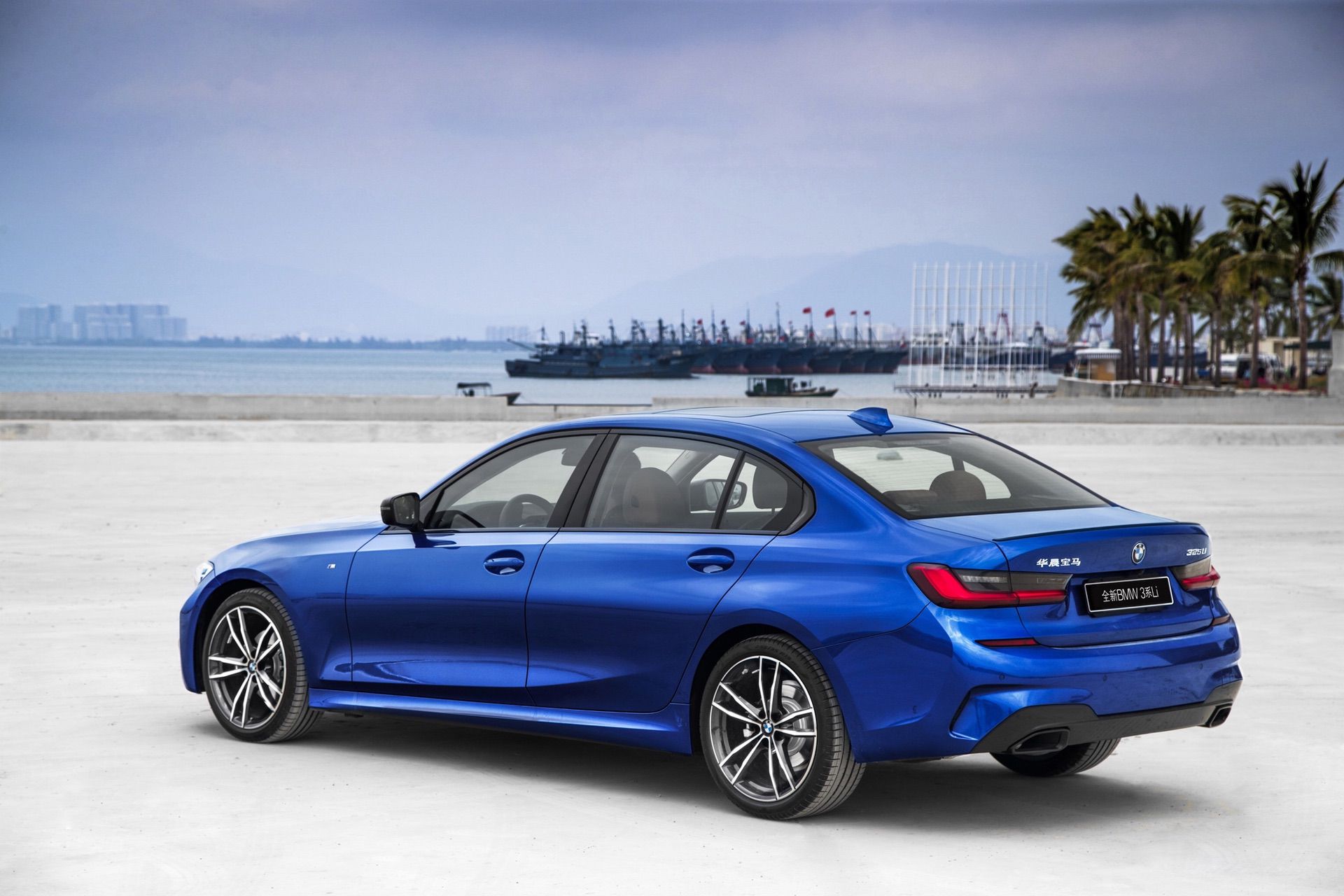
    Germany’s BMW plans to create up to 6,000 new jobs next year to prepare for the growing demand for its electric vehicles, the carmaker’s chief executive said.

    BMW is on a very good path through the transformation and has its plants prepared for e-mobility, Oliver Zipse was quoted as saying in an interview published on Wednesday. “That is why we will increase our workforce by up to five percent next year.”

  • Honda China JV Announces 120,000 Units-A-Year EV Factory

    Honda China JV Announces 120,000 Units-A-Year EV Factory

    Honda Motor and its Chinese joint venture partner Dongfeng Motor said on Thursday they would build a new factory in Wuhan to exclusively manufacture electric vehicles (EVs) from 2024.

    The factory would have a production capacity of 120,000 vehicles a year, Honda said in a statement.

    Honda, Japan’s second-largest automaker, is set to launch a new EV brand in China this year called e:N Series with plans to roll out 10 models with partners Dongfeng and GAC.

  • Sony Looks To Electric Cars For Its Next Big Hit

    Sony Looks To Electric Cars For Its Next Big Hit

    Japan’s Sony Group Corp plans to launch a company this spring to examine entering the electric vehicle market, looking to harness its strengths in entertainment and sensors to play a bigger role in next-generation mobility.

    The new company, Sony Mobility Inc, comes as the Japanese tech giant is “exploring a commercial launch” of electric vehicles, Sony chairman and president Kenichiro Yoshida told a news conference, speaking ahead of the CES technology trade fair in the United States.

    “With our imaging and sensing, cloud, 5G and entertainment technologies combined with our contents mastery, we believe Sony is well-positioned as a creative entertainment company to redefine mobility,” he said.

    Although its once-dominant position in consumer electronics has been eroded by Asian rivals like South Korea’s Samsung Electronics Co, Sony still has an arsenal of sophisticated technology in areas such as sensors critical to autonomous driving.

    It also remains one of the world’s biggest entertainment companies, home to prominent video game and movie franchises. Audio and entertainment systems are increasingly a focus for next-generation vehicles.

    Shares in Sony jumped 4.2% in Tokyo after the electric vehicle plans were announced, easily outpacing a flat Nikkei index.

    Yoshida unveiled a prototype sport utility vehicle (SUV), the VISION-S 02, which uses the same electric vehicle platform as the previously announced VISION-S 01 coupe that began testing on public roads in Europe from December 2020.

    He said the company saw mobility as an “entertainment space” where passengers could choose individual entertainment options and use 5G internet connection.

    Wall Street is betting heavily on electric cars and the global auto industry has been upended by Tesla Inc, now the world’s most valuable automaker. Many investors also expect Apple Inc to launch its own vehicle within the next few years.

    Japan’s Toyota Motor Corp in December committed $70 billion to electrify its automobiles by 2030.

  • Thousands strike work after Nike supplier cuts Tet bonus

    Thousands strike work after Nike supplier cuts Tet bonus

    Thousands of workers of Taiwanese-invested footwear maker Pouchen Vietnam, a Nike contract manufacturer, struck work Friday, demanding the same Tet bonus as last year.

    They refused to return to work after finishing their lunch to protest the company’s policy to pay less bonus than last year for the coming Tet (Lunar New Year) festival. Tet, the most important Vietnamese festival, falls in early February this year. The workers stood on national road 1K in front of their factory’s entrance, causing traffic congestion for hours. The strike affected others and all 14,000 workers of the factory in Bien Hoa Town, southern Dong Nai Province, stopped working.

    A mobile police team was dispatched to maintain order in the area. A female worker said that the company had announced Thursday that employees who have worked for it a full year or more will be given Tet bonuses of 1-1.54 months’ salary – around VND5 million ($217) to nearly VND20 million.

    The highest bonus in 2021 was 1.87 months’ salary, and in previous years, 2.2 months. “With this (coefficient), workers’ Tet bonus in 2022 will be lower than before,” she added.

    A Pouchen representative said that in 2021, the company had faced difficulties in production and business. When the fourth wave of Covid-19 broke out, the factory had to stop working from July 12 to Sept. 30, 2021. On Oct. 5, 2021, it resumed production, but at 60 percent capacity.

    Due to the failure to fulfill the production plan, profits fell, so the Tet bonus, the biggest and most anticipated reward for workers, could not be the same as the previous year. The rep also said that under the collective labor agreement, the company would pay Tet bonus to employees based on its business performance.

    Nguyen Thi Nhu Y, head of the Dong Nai Provincial Labor Confederation, said the union was coordinating with authorities to resolve the situation. She noted that Pouchen’s Tet bonus was higher than the local industry average.Nguyen Huu Nguyen, Chairman of the People’s Committee of Bien Hoa, said relevant agencies are trying to negotiate with the board of directors of Pouchen to increase the Tet bonus. “However, employees need to share the company’s difficulties, because Covid-19 has caused businesses to suspend operations for months,” he said.

    Pouchen Vietnam, part of Taiwan’s Pouchen Group, has one more factory in Dong Nai and six others in HCMC and the three southern provinces of Tien Giang, Tay Ninh and Ba Ria – Vung Tau for a total of 130,000 employees. The group is expected to spend more than VND1.2 trillion on Tet bonuses this year.

  • $4 Starbucks coffee has become a daily staple

    $4 Starbucks coffee has become a daily staple

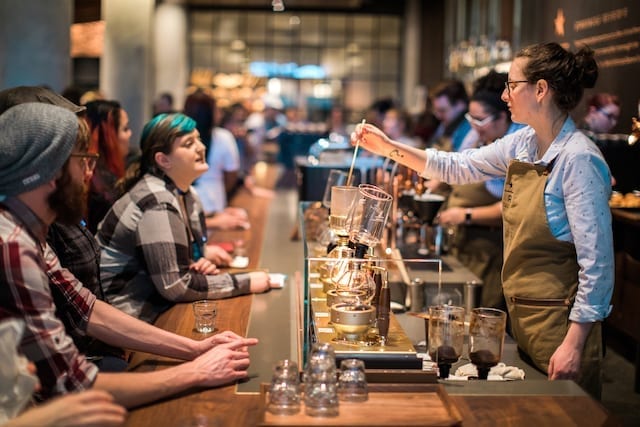
    While the franchise’s 2021 financial results took a hit because of the Covid-19 pandemic, a tangible gain has been the Starbucks VND90,000 ($4)coffee becoming a daily staple in Vietnam.

    Starbucks Vietnam general manager Patricia Marques said that despite the impacts of the nine-week social distancing orders in 2021, the global coffee brand has built up a regular customer base for its coffee worth VND90,000-100,000.

    She said it has also established more outlets away from the downtown in new urban areas, buildings, and local communities. While people used to prefer living close to the center of a locality, they are willing to live a little further away these days, she said.

    Starbucks Vietnam closed three outlets but opened nine new ones in 2021. Between December 2021 and January 2022, it opened another six: three in Hanoi; two in HCMC; and one in the southern province of Binh Duong.

    In Vietnam, Starbucks currently has 77 outlets whose takeaway sales have grown amid Covid-19 outbreaks.

    Marques said she expected instability to continue in Vietnam’s food and beverage market this year, but takeaway revenue, non-cash payment, and e-commerce would continue to grow.

    While there is still a lot of vacant space, it will not be easy for food and beverage businesses to find satisfactory locations at a reasonable price, she said. Citing data from a partner, she said the rent of commercial premises in Vietnam increased by 3 percent, while it decreased 10 percent in Singapore, Hong Kong, Thailand, Cambodia, and Laos.

    According to the brands’ official websites, chains with the highest number of outlets in Vietnam are the domestic brands Highlands (462 stores), The Coffee House (146), and Trung Nguyen (89).

    U.S.-based Starbucks made consolidated revenues of $29.1 billion in the fiscal year 2021 (ending in the third quarter of 2021), up 24 percent against over 2020.

    In the fiscal year 2022, the brand expects global earnings of $32.5-33 billion, beating Wall Street’s estimate of $32.07 billion, and plans to open about 2,000 new outlets globally, three-quarters of them outside the U.S. According to data recorded by Statista, as of November 2021, Starbucks had 33,833 outlets worldwide.

  • Singapore Weighs Open Borders Amid Omicron

    Singapore Weighs Open Borders Amid Omicron

    The country’s COVID-19 task force said closing its Vaccinated Travel Lanes (VTLs) would not stop the spread of Omicron.

    Closing Singapore to visitors from countries with high numbers of Covid-19 cases would affect the republic’s reputation and connectivity with the rest of the world, and rules have already been tightened to contain the Omicron variant, the country’s multi-ministry task force on Covid-19 said at a press briefing.

    Even if we close all the VTLs, there will still be non-VTL connections between Singapore and other countries and Omicron will still be able to enter Singapore unless we impose a total lockdown and close our borders entirely, Ong Ye Kung, taskforce co-chair said about whether it was looking to review border and VTL measures.

    At the same time, the task force warned of an upcoming Omicron wave» and said that it does not intend to relax further social restrictions currently, but will try not to have to tighten them until at least the Chinese New Year in February. Current gathering limits permit groups of five.

    Compliance with safe management measures will give Singapore a much higher chance of getting through this upcoming wave without having to tighten further, Finance Minister Lawrence Wong said at a press briefing.

    Switzerland is among Singapore’s top investment and trading partners, and there are around 1,000 Swiss companies and around 3,000 Swiss expatriates in the city-state. UBS is a notable example, with several thousand employees in Singapore and frequent travel between Zurich and Southeast Asia.

    The city-state stopped new ticket sales for VTL flights and buses from December 23 to January 20 amid Omicron concerns and said it would cap VTL quotas and ticket sales for travel after January 20 at 50 percent.

    Last week, it said that on-arrival tests for non-VTL travelers, who are all required to serve a 7 or 10 day Stay Home Notice (SHN) either at their place of residence or at a dedicated facility, are no longer required. From 8 January, all non-VTL travelers entering Singapore will also no longer be required to undergo a COVID-19 PCR test on arrival.

    The Ministry of Health on Wednesday said that from 14 February 2022 onwards, persons aged 18 years and above who have completed the primary vaccination series of COVID-19 vaccines and are eligible for booster vaccination will only be considered as fully vaccinated for 270 days after the last dose in their primary vaccination series.

  • Hong Kong Sends Bankers Home

    Hong Kong Sends Bankers Home

    Tighter government COVID-19 restrictions from Saturday already prompted UBS and other banks to re-impose workplace limits.

    The Hong Kong government yesterday announced a raft of new COVID-19 restrictions yesterday following a number of untraceable Omnicron variant cases, a step that is already prompting UBS and other banks to ask bankers to resume working from home.

    The government says on its website that the enhanced restrictions will take effect from January 7 and last for 14 days. Group gatherings of more than four people will be prohibited and restaurants will have to close at 6pm.

    All leisure and sports facilities, gyms and bars will be fully closed. It has also suspended all flights from Australia, Canada, France, India, Pakistan, the Philippines, the UK, and the U.S.

    UBS is splitting its 2,500 workforces into groups, with one working from home and the other in the office in an alternate fashion, according to a report, citing an internal memo.

    Employees have also been asked to curtail movement in the office and sharply limit socialization outside their direct teams, the memo indicates. Other banks taking similar steps include HSBC, Bank of America, and Standard Chartered, the news outlet said.

    Others are expected to follow as the restrictions come into effect.

  • Bitcoin Suisse Taps Ex-UBS Banker as CEO

    Bitcoin Suisse Taps Ex-UBS Banker as CEO

    The Swiss crypto broker’s CEO is stepping down after four years. His replacement is an ex-UBS banker well-known for his technology expertise.

    Arthur Vayloyan is stepping down as CEO of Bitcoin Suisse at the end of March, the Zug-based crypto firm said in a statement on Friday. He will be replaced by Dirk Klee, effective April 1. Vayloyan will remain one of five board members of the firm.

    Like Vayloyan, Klee comes from traditional financial services: he was the operating chief of UBS’ flagship wealth unit for five years before in 2018 taking the top job at Barclays for wealth management and investments in the U.K.

    Bitcoin Suisse didn’t provide a specific reason for the CEO change. The news comes one week after co-founder Niklas Nikolajsen relinquished the chair job to Luzius Meisser.

    The nine-year-old firm is coming off a turbulent 2021: it was forced to retreat on a Swiss banking license, after being told by regulator Finma that it hadn’t done enough to root out money laundering. This led Bitcoin Suisse to strengthen its ranks several months later.

    It remains wildly profitable: Niklajsen said Bitcoin Suisse is on its way to nearly doubling last year’s net profit of 24.1 million Swiss francs ($26.1 million), in a social media post last month.

    Klee, a German native, has made a career of innovating traditional financial services: he ran a large part of Blackrock’s exchange-traded funds business in Europe before moving to UBS in 2013.

    There, he was responsible for a $1 billion technology project to unify UBS’ disparate wealth platforms. Most recently, he oversaw the rollout of a digital tool for Barclays’ affluent U.K. clients.