Author: Mei Ling Tan

  • Vietnam defers e-commerce tax by five months

    Vietnam defers e-commerce tax by five months

    Vietnam is set to delay an online tax on e-commerce vendors by five months to support economic recovery amid severe Covid-19 impacts.

    The Ministry of Finance has proposed to the government that the implementation of Circular 40 be postponed until January 1, 2022, Minister Ho Duc Phoc said Sunday. The circular was to take effect on August 1.

    The delay has been proposed as part of several solutions to support the recovery of businesses as the fourth Covid-19 wave spreads in Vietnam, infecting over 105,000 people, most of them in HCMC, often referred to as the nation’s locomotive.

    The circular imposes a 1.5 percent tax on e-commerce vendors with annual revenues of VND100 million ($4,354) or higher.

    E-commerce platforms are responsible for collecting this tax from vendors and paying it to the finance ministry.

    An average of 3.5 million transactions are made on e-commerce platforms each day in Vietnam, and the transaction value has been increasing steadily, according to official data.

    However, e-commerce platforms have proposed that they aren’t made responsible for paying tax on vendors’ behalf as it will create excessive costs and personnel burdens.

    Vietnam’s e-commerce market expanded by 18 percent last year to $11.8 billion, the only one in Southeast Asia to record double-digit growth amid the pandemic, according to the Vietnam e-Commerce and Digital Economy Agency.

  • Tata Motors Sees Demand Recovering, Warns Of Short Term Impact Of Chip Shortage

    Tata Motors Sees Demand Recovering, Warns Of Short Term Impact Of Chip Shortage

    Tata Motors Ltd said on Monday it expects performance to improve from the second half of its current financial year, anticipating an easing of global supply constraints on rapid COVID-19 vaccinations.

    The company said demand remains strong for Jaguar Land Rover (JLR) and India passenger vehicles, with commercial vehicles seeing a gradual improvement. The semiconductor shortage, rising costs of raw materials and pandemic uncertainty will, however, have an impact in the short term, the company warned.

    The company said demand remains strong for Jaguar Land Rover (JLR) and India passenger vehicles, with commercial vehicles seeing a gradual improvement.

    Tata Motors reiterated that it expected the chip supply crunch in the second quarter to be greater than in the first, likely resulting in wholesale volumes at JLR to be about 50% lower than planned.

    The company also said it aimed to have near-zero automotive debt by fiscal 2024. The carmaker had last month raised $425 million through unsecured offshore bonds to refinance existing debt and meet expenses.

    Revenue for the first quarter jumped 108% to 655.35 billion rupees, as the pandemic – which hit sales across the luxury carmaker’s business a year earlier – has also fueled strong demand for personal vehicles.

    The semiconductor shortage, rising costs of raw materials and pandemic uncertainty will, however, have an impact in the short term, the company warned.

    Overall retail sales at JLR, which accounts for most of Tata Motors’ revenue, were up 68.1% from a year earlier. Wholesales were 30,000 units, or 27%, lower than planned due to the semiconductor shortage, the company said

    For the quarter ended June 30, the company logged a consolidated net loss of 44.51 billion rupees ($598.04 million), compared with a loss of 84.38 billion rupees a year earlier.

  • Update to produce a more colorful Google Keep

    Update to produce a more colorful Google Keep

    Google Keep is a free note-taking app found on iOS, Android, and the desktop. Currently, Keep’s interface is nothing that users would get excited about as it shows the drawn image of a light bulb. Whether Google received complaints about the coma-producing UI or it decided unilaterally to freshen up the look isn’t clear, but citing a source who discovered the change.

    Users will be able to select from different background colors by tapping on the icon of an artist’s palette found at the bottom of the screen. Clicking on the icon will also reveal the different background images that the Google Keep app and website will show. Options include a plain background in various colors, a checkered umbrella, a fork retreating from a bowl of spaghetti with pasta intertwined on its prongs, and some others.

    We have yet to see the new background surface which points to the updated UI being rolled out via a server-side update. If you’ve never opened the Keep app before, it allows you to take and save written notes and lists, keep photos, and audio. You can use the app to produce a shopping list, create a to-do list, and more. And these reminders can be set to go off at certain locations.

    You can set the app to display your shopping list when you enter the supermarket or create a time-based reminder to help you get a particular task done without completing it too late. You can install Google Keep from the Google Play Store, or the Apple App Store.

  • DBS Appoints Global Head of Transactions Services

    DBS Appoints Global Head of Transactions Services

    DBS has appointed a group head of global transaction services, succeeding John Laurens who will be retiring.

    Lim Soon Chong has been named to the role, according to a statement, effective August 1 this year.

    Laurens, who first joined DBS in 2014, will remain as a senior adviser to support the transition until December 31.

    Lim is currently group head of investment products and advisory for DBS’ consumer banking and wealth management unit as well as group head of product management for global transactions services. Ex-group head of trade product management and 20-year banking veteran Sriram Muthukrishnan will take over Lim’s latter role.

    Lim joined DBS in 2006 and has taken on various senior roles across the bank’s consumer, wealth, corporate treasury, and risk management divisions. He will maintain his role as head of digital for DBS’ institutional banking group.

    We remain committed to efforts to rotate our senior leaders around different functions and markets to hone their business acumen and technical skill sets to ensure they are well equipped to navigate the challenges and opportunities of tomorrow, Lim said.

  • Seafood firms net big catch from export recovery

    Seafood firms net big catch from export recovery

    A seafood export recovery has helped bigger firms boost profits while smaller ones have struggled with the spike in shipping rates.

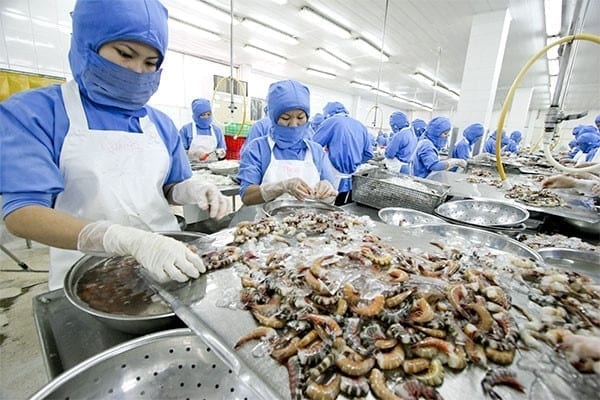
    Seafood exports topped $4 billion in H1, a year-on-year increase of 15 percent, according to the General Department of Vietnam Customs. In Q2 particularly, seafood export turnover increased by more than 21 percent over the same period last year, reaching nearly $2.4 billion. This led to firms reporting positive business results.

    Vinh Hoan JSC earned over VND2.3 trillion in revenue and over VND260 billion in post-tax profit, up 41 percent and 16 percent year-on-year, respectively. According to its monthly report, VHC’s exports to most markets increased, with the two largest ones being the U.S. and China.

    The Kien Hung JSC (KHS) said its net profit increased 10 times in Q2 as demand from Europe, America, Japan and South Korea temporarily recovered and stabilized. The firm also actively sought imported materials at competitive prices to maintain stable production.

    The Minh Phu Seafood Corporation has yet to announce its H1 business results, but estimates a pre-tax profit of over VND300 billion, a year-on-year increase of 11 percent.

    However, not all seafood exporters reported positive business results, partly because of high freight rates. The Vietnam Association of Seafood Exporters and Producers (VASEP) said that by May, freight rates in some ports had doubled compared to late 2020 and sextupled compared to early 2020.

    The Nam Viet Corporation reported an increase of over 20 percent in revenue in Q2 but a decrease of 26 percent in net profit year-on-year. The corporation attributed the decline in profit to a sharp rise in financial and selling expenses, that latter shooting up 137 percent compared to last year due to a hike in freight and transportation rates.

    The Thuan Phuoc Seafood and Trading Corporation (THP) saw its profit fall even further to VND10 billion, half that of the same period last year, because of rising selling expenses.

    The sea freight, which ups nearly times, cost the firm VND26 billion.

    In early July, VASEP requested the Ministry of Agriculture and Rural Development to report to PM the issues of container shortage and sea freight rates, seeking intervention to have the latter reduced to pre-November 2020 levels.

  • Nearly Half of Singaporeans Own Cryptocurrency

    Nearly Half of Singaporeans Own Cryptocurrency

    Despite market volatility and regulatory pressures, the outlook for crypto adoption remains positive especially in Singapore where nearly half of its residents own the digital asset class, according to a survey.

    43 percent of Singaporeans own cryptocurrency, according to a survey by Independent Reserve, a digital set exchange with operations in the city-state since 2020. And adoption is expected to continue to rise with 46 percent of respondents plan to buy crypto in the next 12 months.

    Naturally, awareness has been high in Singapore with 93 percent claiming they have knowledge of cryptocurrencies and 90 percent claiming they heard of bitcoin.

    Unsurprisingly, younger individuals have led adoption rates at 66 percent for those aged 26 to 45 compared to 31 percent cumulatively for all other age groups.

    The same age group was also twice as likely to buy crypto in the next 12 months at 61 percent.

    Crypto adoption is expected to increase in Singapore with 59 percent of Singaporeans believing it will reach mass-scale adoption and 70 percent for those under the age of 45.

    The price outlook is also positive with half of the respondents expecting bitcoin’s value to rise to S$50,000 by 2030. 13 percent of those under 45 forecast bitcoin’s price to reach S$250,000 by the same year. The data is based on a survey of 1,000 Singaporeans conducted by Independent Reserve.

    Independent Reserve also launched its inaugural Cryptocurrency Index for Singapore and scored it at 63 out of 100 using criteria based on awareness, adoption, trust and confidence.

    With digital currency gaining momentum worldwide, Singapore continues to emerge as a key hub in Asia due to its robust and well-regulated financial markets infrastructure and openness to new technologies,» said Independent Reserve CEO Adrian Przelozny.

    The strong awareness and adoption of crypto among Singaporeans in the survey findings are probably a natural reflection of the country’s progressiveness and commitment to preparing for the future.

  • Allianz Global Investors to Grow Indonesia Presence

    Allianz Global Investors to Grow Indonesia Presence

    The firm has signed an agreement to acquire an Indonesia-based asset manager, where it aims to create an on-the-ground, market-leading setup to grow its footprint.

    Allianz Global Investors (Allianz GI) has announced plans to acquire Indonesia’s RHB Asset Management from shareholders RHB Banking Group and RHB Sekuritas Indonesia, according to a statement on Monday.

    RHBAM had $480 million in assets under management, as of 31 December 2020. With the deal, it will gain access to AllianzGI’s investment expertise and solutions, allowing it to being in new perspectives to the Indonesia asset management market, the statement said.

    The transaction is expected to be completed in 4Q 2021 and is subject to various conditions precedent, including the approval by the Indonesian Financial Services Authority.

    Allianz GI said that strengthening its franchise in Southeast Asia has long been a focus for the firm.

    We see Southeast Asia as the next growth engine besides China; backed by the solid presence of Allianz SE in Indonesia, the proposed acquisition is a confident stride to accelerate our entry into this fast-growing market, Tobias Pross, AllianzGI chief executive officer, said in the statement.

    The firm employs 690 investment professionals in 23 offices worldwide and manages €598 billion in assets for individuals, families and institutions, as of 31 March 2021.

  • UBS and Credit Suisse’s Intertwined Destinies

    UBS and Credit Suisse’s Intertwined Destinies

    It would be premature to draw any conclusions from the large gap that has opened up between UBS and Credit Suisse. Doing so has often proved wrong in the past.

    Credit Suisse will publish second-quarter results this Thursday. It won’t be easy for the bank to exceed UBS’s strong showing, particularly given it still faces enormous problems from the Greensill Capital and Archegos Capital Management losses. Even so, it will be interesting to see how Credit Suisse chief executive Thomas Gottstein takes advantage of the very positive current environment in finance.

    About thirty years ago it wasn’t unusual for both the major banks to coordinate the release of their results. It was a type of good old-fashioned Swiss consensus. One really did want to avoid large discrepancies if possible. The profits of the major banks mirrored each other. And as part of all that, each would advise their (domestic) competitors how much-hidden reserves were being used.

    At the start of the 1990s, increased competition came into play. The Swiss banking cartel was dissolved as banking was liberalized globally and competition law would ban any agreement like that now. In any case, it would be a gargantuan task to balance out the performance between the two this quarter given the disparity between them is so large.

    On one side you have Credit Suisse which keeps getting buffeted by turbulence since former chief executive Tidjane Thiam left. On the other, you have a UBS performing better than it has in years, as the numbers last week clearly show. In short, it would be extremely hard to compare them side by side now.

    But it would be premature to draw conclusions from the conditions at each bank. And any desire to see it last for a prolonged length of time also misses the point.

    Often, such conclusions have turned out to be wrong. UBS and Credit Suisse have closely intertwined destinies and they seem to change positions almost with the regularity of a Swiss watch. One is on top for a while only to then be replaced by the other for another while. History shows that pattern repeating itself over and over.

    Exactly because both banks are so important for Swiss finance, and because their ability to innovate is still pre-dominant, there is little use painting a dire picture of their future or expressing any kind of schadenfreude when one of them is in trouble. The recent events at Credit Suisse have just – again – shown what a lack of responsibility at all levels of a bank can do together with any reasoned, long-term understanding of the banking profession.

    At the end of the day, UBS and Credit Suisse have a long-term responsibility to follow the fundamental rules and laws of the banking business for the Swiss economy and the country’s prosperity in a way that allows them to exercise their strengths, particularly in an international context.

  • India court quashes Amazon, Walmart’s Flipkart bid to stall antitrust probe

    India court quashes Amazon, Walmart’s Flipkart bid to stall antitrust probe

    An Indian court on Friday dismissed appeals by Amazon.com and Walmart’s Flipkart that sought to stall an antitrust investigation into their business practices, dealing a major setback to the U.S. firms in a key market.

    The Competition Commission of India (CCI) last year ordered an inquiry after allegations from brick-and-mortar retailers that the U.S. firms promoted select sellers on their e-commerce platforms and used to business practices that stifle competition.

    The investigation was on hold for more than a year after companies challenged it, denying wrongdoing and arguing that the CCI lacked evidence, but a court allowed it to continue in June. On Friday, the High Court in southern Karanataka state rejected the U.S. firms’ appeals.

    “By no stretch of imagination can inquiry be quashed at this stage. The appeals are nothing but an attempt to ensure that action initiated by the CCI … does not attain finality,” a two-judge bench said while reading the decision in court. “The appeals are devoid of merit, and deserve to be dismissed.-

    The two firms are likely to appeal the decision at India’s Supreme Court, according to people familiar with the case. Amazon did not immediately respond to a request for comment.

    Flipkart said in a statement it would review the court’s order, adding that it remains in compliance with Indian laws.

    Abir Roy of Sarvada Legal, which filed the antitrust case against Amazon and Flipkart on behalf of a trader group, said the court’s decision “further reinforces that the CCI investigation should continue promptly.”

    The CCI investigation is the latest setback for Amazon and Flipkart, which are grappling with prospects of tougher e-commerce regulations and accusations from brick-and-mortar retailers that the companies circumvent Indian law by creating complex business structures.

    The companies face several allegations in the case, including exclusive launches of mobile phones, promotion of select sellers on their websites and deep discounting practices that drive out competition.

    Trade minister Piyush Goyal last month lashed out at U.S. e-commerce giants for filing legal challenges and failing to comply with the CCI’s investigation, saying “if they have nothing to hide … why don’t they respond to the CCI?”

  • China sales help Armani bounce back from pandemic

    China sales help Armani bounce back from pandemic

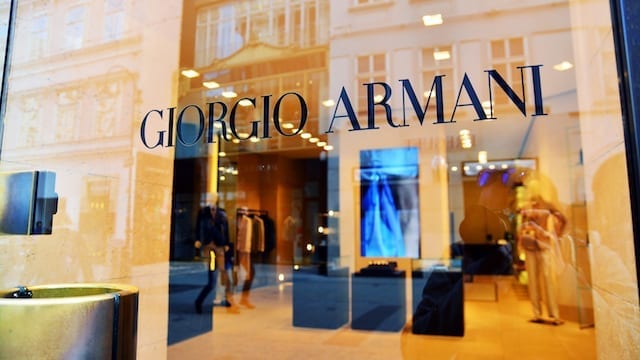
    Sales at Giorgio Armani jumped 34% in the first half of 2021 as business in China and the United States helped the Italian fashion group bounce back, although it said it could be next year before it fully recovers from the pandemic.

    “The goal is to return to pre-pandemic levels by 2022, with… over 2 billion euros in direct consolidated revenues,” Chairman and CEO Giorgio Armani said on Sunday in a statement announcing 2020 results and the trend for January-June.

    The luxury group said consolidated net sales had fallen 25% last year to 1.6 billion euros ($1.9 billion), with most of the decline occurring in the first half of 2020.

    Luxury goods sales around the world fell sharply last year for the first time in years as the pandemic forced shop closures and brought international tourism to a virtual halt.

    “The drop in revenues in 2020 should be read not only as a consequence of the pandemic but also in line with Giorgio Armani’s own strategic principle of ‘less is more’,” said Armani Deputy Managing Director Giuseppe Marsocci.

    The Milan-based group did not give the value of total sales in January-June but said the positive sales trend so far this year pointed to a much better profitability scenario for 2021.

    For the whole of last year the group made a consolidated net profit of 90 million euros but an operating loss (EBIT) of 29 million euros.

    It also said on Sunday that its financial position improved significantly in the first half with net cash and cash equivalents of 1.088 billion euros “ensuring the financial resources necessary for the Group’s medium to long-term stability and growth”.

    Speculation about succession plans at Armani has come to the fore recently, especially after the 87-year-old designer said he could consider teaming up with another Italian company.

    Sources said earlier this month that John Elkann, scion of Italy’s Agnelli family, had explored a possible tie-up as part of plans to build a luxury conglomerate.

  • Battle between Android and iOS over smartphone sales is bogus say court documents

    Battle between Android and iOS over smartphone sales is bogus say court documents

    Is the smartphone war between iOS and Android a real thing? Does Google really care about switching users from iOS to Android? The answer might be found in an amended court document filed by Epic Games related to the latter’s complaint against Google and its Android app storefront.

    Epic is suing Google over the 30% of in-app revenue that Google collects from developers. This is similar to the so-called Apple Tax but there are slight differences between the two platforms as Apple does not allow users to sideload apps while Google does. One part of the amended complaint, which was viewed by iMore, redacts an example of how Google conducts its business.

    It also states that “Google’s persistent monopoly is the result of deliberate efforts by Google to achieve and maintain it.” The document additionally reveals that the Alphabet subsidiary uses its huge size to force third-party firms into making agreements that could be considered “anti-competitive.”

    Perhaps the most interesting part of the document discusses Google’s relationship with Apple. As many of you know, Google pays Apple a reported $8 billion to $12 billion annually to install Google Search on iOS, and therein lies the truth behind the Google-Apple relationship. As Epic Game notes in its filing, “Moreover, the close relationship that Google maintains with Apple further reduces Google’s incentive to compete, innovate, and invest in app distribution because Google benefits by cooperating with its competitor Apple.”

    In other words, Google makes its bread by attracting eyeballs to the ads it serves up. Whether those eyeballs belong to people using the iOS or Android version of Search doesn’t matter at all to Google. The court filing notes that Google’s profits from iOS are so huge that the firm has no incentive to “to compete more with Apple at the smartphone OS level and expend more resources attracting users from iOS to Android than it currently does.”

    With Android and iOS together making up a 99% share of the global smartphone market, Epic should be able to prove in court that between Apple and Google, the pair have a duopoly of the mobile industry.

    In a statement, Google told iMore that “The open Android ecosystem lets developers distribute apps through multiple app stores. For game developers who choose to use the Play Store, we have consistent policies that are fair to developers and keep the store safe for users. While Fortnite remains available on Android, we can no longer make it available on Play because it violates our policies. We will continue to defend ourselves against these meritless claims.”

    Again, the more interesting aspect to Google’s filing is the possibility that the Android-iOS battle is more a manifestation of the media than an actual scrap between two manufacturers seeking to own the largest market share of the smartphone market. It all boils down to the point that Google is indeed an advertising company that makes money by selling ads. Apple’s focus is different as it seeks to profit from sales of smartphones, accessories, and other devices.

    Epic says that Google’s “very carefully phrased arguments in Google’s pending motion to dismiss give a misleading picture of the full scope of Google’s anti-competitive conduct.” While the game developer and distributor says that it believes that the information it included in its original complaint against Google was “more than sufficient” to prove its case, it decided that its best course of action was to apply more pressure on the company.


  • Volkswagen India Rolls Out New Brand Design And Logo Across Dealerships Ahead Of Taigun Launch

    Volkswagen India Rolls Out New Brand Design And Logo Across Dealerships Ahead Of Taigun Launch

    Volkswagen recently rolled out its new brand design and logo across the company’s 150 dealerships across the country. The new brand logo was first unveiled at the 2019 Frankfurt Motor Show and it was showcased in India for the first time at the 2020 Auto Expo. The company is using a phase-wise approach for implementing the new brand design and logo. The first phase will have 30 touchpoints get the same, while the remaining outlets will get the flat two-dimensional logo in the coming weeks.

    Commenting on the announcement, Ashish Gupta, Brand Director, Volkswagen Passenger Cars India said, “The implementation of new brand design across our dealerships marks a new era for Volkswagen in India. By implementing the new brand design and logo, we aim to create a 360-degree customer experience, that is intriguing and contemporary across all channels and appeals to our customers.”

    Through the implementation of the new brand design, Volkswagen aims to make its dealerships more human, attractive and emotional, the company said in a statement. The brand will also provide behavioral training to its entire staff including the salesmen and service advisors to make them more customer-oriented. The automaker also introduced ‘Sarvottam 2.0’ to amp up its digital efforts and offer a more transparent purchase and ownership experience to customers

    The rollout comes right in time as Volkswagen India gears up to introduce the new Taigun compact SUV. The brand new offering that has been specifically designed for India is the first model from the automaker under the India 2.0 strategy. It follows in the footsteps of the Skoda Kushaq that’s based on the same MQB A0-IN platform and will be sold only with petrol engine options. We will be driving the Volkswagen Taigun very soon. So make sure to keep watching this space for all the action.

  • US gets its way as Vietnam agrees not to devalue currency

    US gets its way as Vietnam agrees not to devalue currency

    The U.S. Trade Representative’s office has determined that no tariff action is warranted against Vietnam after its central bank agreed to refrain from “competitive devaluation” of the dong.

    “I commend Vietnam for its commitment to addressing U.S. concerns with its currency practices,” U.S. Trade Representative Katherine Tai said in a statement.

    The recent agreement between the U.S. Treasury and the State Bank of Vietnam “provides a satisfactory resolution of the matter subject to investigation and accordingly that no trade action is warranted at this time,” the statement said.

    Under the agreement, Vietnam committed not to devalue its currency for trade advantage and to make its monetary and exchange rate policies more transparent.

    The deal follows months of U.S. pressure and a rising trade surplus with that country.

    The U.S. had declared Vietnam a currency manipulator and threatened to impose punitive tariffs on its exports.

    Vietnam rejected this repeatedly, saying it did not manipulate its currency for unfair trade advantages.

  • Steelmakers protest proposed tariff adjustments

    Steelmakers protest proposed tariff adjustments

    The Vietnam Steel Association (VSA) has protested the latest proposed adjustments to tariff rates on steel products saying they will hurt domestic manufacturers.

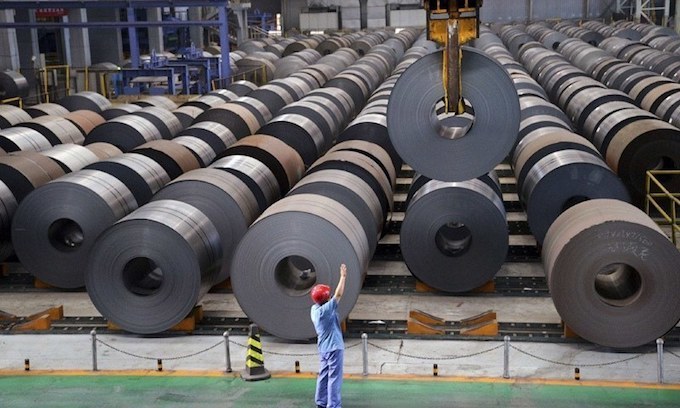
    Under the proposal made by the Ministry of Finance, export tariff for billets would rise from zero percent to 5 percent, while the most favored nation (MFN) import rates for certain steel products would be reduced to 10 percent from 15 percent.

    The proposal is aimed at cutting the prices of construction steel, which have shot up 40 to 50 percent compared to early 2020.

    VSA has protested the proposal, arguing that the prices were impacted by the global raw materials market rather than the current tariff policies, or any trade remedies applied to steel products.

    VSA chairman Nghiem Xuan Da noted that most of the input materials for steel production are imported. A price hike in these materials will immediately affect domestic manufacturers, causing output prices to skyrocket.

    However, global steel prices have declined since late May.

    Vietnam reaped steel export earnings of $4.9 billion in the first half of this year. Meanwhile, it produced 16 million tons of steel, up 37 percent over the same period last year.

  • Hanoi supermarkets increase inventories

    Hanoi supermarkets increase inventories

    Supermarkets in Hanoi are stocking two or three times their normal volumes of goods and increasing warehouse capacity to brace for a worsening of the Covid-19 pandemic.

    The acting director of the city Department of Industry and Trade, Tran Thi Phuong Lan, said there is abundant supply of essential items and fresh foods, and no threat of shortages. Fearing the novel coronavirus, many Hanoi residents are stockpiling meat, vegetables and rice to avoid venturing outdoors.

    Big C supermarkets have doubled their normal fresh food inventories and increased dry goods by 30 percent, Nguyen Thi Bich Van communications director of Central Retail Vietnam, which owns the chain, said.

    Aeon supermarkets have stocks of two to four times the normal volumes of fresh groceries and 130 percent of that of dry goods since last week. Aeon Vietnam procurement director Tran Thu Quynh said the chain has worked with suppliers to secure extra stocks in case of an emergency and expanded warehouse capacity and inventories of frozen goods.

    Vinmart/Vinmart+ supermarkets have tripled and quintupled their stocks of groceries and eggs and vegetables.

    But admittedly there remain difficulties in terms of transportation and personnel.

    Quynh said certain goods that are imported or brought from the south, like fresh seafood and local fruits, are facing major delays as suppliers face challenges related to production and transportation amid the implementation of social distancing in the 19 southern localities.

    Over the last week Hanoi has assigned priority to vehicles transporting essential items. The capital city impose a 15-day social distancing campaign starting 6 a.m. Saturday as part of efforts to curb the spread of Covid-19.