Category: Automotive

Retail News Asia is committed to providing both local and global retailers with the latest Auto and Car news throughout the Asian market. This on a daily base.

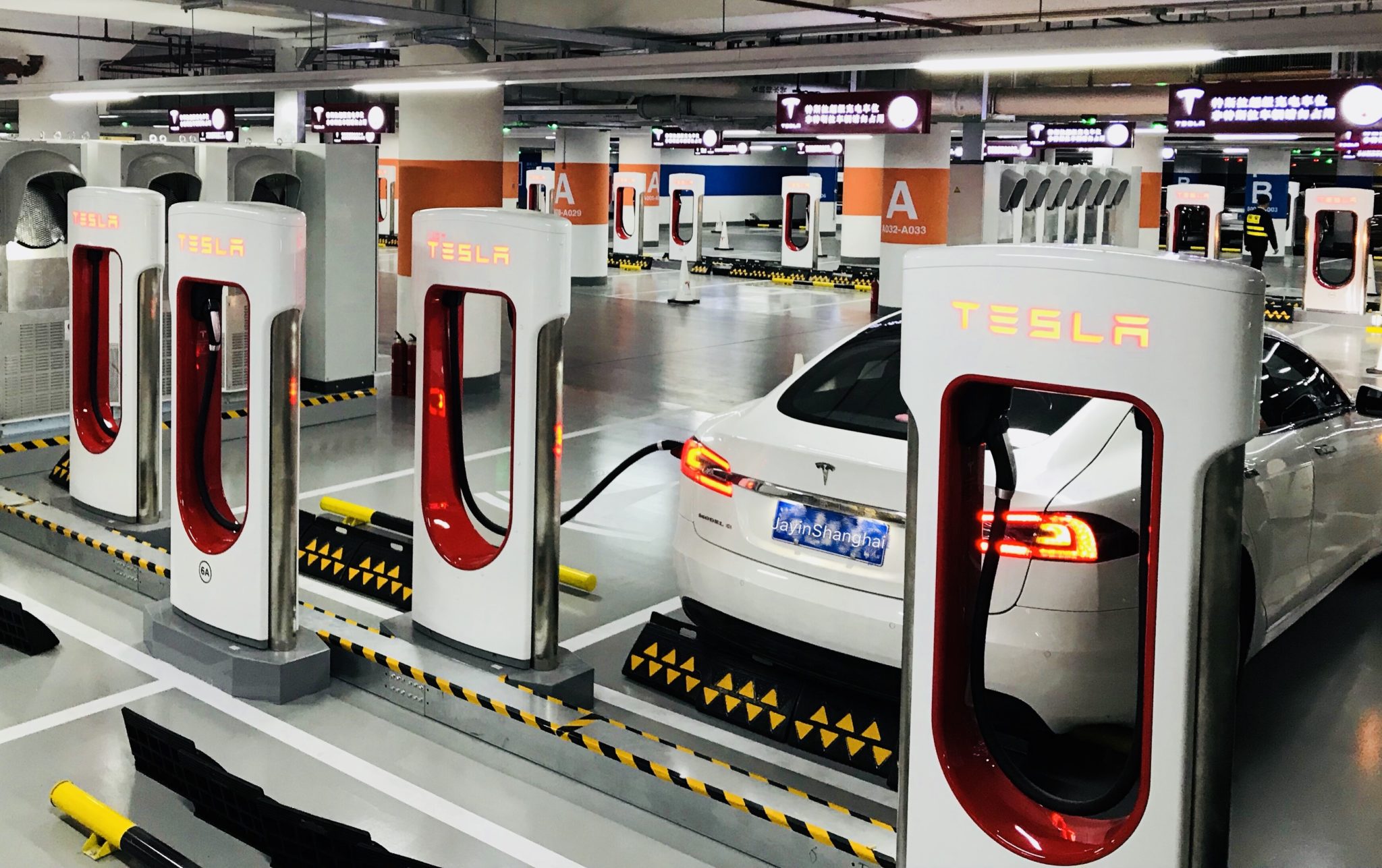
  • Tesla Is Looking To Move to AMD Navi Chips For The Media Control Units On Its Cars

    Tesla Is Looking To Move to AMD Navi Chips For The Media Control Units On Its Cars

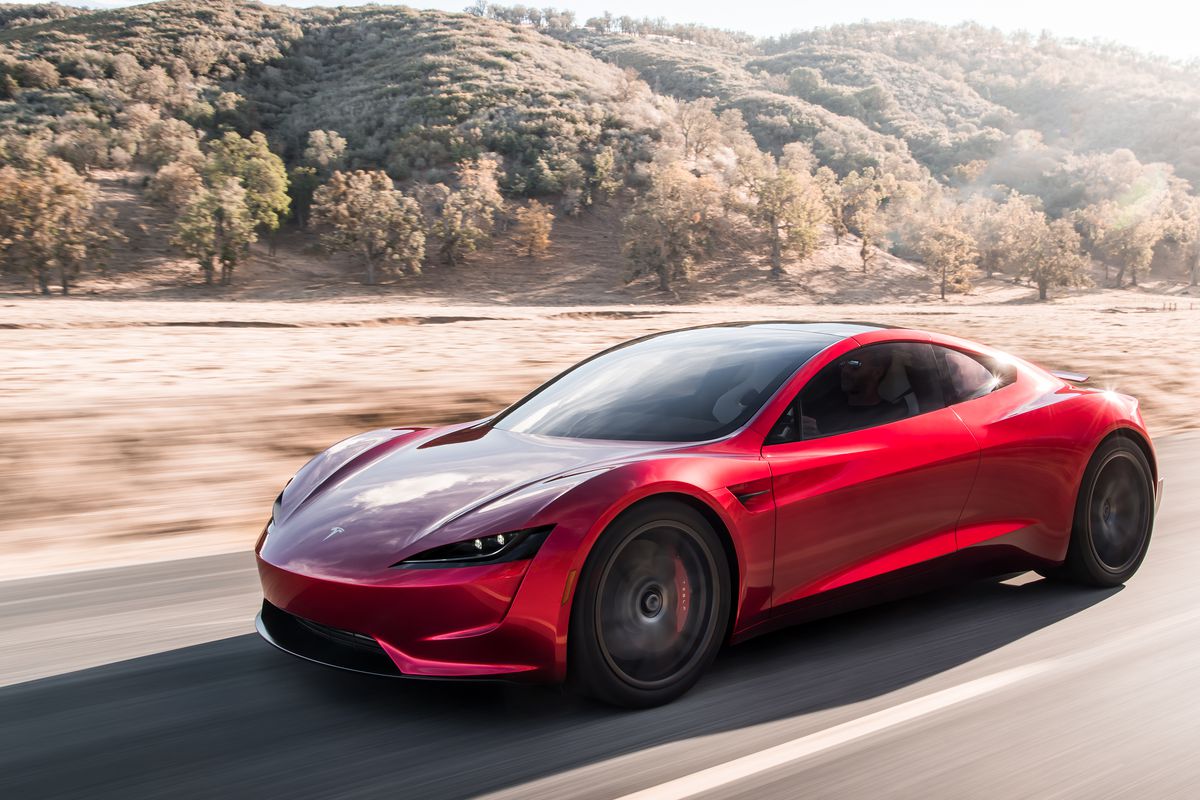
    While Tesla has moved away from Nvidia’s silicon for its self-driving autonomous car capabilities, it still uses Nvidia’s Tegra mobile chips for the media control unit or MCU on its vehicles. It seems like Tesla wants to fully break up as it is considering AMD’s new Navi chips which form the basis for its new GPUs and the GPUs AMD has supplied both Microsoft and Sony for the Xbox Series X and PlayStation 5.

    Tesla has already switched to Intel-based x86 processors for its MCU on many vehicles and AMD’s Navi system on chips will have the same x86 architecture which will make the transition less painful. Patrick Schur has shared a document on Twitter which indicates that Tesla is particularly looking to move to AMD’s Navi 23 chip.

    Announced in October, AMD’s latest chips are said to match Nvidia’s GPUs in performance and outflank Intel’s CPUs in the same department while being significantly cheaper than products from the two companies.

    “Groundbreaking AMD RDNA 2 gaming architecture delivers up to 2X higher performance and up to 54 percent higher performance-per-watt compared to AMD RDNA-based graphics cards,” AMD says in a press statement describing its new Navi chips which are based on the RDNA 2 architecture.

    Tesla has also been hiring game developers which could mean that the world’s most valuable automaker could be very serious about gaming inside the vehicle. It is a strange choice but GPU compute these days is regardless more important than GPU compute for even AI tasks.

    This chip is said to be more powerful than Nvidia’s chips.

    Tesla has been at the forefront of this trend – it developed its own self-driving chip which it claims is better than Nvidia’s Xavier platform. For this, it even hired legendary chip designer Jim Keller, who has had stints at Intel, AMD and Apple. Jim Keller left Tesla in 2019 to join Intel but his stint at the iconic Santa Clara-based company also came to an end in June of this year.

  • Virgin Hyperloop Tests First Hyperloop With Humans Aboard

    Virgin Hyperloop Tests First Hyperloop With Humans Aboard

    Virgin Hyperloop has become the first company dabbling in Hyperloop which is an ultra-fast mode of grounded transportation, with humans aboard. This test took place this Sunday at the company’s DevLoop test track in the desert outside Las Vegas, Nevada. The Hyperloop featured two passengers.

    The first two passengers were Virgin Hyperloop’s chief technology officer and co-founder Josh Giegel, and its head of passenger experience Sara Luchian.

    The Hyperloop pods dubbed the Pegasus was transferred into an airlock as the air inside the enclosed vacuum tube was removed. The pod then accreted at 160 kmph down the length of the track.

    Virgin Hyperloop was founded in 2014 after the original concept for the Hyperloop was shared by Tesla and SpaceX founder and CEO Elon Musk. Musk’s original concept claimed that Hyperloop would be able to achieve a top speed of 1,223 kmph in nearly airless tubes.

    The DevLoop track is just 500 metres in length and 3.3 meters in diameter which is also one of the reasons why the top speed wasn’t as extreme. The company now claims that it has completed over 400 tests.

    “No one has done anything close to what we’re talking about right now,” said Jay Walder, CEO of Virgin Hyperloop, told The Verge. “This is a full scale, working hyperloop that is not just going to run in a vacuum environment but is going to have a person in it. No one has come close to doing it,” he added.

    Giegel has revealed the acceleration of the Hyperloop will be similar to a plane taking off. The pod is propelled by magnetic levitation, a type of technology already used in MagLev trains in China which can achieve speeds of up to 480 kmph.

    The pod which is called Pegasus was designed with the help of danish architect Bjake Ingels. This is actually a scaled-down version of the pod that Virgin Hyperloop plans on commercializing. It weighs 2.5 tons and measures 15-18 feet long.

  • Volvo Recalls 54,000 U.S. Vehicles For Airbag Defect After One Death

    Volvo Recalls 54,000 U.S. Vehicles For Airbag Defect After One Death

    Volvo Cars is recalling 54,000 U.S. vehicles for an airbag defect after one crash death tied to the issue, according to a filing with U.S. regulators. The unit of Geely Automotive is recalling 2001-2003 model S80 and S60 vehicles sold or registered in high humidity U.S. states because the driver side frontal air bag inflator may rupture, sending metal fragments flying, when the airbag is deployed.

    According to the Volvo filing with the government, Volvo will replace the inflators with a modern propellant and inflator. Parts are expected to be available by March.

    The National Highway Traffic Safety Administration (NHTSA) said Saturday it confirmed one person in the United States was killed when a ZF/TRW FG2 twin driver airbag inflator containing the propellant 5AT-148N exploded.

    The issue has been the subject of NHTSA and Volvo meetings since August 2019. The agency said the fatal incident was the only known rupture incident for this type of inflator around the world. NHTSA and Volvo are gathering and reviewing data about other vehicles with this inflator to determine if additional actions are needed, the U.S. agency said.

    Volvo did not immediately comment on Saturday. ZF Group said Saturday it was first notified by Volvo in August 2019 of the incident and it “promptly informed NHTSA and, together with Volvo, began investigating the incident.”

    ZF added it “will continue to work closely with NHTSA and Volvo on this issue.”

    NHTSA has investigated for years other airbag inflator ruptures. The largest automotive recall in history involves about 100 million inflators produced by another parts maker Takata that have been recalled by 19 major automakers worldwide and linked to 26 deaths.

  • Suzuki Expects Annual Profit To Shrink By A Quarter As India Sales Slump

    Suzuki Expects Annual Profit To Shrink By A Quarter As India Sales Slump

    Suzuki Motor Corp on Thursday forecast operating profit to fall by a quarter to 160 billion yen ($1.5 billion) in the year to March as sales, including in its key Indian market, shrink amid the coronavirus pandemic. That prediction was more than an average estimate for a 124.3 billion yen compiled from 14 analysts polled by Refinitiv.

    Suzuki’s Indian car sales in the first half of the year fell 36% to 432,000 vehicles, and dipped in other markets, including Japan, Indonesia and Europe as people stay away from dealerships.

    “We don’t know what will happen with the coronavirus in India or what measures the government will implement, so that makes the market difficult to predict,” Suzuki’s president, Toshihiro Suzuki said in a conference call.

    India accounts for just over half of Suzuki’s global car sales. Through its majority stake in Maruti Suzuki India Ltd, the company accounts for roughly one in every two cars sold in the country.

    Last business year, Maruti Suzuki paid Suzuki 38.2 billion rupees in royalties, or about 5% of its revenue, according to its annual report

    For the full business year, the Japanese automaker expects to sell 2.38 million cars worldwide, 16.6% fewer than the previous twelve months.

    The forecast came as Suzuki posted a 73.6 billion yen operating profit in the three months ended Sept. 30 compared with a profit of 55.9 billion yen a year earlier, according to Reuters’ calculations.

    Japan’s fourth-largest automaker had declined to give a full-year forecast when it reported it first-quarter results.

  • US claims Vietnamese tires subsidized by weak currency

    US claims Vietnamese tires subsidized by weak currency

    The U.S. has slapped preliminary countervailing duties of 6.23-10.08 percent on Vietnamese tires, alleging they are subsidized by an undervalued currency. The duties, which apply to imported passenger vehicle and light truck tires, were announced by the Commerce Department on Thursday, after United Steelworkers, a trade union with members across North America, filed a petition in May claiming domestic production was hurt by Vietnamese products.

    There will be a final determination on the case in March next year.

    This is the first time that the U.S. has imposed countervailing duties based on currency value.

    The U.S., under President Donald Trump, has in recent years been accusing Vietnam of manipulating its currency to gain an unfair trade advantage and a large trade surplus.

    Vietnamese authorities have repeatedly said their exchange rate policies are not aimed at helping exports to the U.S.

    Deputy Foreign Ministry Spokesman Duong Hoai Nam said at a press briefing Thursday that Vietnam has been following this investigation since it was launched.

    “Vietnam will continue to coordinate with U.S. authorities to clarify and better understand the situation and protect the legitimate interests of Vietnamese businesses in accordance with World Trade Organization regulations.”

    Central bank governor Le Minh Hung said last month that the country “has not intended and will not intend to use monetary policies in general and exchange rates, in particular, to create unfair competitive advantages in international trade.”

    The U.S. is also conducting anti-dumping duty investigations related to light vehicle tires imported from Vietnam, South Korea, Taiwan, and Thailand, and will announce the preliminary results next month.

    Vietnam’s passenger tire exports to the U.S rose by 14 percent last year to $469.6 million, according to the U.S. Census Bureau.

    “The Trump Administration remains vigilant against foreign actors that take advantage of American workers and businesses, and we will continue addressing this issue to ensure American industry competes on a level playing field,” Secretary of Commerce Wilbur Ross said in a statement.

    Experts have expressed concern that more countervailing and anti-dumping duties will be imposed on Vietnamese goods based on allegations of currency manipulation should Trump win the ongoing presidential election.

    The Trump administration has initiated 297 anti-dumping and countervailing investigations, a 271 percent increase from the comparable period during the previous one.

  • Volvo Cars Thailand launches an expansive new warehouse in Thailand

    Volvo Cars Thailand launches an expansive new warehouse in Thailand

    Volvo Cars Thailand officially launches an exciting and innovative new dedicated Volvo warehouse for the first time in Thailand. The “VOLVO CAR THAILAND CENTRAL DISTRIBUTION & TRAINING CENTER” (VCT CDTC) on Bangna-Trad Road Km 23, Samut Prakan Province, spread over an area of 23,331 square meters, is set to become Volvo’s one-stop hub in ASEAN and is the result of an investment of over 1 billion baht. The warehouse can store up to 550 Volvo cars with efficient spare parts management. There is also a comprehensive vehicle condition inspection department with world-class technology ensuring that every Volvo delivered to dealers across the region, and for direct delivery to customers, is in perfect condition. In addition, there is an international training center and a dedicated performance-testing center for the press. This warehouse has been developed to support future growth and expansion for Volvo’s business in Thailand and is in line with Volvo’s strategic plan and vision of becoming a regional leader in the premium car business.

    Mr. Chris Wailes, Managing Director, Volvo Car (Thailand) Limited, said, “Our new Volvo Car Thailand Central Distribution & Training Center, or VCT CDTC warehouse, is specially designed for Volvo Cars Thailand, in collaboration with our partners, the WHA Group. It is equipped with cutting-edge technology to manage warehouse and spare parts stock and has been designed to support our long-term strategic plans for Thailand. Our focus, as always, is on quality; all our new cars undergo a thorough quality check and steps before being delivered to our retailers and customers. This level of care and attention ensures every vehicle that leaves the warehouse is in perfect condition for the customer. We have also planned ahead and installed a new battery charger for recharging cars the electric cars we will be launching next year. We are confident that this new warehouse will play a major role in moving Volvo’s business forward in the future.”

    Volvo Car Thailand Central Distribution & Training Center (VCT CDTC) covers an area of 23,331 square meters, this expansive warehouse has been Built-to-Suit in cooperation with WHA Corporation Public Company Limited. Volvo has a comprehensive warehouse management plan developed to be the center of five key Volvo business units:

    • Distribution Center: a large distribution center equipped with a high-tech management system conveniently located to facilitate easy transportation access and enable Volvo cars to be efficiently delivered to customers and distributors across the region.
    • Pre-Delivery Service (PDS): this service provides Volvo vehicle condition inspection services that meet our stringent world-class standards, with a software station for ensuring that all software and systems are in perfect condition before the car leaves for delivery and is the first of its kind to be launched in Thailand. This dedicated software program has been developed specifically for Volvo cars only, ensuring each and every car that leaves the center is in perfect conditions, this adds an additional level of confidence for distributors and customers across the region.
    • Parts Distribution Center: providing the management and distribution of Volvo car parts and accessories supported by the latest in warehouse technology so as to enhance the efficiency of both before and after-sales services as well as supporting the lifetime warranty for Volvo parts and accessories (Customer Lifetime Parts Warranty).
    • Training Center: the new Volvo mechanic and sales consultant training center, operated by a team of experienced professionals from Volvo Cars (Thailand) Co., Ltd. The training center has been transformed into a modern new workshop under the concept of Volvo Personal Service (VPS) with an atmosphere that is elegant, airy, and resplendent in Scandinavian style, reflecting the aesthetic found at all Volvo car centers throughout the country.
    • Press Car Center: developed specifically for the testing and performance of Volvo cars for the press, all coordinated under the supervision of the PDS Center (Pre-Delivery Service Center) and the Press Car staff, so as to provide Volvo car test drives for the media. With VCT CDTC’s extensive space, there is ample private parking space for the press with a 24-hour a day security system, including a lounge area, and Volvo staff on hand to give professional and informed advice on all cars and services.

    Volvo Cars always prioritize the customer experience and know it is one of the most important factors when it comes to owning a Volvo and as such makes every aspect of Volvo’s operations, from warehouse to showroom, align with this concept.

    “Our goal is to provide a streamlined, efficient, and advanced experience for all our staff whose job it is to coordinate all sectors of our business, including working with all our distributors, customers, and the media. Volvo can clearly see the great potential for current and future growth in the premium car sector in Thailand. The opening of this new and expansive one-stop warehouse is an integral part of Volvo’s vision to become a true leader in the premium vehicle business in this country and is part of our infrastructure plans to make Thailand Volvo’s future business center in the region.” Mr. Chris Wailes added.

  • BMW Warns Of Pandemic Risks As Third-Quarter Profit Rebounds

    BMW Warns Of Pandemic Risks As Third-Quarter Profit Rebounds

    BMW’s third-quarter profit rose almost 10% thanks to Chinese demand for luxury cars, but the German automaker warned a new wave of coronavirus infections sweeping Europe and the United States posed a “considerable” risk to its business. Sales of luxury models such as the 8 series and X7 helped the carmaker reach a new sales record in the quarter, but the cautious outlook sent BMW shares lower on Wednesday.

    “After a more stable phase in the economic environment in the third quarter, the pandemic is now clearly regaining momentum,” BMW said.

    “If the pandemic takes an even more serious course and the global economy experiences a perceptible downturn, the risk exposure could be considerable, particularly on the demand side.”

    The growing importance of China led BMW to abandon its strategy of seeking “balanced sales across all continents”. BMW shares were down 1% at 1112 GMT, underperforming Germany’s blue-chip DAX index. Like rival Mercedes, BMW’s pretax profit recovered in the third quarter, rising 9.6% to 2.46 billion euros ($2.87 billion), lifted by an 8.6% increase in deliveries.

    The automotive EBIT (earnings before interest and tax) margin rebounded to 6.7%, from minus 10.4% in the second quarter and 6.6% a year earlier.

    “BMW beat mostly on earnings quality with auto margin recovering to year-ago level,” Jefferies analyst Philippe Houchois said, pointing to prudent cost management, lower R&D spending and a rebound in demand from China.

    But after the pandemic-related hit in the spring, BMW still expects overall deliveries of high-end vehicles and group pretax profit this year to be significantly lower than last year.

    Deliveries of BMW and Mini-branded vehicles rose 8.6% in the third quarter, mainly thanks to a 31% spike in China, which helped offset a 15.7% drop in demand in the United States, where the pandemic has hit sales hard.

    The growing importance of China led BMW to abandon its strategy of seeking “balanced sales across all continents”.

    “We don’t like to refer to it as a dependency (on China). What is happening is a natural adjustment,” Chief Executive Oliver Zipse told reporters on a conference call.

    “If we speak about dependencies, we are dependent on our customers,” he said, noting China has a higher population than both Europe and the United States.

    China accounted for 34% of all BMW Group’s new car deliveries in the third quarter, followed by Germany on 13% and the United States on 12%. Zipse also said BMW would come to terms with whoever wins the U.S. presidential election. “Naturally it is in everybody’s interest that there is an unambiguous result,” he added.

    Expecting global demand for premium cars to drop by more than 10% this year, the Munich-based company is adjusting its production footprint. Manufacturing of the BMW X1 and Mini Countryman will be phased out at Dutch contract manufacturer VDL Nedcar, with production moved to BMW plants, Zipse said. The company is also preparing to introduce a new vehicle architecture in 2025, developed to build mainly electric and digitally connected vehicles, he added.

    BMW reiterated it expected to achieve an automotive EBIT margin of 0%-3% this year.

  • The Layout Of Tesla’s Nevada Gigafactory

    The Layout Of Tesla’s Nevada Gigafactory

    Tesla’s famous Nevada Gigafactory has been under construction for three years but it has only been completed 30 percent. It is one of the key strategic assets for Tesla to secure battery cell supply. In fact, some of the space in the Gigafactory was reserved for Panasonic as the leading electric car maker had partnered with the Japanese company. Panasonic is said to deploy a new battery cell production capacity at the facility which Tesla will use to build battery packs for its vehicles and Powerwall products.

    Originally, the plant was to produce 105GWh battery cells per year and 150GWh of battery packs per year. This would’ve made this Gigafactory the largest building in the world. But this hasn’t happened as both Tesla and Panasonic have just used up 30 percent of the space and focussed its energies on optimizing the current production facility. Panasonic’s Celina Mikolajczak, its Vice President for battery technology in North America has revealed what the future expansions are in-store for the Gigafactory. Mikolajczak was actually formerly at Tesla where she was an expert in batteries and technical leaders in the development and validation of lithium-ion batteries.

    Mikolajczak has released a slide that shows the plan for the future sections of the Gigafactory. Panasonic currently occupies the majority of the factory, but future expansions are meant to give Tesla more manufacturing space, more battery manufacturing space for Panasonic and additional space for raw materials.Now this factory has 13 battery cell assembly lines 24 hours per day 7 days a week producing 35GWh of battery cells per year. With the extra space, the factory could top beyond the 105GWh battery cell capacity.

  • Mercedes-AMG GLC 4MATIC Coupe

    Mercedes-AMG GLC 4MATIC Coupe

    Mercedes’ fifth AMG launch in India in 2020 is rather special. For the first time any automaker has considered local assembly of its performance oriented car and it’s the Mercedes-AMG GLC 4MATIC Coupe that is the first made-in-India AMG model to go on sale in India. The Mercedes-AMG GLC 4MATIC Coupe went on sale at ₹ 76.70 lakh (ex-showroom, India). Here’s everything you know about this new model.

  • Mercedes-Benz India Sees Positive Annual Growth Despite Challenging Situations

    Mercedes-Benz India Sees Positive Annual Growth Despite Challenging Situations

    Auto sales have been on the upswing for the last four months. While we still cannot expect any exponential growth this year, thanks to the coronavirus crisis that dampened sales for three months, automakers are expecting sales to be restored and at least inch to breakeven level for the overall year. Even luxury carmakers like Mercedes-Benz India has observed sales getting back on the growth trajectory gradually and the festive season is expected to give automakers the much-needed shot in the arm.

    Speaking to Siddharth Vinayak Patankar, Editior-In-Chief, on the latest Freewheeling with SVP webisode, Martin Schwenk, Managing Director (MD) and Chief Executive Officer (CEO)- Mercedes-Benz India said, “Overall, I think we’re back as a leader brand. Again, we’re back in a completely normal year but we have sales that are comparable to what previous years have done. Overall, we are in the stable mode now and have a good starting base for next year.”

    Now the German carmaker has also started with the local assembly of its performance AMG range in India and that’s indeed a bold move especially at a time when many plans have been put off owing to the Coronavirus crisis. In fact, the German brand is confident that AMG models do have a burgeoning market by segment standards in India making them more affordable by way of localization will help to tap a potential market. “2019 was 50 percent higher in AMG and obviously this year there is some setback as well, but AMG still is doing better than the normal segment. So performance seems to be a little bit stronger in terms of growth, but honestly, the numbers are absolutely much smaller compared to our regular models,” Schwenk added. Mercedes-AMG has launched the locally built GLC 43 Coupe in India at ₹ 76.70 lakh, ex-showroom, India.

  • My Volkswagen Connect App Launched

    My Volkswagen Connect App Launched

    Volkswagen India has joined the connected car bandwagon with the launch of the ‘My Volkswagen Connect’ mobile app. The new interactive sim-based app brings connected car technology to Volkswagen cars sold in the country and provides access to a host of features like vehicle telematics, geofencing, remote tracking and more. The app is available for both Android and iOS devices. The new Polo GT TSI and the Vento Highline Plus will get the new My Volkswagen Connect app as standard, the company has said in a statement.

    Commenting on the launch, Steffen Knapp, Director, Volkswagen Passenger Cars India said, “At Volkswagen India, we have relentlessly been working towards enhancing and providing our customers the best of technology and connected solutions. Today, we introduced the upgraded ‘My Volkswagen Connect’ app that offers customer convenience and safety at their fingertips. Customers will have access to real-time vehicle analysis and assistance that would make them aware of their vehicle condition, driving patterns, and enhance the overall fun-to-drive experience that a Volkswagen stands for.”The new Volkswagen connected car app essentially uses a dongle that’s plugged in the car’s on-board diagnostics (OBD) port that relays information on the mobile app. The app offers a range of data that includes the user’s driving style quantifying speed, braking behavior, coolant temperature, acceleration, and rpm. The app also enables users to locate the point of interest and also reach out to customer care or roadside assistance, in case of emergencies.

    The My Volkswagen Connect app also has the provision to scan and store vehicular documents for a paperless record. You can also use the app to set reminders for vehicle insurance renewal. Volkswagen India is offering the app with a three-year subscription for free and three years of warranty. Similarly, Honda Cars India also offers the Honda Connect app on its cars, while Nissan offers the Nissan Connect app on the same lines. It is noteworthy to mention that both companies among several others have been offering the technology for about a few years now.

  • Mercedes-Benz To Increase Its Share In Aston Martin

    Mercedes-Benz To Increase Its Share In Aston Martin

    Aston Martin is a celebrated British car manufacturer and the company is not in great shape financially. But in order to make the going easier, Aston Martin has announced that Mercedes-Benz will increase its stake in the company to 20 percent. In return, Mercedes-Benz will grant Aston Martin access to its latest technologies. These also include Mercedes’ technology for plug-in hybrid and fully electric vehicles. What this essentially means is that Aston Martin will reduce the cost and risk of developing its own technology for electrified vehicles and will focus on investment in other areas and expand its model portfolio.

    Lawrence Stroll, Executive Chairman of Aston Martin Lagonda, said “Today, we take another major step forward as our long-term partnership with Mercedes-Benz AG moves to another level with them becoming one of the Company’s largest shareholders. Through this newly expanded agreement, we secure access to world-class technologies to support our long-term product expansion plans, including electric and hybrid powertrains and this partnership underpins our confidence in the future.”

    Mercedes-Benz will provide technology (including powertrain architecture for a conventional, plug-in hybrid, and electric vehicles) for all product launches through 2027. Aston Martin has plans to reach 10,000 unit sales per annum by 2024/25 although there is still a long way to go, with the British company delivering just 2,752 cars so far in 2020, which is a drop of 39 percent over 2019. But a part of that can be attributed to the global corona pandemic as well. Aston Martin’s operating losses for 2020 so far stands at £229m. The company aims to have a net income of £500m with interest, taxes, depreciation, and amortization added back by the mid part of the decade.

    In its recently released financial statement, Aston Martin says that the company has a plan to update its entire front-engined sports car line-up, introduce a new SUV model which will sit along-side the DBX, and launch a new range of mid-engine cars.

  • Waymo And Daimler Are Partnering For Self Driving Trucks

    Waymo And Daimler Are Partnering For Self Driving Trucks

    Recently few reports emerged which said that Mercedes was scaling back from developing autonomous driving technology which was quickly buried by the company’s head of digital transformation. Now Alphabet-owned Waymo and Daimler have officially announced a partnership in which the German company will be teaming up with the pioneering self-driving company to sell autonomous trucks in the US. This partnership will see the Waymo One technology make its way to Daimler’s trucks – it is the same technology that Alphabet has deployed in Phoenix, Arizona which forms the world’s first self-driving ride-hailing service.

    “The autonomous Freightliner Cascadia truck, equipped with the Waymo Driver, will be available to customers in the U.S. in the coming years,” the two companies said in a statement. “Waymo and Daimler Trucks will investigate expansion to other markets and brands in the near future,” the statement added without outlining an actual timeline.

    The deal is particularly with Daimler North America ties in soundly with Waymo’s vision of graduating to larger vehicles like trucks. Daimler also has tested its own self-driving trucks in the past. Mercedes recently also introduced autonomous driving technology to the S-class and has also partnered with the airport in Stuttgart to provide a self droving car valet service in partnership with Bosch.

    “We have the highest regard for Daimler’s engineering skills and broad global truck product portfolio, and so we look forward to scaling the Waymo Driver, together with our new partner, to improve road safety and logistics efficiency on the worlds’ roadways,” said John Krafcik, Waymo’s CEO.

    Adding to this Martin Daum, chairman of the board of management of Daimler Truck AG and Member of the Board of Management of Daimler AG said, “As the leader of our industry, Daimler Trucks is the pioneer of automated trucking. In recent years, we have achieved significant progress on our global roadmap to bringing series-produced highly automated trucks to the road. With our strategic partnership with Waymo as the leader in autonomous driving, we are taking another important step towards that goal. This partnership complements Daimler Trucks’ dual strategy approach, of working with two strong partners to deliver autonomous L4 solutions that are seamlessly integrated with our best-in-class trucks, to our customers.”

    The Freightliner Cascadia truck will be the primary focus of this deal. It will be outfitted with the Waymo driver platform. It is a class 8 vehicle and comes with a hefty safety suite called the Detroit assurance 5.0 which includes active safety technology including active brake assistance, adaptive cruise control, lane departure warning and lane-keeping systems as options.

    The Waymo Driver platform will elevate the ADAS capability of this truck beyond level 4. They will be able to handle most driving conditions including heavy inclement weather. This comes with the credence of the Waymo driverless platform being able to handle alternative climates something Waymo has tested for more than half a decade as the pioneer of driverless technology ever since it graduated out of Google Skunkworks R&D unit called Google X and then was spun off into a separate company called Waymo.

  • BMW R 18 Classic Unveiled

    BMW R 18 Classic Unveiled

    BMW Motorrad has started introducing its 2021 range of motorcycles, and with the new range, has added a new variant to the BMW R 18 model line-up. The BMW R 18 Classic is based on the standard BMW R 18, but gets some additional equipment to make it more touring friendly, and a slightly different passenger seat. The obvious changes include a clear windshield, a pair of leather-finished saddlebags with traditional looking buckle stays, and all of these are removable, so the R 18 Classic can be turned back to something which is almost identical to the standard BMW R 18.

    On the R 18 Classic, there are also extra LED headlights, a smaller, and wider 16-inch front wheel, instead of the 19-inch front wheel on the base R 18, and also gets standard cruise control. The saddlebags come with 15.5 liters of storage space or 10 liters with the removable liners, and the buckles are cosmetic, just to give the traditional look. The fasteners are more conventional push-in units. The windscreen slots into the top of the forks and attaches to the bolt-on auxiliary light bracket with locking brackets, and can be removed or replaced very quickly and conveniently.

    The powerplant is the same as the R 18, so the 1,802 cc, air-cooled boxer twin puts out the same 91 bhp of power and 157 Nm of peak torque. The engine is mounted on a double-cradle steel frame and the hidden rear suspension system gives the look of a classic hardtail cruiser. There is a modern electronic system, with multiple riding modes, ABS, traction control, engine brake control, which can be monitored and set via a simple LCD unit on the analog speedometer console. There’s also the option of adding an electric reverse gear and hill start control.

    BMW also offers a wide range of extras for both models, the R 18 and the R 18 Classic, with wheel options ranging from 16-inch to 21-inches, different seats, footboards, screens, bars, luggage and cosmetic components, so the standard 345 kg kerb weight of the base R 18 becomes irrelevant with the addition of aftermarket components.

    With the additional components, the BMW R 18 Classic adds some weight too, pushing its kerb weight to 365 kg, compared to 345 kg of the base BMW R 18. The base R 18 is priced at ₹ 18.90 lakh (Ex-showroom) in India, and if BMW Motorrad India decides to introduce the R 18 Classic, expect prices to be around ₹ 21 lakh (Ex-showroom). The BMW R 18 Classic is expected to be offered on sale across BMW Motorrad dealerships by the second quarter of 2021.

  • Suzuki mulls assembling passenger cars in Vietnam

    Suzuki mulls assembling passenger cars in Vietnam

    Japanese automaker Suzuki is possible to assemble passenger cars in Vietnam in the coming time, a leader of the company says.

    Toshiyuki Takahara, general director of Suzuki Vietnam, told local media that the country is a key market for the company and it is considering assembling certain models there.

    When selecting a country for establishing a car assembly plant, Suzuki needs to take into consideration the possible sales volume, he said, but did not mention a specific target, saying it was a trade secret.

    With its current market share, it is more reason for it to import completely built unit (CBU) cars for local distribution, he added.

    Suzuki now assembles light trucks and vans in Vietnam. But all passenger cars, including four- and seven-seater, are imported from Indonesia and Thailand.

    Takahara said assembling passenger cars in the country requires huge capital investments in the production line. If the assembling depends on imported components, it would be ineffective because of increasing costs, resulting in higher car prices.

    Suzuki’s market share in Vietnam has been increasing over the past three years. It sold more than 6,800 vehicles in 2018, accounting for 2.5 percent of the market share. Last year, these numbers increased to 11,780 and 3.9 percent, correspondingly.

    The market share of Suzuki brand cars increased to 5.1 percent in the first 9 months of this year.