Category: Finance

Retail News Asia is committed to providing both local and global retailers with the latest Finance news throughout the Asian market. This on a daily base.

  • UBS Bonus in Times of Crisis

    UBS Bonus in Times of Crisis

    UBS has had a great start to the year 2020 – and yet, under the impression of the coronavirus pandemic, the company plans to curtail bonus payments, if shareholders are forced to take a cut of their dividend.

    Should UBS not suddenly unearth a negative surprise when managers put together first-quarter results in coming days, the bank will present a very nice set of numbers: net income for the first three months of 2020 amounted to about $1.5 billion, a third above the year-earlier figure, the bank said in a statement on Thursday.

    With a strong operating performance in all business divisions, even after accounting for credit loss expenses and own credit valuation adjustments, the bank will exceed the expectations of analysts (which date back to the time before the pandemic). It seems unlikely though that the boom will continue under the current circumstances.

    It seems that Switzerland’s largest bank succumbed to the pressure applied by the finance regulator Finma and the demand for the solidarity of the management with shareholders. Should the bank not be able to pay the second installment of the dividend in the autumn of 2020 because of a weaker performance this year, the board and executive will also see their variable payment components affected.

    In that case, the bank will not pay its top managers a cash bonus. The bank would instead convert the bonus into deferred equity and similar financial products.

    UBS also said it might resort to additional measures with respect to the pay of Chairman Axel Weber and CEO Sergio Ermotti. The latter is one of Switzerland’s best-paid managers. He earned a total of 12.5 million Swiss francs in 2019.

    Credit Suisse, which also altered the way it will pay out the dividend to shareholders, didn’t make a statement in regard to pay. It has said in mid-March that it had a successful start to the year.
  • Takashimaya about to offer financial services in Japan

    Takashimaya about to offer financial services in Japan

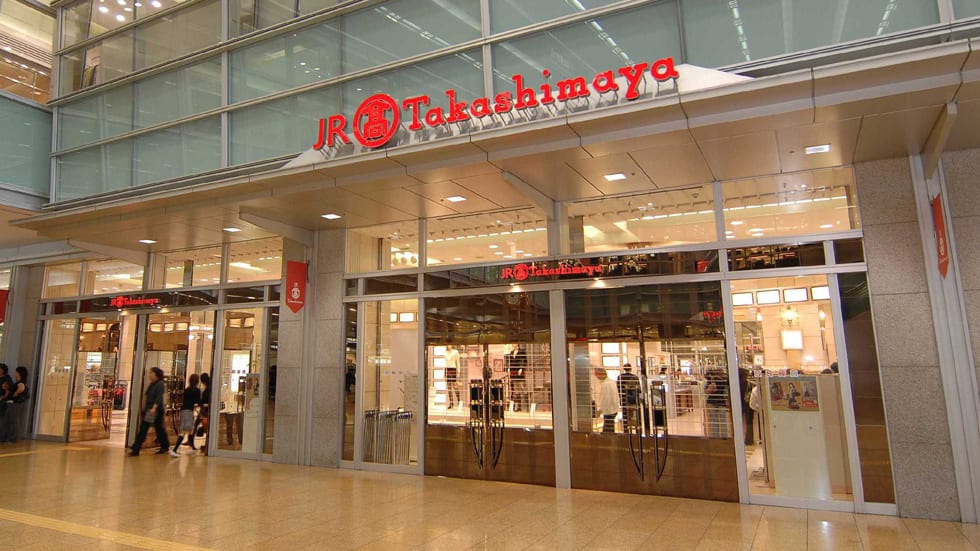
    Takashimaya is to sell financial products and services in partnership with an online securities company, SBI Securities.

    According to Nikkei Asian Review, the department store is targeting its wealthy but aging shoppers.

    Takashimaya plans to sell a wide range of financial products out of more than 2700 SBI offerings, which include investment trusts, foreign stocks, futures and options trading, FX, and domestic and foreign bonds.

    Takashimaya will also offer its customers in-store consultations to help consumers decide on their investments. The department store will play as an intermediary services provider with the customer accounts will be managed by SBI.

    SBI Securities is one of Japan’s largest online securities companies, providing a selection of financial products in nine markets including the US, Hong Kong, South Korea and Singapore.

  • Pandemic Causes Virtual Banking Launch Delays

    Pandemic Causes Virtual Banking Launch Delays

    Hong Kong’s newly licensed virtual banks will look to delay their launches due to an ongoing coronavirus pandemic.

    Since the Hong Kong Monetary Authority issued eight virtual bank licenses last year and earmarked February this year for the final launches, the city has been victim to over 1,000 cases of coronavirus infections and four deaths.

    With the exception of ZA Bank – jointly owned by mainland online insurer ZhongAn Online P&C Insurance and property developer Sinolink Group – no licensed digital lenders have fully kicked off for business.

    Of the seven remaining virtual banks, three have made soft launches for trials – Ant Bank, Airstar Bank – jointly owned by mobile maker Xiaomi and Hong Kong-headquartered financial services group AMTD – and Mox.

    The remaining four – WeLab Virtual Bank, Ping An OneConnect Bank, Tencent-backed Fusion Bank and Bank of China (Hong Kong)-backed Livi Bank – have yet to announce any launch dates, according to a report citing the pandemic as the cause for delay.

    The outbreak of Covid-19 has inevitably affected the virtual banks’ preparation for the launch of the business, according to a statement from the HKMA.

    Hong Kong is not alone in delaying digital banking launches in a region where various financial hubs have been vying to enhance their capabilities in the space including, most notably, rival Singapore. The city-state had originally planned to unveil up to five license winners from the reported 21 applicants in June 2020.

    The delayed license issuance will allow applicants to] focus resources on ensuring monetary and financial stability and ensuring that financial institutions remain resilient, and able to perform their role in supporting businesses and individuals through this challenging time, the MAS said, adding it could resume the process in the second half of the year.

  • UOB Chief Sees Pay Rise

    UOB Chief Sees Pay Rise

    The board has also recommended a final dividend of 55 cents and a special dividend of 20 cents per ordinary share. UOB deputy chairman and CEO Wee Ee Cheong received $10.75 million ($7.53 million) in 2019, an increase of 1.8 percent from last year, the bank said in its Annual Report, published on Wednesday.

    Apart from his base salary of S$1.2 million, Wee received S$9.52 million in bonuses, 60 percent of which will be deferred and vested over the next three years. Of the deferred variable pay, 40 percent will be issued in deferred cash, while the balance will be in the form of share-linked units. He also received S$32,000 in benefits-in-kind and transport-related benefits, the report said.

    The bank also said it decided to defer the adoption of a revised directors’ fee structure that would raise their fees, recommended by independent consultant Aon Hewitt and approved by the board in 2019, in view of the challenging environment exacerbated by the COVID-19 outbreak and in anticipation of difficult times ahead.

    The bank, earlier announced record net earnings of S$4.34 billion ($3.1 billion) in 2019, up 8 percent from 2018.

    In the report, Wee reaffirmed the bank’s confidence in Asean, saying that structural shifts in global supply chains present many opportunities in the region, which the bank is well-placed to capitalize on.

    In the past year, UOB opened its first branch in Vietnam’s capital Hanoi, marking the bank’s first foray out of Ho Chi Minh City, where it has operated a representative office since 1993. The bank also acquired a Vietnam asset manager, in line with regionalization plans.

    The bank also opened its seventh branch in Zhongshan, Guangdong, to support the Asean-Greater Bay Area trade flows arising from the manufacturing, information technology and logistics sectors, and is enhancing its support for sectors that support the region’s economic growth, such as through its regional U-Solar program. This year is also the first time the bank has included a standalone sustainability report.

    According to the bank, it issued $950 billion in sustainable financing, including green loans, sustainability linked loans and loans for green-certified buildings in 2019. It also has $1 billion in AUM of investments that incorporate ESG factors and/or social impact assessment in the investment process.

  • CIMB Singapore Partners Security Token Offerings Platform

    CIMB Singapore Partners Security Token Offerings Platform

    The bank’s partnership with iSTOX will expand private capital markets access for its clients.

    CIMB Singapore is partnering ICHX Tech to allow its clients in the Asean region to raise funds in a faster, more flexible and efficient way on its blockchain-enabled platform, a press release on Wednesday announced.

    The firm operates Singapore-based platform iSTOX, which supports the issuance, custody and secondary trading of digitized securities using advanced smart contracts and distributed ledger technology to streamline the process.

    We are pleased with this partnership to provide our clients with an alternative digital solution as digitization is one of the pillars that we are looking at to build aggressively within the bank in the next few years, Victor Lee, CEO of CIMB Bank Singapore, said in the statement.

    Founded in 2017, iSTOX is backed by Singapore Exchange (SGX), Temasek Holdings subsidiary Heliconia, Japan’s Tokai Tokyo Financial Holdings, Thailand’s Kiatnakin Phatra, and South Korea’s Hanwha Asset Management.

  • Bank of Singapore’s Global Head of Products Exits

    Bank of Singapore’s Global Head of Products Exits

    The longstanding veteran resigned after over 11 years with the Singaporean private bank. Marc van de Walle, senior managing director and global head of products with Bank of Singapore resigned earlier this week, a spokesperson for the bank confirmed.

    “After more than a decade with the bank Marc Van de Walle has decided to pursue other interests,» the spokesperson said.

    As for his successor, we will begin by evaluating internal candidates first, given our strong bench strength and their familiarity with the bank’s strategy. This does not exclude external candidates and we always welcome new talents to bring in new experiences and external insights into our organization.

    Van de Walle first joined OCBC’s private banking arm in 2009 when it was acquired from ING where he had just spent over a dozen years including as its general manager of retail and private banking.

    In his decade-plus stint with Bank of Singapore, Van de Walle oversaw an effective expansion of its product capabilities and achievements including in discretionary portfolio management (DPM) where it is a leader amongst Asian private wealth managers by asset penetration rate. In mid-2019, the bank said that it registered DPM asset growth of 40 percent in the previous two years.

  • HSBC Expands Wealth Portfolio Intelligence Service

    HSBC Expands Wealth Portfolio Intelligence Service

    The bank said it expanded its service to new asset classes in response to the increasing demand for reviewing the investment portfolio due to recent market volatility.

    HSBC’s Wealth Portfolio Intelligence Service (WPIS), offered to its high-net-worth «Jade» segment, will add bonds, equities, currencies, cash and time deposits, the bank said in a statement on Tuesday.

    The service, powered by Blackrock’s Aladdin Wealth platform, uses similar tools that institutional investors use to analyze risk exposure. The bank said that since its introduction to Jade clients in 2019, it has generated over 20,000 reports on risk insights and analysis for their unit trust holdings.

    As the enhanced WPIS covers all the major elements of a multi-asset wealth portfolio, it «creates new opportunities to build resilient investment portfolios in alignment with clients’ personal risk and investment preferences,» said Greg Hingston, regional head of Wealth and Personal Banking, Asia Pacific, and head of Wealth and Personal Banking, Hong Kong, in the statement.

    Higher Demand for WM Services

    The bank said it is seeing increased demand for wealth management services among its affluent customers. Apart from personalized investment solutions and advisory services, Jade hopes to attract «salaried millionaires» who prioritize self-enrichment with experiential offerings and a luxury concierge.

    In 2019, four Jade Centres were opened in Singapore, Hong Kong, and Shanghai. This year, HSBC opened two more Jade Centres in Hong Kong, and plans to open one in Beijing.

  • Hong Kong Fintech Launches B2B Payments Gateway to China

    Hong Kong Fintech Launches B2B Payments Gateway to China

    Harbour & Hills has made a strategic acquisition that will allow it to facilitate USD and other major currencies’ payments to China.

    Harbour & Hills Financial Services (H&H) has acquired a controlling stake in Global Envoi, a payments processor with strong capabilities in clearing payments to China, the Hong Kong-headquartered B2B payments service provider announced on Wednesday.

    The acquisition, made for an undisclosed sum, gives H&H a vital channel to process commercial payments in USD, EUR, JPY, GBP and other major currencies to all major banks in China through Global Envoi’s exclusive partnership with Metropolitan Bank (China) for processing B2B payments in China.

    While China is the major trading partner for almost all countries, sending payments to China is still challenging for businesses, especially for the SMEs/VSEs, said Rahul Tripathi, CEO of Harbour & Hills.

    Tripathi said clients can now make direct payments to their trade partners in China in the currency of their choice with its access to the PBoC central clearing system.

    Founded in 2010, H&H offers FX clearing services in several major currencies to destinations including Indonesia, Korea and India. The firm processed $12.3 billion in cross-border money transfers in 2019.


  • SGX Extends Deadline for AGMs

    SGX Extends Deadline for AGMs

    Social distancing measures could make the holding of annual general meetings (AGMs) and the performance of statutory audits for full-year financial results challenging, SGX said.

    Singapore Exchange Regulation will automatically extend by 60 days the deadline for all issuers with financial year-end on or before 31 March 2020 to hold their AGMs, it announced on Tuesday.

    The decision was made in consultation with the Accounting and Corporate Regulatory Authority (ACRA) and the Monetary Authority of Singapore (MAS) in light of government advisories and measures amid the Covid-19 situation.

    ACRA also said it will grant an extension of 60 days for all companies, both listed and non-listed, whose AGMs are due between 16 April to 31 July. It is also giving a 60-day extension to companies whose annual return filing due dates fall between May 1 and Aug 31.

  • HSBC Names Asia Private Banking COO

    HSBC Names Asia Private Banking COO

    HSBC continues to bolster its private banking business in Asia with its hire of chief operating officer, who joins from J.P. Morgan’s wealth arm.

    Sharon Oh joins HSBC Private Banking as its chief operating officer, replacing Gaurav Rao, who recently relocated to London for another role within the private bank. In her new role, Oh will report to Siew Meng Tan, APAC head of HSBC Private Banking, and Anil Venuturualli, global COO of the business. A spokesperson for the bank confirmed the hire.

    Oh was most recently with J.P. Morgan’s private banking arm where she was its chief of staff in the London-based global institutional client segment. Prior to this, Oh spent five years with J.P. Morgan Private Bank’s Hong Kong-based unit and was also previously Credit Suisse’s North Asia COO.

    Earlier this year, HSBC merged its retail, wealth management and private banking business into a single $1.4 trillion unit – WPB – in a bid to drive double-digit growth in client assets and revenue in the coming years.

    Oh will help us accelerate the delivery of our key initiatives and to harness the benefits of becoming part of WPB, Tan said in a statement.

  • Banks Temporarily Close Branches Across Singapore

    Banks Temporarily Close Branches Across Singapore

    Banks across Singapore are closing branches due to the reduced traffic expected as a result of enhanced social distancing measures, announced on Friday to curb the spread of Covid-19.

    While the financial sector was exempted from Singapore government’s order to suspend activities at workplaces from 7 April until 4 May inclusive, banks across the island announced limited operations during this period.

    The Monetary Authority of Singapore (MAS) affirmed that financial services will remain open and available to all customers and counterparties in Singapore and globally.

    All financial markets in Singapore remain open, and payment services are unaffected, the regulator said in a statement.

    DBS will progressively close 29 DBS/POSB branches until 4 May, starting with DBS Marina Bay Sands on 7 April, followed by POSB Newton and POSB Square 2 on 9 April. The remaining 28 branches that stay open will continue to operate regular banking hours but will reserve its first hour of operation for vulnerable customers like the elderly.

    The bank is also closing all DBS Treasures and DBS Treasures Private Client centers from 9 April to 4 May. Safe-deposit box access at DBS/POSB branches and DBS Treasures Centre will be available on Wednesdays by appointment. Full SME banking services will be available at branches in areas with higher trade and SME footfall. In addition, trade counters at Marina Bay Financial Centre, Jurong Gateway and Towner Road will also remain open, the bank said.

    OCBC Bank will close 22 of its 46 branches from 9 April to 4 May. Among the 24 branches that remain open are the 19 that offer Sunday banking services, as well as the five that offer safe deposit box services, with no changes to their banking hours. Its Trade Service Centres at OCBC Centre South and OCBC Tampines Centre 2 remain open.

    The bank said it has seen a 35-percent uptick in customers using digital solutions for their banking needs during this period and urged more to use its mobile and Internet banking platforms to minimize the need to visit bank branches.

    In a statement released on Friday, UOB said it «remain[s] committed to providing the banking services that are essential to them during these trying times.»

    The bank is expected to announce later today the details of branches that will remain open during this time.

    Standard Chartered is closing half of its 16 branches, while Maybank has closed six of its 15 branches. Seven of HSBC’s 13 branches in Singapore will shut, while Citi has closed eight branches, with its remaining locations operating revised hours, including a dedicated hour of vulnerable customers.

  • HSBC Names Asia Private Banking COO

    HSBC Names Asia Private Banking COO

    HSBC continues to bolster its private banking business in Asia with the latest hire of chief operating officer, formerly with J.P. Morgan wealth arm.

    Sharon Oh joins HSBC Private Banking as its chief operating officer, replacing Gaurav Rao, who recently relocated to London for another role within the private bank. In her new role, Oh will report to Siew Meng Tan, APAC head of HSBC Private Banking, and Anil Venuturualli, global COO of the business. A spokesperson for the bank confirmed the hire.

    Oh was most recently with J.P. Morgan’s private banking arm where she was its chief of staff in the London-based global institutional client segment. Prior to this, Oh spent five years with J.P. Morgan Private Bank’s Hong Kong-based unit and was also previously Credit Suisse’s North Asia COO.

    Earlier this year, HSBC merged its retail, wealth management and private banking business into a single $1.4 trillion unit – «WPB» – in a bid to drive double-digit growth in client assets and revenue in the coming years.

    Oh will help us accelerate the delivery of our key initiatives and to harness the benefits of becoming part of WPB, Tan said in a statement.

  • Hong Kong Welcomes HSBC, StanChart to Relocate Home

    Hong Kong Welcomes HSBC, StanChart to Relocate Home

    HSBC and Standard Chartered were named by Hong Kong authorities as lenders which are welcome to relocate headquarters to the city where they derive the majority of profits.

    Last week, HSBC insisted that London would remain its home in the foreseeable future but reiterated its commitment to Hong Kong over the weekend, calling it one of its two home markets.

    HSBC has always had a lot of operations in Asia and Hong Kong, while a substantial portion of its profitability also comes from the region, said a report, citing the local secretary for financial services and the treasury James Lau Yee-cheong

    Likewise, Standard Chartered Bank also has significant exposure to Hong Kong and Asia. The regulations and business opportunities in Hong Kong are very good. We would welcome it – if HSBC or Standard Chartered Bank decided to relocate here.

    The issue of headquarter relocation reemerged after British lenders recently decided to scrap dividends due to orders by the Bank of England, including those with deep ties to Asia like HSBC and Standard Chartered.

    Whilst the move made sense from a U.K. perspective, the Asia-centric nature of the two banks may pose issues such as a competitive disadvantage, at least in terms of near-term profitability, due to more costly regulatory pressures thus far. In addition to sourcing four-fifths of its profits from Asia, one-third of HSBC’s shareholders are retail investors from Hong Kong, its former home and birthplace 155 years ago.

    The Hong Kong Monetary Authority followed up last week with the reassurance of healthy local balance sheets and the lacking need to cancel dividends.

    Aside from a more favorable regulatory environment for banks, Lau also highlighted ample opportunities for international lenders coupled with a business-friendly government.

    Hong Kong’s financial markets will continue to benefit from the development of Greater Bay Area projects, which will bring in a lot of opportunities to international lenders, Lau added.

    The current outbreak might lead to some slowdown, but it is not a financial crisis. The Hong Kong government has brought in many relief measures – and we will offer more – to help companies cope with the economic impact of the pandemic.

  • Digital Payments in China Surge

    Digital Payments in China Surge

    China’s digital payment market grew to $8.4 trillion in the last quarter of 2019 and there are signs of still robust momentum in the months following the outbreak.

    By transaction volumes, Alipay retained the top rank with 55.1 percent followed by Tencent’s two platforms – WeChatPay and QQ Wallet – at 38.9 percent, according to a report (Mandarin only) by independent research firm iResearch.

    The remaining 6 percent where split between 1qianbao (1.4%), JD Pay (0.9%), UMPay (0.6%), 99bill (0.6%), Yeepay (0.5%), China UMS (0.3%), Sunin Pay (0.2%) and others (1.5%).

    59.8 trillion yuan ($8.4 trillion) in total digital payment representing a year-on-year increase of 13.4%

    Even in the midst of an ongoing coronavirus outbreak, the Chinese digital payment market signaled strength, the report underlined.

    Beijing-based grocery startup Meicai attracted 800,000 new users in one week on an online platform that connects farmers with consumers and restaurants. Between March 18 and 22, Alipay registered average daily purchase of nearly 1.1 million cups of milk tea via branding programs.

  • Citi Extends Relief Payouts to Hong Kong

    Citi Extends Relief Payouts to Hong Kong

    Lower-income staff at Citi will receive payouts in line with chief executive Michael Corbat’s call to extend global support during the crisis.

    Hong Kong-based employees with an annual base salary of HK$470,000 (US$60,622) or less will receive a one-time payment of HK$8,000 ($1,032). This follows the bank’s announcement last week to provide economic support to 75,000 staff globally including $1,000 to each worker in the U.S. with an annual salary of $60,000 or below.

    «This initiative is for colleagues who are more likely to face economic hardship in the current situation,» said Angel Ng Yin-yee, Hong Kong and Macau chief executive at Citi, in a statement. «We hope that our support will help lighten their load as they cope with other challenges and family priorities during this time.»

    Singapore Relief

    Citi also made a similar announcement in Singapore, highlighting relief measures to support retail and institutional clients such as interest and fees waivers, tenure extensions, alternative settlement arrangements and loan payment reduction programs. And in support of the Singapore government’s latest financial relief program, Citi will also offer clients the option to convert outstanding unsecured balances from their Citi credit cards into low-cost term loans.

    «We recognize the financial stress to our clients as a result of the COVID-19 situation,» said Amol Gupte, ASEAN head and Singapore country officer at Citi, expressing support for clients and the city-state’s government.

    For the time being, global banks continue to demonstrate support for the global economy, especially the economically vulnerable, amidst a persistent coronavirus pandemic. In addition to payouts or loan-related relief, the industry has committed to temporary job cut halts, dividend cancellations and even free online classes for homebound children.