Category: Finance

Retail News Asia is committed to providing both local and global retailers with the latest Finance news throughout the Asian market. This on a daily base.

  • Citi Appoints Asia Chief Operating Officer

    Citi Appoints Asia Chief Operating Officer

    The senior executive takes on a new role, according to an internal memo shared after two decades with Citi’s equities and markets unit.

    Citi has appointed Andrea Fletcher as its chief operating officer for Asia.

    In the newly created role based in Hong Kong, Fletcher will help drive Citi’s efforts to grow the regional franchise. She will also join the Asia Operating Committee, the announcement said.

    The COO appointment follows the confirmation of Citi’s new chief for the region, Peter Babej, after the regional helm was held for six months by interim head Tim Monger, who will resume his sole chief financial officer role.

    According to her LinkedIn profile, Fletcher joined Citi in 1999 as director of equity and research sales, based in Sydney. Her 20-year career at the bank is split almost equally between Australia and Hong Kong, with her most recent role being managing director and global head of client strategy, equities and prime finance.

    She helped establish the Citi Women’s Network in Hong Kong and Australia, while also playing an active role in Citi’s diversity, recruiting, mentoring and leadership development efforts both internally and externally with the bank’s clients.
  • HSBC Confirms Permanent CEO

    HSBC Confirms Permanent CEO

    HSBC finally settles on a permanent group chief executive seven months after the exit of predecessor John Flint.

    Former interim chief executive Noel Quinn will take the top job permanently, effective immediately, adding much-needed stability at the helm and settling months of uncertainty, according to the bank.

    Quinn took over the interim role following the short-lived two-year stint of Flint in August 2019. Since then, the bank has repeatedly said that succession remained underway, most notably during the last annual results when Quinn presented the group strategy but remained as interim head. Multiple names had emerged as potential successors to Flint including UniCredit chief executive Jean Pierre Mustier, who reportedly withdrew interest last month.

    The bank’s decision to name Quinn at the new CEO will bode well for stability especially given the recent shuffles made at the top. They include newly appointed regional chief executives for the U.S. (Michael Roberts), China (Mark Wang Yunfeng) alongside the Middle East, North Africa, Turkey, Latin America, Canada and most of Europe (Stephen Moss).

    As the new permanent chief executive, Quinn will reportedly earn a base salary of over $1.5 million per annum.

    Noel has proven to be the outstanding candidate to take on a role permanently that he has performed impressively on an interim basis since August 2019, said HSBC chairman Mark Tucker in a statement.

  • TransferWise Partners Alipay in China

    TransferWise Partners Alipay in China

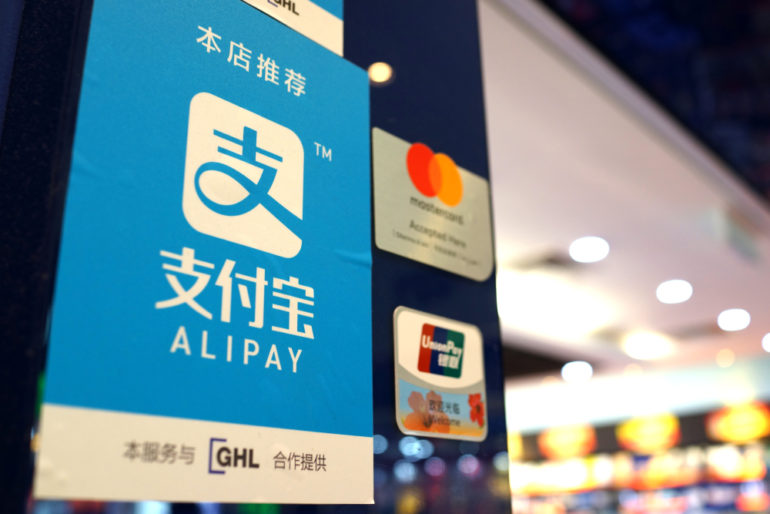
    The London-headquartered online money transfer service is teaming up with Chinese payments and lifestyle services platform Alipay to expand remittance options for its users.

    TransferWise is making more inroads into Asia with a tie-up with mobile payments giant Alipay, which will enable instant transfers to China for 17 currencies, the firm announced in a statement on Tuesday.

    With Alipay serving more than 1.2 billion people worldwide together with its local e-wallet partners, TransferWise, which has 7 million customers worldwide, called the partnership a «major expansion.»

    Co-founder and CEO Kristo Käärmann said money transfers to China has been one of the most requested features among TransferWise users since its expansion in Asia.

    China is projected to be one of the top remittance recipient countries in the world, with £54 billion ($65.4 billion) expected to be sent back home by Chinese expats and migrants living abroad, TransferWise said in the announcement, citing a 2019 report.

    In 2019, TransferWise rolled out a debit Mastercard in Singapore, which also included a TransferWise Borderless multicurrency account. It also began processing international payments into digital wallets in Indonesia and the Philippines last year.

    Founded in 2011, TransferWise is valued at $3.5 billion, following its last funding round of $292 million in May 2019. It has raised a total of $772.7 million in funding in 10 rounds to date. According to the firm, it processes $6 billion in transfers monthly.


  • UBP Hires Singapore COO

    UBP Hires Singapore COO

    UBP hires a new chief operating officer for Singapore from a rival private bank in the city-state.

    Jérôme Thuillier joins UBP as its new Singapore COO, effective as of yesterday. Thuillier most recently with Bank of Singapore where he was a program director responsible for building an integrated wealth management tech platform. Pervasively, he had also held leadership roles with Barclay Wealth including COO of its global investment solutions arm.

    Thuillier’s predecessor, Michael Moncarz, was named the Singapore COO in February 2017.

    According to the release, Thuillier joins not only with most of his financial career in Asia but also some local language skills including «a good understanding of Mandarin and basic Japanese,» according to a release.

  • Comonwealth Bank of Australia Admits Claims

    Comonwealth Bank of Australia Admits Claims

    Comonwealth Bank of Australia – one of the country’s «big four» lenders – will not contest two lawsuits from local regulatory alleging misconduct against clients.

    The Australian Securities and Investments Commission (ASIC) is seeking A$5 million ($3 million) in penalties from CBA for failing to provide certain benefits to buyers of the financial product AgriAdvantage Plus. According to ASIC, 8,659 customers were affected by misconduct on 131,542 occasions which resulted in gains by CBA totaling $5 million from incorrectly charged fees, loam interests and unpaid savings interests. The bank has since reportedly refunded approximately $4.9 million including interest.

    CBA intends to admit the allegations made in ASIC’s Concise Statements for both matters and does not intend to defend the proceedings, according to a report citing a bank.

    The second uncontested case involves a habitual gambler, David Harris, who was able to obtain multiple credit limit increases which reached $21,400 despite the bank’s knowledge of his self-admitted problem. I would max it out, pay off chunks, I would try and work overtime to help pay off chunks and I would wait until I had a big win or saved up a lump of money to pay it off and do it again, he said, according to a report.

    The bank did not do the right thing by this customer and we apologize,» said CBA chief executive Matt Comyn. In recent years we have implemented a number of changes to support our customers’ needs.

  • Bank Stocks Slide

    Bank Stocks Slide

    The share prices of UBS and Credit Suisse tumbled in line with their European counterparts. Investors fear the coronavirus will spark a wider recession – and banks will bear the brunt.

    Credit Suisse shed more than 13 percent in early trading on Monday, losing more than the wider European banking index, which slid 12 percent. Meanwhile, UBS’ stock fell more than 11 percent.

    The slides illustrate that investors don’t believe a massive, coordinated plan by central banks overnight will be adequate to stave off recession sparked by the coronavirus pandemic. European banks, which have long procrastinated shaping up following the 2008/09 crisis, are especially vulnerable to this.

    Overnight, the U.S. central bank released its big guns with its second cut in two weeks and other policy easing measures. Major U.S. banks including J.P. Morgan said they would suspend share buybacks – a method preferred by banks to return capital to shareholders because it typically boosts stock prices.

    Credit Suisse has previously expected to buy back as much as 1 billion Swiss francs ($1.1 billion) in its own stock by year-end, but this is subject to economic conditions that have now changed dramatically. UBS is in the middle of a 2 billion franc, three-year buyback.

  • Citi Targets Doubling of Singapore WM Market Share

    Citi Targets Doubling of Singapore WM Market Share

    From its current 5 percent, Citibank Singapore plans to double its wealth management market share alongside the number of clients by 2025.

    The bank’s Singapore chief executive Brendan Carney believed that the retail and wealth management business could further accelerate growth after assets grew 11 percent in 2019, including 19 percent client asset growth from its wealth management segment.

    We think there’s another gear that we can shift into and go from double-digit growth to really strong double-digit growth, Carney said.

    As part of the growth plans, the bank made investments in the tens of millions in a new flagship wealth management center based in one of Singapore’s major shopping and luxury areas, Orchard Road. The 30,000 square foot wealth management center will occupy four storeys including two floors for 400 relationship managers and specialists as well as two floors for client meetings and events.

    Though the bank hopes to add at least one more flagship center, its broader plan in the city-state is to reduce its branch presence. By the end of 2020, it targets three from 14 branches to 11 – one wealth management center, seven branches and three instant banking centers for basic transactional services.

    Still, Carney noted that Citi is not a digital-only bank and has not aspirations to become one. In fact, Citi will look to grow its client-facing staff by 20-25 percent over the next three to five years and also boost training for its existing relationship managers.

  • Singapore Banks Buy Back Shares

    Singapore Banks Buy Back Shares

    Singapore banks were among 32 primary-listed stocks conducting share buybacks over the five sessions ended 12 March 12, with a total consideration of S$169.6 million.

    DBS Group Holdings led the consideration tally, with 6.65 million shares bought back at an average price of S$21.272 per share, according to a report by the Singapore Stock Exchange (SGX).

    As of March 12, the lender had bought back 0.5492 percent of its issued shares (excluding treasury shares) as of the approval date of the current buyback mandate.

    For the five trading sessions spanning March 6 to 12, the Straits Times Index (STI) declined 11.3 percent with the Nikkei 225 Index, Hang Seng Index and S&P/ASX 200 Index averaging a 12.5 percent decline.

    In the same period, UOB and OCBC bought back 360,000 and 600,000 shares respectively, amounting to S$7.8 million and S$5.7 million respectively.

  • Apple waives interest for Apple Card users amid COVID-19 pandemic

    Apple waives interest for Apple Card users amid COVID-19 pandemic

    Other than the very obvious health concerns caused by COVID-19, the ongoing pandemic is also causing much economic trouble. Apple introduced a customer assistance program for Apple Card users to help offset financial concerns.

    Many Apple Card users on Reddit have reportedly received an email about the new customer assistance program. Under this program, cardholders can skip their March payments without any additional interest.

    Apple hasn’t explicitly stated any eligibility requirements, so it looks like all Apple Card holders are eligible. They can enroll in this program in at least two ways: firstly, Apple evidently provides a direct link in their email announcing the program, which can be used to enroll.

    The other method is just as simple, with cardholders able to enroll through text by iMessaging the Apple Card Support line the following text: “I would like to enroll in the Customer Assistance Program”. The support number can be found in Apple’s support page for the credit card.

    Clearly, Apple is taking the COVID-19 outbreak very seriously, closing all Apple Stores outside of China for the time being as well as regulating App Store entries related to the virus. This latest offer is a kind gesture to its customers during a difficult time.

  • Fintech Helps Boost Hong Kong’s Tech Hub Ranking

    Fintech Helps Boost Hong Kong’s Tech Hub Ranking

    Financial technology, alongside other developments, helped boost Hong Kong’s ranking as a tech innovation hub to tenth place worldwide in the latest KPMG survey.

    Hong Kong’s ranking improved from 12th place last year, according to the KPMG report which surveyed 800 global leaders from the tech industry from 12 countries, including 110 respondents from China. In addition to fintech, the outlook is bright for development in artificial intelligence, biotech, and smart cities especially due to opportunities to leverage synergies from closer integration with the mainland such as the Greater Bay Area strategy.

    The Hong Kong government is supporting and promoting an entrepreneur ecosystem, as well as leveraging the city’s mature international financial system and advanced logistics sector to drive a real difference, said Irene Chu, KPMG China’s partner and head of new economy & life sciences in Hong Kong, in a release.

    Although China is home to four top 20 tech hubs including Shanghai, Beijing, Shenzhen and Hong Kong, the country’s overall rating dropped. The country was ranked second by 13 percent of respondents, down from 17 percent last year and tied with India.

    In contrast, the 28 percent of respondents placed the U.S. in the top rank, up from 23 percent last year. And in order for China to close this gap moving forward, it must now spend more resources on its own domestic innovation ecosystem due to the current American policy stance on technology and intellectual property.

  • HSBC Simplifies SME Green Financing

    HSBC Simplifies SME Green Financing

    HSBC makes an industry-first move to launch a green loan program with a simplified process aimed to boost small to medium-sized enterprise participation.

    A minimum limit of $350,000 will apply based on a newly simplified process that accepts green loan applications from potential borrowers holding industry certifications approved by HSBC.

    The certifications include: Singapore Environment Council’s Singapore Green Labelling Scheme (SGLS) and eco-certification schemes; Building and Construction Authority’s Green & Gracious Award, and Green Mark Scheme (GoldPLUS and Platinum); Singapore Green Building Council’s product and services certification schemes; and Green-e’s Renewable Energy Certification. HSBC could look to expand its list of accepted certifications.

    In the current environment, corporates typically develop bespoke green frameworks before applying for green loans to demonstrate that their practices with regards to the proceeds are aligned with internationally recognized standards. This could incur human resource and capital costs that are relatively burdensome for SMEs compared to large corporates which can achieve scale in long-term funding from their frameworks.

    We hear a lot of interest from SME clients in green loans, but we see limited action – this is not for want of trying, but comes down to accessibility, said HSBC Singapore’s head of business banking Ng Li Lian, highlighting demand from clients with business in electric vehicles, engineering or manufacturing, clean water and recycling sectors.

    SMEs can’t afford the typical costs or time associated with green finance, with management teams already spread thin as they focus on the day-to-day running of the business.

  • DBS, Revenue Projections are a Moving Target

    DBS, Revenue Projections are a Moving Target

    DBS’ Tan Su Shan followed up on the estimates for a 2 percent of revenue cut, underlining that potential revisions could come should the pandemic prolong.

    Soon after the bank’s chief executive Piyush Gupta announced a modest 1-2 percent revenue reduction, institutional banking head Tan Su Shan followed up by adding that the matter was a «moving target» and that potential revisions could come.

    We are living day by day, week by week right now, she said in a report, highlighting that the estimate was based on the assumption that the pandemic would subside by mid-year. «The key here is to stay with the clients, watch everyone’s positions and make sure everyone is okay.»

    According to Tan, non-performing loans are expected to increase from small and medium-sized enterprises across tourism, apparel, hospitality and other sectors tied to consumer demand. Nonetheless, she noted that Singapore and other parts of Asia are observing signs of stability fuelled by government stimulus though business confidence and a recovery in consumer demand still lag.

    For 2019, DBS demonstrated resilience posting a 14 percent increase to net profits to a record S$6.4 billion ($4.5 billion) from a 10 percent year-on-year income increase. From such a position, its modest revenue cut projection signals greater risks in the broader financial industry, especially amongst players with greater China exposure.

    AIA, for example, noted that face-to-face meetings in China, which account for 40 percent of sales, took a hit, though its online sales managed to partially offset the loss. Its soon to retire chief executive and president Ng Keng Hooi noted the headwinds the insurer faced from the coronavirus and low-interest rates but remains optimistic that  «the industry would overcome this down cycle and come out stronger», in a report.

  • BNP Paribas Wins VCC Mandate

    BNP Paribas Wins VCC Mandate

    It will provide fund administration and global custody services in Singapore to Kamet Capital Partners.

    Multi-family office Kamet Capital Partners, one of the first fund managers to use Singapore’s Variable Capital Company (VCC) structure, is partnering BNP Paribas Securities Services in its plans to use the VCC.

    We selected BNP Paribas Securities Services for its attention to client needs and willingness to grow alongside Kamet, said Kerry Goh, chief executive officer of Kamet Capital Partners, said in a statement issued by BNP Paribas on Tuesday.

    Goh founded Kamet in 2017 after leaving Julius Baer, where he was head of portfolio management, Asia. Kamet’s Long Term Capital fund invests 60–70 percent of its portfolio in public securities, and the balance in alternatives and private investments.

    The VCC framework, launched in January, is part of Singapore’s plans to attract more funds to base themselves in the city-state.

    Catered to the needs of global investment funds and investors, fund managers will have greater flexibility in share issuance/redemption and the payment of dividends. Managers can also incorporate multiple funds in a single VCC to save costs.

    The initiative has already borne fruit, with Mindful Wealth redomiciling its flagship fund to Singapore under the framework, and RF Fund Management announcing it would be setting up its inaugural private equity fund to focus on fintech and property investments in Asia.

  • Gold Tumbles as Investors Scramble to Raise Cash

    Gold Tumbles as Investors Scramble to Raise Cash

    Gold was not spared on Thursday’s market rout, with gold futures on Comex falling by $52, or 3.2 percent, to settle at $1,590.30/oz.

    A drop in the stock market typically raises the safe-haven appeal of gold, but it is now the asset of choice among investors who want to raise cash, and a selloff on Thursday knocked back the yellow metal’s sharp rally that began in December.

    Gold traders are now selling «what they can amid a panicked marketplace,» said Kitco.com analyst Jim Wyckoff on Thursday in a roundup note.

    People are liquidating gold to cover margin calls they have in the equity market, Albert Cheng, chief executive of the Singapore Bullion Market Association, saidexplaining the precious metal’s sharp losses.

    Gold is an easily liquidate asset, which again shows its value as a safe haven asset in times like this, Cheng said, noting similar behavior in the 1997 and 2008 financial crises.

    Wall Street endured its worst session since 1987’s «Black Friday» on Thursday, following the World Health Organization’s declaration of the Covid-19 outbreak as a pandemic and U.S. President Donald Trump’s address on Wednesday night, which has seemed to cause further unease about the situation, even as he assured the United States is «more prepared» to fight the pandemic than any other nation.

    At the start of trading on Friday, Singapore’s STI index fell 5 percent, the most at the opening bell since October 2008. Other stock markets also took large hits: Hong Kong’s Hang Seng index fell 5.8 percent, and Shanghai’s Composite Index fell 3.3 percent.

    Australia’s S&P/ASX 200 benchmark fell 7.1 percent in its biggest decline since 2008, and is on track for its worst week on record, while New Zealand’s S&P/NZX 50 index tumbled a record 7.4 percent. Japan’s Nikkei 225 index fell 9.4 percent, and Korea’s Kospi fell 7.6 percent.

  • APAC Banks Brace for Hiring Freeze

    APAC Banks Brace for Hiring Freeze

    Hiring has slowed down significantly at banks in Asia-Pacific, according to job post data, and a prolonged freeze could last the entire year from the effects on the ongoing pandemic.

    At the beginning of March, the number of listed banking jobs closed surged to 1,200 per weak – more than the average of 500 – while new job posts fell to less than 300, according to GlobalData. The data provider noted that freezes could last for the full year even if the pandemic is moderated and contained this month and April.

    Clearly, the appetite for new personnel has dried up,» said Andrew Haslip, APAC head of financial services content at GlobalData, in a release. With major banks in the region facing a hit to revenue from the drop off in consumers’ demand for credit and even desire to consume more than bulk purchases of toilet paper; most banks are reluctant to take on new staff.

    Haslip forecasts that Asia Pacific will lead the hiring slowdown this month before similar trends will be witnessed across the world next month.

    Wealth managers in Asia are expected to miss client inflow targets en masse and register «heavy losses» on invested assets. But one of the bright spots GlobalData highlights is digital banking where automation capabilities require less physical interaction, though it noted that the area would also face a slowdown in hiring for specialized talent.

    Being able to extend credit and payment services without having to involve a person directly will also be a boon in a time when many bank employees are likely to be ill or self-isolating, Haslip added.