Category: Finance

Retail News Asia is committed to providing both local and global retailers with the latest Finance news throughout the Asian market. This on a daily base.

  • SoftBank Seeks $2.8 Billion From Japan Banks

    SoftBank Seeks $2.8 Billion From Japan Banks

    SoftBank Group is in talks to get as much as 300 billion yen ($2.76 billion) in financing from three banks.

    Mitsubishi UFJ Financial Group, Sumitomo Mitsui Financial Group and Mizuho Financial Group are currently in discussions with the investment company about its loans, various media reported.

    We are evaluating our options flexibly while considering cash on hand, said SoftBank spokeswoman Hiroe Kotera, who was quoted in «Bloomberg». Bank loans are one option, but nothing has been decided, she added.

    The loans are part of the company’s regular financing, said the newswire’s source, but Nikkei reported that SoftBank is raising money to pay for its $3 billion tender offer to WeWork shareholders.

    Last month, the investment firm agreed on a $9.5 billion rescue package for WeWork, in a deal that handed it 80 percent of the troubled co-working company. Masayoshi Son’s company reported an operating loss of close to $6.5 billion in the quarter, after writing down the value on a string of high-profile investments.

  • China to Step Up Fintech Regulation

    China to Step Up Fintech Regulation

    The People’s Bank of China will introduce new standards in 17 areas, including blockchain, cloud services and artificial intelligence.

    China has plans to step up regulation in 17 areas of fintech to «guide the application of new technologies» applied across the financial industry, according to an article published by state news portal Xinhua.

    Speaking at the 2019 working conference of the National Financial Standardization Technical Committee on Wednesday, Fan Yifei, deputy governor of the People’s Bank of China, said the introduction of new standards is urgently needed to fill shortcomings in key areas, with a particular focus on data security, the publication reported.

    Fan noted that China currently has 65 national financial standards and 252 financial industry standards, which include mobile financial payment client technical specifications, voiceprint identification and more, but financial services and management standards are still weak.

    Explaining the rationale behind the regulatory push, Fan said that high-quality financial development requires high-quality financial standards.

    He also highlighted the need to expedite the internationalization of financial standards, actively carry out financial standardization research, cultivate a new generation of regulators savvy in this field, and to use fintech regulation to modernize financial governance systems and governance capabilities, the report said.

    China recently passed a new law on cryptography aimed to facilitate development concurrently with the country’s central banking efforts to launch its own digital currency, which will be effective January 1, 2020.


  • Shanghai-Frankfurt Stock Link in the Works

    Shanghai-Frankfurt Stock Link in the Works

    In another move to internationalize Chinese markets, plans are underway for a Shanghai-Frankfurt stock link driven in part for Europe’s «unabated eagerness» for collaboration with the second-largest economy.

    The China Europe International Exchange (CEINEX) is currently preparing for a stock connect program, according to state media, which reflects European countries’ «unabated eagerness» for Chinese collaboration in areas such as finance.

    CEINEX did not disclose the exact data of the Shanghai-Frankfurt stock link launch but state media highlighted that it could be rolled out in the next one or two years.

    The program is expected to allow Germany-based blue chips to issue Chinese depositary receipts on the Shanghai Stock Exchange and for mainland-based firms, especially manufacturers, to issue global depository receipts on exchanges in Frankfurt.

    Listings aside, onlookers believe there are synergies to be realized by Germany due to its significant base of industrial powerhouses such as Mercedes Benz or BMW which could benefit from cooperation with China which has withstood the downward economic cycle in sectors such as an automobile.

    In addition to opening up markets, stock link is expected to be the first in a series of moves to boost financial cooperation between China and Europe.

  • Tech Talent Buoys Financial Sector Job Creation

    Tech Talent Buoys Financial Sector Job Creation

    Despite a slowdown in hiring for trading and equity-related jobs, talent related to the burgeoning field financial technology has kept the financial sector an active recruiter in the Greater China region.

    Talent demand is high for both executive and operation roles, according to a Robert Walters Salary Survey 2020, with firms increasingly open to importing foreigners with matching skill sets. Tech talent across all industries are expecting bonuses of 11-20 percent of their 2020 salary and 40 percent expected a 7-15 percent increase in this salary.

    Recruitment remains active for financial sub-sectors such as virtual banking insurtech, private banking, wealth management, distressed debt and special situations funds.

    Whilst the outlook for tech in finance or not remained bright, the broader job market showed signs of being hit by the ongoing economic slowdown. Hong Kong’s expected salary increase for 2020 fell to the 10-15 percent range compared to 10-20 percent in 2019. Greater prudence is being applied to various aspects of hiring, the survey found.

    Companies are more cautious when hiring, and hesitate to look into a long-term hiring plan. Hiring processes are foreseen to be lengthened and additional interview stages will be added as employers are more insistent on candidates with specific skill sets, said Ricky Mui, managing director of Robert Walters Hong Kong. We also expect contracting engagements to continue to grow further.

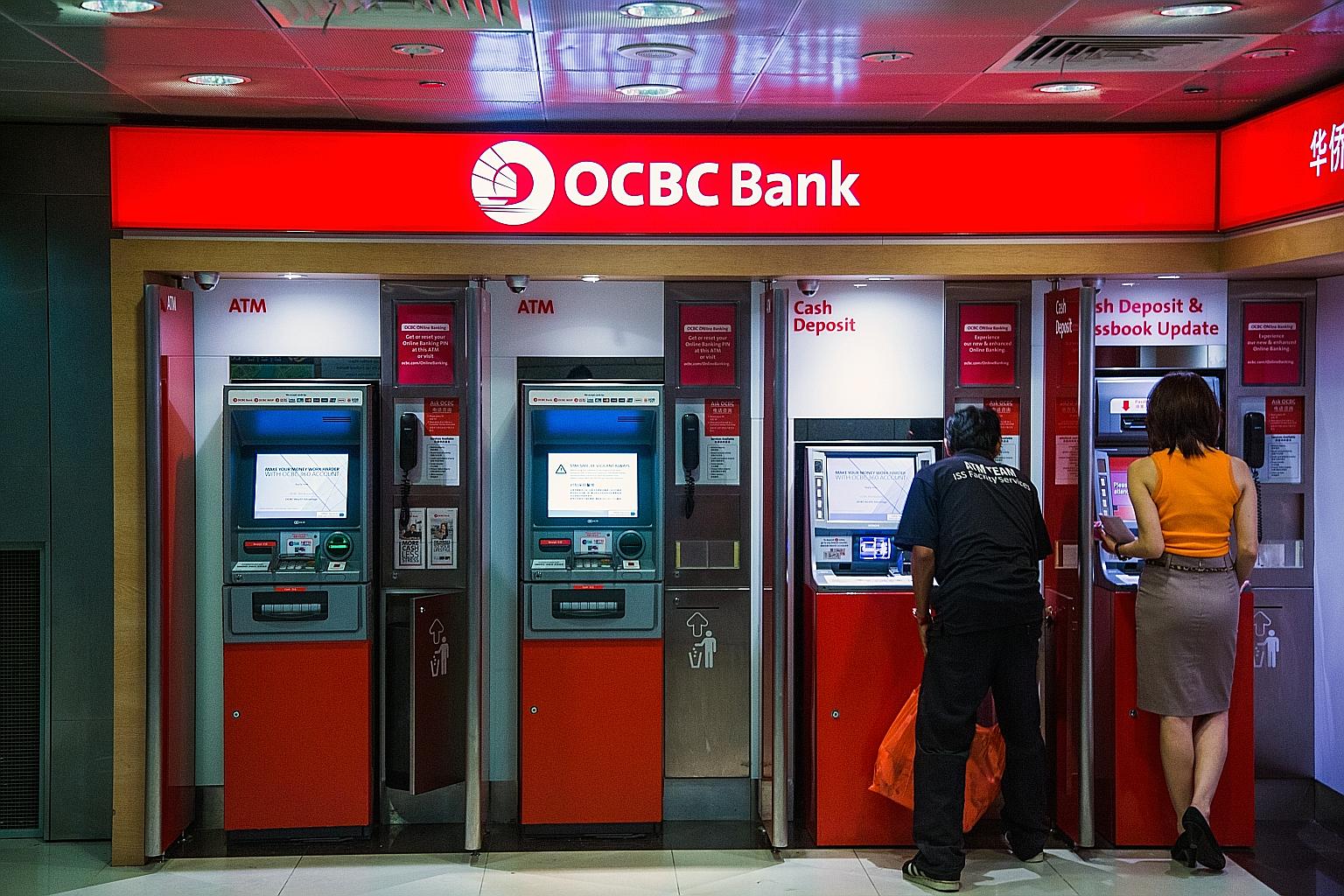
  • OCBC and DBS Provide Green Loans for Singapore Developer

    OCBC and DBS Provide Green Loans for Singapore Developer

    Singapore developer Tiong Seng has secured S$125 million of green loans and performance-linked facilitates from OCBC and DBS, respectively.

    OCBC and DBS provided around $51.4 million and $40.4 million, respectively, according to a regulatory filing.

    The OCBC loan will be used exclusively on green projects with «clear environmental benefits» such as certified green buildings and projects that improve resource efficiency or generate renewable energy.

    The DBS loan will include environmental performance-linked benefits including interest rate and performance bond commission discounts if certain predetermined targets are exceeded. Review and validation will be conducted by an external independent party at the end of each 1-year period.

    Apart from diversifying our sources of funding, these facilities will allow us to focus on our environmental and green objectives to make a positive difference in our society, said Tiong Seng Holdings chief executive.

  • Standard Chartered Wants to Attract 7,000 Millennials in Singapore

    Standard Chartered Wants to Attract 7,000 Millennials in Singapore

    Standard Chartered attracted 7,000 millennials to open new accounts with its JumpStart offering which targets the youth segment with a focus on low fees and thresholds.

    The JumpStart savings account offering was soft-launched just two months ago and specifically targeted young customers between 18 and 26 years old. With no minimum deposit, no fall-below fee and no lock-in period, customers were able to secure an interest rate of 2 percent for their first S$20,000 ($14,681).

    In addition, JumpStart customers were offered a debit card with 1 percent cash back on spending, capped at $44 per month, and 100 percent rebates for the fees linked to the first $14,681 in investments through online trading and unit trusts.

    According to research commissioned by Standard Chartered, millennials were «mostly incognizant with banking products and services due to the lack of knowledge and funds. But over the next five years, key priorities included securing a stable job and planning for homeownership and marriage, both of which require intensive saving rates for the average Singaporean.

    Savings form the foundation of financial well-being, and we wanted to give young millennials a good reason and provide a great platform to start building healthy financial habits, said Dwaipayan Sadhu, Standard Chartered’s Singapore head of retail banking Singapore, adding that initial response to JumpStart has been overwhelming.

    This is an exciting start and we have plans to further broaden Jumpstart to cover other areas that are meaningful to this segment, such as financial seminars and giving back to society.

  • SoftBank Seeks $2.8 Billion From Japan Banks

    SoftBank Seeks $2.8 Billion From Japan Banks

    SoftBank Group is in talks to get as much as 300 billion yen ($2.76 billion) in financing from three banks.

    Mitsubishi UFJ Financial Group, Sumitomo Mitsui Financial Group and Mizuho Financial Group are currently in discussions with the investment company about its loans, various media reported.

    We are evaluating our options flexibly while considering cash on hand, said SoftBank spokeswoman Hiroe Kotera, who was quoted in «Bloomberg». Bank loans are one option, but nothing has been decided, she added.

    The loans are part of the company’s regular financing, said the newswire’s source, but Nikkei reported that SoftBank is raising money to pay for its $3 billion tender offer to WeWork shareholders.

    Last month, the investment firm agreed on a $9.5 billion rescue package for WeWork, in a deal that handed it 80 percent of the troubled co-working company. Masayoshi Son’s company reported an operating loss of close to $6.5 billion in the quarter, after writing down the value on a string of high-profile investments.
  • China to Step Up Fintech Regulation

    China to Step Up Fintech Regulation

    The People’s Bank of China will introduce new standards in 17 areas, including blockchain, cloud services and artificial intelligence.

    China has plans to step up regulation in 17 areas of fintech to «guide the application of new technologies» applied across the financial industry, according to an article published by state news portal Xinhua.

    Speaking at the 2019 working conference of the National Financial Standardization Technical Committee on Wednesday, Fan Yifei, deputy governor of the People’s Bank of China, said the introduction of new standards is urgently needed to fill shortcomings in key areas, with a particular focus on data security, the publication reported.

    Fan noted that China currently has 65 national financial standards and 252 financial industry standards, which include mobile financial payment client technical specifications, voiceprint identification and more, but financial services and management standards are still weak.

    Explaining the rationale behind the regulatory push, Fan said that high-quality financial development requires high-quality financial standards.

    He also highlighted the need to expedite the internationalization of financial standards, actively carry out financial standardization research, cultivate a new generation of regulators savvy in this field, and to use fintech regulation to modernize financial governance systems and governance capabilities, the report said.

    China recently passed a new law on cryptography aimed to facilitate development concurrently with the country’s central banking efforts to launch its own digital currency, which will be effective January 1, 2020.

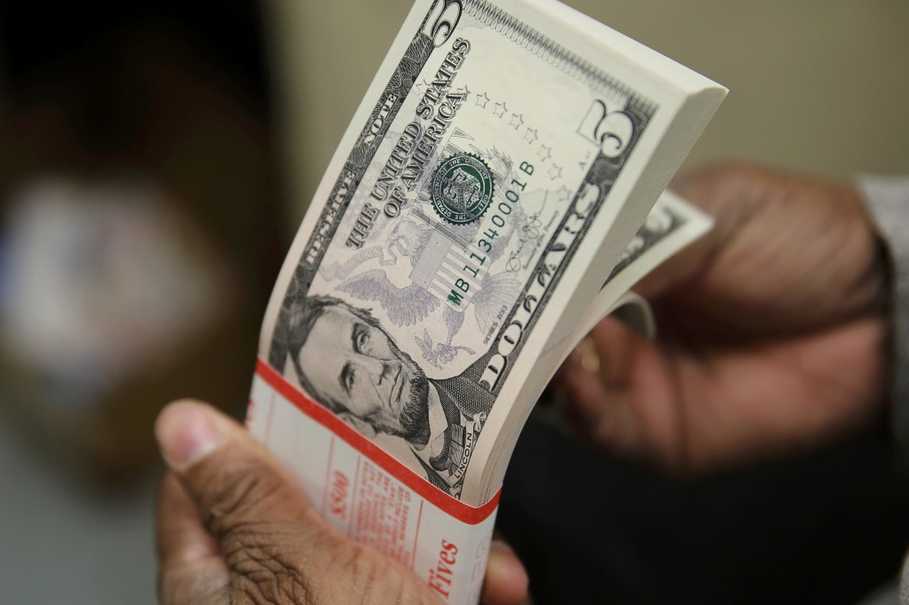
  • Vietnam reduces penalties for illegal currency exchange

    Vietnam reduces penalties for illegal currency exchange

    Vietnam has significantly lowered penalties for illegal currency exchanges following outrage over a man being fined VND90 million ($3,900) for exchanging $100 last year.

    The fine was revoked after a public outcry erupted over disproportionate punishment.

    An individual or a shop illegally exchanging up to $1,000 will receive a warning instead of a fine of up to VND100 million ($4,300), according to a new government decree set to take effect December 31.

    The fine will increase progressively, with a maximum penalty of VND100 million levied for illegally exchanging more than $100,000, the decree says.

    Illegal exports and imports of currency will be fined up to VND250 million ($10,800).

    The legal amendments come after a resident of the southern city of Can Tho was fined VND90 million ($3,900) in October 2018 for exchanging a $100 note at a gold shop.

    It is a common practice for Vietnamese citizens to exchange currencies at local gold shops that offer better prices than banks, even though very few of the shops are licensed exchangers.

    Can Tho authorities revoked the punishment after Deputy Prime Minister Truong Hoa Binh said such a heavy fine should be reviewed, and lawyers and lawmakers also said it was unreasonable?

    However, the province confiscated the $100 note from the man, an electrician who makes VND4 million ($171) a month.

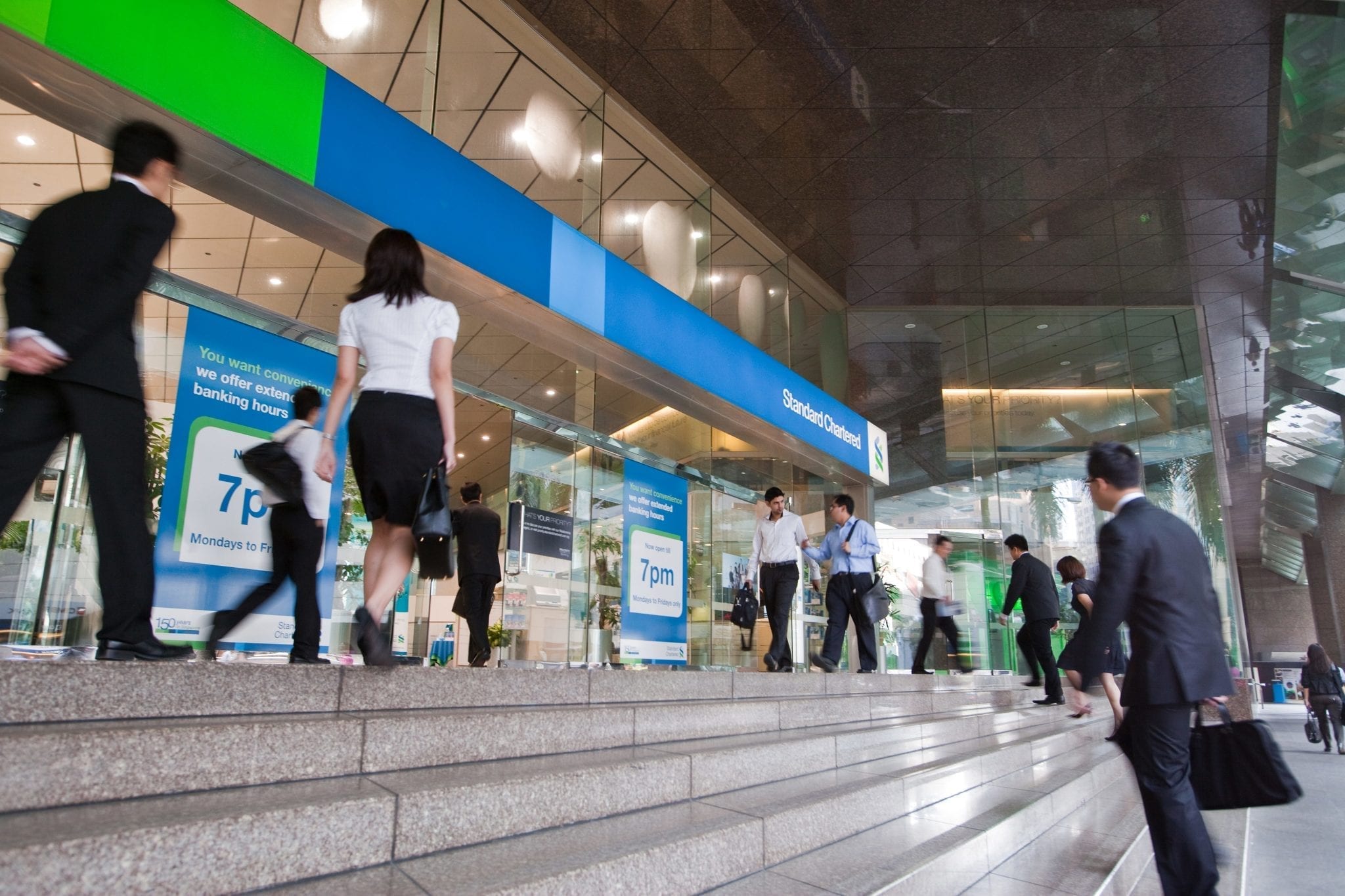
  • Standard Chartered Converts Physical to Mobile Tokens

    Standard Chartered Converts Physical to Mobile Tokens

    Standard Chartered will transition from physical to mobile tokens for its online corporate banking platform with expectations to benefit more than 100,000 clients in over 38 markets.

    The transition will be rolled out across the markets for the «Straight2Bank» platform, which focuses on cash management and trade transactions, over the next three months.

    According to the bank, «the process of mailing, tracking and continuous replacement required for the physical token activation was time-consuming». Previously, it would take 10 days to open accounts compared to instant account-opening with mobile tokens. The new tokens will also contain enhanced encryption and a built-in layer of security against malware targeting mobile applications.

    Standard Chartered noted that transition from physical to mobile tokens is only the beginning of a broader strategy to «simplify user authentication and security».

    The mobile token solution takes into account not just convenience, it also provides our corporate customers with a more secure solution compared to physical tokens, said Martijn De Jong, Standard Chartered’s co-head of digital channels & data analytics for corporate, commercial and institutional banking.

    This is a critical first step in our aspiration to simplify user authentication and security. The endgame will be to leverage physiological credentials of the user to establish user identity and continuous authentication to combat fraud.

  • Ant Financial Eyeing Singapore’s Digital Bank Licences

    Ant Financial Eyeing Singapore’s Digital Bank Licences

    Jack Ma’s Ant Financial Services may apply for a virtual banking license in Singapore, potentially making a splash in the regional banking landscape.

    Ant Financial Services is the latest contender to enter the race for a digital banking license. Up to two licenses are on offer for full digital banks, while another three are on offer for wholesale banks. The firm did not disclose whether it will seek a retail or wholesale license.

    We are actively looking into this opportunity,” said Ant Financial, who was quoted in a report. Ant’s payments app Alipay and its local e-wallet partners had about 900 million annual active users in China and 1.2 billion globally as of June, according to Bloomberg Intelligence.

    Singapore’s move to open up the banking industry to technology companies follows in the footsteps of Hong Kong, where Ant has obtained a license. So far, OCBC has agreed to join peer-to-peer lender Validus Capital and Temasek Holdings’ venture capital arm to apply for a wholesale license before the year-end application deadline.

    South-east Asia’s digital lending market is expected to more than quadruple to US$110 billion by 2025, according to a report by Bain & Co, Google, and Temasek Holdings.

  • E-Money More Popular than Credit Cards in Southeast Asia

    E-Money More Popular than Credit Cards in Southeast Asia

    Five Southeast Asian Countries have attracted non-banks to build regional electronic wallet platforms, with total e-money transactions exceeding 10 billion.

    Indonesia, Malaysia, the Philippines, Singapore and Thailand saw over 10 billion e-money transactions occur in 2018. Singapore led the region, accounting for 34 percent of total e-money transactions, having attracted nonbanks to build regional electronic wallet platforms, according to the inaugural 2019 Southeast Asia E-Money Market Report released by S&P Global Market Intelligence.

    E-wallets aligned with high frequency and scalable use cases like ride-hailing and e-commerce are likely to grow and garner market share across the region. The volume of transactions processed through e-wallets is gaining steam. For example, we estimate that e-wallets’ share of total e-money volumes in Indonesia grew to 36 percent in 2018 from less than 10 percent in 2017, said Sampath Sharma Nariyanuri, CFA, Fintech Analyst at S&P Global Market Intelligence.

    The popularity of e-money products by non-banks for small-value transactions is supporting the rise of ride-hailing and e-commerce companies as financial intermediaries across Southeast Asia, the research firm noted.

    Payments processed through platforms offered by ride-hailing companies Grab and Go-Jek; TrueMoney, a unit of e-commerce and fintech company Ascend Group; and AirPay, the financial services business of e-commerce and gaming company Sea amounted to roughly US$30 billion in aggregate annualized transaction value in 2018, according to the research firm’s estimates.

  • Bank of Japan Studying Digital Currencies

    Bank of Japan Studying Digital Currencies

    Although the Bank of Japan has no immediate plans to issue digital currencies, it is conducting research to prepare for future needs.

    Bank of Japan governor Haruhiko Kuroda said the central bank is studying digital currencies in case the need to do so heightens in the future, according to a report.

    If stable coins backed by companies with a huge customer base are issued globally, that could have an impact on monetary policy and financial system stability, Kuroda told the parliament. He added that stable coins should not be issued unless there is a sufficient framework in place to ensure governance and risk management.

    The stance could be triggered by China’s move towards a digital currency of its own. The Asian economic giant has expressed eagerness to launch its own digital currency using a framework called Digital Currency Electronic Payment or DCEP, and is likely to roll this out in the next two to three months, said Jack Lee, managing partner of HCM Capital, who was quoted in a report.

    That would allow its central bank to issue a digital currency to commercial banks and third-party payments networks by Alipay and WeChat Pay, he explained.

  • Citibank Indonesia’s 9-Month Net Profit Surged

    Citibank Indonesia’s 9-Month Net Profit Surged

    Citibank NA Indonesia posted a net profit of 2.4 trillion Rupiah ($170.51 million) in the first nine months of the year, a 70 percent jump from the same period last year despite lower loan disbursements.

    The increase in profit was driven by increases in the bank’s non-interest income and net interest income, as well as a lower cost of credit, said Citibank CEO Batara Sianturi at a media briefing last week.

    We managed to close the third quarter with a solid financial performance…the (above) three factors have contributed to the bank’s profit growth, he said.

    However, the bank’s loan disbursement fell 7.8 percent year-on-year to 44.8 trillion Rupiah as of September.«The lower loan portfolio occurred mainly in the financial intermediary, mining and communication sectors but we compensated for the (loan) growth in the trade and processing industries,» Citibank financial controller Pranadi Wangsa told reporters during the same briefing.

    This was in line with the weak demand for corporate loans as businesses adopted a wait-and-see approach given the global economic and geopolitical uncertainties, said Bank Indonesia’s Governor Perry Warjiyo. Bank Indonesia’s latest data show that bank lending slowed to 8.6 percent year on year in August, the weakest growth rate in almost two years and lower than the 9.58 percent rate in July.

    The lender projects a 10 percent decrease in loan disbursement until the end of the year.

  • HSBC Shuts Protest-Related Account in Hong Kong

    HSBC Shuts Protest-Related Account in Hong Kong

    A corporate account reportedly linked with protest-related activities has been closed by HSBC though it cites regulatory risks.

    The account is reportedly being used to raise funds to support protest-related activities covering expenses such as legal, medical and food, according to a «Hong Kong Economic Journal» report. HSBC has given the account holder 30 days to withdraw all its funds.

    The report noted that it was in fact inconsistency between the holder’s claimed and actual use of the account that led to its closure rather than political motivation.

    As part of our responsibility to know our customers and safeguard the financial industry, we regularly review our customers’ accounts,» said Vinh Tran, a spokesperson for the bank in Hong Kong, without elaborating on the specific matter. «If we spot activity differing from the stated purpose of the account, or missing information, we will proactively review all activity, which can also result in account closure.

    In a separate statement, the Hong Kong Monetary Authority also underlined effect risk assessment regarding banking activities, echoing the emphasis on consistency of stated account purpose and source of funding.