Category: Finance

Retail News Asia is committed to providing both local and global retailers with the latest Finance news throughout the Asian market. This on a daily base.

  • Citi Posts Strong Institutional Business Growth in Taiwan

    Citi Posts Strong Institutional Business Growth in Taiwan

    Citi’s institutional business in Taiwan saw a significant acceleration in 2021 with numerous transactions across industries including technology, consumer, renewables, and financial services.

    Citi’s Taiwanese institutional clients have been ramping up their efforts to take advantage of the growth environment in areas such as supply chain diversification.

    Taiwan is home to many world-class companies and we are committed to supporting their ambitions, according to a statement citing Christie Chang, head of banking, capital markets, and advisory for Citi Taiwan and chair of APAC corporate banking.

    Within mergers and acquisitions, the American lender advised on five Taiwan-related deals in recent years, including three in 2021.

    The deals this year spanned across businesses related to semiconductor assembly and testing, renewable energy and retail food.

    Citi has also supported billions of dollars in fundraising for Taiwan corporates across local and global capital markets.

    Within equity capital markets, the bank supported fundraising that totaled nearly $1.5 billion in 2021 across businesses linked to financial services, semiconductors, and other electronics manufacturing. And within debt capital markets, it helped raise $8 billion, also for manufacturing-related businesses.

    According to Citi, some of its largest growth inflows this year originated from trade corridors involving Taiwan with a nearly 50 percent increase in Taiwan-to-India flows and around a 20 percent increase in Taiwan-to-ASEAN flows.

    The bank has also observed strong inbound flows into Taiwan, most notably from companies in Australia, India and Japan.

    There is a massive transformation happening across all industries and with a global network this has helped sharpen Citi’s dialogue with clients in Taiwan as they increasingly want a regional and global perspective, Chang added.
  • Deutsche Adds Over a Dozen Private Bankers in India

    Deutsche Adds Over a Dozen Private Bankers in India

    Deutsche Bank Wealth Management has made a significant expansion in India with the hire of more than a dozen for the front office and product units.

    Deutsche Bank Wealth Management in India has made over 15 hires across relationship management and investment advisory join this year and early 2022, according to a statement.

    The business opportunity in India has become very compelling with the material wealth creation driven by entrepreneurial activity, said Amrit Singh, head of wealth management, global South Asia.

    We are now shifting gears and expanding our long-standing and established team as we seek to support our clients and reach new ones with our full suite of products and solutions.

    For the front office, the German private bank hired Rajasekar Ayyalu to join as a director in Chennai with a focus on expanding and deepening its presence in that region.

    Ayyalu was most recently with Julius Baer where he was an executive director for investments. Previously, he also worked at Merrill Lynch and Royal Bank of Scotland.

    The bank has also hired four vice presidents – Jai Bhatia, Sanyam Sharma, Anjali Vashisth and Manish Lalwani – to join as relationship managers in the Delhi and Mumbai offices.

    Deutsche Bank has also been bolstering its product capabilities in India, including the hire of Mayank Khemka as chief investment officer in December 2019 which subsequently led to the launch of a domestic discretionary portfolio management business.

    Adding to its existing shelf of equity multi-cap and multi-asset customized strategies, the bank introduced a fixed income strategy following the hire of Bhupendra Meel as a fixed income fund manager.

    We are delighted to bring on board some of the most promising talents in the private banking industry, said Atinkumar Saha, head of wealth management, Deutsche Bank, India.

  • Singapore and Philippines Step Up Digital Payment Cooperation

    Singapore and Philippines Step Up Digital Payment Cooperation

    The regional neighbors aim to boost cross-border collaborations that will strengthen Asean regional payments and provide financial inclusivity to Overseas Filipino Workers (OFWs) and micro-small-to-medium-sized enterprises (MSMEs).

    The central banks of Singapore and the Philippines have signed an agreement at the World Fintech Festival Philippines to boost payments cooperation, which includes the linkage of the two countries’ QR and real-time payment systems.

    The agreement expands on the Fintech Innovation Function Cooperation Agreement, which was signed between the two countries in 2017. According to the announcement, the 2021 agreement will make cross-border payments cheaper, more inclusive, and more transparent and drive financial inclusion, particularly underserved Filipinos.

    MAS managing director Ravi Menon called the agreement a concrete step towards the vision of an ASEAN network of interconnected real-time payment systems.

  • Union Bank Chosen as Citi’s Preferred Philippines Bidder

    Union Bank Chosen as Citi’s Preferred Philippines Bidder

    Citigroup has reportedly selected the Union Bank of Philippines as its preferred bidder for its consumer banking assets in the country.

    Citi has chosen Union Bank as its preferred bidder for a potential sale valued at an estimated $1 billion, according to a report citing unnamed sources.

    Talks are still ongoing and no conclusive decisions have been made with other bidders still interested.

    Other reportedly interested bidders for the Philippines consumer banking assets include BDO Unibank, Metropolitan Bank & Trust Co. and Bank of the Philippines Island.

    The sale is part of Citi’s broader plan to exit from 13 markets where it lacks scale and focus its wealth efforts around hubs in Hong Kong, London, Singapore and the United Arab Emirates.

  • Binance Resumes Dogecoin Withdrawals

    Binance Resumes Dogecoin Withdrawals

    Binance has fully reopened withdrawals for cryptocurrency Dogecoin after a technical glitch that led to a heated exchange between founder Changpeng Zhao and Tesla’s Elon Musk.

    According to a blog post by the crypto giant, the glitch which prevented Dogecoin withdrawals for more than two weeks was an unlikely and unfortunate coincidence.

    No single entity was at fault, neither Binance nor DOGE Network had prior knowledge of this rare issue. So rest assured, as Zhao said – no one’s getting fired, Binance said in a post linking to a previous update from Zhao where he made the commitment.

    Last week, Musk challenged Binance on social media with a post leveled directly at Zhao that said the glitch sounds shady.

    This subsequently led to exchanges with Zhao who not only defended Binance but also questioned a glitch on the side of Telsa which led to the recall of nearly 12,000 vehicles.

    It was an unlikely and unfortunate coincidence for Binance, the DOGE network, and DOGE holders, Binance said. If we at Dogecoin Core maintainers and Binance had tried to plan this, we simply would not have been able to — not quite the shady circumstances that some had suggested.

  • Linklogis Opens Singapore Office

    Linklogis Opens Singapore Office

    The move advances the firm’s plans to open a digital bank in Singapore in early 2022. Linklogis, a key provider of supply chain finance technology in China with growing operations in Southeast Asia, has established a branch office in Singapore, the company said on Thursday in a statement.

    The company said it is looking forward to working with Singaporean companies to streamline supply chain finance and intends to leverage innovative technology to address the funding gap for SMEs.

    Singapore is a strategic jurisdiction for international trade and a place where we have already created important joint ventures, Charles Song, founder, chairman, and CEO of Linklogis, said.

    Linklogis was awarded a digital banking license by the Monetary Authority of Singapore (MAS) in December 2020, and is currently in the process of establishing a new Singapore-based entity, Olea, its trade finance joint venture with Standard Chartered.

    In April 2021, the company raised HK$8.967 billion ($1.153 billion) in a Hong Kong initial public offering, from investors including BlackRock, EDBI – the investment arm of Singapore’s Economic Development Board – and Fidelity.

  • PPRO Grows in Indonesia

    PPRO Grows in Indonesia

    The payments infrastructure provider has announced the integration of Indonesian «buy now pay later» (BNPL) pioneer Kredivo to its platform.

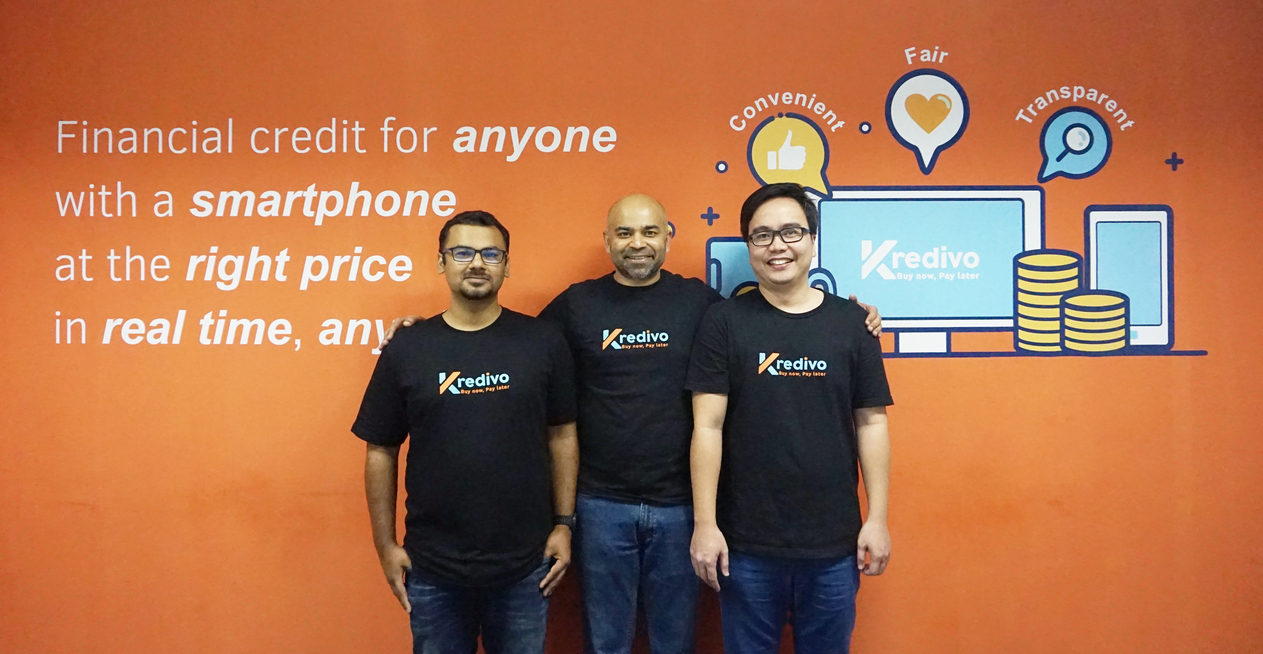
    PPRO is partnering Kredivo – one of Indonesia’s largest and fastest-growing digital credit platforms – to allow more merchants to reach a large pool of underbanked or unbanked Indonesians.

    The integration is a cooperation between PPRO, Kredivo, and DOKU, a leading payment technology company, and enables PPRO to offer the increasingly popular BNPL payment option, as well as split payment and flexible instant credit offerings via Kredico.

    Indonesia continues to be recognized as the world’s hottest battleground for digital payments. The addition of Kredivo to our platform is a milestone in our Indonesia expansion, Kelvin Phua, PPRO head of global market development, said.

    Kredivo currently has more than 4 million users in Indonesia, representing over 50 percent of the local BNPL market.

    The news follows the recent announcement of the integration of two of the most popular payment methods in Indonesia, Jenius Pay and LinkAja, to the PPRO platform. Other payment methods on PPRO’s wider global network include Alipay, WeChat Pay, GrabPay, Bancontact, iDEAL, BLIK, and Boleto Bancário. PPRO raised $180 million earlier this year, taking the firm’s total value to over $1 billion.

    Kredivo has also been expanding of late – it inked a partnership with Standard Chartered in October to offer BNPL loans to the mass market segment via digital channels. The company also launched in Vietnam in August through a joint venture. FinAccel, Kredivo’s parent company also announced plans to go public via a $2.5 billion SPAC merger. The firm had raised US$90 million in 2019 during a Series C funding round to double down on its Southeast Asian expansion plans.

  • Morgan Stanley Follows Suit with Hong Kong Covid Reimbursement

    Morgan Stanley Follows Suit with Hong Kong Covid Reimbursement

    Morgan Stanley is the latest Wall Street lender to provide reimbursements for Hong Kong staff traveling to visit immediate family, outdoing J.P. Morgan’s recently announced Covid benefits by $100.

    Morgan Stanley will provide a one-time reimbursement to Hong Kong staff of up to HK$40,000 ($5,100) for quarantine stays when returning to the city, according to a report citing an internal memo.

    The reimbursement will apply to those returning from travels to see immediate family between December 1 this year and November 30 next year.

    The reimbursement plans come days after a similar move by Wall Street rival J.P. Morgan announced after a 32-hour visit to Hong Kong by chief executive Jamie Dimon which included a rare exemption from the city’s strict quarantine rules.

    We recognize that the costly quarantine measures in place in Hong Kong associated with Covid-19 have impacted many of you with respect to visiting family and loved ones overseas, according to a memo from J.P. Morgan which offered a one-time reimbursement of up to $4,000 – $100 less than Morgan Stanley.

  • Multi-Currency Wallet YouTrip to Grow B2B Offerings

    Multi-Currency Wallet YouTrip to Grow B2B Offerings

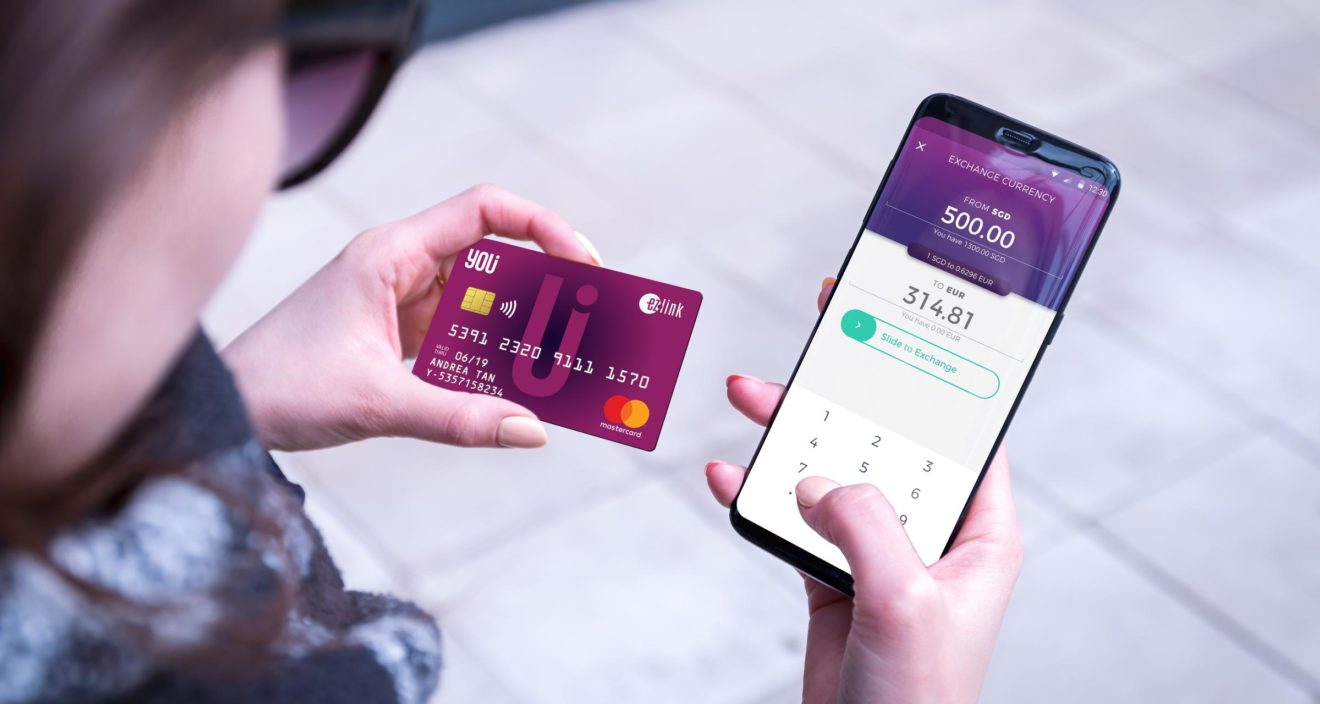
    Singapore-based YouTrip aims to scale its product offerings, including venturing into the B2B payments space, and accelerate its expansion across Southeast Asia.

    YouTrip has raised $30 million in a Series A funding round driven by returning investors from major Asian family offices and prominent financial technology investors, bringing its total funding since launch to $60 million, it said in an announcement on Tuesday.

    The company has set its sights on the growing B2B payments space, as it said SMEs are showing a strong willingness to adopt digital banking services, specifically for cross-border payments. To cater to this segment, it will be rolling out its YouBiz product in Singapore in the first quarter of 2022, and with plans to bring it to five other Southeast Asia countries in the next 12 months. It has already received over 1,000 sign-ups in a beta launch.

    It is a segment with a deep market, as companies increasingly operate in a distributed and borderless manner and we expect their cross-border payment needs to go up, Arthur Mak, co-founder said in the announcement.

    This latest round also gives us the resources to strengthen our multiple growth engines to stay resilient and well-primed for expansion into new vistas, Caecilia Chu, co-founder, said.

    YouTrip said its transaction volume has rebounded to pre-COVID levels, driven by strong traction in cross-border e-commerce transactions and return of travel spending. Exponential growth is expected in the upcoming months following the opening of more Vaccinated Travel Lanes in Singapore and progressive return of regional travel.

    According to YouTrip, it has processed over $800 million in card spending globally, with almost 20 million transactions and over 1.5 million app downloads.

  • Japan Consortium Plots Digital Yen

    Japan Consortium Plots Digital Yen

    Participants include MUFG Bank, Sumitomo Mitsui Banking, Mizuho Bank, Japan Post Bank, Nippon Telegraph & Telephone Corp., East Japan Railway, and Mitsubishi, as well as local governments. The Bank of Japan, Financial Services Agency of Japan, and three ministries are observing its activities.

    Digital Currency Forum – a consortium of 74 Japanese firms – is planning to issue a digital yen that will work similarly to bank deposits by the end of 2022, according to a white paper published on Wednesday.

    Tentatively called DCJPY, the digital yen will be issued by banks as their liability, and the consortium will also be releasing a beta version of the digital currency marketplace for non-fungible tokens (NFTs) by 2022, DeCurret, the consortium’s secretariat, said.

    Members of the consortium will participate in experiments to gauge such a currency’s use in industries ranging from energy to retail, from as early as January, according to the progress report. The consortium’s subcommittee on Settlement in Industrial Distribution, led by Mitsubishi, will be testing the automatic execution of contracts using digital currency in the settlement of maritime transportation for transactions.

  • Vietnamese plunge headlong into meme coin market

    Vietnamese plunge headlong into meme coin market

    Vietnamese are rushing to invest in so-called ‘meme coins’, hoping to make a killing but ignoring the huge risks of buying a volatile asset talked up by social media.

    In the second quarter The Nghia in the northern province of Vinh Phuc invested $20 to buy nearly 100 Dogecoins, a cryptocurrency that has overwhelmed the Internet this year.

    “I bought the coins because everyone was buying it.”

    As his investment doubled after billionaire Elon Musk spoke about the coin on Twitter, Nghia bought more of it and several other similar meme coins such as Shiba Inu and Rici Elon, hoping to make a giant profit from a small investment.

    “If only one of these coins increases 10-fold, the profit will exceed the investment in the rest of them,” he said.

    On Facebook groups, Nghia and thousands of other Vietnamese discuss meme coins daily as they hope to make a killing through the risk of loss is commensurately high.

    Meme coins are cryptocurrencies that originated from an Internet meme or have some other humorous characteristic.

    Dogecoin, released in 2013 after being created as a joke by software engineers, is the original meme coin that sparked the creation of many others.

    The most popular meme coin in terms of market cap, $28 billion, is the 10th biggest cryptocurrency.

    Some 260 meme coins are currently traded, according to cryptocurrency data platform CoinMarketCap.

    But only a fifth have a daily trading value of over $100,000. To put that in perspective, the cryptocurrency market daily trading value is worth $131 billion.

    One major feature of meme coins is their high volatility. Dogecoin, for instance, gained 1,160 percent in April-May before giving up 69 percent to fall to the current $0.2141.

    Quang Tung of Hanoi said that his wallet is like a “zoo” with many ‘animal’ coins though he does not understand all of them.

    “It is like playing the lottery. I can lose all or profit multiple times.”

    Hoang Minh of HCMC had not intended to invest in meme coins but the fear of missing out urged him to buy a small amount.

    “These coins attract people because they are popular memes on social media.”

    Squid Game coin, which was created amid the popularity of the Netflix series with the same name, surged 1,373 percent to $523 in three hours on Nov. 1 before plummeting to $0.003399 an hour later, sending many investors into a tizzy.

    Nghia and Tung have not made major profits yet since they hold a large number of coins of low value, but hope they would be mentioned by a celebrity in future.

    “Before investing in any cryptocurrency, it’s important to understand what you’re investing in and the associated risks, not just the hype around it,” said Douglas Boneparth, certified financial planner and president of Bone Fide Wealth.

  • DLA Piper Hires New Partner in Hong Kong

    DLA Piper Hires New Partner in Hong Kong

    Over the past couple of years, DLA Piper has welcomed several new partners to its Asia Corporate practice. Now the firm announces another hire.

    Global law firm DLA Piper continues to strengthen Asia capital markets offering with new partner hire in Hong Kong, the firm announced Monday. George Wu was appointed as a capital markets partner in its corporate practice. He joins the firm from Herbert Smith Freehills in Hong Kong.

    He advises on corporate and securities transactions including IPOs, debt offerings, private equity, M&A, and compliance matters. He represents issuers of securities as well as investors, underwriters and placement agents for both public and private offerings.

    Wu has particular experience advising on initial public offerings, follow-on offerings in Hong Kong and U.S. capital markets, as well as debt offering transactions including investment-grade and high-yield bonds, convertible and exchangeable bonds, and medium-term note programs. He also brings in-depth industry knowledge to the table, having advised clients on dozens of corporate transactions in various sectors, including healthcare and life sciences, technology, and consumer goods, among others.

    A native Mandarin speaker, Wu is also fluent in Cantonese and English having lived and worked in Shanghai, New York, and Hong Kong.

    George Wu’s arrival closely follows that of capital markets partner Arthur Tso who joined the Hong Kong office in March 2021. Over the past couple of years, DLA Piper has welcomed several new partners to its Asia Corporate practice including Philip Lee and David Kuo in Singapore, and Samata Masagee in Bangkok.

  • PPRO Grows in Indonesia

    PPRO Grows in Indonesia

    The payments infrastructure provider has announced the integration of Indonesian buy now pay later (BNPL) pioneer Kredivo to its platform.

    PPRO is partnering with Kredivo – one of Indonesia’s largest and fastest-growing digital credit platforms – to allow more merchants to reach a large pool of underbanked or unbanked Indonesians.

    The integration is a cooperation between PPRO, Kredivo, and DOKU, a leading payment technology company, and enables PPRO to offer the increasingly popular BNPL payment option, as well as split payment and flexible instant credit offerings via Kredico.

    Indonesia continues to be recognized as the world’s hottest battleground for digital payments. The addition of Kredivo to our platform is a milestone in our Indonesia expansion, Kelvin Phua, PPRO head of global market development, said.

    Kredivo currently has more than 4 million users in Indonesia, representing over 50 percent of the local BNPL market.

    The news follows the recent announcement of the integration of two of the most popular payment methods in Indonesia, Jenius Pay and LinkAja, to the PPRO platform. Other payment methods on PPRO’s wider global network include Alipay, WeChat Pay, GrabPay, Bancontact, iDEAL, BLIK, and Boleto Bancário. PPRO raised $180 million earlier this year, taking the firm’s total value to over $1 billion.

    Kredivo has also been expanding of late – it inked a partnership with Standard Chartered in October to offer BNPL loans to the mass market segment via digital channels. The company also launched in Vietnam in August through a joint venture. FinAccel, Kredivo’s parent company also announced plans to go public via a $2.5 billion SPAC merger. The firm had raised US$90 million in 2019 during a Series C funding round to double down on its Southeast Asian expansion plans.

  • DBS Hit by Worst Outage in a Decade

    DBS Hit by Worst Outage in a Decade

    DBS faced two consecutive days of disruptions to its online banking services, marking the worst outage for the Singapore lender since its ATM glitch in 2010.

    DBS issued a social media post to address the recurring disruptions to its online banking services, including its payments app.

    Services were restored early this morning,» the bank said yesterday in a Facebook post. Unfortunately, yesterday’s digital banking issue has recurred and this has affected our services.

    The post attracted more than 2,500 comments, many of which expressed frustration about blocked access to banking accounts.

    Outages at DBS and its low-cost consumer banking unit POSB first occurred on Tuesday after reports first surfaced in the morning, according to Downdetector – a website that uses crowd-sourcing to track online outages. And just hours after resolving the issue yesterday morning, the outages continued at the bank.

    The inability to access an essential service over such an extended period of time is unacceptable and we deeply regret the inconvenience caused, DBS said in a separate social media post.

    This marks the worst outage experienced by the Singapore lender since 2010 when customers were unable to withdraw cash from ATMs for hours due to a major glitch which subsequently led to supervisory action by the city-state’s financial regulator.

  • Watchdog Greenlights NAB’s Citi Acquisition in Australia

    Watchdog Greenlights NAB’s Citi Acquisition in Australia

    The acquisition «would not substantially lessen competition,» the Australian Competition and Consumer Commission (ACCC) said on Thursday.

    The competition watchdog in Australia will not oppose the proposed acquisition of Citigroup Australia’s consumer business by National Australia Bank.

    Its review focused on competition in the supply of credit cards, as Citi is a substantial provider of credit cards and credit card services. ACCC also focused on was the provision of «white label» credit card services, as following the acquisition, NAB will be the dominant white label credit card supplier to a number of commercial partners, and will compete with those partners in the consumer-facing credit card market.

    Evidence showed that the proposed acquisition was unlikely to raise competition concerns in any other areas of overlap, given Citi’s minimal market share in these markets, ACCC said in a statement.

    NAB, Australia’s second-biggest bank, said in August it would buy Citigroup Australia in a deal valued at around A$1.2 billion ($880 million).

    The U.S. bank is preparing to exit the region in the face of strong challenges to the old credit card business model from buy-now, pay-later companies.