Category: Finance

Retail News Asia is committed to providing both local and global retailers with the latest Finance news throughout the Asian market. This on a daily base.

  • OCBC Creates Dozens of Sustainability-Related Jobs

    OCBC Creates Dozens of Sustainability-Related Jobs

    Singapore’s OCBC has created more than 50 sustainability-related jobs over the last two years as part of a broader plan to internally promote the space.

    The 50 jobs span across sustainable business development, sustainable product development, sustainability research, ESG assessment, ESG reporting, ESG regulatory and compliance, sustainable stewardship, and community development and environmental conservation programs, according to a statement.

    This is part of the «OCBC Future Smart Program» which is now in its second phase with an investment of $30 million over the next three years.

    The program and its first phase were launched in 2018 with an investment commitment of $20 million over three years.

    Since the program kicked off, the bank has developed numerous training modules, sub-programs, certification pathways while further driving learning through desktop and mobile platforms.

    1,900 programs have been launched for OCBC’s 30,000 employees groupwide which have achieved more than 178,000 completions.

    Major change is afoot on the job front and roles that are available today may no longer be needed or will be significantly disrupted tomorrow, said OCBC’s head of group human resources Jason Ho. New threats to the business emerge continuously. We are confident that as long as we continue to learn, un-learn and re-learn as an organization, we will be able to turn threats into opportunities.

  • Citi Private Bank Hires Global Market Head for China

    Citi Private Bank Hires Global Market Head for China

    Citi Private Bank has named a new global market head for China-based in Singapore.

    Lillian Liao joins Citi Private Bank as a managing director and global market head, China, sources said, reporting to North Asia head of private banking Rudolf Hitsch. A spokesperson for the bank declined to comment.

    Liao joins from Credit Suisse where she spent nearly 13 years last as a managing director and senior client partner.

    Citi Private Bank continues to bolster senior talent in the region following a reorganization that saw it merge retail, wealth management and private banking into a single unit – Citi Global Wealth (CGW). Citi Private Bank’s APAC head Steven Lo was named as co-head of the CGW unit in the region.

    Last month, the American private bank added ex-UBP wealth planner Faye Ong as head of the family office advisory, private capital group.

    And in May, it appointed 30-year Citi banker Lee Lung Nien as South Asia head of private banking.

  • Banking sector eyes growth potential

    Banking sector eyes growth potential

    Vietnam Report JSC recently announced the nation’s Top 10 prestigious and effective public companies for 2021 with six banks including Vietcombank, ACB, VPBank, VIB, MBBank and Techcombank.

    Over the past two years, these banks have been recognized by economists and investors for their financial strength and communication capacities, their growth potential, level of sustainable development, quality of corporate governance and the positions in the industries.

    By the end of June 10, the banking industry accounted for 34 percent of HCMC Stock Exchange market capitalization with stock prices growing 18 percent in one month, 40 percent in three months, and 77 percent in six months, respectively.

    According to analysts, the above-mentioned banks have helped the banking industry affirm its position as one of the major pillars of Vietnam’s economy as the sector has contributed to regulating financial supply and demand for businesses and individuals, especially in the context of the economy being challenged by the Covid-19 pandemic.

    A JP Morgan report showed Vietnamese banks offer the best combination of growth and return on equity (ROE) in ASEAN at 18 percent, double that of other countries in the bloc.

    According to analysts, there are three growth drivers for the strong growth of the banking industry in the medium and long-term including the strength of the local economy, self-improvement and digital transformation.

    According to the World Bank, though Vietnam has been affected by the Covid-19 pandemic, the local economy still boasts many positive achievements, demonstrating its sustainable internal strength.

    Meanwhile, Vietnam is among the few economies predicted to grow positively in the coming years with major drivers being domestic production, along with consumption and exports. The banking industry, with its role as a financial support for the whole economy, is also forecast to continue growing in resonance with the national economy.

    At the same time, Vietnam’s population is expected to reach 120 million by 2050, an increase of over 20 percent compared to the present, with the middle-class proportion to double from 13 percent to 26 percent by 2026. That will open up golden opportunities for banks especially those that have considered retail business a core area.

    Currently, Vietnam International Bank (VIB), Asia Commercial Bank (ACB), Saigon Thoung Tin Commercial Joint Stock Bank (STB), Vietnam Prosperity Joint Stock Commercial Bank (VPBank) and Military Commercial Joint Stock Bank (MBBank) are recognized as five leading private banks with top retail loans.

    Notably, VIB and MBBank rank top with a compound growth rate of 49 percent and 31 percent respectively over the past five years. VIB is also considered the leading retail bank as its outstanding retail balance accounts for over 86 percent of the total outstanding balance, of which over 95 percent of retail loans have collateral.

    The banking industry has been experiencing positive changes in recent years. The dynamic business model, effective application of digital transformation and significant improvement in internal strength have brought impressive business results.

    In addition, the State Bank of Vietnam has accelerated the application of international risk management standards. That has contributed to improving the transparency of information, enhancing the prestige of local banks to domestic and international investors.

    The below table, sourced from audited financial reports of relevant banks from 2016 – 2020, mentions key financial indicators that clearly show the top six banks obviously stand out from median industry performance.

    Banks % ROE % ROA % CIR % NPL & VAMC % CAR CAGR Profit before tax 2016-2020 (%)
    VIB 29.6 2.2 40 1.7 10.1 70
    ACB 24.3 1.9 42 0.6 11.1 55
    VPB 21.9 2.6 29 3.4 11.7 27
    VCB 21.1 1.4 33 0.6 9.6 28
    MBB 19.1 1.9 39 1.1 10.4 31
    TCB
    18.4
    3.1 32 0.5 16.1 41
    Industry median 18.8 1.6 39 1 10.8 39

    Quickly embracing digital transformation

    The banking sector’s strong growth in recent years is also attributable to the endless efforts of local banks in quickly embracing digital transformation. The banks that have actively participated in digital transformation will meet the increasing needs of customers while launching new products and services to both better serve their clients and increase business efficiency.

    Among them are VIB, MBBank and Techcombank, which have launched digital product packages like digital accounts, bank cards and completely free digital banking services to better facilitate customers.

    Amid the Covid-19 pandemic, digital solutions offered by these banks have assisted customers to make transactions and conduct basic banking services online instead of visiting branches or transaction offices.

    Analysts said banks that have a clear digitalization strategy will soon boost their market share and quickly lead the sector in terms of growth rate and quality of services. This has happened in markets like the U.S., Australia and Singapore.

    They added with the three above-mentioned growth drivers, sustainable development with many distinctive imprints of the six banks in the Top 10 is expected to be a bright spot for the banking industry and the Vietnamese economy in future.
  • Citi Singapore Appoints Senior Execs

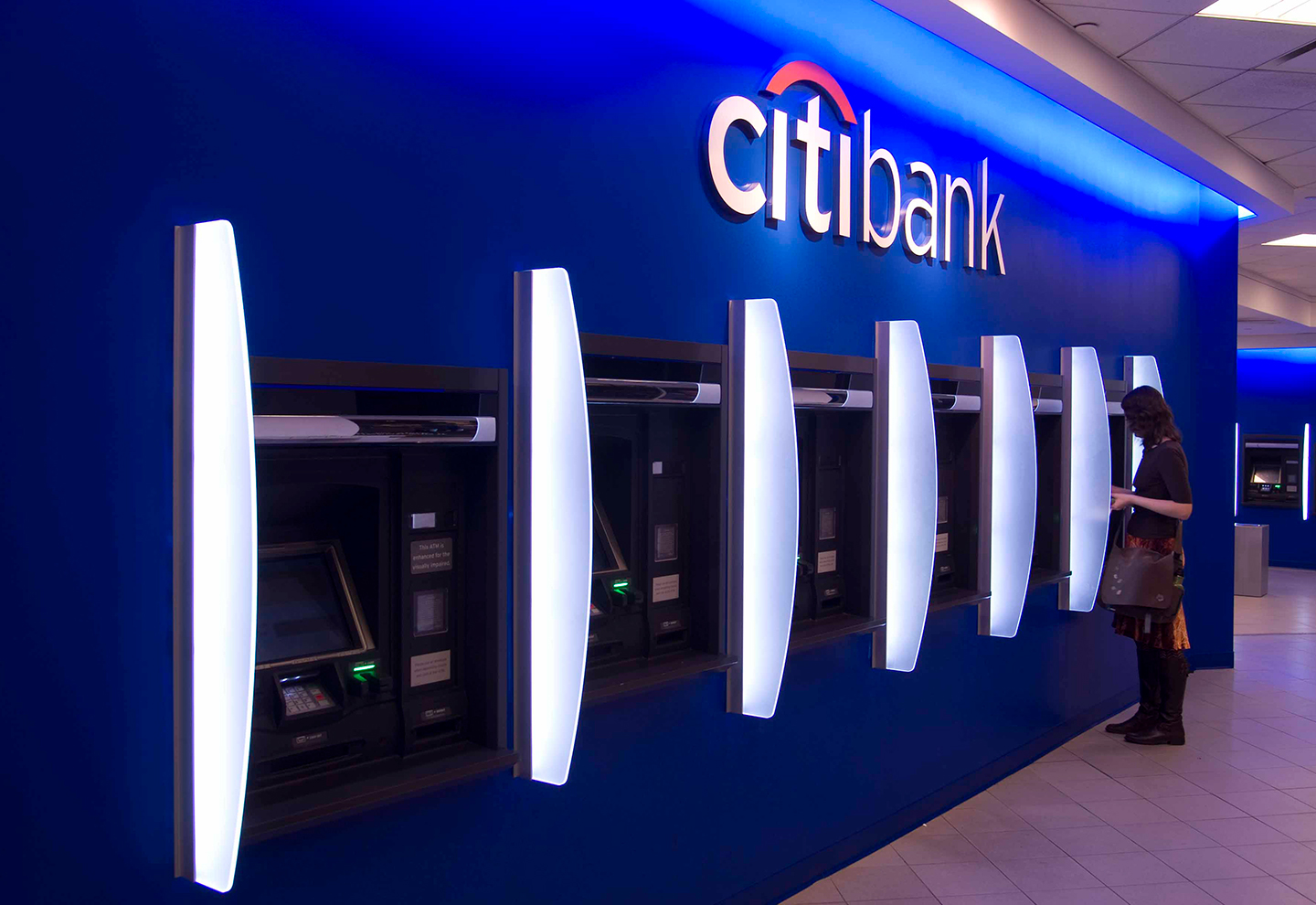
    Citi Singapore Appoints Senior Execs

    The bank has appointed five locals to senior positions across Asia Pacific in various business groups, according to an announcement.

    Chan San-San, who joined Citi in 2003, was appointed private banking high net worth head for Asia Pacific, effective July. She will continue to be based in Singapore and will join the Global Private Bank leadership team as well as the Citi Global Wealth Asia management team.

    Singapore-based Kelvin Goh was appointed Asia Pacific head of financial institutions group for investment banking, effective immediately. Goh, who joined the bank in 2018, brings 17 years of experience in the field and was most recently Citi’s Asia Pacific head of insurance, investment banking.

    Gary Chan, who joined Citi in 1997 and was most recently Singapore head of the integrated corporate bank, has been appointed Taiwan head of the integrated corporate bank, effective October 1. He will be taking over from Vivian Tan, who will be retiring from Citi after 21 years of service.

    Taking over from Chan is Gilbert Ng, who will be responsible for clients belonging to the corporates, financial institutions and public sector groups, and will have oversight of the global subsidiaries group, effective immediately. Ng joined the bank in 2006 and was most recently head of global subsidiaries group, Singapore.

    Toh Jian Xun was appointed as co-head of TMT, Asia Corporate Bank, effective immediately. He will continue to serve in his current role as head of TMT for China corporate bank, based in Shenzhen. He joined Citi in 2010.

    The moves signal our commitment to develop local talent, provide opportunities for personal and professional growth across our global network, and offer our people a long-term career in the bank,» Amol Gupte, ASEAN head and Citi country officer for Singapore, said.

    The appointments come on the heels of two other senior moves in Singapore: Serene Gay as the head of credit cards and personal loans for Citibank Singapore and Faye Ong as the head of family office advisory for Asia at its private bank.

  • ZA Adds Digital Asset Capabilities

    ZA Adds Digital Asset Capabilities

    ZA International has established a partnership with BC Technology Group which operates the city’s only licensed digital asset platform. ZA International and BC Technology Group have entered into a mutual collaboration agreement, according to a statement. ZA will use BC Technology Group as its exclusive digital asset trading partner via its Hong Kong-licensed digital asset platform OSL.

    On the other hand, BC Technology will leverage ZA’s tech capabilities in areas such as facial recognition and machine learning to enhance user experience on its trading platform.

    Both ZA and OSL remain in growth mode with the former reportedly considering the acquisition of Hong Kong’s largest non-bank lender late last year and the latter recently making a series of global hires.

    The digital asset industry presents a thriving future, and fintech companies are well-positioned to promote the universal application of digital assets in Hong Kong through capitalizing on their technological advantages, said ZA International president Wayne Xu.

  • Fintechs Challenge Traditional FIs in Malaysia Digital Bank Race

    Fintechs Challenge Traditional FIs in Malaysia Digital Bank Race

    A crowded field of contenders are vying for the five licenses on offer by Bank Negara Malaysia. The race for digital banking licenses digital banking license is heating up, with more than a dozen applications involving over 50 companies submitted before the closing date on Wednesday.

    With the exception of a few players, most of the digital banking aspirants have not publicized their aspirations. However, a Grab-Singtel joint venture and Singapore-based investment solutions firm iFAST Corporation confirmed their applications on Thursday.

    The notification on the grant of the license will be made by the first quarter of 2020, Bank Negara Malaysia said.

    Among the contenders are also Malaysian conglomerate Sunway, which teamed up with Tencent-backed Chinese firm Linklogis and Bangkok Bank. Likely applications also include e-commerce giant Sea Group, gaming company Razer Fintech and telco Axiata, which previously expressed an interest in the license.

    At least five banks — CIMB Group Holdings, Affin Bank, Hong Leong Bank, AMMB Holdings and Standard Chartered Bank Malaysia — had signaled their interest in pursuing a digital banking licence in Malaysia.

    AirAsia’s fintech unit BigPay also announced its bid for a license on Thursday. The company is partnering with Malaysian Industrial Development Finance – a unit of the country’s largest asset manager Permodalan Nasional – and Singapore-based private equity firm Ikhlas Capital.

    BigPay was launched in 2018 by AirAsia as an e-wallet, hoping to leverage the low-cost carrier’s dominance in regional air travel in Southeast Asia.

    BigPay Bank will allow us to execute deeper on our mission to build a connected financial future for Malaysian consumers and entrepreneurs, Salim Dhanani, CEO and founder of BigPay, said in the announcement.

  • Alibaba Co-Founders Pledge Shares for Loans

    Alibaba Co-Founders Pledge Shares for Loans

    Alibaba co-founders Jack Ma and Joseph Tsai are reportedly pledging their shares in the Chinese e-commerce giant in exchange for significant loans from global banks.

    The two tech billionaires have pledged their shares to banks including UBS, Credit Suisse, and Goldman Sachs, according to a «Financial Times» report citing company documents.

    The shares pledged were made by offshore companies controlling more than half of Ma and Tsai’s stake in Alibaba – 5.8 percent as of December valued at $35 billion – through the documents did not disclose the number of shares pledged.

    The share-backed loans mark a stark contrast with Jack Ma’s positioning just nine months ago when he was originally due to be a beneficiary of Ant’s listing before Beijing stepped on the brakes for what would have been the world’s largest IPO in history.

    Since then, regulators have ordered heavy restructuring for Ant while Alibaba saw its share prices drop one-third alongside a $2.8 billion fine in April over monopolistic practices.

    Ma and his affiliates currently do not have any loans outstanding collateralized by the company’s shares. Tsai’s outstanding share-backed loans were easily manageable with prudent loan-to-value ratios to provide a substantial cushion against a potential margin call.

  • Deutsche Bank Expands Wealth Unit with HSBC Trio

    Deutsche Bank Expands Wealth Unit with HSBC Trio

    Deutsche Bank has hired three former HSBC executives to join its wealth management arm in Southeast Asia. Terence Leong joins Deutsche Bank as group head for Southeast Asia, according to a statement, reporting to head of Southeast Asia wealth management Shang-Wei Chow.

    Leong joins from HSBC where he was most recently its ultra-high net worth market lead and Singapore-based desk head.

    He has 15 years of wealth management experience and previously also worked with UOB Private bank and DBS Treasures Private Client.

    Deutsche Bank has also hired 20-year veteran and ex-HSBC senior director Lynn Aw as team head alongside banker Derek Teo.

    Both Aw and Teo have been team members with Leong since UOB Private Bank, the statement added.

    Southeast Asia is a growing region and the fundamentals underpinning wealth creation remain positive, said Chow. We will continue to hire the best people in the industry to serve clients across the region, and to provide world-class services to which the bank has committed.

    The trio of hires follows several senior departures at Deutsche Bank’s wealth management unit this year.

    Last month, the German private bank lost ex-managing director and global co-head of advisory and investment solutions Wei Mei Tan who joined Singapore-based digital wealth platform Endowus as its chief advisory officer.

    And last week, we reported the reemergence of former Southeast Asia group head and 18-year Deutsche banker Malcolm Tay at Credit Suisse where he was named deputy market group head and market leader for Indonesia.

  • StanChart Names Chief Information Officer for Retail Banking

    StanChart Names Chief Information Officer for Retail Banking

    She takes over Paul Macpherson, Chief Information Officer, CPBB since 2018, who will be leaving to pursue opportunities outside the bank.

    Standard Chartered has appointed Anshu Sharma Raja as chief information officer, Consumer, Private & Business Banking (CPBB), the bank announced on Friday.

    Raja joined the bank in 2018 as managing director, global head of Retail Banking Technology and head of Global Business Services and Technology & Innovation Centers, based in Bengaluru, India. She previously worked for Vodaphone, AIG, Goldman Sachs, and consulted with investment banks for technology solutions, according to her LinkedIn profile.

    Raja is based in Singapore and reports to Michael Gorriz, group chief information officer.

    Our ambitious growth plans for our affluent, mass and wealth management business rely on a modern, cloud-based architecture that delivers superior client products and experiences digitally, Gorriz said in the announcement.

  • VietinBank pre-tax H1 profits up 75 pct

    VietinBank pre-tax H1 profits up 75 pct

    State-owned lender VietinBank has recorded pre-tax profits of VND13 trillion ($565.2 million) in the first six months of 2021, a year-on-year increase of 75 percent.

    Its ratio of non-performing loans at the end of Q2 was 1.38 percent, chairman Le Duc Tho said, adding that the targeted non-performing loans ratio for this year was 1-1.2 percent

    The bank’s total assets value at the end of June was VND1.4 quadrillion ($60.8 billion), while its loans outstanding were VND1.06 quadrillion, according to its CEO Tran Binh Minh.

    Capital mobilization as of June reached VND1.2 quadrillion, up 3.4 percent year-on-year.

    The bank plans to increase its charter capital by 29 percent to over VND48 trillion this year by paying dividends in shares.

  • Deutsche Bank Hit by Expired Hong Kong IPO License

    Deutsche Bank Hit by Expired Hong Kong IPO License

    A staffing error reportedly bypassed internal controls at Deutsche Bank which led to the expiration of its Hong Kong license to sponsor initial public offerings, marking a setback to the relaunch of its Asia equities business.

    Deutsche Bank failed to replace to regulated staff on time which will cause its IPO sponsor license to lapse from next month, citing unnamed sources.

    Deutsche’s IPO principals until June were investment bankers Poon Tsz Yuen and Rowena Wang, as per the Securities and Futures Commission’s (SFC) register. According to the report, Poon left the bank on June 16 and Wang is set to be removed from the register of authorized principals in early July.

    A spokesperson for the bank confirmed the license expiration and staff departures.

    The license expiration marks a setback to the relaunch of Deutsche Bank’s Asia equity capital markets (ECM) business after a restructuring in 2019 that saw Hong Kong shed alms all its ECM teams.

    According to another unnamed source close to the SFC, the issue suggests that there were «poor internal controls» at the bank and that process hereafter is expected to be slow.

    Separately, the SFC fined Deutsche Securities Asia last week for issuing incorrect statements to its prime brokerage clients and delaying the reporting of the failures to the regulator. And earlier today, the German lender’s Greater China investment banking vice-chair Rowena Chu reportedly retired.

  • HSBC Names Regional Fund Selection Head

    HSBC Names Regional Fund Selection Head

    She will succeed Virginia Devereux Wong, regional head of funds and ETFs, who will be leaving HSBC Private Banking at the end of June.

    Lina Lim, regional head of discretionary, Asia, will take on the expanded role of regional head of discretionary and funds, citing a HSBC spokesperson.

    In her new role, which combines Wong’s responsibilities, Lim will oversee discretionary, funds and ETFs in Asia. She will lead the team to introduce products by leveraging HSBC’s product manufacturing capabilities, HSBC said.

    Lim joined HSBC Private Bank’s Investment Services and Product Solutions (ISPS) team in Asia Pacific in 2019 as regional head of discretionary, Asia, following over 13 years at J.P. Morgan in various roles, including head of its Institutional Wealth Management discretionary business in Asia for family offices.

  • HSBC Names Malaysia Head of Wealth and Personal Banking

    HSBC Names Malaysia Head of Wealth and Personal Banking

    HSBC has appointed a successor for the role of wealth and personal banking head in Malaysia after it was left vacant for three months.

    HSBC named Renee Bullock-Cann as head of wealth and personal banking (WPB) in Malaysia, according to a statement, succeeding Tara Latini who was named head of WPB in the U.S. in April.

    Bullock-Cann reports to HSBC Malaysia chief executive Stuart Milne and APAC regional head of wealth and personal banking Greg Hinston.

    Bullock-Cann was most recently the head of distribution for WPB in Malaysia after relocating to the country in 2019. Previously, she was head of WPB for HSBC Bermuda.

    According to HSBC, Malaysia is a priority market for the bank which has made various investments including $18 million from 2018 to 2020 to improve branches and client experience; $40 million from 2021 to 2023 to add tech capabilities to branches; the creation of 200 new roles; and the roll-out of various digital services.

    Our ambition is simple: we want to be the bank that Malaysians turn to for their international needs, Milne said.

    We will leverage our unparalleled international network, enhance our range of wealth solutions and focus on building our digital capabilities including our mobile functionality, our in-branch technology, and our people’s digital skills.

  • Another forex trading platform swindles hundreds of thousands of dollars

    Another forex trading platform swindles hundreds of thousands of dollars

    Yet another fraudulent foreign exchange trading platform that cheated people out of hundreds of thousands of dollars has been exposed in HCMC. Nga, a resident of HCMC’s District 7 spends most of her time these days reading updates about FXTradingMarkets in a Facebook group with 4,200 members.

    On June 25, the group received a screenshot of a notice believed to be from the Lion Group, which ran the platform, that it would cease to operate from the next day onwards. Nga has invested VND1.4 billion ($60,700) in the platform; and many others have also invested billions of dong. Now, they do not know how they can get back the money.

    A month earlier, the HCMC police had warned people not to trade on currency trading platforms, saying there was a high risk of losing their money. They had found that four people from the Lion Group were hosting forums in various places to talk about how to get rich quick.

    Since 2019, the group has been advertising FXTradingMarkets as a platform headquartered and licensed in the UK and linked to another platform called UKTrade.

    An investor had to deposit at least $1,000 and would get its equivalent in FXT, a cryptocurrency the platform uses to trade.

    Investors would bet on whether a currency would rise or fall within the next 30 seconds. If they were right, they got 95 percent of the bet as profit, but lose everything if they were wrong.

    However, the platform also advertised that everyone could earn one percent a day on their investment if they allowed “experts” to make the bet on their behalf.

    Investors also got a commission if they introduced new clients.

    At first, the investors could trade the FXT currency with their leader for cash, but starting at the end of February, the platform no longer allowed this trade, and investors had to trade in other cryptocurrency markets with a rate of 1 FXT equals $0.3, meaning a 70 percent loss.

    “When similar platforms crashed, we were concerned, but the managers told us not to worry,” Nga said.

    Many celebrities endorsed FXT and so investors continued to place their trust in it, she said.

    Earlier this month the platform posted a notice saying “upgrade ongoing” and did not allow investors to see their account balance. On June 25, when the leaders gave their final notice, 1 FXT was worth $0.0022.

    That means Nga’s investment of $60,000 was then worth only $133, or a 99.78 percent loss.

    The other platform UKTrade also crashed on June 26.

    Tam of Thu Duc District said he invested VND2.8 billion in UKTrade in April but “most of the money is now gone,” adding that thousands of investors lost 95 percent of their money on May 10.

    “Because of the pandemic, our experts were not able to analyze the market,” the leaders told investors, asking them to either pour more money in to recover the loss or be removed from the system.

    Tam and around 10 other investors joined together to report the platform to the police. Together, they have lost a total of VND6 billion.

    Vo Thi Dieu Hien in the central province of Binh Thuan in early May invested VND319 million, but in less than a week she saw all her cryptocurrency gone.

    The leaders asked her to submit another 30 percent of her capital to “save” her account and promised higher profits. She did not, and her account was locked right after.

    “That’s when I realized I was tricked, so I reported it so others won’t fall into the same trap.”

    HCMC and Binh Thuan police said they have received the reports and have done initial investigations. They found that FXTradingMarkets was registered and has servers in the U.S.

    There are signs that the administrators are setting up a new website with similar user interface and functions at sp500stock.com, the police said. The website was no longer available at the time of publishing.

    This is the latest of many of forex trading platform frauds that have been uncovered in Vietnam of late. Thousands of investors have been duped, even though authorities have repeatedly warned them that these platforms are illegal and highly risky.