Category: General

Retail News Asia is committed to providing both local and global retailers with the latest General Retail news throughout the Asian market. This on a daily base.

  • Jewellers in Vietnam make new products to meet surging Tet demand

    Jewellers in Vietnam make new products to meet surging Tet demand

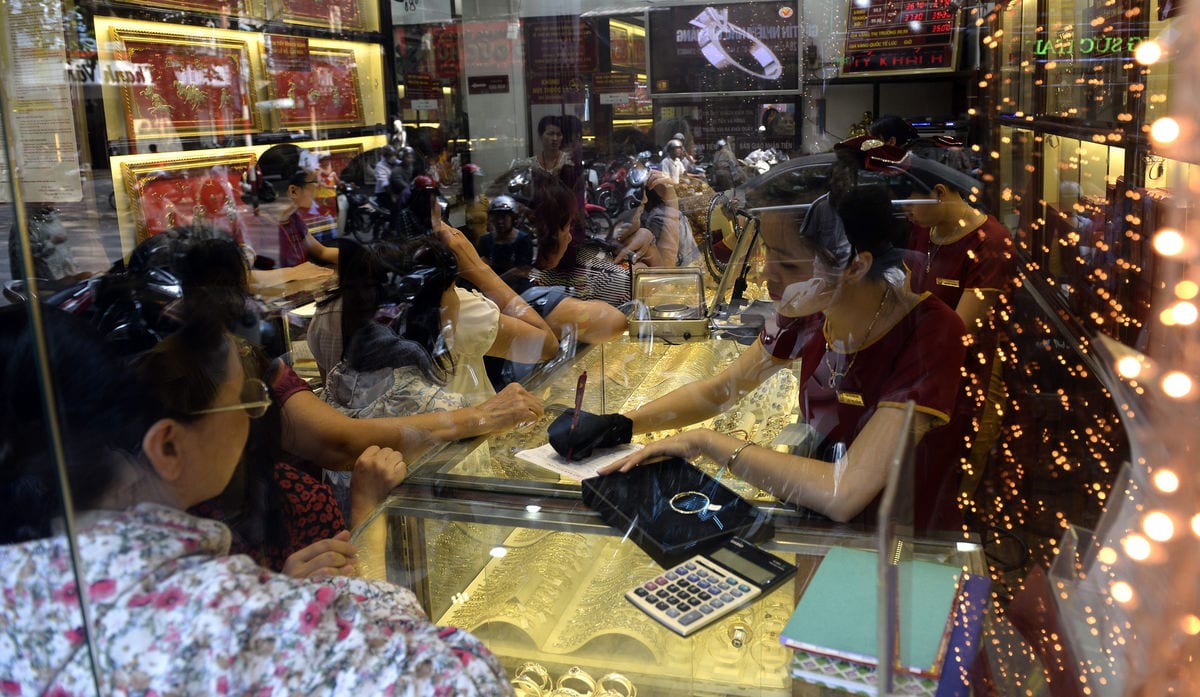
    Gold shops in HCM City are stocking many kinds of original products and hope to make big profits on them during Tet.

    Gold traders expect the demand for gold products to be particularly high on the 10th day of the new year, which is the birthday of the God of Wealth.

    Last year, many gold shops were hit by a shortage of stock after people flocked to buy gold on that day, according to market observers.

  • Traditional shops ‘not dead’ in Thailand

    Traditional shops ‘not dead’ in Thailand

    Traditional Thai retail businesses are expected to stay afloat, but their market share is likely to drop over the next five years as e-commerce proliferates.

  • Bittersweet retail holiday in Thailand

    Bittersweet retail holiday in Thailand

    The Thai economy may not have fully recovered, but a survey shows locals still plan to celebrate Valentine’s Day on Saturday, the same as lovebirds scattered around the world.

    This year Thais are likely to be more cautious with their spending, said Thanavath Phonvichai, vice-president for research at the University of the Thai Chamber of Commerce.

    The centre surveyed 1,255 people nationwide recently and found they plan to spend an average of THB1,900 (USD58) a person on Valentine’s Day.

  • Thailand to relaunch 7-day discount scheme

    Thailand to relaunch 7-day discount scheme

    Thailand plans to reintroduce its initiative to cut consumer prices after the seven-day campaign last 24-30 Dec as part of a New Year gift to the public proved a great success.

    The new campaign could be held in May and might be extended to 10 days, Commerce Minister Chatchai Sarikulya said on Tuesday after meeting with 35 representatives of modern trade outlets, manufacturers and rice packers.

    Under the seven-day campaign, retailers and suppliers agreed to cut their product prices at 12,800 outlets nationwide by 10-70 percent.

  • New MD for Tumi Asia

    New MD for Tumi Asia

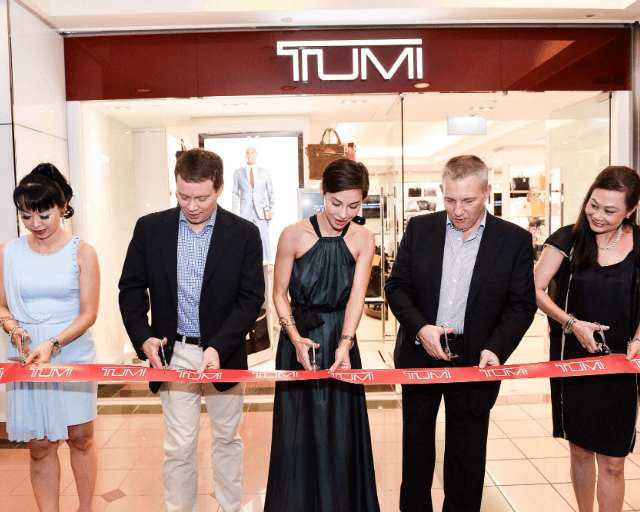
    Fernando Ciccarelli has been named the new senior VP and MD of Tumi Asia.

    Ciccarelli joins the luxury travel luggage retailer after a decade and a half with Coach, Inc.

    “I have always admired Tumi’s focus on constant innovation, intelligent design and unparalleled performance,” he said in a statement.

    “The opportunity for Tumi in Asia is limitless and I am excited to be leading the next stage of growth for the brand in the region.”

    In his new role, he will be responsible for growing the brand in the region, specifically overseeing operations and overall business management in Asia Pacific.

    Based in Hong Kong, Ciccarelli will report directly to Jerome Griffith, global CEO and president of Tumi.

    “We are delighted to welcome Fernando on board at this exciting time for Tumi in Asia. He is a proven leader who brings with him years of direct retail experience in this region”, said Griffith.

  • Parkson profits slump

    Parkson profits slump

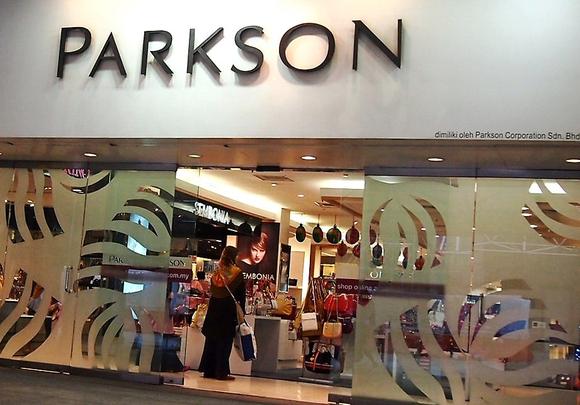
    Parkson Retail Asia has reported a 24.6 per cent slump in net profit – largely attributed to new store establishment costs.

    The Singapore-based department store operator has reported a second quarter trading profit of S$10.23 million.

    The company’s biggest problem markets appear to be Malaysia and Vietnam where same store sales are showing negative growth. And in Vietnam the company accrued costs relating to the closure of a store in the capital city, Hanoi.

    Total sales revenue was flat at S$117.52 million in the three months to December 31, while expenses rose 6.6 per cent to S$109.5 million.

    In the half year to December 31, net profit fell 28.2 per cent to S$17.09 million, on revenue a marginal 0.6 per cent higher at S$227.51 million.

    In a statement, group CEO Toh Peng Koon said the closure of the Landmark-Keangnam store in Hanoi resulted in removing “a major drag on our operating performance” there.

    “While we expect Malaysia’s consumer sentiment to remain muted in the near term, consumer buying prior to the introduction of the Goods and Services Tax on April 1 may provide us with some buffer.

    “We feel confident that the strategies we have initiated to improve our fundamentals will reap the desired results going forward. With our healthy balance sheet and strong cash generation from our operations, we are well-positioned to continue to identify and make prudent investments necessary to growing our business.”

  • Super Bowl 2015: The biggest game in marketing

    Super Bowl 2015: The biggest game in marketing

    he streets of the Pacific Northwest’s biggest city were eerily deserted on Super Bowl Sunday. It appeared that the populace was more asleep than ‘sleepless in Seattle’.

    First impressions were deceiving though, as off the streets things were positively buzzing. Every eyeball was glued to the telecast of the most watched television program in US history, as the Seattle Seahawks took on the New England Patriots in Arizona in Super Bowl 2015.

    In a bar in the Pike Place Markets – the heart of Seattle’s downtown – I closely followed the football along with the faithful. (They call Seattle followers the ’12’s’ – more on that later.) Besides being a fan though, I was really there for the ads, placed at a cost of US$4.5 million for 30 seconds, or US$150,000 a second. In particular, I wanted to see how retail approached the Super Bowl.

    In the end, it was the big names that dominated the telecast – manufacturer brands like Budweiser and Doritos. The real retail action was in the supermarkets leading up to the event, where huge displays and promotional activations encouraged shoppers to stock up on beer and munchies.

    Still, on the screen, besides the inevitable Budweiser Clydesdale and puppy spot (far and away the people’s choice for best ad), there were two spots for retailers that stood out to me.

    The first was for McDonald’s, a company that has been battered recently by a change in food trends and a slew of nimbler brands offering higher quality, healthier choices – such as Chipotle and Five Guys.

    The spot – ‘Pay with Lovin’’ is all about McDonald’s setting out to recapture the hearts of the average American. It’s a novel promotional push. In the lead up to Valentine’s Day, Mickey D’s randomly select customers to forego paying with cash or credit, and instead pay with love. People are asked to hug their kids, or call their Mothers to say they love them. It’s heart warming, and it’s different – I liked it.

    The second spot was for Weight Watchers, and brilliantly takes a stance against the American fast food culture. With a voice over from Aaron Paul of Breaking Bad (sounding somewhat like George Clooney), the spot highlights food excess, and states that: “It’s time to take back control”. Brilliant placement, superb positioning and I bet it works its big, fat ass off.

    The other great piece of marketing is the ’12’s’ concept I wrote about earlier. There are 11 team members on the field at any one time in American football. The Seattle Seahawks have gifted the number 12 to their fans. They say that crowd support – particularly at their home ground in the Emerald City – equates to a ’12th Man’ on the field of play. The locals have enthusiastically embraced the concept. It makes them feel part of the team, and is a very smart loyalty idea.

  • Record slump in Korea retail sales

    Record slump in Korea retail sales

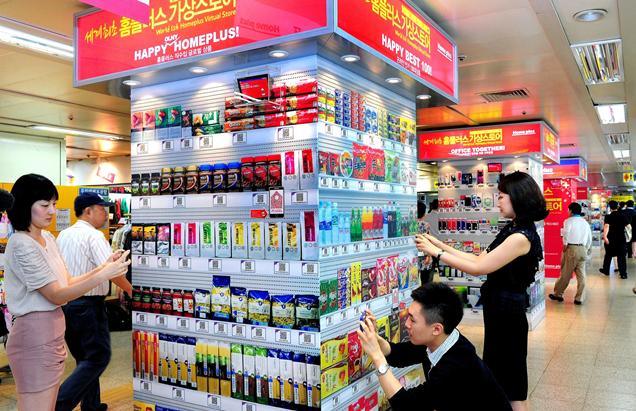
    Korea’s department stores suffered their worst sales drop in history in January.

    According to preliminary government data, sales fell 9.7 per cent year-on-year, the worst figure since record taking commenced in 2005.

    January marked the fifth consecutive monthly year-on-year fall.

    Discount stores fared the worst, posting a massive 20.7 per cent, according to the finance ministry. Remarkably, that’s not a record in itself – in February 2014, they fell 23.1 per cent.

    Korea retail sales data is collated by the government based on reported sales from the three department store conglomerates – Hyundai Department Store, Lotte Shopping and Shinsegae. They run discount formats and full scale department store chains.

    The ministry attributed January’s weak sales in part to the change in the timing of the Lunar New Year holidays, which fell in late January last year but in the middle of February this year.

  • Alibaba’s Ma vows deeper fight against fakes

    Alibaba’s Ma vows deeper fight against fakes

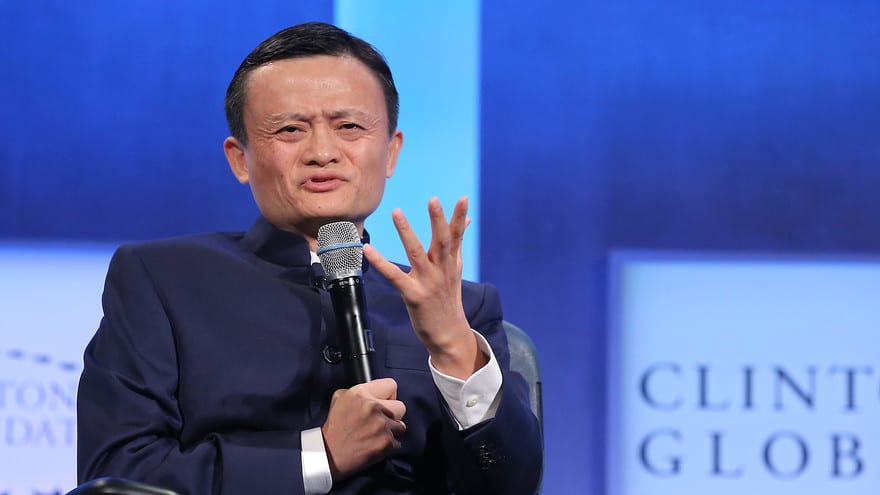
    There’s still “work to be done” to eradicate fake goods on its e-commerce platform, Alibaba Group Chairman Jack Ma has told the head of the Chinese quality watchdog, as he vowed to devote further efforts to the issue.

  • Alibaba Meizu deal a smart connection

    Alibaba Meizu deal a smart connection

    Alibaba’s surprise investment in smartphone maker Meizu will secure a technology development stream the online giant could never have hoped to create on its own.

    Alibaba this week announced it would pay US$590 million for a minority stake in Meizu Technology Corporation, one of China’s leading smartphone manufacturers. The Alibaba Meizu deal will see the two companies collaborate at both strategic and business levels “to achieve a deeper integration of Meizu’s hardware and Alibaba Group’s mobile operating system”, Alibaba said in a statement.

    It’s a win-win. Meizu gains a prime space for selling its mobile phones and other devices on the biggest suite of online marketplaces in China, further adding to Alibaba’s sales.

    Alibaba will provide Meizu with resources and support in the fields of eCommerce, mobile Internet, mobile operating system and data analysis with the aim of developing Meizu’s smartphone ecosystem.

    “The investment in Meizu represents a significant expansion of the Alibaba Group ecosystem and an important step in our overall mobile strategy as we strive to bring users a wider array of mobile offerings and experiences,” said Jian Wang, chief technology officer of Alibaba Group.

    “This strategic collaboration with Alibaba Group will enable Meizu to further develop our smartphone business and our smart devices ecosystem,” said Meizu’s president, Yongxiang Bai.

    While globally not as well known yet as rivals Xiaomi or Huawei, Meizu is known for its technology and sophisticated product design.

    The Chinese smartphone market is experiencing rapid growth, with homegrown brands gaining an increasing market share. At the end of 2014, China had more than one billion mobile phone users and about 40 per cent of them use smartphones, according to IDC.

    Alibaba online businesses include Taobao Marketplace , Tmall.com , group buying platform Juhuasuan, online travel site Alitrip, global Chinese goods store AliExpress and wholesale marketplace 1688.com.

  • Indonesia retail sales continue to slow

    Indonesia retail sales continue to slow

    Indonesia retail sales slowed to an ambulatory 4.3 per cent in December.

    That’s well down on the 11.4 per cent of November, a figure revised down from an early projection of 14.1 per cent by the Bank of Indonesia.

    The bank said the year-on-year growth rate slowed due to poor sales of household utensils, cultural and recreational goods and of spare parts and accessories.

    The Bank of Indonesia bases its figures on a survey of 650 retailers in 10 major cities. IT predicts a further easing in the next quarter before demand picks up in June, during Ramadan fasting.

    The bank also said it expects inflation to ease, largely due to falling fuel prices.

    December’s figure was well down on October’s 17.6 per cent and September’s 8.9 per cent.

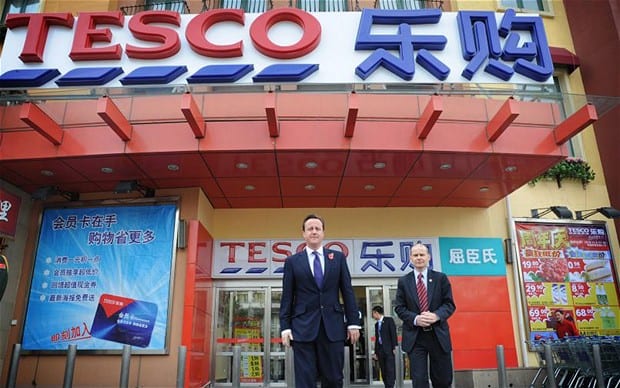
  • Tesco China stores rebranded

    Tesco China stores rebranded

    Tesco may well be a recognised brand name globally, but it doesn’t wash with Chinese consumers.

    Last year, Tesco sold a majority stake in its China retail business to local retailer China Resources Enterprises. This month, China Resources has revealed it is rebranding all 135 Tesco China stores under its Vanguard name.

    “The decision to change the brand was made based on the overall perception in the market,” CR Vanguard CEO Hong Jie said in an interview with China Business News.

    “Tesco is a globally recognised name, but Vanguard is better known and well-received in China,” he said.

    China Resources is aiming to turn around the troubled chains profitability within three years after merging the backroom operations into Vanguard’s.

    CR Vanguard owns more than 4100 stores in China and entered a joint venture with Tesco in May last year, leaving the British retailer with just 20 per cent of the business.

    While the Tesco brand name might be about to disappear, both parties see positive benefits from the continuing partnership. CR Vanguard acquired a usefully-sized bolt-on store network to build its critical mass in the market, which should surpass the combined sales of Walmart and Carrefour in China. It gained advanced FMCG business practices from Tesco.

    China remains a strategically important growth market for Tesco, with the joint venture combining Tesco’s ‘best in class’ retail practices, international sourcing and multi-channel capabilities with CRE’s strong local knowledge and brand.

    The two companies are in the process of merging their property businesses and plan to launch an eCommerce offer at the end of March.
    Vanguard will also sell 761 Tesco own-brand products with some Vanguard-branded lines joining Tesco’s shelves, as the two brand’s supply chain networks are integrated.

    Tesco also separately has its international sourcing headquarters based in Hong Kong, from where it sources more than 50 per cent of all clothing and 40 per cent of other non-food items. It buys about £2 billion worth of goods and services from China for the Tesco Group annually.

  • Atletico Madrid plans 200 China stores

    Atletico Madrid plans 200 China stores

    La Liga football league champions Atletico Madrid are set to cash in on growing Chinese fascination of European football by opening a retail store network in China.

    Atletico Madrid will open 200 retail outlets in China, according to Chinese news agency Xinhua.

    Such a network would be considerably larger than other football teams’ retail presence in China. Manchester United, Chelsea, Real, FC Barcelona and Arsenal all have a presence, on differing scales.

    The stores will be opened in Wanda Malls, owned by Chinese businessman Wang Jianlin, who took a 20 per cent stake in the Spanish club earlier this year.

    The club sees the stores as an important tool to broaden its brand awareness in Asia.

    Atletico already has a deal with Chinese football club Shanghai Shenhua and trains a number of Chinese youngsters as part of ‘Project Wanda’ to help develop young footballers.

    Atletico is expected to tour China between seasons.

  • Woolworths bolsters David Jones team

    Woolworths bolsters David Jones team

    South African retailer Woolworths has bolstered the board of its Australian subsidiary, Vela Investments, the vehicle for its AUD2.1 billion (USD1.63b) takeover of David Jones last year.

    Woolworths has appointed four new directors to the Vela Investments board – corporate adviser Patrick Allaway, David Jones acting chief financial officer John McRae, Woolworths’ finance director Reeza Isaacs, and Woolworths’ chief operating officer Daniel Ngumeni.

    They join Woolworths chief executive Ian Moir, David Jones chief executive Iain Nairn and David Jones chief operating officer David Thomas on the Vela board.

  • China tops tax free shopping rankings

    China tops tax free shopping rankings

    The Chinese remain the world’s biggest spenders on tax free shopping according to new rankings released by Global Blue.

    Travellers originating from China spent 18 per cent more in 2014 than the previous year, extended their lead over Russians whose spending fell 17 per cent in wake of the rouble’s dramatic devaluation.

    Global Blue, a specialist in international tax free shopping, operating duty refund concessions, runs a research unit monitoring duty free spending trends around the world. The company says China and Russia are by far the most lucrative countries of origin for globe shoppers, with Chinese shoppers now accounting for one third of all tax free shopping spend globally. Chinese residents account for 30 per cent of spending and Russians 14 per cent. It’s a long way back to the US, which accounts for just four per cent (perhaps reflecting while the US economy is massive, its citizens rarely travel internationally).

    Indonesia is a surprising fourth accounting for three per cent, then Japan with two per cent.  Five of the top 10 nationalities increased their Tax Free Shopping spend by more than 15 per cent in 2014 – Taiwan, Hong Kong, China, Kuwait and Saudi Arabia.

    Almost half of purchases were related to fashion and clothing – by far the largest category globally – followed by watches and jewellery at 17 per cent.

    “Clearly we are entering a new normal in terms of Tax Free Shopping growth, however it is important to remember that for the seventh consecutive year Chinese globe shoppers are still the biggest spending nationality, spending on average 736 euros per transaction,” said David Baxby, Global Blue’s CEO.

    Top 10 Shopper Nations in 2014, with growth vs. 2013:

    1 China  +18%

    2 Russia -17%

    3 USA +8%

    4 Indonesia -10%

    5 Japan -12%

    6 Taiwan +29%

    7 Hong Hong +25%

    8 Thailand -10%

    9 Saudi Arabia +15%

    10 Kuwait +18%

    Exchange rates impact

    Fuelling the spending growth of residents of Taiwan, Hong Kong and China in 2014 was a good exchange rate against the euro, which continues to improve with little sign of a forecasted EU economic recovery.

    “Essentially residents of these countries are getting better and better value compared to shopping at home with every month that passes. In 2014, the number of Chinese transactions increased by a significant 38 per cent,” said the report.

    While spending by Russian residents may be down, there are always new nations emerging. Storming into sixth place, Taiwan recorded an enormous 29 per cent growth compared to 2013. The emergence of Taiwanese globe shoppers was not just felt in Asia – they also made their presence felt in Europe’s leading destinations.

    During October 2014 in Paris, Taiwanese were the fourth most valuable tourist nation growing their spending by 15 per cent year-on-year, while in November they grew their spending by 65 per cent.

    At this rate, Global Blue predicts their spending will overtake that of the Japanese in 2015.

    In Seoul, fast becoming the shopping honey pot of Southeast Asia, Taiwanese grew their spending by 25 per cent in October and were outspent only by the Chinese. In November they grew their spending in Seoul by 30 per cent and in December by 44 per cent.

    Meanwhile, Paris topped the list of cities for spending by all nationalities, ahead of London, with Singapore the highest placed Asian city in third. Seoul was sixth, the only other Asian destination in the top 10.