Category: General

Retail News Asia is committed to providing both local and global retailers with the latest General Retail news throughout the Asian market. This on a daily base.

  • FLC uses Bamboo Airways shares as collateral

    FLC uses Bamboo Airways shares as collateral

    Property developer FLC will use nearly 155 million Bamboo Airways shares as collaterals for loans from lender OCB, repeating a decision it made three years ago.

    The company will also use golf project FLC Quang Binh Golf Links as collateral for the loans from the same bank.

    FLC used a total of nearly 155 million Bamboo Airways shares as collateral for OCB loans five times in 2020.

    The developer has invested VND4.02 trillion in the carrier for a 21.7% stake. It is set to sell the stake, partially or fully, to a buyer who has yet to be revealed.

  • Free VPN: How to keep security using public WiFi?

    Free VPN: How to keep security using public WiFi?

    The potential of a cybercriminal to put themselves between you and the connection point is the most severe security flaw in public Wi-Fi. There is a risk of inadvertently communicating with a cybercriminal, who could capture and transmit your information to the hotspot rather than connecting directly to it. However, there is a way to enhance your security while connected to public Wi-Fi by using a VPN.

    Let’s discuss why you should use a free VPN to protect your devices and why public Wi-Fi can be harmful.

    What is a VPN, and why is it useful?

    A VPN’s objective is to offer you protection and privacy while communicating over the internet. The issue with the internet is that it is inherently dangerous. The priority when the internet was first designed was to be able to transfer data packets as reliably as possible. Networking across the globe was still in its infancy, and nodes frequently went down. Most of the internet’s key protocols were created to avoid failure rather than secure data.

    This exposes any internet user to cybercriminals looking to steal financial or credit card information, governments looking to monitor their citizens, and other internet users looking to snoop on you for a variety of illicit purposes.

    A VPN establishes a private tunnel over the public internet. The concept is that everything you communicate is encased in a secret communications channel and encrypted, making it impossible to decipher your packets even if they are intercepted. VPNs are effective and necessary tools for protecting yourself and your data.

    Why can using public Wi-Fi be dangerous?

    As briefly mentioned above, public Wi-Fi is typically unencrypted and open to everyone. Whether checking your bank statements or working from a coffee shop, hotel, or airport, public Wi-Fi brings security dangers that only some consider.

    Without sufficient measures, hackers can use public Wi-Fi low security to eavesdrop on you, steal your personal information, or even take control of your online accounts. Cybercriminals enter insecure networks and steal sensitive information using a combination of technical knowledge and inexpensive tools. Passwords, banking information, or personal information that can be exploited to commit identity theft are examples of this. Hackers can even easily infect your device with malware over a public Wi-Fi connection.

    Below are a few of the most common methods attackers use to gain access to other devices over public Wi-Fi:

    Man-in-the-Middle Attacks

    A Man-in-the-Middle (MITM) cyberattack occurs when a third party intercepts communications between two parties. Instead of transferring data directly between server and client, another entity disrupts that communication. The unwanted hijacker could then provide you with their version of a site, complete with their messaging.

    Fake Hotspots

    This is another type of MITM assault. The method intercepts your data in transit while avoiding any security features that a public Wi-Fi hotspot may have. People may be giving over all of their personal data just because they were duped into joining the wrong network. A phony Access Point (AP) is relatively simple to put up and is well worthwhile for hackers.

    Packet Sniffing

    Although packet sniffing is less common since most websites are assumed to be HTTPS encrypted, it can still occur on unsecured networks. Packet sniffing is a technology that allows hackers to eavesdrop on your internet activities when you are on a compromised or infected network. Hackers can then intercept your internet connection and steal essential data and information.

    Be wary and follow best practices

    As a general rule of thumb, there are a few things you should avoid if you are using public Wi-Fi. Don’t allow your devices to connect automatically to public hotspots. When using public Wi-Fi, try not to log into sensitive accounts or perform tasks such as online banking. Lastly, avoid websites that are not HTTPS – these sites are not protected and can be easily intercepted by hackers.

    How does VPN protect you while using public Wi-Fi?

    The critical takeaway is unless you were connected to a private Wi-Fi network that required a password, any data sent during an online session over a public network was likely to be open to eavesdropping by strangers on the same network.

    A VPN’s encryption and privacy safeguard your online activities, including sending emails and buying online. VPNs can also help you browse the web anonymously. When using Urban VPN, your data is encrypted and transferred in an unreadable manner. Encryption is performed using a specific key installed on both the VPN server and your client. You can feel comfortable and secure that your data is yours once you download and activate it.

    Conclusion

    As the internet has become a vital part of people’s life, public hotspots are a huge convenience. Yet, using these networks is not without risk. The sooner you become aware of the dangers of utilizing public Wi-Fi networks, the sooner you can take action to protect your privacy and avoid your personal information from falling into the wrong hands.

  • The Most Popular Casino Games in Asia

    The Most Popular Casino Games in Asia

    Casino gaming may have been around for some time, but more and more people in Asia are deciding to experience the pleasures of online casinos. This region of the world already has plenty of traditional casinos to entertain visitors, but online casinos are beginning to enjoy popularity as people seek the convenience and the excitement of gaming online. If you don’t fancy stepping through the doors of a casino but still want a casino experience with an Asian flavour to it, try 777 casino.

    Casino gaming in Asia is an excellent chance to try something new. You can play classic casino games, of course, but you’ll also discover some more unique to this area of the world. Below is a look at some of the most popular casino games out in Asia.

    Baccarat

    Baccarat is easy to play and relies heavily on luck, two reasons why it’s so popular. The odds of winning are also greater. It’s common knowledge in the casino industry that baccarat is one of the games that has the lowest house edge.

    Winning at baccarat is all about beating the dealer, who plays the “banker” hand, by getting as close to nine as possible without going over. The dealer deals two cards at the start of the hand. You just have to bet whether the banker hand will be closer to nine or further from it than yours.

    Roulette

    Roulette is another straightforward casino game. The roulette wheel has divisions numbered 1 to 36, alternating between red and black in colour. There’s also a green division numbered 0. If you’re playing American roulette, the wheel will have an additional green division numbered 00. All you have to do is bet on where the ball placed on the roulette wheel will land when the wheel stops spinning.

    Roulette gives you the chance to win big money. It’s one of the few casino games in which you can try out different strategies. The fact that it’s easy to play means you can learn it quickly and test strategies out sooner.

    Sic Bo

    Sic Bo requires three dice and a betting table. It’s like roulette, but instead of betting on where the roulette ball will land, the player bets on what the dice will show when they’re rolled. The table is divided into three different sections that correspond to the different types of bets that can be placed. It’s possible to place multiple bets in one round across the different sections to increase your chances of winning. The more specific your prediction, the more you can win if it’s correct.

    The fact that sic bo is one of only two games that involve dice in casino gaming (craps is the other) makes it a standout game. The different types of bets possible to place give players plenty of options.

    Mah Jong

    Mah Jong is popular for all kinds of reasons besides creating the opportunity for players to win a lot of money and being a good way to socialise. Aesthetically, the game is pleasing because of the variety of tiles. Mentally, the game is also pleasing because it gives the brain a workout. You can also choose from the Korean, Chinese classic, Taiwanese, Vietnamese, American, Hong Kong and Japanese styles.

    Generally, Mah Jong requires four players, 144 tiles and two dice. A little like poker, the object of the game is to create matching sets and pairs. Three consecutive tiles or three or four identical tiles make up a set, and two of the same tiles make up a pair. You must form four sets and a pair to win Mah Jong.

    Pai Gow Poker

    Pai Gow Poker is another game that’s popular in Asia for several reasons. It’s slower paced, so there are fewer winning or losing hands per hour and you can make your bank roll last for longer. Not only this, but you also stand a better chance of winning because the house edge is lower.

    The object of Pai Gow Poker is to arrange your seven cards into two hands both higher the banker’s hands. One hand must consist of five cards and the other of two. Your five-card hand must be higher than your two-card one. If one is equal to the dealer’s, it’s a tie (or “copy” hand) and the banker wins. Winning hands are paid even money, whereas losing ones lose the money bet. If one hand wins but the other one loses, this is a ”push” and the bet isn’t acted upon.

    If you’re a fan of casino gaming, you can play traditional games in Asia or, if you’re looking for something a little bit different, try variations of games such as poker or play games more typical of the region. Keno and pachinko are two further games you could try. Slots are also an option in Asia.

  • Google adds profile pictures from the Contacts app to the Messages UI

    Google adds profile pictures from the Contacts app to the Messages UI

    Google loves to add little things to its apps that might not seem like a big deal but are useful. The latest update to the Google Messages app adds the profile picture from the Contacts listing of the person you’re messaging to the top of the screen. Tapping on the profile picture will take you to that person’s Contact card. To make room for the avatar, Google removed the search function from the top of the display and deleted the magnifying glass icon. If you need the Search tool, tap on the three-dot overflow menu icon to find it as an option.

    To be clear, we are talking about the Google Messages app, which includes the Rich Communication Services (RCS) platform. The latter has the same features as the highly-touted (by iPhone users) iMessage platform. Both include end-to-end encryption, higher-quality images, read receipts, typing indicators, and more.

    Now here’s the thing. What happens in an RCS group chat when an iPhone user joins it? Those lovely features go away which is exactly what happens when an Android user joins an iOS group chat. Yet, you never hear about Android users bullying iPhone users to the brink of emotional distress. And Google has been more than willing to allow Apple to add the RCS platform to Apple’s Messages app. However, Apple CEO Tim Cook would probably prefer hearing his sink drip all night rather than allow a cross-platform messaging app to be developed.
    Also, and this is important for Android users to understand, RCS is available on the Google Messages app. It is NOT available on the messaging apps that your carrier might have pre-installed on your Android phone. For example, if you are using the Verizon Messages app, T-Mobile Messages app, or any other Android messaging app outside of Google Messages, you are not getting the RCS platform.
    For RCS to work, you and the rest of the chat group must all be using the Google Messages app. You can tell if others you are chatting with are using Google Messages by the color of the text balloon that appears when you send a message. If it is a dark blue, you are engaged in a chat over RCS. Also, look at the text field. If it says Text message, you are about to message an iPhone user or an Android user employing a messaging app that is not Google Messages. Instead of using the RCS platform, such messages use old-school SMS.
    If the text field says RCS message, then you are messaging another Android user with the Google Message app and will have all of the RCS features available to you. If you don’t have the Google Messages app on your Android phone, you can install it by tapping on this link.
    The new Google Messages feature that shows the profile picture of the person you are messaging. To see the profile pictures you must be using version version 20230313_01_RC00.phone.openbeta_dynamic of the Google Messages app or later. To see which version you’re running, open the Google Messages app and tap on your profile picture at the right of the search filed at the top of the display. Press on Messages settings and scroll all the way to the bottom.
    The very last option reads About, terms & privacy. Tap on it and the Version info will be the first thing listed on the page that you are sent to. If you haven’t seen the profile pictures on your Google Messages app yet, it might be available to Google Messages beta testers at the moment. To join the beta, go tot he Play Store, open it, and type in Google Messages in the search field. Once you see the listing for Google Messages, scroll down and if Google is accepting more beta testers for the app, you will see a button to press to join.
    Even if you aren’t a beta tester for the app, you should see the profile pictures appear on an upcoming stable version of Google Messages.
  • Gambling ads, adult content make Facebook ‘toxic’

    Gambling ads, adult content make Facebook ‘toxic’

    Facebook frequently displays ads soliciting gambling, which is illegal in Vietnam except at licensed casinos, and adult content even in accounts whose owners never search for them.

    Hoang Quan, an office clerk in Da Nang’s Thanh Khe District, says ads with scantily dressed women and gambling games often appear when he surfs the message board or watches Reels on Facebook.

    “The ads are suggested by Facebook and displayed at specific times: After 4 p.m. it is gambling; in the evening it is sexy and suggestive content,” he said.

    Tuan Phuong of Ho Chi Minh City, another Facebook user, sees similar ads pop up constantly.

    “Toxic content appears next to posts. Every time I scroll through a few posts of my friends, the News Feed inserts a gambling ad,” he says.

    He says he is flustered when he sees Facebook live streams with inappropriate content while sitting with his child in the evenings.

    In a survey this month 96% of participants said they had seen gambling and other offensive ads on Facebook, with 81% saying they are frequent.

    The situation seems to have worsened in March, with members on some technology forums suggesting Facebook’s censorship filter could be faulty.

    The contentious ads are usually in the form of a live stream and direct users to gambling websites. As soon as the live stream ends the video is removed from the platform by Facebook fan pages, leaving no trace.

    According to online marketing expert Mai Thanh Phu, the Facebook censorship system only looks at the beginning of a live stream and not the whole of it.

    “In the beginning, the live stream will not have any objectionable content. After Facebook approves the live stream and starts charging for the advertising, the fan page will become a gambling ad.”

    He says buying a fanpage to livestream or Facebook ads is simple and costs just a few million dong (VND23,600=US$1).

    Users can turn them off and report violations though there is no guarantee the same content will not appear again, he warns.

    The Facebook representative in Vietnam has not commented on the above issue.

    According to Ha Hai of the Ho Chi Minh City Bar Association, it is illegal for Facebook to allow gambling ads according under the Law on Advertising.

    “Facebook must actively control, block and remove illegal content, and not wait for users to report or authorities’ instructions.”

    In the past Facebook users have reported seeing ads for cannabis seeds and poppy though Vietnam has stringent drug laws.

    Last November Minister of Information and Communications Nguyen Manh Hung said the ministry plans to start inspecting advertising on cross-border platforms.

  • AirAsia X continues to recover quarter by quarter

    AirAsia X continues to recover quarter by quarter

    Malaysian long-haul low-cost AirAsia X is returning to recovery, reporting improvements in revenues, profits, and costs after some very difficult years during the Covid crisis. The carrier expects to benefit this year from the relaunch of its most profitable routes and gradually grow the fleet again, it said on February 22. AirAsia X continues to recover quarter by quarter.

    After changing the accounting period for its financial year 2022 from July instead of January, FY22 includes six quarters between July 2021 and December 2022. This makes comparisons with previous years meaningless. The net profit for FY22 was RM 33 million, with revenues of RM 878.2 million, as it carried 417.195 passengers at a 78 percent load factor. Almost all of that was generated in the second half of 2022 when lockdowns and travel restrictions in most of its key markets in Asia were lifted. The airline already reported a profit for its September quarter.

    As far as a fifth or sixth quarter says anything, they at least confirm that the airline is further recovering. Revenues grew from RM 100.1 million in Q5 (July-September) to RM 339.3 million in Q6 (October-December), with a net profit from RM 25.1 million to RM 153.5 million. For reference, in Q4 (October-December) FY19, AirAsia X produced an RM-95.8 million net loss, revenues of RM 1.196 billion, and carried 1.6 million passengers.

    Passengers carried grew significantly quarter on quarter, from 79.557 to 337.638. That positively affected revenues per available seat kilometer (RASK), which improved from RM 17.62 to RM 19.96. In contrast, costs per available seat kilometer (CASK) excluding fuel went down from RM 6.95 to RM 1.42. AirAsia X resumed services to Australia (Perth, Melbourne, Sydney), New Zealand (Auckland), Japan (Tokyo Haneda and Sapporo), Taiwan (Taipei), Saudi Arabia (Jeddah), and Indonesia (Bali) in the final quarter of 2022, growing the network to fourteen destinations.

    AirAsia X has high hopes for the reopening of China, although bookings are currently below expectations. It recently resumed services to South Korea (Busan) and will launch flights to Turkey later this year. Istanbul was already announced as a new destination in June last year.

    The airline currently operates a fleet of seven Airbus A330-300s with seven more to join shortly but has an appetite for three more. “As we rise up to meet the ever-thriving demand for flights, we are diligent in ensuring that aircraft within the Company’s fleet will be operational within the stipulated timeline, with all safety requirements met. As we speak, we are also in varying degrees of engagement with third-party aircraft lessors for the induction of additional aircraft within its fleet. By the year 2024, we expect to have a total of seventeen A330

  • Bamboo Airways unveils mystery buyer

    Bamboo Airways unveils mystery buyer

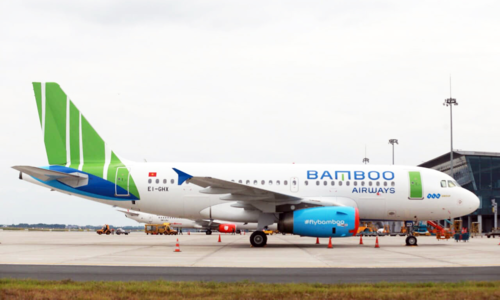
    Bamboo Airways has found a buyer who is also willing to help disgraced former chairman Trinh Van Quyet deal with the financial consequences of his alledged crime.

    A spokesperson said Thursday that the identity of the investor would be revealed later.

    The buyer has agreed to take over the airline’s entire debts and provide Quyet with the money he might have to pay as fines and indemnification for the stock manipulation which led to his arrest last year.

    Property developer FLC held a 51.24% stake in Bamboo Airways, and Quyet personally owned 40.03%. His 30.3% stake in FLC took his total ownership of the airline to 55.5%.

    Bamboo Airways said the sale of shares has been approved and supervised by authorities.

    The carrier now flies to 21 out of 22 airports in Vietnam and in April will add Ca Mau to its destinations.

    Internationally, it has been resuming services to Europe and Australia post-Covid.

  • AirAsia X continues to recover quarter by quarter

    AirAsia X continues to recover quarter by quarter

    Malaysian long-haul low-cost AirAsia X is returning to recovery, reporting improvements in revenues, profits, and costs after some very difficult years during the Covid crisis. The carrier expects to benefit this year from the relaunch of its most profitable routes and gradually grow the fleet again, it said on February 22. AirAsia X continues to recover quarter by quarter.

    After changing the accounting period for its financial year 2022 from July instead of January, FY22 includes six quarters between July 2021 and December 2022. This makes comparisons with previous years meaningless. The net profit for FY22 was RM 33 million, with revenues of RM 878.2 million, as it carried 417.195 passengers at a 78 percent load factor. Almost all of that was generated in the second half of 2022 when lockdowns and travel restrictions in most of its key markets in Asia were lifted. The airline already reported a profit for its September quarter.

    As far as a fifth or sixth quarter says anything, they at least confirm that the airline is further recovering. Revenues grew from RM 100.1 million in Q5 (July-September) to RM 339.3 million in Q6 (October-December), with a net profit from RM 25.1 million to RM 153.5 million. Just for reference, in Q4 (October-December) FY19, AirAsia X produced an RM-95.8 million net loss, revenues of RM 1.196 billion, and carried 1.6 million passengers.

    Passengers carried grew significantly quarter on quarter, from 79.557 to 337.638. That had a positive effect on revenues per available seat kilometer (RASK), which improved from RM 17.62 to RM 19.96, while costs per available seat kilometer (CASK) excluding fuel went down from RM 6.95 to RM 1.42. AirAsia X resumed services to Australia (Perth, Melbourne, Sydney), New Zealand (Auckland), Japan (Tokyo Haneda and Sapporo), Taiwan (Taipei), Saudi Arabia (Jeddah), and Indonesia (Bali) in the final quarter of 2022, growing the network to fourteen destinations.

    AirAsia X has high hopes for the reopening of China, although bookings are currently below expectations. It recently resumed services to South Korea (Busan) and will launch flights to Turkey later this year. Istanbul was already announced as a new destination in June last year.

    The airline currently operates a fleet of seven Airbus A330-300s with seven more to join shortly but has an appetite for three more. “As we rise up to meet the ever-thriving demand for flights, we are diligent in ensuring that aircraft within the Company’s fleet will be operational within the stipulated timeline, with all safety requirements met. As we speak, we are also in varying degrees of engagement with third-party aircraft lessors for the induction of additional aircraft within its fleet. By the year 2024, we expect to have a total of seventeen A330s within our fleet, active and operational,” CEO Benjamin Ismail said in a media statement.

  • Retail sales up 3.5% in first two months, thanks to government’s pro-growth measures

    Retail sales up 3.5% in first two months, thanks to government’s pro-growth measures

    China is gradually shrugging off the negative impact of the pandemic, as official data showed that retail sales in the first two months of 2023 expanded, following China’s optimization of its COVID-19 response.

    Chinese experts predicted that retail sales will continue to increase, given concrete government measures to boost consumption.

    Retail sales totaled 7.71 trillion yuan ($1.12 trillion) in January and February, a year-on-year increase of 3.5 percent, data from the National Bureau of Statistics (NBS) showed on Wednesday. Retail sales fell 1.8 percent in December.

    The catering industry experienced a rapid recovery, with annualized growth of 9.2 percent in the first two months, compared with a decrease of 14.1 percent in December.

    “The rebound of consumption was a major bright spot of China’s economic operations in the first two months of this year,” Fu Linghui, a spokesperson of the NBS, told a press conference in Beijing.

    The fast recovery came amid the rebuilding of consumers’ confidence, and on-site consumption has rebounded since China revamped its COVID-19 management in light of the evolving situation, Zhou Maohua, an economist at Everbright Bank, said told the Global Times on Wednesday.

    The retail, catering and travel sectors have seen a surge in demand, and the boost from China’s Spring Festival holidays also helped lift consumption, Zhou said.

    The NBS also released other statistics on Wednesday, such as the total value added of industrial enterprises above the designated size, fixed-asset investment and employment, which Fu said showed that “China’s overall economic performance is showing a trend toward stabilization and recovery.”

    China has set a GDP growth target of about 5 percent in 2023, with a CPI target of about 3 percent, according to this year’s Government Work Report, which was delivered at the first session of the 14th National People’s Congress.

    China will seek to expand domestic demand in 2023, prioritizing the recovery and expansion of consumption, according to the report.

    The key to economic growth is lifting domestic demand, as the external environment remains uncertain and volatile, Fu said. Support measures have been rolled out nationwide, such as consumption promotions and vouchers for vehicle purchases.

    Vehicles occupy an important position in China’s consumption, accounting for approximately 10 percent of retail sales, according to a report released by Fitch Bohua on Wednesday.

    Some carmakers have launched subsidies this month to improve sales, and Fitch Bohua believes that automobiles will remain the primary big-ticket spending item this year, with more preferential policies to come. Promoting consumption is high on the government’s agenda this year, as the annual Central Economic Work Conference held in mid-December noted that the country would prioritize the recovery and expansion of consumption.

    A State Council executive meeting held in late January also urged prompt measures to promote an early recovery of domestic consumption to revive the economy. Boosted by this positive outlook, local governments have been moving to unveil an array of pro-consumption measures designed to fuel the growth of specific spheres.

    Cities such as Beijing, Shanghai and Zhengzhou, Central China’s Henan Province, have announced detailed plans to offer consumption coupons, which will nurture sales of vehicles and home appliances, experts said.

  • AirAsia Announces New CEO for Superapp Business

    AirAsia Announces New CEO for Superapp Business

    AirAsia on Tuesday announced the appointment of Mohamad Hafidz, who is currently the chief fintech officer, as the acting CEO of AirAsia superapp from April 1 onwards.

    With nearly 30 years in the payments industry, Hafidz, populary known as Mo, will succeed Amanda Woo in his new role.

    Woo was appointed CEO of the superapp in May 2021, she was then the chief commercial officer.

    Speaking to Skift earlier, Tony Fernandes, CEO of Capital A, had said that AirAsia would now be killing its other operations in the superapp to focus on what he calls its bread and butter — travel.

    “Now that travel has returned, we’ve shifted our focus to making the superapp very much a travel fintech superapp,” Fernandes told Skift.

    In his new role, Hafidz would continue to drive the platform’s fintech vision that will further help to boost the superapp’s choices for its users and bring more revenue to the business, the company said in a release.

    Having assisted in shaping regulatory policies in several regional markets, Hafidz has been a strong advocate for payments innovation and security in the Asia Pacific region.

    Hafidz’s appointment follows the recent leadership transition announcement at AirAsia Digital, which include AirAsia superapp and BigPay.

    Colin Currie will be taking on dual roles as AirAsia Digital’s CEO and president, commercial of Capital A.

    Currie will lead the effort to forge a closer collaboration between AirAsia superapp and BigPay to create a better user experience in travel and payment for users within the Capital A ecosystem, a company release said.

    Capital A also appointed its head of investments John Cheing as the chief financial officer for AirAsia Digital and AirAsia superapp.

    Calling fintech an essential part of travel, Fernandes had earlier spoken about the role that BigPay, Capital A’s fintech arm, would play in creating lending for travel as well as for insurance.

    In its fourth quarter results, the company had showed strong performances in both its superapp and fintech business.

    “We are excited to be launching the next phase of growth in our digital portfolios,” Fernandes had said earlier.

  • Telegram’s new update rolls out power saving mode and other app improvements

    Telegram’s new update rolls out power saving mode and other app improvements

    The popular messaging app Telegram has recently rolled out a new update that includes several exciting features. Among these updates are a new power-saving mode, optimization for Android devices with lower-end hardware, more playback speed choices, and many other app improvements.

    The announcement was made directly by the company via its blog. Now, Telegram has introduced a new power-saving mode that helps users conserve battery life and reduces data usage. This especially helps when rendering the app’s animations and effects. Users now have the option to deactivate these effects to prolong battery life and improve performance on older devices.
    You can configure Power Saving Mode so that it turns on by itself once your battery approaches a certain percentage, and it comes with individual toggles that let you deactivate particular effects. This mode is available on both iOS and Android, with an extra feature on iOS to limit background updates, although it is not recommended by Telegram or else you will be seeing the message “Updating…” displayed on your app a lot more frequently. Power Saving Mode can be turned on and customized via the Settings > Power Saving menu.

    For Android, the folks at Telegram developed default settings optimized to ensure every user has the best possible experience. These settings were tested on more than 200 different kids of Android devices to ensure the app works at its peak on each one.

    Aside from the power saving options, Telegram is also introducing more granular playback speed options, such as being able to hold the 2X button to choose speeds between 0.2x and 2.5x. Additionally, read receipts for groups with less than 100 participants will now show via a popup the time each person read the message. Talk about being diligent!
    Other features introduced by this update include the ability to send invite links as a message in the event that the person you are inviting is restricting who is allowed to add them to groups, the option to switch off the automatic reorganizing of sticker packs, improved folder support on iOS, interactive Emoji and reactions, and new animated Emoji for premium users.
    Finally, Telegram promises that aside from the new features it has also squashed over 400 bugs across the app, but also encourages users to head on over to bugs.telegram.org to report any issues found on this new update.
  • WhatsApp’s upcoming update will help you combat unwanted spam

    WhatsApp’s upcoming update will help you combat unwanted spam

    At this point, is it any wonder that WhatsApp is one of the first-choice IM (instant messaging) apps out there? It is available on both Android and iOS, it has end-to-end encryption for extra security and — most notably — it is constantly getting updated with new features.

    But people don’t just use WhatsApp for themselves — numerous businesses opt to have a WhatSapp communication channel open, so that customers can get in touch more easily. While that sounds awesome, it also means that their info is public, and as such, not every caller is a customer, per say.

    Luckily, WhatsApp realizes the value of this utilization of its app, and as such is reportedly working on a feature to help users handle spam calls more effectively. This information comes courtesy of WABetaInfo and it describes how one toggle can take care of all of this spam-related hassle.

    The WABetaInfo team has managed to uncover development traces of this new feature through the latest release of the WhatsApp beta program on Android. By the looks of things, this is intended to function as follows: users can mute calls from unknown callers. Simple as that!

    That, however, wouldn’t be helpful for businesses. As such, WhatsApp will still let users keep a record on who has called, just in case there is ever a need to call back. Said records will be kept in the Call List and Notification Center, just as with any other call.

    Right now, the feature is still under development, so we don’t really have a release date for this one. But by the sound of things, it will be worth the wait, as it will not only help alleviate the stress of spam calls, but also help with combating scammers and trolls.

  • Vietnam’s richest man launches electric taxi firm

    Vietnam’s richest man launches electric taxi firm

    Pham Nhat Vuong, Vietnam’s richest man, has established GSM, an all-electric taxi operator with a charter capital of VND3 trillion ($126.85 million). Vuong, who is also the chairman of Vingroup, owns a 95% stake in the company.

    GSM, which stands for “Green, Smart and Mobility,” will launch its taxi services starting in April in Hanoi, with plans to go nationwide by the end of the year.

    The company will also rent Vinfast’s VF e34 and VF 8 electric cars to transport companies.

    GSM expects to have 10,000 cars and 100,000 motorbikes, all made by VinFast, a unit of Vingroup.

    The company was established to speed up the completion of Vietnam’s green ecosystem and smart transport, said GSM CEO Nguyen Van Thanh.

    Customers can experience electric vehicles, whether for a few minutes in a taxi, or a few months in a rented car, which Thanh says will help speed up the green revolution in Vietnam.

    Last year, VinFast delivered 7,200 electric cars to Vietnamese customers. And in December last year its two models, the VF e34 and VF 8, were among the top 10 best-selling models in Vietnam.

    The company delivered its first electric cars to American customers on March 2.

  • Aldi sued over ‘copycat’ snacks

    Aldi sued over ‘copycat’ snacks

    Australian children’s snack food brand Little Bellies is suing German supermarket chain Aldi for alleged copyright breaches of several organic fruit and vegetable puff snacks.

    Aldi, which famously mimics well-known brands and creates comparable in-house products at a much cheaper price, has emerged victorious in several legal battles in Australia since it launched here in 2001.

    US snack food giant Frito-Lay sued Aldi in 2001 over its Cheezy Twists, alleging a breach of its Twisties trademark. Frito-Lay won the first battle in the Federal Court, but Aldi appealed and had the ruling overturned.

    In 2015, Israeli beauty company Moroccanoil Israel sued Aldi for alleged trademark breaches of its Moroccan Argan Oil hair care products. Moroccanoil lost the original case, and an appeal.

    The owners of Little Bellies hope a different tack – suing for an alleged copyright infringement – may yield a different outcome.

    The holding company that owns the intellectual property for the Baby Bellies, Little Bellies and Mighty Bellies snack ranges, Hampden Holdings IP, alleges Aldi has ripped off its Organic Blueberry Puffs, Organic Apple & Cinnamon Puffs and Organic Carrot Puffs since at least August 2021.

    Hampden Holdings licenses the brands to Every Bite Counts. According to regulatory filings, both firms are owned by brothers Steven and Clive Sher.

    In Britain, supermarket chain Marks & Spencer sued Aldi for copyright infringement of its light-up Christmas gin bottle. Last month, the High Court in London ruled Aldi infringed on M&S’s copyright. A second copyright dispute between the two companies over a caterpillar cake was settled, and Aldi made a number of tweaks to its design.

    Aldi is not the only discount chain that has been targeted in legal action. Fellow German discount chain Lidl was sued last year by Lindt & Sprüngli over its well-known chocolate gold bunnies. A Swiss court ordered Lidl to destroy the bunnies and prohibited their sale, saying they infringed Lindt’s trademark.

  • How Tag Heuer is evolving to stand the test of time

    How Tag Heuer is evolving to stand the test of time

    I’ll be honest, TAG Heuer is not really a brand that I love. Sure, I like the classics such as the Monaco and other icons, but if I won the lottery then I wouldn’t be visiting the TAG Heuer boutique. So, the fact that I’ve chosen them as the brand that won 2022 signifies exactly how impactful their year has been, surpassing all of my expectations and then some. Sure, brands like Cartier and Jaeger-LeCoultre have also released plenty of stunning watches in the last year, but it doesn’t feel as special when I’ve come to expect their excellence. Watches & Wonders felt like an answer to the watch community’s unasked questions, recapturing the Aquaracer’s professional diving credentials, incorporating some exciting emerging technology, and even creating a never-before-seen diamond-infused case.

    The Aquaracer was TAG Heuer’s focus in that first big 2022 release, spearheaded by the Professional 1000 Superdiver which gives them representation in the saturation diver market. Its bulk and attitude is backed up by impressive specifications and an edgy titanium case. If stealth and efficiency is more your thing, TAG Heuer incorporated solar technology into the black dial of their Aquaracer Solargraph, for unending power and quartz accuracy. The murdered-out case is complemented by a forged carbon bezel and brightly contrasting markers, with a pale blue seconds hand making it easy to read. As if that wasn’t enough, the entire Aquaracer range was evolved with the Professional 200 line, trimming the fat from the diameters, bringing in some smoky gradient dials, and refusing to overly feminize the 30mm models.

    While there was a lot of love for the Aquaracer during Watches & Wonders 2022, by far the most attention-grabbing watch was the diamond-laden TAG Heuer Carrera Plasma. Setting diamonds into a watch case and dial is nothing new in the slightest, and so TAG Heuer shook things up by doing it in a way nobody else has done before, giving an effect that’s bold, masculine, and exciting. The dial looks like it’s made from some crushed diamond dust, but it’s actually grown in a single piece in a chaotic crystal structure that causes the rough texture. Diamond baguettes have been cut for the hour markers in a mormore traditionallye two horizontally aligned subdials are balanced by a skeletonised tourbillon cage at 6 o’clock. The most impressive part is the black anodised aluminium case with huge diamonds set into it seemingly at random, complete with a solid diamond crown.

    Nostalgia is funny, especially when younger generations start to yearn for days that the older generations still feel like yesterday. But, TAG Heuer have been indiscriminate with their choices of retro homages, bringing back some watches and styles which have been missing from their catalogues for too long. The first is the TAG Heuer Monaco Dark Lord Special Edition, paying tribute to the original reference 74033 from 1977. As an early example of a racing chronograph with a black PVD coating, the originals are notoriously hard to find, and when they are found their coatings may well have been scratched away by something as innocent as being stored in a cupboard. This modernised 2022 version features a scratch-resistant DLC coating on a titanium case (a first for the Monaco) which lightens up the weight, yet keeps the deep matte black that makes those Sith-red hands pop.

    The next throwback was the release of a new TAG Heuer Formula 1 range, complete with some of the bright colours that initially made the watches so cool in the ‘80s. Although the specs and quality of the more recent Formula 1 watches are definitely improved from those early fibreglass and quartz ones, they did tend to feel more stern and sterile due to their darker colour schemes. The new 2022 models in green, yellow and red are all incredibly vivid thanks to a finely brushed sunburst texture, and get a heap of helping contrast from the black PVD-coated bezel. It’s the lighthearted fun of bright colours that capture the same childlike imagination and excitement which brings Formula 1 fans into the sport in the first place.