Category: Living

Retail News Asia is committed to providing both local and global retailers with the latest Living news throughout the Asian market. This on a daily base.

  • Good to be old

    Good to be old

    In suburban Ho Chi Minh City, a unique ‘collectibles boutique’ draws stock from all over the world.

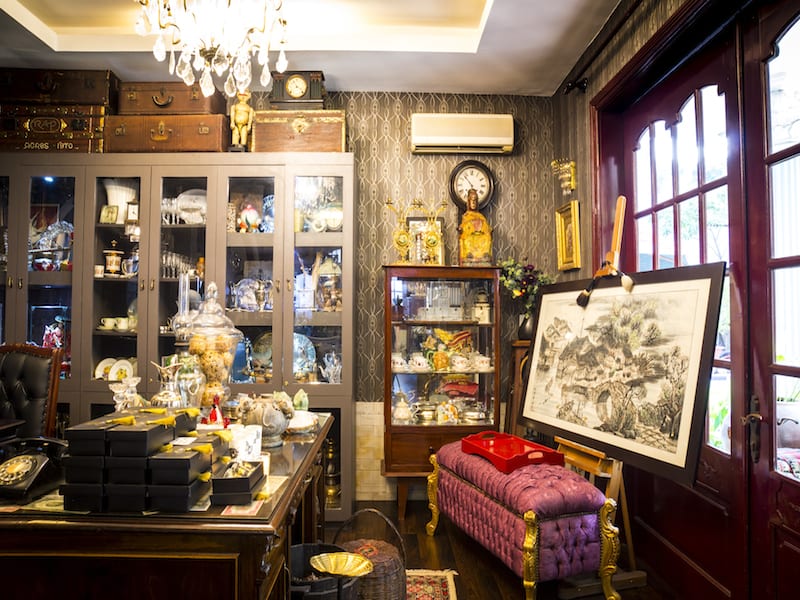
    Villa Royale, is now a year old, starting as an antique shop and has since also turned into one of the city’s top 10 cafes.

    A walk around the District 2 villa is like a curated tour of the world’s best bazaars and antique markets courtesy of owner David Campbell. A 200-year-old religious European painting shares space with a stunning embroidered Mongolian saddle and a gorgeous hanging Moroccan glass lamp. The inventory for the shop marries two of Campbell’s passions: travel and shopping.

    Before moving to Vietnam, Campbell travelled extensively as global director of sales for the Raffles hotel group, furnishing two homes with things acquired on his journeys. Instead of leaving these finds in storage, he decided to take them with him, keeping some for his own home and opening Villa Royale with the rest.

    “These are pieces I know intimately because I bought them myself,” he says as he fingers a pair of vintage paper mache rhinos from Cambodia.

    “I can explain where it was bought, its provenance, how old it is…”

    It also contributes to the sensible pricing for these fine collectibles.

    “I try and price everything reasonably so the stock moves. I just need enough to be able to pay staff and the rent and for me to travel again to buy more,” he says with a smile. This year alone, Campbell has made shopping trips to Istanbul, Paris, London and Morocco, taking the best finds back to Saigon.

    Popular with interior designers searching for truly one-of-a-kind pieces and furniture stores looking for props with wow factor for photo shoots, Villa Royale has something for everyone.

    “Tourists want to buy things reminiscent of Asia like temple baskets, gongs, Cambodian dancer statues and antique dressing mirrors. Locals get something unique, not from the markets, but something a bit more thoughtful as gifts and for themselves.”

    For the woman in your life, Campbell says trios (tea sets comprised of an individual cup, saucer and plate) are trendy items for hen parties and high teas instead of complete matching sets, as are perennial favourites like silver tea pots, crystal sugar bowls, chandeliers and candelabras.

    Gifts for men also abound in the form of vintage typewriters, antique humidors, old trunks that are amazing stacked into a side table, antique Vietnamese ceremonial drums and impossible-to-find decanters.

    “When you go to a shopping center, just about everything is made in China,” he notes. “Coming here, you have things from Italy, France, Germany, England… and in lots of different styles as far as shapes and designs go. You can tell which era it’s from: art deco, nouveau, retro, from the Empire period. Even if you say you like everything, we’re all drawn towards one era in particular.”

    When everyone else is striving after the latest version of the same cookie cutter product, a unique gift that may literally be the only one of its kind in Saigon or even in Vietnam, speaks of thoughtfulness and care.

    “Even hand-painted vintage Vietnamese teapots with chips and showing signs of wear are fascinating because they’ve been used. They’re not brand new but have been in people’s families for decades. If every piece could talk, they’d have a hundred stories to tell,” says Campbell.

    Part of the shop’s charm is sitting down with Campbell to talk about the pieces over a slice of the shop’s delectable homemade cakes (in a past career, he was also a chef along with having an art background) or over high tea with a gourmet selection of 24 TWG flavours.

  • Index seals deal for Philippines

    Index seals deal for Philippines

    Thai homewares giant Index Living Mall has signed a Philippines partner as its Asian expansion continues.

    Index will team up with the Philippines largest retail and mall operator SM Group to run the franchise for the concept for at least five years.

    Index managing director Kridchanok Patamasatayasonthi told the Bangkok Post newspaper Index chose the Philippines due to its huge market potential.

    “There’s no furniture or furnishings chain like us in the country, just small local and imported furniture stores.”

    Index opened its first store in Vietnam about three years ago and its first in Malaysia last month, in the capital city of Putrajaya. It plans 30 stores across Malaysia over a 15-20 year timeline.

    The company is also eyeing opportunities in Indonesia and hopes to double its foreign sales within five years. It will soon have 25 stores in its home market.

  • A S Watson snaps up Dutch chain

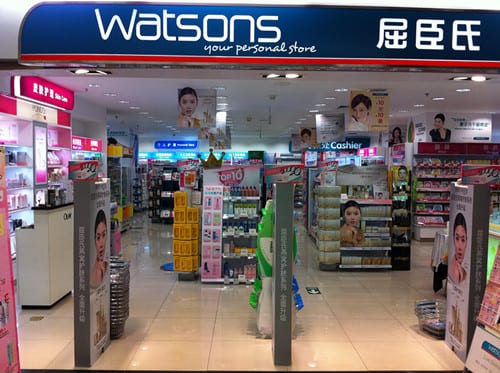
    A S Watson snaps up Dutch chain

    Hong Kong based A S Watson has bought a 50-strong chain of pharmacies in the Netherlands.

    The deal with Dirx Drugstores will see all 50 stores of the Dirx health and beauty retail network fall under Watson ownership, along with five additional locations currently under development. Most of the stores are in the Randstad region.

    All Dirx employees will join A S Watson, parent of Kruidvat and Trekpleister chains in Holland. The Dirx stores will be converted to either Kruidvat or Trekpleister branding once the transaction is completed.

    The deal remains subject to approval from the Netherlands Authority for Consumer and Market. The purchase price has not been revealed.

    Gerard van Breen, CEO of A S Watson Health & Beauty Benelux said the acquisition will expand the company’s national coverage making its stores accessible to even more consumers.

    Rick Groen, director of Dirx Drugstores, said that with only 50 plus stores, the business was too small a player to independently expand in the market.

    “The A S Watson approach and focus of providing the best offers to customers at affordable prices is consistent with our philosophy. We are convinced that A S Watson is an excellent match to successfully move the business forward with our employees.”

    Kruidvat, together with Trekpleister and Prijsmepper, is part of A S Watson Health & Beauty Benelux and a major player in the Dutch and Belgian markets.

    Kruidvat, with almost 900 stores in Holland, ranked among the top three most indispensable brands in the Netherlands in a 2014 study. The chain is also active in Belgium with more than 200 stores. Trekpleister (with more than 140 stores) distinguishes itself as a neighbourhood drugstore, where expert staff plays an important role in addition to a bargain-priced range of products.

    A S Watson Health & Beauty Benelux is part of the A S Watson Group, which has more than 11,000 stores in 25 markets worldwide. It is the world’s largest international health & beauty retailer in Asia and Europe, a subsidiary of Hong Kong-based Hutchison Whampoa.

  • Wedgwood plans China expansion

    Wedgwood plans China expansion

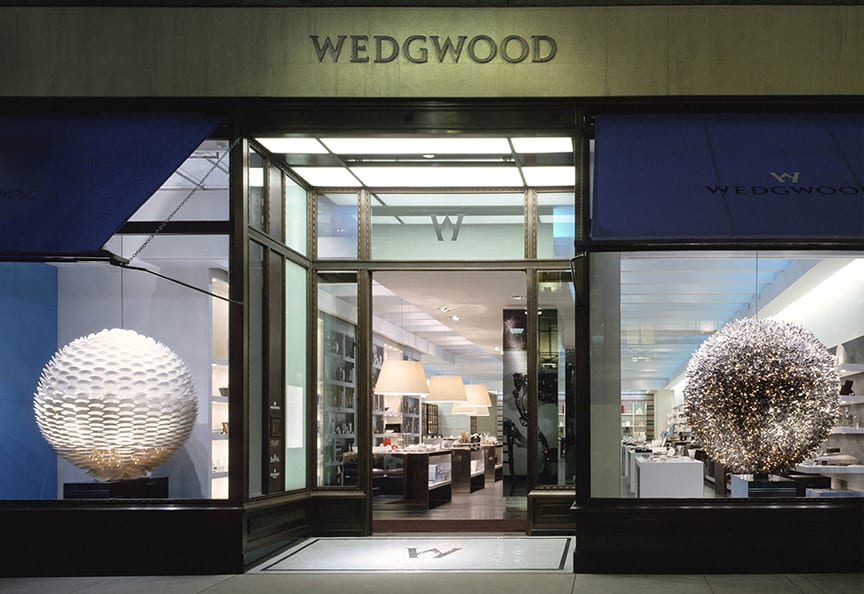
    Wedgwood, one of the world’s best known china brands, is now betting big on China.

    As news broke that Wedgwood’s parent company WWRD was being put on the market by its private equity owners, it emerged that the business is planning a “major” retail expansion in Hong Kong.

    WWRD owns Waterford (crystal), Wedgwood and Royal Doulton china brands. It has 35 stores in China including two flagships in Shanghai.

    Subsidiary Waterford Wedgwood Hong Kong is to buy the assets of its distributor Shanghai Balolong International Trade Co and through that process acquire a number of store leases.

    That move alone will expand the store network to 56.

    “The acquisition of a significant number of Waterford and Wedgwood retail stores from Baolong in China positions WWRD perfectly to engage and meet the needs of affluent Chinese consumers,” group VP Jim Harding said in a statement.

    “This announcement comes at the right time with 2015 set to mark a growing vision for our brands as we continue our commitment to developing the business globally as a leader in luxury goods.”

    WWRD, founded in 1759, was rescued by US private equity company KPS Capital back in 2009 when it collapsed beneath a massive € 800 million burden of debts and pension liabilities.

    Investment bank Goldman Sachs has been appointed to undertake an auction of the business which promises a substantial return on the £82 million it spent acquiring the assets. The business achieved annual sales of US$450 million last financial year and it posted a £36 million profit.

    The financial press tips significant interest in the bidding from Asian investors, given 40 per cent of the group’s revenues come from Asia. A significant number of the group’s products are now manufactured in Indonesia, although the company recently commissioned a new plant in the UK.

    In a statement WWRD said: “As a profitable and strongly performing global business under private equity ownership, options for the next phase of growth are constantly under review. KPS Capital Partners remains firmly committed to achieving the brightest possible future for the brands and employees of WWRD.”

  • Marimekko to open two Asian flagships

    Marimekko to open two Asian flagships

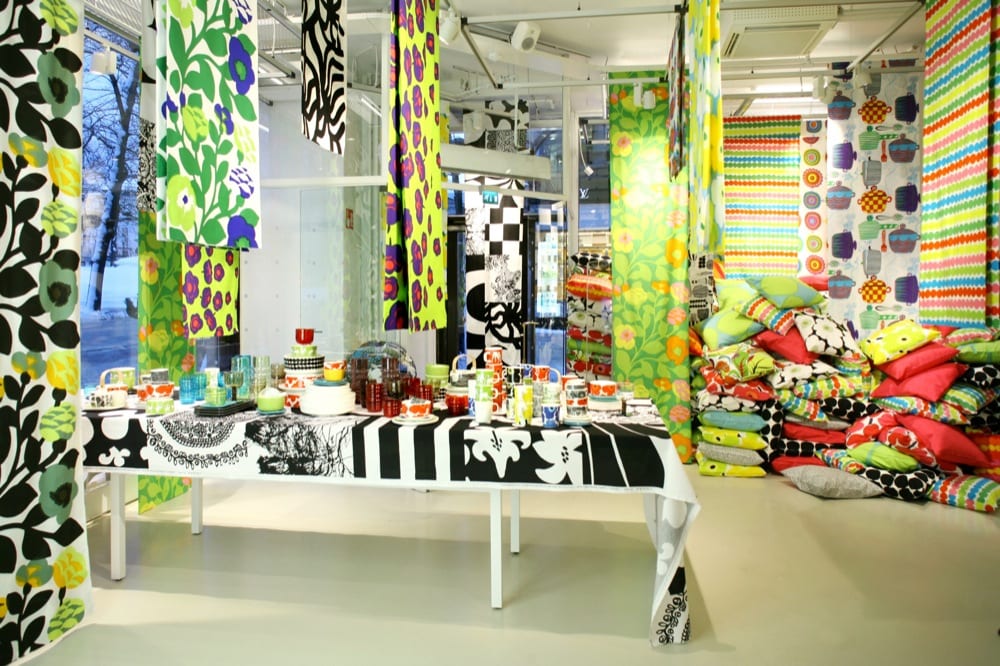
    Finnish homewares specialty retailer Marimekko is to open new flagship stores in Bangkok and Singapore.

    The move marks a continuation of a concerted push into the Asia-Pacific region. Over the last three years Marimekko has expanded into China, Hong Kong, Taiwan, Australia and New Zealand.

    In the first quarter of this calendar year the brand will open company-owned stores in Singapore’s new Capitol Piazza mall and in CentralWorld, Bangkok, which attracts as many as 150,000 shoppers per day.

    In Singapore, Marimekko already has a shop-in-shop which opened last November 2014 inside the Tangs department store on Orchard Rd.

    The company says it will open more stores in Asia over the next few years.

    “The opportunities afforded by the growing consumer markets of Asia play an important role in Marimekko’s internationalisation,” said president and CEO Mika Ihamuotila.

    “In our expansion in the international marketplace, we have focused first and foremost on regions with high growth potential. The Asia-Pacific region is our second-largest market area, and we already have a fairly strong foothold in East Asia. We are now aiming for two new markets in Southeast Asia.

    “Singapore is a modern metropolis and very attractive to us, as it is considered one of the region’s top shopping destinations for tourists. As an aviation gateway it also serves as an access point to many Asian countries and the city receives an enormous number of travellers,” he said.

    “The capital city of Thailand, Bangkok, is in an interesting stage of development from the retail viewpoint. A number of high-class malls have been opened in the city recently, and it is rising to be a noteworthy rival to Singapore and Hong Kong.”

    Half of the new Marimekko stores opened in 2014 were in the Asia-Pacific region: two in Hong Kong, one in Chengdu in mainland China, two in Seoul in South Korea and two in Japan. In Australia, Marimekko opened a company-owned store in Melbourne. One shop-in-shop was opened in New Zealand.

  • Spending on luxury falls on mainland China

    Spending on luxury falls on mainland China

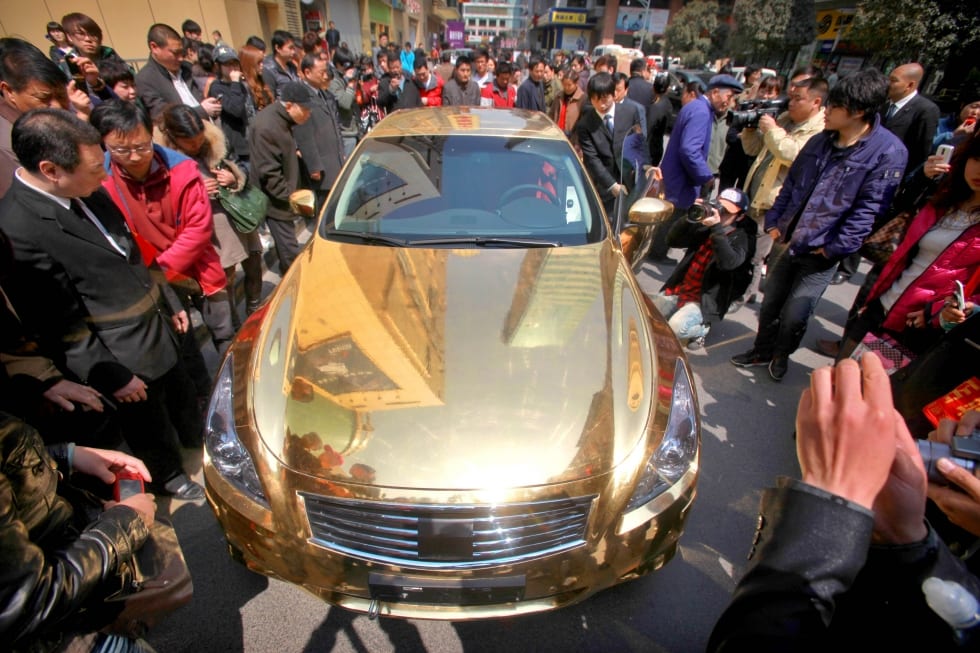
    China remained the world’s largest consumer of luxury products last year even though domestic sales fell for the first time due to the government’s anti-corruption campaign and increased spending overseas.

    Chinese spending on luxury goods increased 9 percent to CNY380 billion (USD61.3 billion) in 2014, accounting for 30 percent of global spending, according to Bain & Company’s 2014 China Luxury Market Study.

    However, sales of such products on the Chinese mainland fell 1 percent from a year earlier to CNY115 billion, the consulting firm said on Tuesday.

  • Ikea working to polish its reputation in Indonesia

    Ikea working to polish its reputation in Indonesia

    Indonesia and the European Union have been doing business for decades. Over the years, Indonesia has been exporting many products to EU countries, and vice versa. According to Harvey Rouse, head of economic and trade section for the European Union’s mission to Indonesia, the EU encourages European companies that invest in Indonesia to respect local values and cultures, as well as improve the welfare of the people around them through corporate social responsibility programs.

    “By addressing these social responsibilities, companies are actually building long term relationship and trust with employees, customers and citizens,” Rouse said.

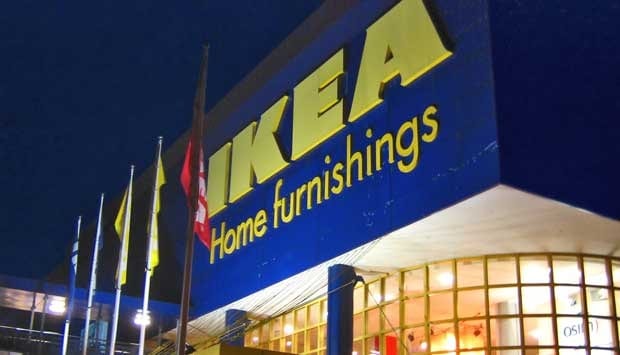
    One of the European companies in Indonesia that has a solid commitment to local CSR programs is Ikea. Since its launch in Alam Sutera, Tangerang, last October, Ikea’s first store in Indonesia has been a favourite shopping destination.

  • Wearable devices have bright future in China

    Wearable devices have bright future in China

    A latest survey showed that wearable devices will become more popular in the Chinese market in the next five years.

    For wearable health devices, 39 percent of respondents worldwide plan to buy one by 2020, but 65 percent of Chinese consumers surveyed already have an interest in buying one, according to a survey filed to Xinhua Saturday by Accenture, a consulting and technology services company.

    As many as 67 percent of Chinese consumers are likely to buy wearable fitness monitors and 73 percent wants smart watches in the coming five years, more than doubled 32 percent and 27 percent in the United States.

  • GCH to open 4 more Giant hypermarkerts, supermarkets this year

    GCH to open 4 more Giant hypermarkerts, supermarkets this year

    GCH Retail (Malaysia) Sdn Bhd, the owner of Giant, Cold Storage, Mercato, Jason’s and G-Express stores, is to open four new Giant hypermarkets and supermarkets in Malaysia this year to add to the 126 it already has.

    They will be in the Klang Valley, Sarawak, Perlis and Trengganu and will further strengthen its position as the country’s largest hypermarket group.

    Its G-Express, a convenience store subsidiary, is also embarking on a similar expansion plan and targets to open 500 nationwide within the next five years.

  • External investors to finance Wanda Plazas

    External investors to finance Wanda Plazas

    China’s Dalian Wanda Commercial Properties Co said on Wednesday four investors have agreed to contribute CNY24 billion yuan (USD3.9 billion) over the coming two years as the first tranche of funding to build around 20 shopping malls.

  • Coca-Cola to cut 1,600-1,800 jobs globally

    Coca-Cola to cut 1,600-1,800 jobs globally

    Coca-Cola Co. is axing at least 1,600 white-collar jobs globally as part of a cost-cutting push in response to sluggish soda sales.

    To view the full article (note: you must be a Wall Street Journal Online subscriber), visitThe Wall Street Journal Online.

  • Starbucks COO Alstead takes leave from company

    Starbucks COO Alstead takes leave from company

    Starbucks Coffee Company chief operating officer Troy Alstead is taking an extended unpaid leave from the company.

    “Looking back on the 23 years we spent together side-by-side as Starbucks colleagues, I can recall so many memorable moments and accomplishments in which Troy can take pride in a job well done,” said Starbucks chairman, president and chief executive officer Howard Schultz.

    Lasted is a 23-year veteran of the company who also served for many years as the company’s chief financial officer, as well as leading the operations and development of Starbucks international business and its Europe, Middle East and Africa business unit.

    His last day in his current role will be 1 March 2015.

    “Troy is a beloved Starbucks partner and has played an invaluable role in our growth as an enterprise and in the development of our culture as a performance-driven company balanced with humanity, which is unique for our industry. Troy’s humanity and humility will be missed and we wish him the best,” Schultz added.

  • Chinese luxury market trends for 2015

    Chinese luxury market trends for 2015

    The Chinese luxury market has gone through changes in 2014 driven by changes in consumer behavior and the government crackdown. What can we expect in 2015?

    The recent Ruder Finn and Ipsos’s China Luxury Forecast survey provides a glimpse into what we can expect in luxury consumer trends for 2015 in domestic retail, travel, duty free shopping, and e-commerce.

    Ruder Finn and Ipsos surveyed over 1,900 consumers in mainland China and Hong Kong from first, second, and third tier cities, reports Luxury Daily. The average annual household income for those surveyed was $125,000 for those on the mainland and HKD126,900 in Hong Kong.

  • Supermarkets in Vietnam lack qualified staff due to lack of professional training

    Supermarkets in Vietnam lack qualified staff due to lack of professional training

    A majority of staff in Vietnam’s supermarkets and trading centres lack professional training, according to Vu Vinh Phu, chairman of the Hanoi Supermarket Association.

    Retail centres are on the rise, but they’re facing a serious shortage of well-trained staff, he said. Organising training programs for supermarket workers is not an easy task.

    Some positions – salespersons, security guards and accountants – required short-term training, but key positions such as managers and deputy directors would take more time and expense, he said.

  • Save no more? Are Japanese turning spendthrift?

    Save no more? Are Japanese turning spendthrift?

    The Japanese spent more than they saved in the 12 months ended March 2014, the first time that’s happened since the data set began in 1955, with the savings rate at a negative 1.3 percent in the last fiscal year.

    “It’s something to keep an eye out for in the medium-term because Japan’s debt has been funded domestically, and very cheaply. But foreign investors would require a more appropriate risk premium,” said Toru Yamamoto, Daiwa’ Securities chief rates strategist.

    Japan has quite a bit of debt, with the country’s debt-to-gross domestic product (GDP) at over 220 percent, one of the highest in the world, financed by the domestic savers and Japanese government bond (JGB) investors at some of the lowest interest rates globally.