Category: Living

Retail News Asia is committed to providing both local and global retailers with the latest Living news throughout the Asian market. This on a daily base.

  • Waze releases emergency update for the iPhone version of the app

    Waze releases emergency update for the iPhone version of the app

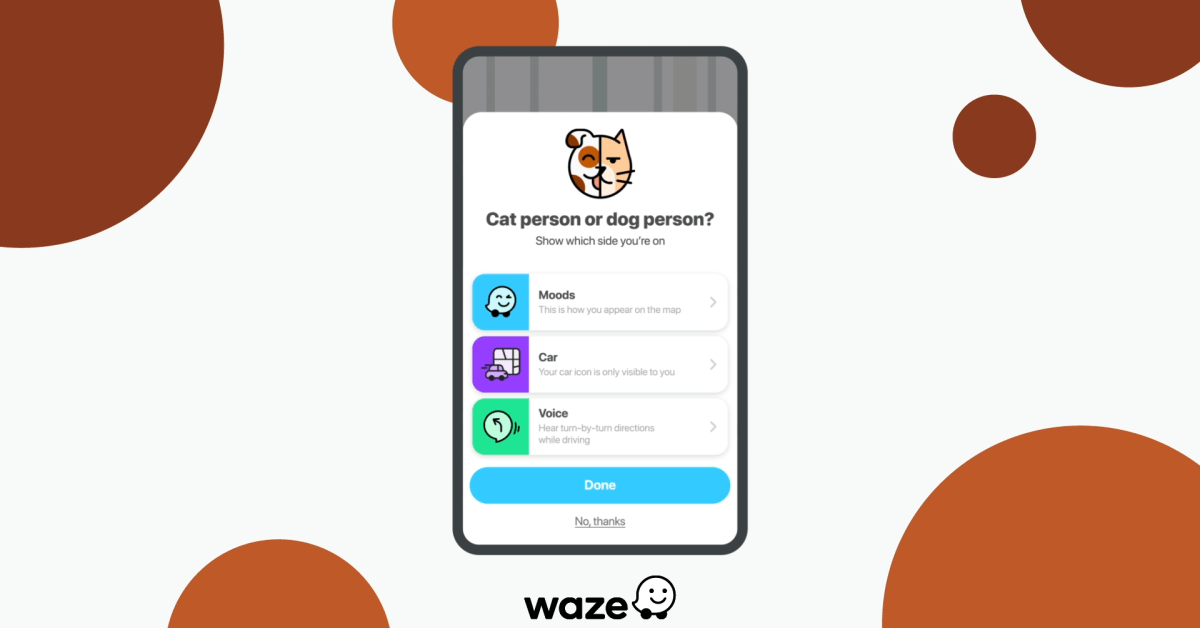
    Google-owned Waze uses crowdsourced information to help guide you when you’re driving from point “A” to point “B.” Unlike Google Maps, which has become more than just a navigation app with mass transit information, restaurant reviews, entertainment, and lodging options, Waze uses a combination of real-time traffic info and reports from other “Wazers” to get you to your destination safely, and quickly.

    Waze users running the iOS variant of the app noticed something strange starting about a week ago. The app would lag when the user typed his destination in the “Where to?” field on the bottom of his iPhone. On Reddit, a Waze user with the username DependentDare4758 reported that Waze was sluggish on his iPhone 13 Pro Max running iOS 17.6. He wrote that he had to wait over three seconds to type in every keystroke on his iPhone, and that voice recognition was not operating.

    He also noted that scrolling was “exceptionally sluggish” when he was creating a trip for a later time and date. Additionally, highlights were all over the place covering two arrival times. This same Wazer pointed out that he was not having any of these issues using Waze on his fifth-generation iPad Air and sixth-generation iPad mini. Deleting Waze and reinstalling the app did not help.

    Several Redditors complained about this issue and now we have some good news to pass along. Waze developers have created an emergency update that fixes the issue. The update has started to rollout but is being sent in waves which means that it could be several days before the update arrives on your iPhone. You can look to update Waze manually by looking for and installing the update by following these directions:

    1. Open the App Store app and tap your profile icon in the upper right corner.
    2. On the bottom of the page you will see a list of apps that need to be updated.
    3. If all apps have been updated, swipe down a little from the top of the screen to refresh the page.
    4. Look for Waze and if you see it listed, tap on the Update button.

    Also, later this month, Android users will be able to see turn-by-turn directions, real-time traffic updates, and hazard alerts on their phone’s lock screen. Apple iPhone users should start to see this feature in the fall.

    If you don’t have Waze installed on your iPhone, tap on this link to download it from the App Store. If you’re using an Android device, tap on this link to install Waze from the Play Store.
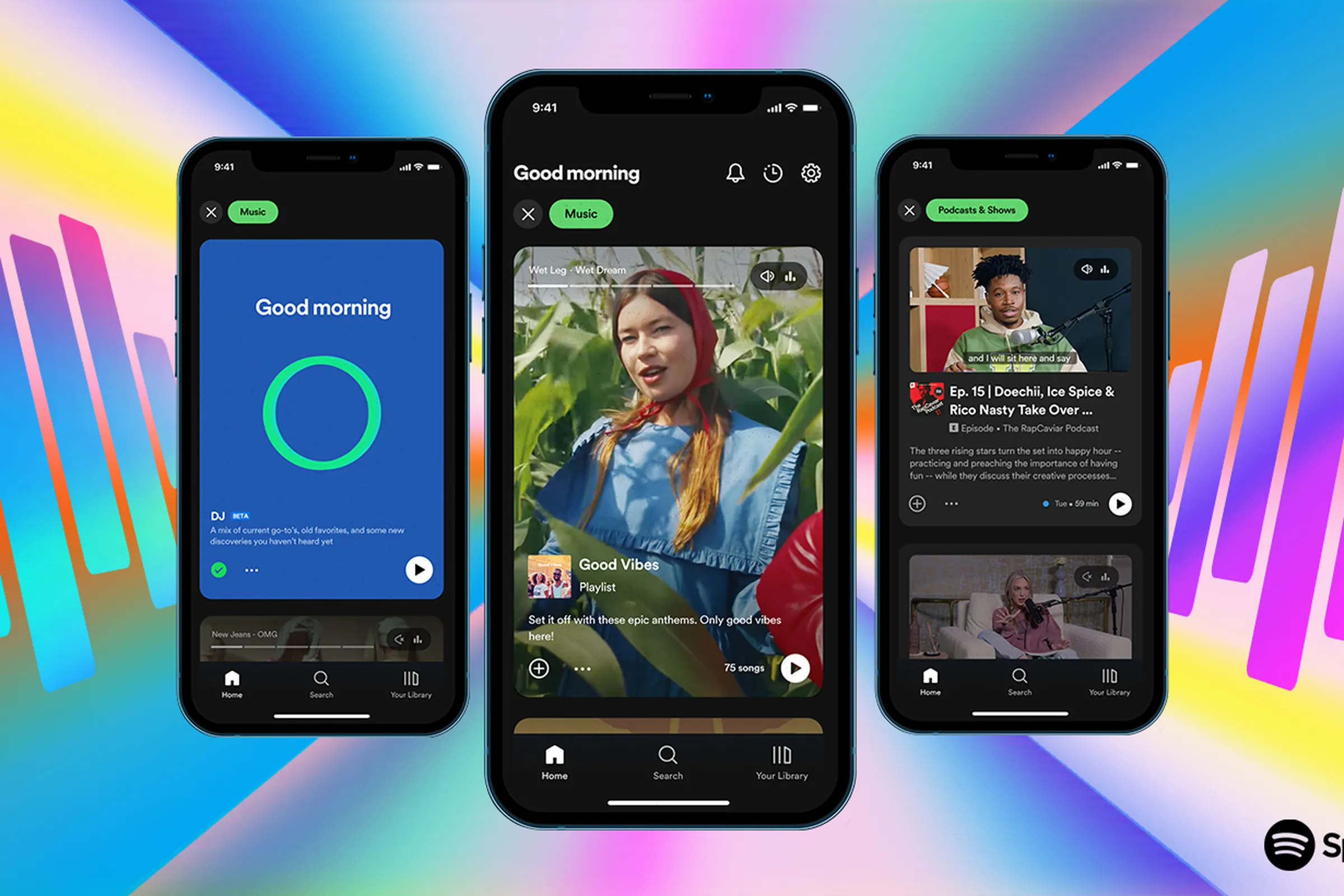
  • You could soon be able to listen to your Spotify music via Gemini

    You could soon be able to listen to your Spotify music via Gemini

    Spotify users may soon be able to control their music and podcasts directly through Google’s Gemini chatbot. An early look into the Google app’s code revealed a Spotify extension being developed for Gemini. This means you may be able to play music and podcasts from Spotify without leaving the Gemini interface.

    A test run of the feature was successful, playing a song via Spotify through Gemini. Interestingly, even though YouTube Music is Google’s own music platform, Gemini showed a YouTube Music card before the song actually played from Spotify. It seems the integration will even allow background playback, letting you enjoy your Spotify tunes without opening the Spotify app itself.

    This is good news for the many Spotify users. If you want a music streaming service that works seamlessly with Gemini, you may not have to switch to YouTube Music.

    This discovery is part of a larger trend. There are hints in the Google app’s code that suggest more Gemini extensions are in the pipeline. These include potential integrations with Google Home, the Phone app, and Utilities. This suggests Google is working on making Gemini more useful by connecting it with a wider range of apps and services.

    Here’s a summary of the potential Spotify extension’s features based on what has been observed so far:

    • Control Spotify music and podcasts through Gemini.
    • Play Spotify content without opening the Spotify app.
    • Background playback support.

    We don’t know yet if the integration will allow users to create playlists, search for specific songs or artists, or control playback speed. We also don’t know how the extension will handle offline listening, or whether it will be available on all Spotify plans.

    While these features are promising, it’s important to remember that they are still in development. We’ll have to wait for an official release to see exactly how the Spotify extension works and what features it will offer.

  • Spotify restores free lyrics access

    Spotify restores free lyrics access

    Free Spotify users are now able to view song lyrics for all songs again, after being restricted earlier this year. The company previously limited free users to viewing lyrics for only three songs a month, pushing a paid subscription to access lyrics for any song. However, Spotify has now reversed this decision, allowing free users to enjoy unlimited access to lyrics once more.

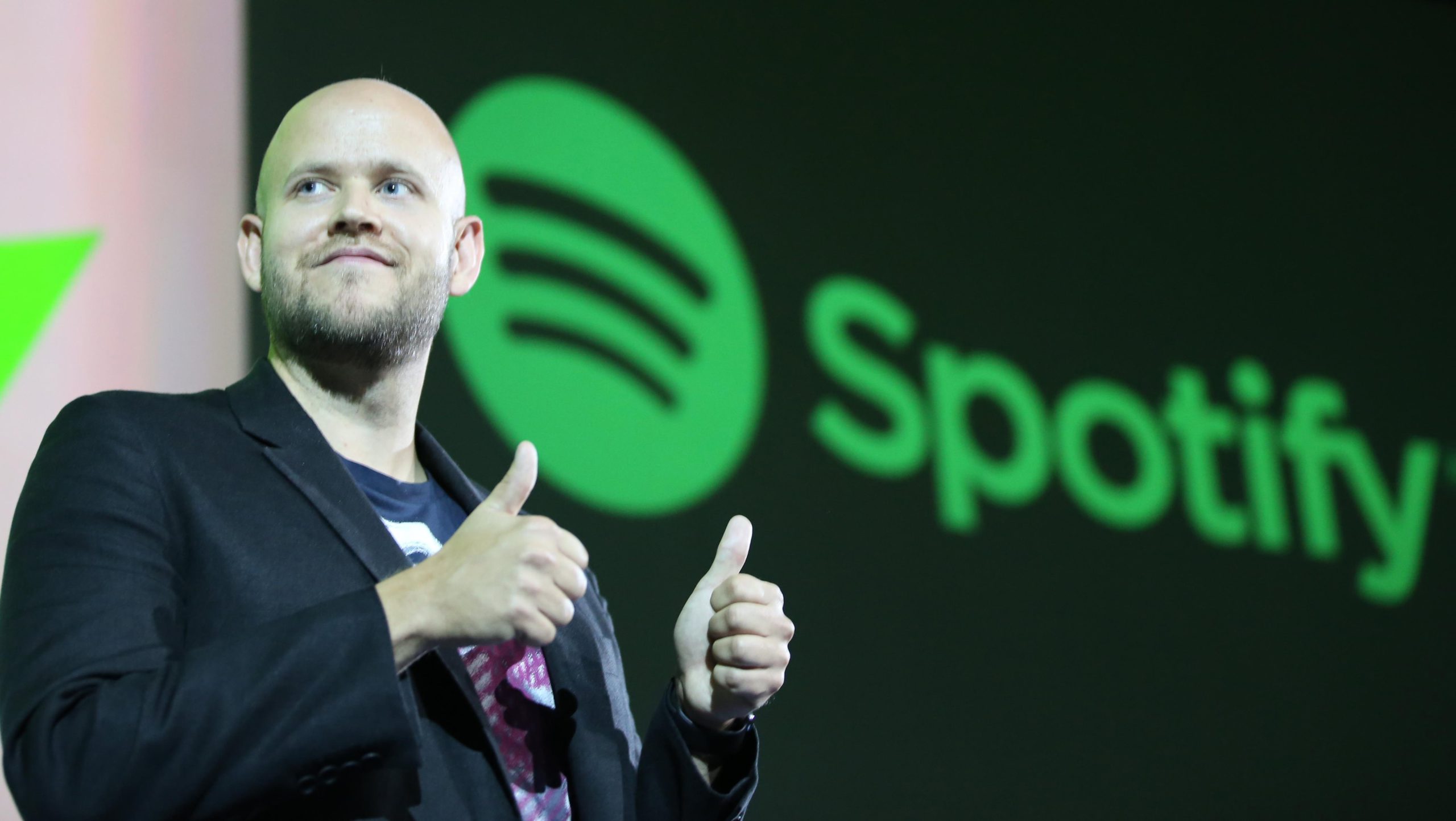
    Spotify’s decision to limit lyric access for free users in May was met with negative feedback. It was viewed by some as an attempt to incentivize users to upgrade to their paid subscription tiers, which start at $11 per month. However, the company seems to have shifted its strategy, prioritizing improvements to the free user experience. This change aligns with CEO Daniel Ek’s recent statements about enhancing the free product pipeline based on performance in certain markets.

    While the exact reasons behind Spotify’s change of heart remain unclear, it’s evident that the company is constantly experimenting and iterating on its features. The spokesperson’s statement emphasizes this, stating that feature availability can vary across different tiers, markets, and devices.

    During a recent earnings call, CEO Daniel Ek mentioned ongoing plans to integrate additional enhancements into the free experience in the coming months. These improvements aim to make the free tier more appealing and valuable for users, potentially attracting a wider audience to the platform.

    It’s worth noting that Spotify’s commitment to enhancing the free experience goes beyond lyrics access. The company is likely exploring various avenues to make the free tier more attractive and engaging for users. This could involve introducing new features, improving the user interface, or even experimenting with different advertising formats.

    Although Spotify is still testing and refining its features, the company appears to be actively listening to user preferences and making necessary adjustments to cater to both free and paid users. The recent reversal of the lyrics restriction suggests that Spotify is open to adapting its strategies based on user response and market trends. It will be interesting to see how this change impacts user engagement and satisfaction on the platform in the long run.

  • Spotify expands its library with audiobooks from over 100 publishers

    Spotify expands its library with audiobooks from over 100 publishers

    After introducing a tier specifically dedicated to audiobooks, Spotify is now expanding its library to offer potential customers a reason to pay the expensive subscription price. The world’s biggest music streaming service announced a huge deal to add audiobooks from over 100 Ingram-distributed publishers to its library. Spotify is bringing audiobooks from Europa Editions, Milkweed Editions, G&D Media, Bard Press, New Society Publishers, and more to its customers.

    Spotify has already revealed some of the titles that audiobook fans will be able to listen to if they decide to join its service, such as The Hurting Kind, Mo Bunnell’s forthcoming Give to Grow, and bestselling author Bob Proctor’s Born Rich. Listeners in the United States can also dive into Damon Galgut’s Booker Prize-winning novel The Promise and Anne Berest’s international bestseller The Postcard.

    According to Spotify, since launching audiobooks in its Premium offering last year, more people have joined the service trying new and different books, with hundreds of thousands of unique titles streamed.

    The streaming service says that not only bestsellers are popular among listeners, but back catalog titles are also gaining popularity. Of the top 10 audiobooks on Spotify, nine are backlist titles, and six of those were released over five years ago.

    This is the second major audiobooks announcement from Spotify, after the streaming company revealed back in May a deal with Bonnier Books UK and Blackstone Publishing to have their libraries of audio titles added to its Audiobooks offer.

  • Gasoline hits 5-week low

    Gasoline hits 5-week low

    Gasoline prices on Thursday fell to the lowest since June 20 in its third consecutive week of decline.

    The popular fuel RON95 dropped 1.25% to VND22,880 ($0.90) per liter.

    Biofuel E5 RON92 declined by 1.22% to VND21,900.

    Diesel fell 1.51% to VND20,190.

    Globally fuel prices in the last seven days were affected by expectations of a ceasefire deal between Israel and Hamas, a stronger U.S. dollar, and declining oil demand in China compared to last year, according to regulators.

    Gasoline fell by 1.6-1.7% globally and oil dropped 1.8-3% in the period. RON95 is now at $95.6 per barrel and diesel at $97.5.

  • Here’s how Spotify will help to prevent self-harm

    Here’s how Spotify will help to prevent self-harm

    Spotify is aiming to create a safer online environment for young people, the popular streaing service announced.

    There’s a recent blog piece by Marcelina Slota (Head of Spotify’s Platform Integrity) that states so.

    With safety being a “top priority” for Spotify, the company aims to make it easier for young people and parents to understand and navigate the digital world. That’s why Spotify announced a new Parental Guide to assist in this effort and joined the Tech Coalition to share best practices within the industry for upholding youth safety.

    The Tech Coalition is an organization that unites the global tech industry to foster a safer online environment for young people by preventing and combating online child sexual exploitation and abuse.

    This partnership expands Spotify’s network of trusted third-party experts who help advise its teams on launching policies and products with safety by design.

    In addition to partnering with global experts, Spotify works to craft a safe and enjoyable experience for young people in several ways, including:

    • Establishing a zero-tolerance policy against content that exploits children and Platform Rules that ban illegal and/or abusive behaviors that could harm children;
    • Leveraging machine learning signals and establishing user reporting mechanisms to detect potential policy and/or legal violations;
    • Staffing teams around the clock to review and promptly remove potentially violating or explicit content; and
    • Connecting potentially vulnerable users to mental health resources when they search for content related to suicide, self-harm, and disordered eating content.

    The aforementioned mental health resources include the US’ National Suicide Prevention Lifeline, the TREVOR Project, National Eating Disorders services, and more.

    So, if you or someone you know is struggling or thinking about self-harm, there are ways to get help. If you’re concerned about self-harm, drug or alcohol usage, or depression, please talk to someone or reach out to one of the organizations listed below for professional support.

  • Spotify official confirms a more premium tier is coming soon

    Spotify official confirms a more premium tier is coming soon

    Spotify’s long-rumored Hi-Fi tier is about to go official. The music streaming service recently confirmed a deluxe version of Spotify that offers a bunch of enhancements is in the works and should be released very soon.

    After adding a basic ad-free plan in June specifically aimed at those who don’t listen to audiobooks, Spotify is ready for the next step. The launch of an even more premium tier will allow the audio giant to tap into a new audience, one that’s looking for excellence.

    On the company’s earnings call, Spotify CEO Daniel Ek said that the upcoming deluxe tier could cost $5 more than the current premium tier pricing. Although the deluxe plan is still in “early days,” Spotify is determined to eventually give it the greenlight since it’s convinced that it caters to a certain type of consumers.

    According to Ek, the even more premium tier of Spotify is going to be “around $17 or $18 price point, but sort of a deluxe version of Spotify that has all the benefits that this normal Spotify version has, but a lot more control, a lot higher quality across the board.”

    The star of this deluxe version of Spotify is the lossless audio feature, which includes listening support for up to 24-bit/44.1kHz that’s going to be available for “limited songs” via the FLAC audio format.

    In addition, the upgraded tier is rumored to include the ability to generate custom playlists based on specific dates, events, activities, but the algorithm will also try to predict user preferences and create playlists accordingly.

    Currently, only three music streaming services offer lossless audio to their subscribers: Amazon Music, Apple Music, and TIDAL. It’s surprising that Spotify hasn’t added this perk to its offering yet, but there’s probably a reason behind this strategy that we’re not aware of.

  • YouTube’s weaker than expected Q2 performance hurts Google parent Alphabet

    YouTube’s weaker than expected Q2 performance hurts Google parent Alphabet

    A 13% year-over-year increase in revenue from YouTube ads during the second quarter of 2024 and a 13.8% annual increase in revenue from Google Search ads helped lead Alphabet subsidiary Google to report an 11% annual gain in advertising for Q2 of 2024. Google Search ad revenue rose from $42.63 billion to $48.51 billion year-over-year and YouTube ad revenue amounted to $8.66 billion up from the $7.67 billion that was generated during the same quarter last year.
    Google said that for the three months ended in June 2024, total Google advertising revenue came to $64.62 billion compared to the $58.14 billion in advertising revenue that came into Google’s coffers during the second quarter of 2023. Traffic acquisition costs rose 6.8% to $13.39 billion which was well worth it to Google thanks to the aforementioned 11% annual hike in Q2 advertising revenue.
    The business unit which includes Pixel devices, Google subscriptions, platforms, and devices, saw top-line growth of 14.4% to $9.31 billion from $8.14 billion. That could indicate growing demand for Pixel phones, tablets, smartwatches, and earbuds. Google’s Cloud business was very strong with the top-line rising 28.8% to $10.35 billion compared to the $8.03 billion that this business generated during the same quarter last year. This was the first time that Google’s Cloud business topped $10 billion in revenue and $1 billion in operating profit during a single quarter.
    Alphabet’s total revenue of $84.74 billion during the second quarter was up from the $74.60 billion reported during the 2023 second quarter. This was a 13.6% increase and helped Alphabet report a 28.6% gain in net income to $23.62 billion for the second quarter of 2024. During the same quarter last year, Alphabet had net income of $18.37 billion. Diluted earnings per share, which assumes the conversion to equity of all convertible debt, was reported by Alphabet to be $1.89 for  Q2 of 2024, up 31.3% from the $1.44 reported for the same quarter in 2023.
    The report did not sit well with Alphabet investors; the shares rose 12 cents during the regular trading session to $181.79 but plunged $3.96 or 2.18% to $177.83 in after-hours trading after the earnings were released. While Alphabet’s earnings and revenue were higher than expected, YouTube’s performance disappointed investors, explaining the subsequent stock sell-off during the extra trading session.
  • Gasoline prices slip after 5 weeks rising

    Gasoline prices slip after 5 weeks rising

    Gasoline prices on Thursday fell slightly after increasing non-stop since early June.

    The popular fuel RON95 dropped 1.10% to VND23,290 ($0.92) per liter. Biofuel E5 RON92 declined by 0.80% to VND22,280.

    Diesel fell 1.61% to VND20,830.

    Global gasoline prices in the last seven days were affected by possible ceasefire deals in the Gaza, the U.S. entering summer travel peak time, and the ongoing conflict between Russia and Ukraine, according to regulators.

    Gasoline has dropped by 0.1-0.4% while oils fell 1-1.4% in the period. RON95 is now at $97.8 per barrel, and diesel at $101.2.

  • Spotify enhances podcasts with new commenting feature

    Spotify enhances podcasts with new commenting feature

    Spotify is launching Comments for podcasts and a new mobile app for podcasters to build stronger relationships with their listeners. These new tools allow podcasters to manage their shows and engage with fans in a deeper and more convenient way.

    The company has been adding features to their podcasts for some time now. A few years ago, the platform introduced Q&A and polls to allow listeners to interact with podcasts. Since their introduction, over 9 million unique Spotify users have engaged with a Q&A or poll and interactions have grown by 80% year-over-year. This suggests that interactive features like Comments are in high demand.

    Ben Wilson, the creator of “How to Take Over the World,” shared that he uses Comments to get feedback from his audience and understand which takeaways from the podcast resonate most with them. This feedback helps him create a stronger connection with listeners and makes podcasting more rewarding for him.

    The new Comments feature builds on the existing Q&A and polls functionality. With Comments, Spotify hopes to further enhance the interactive experience for both podcasters and listeners. This feature is available to all podcast creators, regardless of where their episodes are hosted. Creators can manage listener feedback, track their podcast’s growth, and interact with listeners, all through the new Spotify for Podcasters mobile app.

    The new Spotify for Podcasters mobile app has been rebuilt to be more inclusive and now works for all podcasters, regardless of where their show is hosted. It also includes new notification features that help podcasters stay informed about their show’s performance and listener feedback. The ability to manage comments has also been added to the app.

    Spotify’s VP of Podcast Product, Maya Prohovnik, stated in an interview that Comments were a highly requested feature by podcasters and listeners alike. Furthermore, she stated that since Spotify is committed to making its platform the best place for creators to connect with their fans, the addition of Comments aims to achieve that goal. Historically, podcasts have been a one-sided experience, and while features like Polls and Q&A have been available for some time, there has been a desire for more direct interaction.

    The new features and app are designed to offer a better podcasting experience for everyone involved. For podcast creators, these tools provide a meaningful way to grow their audience and strengthen relationships with listeners. For fans, the biggest benefit is the ability to connect with their favorite podcasters on a deeper level, directly on the platform where they are already listening.

  • Vietnam Railways reports record half-year revenue

    Vietnam Railways reports record half-year revenue

    Vietnam Railways, the monopoly state-owned railroad operator, has reported record half-yearly revenues of VND4.5 trillion (US$177.13 million), surpassing its full-year earnings for the years 2019-2021.

    At a recent conference, it announced that revenues had increased by more than 10% compared to the same period last year. It targets revenues of VND6.258 trillion for the full year.

    It said passenger numbers increased by nearly 21%. It launched specialized services such as the “heritage connection” train between Hue and Da Nang, and charter trains, offering custom itineraries and services in March, and the “Da Lat night train journey” in April.

    It has expanded international freight transport, including to Russia, Europe, Mongolia, and Central Asia.

    Last year VNR turned the corner after three years of losses, reporting a profit of VND77 billion. But it had accumulated losses of over VND2.08 trillion.

    The company has 25 subsidiaries, 17 directly managed units and eight joint venture and associated companies, and manages a railway infrastructure totaling 3,143 km of tracks on 15 routes that run from north to south.

    Hanoi Railway Transport and Saigon Railway Transport are the two largest members, and last year they reported profits of VND14 billion and VND11 billion.

    Thanks to surging passenger demand, their profits were three times their full-year target in the first quarter of this year.

    The two companies are soon set to merge after receiving shareholder approval. They are in the process of completing the procedures for this.

  • Netflix uses dubious method to get some subscribers to switch plans

    Netflix uses dubious method to get some subscribers to switch plans

    A change is coming to Netflix subscription plans in some markets starting on July 13th. That’s when the video streamer’s $11.99 ad-free plan will be discontinued in two countries. This is the cheapest ad-free subscription option that Netflix offers and eliminating it will force subscribers to move to one of three plans. These subscribers can choose the $6.99 per month plan that subjects them to viewing ads, or they can sign up for one of two ad-free plans that are available. There is an ad-free plan that costs $15.49 per month and a plan that offers ad-free 4K streams for $22.99 per month (more on this later).

    A photo posted on a social media site shows that a Netflix subscriber, even though he still has a valid subscription for a couple of weeks, is not being allowed to use the platform until he subscribes to another plan. While this user was trying to view content on Netflix, he sees a sign on his television that said, “Your last day to watch Netflix is July 13. Choose a new plan to keep watching.” Underneath that heading Netflix writes, “Your Basic Plan has been discontinued, but you can easily switch to a new one. Plans start at $5.99 with upgraded features.”

    This is unfair to the subscriber who is being forced to decide which plan to subscribe to right away if he wants to enjoy the remainder of the subscription that he pays for monthly. On Reddit, several people called out Netflix for doing something that they felt bordered on illegal. “There’s no option to continue watching without selecting a new plan,” one Netflix subscriber said on Reddit. Still, this shouldn’t be too surprising to Netflix subscribers since the company said this past January that it would push customers to less-expensive or more-expensive plans.

    Those receiving the notice telling them that their current plan expires on July 13th can choose from one of three aforementioned options. Standard with ads is $6.99 per month and features Full HD (FHD) resolution streams with no more than two devices allowed to stream at once. This plan supports downloads and up to two devices can download content.

    Ad-free options include Standard for $15.49 per month which has all of the same features as the Standard with ads plan, but without ads. The Premium plan is $22.99 per month and streams in Ultra HD resolution. Four devices can stream at once and up to six devices can  download content for viewing when offline.The notices about the discontinuation of the Basic plan is being seen by Netflix subscribers in Canada and the U.K. with U.S. users expected to be targeted soon. American Netflix subscribers should remember the saying, “To be forewarned is forearmed.”

  • Vietnam to start work on high-speed rail within next 3 years

    Vietnam to start work on high-speed rail within next 3 years

    Work on a 1,500-kilometer high-speed rail link between the northern and southern regions will start in 2026 or 2027, Minister of Transport Nguyen Van Thang has said.

    Vietnam hopes to partner with China in building the railroad and rolling stock and setting up its signaling system, he told Lou Qiliang, chairman of China Railway Signal & Communication Corporation (CRSC) at a meeting Tuesday in China’s Dalian City.

    The three determine the safety of a rail project, and China has advanced technologies for developing them and at reasonable prices, he said.

    CRSC is a state-owned company and the world’s biggest supplier of rail control systems.

    It accounts for 45% of China’s subway market.

    Railroad infrastructure, especially for the north-south high-speed route, is among the government’s priorities for enhancing the country’s competitiveness.

    Prime Minister Pham Minh Chinh said at the meeting that China has strengths in developing high-speed and urban rail networks.

    He sought China’s support in design, construction and technology transfer, including for three cross-border rail projects spanning 700 kilometers between the two countries.

    Work on the first is set to begin next year, connecting China with the northern province of Lao Cai, Hanoi and the port city of Hai Phong.

    Lou told the PM that his company is seeking opportunities to partner with Vietnam, and can provide assistance in researching and developing rail signaling systems.

    Human resource training also plays an important role in rail projects, he added.

  • Gasoline prices move up

    Gasoline prices move up

    Gasoline prices rose for the second week in a row Thursday afternoon.

    The popular fuel RON05 went up 1.03% to VND22,460 ($0.88) per liter. Biofuel E5 RON92 rose 0.89% to VND21,500.

    Diesel increased by 3.66%.

    Globally fuel prices were affected by rising tension in the Middle East and Ukraine’s repeated attacks on Russia’s oil storage, regulators said.

    Gasoline added 1.3% while oil increased by 2.4-4.3%. RON95 is now at $92.7 per barrel and oil $98.9.

  • Gasoline prices tiptoe up

    Gasoline prices tiptoe up

    Gasoline prices rose slightly Thursday afternoon after hitting the lowest in nearly five months last week.

    The popular fuel RON95 went up 1.18% to VND22,230 per liter. Biofuel E5 RON92 rose 0.80% to VND21,310.

    Diesel increased by 1.13% to VND19,640.

    Regulators said that gasoline prices fluctuated last week after the U.S. Energy Information Administration lifted its growth forecast on global fuel demand while the military conflict between Russia and Ukraine continued.

    Gasoline prices rose 1.2-1.5% while oils went up 1.4-1.9%.