Category: Living

Retail News Asia is committed to providing both local and global retailers with the latest Living news throughout the Asian market. This on a daily base.

  • Tidal lowers pricing of its HiFi lossless music subscription to match Spotify

    Tidal lowers pricing of its HiFi lossless music subscription to match Spotify

    While every other video and audio streaming company is either battling it out or raising its subscription costs sans ads, Tidal today made a surprising move: slashing the price of its high-quality lossless audio plan. This bold change positions Tidal as a truly compelling option alongside streaming giants like Spotify and Apple Music.

    Previously, Tidal’s HiFi lossless subscription cost $20 per month—almost double the price of Spotify’s popular $10.99 plan. Now, Tidal is dropping the price to match Spotify’s exact cost. With the HiFi and HiFi Plus tiers gone and combined into one TIDAL tier, the service will now cost you $10.99 USD a month for an individual subscription.

    Families will be transitioned to the new TIDAL Family plan, which will cost $16.99 USD a month. Additionally, Tidal will offer its DJ Extension as an add-on for individual plans, which will cost an additional $9 USD a month and allow users to access, stream, and mix music from the service’s DJ partners.

    But it’s not all great news, particularly for those that were on TIDAL’s free tier, which will no longer exist. As per the company announcement, anyone on the free tier will now need to sign up for a paid plan in order to continue using the service. You gain some. You lose some.

    It is important to note that, while both TIDAL and Spotify now share a price point, their offerings differ. Spotify boasts a huge music catalog and excellent music discovery features. It’s a crowd favorite, especially for casual listeners who love finding new tunes. However, Tidal’s edge lies in its superior lossless audio quality, making it irresistible for serious audiophiles with high-end equipment.

    Until recently, music lovers wanting lossless quality had a clear choice: Tidal or Apple Music. Spotify’s continued delays in rolling out their promised lossless tier have left users frustrated. Tidal’s pricing shift, effective April 10th, puts serious pressure on Spotify to step up.

  • TikToking increasingly a full-time job for young people

    TikToking increasingly a full-time job for young people

    Tran Manh Duc, 30, decided to quit his office job to pursue a career as a TikToker four years ago despite opposition and skepticism among family and friends.

    At first he used TikTok only as a tool to advertise his company’s products, but when his first restaurant review video unexpectedly went viral, he started Saigon food review channel Anh Bung Mo. It managed to attract over 100,000 followers in the very first month.

    “At the time they did not comprehend that TikToking could be a job,” he says.

    “Most people only told me I would fail and feel embarrassed and disappointed. For months my family and friends constantly advised me against pursuing such a career.”

    Within a year his income increased nearly 10-fold, and it was at this time he decided to quit his job and dedicate all his time to developing his TikTok channel.

    “As a TikToker, my daily income is as much as my earlier monthly salary.”

    Duc then employed a few dozen staff to help him put out content on TikTok.

    “TikTok changed the lives of many people, including mine.”

    Duc is hardly alone in making a living off TikTok and other online platforms, and considering it a career.

    Le Phuong Oanh, a TikToker with nearly 900,000 followers, has made it her profession for the past two years.

    When she was unemployed during the Covid-19 outbreak, she turned to TikTok as a lifeline.

    After garnering 100,000 followers in just three months she decided to recruit a team to professionalize her content.

    “I have always viewed it as a profession,” Oanh says.

    “My 14 employees have always worked professionally and are divided into separate units like quality control, accounting, video shooting, and script writing.

    “We work on a clear schedule and have specific strategies for each aspect of the TikTok channel.

    Tran Thi Thu Phuong, senior recruitment manager at headhunting firm 40HRS Vietnam, said creative content creation for social media has become a new career option in recent years.

    According to software firm Adobe’s Future of Creativity study, 77% of non-professional content creators said they started monetizing their online content in the past year, with 48% of them saying these earnings accounted for more than half their total income.

    In 2022 nearly 20,000 Vietnamese earned a total of VND1.5 trillion (US$60.8 million) from social media platforms, according to a report presented at a conference last March.

    Professional TikTok training facilities report a rise in the number of young people enrolling for their courses.

    At CMT Academy in HCMC’s District 3, the number of students doubled since the Lunar New Year holidays in mid-February, with many reportedly planning to quit their jobs in the next six to 12 months to pursue it as a career.

    Nguyen Cong Minh Tri, who teaches livestream hosting there, says the desire to quit boring office jobs and the recent rise in unemployment have caused many young people to take up TikToking as a career.

    “These people are usually office workers, students, fresh marketing graduates, or new mothers who are looking for a flexible job without the eight-hour work schedule, attendance check or KPIs.”

    But with the rush comes competition.

    Several professional TikTokers, even those with millions of followers, speak about their unstable income and immense pressure and negative impacts on their health.

    The job is highly stressful because TikTok changes very often, Duc explains.

    “A friend of mine had a channel that made billions of VND, but it declined as soon as he became complacent.”

    Oanh says: “This job has unstable income. Some months are great while some are bad. Because the work is all about creativity, when you run out of ideas or hit a creative block, you cannot produce any content to earn money.”

    Having seen many people quitting their jobs but failing to make it on TikTok, Duc says young people who come to this profession should first get training from specialists or have a secondary job alongside their channel.

    To have a successful career on the platform requires serious dedication and should not be thought of as a fun project, he stresses.

    He says new TikTokers should put more effort into their camerawork, script and background.

    To be able to work with large brands, content creators have to learn about marketing, writing and working through email, English, and several other skills, he adds.

    Oanh says the job requires a lot of brainstorming and efforts by all team members and not the TikToker alone.


  • T-Mobile brings its 5G Home Internet service to Puerto Rico

    T-Mobile brings its 5G Home Internet service to Puerto Rico

    T-Mobile is ending February with a big announcement for customers in Puerto Rico. The Un-carrier is expanding 5G Home Internet to Puerto Rico, thus allowing customers with an eligible address and qualifying voice line to sign up for the service for just $50 a month with AutoPay through their retail store.

    Arguably the fastest growing home internet provider in the United States, T-Mobile now offers customers in Puerto Rico a handful of benefits when going to its 5G Home Internet service.

    • A flat, monthly price: T-Mobile 5G Home Internet is $50 a month with AutoPay and a voice line and that’s it. There are no added taxes on qualifying accounts, monthly fees or equipment costs.
    • Simple setup: Pick up a gateway from a store, plug it in, download the app and get connected in less than 15 minutes.
    • A worry-free trial: Test drive 5G Home Internet worry-free for 15 days. When it’s time to make the switch, T-Mobile will pay up to $750 to cover any early termination fees from other internet service providers.
    • Price Lock: Lock in your monthly rate and enjoy peace of mind knowing that if T-Mobile ever raises your rate, you can get your last month of service refunded.

    Initially, 5G Home Internet will be available to T-Mobile customers in Puerto Rico in locations that have network capacity to provide a great experience to all customers. According to the carrier, network capacity will continue to be increased, so the 5G Home Internet service will expand to more people in the coming months.

  • NZ haircare company Monday expands US presence with second brand

    NZ haircare company Monday expands US presence with second brand

    New Zealand haircare brand Monday Haircare is expanding its footprint in the US with a second brand Osana Naturals.

    Osana Naturals offers skin and hair care formulas with six functional fragrances. Its formulas promote skin and hair health through moisturizing chemicals and replenishing botanical extracts.

    Jaimee Lupton, a beauty entrepreneur from Auckland, New Zealand, started her first brand, Monday Haircare, in February 2020, to make high-quality hair care more affordable. Monday is now stocked with more than 100 retailers in 50,000 doors across 33 countries and is ranked as the number one haircare brand on TikTok.

    “I’m a firm believer that everyone should be able to enjoy luxurious beauty products, and an accessible price point or shopping experience shouldn’t equal sacrificing modern values or efficacy,” said Lupton.

    “There is a gap in the mass market when it comes to modern, beautiful and effective personal care, and we’re excited to give shoppers the kind of products they crave finally – and deserve – with Osana Naturals.”

    Cruelty Free International’s Leaping Bunny certification recognises Osana Naturals as a cruelty-free beauty brand that meets the criteria for product development, supply chain, and distribution.

    Osana Naturals products are free from common ingredients including sulphates, phthalates, parabens, BHA, BHT, mineral oils, and aluminium. They are also dermatologically tested, pH-balanced, and suited to all skin and hair types.

  • Google TV gets design tweak that makes your favorite apps more accessible

    Google TV gets design tweak that makes your favorite apps more accessible

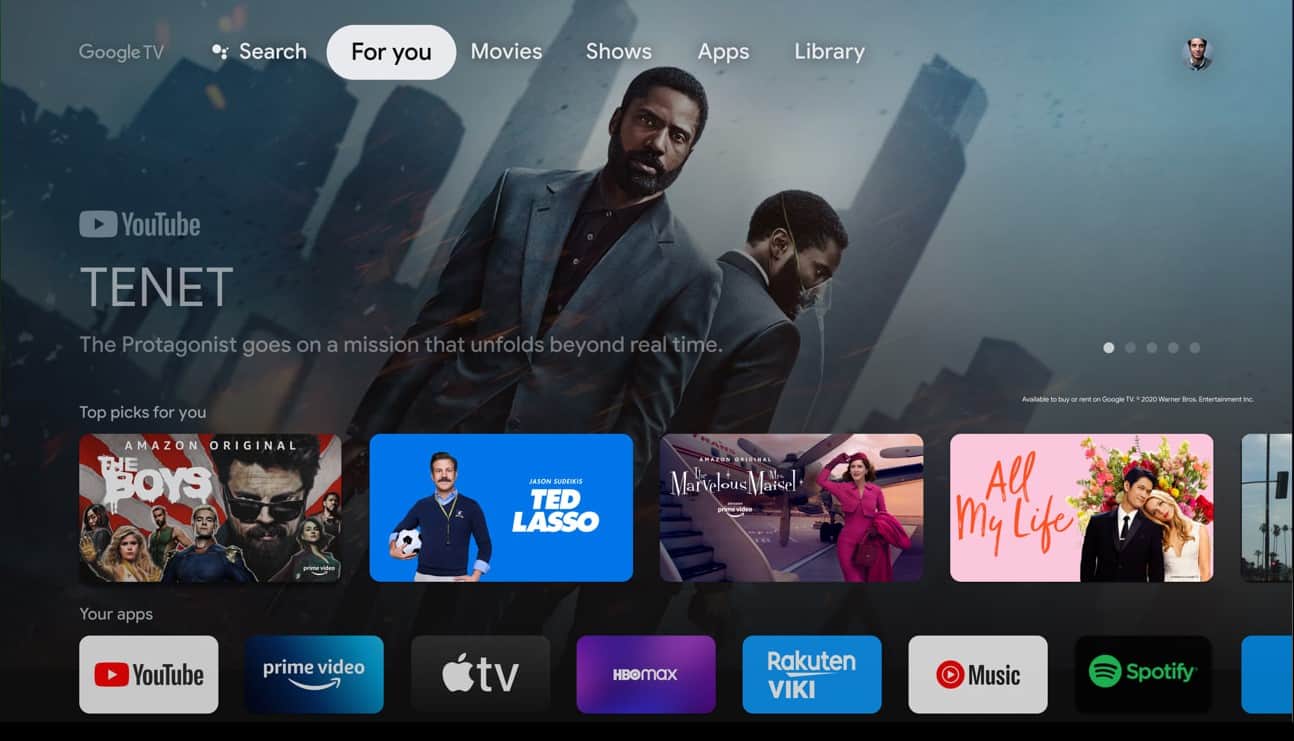
    Google TV is once again getting a design tweak. Following the addition of new landing pages last year aimed at simplifying navigation, the “For you” screen is now tackling the “Your apps” row, introducing several updates to make navigation easier and your overall viewing experience more enjoyable.

    The app icons on your Google TV are sporting a brand new look, with the old squares and rectangles gone and circular app icons replacing them. This change aims to give your home screen a more modern feel while also making it easier to locate your favorite applications.

    The update also adds a new shortcut that gives you direct access to free TV channels on Google TV. The platform added over 800 new fully-integrated free channels last year that included hit TV shows, game shows, music channels, various entertainment shows, and more — all without downloading additional apps or paying for a subscription.

    Now, you’ll have yet another way to access these channels, without having to click away from the “For you” section. For your convenience, a new shortcut to free channels will now be added to the “Your apps” row.

    Now that the app icons will be circular, they will take up less space. This opened the door for Google TV to expand the number of app icons visible in the “Your apps” row. You can quickly jump into more of your most-used apps without scrolling.

    You have always been able to rearrange the order of your apps, however, the process wasn’t exactly very user-friendly. Now, Google TV will feature “reorder” and “add app” buttons at the end of the “Your apps” row. This will allow you to take control of your app layout by moving your favorites to the front and seamlessly discovering and installing new apps to enhance your entertainment setup.

    These updates are rolling out over the next few months, so watch your Google TV screen for the transformation. With a sleeker design, easier access to content, and more user control, Google TV is continuously improving at putting your entertainment experience first.

  • Siemens offers locomotives for Vietnam’s highspeed railway By Viet Tua

    Siemens offers locomotives for Vietnam’s highspeed railway By Viet Tua

    Siemens has expressed interest in Vietnam’s North-South highspeed railway and offered to provide vehicles for the project.

    Siemens president and CEO Roland Busch told Prime Minister Pham Minh Chinh at a meeting in Hanoi Monday that the company can transfer the technology of building carriages and can provide the trailway signal system for the project.

    The North-South highspeed railway is among the largest transport projects that Vietnam plans for the upcoming decades.

    It should be approved in policy by next year and construction is scheduled to begin before 2030.

    Two sections of the railway, one from Hanoi to Vinh and the other from HCMC to Nha Trang, will begin construction before 2030 and the whole route should be finished by 2045.

    Busch made the offers after PM Chinh proposed that Siemens consider participating in the construction of the railway as well as the second metro line in HCMC, a 11-kilometer that mostly runs underground with a price tag of VND47.8 trillion.

    The PM asked Siemens to partner with Vietnam in the fields of high technology and innovation, green transformation, renewable energy, transportation and digital transformation.

    He also asked about potential for Siemens to build a research and development center built in Vietnam and urged the company to cooperate with the National Innovation Center. He also wants the group to expand cooperation with Vietnamese technology enterprises.

    Vietnam would create favorable conditions for businesses like Siemens to invest long-term, Chinh said.

    In Vietnam, Siemens established a representative office in 1993 and now has three representative offices in Hanoi, Da Nang, and Ho Chi Minh City. It also has a manufacturing factory in the southern province of Binh Duong.

    Siemens cooperates with Vietnam in many fields, especially renewable energy and transport. Its participation in one solar power project is estimated to contribute one billion kilowatt-hours of electricity to the country’s electricity system each year.

    The company has also designed and supplied 16 diesel locomotives for Vietnam Railway Corporation.

  • Laos wind farms offer Vietnam 4,150 MW of electricity

    Laos wind farms offer Vietnam 4,150 MW of electricity

    According to national utility Vietnam Electricity, seven Lao wind energy plants want to sell a total of 4,150 MW to Vietnam. It will be done in phases, with 682MW supplied before 2025 and the rest gradually after that.

    Vietnam will be keen on accepting the offer.

    If the National Energy Master Plan is carried out on schedule, the central and southern regions would have enough power until 2030, but the north is likely to face shortages from 2025, especially during the dry season from May to July, EVN said.

    Importing energy from Laos would help alleviate the shortfall, it said.

    Affordability is also a factor, with wind energy from Laos currently costing 6.95 cents per kilowatt-hour compared to Vietnam’s 8.5-9.8 cents, depending on whether the plant is on land or offshore.

    Vietnam has been importing energy, mainly hydroelectricity, from Laos since 2016 through intergovernmental agreements.

    Increasing electricity purchases from neighbors is in the trade ministry’s power plans for this year.

    However, there are certain challenges.

    Electricity from Laos is expected to pass through transmission lines in Quang Tri Province, meaning the quantity of purchase will largely depend on infrastructure in this area.

    EVN’s calculations show that the proposed 4,149 MW exceeds the capacity of the local power grid.

    Most of its 200 kV and 110 kV lines operate at 80-100% of capacity. The region can only manage a maximum of 300 MW of transmission during the dry season and even less at other times.

    “Before the Lao Bao 500 kV substation is put into operation, this area [Quang Tri Province] can hardly take in more electricity from Laos because all the existing 220 kV lines are operating at high loads,” EVN said.

    Once the grid infrastructure is improved, such as with the construction of the Huong Hoa 500 kV substation and connecting lines in late 2027, Vietnam can get 2,500 MW from Laos, which will still be 1,650 MW short of the quantity it is seeking to sell.

    Furthermore, adding more renewable energy to the national grid will throw plans out if kilter. Domestic renewable energy accounted for 27% of grid capacity at the end of 2023 and is only expected to grow to 34% by 2030, according to the National Energy Master Plan.

    So, to ensure grid stability, EVN said the trade ministry should only buy a maximum of 300 MW of wind power from Laos before 2025, and only during the peak demand season.

    From 2026 to 2030 a maximum of 2,500 MW could be bought, it said.

    It also urged the government to import more hydroelectricity to increase flexibility.

    More grid infrastructure and transmission lines, including 220 kV and 500 kV dual-circuit lines from the border to the Lao Bao substation, should be added to the national master plan, it added.

  • Netflix starts forcing grandfathered subscribers to stop paying Apple

    Netflix starts forcing grandfathered subscribers to stop paying Apple

    In 2018, Netflix stopped accepting payments for new subscriptions through the App Store, forcing new subscribers and those returning after a brief hiatus to pay Netflix through its website. It has been six years since Netflix allowed such subscribers to pay for their service through the App Store. This way, Netflix could avoid paying Apple its 15% to 30% cut on in-app transactions that go through Apple’s in-app payment processing platform.

    Netflix representative Momo Zhao told The Verge that all “members on the basic plan who were using an iTunes method of payment” now must pay Netflix directly for service using a credit card or a debit card. Those who signed up for Netflix before the video streamer stopped allowing users to subscribe through the App Store were able to hold on to a good deal for years and continued to pay each renewal period through Apple.

    Netflix has allowed grandfathered subscribers to continue to pay each month through the App Store, but that is about to change. As one “X” subscriber wrote in a tweet, “Netflix stopped working with Apple Pay and didn’t inform me. Now I’m locked out of my $9.99 a month price I had paid for years and I had to get charged $31 until I get a refund through Apple.”

    If you’re in the same shoes as the person who posted the above tweet, you’ll have to pay $5.50 more a month for the same plan you were paying $9.99 a month for or pay $3 less per month for the privilege of having your streaming interrupted by ads. No matter which plan you choose, you’ll be paying Netflix directly.

    To reiterate, if you are a long-time Netflix subscriber and have been paying through the App Store to maintain your Netflix subscription, be on the lookout for an email from the video streamer that says that if you want to remain a Netflix subscriber, you will have to stop paying your bill through Apple. And you might be paying a little more or a little less each month for Netflix service depending on whether you can live with ads running on the videos you’re watching.

  • Gasoline prices drop

    Gasoline prices drop

    Gasoline and diesel prices fell Thursday afternoon as global demand is forecast to fall this year.

    The popular gasoline RON95 dropped 1.34% from a week ago to VND23,590 per liter.

    Biofuel E5 RON92 fell 1.58% to VND22,470. Diesel declined by 2.11% to VND20,910.

    RON95 fell 2% to $99.7 per barrel and diesel dropped 3% to $105.03.

  • Google announces new feature coming to Android TV in the US

    Google announces new feature coming to Android TV in the US

    Although Google is pushing a new experience to TVs powered by Android TV, the operating system is still getting updates that includes new features or improvements meant to refine it.

    If you live in the United States and use a device powered by Android TV, you’ll be happy to know that Google is now rolling out a new update that adds a brand-new quick-access row on the home screen.

    Over the next few weeks, Android TV users will be getting a new way to access their favorite entertainment content directly on the home screen. The new quick-access row is positioned below the Favorite Apps row and includes shortcuts to play what’s next, watch free live TV, as well as popular titles and what’s trending on Google.

    The quick-access row will make a big difference, as Android TV users will no longer have to jump from app to app to find the content they want to watch. Just keep in mind that it will take weeks for this to pop up on your Android TV device.

  • Apple Podcast bug means no new episodes for some titles although there is a simple workaround

    Apple Podcast bug means no new episodes for some titles although there is a simple workaround

    Remember Apple’s television ads for the iPhone 3G? The ad would tell you, regardless of any problem you need a solution for, “There’s an app for that.” When you think about it, for any subject matter that you have an interest in, there’s a podcast for that. And if you are an iPhone user, you probably use the Apple Podcasts app. But until recently, the app had a serious problem that was preventing users from listening to the latest episodes of certain Podcasts stored in the user’s library.

    The bug prevents the latest episodes for affected podcasts from showing up as these episodes will not automatically be downloaded. This means that these podcasts won’t appear in the Up Next queue. If the user knows that a new episode for a podcast he/she follows has dropped, the episode can be discovered by looking for the new episode in the app’s search tab. But many podcast app users rely on getting alerted by the app whenever a new episode is ready and thanks to the bug, this is not happening.

    It’s unknown exactly how many podcasts are affected by the bug but complaints on social media seem to indicate that the problem is widespread. And there is the aforementioned workaround. Open the Apple Podcasts app and after tapping the Search tab on the bottom right of the screen type in the name of the podcast you want to hear the latest episode of and tap the blue “search” bar next to the space bar on the virtual QWERTY keyboard. Press the Episodes filter above the search results (which is also below the search bar) and the latest episode will be on the top of the list. Just press the play button on the right of the listing to hear it.

    You might not have to do this much longer because some users say that they are now getting new episodes automatically sent to their Apple Podcasts app. If so, that’s good news. If not, try the workaround until your Podcast app is working perfectly again. By the way, if you don’t have the app on your iPhone, click on this link to download it from the App Store.

  • Gasoline prices soar

    Gasoline prices soar

    Gasoline and diesel prices both rose Thursday afternoon as global rates increased during the last seven days.

    The popular fuel RON95 went up 2.79% to VND23,910 ($0.98) per liter.

    Biofuel E5 RON 95 gained 3.21%r to VND22,830.

    Diesel rose 3.18% to VND21,360.

    A decline in production at U.S. refineries also caused prices to go up by 2.5-4.3%, according to the Ministry of Industry and Trade and the Ministry of Finance.

    RON95 increased by 3.5% to $101.8 per barrel. Diesel rose 3.6% to $108.15.

  • Gen Z grapples with shrinking job market

    Gen Z grapples with shrinking job market

    Many Gen Z people are struggling to find jobs as businesses scale down operations amid the economic downturn.

    Ho Chi Minh City has over 300,000 businesses, but none of them were willing to hire Thanh Nga, 25, last year.

    “I have experience in customer service but was not able to find a job after submitting CVs to over 50 businesses in HCMC, Da Lat and Binh Duong,” she says.

    She looked for a job on online platforms and social media groups.

    “In 2018 usually somebody would call me soon after I submitted my CV, but last year I received no call most of the time.”

    Nga is among an increasing number of Gen Z people, or those born between 1997 and 2012, who are struggling to find jobs in the post-Covid economy.

    Youths accounted for 41.3% of unemployed people last year, up from 37.6% from 2022. This meant 437,300 people aged between 15 and 24 had no jobs, according to the Ministry of Labor, Invalids and Social Affairs.

    Nguyen Hoang Ha, an officer in the International Labour Organization, says people who graduated since Covid-19 are among the “quarantined generation” who had to go through disruptions in the labor market and in education and training.

    Another HCMC local, Thu Thuy, 24, had struggled to find a job in 2022 when the economy reopened after two years of the pandemic.

    She submitted 30 CVs and went to more than a dozen interviews but failed to find a job since most companies asked for months of experience, which she could not get due to Covid travel restrictions.

    She says: “Employers often want at least six months of experience but I did not have that. I used to think that having a college degree would guarantee a job but turns out that is not the case.”

    Economist Nguyen Minh Phong said the unemployment among youths is a global trend as companies often lay off the most inexperienced staff when the situation becomes difficult.

    Many urban Vietnamese youths have high expectations about salaries and will rather wait for a good opportunity than work for low pay, he adds.

    Thuy says some companies offered her a job for VND6 million ($244), but she declined, saying she needed at least VND7 million to pay the bills in expensive HCMC.

    Embarrassed, she lied to her family in the countryside that she was still working.

    But the economy alone is not to blame.

    Ha of ILO advises people in the 15-24 age group to educate themselves in technology and soft skills such as group collaboration and problem solving to meet the increasing demands on the labor market.

  • Ministry wants another electricity price hike

    Ministry wants another electricity price hike

    The Ministry of Industry and Trade has proposed a hike in electricity prices this year after pushing it up 7.5% last year to narrow down the loss of national utility Vietnam Electricity (EVN).

    The ministry eyes increasing prices in May this year to cover rising costs and help the state-owned EVN to pay for power generators. Vietnam allows an electricity price hike once every six months if production costs rise 3% or more. The last increase was in November last year, and before that, May.

    EVN recorded a combined loss of VND37 trillion ($1.5 billion) in 2022 and 2023. It also has VND14 trillion in debt incurred from previous years due to currency exchange rate changes.

    Last year, prices were raised 7.5% to VND2,092.78 per kilowatt-hour after years of staying flat.

    Analysts of Vietcobank Securities have recently anticipated an electricity price hike as the El Nino effect causes low water level at northern hydropower plants.

    Dinh Trong Thinh, an analyst from the Academy of Finance, said that raising prices was necessary to cover increasing costs but EVN needed to be transparent in its financial situation to avoid raising controversy among the public.

    Analyst Ngo Duc Lam, former head of the Energy Institution under the Ministry of Industry and Trade, said that Vietnam needed to be “very cautious” in raising electricity prices as it would push up the prices of transport and many essential goods.

    Phan The Cong, an analyst from Thuongmai University, said that two hikes last year have already had an impact on the economy and inflation, and therefore the timing of another hike needs to be considered carefully.

    Thinh added that in the long run electricity retail price needs to be regulated under market principles, which means it will rise when costs increase and fall when costs decrease. Changes in retail price therefore will become a normal part of people’s lives and will not have a major impact.

  • Gasoline price rises to six-week high

    Gasoline price rises to six-week high

    On Thursday, gasoline and diesel prices climbed for the second week, with gasoline being at the highest since early December.

    The popular gasoline RON95 rose 2.51% to VND22,480 per liter, the highest since Dec. 7.

    Diesel increased by 2.49% to VND20,190, the highest since Nov. 23.

    Gasoline prices rose globally in the last seven days due to escalating tension in the Middle East and a slower-than-expected recovery in China’s economy. Red Sea conflicts and the surge of the U.S. dollar were also contributing factors, according to the Ministry of Industry and Trade and the Ministry of Finance, which control gasoline prices.

    RON95 rose 2.7% to $101.43 per barrel, while diesel rose 2.4% to $100.84.