Category: Research

Retail News Asia is committed to providing both local and global retailers with the latest Research throughout the Asian market. This on a daily base.

  • How online retail is expanding in Australia

    How online retail is expanding in Australia

    Online retail is one of the biggest trends of today. Visiting the actual stores and going shop by shop to find your preferred product is slowly fading away and leaving its place to the online shopping experience. Everyone wants to sit at home, browse through the brand websites, pick the products of their liking, and then place an order without ever going outside.

    That’s exactly what’s going on in the world and Australia doesn’t fall behind. Almost every form of retailing or service company starting from clothing stores to the slot game providers, known as pokies in Australia, are increasingly going online.

    In fact, according to Australia Post’s 2019 eCommerce Industry Report, online purchases increased to 20.2% in 2018 and recorded double-digit growth every month. It seems that Australian retailers are really flexing their muscles here.

    In this article, we’re going to see how three of the most popular online retailers handle this new transformation in the retail industry, and how they manage to satisfy customer demands by providing high-quality products, affordable prices, and fast delivery.

    Urge to increase the scale

    With the Internet and expanded – or rather, nullified – boundaries, companies have ever-more-prevalent incentives to increase production to meet rising demands. Be Fit Food, the dietician-designed real healthy meal company, has increased its production from 3,000 meals a week to 30,000 meals a week. “There’s a huge opportunity, with potential for 100,000 deliveries every week. So we need partners that can scale with us,” says the company’s CEO and Founder Kate Save.

    The company is based in Victoria and now it ships to New South Wales, Queensland, and South Australia. There are plans to expand and cover Western Australia as well.

    Fashion purchases are among of the biggest driving forces of online retails, constituting 35.2% of all online purchases.

    Showpo, a Sydney-based Australian online fashion retailer, is also increasing its supply; according to its Head of Operations Paul Waddy, the year to year production is growing 40 to 60%. “We now sell to over 80 countries, so we are also an export business”, says Waddy.

    The importance of fast deliveries

    Fast delivery is one of the biggest deciding factors in online shopping. It’s one thing to get quality products in one piece, but if delivery takes several days, it quickly loses its appeal. Australian retailers have quickly realized this and started to incorporate faster delivery methods.

    In fact, next-business-day deliveries have increased by 31.7% in Australia, and fashion purchases account for almost 62% of these retails. Showpo is partnering with Australian Post to enable the same business-day delivery on subway areas in Sydney, Melbourne, Brisbane, and Adelaide.

    “How quickly we can get our orders out to our customers is super important, they want value, they want something that looks great and they want it quickly. If you can’t keep up the service levels, your customers will not come back to you,” says Waddy.

    Australia’s biggest online retail store Myer is also focusing on fast deliveries. “Our customers expect a great experience, but they also want it today. We can now provide same-day delivery to 80% of the country”, says the company’s GM Omnichannel Robbie Tutt.

    Fast delivery of its healthy dietician-designed food is also very important to Be It Food. “We’d love to be able to deliver within a 24-hour window. If a customer can’t get that replacement product for another four days, we know that’s just not good enough”, says Kate Save.

    Variety is key

    The Australia Post’s report also shows that stores that offer a variety of products, known as Variety Stores, are the biggest online shopping category. They showed year on year growth of 21.5% last year. eBay and Catch are the main marketplaces that take up 56.4% of the variety store purchases.

    Myer’s GM Tutt says that the biggest Australian retail company is also focusing on incorporating variety stores on its online channel, increasing by 44% in the second quarter of 2019.

    “It’s all about convenience. Customers don’t see channels, they see a brand. They expect a great experience however they interact with us. Whether that’s through social, digital, in store, or when they receive their parcel, that’s all the Myer brand,” says Tutt.

    Tutt also mentions that he realizes how often people shop through multiple channels at once. That’s why he believes many of them will definitely choose Myer which will offer a variety of shops on one platform.

    Be It Food also tries to expand its capabilities. According to Kate Save, “Our customers really want tracking information. Even though we’re not the delivery service, they expect a quality of service from us.”

    These three Australian companies have found a key to success in the retail industry of 2019. It’s mainly based on increasing supply to meet bigger, more internationalized demands; faster delivery services; and variety stores on one single platform.


     

  • Three innovations Asian retailers are prioritising for next year

    Three innovations Asian retailers are prioritising for next year

    New innovative approaches are required for retailers to continue to meet the lofty expectations of today’s connected consumers. Inside Retail’s Top 50 innovative retail leaders ranking is testament to the progress that is being made in Hong Kong. But what does the picture look like for retailers elsewhere in Asia?

    Tofugear has just published its annual Asia Digital Transformation Report, in which 150 Asian retail leaders and executives across the region were surveyed on their innovation plans and motivations. In particular, retailers were asked which customer-facing technologies they were prioritising for next year.

    The good news for shoppers in Asia is that retailers are focusing on innovations that will help enhance the customer experience and offer increased convenience. While technologies such as drone deliveries and in-store robots might generate bigger headlines, these are not (yet) very scalable and their impact on the overall experience is limited.

    So what then are the top three investment priorities for retailers operating in Asia?

    1. Scan-and-go technology using mobile apps

    Gone are the days of using scanning guns in grocery stores. When it comes to scan-and-go technology, retailers are now looking to leverage the device that most people carry around in their pockets: their mobile phone.

    Through mobile native apps, shoppers are able to scan products on their phones as they go around a store. It is clearly a more economical alternative than investing in unmanned store technology and also does not alienate consumers that still value being served by a human.

    These days, scan-and-go does not need to be restricted to supermarkets – it can be relevant in sectors such as fashion as well. Research from Tofugear has shown that the next generation of consumers have a ‘do it yourself’ mindset and are actively seeking out retailers that allow them to take control of the shopping experience.

    2. Same-day deliveries

    In the age of having takeaway food delivered within 30 minutes through apps like Food Panda and Deliveroo, the fulfillment speeds offered by many retailers are not cutting it anymore. Indeed, research by Tofugear has found that slow shipping is a major frustration for a third of Asian consumers.

    It is therefore perhaps not surprising that same-day deliveries are now such a pressing issue for retailers. However, this might be a bigger priority in some markets than others.

    Hong Kong is arguably behind the curve when it comes to fulfillment speeds. Meanwhile, countries like Japan are already accustomed to high demand for same-day deliveries, prompting Amazon to recently set up its own network of Uber-like delivery drivers there to support its ‘Prime Now’ offer.

    3. In-store shoppable screens 

    Being ‘omnichannel’ is about so much more than opening a click-and-collect area in your store. It means empowering shoppers to get their hands on products through any way they desire. Without of stock items being one of the biggest pain points when shopping in stores, it seems a no brainer to launch in-store shoppable screens that allow customers to order from other stores or from the online channel for home delivery.

    To launch these screens, retailers need to be fairly advanced in their digital transformation journeys. They need to have real-time insight into their stock positions across all channels, which then allows each store to effectively become an order and fulfillment hub.

  • What you need to know about ecommerce in Asia

    What you need to know about ecommerce in Asia

    eCommerce is a rapidly expanding market in Asia, with a growth rate in revenue of approximately 10.7% per annum according to Statista. This is largely down to the expansion of the middle classes in the region as well as strong economic gains in China. The region also sees some of the highest mobile penetration rates on the planet, giving them easy access to online shopping opportunities. Each market has its own nuances, however, and it is important to know what these are if your store is to have an edge. This article highlights some of the major factors that eCommerce operators in the region will need to take into consideration.

    The rise of mobile-commerce in Asia

    Southeast Asia has the 2nd highest mobile connectivity in the world at 129% (more than 100% because some people have multiple subscriptions). In comparison, even the United States has mobile connectivity of 105%.  Both e-commerce and mobile-commerce are rising in Asia and the sector sees more and more brands entering the markets, trying to compete against the major platforms in the regions such as Lazada, Alibaba, Taobao, Ebay or Amazon.

    In Asia, three markets are rising at the moment, according to We Are Social but note that Indonesia is also one of the fastest growing one.

    • China:
      • Mobile Connectivity = 109%.
      • Mobile Users = 54%.
      • eCommerce Value = 1.003 billion USD.
      • eCommerce Growth Rate = 1.7% per annum.
    • Thailand:
      • Mobile Connectivity = 133%.
      • Mobile Users = 79%.
      • eCommerce Value = 37.5 million USD.
      • eCommerce Growth Rate = 6.5% per annum.
    • The Philippines:
      • Mobile Connectivity = 116%.
      • Mobile Users = 67%.
      • eCommerce Value = 47.30 million USD.
      • eCommerce Growth rate = 3.5% per annum.

    With these statistics in mind, it makes sense to ensure that your eCommerce store is geared up for use on mobile devices. Some of the best ways to achieve this include:

    • Ensuring it is optimised for mobile and responsive design is the way to go.
    • Make the navigation menu easy to use and offer search and browse options.
    • Provide image zooming capability.
    • Streamline the checkout process for mobile purposes.
    • Make sure CTAs are located in areas that are easy to reach.

    Social media habits in Asia

    Social media usage can also have quite an impact on eCommerce. Southeast Asia sees a lot of social media use, with around 34% of the population logging in regularly.

    Thailand, in particular, sees heavy social media use, with around 57% of the population logging in daily. Thais also use social media a great deal when it comes to online shopping, with approximately 40% of all eCommerce sales coming through a social media platform. This is worth approximately 5 Billion USD.

    In China, many eCommerce stores use WeChat to acquire and retain customers. The social media app has more than 1 billion users and acts as a focal point for marketing in the country. This is also largely down to the many features that the app offers that help eCommerce stores to communicate with and service their customers.

    eCommerce stores in the region also tend to utilize key opinion leader (KOLs) whenever they get the chance. KOLs on social media have huge audiences in Asia. These are experts, even celebrities, that are known to be an authority in their field. Having your products or your store endorsed by the right KOL can generate an instant and significant boom in sales.

    Such is the importance of social media for eCommerce stores in the region, that some 95% of eCommerce store owners in Thailand consider social media to be an important, even essential, platform. To help store owners cope with the large numbers of people using social media, many have incorporated sophisticated chatbots. Not only can this help to process customer service enquiries, but they can also even help to process payments.

    Search engines in China

    Something else that eCommerce store owners need to take into consideration is that some countries tend to use different search engines than others. This is especially the case in China.

    For example, while Google is the predominant search engine throughout much of the world, it only holds a share of around 3.2% in China. Baidu is the dominant search engine here, holding approximately 77% of the market and that’s something to take into consideration if you plan to make e-commerce SEO the main focus to drive traffic to your e- platform in China.

    This is significant because there are differences between how each search engine operates, perhaps the most significant being that Baidu is not particularly effective when it comes to English language searches.

    This means you will need a Chinese language version of your store. Other differences between Google and Baidu include:

    • Hosting: Google provides equal standing for websites regardless of where they are hosted. Baidu, however, gives priority for those hosted in China. If you wish to enter the Chinese eCommerce market, you will need to select your host accordingly.
    • Domain Name: While Baidu does not seem to give a priority to .cn websites, using such extension will be an asset to give confidence to your targets.
    • Backlinks: Both Google and Baidu place a lot of value in quality, relevant backlinks. Baidu, however, gives priority to backlinks on Chinese sites.
    • Keyword Density: Keyword stuffing is likely to lead to penalties from Google. Baidu is less stringent on a high keyword density, however, that might bother your visitors so it’s not advised to use that trick.
    • Ranking Time: Listing on Google will often take weeks. For Baidu, it takes even longer. This is largely down to the Chinese government’s stricter policies.

    While the eCommerce sector in Southeast Asia is vast, there are also many vendors, making it very competitive. This means that, in order to be successful, eCommerce store owners will need to adapt to the market they are operating in. This includes taking advantage of promotion opportunities such as QR codes that are also very popular in the region.

    Also follow some of the advice above, and you are well on your way to becoming a serious contender in the Southeast Asian eCommerce sector.

  • Trend Micro Finds IoT Is a Hot Topic in Cybercriminal Underground

    Trend Micro Finds IoT Is a Hot Topic in Cybercriminal Underground

     Trend Micro Incorporated, a global leader in cybersecurity solutions, today released new research detailing a fast-growing market for IoT attacks. Cybercriminals from around the world are actively discussing how to compromise connected devices, and how to leverage these devices for moneymaking schemes.

    Trend Micro Research analyzed forums in the Russian, Portuguese, English, Arabic, and Spanish language-based underground markets to determine how cybercriminals are abusing and monetizing connected devices. The results reveal that the most advanced criminal markets are Russian- and Portuguese-speaking forums, in which financially driven attacks are most prominent. In these forums, cybercriminal activity is focused on selling access to compromised devices – mainly routers, webcams and printers – so they can be leveraged for attacks.

    “We’ve lifted the lid on the IoT threat landscape to find that cybercriminals are well on their way to creating a thriving marketplace for certain IoT-based attacks and services,” said Steve Quane, executive vice president of network defense and hybrid cloud security for Trend Micro. “Criminals follow the money – always. The IoT market will continue to grow, especially with landscape changes like 5G. While IoT attacks are still in their infancy, we also found criminals discussing how to leverage industrial equipment for the same gain. Enterprises must be ready to protect their Industry 4.0 environments.”

    According to Trend Micro’s findings, most conversations and active monetization schemes are focused on consumer devices. However, discussions on how to discover and compromise connected industrial machinery are also occurring, especially the vital programmable logic controllers (PLCs) used to control large-scale manufacturing equipment. The most likely business plan to monetize attacks against these industrial devices involves digital extortion attacks that threaten production downtime.

    Additionally, the report predicts an increase in IoT attack toolkits targeting a broader range of consumer devices, such as virtual reality devices. The opportunities for attackers will also multiply as more devices are connected to the internet, driven by 5G implementations.

    Trend Micro urges manufacturers to partner with IoT security experts to mitigate cyber-related risks from the design phase. End users and integrators should also gain visibility and control over connected devices to be aware of and curb their cyber risk.

  • Powering Southeast Asia’s $100 billion Internet economy

    Powering Southeast Asia’s $100 billion Internet economy

    Today, Google, Temasek and new partner, Bain & Company released its e-Conomy Southeast Asia report for 2019, highlighting the most significant industry trends observed in 2019 and analysing the current and future potential of the Southeast Asian Internet economy across its six largest markets (Indonesia, Malaysia, the Philippines, Singapore, Thailand and Vietnam).

    The report shows that the region’s Internet economy has hit a new milestone, reaching $100 billion for the first time this year, a 39 percent increase from $72 billion last year. The Internet economies in Malaysia, the Philippines, Singapore, and Thailand are growing between 20 and 30 percent annually, but the two pacesetters in the region are Indonesia and Vietnam, with growth rates in excess of 40 percent a year.

    This surge across SEA is attributed to the influx of new online users in the region — about 100 million more compared to four years ago. This growing market of customers has incentivized businesses in the region, from established ‘unicorns’ to small-medium enterprises, to adopt and leverage digital tools to expand rapidly.

    As the world’s most engaged Internet users, Southeast Asia is shaping technology trends in its own way. When it comes to services like Ride Hailing and Food Delivery, the region is rapidly growing and the momentum is only going to continue as a new generation comes of age and people outside big cities come online. By 2025, the regional Internet economy will have tripled to $300 billion.

    Here are some key insights from this year’s report.

    1. Internet businesses have hit new heights

    Southeast Asia’s Internet sectors are booming, and this is indicative of the fundamental changes in the way people shop, eat and get around. e-Commerce is the biggest and fastest-growing sector. More than 150 million Southeast Asians are now buying what they need online, and the sector is valued at $35 billion today compared with just $5 billion in 2015—and on track to hit $150 billion by 2025.

    RideHailing is surging, with 40 million people ordering transport, food and other services on demand, as compared with just 8 million in 2015.

    1. Time is money: competing for user engagement

    As the ecosystem matures, Internet economy companies are switching their focus from acquiring new customers to driving higher engagement with existing users. To do so, they are offering a variety of products and expanding into new services including gamified promotions, enticing streaming content, live news and more. Consumers are benefiting from these trends, as they have access to more choices and lower prices.

    1. Opportunity is spreading beyond the big cities

    Up until now, seven metropolitan areas have made up more than half of Southeast Asia’s Internet economy despite accounting for just 15% of the total population. Between now and 2025, the Internet economy is set to grow twice as fast outside Metros as inside them. This growth will support new jobs and opportunities, increase the need for investments to expand Internet access in less served areas, and drive inclusion of the entire Southeast Asian population into the Internet economy.

    1. Digital Financial Services reach an inflection point with increasing access as a priority

    Technology has made Financial Services more accessible to users in the region, and it is projected to expand further to reach out to 100 million Southeast Asians with limited access to financial services today. Digital Payments is set to grow from $600 billion in 2019 to more than $1 trillion by 2025, accounting for almost one in every two dollars spent in the region.

    1. Funding remains healthy despite global headwinds

    In 2019, global economic growth has slowed, with the outlook remaining cloudy. But even as global tech funding takes a hit, Southeast Asia has remained a bright spot. Funding flows into the region continued to grow at a healthy pace, from the high base of a record-breaking 2018. The first six months of 2019 saw Internet firms raise $7.6 billion, almost 7% more than in the same period in 2018. A growing cadre of “aspiring unicorns” has emerged and they are on the lookout for late-stage funding to scale further.

    1. Ecosystem challenges are being resolved

    Experts shared that Southeast Asia has made progress in overcoming the initial challenges of the Internet economy by making Internet access more affordable and strengthening consumers’ trust in digital services. However, talent constraints remains a pressing concern, as companies look for skilled workers to take on the influx of new roles created in the digital economy.

  • Leverage Etail in Singapore

    Leverage Etail in Singapore

    In Singapore, more and more people are connected to the Internet and the number of online shoppers follows the same trend. Back in 2014, Visa stated that approximately 26% of Singaporeans used to shop online on weekly basis and recent surveys from Hootsuite and We Are Social show that 89% are searching online for a product or service, while 73% purchased, during Q2 and Q3 2018. The market is growing it is expected that the number of Singaporeans shopping online exceed 4.1 million, by 2021 according to Statista, which makes the market as one of the most active in Asia Pacific.

    This expanding market represents a fantastic potential for e-commerce store owners and Singapore offers numerous advantages to people that are getting started in business.

    Why establishing your business in Singapore?

    Singapore is known globally as a great place to do business. Investors from around the globe are attracted by this place thanks to the benefits it offers. This includes people that want to get involved with the e-commerce sector, and those that do will find that Singapore is a great place to get established, especially when it comes to conquer the Asian market.

    Competitive Economy

    According to the World Economic Forum, Singapore is ranked 2nd in the list of the world’s most competitive countries, making it an ideal place for entrepreneurs. This makes it the most competitive economy in Asia, with it’s next closest Asian rival, Japan, in 5th place. Hong Kong is also in the top 10 in 7th place.

    Singapore’s impressive performance does not stop there as it also ranks very highly for other metrics, including:

    • Ranked as number one for its infrastructure.
    • Ranked as number one for its product market.
    • Ranked in third place for its labour market.

    A Key Regional Player

    Singapore’s impressive reputation globally puts it centre stage in the APAC economy.  According to Singapore’s International Development Board22, approximately 2,600 international firms used Singapore as the location for their APAC headquarters in 2016.

    At the same time, Hong Kong was home to 1,389 international headquarters, while even Shanghai only boasted 470.

    Favourable Taxation and Incorporation

    Another factor that makes Singapore such an attractive place to do business is that starting up is made to be as easy as possible. According to World Atlas, Singapore ranks in 2nd place globally for ease of doing business. Not only are the processes streamlined as much as possible, but Singapore also ranks highly when it comes to supporting businesses.

    For example, it has the fastest court system in the world for resolving business disputes and its business-friendly reputation is helped even more by its reasonable corporate tax rate, which stands at only 17% at the most.

    Building your e-shop

    When you have something to sell, you need a shop in which to sell it. In the past, this would mean building a team to code the platform and while having experts around you for such project still stands, the process is way much easier nowadays, especially with website builders like Shopify that allow you to sell online quite quickly.

    Customise your online store

    These platforms come with numerous features that will help you build a successful store:

    • Themes: Pre-built themes are like skeletons that you can then modify as you wish. This means that much of the work is done for you already, with a few clicks needed to get it just as you like.
    • Extensions: While many features are already included in the packages, website builders propose extensions in case you need something specific, which makes it easy to add features to your store.
    • Shopping Cart: If used properly, the shopping cart can be used to help enhance your marketing, and generate more revenue. People will usually abandon their shopping cart without buying anything, but in placing items in there, they are letting you know what they are interested in. You can take full advantage of this with retargeting and other tools that will help you to make more sales.

    Market your online store

    If Singapore is one of the main location entrepreneurs will choose to launch their companies and to open an online store, it is also a competitive market and the online industry require efforts to make your first sales. While platforms like Shopify are designed to convert, they also provide ranges of features to help you improving your marketing campaigns.

    However, most successful stores also spend time defining and implementing powerful marketing campaigns to develop their brand awareness on the local market.

    As such, Shopify includes functionnalities that will help you to get more customers:

    • SEO: Singapore is a challenging market when it comes to appear first in Google when people search for your products. Website builders include features to customize Title Tags, to submit sitemap, to launch a blog, that should help your pages to rank higher.
    • Social Media: Social media can be such a powerful tool if used right. In addition to being used to market your products, it can also be used to help you develop loyalty to your brand. Get people involved, share related information that will appeal to them and you will develop your very own audience that will be eagerly waiting for your next instalment. Such platforms are fully integrated with the social media world.
    • Email Marketing: As mentioned, with platforms like Shopify you can track users that abandoned their shopping cart and you can easily retarget them or use email marketing to chase them. Newsletters is also a great solution to engage with your audience and website builders come with such features.

    Singapore is a great location to take full advantage of e-commerce and if the market will grow, there are still few spots left. As with any other businesses, however, it needs to be done properly if the venture is to be a success and Singapore offers the right environment for that. Skilful labour, tax-friendly country, developed infrastructure, strategic location in Asia Pacific are among the main advantages you can get by starting your business in Singapore.

  • Trend Micro Named a Leader in Endpoint Security

    Trend Micro Named a Leader in Endpoint Security

    Trend Micro, a global leader in cybersecurity solutions, today announced that it was cited as a leader with the second-highest score in the current offering category in The Forrester Wave™: Endpoint Security Suites, Q3 2019 report.

    In reference to Trend Micro, Forrester remarked that: “[Their] endpoint security offerings span the full gamut of threat prevention and detection, with market-leading capabilities in both categories. Extensive services are also offered, including MDR services for network, endpoints, messaging, cloud workloads, and servers.”

    Trend Micro received the highest possible score for Corporate Vision and Focus (a criterion under the Strategy category), which Trend Micro believes is a recognition of its stable leadership, innovative technology and high-quality product management and development.

    “The bullseye for cyber threats is corporate endpoints, making security solutions in this area a crucial component of any enterprise risk management strategy,” said Wendy Moore, vice president of product marketing for Trend Micro. “That’s why we’re delighted to be recognized as a leader in endpoint security. We believe it’s proof that Trend Micro has the strategy, the resources and the range of market-leading capabilities to suit any organization.”

    Modern technology can transform endpoint security. With the future of endpoint security in mind, Trend Micro has enhanced its proposition with the release of Apex One, the evolution of its advanced endpoint security offering. Apex One offers a comprehensive blend of cross-generational threat defense capabilities from a single, easy-to manage agent — available as SaaS or on-premises.

    Although critically important, the endpoint is just one piece of the cybersecurity puzzle. That’s why Trend Micro offers these security capabilities as part of a Connected Threat Defense strategy, which ensures each IT layer shares intelligence to enhance visibility and real-time threat protection and response.

    In the report, Forrester pointed out that, “Its Connected Threat Defense architecture provides integrated threat intelligence and control over an extensive portfolio of email, endpoint, network, cloud, and security products aimed at enterprise buyers.”

    “Trend is well-positioned for large or small organizations looking for a complete endpoint security suite, especially those with complex deployment requirements,” it concluded.

  • SMEs struggling with late payments

    SMEs struggling with late payments

    Kiwi small businesses are struggling as they wait for an estimated $7.4 billion in overdue payments, Xero has revealed.

    The Wellington-based tech company, which provides software for small businesses, based the estimate on anonymous data drawn from a sample of its more than 350,000 users in New Zealand.

    Data from the April-June quarter revealed that on any given day, more than 50 percent of small businesses on its platform are owed at least $7000.

    Half the overdue invoices were on average at least 16 days past due, and still pending payment.

    What’s worse, the average amount of overdue invoices per firm increased from 12 to 13 year on year in Q1, and the number of small businesses reporting late payments rose from 77 percent in March to 79 percent in June.

    “Small business needs this money to pay suppliers, staff, rent and other bills – and over time that can take a toll,” Craig Hudson, Xero’s MD for New Zealand and the Pacific Islands.

    “Weak cash flow doesn’t just impact the financial stability of a business, there’s the human impact too, with financial stresses affecting employment, families and mental wellbeing.”

    Accommodation and food service businesses were the most affected by late payments, with overdue invoices comprising 32.5 percent of all their invoices – compared to 28.5 percent for all industries.

    “They each had an average $9,586 overdue in Q1, which is smaller than other industries but significant when you consider they’re usually very small, often family-run, and typically making little profit,” Hudson said.

  • Breaking Down The Biggest Asian Companies

    Breaking Down The Biggest Asian Companies

    Are you aware of the fact that Asia is home to some of the biggest companies in the world? Over the years, Asia has managed to build and attract many successful businessmen and women. These individuals have gone on to create many profitable businesses. There is a good chance that you’ve encountered a few of these businesses at some point. However, you may not have realized that they were Asian. With that being said, you’ll want to read this comprehensive guide and learn about the biggest Asian companies on the planet.

    Alibaba

    First and foremost, you should take a look at Alibaba. Most people have heard of this company. If not, there is a good chance that you know about the company’s founder, Jack Ma. He has become one of the most successful businessmen in the world. Alibaba was founded in early April of 1999. It is more than twenty years old and the company has become immensely successful during the past few years. In fact, it is now traded publicly on the New York Stock Exchange under the ticker BABA. The company is similar to Amazon but they offer many other services.

    Alibaba is one of the biggest companies in the world. At the end of March 2019, it was said that the company had more than 101,000 employees. If you take a look at the latest Australian pokies news, you will find out that most believe Alibaba will be around for many years to come.

    Avenue Supermarts

    Next, you have Avenue Supermarts. You’ve likely never heard of this company. Nevertheless, they’re very successful in India. The company was founded in 2002 by Radhakishan Damani. The company is publicly traded and it currently operates more than 180 stores. As you can tell by the name, the company operates hyper markets. They’ve been around for more than 17 years and they’ve found great success over the years. It is estimated that the company will generate more than 2.7 billion dollars in 2019 with a net income of more than 133 million. The is very impressive. Remember that this company’s stock is traded on the National Stock Market.

    Tencent

    Tencent is a little different. This is an investment holding conglomerate that has found big success in the past few years. The company is currently based out of China. They’ve been around for more than 20 years. The company was founded in mid November of 1998. They’re publicly traded and they are involved in numerous industries. For instance, you should know that Tencent has become the biggest gaming company in the world. They’re considered one of the most valuable technology companies in the world. Plus, they run one of the world’s biggest social media networks.

    As you can already see, the company is involved in a little bit of everything. They are involved in the smartphone, payment system, social media, music, and mobile games market. This is a very diverse company that is going to continue thriving in the future. They currently employ more than 54,000 employees.

    Samsung

    Next, you have Samsung. This company competes directly with Apple and many American consumers will agree that Samsung is better. The company offers a little bit of everything from televisions to smartphones. They’ve had a few problems during the past few years but they’re grown steadily nevertheless. You can guarantee that Samsung is going to be around for many years. They’re very successful all around the world. If you’re not a fan of the Apple iPhone, you should strongly consider making the switch to a Samsung phone. You’ll be glad that you did in the long run.

    Either way, you can guarantee that Samsung is one of the most successful Asian companies ever.

    Toyota

    Finally, you have Toyota. There is a possibility that you’ve owned a Toyota vehicle in the past. If you have, you likely loved the automobile. The company is very popular because they produce high-quality vehicles that will withstand the test of time. Just remember that the company’s vehicles are slightly expensive. Nevertheless, they’ll prove to be well worth it in the long run. Toyota is capable of producing vehicles that are going to be safe and reliable. On top of that, their vehicles are fun to drive too. Be sure to check out their vehicles!

  • Should You Try A Home DNA Testing Kit?

    Should You Try A Home DNA Testing Kit?

    There are few fads to have taken off in the past few years as much as the home DNA testing kit. While other trends have come and gone within a matter of months, these test kits have stuck around. More and more people are choosing to send their spit in a vial to find out where their ancestors are from. It clearly has a major appeal. But is it actually worth the time and money?

    It is easy to be disillusioned by this kind of trend, especially when you see Americans online claiming a tiny amount of diversity, simply because they are X percent African or Native American. However, there are legitimate reasons to send for a home DNA testing kit.

    You can see this MyHeritage review to get an idea of the features of these kits. Here is what you can learn from ancestry testing.

    Your roots matter

    The topic of heritage is tricky. What is a person’s heritage? Is it related to your biological ancestry or is it more connected to how you were brought up? Therefore, the claim that you can find your heritage with home DNA kits is debatable. If you find out that some of your ancestors came from Africa, that’s not going to change the way you view your own culture and lifestyle.

    However, that doesn’t mean you won’t gain anything from the information. On the contrary, it can help you connect more with your identity. On the one hand, it can make you appreciate your values even more. You were not simply born with certain values and beliefs, but inherited them through your family, society, and your own searching.

    On the other hand, it shows you that different values and opinions are on the surface. You have more in common with different cultures than you think. A shared genetic history demonstrates that even if you consider yourself to be totally different from another cultural group, you can find common ground.

    Health benefits

    But home DNA test kits are not just for finding out about your ancestry. They can actually have very important health benefits for you and your family. As we know, many illnesses are more common among certain ethnicities and cultures. Some conditions are passed down within a family.

    Your genetic results can show whether there are conditions you should look out for. If you know that your family has a vulnerability to a specific kind of cancer, you can do tests every year and can diagnose it before it causes major problems.

    DNA testing can even help you ensure that your children are not affected by any conditions that may run in your genes. There are many conditions that are asymptomatic if you are a carrier, but will cause major issues if you have children with another carrier. Finding out about your status as a carrier can help you make decisions on whether to use IVF or other options. This can save you and your future children a lot of terrible pain.

    Home DNA test kits are sticking around for a reason. Give it a try, and see how the results benefit you.

  • More ASEAN Cooperation Needed for Digital Economy

    More ASEAN Cooperation Needed for Digital Economy

    More cooperation between ASEAN regulators is needed for the region to fully benefit from the growth of the digital economy. While technology is inherently borderless, the regulation governing it is not. This can create challenges for global businesses operating global technology estates, said John Hsu, APAC chief information officer for HSBC. The best way to manage this is by governments, regulatory authorities and businesses working together through regional cooperation.

    Southeast Asia’s digital economy was valued at $31 billion in 2015 and is projected to reach $200 billion by 2025, according to research by Google and Temasek, but HSBC notes that there are still issues to be addressed during the growth process such as data localization, cloud computing, AI and cybersecurity.

    In a speech at the ASEAN-EU Business Summit in Bangkok, the bank outlined four recommendations to build an effective relationship between stakeholders.

    Firstly, create holistic regulations for all companies irrespective of business model. Secondly, build activity-based regimes and avoid two-tier regulatory regimes to prevent arbitrage.

    Thirdly, the bank highlights the need to regionally implement various digital economy initiatives including the ICT Masterplan 2020, the DIFAP, and the «Framework on Digital Data Governance» in order to strengthen «credibility as a production base of choice for global businesses. Finally, it also recommends global coordination wherever possible.

    Policymakers should consider how they can create a coordinated regulatory regime where all sizes and types of companies are able to innovate at pace and regulators have sufficient oversight and enforcement capabilities, Hsu added.

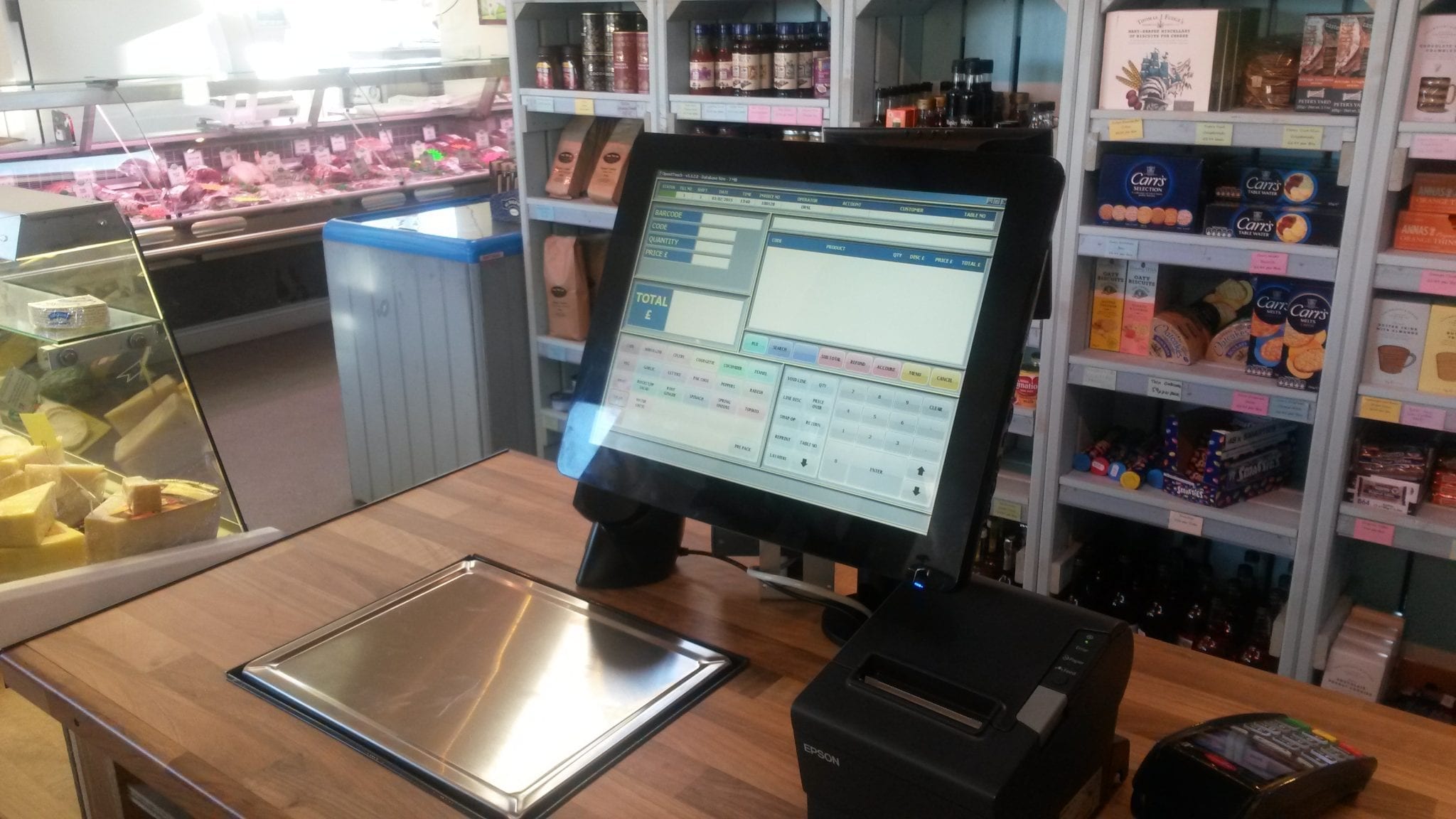
  • Picking the Right POS Software

    Picking the Right POS Software

    Point of Sale software, or simply POS, is capable of so much more than simply accepting credit cards. It can also be a tool to manage your inventory or make reports. Retail business heavily relies on the efficiency of the process and the time needed to serve the customer – Point of Sale system can have a huge impact on that.

    Choosing the best POS software for your business can turn out to be a real headache because there are so many options out there. We will help you to get on track and select the system that suits your situation the best, just follow the steps described below.

    1) Define Your Goals

    Most of POS systems are very similar regarding the main features – they all can take credit and debit cards, manage the inventory or split bill/add tips if it’s a POS system for a restaurant. Besides that, Point Of Sale Software can have additional features, such as delivery tracking, ID check interface, online orders, or a calendar for appointments.

    So before you decide to buy or rent POS software, make sure to define your goals and look for a product that can offer you the functionality you desire. Obviously, more features will probably result in a higher price, so don’t go for a system that has all of it, even though you don’t really need it.

    2) Equipment First, Software Later

    Usually, the POS system consists of two separate parts – processing equipment and the software itself. Most of the businesses select the processor first because that’s a logical move. There are a lot of card processing providers willing to offer you their equipment, so request a quote from at least several of them before making a choice. It’s predicted that 1 in 3 POS terminals will be mobile-based by 2021, i.e. payments will be handled by a tablet or a smartphone. Don’t invest too much into the equipment that might be outdated soon.

    When you have the processing equipment in your hands, it’s time to decide what POS you will choose. In this case, the choice will be limited, but you will be offered the most popular software that is completely compatible with the equipment you have. In addition to that, it will be easier to make a decision because of the narrowed options. 

    3) Leasing Vs. Buying

    There are two options for how you can pay for your POS system – buy it or lease it. Buying requires bigger cash flow, so it might be painful for a small business. However, leasing costs more in the long term. Since every case is different, you need to sit down and do the math by yourself.

    It’s a great idea to plan ahead. Keep in mind that retail stores in the US and all over the world are closing faster than expected, so be realistic about the perspective of your business. If you are not sure about the future, it’s probably a better idea to just lease POS software and equipment instead of buying it. However, if you have enough spare money and the future looks good, consider paying upfront and saving money in the long term. 

    4) Setup The System Properly

    Once you have all the pieces in place, you need to take care of the installation. You can do that yourself by following guides provided by the POS company, or hire a professional IT technician to do that for you. The second choice is more reasonable unless you are tech viz yourself.

    It’s better to set up and test the system properly before real customers get their hands on it. The poor performance of POS software can cause a lot of disappointment and bad customer experience, so make some transactions on a test account and train your employees to use the new POS system properly. Most POS software providers have 24/7 customer support, so don’t hesitate to reach out to them if you have bumped into some problems. 

    5) Don’t Stop Improving

    Imagine your POS software provider as a partner and not just someone who is there to support the technical side of your POS and collect payments. The game is changing fast, especially in a retail business, so you have to adapt to it. The same goes for the POS software – talk to them constantly just to see if there are any new features, upgrades, or maybe they are organizing training and you could attend them?

    If you are not satisfied with your POS software quality or some failures occur too often – tell them about it, there is no shame in that. It’s a customer-centric business and they will do everything to keep you satisfied. If not, there is always an option to withdraw from the contract and seek for a better service. 


  • FWO on underpayment: Self-disclosure no longer enough

    FWO on underpayment: Self-disclosure no longer enough

    Big business wage thieves looking for a soft response from the workplace watchdog are going to be disappointed, with fair work ombudsman Sandra Parker declaring an intention to be hands-on with big firms who confess underpayments.

    Speaking at a Council of Small Businesses Australia summit in Melbourne on Thursday, Parker said some large companies have been “sloppy” in their payroll practices, failing to keep their houses in order.

    “We’re getting a lot more companies coming to us self-disclosing large underpayments, many of them going back many years,” Parker said.

    “They had been previously saying to us that they’re trying to fix it and we should, therefore, leave them alone to get on with it.”

    “That’s not what we’re going to do.”

    Big businesses confessing underpayments to the Fair Work Ombudsman (FWO) will be required to, at a minimum, enter into court-enforceable undertakings.

    This will involve multi-year external audit plans, training programs, contrition payments, and a condition to publicly apologize to the community.

    “If they aren’t willing to cooperate with us on that basis, then we will obviously carefully consider litigation,” Parker said.

    The list of big businesses caught in alleged wage theft scandals in recent years is lengthy, including franchise networks such as 7-Eleven, Domino’s, Caltex and Retail Food Group.

    More recently, jewelry retailer Michael Hill and men’s clothing retailer M.J. Bale admitted to underpaying workers, while the case of celebrity chef George Calombaris’ company MADE Establishment stealing wages has been well-publicized.

    Calombaris agreed to pay a $200,000 contrition payment under his enforceable undertaking with the FWO for the more than $7.8 million his company underpaid workers in wages and superannuation.

    The extent of the payment, notwithstanding MADE’s backpay bill, angered some, including the lawyer who represented workers at the company, who said the payment was not enough.

    Parker said there’s been a “huge shift” in public attitudes towards wage theft recently, with the federal government now preparing to introduce tough new laws to criminalize underpayment.

    “[It has] made everyone stop and think about what that means. We’ve never had a criminal system in workplace relations,” she said.

    Parker, whose office was spun out of Michaelia Cash’s Department of Jobs and Small Business and into Attorney-General and Industrial Relations Minister Christian Porter’s portfolio earlier this year, said she’s been in discussion with the government over its proposed crackdown.

    “We’ve said to the [Industrial Relations] Minister and the department that the majority of businesses do the right thing,” Parker said.

    Parkers comments come as the federal government prepares to move ahead with a broad-based review of Australia’s workplace laws, including examining its in-principled support for migrant worker task force recommendations.

    That task force, overseen by former ACCC boss Allan Fels, found the exploitation of migrant workers is “widespread and entrenched” in Australia, as calls grow in the community for decisive action.

    “The community is saying enough is enough,” Parker said on Thursday.

    The government is being lobbied to consider simplifying the workplace compliance framework for corporations, including by ditching the Fair Work Commission’s Better Off Overall Test (BOOT), which regulates the approval of enterprise bargaining agreements.

    Treasurer Josh Frydenberg said earlier this week the government will prioritize evidence-based reforms to Australia’s workplace laws.

    “We are interested in further workplace relations reform that is evidence-based, pragmatic, protects workers entitlements and produces clear gains to the economy and working Australians,” he said.

    The FWO will also be handing out more compliance notices to businesses underpaying workers, amid efforts to streamline its enforcement efforts.

    Parker said a 12-month review of her office’s regulatory model has resulted in a refined focus that should be simpler for businesses.

    It comes as the ombudsman juggles its role as a source of education and advice about workplace laws with increasingly strong community expectations about addressing worker exploitation.

    “We’ve gone back to the act, and we’ve gone back to looking at exactly what it is the parliament and the community requires of the Fair Work Ombudsman,” Parker said.

    “We’re going to be using statutory compliance notices a lot more than we were before,” she said.

    Parker said compliance notices aren’t punitive and don’t constitute an admission of guilt, with the focus instead on rectifying any underpayments and educating business owners.

    “If people come to us, if they’re willing to work with us, they’re willing to use our tools, we’re not going to prosecute them or take them to court for mistakes,” Parker said.

    The FWO issued 220 compliance notices in the 2017-18 year, recovering more than $950,000 in unpaid wages. Three litigations were commenced against employers who did not comply with notices.

    Those numbers are expected to increase over the coming year as the FWO continues its compliance efforts, particularly in the fast-food, retail and cafe sectors.

    “If a business doesn’t comply we will give them a warning and an opportunity to give a reasonable excuse,” Parker said.

    “We will also take them to court if they don’t comply, and we will seek a penalty, both for the failure to comply with the notice and the original contravention.”

    A balancing act

    Tasked with prosecuting cases of deliberate wage underpayment while helping businesses trying to do the right thing, Parker faces an increasingly precarious balancing act in the coming years as the government ratchets up penalties for wage theft and small business advocates question the complexity of workplace laws.

    Asked Thursday about the perception of the FWO among small businesses, Parker said her office was focused on creating quicker solutions.

    “We want to implement a quicker [sic] solution when we come across underpayment then we have in the past,” Parker said, saying compliance notices would enable the ombudsman to deliver better outcomes for firms.

    “We will issue [compliance notices] more quickly, and there will be more of them.”

    The ombudsman has a series of online resources to help businesses remain compliant with their legal obligations, including a comprehensive (and free) pay calculator tool.

  • Is the Chinese digital sector monopolized by a few companies?

    Is the Chinese digital sector monopolized by a few companies?

    There has been quite a lot of discussion about the Chinese digital reality. Almost everybody is aware that most of the Chinese online ad revenue share is occupied by either Tencent or Baidu.

    The international commerce market is also largely dominated by companies like Alibaba, which creates the understanding that a monopoly of sorts is present in the country. However, it’s not like we can judge these Chinese enterprises based on our understanding of Western ideals.

    Things like culture are one of the main key points that need to be focused on, but as a benefit of the doubt, let’s try and look at the operations of these companies as something similar to how they’d be dealt with in the Western world.

    Examples of possible monopolies

    Let’s take Tencent as an example for the gaming and telecommunications industries. Right now, the company is poised to take 13% of the global gaming market share, which already speaks volumes about the company’s market share in China alone.

    It is currently considered that in terms of gaming, Tencent has around 60-70% of the Chinese market share. And when it comes to telecommunications all we need to do is consider WeChat, which is basically a necessity in China. With this one product, Tencent occupies around 40-50% of the market share thanks to foreign media also having a small breakthrough thanks to amended regulation.

    But the question here is whether or not this needs to be regulated. Would the government consider artificially deflating the profit capabilities of some of their best-performing companies in order to open up opportunities for newer companies, or would they much rather keep these companies in their best shape as they drive more and more innovation as well as jobs for the local population?

    We’ve already encountered similar “suggestions” in the Western world, where the government in both the United States and the European Union were considering to somehow fine Google for their alleged monopoly on the search “industry”.

    The US could not find anything resembling the issue, while the EU fined the company for prioritizing platforms that were owned by Google. For example, the research showed that the company would first display their own products in the search arch, and only later display everything else, which was a clear breach of guidelines.

    It’s hard to apply that example to industries like gaming and telecommunications, but the point is easily understood.

    How monopolies can be dealt with

    Naturally, it would not necessarily be within the interests of the Chinese government to artificially deflate their best-performing corporations in order to free up space for smaller companies. One such reason is that the Chinese market is a very attractive opportunity for foreigners, which would fill the gap immediately, thus lowering the opportunity for Chinese nationals.

    The best way to do this is to conduct nation-wide research first, to determine if the local populace would be open to more options in various industries, or if they like this centralized style of doing business. Because in most cases, these large Chinese corporations are B2B aggregates for B2C businesses.

    A great example of this would be the latest survey in Finland where, according to Сasinopånett EU, is a monopoly on the betting industry from the government itself. But we can just as easily draw a parallel between these two nations.

    In Finland’s case, it’s within the interest of the population to have a privatized industry so that the market is based on competition, which is calculated through customer satisfaction and improved consumer spending.

    In China’s case though, restricting a company like Alibaba within the ramifications of a maximum market share it could have, would lower its competence on the global market. However, restricting Tencent could indeed see more advantageous options appear for telecommunications.

    The difficulty in concocting a universal law for every industry is that exceptions will have to be made for the advantage of the economy. This is mostly because China focuses a lot on export, therefore prioritizing its performance on the global markets, rather than the local one.

    Should the universal law against monopoly be implemented, China’s GDP will most surely be damaged as these companies will start failing to perform well on a global level.

    Is China full of monopolies?

    The immediate answer would be that yes, the country has clear signs of monopolies in various industries. This is determined by how fast and effectively large corporations can “get rid” of competition by lowering prices to a point where other options aren’t even considered by the consumers.

    In a sense, controlling the Chinese monopoly requires global laws, rather than local ones, which would require years of negotiation in itself.

    Sources:

    https://casinopånett.eu/nyheter/finnene-vil-ha-slutt-pa-landets-spillmonopol/

    https://newzoo.com/insights/articles/supercell-acquisition-tencent-set-to-take-13-percent-of-the-games-market/

  • Costs hidden from potential franchisees business

    Costs hidden from potential franchisees business

    Would-be food franchisees are not being given the full picture before they buy into a business, with several franchisors withholding important details including the contact information of former franchisees.

    The ACCC has also found food franchisors were consistently failing to disclose key unavoidable ongoing costs, such as wages, rent or inventory, and were not detailing which essential goods must be bought from a specific supplier.

    The competition watchdog said it was deeply concerned with the findings in its disclosure practices report released on Tuesday, flagging potential court action against some franchisors it believes are in breach of consumer law.

    “Operators of a franchise business can face restrictions imposed by the franchisor, and this is often not realised early enough,” the ACCC said in its report.

    “Disclosure is intended to make this clearer … this information assists a prospective franchisee with their due diligence so they can thoroughly consider if franchising is suited to them, and if a particular franchise is a suitable investment.”

    The food franchising sector has been hammered by bad press in Australia in recent years following allegations of unfair business practices, including by well-known companies such as Retail Food Group, Domino’s Pizza, and Craveable Brands.

    Tuesday’s report follows compliance checks on 12 different franchisors from the food services sector, focused on disclosure of information considered important to someone thinking about buying a franchise

    Among the findings were that eight out of the 12 franchisors made it difficult to contact former franchisees.

    “Our message to someone thinking about buying a franchise is to walk away if you can’t easily contact former franchisees,” ACCC deputy chair Mick Keogh said.

    “You won’t get a realistic picture of the business without talking to them,” Keogh said.

    Seven of the 12 franchisors did not adequately disclose what essential goods were subject to supply restrictions, while most did not share rebate benefits directly with franchisees, and could set maximum retail prices.

    The report showed too many people do not get independent advice before buying a franchise.

    The ACCC said it would now engage directly with the 12 traders in relation to compliance.

    The watchdog receives about 400 reports about franchising each year, with inadequate disclosure by franchisors consistently one of the top two Franchising Code issues reported.

    From July to December 2018, the most common franchising reports were about the food services sector, which includes cafes and restaurants, and takeaway food industries.