Category: Research

Retail News Asia is committed to providing both local and global retailers with the latest Research throughout the Asian market. This on a daily base.

  • How to use and unleash the power of artificial intelligence

    How to use and unleash the power of artificial intelligence

    Artificial intelligence has been a buzzword in the retail industry for some time now. But rather than just talk about it, retailers are now at a stage where they are putting words into action and starting on their first AI projects.

    Over the last year, an increasing number of retailers have started to adopt the technology. Uniqlo, for instance, uses machine learning to power a digital assistant on its app, which is able to give highly personalised recommendations. In Hong Kong, convenience-store operator Circle K unveiled an AI-driven checkout solution last year that uses image-recognition technology in the self-checkout process.

    While there are clear benefits to implementing artificial intelligence – improving operational efficiencies and gaining a better understanding of the customer are just two – it can also be a daunting task to embark on. Here we identify three key considerations for retailers that are looking to unleash the power of AI…

    Quality of data

    Through machine learning, retailers are able to take data from multiple channels and turn that into actionable predictions and recommendations. But the biggest success factor is not the algorithm behind these insights, but rather the quality of the data that feeds into it. Retailers that do not have their data estates in order risk having underwhelming outcomes from their AI investment. This is something that must be considered beforehand.

    Choosing which areas to focus on

    There is a multitude of areas in which artificial intelligence can be deployed in a retail setting. Aside from the different applications of AI technology – for instance, machine learning, natural language processing and robotics – there is also a choice to be made in terms of the operational area, be that the customer-facing side of the business or processes that run behind the scenes.

    AI initiatives that help to improve the customer experience can be an ideal starting point as this is an area that benefits from a wealth of data and can provide a quick win for a retailer.

    Bringing in external expertise

    Many retailers will lack the skills and expertise to confidently start leveraging AI technology. The solution is often a combination of recruiting talent to bridge the skills gap and working with credible technology partners. The advantage of both these approaches is that retailers can hit the ground running and be able to accelerate their first move. Speed is critical if a retailer wants to be a disruptor rather than disrupted.

    Digital Transformation Survey

    Is your organisation looking at emerging technologies such as artificial intelligence, augmented reality and automated deliveries? And how do technology partnerships form part of your digital strategy?

    Tofugear is conducting its annual digital transformation survey and is asking C-level executives and senior managers across Asia about their approach to innovation.

  • Online and New Retail concepts in China driving FMCG market growth

    Online and New Retail concepts in China driving FMCG market growth

    Online and New Retail concepts in China are driving FMCG growth according to a report by Bain & Company and Kantar Worldpanel.

    As reported The Chinese FMCG market remained robust last year despite talk of economic slowdown.

    According to the latest China Shopper Report produced by the two companies, e-commerce channel growth in China slowed slightly to 30.6 per cent between 2017 and last year (compared with 35.1 per cent annual growth between 2014 and last year), as penetration in tier-1 cities leveled off at around 80 per cent last year. In lower-tier cities, however, growth is expected to continue for at least three or four more years and will serve as the engine of future online expansion.

    While last year didn’t necessarily represent a turning point, the research revealed renewed hope for offline retailers. Previously, offline stores in most formats had been steadily losing share with the rapid rise of online channels. Now there are new and interesting opportunities for offline retailers to regain their momentum, in many cases with smaller and more flexible formats. For example, the share of traditional trade (grocery) food and beverage sales intended for out-of-home consumption has risen by 14 per cent per year since 2016, reaching nearly 80 per cent last year, based on the 10 food and beverage categories analysed in the research. It is similar with convenience stores: their sales for out-of-home consumption grew 17 per cent per year in the last two years, and represent 88 per cent of total convenience store sales, for these same 10 categories.

    Large store formats also show potential for growth, but it will require them to take on new roles, the report found Last year, hypermarkets started to reignite some of their momentum by serving as a logistics base for 30-minute delivery of goods ordered online via the leading delivery platforms. Another opportunity: big chains can reinvent themselves by upping their game in fresh food.

    Insurgent brands punch above their weight

    In addition to examining these ongoing trends, Bain & Company looked at two other developments: the dramatic impact of fast-growing small brands on larger brands, and the emergence of the uniquely Chinese phenomenon of New Retail – futuristic supermarkets devoted in equal measure to in-store dining, online ordering and delivery.

    Last year’s China Shopper Report revealed that China’s insurgent brands are taking a disproportionate share of FMCG growth. As that trend continues, a fundamental question faces many companies: Can big brands get bigger and continue to be successful?

    “The new reality is that many incumbent brands watch small brands doing an impressive job of serving specific consumer needs, responding in everything from R&D to digital marketing with agility and flexibility,” said Kantar Worldpanel Greater China GM Jason Yu.

    “Whether to focus on growing big brands or building a portfolio of different brands to serve different segments nags at every FMCG executive. It’s a decision that sometimes calls for a major strategic transformation; billion-dollar brands are vastly different animals than $25 million brands and require significantly different management approaches.”

    The other big emerging trend involves New Retail. In any of its forms, New Retail blurs the line between online and offline sales, with potentially major implications for how FMCG products are sold. For example, New Retail’s biggest manifestation continues to be the growth of the food service channel, which is fueled by increasingly faster delivery. Now largely limited to Tier-1 and Tier-2 cities, and with penetration levels comparable to regional supermarkets, New Retail stores will become more broadly relevant in the future.

    According to the report, the acceleration of New Retail in multiple ways presents opportunities for retailers to transition from today’s mass-oriented offline approach to tomorrow’s seamless, multichannel world of shopping. Physical stores have a future, but offline retailers need to refine their moves to play in this new environment.

    The report recommends physical stores:

    • Redesign store portfolios in the New Retail format;
    • Make the store experience more attractive by leveraging new technologies like augmented reality; and
    • Digitalise operations to deliver a seamless experience to consumers, whether they buy online or offline, and start to monetise consumer data for better cooperation with brands.

    The three key implications for brands mentioned in last year’s China Shopper Report remain:

    • Take advantage of the channel dynamics, grow with the winning channels and anticipate retailers’ consolidation;
    • Develop high-value and personalised products to make the most of the premiumisation trend; and
    • Become data-driven, consumer-centric organisations by collaborating with platforms but also by developing your own set of consumer data.

    This year, a fourth important implication arose, based on the success of insurgent brands: Develop a portfolio of brands to grow overall share in a category, taking advantage of the fragmentation of consumer needs and shoppers’ thirst for innovations.

    “As the China consumer continues to become more sophisticated and the channels available to them become more advanced, it is essential that companies who want to win in this new era fully understand what it takes to win in this market,” said Bain & Company partner and report co-author Derek Deng.

    “By understanding and incorporating the new retail model and focusing on a consumer-centric mentality, companies will be able to win in this new battleground which is emerging.”

  • Improving retail sales and operations with customer traffic data

    Improving retail sales and operations with customer traffic data

    “Highly detailed and accurate traffic information is an absolute necessity in the modern retail environment and the solution provided by ShopperTrak has allowed Kathmandu to leverage this data with great success.”

    ShopperTrak gives retailers and shopping centres the data they need to optimise labour, store and marketing performance.

    By leveraging a combination of traffic data information and analytics, shopping centres that have morphed into ‘destinations’ for consumers can react better to events that impact the popularity and profitability of their venue.

    Today’s shopping centres can fully assist retailers who are on a mission to attract and retain customers and drive conversions in an exciting transitional marketplace for a new generation of shoppers. More importantly than ever, knowledge and accurate data is power!

    Additionally, the ShopperTrak Analytics Suite provides comprehensive, customised reports of high traffic times and traffic patterns across the operation.

    Implementation of the ShopperTrak traffic counting solution in Kathmandu stores has been very successful in driving the business forward and increasing its ability to make data-driven decisions in everything from marketing campaigns to roster management.

    Data produced by these counters now forms a core part of the KPI set for Kathmandu retail and is a daily topic of discussion at every level of the business.

    “While it is impossible to place a solid number on the additional sales/profit to this one project, there can be little doubt that it has enabled us to drive additional sales through a focus on conversion and improved rostering at a store level through the development of a labour demand model.”

  • Singaporean shoppers prefer shopping in store

    Singaporean shoppers prefer shopping in store

    Singaporean shoppers still prefer in-store shopping, a study by UK mobile tech firm Blis shows.

    The Real Retail Study analysed shopper behaviour in Singapore, and concluded the desire to shop in store is also very much alive, especially when it comes to food and groceries (79 per cent), followed by furniture and home furnishing (69 per cent), and household appliance (61 per cent).

    Consumers are also willing to spend higher amounts when shopping in store, with 81 per cent indicating they will be looking out for in-store deals during the upcoming Great Singapore Sale.

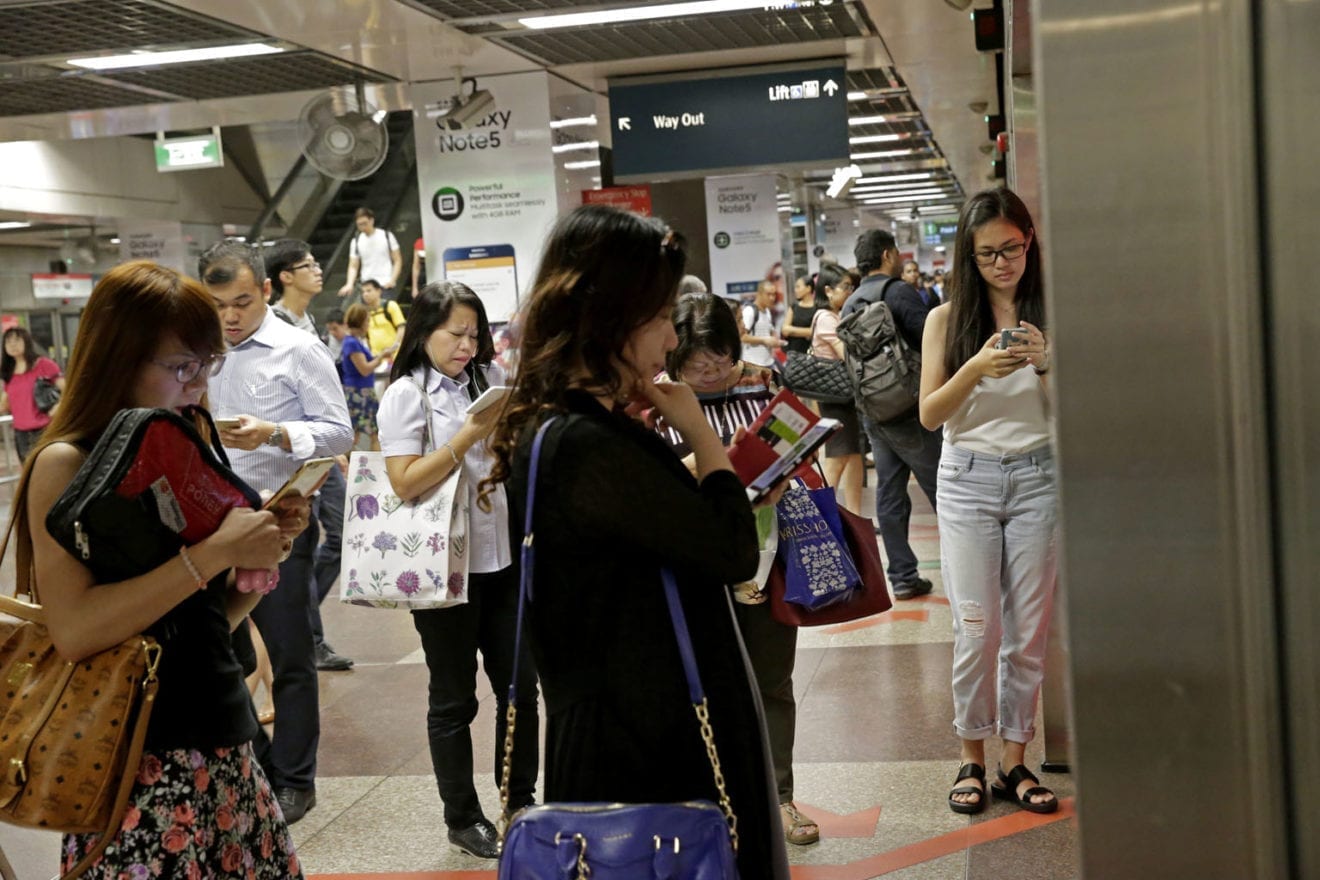
    Four in five local consumers use their mobile phones when shopping in a physical store.

    The most popular reason for doing so is to ‘compare prices for the same item to ensure I am getting the best deal’ (72 per cent), followed by reading other customers’ product reviews.

    Two in three local consumers say they have spent time searching for items on shopping websites but made the final purchase in store. The main reason for doing so is that they ‘like to see the quality of the product before buying’ (56 per cent).

    Sixty-three per cent of local consumers say they have spent time looking for items in stores before purchasing them online. The biggest reason for doing so is that they can ‘sometimes get better deals’ (54 per cent).

    “Our findings show that Singapore consumers still massively value shopping in store, and that any talk about physical retailers being rendered obsolete by e-commerce is premature,” said Richard Andrew, MD for Asia at Blis.

    “Shoppers’ attention and discretionary spending are now being pulled in multiple directions, meaning retail strategy has to evolve. In a mobile-first world, retailers have to master new approaches like location-based data to connect with shoppers at the right place and time to win their hearts, minds and wallets.”

    The study also shows how much Singaporeans love to shop. Forty-five per cent of respondents said they shop because it makes them happy, and nearly half – 49 per cent – consider shopping a hobby. Of them, 55 per cent are women aged 25 to 65.

    When it comes to payment, whether shopping online or offline, Singapore consumers prefer to use credit cards for nearly every purchase of any size. In store, when spending less than $35, cash is preferred.

    “The market in Singapore demonstrates to us that retail isn’t facing its imminent demise, it is simply evolving to keep up with rapidly shifting consumer preferences and behaviours,” Andrew concluded

  • Smart Ways to Start a Small Restaurant Business

    Smart Ways to Start a Small Restaurant Business

    Going into the restaurant business can be touch-and-go, since the restaurant industry can be quite volatile, especially for new ventures. That’s why it is essential to go into the restaurant business with clarity and purpose. Mistakes can cost money, so you want to ensure that you are fully prepared, financially capable, and in the know about the ins and outs of being a restaurant owner before you begin.

    Restaurants are daily staples for many consumers. People go out to eat a lot, and it makes sense that high quality, popular restaurant would be an entrepreneur’s dream. Only without prior knowledge and expertise, things can go awry quickly. Below are some excellent tips on making sure that your restaurant journey will go smoothly and as planned.

    Have a Business Plan

    Before you start your own restaurant, it is essential that you and your partners devise a business plan. You can usually get free help on your business plan from your local Small Business Administration or from your local Chamber of Commerce.

    Business plans need to be meticulously written with all of the components for business success in mind. Your plan should not be any whimsical document.

    Components of a good business plan includes a breakdown of the foods you’ll serve, your day-to-day operations, your potential customer base in the area, market analysis as well as competitor analysis, your start-up and marketing costs, your current operating capital, expense reports, your quarterly revenue projections needed to keep the restaurant running, and so forth.

    Without a solid business plan, you can expect failure. Again, contact your local Small Business Administration or Chamber of Commerce to assist you in devising a proper plan. Proper planning also means reaching out to companies who you will most likely have to pay to conduct market analysis, for instance, so be sure to factor these expenses into your overall budget.

    Concept and Competition

    As mentioned previously, people like to go out to eat. That’s why there are restaurants on every corner and nearly everywhere we look. Before you start a restaurant business, be sure to consider the competition in your area and the concepts they are using and the value they deliver. What are you going to do differently.

    Usually, this requires that you come up with a clear vision, a value statement, and a mission. Your vision is what you want your restaurant to become. Your value statement tells you and your customers what type of value you will bring to them and your community. Your mission is your daily goals to meet this value and your overall vision. It’s very important you put time into determining these components for yourself and your restaurant.

    Once you figure out what your mission, vision, and value will be, you will and a theme for your restaurant. Brand and theme should accent vision, mission, and value. They will go hand-in-hand and should be transparent to the customer, who should be able to see your intent based on day-to-day operations and the quality of your service. Coming up with brand and theme can require serious thought. Again, seek out professional advice and the advice of partners when in doubt.

    Menu Selection

    Along with your concept and your brand, the foods you select for your menu should mirror your intentions and your theme. For instance, if you decide to start a fast-food restaurant, the food you choose should be able to be prepared fast and convenient. If your goal is to provide fine dining and elegance, the food preparation can take longer, but the taste and experience should be part of the value you offer.

    As you’re coming up with your business plan, vision, and theme, start to think of the best foods you could serve, your own capabilities as a restaurateur and chef, and what is within your comfort zone and financial means. You wouldn’t want to start a five-star restaurant if you aren’t competent at cooking gourmet food and only have a shoestring budget. Think within your means and your capabilities.

    Also consider your restaurant’s location, your potential customers, and how your menu will impact your business plan. Some types of food do better in certain locations, while others do not. You wouldn’t want to open up a restaurant that won’t do well financially in a particular area, even if that is your passion. Analyze your competitors in the area, and find what works.

    Investing In Your Restaurant

    Once you feel like you’re ready to proceed with opening your own restaurant, you’ll want to ensure that you have the funds to do so. Many entrepreneurs believe in OPM or “other people’s money,” and they’ll reach out to investors to secure start-up capital. This is always a personal decision, as some people do quite well as borrowing money, while others would rather save up their own money before venturing into entrepreneurship.

    Either way, you’ll need to look at your business plan to ensure that you have the right amount of start-up capital before you begin. Many businesses don’t turn a profit until their third year, so it’s always wise to have at least enough capital to maintain operations for three years. This should include the cost of the lease, equipment and employee costs, food costs, and maintenance costs. Again, you’ll need to make sure your business plan is solid so that you don’t feel financially short before the business is given time to turn a profit.

    Finding Suppliers

    For food, you’ll need to find local suppliers who can deliver directly to your restaurant. For most of your equipment needs, you can order directly to find the best prices. Equipment can include anything for your kitchen, from ovens to tables and chairs to dinnerware. When selecting dinnerware, Macy Hooper from VEGA Direct https://www.vegadirect.ca/) suggests choosing a stylish set that is also durable. Durability is important for budgeting purposes, as you’ll have to purchase new dinnerware less often when you choose long-lasting dinnerware at the beginning. This is important when choosing other suppliers as well, as you’ll want to make sure any equipment you purchase will last and cut down on future replacement costs. Always make sure you research suppliers for the best possible deals and equipment.

    Find Your Location

    There is a lot of synergy to the process, as components of your business plan may hinge on your concept and theme, and vice versa. The location you choose is no different. You may not know how to plan for your restaurant until you’re sure of its future location, so scouting a good location may be necessary at the beginning of the process. Honestly, you may want to start a restaurant only because you found a location that sparked your interest in opening an eatery.

    Once you do find a great location for your restaurant, be sure to discuss your lease and other information with the owner. Of course, this information will need to go into your business plan. Also, you’ll need to check with your local government agencies to make sure you obtain the right licenses and permits for your restaurant.

    Be sure to pick a location that is in a great area, visible from the road, and preferably convenient to business locations so that you’ll always have a steady lunch crowd. Make sure that there is plenty of parking, that the building meets your standards, and that it provides the right atmosphere for your concept and theme.

    Hiring Employees

    Hiring employees is no easy task, so make sure you account for this information in your business plan. You’ll most likely need a head chef, a cashier, a floor manager, wait staff, and a dishwasher. Some restaurants can get by with only a few people doing multiple jobs, while others will require numerous employees. However, take into consideration that some states require certain licenses for food employees, so be prepared to invest in your new hires by offering training through programs like 360’s food handler training course.

    Advertising and Opening

    You’ll want to advertise your restaurant in the local yellow pages, on nearby billboards, through flyers and mailers, and digitally on the web. Your advertising budget should be accounted for in your business plan. You may also want to consult an advertising firm.

    Most restaurants will have a soft opening to make sure things are running smoothly. Soft openings give restaurants time to work out the kinks and increase efficiency. Once you feel like everything is going well and you’re ready to open full-time, you’ll want to announce your grand opening. The Chamber of Commerce and other business organizations can assist with grand openings and publicity. It’s also suggested you offer coupons and other discounts for your grand opening to get more people in the door.


  • Global personal luxury goods market growth endures

    Global personal luxury goods market growth endures

    Global personal luxury goods market growth has reached a “new normal” pattern, following back-to-back years of strong performance in 2017 and 2018, according to the luxury goods industry advisory service Bain & Company.

    Last year, 6 per cent global growth* led to €260 billion (US$292 billion) in sales, which is expected to balloon to €271–276 billion ($304.3–310 billion) this year, registering an expected 4-per-cent to 6-per-cent growth at constant exchange rates.

    According to Bain, the growth has been driven primarily by the acceleration in domestic spending of mainland Chinese consumers and an increase in European tourism, which, despite socio-political turmoil in countries like the UK and France, fuelled positive growth in the region through last year’s holiday season.

    Meanwhile a temporary weakening of consumer confidence in North America, as well as a decrease in traffic to malls and department stores, negatively impacted personal luxury spending during last year’s holidays stateside.

    The findings were part of the Bain Luxury Goods Worldwide Market Study, Spring 2019 presented this week in collaboration with Fondazione Altagamma, the Italian luxury goods manufacturers’ industry foundation.

    “This year looks to be on par with our new normal of growth in the market,” said Bain & Company partner and lead author of the study Claudia D’Arpizio. “China continues to dominate the luxury scene. Elsewhere we are continuing to see geopolitical uncertainty shape and reshape tourism spending patterns, with Chinese consumers choosing to spend domestically with more frequency. Overall we are seeing moderate growth in most markets.”

    The report showed that mainland Chinese consumers are demonstrating a strong preference for purchasing luxury goods at home thanks to price harmonisation, consumer-centered strategies, and governmental initiatives. Solid consumer confidence and willingness to buy, especially among young generations, are expected to drive year-over-year growth of 18–20 per cent* in the region.

    Japan remains an exclusive and attractive market for luxury brands, with forecasted growth of 2–4 percent* in 2019. Tourist spending is expected to rise ahead of the Tokyo Olympics in 2020, with Chinese consumers already confirming their interest in the area.

    Across the rest of Asia the outlook is positive, apart from Hong Kong and Macau, which continue to lose out to Mainland China. Bain & Company asserts that the luxury market in the region is set to grow by 10–12 percent*. An expanding middle class with increasing disposable income is fueling growth in Indonesia, Philippines and Vietnam, while sustained growth in South Korea is the result of local consumers and a mild rebound of tourism.

    The rest of the world is expected to be flat or see a slight decrease of 2 per cent*, with the Middle East remaining stagnant as domestic consumer spending begins to flow outside of the region.

    “We expect stable growth in 2019,” said D’Arpizio.  “But under the surface of this new normal, the future of luxury is taking shape with a number of key characteristics, including Chinese Generation Z, access, ownership, sustainability and social responsibility, the impact of digital across the entire value chain, preference for luxury experiences over products, and consumer networks as a new measure of value.”

  • Singapore Popular Games

    Singapore Popular Games

    Gaming is growing quickly in Singapore. This is due to a number of different reasons. The economy is now booming in Singapore which means that there a range of different games for customers to play. Also, they have more leisure time which makes them seek out the most entertaining games. Also, playing baccarat online is getting popular in Singapore. This is one of the most popular games due to its intense gameplay. In this article, we will look at why baccarat is so popular and also explore other popular games in Singapore. We will also detail the specific business conditions which have led to a gaming boom within Singapore.

    What is Baccarat

    Baccarat is a card game which has become popular around the world. It can be played in casinos, however recently there have been many online baccarat games being developed. These provide an engaging and realistic gameplay experience. One of the reasons why it is so popular is because the rules are simple to learn. It does not have the same complexity as other games, which makes it highly accessible. However, there are also many strategies and side-bets that come into play. This makes the game exciting to learn and to master.  You can find the best baccarat gaming websites on baccarat.net. They have a wide selection of websites on view. Additionally, they also go in depth about the rules and also discuss the best strategies for winning.

    Most Popular Games in Singapore

    Even though online gambling is illegal in Singapore, many have been enjoying legal casinos operating worldwide that accept players from Singapore. Some of the most popular casino games include the classics such as poker and blackjack. However, many Singapore players have also been enjoying highly engaging video slots. Mobile phone gaming is also very popular in Singapore. Smartphones offer a way for people to enjoy the gaming experience wherever they go. Hence, mobile casinos and other mobile games have become very popular. The high powered graphics and engaging gameplay on smartphones is a major reason for this.

    Alongside gambling games, video games are also highly popular. Singapore is the country where people spend the most hours on gaming in the South-East Asia region. On average they spend 7.44 hours on gaming. Some of the most played games include Overwatch which is an online game that is available on all platforms such as PC, PS4, and Xbox ONE. Role-playing games such as Devil May Cry 5 are also very popular. The Singapore public is fond of these games because they provide an immersive and enthralling experience. The storyline and quests are highly engaging.

    Business Conditions in Singapore

    The current business and retail conditions have been positive for Singapore. Traditional retailers have been facing stiff competition from innovative e-commerce companies. This has forced them to change their ways to evolve in order to compete in the new marketplace. They are creating new shopping experiences that are tailored to the customer. Physical stores aim to recapture the customer base from Amazon and Alibaba. The demand for necessity goods has remained as high as ever. Another key development is unmanned stores which could become even more common in the near future. Overall, there have been a few bumps, however, the long term economic and retail outlook is positive. The people of Singapore like to enjoy their earnings on playing games that allow them to relax.

    Conclusion

    You will now have a better idea on which games are most popular in Singapore. You will also have an understanding of what is causing a surge in popularity for many games. Baccarat continues to be one of the most played games in Singapore due to its exciting and addicting gameplay. However, other games are also being enjoyed, and the business boom means that gaming will continue to grow in Singapore. We look forward to new innovations and developments of gaming in Singapore.

  • 6 Main Causes of Car Accidents

    6 Main Causes of Car Accidents

    Car accidents are an unfortunate part of our everyday lives, whether you live in a large metropolis or small town. People are almost always the cause of these accidents; and unfortunately, accidents can result in significant injuries and even worse, fatalities. Your life is not the one at stake when driving, so be sure to use good judgment, follow the laws of the road, and be cautious. 

    Of course, just because you are a safe driver, or think that you are, does not mean that all the other drivers are. For this, be sure to protect yourself and anyone else in your vehicle by always having car insurance and filing claims when necessary. The ignorance and errors of other drivers should not fall upon your shoulders. The leading causes of car accidents are listed below and what you should when in these situations. 

    Distracted Driving: 

    More now than ever, are more drivers unfocused on the road. No longer is eating, applying makeup, reading or other crazy things drivers do that can cause an accident, but most accidents happen because of the phone. Currently, nearly every state or city has laws that apply to people driving with their phones and for an excellent reason. Jeffrey Preszler from www.preszlerlaw.com says that as of 2018, the number one leading cause of traffic accidents in Canada was distracted driving due to using a cell phone or other handheld electronic device. When you are driving, let that be it, and put the phone away; it may sound like common sense, but people still find ways to do something other than driving. Distracted driving is now the primary cause of all car accidents. 

    Drunk Driving: 

    Drinking and driving has been around for ages, yet for some reason, people are still doing it. There are other options such as rideshare or a classic taxi. Do not let someone drink and drive; if they have no other choice, let them sober up or have someone take them home. There is never an excuse to drink and get behind the wheel or watch someone do it. 

    Irresponsible Driving: 

    The irresponsibility of some drivers can shock a lot of people. Speeding, tailgating, changing multiple lanes and aggressiveness are just a few of the ways that plenty of preventable accidents can happen. Even if you are running late or the car in front of you is going way to slow, calm down, and realize that it is not just you that is driving. Others can feel the impatience or frustration of another driver on the road. 

    Lawlessness: 

    Running red lights, improper turns, lack of a turn signal, we all have been behind those drivers. They have almost caused you or someone else you know an accident because they either did not pay attention to the signs or they did not care. Look for all the traffic signs and any other visuals that will help you be a more conscientious driver. If you know the rules of the road and follow them, it will be more beneficial to you and other drivers. 

    Weather: 

    Other people are not only out of our control, but the weather is too. If it is raining, snowing or there are storms, try to stay off the road if at all possible. Severe weather causes many accidents and only because of a slick road. If you are in the car during a storm and you have a chance to pull over to wait it out, do that first. Otherwise, drive with extreme caution, paying close attention to your driving and other vehicles. 

    Construction and Roads: 

    The roads need to be maintained, so that means there is always construction going on, especially if you live in the bigger cities. Make sure you slow down since you would not want to hurt one of the workers. Also, as tempting as it is to swerve from the potholes or bumps in the road, you cannot do that with oncoming traffic or someone next to your lane. Slow down and watch for people and the state of the road to avoid an accident. 

    When you head for the car and get behind the wheel of your car, think for a moment that you have the luxury of being able to do it. Now think of all the other people that you will come into contact with on the road since you must share it with others and realize they have families and loved ones too. Getting distracted behind the wheel is not worth what could happen to you or others.


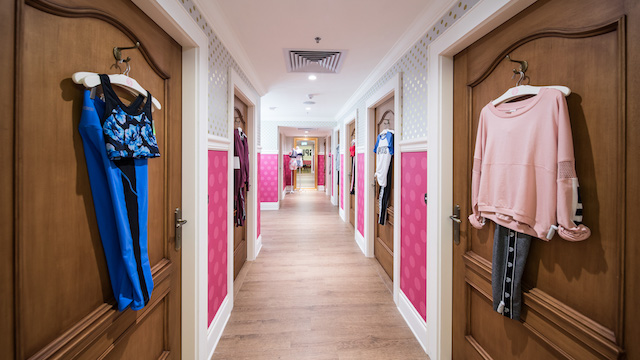
  • The space where purchasing decisions are made, Fitting Rooms

    The space where purchasing decisions are made, Fitting Rooms

    Why do customers walk into a fitting room when they are in a retail space? The answer is logical: because they have found a piece of clothing they like – and it should be considered a sure sign of purchase intent, even if the customer does not buy what they try.

    This small but mighty area of a retail store is actually the room where purchase decisions are made.

    Yet, far too many retailers still tend to overlook the importance of fitting room design. So here are some fresh ideas to help retailers boost sales through intelligent fitting-room design…

    How fitting rooms affect sales

    Let‘s start with some numbers and hard facts. First and foremost, the fitting room area is one of the most significant advantages brick-and-mortar retailers have over online retailers. Whereas online, one in five shoppers return their purchased items, in brick-and-mortar stores, fewer than one in 10 customers return purchases. Returns usually result in costs for any retailer – online or offline, so it is important for retailers to minimise the potential for returns. Here’s where an effective fitting-room design can play a part.

    Research shows that shoppers who use fitting rooms are seven times more likely to make a purchase than browsers who do not. Not only that, but if the customer has a good experience with a sales assistant in the fitting rooms, they can buy up to three times as many items in one transaction. Combine those figures and you can estimate that 70 per cent of all purchasing decisions in your store are made in the fitting room.

    Design can influence the buying decision

    Most retailers already recognise the importance of size, colour and lighting in fitting rooms. So let’s take a closer look at other design features.

    A fitting room represents the most intimate area of your store. This is a place where your customers take off their clothes, hoping to try on a new piece of clothing which makes them look and feel good. Here is where design can play a part in that feel-good factor – after all, it is not just about the clothes.

    Take one simple example: remember how uncomfortable you feel when you think you are over- or under-dressed for an occasion. Similarly, if a fitting room design fails to provide the shopper with a character and flare that matches the clothes, the customer can experience the same uncomfortable feeling. An uncomfortable environment can lead the customer to feel something ‘does not look right’. The result: the customer decides against making a purchase and the retailer loses a sale.

    How to create the perfect fit

    We found some great examples of fitting rooms in Mainland China.

    INXX represents a forward-thinking, boundary-shattering exploration of how the genres of streetwear, sportswear and high-end fashion can be reconstructed, reinterpreted and recombined. Through this cool and futuristic fitting room design, the Chinese street-fashion brand not only encourages shoppers to try on their clothes but had also created an atmosphere which is towards their target market.

    With design concepts such as these, it is no surprise the brand has enjoyed continued success over the years. INXX was founded in Guangzhou in 2013 and in less than five years opened 54 stores in 17 Chinese cities. This is a brand we can all learn from.

    Lululemon is a Canadian brand that sells fashionable and high-quality yoga clothing and athleisure wear. One of the brand’s core values is mindfulness.

    Lululemon describes its mission as: “Our manifesto is one way we share our culture with the community. It’s an evolving collection of bold thoughts that allow for some real conversations to take place.”

    Lululemon cleverly uses the fitting room area as a platform to express some of these bold thoughts through its design. Positive affirmation statements frequently used in yoga are integrated in the fitting room design, illustrating how fitting-room spaces can also reflect fundamental brand values.

    So, when adopting slogans and other statements within the design of your fitting rooms, be sure to choose the “perfect fit” for your brand.

    Fitting rooms are a significant advantage for brick-and-mortar stores over online alternatives. Some brands which sell mainly online have begun to recognise this and are finding effective ways to deliver an offline customer experience.

    One of these brands is Jooos, which has combined offline and online experiences by providing the Top 100-selling fashion brands on Tmall with a retail space to showcase their products.

    The design of the fitting-room space here is interesting, because it is located in the centre of the store. Additionally, the exclusivity of the products is highlighted by a small staircase: customers literally have to walk upstairs to reach the fitting room, leaving them feeling “special” when they arrive there.

    Remember, in any fashion store, the fitting room marks the final barrier retailers need to draw a customer beyond in order to achieve a sale. So make that space count.

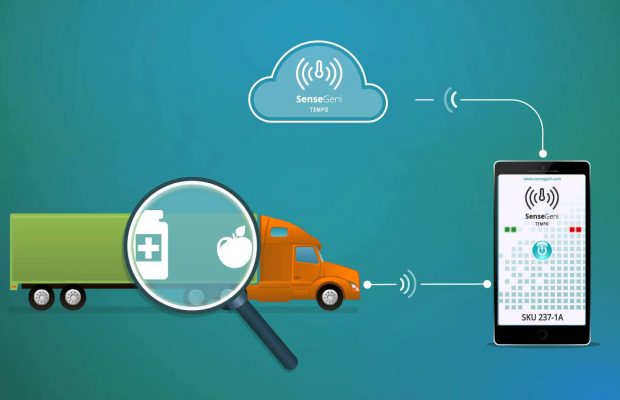
  • Turning data into information in the age of IoT

    Turning data into information in the age of IoT

    If you think about what your home was like even just a few years ago, life was very different.

    Think about what grocery shopping was like. You’d open your fridge door to check out what’s missing, scribble down on a notebook a shopping list of what you need, turn off the aircon and switch on the alarm before you left the house and leave.

    Now, your smart fridge automatically knows when you’re running low on milk and will order the specific brand and size that you prefer and have it delivered to your front door. Left home and forgot to switch the aircon or alarm on or off? Simply view the app on your smartphone and tap your appliances on or off.

    Known as the Internet of Things (IoT), people are consuming information from more connected devices and as a result, marketing practices are rapidly changing. Retailers need to learn how to speak to customers through more channels than before.

    As IRI’s product solution director Adam Fisher explains, while more devices are creating more communication, marketers are getting blocked where they weren’t before. What happens when your fridge starts ordering groceries for you? Where a marketer could previously capture customers at the shelf in a grocery store, they now need to work out how to get your attention when the fridge automatically orders milk to your doorstep.

    “From a marketer’s standpoint, there are so many devices vying for people’s attention —How do you get the right person’s attention at the right time?” Fisher says.

    According to Fisher, one of the biggest challenges for retailers is knowing how to turn all the data into actionable information.

    “It’s knowing how do I bring [the information] in, how do I make sense of it, but on top of that, how do I know when I need to do something when it’s signalling something?” he points out.

    Marketing automation can give brands more insights and data into how people are responding to these different channels and how they should be approached, suggests Fisher. It’s one of the biggest trends in retail today

    and can help businesses engage with their customers by programmatically finding the optimal marketing and promotional activities for defined customer segments.

    A major benefit of IoT is the fact that based on all this new information from devices, brands and retailers are able to bring products to market faster, allowing them to keep up with the ever-changing retail landscape.

    However, it is vital that businesses have the right infrastructure in place in order to deliver real business growth.

    Fisher says: “It is important that they have the technology and right partner in place. In order to do this, brands and retailers will have to combine mobile and cloud technology infrastructure and go entirely digital to build a new business model by connecting people, things, processes, and data to keep up with technological innovation. That is the essence of what we do at IRI, is connecting the dots to help make faster and stronger business decisions.”

  • Long wait times driving bad CX experiences

    Long wait times driving bad CX experiences

    Nine out of 10 customers say a bad experience with a company impacts their future buying decisions, with 42 percent saying it stops them buying from a brand altogether, according to new research by customer service software company Zendesk.

    The firm’s Quantifying the Business Impact of Customer Service in Australia Report found that companies that fail to deliver quality customer service experiences may be losing loyal customers, as well as sales.

    “Businesses are always competing to offer the latest and greatest products or services,” said Zendesk ANZ managing director Amy Foo. “But what is often overlooked is how quality customer service remains to be a cornerstone of business success.”

    “What this data suggests is that businesses can no longer afford to overlook the importance of delivering consistent excellence in customer service.”

    The research also found that customers are four times as likely to remember an unfavorable experience compared to a positive one for as long as two years, dramatically impacting a customer’s desire to return to a store.

    Some customer service lowlights include being expected to wait too long or failing to have an issue resolved at all. Highlights, on the other hand, include fast service and not having to explain an issue multiple times.

    “Providing positive experiences can mean the difference between poor, short-term and positive, long-standing customer relationships,” Foo said.

    “This inevitably has a significant impact on sales and revenue in the long-term.”

  • Pricing Tactics to Boost Sales in E-Commerce

    Pricing Tactics to Boost Sales in E-Commerce

    More than 80% of the purchasing decision depends on price. Especially in the ultra-fast e-commerce arena where businesses showcase and change their prices every 3 to 6 hours. But before changing prices out of the blue you must know that there are certain conditions to do that. Decrease your prices to very low and you’ll leave a lot of money on the table raise them up high and you’ll end up hunting flies.

    The Importance of Pricing

    Let’s start by going through each insight down below to understand why pricing needs more attention ever than before.

    • 90% of consumers invest their time to hunt the best online deals.
    • 80% of “first-time” consumers say it’s important to be able to see and compare prices from different sellers.
    • 70% of consumers believe they’ll get a better deal online than in brick&mortar stores.
    • 50% of consumers will purchase products left in shopping carts if those products are offered at a lower price.

    As you can see pricing is very, very important.

    Let’s get into some tactics on how you can approach pricing to increase your profits margins and sales numbers.

    Charm Pricing

    Have you ever heard about the power of 9s? That is the strategy, where you end a price with a “9” instead of a “0” on the price tag. This is a very common tactic especially in physical stores, but you may also come across it in online stores as well.

    Here’s why! Our brain perceives $50.00 and $49.99 as different values. According to consumer perception, $49.99 seems closer to $40.00, which is cheaper than $50.00 and product prices ending with a “9” are considered “the” deal to not miss.

    Prestige Pricing

    This is suitable for high-end, luxury, emotion-triggering products, where you should apply round prices such as $500, $750, opposite of charm pricing. Setting round prices on products which evokes emotions converts better.

    A study by Kuangjie Zhang and Monica Wadhwa, claims that “A rounded price ($100.00) encourages consumers to rely on feelings when evaluating products, while a non-rounded price ($98.76) encourages consumers to rely on reason. When a purchase is driven by feelings, rounded prices lead to a subjective experience of feeling right,”

    Bundle Pricing

    This psychological trick makes online shoppers search for getting an extra item with the purchased product at the same price. This presents a golden opportunity for the wise e-commerce seller. To reduce this pain and encourage online shoppers to buy your products, use bundling, set your prices accordingly and get these customers to reach deeper into their pockets.

    For example, Amazon has an advanced bundling strategy; it always suggests two or three related items that you may want to purchase at the same time. Most of the online shoppers jump onto these types of offers because they’re amazed by the simplicity of purchasing them all at the same time. Bundle two or three items together with a single price set an adequate discount, and you can start selling less-popular items.

    What’s Next?

    All of the tactics above are some part of the common approaches laid out from the people of Prisync. To learn more about other pricing strategies take the time to read most of their blog posts. When you’ve successfully implemented a strategy, you’ll either address your customer’s emotions or logic. Either way, you will start winning and boosting your conversion rates, sales, and eventually revenue. And if you want to automate that, we recommend you start using a pricing software sooner before its too late.

  • Retailers trust Mobile Device Data for Retail Network planning

    Retailers trust Mobile Device Data for Retail Network planning

    Retailers have found a new way to conquer the challenge of limited data availability in many Asian markets by using Mobile Device Data.

    Yes, location-powered Mobile Device Data is the latest and most powerful tool for analyzing customer origins and movement patterns.

    With both population growth and growing disposable incomes, as well as an appetite for many retail formats, numerous Asian countries are becoming increasingly attractive for global retailers. But the Asian market is both enormous and very diverse, so customer profiling is essential for any retailer wanting to target its growth strategy to the most lucrative opportunities.

    Enter Mobile Device Data – the new frontier in the trade area, customer analysis and retail network planning.

    Mobile Device Data as a technology can be used to cost-effectively deliver a range of network planning functions, including:

    1. Understanding population densities and movements at a small area level, for both daytime and evening populations
    2. Identifying gaps for new business opportunities
    3. Forecasting trade area overlaps and sales cannibalization
    4. Creating targeted local store marketing and advertising opportunities.

    Increasingly retailers are moving to cloud-based mapping tools like GapMaps to help them make the best possible decisions in a data-driven, cost-effective manner. Instead of running customer origin surveys, which can incur huge costs and chew up lots of time for data entry, fieldwork and analysis, retailers are now looking for location intelligence platforms which are dynamic, global, flexible and cost-effective. Most importantly, Mobile Device Data can also generate more accurate results, drawing on massive volumes of customer data collected over years, rather than a small sample survey conducted over a few weeks.

    That’s exactly what GapMaps offers. GapMaps is a global platform which is leading the way in Mobile Device Data analysis. The platform has successfully integrated device data as a new layer on its network mapping platform, providing deep insights into customer visitation patterns and movements during both daytime and evening. The GapMaps technology has been successfully used in many countries by a number of leading global retailers in quick service restaurants, fast food, cafes, petrol retailing, health and fitness, child care and many other sectors. The platform is also widely used by many developers in these various sectors.

    Where can you use GapMaps Mobile Device Data?

    GapMaps can help any client analyse Mobile Device Data for any location in the world where mobile phones are extensively used.

    Many GapMaps clients in India, Indonesia, Hong Kong, and Taiwan are already using Mobile Device Data to define trade areas. The following example shows the mobile device density during the day in New Delhi, India.

    The data can be used for any location that attracts significant numbers of visitors, be it an individual retail store or shopping centre, quick service restaurant, gymnasium, sports arena, museum, entertainment venue or tourism precinct.

    Real-time, large scale, and cost-effective Mobile Device Data

    Harnessing GPS information based on mobile phone activity at and around any selected location, the data are collected from mobile phones (devices) via one or more of hundreds of popular apps. These apps collect the data and feed it back to a central collection point.

    GapMaps founder and managing director, Anthony Villanti says: “Mobile Device Data is a game changer in terms of how retailers can substantiate network planning decisions and model their catchment areas. Mobile devices observed in specific locations, such as a retail store, can be linked with their common evening and daytime locations, such as ‘home’ or ‘work’, for example. When the data is visualized in the GapMaps platform, it’s a really effective tool.”

    Mobile Device Data offers the powerful combination of being real-time, Big Data, continual, flexible, easily replicable across locations or time periods, and cost-effective, because

    1. The observations are time stamped and therefore any period of analysis can be selected.
    2. The analysis can be easily repeated for multiple time periods and multiple locations. There are no limits.
    3. Any site or location can be analyzed, including any competitor sites – no permissions are required.

    The data is easily deployed via the user-friendly GapMaps platform, enabling insightful analysis (both tabular and pictorial) to be conducted and presented by any user – no technical expertise is necessary.

    Combining such Mobile Device Data with demographic, government and industry statistics in India, Indonesia, Hong Kong, Taiwan and other countries throughout Asia, GapMaps can be used to inform and guide network strategy. It is already being used by hundreds of companies across a wide range of industries – from childcare and fast food to fitness, cafes, aged care, fashion retailing, entertainment destinations, financial services and more.

  • Procter & Gamble Starts S$12m Innovation Hub in Singapore

    Procter & Gamble Starts S$12m Innovation Hub in Singapore

    Procter & Gamble Singapore has announced a S$12 million innovation investment to create the next billion-dollar corporate concept for Singapore. GrowthWorks was announced on the 5th anniversary of P&G’s Singapore Innovation Center (SgIC). The intrapreneurship hub will focus on new brands, new technologies and new business models. Working in cooperation with P&G Singapore’s $250 million R&D division, P&G hopes that the next big idea in international business will crop up in Singapore.

    Procter & Gamble is a consumer goods company. Their famous brands like Max Factor, Old Spice and Gillette make them sought after by investors, as these brands have reach well outside the US market. Investing in Procter & Gamble takes investors into multi-national economies: the P&G stock was trading at US$108 on the eToro site on May 17, and their expansion into international markets like Singapore has much to do with this. Do we anticipate this news to precipitate further P&G stock price growth?

    Why Singapore?

    So why is American company Procter & Gamble putting so much emphasis on geographically tiny Singapore? For more than a decade, Singapore has topped the World Bank’s list of easiest countries in which to do business. Whether it is starting a business, paying taxes, receiving construction permits, or enforcing contracts, Singapore is generally faster, cheaper, and more efficient than anywhere else.

    According to the World Bank, it takes only 150 days, on average, to resolve a commercial dispute in Singapore. In the United States (7th place on the World Bank’s list), this would take 420 days. In Myanmar (167th place), a similar conflict would drag on for at least three years.

    P&G correctly identifies Singapore as the most fertile ground for new businesses to flourish. If P&G can convince their “intrapreneurs” to innovate on the scale they desire, GrowthWorks really could bring the next international billion-dollar business idea into fruition via Singapore.

    What Will the New GrowthWorks Innovation Center Bring to the Table?

    GrowthWorks won’t be concerned with the full product pipeline like the SgIC. Instead, GrowthWorks is focusing on “home run” ideas, concepts that can be developed elsewhere into innovative products or businesses, without burdening the GrowthWorks team with the difficulties of taking the concepts all the way through the multi-year development cycle.

    GrowthWorks puts an emphasis on “intrapreneurship” – a word referring to employees who act with all the inspiration and drive of entrepreneurs, but for Procter & Gamble, not their own private interests. S$8 million of the initial S$12 million P&G investment will go directly to the intrapreneurs, who will use their funding to conduct lean experiments for early concept development. They will work with relevant Singaporean companies and agencies to establish feasibility and other early conceptual design, with the aim of creating business ideas that are tailor made for the Singaporean marketplace. P&G hopes to see a minimum of S$3 billion-dollar ideas grow out of GrowthWorks.

    GrowthWorks represents one of the first dedicated corporate attempts to incubate new major businesses specifically for the Singaporean market, and it’s P&G’s most significant R&D investment outside of the United States.

    In the big scheme of things, S$12 million isn’t very much money for a multinational to invest in innovation. From our perspective, P&G is simply testing the waters in Singapore, seeing if the small nation can serve as a meaningful strategic outpost for expansion in the wider region.

    If the investment brings returns, P&G will have greater expansion opportunities in Asia than in the US, where it faces relative market saturation. Asia numbers its consumers in the billions, while America numbers them in the tens of millions. America may be the larger and more stable economy, but we can see the value of this strategic play in Singapore.


  • The new golden rule for retailers to be Succesful

    The new golden rule for retailers to be Succesful

    The retail climate in Australia has long been a concern, but could there be a secret sauce to help brands reclaim valuable real estate in the minds of their consumers?

    Let’s face it — which brand doesn’t want to be like Nike? Its mass market, appeal and unique ability to stay relevant throughout its 50-year history have made it one of the most valuable brands amongst sports organisations. If Nike hadn’t already cemented its position as one of the biggest culture catalysts in the world, Colin Kaepernick has definitely made sure it has now.

    Commentators have waxed lyrical about the Kaepernick campaign and marketers have taken to it big time. But retail businesses too can take a leaf out of this book. You can’t fault the way Nike engaged with consumers on the basis of what motivates them, summed up by the campaign’s tagline: “Believe in something. Even if it means sacrificing everything.”

    This is the crux of value-based engagement: engaging consumers on the basis of what they want to do, not necessarily what they want to buy. Australian retailers need to think beyond the product, and instead provide experiences and solutions that support and enable fundamental consumer needs, desires and aspirations.

    Between the brand and consumer, the latter now has more influence over the other. The growth of online shopping means the challenge for retailers to surprise and delight is getting harder, and thanks to technology, consumers are more informed and more in control at every stage of the purchase process. They are more aware of what they want and don’t want, and their attention span depends on how well you can teach, entertain or guide them at every given moment they interact with your brand.

    Consumer loyalty and advocacy is won and lost through the quality of experiences that retailers can provide. Whether your consumer comes to you to be inspired, be motivated to do good, alleviate frustrations, fulfil desires or solve a problem, retailers now need to create and invest in experiences to retain their customers.

    There are four main types of in-store experiences:

    • Convenient: These involve removing unwanted friction and inconvenience in the shopping journey. Amazon set a new standard for frictionless retail with Amazon Go, where consumers can walk in, shop and leave without ever going through a checkout line. With time as the new currency, the retailer that removes the most painful features of the shopping journey and increases overall convenience can go a long way towards building consumer loyalty and trust.
    • Communal: Turn the store into a destination for loyal customers to gather, who orient themselves to particular causes, affinities or cultural distinctions. In Tokyo, Adidas’ RunBase concept stores work extremely well as a local runners’ hub on which customers can test new gear and receive customised training ahead of purchase.
    • Curated: The future of retail will not be about having a proliferation of choices as it has been in the past; rather, it will involve winning consumers over with thoughtful curation of products and experiences. With OPSM reminding you to order more contact lenses for the next three months, would you consider moving to another optometrist? No!
    • Immersive: While this type of experience is still in infancy, it’s a safe bet that more retailers are going to invest heavily in this space as the need for experience-based differentiation becomes paramount to survival and future growth. To promote Deadpool 2, 7-Eleven launched its first augmented reality (AR) in-store experience, which consisted of different points of engagement and encouraged customers to spend more time in-store. Deadpool could be seen through the app as guiding users around the store, and a selfie filter was available, plus scannable codes that unlocked in-store activities and loyalty points.

    The next frontier of retail will have shopper demands and desires be foreseen, processed and fulfilled before they are articulated or even consciously realised. The creation of unique experiences represents a chance for retailers to achieve true, meaningful engagement with their consumers. And by committing to helping them achieve what they want to achieve, retailers will ensure their relevance over a greater period of time.