Category: Research

Retail News Asia is committed to providing both local and global retailers with the latest Research throughout the Asian market. This on a daily base.

  • Instagram levels up DMs with live location sharing and nicknames for your friends

    Instagram levels up DMs with live location sharing and nicknames for your friends

    Instagram rolling out a few new features for Direct Messages that will make it easier to meet up with friends and family in real life. One of these is a new live location sharing feature. This means you can let others know exactly where you are for a set period of time, which is perfect for coordinating meetups at events or when you’re out and about.

    To share your live location, you just need to open a direct message with a friend or a group chat. From there, you can choose to share your live location for up to an hour. If you’d rather not share your live location constantly, you can also just drop a pin on the map to show people where you are.

    If you’re worried about accidentally leaving location sharing on, you don’t have to, because the feature is turned off by default and you have to choose to use it each time actively. Plus, Instagram has added a handy reminder at the top of the chat to let you know when you’re sharing your location. Additionally, to enhance privacy, you can only share your location with people you’re already connected with in a chat.

    In addition to location sharing, Instagram is rolling out a new feature that lets you create unique nicknames for your friends (and yourself) within your direct messages. It’s a fun way to personalize your chats and add some extra laughs. These nicknames are only visible within your DMs, so they won’t affect your actual username on Instagram.

    You will have complete control over your nicknames and can change them whenever you want, in addition to being able to decide who has permission to change your nickname in a chat —  whether it’s just you or the people you follow. To start using this, just head to the top of your chat and tap on the chat name, then select “Nicknames” and choose the person you want to give a nickname to.

    And if you’re a fan of stickers, Instagram has also added a bunch of new sticker packs to its DMs, giving you even more ways to express yourself. You can now also favorite stickers from your chats so you can easily reuse them later, and create your own stickers using the “cutouts” feature.

    I think the location-sharing feature is the most impactful feature from this update as it could be really useful for planning meetups with friends. It could also be helpful for letting people know you’re safe and on your way, especially if you’re traveling alone. I’m a little bit concerned about privacy, but it seems like Instagram has put some safeguards in place.  I guess we’ll have to see how it works in practice.

  • Indonesia’s Enterprise ICT Revenue to Grow by 16.3% through 2028

    Indonesia’s Enterprise ICT Revenue to Grow by 16.3% through 2028

    According to research by GlobalData, this growth is attributed to significant revenue contributions from cloud computing, the Internet of Things (IoT), and artificial intelligence (AI), alongside robust demand from the manufacturing, retail, banking, financial services, and insurance (BFSI) sectors.

    The company’s recent ICT Customer Insight Survey highlights a robust spending trend, with 92.1% of enterprises reporting increased ICT budgets for 2024 compared to the previous year.

    Driving this growth is the IT services segment, which is anticipated to play a pivotal role in Indonesia’s enterprise ICT market. The segment is forecast to grow at a CAGR of 15.3%, reaching USD 48.1 billion by 2028. Notably, 53.2% of surveyed enterprises plan to allocate higher budgets to IT services in 2024 than in 2023, underscoring the segment’s critical role in the country’s digital transformation.

    The manufacturing industry is poised to remain the largest revenue-generating, end-use vertical for Indonesia’s ICT market throughout the forecast period. GlobalData projects that manufacturing will account for 12.5% of the cumulative revenue from 2023 to 2028.

    The IoT will dominate IT solution revenues, driven by increasing demand for sensor technologies and connected systems across manufacturing, defense, and agriculture. These technologies enable real-time monitoring, improving operational efficiency and security.

    Meanwhile, artificial intelligence (AI) is set to be the fastest-growing IT solution segment, with revenues projected to expand at a remarkable CAGR of 49.2% from 2023 to 2028. Rising demand for AI-powered applications in logistics, HR, education, cybersecurity, and customer service is fueling this rapid growth.

  • Pattern Helps Australian Brand Recover Over $200k Amazon Revenue

    Pattern Helps Australian Brand Recover Over $200k Amazon Revenue

    Pattern, global ecommerce and marketplace accelerator, has announced the launch of Pattern Recovery, a new service designed to help Australian brands optimise their Amazon marketplace presence and safeguard past and future profitability.

    As Australia’s most popular marketplace, Amazon, offers unparalleled opportunities for brands to reach millions of customers. However, the scale and complexity of the platform can often result in Australian brands becoming overwhelmed and not making the most of the marketplace opportunity. Pattern Recovery supports brands operating as first-party (1P) or third-party (3P) vendors on Amazon to optimise their marketplace presence and recover on average up to 6% of any revenue they may have missed from a five-year look back window.

    “Most Australian brands currently struggle to navigate all the moving parts that come with selling on Amazon. This leads to errors resulting in repeated missed opportunities for revenue relating to overcharges, misapplied fees and inventory recovery,” explained Merline McGregor, Managing Director at Pattern. “Working on behalf of Australian brands, Pattern Recovery can identify and recover up to 70% of these missed revenue opportunities and back-date them as far as five years. This ensures brands can gain back profits that would otherwise have been a loss and optimise processes to safeguard profitability into the future.

    “Optimisation and recovery efforts have led to some impressive revenue gains. One first-party Amazon vendor in Australia had 19,300 disputes made on its behalf for both new and old fees dating back five years. This achieved a $216,000 recovery.”

    Pattern Recovery offers a comprehensive review of all Amazon transactions, pinpointing areas where brands have missed opportunities and efficiently addressing these on the brand’s behalf. This meticulous oversight not only enhances current profitability but also provides valuable insights to help brands refine and optimise their operations to increase future revenue. It does this through in-depth root cause analysis and supply chain coaching, aimed at minimising any future errors before they occur.

    What makes Pattern Recovery stand out is its ability to complement the strengths of Amazon’s platform, turning potential missed opportunities into improvements and profit gains. The service provides continuous support to brands, offering strategic insights and operational advice that align with Amazon’s best practices. This proactive approach ensures vendors can maximise their profitability without any disruption to their selling.

    “In today’s ecommerce environment, it is more crucial than ever for brands to optimise every aspect of their operations to drive profitability – they cannot afford unnecessary losses or inefficiencies. By ensuring that all areas of the business, including Amazon marketplace operations, are operating at peak efficiency, brands can not only safeguard their bottom line but also position themselves for sustainable growth. It’s about being proactive, tightening the ship, and making every dollar count to build future strength,” added McGregor.

    ###

    About Pattern Inc

    Pattern is the category leader in global ecommerce and marketplace acceleration. Since 2013, Pattern has profitably grown to more than 1,400 employees operating from 24 global locations – including Melbourne, Sydney and the Gold Coast – to help leading brands achieve accelerated growth on D2C websites and global ecommerce marketplaces. As well as being one of the largest Amazon sellers in the world, we are also present on Tmall, JD.com, eBay and other ecommerce marketplaces. We act as the authorised Amazon seller to more than 200 brands globally, buying their stock to sell on the marketplace and taking care of every aspect of their Amazon presence. For more information, visit https://au.pattern.com/


  • How Seamless Shopping Journeys Are Reviving Physical Retail Stores

    How Seamless Shopping Journeys Are Reviving Physical Retail Stores

    With ecommerce projected to capture 41% of global retail sales by 2027, it might seem counterintuitive for retailers to continue investing in new and existing physical stores. Yet, retailers like Fujifilm, Sketchers, and North Face are not only maintaining their brick-and-mortar presence but actively innovating with new store concepts to better serve modern shoppers and stand out in a competitive market.

    Rather than signalling the decline of physical stores, the rise of ecommerce is actually fuelling the revival of retail spaces, where fresh, exciting store concepts are drawing in consumers. This trend highlights the evolving behaviours and preferences of today’s shoppers. Retailers recognise that modern consumers engage with multiple sales channels during their buying journey, and in fact, 73% of shoppers prefer to combine online and in-store experiences. This omnichannel approach underscores the enduring importance of physical stores in a digitally driven retail landscape.

    Flexible Payments

    In today’s omnichannel digital age, offering flexible payment solutions is essential. According to Manhattan’s Unified Commerce Benchmark Singapore, 31% of ecommerce consumers will not retry if they must re-enter their payment details at checkout. Modern shoppers expect to pay using their preferred method, whether it’s a credit card, digital wallet, contactless payment, cash, or pay-by-link—regardless of the shopping channel they choose.

    By providing a range of payment options, physical stores can better meet the flexibility and convenience expectations of modern shoppers. Offering popular alternative payment methods not only increases the likelihood of attracting new customers but also encourages repeat visits from those who find their preferred payment options available. Satisfying these preferences is key to fostering customer loyalty.

    Omnichannel Promotions

    Retailers plan and execute promotions to boost sales, attract new customers, and enhance brand awareness. However, without the right technology in place, promotions can negatively impact already narrow margins. It’s essential for retailers to focus on promotional effectiveness, ensuring these initiatives deliver the desired financial results and customer satisfaction.

    Seamless integration across all sales channels is critical, as promotions should be defined once and shared consistently with unified targeting, qualification, and calculation logic. If a customer is eligible for a promotion online, that same offer should be available in stores and at the contact centre, unless it is an exclusive online deal. Yet, executing promotions consistently in-store remains a significant challenge due to the fast-paced environment.

    An omnichannel promotions engine can address this challenge by providing a single source of truth for promotion logic, ensuring consistency across all sales channels. Effective omnichannel promotions are well-planned, targeted to the right customers, and executed consistently, playing a crucial role in the modern retail brand experience.

    Clienteling

    Modern shoppers highly value personalised shopping experiences, especially in retail segments like high-end luxury goods, where personalisation is expected. According to McKinsey, companies that excel in personalisation can potentially generate 40% more revenue, highlighting its significant impact.

    For brick-and-mortar retailers, personalised one-on-one shopping experiences provide a unique advantage over digital-only competitors. By incorporating clienteling capabilities, such as Mobile Clienteling, stores can seamlessly connect all sales and service functions, empowering store associates with rich customer data to enhance interactions throughout the store.

    Virtual clienteling is also emerging as a powerful tool, allowing store associates to maintain customer engagement beyond the store. Whether it’s responding to product inquiries via phone, text, or email, or providing additional information to assist with purchase decisions, virtual clienteling extends the personalised shopping experience beyond the store’s physical boundaries.

    In 2024, the key to effective clienteling lies in enabling store associates to quickly access and utilise customer purchase history, engagement history, and preferences. This allows for personalised interactions and tailored recommendations that resonate with customers, whether in-store or through virtual channels.

    Store Order Fulfilment

    Modern shoppers appreciate the convenience, immediacy, and cost savings of buying online and picking up in-store (BOPIS), driving increased demand for this fulfilment service. Simultaneously, retailers are increasingly leveraging their stores to ship orders, reducing shipping costs and speeding up delivery times.

    To meet customer expectations while maintaining profitability, modern stores must excel in fulfilment efficiency, scalability, and accuracy. BOPIS not only caters to shoppers’ desire for convenience but also drives additional foot traffic and sales in stores. According to a survey by the International Council of Shopping Centres, 67% of BOPIS users buy additional items when picking up their orders.

    Physical stores have evolved into multifunctional hubs within the omnichannel retail ecosystem, offering retailers a strategic way to meet growing shopper demands for speed and convenience. When optimised to handle increasing volumes and rising customer expectations, store fulfilment can significantly boost sales and enhance customer satisfaction.

    Unified Returns and Exchanges

    In 2022, returns cost retailers a staggering $817 billion, with 78% of shoppers finding the returns and exchanges process inconvenient, and 41% considering it time-consuming. Beyond the financial impact, returns significantly contribute to CO2 emissions and landfill waste. A March 2023 report by the British Fashion Council’s Institute of Positive Fashion, Solving Fashion’s Product Returns, revealed that in the UK, 3% of returned items are not resold—50% of which end up in landfills, 25% are incinerated, and only 25% are recycled, underscoring the environmental toll.

    Unified returns and exchanges enable modern shoppers to return or exchange any item at a store, regardless of the original sales channel, including online purchases. This approach offers customers the convenience of a straightforward return or exchange process, with the immediate satisfaction of an instant refund or a new item.

    By implementing unified returns and exchanges, retailers not only meet the needs of today’s shoppers in this crucial area of customer service but also reduce both business and environmental costs by minimising the need to ship returns.

    By Richard Wright, Managing Director, SEA, Manhattan Associates


  • Maximising Retail Competitiveness: Automation to Drive Customer Service Levels, Reduce Costs and Increase Flexibility

    Maximising Retail Competitiveness: Automation to Drive Customer Service Levels, Reduce Costs and Increase Flexibility

    In today’s retail environment across the Southeast Asia region where customer expectations are constantly evolving, a key differentiator has become the ability to handle diverse products and deliver orders rapidly, accurately and at the lowest cost to various channels including brick and mortar stores and online customers, where they want it and when they want it.

    The growth in e-commerce has further heightened the need for optimised and efficient order fulfilment processes. Customers demand products to be affordable, readily available, delivered quickly, without errors and expect a seamless returns process. To remain competitive, businesses must navigate complexities such as increased product ranges, seasonal fluctuations, and disruptions caused by environmental and geopolitical factors.

    This makes supply chain performance and efficiency paramount for retailers seeking to gain a competitive edge in Southeast Asia. However, supply chains face numerous challenges: labour shortages and reliability, increasing costs, and land & real-estate constraints to combat transportation challenges and be close to customers who expect speedy delivery. With all these fluctuating market dynamics, supply chains can become a competitive differentiator.

    Supply Chain Automation

    Many Southeast Asia and global retailers, including leading online retailers, recognise that supply chain automation technologies are an imperative for addressing these challenges. These companies – large and small – have been investing in logistics automation systems as a key strategic enabler and differentiator for optimising customer service levels while minimising costs, and enhancing supply chain resilience and agility.

    Four automated order fulfilment solutions — Dematic Multishuttle®, AutoStore™, Autonomous Mobile Robot (AMR) Bin-to-Picker and Shelf-to-Person — have emerged in Asia and globally as the leading solutions for supply chain optimisation.

    Working on the Goods-to-Person (GTP) principle, where automated storage engines deliver product for orders automatically to pickers at ergonomic workstations, each of these solutions provides significant benefits in terms of productivity (from 250% up to 600% increase versus manual systems, with the corresponding decrease in labour required), increased capacity, speed, accuracy, flexibility and scalability. These systems can be tailored to fulfil different types of orders in the one system, whether to retail stores and/or online purchases. Advanced software oversees and manages the system, ensuring seamless integration into host systems, optimal performance and comprehensive management, reporting and decision-enabling capabilities.

    AS Colour: Multishuttle GTP

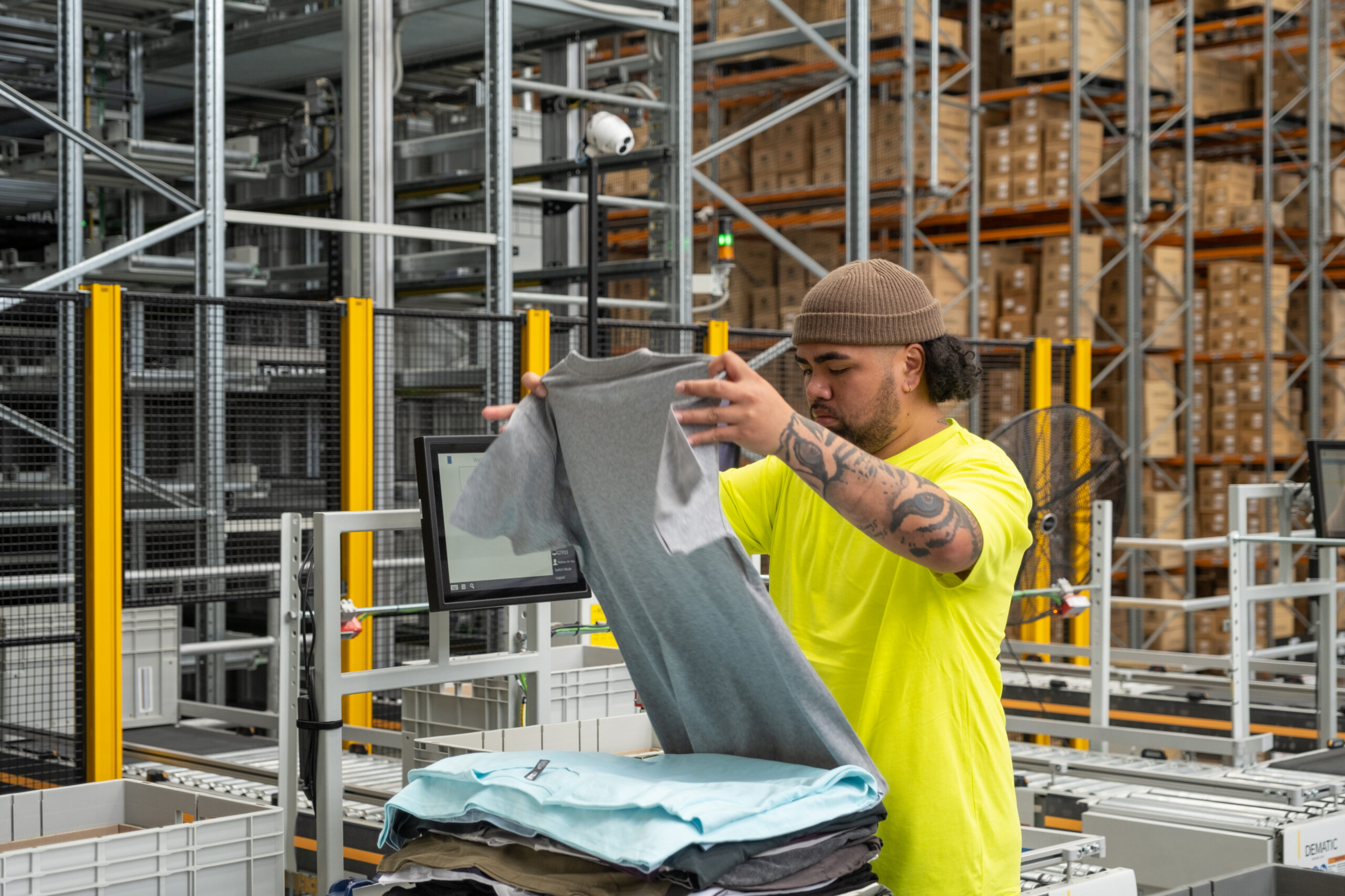
    Premium apparel company, AS Colour, embarked on a strategy to support its expected growth over the next decade by building a new 7,500 square metre distribution centre in Auckland, New Zealand. A key automation feature of the new DC was the deployment of the Dematic Multishuttle GTP system to help increase throughput by 344% per worker, drive accuracy, fulfilment speeds, operational efficiencies and reduce the overall size and power requirements of its warehouse.

    “The Multishuttle GTP system has been a game changer for our business, and we’ve actually seen a big increase in sales in New Zealand as a result of having it in place because our customers see how fast and accurately we get their orders to them,” says Lawrence Railton, Managing Director, AS Colour

    Radial: Bin-to-Picker AMR

    Radial Europe is a leading global e-commerce third-party fulfilment provider whose fashion, health and beauty customers include doTERRA, Calvin Klein, Cole Haan, Express, Gymshark, Lucky Brand, TaylorMade and Tommy Hilfiger.

    With a commitment to customer and operational excellence, and facing challenges of high-volume volatility, a sprawling storage area, and a diverse array of 20,000 constantly changing products, Radial deployed an innovative Dematic Bin-to-Picker AMR system at a new facility in the Netherlands.

    The system comprises 300 robots delivering products automatically to pickers. The system provides a significant improvement in operational performance, with picking speeds quadrupling and accuracy significantly increased, all in a reduced footprint.

    “We are now in a stronger position where we can fulfil every requirement a customer has. They simply tell us what they want to have happen and we can do it. Automation has proven to be a tremendous help in achieving the goals we had from the start,” says Ron Kleinsmit, Warehouse Manager at Radial Europe.

    Benetton Group: Autostore

    Benetton Group, one of the best-known fashion companies in the world , implemented a Dematic AutoStore system at its logistics facilities in Italy to boost the company’s e-commerce channel by optimising storage capacity and order processing.

    Mobile robots, traverse the top of high-density storage units to retrieve items in bins and deliver them to pickers, significantly enhancing picking efficiency while reducing travel previously undertaken by Benetton staff.

    “We chose Dematic because we were interested in a partner with significant experience in the e-commerce sector and a solid international background,” says Valentino Soldan, Head of Logistic at Benetton Group. “The AutoStore-based solution will meet our business needs perfectly, and we are confident in facing an increasingly challenging market with a structured and technologically advanced solution, capable of accompanying our development for many years to come.”

    Comparative Analysis

    Each automation solution offers unique advantages and considerations, making it essential for businesses to carefully evaluate their options before making a decision. Bin-to-Picker AMR systems prioritise speed and flexibility, making them ideal for dynamic environments with fluctuating order volumes. AMR Shelf-to-Person systems are typically applicable in small order fulfilment systems or where headroom utilisation, storage capacity, pick rates, and ergonomics are less of a consideration. AutoStore excels in maximising storage density and space optimisation, making it suitable for businesses with space constraints. Multishuttle systems prioritise throughput and scalability, making them ideal for high-volume fulfilment centres where productivity is of utmost importance, and with the capability to go high, they potentially provide the highest storage capacity in tall warehouses.

    Automation a Necessity to Stay Ahead of Your Competition

    Automated order fulfilment solutions offer tremendous potential for enhancing supply chain efficiency and agility. In an era defined by rapid change and intense competition, automation is not just a luxury but a necessity for businesses seeking to thrive in the Southeast Asia retail landscape.

    To help companies determine which automation solution is the best fit for their operations, Dematic has released an Optimising Store and Online Order Fulfilment eBook, deep diving on the challenges facing retailers, opportunities for optimisation and competitive differentiation, and evaluating the features and benefits of these leading automation technologies. Download the eBook.

    By: Garret Lu,Senior Sales Manager for Dematic Asia.


  • Thailand’s Industrial Sector Takes a Leap Forward

    Thailand’s Industrial Sector Takes a Leap Forward

    The collaboration aims to support the IoT and AI Manufacturing Line Analysis Project through several key objectives. It focuses on advancing technology by promoting the integration and expansion of IoT and AI technologies within Thailand’s industrial sector.

    A core working group will be established to ensure the TGI stays ahead of technological advancements. The initiative will also create a knowledge transfer hub, serving as a central resource for sharing information on IoT and AI technologies related to production processes. Additionally, the partnership will organize seminars, training sessions, and educational activities to transfer specialized knowledge to industrial personnel and educational institutions.

    Under the terms of the MOU, Mobile Innovation Company Limited (MI) will provide significant support to the TGI, including offering training courses and technical education at no cost; supplying the necessary equipment, tools, and teaching materials; and co-organizing training sessions and educational activities aligned with the project’s objectives. In return, the TGI will develop and maintain the TGI Smart Factory room; assign dedicated staff to collaborate with MI in designing and implementing teaching content; and facilitate training, seminars, and consultations as part of the IoT & AI Manufacturing Line Analysis Project.

    Additionally, NTT Com will provide exhibits, educational materials, and services; implement related support activities such as exhibitions, training, seminars, and consultations; and promote understanding of the services and their details.

    This collaboration represents a significant advancement in Thailand’s industrial sector towards modernization and technological excellence. The partnership between TGI, MI, and NTT Com signifies a unified effort to equip Thailand’s workforce with the skills and knowledge needed to succeed in an increasingly automated and intelligent industrial environment.

  • Thailand: Crafting a Secure and Inclusive Future in the Global Digital Arena

    Thailand: Crafting a Secure and Inclusive Future in the Global Digital Arena

    The Thai government has taken significant strides towards fostering an inclusive digital environment. Recent initiatives aim to bridge the digital divide, ensuring that individuals with disabilities have access to technology that enhances their quality of life. Notably, the establishment of digital applications tailored for various disabilities underscores the government’s commitment to this cause. This focus was evident in a seminar led by Mr. Teerawut Thongphak, Deputy Secretary General of the National Digital Economy and Society Committee. The seminar focused on the use of digital applications for people with disabilities and attracted over 200 participants, showcasing a collective effort towards greater inclusivity.

    Thongphak articulated the government’s vision for leveraging technology to support national development. He emphasized the need for robust digital infrastructure that not only reduces social inequalities but also creates equal opportunities for all citizens, particularly those with disabilities. The emphasis on accessibility is pivotal in ensuring that every Thai citizen can utilize digital advancements to improve their lives and contribute to society.

    Thailand 4.0 is a national strategy designed to transform the country into an innovation-driven economy. Inclusivity is a key pillar, and aims to reduce social inequality, promote equal economic opportunities, and ensure that marginalized communities, such as rural populations, benefit from digital advancements.

    Thailand’s National e-Payment initiative aims to promote financial inclusion by providing access to financial services through digital channels. The plan includes the development of digital payment systems to reduce cash dependence and make transactions more accessible for all, including rural and low-income populations.

    The Village Fund is a microfinance initiative that provides small loans to rural communities to foster local development and entrepreneurship. The initiative is designed to promote inclusivity by giving low-income and rural citizens access to capital.

    The Net Pracharat Project has been a cornerstone in expanding broadband access to underserved areas, with over 24,700 rural villages receiving free public Wi-Fi, thus enhancing digital access for rural communities. Complementing this, the Digital Community Center Initiative has established centers in rural areas to provide free internet, digital literacy training, and access to e-commerce and government services, ensuring that even remote communities benefit from digital opportunities.

    In addition to expanding access, Thailand has prioritized digital literacy and workforce development. Programs like the Thailand Digital Workforce Development Program and the Coding Thailand Initiative aim to equip citizens, particularly in rural areas, with digital skills necessary for the modern economy. These initiatives provide free courses on coding, digital marketing, and entrepreneurship, targeting students and small businesses in underserved communities.

    Thailand’s e-government services and smart city initiatives also play a crucial role in bridging the digital divide. By digitalizing public services and integrating digital infrastructure in smart cities like Phuket and Chiang Mai, the government is ensuring that citizens can access essential services online, regardless of their location. These efforts, supported by the Universal Service Obligation Fund, which finances telecom expansion in remote areas, are helping to reduce the digital gap, promoting inclusivity, and empowering marginalized communities to participate in the country’s growing digital economy.

    With Thailand experiencing rapid advancements in mobile connectivity, telcos have become key partners in ensuring that digital services reach all corners of society, including underserved and marginalized populations.

    However, as Thailand undergoes a major digital transformation, senior citizens are at risk of being left behind due to a lack of digital literacy. With around 13 million people aged 60 years or older in a population of 66.05 million, the country is already grappling with the challenges of an aging society. According to the e-Conomy SEA Report 2022, Thailand’s digital economy is expected to reach USD 53 billion by 2025, with a 15% compounded annual growth rate (CAGR), and is projected to double from approximately USD 100 billion to USD 165 billion by 2030.

    Despite these advancements, less than 15% of people aged 75 years or older have internet access in Thailand, as reported by the International Telecommunication Union (ITU). In contrast, the internet access rate among seniors in more developed regions like Hong Kong and Japan is significantly higher. The National Statistical Office’s survey indicated that while 62.1% of the elderly aged 60 years or above have internet access, 37.9% still do not.

    Additionally, 84.3% of Thai seniors have access to smartphones, but those living in rural areas face greater challenges; 44.2% lack internet access, and 18% do not have access to smartphones. This digital divide underscores the need for targeted efforts to improve digital literacy among older adults, ensuring they can engage with the increasingly digital economy.

    Thai telecom companies are actively bridging the digital divide by expanding network infrastructure to rural areas, ensuring underserved communities have access to digital services. AIS, Thailand’s largest mobile operator, has led efforts in rural network expansion by installing mobile towers in remote areas and providing affordable data plans. These initiatives ensure that rural populations can benefit from high-speed internet, supporting online education, healthcare, and economic opportunities.

    True Corporation’s (True) initiatives focus on delivering affordable, high-quality internet to underprivileged schools and communities. True has donated high-speed internet to schools in remote regions, provided low-cost internet packages, and collaborated with the government to distribute digital devices.

    State-owned NT and dtac have also played a key role in fostering inclusivity. NT has expanded internet access through its involvement in smart city and village connectivity projects, ensuring that even remote villages can access government digital services. Meanwhile, dtac’s “Safe Internet” initiative focuses on educating young people in rural communities about responsible internet use, equipping them with essential digital skills. Together, these efforts have significantly contributed to reducing Thailand’s digital divide.

    At the core of Thailand’s inclusivity efforts are several innovative applications developed specifically for individuals with disabilities. These applications cater to a wide range of needs, addressing visual, hearing, mobility, learning, mental, intellectual, and autism-related challenges.

    Among these, the D4D APP PORTAL serves as a comprehensive application center that includes tools like InfoPage for All, which provides essential information on support centers; and My Mood for All, a mental health assessment system.

    Thai developers have created apps that use AI to translate sign language into text and speech in real-time. These tools help bridge the communication gap between hearing-impaired individuals and the wider population.

    Developed by the Department of Land Transport, the “Taxi OK” app includes accessibility features for passengers with disabilities. It allows users to book wheelchair-accessible taxis and provides drivers with instructions to assist passengers.

    Such initiatives highlight how technology can be harnessed to foster a more inclusive society, enabling individuals with disabilities to thrive in a digital-first world.

    The implications of Thailand’s inclusivity initiatives extend beyond individual empowerment; they have the potential to enhance the country’s overall sustainability. By ensuring equal access to digital resources, Thailand is tapping into the capabilities of all its citizens, fostering an environment where diverse talents can contribute to economic growth. This proactive approach not only improves the quality of life for people with disabilities but also enriches society as a whole.

    The economic empowerment of individuals with disabilities is another key benefit of these initiatives. As digital services become more accessible, people with disabilities can explore new avenues for income generation and employment. This shift is critical in reducing economic disparities and enhancing overall economic development in Thailand.

    Thailand’s commitment to creating an inclusive digital environment serves as a model for other nations. By demonstrating that tangible actions can lead to inclusivity, Thailand sets a precedent for global efforts aimed at creating a more equitable society. The country’s experience offers valuable lessons on how to integrate technology and inclusivity, proving that when everyone has the opportunity to contribute, the entire society benefits.


  • Iconic Australian Athletic Brand 2XU Partners with Pattern for International Repositioning

    Iconic Australian Athletic Brand 2XU Partners with Pattern for International Repositioning

    Leading global ecommerce and marketplace accelerator, Pattern, today announced it has supported iconic Australian athletic wear brand 2XU to pivot its international business, solidifying its position as a leading specialist technical athletic brand in key markets, including North America. This strategic partnership has enabled 2XU to achieve an 80% full-price sales rate and increase its average selling price by 25% to $200.

    With pre-existing operations in North America through wholesale, D2C, and Amazon channels, 2XU identified the need to reimagine its sales strategy to regain control of its brand and product positioning. The shift was motivated by recognising that the brand’s complex distribution model and the practice of uploading a wide range of seasonal end-of-life products to Amazon had diluted the brand’s premium image.

    Marc Boelen, CEO at 2XU, explained, “The international sportswear market is very crowded and highly competitive. As a premium technical brand, we needed to take control and differentiate ourselves. This meant simplifying our distribution to focus on our unique selling point (USP) as a technical compression and triathlon brand, which 2XU is well known for and consumers are willing to pay a premium for. Our data further supported this, showing that content from 2XU’s athletes and ambassadors focused on the technical benefits of our range outperformed other products and content in the US.”

    Previously, 2XU’s distribution model into markets like North America included multiple channels, creating inconsistencies in pricing and brand perception. The strategy of uploading a wide range of end-of-life products exclusively to Amazon was intended to reduce channel conflicts and maintain stock keeping unit (SKU) continuity. However, this strategy negatively impacted 2XU’s brand perception

    The decision to overhaul 2XU’s Amazon strategy was driven by the fact that in 2024, over half (56%) of US consumers start their product search on Amazon, rather than other search platforms like Google. This meant that for many US consumers, their first encounter with 2XU would be through Amazon, making this channel crucial in shaping their perceptions of the brand.

    “Moving from a multi-channel distribution model to a direct-to-consumer (DTC) model is a major strategic change. As a brand, we saw a critical need to build out our international DTC business, even if it meant accepting a short-term impact on sales, to achieve long-term control over pricing and positioning,” said Lindsay Swaik, VP of Digital, 2XU. “Given Amazon’s dominance among US consumers, we felt it was necessary to showcase leading content and a smaller range of our best-selling premium products on Amazon as a first brand impression. This was crucial in enhancing our brand story and positioning us as the leading technical performance brand and the world leader in compression.”

    As the number one global seller on Amazon, Pattern leveraged its expertise to drive 2XU’s transition from a 1P to a 3P account on Amazon, delivering the brand greater control over its product listings and customer perception. Pattern and 2XU closely collaborated to design A+ content aligning with brand guidelines, manage in-platform marketing strategies, and control stock replenishment and pricing strategies to maximise sales and meet key benchmarks. Additionally, Amazon’s delivery speed provided a benefit that 2XU’s own supply chain could not match.

    “2XU had to transform its strategy to target a new customer base willing to pay full price for high-quality technical products. This shift was essential to drive profitable growth and achieve the brand’s business goals in international markets like the US,” said Merline McGregor, Managing Director of Pattern Australia. “The results have been remarkable, with 2XU now achieving an impressive 80% full-price sales rate. This transition underscores the brand’s commitment to premium quality and demonstrates the effectiveness of a well-executed ecommerce strategy.”

    In recent years, run clubs have taken off worldwide, largely driven by the rising cost-of-living and the affordability of running as a way to stay fit and socialise. 2XU recognises that this trend aligns well with its brand, as more runners seek technical and scientifically proven apparel to best support their fitness goals. Over the past year, this has helped 2XU differentiate itself as a premium technical brand, avoiding competition with the crowded athleisure wear market and opening up new customer opportunities.

    “Moving to a premium pricing model required a leap of faith, but it has paid off,” said Boelen. “We now operate as a premium, full-price brand with healthy margins and the ability to reinvest in acquiring new customers. Our growth over the past two years across Amazon and ecommerce has exceeded 25%, and we continue to see strong performance on both fronts.”

    Switching to a DTC approach and taking full control on Amazon has streamlined 2XU’s brand identity by eliminating inconsistencies from wholesalers and mitigating risks from unauthorised resellers on the platform.

    Pattern has also been able to scale up to support 2XU’s ecommerce channel when necessary, assisting with paid social, paid search, and email marketing. Additionally, Pattern manages 2XU’s DTC operations across the Australian and UK markets. This comprehensive partnership has been vital in driving the brand’s growth globally.

    About Pattern Inc

    Pattern is the category leader in global ecommerce and marketplace acceleration. Since 2013, Pattern has profitably grown to more than 1,400 employees operating from 24 global locations – including Melbourne, Sydney and the Gold Coast – to help leading brands achieve accelerated growth on D2C websites and global ecommerce marketplaces. As well as being one of the largest Amazon sellers in the world, we are also present on Tmall, JD.com, eBay and other ecommerce marketplaces. We act as the authorised Amazon seller to more than 200 brands globally, buying their stock to sell on the marketplace and taking care of every aspect of their Amazon presence. For more information, visit https://au.pattern.com/

  • Pattern Creators Launches Next-Gen Ambassador Marketing

    Pattern Creators Launches Next-Gen Ambassador Marketing

    Leading global ecommerce and marketplace accelerator Pattern, today announced the launch of ‘Pattern Creators’ to help Australian brands reach new audiences, build brand equity and create engaging user-generated style content  through ambassador-led marketing. Pattern Creators, is fuelled by its own proprietary software ‘Current’. The platform centralises all aspects of creator marketing, enabling brands to truly scale their ambassador programs, from recruitment and product seeding to content approvals, campaign management and revenue tracking.

    In 2024, social media is a crucial source of product information for consumers, with around a third (36%) of Australians using their social networks to find information about brands and products.

    “Today’s consumers have a highly tuned radar for inauthenticity. They seek genuine and credible voices. Influencers bring a level of relatability and trust that is unparalleled, making them a critical component in any modern marketing strategy. Pattern Creators helps to bridge the gap between consumer trust and brand engagement and by leveraging authentic ambassador connections, brands can grow awareness and their customer base,” said Merline McGregor, General Manager of Pattern Australia.

    An increasing number of brands are partnering with micro-influencers to promote products, as 67% of Australian brands looked to increase their influencer budgets from the start of 2023. This surge in investment reflects the fact that 61% of Australian brands planned to repeat partnerships with influencers, highlighting the need for brands to build their own team of creators, rather than repeatedly sourcing new individuals who don’t have an ongoing affiliation with the brand.

    “In a world where social media platforms like TikTok and Instagram thrive on authentic user-generated content, over highly polished branded content, Pattern Creators enables brands to seamlessly engage with existing and potential customers on a deeper level. It does this by generating robust AI-driven ambassador prospect lists with a few simple prompts, allowing brands to identify influencers who can genuinely and effectively tell a brand’s story,” commented McGregor.

    Pattern Creators enables brands to centralise their influencer management across central functions including recruitment, product seeding, contracting, reporting, content approvals and communications. This allows brands to truly scale their ambassador programs, reducing the time and effort typically required to source and manage bespoke influencer talent and content production.

    Measuring the true impact of ambassador marketing can be challenging, but Pattern Creators has transformed this process. It allows brands to develop their own direct relationship with ambassadors to negotiate diverse commission models, utilise promo codes, and monitor affiliate links, providing clear insights into how an influencer’s endorsement translates into product sales.

    “Traditional influencer management platforms typically rely on a pool of existing ambassadors shared amongst all brands. What sets Pattern Creators apart is that we recruit unique creators specifically for each brand we work with,” explained McGregor. “We also ensure that the brand themselves directly own the relationship with these ambassadors. This approach results in unique and authentic partnerships resulting in quality content production, reflecting the individual needs and identity of each brand.”

    “Brand leaders understand that scaling a community of creators is incredibly challenging. Our platform supports brands to navigate these complexities much more effectively. By developing strong ambassador programs, this solution sets brands up for success in the next frontier of social media marketing,” McGregor concluded.

    For more information about Pattern Creators and how it can elevate your brand, reach out at au@pattern.com.

    About Pattern Inc

    Pattern is the category leader in global ecommerce and marketplace acceleration. Since 2013, Pattern has profitably grown to more than 1,400 employees operating from 24 global locations – including Melbourne, Sydney and the Gold Coast – to help leading brands achieve accelerated growth on D2C websites and global ecommerce marketplaces. As well as being one of the largest Amazon sellers in the world, we are also present on Tmall, JD.com, eBay and other ecommerce marketplaces. We act as the authorised Amazon seller to more than 200 brands globally, buying their stock to sell on the marketplace and taking care of every aspect of their Amazon presence. For more information, visit https://au.pattern.com/

    Media Contact

    Corinne Nolte

    Mulberry Marketing Communications

    cnolte@mulberrymc.com

  • Australian Workers Prioritise Work-Life Balance Over Wages Despite Cost-of-Living Surge

    Australian Workers Prioritise Work-Life Balance Over Wages Despite Cost-of-Living Surge

    New research from Humanforce reveals that close to half of the 500 Australian workers it surveyed, including those employed in the retail sector, have switched jobs in the past year. Despite a sharp increase in living costs, the driving force for 54% of these workers finding a new employer was not higher pay, but the pursuit of better work-life balance and wellbeing.

    Holly Barnes, Chief People Officer at Humanforce said, “This trend challenges the traditional belief that higher wages are the foremost concern for Australian workers, particularly during economic downturns. Our research findings suggest that workers are instead placing greater value on whether their workplace is a good fit for their overall lifestyle and if it affords them the flexibility they require.”

    With 98% of respondents citing the importance of the overall employee value proposition (EVP) in their decision to move, it’s clear that today’s employees are looking for more than financial benefits. Today, their focus is much wider, with the most appealing aspects of an EVP being work-life balance initiatives, and career growth & development opportunities.

    Barnes adds, “For today’s workers, a compelling EVP extends well beyond one’s salary. It’s integral to creating a workplace where employees’ personal lives and professional goals are recognised and supported—a strategy that is proving essential for attracting and retaining talent, even in tough economic times.”

    Contrary to expectations that financial pressures would make higher wages the primary focus into the future, many workers are now refocusing on longevity in roles that align with their lifestyle needs. This sentiment was reinforced by 60% of survey participants expressing little to no interest in changing jobs in the next six months.

    Forty percent of those who had changed roles in the past year reported lower job satisfaction than anticipated, showing there is still a lot of scope for businesses to take greater initiative in supporting employee wellbeing.”Our data indicates that after a few turbulent years where high numbers of employees jumped ship to new employers, there is now a shift towards long-term satisfaction in the workplace, where wellbeing and stability are paramount over quick financial gains,” Barnes explains. “Businesses that recognise and act on this by offering a high-quality EVP will set themselves apart as employers of choice.”

    There are four critical areas that an EVP should encompass, including emotional wellness (mental health), social wellness (workplace culture and life outside of work), physical wellness and financial wellness.

    Many companies are already making concerted efforts to retain their talent, with almost 70% of employees confirming they had received support from their current employers, in a bid to retain them in their roles.

    The Humanforce research also underscores the vital role HR technologies play in supporting a business’ EVP. An overwhelming majority of the Australian workers—96%—said these technology innovations are crucial in creating positive workplace experiences.

    “Businesses are urged to complement their needs of driving organisational growth, profitability, compliance confidence and productivity, with a genuine focus on its people. Give employees control and flexibility over their working life with easy access to their rosters and payslips. Ensure that they feel heard and really feel part of your company.

    “Humanforce’s HCM suite directly supports the shift towards employee wellbeing and flexible roster-driven work by giving employees the tools to manage their work-life balance. It’s about practical autonomy — the ability to align work schedules with personal needs. This approach not only meets employees’ expectations but also enhances overall job satisfaction, leading to better retention and productivity for businesses,” Barnes concluded.

    About Humanforce

    Humanforce provides the market leading, employee-centred, intelligent and compliant HCM suite for frontline and flexible workforces, offering highly configurable, best-in-one WFM, HR, Payroll and Wellbeing – without compromise. Our vision is to make work easier and life better by focusing on the employee experience (EX), and the efficiency and optimisation of businesses.

    Founded in 2002, Humanforce has a 2300-strong customer base and over 600,000 users worldwide. Today, we have offices across Australia, New Zealand, and the UK.

    Customers include Story House Early Learning, Flight Centre, Southern Cross Care QLD, Howard Smith Wharves, and more. https://humanforce.com

  • 3 Key Retail Trends to Watch for Remainder of 2024

    3 Key Retail Trends to Watch for Remainder of 2024

    Last month over 5,000 people attended the first ever NRF APAC event in Singapore and the post analysis after three days of presentations from leaders in retail, supply chain and IT is that innovation is the key to growth now more than ever. While challenges will remain for retailers around the globe as we move through 2024, emerging technologies and innovative strategies will provide opportunities to disrupt the status quo, improve operational efficiencies, and take customer experience to new heights.

    Here are three key trends to watch out for in the remainder of 2024:

    1. AI: Beyond the Hype

    The buzz and excitement created by generative AI bursting into the mainstream dominated the headlines in 2023, with ChatGPT alone reaching 100 million users within just a couple of months. In the second half of 2024, the AI space will get even more exciting as it becomes the year of deployment – the point where the rubber hits the road and theory meets practice. AI and augmented reality are no longer the future; they are the now. As AI applications evolve from being novelties to core components of business operations, 2024 is set to witness widespread implementation across various sectors.

    Key Developments to Watch:

    • Supply Chain Optimisation: AI’s impact on supply chains is crucial as retailers seek greater efficiency and responsiveness. Predictive analytics enable better demand forecasting, minimising stock issues. Automated systems and robotic automation in warehouses streamline operations, ensuring products are replenished and orders fulfilled more accurately and swiftly.
    • Personalisation at Scale: AI excels in delivering personalised experiences to consumers. By analysing vast amounts of customer data, AI tailors marketing efforts and product recommendations with remarkable precision, enhancing customer satisfaction and loyalty while boosting sales.
    • Customer Engagement and Interaction: AI enhances customer service through chatbots and virtual assistants, providing consistent support and simplifying the purchasing process. Innovative tools like voice and visual searches make interactions more engaging, catering to modern consumer preferences for fast and effortless shopping experiences.
    • Store Operations and Management: In physical stores, AI optimises layouts and product placement based on real-time data on customer movements and behaviour. Smart checkout systems and AI-enhanced security measures improve operational efficiency and security, respectively, aligning with today’s retail needs.
    1. The Tech-Enabled Human Touch

    Another significant retail trend to watch is the evolution of the tech-enabled human touch. This trend capitalises on the advances made in digitising physical retail spaces, transforming them from perceived liabilities to pivotal assets in a post-pandemic world.

    Key Developments to Watch:

    • From Digital to Physical Enhancements: The focus for the remainder of 2024 is on making digital interactions more tangible and engaging. Innovations like virtual try-ons and live shopping sessions have started to blur the lines between online and offline shopping experiences. Social commerce and virtual consultations further enhance this integration, offering more immersive and interactive shopping encounters that extend beyond traditional e-commerce platforms.
    • Emergence of Mixed Reality: Mixed reality technologies are set to revolutionise retail environments by merging digital and physical elements in unprecedented ways. This integration will necessitate seamless visibility and transparency across retail inventory systems, ensuring that if a product is available, it can be sold through any channel—be it online or in-store.
    • Leveraging Technology for Personalised Service: As retail moves towards a multi-dimensional approach, physical stores will increasingly need to leverage their staff differently. Technology can empower sales associates to provide concierge-level services, enhancing customer interactions with a personal touch that combines efficiency and customisation. From on-the-spot checkouts to rapid online order processing and returns, technology will enable staff to deliver superior service that caters to the modern shopper’s expectations.
    1. ESG: Firmly Back on the Agenda

    Over the last 18 months, progress on the Environmental, social, and governance (ESG) agenda may have quietly stalled as both retailers and consumers prioritised cost efficiencies. However, the sustainability agenda is one trend that is never going away, and sustainability and the environment will once again be a top priority for retailers in 2024 and beyond.

    Key Developments to Watch:

    • Renewed Focus on Transparency and Accountability: This year, transparency is critical as consumers increasingly demand clarity and honesty in how products are sourced, manufactured, and sold. The backlash against greenwashing and bluewashing has intensified, pushing retailers to substantiate their sustainability claims with verifiable data. Retailers now face greater scrutiny not only for the authenticity of their environmental claims but also for their factual accuracy.
    • Supply Chain Visibility: The need for comprehensive supply chain transparency has never been more acute. Retailers must ensure that their supply chains are not only efficient but also sustainable and ethical. This involves greater traceability from source to store, which will be crucial in meeting both consumer expectations and regulatory requirements.
    • Enhancing Product Durability and Circularity: Following significant global environmental commitments, such as those made at COP 28, retailers are expected to invest more in durable and traceable products. The push towards a circular economy will see retailers enhancing their efforts in recycling, reusing, and reducing waste, with the supply chain playing a pivotal role in these initiatives.

    2024 and Beyond

    Together, these trends are not just shaping the current landscape but are also paving the way for a more resilient and innovative future in retail. As we move forward, the ability of retailers to adapt and thrive amidst these changes will likely dictate their success in this new era of retail, where technology, human touch, and sustainability converge to redefine what it means to be a leader in the industry.


  • Pattern Forecasts Unprecedented Sales Surge for Amazon’s World-First 6-Day Prime Sales Event in Australia

    Pattern Forecasts Unprecedented Sales Surge for Amazon’s World-First 6-Day Prime Sales Event in Australia

    In a world first, Prime Day Australia will run for six days this year (Tuesday, July 16 at 12.01am AEST to Sunday, July 21), with significant growth predicted for 2024, according to new research from global marketplace leader, Pattern.

    Data from Pattern shows that the number of consumers participating in Prime Day increased by 33% in 2023, with strong sales growth predicted again for this year’s event, with the brands Pattern Australia represents expecting to more than double sales.

    Boasting approximately 4.5 million Amazon Prime subscribers in Australia, Prime Day sales grew 103% year-on-year for the brands Pattern Australia represents on the platform in 2023. These brands also saw a 62% increase in traffic compared to the previous Prime Day event.

    In 2023 Pattern reported 61% of the event’s sales came through on day one for the brands they represent on the platform. This demonstrates pent-up demand for the sales event, with consumers looking to secure their purchases as soon as possible.

    “Prime Day has cemented itself as a major sales event in the Australian retail calendar. A surge in Amazon memberships, along with last year’s impressive Prime Day results, indicates that Prime Day 2024 will be bigger than ever, presenting local brands with opportunities to grow sales and connect with new customers,” said Merline McGregor, Managing Director of Pattern Australia.

    Amazon Prime Membership Growth

    Uptake of Amazon Prime memberships in Australia has seen a significant surge, according to a recent marketplace shopper study. The percentage of consumers with access to Prime services has steadily increased from 31% in 2021 to 45% in 2024. Despite a price hike in 2023 from $7.99 to $9.99 per month, the growth of Amazon Prime membership has not slowed.

    “Strong levels of subscriber growth highlight the value Australian consumers find in Amazon Prime, especially in a time when Australian consumers are becoming increasingly strategic with their spending, and eagerly awaiting major sales events like Prime Day to make their purchases,” said McGregor.

    “Although consumer spend may be pressured, Pattern research indicates Amazon may be more resilient than other shopping channels. Only 18% of Amazon shoppers say they will reduce their spend this year, versus 24% for all online shoppers.”

    Prime Day 2024: Marketplace Opportunities for Brands

    In preparation for Prime Day 2024, consumer research also highlights key product categories capturing shopper interest. A majority of consumers (60%) indicated they are interested in purchasing Home & Kitchen products from Amazon, followed closely by Electronics & Computer (57%) and Books & eBooks (55%), Clothing, Shoes & Accessories (52%) and Sports, Fitness & Outdoor Products (51%).

    “These key product category findings provide valuable guidance for brands looking to maximise presence and sales during Prime Day 2024,” explained McGregor. “As Prime membership and sales events continue to grow in popularity in Australia, it is essential for brands to recognise and act on these trends to create meaningful connections with new customers and drive sustained ecommerce success.”

    Prime Day Product Discoverability Opportunities

    Prime Day presents brands with powerful opportunities to introduce their products to new consumers. Pattern’s research shows that 39% of people who discover a new product on Amazon also often visit the brand’s direct-to-consumer (DTC) website for further information about the brand. Additionally, consumers are 19% more likely to purchase a similar product from an unfamiliar brand on Amazon rather than searching for the desired brand or item on another platform.

    “The ability of brands to capture the attention of shoppers on Amazon underscores the platform’s influence in reaching a wider customer-base, and the importance of leveraging popular sales events like Prime Day. Moreover, the significant traffic driven to DTC websites from Amazon demonstrates the importance of a cohesive online presence. Brands need to leverage both marketplaces and their own websites to create a seamless shopping experience and build stronger customer relationships,” concluded McGregor.

    For more information and to download the full report please click here: ‘Australian Marketplace Consumer Trends Report – 2024’

  • Industry-First Marketplace Research Reveals only 7% of Australian Shoppers Trust Temu on Product Quality, while Amazon leads for Convenience, Range, and Returns

    Industry-First Marketplace Research Reveals only 7% of Australian Shoppers Trust Temu on Product Quality, while Amazon leads for Convenience, Range, and Returns

    An industry-first study by global ecommerce accelerator, Pattern, has shown that despite their surging popularity, Australian consumers hold negative views on the quality of the products sold on emerging marketplaces Temu and Shein.

    The major Australian marketplace shopper study uncovered Australian consumers’ perceptions of the seven largest marketplace platforms: Amazon, eBay, Catch, Kogan, Temu, MyDeal, and Shein.

    Temu was ranked as the lowest marketplace in perceived product quality at only 7%, followed by Shein, with just 8% of shoppers expressing trust in its product quality. This contrasts with a majority of shoppers saying that they trusted the quality of the products sold on Amazon.

    “Temu and Shein have burst onto the Australian ecommerce landscape, attracting large numbers of younger shoppers. However, these platforms still have to play a lot of catch-up to win over Australian consumers, who didn’t rate them highly for product quality, returns, and convenience,” said Merline McGregor, General Manager of Pattern Australia.

    “With a transparent product rating and review system built into its platform that educates and builds shopper trust, Amazon has become the most trusted marketplace in Australia in relation to the quality of products it sells. This is an area where Amazon leads the sector at 58%, with eBay trailing at 39%, followed by Catch (25%), Kogan (19%) and MyDeal (11%).”

    Marketplaces attract shoppers as cost-of-living pressures bite

    As cost-of-living pressures rise, Australian consumers are increasingly turning to marketplaces to research, compare, and purchase. A large majority of Australians shopped on a marketplace in 2023, with a staggering 94% planning to buy from platforms like Amazon, Catch, and eBay over the coming year.

    “With strained household budgets, marketplaces are attracting an increasing number of shoppers with their easy-to-use price comparison functionalities and sales events. With its globally recognised Prime Day event gaining popularity in Australia, Amazon has become the leading marketplace for value-for-money purchases, attracting 48% shoppers, followed by eBay at 41% and Catch at 27%,” said McGregor.

    Not only are marketplaces attracting higher volumes of shoppers, but they are more likely to secure high income shoppers in 2024. Today, over 80% of $200K earning households shop on Amazon. Even newer marketplaces like Shein attract high income consumers, with 34% of those in the $160-$199k household income bracket buying from the platform in the past 12 months.

    Amazon wins for convenience and returns

    Amazon outperforms all other marketplaces in relation to ease-of-use shopping, with 56% of consumers highlighting it was the most convenient platform to buy from, compared with eBay (46%) and Catch (23%).

    This can be attributed to Amazon’s Prime membership benefits, where shoppers get free, fast shipping and the platform’s advanced search and recommendation algorithms that personalise the shopping experience.

    Given the sophisticated supply chain infrastructure it has established in Australia, 49% of shoppers also said Amazon has the most reliable returns process – significantly more compared to any other single marketplace.

    Brands need to be present on platforms with biggest product ranges

    Just over 60% of Australian shoppers believe Amazon has the widest product range, followed by eBay at 52%. All other platforms lagged – Catch, 20%, Temu, 17%, Kogan 14%, Shein, 11% and MyDeal 8%. Offering the most product variety and options also buys marketplaces the highest web clicks, with Amazon averaging 75.2 million monthly site visits and eBay 50.9 million.

    “It’s no surprise there’s a direct correlation between marketplaces perceived to have the best product ranges and those platforms, like Amazon, that attract the highest volumes of web traffic. Brands need to be present where their shoppers are. While the larger marketplaces may have more competition, they also have the biggest audiences of potential shoppers to target,” concluded McGregor.

    For more information and to download the full report please click here: ‘Australian Marketplace Consumer Trends Report – 2024’ 

    Research Methodology

    Pattern worked with OnePoll to survey 1,000 Australian consumers. Responses were collected online, and the survey was restricted to adults who had shopped online in the previous 12 months ensuring there was a representative sample of age, gender and location achieved.

    About Pattern Inc

    Pattern is the category leader in global ecommerce and marketplace acceleration. Since 2013, Pattern has profitably grown to more than 1,100 employees operating from 22 global locations – including Melbourne, Sydney and the Gold Coast – to help leading brands achieve accelerated growth on D2C websites and global marketplaces. As well as being one of the largest Amazon sellers in the world, we are also present on Tmall, JD.com, eBay and other marketplaces. ​​We act as the authorised Amazon seller to more than ​2​00 brands​ globally​, buying their stock to sell on the marketplace and taking care of every aspect of their Amazon presence. In 2018, Pattern acquired Practicology, a global digital consultancy and agency with a presence and strong client base in Australia. For more information, visit https://au.pattern.com/ .

    Media Contact

    Corinne Nolte

    Mulberry Marketing Communications

    cnolte@mulberrymc.com

  • Complicated Recruitment Processes Impacting on Retail Workforce Outcomes Today

    Complicated Recruitment Processes Impacting on Retail Workforce Outcomes Today

    New research from Humanforce reveals almost 70% of Australian workers, including retail sales, customer service, inventory management and delivery professionals, abandon job applications due to confusing or difficult recruitment processes. This alarming trend, where potential employees are disengaging from companies during, and sometimes before, their recruitment journey, poses a significant issue for employers operating in today’s extremely tight job market.

    In a highly competitive employment market, where the Australian unemployment rate remains low at 4.1%, the recruitment processes of for retail organisations are increasingly under scrutiny from job seekers.

    “With the job market being so competitive, retail employers really need to nail that first impression. The hiring process can make or break whether someone even applies, let alone wants to work for a company. So, if a business isn’t hitting the mark in every step of the recruitment journey, they’re going to have a tough time snagging top talent,” said Holly Barnes, Chief People Officer of Humanforce.

    In Humanforce’s recent survey of Australian workers, including retail sales, warehouse and delivery professionals, the element of the recruitment process that was of highest importance to Australian workers was clear communication (94%). This strongly aligns with the pain points identified by respondents – 69% attributed their decision to abandon an application to complex instructions or unclear requirements, while around 50% expressed considerable frustration over inadequate communication from employers.

    Arduous recruitment processes are a major barrier in attracting new talent, with 87% of respondents stating they were unlikely to accept a job offer from an organisation who had a lengthy or confusing hiring process. Additionally, 28% of Australian workers have abandoned a job application due to a lack of transparency around the recruitment timeline.

    Highlighting the negative impact that a complicated recruitment processes can have on the overall perception of a business, almost all (95% of respondents) shared the belief that a company’s recruitment process mirrors its actual work culture.

    “How a company handles its hiring process can give you a sneak peek into its culture. If it’s all confusing and complicated, or arduous for candidates, they’re going to think, ‘Is this what working here will be like?’ And ultimately that could sway their decision to take the job.

    “These days, people want jobs that fit into their lives. Flexibility’s a big factor. So, if a company’s making you jump through hoops just to apply, it’s really sending the message that maybe it’s not the easiest or most flexible place to work,” explained Barnes.

    In a competitive job market, retailers are under more pressure to show themselves as an employer of choice by introducing streamlined systems that support new and existing workers. Advanced employee-centred and intelligent human capital management (HCM) solutions which help both employers and employees automate tasks such as shift management, onboarding, training, engagement, leave management, wellbeing and pay can help organisations deliver a positive employee experience and build an enviable employee value proposition (EVP). This approach will not only assist in attracting new talent but also in fostering a work environment that retains workers and keeps them engaged in their work.

  • Pattern Unveils ‘Shelf’ – Advanced Inventory and Warehouse Management for Ecommerce and Marketplaces 

    Pattern Unveils ‘Shelf’ – Advanced Inventory and Warehouse Management for Ecommerce and Marketplaces 

    Leading global ecommerce and marketplace accelerator Pattern, today announced the release of ‘Shelf’ – a powerful new inventory and supply chain technology that provides Australian brands with unparalleled visibility and control of their products across all ecommerce and wholesale channels.

    Incorporated within Pattern’s ecommerce acceleration tech suite, Shelf helps brands create new supply chain efficiencies, while also improving inventory accuracy, real-time tracking and enhancing demand forecasting.

    Shelf also offers brands an evolutionary leap on traditional inventory and warehouse management solutions. It does this through an integrated approach to inventory and marketplace management, along with seamless connections with major platforms such as Shopify, Amazon, eBay, and Catch.

    “Brands are selling across more channels than ever before. In a complex sales ecosystem, it is critical that brands have accurate visibility of their stock to make informed business decisions and meet customer demand,” said Sean Walsh, Director at Pattern Australia.

    Australian brands have an enormous opportunity for growing sales through emerging marketplaces with Pattern’s ‘Marketplace Consumer Trends Report – 2024, revealing that 94% of consumers planned to shop on marketplaces like eBay, Amazon and Catch in the year ahead.

    “In an environment where marketplaces like Amazon are attracting a growing share of sales, brands must have inventory and supply chain systems in place tailored to these emerging channels. Shelf incorporates uniquely pre-configured connectors that simplify marketplace selling and inventory management. This is a critical feature for brands looking to broaden their online footprint and access and service new customer bases via marketplaces,” commented Walsh.

    Shelf provides brands 100% visibility of each unit of inventory through the lifecycle, from order to receipt at the delivery address. Its real-time inventory tracking allows brands to effectively communicate accurate delivery updates across multiple sales channels, enhancing customer communication and increasing buyer satisfaction. Accurate inventory visibility ensures correct stock levels are maintained and overallocation or out-of-stock situations are avoided, to prevent costly wastage and lost sales situations. Prior to the development of the Shelf technology this was a challenge at scale. Through optimising warehouse space and improving inventory turnover, Shelf can also assist brands with reducing storage costs. Additionally, Shelf’s ability to efficiently plan picking and put-away routes within the warehouse minimises time and resources by 40%, creating opportunities for brands to save on operational costs.

    “Shelf is more than just an inventory solution; it’s a growth enabler for brands,” said Walsh. “Pattern has observed the challenges brands face in managing inventory and warehouse operations when scaling their ecommerce presence across multiple channels, including marketplaces. Shelf addresses these challenges head-on with powerful supply chain tools. These help brands meet customer demand and operate successfully, no matter what ecommerce sales channel they are doing business through.”

    Pattern is the category leader in global ecommerce and marketplace acceleration. For more information, visit https://au.pattern.com/