Blog

  • Restaurant openings sap Jumbo Group profit

    Restaurant openings sap Jumbo Group profit

    Jumbo Group profit fell 24.8 percent in the third quarter to S$1.7 million (US$1.2 million) as new restaurant openings added to expenses.

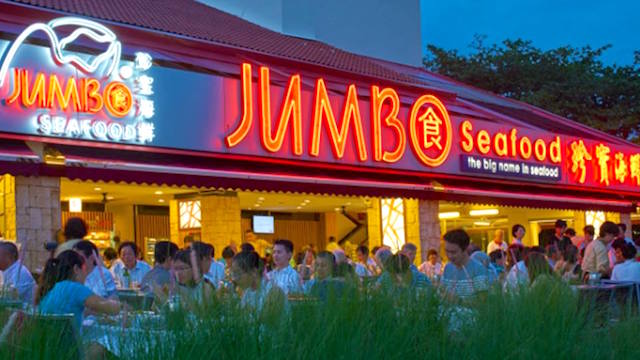
    The Singapore-listed restaurant group opened three new outlets in Singapore: a Jumbo Seafood at Jewel Changi, along with Zui Yu Xuan Teochew Cuisine and Chao Ting Teochew Pao Fan eateries at Far East Square.

    Sales were affected by the closure of the Jumbo Seafood restaurant on Riverwalk for one month during renovations.

    Group sales rose by 0.8 percent to $36.4 million.

    For the first nine months of the financial year, Jumbo Group profit was up 6.2 percent to $9.1 million on revenue down 0.4 per cent to $113.1 million.

    The company said in its results announcement that operating costs and tough competition across its Southeast Asian markets will continue to pose a challenge. However, the company expects new restaurants will help strengthen its market position in Singapore, “the bedrock of earnings growth”.

  • UPS invests in Asian express operations

    UPS invests in Asian express operations

    Express firm UPS has revealed a series of investments in Asia that it claimed would increase its service footprint and expedite delivery times.

    The company said that in the first half of the year it had invested in the following:

    • Shenzhen Asia Pacific Air Hub upgrades that increased the hub’s processing capacity by nearly 50% in preparation for volume gains in the coming three years.

    • Transit times reduction across 2,300 trade lanes: Intercontinental transit times reduction by up to four days, while shipments with destinations in Asia see transit times improved by up to two days.

    • Improved geographic reach of UPS Worldwide Express services, offering international shipping with time-definite deliveries in Australia, Hong Kong, Japan, Singapore, and South           Korea; Customers in Xi An, China and new provinces in Vietnam can now access UPS Worldwide Express Freight, guaranteed door-to-door service for palletized shipments over 70kg.

    • Extended pick-up times by up to five hours for export shipments from China, Japan, Taiwan, and South Korea, widening production windows and giving businesses additional time to fulfill customer orders.

    UPS’s Shenzhen Hub serves as a transfer point for shipments moving within the region, and the enhancements improve both reliability and quality of service provided to UPS customers in Asia.

    “At the root of the investments in our Smart Logistics Network is a simple desire to make global commerce easier for Asian businesses—because when they grow, we grow too,” said Ross McCullough, President, UPS Asia Pacific Region.

    “More UPS customers in the region will now be able to have their shipments sent and received in less time; they’ll be able to find us easily in more cities and towns, and they’ll be able to send shipments later in the day than before—all of which will open new opportunities for businesses in the region to trade more efficiently with the rest of the world.”

    Wilfredo Ramos, Vice President of Strategy, UPS Asia Pacific Region, added: “We’re seeing new realities in this region that demand not only inventive solutions but also higher levels of service.

    “Businesses have come to rely on UPS’s extensive experience to help them navigate the volatile highways of trade today. Together with our brokerage capabilities, upgrades like the one at our Shenzhen Hub will give UPS the flexibility to support increases in intra-Asia trade volumes in the coming years.”

  • DHL Global Forwarding supports Decathlon’s international supply chain

    DHL Global Forwarding supports Decathlon’s international supply chain

    DHL Global Forwarding, the leading international provider of air, sea and road freight services, partners Decathlon, the French sporting goods giant to provide comprehensive services for its international supply chain operation. At the DHL Fashion and Retail Conference held in Ho Chi Minh, both companies shared what it takes to successfully operate a multi-national supply chain, enabling Decathlon stores to stock over 22,400 items covering more than 85 different types of sports.

    Marc Meier, SVP, Global Head of International Supply Chain, DHL Global Forwarding said, “DHL Global Forwarding runs a dedicated DHL control tower which provides a single point of contact in Vietnam and Taiwan for Decathlon’s operations. Providing full visibility for Decathlon’s logistics teams, our control tower services oversee Decathlon’s air, sea and road shipments from factories in Vietnam and Taiwan to the world, including Brazil, Canada, China, Colombia, Europe, India, Malaysia, Morocco and Singapore.”

    Global businesses that source from multiple locations and ship to numerous destinations face a particularly complex supply chain that demands greater visibility and control to optimize operations and reduce costs. With more than 1,000 supply chain experts across 82 offices in 46 countries worldwide, DHL’s International Supply Chain services offer comprehensive solution design and project management backed by a global governance structure that guarantees consistency across operations.

    “Decathlon prioritizes the quality of our products and the entire customer experience to ensure we secure our positioning as the go-to retailer of affordable sports apparel, accessories, and equipment. While we ramp up on our offline and online presence for the convenience of our customers, we are working hard behind-the-scenes to make sure that our manufacturing and logistics processes can efficiently cater to the demand of our discerning customers,” said Thao Nguyen, Head of Procurement and Logistics, Decathlon Vietnam.

    In Vietnam, Decathlon launched two retail stores in Hanoi and Ho Chi Min City in 2019, spanning 4,300sqm and 2,600sqm respectively, and introduced 70 sports brands. The company collaborates with six business partners across Vietnam to keep prices and lead time competitive for the local market and to reduce carbon footprint. As a full-fledged logistics partner, DHL Global Forwarding also provides road freight solutions for the brand to transport goods from Vietnam to Cambodia.

    Vietnam’s attractiveness as a manufacturing hub for the world lies in its geostrategic location, youthful demographics, and abundance of affordable land and labor. Coupled with easy access to multiple markets via free trade agreements, the country’s textile and retail industry is primed for growth as Vietnamese spending power increases and more international brands seek to establish their presence here.

    “Today’s retailers require agile and innovative supply chains to cater to a new generation of customers who demand instant gratification and tap opportunities in emerging markets. With our extensive range of logistics services and expertise in the retail sector, DHL Global Forwarding is well-positioned to support the growth of businesses here,” said Archer Fu, VP, Head of Business Development, DHL Global Forwarding Asia Pacific

    50 Years DHL

    In 2019 DHL is celebrating 50 years since the company’s founding by three entrepreneurs in San Francisco in 1969. DHL began as a disruptor to the traditional delivery industry, circumventing bureaucracy with innovative new service to deliver documents by air overnight. Since then, DHL has grown into a globe-spanning family of DHL companies with about 380,000 employees in over 220 countries and territories that cover the entire spectrum of logistics and supply chain services. DHL’s customer-centricity and can-do culture have fueled five decades of innovation — from the DHL 1000, one of the first word processing computers in the world, to using the purpose-built StreetScooter, an environmentally friendly delivery vehicle powered by an electric drive and developed by Deutsche Post DHL Group. With the Mission 2050 commitment to reach zero group-wide emissions by 2050, DHL is continuing to be a trailblazer in the logistics industry.

  • Singapore Airlines picks crucial fight against Emirates in India

    Singapore Airlines picks crucial fight against Emirates in India

    Singapore Airlines Ltd just picked a fight with Emirates in a grab for India’s international travelers, and a slice of one the world’s fastest-growing aviation markets.

    Singapore Air’s unprofitable Indian venture, Vistara, launched its first overseas service between New Delhi and Singapore late on Tuesday. It’s the start of an uphill battle against Middle East airline giants, led by Emirates and Etihad Airways, that dominate India’s offshore routes.

    For Singapore Air, ambushed all over South-east Asia by budget airlines, the prize is clear. The number of passengers in India will more than triple to 520 million by 2037, the International Air Transport Association says. And of the 63 million people that flew to and from the country last year, two-thirds were carried by foreign airlines.

    Vistara’s maiden offshore flight is due to touch down at Changi airport early on Wednesday.

    Vistara, 49 percent owned by Singapore Air and 51 percent by Indian conglomerate Tata Group, started out in January 2015. India doesn’t allow foreign airlines to fly between local airports unless they partner with a local company to start a domestic airline.

    The carrier operates 30 Airbus SE and Boeing Co jets and has a local market share of 5 percent, the smallest among six major players. It also plans to fly to Dubai and Bangkok. According to the CAPA Centre for Aviation, Vistara could break even in the year ending March 2020.

    Vistara is a key element of Singapore Airlines’ multi-hub strategy, and the launch of international operations offers additional opportunities to it, a spokesman for the South-east Asian carrier said. He declined to comment on competition. A representative for Vistara referred queries to Singapore Airlines, while Emirates declined to comment.

    Still, airlines from the Middle East have history on their side. They’ve traditionally flown westbound Indians to Dubai and Abu Dhabi on ultra-cheap fares, before putting them on a flight to Europe or North America. Emirates, often dubbed the “unofficial national carrier of India”, controlled almost 15 percent of the market to and from India last year, regulatory data compiled by Bloomberg showed.

    The fares offered by low-cost airlines in India’s notoriously price-sensitive market are another challenge for Singapore Air. A Vistara flight to Singapore from New Delhi on Aug 28 costs 17,379 rupees (S$338), according to online travel agent Makemytrip.com. In comparison, AirAsia Bhd was offering a flight at less than half that price, at 7,745 rupees, albeit with a stop in Kuala Lumpur.

  • Telenor Pakistan gets ready to bring 5G to Pakistan

    Telenor Pakistan gets ready to bring 5G to Pakistan

    Taking another stride towards network transformation and digitalization, Telenor Pakistan and its network partners have geared up to make the network 5G ready to pass on the benefits of this transformative technology to the people of Pakistan in the coming years.

    5G is the fifth-generation cellular network technology that offers faster data transfer speeds and enables advanced solutions such as smart homes, smart cities, autonomous driving, automated emergency services, remote medical diagnosis, smart manufacturing, cloud gaming, and enhanced content & media experiences to name a few.

    The development cements and once again demonstrates Telenor Pakistan’s position as the frontrunner of innovation and digital transformation in the country. Today, the company has the country’s first and only 4.5G network and takes the lead with such industry-first initiatives as IoT, Cloud Services, and overall digital ecosystem development comprising innovative solutions for gaming, entertainment, and 3G/4G devices portfolio, etc.

    Telenor Pakistan took the first step towards 5G enablement last year by beginning the evolution of its network core from legacy architecture to state-of-the-art virtualized hybrid core, taking the lead towards 5G readiness. The latest development takes Telenor Pakistan one step closer to the successful launch of end-to-end 5G trials to demonstrate the potential of futuristic technologies and solutions for socioeconomic advancement.

    “As Pakistan gears up for future technologies that will be integrated into governance, businesses and people’s lives, the role of 5G becomes imperative,” said Irfan Wahab Khan, Chief Executive Officer Telenor Pakistan and Head of Telenor Emerging Asia Cluster, while sharing his thoughts on the development. “With this latest step towards digitalization and network transformation, Telenor Pakistan is opening up new possibilities for millions of Pakistanis who will be the actual winners in the development. We look forward to continued government support as a digitalization partner for adequate spectrum allocation for adoption and penetration of 5G over the next few years.”

    “Staying devoted to our vision of empowering the people, we have made use of innovative technologies to bring them newer and better opportunities,” said Bilal Kazmi, Chief Marketing Officer, Telenor Pakistan while speaking to the media at Telenor Pakistan Headquarters. “We are happy to further our goals of communications innovation and digitalization across sectors, which is exactly what this development aims for. We will continue to play our part to leverage technology as the greatest equalizer and enhance the ecosystem that we set out to build years ago through network transformation and expansion, data solutions, content services and introduction of affordable devices.”

    Telenor Pakistan, driven by its vision of empowering societies, continues to take groundbreaking initiatives to lead Pakistan towards a digital economy. Connectivity and data being the enablers that empower people, the company believes that connecting people to what matters most to them is truly realized only if it continues to innovate and impact millions of lives.

  • AT&T launches 5G service in New York City

    AT&T launches 5G service in New York City

    After Sprint and Verizon, it’s AT&T’s turn to bring 5G to another US city. The carrier has just announced that starting today, customers in New York City will be able to use its 5G service if they own a compatible device.

    However, AT&T’s 5G network won’t cover the entire city and it will be available in limited areas initially. Sadly, unlike other US carriers, AT&T wouldn’t list areas in New York City where customers will be able to access its so-called 5G+ network.

    For the time being, select customers in NYC can access AT&T’s 5G+ network using the Samsung Galaxy S10 5G on the carrier’s AT&T Business Unlimited Preferred plan. As such, the AT&T 5G service is only for business customers, at list initially.

    NYC is the 21st city in the US with AT&T 5G, but the carrier announced plans to offer nationwide 5G in the first half of 2020, so there’s more to come.

  • AirAsia names new Philippines CEO

    AirAsia names new Philippines CEO

    AirAsia has named telecommunications executive Ricardo RickyIsla as the new CEO of AirAsia Philippines.

    Isla joins AirAsia after more than a decade of international product development, sales and distribution experience with telecommunications giant PLDT Global Corporation.

    In addition to his most recent role as regional head of operations for the United Kingdom and Europe, Isla has held general manager positions in its international retail business, as well as in the US, Italy and Singapore.

    AirAsia Philippines’ chairman Maan Hontiveros said: “I am thrilled to welcome Ricky to our senior leadership team. Ricky has an outstanding track record of leading and transforming businesses, especially when it comes to increasing revenue and market share.”

    He commenced his role as CEO of AirAsia Philippines 31 July.

    AirAsia Philippines operates a fleet of 24 aircraft on more than 500 weekly domestic and international flights from its hubs in Manila, Clark, Cebu, and Kalibo.

  • Strong Wealth Management Flows Drive Q2 Growth at UOB

    Strong Wealth Management Flows Drive Q2 Growth at UOB

    The bank’s strong second quarter was driven by strong wealth management flows, higher credit card volume and higher trading income. UOB’s net earnings grew in the second quarter to S$1.17 billion ($850 million) – 11 percent higher year-on-year and 8 percent higher than the previous quarter, due to improvements in both interest and non-interest income, the bank reported in a filing to Singapore Exchange before the market opened on Friday.

    UOB’s net interest income grew 7 percent to S$1.65 billion, while net fee and commission income increased 6 percent to S$527 million, with strong wealth management flows and higher volume in credit cards and loan-related fees.

    Non-interest income rose 33 percent to S$403 million, driven by higher trading income and gains from investment securities.

    UOB’s net earnings for the first half of 2019 grew 8 percent year-on-year to reach a record S$2.22 billion ($1.61 billion), while total income rose 9 percent to reach S$4.99 billion on the back of strong loan growth and higher trading and investment income. Net interest income grew 8 percent to S$3.24 billion, net fee and commission income stayed flat, and non-interest income rose 36 percent to S$743 million, with stronger gains in trading income and investments.

    The bank reported «healthy income growth» across all business segments compared to 2018 – Group Retail saw 7 percent income growth to S$2.07 billion, led by income growth from high affluent customers, while Group Wholesale Banking saw a 9 percent income growth to S$2.06 billion, led by volume growth and stronger contribution from the investment banking and treasury businesses.

    UOB cited higher staff, revenue-related and IT-related expenses as behind a 10-percent growth in total expenses, reaching S$2.2 billion. Its cost-to-income ratio saw a marginal increase to 44.1 percent.

    Our results reflect the relevance of our strategies in connecting our customers to opportunities across the region, deepening their engagement through our omnichannel approach and offering them the right solutions through our ecosystem partnerships, Wee Ee Cheong, UOB deputy chairman and chief executive officer, said in a statement.

    UOB declared an interim dividend of 55 cents per ordinary share, up from 50 cents the year before.

  • Klasse14 opens pop-up store at Fashion Walk

    Klasse14 opens pop-up store at Fashion Walk

    Fashion-and-lifestyle brand Klasse14 is opening a pop-up store at Fashion Walk Causeway Bay.

    The pop-up features the latest collections of Volare Sky watches and +J accessories, and invites visitors to move from one Instagrammable showcase to another, stopping by the “try on” points to touch and feel the products, or use installed machines to collect limited edition Klasse14 gifts.

    The store will be open for six months, and special promotions will be ongoing from now until August 31.

  • Amazon targets SMEs with Launchpad

    Amazon targets SMEs with Launchpad

    Amazon has brought its small business-focused Launchpad initiative to Australia.

    Launching on Tuesday, the program aims to help startups and entrepreneurs sell in a wider market. Over 150 local and international brands are already on board.

    As part of the program, brands will be featured on customized product pages, receive marketing support and gain access to Amazon’s fulfillment services including unlimited deliveries through Amazon Prime.

    “Australian investors and entrepreneurs are responsible for some of the most innovative consumer products in the world, from the electric drill right through to Vegemite,” Amazon Australia country manager Rocco Braeuniger said.

    “We know that product creation is only one part of the equation in launching a product and that marketing, logistics and finding an audience can be just as challenging.

    “With Amazon Launchpad, we have a program that will help ease some of these challenges for startups and entrepreneurs alike, allowing them to focus on growing their business and freeing up time for future innovation.”

    Sugar-free drink business Nexba, Beach House Group’s skincare brand Marlowe and sunglasses retailer Soda Shades are some of the local brands participating in the program at launch.

    According to Josh Miller, co-founder of Soda Shades, being featured in the program allows the brand to reach a wider audience.

    The program was initially launched in the US in 2015 and has resulted in thousands of products being launched across several categories. It is now available in eight countries: the US, the UK, Germany, France, Italy, Spain, India and Australia.

  • SUTL Global takes over Nike retailer Sportsland

    SUTL Global takes over Nike retailer Sportsland

    Singaporean consumer goods firm SUTL Global has crossed the border, buying a 51-per-cent stake in Malaysian Nike retailer Sportsland.

    Sportsland – to be renamed SUTL Sportsland – currently operates Nike mono-brand stores in Kuala Lumpur, Ipoh, and Penang, with an upcoming store in Johor Bahru in September.

    The acquisition comes just months after the successful opening of Nike Jewel Changi Airport in Singapore in February, lauded to be the largest Nike store in Southeast Asia and India to date. It also fulfills SUTL Sports Retailing’s long-time goal to expand beyond the shores of Singapore and attests to the Group’s agility in realizing market opportunities in its partnership with Nike.

    As the majority stakeholder of SUTL Sportsland, SUTL Sports Retailing will streamline and consolidate the centralized leadership team in Singapore, which will be responsible for the overall running of the Nike partnership business across both countries and supported by a local Malaysia-based operations team.

    Meanwhile, SUTL Global will extend its SUTL Life membership benefits to the stores operated by SUTL Sportsland in Malaysia. SUTL Life is a membership-based program that offers customers discounts off regular-priced merchandise and allows them to earn points to offset future purchases. Members also enjoy privileges that include exclusive invitations to members-only events, birthday treats, and personalized offers.

    “Over the years, SUTL Global has established itself as a leading operator of Nike stores in Singapore, backed by our strong understanding of the local retail landscape, focus on operational excellence and commitment to the creation of differentiated customer experiences,” said SUTL Global chairman Arthur Tay.

    “I believe SUTL Global’s track record and experience will hold us in good stead as we gain access to new markets and their consumer base.

    “SUTL Global will continue to explore opportunities to further add value to and expand its portfolio in Singapore, Malaysia as well as potential new markets. We look forward to establishing the SUTL brand name as a premier distributor of Nike products within a challenging, yet rewarding and dynamic global lifestyle and retail environment.”

  • Fung Group sells Circle K retail network

    Fung Group sells Circle K retail network

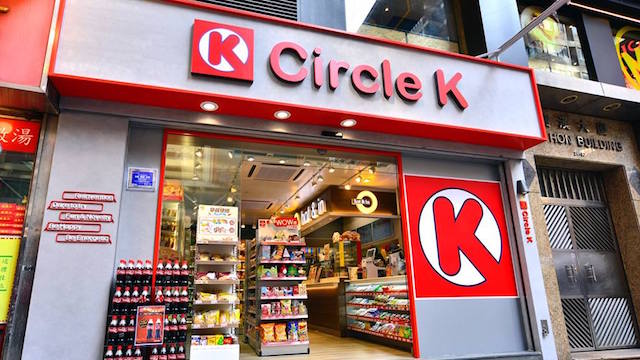
    Fung Group has sold its Guangzhou Circle K-store network to Chinese retailer Suning for an undisclosed sum.

    Facing intense competition in the mainland convenience-store market, the network of 61 outlets has failed to make a profit since the brand’s launch there in 2002. The Guangzhou Circle K business recorded a net loss of HK$21.4 million in 2014 before then parent Convenience Retail Asia sold the business to its 41-per-cent shareholder Fung Group the following year for $48 million (US$6.12 million). Since then, Fung Group has closed at least 12 stores there.

    Suning Xiaodian, Suning.com’s convenience-store business, will take over the Guangzhou Circle K stores, broadening its footprint in the city.

    Convenience Retail Asia continues to own and operate more than 300 Circle K stores in Hong Kong, Macau, and Zhuhai.

    The president of Suning’s consumer-goods business, Bian Nong, said Circle K’s experience in merchandising, supply chain and store management will supplement Suning’s existing operations in Guangzhou.

    Suning has been rapidly expanding its brick-and-mortar store business in recent months, acquiring supermarkets from Carrefour and the Chinese business of Spanish grocer Distribuidora Internacional de Alimentacion.

  • Smashburger weighs down Jollibee results

    Smashburger weighs down Jollibee results

    Jollibee’s Smashburger and Red Ribbon business units significantly dragged down the restaurant operator’s first-half profits.

    Jollibee Foods Corporation says the company’s net income attributable to shareholders was P1.1 billion (US$21.1 million) in the second quarter – half that of the preceding three months. First-half profit was down 34 percent on the same period last year.

    The company blamed the decline on losses relating to the Smashburger chain and lower sales by its Red Ribbon bakery business.

    “On Smashburger, we introduced major changes that created short-term disruption in sales and profit but will drive sustainable sales growth and strengthen the brand health,” said Jollibee CFO Ysmael Baysa.

    While Smashburger, a relatively recent acquisition for the company, was not yet performing, Baysa says Jollibee has considerable experience restructuring businesses it buys into more profitable operations, namely Yonghe King and Hong Zhuang Yuan in China, and the Highlands Coffee business in Vietnam.

    The poor performance of Red Ribbon during the quarter was attributed to a shortage of supplies relating to the transfer of the company’s commissary kitchen to new premises south of Metro Manila.

    Last month, Jollibee announced the purchase of California cafe chain The Coffee Bean & Tea Leaf for US$350 million. It expects that business to contribute to Jollibee’s bottom line within 12 to 18 months.

    Global sales by Jollibee rose 13.8 percent in the first half, to P113.8 billion (US$2.11 billion) . Most of that growth came from its international operations, which grew by 24.9 percent, far faster than the 13.8 percent of its domestic business.

    Between January and June, the company opened 170 stores, 111 of those in its home market.

  • Habit Burger Opening in Cambodia

    Habit Burger Opening in Cambodia

    The Habit Restaurants is set to expand its Habit Burger Grill franchise throughout Cambodia in partnership with Amory F&B in a 25-store development agreement.

    The first outlet is expected to open in Phnom Penh in spring next year.

    “We quickly developed a passion for The Habit Burger business when we saw how much focus there is on great customer service,” said Kampuchea Tela Company CEO Okhna Chhun On. “This is something we strongly believe in, and we are excited to bring the Habit experience and great food to the people of Cambodia.”

    “The Habit’s excellent brand, best-in-class systems, and experience will help us to go the extra distance to become national leaders in the burger segment,” said Amory F&B Company CEO Chhun Sophearoth. “As an organization, we keep developing and investing in our people, much like The Habit Burger, and this will be an important part of our success.”

    “We are thrilled to continue to expand our brand internationally and to see Amory F&B Company bring our unique style of hand-crafted-to-order food, chargrilled burgers and high-quality customer service to the people of Cambodia,” said The Habit Restaurants president and CEO Russ Bendel.

    “Amory is comprised of a team of experienced, committed operators who share our dedication to customer satisfaction and enthusiasm for The Habit brand.”

  • Hoshino Coffee chains eye Asian expansion

    Hoshino Coffee chains eye Asian expansion

    Upmarket Japanese coffee businesses are expanding into other Asian markets in an attempt to win over customers from global leaders such as Starbucks.

    Specialty brands Sarutahiko Coffee and Hoshino Coffee are among those reaching into major Asian markets, with Sarutahiko entering Thailand and Hong Kong, and Hoshino moving to Taiwan.

    “Consumers who frequent Starbucks are ready to embrace Japanese-style service,” said president and CEO of Sarutahiko Tomoyuki Otsuka.

    Mitsubishi has taken a 15 percent holding of Sarutahiko for around 500 million yen ($4.6 million), with a view to expanding the brands’ network from the current 16 stores (including three in Taiwan) to 30 outlets.

    Hoshino Coffee already trades well in Singapore, Malaysia, and Indonesia and will launch in Taiwan in the next fiscal year.