Blog

  • Qatar Innovation Week is celebrating the value of Future Technologies This November.

    Qatar Innovation Week is celebrating the value of Future Technologies This November.

    Reiterating what the CEO of Google, Sundar Pichai had said, “AI may become more profound than fire or electricity.” Artificial Intelligence, in all probabilities, is becoming an economic arsenal for most countries around the world today, including the West Asian country that sits on the Arabian Peninsula. Yes, we’re talking about Qatar, the country with one of the richest economies in the world. With a blueprint already in place to set the nation in the right direction, Qatar has joined the AI revolution among other leading countries of the world.

    For what can serve as a powerful technological enabler for the Qatar National Vision 2030, the country could harness all the innovation narratives around future cutting edge technologies from top experts to make this vision a reality.

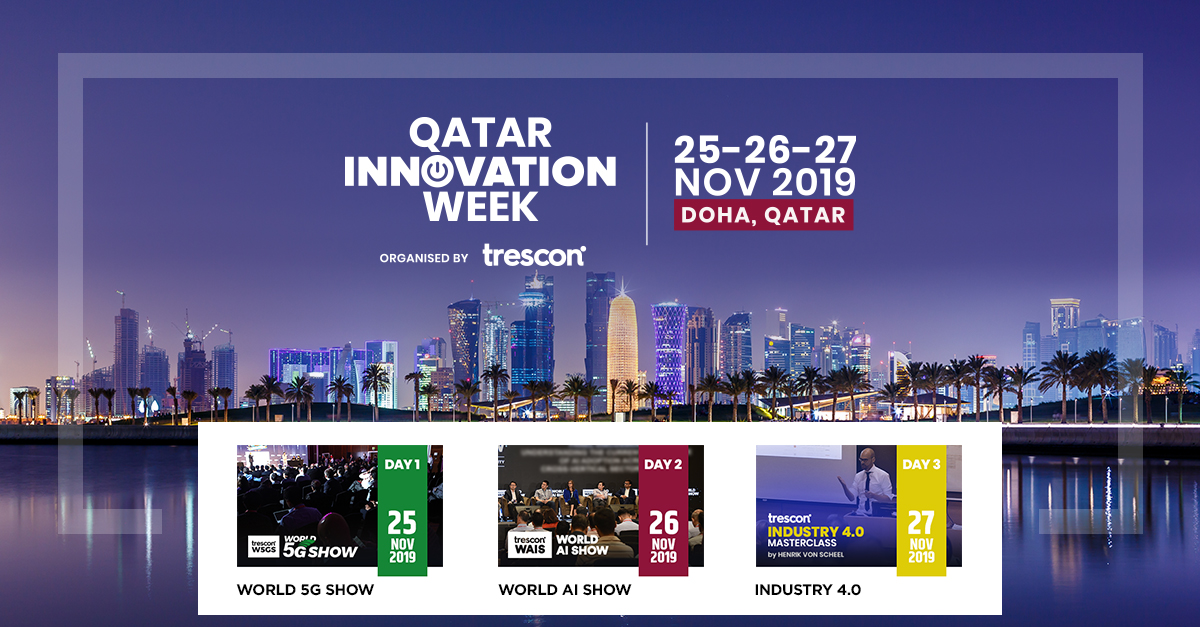
    Talk about a festival that celebrates the value of future technologies. That is exactly what Qatar Innovation Week aims to deliver this November 2019. In what is going to be one of the biggest, grandest and most flamboyant technology festivals for avid tech enthusiasts, and for the best interest of Qatar – governments, enterprises, sports, investors, researchers, academicians, policymakers, startups and solution providers, the 3-day comprehensive innovation festival will centre on three separate technology events in a row that include World 5G Show (Inaugural edition under the theme of ‘5G Rollout to Propel Qatar’s Goal’), World AI Show (As part of the global series, WAIS is to be introduced in Qatar this year for the first time) and the Industry 4.0 Masterclass by Henrik von Scheel, all in all to usher Qatar towards producing world-class AI applications in areas of national interest.

    Given that the 2022 FIFA World Cup is just around the corner and the first World Cup ever to be held in the Arab world, Qatar-the host country is reinvigorating its AI-enabled infrastructure to accommodate the massive influx of visitors for the upcoming world cup. By synergizing artificial intelligence-based applications and the power of 5G technology in areas such as transportation, logistics and live video streaming –  immersive Virtual Reality (VR) and Augmented Reality (AR) of the game to enhance viewing experience, Qatar Innovation Week is designed with the specific goal of stimulating strategies among stakeholders to catalyse the creation of AI-based solutions.

    When asked about the inspiration behind such an ambitious project, the CEO and founder of Trescon, Mohammed Saleem said, “Qatar is the first nation to launch the 5G network commercially, and with the 2022 FIFA World Cup that is set to take place, it is the perfect time to create a platform that can drive opportunities for new businesses based on AI and 5G technology. Qatar Innovation Week will support the Qatar National Vision 2030 by bringing together governments, AI solutions providers, renowned international experts and foreign investors to strengthen the nation’s infrastructure capacity.”

    In a bid to attract the world’s brightest minds from across the globe, Qatar’s first edition of World AI Show will also play host to the regional finals of the Startup World Cup, organised in association with Pegasus Tech Ventures, a Silicon Valley-based multinational VC firm. There will be 40+ regional events across North America, South America, Europe, Africa, Asia, and Australia, leading up to the Grand Finale in the US Silicon Valley, where the global champion will be awarded a US$ 1 million investment prize.
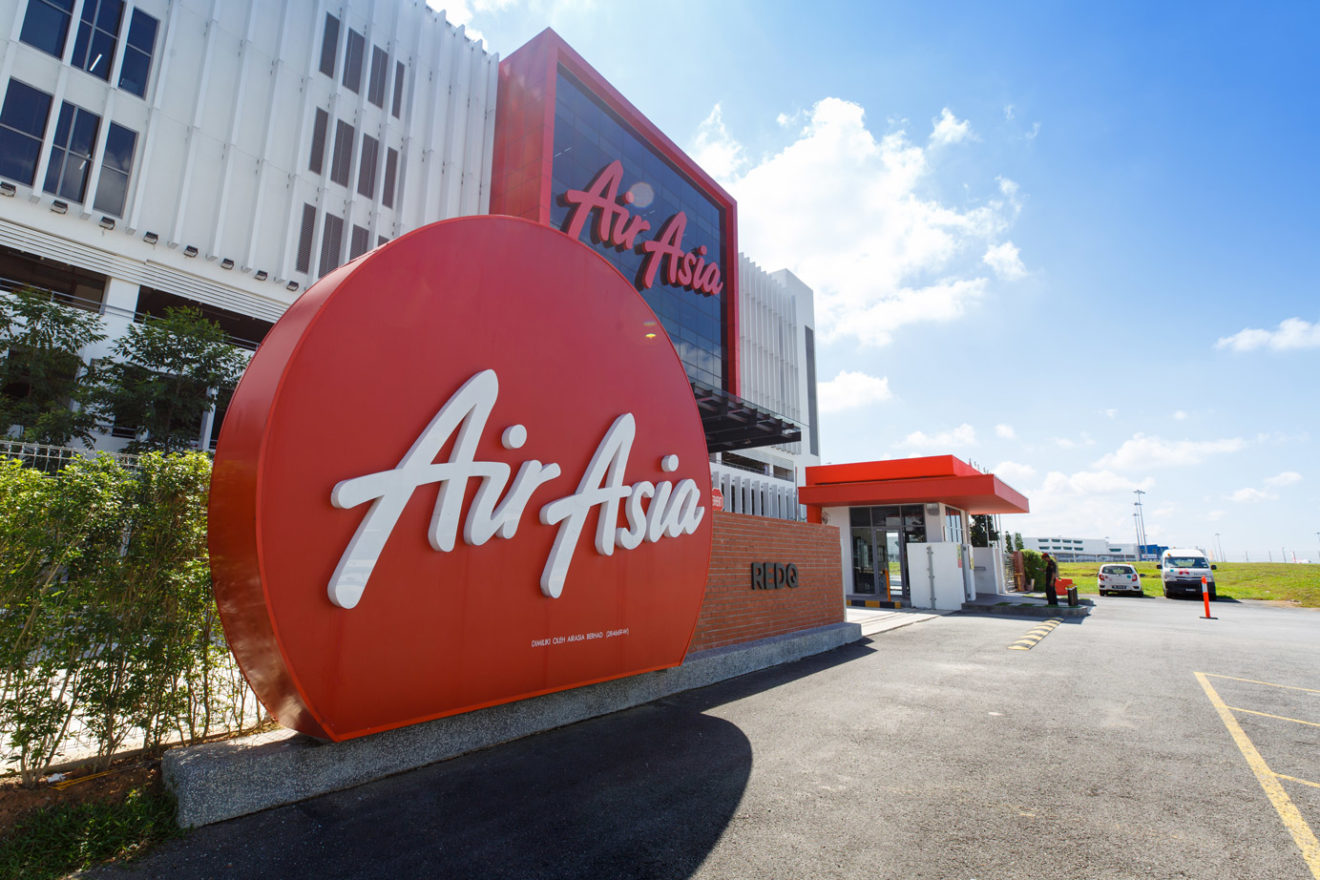

  • AirAsia Wants Tools to Engage Customers Moving to Messaging Apps

    AirAsia Wants Tools to Engage Customers Moving to Messaging Apps

    Consumers now want to talk to businesses and find resolutions the way they talk to their friends and family, and this is pushing a big transition towards messaging channels, according to Adam Geneave, chief customer happiness officer for the low-cost Asian airline.

    The carrier added support for Tencent’s WeChat in China earlier this year and was seeing significant adoption for the platform, Geneave said in an interview. In fact, the messaging tool since had grown to become AirAsia’s biggest communication channel in the Chinese market, he noted.

    The airline’s engagement with customers through such channels played a key role in its business strategy as they enabled consumer queries to be addressed quickly, he said, and urged technology and other solutions providers to integrate messaging tools into their products.

    According to Geneave, AirAsia currently provides WeChat support via a plugin developed by Salesforce.com, which suite of products had been rolled out over the past year as part of the airline’s overhaul of its customer service infrastructure. These included Salesforce Sales Cloud, Marketing Cloud with Social Studio, Service Cloud, and Community Cloud.

    The deployment enabled AirAsia service agents across eight markets to access a unified view of customer cases from all communication channels, encompassing online, email, live chat, phone, and airport communications.

    With the transition into messaging evolving so rapidly, though, it has been difficult for the airliner and its technology partners to keep pace, Geneave said. For instance, support for Facebook’s WhatsApp still was lacking, he noted.

    “We have been very vocal in wanting such support, including for Line and KakaoTalk,” he said, noting that WhatsApp processed 65 billion messages a day worldwide and there were 1 billion active WeChat users. “The way people are interacting is changing.” He attributed AirAsia’s plans to close all its call centers this year in part as a response to this trend.

    The airline is estimated to fly 100 million passengers this year and 20 million of its service cases each year are facilitated on Salesforce platforms, which currently support more than 22,000 AirAsia employees in nine languages.

    The data that runs through these systems also allow the airline to deliver personalized experiences and facilitate better decision-making.

    Geneave explained that the different datasets were collated onto a single platform and managed at AirAsia’s command center. This was manned by duty managers who would track Salesforce dashboards to identify patterns that could affect its business and monitor tweets as well as other social media messages coming through on Social Studio.

    This provided valuable learnings about its customers and, with these insights, enabled his team to work on projects and improve processes and systems to further enhance customers’ engagement with AirAsia, he said.

    The ability to study the data and identify emerging trends also meant his team could be aware of service outages even before the IT team was alerted of it, he noted, adding that his team also tracked other relevant developments such as airports and other airlines that might and might not compete directly with AirAsia.

    The airline in January also introduced its artificial intelligence-powered (AI) chatbot, named AVA, which could handle eight languages including Bahasa Indonesia, Vietnamese, and Simplified Chinese.

    Geneave said the chatbot had been performing well and handled a significant chunk of queries coming through on its live chat. AVA also was deployed on the airline’s Facebook Messenger platform.

    Apart from operating on a strong knowledge base, he said the chatbot also continued to learn from conversations it had with customers. His team also trained it on a daily basis, he added.

    AVA’s deployment was critical to enable the airline to be more agile in the way it managed its customers, he said, noting that the chatbot could take on a significant volume and allow queries to be handled more quickly.

    Geneave also pointed to the emergence of AI and machine learning technologies as a crucial development as these would further enable AirAsia agents to react more quickly and identify trends that otherwise would have taken hours to analyse.

    Beyond customer services, too, it would give airlines the ability to save fuel – for example, by improving the way it scheduled crew rosters and managed its resources, he said.

  • South Koreans start boycotting Japanese retail goods

    South Koreans start boycotting Japanese retail goods

    As a South Korean consumer boycott of Japanese goods gains momentum, consumers are starting to share information on new and upcoming Japanese retailers coming to the country.

    The intention, reports Korea Bizwire, is to include the retail brands on the boycott list and hurt sales as soon as the stores open. Among them, Japanese brands GU and Muji are being mentioned online as possible targets.

    GU is Uniqlo’s sister brand, owned by Fast Retailing. It plans to open its second and third stores in Yongin, Gyeonggi Province and Seoul’s Times Square Mall by early next month.

    Netizens are posting articles that emphasize the relationship between Uniqlo and GU as well as FRL Korea, which currently operates the Uniqlo Korea business.

    Discord between the two countries dates back to Japan’s colonial occupation of the Korean Peninsula before and during the Second World War and controversy over forced labor and sexual slavery. It expanded into a diplomatic crisis last week when Japan threatened to throttle exports of materials essential to South Korean industries.

    Last weekend, thousands of protestors marched in Seoul, accusing Japan of an “economic invasion”. The boycott campaign against Japanese retailers has stemmed from there.

    South Korea’s Lotte Shopping and Japan’s Fast Retailing invested US$19.7 million to establish FRL Korea, owning 49 percent and 51 per cent of the company’s shares, respectively.

    That business partnership is being subject to public criticism for taking the lead in importing Japanese goods into South Korea after GU set up its flagship store at Jamsil’s Lotte World Mall and its second franchise at Lotte Mall in Yongin.

    Muji, one of the best-known Japanese brands on the boycott list, is planning to renovate its store in Times Square Mall later this month.

    The news is being shared on social media, and many netizens are already calling for a boycott of the new store.

    GU and Muji have no current plans to suspend expansion or shut down stores already in operation. However, experts who spoke to Korea Bizwire agree that the new stores won’t be able to attract customers through the ‘grand opening’ effect unless the boycott movement subsides.

  • Car Market Slowdown Threatens Jobs At Bosch

    Car Market Slowdown Threatens Jobs At Bosch

    Global car market is expected to slow this year and the continuing aftershocks of a sector-wide diesel cheating scandal will hit jobs at the world’s biggest component supplier Bosch, its boss said Tuesday.

    “Of course, we have to react to falling demand,” chief executive Volkmar Denner told Munich-based daily Sueddeutsche Zeitung when asked about possible job cuts.

    Expected by analysts to contract this year, the global car market is developing “much more weakly than we still thought a year ago,” Denner said.

    “This isn’t just a short-term dip that will quickly be recovered,” he added.

    Reduced demand for diesel-fuelled vehicles “is hitting us particularly hard,” said Denner.

    Customers in Germany and abroad have turned away from the fuel since Volkswagen’s 2015 admission to cheating regulatory emissions tests on 11 million vehicles worldwide, while investigations have spread to other carmakers in Germany’s flagship industry.

    Many potential buyers have been deterred by already-implemented or proposed bans for some diesels from city centres, as municipalities try to reduce levels of harmful nitrogen oxides (NOx) in the air.

    Meanwhile manufacturers themselves are ramping up alternatives, like hybrid and battery-electric vehicles, to meet tough new EU carbon dioxide (CO2) emissions targets set to bite from next year.

    Bosch said in January lower diesel demand would force it to slash 600 jobs among its 15,000 employees in the field.

    Over the full year, the company expects revenue at the same level as 2018, when sales reached 77.9 billion euros, rather than the slight increase it had previously predicted.

    And “we won’t be able to maintain the high level of profitability we had last year,” Denner said.

    The company said early this year it expected a profit margin of below six percent, rather than last year’s seven percent.

    Competitor Continental, listed on the blue-chip DAX index, in July lowered its full-year financial objectives, blaming the weak global market.

  • Tens Of Thousands Losing Jobs As India’s Auto Crisis

    Tens Of Thousands Losing Jobs As India’s Auto Crisis

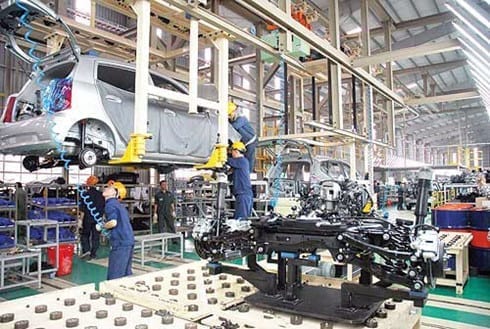
    Slumping sales of cars and motorcycles are triggering massive job cuts in India’s auto sector, with many companies forced to shut down factories for days and axe shifts, multiple sources said. The cull has been so extensive that one senior industry source told Reuters that initial estimates suggest that automakers, parts manufacturers and dealers have laid off about 350,000 workers since April.

    Within this previously unreported figure, car and motorcycle makers have laid off 15,000 and component manufacturers 100,000, with the remaining job losses at dealers, many of which have closed, the industry source said.

    Reuters was able to identify at least five companies that have recently cut or plan to cut hundreds of jobs, mainly from their temporary labor force.

    The downturn – regarded by industry executives as the worst suffered by the Indian auto industry – is posing a big challenge for Prime Minister Narendra Modi’s government as it begins its second term at a time when India’s jobless numbers are climbing.

    To revive the sector, auto executives plan to demand tax cuts and easier access to financing for both dealers and consumers at a meeting with officials from India’s finance ministry scheduled for Wednesday, the senior industry source said. The industry’s plight was highlighted by the Automotive Component Manufactures Association of India (ACMA), with the trade body’s director-general, Vinnie Mehta, saying the sector was experiencing a “recessionary phase”.

    The malaise has been spreading across much of the industry, both in terms of vehicle type and components as well as geographically in India’s manufacturing hubs.

    For example, Japanese motorcycle maker Yamaha Motor and auto components makers including France’s Valeo and Subros have laid off about 1,700 temporary workers in India after a slump in sales, sources told Reuters.

    Subros, which is part-owned by Japan’s Denso Corp and Suzuki Motor Corp, has laid off 800 workers. Indian parts maker Vee Gee Kaushiko has cut 500 people while Yamaha and Valeo last month reduced their workforces by 200 each, said several sources aware of the cuts.

    Meanwhile, automotive supplier Wheels India could cut its temporary workforce by as much as 800 and has started realigning its shifts, two of the sources said. The layoffs come as carmakers including Honda Motor Co, Tata Motors and Mahindra & Mahindra have implemented brief suspensions to production in recent weeks in the face of slow demand, separate sources said.

    The auto sector, which contributes more than 7% of India’s GDP, is facing one of its worst downturns.

    Passenger vehicle sales have dropped for nine straight months through July, with some automakers suffering year-on-year declines of more than 30 percent in recent months.

    Manpower is the only variable factor for companies and more workers will face the axe, said ACMA’s Mehta.

    Yamaha, Subros, Vee Gee Kaushiko and Wheels India did not respond to requests for comment.

    Valeo India said it is realigning for changing conditions and has trimmed its temporary workforce.

    The fallout from the auto slump could be huge. The sector employs more than 35 million people, directly and indirectly, accounting for nearly half of India’s manufacturing output.

    India’s jobless rate rose to 7.51% in July 2019 from 5.66% a year earlier, according to private data group CMIE. The CMIE data is more up-to-date than government figures and regarded in financial markets as more credible.

    At least 7% of temporary workers employed by 15 automakers in India have lost their jobs in recent months, said Vishnu Mathur, director-general at the Society of Indian Automobile Manufacturers (SIAM).

    “It is a conservative estimate based on our initial analysis,” he said.

    Maruti Suzuki, India’s biggest carmaker, cut its temporary workforce by 6% over the past six months.

    There is little sign of a revival.

    Tata Motors has had week-long shutdowns at four of its plants in the past two weeks, while Mahindra has said it had 5-13 days without production at various plants between April and June.

    A statement from Tata Motors said it has aligned production with demand and adjusted the shifts and temporary workers.

    Honda has stopped production of some car models at its plant in the northwestern state of Rajasthan since July 16 and is halting manufacturing entirely at its second plant in Greater Noida on the outskirts of Delhi for 15 days from July 26, two sources said.

    The company’s Indian business said that production management will be critical throughout the year and it is seeking to avoid stock build-up.

  • Tesla Reintroduces Unlimited Free Supercharging On Model S And Model X

    Tesla Reintroduces Unlimited Free Supercharging On Model S And Model X

    Superchargers have had an important role in making Teslas popular simply because they help customers deal with the issue of range anxiety which is the biggest problem an electric car owner has to face. A Tesla Model S powered by a 85 kWh battery pack takes 20 minutes for a 50 percent charge, 40 minutes for 80 percent charge and 75 minutes for 100 percent charge using a supercharger. The duration for a similar spec Model X stands at par as well. There was a time when Tesla used to give this service for free to Model S customers when the company was quite new in the business, however, customers were soon charged to avail the service.

    The California based carmaker in a tweet has confirmed reintroducing the unlimited free charging scheme on the Model S and Model X. At present, Tesla owners in the US need to pay $ 0.28 (28 cents) per kWh or $ 0.13 (13 cents) to $ 0.26 (26 cents) per minute for using a supercharger. This means a full charge on a Tesla Model S through a supercharger would cost $ 19.5 which is over ₹ 1300 in Indian currency. The free charging service is available to Model S and Model X owners only while Model 3 owners will need to pay for the service.

    The offer will help Tesla to sustain sales of both models alongside the Model 3 which is much more affordable. The Model S and Model X were also given an under the skin (mechanical) upgrade to boost its drive range and both models are now compatible with Tesla’s V2 superchargers which have a power range of 200 kWh.

  • Pomelo Purpose range now features recycled PET fabrics

    Pomelo Purpose range now features recycled PET fabrics

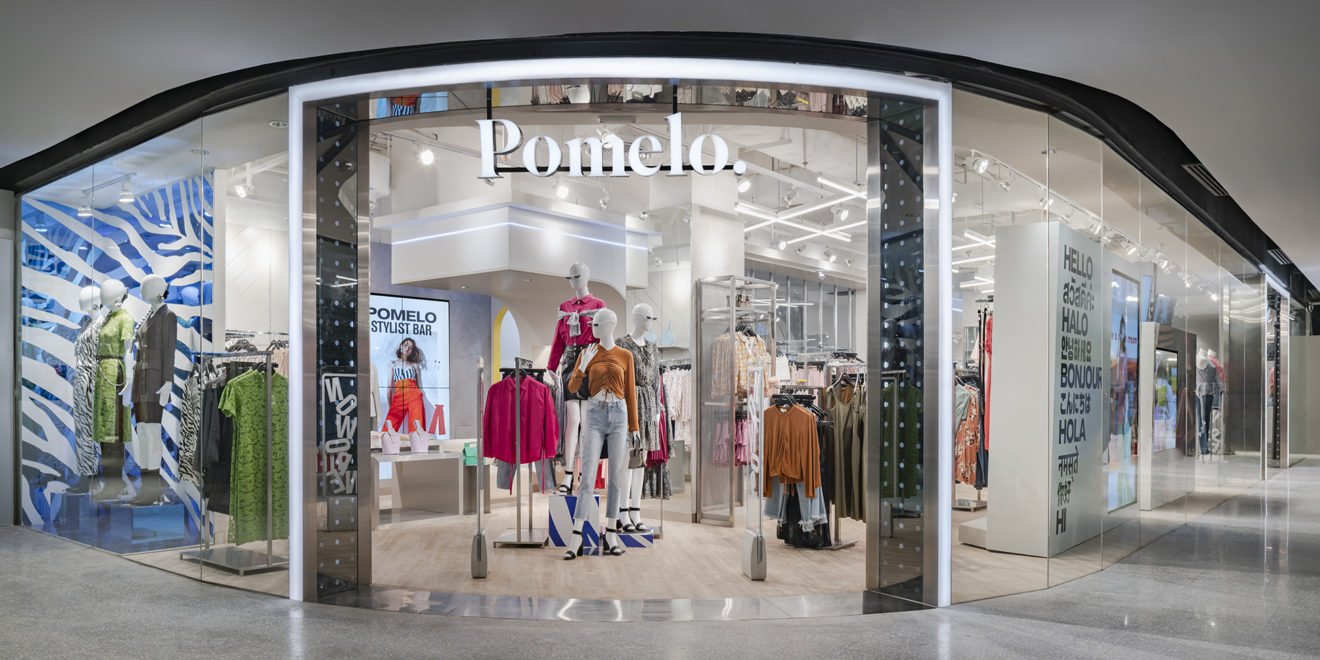
    Omnichannel fashion brand Pomelo has released a third collection for its permanent sustainable line Purpose.

    Seeking to lead the sustainability charge in the Southeast Asian fashion industry, the brand will be introducing Recycled PET (RPET) material to its Pomelo Purpose production processes for the first time.

    As with the brand’s previous Pomelo Purpose collection, which placed a focus on clothing made exclusively from organic fabrics, dyes and cruelty-free materials, this collection intentionally incorporates eco-friendly practices from within the supply chain. Aiming to bring awareness to the importance of building sustainable fashion futures, the latest addition to the Purpose line is produced using RPET material and organically-sourced fabrics including linen, cotton, and natural dye.

    RPET material, which is obtained from EcoMax, one of the few Asian suppliers of environmentally-friendly renewable fabric, is made from 100-per-cent post-consumer PET bottles that would otherwise enter landfills or pollute natural habitats. By incorporating RPET material into the production of Purpose pieces, Pomelo hopes to create higher-quality, lasting pieces that ease production pressures on finite natural resources.

    Pomelo is encouraging its customers to drop off used clothing at its select partnered locations and offline stores, including the newly-opened Singapore flagship store at 313@Somerset. Pomelo Purpose shoppers can also schedule free pick-ups by scanning a QR code stitched into their Purpose products. All collected clothing is then redistributed to underprivileged partner communities, organisations and charities in Thailand, Singapore and Indonesia.

    “Purpose by Pomelo has led the way for the fashion industry in the region to adopt environmentally-friendly practices through sustainable materials and processes,” said Pomelo CEO David Jou. “With this launch, we are hoping to make an even bigger impact by providing all Pomelo shoppers an opportunity to start their recycling journey using our free pick up service. We’re very excited to continue bringing innovation to this very important topic.”

    From now until September 5, all Pomelo online customers in Singapore, Thailand and Indonesia will be able to book a free pick-up for up to 3kg of used clothing via the Pomelo App. After the promotional period, free pick-ups will be limited to first-time Pomelo Purpose shoppers only.

  • Singapore Airlines, Silkair and Vistara to expand codesharing to international flights

    Singapore Airlines, Silkair and Vistara to expand codesharing to international flights

    Passengers traveling with Singapore Airlines (SIA), Silkair and Vistara will have more international flight options as the Singaporean flag carrier and its regional arm, Silkair, signed an agreement with Indian carrier Vistara to expand codesharing to international routes.

    Under the expansion of an existing codeshare agreement which covers Indian domestic flights, SIA and Silkair will add nine new codeshare destinations within India on Vistara-operated flights. The following destinations will be added: Chandigarh, Dibrugarh, Jammu, Leh, Pune, Raipur, Ranchi, Siliguri and Srinagar. SIA will add its ‘SQ’ designator code to Vistara’s new international flights.

    Vistara will add its ’UK’ designator code to SIA and Silkair-operated flights between Singapore and eight destinations in India, including Ahmedabad, Bengaluru, Chennai, Cochin, Hyderabad, Kolkata, Mumbai and New Delhi. As part of the arrangement, Vistara will codeshare on services to more than 40 destinations from Singapore to Australia, New Zealand, Cambodia, Indonesia, Malaysia, Vietnam, Thailand, Taiwan, Japan and the US.

    “These codeshares will be implemented in phases and are subject to regulatory approvals,” reads a press release from the airline.

    “We’re happy to deepen this strategic partnership which means a more seamless flying experience for travelers from India to destinations across Asia, Oceania and the United States,” said Vistara’s chief strategy officer Vinod Kannan.

    The codeshare flights will progressively be made available through SIA and Vistara booking channels once necessary regulatory approvals are obtained, according to the airline.

    Vistara is a joint venture between Singapore Airlines (SIA) and Indian company Tata Sons. It will begin its first international flights by offering daily flights to Singapore from Delhi and Mumbai operated by a Boeing 737-800NG aircraft, starting 6 and 7 August respectively.

    Earlier this year, Vistara signed a codeshare agreement with United Airlines. This agreement expanded the US carrier’s network to over 20 destinations throughout India. Over the past two years, Vistara has also signed codeshare deals with Japan Airlines, British Airways, as well as Singapore Airlines and Silk Air.

  • HSBC Singapore Expands Foreign Mortgage Solutions

    HSBC Singapore Expands Foreign Mortgage Solutions

    Responding to growing interest among clients, HSBC Singapore now offers mortgages for investment residential properties in five cities across Australia.

    HSBC Singapore is hoping to tap on the growing number of Singaporeans who plan on buying investment properties abroad with the launch of its first overseas mortgage solution, the bank announced on Thursday.

    HSBC International Mortgage will be offered in Singapore in either Singapore or Australian dollars for investment residential properties in and around Sydney, Melbourne, Perth, Brisbane and Adelaide, with other overseas destinations to be added over time.

    Successful applicants will get HSBC Premier status, which gives them access to a relationship manager in Singapore and Australia to facilitate the process, the bank said.

    We went with Australia as the first market for this solution given the close affinity that Singaporeans have for the country on the back of their business, education, holiday or familial ties. as a result of business, education, holiday and familial ties, Ranojoy Dutta, head of Retail Products, HSBC Bank (Singapore), said.

    The bank also highlighted its own «Beyond the Bricks» report from 2018, which indicated that one-third of mass affluent Singaporeans currently have overseas property investments, and 70 percent plan to buy investment properties abroad.

    Singapore’s real estate investment in Australia grew 141 percent in 2018 to $3.5 billion, despite skyrocketing property prices, according to Real Capital Analytics data. According to Knight Frank’s 2018 Wealth Report, Australia was the second-most popular destination for prime property purchases among wealthy Singaporeans.

  • Mama’s Choice launched in Indonesia

    Mama’s Choice launched in Indonesia

    Halal-certified parenting-product firm Mama’s Choice has launched in Indonesia.

    The business has been founded by a group of young mothers along with parenting influencer Rahne Putri, teaming up with former Lazada Indonesia Co-CEO Duri Granziol. It was launched in response to the group’s noting a lack of safe, Halal and natural personal care products at a price point that is affordable to the average young family.

    “We launched Mama’s Choice because we feel there is a lack of options for expecting and new mothers for safe and affordable care products,” said Mama’s Choice CEO Duri Granziol. “Most mums are overwhelmed with all the choices and don’t want to spend their time reading through all the chemicals that are in most household products, which is why it is our mission to source only the best, safest ingredients to ease the minds of mothers and empowering them to focus on the beauty of their growing family.”

    According to a statement released by the new firm, Mama’s Choice is “a company that puts the health of mothers and babies first and is committed to provide families access to a safe choice for their daily needs, and honest information. Every product is specially formulated from trusted raw ingredients. Each chosen ingredient has been handpicked from nature, with zero harmful chemicals. All Mama’s Choice products are Halal certified, and are tested in Singapore to be free of toxins, and safe to use during pregnancy and while breastfeeding.”

    “In every product development, we always involve experts and also pregnant and nursing women,” said Mama’s Choice head of branding Rahne Putri. “Until now, more than 13,000 mothers have been involved. We do this because we want this product to accommodate what mothers need and make them feel safe when using it.”

    The Mama’s Choice range of products is available at central department store in Grand Indonesia and via its flagship stores on JD.id, Shopee, Lazada and Tokopedia. The brand is currently working to raise awareness and educate the parenting community on maternity, pre- and post-natal care. It plans on being available in more markets across Southeast Asia, commencing with Thailand within the next 12 months.

  • Hyundai Names Its New Hatchback Grand i10 Nios

    Hyundai Names Its New Hatchback Grand i10 Nios

    Hyundai has named the new-gen Grand i10 as the Grand i10 Nios. The car is set to be launched in India on August 20, 2019. The Grand i10 Nios name is only for India though, worldwide this car will be called the i10. The Grand i10 Nios is the 3rd Generation of the legendary brand ‘i10’ and will co-exist with Grand i10. Hyundai has kick-started bookings for the car in India across its dealerships in the country and the booking amount is set at ₹ 11,000.

    The new Grand i10 Nios gets Hyundai’s Signature ‘cascading grille’ which gives it a wider and stronger appeal to the front while rear gets a low and wide proportioned bumper gives it a sportier look. The compact yet spacious interiors with upper C pad appearing to be floating on the lower C Pad and the door trim character line flowing into the C pad gives a wider and spacious interior feel.The cabin gets a dual-tone treatment with black and beige. The steering wheel too gets a bit of chrome element on it making it looks a bit more sporty. But right in the centre of it all sits the touchscreen infotainment system. It’s likely to get Apple Carplay and Android Auto. The instrument cluster will be part analogue and part digital as well, giving the Hyundai Grand i10 Nios a sporty appeal. It will also get automatic climate control. From what we can see, the car will come with ABS and dual airbags as standard.

    SS Kim, MD & CEO- Hyundai Motor India Ltd said, “Hyundai Motor India has created benchmarks in Indian automobile industry by introducing Cutting-edge technologies and Best-in-segment world-class products for past 21 years. We are glad to present the All New 3rd Generation Grand i10 Nios, that blends the intrinsic and intuitive beauty of the car with unique design sense constantly changing and fulfilling our customers’ expectations. With the new Grand i10 Nios, we have created a new paradigm ensuring to maximize our customers’ emotional values in the perfect harmony with the four elements of Hyundai Design Identity: ‘Sensuous Sportiness’, such as Proportion, Architecture, Styling and Technology.”

    The Hyundai Grand i10 Nios is likely to come with a petrol and diesel powertrain but the company has not yet confirmed the engine line up and we’ll know more closer to the launch of the car

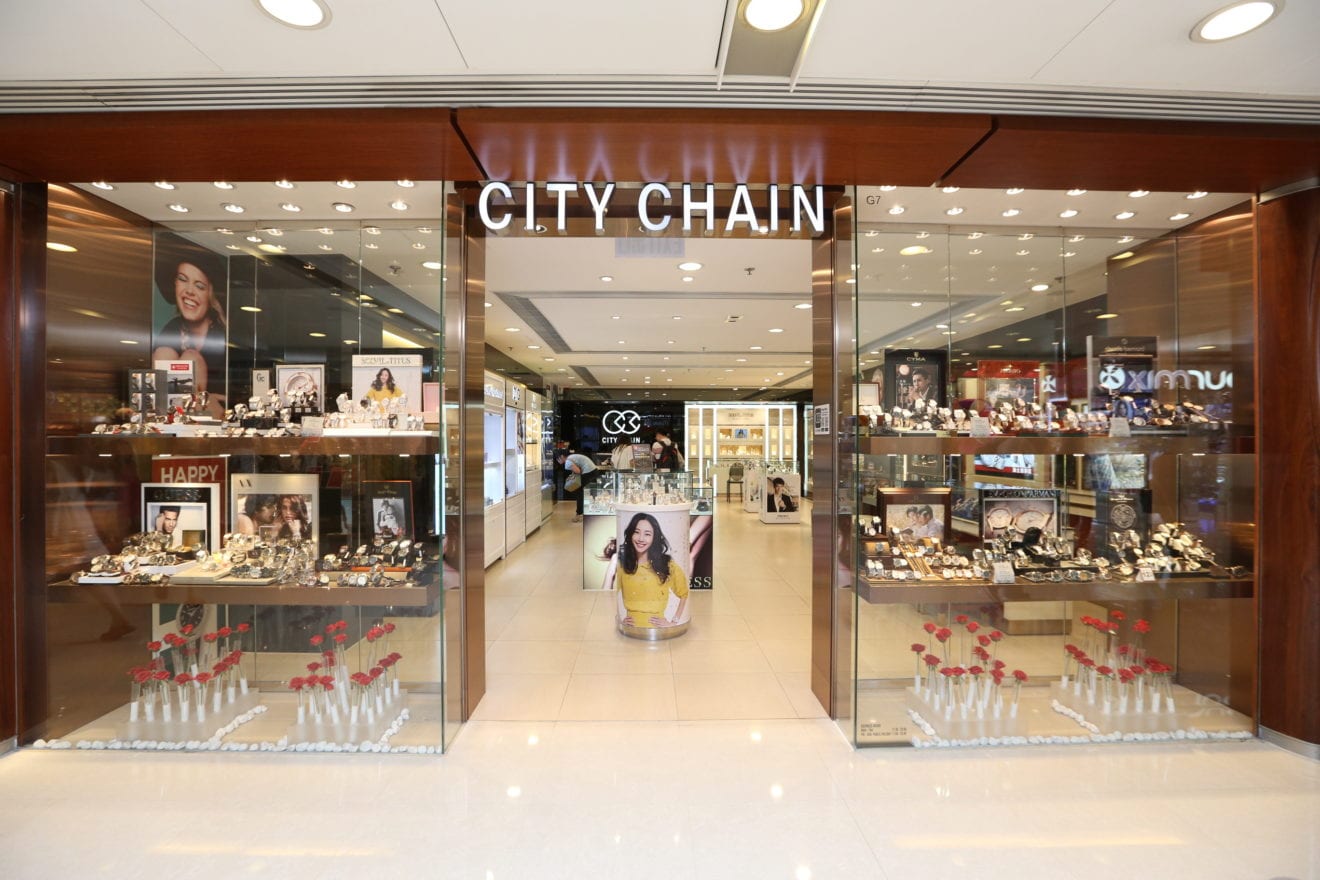
  • City Chain sales down as store network shrinks

    City Chain sales down as store network shrinks

    City Chain sales plunged 20 percent across Greater China in the three months to June.

    Hong Kong-headquartered parent Stelux International – which spun off its eyewear business last year – said the watch-retailing chain’s poor performance was due to a 14.8-per-cent contraction of its store network and “softened consumer demand”.

    Group-wide turnover fell 18.8 percent to HK$235.3 million for the June quarter.

    City Chain sales in Greater China reached $167.1 million in the quarter, down 20.1 percent, with the store network down from 135 at the end of June last year to just 102.

    Sales in Southeast Asia fell 15.3 percent to $68.2 million with the store network down 36 over a year to 208.

  • Singapore Airlines launches new mobile app

    Singapore Airlines launches new mobile app

    Singapore Airlines has launched a new mobile app for Android and iOS smartphones.

    The app, based on a ground-up rebuild and all-new underlying technical architecture, is designed to significantly enhance booking and check-in flows, and improve transaction time by up to 60%.

    In addition to significant improvements in existing functions, the new app introduces several entirely new features, including:

    • ‘Capture & Discover’ – a new search function that uses image recognition as well as speech and natural language processing to identify user intent, match it to a Singapore Airlines destination, and present relevant destination content and fair deals.

    • ‘Translation Assistant’ – a feature that uses real-time language translation by voice to help travelers communicate better when they are overseas.

    • ‘Measure Your Baggage’ – to help travelers determine if the size of their bag is within cabin baggage limitations.

    Amongst the many improvements in existing functionality, real-time information such as boarding gate details, the destination’s weather, and currency, and baggage belt information have been added to the “My Trips” function.

    The new app also sees enhancements such as a newly designed KrisFlyer account dashboard and the introduction of an ‘Inbox’ feature, which stores push notifications as well as KrisFlyer messages for easy reference.

    “Singapore Airlines has been investing heavily to enhance our digital capabilities. With new user interface designs and insourcing of developer and customer experience talent, we are working to provide faster and more customer-centric products and services to improve the customer experience,” said Senior Vice President Sales and Marketing, Mr Campbell Wilson. “The launch of our new app follows many other digital innovation initiatives, such as KrisPay, the world’s first blockchain-based airline loyalty digital wallet, and the progressive redesign of our website and its underlying architecture. Improvements to our mobile app will not stop here and we will continue to invest our efforts to add value to our customers’ experience.”

    The new app will be available for download progressively, following the beta launch that began in October 2018. For Android users, the new app is being released by countries progressively between July and September 2019, while iOS users may download the new app from the App Store in September 2019. The beta version will continue to be available for download in the meantime.

  • UOB Taps Malay Trade Associations for SME Clients

    UOB Taps Malay Trade Associations for SME Clients

    UOB seeks to expand its banking base in Asia’s small to medium-sized enterprises with the latest targeting of trade association in Malaysia.

    The bank will collaborate with three trade associations (SME Association of Sabah, Malaysia-China Chamber of Commerce (Sabah) and the Sabah-China Chambers of Commerce) in Sabah representing more than 300 SME owners.

    UOB will extend lending facilities and cross-border financial solutions to expand into new markets. In addition, the bank will also offer sharia-compliant financing solutions «at competitive rates and flexible tenures as well as extend government-guaranteed, collateral-free financing schemes administer by local authorities.

    UOB Malaysia’s team of dedicated advisers from across the region will connect SMEs in Sabah with government agencies, trade and industry associations and professional service providers to help them invest and expand across Asia,» said UOB Malaysia managing director and country head of wholesale banking Ng Wei Wei.

    According to UOB’s head of Islamic banking, Mohd Fohauzi Muridan, Islamic financial solutions could be the natural fit for businesses attempting to achieve sustainable goals or create businesses linked with related ecosystems.

    In green technology, for example, Fohauzi notes strong Islamic financing demand for renewable energy, sustainable building and township projects, waste management and transportation projects.

    Given the social and environmental focus embedded in Islamic banking, coupled with its acceptance in Malaysia, Islamic banking can play a leading role in financing SMEs that are committed to achieving sustainability goals, he said. «The ethos of Islamic banking makes it a natural ‘ethical’ financier for such projects.»

  • Samsung unveils the chip that will be installed in the Galaxy Note 10 series

    Samsung unveils the chip that will be installed in the Galaxy Note 10 series

    Just hours before Samsung is set to unveil the Galaxy Note 10 line in the U.S., the manufacturer officially introduced the chipset that will power the phones outside of the U.S. The Exynos 9825 SoC is manufactured at Samsung’s own fabrication facilities using the 7nm EUV process. Using this process, more transistors fit inside the new chip than the number employed in the 8nm Exynos 9820. This should lead to performance improvements of 20% to 30% while the Exynos 9825 consumes 30% to 50% less power. The EUV stands for extreme-ultraviolet lithography. This is a technology that uses ultraviolet beams to etch silicon in finer details allowing for more precise placement of circuitry inside the chip.
    Samsung says that the Exynos 9825, similar to the Exynos 9820 it replaces, is equipped with two Samsung custom CPUs, two Cortex-A75 CPUs for complex tasks and four Cortex-A55 CPUs for less taxing demands. The graphics process unit (GPU) on the chip is the ARM Mali-G76 MP12 (also the same as the one on the Exynos 9820). The A-75 cores and the GPU will run at faster clock speeds than the same components on the Exynos 9820; the faster clock speeds and the use of 7nm EUV helped the newer chip to run faster in tests against its predecessor. The chip will have an integrated Neural Processing Unit (NPU) to help run Artifical Intelligence features for a smartphone camera allowing for the recognition of objects to optimize photographs. It also is used to learn user patterns and help apps pre-load faster. The NPU can also support Augmented Reality capabilities on a handset.
    The Exynos 9825 also comes with Universal Flash Storage (UFS) 3.0, which has twice the bandwidth and uses less energy than UFS 2.1. It also can run at higher temperatures, which is important considering all of the demands that are thrown at a smartphone these days. UFS 3.0 has a sequential read speed of almost 2280 MB/sec compared to roughly 800MB/sec with UFS 2.1. As for the modem on the Exynos 9825, it is an integrated 4G LTE-Advanced Pro modem with 8x Carrier Aggregation. The latter combines carriers to form larger data channels in order to increase capacity on a network. It is one of the tools used by wireless providers to increase data speeds. And when paired with Samsung’s Exynos 5100 5G modem (which supports both mmW and sub-6GHz 5G airwaves), the Exynos 9825 will support the next generation in wireless connectivity.
    The Exynos 9825 supports LPDDR4X memory and 22MP cameras in back and front. It also will work with a dual-camera setup (16MP + 16MP). Video can be shot in 8k at 30fps and 4K UHD video shoots at 150fps. Using a technology known as physically unclonable function (PUF), the chip isolates and secures users’ personal data.
    Historically, Samsung usually employs the latest Snapdragon Mobile Platform to run the latest Galaxy Note model in the U.S. with the Exynos chipset used just about everywhere else. However, a recent rumor called for all Galaxy Note 10 units (as opposed to the Galaxy Note 10+) in the states to also feature the Exynos 9825 SoC except for Verizon branded models. That rumor turned out not to be true, and all Galaxy Note 10 variants in the U.S. should be equipped with the Snapdragon 855 (+) Mobile Platform. The latter is manufactured by TSMC using its 7nm process.
    The last time that a Samsung Galaxy Note phone was sold in the U.S. with an Exynos chip was back in 2015 with the Galaxy Note 5. This was the year that the Snapdragon 810 had problems with overheating and the Galaxy S6 and the Galaxy Note 5 were both powered with the Exynos 7420 SoC in the states.