Blog

  • First Glimpse of the new Apple Taiwan store

    First Glimpse of the new Apple Taiwan store

    Apple Taiwan will open its second retail location – the new Xinyi A13 store – in Taipei tomorrow.

    In a nod to the brand’s Chicago flagship, the new store’s glass exterior and distinctive roof house a two-storey retail area with two marble composite staircases leading downward to an underground level.

    Taiwanese singer-songwriter Eve Ai will perform at the opening, kicking off a six-week “Stage for Creativity” initiative that will see local artists and creators featured at the venue.

    Apple’s first official store in Taiwan opened in the Taipei 101 mall, although the majority of its products are sold via its online channel and through local authorised resellers. Around 4 million people have visited Apple Taipei 101 since its launch.

  • China sales Profit Down for Lululemon Athletica

    China sales Profit Down for Lululemon Athletica

    Lululemon Athletica has reported a massive 70 per cent growth in first-quarter China sales, part contributing to a stellar performance globally.

    Both sales and profit exceeded the company’s forecast and analysts expectations. Sales of its relatively new men’s range grew 26 per cent proved another highlight.

    “Our guests responded well to both our men’s and women’s assortments,” CEO Calvin McDonald told analysts on a conference call after the results were released.

    “They engage with us across channels as our store and digital businesses were both strong and our brand continues to resonate well in our core North American market, as well as in Europe and Asia Pacfiic.”

    Earnings surged 28.5 per cent in the quarter to May 5, reaching to US$75.2 million, on sales up 20.4 per cent to $782.3 million. However those figures were boosted a little by a shift in the calendar. Taking that into effect, and on a same-store basis, sales rose 14 per cent.

    Sales in Asia rose 40 per cent, led by China’s 70 per cent gain. The Canadain company opened its first stores in three new Chinese cities during the quarter: Shaanxi, Xi’an and Chongqing. It plans to add as many as 12 more to its network this year.

    Lululemon also relaunched its Chinese website to complement its presence on Tmall and WeChat and websites in Japan and Korea were also launched.

  • Sulwhasoo launched on Lazada

    Sulwhasoo launched on Lazada

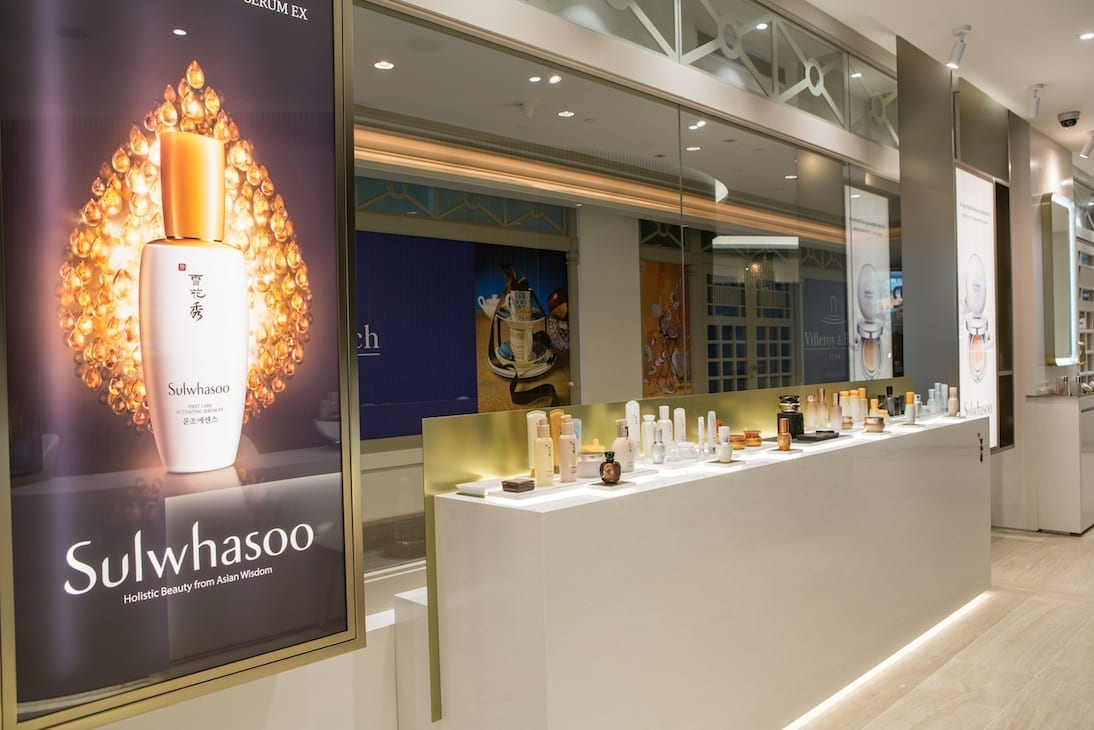
    Amorepacific’s luxury skincare brand Sulwhasoo has launched on Lazada.

    The partnership marks the brand’s expansion into the Southeast Asia e-commerce market.

    With this Lazmall store, shoppers in Indonesia, Malaysia, Singapore, Thailand and Vietnam can access Sulwhasoo’s range of beauty products.

    “The influence of South Korean beauty trends and culture in this region is undeniable, and we are pleased to bring one of Korea’s top skincare brands Sulwhasoo online with Lazada – reinforcing our leadership in the beauty category and in serving our female customers,” said Lazada Group president Jing Yin.

    The South Korean beauty-and-cosmetics conglomerate is already leveraging Lazada’s platform for distribution of four key brands including Laneige, Mamonde, Innisfree and Etude House. These brand stores are housed on LazMall, a place for shoppers to get directaccess to international and local brands, top-rated online brands and authorised brand distributors.

    “Lazada is the region’s e-commerce leader, particularly in the beauty space, and the best possible partner to take our business online in Southeast Asia,” said Mina Kim, senior VP of Sulwhasoo at Amorepacific.

    “We hope to bring Sulwhasoo’s value of Asian beauty to more customers and help them experience our unique beauty solutions in a new way.”

  • Alibaba Files Hong Kong Listing

    Alibaba Files Hong Kong Listing

    Chinese multinational conglomerate holding company Alibaba Group has filed confidentially for an initial public offering in Hong Kong, Bloomberg reported on Thursday, citing people familiar with the matter.

    Previously reported that the group was mulling a secondary listing to diversify funding sources amid escalating U.S.-China tensions over trade and tech, which has accelerated the drive for Chinese technology companies towards more self-reliance on domestic supply chains, technology, and funding.

    The firm had chosen China International Capital (CICC) and Credit Suisse to lead its Hong Kong share sale.

    Alibaba’s 2014 U.S. initial public offering was the world’s largest-ever stock market flotation, raising a record $25 billion. Hong Kong lost out on the listing because its rules back then did not allow for Alibaba’s corporate structure, which gives founding partners control over board appointments, as opposed to shareholders.

    However, Hong Kong Exchanges and Clearing changed its rules last year to allow «innovative companies» from China with listings elsewhere to do a secondary listing in Hong Kong, even if their voting rights structures did not comply with local standards.

  • Cheaper Sensors Could Speed More Self-Driving Cars To Market By 2022

    Cheaper Sensors Could Speed More Self-Driving Cars To Market By 2022

    The first heavily automated mass-market vehicles for consumers could go on sale as soon as 2022, if one or more vehicle manufacturers adopt a new sub-$500 lidar sensing package being developed by Silicon Valley startup Luminar.The tremendous cost of lidar – prices for individual sensors currently range from about $6,000 to more than $100,000 – is one of the big stumbling blocks to the wide rollout of self-driving vehicles, whether in commercial delivery and robo-taxi fleets such as those being developed by Ford Motor Co and General Motors Co, or in passenger vehicles aimed at consumers.

    Luminar has developed a low-cost lidar platform that bundles hardware and software and is being tested by several automakers, according to Austin Russell, Luminar chief executive officer and founder.

    The company’s new Iris system will be offered in two versions, one that will enable hands-free “freeway autonomy” and a less expensive version that will enable some automated functions, such as automatic emergency steering and braking. The first is designed to sell for under $1,000 at higher production volumes, while the second, which is intended to plug into manufacturers’ advanced driver assistance systems (ADAS), is expected to sell for under $500, Russell told Reuters.

    Manufacturers and suppliers are increasingly skeptical about the speed of adoption of fully automated self-driving systems, because of both their high cost and complexity. In the meantime, they have begun focusing on deploying more ADAS features, which share components, but cost much less and can generate much-needed revenue to help defray the cost of developing full self-driving systems.

    Lidar-driven ADAS “can be more easily monetized by the manufacturers (and) more easily implemented today” than fully automated systems, said Steve Lambright, vice president of marketing for lidar startup AEye, which is developing components for both types of systems.

    In the meantime, a long-predicted shakeout in the lidar sector has yet to materialize, judging from a recent flurry of investments and acquisitions, even though the industry has yet to embrace a single lidar technology.

    Israeli startup Innoviz, backed by suppliers Aptiv Plc and Magna International Inc , just closed a Series C round of funding and has raised a total of $252 million – more than any of its rivals – with new money from SoftBank Ventures Asia and several large Chinese investors.

    A new player, North Carolina-based Sense Photonics, this week closed a Series A round and has raised more than $43 million, with backing from corporate investors Samsung Ventures and Shell Ventures.

    Aurora, a Silicon Valley self-driving startup backed by e-commerce giant Amazon.com Inc and automaker Hyundai Motor Co , recently acquired Montana-based lidar startup Blackmore.
  • Rimowa unveils an Alex Israel pop-up at Lane Crawford

    Rimowa unveils an Alex Israel pop-up at Lane Crawford

    Premium luggage retailer Rimowa will showcase its newest special edition collection – created in tandem with LA-based contemporary artist Alex Israel – at a temporary pop-up store at Lane Crawford in Hong Kong.

    The Rimowa x Alex Israel pop up will be open until tomorrow, marking Rimowa’s first-ever collection of colour-graded suitcases produced with an anodisation process that characterises the signature look of the collection.

    Inspired by the designs, the pop-up features vibrant colours, a photo-op mirror room, sticker walls, and a colourful handmade ice pop bar designed to exude a “quintessentially Los Angeles vibe”.

    For the Rimowa x Alex Israel collaboration, Israel has reimagined the suitcases in colours based on the LA sunset, drawing directly from the palettes of his “Sky Backdrop” and “Untitled (Flat)” paintings, while using new printing techniques to transfer his signature hues onto aluminum.

    Based on the brand’s Rimowa Original Cabin Plus, the collection features two versions of the signature Rimowa x Alex Israel luggage in two distinct colour gradient palettes. The designs feature vibrant, colour-matching wheels and details, custom luggage lining, and a set of luggage tags featuring the artist’s multi-coloured profile. It also includes a special edition luggage sticker set featuring graphic illustrations of iconic LA landmarks and Israel’s artworks.

  • Singapore Airlines and the art of airline management

    Singapore Airlines and the art of airline management

    Airlines compete to provide the best flying experience to passengers, in terms of safety, comfort, punctuality, hospitality and meals provided on-board. If you are a business or first-class traveller, you get that extra care and attention from the cabin crew. But behind those services are various training programmes, joint ventures with multiple organisations and immense planning.

    A look at what happens behind the scenes of one of Asia’s best airlines, Singapore Airlines.

    As safety of passengers hinges on the expertise of pilots, most pilots undergo recurrent/refresher training programmes at least twice a year.

    All the pilots from Singapore Airlines, who operate Airbus fleet, are trained in the Airbus Asia Training Centre (AATC) — a joint venture between Singapore Airlines (45 per cent) and Airbus (55 per cent). AATC, located in Singapore, trains about 6,000 pilots every year from 60 different airlines.

    Depending on the qualifications and experience of the pilot, the training programme at AATC spans between three days and one month. The three training technologies used in AATC include interactive training applications such as Airbus Cockpit Experience (ACE), Airbus Pilot Transition (APT) and Full Flight Simulators (FFS).

    ACE replicates the airplane’s cockpit either on a laptop or a tablet from which the pilot learns about aircraft systems and procedures, digitally. The APT is a fixed cockpit set-up that gives an idea about the position and functioning of an Airbus cockpit.

    And FFS simulates the aircraft and the environment in which it flies. It allow pilots to be trained in scenarios, such as take-off, landing, emergency landing and water landing; it may not be possible for pilots to undergo training in a few of these on a real aircraft.

    Behind Singapore Airlines’ in-flight meal, there’s enormous planning on the quantity and quality of meals, menus and meal specification for each class, raw material requirements, introduction or inventory of kitchen equipment, timely delivery and managing food waste.

    To meet the meal requirements for flights departing from Singapore, the Airlines has outsourced these catering services to SATS — the chief ground-handling and in-flight catering service provider at Singapore Changi Airport. SATS, in Singapore, prepares 120,000 meals per day.

    SATS operates with a team of food technologists, dietitians and culinary chefs who work together to develop various menus. Singapore Airlines, on its part,develops meals for the premium cabin classes, in association with celebrity chefs, including Alfred Portale from New York and Sanjeev Kapoor from India.

    Then, the ‘Think Lab’at SATS conducts various tests essential to the product’s development process. Further, the new items are tested in a simulated cabin, that recreates in-flight conditions when it is cruising at 30,000 ft. This is to assess the actual in-flight experience of the food, as our taste buds work differently at different altitudes. To prepare and process the meal, SATS uses new technologies such as omelette vending machine and a rice line that is capable of cooking varieties of rice — Jasmine rice, Japanese rice, Indian basmati rice and flavoured chicken rice.

    Recently, SATS also invested in a pasteurisation and sterilisation technology that can supposedly extend the shelf life of freshly cooked food from two to 90 days.

    Apart from food technologies, SATS is also making use of other scientific advancements, robots within its premises to carry food from one destination to another.

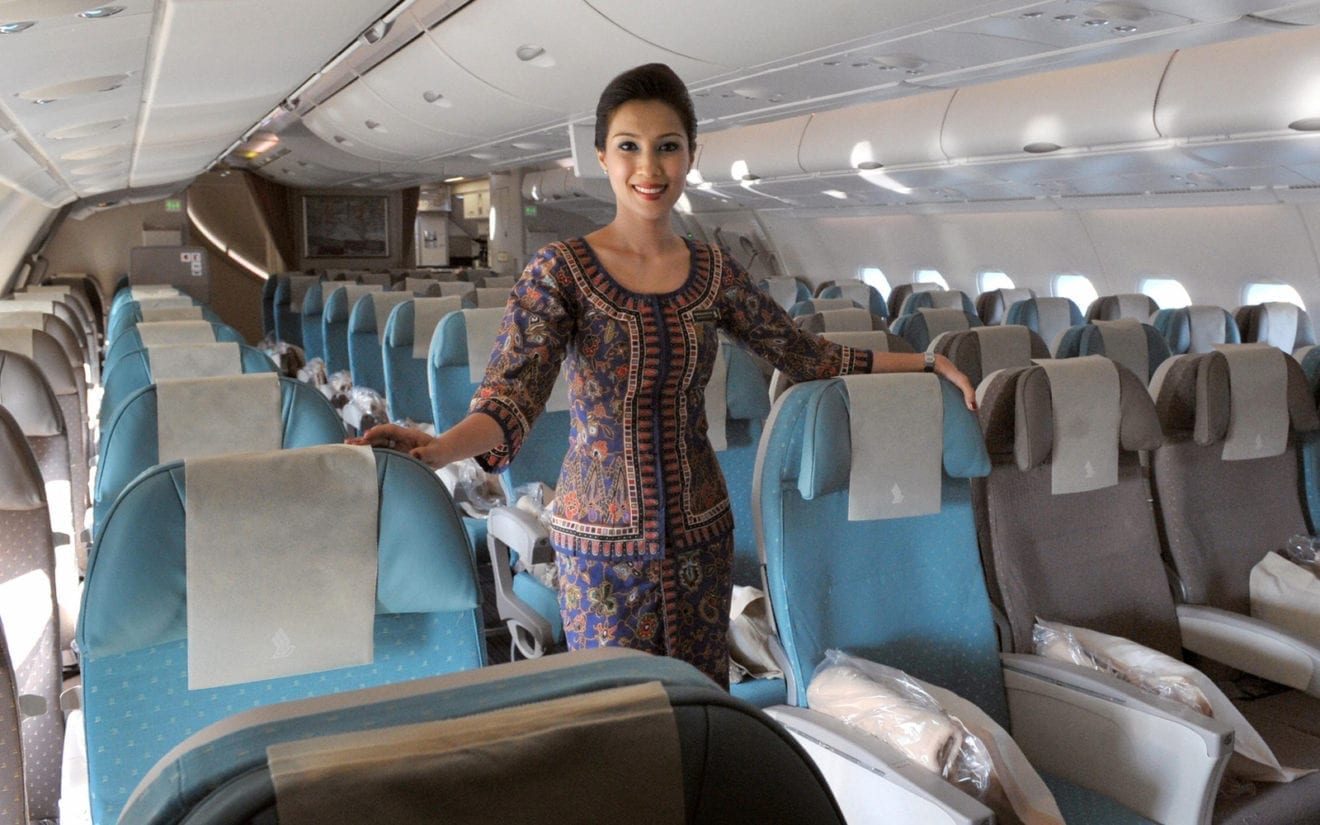
    At Singapore Airlines Training Centre, one can see well-groomed girls and boys training for cabin services, security and emergency evacuation drills at various aircrafts’ cabin mock-ups for first, business, premium economy and economy classes.

    The cabin crew are given training in activities that are construed as trivial, such as arranging news-papers, selecting appropriate glasses for each variant of beverage and serving meals of various cuisines — Indian, Chinese and Japanese. For instance, placing chop-sticks appropriately in Chinese and Japanese meal trays.

    One facility that catches everybody’s attention during a visit to this training centre is the wide swimming pool forsimulating water conditions, should the aircraft have an emergency landing on water. Training for newly-inducted Singapore Airlines’ cabin crew takes over 15 weeks.


  • After updating its app for Premium members, Spotify goes down

    After updating its app for Premium members, Spotify goes down

    Is this the day the music died? It is if you’re a Spotify member as the music streamer has been down since 8:22 am EDT this morning. 80% of the complaints they received have something to do with the inability of users to stream music, 14% say that they can’t use the Spotify website, and 5% can’t use Spotify on a Sonos smart speaker. The number of complaints rose from one to a peak of 3,448. The outage map shows serious issues in the upper northeast of the country, most of California and parts of Texas and Florida.

    In addition, Spotify announced that the outage has nothing to do with today’s announcement of a redesigned feature for Premium users. The Your Library page now allows you to tap or swipe to see the new tabs offered for Music and Podcasts. Tapping the Music tab takes you right to the Playlists section where all your playlists will be, including a new one called Liked Songs. The latter includes tunes that you have tapped the “Like” button for. The Artists section lists the artists that you follow, and you can add a new one to the list by going to the artist’s page and tapping on the “follow” button. When it comes to any albums found in that section, tapping the heart icon will save it to the Album section so you can quickly find it to hear again at a future time. You can add all of the songs on a particular album to your Liked Songs playlist by clicking on the three-dot menu and selecting “Like all songs.”
    Selecting the Podcast heading will reveal the Episodes section from where you can discover new podcasts to listen to or finish listening to ones that you’ve started. Move further down the screen and you’ll find new episodes of the podcasts that you follow. The Downloads section includes podcast episodes that you’ve, well, downloaded. These podcasts can be played while offline. Lastly, the Shows section allows you to manage the podcasts you follow and check out older episodes.
    The redesign has already been available to those using the ad-supported free version of the service. Premium subscribers will start seeing the change in the Spotify app starting today.
  • HSBC Bolsters Asia Technology M&A Team

    HSBC Bolsters Asia Technology M&A Team

    HSBC Holdings has hired Jeremy Choy to head its Asia Technology Mergers & Acquisitions (M&A) team, a Hong-Kong based role that will also see him work with technology companies in areas such as initial public offerings and financing, Bloomberg reported, citing unnamed sources close to the matter.

    Choy, who is expected to start in his new role as early as next week, joins HSBC from boutique investment bank China Renaissance, where he worked for 4 years, most recently as managing director and head of M&A. He will report to Rajeev Sahney, the bank’s head of Asia-Pacific advisory and corporate, Bloomberg said.

    According to his LinkedIn profile, Choy also worked for J.P. Morgan’s North Asia M&A team for 4 years, was an M&A advisor at PacBridge Capital Partners for 2 years, and worked for Goldman Sachs for 5 years.

    Bloomberg reported that the volume of technology, telecommunications and media deals in Asia-Pacific is down 47 percent from the year before.

    However, it noted several large deals on the horizon, including the sale of a major stake in gaming company Nexon Co. and a potential share sale in Hong Kong by Chinese internet giant Alibaba Group.

  • Gojek to Be Integrated Within DBS’ PayLah

    Gojek to Be Integrated Within DBS’ PayLah

    Users of DBS Bank’s PayLah! app over the next few months will find Gojek integrated within its app, both companies said on Thursday. In addition, Gojek customers can now pay with PayLah.

    As part of its partnership with the Indonesian ride-hailing firm, DBS Bank’s payment feature has been made available in the Gojek app for both iOS and Android users in Singapore, both companies announced on Thursday.

    Through integrating DBS PayLah! in the Gojek app, our riders will have greater flexibility to choose their preferred payment methods, which allows for a more seamless travel and payment experience with every ride, said the general manager of Gojek Singapore, Lien Choong Luen, in a media statement.

    Gojek customers will be able to add DBS PayLah! as a preferred payment method for their rides after a one-time authorization and set-up. According to Gojek, about 35 percent of its daily ride-hailing transactions are paid for in cash.

    This presents an opportunity for DBS and Gojek to encourage users to adopt digital payments, the companies noted.

    As Indonesia is a key growth market for DBS, DBS and Gojek are now exploring collaboration opportunities in Indonesia, including cross-marketing initiatives. Ride-hailing company Gojek is headquartered in Indonesia, where DBS has more than 460,000 digibank customers.

    Following the success of DBS and Gojek’s partnership in Singapore, where Gojek recently celebrated their 10 million-trip milestone, we have also entered the next phase of our partnership in Indonesia, said Shee Tse Koon, DBS country head for Singapore.

  • AirAsia Philippines delivers world-class flying at low fares

    AirAsia Philippines delivers world-class flying at low fares

    Challenging the common impression that customers get what they pay for in patronizing low-cost carriers (LCC), AirAsia Philippines redefines the flying experience with an uncompromising commitment to world-class safety standards and passion in delivering top-notch service without the hefty price tag.

    AirAsia Philippines is part of the AirAsia Group, which includes AirAsia Malaysia, Thailand, Indonesia, India and Japan. AirAsia Philippines operates a fleet of 23 aircraft out of four hubs servicing seven domestic destinations and 18 international destinations, in line with the group’s vision to be the “wings” that enable people to reach their dream destinations.

    “Having established ourselves as an LCC when we introduced all-in fares, we now want to be known for having the best service,” says Captain Dexter Comendador, AirAsia Philippines CEO.

    AirAsia Philippines commenced operations locally in 2012 with two new planes. With the acquisition of local airline Zest Airways the following year, AirAsia Philippines’ fleet became 13. Backed by its parent company, which boasts a total fleet of 252 aircraft and more than 140 destinations in 25 markets, AirAsia Philippines is set to raise the benchmark in the aviation industry, particularly the LCC segment.

    The company constantly pursues initiatives to provide customers a hassle-free experience. For example, AirAsia Philippines relinquished the use of jet bridges and instead uses steps for boarding and disembarking passengers. By doing this, the airline has been able to keep turnaround time to 25 minutes – one of the quickest in Asia. Foregoing the use of expensive jet bridges also allows AirAsia Philippines to pass on cost savings to customers, resulting in more economical fares.

    Tapping technology to offer a seamless customer experience, AirAsia has overhauled its website and mobile app and even launched a chatbot named AVA (AirAsia Virtual Allstar). Powered by artificial intelligence, the chatbot is well-versed in English, Thai, Malay, Indonesian, Vietnamese, Korean and Chinese, and responds to queries instantly. As part of the AirAsia network, AirAsia Philippines has allowed customers to use AVA to manage their flight needs since March this year.

    AirAsia Philippines also takes a proactive role in creating hubs in the Philippines, connecting them to the whole AirAsia network. The airline now has hubs in Manila, Cebu and Kalibo. Outside Manila, AirAsia Philippines is launching new flights, and will soon fly directly to Macau, Kunming, Chengdu, Hangzhou and Taipei from its Kalibo hub.

    As it seeks to relocate its headquarters to Clark, Pampanga, AirAsia Philippines hopes to develop the former airbase as its next hub. It also aims to establish hubs in popular tourist destinations such as Bohol and Palawan.

    “Our vision is to be the No 1 LCC in the Philippines. We also want to be the employer of choice for aviation industry professionals,” Comendador says.

  • Zara owner Inditex’s omnichannel strategy helps boost sales

    Zara owner Inditex’s omnichannel strategy helps boost sales

    Clothing retailer Inditex has posted record first-quarter sales and a rise in profits helped by the retailer’s push of stitching together its online and physical businesses.

    The fashion retailer’s online business, which accounts for 12 per cent of its net sales, and expansion plans have contributed to its robust first quarter sales of €5.927 billion ($10.18 billion), up 5 per cent from last year’s €5.654 billion ($9.56 billion).

    Net profit amounted to €734 million ($1.26 billion), up more than 10 per cent in the first quarter of 2018. The company’s net cash position increased by 9 per cent to €6.66 billion ($11.44 billion).

    The retailer, which owns the brands Zara and Pull & Bear, said its in-store and online sales showed a 9.5 per cent increase in local currencies between May 1 and June 7 – up from the 6.5 per cent in the previous corresponding period.

    “The figures demonstrate the solidarity of the company’s model, whose profitability and cash flow generation continues to grow owing to the group’s commitment to customer-driven quality fashion,” said Pablo Isla, Inditex’s chairman and outgoing CEO.

    Isla underscored the strong momentum in the digital transformation of the integrated store and online sales platform and sustainability as key pillars of the company’s strategy.

    Last month, the retailer has named chief operating officer Carlos Crespo as its new chief executive to spearhead a bigger push into e-commerce.

    Crespo will continue in his existing position until his appointment as CEO becomes effective in July, when he will begin taking some of the responsibilities currently held by executive chairman and current CEO Pablo Isla, the company announced.

    The appointment of Crespo, who oversaw the integration of Inditex’s online and bricks-and-mortar stores, puts an emphasis on the retail giant’s digital efforts amid changing consumer habits.

    Last year, Isla announced all products from all Inditex’s brands will be made available online by 2020, including markets where it does not have any stores.

    Other than Zara and Pull & Bear, the world’s largest clothing retailer also sells the brands, Massimo Dutti, Bershka, Stradivarius, Oysho and Uterque across its network of almost 7,500 physical shops. It also operates online in 49 markets.

    Isla also said all of the group’s brands will be adopting an integrated stock management system by 2020 in all the countries where there is a physical store presence.

  • Tmall and VF Corporation Deepen Partnership in China

    Tmall and VF Corporation Deepen Partnership in China

    Tmall, China’s largest B2C platform under Alibaba Group, has formed a strategic partnership with VF Corporation (“VF”) to expand the global leader’s offerings of branded lifestyle apparel, footwear and accessories in China.

    Under the agreement, Tmall Innovation Center (“TMIC”), the dedicated retail innovation arm of Tmall, will provide VF data-driven consumer analytics from the 654 million annual active consumers across Alibaba’s marketplaces, enabling it to tailor products for Chinese consumers. VF is the parent company of apparel brands Vans, The North Face and Timberland and is the first TMIC high-level partner in the apparel category.

    “With Tmall’s unparalleled customer insights, strong technical support and in-depth market knowledge, we are eager to work with the world’s leading companies to help them bring their best products into the China market in the most-effective and efficient way. Through our partnership with VF, we are committed to helping VF create products that can precisely match the appetite of the Chinese consumer,” said Liu Bo, general manager of Alibaba’s Marketing Platform Business.

    The partnership will focus on identifying new consumption trends, pre-launch testing, consumer profiling, and post-launch tracking to optimize product design, range and assortment to uncover unmet needs of Chinese consumers.

  • Visa Transforming Mass Transit Experience Worldwide with Visa Contactless Payments Now Live in Singapore

    Visa Transforming Mass Transit Experience Worldwide with Visa Contactless Payments Now Live in Singapore

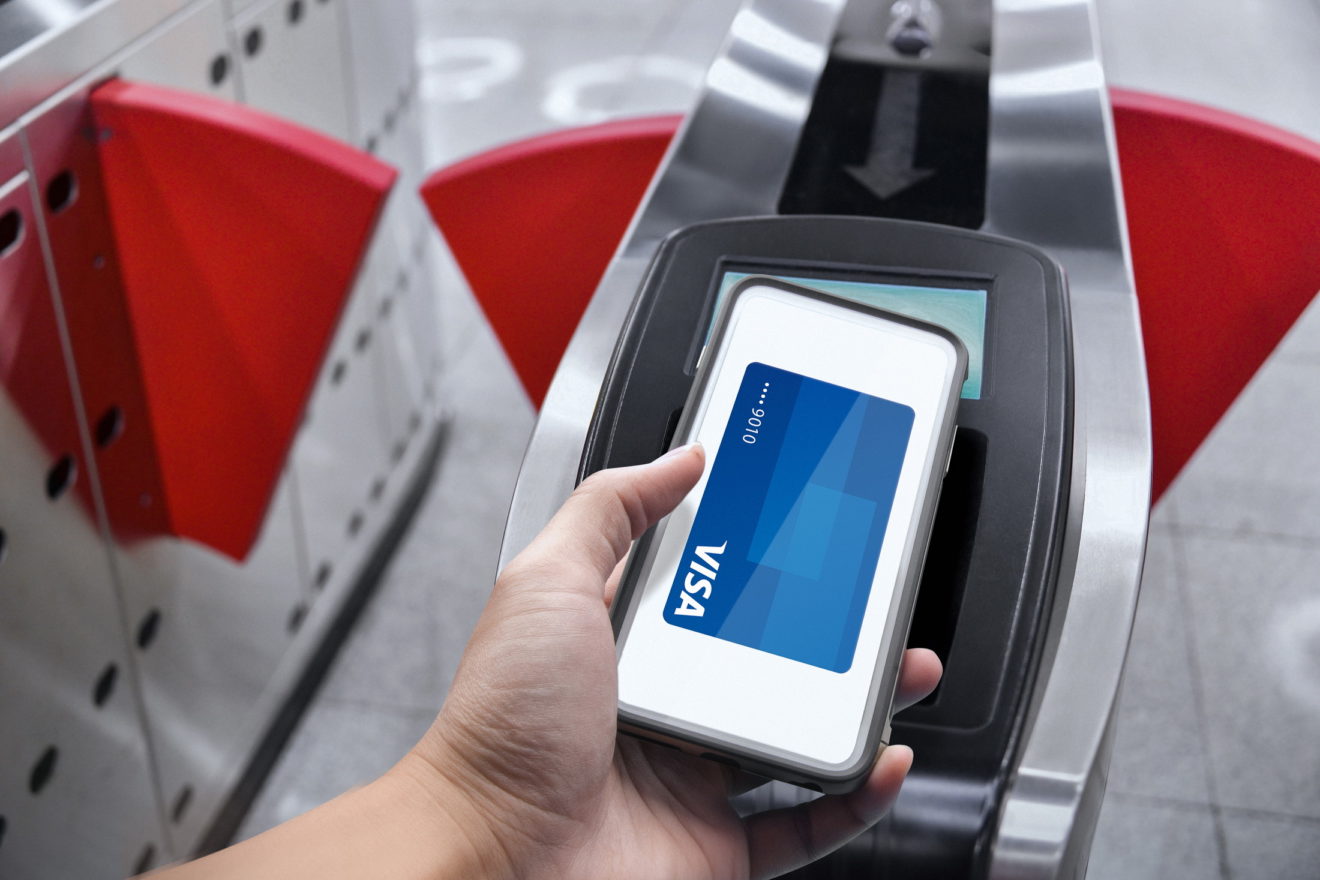
    The project with LTA will be one of Visa’s largest implementation for contactless acceptance for transit globally at 30,000 acceptance points.  All banks that issue contactless enabled Visa cards will be part of this transit initiative. Consumers will also be able to make mobile contactless transactions through compatible devices including Apple Pay, Fitbit Pay, Google PayTM and Samsung Pay.  Singtel Dash mobile wallet users can also tap and pay for bus and train rides with their Dash Visa Virtual Account.

    Paying for public transportation using Visa contactless is not only convenient, but enhances the travel experience for commuters by eliminating the need to carry multiple cards or the hassle of having to top up stored value travel cards.

    More than one-third (35 percent) of respondents in a recent Visa Singapore transit study say it is inconvenient to top-up their pre-paid stored value cards for local travel. In addition, close to 70 percent of respondents say it is a hassle to wait in long queues to purchase fares or top up their travel cards. The same study also highlighted that 75 per cent of Singaporeans are open to using mobile or digital payments as their sole method of payment for public transport.

    Kunal Chatterjee, Visa Country Manager for Singapore and Brunei said: “We are excited to bring contactless transit payments to our cardholders in Singapore as part of LTA’s SimplyGo initiative. Our partnership with LTA to implement contactless acceptance is one of the largest contactless initiatives for transit that Visa is implementing globally and we are proud that this expansive project has come to fruition. By opening up contactless acceptance for transit, we are removing friction from the travel experience, eliminating the need for Singaporeans and tourists to wait in line to top up their stored value travel cards. Visa will continue to work closely with our partners to streamline the payment experience at all touchpoints across Singapore to make it seamless and convenient.”

    With the expansion of the SimplyGo programme to Visa cardholders, Singapore joins other major cities that have enabled open-loop payment cards for public transport, including London, Sydney and New York.  The launch built on Visa’s experience helping transit operators around the world find the best, most cost-effective way to address increasing pressures on their existing infrastructure while also investing in the technologies that will serve them in the future. Over the past year alone, Visa helped launch contactless transit solutions in 20 cities across 12 countries, with more than 150 projects currently underway.

    “Today, Singapore is already one of the top markets globally in terms of contactless penetration with more than 80 percent of all Visa transactions being contactless. We expect this number to grow even faster with the opening of transit acceptance,” added Kunal.

  • Decathlon to Open largest Store in Hong Kong

    Decathlon to Open largest Store in Hong Kong

    French sports company Decathlon will open its third store in Hong Kong this Saturday, 15th June, in Tseung Kwan O as it continues its efforts to make sports accessible to the many in the city.

    The new Decathlon store in Sheung Tak Plaza, with 36,000 sq. ft (3,500sqm) in retail space and access to an outdoor sports playground of equivalent size, is the biggest sports retail store in the city. An array of family-friendly activities across the weekends this month is organised for visitors to enjoy as part of the opening celebrations.

    The Tseung Kwan O store will employ more than 80 full-time Sports Advisors and Leaders, and together with the Causeway Bay and Mongkok stores, Decathlon will see its workforce in Hong Kong increase to 270, from just 8 two years ago. Inspired by the concept of an urban neighbourhood, the new store design will feature 13,000 products from over 70 sports to be touched and tested as well as spaces to create unique social community moments for customers.

    Marc Zielinski, Decathlon Hong Kong Leader, said:

    “We are delighted to be opening our third store in Hong Kong this weekend, and we are proud that the Decathlon Tseung Kwan O store will become the city’s biggest sports retail space. We hope we can inspire more Hongkongers to exercise for a happy and healthy lifestyle. Decathlon aims to make sport accessible to all and we understand sports engagement can be a heavy financial burden to some. This is why we offer high quality products at competitive prices across 70 sports so everyone can have that choice. With the outdoor playground, visitors who are curious about any sport can seek the advice of our specialist Sports Leaders and fully test our products before they buy. We look forward to contributing to a healthier Hong Kong.”

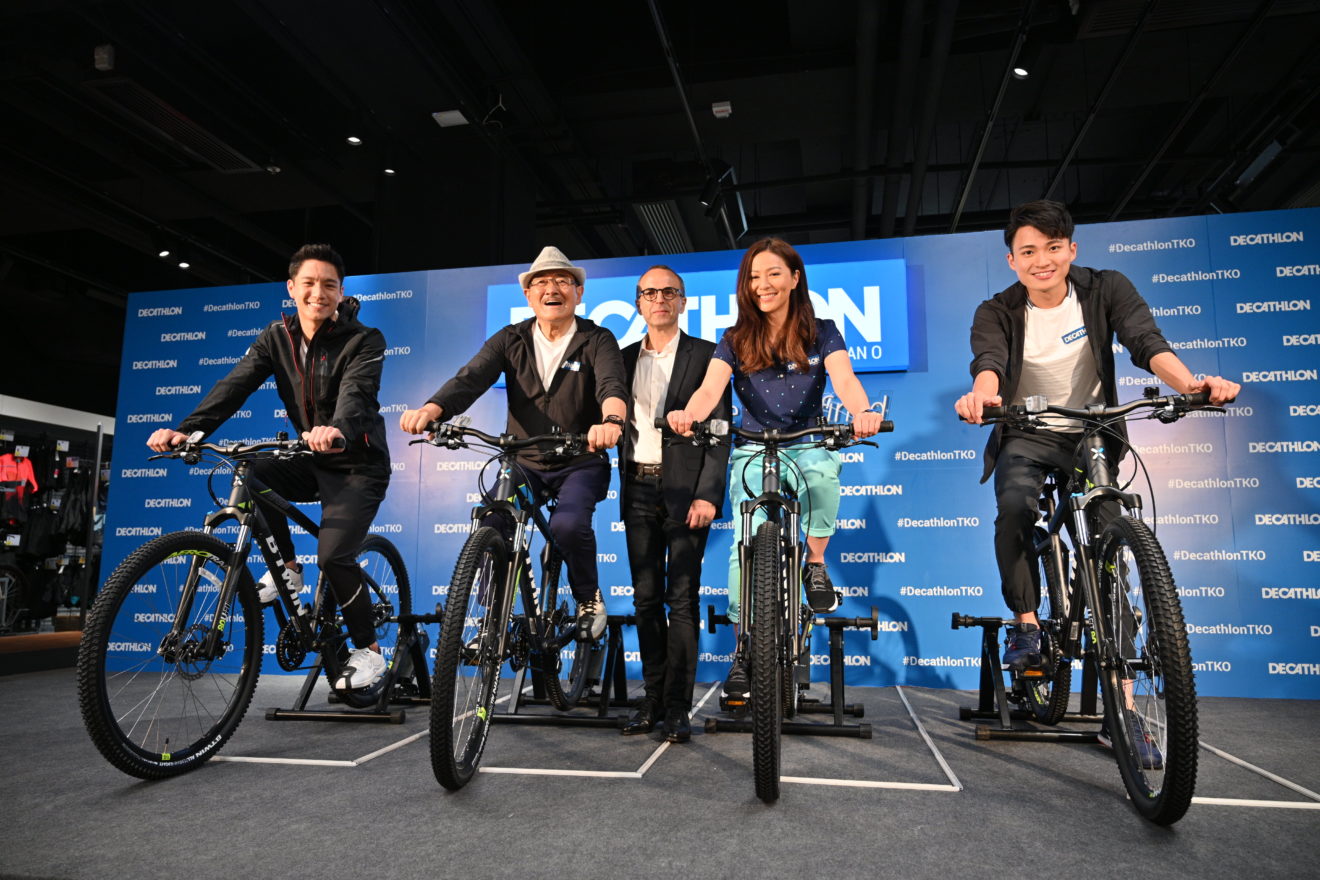
    Earlier today, a number of special guests including partners and local celebrities were treated to a preview of Decathlon’s retail experience highlighted by in-store digital innovations that allow customers to get a complete understanding of any product before the point of purchase.

    A key part of the unique customer journey is the online catalogue of Decathlon products featuring over 13,000 models that is available on the 50” LED screens placed at prominent areas of the store. This means that even if customers cannot find the exact product they desire on the shop floor, they can visit the online catalogue in-store to compare products and learn about all the possibilities conveniently and efficiently. What’s more, customers can checkout autonomously on Decathlon mobile app for a fast and seamless shopping experience. Customers in a hurry will even be able to choose to pick up their online purchase in store in one hour, through Click & Collect 1H service.

    Joyce Tang Lai-ming, one of the four cast members of popular TVB sitcom “Come Home Love: Lo and Behold” who supported a lighting ceremony riding a stationary bike to generate energy through pedal power, commented:

    “Hong Kong is a fast-paced, always on, city. It is hard to find time to even breathe, and exercise can sometimes fall off the radar for all of us. I am a regular hiker, but there are plenty more activities I am curious about that I have yet to try. With so much choice here at Decathlon and a huge space to try things out, I am eager to satisfy my curiosity and experience new sports.”

    Part of the 36,000 sq. ft outdoor sports playground will be transformed into a campsite replicating the famous hiking trails of Hong Kong, while at the same time showcasing Decathlon’s comprehensive range of Mountain products. Over the weekends of 15-16, 22-23, and 29-30 June, visitors are invited to enjoy 28 indoor and outdoor sports activities such as cycling, stand-up paddle, archery, pétanque, and yoga among others. All activities are completely free of charge and a limited edition backpack will be awarded to Decathlon members who join in.

    To further enhance the sports experience for customers, the Decathlon Tseung Kwan O store will host daily experience sharing sessions and sports classes with inspiring athletes from the community such as Edie Hu who swam around Hong Kong Island last year. These interactive sessions aim to encourage members of the public to discover new sports, and to try them with confidence, while cyclists can utilize the free bicycle workshop space to upgrade, or repair their bikes DIY style or with assistance from a Sport Leader.

    Situated by the main entrance of the store, the year-round Hong Kong Sport Heroes photography gallery acknowledges those in the community who are using sports to improve their lives and want to inspire others to follow their path. With a different theme each month, a watersports exhibition with over 30 breathtaking photos will greet visitors as the store opens at 10.30AM on Saturday 15th June.

    In addition, Appysport, whose main investor is Decathlon Hong Kong, has announced the launch of Hong Kong’s first all-in-one sports platform with a mission to make sports practice more accessible in the city. The Hong Kong based company founded in 2019 has started with offering tennis courts on demand that can be easily booked online and will soon expand to other sports and services.

    Appysport will eventually connect sports users, sports coaches, sports associations and sports facilities in order to make it easier for everyone in Hong Kong to practice sports. The ambition of the start up is to play a key role in increasing sports practice in Hong Kong by facilitating access to it.