Blog

  • 600 Vietnamese staff trained for Hanoi’s metro line Opening

    600 Vietnamese staff trained for Hanoi’s metro line Opening

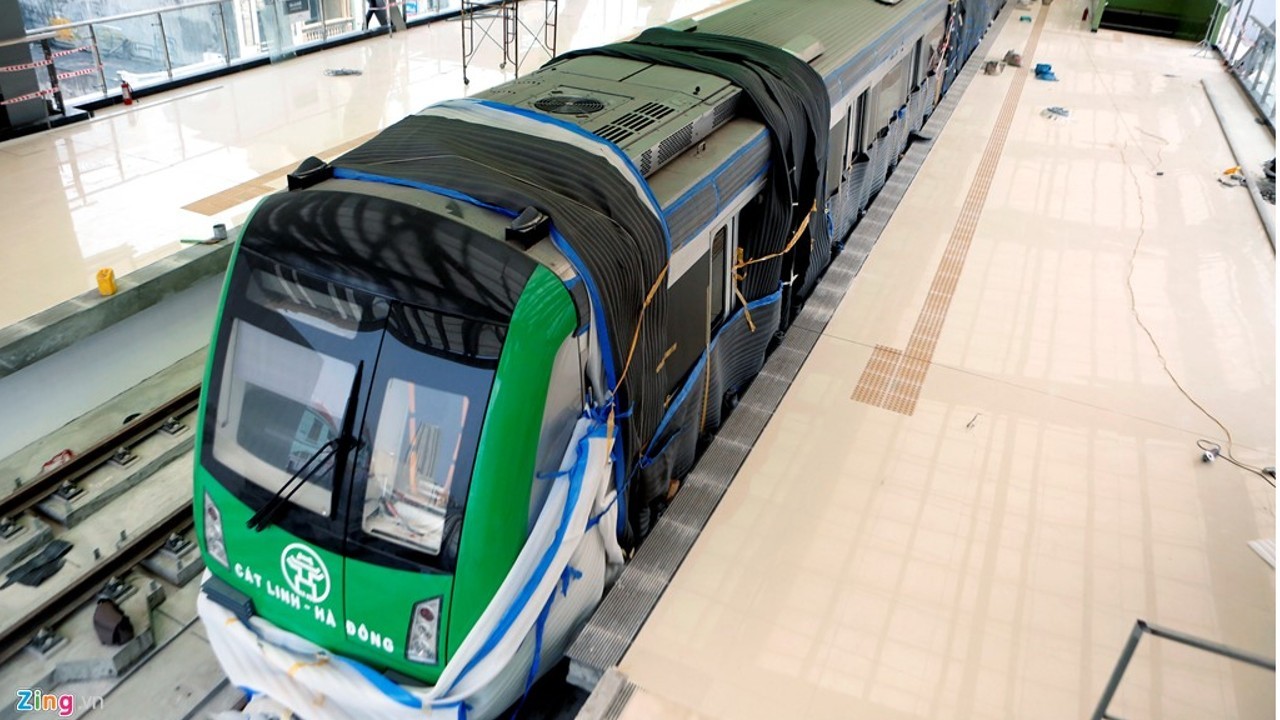
    Operational staff for Hanoi’s first metro line has been trained, but its opening date remains up in the air. 86 of them are in the driving department, with 46 main drivers. The rest are substitute drivers and technicians. All drivers have been trained and have practiced in Beijing, China for a year. Their experience ranges from driving 5,000-20,000 kilometers.

    “To prepare for the commercial operation, we have done both practical training and simulator training, including dealing with unexpected events,” said driver Tran Thanh Long.

    Over 500 people will work in the operating center to manage trains, maintain infrastructure, distribute tickets and discharge other responsibilities. Over this and next month, they will run drills for emergency evacuation, handling a large number of passengers and dealing with malfunctioning trains. The Vietnamese staff has been trained by Chinese experts. A representative of the contractor said that “most Vietnamese staff have met training standards and can operate the metro line immediately.”

    Another reason was that the Chinese contractor, China Railway Sixth Group Co., Ltd, has not submitted necessary documents to authorities for a final inspection, a source said then. But it is still unclear when the metro will start its commercial operations. The city’s long delayed Cat Linh – Ha Dong metro route missed last month’s deadline for commercial operation since construction was still not complete.

    Work on the metro started in October 2011 and was originally scheduled for completion in 2013. But several hurdles, including loan disbursement issues with China that were only resolved in December 2017, stalled it for years.

    The original estimated cost of $553 million ballooned to more than $868 million, including $670 million in loans from China.

    When completed, Hanoi’s first metro line will run from Cat Linh Station in downtown Dong Da District to the Yen Nghia Station in the south-west Ha Dong District.


  • New Skoda Superb Scout Cross-Estate Unveiled

    New Skoda Superb Scout Cross-Estate Unveiled

    Jacked up Estate body types have found preference among car buyers. These cars are more practical than their sedan counterpart and luxury carmakers like Mercedes, Audi and Volvo have one such model in their portfolio. Volkswagen too has the Passat Alltrack and now even Skoda has added the new Superb Scout which is essentially a cross-estate version of the Skoda Superb.

    The new Skoda Superb Scout is different from the Skoda Combi Estate which was sold in Europe. It looks rugged equipped with matte black body claddings and also gets larger 18-inch alloy wheels while 19-inches are optional. The ground clearance is up by 15 mm and there are subtle body enhancements in the profiling in a bid to add to the rugged appeal. The roof rails and window frames are chrome-plated, and the wing mirror housings shine in an aluminum look and there are special SCOUT badges as well. The elongated body style and other additions have also made the Superb Scout heavier than the Superb sedan and it tips the scale at 2200 kg.

    On the inside, the Skoda Superb Scout is finished in special wood-effect decorative strips that bear the Scout logo just like on the front seats. The seat covers are finished in fabric with contrasting stitching and the Alcantara leather seats with brown contrasting stitching are optional. The front seats are heated and are available with new piping in a contrasting color. The central display is fitted with additional offroad screens and the driver is greeted by a special, Scout specific, welcome logo on the display when entering the car. The front passenger seat can be electrically adjusted from the rear and the optional Sleep package provides larger headrests and a blanket, like the ones we have seen in the Kodiaq. It goes without saying that the Scout gets a larger boot than the Superb with a capacity of 660 to 1,950 l. The tailgate can be electrically operated and it can also be opened using the foot-gesture command.

    The Skoda Superb Scout will be offered with two tried and tested engine options. First is the 2.0-litre four-cylinder, TDI diesel engine which puts out 197 bhp and 400 Nm of peak torque and is mated to a seven-speed dual-clutch gearbox. The 2.0-litre, four-cylinder, TSI petrol motor is also on offer. In the Superb scout, this engine is tuned to churn out 268 bhp and 350 Nm of peak torque and is mated to also mated to the seven-speed DSG gearbox. These are the same engine options we have seen in a range of VW Group cars. However, highlight here is the off-road mode which activates the all-wheel-drive system. It also comes with a rough road package which is a standard fitment and provides underbody protection for the engine along with the undercarriage. The ride is further complemented with the driving modes which work in conjunction with the Dynamic Chassis Control.

  • HSBC Plans To Scale Up SME Business in Singapore

    HSBC Plans To Scale Up SME Business in Singapore

    HSBC, which has been present in Singapore since 1877, said it intends to increase its share in its target small-medium-enterprise (SME) market from the current 10 percent to 15 percent by 2021. HSBC classifies SME clients as those with a turnover of $5-$100 million.

    At a high level, we see Singapore as a de facto financial capital for Southeast Asia (ASEAN), as well as an attractive destination for our customers around the world,» said Alex Turner, managing director and head of commercial banking in HSBC.

    To support the growth in SME lending, the bank increased its headcount in business banking by 30 last year. As the SME lending space is highly competitive, HSBC country head of business banking Ng Li Lian said that the bank will tap on its advantages, such as having a dedicated relationship manager for each SME client.

    It also launched the Pioneer program in August last year to target fast-growing SMEs with minimum topline growth of 15 percent, especially those who wish to internationalize. Besides access to skills and capabilities, this 12-month program lets SME leaders have conversations with different teams within HSBC, such as speaking with its alternative finance team on how to raise capital other than through debt.

    For ASEAN to benefit from a wide-scale migration of supply chains into the region, the countries need to first improve on technology, capacity, and regional integration said HSBC Singapore CEO Tony Cripps.

    There has been a widespread sentiment that the supply chains of businesses are starting to shift to Southeast Asia (SEA) en masse, on the back of the trade war and the region’s vitality, but there has been little evidence of that happening, wrote Cripps in a report.

    ASEAN needs to build more visibility and credibility amongst international firms, particularly in their ability to handle and deliver production orders, he added.

  • Honda’s EV Journey In India To Begin With Hybrid Technology

    Honda’s EV Journey In India To Begin With Hybrid Technology

    It was back in 2018 that we told you about Honda wanting to get into the EV space in India. The electric car which will be launched in India will be one of the company’s global models which will be produced after 2019 after the Japanese carmaker rolls out its electric plan for a wide set of market. The vehicle that will make its way to India could be a ‘B’ segment vehicle the development of which is under process for the Indian Market. But this EV strategy will only pan out until 2023-24. Meanwhile, however, the focus will be on a gradual shift towards EV, which is why hybrid technology will find its way into Honda Car India’s line-up of cars. Honda is also looking to localize the production of hybrid and EV solutions in India in a bid to ensure that it is accessible and affordable for the buyers.

    According to a statement made to PTI by Senior Vice President and Director Rajesh Goel, Honda Cars India, “Till such time and also till the development of suitable charging infrastructure in the country, we feel that hybrid vehicles can be considered as good intermediate technology in electrification initiatives. Accordingly, we will begin our electrification journey in two years with hybrid technology.”

    Currently, the company only has the Accord hybrid in its portfolio and it attracts 28 percent rate with a cess of 15 percent taking its price to over ₹ 43 lakh (ex-showroom). As per its Vision 2030, the company strives to electrify two-thirds of its global automobile unit sales in 2030 with its range of hybrid electric vehicles (HEVs), plug-in hybrid electric vehicle (PHEVs), battery electric vehicle (BEVs) and fuel cell vehicles (FCVs)
  • Huawei clarifies Android, SD card support for new and existing phones

    Huawei clarifies Android, SD card support for new and existing phones

    The West’s crusade against Huawei’s phone and 5G businesses has had the world talking about a new tech cold war with China, as the company is being used as a pawn in a larger game by the White House administration.

    Currently, there is a 90-day stay on the marching orders that the government sent to American companies to stop doing any business with Huawei, including providing software as Google does with its mobile operating system.

    This pretty much came as a shock to the hundreds of millions of Huawei users outside of China who learned that in a short while their phones might be hobbled when it comes to Google apps, software, and security updates, quickly losing value.

    We probed Huawei and its Honor subsidiary to clarify what exactly will and won’t work if the trade arguments with China don’t get resolved in due time, and it turns out that the apocalyptic scenarios about SD card support, or a cease of service functioning on existing phones, were a bit overblown.

    As far as future Huawei and Honor phones like an eventual Mate 30 Pro are concerned, though, the situation is pretty much in limbo. Moreover, the Honor 20 Pro didn’t get Google-certified in time before the ban hammer dropped.

  • Weber opens New Store in Singapore

    Weber opens New Store in Singapore

    Weber Singapore will open a new store at No 4, Sixth Avenue.

    The US-based barbecue brand’s new store will showcase the full range of Weber’s cooking products including gas-, charcoal- and electric-powered grills.

    “Weber aims to create succulent moments that draw family and friends closer together through great food, grilling fun and unforgettable memories,” says Steven Lim, VP and MD for North and Southeast Asia of Weber-Stephen.

    Weber has also launched the first Grill Academy in Singapore and South East Asia at the Joo Chiat Weber Store, adding to more than 100 Grill Academies in the world.

    The academy allows people to get hands-on grill demonstrations and an opportunity to practice with Weber’s gas grills and charcoal grills in a three-hour Weber Essential Course.

    Weber grills are sold in more than 72 countries, including a recent expansion into Asia via India, China, Hong Kong, Korea, Japan and Singapore.

  • HKairportshop.com offers ‘world’s fastest airport pickup’ for Ecommerce Shoppers

    HKairportshop.com offers ‘world’s fastest airport pickup’ for Ecommerce Shoppers

    Hong Kong International Airport’s one-stop online-shopping platform HKairportshop.com is making orders purchased via the platform ready for pickup at the airport 90 minutes after the purchase is made – including duty-free hard liquor.

    The e-commerce platform brings together more than 3000 products including popular makeup and fragrances, travel exclusive collections, wines, electronic goods, souvenirs and HKIA’s exclusive smart luggage tag MyTag – which alerts passengers of their arriving bags when paired with the HKG My Flight app.

    The site is now offering travellers who spend more than HKD1000 (US$127.40) on the platform a saving of HKD200 ($25.48) when they use the promo code “UP200” from now till June 30.

  • Nespresso Improves subscription offering

    Nespresso Improves subscription offering

    Nespresso is increasing its marketing and communications around a new coffee pod subscription service in Australia, after a successful soft launch in early May.

    The move taps into the growing demand for convenience in everyday life, as consumers – conditioned by the Ubers and Netflixes of the world – expect more seamless transactions.

    “We all live busy lives…not having to make the same decision over and over is helpful,” Loic Rethore, Nespresso’s head of Oceania, told Inside Retail.

    Nespresso offers three subscription plans based on the number of coffee pods customers use per day. Those who use around one pod per day pay $50 to receive 60 pods every two months, and those who use two pods per day pay $50 to receive 60 pods every month. A third plan costs $75 for 90 pods per month for those who use around three pods per day.

    All plans include free delivery and a 10 per cent credit, so those who pay $50 every month actually receive $55 in credit that they can put towards coffee or accessories.

    The service was designed to be flexible and easy to cancel, since customers don’t want to feel ‘locked in’ to subscription programs, Rethore said. And while it currently is online only, customers will be able to subscribe to the plans in Nespresso boutiques in Q3.

    “We’re seeing a very nice uptake of the program, and we’re going to continue to ramp up the communications around it,” Rethore said

    This is the first time the company has offered coffee pod subscriptions – it offers subscriptions for machines – and depending on the uptake over the next few months, it will consider rolling out the service to other markets around the world.

    “We want to understand how it plays out, and what kind of uptake and additional sales we can expect from the coffee pod subscription service,” Rethore said.

    “We’re in the process of monitoring that now. We’ll be able to make forecast in a few months,” he said.

    Rethore noted that Nespresso often tests out new products and concepts in Australia.

    “Australia is very special in terms of markets for Nespresso. It’s considered a mature and adventurous market in terms of coffee consumption. They’re early adopters,” he said.

    The company recently has been rolling out a new store concept in Australia, which focuses on education and experience. Customers can learn about the origin of Nespresso coffee, the company’s sustainability efforts and other information in dedicated areas, and staff are equipped with tablets and can process orders anywhere in the store – similar to an Apple store.

    “It’s very pleasing to see that club members have reacted very well to this new concept. They’ve really embraced the new journey of storytelling,” Rethore said.

    Seven stores currently feature the new concept, and Nespresso will continue to shift existing stores to the new concept as they come up for renovation.

    “Overall, the business of the new stores is doing well,” Rethore said.

    One metric he cited was the customer response to the coffee master classes that Nespresso is offering in the new concept stores.

    “The master classes have been fully booked. We didn’t expect such a reaction. People are enjoying not only knowing more about our coffee, but also the experience.”

  • Domino’s Pizza  invests in technology to improve quality

    Domino’s Pizza invests in technology to improve quality

    Domino’s Pizza is taking on one of its customers most common complaints, that the ordered pizza “doesn’t look like it should”, with a nationwide roll-out of its Pizza Checker technology.

    The technology takes the form of a camera system that grades individual pizzas on certain qualities, such as the topping volume and spread, as well as the amount of cheese used, and it’s already showing results according to Domino’s Australia and New Zealand chief executive Nick Knight.

    “So far, it’s analysed more than one million pizzas, and there is a lot of learning that we’ve captured,” Knight told analysts during a briefing call last week.

    “It’s early days, but I’m really pleased with what we’re seeing. Team members are using this technology to put a much needed extra focus on product quality.”

    According to Knight, while customers so far can’t see or tell that the pizza they receive has been ‘checked’, customer metrics show that they are reacting positively to the results.

    “In my experience, when we’ve tackled one of the biggest customer tensions, like we did with GPS drivers, those things have flowed through to sales,” Knight told analysts.

    The technology uses artificial intelligence to grade pizzas, and will eventually allow customers to view a real-time image of their pizza on the cut bench, and will notify them if their pizza failed the process – resulting in a remake, though it’s possible this situation could lead to longer delivery times.

    The technology is now active across all Australian and New Zealand Domino’s stores.

    During the call last week, Knight also discussed Domino’s effort to improve the overall health of its franchise business through its Operations 360 initiative, which launched 18 months ago.

    The initiative provides franchisees with data on sales drivers at the store level, and gives the company’s operations team members an opportunity to provide advice and training in those areas where certain franchisees may be struggling.

    While this has helped some franchisees to improve, it has also led some franchisees to exit the business, Knight said.

    “Unfortunately, some franchisees don’t have the passion or capability to take their business to that level, and they aren’t able to run with us,” Knight told analysts.

    To help these franchisees in their exit, Domino’s has purchased some franchised stores back from franchisees and will, in the short term, run them as corporate stores.

    Knight said some franchisees who left may have been unhappy, and cautioned that they might lodge proceedings in an attempt to bargain with the business, or out of a genuine issue.

  • Second Apple Taiwan store about to Open

    Second Apple Taiwan store about to Open

    Apple Taiwan is to open its second store, in Taipei’s Xinyi District.

    The firm is in the early stages of planning, although has released an image of the intended look of the new store that resembles its Chicago flagship.

    Apple’s first official store in Taiwan opened in the Taipei 101 mall, although the majority of its products are sold via its online channel and through local authorized resellers.

    Comments online following the announcement suggested significant hopes that Apple will next open an official store outside Taipei.

    Apple Taiwan issued a teaser image of the new store (above), a rare move for the company, which rarely reveals details of store developments to the press.

  • Huawei barred from using SD memory cards

    Huawei barred from using SD memory cards

    Although Huawei has been given a reprieve from the initial punishment imposed by the United States, it looks like the Chinese company is close to losing its smartphone business, as more US companies announce they unwillingness to continue to work with the world’s number two smartphone vendor.

    The SD Association is the latest company that bars Huawei access to its technology. Apparently, the Chinese company has been removed from the trade group as SD Association must comply with orders from the US Department of Commerce.

    Although customers who own Huawei smartphones can continue to buy SD and microSD cards to use in their devices, future Huawei phones will no longer work with the standard. It’s unclear what will happen, but Huawei has already included proprietary storage cards in some of its latest flagships, which are called Nano Memory Cards.

    Probably not as important as being banned from getting Android OS updates or chipsets from Intel, Qualcomm and AMD, SD Association’s move adds to the major issues that Huawei’s smartphone business is going to have in the coming months.

  • Foodpanda kicking off delivering groceries in Hong Kong

    Foodpanda kicking off delivering groceries in Hong Kong

    Foodpanda Hong Kong is adding grocery deliveries to its services from late next month.

    The food-delivery service, pitched in a head-to-head battle with Deliveroo in Hong Kong, is finalising a collaboration with about 100 stores across Hong Kong to source products such as dry groceries, frozen meat and wine for customers ordering online or by app, promising order fulfilment within 30 minutes.

    Foodpanda Hong Kong CEO Arun Makhija said in an interview with the South China Morning Post that the company wants to offer both its customers and its 2000-strong fleet of drivers opportunities beyond delivering restaurant meals.

    Foodpanda has been in Hong Kong for five years and Makhija says the business’ growth remains “exceptional”.

  • Peer-to-peer rental marketplace MyRent launched in Singapore

    Peer-to-peer rental marketplace MyRent launched in Singapore

    Singapore’s first peer-to-peer on-demand rental marketplace MyRent has launched.

    The site allows Singaporeans to rent items including photographic and sporting equipment, seasonal apparel and video games. After a beta trial, it already has more than 2000 registered users with 800 active listings.

    “The idea behind MyRent is to allow users to own experiences instead of things,” said

    Ishwar Dhanuka, MyRent co-founder and CEO.

    “We want to decentralize ownership, and create a win-win for both listers and renters — where the former can earn money by renting what they own and rarely use, while the latter can rent a product without actually having to pay the full amount to use it.”

    With MyRent, customers can rent a piece of equipment without any deposit.

    The platform has built its own app, available for both iOS and Android users.

    According to a study jointly published by Google and Temasek, Singapore’s e-commerce market is valued at more than US$1 billion but is projected to soar to $5.4 billion by 2025.

    Peer-to-peer retail platforms have gained popularity in the industry, with platforms such as MyRent shifting focus towards providing consumers with experience versus the traditional ownership of goods.

    After Singapore, MyRent is eyeing expansion into Malaysia by the end of this year. It is also exploring merchant partnerships to help stores rent out unused inventory and ecosystem partnerships – such as in insurance and logistics.

  • Spotify finally adds long-requested feature to its Android app

    Spotify finally adds long-requested feature to its Android app

    To fend off increasingly aggressive competition from the likes of Apple, Amazon, Google, and Deezer, the global leader of the music streaming industry is constantly trying new things, going so far as testing in-house hardware that could allow it to control and monitor your in-car listening patterns.

    It’s therefore pretty mind-blowing (and certainly not in a good way) that it’s taken Spotify this long to add an incredibly basic sleep timer feature to its Android app. After all, the platform has been around since 2008, and users haven’t exactly been shy in expressing their impatience and dissatisfaction with the lack of this handy functionality over the years.

    To get a sense of how badly people wanted to go to sleep while streaming their favorite tunes on Spotify, you only need to do a quick Google Play search. It will take you just a few seconds to discover that there are multiple third-party apps available through the search giant’s official Play Store with the sole purpose of enabling sleep timer capabilities for your favorite music streaming service. The aptly titled “Sleep Timer for Spotify, Music, and Video” has over 500,000 installs to its name, while another “Sleep Timer” app that works with YouTube, Google Play Music, TuneIn Radio and “many more” in addition to Spotify has even managed to break the 1 million download barrier.

    At long last, there’s no need to go through that trouble anymore. The native Spotify for Android sleep timer feature is as simple to use, straightforward, and convenient as you would expect.

    You should easily find it by tapping on the three-dot icon in your Now Playing screen (below the “share” option), with settings for different times when your phone can automatically stop your audio (ranging from 5 minutes to an hour), as well as an option to “go to sleep” after streaming a single track. If you can’t find the feature yet, you should just wait for a wider rollout of the latest Spotify version.

    It’s also worth pointing out that the app doesn’t technically support this functionality on iOS yet, but iPhones come with a Clock app pre-installed that can essentially and effortlessly do the same thing already.

  • H&M Expanding into home decor in India

    H&M Expanding into home decor in India

    H&M India is seeking to enter the country’s home decor and furnishings market.

    The market entry will see the firm competing with Ikea as well as local retailers under its H&M Home brand.

    “We are looking at the home segment and it will be decoration products and not furniture, said H&M India CEO Janne Einola. “There are not many players in that category and the product range doesn’t change for years. In the organised sector, our strength will be the latest assortment.”

    Internationally, H&M Home trades predominantly in shop-in-shop formats, with only eight standalone stores out of 370 locations in roughly 50 countries.

    H&M India has achieved considerable success after three years in the country, currently holding second place in the apparel market behind Zara.