Blog

  • Jaguar Land Rover To Use High-Grade Recycled Aluminium

    Jaguar Land Rover To Use High-Grade Recycled Aluminium

    Jaguar Land Rover is developing the next phase of its aluminium closed loop strategy with an innovative recycling initiative to transform the vehicles of today into the cars of tomorrow. It’s called the ‘Reality’ project and it aims to recover aluminium from existing Jaguar and Land Rover vehicles to reform it into a new high-grade aluminium to create new vehicles.

    The process is currently being tested on early, pre-production Jaguar I-Pace prototypes which have had their batteries safely removed. These batteries enter into their own second-life process which Jaguar Land Rover is developing while the scrap from the vehicles is sorted into various materials using high-tech sensors by Axion. Once separated, the aluminium scrap is melted and reformed.

    The batteries of the I-Pace have been safely removed and will enter into their own second-life process

    With this project, Jaguar Land Rover expects to reduce the CO2 impact of production while reducing the amount of virgin aluminium required to produce vehicles. Between September 2013 and January 2019, around 300,000 tonnes of closed-loop scrap have been processed back into the brand’s lightweight aluminium intensive architecture, across all vehicle lines including XE.

    In 2014, the Jaguar XE was the first vehicle in the world to use aluminium alloy grade RC5754 for its body panels, which contains up to 75 per cent recycled aluminium. Half of the XE body structure is made of aluminium alloy grades that contain an important amount of recycled aluminium content – made possible by a closed-loop manufacturing system at our UK and Slovakia facilities. Of course the company is conducting strength tests for the recycled aluminium to make sure that it meets the company’s mechanical standards

    Jaguar Land Rover currently uses 180,000 tonnes of aluminium per year – a small percentage of the 80 million tonnes produced globally each year. It is already one of the most widely recycled materials with 75 per cent of all aluminium ever produced still in circulation.

  • Toyota Fortuner Diesel Launched In India

    Toyota Fortuner Diesel Launched In India

    Toyota has launched an updated version of its bestselling SUV in India. The Toyota Fortuner range now starts at ₹ 27.83 lakh for the base 4×2 diesel variant and go all the way up to ₹ 33.60 lakh for the top-end 4×4 diesel automatic variant, all prices ex-showroom, India. Toyota has only updated the diesel variants of the Fortuner while the Petrol 2.7 remains unchanged. The updates on the 2019 Fortuner, however, are limited to interiors and it remains identical to its predecessor in terms of looks and mechanically.

    The 2019 Toyota Fortuner now gets chamois interior upholstery which will be standard on the diesel variants. The seats are now draped in perforated leather and have the ‘Fortuner’ badging embossed on them. The glass on the new Toyota Fortuner can resist the heat even better which will give it an edge in some of the markets, especially in the northern, west-north and eastern parts of the country where the temperature gets extreme.

    The 2019 Toyota Fortuner Diesel mechanically remains identical to its predecessor. It is powered by a 2.8-litre, four-cylinder diesel motor which produces 175 bhp at 3400 rpm and 420 Nm of peak torque at 1400 – 2600 rpm when the engine is mated to a manual transmission. The same engine is tuned to produce 30 Nm of peak torque more at 450 Nm between 1600 rpm and 2400 rpm when the engine is mated to the automatic transmission. The Toyota Fortuner also rules the segment commanding a market share of 70 per cent.

  • AirAsia adds Quanzhou to its Asian routes

    AirAsia adds Quanzhou to its Asian routes

    AirAsia will be flying direct daily from Kuala Lumpur to Quanzhou in Fujian, China.bOnce, one of the world’s biggest ports and the starting point of the Maritime Silk Road, Quanzhou was known to Arab traders as Zaiton and was praised by Marco Polo as the “one of the two greatest havens in the world for commerce”.

    Thanks to its status as a major trading port for more than three centuries, Quanzhou today remains a melting pot of diverse cultures and religions, and boasts many Buddhist and Hindu temples, mosques and churches, as well as museums celebrating its proud maritime heritage.

    Some of these must-visit sites include the Kaiyuan Temple, the largest Buddhist temple in Fujian, which was built over 1,300 years ago, as well as the Qingjing Mosque, China’s oldest Arab-style mosque, inspired by the Umayyad Mosque in Damascus.

    Then there is the Luoyang Bridge, one of the ‘four ancient bridges of China’, which resembles a silver dragon lying above the green waters of the Luoyang River.

    Another site is the largest stone carving of the famous Chinese sage Laozi made during the Song Dynasty, which is found at the foot of Mount Qingyuan.

    Meanwhile, the beautiful port city of Xiamen is only an hour away by high-speed train.

    AirAsia Malaysia CEO Riad Asmat said: “AirAsia has been championing connectivity to secondary cities in China such as Guilin, Shantou, and Nanning.

    “This Kuala Lumpur-Quanzhou service further grows our footprint of unique destinations in China, and will provide greater accessibility to Malaysian and Chinese travellers.

    “We look forward to exploring opportunities to connect our, other secondary hubs in Malaysia to China as well.”

    AirAsia currently is offering promotional all-in fares from RM99 for those who book flights from Kuala Lumpur to Quanzhou from now till Sunday at airasia.com or via the AirAsia mobile app, for travel from May 1 to Oct 26, 2019.

  • Toyota Innova Crysta Diesel Launched In India

    Toyota Innova Crysta Diesel Launched In India

    Toyota India has updated its bestseller in India- the Innova Crysta. The Innova Crysta range now starts at ₹ 14.93 Lakh and goes up to ₹ 22.43 Lakh while the Innova Touring Sport range starts at ₹ 18.92 Lakh and go all the way up to ₹ 23.47 lakh. The Innova Crysta is the market leader in its segment and its diesel variants are now updated with more features and upmarket interiors in a bid to tackle the competition better and stick to its segment-leader position.

    The Toyota Innova Crysta now gets ivory leather upholstery added as an option over the standard black and tan treatment. The seats are now draped in perforated leather and have the ‘Crysta’ badging embossed on them. The glass on the new Innova Crysta can resist the heat even better which will give it an edge in some of the markets, especially in the northern, west-north and eastern parts of the country where the temperature gets extreme. Moreover, Toyota has also added fast charging enabled USB ports in the Innova Crysta which is a big requirement in today’s fast-moving world. The latter two features have also made way in the Innova Touring Sport, though, it continues to come with all-black interiors with red accents.

    Mechanically, the 2019 Innova Crysta will remain identical to its predecessor. The Innova Crysta and Touring Sport source its power from the 2.4-litre and 2.8-litre four-cylinder motors. The 2.4-litre engine makes 144 bhp at 5200 rpm and 245 Nm of peak torque at 4000 rpm while the more powerful 2.8-litre unit churns out 171 bhp at 3400 rpm and 360 Nm of peak torque between 1200 rpm and 3400 rpm. Toyota has sold 225,000 units of the Innova Crysta in India since its launch in 2016 and at present, it commands a market share of 40 per cent in the segment.

  • Yamaha MT-03 Unveiled At Bangkok Motor Show

    Yamaha MT-03 Unveiled At Bangkok Motor Show

    Yamaha Motor has pulled the wraps off the 2019 MT-03 street-fighter motorcycle at the Bangkok Motor Show in Thailand. The updated offering is based on the Yamaha YZF-R3 sharing the engine, chassis and several cycle parts but does get changes to match a naked motorcycle’s mannerisms. For 2019, the updated Yamaha MT-03 gets a new white and red paint scheme in addition to the existing colour options available. Visually, styling changes are minimal and the bike carries over the design language from the older model.

    Key styling elements on the 2019 Yamaha MT-03 include the chiselled fuel tank, single headlamp cluster with LED daytime running lights and a semi-digital instrument console. The taillight remains a LED unit, while the sporty split seats have been carried over from the R3. The bike rides on web-design alloy wheels that are finished in contrast colours on the motorcycle.

    Power on the updated Yamaha MT-03 comes from the 321 cc liquid-cooled, DOHC, parallel-twin engine tuned for 41 bhp and 29.6 Nm of peak torque. The motor is paired with a 6-speed gearbox. The bike is suspended by telescopic forks at the front and a monoshock unit at the rear. Braking performance comes from disc brakes at either end with dual-channel ABS as standard.

    Although not confirm, odds are that Yamaha Motor India just might bring the MT-03 to India to compete against the KTM 390 Duke, BMW G 310 R and the likes. The full-faired Yamaha R3 is already on sale here and is expected to get a comprehensive upgrade in the second half of 2019 with the Japanese bike maker bringing the comprehensively updated version that was introduced globally last year. With the MT-15 and the MT-09 already on sale in India, the MT-03 will fit well into the company’s naked motorcycle line-up, and its Call of the Blue campaign to bring performance oriented products to India.

  • BT signs three-year deal with NATO

    BT signs three-year deal with NATO

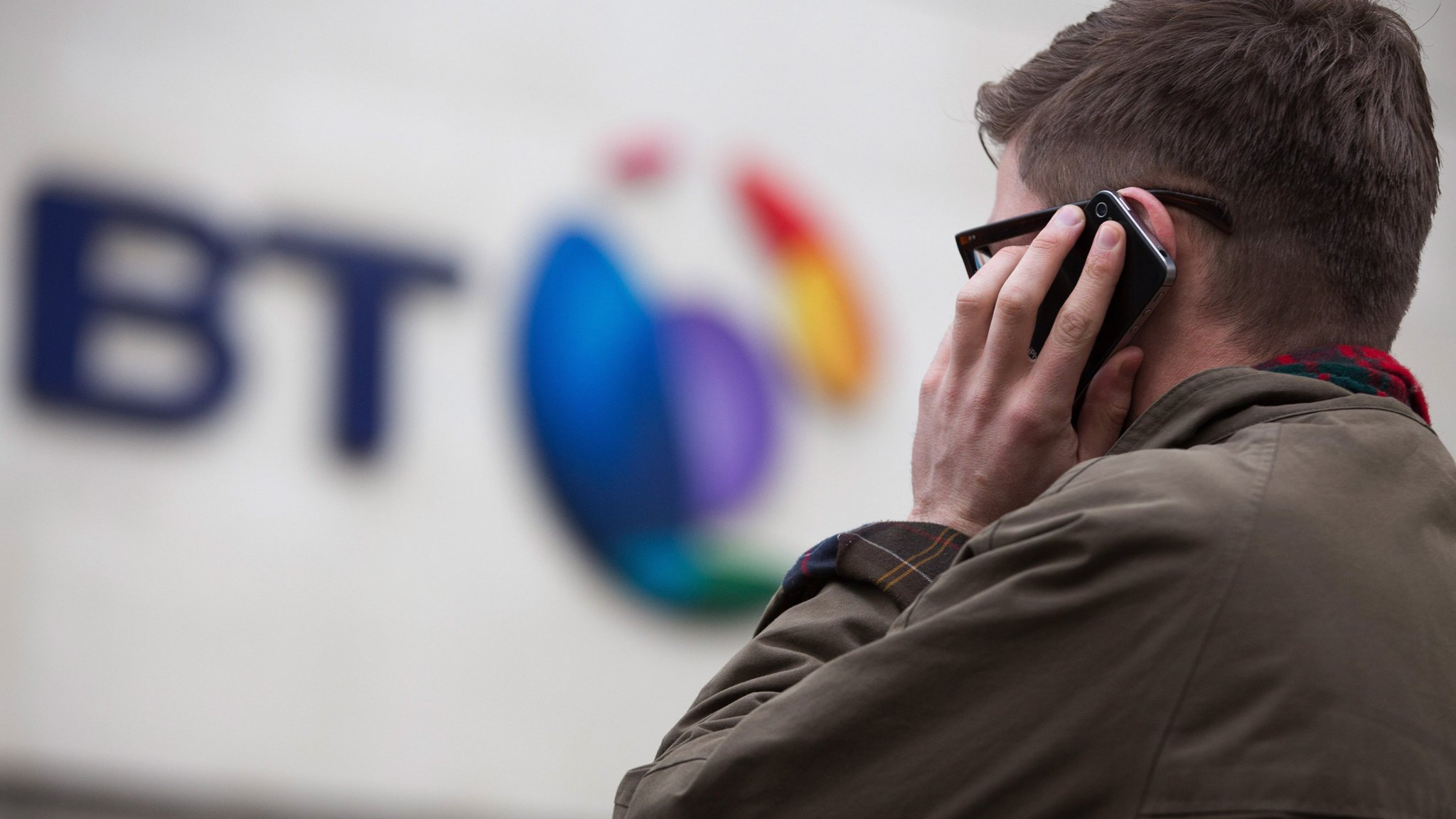
    The UK’s BT has extended its relationship with the North Atlantic Treaty Organization (NATO) military alliance, announcing a contract to support the alliance’s global operations.

    Under the three year contract with NATO’s Communications and Information Agency (NCI), valued at €5.9 million ($6.64 million), BT will provide support services to more than 70 NATO locations internationally.

    This will include sites spread across the Alliance’s 29 member countries, as well as other locations.

    “Digital transformation is a strategic driver for multinational organisations. Like many of our global customers, NATO faces a dynamic operational landscape and looks to harness the latest digital tools and technologies to enhance its performance,” BT CEO of Global Services Bas Burger said.

    “With our global secure network and expertise as a trusted supplier to governments, international agencies and multinationals, BT is well placed to support NATO in an increasingly digital world.”

    The NATO alliance consists of 29 member states from North America and Europe.

  • Microsoft Launcher major update brings widget redesign

    Microsoft Launcher major update brings widget redesign

    Microsoft is making major changes to its Android launcher, many of which have been tested for about a month in the beta channel. Most of the new features and improvements are cosmetic, but there are some important under the hood enhancements included as well.

    Microsoft Launcher version 5.3 comes with a completely redesigned Time/Weather widget, which allows users to have multiple widgets for multiple locations. The detail page has been redesigned as well.

    The update brings many refinements to the app, but the most important are those made to the Home Screen, Dock and Search widget. If you’re a long-time user, you’ll most likely notice them once you start using the new version.

    Furthermore, the News tab now supports “Technology” as a news interest, while the Tasks card now features “My Day” and “Flagged Emails” features from Microsoft To Do. With the latest version of Microsoft Launcher, work profile users will be able to access their work apps fast and easy.

    Although it’s less important, you’ll probably want to know that the beta community link in Settings has been changed to Microsoft Tech Community. Microsoft Launcher 5.3 is already available for download via Google Play Store, so make sure to install the update to benefit from the latest improvements.

  • Tigerair Taiwan to open new route flying to Palawan in the Philippines

    Tigerair Taiwan to open new route flying to Palawan in the Philippines

    Tigerair Taiwan announced Monday plans to inaugurate a new flight route between Taoyuan in Taiwan and the Philippine city of Puerto Princesa on Palawan Island starting June 7, said reports.

    It will become the third route between Taoyuan and the Southeast Asian country following the announcement by the Singapore-headquartered budget airline that it would begin flying from Taoyuan to Kalibo, a major hub for the tourist destination of Boracay island, reported UDN.

    To promote the launch of the route, individuals who book tickets between 10:00 a.m. on April 10 and 11:59 p.m. on April 11 will enjoy a discounted price of NT$399 for each single journey ticket (excluding taxes). The departure dates must be between June 7 and Oct. 18, 2019.

    There new route will offer three flights a week, according to Tigerair.

    Puerto Princesa will become the fourth destination route targeting the Southeast Asian market offered by Tigerair Taiwan, which will soon be flying 29 international routes to 22 cities, the report wrote.

    Palawan, the fifth largest island of the Philippines, boasts a plethora of wildlife, jungle mountains, and white sandy beaches. In 2016, Palawan was ranked the “Most Beautiful Island in the World” by readers of Conde Nast Traveller.

  • Poptel V9, the largest videophone with Android

    Poptel V9, the largest videophone with Android

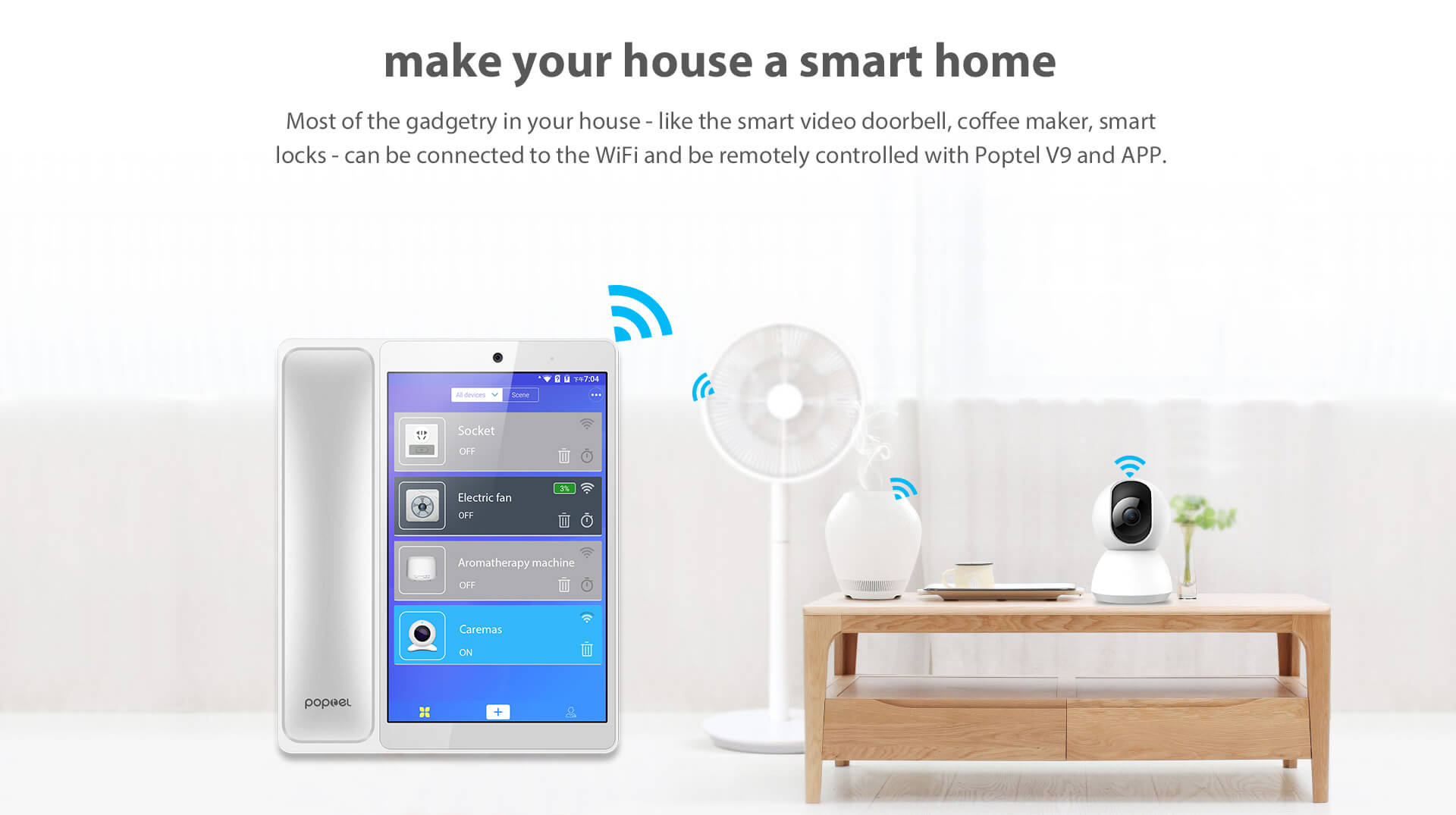
    It’s not often that a videophone comes along, let alone one with a huge, Android-driven display, but the ever-enterprising Poptel just introduced the intriguing V9 to cover that homey dream. Equipped with a SIM card slot, the Poptel V9 nevertheless lets you take calls the old-fashioned way, like on home phones of yesteryear by simply picking up the receiver. Needless to say, it is rechargeable, so you can roam with it freely around the house and even outside in the yard or down the street.

    The biggest asset of the Poptel V9, however, is its screen – literally. Equipped with a tablet-sized display, it is the biggest among all videophones with Android and allows you to gobble media content, glean caller info, use it as a digital clock and picture frame, or control your smart home appliances from the touchscreen.

    That last feature is an extra added value when it comes to the eventual home security cameras you outfitted your house with, as it can display what they are showing at any given time. Is dinner ready, where exactly did the FedEx guy leave your package on the porch, and why is the neighbor’s dog pissing on the lawn again are all pressing questions one can answer with the Poptel V9 videophone and a streaming camera.

    The specifications of the device are in line with its extremely affordable $130 price tag – 2GB RAM/16GB of storage space for apps, and 5MP front-facing camera for video chat, but that sweet 8″ display is what makes it the largest Android-laden videophone in an admittedly narrow category. The only ho-hum part is the 1800mAh battery pack and the 300 mAh one in the receiver that is good for about 3 hours of talking but you shouldn’t be yapping more than that daily anyway, you social butterfly, you.

    The SIM slot is neighboring a microSD card on for storage expansion should you need the V9 to cycle more photos than the ones you uploaded for picture-framing duties. Poptel puts an extraordinary focus on the smart home supervisory abilities of its new videophone, and with a good reason. You can prop the V9 on the kitchen table, discuss that YouTube recipe video that worked so well for the neighbor the other night, and at the same time run the robotic vacuum cleaner upstairs, check out who’s ringing at the video doorbell, turn on the floodlight outside to see them clear, and if it’s the neighbor, command the app-controlled coffee maker to start pouring a brew.

    In addition, you can control the lighting, thermostat, AC unit, smart locks, or any other home automation gizmo you have equipped your house with from the comfort of your own videophone. It’s the 90s family soap opera dream come true in a quirky, refreshingly old-fashioned looks with a modern twist. At $130, just the retro experience of walking around the house with a receiver sounds like a steal when we add the Android media machine it is attached to.

  • AirAsia to sell tickets of non-competing carriers on website

    AirAsia to sell tickets of non-competing carriers on website

    AirAsia, whose website is used by 65 million customers every month, is considering a plan to sell tickets of non-competing carriers on airasia.com, using its size to give online travel agents a run for their money. The Kuala Lumpur-based carrier, Southeast Asia’s largest airline group, which already sells car rentals, accommodation at half a million hotels and serviced apartments worldwide and holiday packages in five regional destinations, thinks it can do a better job of selling these services than the travel industry because of the volume of data available from frequent travellers on its network.

    “I have a phenomenally strong platform that I [can] open for business to sell other content,” Tony Fernandes, AirAsia’s founder and chief executive, said in an interview with the South China Morning Post during Credit Suisse’s Asia Investment Conference in Hong Kong. “We can be as strong as any online travel agent in terms of selling hotel content. I think we can be stronger than Klook at selling activities.”

    Data is at the heart of the low-cost carrier’s ambitions to grab a bigger share of tourism revenue, which is projected to rise by 53 per cent to US$625 billion (S$847 billion) in Asia in the next five years, according to the Pacific Asia Travel Association (PATA). Airasia.com boasts 65 million unique monthly visitors, as well as data of 50 million repeat customers. Klook, an online tour agency and activities organiser founded in Hong Kong in 2014, had 16 million monthly visits last summer.

    The airline, which prefers to be seen and heard as part of a wider travel technology group, is leveraging data to know its customers better and keep them spending in its ecosystem.

    “Everyone is excited about platform businesses. Everyone is excited by GoJek and Grab and the unlimited potential of who they can reach and what they can sell,” the AirAsia founder added.

    Fernandes pointed out that the first thing people did when they wanted to travel was to buy an airline ticket, not a hotel. AirAsia.com generated US$4 billion in ticket sales last year for the budget carrier.

    “We are going to see the customer first, so we are going to take a large share of the wallet and we’re going to be good at it,” he said. “The first step would be to be as good as anyone selling hotels, selling activities. And then we may start selling [tickets of] airlines who don’t compete with us.”

    The plan may have easyJet or Ryanair selling their European flights to an Asian traveller planning a trip to the continent, he said, adding that AirAsia was currently not engaged in any active discussions with other airlines.

    “He is thinking more about a lifestyle, digital platform than a traditional airline,” said Mohshin Aziz, an analyst at Malaysian lender Maybank in Kuala Lumpur.

    AirAsia has enough user data to “formulate or create an algorithm to predict the buying pattern” of travellers, Mohshin said. “So many airlines are backwards – they don’t have a well-functioning distribution system. So [AirAsia] can easily become the one that is willing to share for some money and intelligence.”

    ​​​​​​​The scope and potential for AirAsia to sell foreign airline tickets was substantial, Mohshin said, particularly for carriers that operate services in Southeast Asia as non-stop flights to Europe or Australia, and did not have the same success in sales as a local airline would.

    Airlines such as KLM, which operates a connecting flight from Kuala Lumpur to Jakarta, or Ethiopian Airlines’ service to Singapore, could also benefit from AirAsia’s data and sales power.

    “For foreign carriers to try and get Singaporean customers, they are not going to put much effort into it. It is better for them to pass it on to AirAsia, to try and sell tickets on their behalf,” Mohshin said.

    AirAsia was well positioned in Southeast Asia, said Raini Hamdi, Asia Editor at travel and technology website Skift, citing a growing population of 650 million people, high mobile and internet use and a shift to online travel booking.

    “If AirAsia puts its energy into this, it will be successful,” she said. “It is a torch-bearer of great value, convenience, ease of use. It has a strong customer base. Add personalisation through data mining, AI, machine learning, ease of payment and ease of earning and burning points for customers, the stickiness of airasia.com will increase rapidly.”

  • Apple could end up buying 5G modem chips from unlikely sources

    Apple could end up buying 5G modem chips from unlikely sources

    You might know that Huawei manufacturers handsets and networking equipment. At the end of last year, it was the third largest smartphone company in the world and the top provider of networking gear. What you might not know is that Huawei designs its own chips. Its Hi-Silicon unit created the Kirin 980 SoC which is currently found powering up the Huawei Mate 20 Pro and the Huawei P30 series. It also will be used to drive the foldable Huawei Mate X. While Huawei designs the chips, they are actually manufactured by TSMC.

    Now as we discussed yesterday, Apple is relying on Intel to have its XMM 8160 5G modem chip ready in time for its 2020 iPhone models. There are conflicting reports about whether Intel will deliver the component in time, and as a result, we have seen rumors that a 5G iPhone might not surface until 2021. Intel says that it will be shipping the chip later this year, but just in case there is a problem, Apple has found an unlikely friend in Huawei.

    Huawei would consider selling its 5G Balong 5000 modem chips to Apple. The report cites a source who has “knowledge of the situation.” This is an unusual thing for Huawei to do considering that an executive said earlier this year that “Balong is mainly for supporting Huawei’s smart products, such as phones and IoT products, and is currently for Huawei’s internal use only.” It also seems strange considering that Huawei is looking to leapfrog over both Apple and Samsung to become the global leader in smartphones by 2020.

    Apple could turn to Qualcomm, but that is unlikely to happen since both firms have been squaring off in court over patent infringements, antitrust claims, and royalty payments, In fact, a week from today a courtroom in San Diego will host a multi-billion dollar trial between Apple, its contract manufacturers like Foxconn and Wistron, and Qualcomm. At stake are unpaid royalties amounting to billions of dollars. Qualcomm CEO Steve Mollenkopf said back in November that his company was “on the doorstep” of resolving its differences with Apple; we now know that this was not the case.

    While it seems that Huawei would be “open” to selling Apple its 5G modem chips, the other side of the equation is whether the gang in Cupertino would be willing to buy them. During the FTC v. Qualcomm case, Apple supply chain executive Tony Blevins testified that Apple was considering the use of 5G modem chips from Samsung or MediaTekfor the iPhone. Even though Apple currently uses only Intel modem chips for its handsets, Blevins talked on the stand about “Project Antique.” This was Apple’s attempt to find a second supplier to provide it with modem chips. As Blevins noted, “No offense to (Intel) but we don’t want to be single supplier with them. We wanted both Qualcomm and (Intel) in the mix.”

    Huawei’s Balong 5000 modem chip supports both mmWave and sub-6GHz 5G networks. It also is compatible with 4G LTE, 3G, and 2G networks. The important thing about using Huawei’s modem chip is that Apple could get its hands on it earlier than Intel’s chip and have more time to test a 5G iPhone. The Balong 5000 5G modem chip will debut on Huawei’s first phone to support the next generation of wireless connectivity. That device happens to be the foldable Mate X.

    Apple wouldn’t be the only one in such a partnership to benefit. Huawei would get to widen the use of its chips beyond its own devices, and you can just imagine how much revenue would flow into the company’s coffers. It also might play well in China after U.S. government attacks on Huawei have led some Chinese consumers to unofficially boycott Apple products.

    There is a huge unknown here, and that is how the Trump administration might react. Huawei is considered a threat to U.S. national security and allies have been warned not to use Huawei’s networking gear to build out 5G networks. That’s because the law in China requires a company like Huawei to gather intelligence if requested to do so. Considering that we are talking about the modem chip, a major component in communicating voice and data, there are bound to be concerns about the use of Huawei’s component inside the iPhone.

  • “The Great Move” is largely concluded

    “The Great Move” is largely concluded

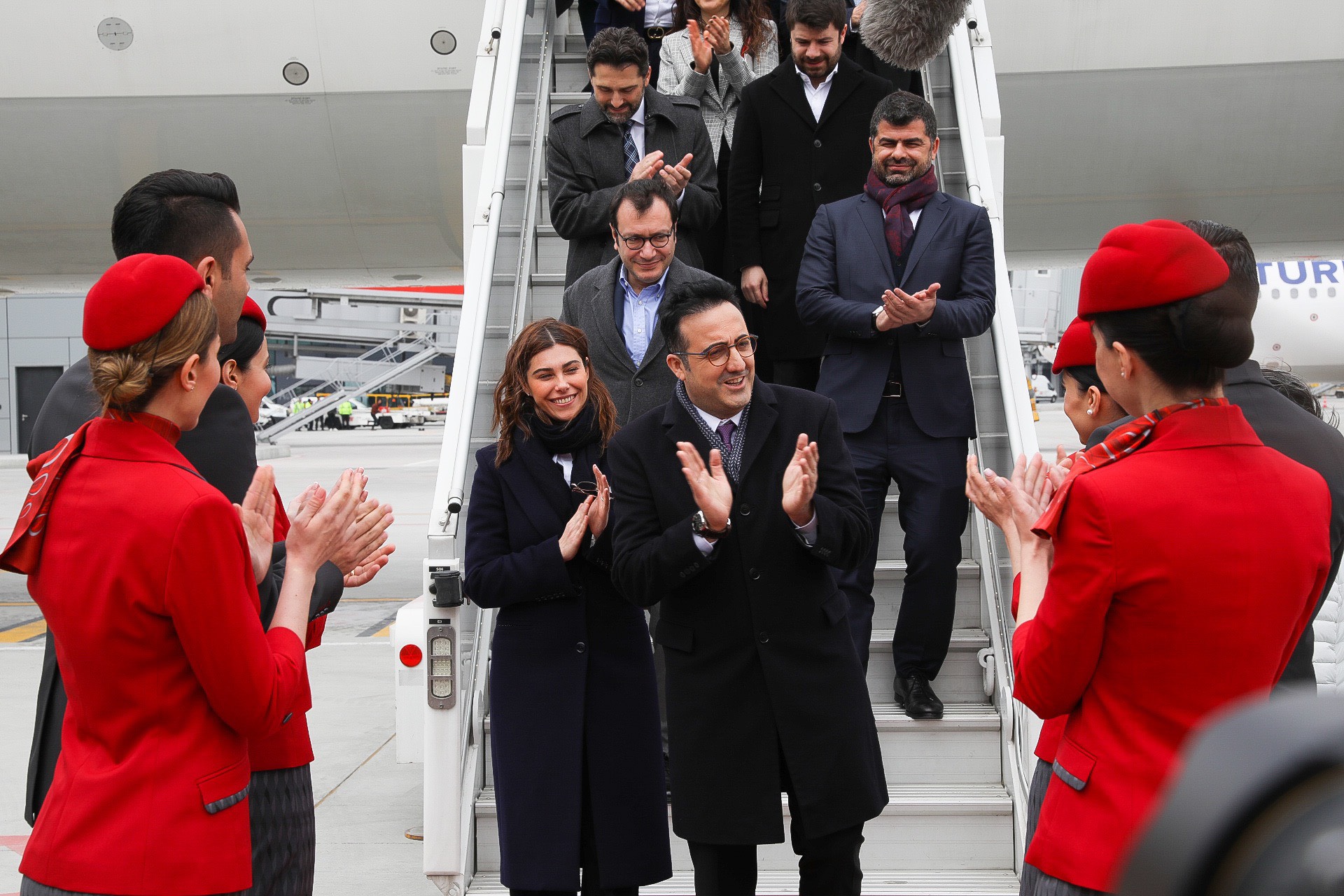
    Turkish Airline’s transition to its new home, Istanbul Airport, is largely concluded with progress at 96 percent. With the “Great Move” representing one of the most significant cornerstones of the Turkish Aviation history, Turkish Airlines has nearly concluded its gradual move to Istanbul Airport, which started following the official opening on 29th October last year. The moving operation, which started on 5th April, Friday, at 3:00, had reached 96 percent completion 12 hours earlier than the projected 45-hour plan. It concluded on 6th April, Saturday, at 20:00, and the flag carrier airline has already begun a new era at its new home, Istanbul Airport, which will be the new center of the global aviation sector.

    Commenting on the “Great Move” process, which included saying farewell to Atatürk Airport – home to Turkish Airlines throughout its 86 years of history, and moving to its new home base, Istanbul Airport, also known as “Monument of Victory”, Turkish Airlines Chairman of the Board and the Executive Committee, M. İlker Aycı said: “Currently the biggest airport project in the world, this enormous facility will be the home of the resounding local and global growth of Turkish Airlines in the future while becoming the most important driving force behind our growth with its state of the art physical capabilities and capacity.”

    “Successfully concluding its mission of being the home of our brand throughout our 86 years of history, saying farewell to Atatürk Airport was a highly saddening experience for us. However, our brand’s unstoppable growth and progress especially over the last 15 years forced us to make this decision to part ways. As Turkish Airlines became unable to fit its mold with its efficient growth performance, the need for a new home that will support its development and open its way with capacity and other physical capabilities was born. Starting with the originator of the idea for this monumental project and its biggest supporter, our President Recep Tayyip Erdoğan, as well as our Ministry of Transport and Infrastructure, IGA consortium, our various business partners, every single member of our family and everyone else who offered their toil and support, we are grateful to all of those for bringing us this bundle of opportunities, which will allow us to carry the passenger and flight experience into a whole new platform. In addition to this, I would like to also express my great pleasure and honor in announcing that the future of the global aviation will develop with Turkish Airlines at its center with our new home, and new face of our brand.”

  • Global public cloud spend to 17.5% in 2019

    Global public cloud spend to 17.5% in 2019

    Gartner forecasts worldwide public cloud services market will grow 17.5% in 2019 to reach a total of $214.3 billion, up from $182.4 billion in 2018.

    Cloud system infrastructure services, or infrastructure as a service (IaaS) is forecast to grow 27.5% in 2019 and reach $38.9 billion, up from $30.5 billion in 2018 (see Table 1). The second-highest growth rate of 21.8% will be achieved by cloud application infrastructure services, or platform as a service (PaaS).

    Gartner research vice president, Sig Nag, says “we know of no vendor or service provider today whose business model offerings and revenue growth are not influenced by the increasing adoption of cloud-first strategies in organizations. What we see now is only the beginning, though. Through 2022, Gartner projects the market size and growth of the cloud services industry at nearly three time the growth of overall IT services.”

    Gartner expects that by the end of 2019, more than 30% of technology providers’ new software investments will shift from cloud-first to cloud-only. This means that license-based software consumption will further plummet, while SaaS and subscription-based cloud consumption models continue their rise.

    “Organizations need cloud-related services to get onboarded onto public clouds and to transform their operations as they adopt public cloud services,” said Nag. Currently almost 19% of cloud budgets are spent on cloud-related services, such as cloud consulting, implementation, migration and managed services, and Gartner expects that this rate will increase to 28% by 2022.

    “As cloud continues to become mainstream within most organizations, technology product managers for cloud related service offerings will need to focus on delivering solutions that combine experience and execution with hyperscale providers’ offerings,” said Nag.

    He sees the complementary approach as driving both transformation and optimization of an organization’s infrastructure and operations.

  • 2020 Karma Revero Gets BMW’s TwinPower Turbo Engine

    2020 Karma Revero Gets BMW’s TwinPower Turbo Engine

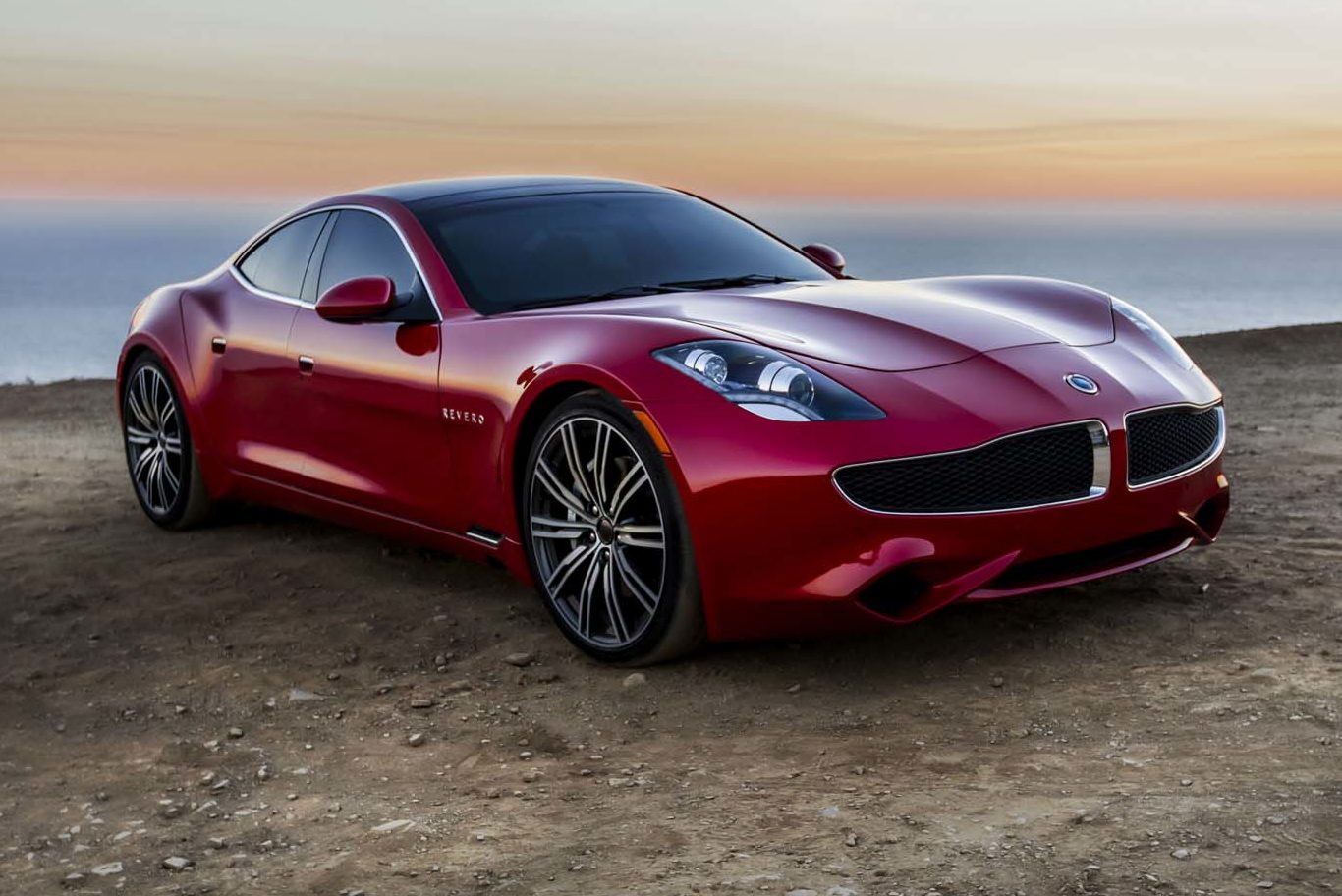
    Karma Automotive is all set to reveal its all new 2020 Revero luxury electric vehicle at Auto Shanghai 2019 and while there’s one teaser out yet, we didn’t know what the car will be powered by. The company announced that the 2020 Revero will use a BMW TwinPower turbo three-cylinder in-line engine supplied by BMW AG to power an on-board electric generator. BMW AG started working with Karma in 2015 to help develop the onboard generator systems used in the company’s new Revero.

    Karma’s engineering team embarked on a complete redesign of the all-electric powertrain that underpins the new 2020 Revero. After extensive evaluation the team selected the highly-charged BMW engine as the optimal choice to support a new and more powerful high-voltage NMC lithium-ion battery pack and a new, transversely mounted, twin-motor rear drive module (RDM).

    Thanks to this engine the performance of the Revero will be improved too and the car will be able to go from 0-96 kmph in just 4.5 seconds which is a second faster than the model it replaced. The 2020 Revero, along with Karma’s Pininfarina-designed concept car and its all-electric Vision concept car, will form the automaker’s product announcement at Auto Shanghai 2019.

    Bob Kruse, Karma’s Chief Technology Officer said, “BMW AG is a natural fit for Karma’s luxury-tech focus because it is a proven technology leader renowned for conceiving and delivering ground-breaking innovations.”

  • Indonesia’s FiberStar extends collaboration with Huawei

    Indonesia’s FiberStar extends collaboration with Huawei

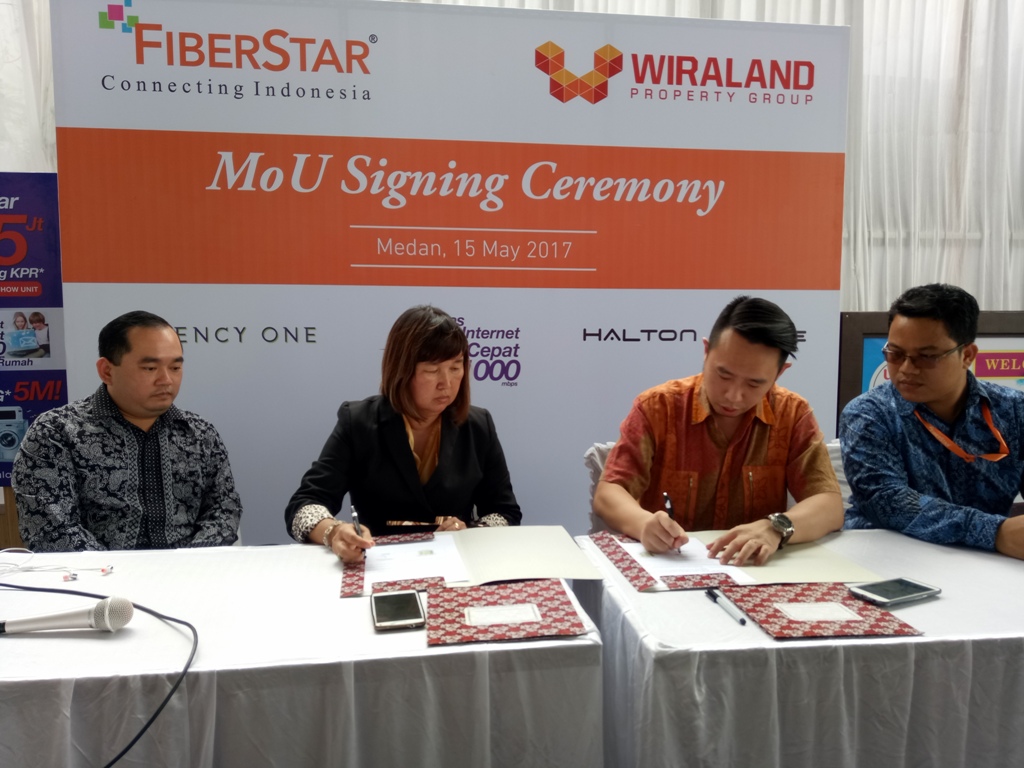
    Indonesia’s FiberStar has signed an agreement with Huawei to jointly expand high-speed fiber network services in the market.

    FiberStar recently partnered with Huawei to build a 1Tbps backbone DWDM network linking Jakarta with Surabaya. The network consists of submarine and terrestrial cables that form a ring network with a total length of more than 3000 kilometers.

    Building on this cooperation, the companies signed a memorandum of understanding at the Huawei ISP Summit Asia Pacific 2019 in Bali to strengthen collaboration in the field of fixed networks and data centers.

    FiberStar co-founder and director Thomas Dragono said Huawei shares the company’s vision for the digital transformation of Indonesia.

    “Being the pioneer of Indonesia’s neutral infrastructure service, and considering Huawei’s advancement in the optical communications field, we have both decided to explore a deeper and stronger partnership,” he said.

    “The consensus on the advantages of optical network technologies and evolution trends are the basis of cooperation between both parties. We will leverage the advanced DWDM and MPLS technology to expand the coverage of networks in Indonesia, and further facilitate the growth of the digital economy in Indonesia.”

    FiberStar was established in 2014 as a subsidiary of Indonesia’s biggest conglomerate the Salim Group.

    The company is Indonesia’s biggest carrier-neutral infrastructure provider, offering coverage to 92 Indonesian cities across the nation’s main islands including Sumatra, Java, Bali, Kalimantan, and Sulawesi.