Blog

  • Singtel extends VIA mobile wallet alliance

    Singtel extends VIA mobile wallet alliance

    Singtel has announced a further expansion of its emerging cross-border mobile payment alliance via an arrangement with Singapore Changi Airport.

    Subscribers to Thailand’s AIS will soon be able to use their AIS GLOBAL Pay mobile wallets to make payments across all four Changi Airport terminals in their home currency.

    AIS, one of Singtel’s regional mobile affiliates, is the first international member of the VIA Alliance, which launched in October. Other member mobile wallets to be added later this year include K Plus from Thailand’s Kasikorbank and Axiata Digital’s Boost Malaysia.

    Singtel also recently arranged to allow users of mobile wallets within the VIA Alliance to make payments in Japan through a partnership with Tokyo-based NETSTARS.

    Singtel plans to progressively expand the VIA alliance to include its other regional associates Airtel in India, Globe in the Philippines, Telkomsel in Indonesia, as well as more non-operator entities.

    “With Singapore welcoming over half a million visitors from Thailand every year, we are excited to enhance the retail experience for them with the ease, familiarity and convenience of seamless transactions,” Singtel International VP of business Soon Sze Meng said.

    “Having the many merchants in Changi Airport on board VIA will enable Thai travelers to enjoy a wide range of cashless dining and retail options from the moment they touch down, while these merchants will capture new customers and revenue.”

  • Roots Canada Gets It’s First Hong Kong Store

    Roots Canada Gets It’s First Hong Kong Store

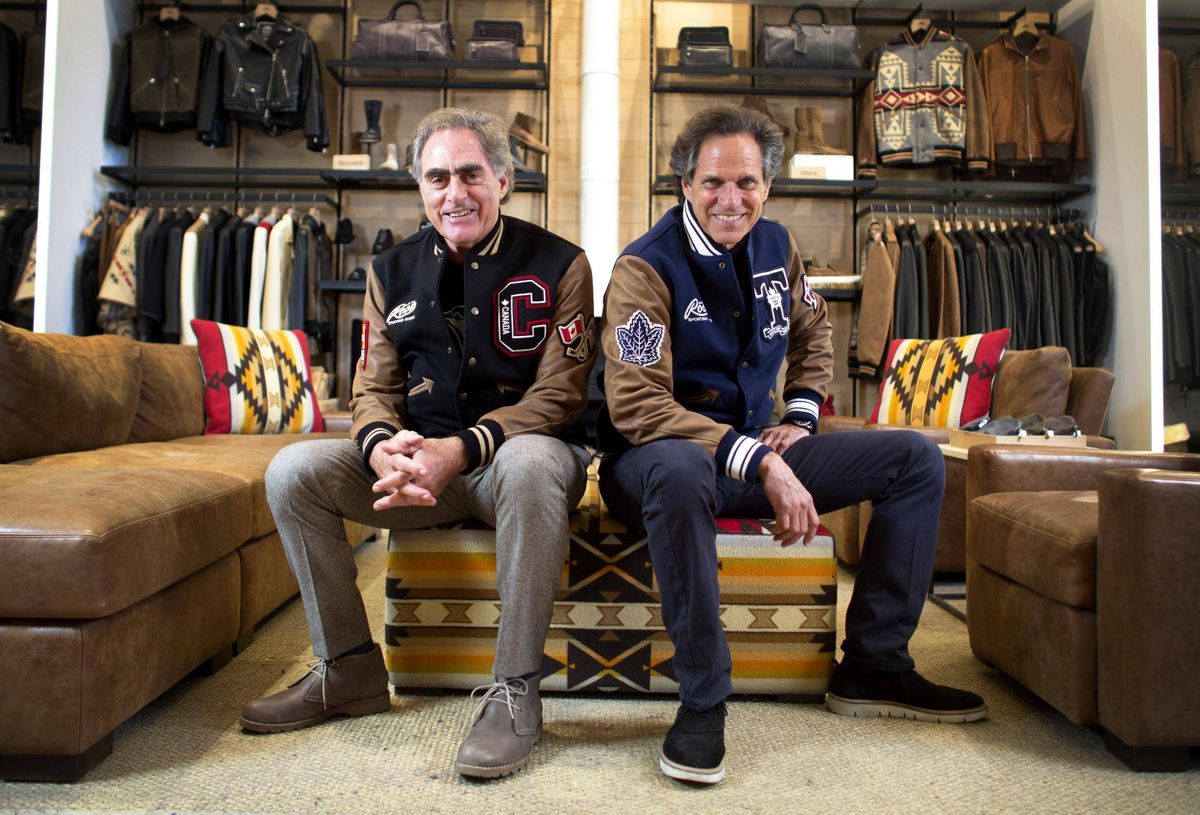
    Premium outdoor lifestyle brand Roots Canada has opened its first Hong Kong store this month, at Harbour City.

    The store was opened with Fung Retailing’s Branded Lifestyle Group, its Asian retail partner.

    Roots Canada’s brick-and-mortar debut in the territory coincided with the launch of an online store with Zalora Hong Kong.

    “Opening a store at the largest and most diverse shopping mall in Hong Kong is an important first step in what has the potential to be a multi-store market for Roots,” said Jim Gabel, president and CEO of Roots Canada.

    “Further, with an online store on Zalora, customers can go beyond the physical location to connect with our brand anytime and from anywhere in Hong Kong. Our expansion into Hong Kong is a testament to the continued success of our longstanding partnership with Branded Lifestyle Group.”

    The new Roots retail space brings together “cabin comforts and city conveniences” to create a space that feels like home, the company said in a statement. The store showcases Roots’ character and heritage by immersing shoppers in the more than 40 years of the brand’s stories and products.

    The brand’s collection is curated into four main areas in store, each telling a different Roots story, including a Cooper Beaver Collection that pays tribute to Roots iconic logo the Cooper Beaver, Roots Original Salt & Pepper Sweats, handcrafted leather, as well as seasonally relevant products that embody Roots unique comfortable cabin-meets-city style.

    “Leveraging our strong network and local resources, we are excited to bring the world-renowned Roots brand to Hong Kong,” said Sunny Wong, CEO of Branded Lifestyle Group.

    “The leisure-and-lifestyle-apparel trend continues to gain momentum in Asia, and we believe Roots focus on comfort and style is a perfect fit for the Hong Kong market.”

    Starting from a small cabin in Algonquin Park, Canada, in 1973, Roots has grown to become a global brand with 114 corporate retail stores in Canada, seven corporate retail stores in the US, 117 partner-operated stores in Taiwan, 37 in China and a global e-commerce platform.

    Branded Lifestyle Holdings represents five brands: Hang Ten, H:Connect, Arnold Palmer, Hunter and now Roots. It owns or franchises more than 1000 retail outlets across Greater China, South Korea, Southeast Asia and the Middle East.

  • The Mills Fabrica opens Techstyle X, Next Level Retail

    The Mills Fabrica opens Techstyle X, Next Level Retail

    Hong Kong business incubator and tech springboard The Mills Fabrica celebrated the launch of its first retail store Techstyle X on Saturday at The Mills.

    According to the group, the term “techstyle” covers material and supply chain innovation, wearables merging technology and style, and new retail experiences.

    The new store provides a platform for promising techstyle companies to showcase their products and services, attempting to bridge the gap between traditional long-term and pop-up stores by offering innovative startups a retail space with high traffic and flexible terms.

    Following its grand opening, Techstyle X is offering three experiential zones for its visitors to discover new techstyle innovations. Visitors will get a chance to use the self-serve 3D scanning station, customise their own t-shirts, and explore the latest techstyle innovations.

    The self-serve 3D scanning station allows visitors to obtain their very own digital avatar with key measurements – customers may then order perfect-fitting garments from personalised suits to sustainably-sourced denim jeans.

    Companies are able to rent a display space to launch their products, test the market and share their innovations with the world at the store, allowing customers to witness the latest and upcoming brands in the techstyle industry.

  • Apple’s Melbourne flagship Delay Due to Cultural Reasons

    Apple’s Melbourne flagship Delay Due to Cultural Reasons

    The Andrews Labor Government has said it will launch a review of Melbourne’s Federation Square after Heritage Victoria blocked the construction of an Apple flagship on the site, citing adverse effects on the square’s cultural heritage.

    The plan, which would have seen the three-storey Yarra building demolished to make room for the tech flagship, was denied on Friday when the Heritage Victoria deemed the construction would cause “an unacceptable and irreversible detrimental impact on the cultural heritage significance of Federation Square.”

    Apple said it was disappointed by the decision, but would remain committed to customers in Melbourne and Australia.

    The tech retailer currently runs five stores across Melbourne, in Chadstone Shopping Centre, Highpoint Shopping Centre, Westfield Southland, Westfield Doncaster, and Westfield Fountain Gate.

    Victorian minister for tourism, sport and major events Martin Pakula said the of Federation Square will examine how it looks, how it is funded and how it operates in an effort to ensure it continues to stand out as an attraction to Melbourne.

    “Since its opening in 2002, Federation Square has hosted creative events and world leading attractions,” Pakula said.

    “The review will ensure this much-loved space can thrive as a civic, cultural and commercial hub for years to come.”

    After the 2017 plan for an Apple flagship was put through without public consultation, Victorians will be given the opportunity to have their say in the review, which is set to be completed by the end of 2019.

    Victorian shadow minister for planning and heritage Tim Smith said the decision was a “humiliation” for the state government on Twitter.

    “After years of secret negotiations, with one of the world’s iconic brands, Apple, Daniel Andrews has been forced into a cringe worthy climb-down because his ministers didn’t do their due diligence,” Smith said.

    Smith also called on Heritage Victoria for having fast-tracked such a nomination when it is “often missing in action when it comes to protecting heritage homes.”

  • Woolworths Heads First in Taking on Kaufland

    Woolworths Heads First in Taking on Kaufland

    Woolworths and Aldi have increased their share in Australia’s grocery market, while Coles and IGA have slipped slightly, according to the latest research from Roy Morgan.

    Woolworths remains Australia’s top grocery retailer, increasing its share of the market to 34 per cent in 2018, up 1.4ppts, while a newly independent Coles now has a share of 27.6 per cent of the total grocery market, down 1.6ppts on a year ago.

    Aldi grew its grocery market share to 11.4 per cent in 2018, up 0.5ppts from a year ago, while Other Supermarkets outside the ‘big four’ such as Foodland and Foodworks have increased their share to 9.1 per cent, up 1.2ppts. IGA’s grocery share was down 0.4ppts to 7.1 per cent.

    Woolworths’ dominance in key fresh food categories has helped its strong lead. The retailer holds the largest market share in dollar terms for fresh meat, fresh deli, fresh bread and fresh fruit and vegetables ahead of Coles, Aldi and IGA supermarkets. The big two currently dominate Australia’s fresh food markets holding over 50 per cent of each of the fresh food markets.

    Michele Levine, Roy Morgan CEO, said Woolworths’ impressive performance places it in a strong position to deal with the entry of German hypermarket Kaufland into Australia’s more than $100 billion grocery market.

    “The demerger of Coles Group from industrial conglomerate Wesfarmers in the December quarter of 2018 means Australia’s second largest supermarket chain now has the opportunity to refocus on its core business ahead of the imminent arrival of German retailer Kaufland,” Levine said.

    Kaufland is following in the footsteps of fellow German retailer Aldi with plans to open six hypermarkets in Victoria over the next two years and more stores Australia-wide in the future.

    Levine also expects the anticipated rollout of ‘Amazon Fresh’ in the Australian grocery market in the near future to further disrupt the market. The online retail giant launched a food and grocery segment (excluding fresh food) late last year.

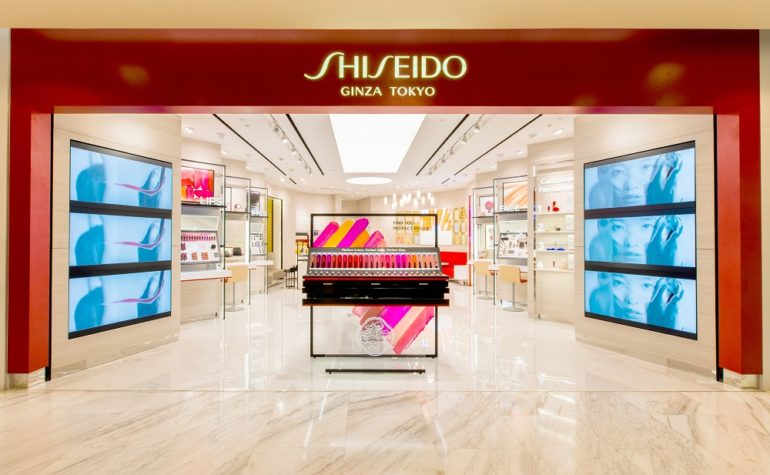
  • Shiseido and Alibaba Collaborating to Please Chinese Customers

    Shiseido and Alibaba Collaborating to Please Chinese Customers

    Japanese cosmetics giant Shiseido on Sunday become the world’s first multinational cosmetic company to open a dedicated office in Hangzhou to work with Alibaba Group and co-create products specifically tailored for Chinese consumers.

    The Shiseido and Alibaba office, within walking distance of the Alibaba Xixi headquarters, will house a team of around 20 Shiseido employees by next year. The purpose is to tighten collaboration with Tmall, Alibaba’s B2C marketplace and better position Shiseido in China, said the makeup company’s China region CEO Kentaro Fujiwara.

    “China is Shiseido’s biggest and most-important market [outside of Japan]. By combining Alibaba’s strengths in digitisation and consumer engagement with Shiseido’s world-class standards in research and development, we can create products that can precisely capture the appetite of the Chinese consumer,” he said. “I hope this unprecedented collaboration will pave the way for further innovations for the entire [Shiseido] group.”

    According to Shiseido, its China business saw the fastest acceleration in 2018 with sales growth of 32.3 per cent year-on-year to RMB 11.6 billion (US$1.73 billion). China accounted for 17.4 per cent of Shiseido’s total net sales last year, making it the profitable country market, following its home market Japan. Shiseido said it expects e-commerce to generate 40 per cent of its China sales by next year.

    “Without a doubt, whether it be e-commerce or digital innovation, Alibaba is the leader. Alibaba is one of the most important strategic partners for Shiseido China as well as for the entire group,” said Fujiwara.

    Mike Hu, president of Tmall’s fast-moving consumer goods division, said Shiseido’s leadership position in the industry and its quick adaptation to digital transformation is a common value shared by Alibaba.

    “Our primary mission is to enable others, and we are always eager to work with the world’s leading companies to help them bring their best products into the China market in the most effective and efficient way. This definitely includes Shiseido, a reputable brand that is synonymous with high standard and high quality,” he added.

    “The opening of the Shiseido and Alibaba office represents an important and historical milestone of our long-term collaboration,” Hu said.

    One of Shiseido’s cosmetics brands, Za, opened a Tmall flagship store in September 2011. Since then, 12 flagship shops and 15 major brands also launched on the platform. Fujiwara said there is a plan to bring Shiseido’s mother-and-baby product brand into China later this year via Tmall.

  • Sotheby’s Hong Kong Sets Record Spring Sale

    Sotheby’s Hong Kong Sets Record Spring Sale

    International auction house Sotheby’s has established its second highest total sales in company history for its Spring 2019 Hong Kong auction series.

    Second only to the firm’s landmark 40th anniversary sales total in Autumn 2013, Sotheby’s Hong Kong concluded the season with a total of HK$482 million, exceeding the pre-sale estimate for the series of $428 million.

    The sales were marked by healthy activity across all categories and from all corners of Asia, with a strong combined sell-through rate of 90 per cent.

    “These superb results are up on what were already very strong results last spring, despite the fact that the estimates were lower than a year ago,” said the firm’s CEO Tad Smith, adding “our excellent performance against low estimate is a clear indicator of the health of the market in Asia and bodes very well for our important upcoming May auctions in New York.”

    “With all eyes firmly fixed on our Hong Kong sales for this first indicative season, I think we can say that the Asian market did not disappoint,” commented CEO of Sotheby’s Asia Kevin Ching. “Our total follows what was already a record year for Sotheby’s in Asia, with this season’s results now sitting among the top results we have ever achieved here in Hong Kong – a testament to the fact that, when you get it right, collectors from across Asia remain ready to go the extra mile.”

    Sotheby’s Asia chairman Patti Wong added: “When building the sales for these big seasons, we try to keep our finger firmly on the pulse of our collectors so as to understand, not only what they want right now, but also where their interests are taking them, so our offerings reflect both where the market is and where it is going. That is why we are bringing an ever-more diverse range of material to Hong Kong, along with an ever-wider range of possibilities for collectors to engage with us. This, for me, is what is so exciting about these seasons – they are not only a data point for the Asian market, they are also a testimony to the excitement, and opportunity, that exists within it.”

    Among the highlights of the Sotheby’s Hong Kong season:

      • The auction house staged 20 auctions in nine categories featuring 4331 lots and attracting more than 35,000 visitors.
    • Six lots sold for in excess of $100 million.
    • Wine sales totalled $273 million, setting a new world auction record.
    • Sales of modern art realised $851 million, the top lot being Wu Guanzhong’s Lotus Flowers (I), which fetched $130.8 million, more than 8.5 times the estimate.
    • The highest-totalling series of Contemporary Art sales staged in Asia, realising $802 million.
    • A record for a work by a female artist sold at auction in Asia: Kusama Yayoi’s Interminable Net #4 sold for $62.4 million.
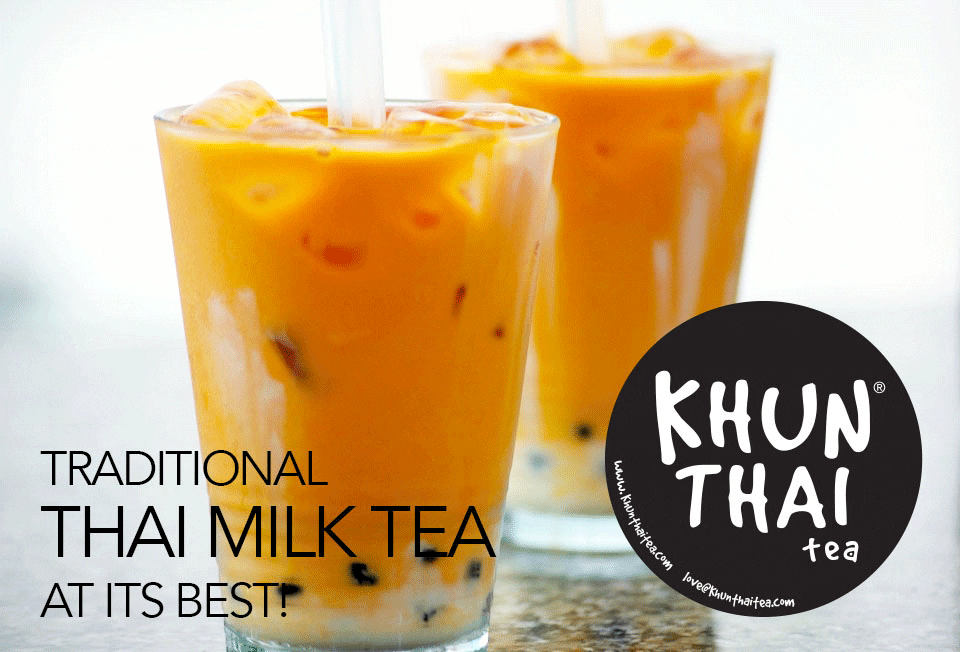
  • Khun Thai Tea appoints First Indonesian Franchise

    Khun Thai Tea appoints First Indonesian Franchise

    Entrepreneur Amelia Fransisca has been appointed master franchise holder for Khun Thai Tea Indonesia.

    Fransisca, who has a 10-year tenure in the foodservice industry, said she chose Khun Thai Tea for its novel, fresh taste despite its low sugar content compared to other competitors, amidst trending consumer demand in Indonesia for original tea and healthier beverage options.

    “This brand will be huge as an option for fresh tea and healthier choices,” said Fransisca. “I believe the brand will also become more recognizable to our people (especially among young people) because it is introduced and organized by a great team and a great plan.”

    Indonesia is already home to four Khun Thai Tea outlets – three in Jakarta and one in Bali. Fransisca plans to spur growth by focussing her efforts in Indonesia’s cities and suburban areas, with special care given to the Jakarta, Bogor, Tangerang and Bekasi areas, where she says new outlets will help the brand gain more recognition.

    She has also chosen to open in these areas first due to local consumers’ strong buying power, range of food and beverage choices and exposure to product innovation. They are also well-positioned in terms of proximity, allowing closer supervision of procedures, services, and product quality.

    “The food and beverage business still has lots of room to develop and innovate nowadays, especially in Indonesia. That is why F&B is a good business,” she said. “Selling drinks is also simpler, and delivers good margins for comparatively average business costs … Compared to starting up a new business, it is also safer to choose a franchise.”

    “According to recent research conducted through social media in Indonesia, a glass of milk tea with boba is still the number-two most-wanted product on most Indonesians’ must-buy list, after famous chicken dishes called ‘Ayam Geprek’.”

    Khun Thai Tea is currently amongst the fastest-growing beverage store brands in Singapore, Malaysia, and Indonesia.

  • Roots Canada To Open First Hong Kong Store

    Roots Canada To Open First Hong Kong Store

    Premium outdoor lifestyle brand Roots Canada has opened its first Hong Kong store this month, at Harbour City.

    The store was opened with Fung Retailing’s Branded Lifestyle Group, its Asian retail partner.

    Roots Canada’s brick-and-mortar debut in the territory coincided with the launch of an online store with Zalora Hong Kong.

    “Opening a store at the largest and most diverse shopping mall in Hong Kong is an important first step in what has the potential to be a multi-store market for Roots,” said Jim Gabel, president and CEO of Roots Canada.

    “Further, with an online store on Zalora, customers can go beyond the physical location to connect with our brand anytime and from anywhere in Hong Kong. Our expansion into Hong Kong is a testament to the continued success of our longstanding partnership with Branded Lifestyle Group.”

    The new Roots retail space brings together “cabin comforts and city conveniences” to create a space that feels like home, the company said in a statement. The store showcases Roots’ character and heritage by immersing shoppers in the more than 40 years of the brand’s stories and products.

    The brand’s collection is curated into four main areas in store, each telling a different Roots story, including a Cooper Beaver Collection that pays tribute to Roots iconic logo the Cooper Beaver, Roots Original Salt & Pepper Sweats, handcrafted leather, as well as seasonally relevant products that embody Roots unique comfortable cabin-meets-city style.

    “Leveraging our strong network and local resources, we are excited to bring the world-renowned Roots brand to Hong Kong,” said Sunny Wong, CEO of Branded Lifestyle Group.

    “The leisure-and-lifestyle-apparel trend continues to gain momentum in Asia, and we believe Roots focus on comfort and style is a perfect fit for the Hong Kong market.”

    Starting from a small cabin in Algonquin Park, Canada, in 1973, Roots has grown to become a global brand with 114 corporate retail stores in Canada, seven corporate retail stores in the US, 117 partner-operated stores in Taiwan, 37 in China and a global e-commerce platform.

    Branded Lifestyle Holdings represents five brands: Hang Ten, H:Connect, Arnold Palmer, Hunter and now Roots. It owns or franchises more than 1000 retail outlets across Greater China, South Korea, Southeast Asia and the Middle East.

  • China Mobile, ZTE launch maritime broadband solution

    China Mobile, ZTE launch maritime broadband solution

    ZTE and the Zhejiang branch of China Mobile have jointly launched commercial trials of a new maritime broadband satellite solution.

    The solution, Heweitong, is designed to help solve common problems of maritime communication, such as poor coverage, slow data rate, and high cost.

    It will allow people at sea to communicate and access the internet by merely installing a mobile app on their smartphones.

    During the trial period, China Mobile and ZTE are offering the solution for free. Once commercially launched, the companies expect the cost to be 90% lower than traditional marine communications solutions.

    Heweitong has already undergone verification testing involving more than 50 ships and nearly 300 users in the Bohai Sea, the East China Sea and the South China Sea.

    The project forms part of China Mobile’s goal of offering ubiquitous connectivity via an integrated space, sky and land based communications solution.

  • Samsung launches its first 5G smartphone

    Samsung launches its first 5G smartphone

    To coincide with Friday’s launch of commercial 5G services by South Korea’s major mobile operators, Samsung has launched its first 5G smartphone.

    The Samsung Galaxy S10 5G, which is currently exclusively available for purchase in South Korea, has been designed to support speeds of up to 2Gbps download and 150Mbps upload by taking advantage of 5G features including 4X4 MIMO and up to seven-carrier aggregation.

    The device also supports Wi-Fi speeds of up to 1.2Gbps symmetrical by incorporating the latest Wi-Fi standards.

    It sports a 6.7-inch dynamic AMOLED display with an edge-to-edge screen, a hexa camera equipped with a neural processing unit and a 4,500mAh battery with Fast Wireless Charging 2.0 capability.

    Samsung has meanwhile announced that its 5G multi-mode chipsets are now in mass production for premium mobile devices.

    The three chips in the Exynos range, including a single-chip tranceiver, modem and supply modualator solution, are capable of supporting 5G new radio sub-6 GHz spectrum and legacy radio access technologies.

    “Samsung has been an innovator in mobile communication technologies with a strong portfolio of market-proven solutions, and we are well-prepared to extend our leadership into 5G,” Samsung Electronics president of System LSI Business Inyup Kang said.

    “Our multi-mode solutions… will together enable powerful yet energy-efficient 5G performance along with the network versatility that allows users to stay connected wherever they are.”

  • Adidas and Beyonce Relaunch in Ivy Park

    Adidas and Beyonce Relaunch in Ivy Park

    Adidas and Beyonce are teaming up to relaunch the superstar’s Ivy Park label.

    The sportswear firm has announced a multi-layered partnership with the performer to “inspire and empower the next generation of creators; drive positive change in the world through sport; and identify new business opportunities”.

    “This is the partnership of a lifetime for me,” said Beyonce. “Adidas has had tremendous success in pushing creative boundaries. We share a philosophy that puts creativity, growth and social responsibility at the forefront of business. I look forward to re-launching and expanding Ivy Park on a truly global scale with a proven, dynamic leader.”

    The partnership will result in the co-creation of new products – from performance to lifestyle – and a unique purpose-driven program focused on empowering and enabling the next generation of athletes, creators and leaders.

    According to a joint statement, meaningful and rich storytelling will be the foundation for both Beyonce’s collection with Adidas as well as the re-launch of her Ivy Park brand.

    “As the creator sports brand, Adidas challenges the status quo and pushes the limits of creativity through its open source approach,” said executive board member – global brands Adidas Eric Liedtke.

    “Beyonce is an iconic creator but also a proven business leader, and together we have the ability to inspire change and empower the next generation of creators.”

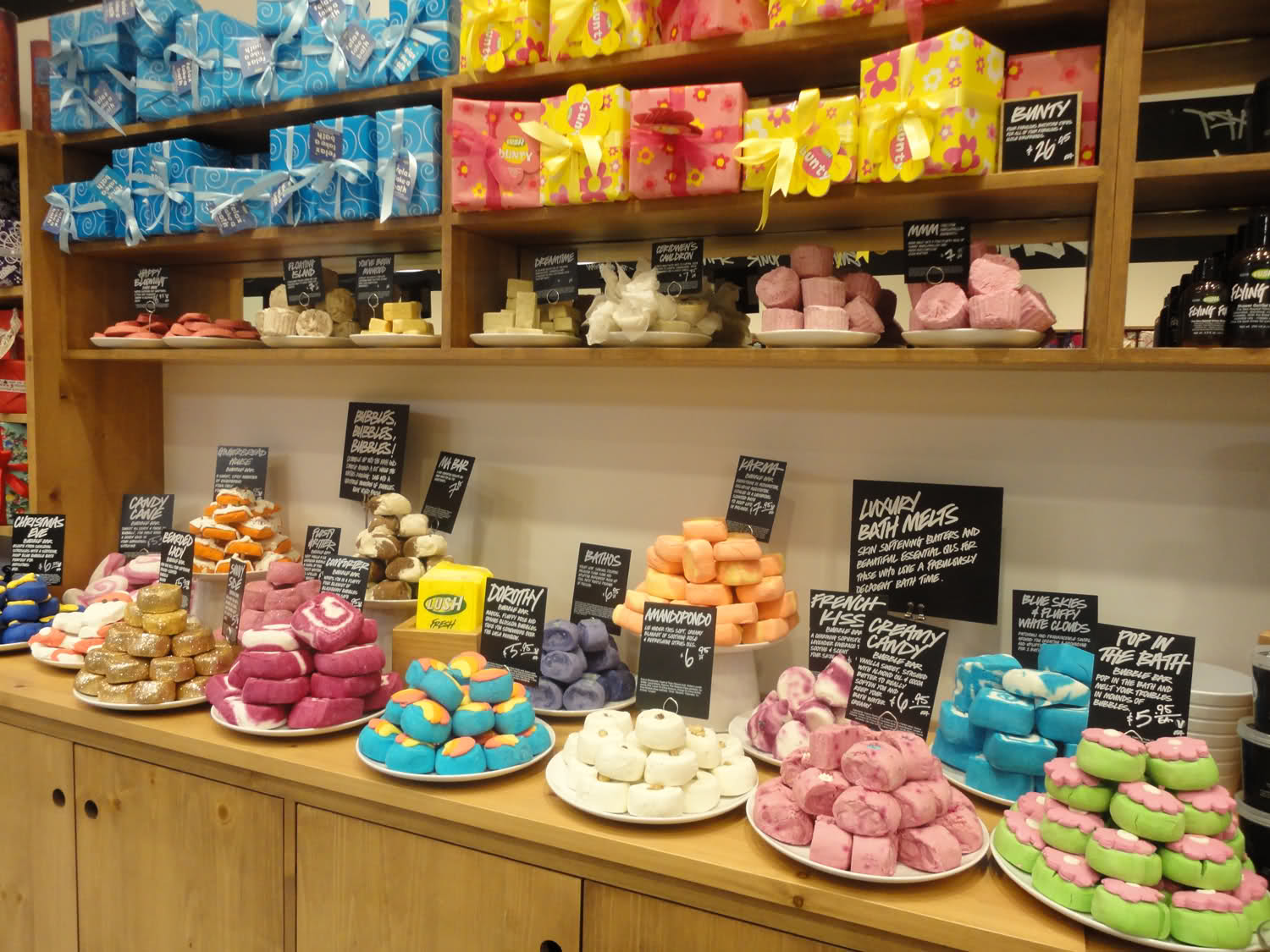
  • Lush Prepares Itself for Growth

    Lush Prepares Itself for Growth

    Global beauty business Lush posted a £3.9 million (A$7.17 million) operating loss in the year to June 30, 2018, compared to an operating profit of £22.6 million ($41.54 million) the year prior.

    The decline was due to the rising cost of goods, manufacturing, staff, rent and administrative costs, and a slowdown in the US market, which outpaced a 6.6 per cent increase in turnover on a constant currency basis to £524.4 million ($963.9 million) in FY18.

    This reflects a 4.4 per cent in like-for-like sales and 9.6 per cent increase in online sales, compared to the previous corresponding period.

    Still, GlobalData retail analyst Emily Salter called this a “solid year” for the brand off the back of its investment in stores and innovation.

    “The retailer relocated 11 UK stores to larger units during the period which saw an impressive 39.6 per cent increase in like-for-likes, indicating Lush’s dedication to the offline channel as it seeks to further differentiate its unique offering and drive customers to stores,” Salter said.

    Salter also pointed to the recent launch of a new global website, which she expects to bolster conversion and increase basket sizes thanks to the “more attractive, aspirational and easy-to-navigate site”.

    She believes the brand is in a good position for growth due to its strong brand identity, and commitment to vegan and ethical practices.

    There is a downside to this, however, as Salter said the brand’s focus on natural ingredients was partly to blame for the increased costs.

    “The retailer must work to return to profitability in its current financial year, although the increased ingredient costs will be hard to navigate due to Lush’s focus on natural and good quality ingredients,” Salter said.

    While performance in Lush’s largest retail market, the US, was disappointing – with declining footfall contributing to sales falling by 7.5 per cent – its UK business fared slightly better.

    Lush Australia was contacted for comment.

  • Zarraffa’s Coffee Open Two New Shops

    Zarraffa’s Coffee Open Two New Shops

    Coffee chain Zarraffa’s Coffee will open two new stores this month, one in Clarkson, WA, and the other in Bankstown, NSW.

    The chain’s Clarkson store, which will be the retailer’s first purpose-built location in the Perth area, will feature a comfortable in-store environment and a full-service drive through.

    Zarraffa’s new drive through brings the total to six in Western Australia, with the other five stores located in various suburbs across Perth, including Ellenbrook, Canning Vale, Currambine, Peppermint Grove and in Kalgoorlie.

    “The Clarkson store typifies what Zarraffa’s customers experience on the East Coast where the brand has been built steadily since 1996,” said founder and managing director Kenton Campbell.

    The Bankstown store will be the retailer’s fourth store under the NSW area developer arrangement, Zarraffa announced.

    The retailer said more stores have been proposed this year for the company.

    “We are not interested in growth for growth’s sake,” Campbell said.

    “Zarraffa’s has built its reputation on creating small business opportunities, through specialised training, operational consistency and great products and service – year on year.”

  • Netflix removes key feature from its iOS app

    Netflix removes key feature from its iOS app

    AirPlay is a feature found on iOS and Mac devices that allows users to send audio, video, photographs, screenshots and more between Apple devices sharing a similar network. Using Bluetooth and Wi-Fi, AirPlay will let a home with multiple HomePod speakers in different rooms, share the same song throughout the house. And with several smart TV manufacturers adding support for the feature, content from an iOS or Mac device can be viewable on certain large-screen smart TVs.

    There have been a number of complaints from iPhone and iPad users stating that AirPlay was no longer working with Netflix. That was unusual because the iOS version of the streaming video app has supported AirPlay since 2013. The complaints from iOS users state that when they tried to use AirPlay in the Netflix app, a pop-up error message appeared that said, “Cannot play title. Please try again later.”

    But there is a reason why AirPlay no longer works with Netflix. As a result of what it is calling “technical limitations,” Netflix has pulled AirPlay support from its iOS app. This is actually noted by the video streamer on its support page. Considering that this was an iOS feature that Netflix had supported for over five years, it is strange that AirPlay would all of a sudden no longer work with Netflix. The company has not divulged the details of the “technical limitations” that have forced it to stop offering AirPlay support (more on that later).

    This isn’t the end of the world for Netflix subscribers used to employing AirPlay. After all, the Netflix app can be installed or is already installed on a number of smart television sets. But using AirPlay does make it easier for iOS users with Netflix to stream content from their own account to a smart TV that does not have their Netflix login information.

    “We want to make sure our members have a great Netflix experience on any device they use. With AirPlay support rolling out to third-party devices, there isn’t a way for us to distinguish between devices (what is an Apple TV vs. what isn’t) or certify these experiences. Therefore, we have decided to discontinue Netflix AirPlay support to ensure our standard of quality for viewing is being met. Members can continue to access Netflix on the built-in app across Apple TV and other devices.”-Netflix< The Netflix support page lists some other options that iOS users can try in order to cast Netflix from their phone or tablet to a compatible television. With the Netflix 2nd Screen option, subscribers open the Netflix app on their iOS device and television, signing into the same account on both devices. The mobile device and the TV must share the same Wi-Fi network. On the mobile device, the user needs to tap on "Cast" found in the upper or lower right of the screen, and select the television that he/she wants to view Netflix on. After deciding which show or movie to watch, the user hits play and the selected content will appear on the TV. Another option, found on Philips, Polaroid, Sharp, Skyworth, Soniq, Sony, Toshiba, and Vizio TVs, will allow you to Chromecast Netflix from your iOS device to your television. Simply open the Netflix app on your iOS device, and tap on the "Cast" icon in the upper or lower right hand side of the screen. Select the device you want to watch Netflix on, choose a television show or movie, and hit play. Last month, Apple became a Netflix competitor by unveiling Apple TV+. This is a video streaming service that will be available this fall on iOS devices along with certain smart TVs. There will be new, original programming from Apple along with content from HBO, Showtime and others. Could this new rivalry be behind the "technical limitations" that forced Netflix to stop supporting AirPlay? After all, it does seem strange that Netflix was able to support AirPlay for from 2013 until now, just when Apple introduces a service that will compete with it. Netflix, of course, will never admit to this. And regardless what the true reasons are, the bottom line is that iOS users will have to resort to the aforementioned alternatives if they want to cast any streaming Netflix content from their iPhone or iPad to their smart TV.