Blog

  • Starbucks India caught profiteering from tax cut

    Starbucks India caught profiteering from tax cut

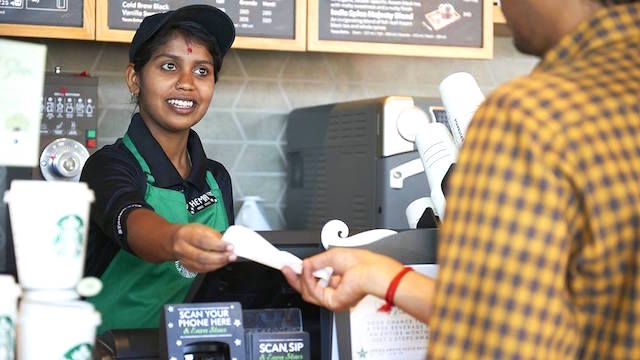
    Starbucks India could be fined after failing to pass on a hefty GST cut to its customers. India’s director general of anti-profiteering (DGAP) has found that Tata Starbucks profiteered by not reducing its prices when the government reduced the GST from 18 per cent to 5 per cent in November 2017. Starbucks India is a joint venture between Tata Group and Seattle-based Starbucks.

    The DGAP submitted its report to National Anti-Profiteering Authority (NAA) recently.

    “The company is found to have profiteered Rs 4-5 crore (US$564,000 to $705,000) as it did not pass on the benefit of GST rate cuts to its customers,” a source told the online publication. “The case is now being heard by the NAA for a final decision.”

    Last year, a regular latte at Starbucks India cost Rs 205, equivalent to US$2.89 plus 5 per cent GST. An overcharge of 13 per cent is equivalent to 38 cents on every cup sold. Starbucks may argue it increased its prices at the time coinciding with the cut to offset increased overheads.

    The probe was sparked by a customer complaint who was unhappy that the company did not reduce its prices when the tax rate fell by such a large margin.

    says that under India’s GST system, businesses have an obligation to compute and pass on the benefit of tax-rate cuts to consumers.

    “Any reduction in rate of tax on any supply of goods or services or the benefit of input tax credit (ITC) shall be passed on to the recipient by way of a commensurate reduction in prices,” rule 171 of the Central GST (CGST) Act, 2017, reads.

    A spokesman for Tata Starbucks emailed the publication saying the company “conducts its business ethically and complies with all the local laws and regulations”.

    A decision on the case will take up to three months. If the NAA rules against Starbucks India, the company can be forced to reimburse affected patrons. In the case of a coffee chain, it would be impossible to identify all the affected customers, in which case the NAA may order the overcharged sum to be deposited into a government-operated Consumer Welfare Fund. The authority may also impose a fine.

  • Sportswear brands Merrell and Saucony heading to China

    Sportswear brands Merrell and Saucony heading to China

    Chinese sportswear retailer Xtep has signed a deal with Wolverine World Wide to distribute Merrell and Saucony products in Mainland China, Hong Kong and Macau.

    The joint venture plans to start operating in the second half of this year.

    “We are delighted to have Wolverine, a global company with a portfolio of premium brands, as our partner,” said Ding Shui Po, Xtep chairman and CEO. “We look forward to working shoulder-to-shoulder with them to seize the numerous business opportunities we see in these key Asian markets.”

    New stores will trade under the Merrell and Saucony banners, with the majority slated for shopping malls in China’s larger cities. Xtep plans an expanded presence for both brands in Hong Kong and Macau.

    “Wolverine is extremely pleased to partner with Xtep to accelerate the growth of two of our best-known global brands – Saucony and Merrell – in the critical markets of mainland China, Hong Kong and Macau,” added Blake W. Krueger, chairman, CEO and president of Wolverine.

    “We have seen incredible sportswear growth in these markets, and our brands are now poised to excel as we engage Xtep’s significant retail presence and regional expertise to tap into the booming running and outdoor sectors.”

  • China Unicom hosts 5G in smart education conference

    China Unicom hosts 5G in smart education conference

    China Unicom is collaborating with Chinese gaming and mobile application developer NetDragon WebSoft to develop 5G-enabled future classroom applications.

    The operator jointly held a 5G + Smart Education Industry Education conference in Wuhan to demonstrate the potential of 5G to transform the education process.

    The conference, which was also organized by the National Engineering Research Center for E-Learning of Central China Normal University and National Engineering Laboratory for Educational Big Data, ad co-organized by NetDragon, Huawei and the China Information Communication Technologies Group Corporation.

    At the conference, China Unicom demonstrated the use of 5G and holographic technology to provide a new-experience open physics lecture to students across different regions simultaneously.

    NetDragon WebSoft also  demonstrated a wide range of education products, including Holographic Interactive Learning, VR Immersion Classroom, One-Stop Learning, and other educational products.

    “5G will become a crucial foundation for our country’s information and communication construction, as well as the key to the development of industrial internet and artificial intelligence,” China Unicom deputy general manager Liang Baojun said.

    “In this context, China Unicom, as one of the leaders in the telecommunication industry, will jointly conduct 5G business research with multiple industrial enterprise partners to lay the foundation for promoting full commercial use of 5G. At the same time, we will leverage on resources from our existing network, incubation of 5G application and support from our industrial chain to fully support the development of education in China.”

  • Apple CE promises new products will ‘blow you away’ soon

    Apple CE promises new products will ‘blow you away’ soon

    Apple CEO Tim Cook has promised investors the firm remains on track to double its 2016 revenues of almost US$25 billion next year, prompting a rise of more than 1 per cent in Apple stock on Friday.

    Speaking at the firm’s annual meeting in Cupertino, Cook claimed Apple is “planting seeds” and “rolling the dice” on new products set to “blow you away”.

    Cook indicated a range of new products under development for the Apple Watch and AirPods, and has previously stoked ongoing expectations for an AR glasses product. He also signalled an eventual drop in price for the MacBook Air laptop, currently retailing at US$1200, despite upgrading to a higher-resolution screen.

    The shareholder meeting saw the entire Apple board re-elected, including former US VP Al Gore, and included a political discussion that emphasised a variance in political ideology with that of the current US administration, despite an acknowledgement that the firm has worked successfully with the US government.

    It also implied criticism of other big tech firms who maintain data profiles of its users, such as Facebook.

    Cook said the company was also continuing to evaluate new businesses to buy to build its technology capabilities.

  • Technology helps to boost Carrefour China profit

    Technology helps to boost Carrefour China profit

    Carrefour China has boosted its profit 11-fold according to documents filed in France, where its parent company is based. In China, Carrefour achieved €45 million operating income from its 245 outlets and online business, which it put down to investments in previous years in boosting its operations and profile there.

    The company said it has transformed the commercial model of its Le Marche hypermarket chain, and boosted sales online. An investment in technology allowing facial recognition and Scan & Go had particularly paid off.

    “China is a retailing laboratory for the world,” said Thierry Garnier, president and CEO of Carrefour China. “For Carrefour, China is a specific market that has helped us to learn and to understand the future.”

    At the end of last year, Carrefour opened a flagship on Tmall which is expected to further improve sales.

    Globally, Carrefour increased its sales by 1.4 per cent to reach €85 billion.

  • H&M names first Philippine ambassador

    H&M names first Philippine ambassador

    H&M has named Nadine Lustre as its first Philippine ambassador.

    The endorsement deal comes with a special swimwear collection to be launched in the Philippines next week.

    Nadine Lustre has more than 5.9 million followers on Instagram, and is considered to have a highly visible presence among today’s youth.

    “It was a whole new experience working on the campaign. It didn’t feel like we were working at all. I felt creative the whole time, and that, for me, is one of the best feelings ever,” Lustre told.

    H&M has previously worked with some of the biggest names in pop culture including Beyonce, David Beckham, Diane Kruger and Namie Amuro.

  • Broadband Forum releases home Wi-Fi test standard

    Broadband Forum releases home Wi-Fi test standard

    With the rapid development of 4K TV, online gaming and smart homes, statistics from Broadband Forum show that more than 1 billion users now have access to fixed broadband, and Wi-Fi has become an essential part of broadband services provided by operators.

    Operators are increasingly providing service packages featuring Wi-Fi to enhance the home broadband experience of end users. This has created a compelling need to optimize Wi-Fi performance to support end-to-end performance of broadband services, including development of 4K video and VR services, and to minimize operators’ operating and maintenance costs.

    This need is highlighted by Ovum reports, which show that Wi-Fi problems account for 30% to 60% of operators’ broadband complaints.

    Clearly, home Wi-Fi quality is vital to both delivering a high-quality broadband experience and to operators’ operational efficiencies, yet there were no existing unified performance testing standards – until now.

    To address this issue, Broadband Forum announced the release of the first Wi-Fi performance test standard – Technical Report 398 Indoor Wi-Fi Performance Test Standard (TR-398) – during Mobile World Congress 2019.

    TR-398 is the first standard that systematically and quantitatively evaluates home Wi-Fi device performance across six dimensions: receiver sensitivity, throughput, coverage, multi-user support, anti-interference, and stability.

    By defining Key Performance Indicators (KPIs), such as the Wi-Fi equivalent bandwidth (throughput), rate at different distances, and throughput for multiple online users, the standard helps telecom operators and end users select optimal Wi-Fi solutions.

    The TR-398 standard describes the purpose, test scope, conditions, test cases, and standard thresholds for indoor home gateway Wi-Fi performance testing, helping telecom operators efficiently test indoor Wi-Fi performance, develop home networks and video services, and improve home broadband experience.

    From its inception as a project within Broadband Forum, TR-398 has received extensive industry attention. More than 16 operators and equipment vendors have actively participated in and supported the drafting of the standard.

    Many operators around the world are known to be planning to use TR-398 as the Wi-Fi performance admission specification for home broadband customer-premises equipment (CPE).

    According to Broadband Forum CEO Robin Mersh, Wi-Fi is the key infrastructure for broadband Internet access in the connected home and for a high-quality ultra HD video experience.

    “Wi-Fi performance of single gateways must meet service requirements and comply with standards to accelerate industry development,” said Mersh. “The goal of TR-398 is to define carrier-class home Wi-Fi performance. We are delighted that a critical mass of key industry players has participated in crafting this standard and are excited for the role that this standard will play in enabling a superior broadband experience in the connected home of the future.”

  • Axiata Digital joins Singtel’s cross-border m-payment alliance

    Axiata Digital joins Singtel’s cross-border m-payment alliance

    Singtel Group and Malaysia’s Axiata Digital have signed an agreement to collaborate in the areas of mobile financial and digital services to promote the growth of the ASEAN digital economy. Under the agreement, Axiata Digital will join Singtel’s cross-border mobile payment alliance VIA, expanding the alliance’s footprint beyond Singapore and Thailand to Malaysia.

    Axiata Digital operates the Boost Malaysia mobile wallet, which as 3.7 million customers and 66,000 merchant points across the nation.

    In addition, the Singtel Group’s Open Platform payment gateway will partner with Axiata Digital’s API platform to enable cross-sharing of product portfolios.

    Both parties have also agreed to jointly promote and drive cross-border payments and to explore collaboration around rewards and loyalty programs.

    VIA was launched in October with Thai partners AIS and Kasikornbank. AIS is one of Singtel’s regional mobile associates. Singtel group plans to expand the VIA initiative to cover other associates Bharti Airtel in India, Globe in the Philippines, and Telkomsel in Indonesia.

    “We are delighted to welcome Boost Malaysia on board the VIA alliance, which gives us presence in an important new market. This shows the tremendous potential for us to grow cross-border mobile payments even beyond the countries where Singtel’s regional associates operate,” Singtel CEO Arthur Lang commented.

    “VIA’s continued expansion will provide consumers with the ease and convenience of using one mobile wallet to pay across multiple regional markets as they travel. We look forward to more partners joining VIA.”

  • Axys Consulting Asia names new chief

    Axys Consulting Asia names new chief

    Axys Consultants (Paris) and Axys Asia (Hong Kong) have named Alexandre Viale-Berthelier as new partner and head of Asia.

    This follows the recent announcement of Axys’s expansion in Northern America (through Axbility Consulting), and two years of business development in Hong Kong.

    Paul Strippe, Axys Consultants group CEO, said the appointment demonstrates the company’s commitment to support its growing portfolio of international clients and to expand the reach of its services in Asia.

    “Alexandre’s mission will be to build a diverse and inclusive team and I trust his ability to help our team and our clients to reach their full potential.”

    Viale-Berthelier has been appointed from within the firm’s digital, marketing & commerce division. Based in Hong Kong since 2011, he previously worked at EY where he served as an advisory director for many of the consultancy’s largest accounts in retail and luxury, transportation, banking and wealth management.

    Viale-Berthelier said Axys has taken a strong international direction, supported by talented consultants. “I am excited to build on this strong foundation and deliver our performance improvement services to a larger set of local and international clients.”

    Founded in 1987 in France, Axys Consultants focuses on procurement, finance & performance management, Digital, marketing and commerce, data, and change management.

  • SoftBank deploying Cisco SRv6 network

    SoftBank deploying Cisco SRv6 network

    Cisco is collaborating with SoftBank on the world’s first Segment Routing IPv6 (SRv6) deployment. With the anticipation of the coming 5G era, Cisco has been assisting SoftBank to deploy an SRv6 network nationwide to build a future network architecture that is extremely scalable, with improved reliability, flexibility and agility, all while helping to reduce capex and opex.

    Current mobile networks are deployed as divided networks, with several layers and complicated control plane processing, which makes it difficult to respond to strict quality requirements like in the case of 5G. Deploying SRv6 in a 5G mobile network aims to simplify network layers and integrate user plane functions from end-to-end with only IPv6 protocol.

    “Converging 5G features into the end-to-end IPv6 layer with Segment Routing capabilities, is the key to embodying 5G in a simple, scalable architecture,” SoftBank CTO Junichi Miyakawa said.

    “With the depth of portfolio and strong network knowledge that Cisco brings to the table, we knew together we could bring our vision to life.”

    “SoftBank has kept an intense focus on improving service quality for its customers, which can be challenging when trying to reduce costs,” said Sumeet Arora, Senior Vice President of Service Provider Networks, Cisco. “With the launch of SRv6 network programming, it is pioneering the next phase of IP networking through automation, and championing the needs of its customers.”

    Cisco is leading the disruption in the industry with its technology innovations in routing, 5G, subscriber experience (mobile, cable, fixed), automation, optical and optics. Together with its Customer Experience team of experts, Cisco enables service providers, media and web companies to reduce cost and complexity, helps scale and secure their networks, and grow their revenue.

  • Lancome Bangkok pop up store in a fantasy wonderland

    Lancome Bangkok pop up store in a fantasy wonderland

    Lancome’s fantasy wonderland pop‑up at Bangkok King Power Rangnam, featuring the brand’s first ever interactive LED projection, will come to a close on March 10.

    The Chinese New Year Lancome pop-up was launched on February 4 following the success of Lancome’s festivities at King Power Rangnam the previous year. In keeping with the brand’s stated commitment to “empower women to express their best selves”, Lancome’s “Wish Big” pop-up featured a state-of-the-art LED installation that went up to the atrium ceiling, surrounded by floating lanterns symbolising wishes rising into the heavens.

    Guests enjoy real-time interaction with the retail design as they walk around the 10‑metre-long LED installation. The wonderland-inspired design is fully integrated with the entire retail space, allowing Lancome to completely take over of the Rangnam atrium.

    Every single visible touchpoint and the six‑metre-high chateau structure is branded with Lancome’s signature shade of Parisian rouge, wishing visitors a good start to the New Year and contributing to the festive CNY atmosphere.

    The immersive experience in Lancome’s wonderland continues inside the pop-up with a custom “boomerang photo booth” that allows visitors to virtually interact with Lancome products. All photos and videos can be downloaded so visitors can share them on social media. On the other side of the pop‑up, a large LED installation displays a Parisian cityscape that doubles as an interactive game, giving customers  the chance to “catch” floating Lancome products on screen and exchange them for prizes in store.

    “King Power aims to elevate the experience of duty‑free shopping through the careful curation of our retail offerings,” said King Power Group’s senior executive VP Susan Whelan. “Particularly during this holiday season when more people will be travelling, we want to make our customers feel right at home here with us.”

    “We are committed to bringing greater happiness to each and every one of our customers, and we hope that their experience with Lancome here will create more happy moments and happy memories for a wonderful start to the year ahead,” said Lancome Travel Retail Asia Pacific GM Tao Zhang.

    The pop-up also offers travellers a range of exclusive gift-with-purchase, all styled to reflect the flying pig that Lancome has chosen as its symbol for the new year.

  • Indian telcos call for fiber deployment fund

    Indian telcos call for fiber deployment fund

    Indian operators are calling for the establishment of a fund to help incentivize deployments of fiber across the country ahead of the introduction of 5G.

    The Cellular Operators Association of India (COAI) has urged the government to offer incentives including tax relief, rationalization and reduced red tape on investments in order to encourage the deployment of more fiber.

    The industry body believes a national policy should be established that would include the introduction of uniform and reasonable approval processes and right of way policies.

    As part of the government’s National Digital Communications Policy, the government is considering introducing incentives, and establishing a special purpose vehicle to grant low-interest loans to operators to fund network expansion.

    The policy also calls for the introduction of a new National Fibre Authority to help meet operators’ needs for fiber backhaul. The government aims to increase India’s fiber footprint fivefold by 2022 to around 7.5 million route kilometers. According to the policy, less than a quarter of current telecom towers are connected to a fiber backbone.

  • Dairy Farm Group CEO says restructure will take some years

    Dairy Farm Group CEO says restructure will take some years

    Dairy Farm Group has warned shareholders that its restructure will take five years to complete.

    “There are few ‘quick fixes’ and no ‘silver bullets’,” CEO Ian McLeod told shareholders in the company’s results filing last week. “Continuous improvement against a deliverable, long-term strategic and operational plan is needed.”

    McLeod says the Strategic Review launched soon after his arrival has created a three-step process to restore strong profitability to the Hong Kong-listed, multinational retail business: Building a Solid Foundation, Delivering Consistently Well, and Driving the Dairy Farm Difference.

    “We began the urgent work required to assess and address the significant issues faced by the group, especially those within our food business, to support the changing demands of the customers. While the Strategic Review also highlighted opportunities to improve performance in other parts of the group, the food business is clearly the one requiring the greatest level of focus and short-term action,” he said.

    “It is very clear that the level of change necessary to deliver the required improvements will take at least five years to deliver in a sustainable way.”

    Phase one is now underway with the first step to bring in the right leadership talent with the capability and determination to deliver significant and meaningful transformational change. Seven of the 10-strong leadership team are new to the business, and two have revised responsibilities.

    McLeod said they have already begun to instil the right functional discipline, efficiency and business capabilities to deliver on the turnaround plan.

    A key finding from the Strategic Review was that the company was organised and deployed as multiple business units by banner, country or format – or all of those.

    “While allowing for locally based decision-making, our way of working was to act as a series of small businesses, without shared learning, quality functional specialism, or the consistency of scale and expertise one might expect from one of Asia’s largest retailers. Our businesses have now been centralised into two core trading divisions, covering North Asia and Southeast Asia,” said McLeod.

    No more hypermarkets

    “As new leaders have joined, we have begun to address key areas where we have fallen behind, most notably in store format development and digital expansion. As an example, having used stronger consumer insights and intelligence to analyse our customer offering and product selection, we have decided no longer to build hypermarkets. While some of these stores remain successful and continue to show growth, it is clear that this format has struggled to deliver effective returns across the food retail industry in Southeast Asia and needs to be reshaped.

    “We are now introducing pilot stores, redefining space allocation and trialling new innovations in our formats, to place greater emphasis on fresh food, demographic range optimisation and, where relevant, even repurposing the space altogether.”

    One of the group’s hypermarkets in Indonesia is being repurposed as an Ikea this year, with the prospect of this conversion offering an opportunity to accelerate the expansion of Ikea in that market, while also addressing an underperforming food store.

    “While we have strengthened our digital capability to better respond to expanding opportunities in e-commerce, we are starting from a very low base and are playing catch up,” said McLeod.

    Last financial year, Dairy Farm Group took a US$453 million hit from writedowns relating to restructuring costs, but McLeod says this was the down side of an essential shift towards delivering quality service, value and trust to the company’s customers.

    Five priorities

    The company has set five strategic priorities it says will enable it to grow moving forward:

    • Grow in China.
    • Maintain strength in Hong Kong.
    • Revitalise Southeast Asia.
    • Build capability.
    • Drive digital innovation.

    Grow in China: “China is one of the largest and fastest growing consumer markets in the world, and one where convenience, health and brand trust represent encouraging market potential for our businesses there. While we have been represented in China for more than 25 years with 7-Eleven and 14 years with Mannings, our scale of growth has not fulfilled its potential. With both businesses centred in Guangdong province, which is home to 100 million people, we should be able to pool resources and grow these businesses more successfully.

    “By more effective definition of range, space, store size and location, we believe there are opportunities for both businesses to achieve stronger growth in scale in the coming years. We have developed a strong and growing relationship with Yonghui, which continues to impress, and we anticipate further shared learning and idea generation between the two businesses going forward. We also continue to develop relationships with China’s technology companies, with a series of trials taking place to better understand the changes in customer expectations as regards the use of technology in this market and beyond.”

    Maintain strength in Hong Kong: “We are in the fortunate position that, within our home market of Hong Kong, we have a series of very strong brands with a track record of effective performance. Each of Wellcome, Mannings, 7-Eleven and Ikea have high brand presence, strong brand awareness with consumers and importantly, high degrees of brand trust.

    “We have the further benefit of our long-standing relationship with Maxim’s, which continues to be a thriving business with effective presence in each area of the market and a growing portfolio of renowned international brands such as Starbucks, Genki Sushi, The Cheesecake Factory and the recently added Shake Shack, which has exceeded all performance expectations.

    “Mannings had an exceptional year in 2018, but Wellcome’s performance disappointed. While the underlying business remains strong, substantial cost rises, particularly on rents, have had a material effect on year-on-year profitability. As a result of the Strategic Review, we will reconsider our approach to opening new space, where we open it, and seek to deliver greater range clarity by demographic across the Wellcome portfolio of retail brands.

    “Ikea benefitted from a full year of operation by a fourth store opened in the last quarter of 2017, which cemented our leading position within the home furnishings market in Hong Kong. While we have faced some cost offsets with currency fluctuations on cost of goods and new startup costs, we are very confident about our underlying position for Ikea and its growth potential not only in Hong Kong but also in the other markets where we operate the franchise.

    “We will also drive further innovation with a planned relaunch of e-commerce and building on the recent experience of a pop-up Christmas store in Hong Kong.

    Revitalise Southeast Asia: “We have some serious problems in our food business that require radical solutions and actions. This will necessitate a fundamental re-engineering of our food offer and our customer proposition plus significant rationalisation of space and of our general merchandise offer, converting hypermarkets to large food format stores over time.

    “In Southeast Asia our core issue rests within our Giant brand and particularly hypermarkets in Malaysia, Indonesia and Singapore. We have significantly underinvested in these hypermarkets in the past and they now need a course correction to reshape and resize our offering, to ensure it is fit for purpose to meet the demands of modern-day consumers and keep pace with the rising middle class.

    “We have already begun the process of redesigning our proposition in fresh and grocery and we have pilot propositions already on the ground. Our Malaysian pilot is a redefined hypermarket where we have halved the general merchandise range size and achieved double-digit sales growth. We are also putting more emphasis on fresh food, investing in value on grocery and streamlining general merchandise and apparel to optimise our range and space by category. In another pilot conversion, general merchandise has been reduced by a third while fresh space has been increased by more than 70 per cent.

    “While it remains very early days for the pilots being developed in each key market of Indonesia, Malaysia and Singapore, we have been encouraged by their early performance. The predominant challenges rest within mass-market hypermarkets and supermarkets where locations have been lacking in investment for years, or were simply built in the wrong place, or the competitive landscape has changed. These fundamental retail errors are now being addressed head on.

    “Encouragingly, our upscale stores within these markets are showing signs of recovery as we raise operating standards of quality, freshness, availability and even hygiene. That said, the challenge that we face in right-sizing our food business in Southeast Asia is substantial and will take considerable time to achieve.

    “Our Guardian Health and Beauty business remains a significant opportunity for us in Southeast Asia. Countries which were demonstrating trading difficulties a couple of years ago are beginning to grow, if not thrive, under new leadership and we will more aggressively invest in the expansion and format development of our health and beauty business in the region.”

    Build capability: McLeod says the new management team has brought increased experience and capability “absolutely key” to the success of the work ahead.

    “Embedding their knowledge and expertise right across the group is now the priority. With around 200 years of retail and consumer experience collectively across the leadership team we now have the ability to drive the considerable changes necessary to not only improve Dairy Farm’s performance, but to transform the business to a modern-day retailer focused on delivering what customers want, where and how they want it.”

    The new team is supported by more than 30 new senior management appointments across the group, “adding further experience and energy to the transformation effort”.

    Drive digital innovation: “Retail is seeing rapid change and Dairy Farm has been slow in responding to the pace of digital change. We have significantly underinvested in digital (people and technology) and as a result are behind the curve. Last year, we began to change this.”

    Two new roles have been created: chief digital officer and chief technology officer, both people taking up their appointments in the last quarter of last year.

    “They have already begun to review all our current ad-hoc programmes and initiatives, to reset and reshape our group approach to a badly needed IT infrastructure upgrade and accelerate our core SAP system rollout, as well as carrying out a review of our digital priorities within each business and region. We have made some improvements in developing our digital offer, with numerous initiatives and pilot schemes now in place, as well as developing partnerships with key Chinese technology companies. The reality, though, is that our digital capability is in its infancy; something we believe is vital that we change.”

    Writedowns

    Dairy Farm Group’s $453 million hit in last year’s results comprise a write down for goodwill associated with the Giant business across the region, along with impairing underperforming assets, booking onerous lease provisions relating to underperforming stores, writing off poor-quality stock, and incurring various business correction costs. McLeod said this allows the company to build for the future and draw a line under the weakness of the past.

    Most of the $453 million comprised non-cash items, with the net cash impact estimated at less than $50 million.

    However, this amount was partially offset by a gain from the exchange of Dairy Farm Group’s food business in the Philippines for a share in Robinsons Retail and the exit of its Giant hypermarket in Vietnam which was taken over by Auchan. An an impairment of goodwill was realised relating to Rose Pharmacy in the Philippines while taking full ownership of this business.

    Elsewhere, there were gains on the sale of several food properties which the company did not consider strategic assets to own moving forward.

    These positive factors reduced the overall impact of non-trading items to $332 million for the year.

  • Juniper Networks to buy Mist Systems for $405m

    Juniper Networks to buy Mist Systems for $405m

    Juniper Networks has arranged to acquire Mist Systems, a provider of cloud-managed wireless network solutions powered by artificial intelligence, for $405 million. Juniper Networks plans to use the acquisition to fill wireless gaps in its enterprise networking portfolio through the addition of Mist’s WLAN platform.

    Mist’s AI-driven wireless platform is designed to enhance the reliability of Wi-Fi networks. The company has also developed an AI-driven virtual assistant to simplify wireless troubleshooting.

    The company also uses virtual Bluetooth low energy technology, combined with Wi-Fi and IoT connectivity, to provide location-based wireless services to customers, including indoor wayfinding, proximity notifications, traffic analytics and asset tracking.

    Juniper Networks CEO Rami Rahim said he expects the acquisition to enhance the company’s presence in the cloud-managed segment of the wireless networking market, and to allow it to expand AI-driven network management capabilities across the end-to-end enterprise network.

    “Mist Systems is a great fit for Juniper and for our enterprise customers,” explained Rami Rahim, CEO of Juniper Networks,” he said.

    “Juniper and Mist share a common strategic goal. We believe in the Software-Defined Enterprise and Mist’s focus on bringing AI to IT is consistent with our core belief that we need to simplify operations and improve customer experience while lowering costs.”

    The acquisition still requires regulatory approvals and is expected to close by the end of the second quarter.

  • M1 to be delisted after crossing buyout threshold

    M1 to be delisted after crossing buyout threshold

    Konnectivity Corp has succeeded in its takeover attempt for Singapore’s third largest operator M1 and will now take the company private. Konnectivity, the joint venture established by major M1 shareholders Keppel Corp and Singapore Press Holdings, has announced in a stock exchange filing that its share in M1 has now crossed the 90% threshold.

    With fewer than 10% of shares now owned by the public, M1 now no longer meets the threshold of listing on the Singapore stock exchange and will be delisted.

    Remaining shareholders will have until March 18 to accept the S$2.06 ($1.52) per share buyout offer if they do not want to own shares in a delisted company.

    Keppel and SPH first mounted their buyout offer for M1 in January, after announcing an intention to do so in December. Their joint venture Konnectivity gained majority control of M1 in mid-February.