Blog

  • English learning app co-founded by Vietnamese raises $7 million

    English learning app co-founded by Vietnamese raises $7 million

    ELSA has raised $7 million in a Series-A round from Google’s AI Fund Gradient Ventures and other U.S. investors. The investment round for ELSA, a mobile app that uses artificial intelligence and speech recognition technology to help language learners improve their English pronunciation, was led by Gradient Ventures, Google’s AI-focused venture fund.

    According to tech news provider Engadget, the Google fund will also offer “technical mentorship” to AI startups. ELSA will gain access to Google itself, including prominent figures such as investor and futurist Ray Kurzweil, design mastermind Matias Duarte and X lab leader Astro Teller.

    U.S. fund SOSV and Singaporean Monk’s Hill Ventures, strategic investment funds from the previous investment round, also invested in the app. In three years after its establishment, ELSA has successfully attracted $12 million through funding rounds in Silicon Valley, the U.S. and Asia.

    CEO and co-founder Van Dinh Hong Vu revealed that this round of funding will help the startup continue to recruit computer engineers and computer scientists in AI, and to explore new markets like Japan, Indonesia and India.

    ELSA currently has 4 million users from 101 countries worldwide, making it one of the top 5 AI applications with the most users. In 2018, the application recorded an increase in student enrolment by 350 percent over the previous year.

    Vietnam has been the fastest growing market for ELSA. ELSA grew its business fourfold in Vietnam in 2018 and expects to grow at a faster pace in 2019.

  • Lotte Mart Vietnam expands in Hanoi

    Lotte Mart Vietnam expands in Hanoi

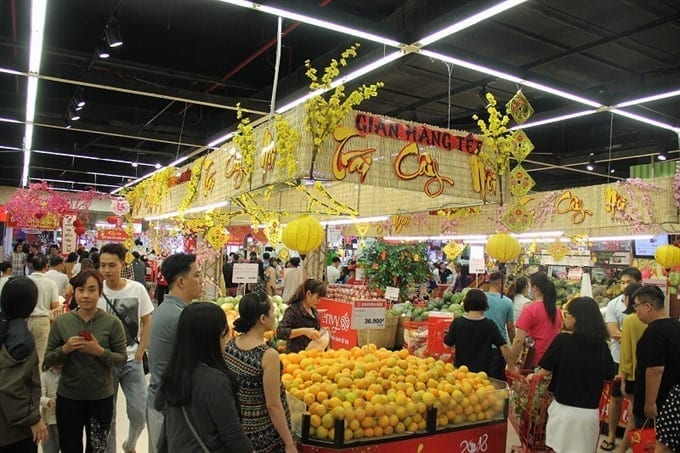
    Lotte Mart Vietnam has opened its third Hanoi store in Cau Giay District. The South Korean retailer’s new 2776sqm branch is located in the urban district, near seven local universities. Targeting local students, the branch will offer trendy but inexpensive products. There will be an international zone that sells products from Korea, the US and Europe and  a ‘Delica’ corner will offer baked goods and easy-to-cook food.

    About 35 per cent of the fresh-food products will include harvests from farms near Hanoi to maintain freshness.

    Lotte Mart Vietnam head of overseas business Kang Min-ho said the firm is planning to expand its business in the country, mainly focusing on Hanoi and Ho Chi Minh City.

    Lotte Mart now has 14 stores in Vietnam.

  • Korean wave fuel 25% growth in Korean e-commerce exports

    Korean wave fuel 25% growth in Korean e-commerce exports

    South Korea’s online exports surged 25 percent in 2018 from a year ago on the back of growing demand for K-beauty and K-pop related items such as album records and stationery supplies, government data showed. According to Korea Customs Service, Korea’s electronic commerce (e-commerce) exports or reverse overseas direct purchase volume reached US$3.25 billion last year, up 25 percent from a year earlier. The total number of online export cases also jumped 36 percent to 9.61 million during the same period.

    E-commerce growth is staggering when compared to the modest 5 percent annual growth in total Korean exports last year.

    The customs agency said that the rapid growth of online exports comes amid growing demand for Korean items on the back of hallyu or Korean Wave, as well as simplified retail procedure, and aggressive overseas marketing integrated with offline stores.

    By item, apparels and cosmetics accounted for 69 percent of total online export. In particular, the number of export cases for clothing surged a whopping 162 percent last year from a year ago, becoming the top pick after beating out cosmetics. Online exports of cosmetics jumped 43 percent last year from a year ago, recovering to average level after falling in 2017 as a result of diplomatic tension between Korea and China over Seoul’s deployment of U.S. anti-missile system.

    The customs agency said that exports of K-pop related items such as albums and stationery items surged significantly last year amid hallyu or Korean Wave overseas. In particular, sales of items related to K-pop icon BTS rose sharply.

    Data from Korea Customs Service, meanwhile, showed that overseas direct purchases of foreign goods amounted to US$2.75 billion last year, up 31 percent from a year ago. There were a total 32.25 million purchases last year, up 37 percent from a year ago.

    By region, the United States accounted for the largest 50.5 percent of Koreans’ direct purchases, followed by China with 26.2 percent, European Union with 12.5 percent, and Japan with 8 percent. The U.S. share fell from the previous year’s 56.4 percent while that of China jumped almost 10 percentage points from the previous year’s 17.3 percent.

  • Starbucks Reserve® Roastery Tokyo opened door

    Starbucks Reserve® Roastery Tokyo opened door

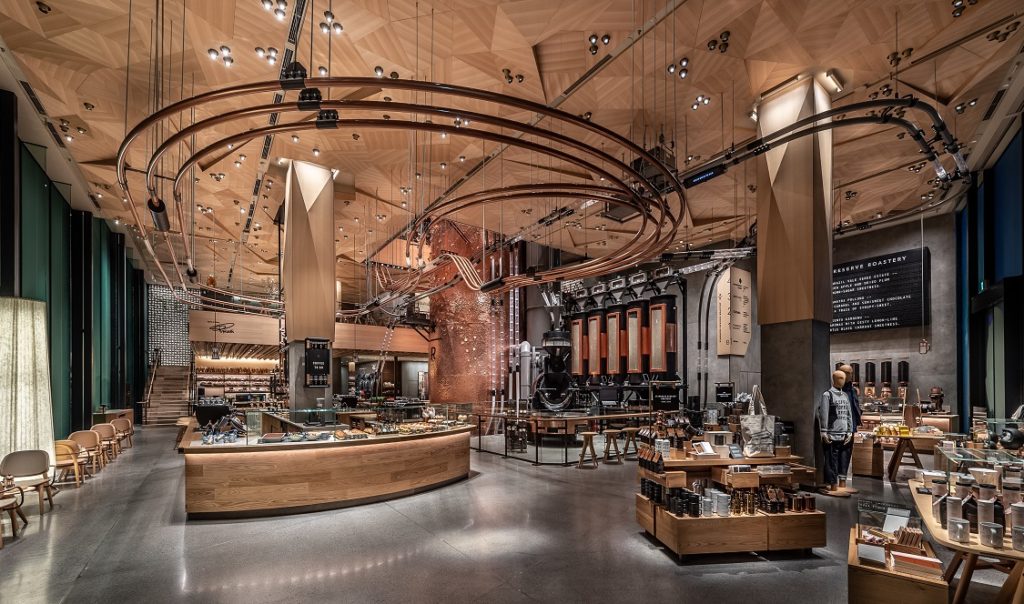
    This week, Starbucks celebrates the opening of the Starbucks Reserve® Roastery Tokyo, a four-story tribute to premium coffee quality, innovation and human connection. This will be the fifthRoastery globally, opening to the public on Thursday, February 28, at 7 a.m. JST, reaffirming the company’s 23-year commitment to Japan. The Roastery pays tribute to the important role that Starbucks Japan has played in shaping the foundation of the Company’s international growth. The Roastery introduces customers to more than 100 unique coffee and tea beverages and merchandise, as well as a menu of artisanal Princi Italian fare for the first time in Japan.

    It also celebrates the Japanese culture of connection and craftsmanship through the first AMU Inspiration Lounge –from the Japanese “amu,” meaning “knit together”–to host community gathering events and is planned to become Starbucks first Specialty Coffee Association certified training location in Japan.

    “As the first international market outside of North America, Starbucks Japan has contributed 23 years of innovation for the company globally,” said Kevin Johnson, CEO, Starbucks Coffee Company.

    “The opening of the Tokyo Roastery will further amplify what Starbucks Japan has done across all stores in the market for more than two decades—innovating and delivering the finest quality coffee one person, one cup and one neighborhood at a time.” Takafumi Minaguchi, CEO, Starbucks Japan, added, “The Roastery will amplify and inspire coffee passion across all Starbucks stores, and will serve as a catalyst for a new wave of growth centered on the customer experience and passion for coffee and service. Beginning with the “Make it Yours” campaign that will commence at every store in Japan upon the opening of the Roastery, customers will be invited to experience the first Starbucks coffee roasted exclusively in Tokyo, for Japan, and available in a variety of coffee beverage styles.”

    Collaborative Design Highlights Japan’s Natural Beauty

    Located in Tokyo’s vibrant and creative neighborhood of Nakameguro, the Roastery’s enchanting design was inspired by the famous cherry blossom trees lining the Meguro River.

    The building’s glass walls and terraced floors seamlessly fold into the fabric of the neighborhood, bringing visitors eye-level with the cherry blossoms and the four seasons of the river to reflect the natural beauty and sense of harmony found across Japan.

    The Tokyo Roastery is the only Starbucks Roastery location designed in collaboration with a local architect from the ground up.

    The exterior was brought to life in collaboration with renowned Japanese architect Kengo Kuma. Envisioned by Liz Muller, Starbucks chief design officer and lead designer for all five Roasteries globally, the Roastery highlights the work of local craftsmen and women to create an enchanting destination for coffee exploration and discovery.

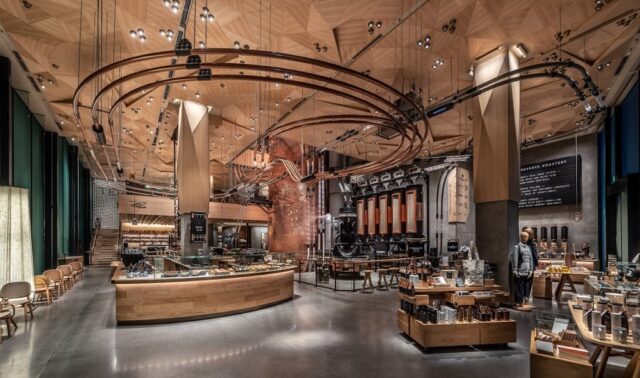
    The Tokyo Roastery merges traditional and modern design to deliver a unique and inspired experience across all four floors. Upon entering the Roastery, customers are greeted by the world’s largest Starbucks Roastery coffee cask, four-stories and over 55 feet of blush-tinted copper adorned with hand-crafted copper cherry blossoms, which changes hues throughout the day in different lights.

    The expansive cask was built using the technique of tsuchime, a tradition of copper beating, where each person involved in the building of the Roastery was offered the chance to hammer a portion to create its texture and pattern. The cask’s unique color is balanced against the light wood which has been carried into the interior to give the store a brightness found throughout traditional Japanese architecture.

    Throughout the Roastery, local craftsmen and women were brought together to incorporate their expertise and traditional craft into the design elements.

    The wood-tiled ceiling was inspired by the art of origami, providing a stunning visual experience. The light and airy space carries the light wood used on the exterior to the inside, giving the experience an enchanting aura.

    The wood, sourced locally, has been treated throughout with a traditional technique which prevents it from aging, ensuring the brightness is maintained inside and outside in the years to come.

    Enchanting Immersive Coffee, Tea and Mixology Experience

    The coffee journey at the Reserve Roastery Tokyo is an immersive experience and education in coffee, and its process—from green bean to cup—which begins at the Main Bar on the first floor.

    The open floor plan draws customers into the immersive experience, introducing them to the skilled art of roasting, brewing and hand-crafting beverages. The Reserve Roastery serves the freshest cup of coffee and it is here on the first floor that customers can taste Reserve coffee beverages such as Barrel-Aged Cold Brew.

    The Princi bakery serves handcrafted, authentic artisanal Italian fare that is baked fresh in the Roastery throughout the day. For the first time in Japan, customers can enjoy freshly-baked breads, cornetti, focaccias, pizzas, salads and more.

    An airy staircase leads to the second floor, where customers will be transported into the tradition of Japanese tea at the world’s largest Teavana Bar.

    Exclusive tea beverages, such as the Pop’n Tea Sakura Jasmine, featuring a vibrant hibiscus and cherry popsicle atop a floral jasmine tea, will delight customers with their charming appearance, Japanese ingredients and unique flavor combinations, modernizing the tea experience. On the terraced third floor, Starbucks Japan’s first cocktail bar, Arriviamo™, puts innovation, mixology and cocktail craft on full display.

    The two walls of spirits bring together the Arriviamo menu, featuring coffee and tea-inspired cocktails only available at the Tokyo Roastery, including the Nakameguro Espresso Martini made with chestnut liqueur, crème de cacao and espresso, then paired with decadent chocolate  from Nakameguro’s “green bean to bar CHOCOLATE” brand. Wine, beer and classic mixology beverages will also be available.

    Conversations with an Impact

    Starbucks Japan has more than two decades contributing to the communities it serves.

    The fourth floor of the Starbucks Reserve Roastery Tokyo is home to AMU Inspiration Lounge–a dedicated space for the community to gather for hosted social impact conversations. The concept of “AMU,” which means “to knit together” in Japanese, is founded on human connection and passions coming together, something Starbucks has long believed in. For the first time at any Starbucks location in the world, this intimate space will serve as a platform to host change-makers and creative thinkers from across Japan. The first event in April will celebrate the role of women leaders in Japan.

    The Roastery is planned to become Starbucks first certified Specialty Coffee Association (SCA) location offering training for coffee professionals in the near future.“We believe that where passions connect, the future is sparked, and we will offer the Tokyo Roastery as a gathering space to spark new ideas and create an impact,” said Minaguchi.

    “The Roastery signifies our commitment to fostering moments of human connection over a cup of coffee and using these moments to create positive social impact in the communities we serve.”

    With more than 37,000 partners who proudly wear the green apron across Japan’s 47 prefectures and 250 at the Roastery itself, Starbucks Japan will amplify coffee craft and innovation by freshly roasting small-batch coffees from around the world every day in Tokyo and introducing new beverages, concepts and inspiration to all 1,400 stores across Japan. This amplification will begin with Tokyo Roast coffee, a Starbucks Japan-exclusive coffee, available throughout the market on opening day.

  • Esprit’s loss in line with forecast

    Esprit’s loss in line with forecast

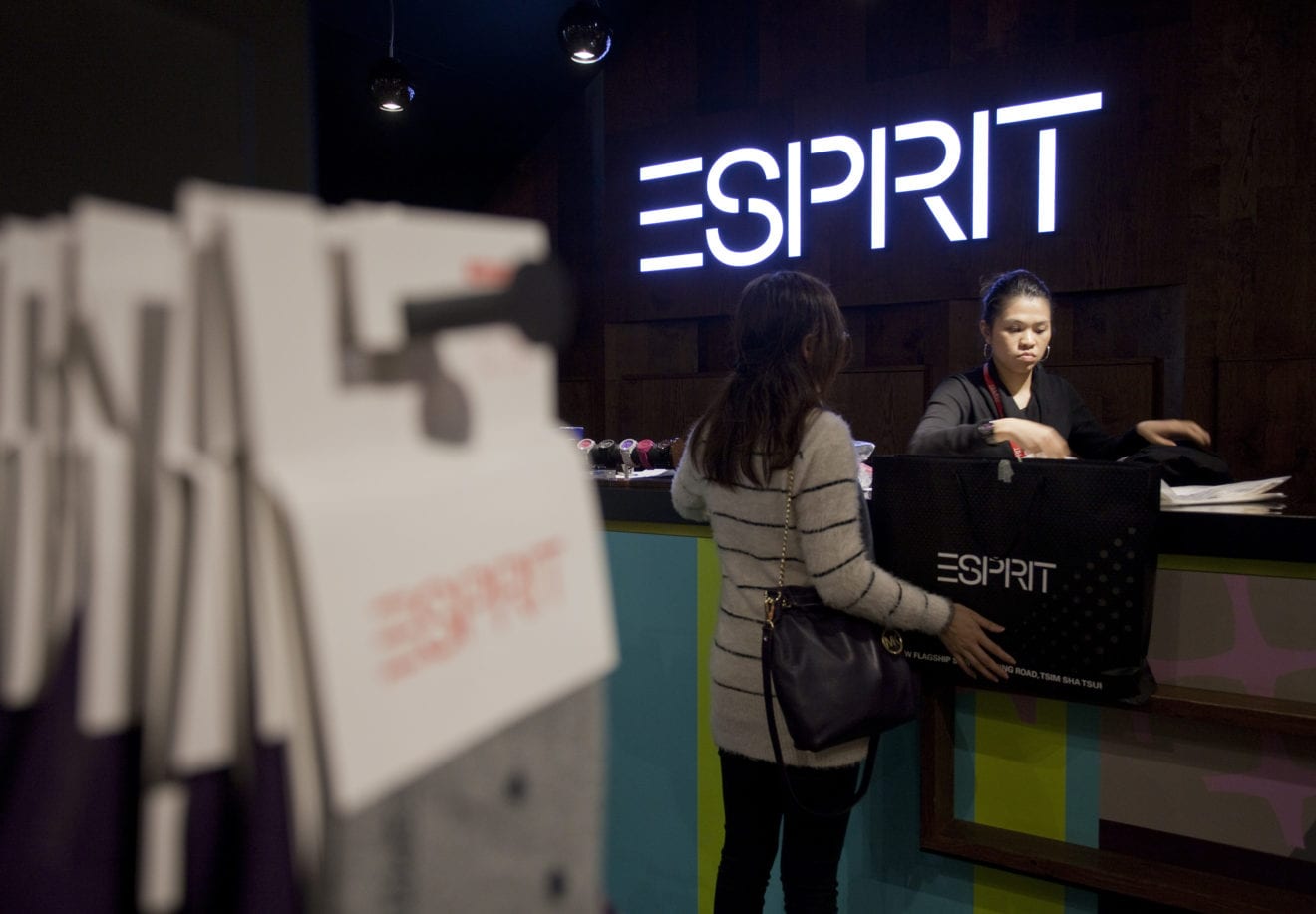
    Fashion retailer Esprit shuttered 91 stores in the six months to December and recorded a loss of HK$1.773 billion (US$225.876 million). While the loss is massive, it is within the estimates Esprit provided at an investor presentation last November when it unveiled its rescue strategy for the embattled Hong Kong-listed brand. The 91 stores closed during the fiscal half year come on top of another 50 in the half year preceding it. More closures are to come as the company trims its network to meet falling consumer demand for its range and save on rent.

    Esprit’s revenue for the half year fell to $6.766 billion, down 14.4 per cent in local currency terms, due to fewer stores and “reduced customer traffic across the distribution channels due to the weakness in brand identity and product appeal,” the company said in a stock exchange filing.

    The company’s share price fell from $2.04 to $1.83 (US 23 cents) as the results were released, before recovering a little this morning despite the results being inline with the company’s forecasts last November.

    Esprit “has a clear strategy plan in place setting forth bold changes to build a powerful organisation and restructure the cost base and develop a new model for the future,” the company reiterated in its filing. That plan includes becoming a leaner and more efficient organisation, eliminating loss-making areas of the business, sharpening the Esprit brand identity and putting the customer at the centre of everything the group does, and

    improving the product offer and its relevance to consumers.

    “The execution of the strategy plan is progressing well and is on track. While the group is encouraged by the initial progress and [has] a committed team in place to see the execution through, it is important to appreciate that it will take time to see this translate into a positive business performance, as most initiatives are still at this stage a work-in-progress and it will require time to make the corresponding improvements in brand and product visible to our customers for attracting them back into Esprit stores.”

    Included in that process is the reduction of between 35 and 40 per cent of non-store employees, already completed in Asia and on track in Europe.

    Meanwhile, the company said that while revenues continued to decline in the first half, the rate of decline is slowing. In the three months to September, sales in local currencies fell by 16.2 per cent, while in the following three months, sales fell by 12.5 per cent.

    Asia Pacific – comprising mainly China, Hong Kong, Singapore, Malaysia, Taiwan, Macau, Thailand, India and the Philippines – accounted for just 10.4 per cent of the group’s total revenue, or $698 million. That was down 26.6 per cent, in part affected by the closure of the Australia and New Zealand Esprit businesses last year.

    Transition period

    Esprit says it expects the next two years to be a period of transition for the company and its brands

    “Revenue is expected to see further decline in the next two financial years due to closure of loss-making stores, before reverting to growth to be driven by impact from product and brand initiatives. Overall, the group expects revenue to increase at a compound annual growth rate of a mid-to-high single-digit percentage in local currency between FY19/20 and FY23/24.”

    It reiterated its earlier forecast of breaking even in two to three years time.

    A “low double-digit” decline in topline sales is expected in the second half of the current financial year.

  • Major aviation deals inked as US, Vietnam presidents meet

    Major aviation deals inked as US, Vietnam presidents meet

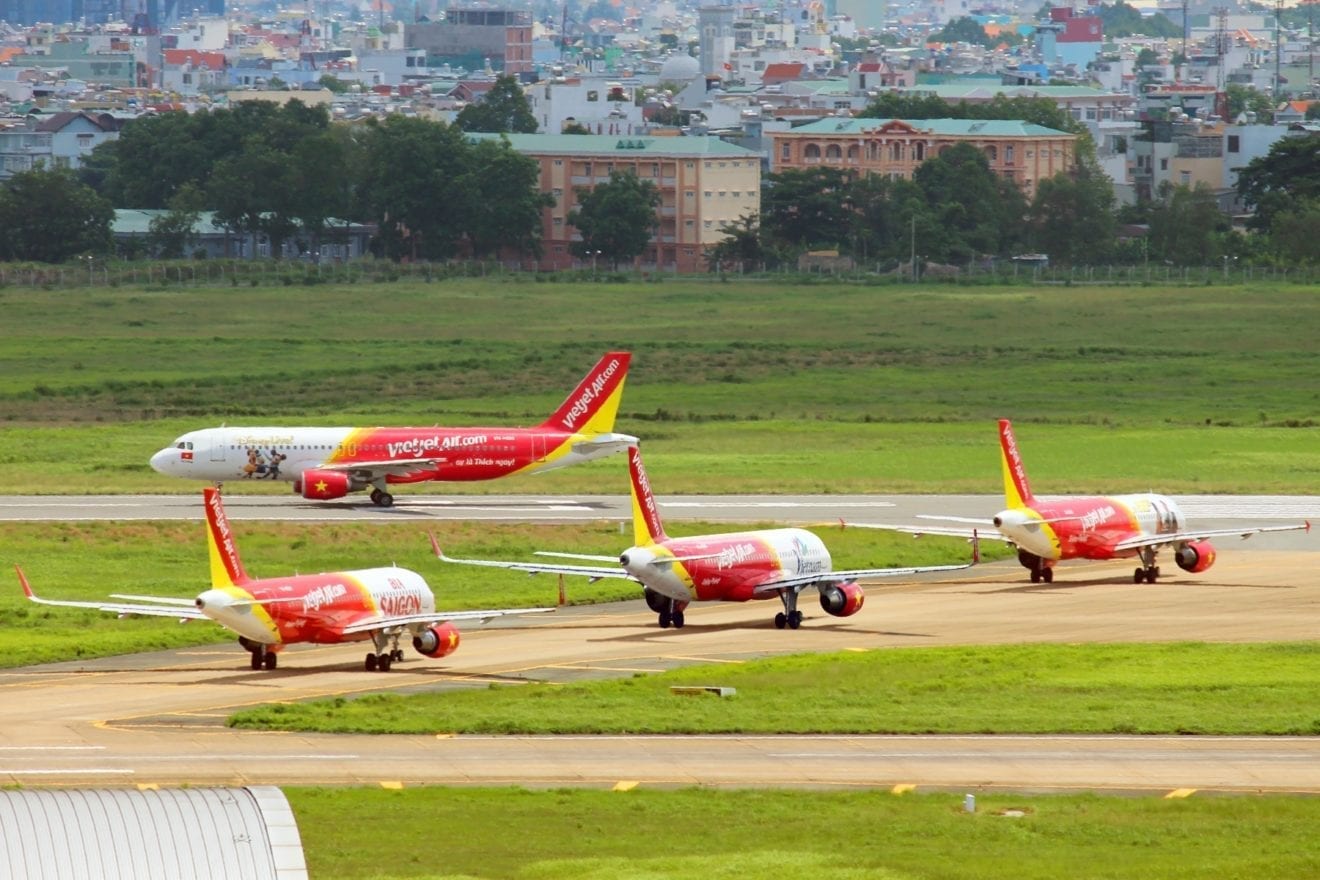
    Three major aviation deals were signed Wednesday in the presence of Vietnamese and U.S. presidents Nguyen Phu Trong and Donald Trump. Budget airline Vietjet signed with U.S. airplane manufacturer Boeing Company a deal to buy 100 new narrow-body 737 MAX airplanes worth $12.7 billion, according to the manufacturer’s list prices.

    “The deal is an important move for us to meet our international flight network expansion plan with a higher capacity,” Vietjet president and CEO Nguyen Thi Phuong Thao said.

    Vietjet also finalised a $5.3 billion long-term engine support agreement with General Electric for the LEAP-1B engines in its fleet.

    New airline Bamboo Airways also inked a deal with Boeing for 10 wide-body 787-9 Dreamliners worth almost $3 billion.

    The carrier, owned by property and leisure company FLC Group, had placed a provisional order last year for 20 Boeing 787 jets worth $5.6 billion at list prices.

    The new deal brings the total number of Boeing 787 that Bamboo Airways has ordered to 30, worth total value of almost $8.6 billion. First aircraft are expected to be delivered in the third quarter of next year.

    Bamboo Airways is preparing to launch flights to the U.S. from late 2019 or early 2020, after Vietnam earlier this month received a Category 1 rating from the U.S, allowing local airlines to operate direct flights to the U.S.

    “Direct flights between the two countries will not only push tourism activities, but also further facilitate bilateral trade and investment,” FLC president Trinh Van Quyet said in a statement.

    Bamboo Airways is also considering the purchase of 25 narrow-body Boeing 737 MAX worth $2.5 billion, the statement said.

    Vietnam Airlines signed a $300-million for strategic partnership deal in aviation information technology with U.S.-based technology company Sabre Corporation.

    The deal is expected to help the state-owned Vietnamese airline increase IT applications in flight management and passenger service.

    Sabre has been cooperating with Vietnam airlines for over 20 years. Last year, they had signed a $400-million aviation technology application deal.

    Vietnam’s aviation sector has been booming in recent years. Local airlines served almost 50 million passengers last year, up 10.1 percent from 2017, according to the Civil Aviation Authority of Vietnam.

  • 8 trends set to shape Southeast Asian e-commerce

    8 trends set to shape Southeast Asian e-commerce

    Southeast Asia’s e-commerce market is set to exceed US$102 billion by 2025, according to a study by Google and Singapore’s Temasek. As more and more consumers are attracted to shopping online for convenience and they build trust in the channel, investors in the e-commerce industry are gaining confidence and seeking opportunities. That helped startups raise and estimated $9.1 billion in the first half of last year, almost as much as for the whole of 2017.

    If last year was dubbed ‘The Year of E-commerce’ for Southeast Asia, what can the industry expect this year? We speak to industry leaders to discover the anticipated trends for online retailers and brands in Southeast Asia.

    1. Brands shift their focus from data gathering to data use

    The biggest differentiator between online and offline retail is the ability to track, collect, monitor, and manage information, all in real time. Through online channels, brands are able to access customer data through chats, social media, and their own websites. This information can be used to devise online strategies. Globally, 73 per cent of brands plan to allocate their e-commerce budget on data and analytics services this year.

    However, despite general agreement of its importance, many brands have no concept of how to use data to their advantage.

    “Even today, not all retailers have embraced data fully to the point where they think of themselves as data companies, and this might be why many companies are suffering,” observes Harvard Business School Professor Srikant M Datar.

    Data collection is easy but having and optimising the analytics capability to use it is a completely different ball game.

    A survey by ecommerceIQ identified data analysis as one of the most difficult skills to find among the digital talents in Southeast Asia. Brands are constantly searching for data aggregators to consolidate information into one place for convenient retrieval and use to target, retarget, and personalise products and services.

    Reagan Chai, head of regional business intelligence and business development at Shopee said that data acquisition enables the company to map out and optimise buyer and seller user experience while pre-empting customer demand and anticipating future potential. The company has seen an increase of website traffic in the past year that even surpasses the other regional players.

    In China, Alibaba and JD have taken this a step further by using the data gathered online to improve inventories and experiences at their physical stores. Alibaba chief marketing officer Chris Tung said the company wants to help brands find the right consumers by tracking them throughout Alibaba’s system.

    “We’re finding all data that has to do with people, their behaviour, what they like, what they buy and binding this online data to real people,” concluded ChrisTung.

    Last year, the region’s leading brand ecommerce enabler, aCommerce, launched a data analytics platform BrandIQ to enhance their capabilities as a data partner to help brands centralise their customer data and offer customised products or services to each target group.

    This leaves brands with two options: find an economical way to use the data or continue looking for a needle in a haystack.

    1. Social-commerce channels are brands’ new sales outlets  

    Social commerce in this region boomed before the rise of e-commerce as we know now. Facebook groups have long established as an online space where people connect to buy and sell goods, even before the launch of Facebook’s Marketplace feature. The rapid growth in Southeast Asia is propelled by the mobile adoption and smartphone, where 90 per cent of the online population access the internet via smartphones. For some, Facebook even defines the internet itself.

    With multitudes of potential customers gathered via social media platforms, brands naturally saw alternative sales channels. Following Facebook’s footsteps, social platforms like Instagram and Pinterest have also developed their own shoppable features.

    “Brands will miss out if they don’t have a social media presence. The best way to get feedback from consumers is by having a direct conversation,” Deb Liu, VP at Facebook Marketplace in an interview with Forbes.

    Line recently acquired social-commerce management startup Sellsuki in Thailand, where it has the second-biggest user base, to build a strong foundation for its e-commerce business. The company has also formed a joint venture with three local banks to offer personalised loans to SMEs.

    A few big brands like L’Oreal have already equipped their social media page with ‘Shop’ feature that allows consumers to purchase the order directly on the page and it is only a matter of time before more brands activate the platforms as one their sales channels and remove another layer between them and the consumers.

    1.  E-marketplaces launch new services to differentiate

    Looking at the successful existing e-commerce players in more developed markets, one thing they have in common is full control over their supply chain.

    JD’s investment to the development of its own supply chain allows it to scale its technology and offer a Retail-as-a-Service proposition to help other retailers or brands sell online. Alibaba is unrivalled for its extensive ecosystem beyond commerce, including its logistics network Cainiao and payment firm Ant Financial, not to mention its recent foray into the entertainment industry.

    The same practice has infiltrated down to Southeast Asia where Alibaba subsidiary Lazada has strengthened its logistics arm FBL (Fulfilled by Lazada) post-acquisition, and although no concrete plans have been disclosed, Shopee has expressed an intention to build its own logistics network.

    More e-marketplaces are coming up with new services to get more sellers onboard. Singapore’s Qoo10 is set to launch its blockchain-based ecommerce site QuuBee this year, using blockchain technology to eliminate the transaction and listing fee which in turn increase the retailers’ profit margin and make a more sustainable commerce approach.

    In Indonesia, Tokopedia is set to offer “Infrastructure-As-a-Service” with a fresh funds injection of $1.1 billion. It also plans to use AI for customer-care services and to run credit checks on merchants seeking loans to expand their businesses.

    Facebook is also showing more intention to jump onto the region’s e-commerce bandwagon. The social network has launched Marketplace feature in Thailand and Singapore without much fanfare, but its recent partnership with Kasikorn Bank in Thailand to allow in-app payments might be the start of the company’s effort to bulk up its commerce capabilities and cater to those that use the platform for their business.

    The practice is not exclusively done by the general e-marketplaces. Fashion e-marketplace Zilingo scored $226 million in funding due to its focus on building a fashion supply chain network that any merchant – small or large – can tap into.

    “It is imperative for us to build products that introduce machine learning and data science effectively to SMEs while also being easy to use, get adopted and scale quickly,” said Zilingo CTO Dhruv Kapoor in an interview with TechCrunch.. “We’re rewiring the entire supply chain with that lens so that we can add most value.”

    In a bid to recruit more brands to sell on their platforms, we anticipate that e-marketplaces will continue to go head-to-head with each other through new services, acquisitions, and partnerships. But are the e-marketplaces ready to burn more cash to win in this battle?

    1. Brands to reinforce reviews and fund user-generated content to win e-commerce consumers

    E-marketplaces in Southeast Asia have been upscaling and building add-ons which provide consumers with the utmost convenience. The search for better technology and assistance for the consumers is constant and never-ending.

    Online consumers begin their online purchasing journeys by searching for product information or reading reviews, usually on e-marketplace platforms, before making their purchase decision. They are looking for real opinions and user-generated reviews to validate the products.

    The habit of leaving product reviews on an e-commerce platform is not as common in Southeast Asia as it is in the US where Amazon even has a dedicated page for its most prolific reviewers. When they do, the reviewers usually left little information about the product and more about the other aspect of the purchase (for example, comments about the delivery time or packaging).

    Platforms like ReviewIQ are used by brands to increase their ratings and reviews engagement on their e-marketplace listings to help consumers make their decision. While the use of chatbots is an increasingly popular solution to help smooth the online customer experience, it is more suitable for generic questions such as “where is my order?” or “is this product available?” instead of personalised questions such as “will this lipstick look good on a yellow-undertone skin?”.

    Community-crowd models like one popular with travel platforms such as Airbnb might also be suitable for e-commerce in the region, to help consumers overcome their apprehension about online shopping. This is something that Edouard Steinert, aCommerce Thailand’s director of channel management, is investigating to help the company’s clients as this model has proved to save time, increase results, and keep costs low.

    “Consumers today want to hear genuine feedback and reviews about a product and they are becoming more averse to hard-sell methods. User-generated reviews, especially from people who share the same passion with them, drive better conversion for the brand,” he adds.

    1. Brands use direct-to-consumer strategies to acquire direct consumer data

    Some 89 per cent of companies are now competing mostly on a customer-experience playing field. The direct-to-consumer (DTC) approach is becoming more important for these brands because it allows them to gain insights into their end users and anticipate their needs.

    One trend observed among brands to promote DTC is e-commerce subscriptions. From a consumer perspective, subscriptions offer a convenient, personalised, and often cheaper way to buy what they need. For brands, it is a subtle method to create customer loyalty in the digital landscape.

    One brand adopting subscription e-commerce in the region is Nescafe Dolce Gusto, which offers free coffee machines in exchange for a minimum 12-month subscription of coffee. Besides witnessing sales growth, Nescafe Dolce Gusto also noticed that consumers continued to purchase goods from its brand despite dropping out of the subscription plan.

    “They may have dropped out of the subscription, but not the brand,” says Bhuree Ackarapolpanich, brand director & digital expert at Nescafe Dolce Gusto. “They still buy capsules from different channels: e-commerce websites, online marketplaces and supermarkets. A subscription strategy is not just a long-term consumption enabler but also a consumer acquisition channel for the whole brand,” he says.

    Acommerce’s regional director of project management, Mandy Arbilo said e-sampling is a popular strategy used by brands to evaluate demand, especially for e-commerce.

    While normal sampling techniques used by offline retailers are expensive, e-sampling saves brands up to 40 per cent as well as providing essential customer data.

    As DTC becomes widely adopted, consumers will see brands coming up with attractive gimmicks using digital tools to gain insights and entice consumers to spend more on their brands.

    1. This year will finally see regulation of e-commerce across the region

    E-commerce has remained largely unregulated across the region until now, but as the industry grows, it is only a matter of time until governments step in to tax this fast-growing segment, levelling the playing field for foreign companies to offer digital services and goods locally.

    Discussion of the implementation of e-commerce tax regulations in Southeast Asian countries has been noticeable since the beginning of last year but nothing concrete has yet materialised.

    Late last year, economic ministers from ASEAN signed an agreement to facilitate cross-border e-commerce transactions within the region.

    While nothing has yet been written in stone, predictions abound concerning the impacts of an e-commerce tax on goods imported into the region. In Indonesia and Thailand, e-commerce tax is predicted to bolster the growth of social commerce because, unlike marketplaces, they are uncontrolled.

    “If tax regulations restrict e-commerce platforms, making selling in Bukalapak complicated, there will be an exodus of people who prefer selling on Instagram and Facebook,” said Bukalapak co-founder and CFO Muhamad Fajrin Rasyid. “These platforms are uncontrolled and not chased for tax because they sell through the back door.”

    Singapore might also see a decrease in cross-border shopping as prices increase with the introduction of GST)on goods and services bought online from overseas. Currently, 89 per cent of all cross-border transactions in Asia Pacific are conducted by Singaporeans.

    Another e-commerce market with strong potential, India is to introduce new e-marketplace laws that indicate the prohibition of marketplace “owners” to sell products on their own marketplace through vendor entities in which they have an equity interest. It also prevents marketplaces from making deals with sellers that grant the marketplace exclusive rights to the product. Could we see such laws be applied in Southeast Asia?

    Regardless, brands will have very little influence on how the new tax policies take root but they will be behoven to anticipate the ruling and adjust online strategy accordingly to mitigate the impact of a shift in customer behaviour. This ASEAN agreement will encourage more local entrepreneurs to create new products and venture online to access a larger and more diverse market. Brands will now need to be nimble and innovative to adapt to local nuances and preferences.

    1. Grab and Go-Jek challenge logistics providers to capture e-commerce and online food delivery

    Since Uber’s Southeast Asian exit last March, Grab has inherited a monopoly in countries like Thailand, the Philippines and Malaysia, leading to complaints about falling service standards and increasing prices.

    But with the recent regional expansion of Indonesia’s Go-Jek, the competition between the two will only get more fierce. Go-Jek has successfully carved niches in Vietnam, Singapore and Thailand last year alone. In addition, Grab’s competitor in Malaysia, Dacsee, has also hinted at  expanding into Thailand.

    Neither company is racing to be the best ride-hailing provider; they are aiming for something much bigger: superapps. Go-Jek has secured $1 billion in funds from Google, Tencent and JD, already halfway towards its goal of raising $2 billion for the venture. Meanwhile, Grab recently secured a $200 million investment from Thailand’s Central Group, boosting its valuation to $11 billion to date.

    This year, these two competitors will steer towards the same goal of food and e-commerce delivery, which Google and Temasek predicts will grow 73 per cent on a CAGR basis this year. By 2025, they predict online food delivery growth of 36 per cent CAGR with online transport only growing by only 23 per cent.

    “We will be expanding our GrabFood and delivery business and deepening our relationships with restaurant merchants and key partners in some markets,” said Grab’s head of regional operations Russell Cohen.

    Same-day delivery providers can expect more competition during the next year. The impact of Grab and Go-Jek on market vibes will definitely raise the bar for the logistics and delivery sector.

    1. Brands and retailers will double down on omnichannel as Southeast Asians prefer pure-play e-commerce

    The omnichannel shopping experience is not a new concept, but companies do have diverse interpretations of the concept. Headlines reveal that online retail behemoths such as Amazon and Alibaba are moving into physical retail.

    Alibaba’s decision to venture offline reflects its determination to solve core problems of the shopping experience, such as scattered operations and lack of payment transparency.

    JD, meanwhile, pipped Alibaba in Indonesia by opening the first unmanned convenience store in the region. Its goal was to use and refine its enormous database by offering beneficial insights to brands such as the best products to stock and advertise. Through their joint venture with Central Group in Thailand, JD Central is planning a similar concept there this year.

    Pure-play e-commerce retailers and brands recognise drawbacks in online marketing channels with fragmented infrastructure and a limited pool of shoppers. That is why they began to promote offline as an attractive option to push sales growth.

    Elsewhere in Southeast Asia, companies are slowly but surely adopting this strategy across all categories. E-commerce fashion players like Thailand’s Pomelo and Singapore’s Love, Bonito have opened physical stores in their respective countries.

    Last year, Pomelo opened five new outlets, initially away from Bangkok’s prime shopping areas before moving into CBD locations like Asoke and residential areas like Bangna, once it refined the model. Love, Bonito has 17 retail outlets spread across Singapore, Malaysia, Indonesia and Cambodia.

    Rachel Lim, co-founder of Love, Bonito said, “Data can tell you what’s selling but being on the ground tells you why something is not selling and what the customer is looking for.”

    Visiting shopping malls is a popular social activity in Southeast Asia and this trend is not set to disappear anytime soon.

    Brands should take advantage of dual physical and online presence.

  • Amorepacific facing painful dilemma

    Amorepacific facing painful dilemma

    For Amorepacific, the last year has been painful in terms of both sales and brand development. The cosmetics giant saw its operating profit halve to 549 billion won (US$491 million) in 2018, just two years after it joined the “1 trillion-won sales club” in 2016 for the first time as a cosmetics maker. With its glory falling to the past, Amorepacific has been outpaced by rival LG Household & Healthcare. LG Group’s cosmetics arm became the newest member of the 1 trillion-won sales club last year, cementing its No. 1 status in terms of market capitalization, which totaled 23.1 trillion won as of June last year.

    In the fourth quarter of 2018, Amorepacific’s operating profit came to 16.4 billion won, down 82 percent on-year.

    The company had many reasons to blame for its profit decline, including a rise in the minimum wage, weak performance of its budget cosmetics brand with the advent of numerous competitors at health and beauty stores, e-commerce and even home shopping channels.

    This has put the brakes on Amorepacific’s drive to construct a beauty industrial complex in Yongin, Gyeonggi Province. In 2017, the cosmetics giant had unveiled its plan worth 163 billion won for the complex to develop cosmetics and beauty products.

    But the company announced last month that it would scrap its complex project due to dwindling profits as well as fierce opposition from local residents.

    Market watchers voice concerns that this year will be a make-or-break period for the group, as a continued sales downfall will make it harder for the company to recover from its ongoing slump.

    “Profit recovery from the domestic beauty market as well as pulling up sales among Chinese customers will be the major points for Amorepacific to overcome this year,” said Na Eun-chae, a researcher from Korea Investment and Securities.

    Sulwhasoo vs. History of Whoo

    Although South Korea-China ties started mending last year after the detrimental diplomatic and economic fallout from the deployment here of the US Terminal High Altitude Area Defense missile system in 2017, the China comeback is still not so evident.

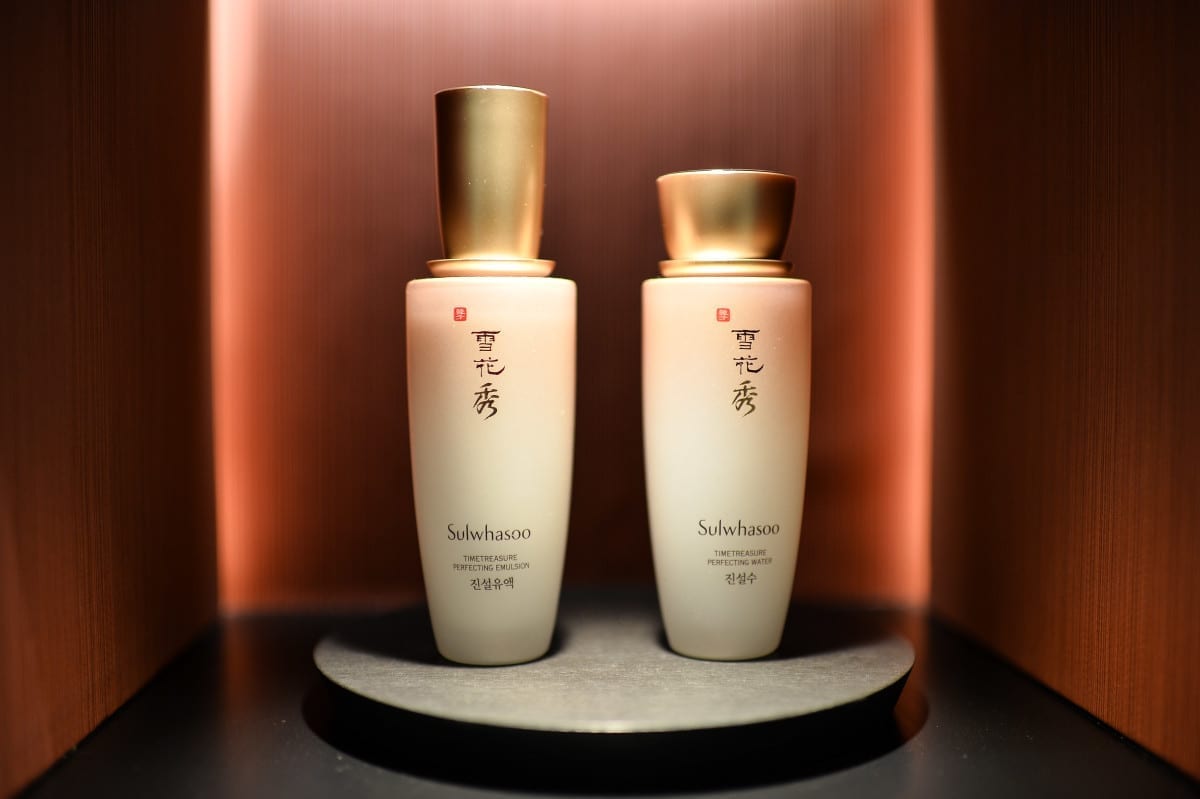
    Amorepacific’s Sulwhasoo, the company’s flagship luxury skin care brand, had been the most favored brand among Chinese tourists in the past few years. Market data showed that mainland China accounted for at least 10 percent of Sulwhasoo’s total sales, followed by Hong Kong at 6 percent and Taiwan with 0.5 percent as of 2018.

    But The History of Whoo, the latecomer in herbal cosmetics, has now taken the limelight.

    Whoo, a luxury skin care brand by LG Household & Healthcare, posted high sales at duty-free shops largely backed by Chinese consumers. This led Sulwhasoo to hire actress Song Hye-kyo as its global brand ambassador, seeking a breakthrough. It was Sulwhasoo’s first-ever attempt to have a celebrity promote its products.

    In terms of sales, Whoo has outpaced Sulwhasoo by recording 2 trillion won of sales last year. Whoo has also made a 40.8 percent on-year increase. Sales of Sulwhasoo had been around 1 trillion won since it peaked in 2015.

    “It is not an exaggeration that Sulwhasoo is the only, but very strong, cash cow of Amorepacific Group. It is the most important department in the entire company. Employees, especially in that department, feel grave responsibility and pressure about having to pull up the sales,” an insider said.

    According to the group, around 55 percent of the company’s sales come from its luxury cosmetics brands. Of them, Sulwhasoo is responsible for 36 percent.

    Market insiders said budget cosmetics brands are also enduring fierce competition in the “red ocean” market, with more consumers looking for luxury, premium brands as the beauty trend now centers on anti-aging efforts.

    Industry experts see the causes of Sulwhasoo’s lackluster performance as coming from its brand positioning and sales strategy at duty-free stores.

    “In the luxury cosmetics market, Sulwhasoo has only focused on its simple, basic skin care products, whereas Whoo diversified its luxury product lineup and upgraded all the products of the brand,” said an industry insider surnamed Jung, who has been in charge of overseas sales for a cosmetics brand for 30 years.

    Amorepacific also restricted Chinese shoppers, or “daigou,” from purchasing in bulk at duty-free stores, he added.

    “As a result, Amorepacific could not stabilize its supply chain in China. But LG, unlike Amorepacific, rolled out flexible rules for daigou and increased their demand,” Jung added.

    Others added it may simply be the product design and brand concept that work better for Chinese customers, who prefer gold, royal and fancy images.

    “To Korean customers, design and concept of Whoo may be regarded as ‘too much.’ But Whoo wisely focused in the concept that can appeal to Chinese customers. Hiring Lee Young-ae as its main model was also very clever, because Hallyu stars like her are still very influential in the Chinese market,” said an industry insider who is very familiar to exporting cosmetics to China.

    Is overseas sales expansion only way?

    To overcome the situation, Amorepacific plans to once again focus on strengthening its luxury brand lineup, including cosmetics brand Amorepacific, which is a luxury skin care brand named after the company.

    The brand rolled out only 2,000 limited edition facial creams last year, priced at 750,000 won per bottle.

    The reason is largely due to weak sales of budget cosmetics brands such as Innisfree and Etude in the domestic market, as well as in China.

    In 2012, the company launched budget cosmetics brand Innisfree in China. It now operates 512 stores in cities like Hangzhou and Shanghai. As of last year, 50 percent of sales of Amorepacific’s Chinese corporation came from Innisfree.

    But sales had been on a decline amid competition with local players that launched brands like One-leaf with similar concepts — natural and clean.

    “There are already too many budget cosmetics in China. That’s why Chinese tourists coming to Korea are now looking for luxury, premium cosmetics that they cannot find in their market,” said a market insider, adding that the trend is especially evident among Asian countries.

    The company said it will renew the Innisfree brand and debut Primera to China this year, aiming for 601 billion won in operating profit by the end of the year. It will also accelerate Sulwhasoo store openings in additional Chinese cities, and expand touch points in online retail in major e-commerce sites such as VIP.com and JD.com.

    Earlier this year, the cosmetics giant announced the business goal of securing a 10 percent increase in sales and a 24 percent increase in operating profit this year. The group said it would focus on investing in innovative beauty sectors such as customized cosmetics or overnight beauty items based on developing the customer experience.

    “The company believes in the value of traditional Korean beauty. It is also Chairman Suh Kyung-bae’s business philosophy to create beauty products that can instill Korean beauty, products with value that can last for a century,” said a company insider.

    Overseas expansion actually did pay off for Amorepacific last year. Despite its increased investment in overseas markets, both sales and operating profits inched up by 8 percent to 1.9 trillion won and 6 percent to 2.6 trillion won, respectively.

    But some say it is time for Amorepacific to bring in a new cash cow for practicality, referring to LG Healthcare & Household’s budget brand The Face Shop that bought Avon’s manufacturing facility in China last year.

    “It is time for Amorepacific to make the bold move and seriously consider active M&A ideas. M&A can offer positive opportunities in terms of global market expansion and investment for future. Especially when global beauty companies like Loreal and Unilever are buying Korean beauty brands, it is important for the company to take a strategic position to diversify brand portfolio for global competition,” said a researcher at Euromonitor International.

    Seo Yong-koo, a professor of business at Sookmyung Women’s University, said Amorepacific should not put all its risk in the Chinese market.

    Seo said since Amorepacific saw aggravating sales following its downfall in the Chinese market, the company experienced that its market portfolio is important. He added the group should also take the Muslim market into consideration, which will add up to 1.8 billion customers.

  • Vietnam Jan-Feb FDI inflows up 9.8 pct to $2.58 bln

    Vietnam Jan-Feb FDI inflows up 9.8 pct to $2.58 bln

    Vietnam received $2.58 billion in foreign direct investment (FDI) in January-February, up 9.8 percent from the same period a year earlier. FDI pledges, which indicate the size of future FDI disbursements, were more than 2.5 times higher than the same period last year, climbing to $8.47 billion, the Ministry of Planning and Investment said in a statement on Tuesday.

    Of the pledges, 81.8 percent are to be invested in manufacturing and processing, while 5.6 percent would go to real estate, the ministry said.

    Hong Kong was the top source of FDI pledges in the period, followed by Singapore and South Korea.

    The Southeast Asian country reported a record high FDI inflows of $19.1 billion last year, up 9.1 percent.

  • CapitaLand tops out Raffles City Chongqing

    CapitaLand tops out Raffles City Chongqing

    CapitaLand has topped out the eighth and final skyscraper of Raffles City Chongqing, expecting to launch it in phases from the second half of this year. This follows the completion of the 200m-high bridge The Crystal which connects six of the towers. “The successful topping out of Raffles City Chongqing represents a new milestone in CapitaLand’s track record of building well-designed integrated spaces,” said Lucas Loh, president (China & investment management) of CapitaLand Group.

    “After six years of construction using state-of-the-art engineering technologies, we are proud to present in Raffles City Chongqing an iconic architectural form resembling a powerful sail surging forward on the historic Chaotianmen site.”

    Following Raffles City Chongqing’s structural completion, the group is now focusing on the interior fit-out works, including transplanting trees to enliven The Crystal sky bridge, which will feature the tallest observation deck across Western China.

    Retail offering

    The development’s five-storey shopping mall will house some 450 retailers of fashion, dining, lifestyle and entertainment.

    Anchor retail tenants committed to date include Chinese electric vehicle company Nio, which will open its largest showroom there, a 1500sqm space also serving as an “exclusive clubhouse” Nio owners.

    South Korean cinema chain CGV will open its 5600sqm flagship and popular bookstore Yanjiyou will open a regional flagship, featuring a lifestyle cafe and other creative and experiential offerings.

    Ole’ will operate a gourmet supermarket with a food hall serving a wide range of fresh produce and international specialties.

    In a tribute to the 3000-year-history of Chongqing, the mall will feature a dedicated zone to promote authentic Made-in-Chongqing products, such as local delicacies, handicrafts and souvenirs.

    Occupying 9.2ha, Raffles City Chongqing brings together a 235,000sqm shopping mall, 150,000sqm of Grade A office space, about 1400 residential apartments, Ascott Raffles City Chongqing serviced residence and InterContinental Raffles City Chongqing hotel.

  • Puma reports strong sales, profitability in 2018

    Puma reports strong sales, profitability in 2018

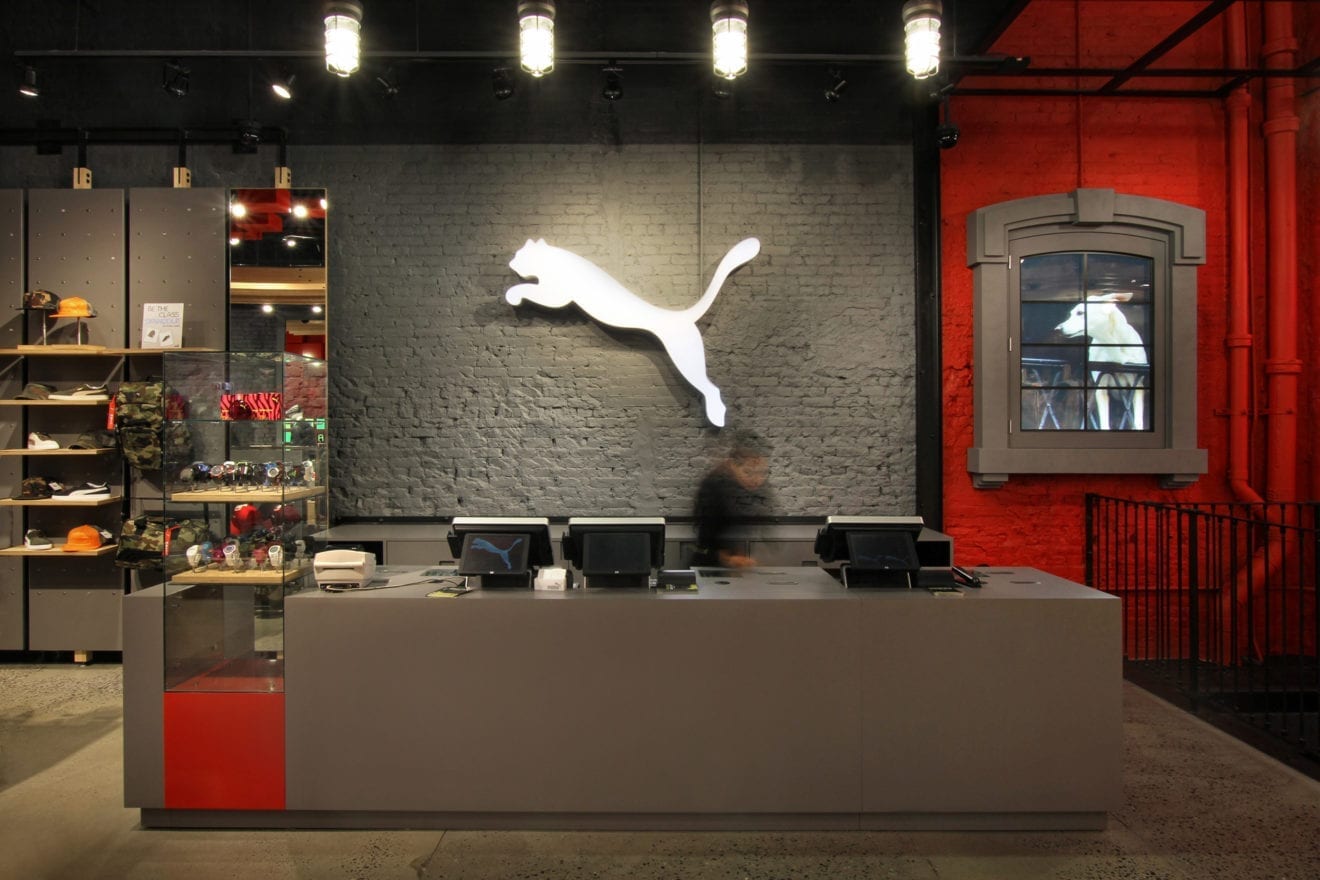
    Sportswear giant Puma reported strong annual results in 2018, as the German company witnessed double-digit growth across all geographic zones and product divisions. For the year ending December 31, 2018, the Herzogenaurach-based company said sales increase by 17.6% currency adjusted to €4,648 million (+12.4% reported) with double-digit growth in all regions.

    Asia-Pacific, despite being the smallest of Puma’s three regions after the Americas (+16.9%) and market leader EMEA (+11.4%), was the strongest in growth terms for 2018, up 28.8% to €1,235.5 million. APAC was mainly driven by high growth in China and Korea, while sales in Japan increased at a more moderate mid to high single-digit rate.

    In product terms, Puma highlighted the success of new sneaker styles Thunder, RS-0 and RS-X in 2018, as part of the company’s debut into the “chunky shoe” category.

    Puma also spent 2018 re-entering the basketball category after 20 years, and signed supermodel Adriana Lima as its women’s training ambassador.

    Net earnings increased by 38 % from €135.8 million to €187.4 million, and earnings per share lifted from €9.09 to €12.54.

    “We are very happy with how our business developed in 2018. Sales rose organically by 17.6% to €4,648 million and the operating result (Ebit) improved by 37.9% % to €337 million, which shows our strong momentum,” said Bjørn Gulden, Chief executive officer of Puma.

    “The double-digit growth in all regions is a proof that the we have strengthened the Puma brand globally and the double-digit growth in all product divisions shows that we have enhanced our product portfolio,” added Gulden.

    In 2019, Puma said it expects currency adjusted sales to grow around 10% and operating results to increase to a range between €395 million and €415 million.

    “We still have a lot to improve, but we feel we are moving our brand and company in a good direction,” said Gulden.

  • Takeover bid lodged for struggling Laura Ashley

    Takeover bid lodged for struggling Laura Ashley

    US investment company Flacks is considering making a bid for Malaysian-owned, British fashion retailer Laura Ashley. The firm is in the “very preliminary stages” of a takeover bid for the brand. Any possible takeover offer will be limited to 2.748p in cash per share, resulting in an overall valuation for the retailer at around £20 million (US$26.38 million), according to an announcement by the firm confirming the details.

    If Flacks buys Laura Ashley, it is expected to primarily focus on the US market and other non-European markets.

    “As far as I am concerned, there is no takeover bid because there has been no approach whatsoever,” Laura Ashley chairman Andrew Khoo told investors on Monday, a day prior to Flacks’ announcement. “If and when an approach is made, the board will discharge its duties as always and assess it on its relative merits.

    “I would, however, like to state for the record that as major shareholders of Laura Ashley, we have no intention of divesting our controlling stake,” he continued. “Whilst I understand why potential parties would think we are significantly undervalued, I have complete confidence that we will be able to grow profitably and in a sustainable manner so as to create long-term value for our shareholders.”

    A recent report issued by the firm warned that its full-year profits would “fall short of market expectations” following announced plans to close around 30 of its remaining 120 stores to control costs in the firm’s competitive and sluggish market. The firm filed a £1.5 million ($1.98 million) loss in the final half of last year.

    Laura Ashley’s Australian business collapsed late last year, but in December Khoo said he believed the brand’s future lied in Asia, where he was planning expansion.

  • An Overview on M-commerce in Asia

    An Overview on M-commerce in Asia

    A number of factors have contributed to make Asia a mobile first region. Affordable smartphones and an emerging middle class, coupled with increased network speeds and relative decreases in mobile data costs have lead to a situation where mobile is the internet, as more than 90% of Southeast Asia’s internet users are on smartphones, revealed Google’s e-Conomy SEA Spotlight 2017 report.

    This democratisation of access to technology has extended to other areas like cloud computing, the internet of things (IoT), big data processing capabilities and advanced analytics. These technologies have helped to create vibrant start-up environments around the region that are exploring and exploiting new ways of reaching customers, new businesses and commerce models.

    Global digital platforms, as well as more and more locally founded players, are building their capabilities here for good reason. Increasingly, the unique needs and behaviours of people in this region will shape the product and experience development for global audiences.

    User behaviour and attitudes to things like technology and privacy are different in this region; globally, 27% of people are willing to share their data in exchange for benefits or rewards, revealed in Gfk’s Willingness to Share Personal Data in Exchange for Benefits or Rewards survey. In China, 38% of people are willing to make the same transaction. Globally, 34% of people use a mobile to compare the prices of a product in store, in Asia that percentage rises to 45%.

    7 Asian countries (South Korea, Thailand, Taiwan, Malaysia, Hong Kong, China, Singapore) were ranked in the top 10 countries with the highest m-Commerce penetration rates, We Are Social’s Digital in 2018 report revealed. In Q2 2017, Global Web Index Asia Pacific Region reported 79% of adults in APAC accessing the internet claim to have recently purchased a product.

    Unsurprisingly, given the cultural and economic diversity across APAC and the blistering pace of technology adoption by the emerging middle classes around the region, there are many, many approaches to mCommerce on display here. Here we explore some noteworthy trends and developments:

    Mobile Hero 1 – Go Jek

    Go-Jek had humble beginnings in 2010 as a call centre that enabled riders to order a Gojek (a motorcycle taxi) by phone. In 2014, Go-Jek was launched as a smartphone app.   Anticipating that ride-hailing services alone were insufficient to achieve lift-off and scale, Go-Jek launched Go-Send (a courier service) and Go-Food (food delivery) in the same year.

    Within 14 months, the app registered 100 million transactions. Added services launched in quick succession, including Go-Mart (grocery delivery), Go-Clean (a housekeeping and cleaning service) and even Go-Massage (for booking spa treatments anywhere). Almost anything can be delivered to customers’ doorsteps by Go-Jek drivers, from lunch to home massage services.

    Mobile Hero 2 – Paytm

    Paytm is one of the most successful payment and money transfer apps used in India, allowing users to transfer cash into the integrated wallet via online banking, debit cards, and credit cards, or depositing cash via select banks and partners. Allowing customers to go cash-free and pay merchants with their smartphones, Paytm received a huge surge of user demand following the demonetization of the Indian economy and a cash shortage. Nearly overnight, from villages to cities, small mom-and-pop shops to large retailers, people embraced the new payment method.

    Through Paytm, users are able to recharge mobile phones, metro cards, data cards, as well as make postpaid payments for mobile phones, landline and broadband, electricity, water and gas bills. Users can also book tickets for buses, trains, flights, movies, hotel rooms, and pay for taxi rides using the platform.

    Paytm Mall

    Paytm gradually transformed into an e-marketplace where users can purchase goods on the platform using the wallet, and even make offline payments at selected merchants. According to eMarketer, Paytm Mall has provided customers with access to about 68 million products sold by 140,000 vendors. Cashless payments can be made without internet connectivity, via the use of QR codes or bar codes and a One-time Password.

    Mobile Hero 3 – Tencent

    Tencent and Facebook have spent 2018 in a battle for the title of the world’s most valuable social network company. East versus West has never been more at the fore.

    Starting out as a free PC-based instant messaging service, Tencent capitalised on the increased importance of mobile and launched WeChat in 2011. Since then, Tencent has added official accounts, payment services, a game center and even an office chat app to WeChat, becoming an integral part of modern Chinese life.

    WeChat’s one billion monthly active users provide business opportunities for e-commerce platforms based on social media. And as WeChat targets growth in payments and offline services, the company has leveraged on its social foundations and is moving into the eCommerce sphere in its own unique way. And at the bottom of every transaction on WeChat is WeChat Pay, the app’s digital wallet.

    WeChat Mini Programs

    The WeChat mini program allows stores to sell their product in new ways; such as group purchases facilitated by chat groups. It is a lightweight application that does not require installation, and can include novel services such as car and food delivery on top of shopping. And, owing to the giant social network of WeChat, stores and brands can make the most of the billion active users on the platform.

    Between launching in 2017 to the end of January 2018, a total of 580,000 mini-programs involving one million developers, linking with 2,300 third-party platforms and over 170 million daily active users were already found on the app.

    The WeChat mini programs have also changed how social influencers make money from their fanbase. In the past, influential bloggers were only able to direct their followers to a link at in a blog post. Now, social media influences can embed a store’s mini program directly inside their article. Key opinion leaders are now able to monetize more easily.

    Pinduoduo

    A fine example is the Tencent-backed Pinduoduo having embedded its entire eCommerce platform inside WeChat. This startup leverages on every user’s social network by offering group discounts for purchases. A packet of sweets cost US$3 if you buy it alone – the price drops to about US$2 if you rope in other friends. This offers peer-to-peer marketing as well.

    In 2017, Alibaba had a higher gross market value at $701 billion (to Amazon’s $225 billion) while Amazon had higher revenue ($178 billion to Alibaba’s $34 billion), according to Kleiner, Perkins, Caufield & Byers Partner Mary Meeker’s 2018 Internet Trends Report. In China, the rise of local players will continue to grow and potentially formerly global leaders. Local Mobile Heroes are attuned to the cultural needs and norms of their users and the businesses that want to reach them, which is a strong accelerator of adoption by consumers and brands. As our local audiences look to the East rather than the West for solutions this has never been a more exciting time for the region.

    PART 2: SOCIAL COMMERCE

    Social commerce is the use of social media as a channel to allow customers to purchase products directly from their newsfeed.  Social media as an entity is no longer just one component of a customer’s purchase journey. It’s becoming an eCommerce platform in its own right.

    Social commerce in Southeast Asia has taken a very unique journey. The fragmented market, dominance of mobile and the use of social networks and apps for business communications has created a growth in ‘conversational commerce’ and the rise of  these channels as a purchasing route – consulting firm Bain & Co. estimates that roughly 30% of digital sales in the region took place via a social network in 2016 and is likely to increase.

    Social commerce isn’t just about social media – it is centred around community and trust. In crowded eCommerce spaces, using the positive feedback of others represents a sure-fire way to both signal trust and set a brand apart from its competitors giving consumers an active voice in the marketing ecosystem. KPMG’s 2017 Global Online Consumer Report revealed that Asia has the highest proportion of shoppers who share product feedback online.

    Consumer behaviour is demonstrating clear preferences for ‘real people’ living ‘real lives’.  Therefore, micro-influencers are a rapidly growing trend on platforms like Instagram for good reasons – they are considered more authentic than celebrities, they have more targeted audiences, high engagement rates and are clearing living particular brand ideals.

    In December 2017, Maybelline Philippines used a variety of creative assets designed for mobile and ran their campaign exclusively on Facebook. The campaign yielded 27 times higher returns on ad spend than in the previous year. As a result, Maybelline became the number one health and beauty brand on Lazada during the period of their campaign in the Philippines.

    The concept of social media as a black hole of marketing ROI  is no longer valid. Social commerce is looking to be an extremely effective way to reach an audience today that is largely social media-oriented. A fundamental aspect of social media is the one-to-one connection with users. In 2016, Bain & Company partnered with Google to survey more than 6,000 consumers in Singapore, Thailand, Malaysia, Indonesia, Philippines and Vietnam. While 100 million consumers in Southeast Asia have made a digital purchase, a far larger group — 150 million — has taken the first big step of researching products or engaging with sellers online, reported Bain & Company. As eCommerce sales grow, brands who understand the principles of social commerce will inevitably drive more sales than those who do not engage effectively in social media.

    PART 3: EMERGING TRENDS

    Increasingly, brands are experimenting with Augmented Reality(AR), Virtual Reality (VR) and Gamification to enhance a shopping experience and drive sales both instore and online. Mobile phones are central to delivering these immersive experiences to consumers.

    A Worldpay study of more than 16,000 consumers across eight Asia-Pacific (APAC) markets revealed that 95% of respondents used VR or AR technology in the past three months. This high percentage was partly due to the inclusion of China which is paving the way in these emerging technologies. In Japan, the adoption was much lower, with only 19% in of consumers having ever tried VR technology. Most interestingly for Commerce brands was that only 1% of consumers across 8 APAC markets would never be comfortable making a purchase in a virtual environment.

    Augmented Reality

    eCommerce remains relatively underdeveloped in SEA, contributing to only 3.2% of total retail sales in 2018, revealed Forrester Analytics in their Online Retail Forecast. AR could offer a viable alternative in eCommerce to boost online sales by enabling consumers to try and visualise the products in their environment before buying.

    In the US, eBay is embracing AR to remove the friction against buying and selling online. In March this year, eBay launched a tool running on Google’s new ARCore platform to help sellers find the best sized box to ship items to buyers.

    While the use of AR is considerably nascent in the region, AR is becoming a scalable medium to engage and impress consumers. When done well, it’s an opportunity to redefine how people shop.

    Virtual Reality

    VR is the use of computer technology to create a simulated environment completely different from reality. When Unity and Lionsgate created a virtual room” to promote the release of the horror film Jigsaw, an emotional efficacy study by Isobar compared watching the trailer in VR versus non-VR and saw elevated heart rate of over 24%.

    Many industry experts predict VR to be a major factor in changing how we’ll shop and socialize in the future. Facebook CEO Mark Zuckerberg predicts VR will become the “most social platform” out there. Greenlight Insights, a market research company specialising in VR and AR industries, released results from its Virtual Reality Consumer Report with a majority of respondents claiming that they would be more inclined to purchase from a brand that uses VR than from one that doesn’t.

    VR technology can evoke a powerful response but there are added complexities when bringing to life a VR experience. The development can be timely, costly and often still require a headset for full impact making it less scalable when compared to AR.

    Gamification

    In China, Pinduoduo, a social commerce app has gained immense popularity ranking the 2nd most popular eCommerce app in the country. The shopping app is seamlessly integrated with WeChat, allowing its customers to lock in low-price deals by rounding up a group of friends to purchase the same item. Using simple gamification methods involving discounts, cash back incentives and product giveaways to loyal customers the app has a receipt for success.

    When considering AR, VR or Gamification as part of your mCommerce experience, it’s important to develop something consumer centric that offers genuine value and purpose. How can experimental technology save someone’s time, increase satisfaction or save them money? At the heart of any new technology is a seamless user experience and when compromised, this may negatively impact satisfaction levels.

    PART 4: BEST PRACTICES FOR MCOMMERCE

    Even with the diversity on display across mCommerce in the region there are certain key elements to keep in mind as you develop your own commerce roadmap, whether you’re at the start of the journey or further down the road towards your goal of infinite moments of truth.

    Mobile users typically search for specific information, and are more likely to perform pre-purchase research on mobile devices. According to Google’s Consumer Barometer, 91% of mobile searches in Malaysia lead to further action – whether it’s looking for more information or purchasing a product or service – and in Singapore this figure is 84%.

    It is also important to note that mobile users tend to be more impatient, and tend to leave a website which takes more than three seconds to load, affecting potential leads for brands.

    Location

    Beyond the signals consumers receive, what is truly helping to shape the consumer journey are the signals they send via their mobile devices while connected and on-the-go. Location signals enable marketers to surface relevant messaging to surrounding offers. Contextual signals help brands understand what type of content they are interested in so they can infer and define taste and preference personas to further refine the way media is placed, augmenting relevancy. These signals, coupled with the use of more precise and persistent identifiers such as device IDs, generate richer and deeper graphs of consumer digital behavior and shopper preference.

    Mobile Ready Hero Images

    Mobile Ready Hero Images are images in product listings that contain additional information in the form of copy, badges or icons. Ensuring that these images are built with clear visuals and key product information served (e.g. type, size, number of contents, origin) allow consumers to recognize and make their purchase decisions easily without having to refer to the titles or product cards. This enables marketers to optimize their mobile shopping experience for speed, clarity and ease.

    Titles and descriptions

     Other crucial elements of your mCommerce content are titles and descriptions of your products. With the limitations of a smaller mobile screen, key information has to be delivered with shorter titles and descriptions. For many marketplaces, the capabilities on their desktop and mobile versions are different and solutions offered may be different on mobile web versus app versus desktop.  Assets need to be optimised and fit for use for all platforms.

    User Experience (UX)

    To generate social sales through content, simple social platform solutions allow marketers to create direct commerce channels via Facebook Messenger. Instagram’s direct in-post sales integration allow easy links from product through to check-out. For small and medium-sized enterprises, it reduces the need to invest in technical support and platform maintenance.

    Vendors are now bringing to the digital high street tools that have traditionally been customised enterprise level solutions. Numerous web hosting services on the market can be leveraged on to create a commerce portal that is optimised for desktop and mobile. Many come with the flexibility of adding more sophisticated tools such as inventory management or integration into fulfilment services. Peripheral service plug-ins for loyalty and engagement, gamification, managing payment gateways, review management can be integrated as well.

    The future looks like selecting and integrating a range of complimentary service providers that can complete your own ecosystem without having to invest heavily in bespoke services, with everything optimised and responsive for mobile device use. And to this point, with fundamental infrastructure well taken care of, the onus for effective mCommerce falls on creating excellent user experiences.

    Optimizations to your mCommerce sites should be cross-referenced with behavioural insights related to performance. Businesses are increasingly turning to conversion rate optimisation (CRO) as a practice as integral to success as well executed SEM and SEO. CRO combines research hypothesis with UX optimisation and performance analysis to continually tune mCommerce sites for better conversion results.

    Zooming in further, this can extend to site components such as dynamic checkout buttons which can accelerate mobile conversions by reducing the number of steps to complete a purchase. It is also possible to deliver personalised mobile checkout experiences by serving up your customer’s preferred payment method or wallet.

    Process and experience enablement through accessible technology will increasingly be an automated and high frequency activity, suitably tailored for each customer’s user expectation and behaviour. This is incredibly empowering for businesses who can focus resources on delivering excellent products and services without diverting effort into marketing and platform activity that is has long evaded becoming the commodity that it is.

    This series was contributed by members of IAB SEA+India’s Commerce Committee, comprising local and regional experts from the industry.

    • Anna Trybocka, CEO, CrescoData
    • Annie McNamara, Head of Sales, APAC, LoopMe
    • Divya Acharya, Director, Product, APAC, Xaxis
    • Gosia Rakowska, Head of eMerchandising, Asia Pacific, Publicis Media
    • Pedro Ramirez, Digital Lead, Team Unilever AAR, Mindshare Asia Pacific
    • Rohan Lightfoot, Chief Growth Officer, Mindshare APAC
  • Tokyo stocks close lower after Indian air strike reports

    Tokyo stocks close lower after Indian air strike reports

    Tokyo stocks closed lower on Tuesday following media reports saying Indian warplanes crossed into Pakistani airspace over the ceasefire line in Kashmir and dropped payloads. The benchmark Nikkei 225 index, which opened higher, lost 0.37%, or 78.84 points, to end at 21,449.39 while the broader Topix index was down 0.23%, or 3.67 points, to 1,617.20.

  • 7-Eleven Taiwan to sell freshly-baked Domino’s Pizza

    7-Eleven Taiwan to sell freshly-baked Domino’s Pizza

    Taiwan 7-Eleven operator President Chain Store Corp is trialling a dual-branded store with Domino’s Pizza in Taipei’s Xinyi District. In doing so, the Taiwanese retail company has created the first convenience store in the country to offer fresh-cooked pizza with groceries and if successful, it will pave the way for a roll-out in selected stores.

    With Taiwan’s convenience-store market penetration the second highest in the world, sitting between South Korea and Japan, operators are seeking ways to achieve growth by means other than opening new stores.

    The trial store will allow customers to watch the pizza-making process. Pizzas will be priced from US$2.90 to $6.80, depending on serving size.

    President Chain Store is targeting busy working people in what is one of the capital city’s more upmarket neighbourhoods. The company hopes pizza will boost sales of complementary items such as beverages and other meal items.

    President Chain Store’s rival Taiwan familyMart has already partnered with companies to offer financial, catering and laundry services and health foods in its stores.