Blog

  • Singaporean bank gets go-ahead to open up in Vietnam

    Singaporean bank gets go-ahead to open up in Vietnam

    United Overseas Bank is the first Singaporean institute to be given a license to start up shop in Vietnam. The State Bank of Vietnam has granted a license for Singapore’s United Overseas Bank Ltd (UOB) to open a fully-fledged foreign-owned bank in Vietnam, according to a statement released on Thursday.

    UOB is one of Asia’s leading financial institutions with a network of 500 offices spanning 18 countries and territories, including one in Ho Chi Minh City.

    The bank is considering opening a branch in Hanoi to gain access to fast-developing areas in the north such as Hai Phong, Quang Ninh and Hai Duong.

    Since 2013, UOB has channeled more than $3 billion in foreign direct investment from Asia into Vietnam.

    UOB will be the ninth wholly foreign-owned bank operating in Vietnam, after ANZ, Hong Leong, HSBC, ShinHan, Standard Chartered, CIMB, Public Bank Berhad and Woori Bank.

    Singapore is a major business partner, but does not yet have a fully-owned bank in Vietnam, while other countries, even with smaller investments, have already established banks, according to the Ministry of Planning and Investment.

    By 2020, Vietnam will have to open up its banking sector under commitments made to the World Trade Organization.

  • Netflix shares jump as subscriptions top 100 million

    Netflix shares jump as subscriptions top 100 million

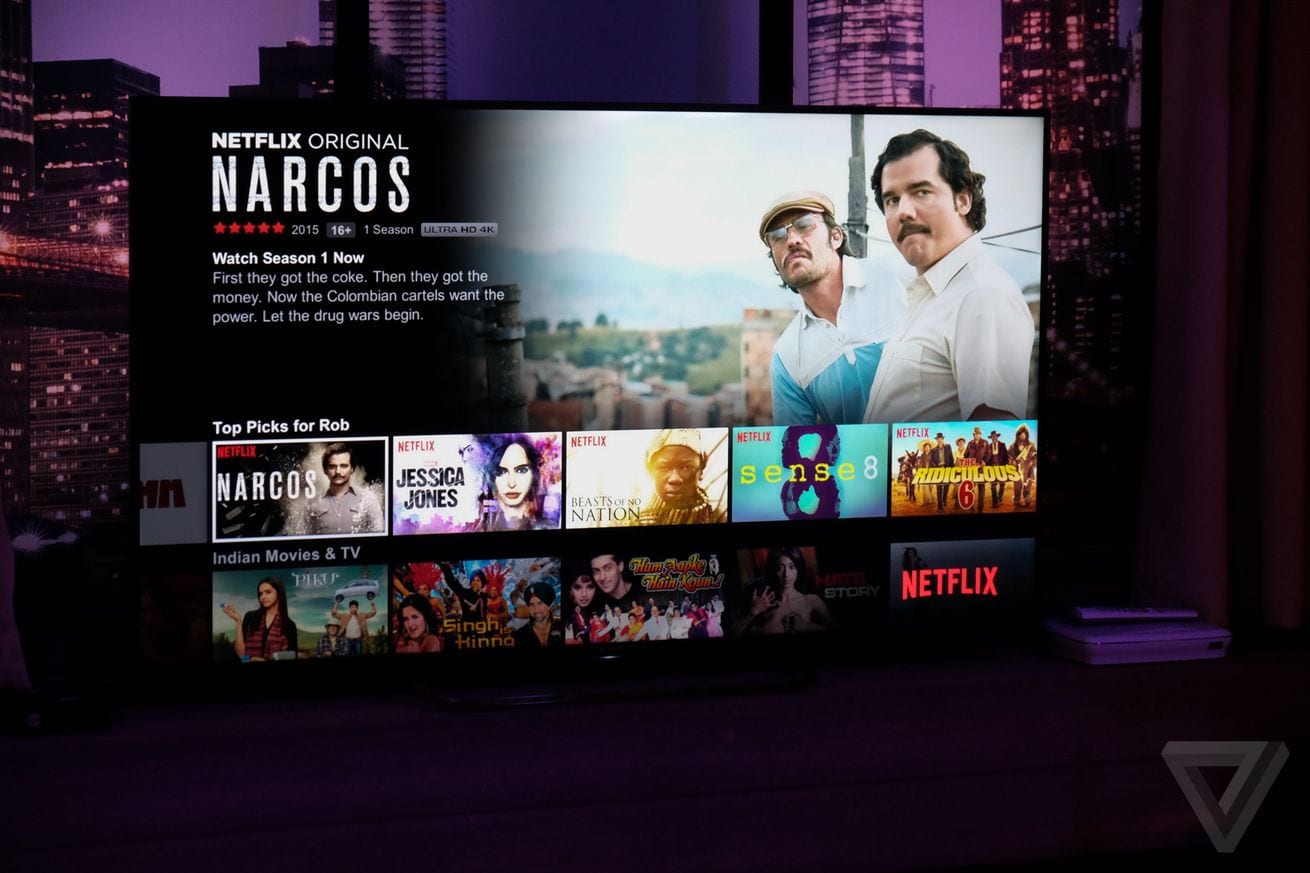
    Netflix ended the rencent quarter with 103.95 million subscribers.  Netflix on Monday reported that its number of subscribers climbed more than expected, topping 100 million worldwide and sending shares in the leading on-demand television service soaring.

    Netflix shares leapt more than 10 percent to $178.75 in after-market trades that followed release of earnings figures showing the Silicon Valley-based company added 5.2 million subscribers in the recently ended quarter to raise the total to 103.95 million for its streaming service.

    Most of the subscriber growth came from outside the U.S., where Netflix has invested heavily in establishing itself as a global television service.

    “That is what you want to see, subscriber growth,” said Silicon Valley analyst Rob Enderle. “Their international efforts are paying dividends right now.”

    Netflix ended the quarter with slightly more than half of subscriptions coming from outside the US, a first for the company.

    Profit was up 61 percent to $66 million, Netflix said. Revenue increased 32 percent to $2.78 billion from the same quarter last year.

    “We underestimated the popularity of our strong slate of content which led to higher-than-expected acquisition across all major territories,” Netflix said in a letter released along with the earnings figures.

    Culling content

    Netflix told investors that it was determined to balance boldness and financial discipline as it continued to bolster its programming slate.

    The company has cut shows that weren’t attracting sufficient numbers of viewers, taming costs as it boosted subscriber numbers in a combination that played well with investors, according to analyst Enderle.

    The company remained committed to investing in original programming. Netflix said it will release 40 feature productions this year ranging from “big-budget popcorn films to grassroots independent cinema.”

    Netflix and rival Amazon Prime have been pumping money into original shows to win fans and set themselves apart in an increasingly competitive bid for viewers’ time.

    “The competition for entertainment time is always intense, but the silver lining is that the market is vast and diverse,” Netflix said.

    More than a billion hours of video is viewed daily at Google-owned YouTube, while Netflix streams a similar amount of video to subscribers over the course of a typical week, according to the company.

    “The shift from linear TV to on-demand viewing is so big and there is so much leisure time, many internet TV services will be successful,” Netflix said.

    “The internet may not have been great for the music business due to piracy, but, wow, it is incredible for growing the video entertainment business around the world.”

    Netflix and Amazon have proven they can break into a market against intimidating entrenched positions of cable companies, according to Enderle.

    Netflix forecast that it would add 3.65 million more subscribers around the world in the current quarter.

    “We are making good progress with our international expansion as improving profitability in our earlier international markets helps fund significant investment in our newer territories,” Netflix said.

    Netflix reported a loss of $13 million outside the U.S. in the recently ended quarter, but said it expected to end this year with an overall profit in its international operations.

  • Vietnam and Singapore firms set up logistics joint venture

    Vietnam and Singapore firms set up logistics joint venture

    The new company is expected to improve logistics services at Vietnam’s northern port city of Hai Phong. Quang Binh Import and Export Joint Stock Company has inked a joint venture deal with Transworld GLS Vietnam Ltd, a unit of Transworld Singapore Group, to establish Transworld QBV ICD.

    The joint venture will specialize in providing warehouse, loading and unloading, packing and customs clearance services and other services related to road, rail and waterway transportation at Quang Binh – Dinh Vu ICD (Inland Container Depot) in Hai Phong.

    In its first phase, the company will invest in transport and customs clearance services on an area of 10 hectares at the ICD.

    Quang Binh Import and Export is a producer and distributor of fertilizer, chemicals, agro-aqua products, food and beverages, bonded warehouse and yard service, and import-export and import & re-export service.

    Ranked among the top 500 largest firms in Vietnam by the Vietnam Report Company (VNR) last year, it is also a leading provider of warehousing and logistics services in Hai Phong.

    Understanding the importance of ICDs in the interntional logistics and supply chain, the company decided to invest in the Quang Binh – Dinh Vu ICD last year.

    The Quang Binh-Dinh Vu ICD will be developed in three phases, with the first phase including a warehouse capable of handling 100,000 tons of goods per year and yard’s capacity of 250,000 TEU per year. Once completed, Quang Binh-Dinh Vu will be one of the biggest ICDs in northern Vietnam.

    ICDs are inland customs clearance points used by importers and exporters. A combination of customs departments, carriers, freight forwarders and customs brokers allow exporters and importers to save time and money.

    The joint venture with Transworld GLS Vietnam aims to make the operation of the Quang Binh-Dinh Vu ICD more effective.

    Transworld Singapore is one of the fastest growing companies in Asia and owns nearly 40 container ships and more than 30,000 containers, particularly well-known for its refrigerated container.

    Transworld QBV ICD JSC is looking to develop Quang Binh – Dinh Vu ICD to be an enclosed logistics chain service that entails depot, yard, warehouse, transportation, LOLO equipment and auxiliary infrastructure, serving as the biggest transit and customs clearance point in Northern Vietnam.

    Speaking at the signing ceremony, Mahesh Sivaswamy, chairman of Transworld Singapore, said: “Starting operation, the Transworld QBV ICD will contribute to cost reduction for enterprises by speeding up and improving efficient clearance service at the port. We engage that the volume of import and export cargo going through our depot is going to significantly increase, making a positive contribution to the budget of Hai Phong City.”

  • Britain’s Jaguar Land Rover opens first overseas engine plant

    Britain’s Jaguar Land Rover opens first overseas engine plant

    Jaguar Land Rover opened its first overseas engine plant on Friday, picking China for the investment a week after saying it would build a global model entirely outside Britain for the first time.

    Britain’s biggest carmaker, which already operates a plant in China as part of a partnership with Chery, said the new facility was part of a 10.9 billion yuan ($1.6 billion) investment with the Chinese automaker.

    “The new engine plant demonstrates Jaguar Land Rover’s long-term commitment to the Chinese market, providing customers with an exciting range of vehicles and powertrain options, as well as to its joint venture,” JLR said in a statement.

    The site will make the new Ingenium 2.0-litre four-cylinder petrol engine. China was JLR’s fastest growing market in 2016, accounting for 20 percent of global sales.

    JLR, owned by India’s Tata Motors, is rapidly expanding its production levels and model line-up and decided in 2015 to build a major new plant in Slovakia, rather than expand its operations in Britain.

    Earlier this month, the automaker said it would build its new E-PACE compact sport utility vehicle in Austria and China, the first car made for global sale to be built outside of Britain.

    Like much of the British car industry, JLR is worried that Brexit could leave its car exports facing lengthy customs delays and tariffs of up to 10 percent, jeopardising the viability of production in Britain.

  • Is a Facebook phone in the works?

    Is a Facebook phone in the works?

    Facebook could be working on a smartphone, according to paperwork recently spotted by cyber sleuths which the tech giant filed earlier this year. A Facebook unit devoted to hardware filed a patent application in January for a mysterious “modular electromechanical device” that could have speakers, cameras, microphones, touchscreens, and displays.

    “A user can change the functionality of the modular electromechanical device based upon the different functional modules that are connected,” read the summary portion of the somewhat cryptic paperwork filed with US patent officials.

    Speculation has swirled for years regarding whether the leading social network would try to capitalize on its popularity with is own smartphone.

    Facebook has repeatedly dismissed such talk as rumor, and declined to comment for this story.

    Facebook has a hardware team led by Regina Dugan, a former director of the Defense Advanced Research Projects Agency — DARPA — the U.S. agency tasked with identifying and funding breakthrough technologies for national security.

    Dugan previously headed advanced technology projects at Google, which dabbled with modular phones in a project called Ara. Google tested Ara but gave up on the project late last year.

    Facebook in April launched a mission to sync smartphone cameras’ windows with augmented reality, focusing on what people have in hand instead of waiting for high tech eyewear.

    While kicking off an annual developers conference in the heart of Silicon Valley, chief executive Mark Zuckerberg called smartphone cameras an initial and promising platform for augmented-reality features in applications tailored to synch with the social network.

    “I am confident now we are going to push this augmented-reality platform forward,” Zuckerberg said.

    “We are going to make the camera the first mainstream augmented-reality platform.”

    Previously, Facebook had been focused strongly on virtual reality as the next big computing platform, particularly using Rift headgear made by its Oculus unit.

  • Vietnam reaching a heady high in the global beer business

    Vietnam reaching a heady high in the global beer business

    Drinkers are foaming at the mouth in ‘the next key battleground for brewers.’ With the Vietnamese thirst for beer seeming to know no limits, brewers are finding it hard to resist tapping into the country’s fertile market.

    Vietnam is forecast to lead Southeast Asia to see volume growth of 2.3 billion liters over 2016-2021, market researcher Euromonitor International said in its July report. Southeast Asia’s volume gains will even surpass those of larger regions, such as North America, Europe, the Middle East and Africa, the report said.

    An expanding Vietnamese middle class and youthful population have helped drive a 300 percent surge in beer demand since 2002, according to Euromonitor, which estimates the market was worth VND147.2 trillion ($6.5 billion) last year.

    It predicts per-capita consumption will reach 40.6 liters this year, making Vietnam the biggest beer consumer in Southeast Asia.

    Vietnam will be “the next key battleground for brewers”, cited Euromonitor as saying in a report Friday.

    Saigon Beer Alcohol Beverage Corp. (Sabeco) and Hanoi Beer Alcohol Beverage Corp. (Habeco), the nation’s two largest beer companies, will submit IPO plans to the government this month, an official from the industry and trade ministry told local media last week.

    “The stake-sales will create an opportunity for international companies to expand geographically, especially those still without a presence in Vietnam,” John Ditty, managing partner of KPMG Vietnam’s deals advisory unit.

    A study jointly conducted by Vietnam’s health ministry and the World Health Organization (WHO) last year showed that 77 percent of Vietnamese men drink liquor and beer, and nearly half of them drink at hazardous levels.

    Nguyen Phuong Nam, an official from the WHO, said nearly 67 percent of the 1,840 traffic accident patients involved in the study had high concentrations of alcohol in their blood, and 45 percent had driven after drinking for two hours or more.

    Vietnamese drank 3.8 billion liters of beer last year. That was an average of 42 liters per person, four liters more than 2015, according to data collected by the trade ministry.

  • A Popular Malaysian Based Boutique For Muslim Woman is Expanding International

    A Popular Malaysian Based Boutique For Muslim Woman is Expanding International

    Lanafira has announced that it is offering a wide range of long dresses for Muslim women around the world. The Malaysian based company has already created a major buzz in the Malaysian and South East Asian market and it is now expanding its brand to the international market. The Muslimah Long Dress collection offered by Malaysia’s finest boutique are becoming the top choice of Muslim ladies and the brand has also introduced an e-Store where women can shop these dresses online with ease.

    “We are proudly introducing a new collection with fresh arrival coming regularly for our Muslim sisters worldwide.” Said the spokesperson of Lanafira while introducing the Long Dress Muslimah range. “The Long Dress Muslimah can be easily ordered online and we are offering these dresses with a variety of designs and colors.” She added. The Muslimah online boutique also receives large orders from an increasing number of international distributors from Europe and North America where such long dress are high in demand, particularly from the Muslim ladies.

    With a slogan of ‘A Style for Every Story’, Lanafira has made a major launch internationally. Most of the Muslim women ordering these dresses range from the age groups of 20 to 40 years old. However, younger and older women are loving these dresses alike. The Muslimah Long Dress for sale at the online store of Lanafira features a wide range of designs that are universally popular and high in demand.

    Another amazing fact about the Muslimah long dress range introduced worldwide by Lanafira’s online store is the competitive price of each dress with high affordability. The traditional Muslim style along with the modern designing makes these long Muslimah dresses a perfect blend of fashion and grace for the women worldwide. Moreover, besides the Muslim women, these dresses are also getting increasingly popular among the non-Muslim women as well due to their elegance and style.

    Some of the Muslimah long dresses for sale at the online store of Lanafira include Mellisa Long Dress in several color with its increasingly popular wide range, Alana Kebaya, Pucci Long Dress, Sofea Modern Perplum and much more. All these designs are offered in several colors and are loved by the women who wear them. The company also offers free delivery across Malaysia and has an overwhelming presence on the social media to interact with the customers.

    In addition, Lanafira also features an informative newsletter on its website to keep its customers updated. The feedback and reviews received by the boutique have been phenomenal and women have simply loved these dresses. The testimonials received by the company reflect the level of trust and satisfaction from its customers and they have declared it the best Muslim dress making boutique available online in Malaysia.

    For more information and to get your Muslimah Long Dresses by Lanafira

  • 3 Hong Kong launches new global roaming packages

    3 Hong Kong launches new global roaming packages

    3 Hong Kong, the mobile arm of Hutchison Telecommunications Hong Kong Holdings (HTHKH), has launched today a new data roaming service, called Roam-in-Command, providing discounted data roaming plans for mobile subscribers traveling 21 countries in three continents.

    3 HK’s new Roam-in-Command service comes with four packages. Each pack provides customers with up to 14 days discounted data roaming service in six European countries and 10 countries throughout Asia Pacific. One package combines the US and Canada, while another pack targets travelers to three Greater China destinations – mainland China, Taiwan and Macau.

    The service offers four 200MB (at HK$78) or 1GB (HK$198) options  to serve customers roaming in Europe, Asia Pacific, the US, Canada and Greater China.

    Customers can also get an extra 1GB roaming data capacity if they subscribe to the 1GB service during the promotional period, from tomorrow to 30 September.

    Kenny Koo, 3 Hong Kong’s director of roaming and service development, said the company is drawing on its advantage of close ties with the 3 Group, NTT Docomo, the Conexus Mobile Alliance and Vodafone to tailor “value-for-money” roaming packages that offer extensive overseas coverage.

    “The upshot is our customers can wave goodbye to the hassle of changing SIM cards or carrying Wi-Fi devices just to stay connected with friends and family while abroad,” the executive said at a media briefing Thursday.

    The new service launch comes at a time when Hong Kong mobile carriers are seeing decline in roaming revenues, thanks to increasing competition from OTT messaging applications like Whatsapp, Line and Wechat.

    Hutchison Telecom reported HK$3.9 billion of mobile service revenue in 2016, down 3.9% from a year earlier, largely due to the decline in roaming revenue – which slumped 13% from HK$831 million in 2015 to HK$722 million last year. The company will report its 2017 interim financial results next week.

    Koo said the data roaming market is changing rapidly, and that he expects that the new service, together with other data roaming plans currently offered by the company, will help drive roaming traffic.

  • Huawei to help drive Singapore’s digital economy push

    Huawei to help drive Singapore’s digital economy push

    Huawei has entered a strategic partnership with Singapore’s Infocomm Media Development Authority (IMDA) to accelerate the nation’s digital economy thrust.

    The company has likewise entered agreements with Keppel Data Centres, and Ascent Solutions also related to Singapore’s digital economy future for a Smart Nation.

    The partnerships aim to enhance industry collaboration, enable local companies to scale globally, empower the workforce with skills relevant for the digital economy as well as equipping companies with the technology and knowledge to build strong digital capabilities in a sustainable manner.

    Huawei, IMDA, and Keppel Data Centres will focus on a two-year strategic collaboration to explore the technical feasibility of a first-of-its-kind high-rise green data center building.

    Huawei and IMDA will also collaborate to accelerate the growth of local SMEs by leveraging Huawei’s technical expertise and facilities, go-to-market opportunities and global business network.

    Further, Huawei will support Ascent Solutions as its technology enabler, allowing the local company to tap Huawei’s global business network and explore overseas opportunities.

    In addition, IMDA and Huawei will jointly promote deeper talent and capability building among local ICT students.

    This initiative will include 45 overseas training stints and internship opportunities for students to explore new capabilities in technology areas critical to the future such as the IoT, 5G, and cybersecurity.

  • E-commerce dominates purchasing habits

    E-commerce dominates purchasing habits

    With the rapid evolution of technology and the internet, consumers are changing their attitudes and behaviours. Therefore, moving fast to understand changes in consumer demands is crucial for any business to grow sustainably, according to research conducted by Kantar Worldpanel Vietnam.

    Internet accessibility in Vietnam at present includes 94 percent of urban households and 69 percent of rural households.

    If internet accessibility continues to grow at the current pace, nearly 100 percent of Vietnamese households will be connected to the internet in the next five years, the research said, adding that the number of broadband subscribers in Vietnam is 53.411 million.

    The development of such services has prompted businesses and consumers to use the internet for different purposes like marketing, selling, buying and payment.

    According to Google, eight out of ten Vietnamese consumers are online at least once a day.

    Today’s Vietnamese consumers are also more familiar with shopping online. Even before they make a purchase, consumers use the internet to find information on products they considering buying, the research said.

    Higher purchasing power breeds greater aspirations, but does not mean that consumers will spend uncontrollably.

    “Over time, we have seen that households tend to save a greater proportion of their total income for the future and with interest rates in Vietnam still relatively rewarding, it is understandable. Anyone selling any consumer goods now has greater competition, within a smaller pie,” the research noted.

    Nguyen Huy Hoang, Business Development Director – Kantar Worldpanel Vietnam, said thanks to widespread internet coverage, Vietnamese consumers can access more diverse products and services. Through virtual stores, they can purchase products at home.

    With rising incomes and a growing middle class, cross border shopping is another developing trend. Many international brands start seeing Vietnam as a great opportunity for them to increase their sales. Today, this is happening in various industries such as fashion with many international brands moving into Vietnam and in fast moving consumer goods markets.

    More foreign brands can penetrate Vietnam‘smarket thanks to the proliferation of foreign retailers entering the market such as Emart, Aeon Mall and most recently 7-Eleven.

    Each has their own plan to expand with more store openings that will make more international products more accessible. With more foreign products more accessible to the masses in modern arenas but also in more traditional stores, this represents a threat to local products in Vietnam.

    Hoang said using the internet, businesses can promote their products to consumers in other countries quickly and cheaply, noting that borderless online shopping allows enterprises to maximise sales.

    The internet can also help farmers, small enterprises and communities introduce their products to the world.

    However, he said, the e-commerce market in Vietnam is still at the very early stage of development and needs big players to bring knowledge, know-how and expertise.

    Fabrice Carrasco, Managing Director of Kantar Worldpanel Vietnam and Philippines said Vietnamese consumers raise a lot of issues, with brand owners finding it hard to keep up with their modern lifestyle, independent decisions and demand for product sophistication. Such complexity requires developing on-trend products and talking to shoppers.
  • Airtel accuses Jio of engineering monopoly

    Airtel accuses Jio of engineering monopoly

    India’s largest operator by subscribers Bharti Airtel has accused disruptive new market entrant Reliance Jio Infocomm of attempting to distort competition and create a monopoly with its proposal to scrap the current interconnect usage charge (IUC).

    At an industry consultation held by telecoms regulator Trai to discuss the future direction of India’s planned new national telecoms policy, Jio called for the current 0.14 rupee IUC to be abolished and replaced with a “bill and keep” regime.

    But the proposal was strongly opposed by incumbent operators including Airtel, with the operator’s chief regulatory officer accusing Jio of attempting to “build its business by getting a free ride on the highways built by Airtel and other operators.”

    He said Jio appears to be attempting to engineer a monopoly situation by unduly burdening the existing operators.

    While Jio accused Airtel of earning excess revenue from the current IUC, Airtel has insisted it is in fact losing 5.5 billion rupees ($85.4 million) per month interconnecting the large volume of calls coming from Jio’s network.

    Jio burst on to the scene last year with a cutthroat promotional offer involving providing free services for a six month period to customers porting to its network. The company now charges for data but plans to keep voice calls free in perpetuity.

    Some Indian MPs, consumer activists and Reliance Jio partner Reliance Communications have also called for the IUC to be scrapped, whereas top operators Airtel, Vodafone India and Idea Cellular want the charge to be raised.

  • Viettel’s overseas pre-tax profit hits US$41.2 million

    Viettel’s overseas pre-tax profit hits US$41.2 million

    Military-run telecom group Viettel, one of Vietnam’s three largest mobile service providers, recorded a pre-tax profit of VND1 trillion (US$41.2 million) from its overseas investments in the first half of 2017, a 156 percent year-on-year increase, according to Viettel’s latest report.

    The report, which reviews the business results of Viettel’s overseas investments in nine markets, showed that in H1, Viettel’s revenue rose by 25 percent compared to the same period last year, to VND14 trillion ($600 million). Particularly, revenue in Peru posted the highest growth rate of 82 percent, following by Burundi at 38 percent, East Timor at 29 percent and Haiti at 15 percent.

    The positive results came from revenue generated by mobile phone telecommunication services, especially new services such as 4G, e-wallet and large information technology projects for governments and businesses.

    The projects include the line connecting East Timor, Laos population management system, transmission channel for the Mozambique Ministry of Home Affairs and Ministry of Higher Education, Science and Technology, and a tax payment system for Burundi.

    Viettel also received positive signs from Lao market, with its Unitel brand maintaining its leading position with four million subscribers. Its Telemor brand in East Timor has been granted a new frequency to expand its network, thus bringing in a revenue of several million US dollars.

    The favorable exchange rate in Viettel’s overseas markets also contributed towards good business results.

    The achievements are expected to be a pre-condition for a higher growth rate for the group this year. Viettel has targeted a strong growth rate of 35 percent, with around 50 million subscribers, in 2017. Revenue from overseas investment has been set at VND32 trillion ($1.4 billion) and its growth rate at 29 percent this year.

    The group plans to complete building network infrastructure in its tenth market, Myanmar, this year, as well as create modern broadband infrastructure for 4G in these markets.

    Viettel currently has operations in 9 overseas markets including Laos, Cambodia, East Timor, Cameroon, Haiti, Mozambique, Burundi, Peru, and Tanzania, with operations in Myanmar expected to begin in the first quarter of next year.

    Viettel earned VND226.5 trillion in revenue in 2016, equal to 100 percent of its annual plan, while pre-tax profit was VND43.2 trillion, or 101 percent of its annual plan.  The military-run company had 7.4 million new subscribers as at the end of 2016, bringing its total to 90 million.

  • Tourism market offers opportunities for start-up businesses

    Tourism market offers opportunities for start-up businesses

    Vietnam’s tourism market offers huge opportunities for start-up companies if they promptly seize technological trends to create special and unique tourism products, heard a workshop in Ho Chi Minh City on July 20.

    A report delivered at the workshop, jointly organised by the Saigon Innovate Hub (SiHub) and the Start-up Vietnam Foundation (SVF), showed that tourism has been identified as a spearhead economic sector in the near future, with the target of luring 17-20 million international tourists and serving 82 domestic holidaymakers by 2020.

    Nguyen Quoc Ky, Director General of the Vietravel Company, underlined the need for research and development of start-up companies in tourism to secure domestic market share.

    Participants stressed that amid the technological boom, start-up companies need to grasp the market’s trends and continuously innovate to offer highly competitive products, otherwise they will be merged or closed.

    Sharing the view, SVF Managing Director Pham Duy Hieu said start-up companies should enable staff members to show their creativeness, thus offering products that can satisfy, even surprise customers.

    At the workshop, delegates discussed measures to develop Vietnam’s tourism, including incentives to lure tourists and investment in infrastructure, building overseas tourism promotion offices and promoting regional connection.

    In 2016, Vietnam’s tourism sector welcomed 10 million foreign arrivals and served 62 million domestic holidaymakers, representing 4.3-fold and 5.3-fold increases from the figures in 2001, respectively.

  • Cebu Pacific to start daily flights to Sydney on Dec. 1

    Cebu Pacific to start daily flights to Sydney on Dec. 1

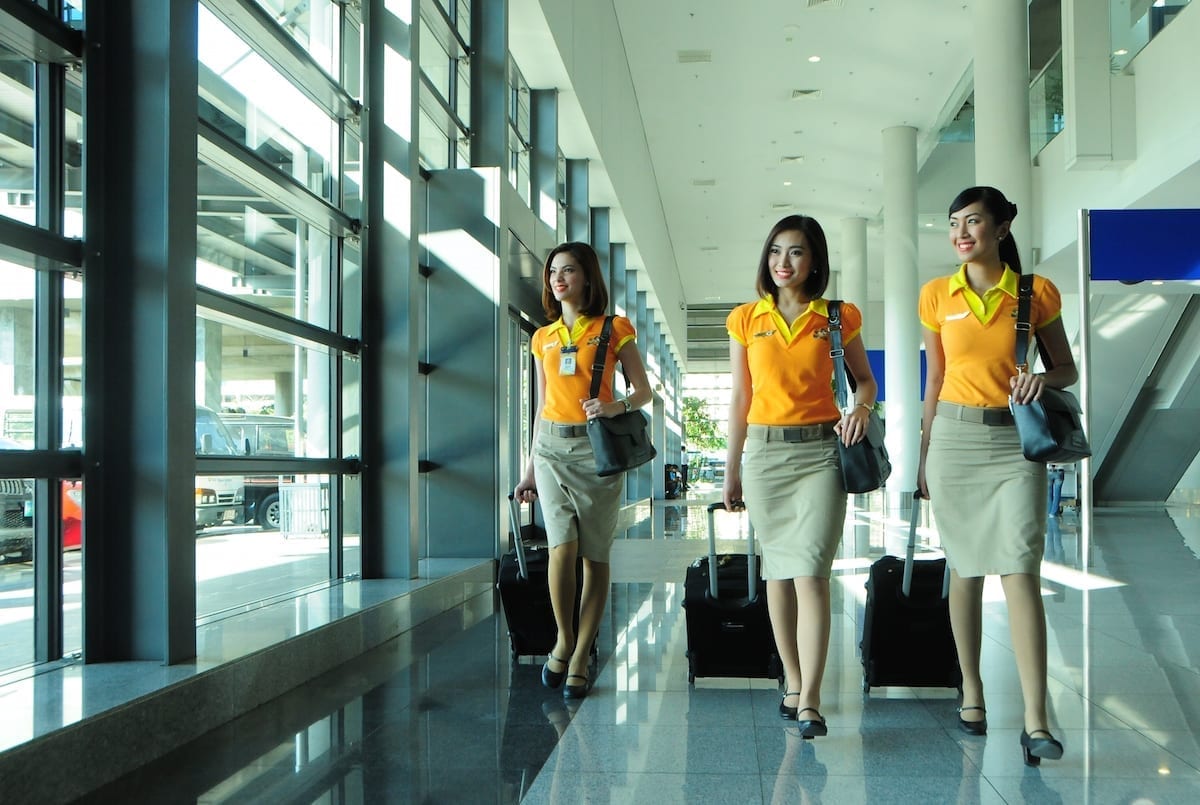
    Cebu Pacific Air, the country’s biggest budget airline, will start daily flights between Manila and Sydney in Australia on Dec. 1 this year. The carrier said it was increasing frequencies given robust demand on its current five weekly flights.

    “Cebu Pacific continues to remain bullish over prospects in the Australia market,” Candice Iyog, vice president for marketing and distribution of Cebu Pacific, said in a statement.

    “The additional frequency between Manila and Australia reflects our commitment to reinforce the Cebu Pacific effect across one of our strongest international markets. We want to continue to offer our year-round low-fares that are affordable, accessible and available to a greater number of travelers,” she added.

    Cebu Pacific is already the biggest air carrier operating between Manila and Sydney. It bested two other rivals in the first quarter of 2017.

    Citing data from Australia’s Bureau of Infrastructure, Transport and Regional Economics (BITRE), Cebu Pacific said it had a market share of 42 percent and continued to see gains in passenger volume. During this period, it carried 43,512 passengers, up 16 percent.

    The same report noted that overall passenger traffic between Manila and Sydney had gone up 7 percent year-on-year.

    Cebu Pacific noted that its load factor, a measure of flight utilization, in this route stood at 78 percent during the first three months of the year.

    Cebu Pacific said it was also a leading player in the Manila-Sydney airline cargo service.

    The airline flew 1,131 tons of cargo between Manila and Sydney in the first three months of 2017, about 49 percent of the total 2,325 tons carried by the three carriers.

    Cebu Pacific already offers the most number of seats between Manila and Sydney, covering close to 40 percent of the route’s total capacity.


  • Ksubaka’s interactive ‘Pasta Loves Sauce’ campaign engages consumers

    Ksubaka’s interactive ‘Pasta Loves Sauce’ campaign engages consumers

    As part of its ‘Pasta Loves Sauce’ initiative Barilla, Italy’s #1 selling pasta, wanted to extend its brand campaign to in-store shoppers across Singapore to demonstrate the versatility of its pasta and sauces, bring the brand to life in a fun and engaging way and ultimately encouraging sales. Teaming with Ksubaka and its network of 280 playSpots located in 140 FairPrice stores across the country, over 110k shoppers stopped to learn about Barilla during the one month campaign.

    Ksubaka makes engaging interactive branded experiences that are fun, informative and rewarding. These branded experiences are displayed on its media network of touch screen playSpots, which are located in high footfall retail locations. All shopper activity is monitored in real-time giving unparalleled granular insight into the effectiveness of the campaigns.

    For the Barilla ‘Pasta Loves Sauce’ campaign shoppers used a Pasta Recipe Finder designed by Ksubaka to discover different pasta recipes. Shoppers selected their preferred pasta cut, protein, and time they had for cooking the recipe. The recipe could then be sent to the their mobile via SMS, along with the ingredients list so they could go shopping. If they purchased a Barilla product they were entered into a prize draw to win spa vouchers.

    “Barilla gave hundreds of thousands of shoppers their perfect Italian pasta recipe, through a fun and branded interactive solution; thanks to Ksubaka’s unique in-store experience! The campaign results are stronger than our expectations and rank high from customer interaction point of view and we are looking to build and extend our relationship with Ksubaka,”said, Gupte Nikhil, Managing Director – South East Asia at Barilla Group

    The campaign outperformed all pre-campaign KPI’s engaging a large number of shoppers across the country and successfully raising Barilla profile in-store, especially with shoppers that prioritize high quality pasta.

    “The Barilla campaign clearly demonstrates our ability to reach shoppers at mass scale in a very short period of time. Our irresistible, engaging and fun branded games offer a new medium for brands to connect with their target audience.” Said, Julian Corbett, CEO and founder, Ksubaka.

    The campaign outperformed all pre-campaign KPI’s engaging a large number of shoppers across the country and successfully raising Barilla profile in-store, especially with shoppers that prioritize high quality pasta.