Blog

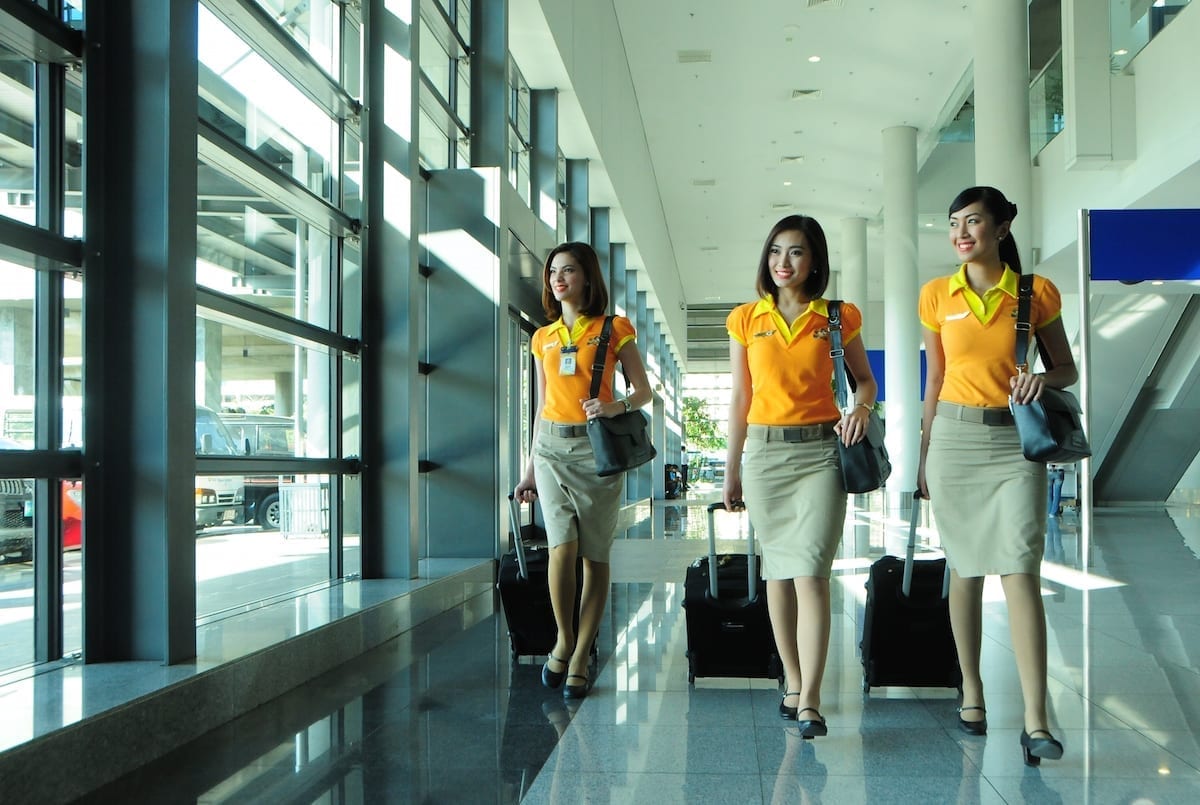
  • Cebu Pacific dominates Manila-Sydney route

    Cebu Pacific dominates Manila-Sydney route

    he Philippines’ leading airline, Cebu Pacific (CEB) continues to soar high, capturing the lion’s share for both passenger and cargo traffic between Manila and Sydney in the first quarter of 2017. Data from the Bureau of Infrastructure, Transport and Regional Economics (BITRE) of Australia showed that CEB carried over 43,512 passengers, representing 42% passenger market share on the Manila-Sydney route, the highest among the three carriers covering this route.

    The BITRE report noted that from January to March 2017, passenger traffic between Manila and Sydney totalled 104,446, up seven percent (7%) versus the same period last year.  The growth in passenger traffic was dominated by CEB, which carried 16% more passengers from the 37,640 reported in the first quarter of 2016. Load factor for CEB for the Manila-Sydney route was at an average 78% for the first three months of 2017.

    “We are very pleased to see that the Cebu Pacific effect continues across one of our strongest international markets. Our goal is to make flights affordable, accessible and available to a greater number of travellers. These numbers do not only showcase the Philippines as a flourishing destination, but it also shows our strong commitment to remain and further stimulate our key market in Australia,” said Candice Iyog, Vice President for Marketing and Distribution of Cebu Pacific.

    Aside from the growth in passenger volume, Cebu Pacific also reinforced its leadership in the Manila-Sydney airline cargo service. CEB flew 1,131 tons of cargo between Manila and Sydney in the first three months of 2017, covering 49% of the total 2,325 tons carried by the three carriers.

    The growth in CEB’s cargo service tracked the increase in total volumes, from 1,567 tons carried in the comparable quarter last year.

    BITRE, an agency under the Department of Infrastructure and Regional Development of the Australian government, “provides economic analysis, research and statistics on infrastructure, transport and regional development issues,” according to its official website. The bureau holds data and statistics on the aviation industry.

    Cebu Pacific offers the most number of seats between Manila and Sydney, covering close to 40% of the route’s total capacity.

  • Gaming firm Razer opens first store in Hong Kong and sets its sights firmly on mobile industry

    Gaming firm Razer opens first store in Hong Kong and sets its sights firmly on mobile industry

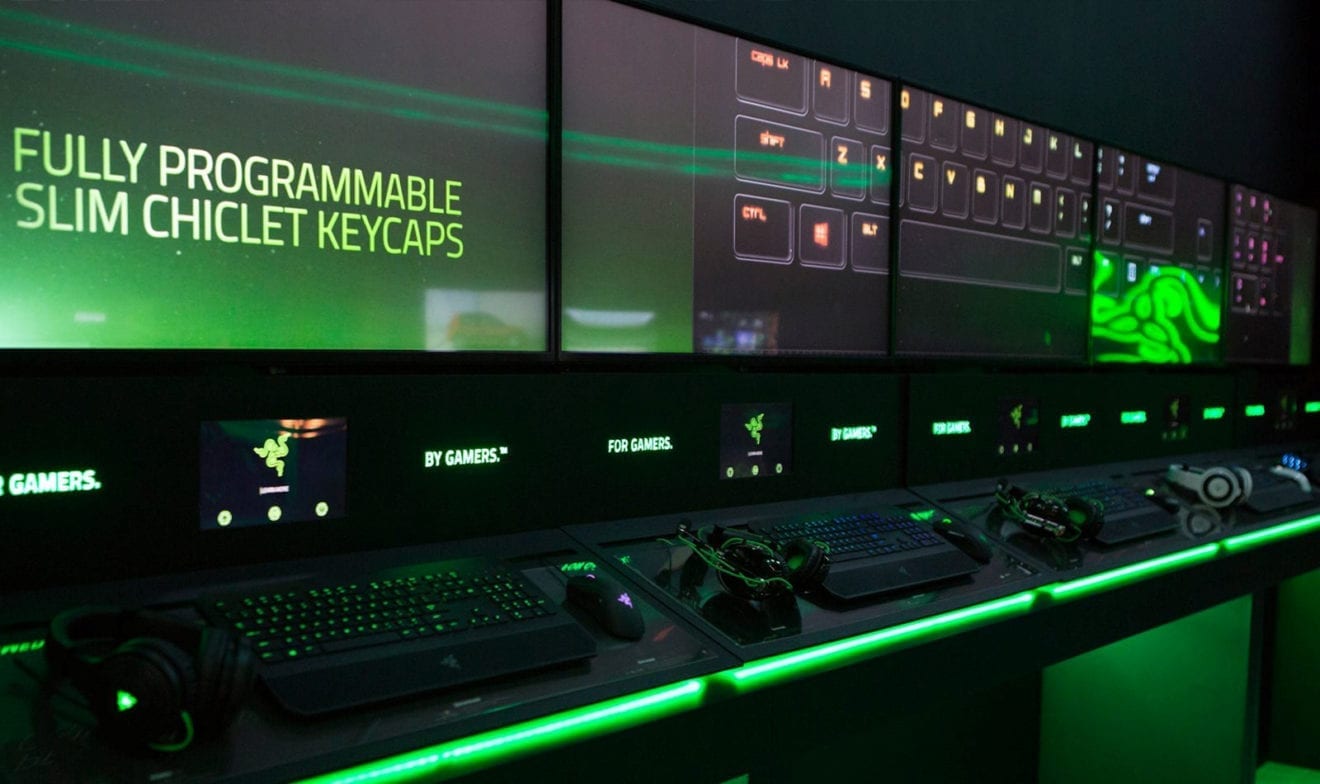
    Razer, the popular US gaming peripherals brand which opened its first concept store in Hong Kong on Saturday, is now hoping to take on the mobile gaming industry after successfully disrupting the PC gaming scene with devices such as its powerful gaming laptops and mice, its chief executive has told us.

    Razer, which is in partnership with Three Group – the mobile telecommunications arm of Li Ka-shing’s CK Hutchison on the development of the Hong Kong outlet – has its sights on taking on the mobile gaming landscape, too, which chief executive Tan Min-liang said “is going to be a huge part of our business”.

    “There is so much potential for Razer – we’re still growing exponentially through the PC market … we’ve shipped over US$1 billion in hardware over the last three years, and we haven’t even gotten started on the mobile gaming market yet,” said Tan, who splits his time between San Francisco, where the company is based, Singapore and Taiwan, where Razer has its design centres.

    The company on Saturday opened the doors to its sixth RazerStore worldwide, on Cannon Street in Hong Kong’s bustling Causeway Bay shopping district. Razer’s other shops are in Shanghai, Taipei, Bangkok, Manila and San Francisco in California.

    An alliance was formed last month where Razer and Three will work together to offer specific tariff plans, services and devices to electronic games players around the world.

    Tan also said Razer and Three will work together on “future mobile devices”, although he declined to elaborate on further details.

    While Razer’s current product offerings are largely PC-focused, with its array of mice, keyboards and sleek gaming laptops, the company has yet to offer any peripheral devices for mobile gaming, although Tan believes is an industry that is ripe for disruption.

    “When Razer first looked at gaming laptops, there were no products or services that really worked well for gamers. Similarly, right now I don’t see any mobile device or software platform that really fulfils the needs of the [mobile] gamer … there is a huge opportunity to disrupt the mobile market,” Tan told SCMP.

    Razer is yet to reveal its plans in the mobile space, but it has made several acquisitions in the past couple of years to suggest it is moving towards eventually developing its own mobile devices or gaming platform for the growing number of users who play games on their smartphones or mobile devices.

    In July 2015, it acquired Android gaming company Ouya for its Android TV games and online retail platform to bolster the game offerings for its Forge TV console product.

    And in January this year, it bought Nextbit, the startup headed by several ex-Google employees who worked on Android and who produced the Robin smartphone, which amassed over US$1.3 million in pledges on crowd-funding platform Kickstarter.

    “We’ve put together some of the best talent in mobile design,” Tan said.

    “With Nextbit, we now have the top tech leads of Android from Google with us, and the former lead designer for HTC who has helped design HTC phones for [years].

    “We’re bringing together the best possible talent at Razer to work on next generation devices,” he added.

    Razer already has a large following in China and Hong Kong with its gaming peripherals consistently coming top in the category on e-commerce platforms such as Tmall and JD.com, Tan said.

    A third of Razer’s business comes from Asia, a large part of which comes from China, he added, declining to provide specific numbers.

  • OJK to Monitor Fintech

    OJK to Monitor Fintech

    The Financial Service Authority (OJK) has formed two new directorates as a response to financial technology (fintech) development. OJK deputy chief commissioner Rahmat Waluyanto said that the two new directorates are Digital Financial Innovation Unit and Fintech Permit and Monitoring Unit.

    “The directors have been appointed, but it can’t yet be announced because it’s not official yet. The Digital Financial Innovation Unit will handle regulatory sand box and research,” he said, as quoted by Antara last week.

    In a bid to respond to fintech development, OJK has also formed Fintech Expert Forum and fintech innovation hub. The forum will facilitate fintech industry development comprising individuals from 21 entities, such as ministries, agencies, associations, universities and other relevant business players.

    The committee will give recommendations and inputs as well as facilitate coordination between agencies and fintech start-up companies. Meanwhile, OJK’s fintech innovation center is projected to become a hub of various fintech incubators to discuss developments.

    OJK chief commissioner said that Fintech Expert Forum will facilitate and ensure coordination of various start-up players. The forum will discuss developing fintech issues. “And discuss future developments in fintech industry,” he said.

    Indonesia has seen a rapid growth of fintech players. As of January 2016, Indonesia Fintech Association reports that the country has 165 domestic start-ups. The figure has quadrupled compared to that of in the first quarter of 2014 with 40 companies.

  • Spar International Appoints New Head of Buying

    Spar International Appoints New Head of Buying

    SPAR International, the world’s largest voluntary retail chain, has today announced the appointment of Wouter Lefevere as Head of International Buying.

    Based in the organization’s international head office in Amsterdam, Mr. Lefevere will take on key buying responsibilities including supplier relationships and negotiations, working in close co-operation with SPAR partners worldwide to build on the brand’s growing international scale and presence.

    SPAR, which has 12,545 stores in 44 countries, recently reported sales of €33.1 billion for 2016.

    Mr. Lefevere joins SPAR with a wealth of international buying experience, having held a number of senior buying and commercial development roles for LIDL in France, Belgium and the Netherlands.

    Welcoming Mr Lefevere, Tobias Wasmuht, Managing Director of SPAR International said, “Buying better together internationally is a key pillar of the scope of services provided to our partners, and the appointment of Wouter signals our intention to further enhance this scope. Today we collaborate with our supplier partners on behalf of our SPAR partners in 44 countries across four continents. As a result we have a uniquely strong global network which, not only allows us to source better by leveraging our international scale, but also to provide extensive market access opportunities for our international suppliers.”

    Lefevere will be responsible for delivering on SPAR’s recently launched Buying Better Together strategy, leading a team which will focus on collaboratively working with partners and suppliers in the areas of own brand development, warehouse & logistics, supplier partnerships and analysis & marketing.

    Wasmuht continued: “As a partnership of independent retailers and wholesalers, SPAR International doesn’t adopt a traditional transactional supplier-buyer relationship with our SPAR partners but takes a collaborative approach. We offer resources and buying services to our partners to help them grow their business. Wouter and his team will work to grow joint buying volumes of SPAR partners and the penetration of SPAR International Own Brands, as well as facilitate the pooling of buying volumes of FMCG brands.”

    SPAR International works with Partners to develop supply chain, retail operations, staff training, retail design and brand development strategies, while its multi-format strategy sees its Partners operate hypermarket, supermarket, neighbourhood, convenience and online stores, now serving the needs of 13 million customers daily.

  • AEON in Collaboration with The Mall Shopping Center Anniversary Happy Surprise

    AEON in Collaboration with The Mall Shopping Center Anniversary Happy Surprise

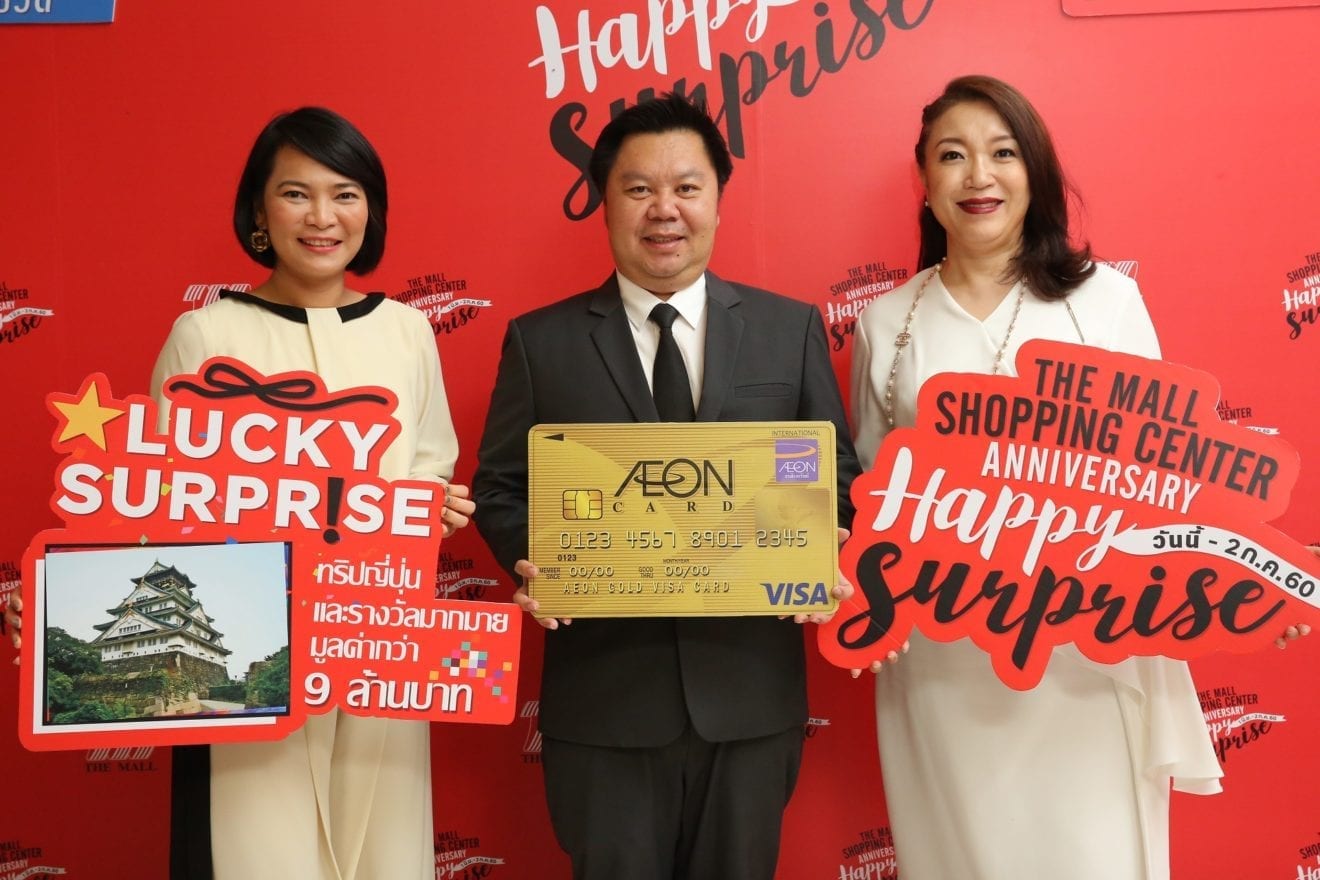
    Mr. Tula Pharuehaspailin (Middle), Marketing Senior Manager AEON Thana Sinsap (Thailand) Public Company Limited, Ms.Voralak Tulaphorn (Right), Senior Vice President Marketing The Mall Group, and Ms.Duangta Phongwilai (Left), Group General Manager – Shopping Center Corporate Marketing The Mall Group launches “The Mall Shopping Center Anniversary Happy Surprise” campaign for AEON shopping enthusiasts, with a “Lucky Surprise” draw when choosing to spend at every branch of The Mall Shopping Center.

    Every 1,000 baht spent, customers will get an x3 lucky draw coupon to win a special trip to Japan, Osaka with a round-trip flight ticket and accommodation for up to 5 prizes for 2 seats per prize totaling 650,000 baht. Followed by “Surprise Digital Box”, where customers spending 800 baht and above will get a chance to win a Surprise Digital Box. Most importantly with “AEON Surprise” ,when spending 5,000 baht or more with The Mall Shopping Center receive cash vouchers up to 500 baht , together with many promotions starting today until the 2nd of July, 2017.

  • Garuda Indonesia poised to trim losses with Idul Fitri traffic

    Garuda Indonesia poised to trim losses with Idul Fitri traffic

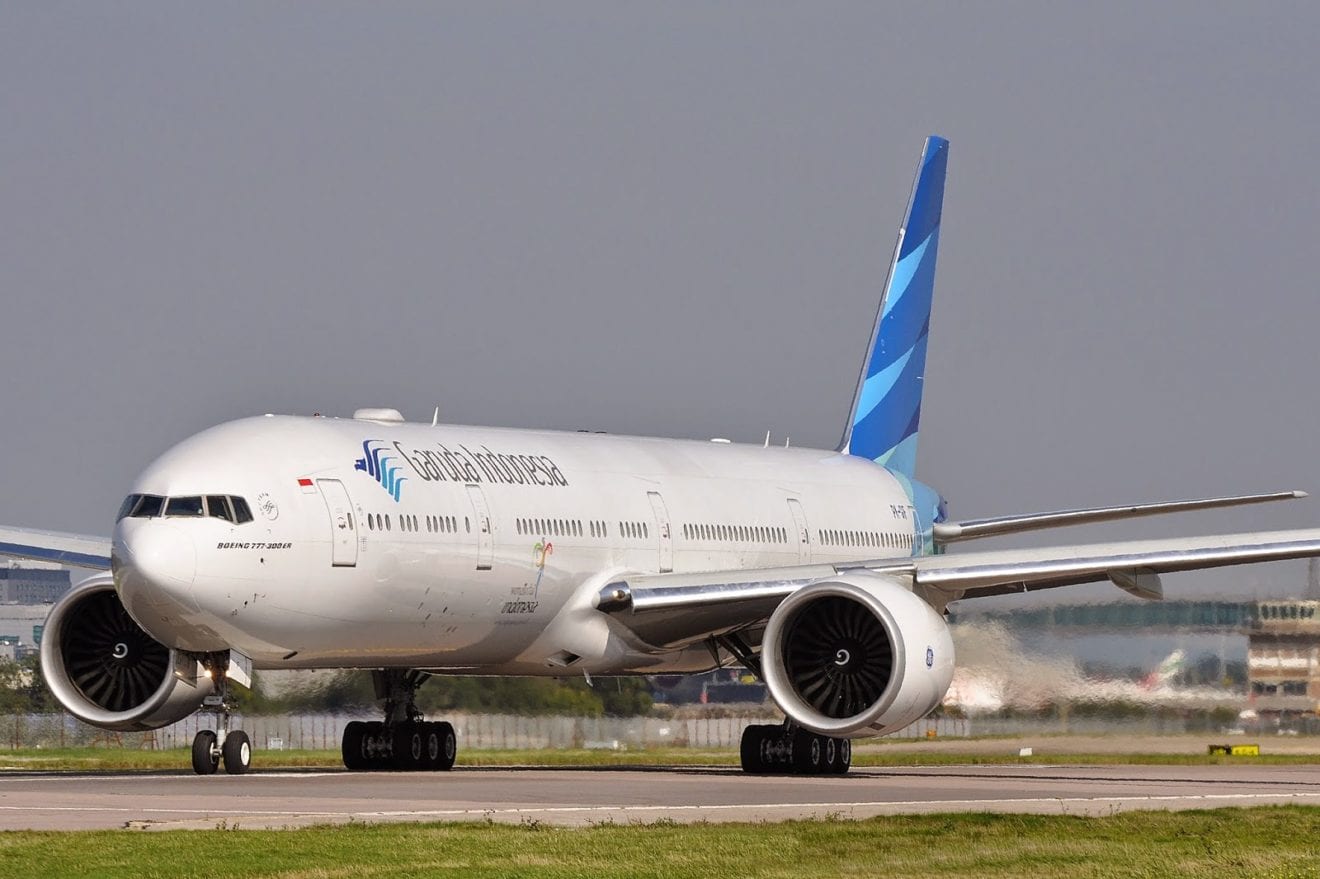
    After suffering US$89.49 million in losses during the first quarter of the year, PT Garuda Indonesia is poised to see a recovery in the second quarter, especially in the June and July months that encompass the Idul Fitri holiday.

    Garuda Indonesia president director Pahala N. Mansury said the second quarter offered good prospects and the Idul Fitri exodus would help improve the company’s accumulative performance in the first semester.

    In the first quarter of 2016, the state-owned flag carrier booked $74.48 million in profits, but still suffered $63.2 million, or around Rp 824 billion, in losses.

    “Even if the losses have yet to be covered, hopefully we can at least push the losses down,” he said after accepting an award from TripAdvisor as one of the top 10 best airlines in the world on Friday.

    He also denied accusations from Rizal Ramli about the company’s lavish spending and potential corruption in the purchase of an Airbus A350.

    “We don’t have an Airbus A350 and thus the statement is not true,” he said, adding that the company was currently focused on optimizing efficiency.

  • Vietnamese banks look to tap into big data

    Vietnamese banks look to tap into big data

    To successfully deploy big data in the banking sector, there must be a comprehensive strategy using professional teams who have deep understanding of both finance and technology, said Nguyen Kim Anh, Deputy Governor of State Bank of Vietnam.

    At a conference on Thursday in Ha Noi, Anh said that digital data was becoming a new resource and big data was playing an important role in the banking and finance sectors.

    The conference, titled “Big data for banking and financial industry,” was organised by the Banking Academy of Vietnam.

    At the workshop, participants focused on big data technology from a variety of perspectives. They discussed the latest technology and ways for banks and financial institutions to optimise the application of big data into information systems.

    Through the discussion, experts shared hopes that they could identify the opportunities and challenges of big data to improve the productivity, quality and efficiency of financial and banking operations.

    The fourth industrial revolution is taking place across the globe and having a strong impact on all aspects of socio-economic life, according to the experts. It promises to create more opportunities and an impetus for the country development of each nation or organisation.

    The fourth industrial revolution with Internet of Things, automation and artificial intelligence has brought digital data to the centre of the business world.

    Digital data had become a very important resource from which businesses can generate revenue and provide new application ecosystems, services and digital products, said Anh.

    “Therefore, digital data will grow and become an important industry in the fourth industrial revolution,” he added.

    At the workshop, the deputy governor also said that the specificity of banking is creating a huge amount of data from structured data such as transaction histories and customer records to unstructured data such as customer activities on Internet and mobile banking application.

    “Applying big data to exploit the data will bring significant competitive advantages and efficiency for the banking and finance sectors,” he added.

    In addition, Pham Anh Tuan, director of Vietcombank’s tech modernisation department, said that data in the banking system and those collected from the outside include many types. These include structured data, semi-structured data, and unstructured data.

    “The current banking data is unstructured, which meets all big data standards in volume, movement and diversity,” Tuan emphasised.

    The representative of Vietcombank also said that when banks as well as financial institutions identify data with great value, they must consider data assets of the bank. “In other words, data must be treated like any bank assets, which have to be taken care of and ensured on asset security.”

  • Singtel quad-play subs offered free Stingray Music access

    Singtel quad-play subs offered free Stingray Music access

    Singtel has launched a promotion granting its Singtel Circle quad-play customers free access to 50 live music stations operated by Canada-based music service Stingray Music.

    Subscribers to Singtel’s postpaid mobile, fier broadband and Singtel TV plans will be granted complementary 24/7 access to music genres in English, Mandarin, Malay, Tamil and other languages.

    The service will be available on Singtel TV, mobile devices and computers and will be added to the list of benefits available to quad-play customers.

    Singtel Circle also offers perks including free local data on Sundays, mobile plan discounts and an annual handset upgrade discount worth S$350 ($250).

    “We are always keen to explore new ways to add value to our customers’ lifestyle experiences,” Singtel CEO consumer Singapore Yuen Kuan Moon commented.

    “Singtel is pleased to be the first in the Asia Pacific region to introduce Stingray Music and provide countless hours of music entertainment for our Singtel Circle customers’ listening pleasure. We’re not stopping here and will continue enhancing Singtel Circle’s suite of benefits.”

  • Nike to cut 1,400 jobs in reorganization

    Nike to cut 1,400 jobs in reorganization

    Sports apparel and footwear giant Nike will cut about 1,400 jobs, part of a plan to expand direct selling to consumers as e-commerce roils the retail sector, the company announced Thursday.

    Nike said it would cut about two percent of its global workforce as it implements the “Consumer Direct offense,” a reorganization initiative that targets customers in 12 key cities.

    “In the new alignment, the company will drive growth by deeply serving consumers in 12 key cities,” the company said in a news release. “Nike is moving closer to the consumer — creating a local business, on a global scale.”

    The focus cities — New York, London, Shanghai, Beijing, Los Angeles, Tokyo, Paris, Berlin, Mexico City, Barcelona, Seoul and Milan — are expected to account for more than 80 percent of the Nike’s growth through 2020.

    The company restructured its global business, cutting the number of geographies from six to four and creating new employee teams so that digital and merchandising will be more responsive to key markets.

    Other changes include the goal of cutting product cycle times in half and new investments in categories seen as offering the greatest growth potential, including running, basketball, global football and young athletes.

    The changes come as department stores and other retailers close hundreds of stores due to the growth of e-commerce and mobile technology.

    “Today we serve our athletes in a changing world: one that’s faster and more personal,” said Trevor Edwards, president of the Nike Brand.

    “This new structure aligns all of our teams toward our ultimate goal — to deliver innovation, at speed, through more direct connections.”

  • Japanese retailer Aeon to launch English version of AeonEshop.com

    Japanese retailer Aeon to launch English version of AeonEshop.com

    Since entering the e-commerce market in January 2017 with the site AeonEshop.com, the Japanese supermarket Aeon has quickly gained the attention of customers thanks to its unique selling point compared to other e-commerce websites – high quality Japanese goods. To better serve customers, the firm is about to release the English version of AeonEshop.com.

    Success thanks to uniqueness

    AeonEshop’s initial success stems from its products’ variety and quality. With a focus on selling high quality Japanese goods to meet customers’ demand, the site has quickly established its foothold and become customers’ favorite shopping destination, while numerous other online sales websites have to be stopped after a short time of operation.

    AeonEshop’s operation has been pretty successful. Its products are always ensured to be updated and diverse to meet Vietnamese consumers’ needs and high standards.

    Recently, the site has made a big step by expanding its reach to the northern provinces of Vietnam like Hanoi, Vinh Phuc, Bac Ninh, Hung Yen and Hai Phong to satisfy customers who enjoy using Japanese goods.

    Hanoi is usually considered a difficult market due to geographic conditions, people’s traditional consuming habits and shopping culture. However, for those who are fond of Japanese goods, this is good news and marks a new beginning in AeonEshop’s attempt to access the northern region, which has a lot of potential for development.

  • Resorts World Manila set to reopen shopping section

    Resorts World Manila set to reopen shopping section

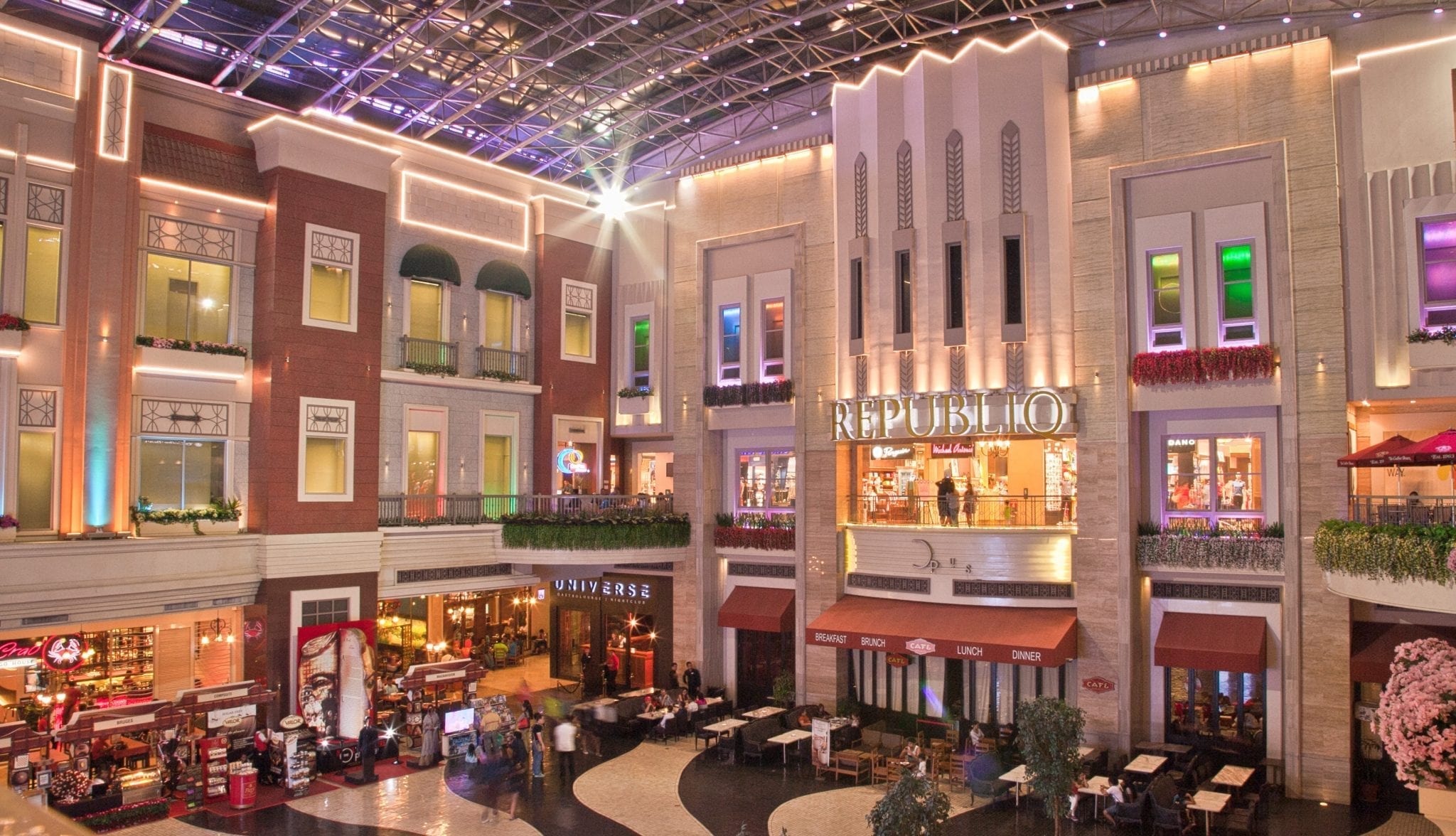
    Recovering from a deadly tragedy, the hotel-casino complex set on fire by an attacker last week will begin to open its retail section soon. Stephen Reilly, chief operations officer of Resorts World Manila, said that while management has been eyeing to open the shopping area which had 114 outlets, the gaming area will remain closed.

    “We’re not intending to open the gaming facilities at this given time. It’s insensitive to do so,” Reilly said on Friday.

    “But for the retail component, people still love to come to Resorts World. Go to restaurants, go to the cinema, go and dine and shop. We’d be looking to open up the retail component by the end of this week,” he added.

    Reilly maintained, however, that the business keeps as its priority the victims and families of the fatal incident on June 2 when gunman Jessie Javier Carlos armed with a rifle entered its premises and set parts of the gaming area on fire.

    Javier, the lone suspect behind the deadly attack, was a heavily indebted gambling addict, police said Sunday. Thirty-seven died due to suffocation while 78 others were injured. Outside the premises, people are still holding a vigil before a memorial set up for the victims of the assault.

    Reilly said Resorts World Manila is wholly shouldering medical expenses of the victims, among whom were its own employees, giving out P1 million for each and setting aside funding for their dependents’ education.

    Financial matters ‘irrelevant,’ says exec

    Asked how much the company is losing each day it remains closed, Reilly chose not to disclose and dismissed the concern as “irrelevant.”

    “What is important to me, to the company and to the executives is: let’s work through this in the best interest of everybody, the victims, the families, the industry, and also how the Philippines is perceived,” he said.

    Still, the franchise of casino giant based in Pasay City is facing threat as it remains in hot water over possible security lapses that resulted in scores of casualties.

    “I wouldn’t like to comment that we would lose our franchise. We’ll wait for the investigations to be concluded. That would also include PAGCOR. They are our governing body,” Reilly said.

    The executive, who has over a decade of experience in surveillance and security before helping set up Resorts World in the Philippines, also said experts and third parties are coming in to sort out the establishment’s fault in the tragedy.

    While insisting that the complex has followed international security standards, Reilly said it would not be foolproof.

    “We’re engaging experts from prior military field, intelligence field to totally review all areas of operation with regards to security protocols of Resorts World Manila,” he said.

  • Japanese ‘lifestyle retailer’ opens first foreign brand store in North Korea

    Japanese ‘lifestyle retailer’ opens first foreign brand store in North Korea

    A four-year-old retail company which claims to be headquartered in Japan and has branches in South Korea and the United States recently opened the first ever foreign brand chain outlet in North Korea confirm. A branch of Miniso, a Uniqlo-style Japanese-Chinese low-cost retail brand that sells everything from umbrellas and humidifiers to computer mice and neckties recently opened on Pyongyang’s Ryomyong Street, a showcase development featuring over 3,000 new and refurbished apartments which was completed in April this year.

    But the firm’s claims to have stores in the United States and a headquarters in Japan – despite the majority of its factories and distribution network being based in China – could mean its presence breaches tightening unilateral sanctions from Washington and Tokyo against the North.

    North Korean state media is yet to report on the store, but sources in Pyongyang told that news of its existence is quickly spreading throughout the city.“It’s a huge hit with the younger Pyongyang crowd,” one source said, requesting anonymity due to the sensitivity of speaking to media about the issue. “All items are two or three dollars and it’s legit.”

    Observers familiar with the North Korean economy told on Tuesday that the branch’s presence was a significant development in light of Pyongyang’s traditionally sparse range of retail options.“I think the most notable thing is that it appears to be a foreign chain operating a modern, branded store in Pyongyang, there’s nothing else quite like that,” said Andray Abrahamian, an honorary fellow at Macquarie University.

    “As far as I know, their products are quite cheaply sold in most markets – cheap enough to be competitive in the DPRK,” he said. “I think the shop will be seen by Pyongyangites as modern and affordable: I’d bet it does quite well.”Benjamin Katzeff Silberstein, an associate scholar at the Foreign Policy Research Institute, and co-editor of North Korean Economy Watch, described the new store as a “really interesting development both from an economic policy point-of-view, and from a consumer’s perspective.”“In the first realm, it is a telling sign of how much the North Korean economic landscape really has changed, from a time when the opening of a pizza restaurant was considered a radical breakthrough, to a foreign retail chain opening up shop,” he said.“It also says something about the changed character of North Korean consumption, from goods like these being sold only on marketplaces sometimes in a semi-clandestine way, to them being offered front and center in a chain store in the capital of the revolution.”

    While the firm’s Japanese representatives claimed ignorance about the new Pyongyang branch during Tuesday calls, a January 2017 press release issued by the company’s Chinese office specifically confirmed the connection.“On 18 January, 2017, Japanese fast fashion designer brand MINISO took another step forward, signing strategic cooperation agreement with North Korea…” the notification said, describing the deal as having been made with the “North Korea Economic and Trade Department”.

    But while Miniso has come under fire both for appearing to be a Chinese company only feigning Japanese ownership for branding purposes, as well as for a low-level quality of advertising copy often associated with Chinese companies, it nevertheless continues to claim it is a Japanese company in media and press releases.“On the face of it Miniso’s activities in Pyongyang are not a violation of UN Security Council sanctions,” said Tristan Webb.“The more relevant issue here is unilateral sanctions: Miniso’s business operations in the DPRK bring it within the remit of Japanese and U.S. unilateral sanctions because, according to a press release apparently issued by Miniso, it has company headquarters in Japan, produces at least some of its products there, and also has a U.S. presence.

    ”Therefore, if Miniso hasn’t obtained permission for its DPRK operations from Japanese authorities, Webb said, then it may well be breaking the law.“Specifically, since Japan’s Cabinet decision of 7 April 2017 to renew unilateral sanctions which go back at least as far as 2013, Article 48 paragraph 3 of Japan’s Foreign Exchange and Foreign Trade Act prohibits any exports from Japan to the DPRK without METI approval, and Article 25 paragraph 6 prohibits any transactions involving the movement of goods between the DPRK and a third country without METI approval,” he said.“If Miniso does not have permission from METI to trade with the DPRK like this, then its only defense under Japanese law is if the goods are for humanitarian purposes: the claim could be made, but I wonder if METI would be persuaded by it.”

  • Tesco pulls plug on Thailand bulk business as UK sales grow

    Tesco pulls plug on Thailand bulk business as UK sales grow

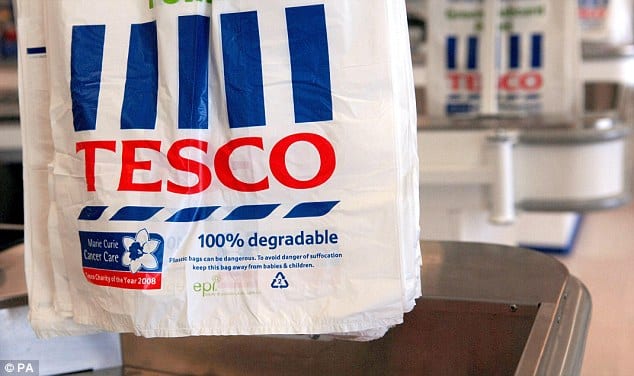
    Tesco has shut down a “bulk selling” operation in Thailand after concluding it could not make a profit. The decision to walk away from nearly 6 per cent of Asian revenue contributed to a 3 per cent decline in like-for-like sales at Tesco’s international business, taking the gloss off a sixth consecutive quarter of growth driven by price rises and volume growth in the UK.

    Dave Lewis, chief executive, said the shuttered Thai unit served independent merchants rather than individual consumers, and sold “large volumes of mainly tobacco and alcohol”.

    He added: “It’s not profitable and it adds complexity to the way we run the operation. We took a decision to exit that segment in order that we could focus on direct retail customers.”

    The supermarket chain is trying to extend its lead in UK convenience retailing with the £3.7bn takeover of food wholesaler Booker Group, announced in January.

    Booker serves independent merchants rather than retail consumers and derives 30 per cent of its revenue from bulk tobacco sales. The acquisition has drawn criticism from two large shareholders and prompted the chain’s senior non-executive director to quit in protest. Richard Cousins, who left after just two years on the board, complained that Tesco “need[s] to make the business simpler, not more complex”.

  • Thai producers plan to recover shrimp output in H2, as prices rise

    Thai producers plan to recover shrimp output in H2, as prices rise

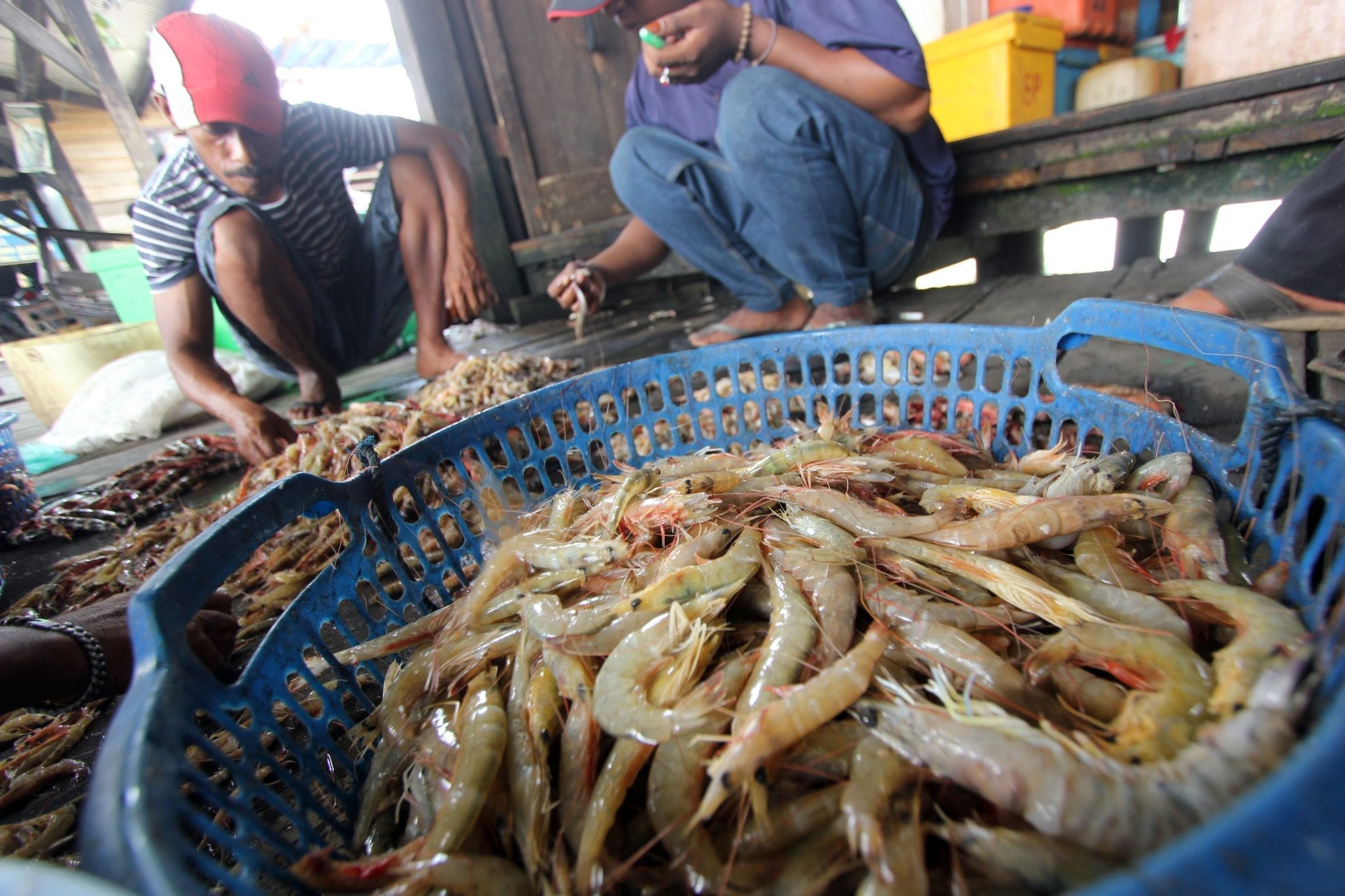
    Thai producers plan to increase their shrimp output in the second half of this year, after output from farms dropped year-on-year in the first two quarters of 2017, industry sources told us.

    Heavy rain, which has caused floods in several provinces, as well as ongoing disease issues, limited the growth of Thai shrimp production in the first half of this year, Thai Union Group’s shrimp unit managing director, Preerasak Boonmechote, told us during a recent visit to the firm’s processing plant near Bangkok, before the Thaifex trade show in Bangkok.

    Thai shrimp production is expected to grow 5% overall this year, lower than earlier expectations of 10-15% output growth, Boonmechote said, pointing to the fact that heavy rain had limited the country’s production growth plan.

    In 2016, Thailand’s production increased around 50,000 metric tons to 300,000t, Robins McIntosh, senior vice president of Thai agribusiness and food processing giant Charoen Pokphand Foods, said in January, at the Global Seafood Market Conference in San Francisco, California. According to Thai Union’s estimates, Thai production in 2016 totaled slightly less, about 250,000t.

    Meanwhile, Thai shrimp prices, which are on the rise again, are expected to either remain stable or grow 5% y-o-y in 2017, according to Boonmechote.

    Output growth

    Thai Union plans to increase its shrimp production 5% this year, up from 65,000t in 2016, Boonmechote said.

    Thai Union owns three shrimp processing plants in Thailand, which currently operate at 60-70% of their capacity, said Boonmechote. The firm, which is Thailand’s largest shrimp producer, plans to expand sales to the retail sector, particularly in Thailand and Korea, as well as in Australia, China and Middle East.

    Another large Thai shrimp producer, Marine Gold Products, plans to increase its shrimp production to 25,000t in 2017, up from 20,000t in 2016.

    Marine Gold has also introduced some new value-added products (see the photo of the firm’s new Thai green curry ready-to-eat product), mainly for the local market, as well as for China, Taiwan, Korea and Japan.Heavy rain in Thailand has caused a decrease of production compared with 2016, but the firm aims to recover its output in the second half of the year, Panuwat Wat Tanakijrungrueang, a marketing executive with the firm, told us during the Thaifex trade show.

    Several other large Thai shrimp processors told us they are looking to up production, as well as diversify to other products, during Thaifex.

    An executive with May Ao Group said the firm plans to increase its output around 5-10% y-o-y in 2017, from 12,000t in 2016.

    Thai Royal Frozen Food, which produced about 20,000t of shrimp last year, also plan to increase its production, with a 10-20% rise planned for 2017, an executive with the company told us, during Thaifex.

    Another processor, Lee Heng Seafood, also aims to increase its shrimp output in 2017 from almost 3,600t last year, having built a second processing plant in the Phang-Nga province, Thailand, the company said, during the show.

    Other processors are looking at more diversification.

    Thai frozen food manufacturer Surapon Foods is currently building a new frozen sushi and chicken processing plant, as it plans to focus more on value-added seafood and chicken products, Auhtaphon Ratana Arporn, assistant managing director at the firm’s trading arm Surapon Finest.

    The firm is investing THB 200 million ($5.8m) in 2017 to build the new plant and renovating its other plants.

    The firm has recently reorganized its structure and introduced a new value-added product line. It also launched a new logistic firm, named Mobile Logistics, which distributes frozen products across the Thai market, Ratana said.

    Meanwhile, PTN Group has started the sale of live Osaki oysters on the Thai market.

    The firm was promoting the new Japanese farmed product at the Thaifex trade show, targeting both retail and Horeca sector. It also sells breaded oysters and salmon nuggets.

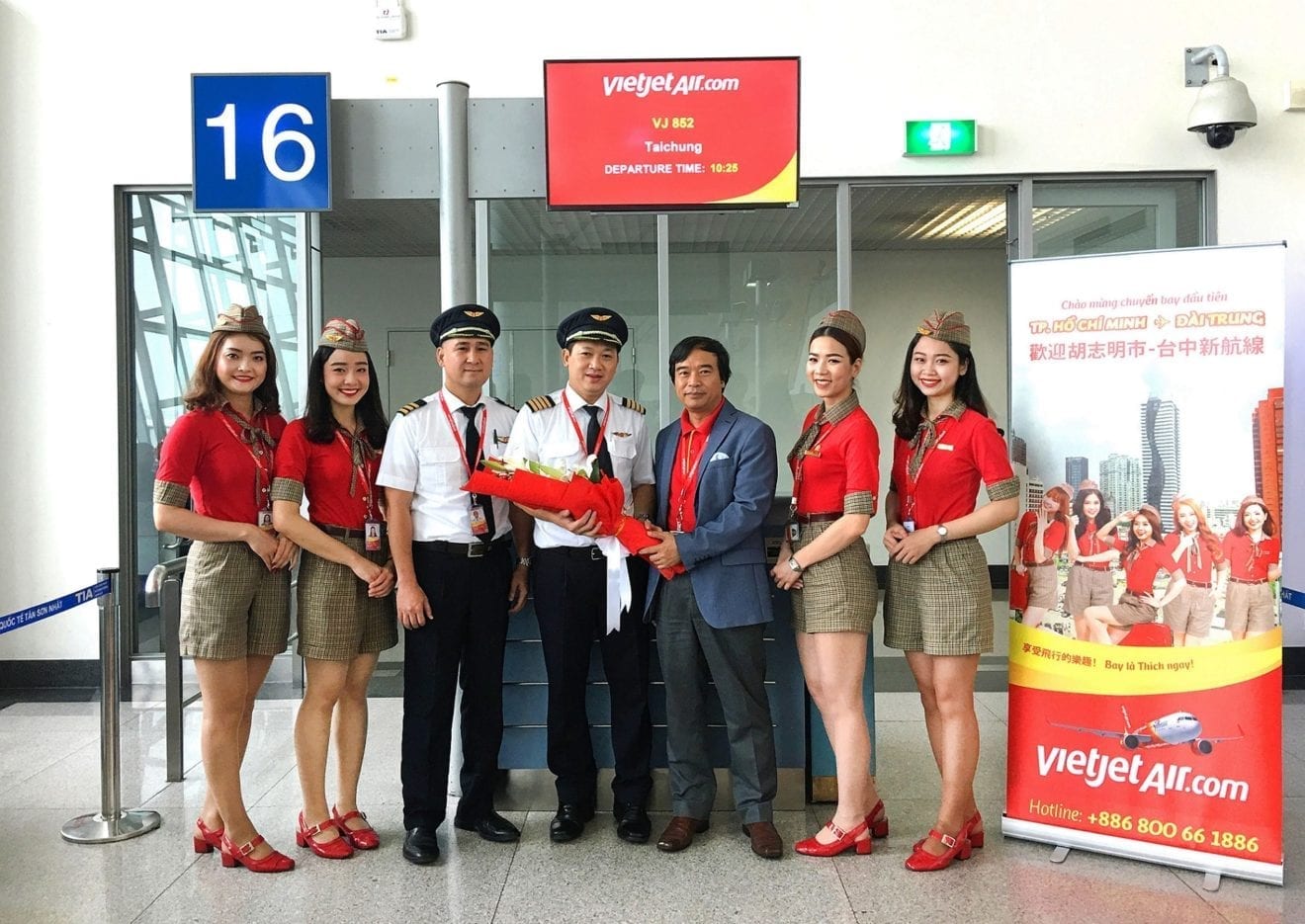
  • Vietjet Air takes first step to list shares in New York

    Vietjet Air takes first step to list shares in New York

    Dinh Trong Thinh, an economist, said that listing shares on foreign stock markets is the goal of many enterprises because joining transparent financial markets will help them become global companies.

    However, Vietnamese enterprises will have to satisfy strict requirements. To be eligible to list shares on NYSE, for example, a business must have at least 5,000 shares, 2.5 million public shares, and $100 million of gross pre-tax profits made in the last three years.

    The high listing fee and the required financial sources to maintain presence on foreign bourses are also a big barrier.

    At SGX, for example, the lowest listing fee is 50,000 SGD and the highest is 200,000 SGD. The listing application fee is 20,000 SGD. Enterprises also have to pay a fee of 25,000 SGD to 100,000 SGD every year.

    Hoang Anh Gia Lai had to cancel the plan to list its shares at SGX because it was time- consuming and costly, and it was not sure about the efficiency.

    “These will still be challenges for Vietjet for the immediate time and future,” Thinh said.

    He said that it would be risky for Vietjet and any other Vietnamese businesses to list shares on foreign bourses if they still cannot satisfy requirements according to international standards.

    If they are weak at corporate governance, production and business capability, they will not be recognized in the international market, even if they can enter foreign bourses.

    “It is more important to consider how long they can stay on the bourse,” he said.

    “Vietjet needs to think if it is powerful enough and its shares are prestigious enough to interest international investors. It is not a simple matter,” he said.

    Tran Dinh Ba from the Vietnam Economics Science Association believes that with strong determination and potential, Vietjet will succeed.

    Vietjet Air is now second to Vietnam Airlines, the nation’s flag air carrer, in domestic market share, but the gap is small, just 1 percent (Vietjet Air 41 percent and Vietnam Airlines 42 percent).

    In the stock market, Vietjet Air’s share price is 4.2 times higher than Vietnam Airlines, while its capitalization value has exceeded VND1.448 trillion.

    VietJet Air CEO Nguyen Thi Phuong Thao,  is one of two Vietnamese representatives in Forbes 2017 billionaires list. The other is Vingroup chairman Pham Nhat Vuong.