Blog

  • OCBC Bank Launches Cashless QR Code Payments

    OCBC Bank Launches Cashless QR Code Payments

    OCBC Bank has launched its first standalone mobile payments app which makes QR code cashless payments available at close to 2,500 NETS terminals. The new standalone OCBC Pay Anyone app brings together all OCBC Pay Anyone services and enhancements – peer-to-peer e-payments, QR code payments and access to OCBC Pay Anyone integrated with Apple iPhone’s Siri and iMessage – into a fast and easy one-stop access to e-payments. With the app, customers can simply scan QR codes at participating merchants’ NETS terminals to pay for their purchases directly from their OCBC Bank account. Payments through OCBC Pay Anyone have increased exponentially with a tenfold increase in the amounts paid and almost fourfold increase in average monthly transactions since last year.

    The OCBC Pay Anyone app is available for download on the Apple and Google Play mobile app stores. From 1 June 2017, an OCBC Bank customer can pay for purchases at more than 1,000 merchants (from Robinsons to Zara, Marks & Spencer, Gap, Paradise Classic restaurants, Caltex stations and Gardens by the Bay) by scanning the QR codes on the NETS terminal or printed receipt using the OCBC Pay Anyone app. After authenticating the transaction securely with a fingerprint, the payment is immediately deducted from the customer’s OCBC Bank account and paid to the merchant through NETS. This is unlike mobile wallets which require additional steps to top up the mobile wallet using a bank account. By the end of the year, customers will be able to make QR code payments at more than 50,000 NETS terminals island wide.

    Mr Pranav Seth, OCBC Bank’s Head of E-Business, Business Transformation and Fintech and Innovation Group, said: “It’s a war on cash! OCBC Pay Anyone has been a favourite payment service among our customers, who have embraced the movement away from cash and increasingly adopted paying other individuals using just phone numbers. OCBC Pay Anyone payment volumes have increased 10 times since May last year. Now, we want to bring the same convenience to paying for your regular shopping and meals using QR codes, so we decided to consolidate all of our OCBC Pay Anyone payment services into a standalone mobile app to bring greater convenience to our customers.

    “The launch of QR code cashless payment adds to the suite of OCBC Pay Anyone e-payment services. I believe the pick-up of QR code cashless payments will be strong given the increasing acceptance rate of cashless payments in general over the years. We will continue to push the boundaries in mobile payments and move the needle in becoming a cashless society. We are excited about the new and varied cashless payment options that we will roll out on the OCBC Pay Anyone app.”

    OCBC Bank customers get a $10 rebate for first-time QR code payments

    From 1 June to 30 June, all OCBC Bank customers can enjoy one $10 rebate when they make their first QR code payment using the OCBC Pay Anyone app at Robinsons, Marks & Spencer, Paradise Classic restaurants or Caltex stations.

    Customers simply need to download the OCBC Pay Anyone app, perform the one-time setup and make a purchase of any amount by scanning the QR code on a NETS terminal at Robinsons, Marks & Spencer, Paradise Classic restaurants or Caltex stations. The $10 cash rebate will be credited to the customer’s account in July

    Making a QR code payment with OCBC Pay Anyone

    Once the OCBC Pay Anyone app has been downloaded, customers need to perform a one-time setup to enable payments via the app.

    –       To perform the one-time setup:

    –       Click “Get Started” and tick the box to agree to the app’s terms and conditions

    –       Key in online banking access code and PIN

    –       Enter the one-time password sent to your mobile device and click “submit”

    –       A message will be displayed indicating the successful setup

    –       Click “Next” to proceed with QR code payments

    QR code payments are available on Apple iPhone devices running iOS8 and above, and Samsung devices running on Android 4.4 Kit Kat with the fingerprint recognition feature.

    To make a payment at a participating merchant, customers simply open the OCBC Pay Anyone app, scan the QR code on the merchant’s NETS point-of-sale terminal or on the printed NETS terminal receipt and authenticate the transaction using their fingerprint. The app will prompt the customer to choose the OCBC Bank account to pay from. Once the bank account has been selected, customers click “pay now” to complete the transaction.

    1. Scan the QR code on the NETS point-of-sale terminal or on the printed NETS receipt. Authenticate transaction with fingerprint.
    2. Select OCBC Bank account to pay from, and click ‘Pay Now’.
    3. A successful transaction message will be shown once payment is complete.

    Evolution of OCBC Pay Anyone

    Launched in 2014, OCBC Pay Anyone is the only mobile payment service offered in Singapore that lets customers send money directly to any bank account in Singapore using just the recipient’s mobile number, email address or Facebook account – without having to perform transaction signing using a security token or to add the recipient as a “payee”.

    In September 2016, the daily transfer limit on OCBC Pay Anyone was increased from $100 to $1,000, bringing greater convenience to customers and allowing payments for bigger-ticket items. The average transaction amounts since then grew three-fold. In October 2016, OCBC Bank further enhanced OCBC Pay Anyone by enabling transactions using Apple’s Siri voice command feature and directly within iMessage.

    The number of e-payments performed grew fourfold, and the amounts paid grew tenfold, from a year ago. Seventy per cent of OCBC Pay Anyone users are aged between 16 and 29. OCBC Bank’s market penetration among youths and young adults continues to deepen, with one in every two members of this segment an OCBC Bank customer. The growing popularity of OCBC Pay Anyone requires OCBC Bank to continue innovating so that this e-payment service can deliver beyond the demands of its customers.

    QR code payments are the next phase of mobile contactless payments that OCBC Bank has embraced. The new OCBC Pay Anyone app will no doubt make payments even more convenient and accessible for customers.

  • Slow US retail growth filters through to Asia

    Slow US retail growth filters through to Asia

    Retail sales for April in the US rose slightly to 0.4%, up from 0.1% in March. Although this growth is some cause for encouragement, it was expected to be as high as 0.6% for last month. The fragile picture for the retail sector in the US is having a noticeable impact on many of its key trading partners throughout Asia.

    China, South Korea and India are amongst the US’ biggest trade partners. Exporting goods such as electronics and clothing, they all see the country as a major export market. With demand for Asian goods sluggish, there are tentative signs that the picture for retail sales across the region are beginning to slow down.

    For April, Chinese retail sales grew by just 0.79%, down from 0.84% in March. In January, sales growth stood at an even more unimpressive amount of just 0.51%, so there has at least been a small upturn. Part of that is down to other factors, most notably industrial production.

    Industrial output

    Elsewhere in Asia, industrial output figures seem to correlate with the slow rate of retail growth in the US. Japan is a prime example, with output figures for March contracting. In that month, industrial output nationwide shrank by 2.1%, coming soon after a rise in output for February. Concerns over the historically strong Japanese tech sector have been prevalent for a while.

    The picture in other major Asian markets for industrial output is mixed. Growth in India is erratic – contraction in output was recorded in five of the last 12 months. In South Korea, figures for March are positive, but contraction occurred in January and February.

    Low demand for home-made products, alongside similarly low demand from the US and sluggish industrial output could all hint at a more prolonged economic malaise. When spread betting, the most sensible choice would be to back against share price rises for major Asian retailers.

    Malaysian recovery 

    One possible ray of light for Asian retail is Malaysia. Despite some of its’ neighbours not performing too well, retail sales growth is pretty healthy. The most recent monthly figures saw month-on-month growth of 4.7% for March, jumping from a position of slight contraction for both January and February.

    Among the reasons behind the growth include wider economic growth exceeding expectations for the first quarter of 2017 and increased consumer confidence. Interest rates have remained steady, but the bad news coming from across the Pacific Ocean is likely to dent confidence going into the summer months.

    The future for retail in Asia is a little uncertain. The contractions and slow growth experienced in Malaysia, China and Japan may return, with one eye focused on how events are unfolding in the US and Europe.

    Should all go to plan and retail sales in the US return to more favourable levels, there is a possibility that the feelgood factor will move to Asian markets. More demand from consumers would equate to higher sales to US firms by Asian manufacturers, but it remains to be seen how this scenario would be played out.

  • Vietnam’s pepper farmers urged to keep calm and carry on

    Vietnam’s pepper farmers urged to keep calm and carry on

    Industry leaders have called on distraught and anxious pepper farmers to remain calm and refrain from selling their produce at low prices, saying the current price plunge is most likely a fleeting phenomenon.

    Do Ha Nam, Chairman of the Vietnam Pepper Association, said farmers should break their impulse to “mass sell” their produce immediately after harvest.

    “Vietnamese pepper exports now account for nearly 50% of global output, so we are actually in a position to control the market. Farmers should be calm and not sell at lower price, and the market will revert to its equilibrium,” Nam said.

    In the Central Highlands, the price for whole peppercorns on the domestic market has dropped from VND180,000 (US$8.04) since last August to around VND80,000 (US$3.57) per kilogramme as of May 28 to reach the lowest point in seven years, and many pepper farmers are in dire straits, with some pushed to the point of having to sell their land to settle debts.

    Authorities, meanwhile, are struggling to manage what they say is the consequence of unplanned farming and poor quality crops, which is dragging the whole industry down.

    According to the Standing Committee of the Tay Nguyen Steering Board, farmers were “misled” by pepper price surges in recent years to plant the crop on a large scale, ignoring warnings from local authorities. Subsequently, gluts have led to the sharp decline in prices, the committee has said.

    Nguyen Thi Do, a pepper farmer in Dak Nong Province, said her family had taken a bank loan of VND4 billion (US$178,770) to plant pepper on a 10ha plot. At her initial calculation of VND200,000 (US$8.93) per kilogramme of whole pepper, profits were certain, but the drastic drop in prices could force her to sell her land to repay the bank.

    Pepper rush

    Originally, Central Highlands provinces like Dak Lak, Dak Nong and Gia Lai had planned to expand the farming area for pepper to a maximum of 6,000ha by 2020. But all these provinces have surpassed this limit by far. Dak Lak has nearly 28,000ha of pepper farms, Dak Nong, 25,000ha, and Gia Lai, over 15,000ha.

    The national total is about 150,000ha, set to produce about 300,000 tonnes of pepper in the next two to three years, so, going by supply and demand function alone, prices could drop as long as supply exceeds demand, said Hoang Phuoc Binh, Deputy Chairman of the Chu Se District Pepper Growers’ Association in Gia Lai Province.

    To compound matters, even with farming on such a large scale, many farmers have experienced crop failures due to poor preparation and misuse of chemical inputs.

    Huynh Van Lan of Gia Lai Province, along with his peers, is increasingly worried about drops in both production and prices as his crop nears harvesting. Of more than 2,000 vines on his farm, 250 have died while the rest are producing just half their normal yield.

    Bad habits

    Tay Nguyen authorities have recorded a common practice among local pepper farmers of planting a new crop directly on malnourished, acidic and depressed soil without taking any step to replenish the soil with nutrients. This is causing slow growth and increased vulnerability to diseases.

    To make matters worse, a number of farmers have been using seeds of dubious quality, affecting the rest of the harvest. The use of toxic pesticides and growth accelerators has further exacerbated the situation.

    As if all this weren’t enough, the irregular drizzling since February 2017 has continued to dampen the pepper vines’ roots, exposing them to pests and affecting production.

    Experts say that the combination of market glut and poor quality crop threatens sustainable development of the domestic pepper industry, most particularly its export potential.

    High non tariff barriers are another challenge for Vietnamese pepper, which has to contend with markets already familiar with exports from Indonesia, Malaysia and India, they say.

    Sustainable solutions                                

    To prevent “spontaneous” and inefficient farming, the Tay Nguyen Steering Board has asked provincial authorities to adjust and firmly implement their provincial pepper cultivation plans.

    They should also organise comprehensive training programmes for local farmers in order to synchronise production in the region, the board has said.

    It has noted that the need for sustainability stretches across all crops and agricultural products, requiring farmers to work closely with other stakeholders in the supply chain to obtain technical support and suitable farming inputs.

    In Chu Puh District, Gia Lai Province, a key pepper producing area, a farming model that saves water, uses organic fertilisers and pesticides is showing encouraging results.

    More importantly, farmers are being advised to plant exclusively on suitable soils with high drainage to allow maximum growth and minimum soil damage.

    So far, the district has implemented this model on more than 100ha, and aim to expand this to 500ha by 2020.

    The Steering Board also advised local governments to focus on brand building and vertical integration to promote exports.  Clean, ecologically sound cropping is the ideal long term solution to the problems faced by the domestic pepper industry, experts agree.

    The rosier side

    Do Huong Duong, vice chairman of the Phu Nhuan Service Joint Stock, notes that despite the ongoing problems in quality, output and prices, export turnover has continued to rise.

    According to the Ministry of Agricultural and Rural Development, Vietnam exported about 75,000 tonnes of pepper worth US$456 million in the first four months of 2017.

    Vietnamese pepper has been a stable import in the US, United Arab Emirates, Pakistan, Indian and German markets in the first three months. There are signs of improvement in other markets like Thailand, where import of Vietnamese pepper has registered a year-on-year increase of 49.6%.

    These numbers prove that Vietnamese pepper is able to meet quality criteria in the strictest markets in the world, Nam said. Farmers have to be encouraged and helped to focus on improving their produce while the Government keeps an eye on mass production and quality control, he said, adding that that this would ensure market stability as well as sustained profits from this key crop.

  • Shiseido and King Power International capture beauty of Thailand in 360° campaign

    Shiseido and King Power International capture beauty of Thailand in 360° campaign

    Shiseido Travel Retail has partnered with King Power International (Thailand) to deliver a major promotional campaign which aimed to capture the beauty of Thailand.

    For the initiative, Shiseido collaborated with Thai artist Riety Darisa K and influential Chinese fashion and lifestyle blogger Magic Yang  to target Chinese travellers through a 360 ̊ programme.

    The programme included social media and digital content, in-store activations and Travel Retail Exclusive (TREX) products available only at King Power Thailand stores.

    The campaign, which aimed to capitalise on the large number of Chinese visitors to Thailand, tapped into the power of influencer marketing to push brand awareness and drive sales among Shiseido’s key consumers, particularly millennials. Magic Yang, a leading influencer in China, has a strong following of millennials on social media who are inspired by her personal style, her love for travel and adventure and the places she visits.

    With Riety as her guide, Magic was taken on a tour of Bangkok, where she discovered the capital city’s art, beauty and culture. Her trip to Thailand was captured in a promotional film, called ‘The Beauty of Thailand’.

    Leading up to the campaign’s official launch on 1 April, Magic posted exclusive behind-the-scenes pictures of her trip to announce the collaboration and shared the film on her Weibo and WeChat accounts. The film features subtle placement of Magic’s top three Shiseido beauty picks: Ultimune Power Infusing Concentrate, Perfect UV Protector SPF 50+ and Rouge Rouge.

    The campaign was prominently highlighted on King Power Thailand’s website and social media platforms and a dedicated campaign micro-site. Travellers were also targeted prior to departure via advertising.

    The in-store activations at Bangkok Suvarnabhumi Airport and in the King Power Srivaree Complex downtown store are running until 31 May. The airport activation features a pop-up store which offers complimentary skincare treatments and lip make-overs, as well as a Photo Booth where travellers can personalise their photos with Riety’s Thai-inspired visuals to be printed onto their own customised luggage tags.

    To further underline the Sense of Place focus, Shiseido has developed an exclusive skincare set specially curated by Magic Yang and packaged in bespoke sleeves featuring art by Riety. The limited-edition set, only available at King Power Thailand stores, includes Ultimune Power Infusing Concentrate for Face and Perfect UV Protector SPF50+/PA++++.

    Customers spending THB 14,000 (€368) or more will receive a complimentary ‘The Beauty of Thailand’ cosmetics bag and those spending more than THB 16,000 (€420) can claim an additional Shiseido tote bag.

  • Foschini buys owner of Australia’s Tarocash and Rockwear

    Foschini buys owner of Australia’s Tarocash and Rockwear

    Australia‘s Retail Apparel Group (RAG) is being taken over by TFG (or The Foschini Group) for a maximum price of A$302.5m, the South African giant said Thursday.

    TFG, which also owns the Whistles and Phase Eight fashion businesses among a raft of other chains, said current management would stay in place at RAG, which means CEO Gary Novis will continue to oversee the business’s expansion. The 30-year-old value-to-mid-priced menswear specialist has 400 stores and has been growing steadily in recent years.

    TFG is paying cash for its latest buy and while the purchase price is not completely clear at present, that is because the takeover deal is priced at seven time RAG’s earnings for the year to the end of June, or that A$302.5m figure, whichever of the two is lowest.

    For that outlay, the company will acquire a raft of retail brands including Tarocash, yd, Connor and Rockwear. It is buying the business from Navis capital, which acquired a controlling stake in 2011. Navis partners Philip Latham and Ravi Jeyaraj said they have achieved their original aim of consistent growth over the succeeding years as the company opened new stores and launched new brands.

    Despite the Australian fashion retail sector facing the same headwinds as many other countries globally, as well as some that are unique to the market, RAG is performing well and is expected to post double-digit rises in both sales and profits for the current fiscal year.

  • Bangalore is India’s top home for IoT startups

    Bangalore is India’s top home for IoT startups

    A study by management consulting firm Zinnov has revealed that Bangalore is the prime destination in India for an IoT startup to set up base, as it accounts for 52% of the total IoT startups in India.

    Bangalore is followed by Delhi NCR with 12%, Mumbai 11%, Hyderabad 4%, Chennai 2%, and others together accounting for 19%.

    “A wide availability of talent, thriving ecosystem of investors, access to industry experts and the presence of startup accelerators are contributing to Bangalore’s dominance,” a release from the firm said. The study on the IoT startup ecosystem in India also reveals that over 120 IoT startups were set up in India in the last decade with more than 80% of them being established after 2010.

    Cumulatively, these startups have received more than $169 million in funding since 2006. While indicating that an increasing number of connected devices is expected to propel India’s IoT market, the study titled, IoT Startups in India 2017, also states that the funding activity across use cases for such startups in India indicate a huge growth potential for them in the country.

    “While the initial wave of growth for IoT startups in India was focused on consumer applications, the next wave will be geared towards Industrial IoT,” Zinnov Engagement Manager & Delivery Head (G.A.P) Anand Subramaniam said.

    “In addition, we will also witness a host of partnerships being crafted between GICs in India and the IoT startups in the near term,” Subramaniam added.

    The study said that 67% of the IoT startups in India are in the infrastructure layer, which includes hardware components such as infrastructure sensors, embedded chips, MEMS, actuators, modules, SIM card and system design.

    The applications layer accounts for 52% of the IoT startups in India, the study revealed, stating that the IoT landscape in India is segmented across three categories based on use cases — Industrial IoT, Enterprise IoT, and Consumer IoT. Zinnov’s study also indicated 47% of the IoT startups in India fall under Consumer IoT with popular use cases being wearables, connected vehicles and connected appliances.

    Enterprise IoT is a close second place, with 40% share. In terms of funding, MedTech, security & surveillance and retail sensing have the highest share in the Enterprise IoT segment.

    Industrial IoT accounts for approximately 27% of IoT startups and has received close to $65 million in funding from investors.

  • Supply problems hit production at BMW

    Supply problems hit production at BMW

    Problems at one of its suppliers has forced German carmaker BMW to halt production in Leipzig and could hit its plants in China and South Africa, German magazine Focus reported in its online edition.

    The magazine said problems at one of BMW’s Italian suppliers of parts for its steering technology was the reason for the disruption.

    Citing a BMW spokesman, Focus reported that the carmaker has halted output at its plant in Leipzig, Germany since Friday and may have to reduce production in China and South Africa.

    Production in Munich was also reduced for two days last week, the magazine reported.

    Focus said the disruptions would cost BMW double-digit millions of euros a day, without saying where it got its information from.

    BMW could not immediately be reached for comment outside regular business hours.

  • Cebu Pacific to end flights to Qatar from July 1

    Cebu Pacific to end flights to Qatar from July 1

    The low-cost Philippines carrier Cebu Pacific Air will stop flying to Doha at the beginning of July because the route is no longer financially viable, it said.

    The airline has been flying direct to Qatar for just over two years, and announced that its last return flight from Manila to Doha will be on July 1.

    It will also cease flying to Kuwait from mid-June and the Saudi city of Riyadh in early July.

    Passengers who are already booked on flights after these dates can transfer to another airline offering the same routes (subject to availability), book for an earlier flight with Cebu Pacific (also depending on availability) or get a full refund.

    The airline “strongly advised” all such passengers to contact their travel agents or its hotline to discuss their options.

    Too much competition

    Cebu Pacific is essentially halting the routes due to too much competition, according to Atty JR Mantaring, vice president for Corporate Affairs of Cebu Pacific.

    In a statement this week, Mantaring said:

    “Of late, other carriers have aggressively added more flights, which has resulted in substantial oversupply of seats and fares that are so low, hence making the routes unsustainable…

    At this point, it makes more sense for us to re-deploy the aircraft used for our Riyadh, Doha and Kuwait service to routes where we can further stimulate demand and sustain our low fare offers.”

    Cebu Pacific will continue to fly to Dubai and Sydney and may increase capacity to these cities, the statement added.

    Crowded market

    The airline began direct flights between Manila’s Ninoy Aquino International Airport and Hamad International Airport in Doha in June 2015.

    A 436-seat, all-economy class Airbus A330 flies between the cities twice a week. It was initially popular when the route first started because of its competitive fares.

    While Qatar Airways also flies twice-daily direct flights on the same routes, prices were usually higher.

    The national carrier increased its service to the Philippines’ capital in July 2015. That’s the same month that Cebu started its direct Doha-Manila service.

    National flag carrier Philippine Airlines also began offering the same route earlier this year, in a bid to meet the needs of Qatar’s 260,000-strong Filipino population.

    That carrier operates four times a week, on Monday, Wednesday, Friday and Sunday on A330 aircraft.

    Its daytime departure and arrivals times, and its competitive introductory prices, has attracted many travelers.

    Tickets range from QR885 to QR2,745 in economy, and include WiFi and meal service. Passengers can also check in two pieces of luggage, weighing up to 23kg each.

    A business class option could be rolled out this summer.

  • Central Bank of Vietnam maintains flexible forex regime

    Central Bank of Vietnam maintains flexible forex regime

    According to the National Finance Supervision Committee, the deficit is likely to be 3.5% of exports. The trade deficit with China rose from US$3.7 billion in 2013 to US$28 billion last year. The US Federal Reserve (FED) is expected to increase the interest rate in June and continue to do so through 2019 to take the rate to 3 per cent.

    Analysts said this is causing downward pressure on the value of the đồng against the dollar.

    In mid-May, the US Dollar Index (DXY) rose significantly to 99.60.

    The State Bank of Vietnam (SBV) recently increased the đồng reference rate by VND9 after the greenback appreciated strongly to avoid possible shocks.

    SBV Governor Le Minh Hung said the international markets remain volatile due to the UK vote to leave the EU, US President Donald Trump’s policies and the US rate hikes.

    The volatility has had an impact on the đồng exchange rate and made it harder for the Government to keep things smooth on the forex front. Since the beginning of the year, the central bank has been very cautious. As a result, the đồng has only lost 1.1% against the dollar.

    The National Financial Supervisory Committee (NFSC) officials said the central bank is flexible and keeps a close eye on the exchange rate, regulating it on a daily basis.

    Analysts said Vietnam should not pay too much attention to the US interest rate hikes since they do not always affect the đồng.

    They pointed to the rate hike in March when the dollar actually declined against the đồng.

    One of the reasons for this is that foreign direct investment has been pouring into the country.

    In the first four months of the year, US$10.95 billion flowed in, representing a year-on-year increase of 40.5%.

    Though the big trade deficit with China is a factor in the đồng’s value, the Chinese Government is unlikely to depreciate the renminbi.

    This is because its policy is to develop the economy based on the domestic market in future instead of exports as the case used to be.

    Hung said since the Government would continue to pursue its de-dollarisation policy, the central bank would remain flexible with its exchange rate regulations to ensure exporters, importers, the Government and enterprises borrowing overseas and repaying foreign loans all benefit.

    Many analysts estimate the greenback will rise 2-3% against the đồng this year, saying the economy can easily absorb this.

    Foreign retailers crowd VN market

    Koji Takayanagi, president of Japan’s second largest convenience store chain FamilyMart, said the company is reviewing its loss-making operations in Indonesia, Thailand and Vietnam.

    “If we can get them to rally we will, but we cannot continue to pour in resources,” he told Reuters.

    The Japanese franchise has forecast operating profit to more than double to 1 trillion yen (US$8.79 billion) in four years from 412 billion yen in the current fiscal year.

    But while the business is profitable in China and Taiwan, it is not doing well elsewhere.

    FamilyMart came to Vietnam in 2010 and expected to open 300 stores in collaboration with local distributor Phu Thai Group, according to online newspaper VnExpress.

    But the partnership ended in 2013, with the distributor taking over 42 stores and turning them into B’s Mart in collaboration with Thailand’s Beri Jucker Plc.

    The brand made a comeback in July 2013 and now has 130 stores in HCM City, the nearby resort town of Vung Tau and Binh Duong Province, and aims to expand to 150 by the end of this year.

    Last December, Parkson, owned by Malaysian conglomerate Lion Group, closed its second store in Hanoi after eight years of operations, citing unsatisfactory results.

    The move marks the closure of the last store in Hanoi and third in Vietnam. In May 2016, Parkson Paragon in HCM City’s upscale Phu My Hung urban area closed after five years of operations, and in January 2015, Parkson Landmark 72 in Hanoi closed.

    The management had stuck a notice on the door of the latter store that it would only close for a few days “to take inventory”, but never opened again.

    Parkson’s recent results in the third quarter of 2016-17 showed its business in Vietnam remained mired in difficulties because the retail market was getting “more and more cramped”.

    Market observers offered explanations for the failure of some foreign retailers in Vietnam, with the decisive factor being the growing presence of giant global retailers, which is making competition in the sector fiercer.

    According to a report from the Ministry of Industry and Trade earlier this year, foreign enterprises now hold a 17% market share in the shopping centre and supermarket segment, 70% in convenience stores, 15% in minimarts and around 50% in online, TV and phone shopping.

    The percentages may not be too high but the looming presence of foreign retailers can be seen in many major cities.

    For instance, Thailand’s Central Group has bought the entire stake of France’s Casino Group in Big C Vietnam, while another Thai conglomerate, TCC Holding, has acquired Metro Cash and Carry Vietnam.

    Other foreign groups such as the Republic of Korea’s Lotte and Japan’s Aeon have been steadily expanding, and have plans to double or triple the number of stores in Vietnam in the coming years.

    In terms of growth, Vietnam’s retail market is among the top five in Southeast Asia and 11th globally, according to A.T. Kearney’s 2016 Global Retail Development Index.

    The trade ministry said retail sales of goods and services rose 10.2% to VND3,530 trillion (US$156.7 billion) last year.

    It has projected the market to hit US$179 billion by 2020.

    There is indeed a lot room for the retail sector to grow in Vietnam, where more than half the population of nearly 92 million is young and incomes are rising very fast, it said.

    Business-to-customer transactions are expected to double in value from the US$2.2 billion recorded in 2013.

    The ministry also expects the country to have 1,200-1,300 supermarket outlets by 2020, up 650 from 2011. The number of trade centres and malls are projected to increase to 180 and 175, respectively.

    Thời Báo Kinh Doanh newspaper (Business Times newspaper) quoted Akiihiko Maeda, CEO of Japan’s  Ministop 24-hour convenience store chain in Vietnam as saying competition is now the biggest challenge for his company.

    Ministop would need five to six years to break even, he said.

    But to achieve that, it would have to increase the number of stores by 80-100 a year and reach around 300.

    Analysts pointed out that this means Ministop — and other foreign retailers – would have to bring in lots of money.

    Where do domestic retailers stand?

    The swift expansion of foreign firms has also piled pressure on local retailers. Domestic goods suppliers are feeling the pinch as foreign retailers are developing their own brands for selling through their stores.

    Local retailers, at least many of them, cannot take on their foreign rivals, analysts fear.

    To compete, they need good management in all areas from brand building, ensuring product quality and marketing to human resources, training and establishing distribution networks, they said.

    But most are too weak and need to be immediately restructured, they said.

    Technology is also a problem for many Vietnamese retailers in a sector that is highly technology-intensive, they said.

  • Indian mangoes hit South Korean shelves

    Indian mangoes hit South Korean shelves

    Teams from the GMR Hyderabad Airports Limited, which operates the airport and HMACPL haveworked with the farmer community at Vizianagaram facility for developing a pack-house, creating markets, commissioning this project with requisite approvals from Government and exporting Suvarnarekha variety of mangoes to South Korea.

    With this, RGIA becomes the first airport in India to facilitate export of mangoes to South Korea directly from a farm-based infrastructure. Mangoes being a seasonal fruit of high demand, export volume to South Korea is expected to grow up to 10 tonnes per day for the rest of the season, it said in a statement..

    The Cargo operator has a coordination committee comprising of APEDA, National Plant Protection Organization (NPPO), Korean Delegation and Plant Quarantine to guide the farmers to compete with international export norms..

    The GHIAL & HMACPL are in the process of identifying and enabling similar infrastructure across the catchment areas in Telangana State, Andhra Pradesh, Northern Karnataka and Eastern Maharashtra among others, that can provide the requisite processing facilities to to boost the prospects of India’s Mango exports to South Korea.

    According to Sudhakar, DGM of APEDA, “Telangana and AP are the largest producers of mangoes in India with 25 per cent share, of this Banganapallii, Suvarnarekha, Neelam, Cherukurasam are the most popular varieties. Exports provide attractive rates giving better returns to producers and farmers”:

    The CEO of GHIAL SGK Kishore says so far Hyderabad has been India’s Pharma capital and the airport had garnered a lion’s share of pharma exports. Our effort to diversify into perishables export base has been realised now with the initiative of Mango exports to South Korea.We will establish a dedicated perishables handling facility at the airport soon.

    RGIA has been collaborating with various exporters and regulatory bodies to make this feat possible. Soon Indian mangoes would compete in Mango Festival happening at Seoul with varieties from Pakistan, Vietnam, Thailand and Philippines.

  • Incurring big losses, fast food giants open fewer shops

    Incurring big losses, fast food giants open fewer shops

    The heyday of fast food chains seems to be over in Vietnam. The number of fast food shops has been decreasing in an era when people are trying to ‘live slowly’.

    Ten years ago, Hanoians and Saigonese could easily find fried chicken shops along main streets. At that time, eating fried chicken at fast food shops was in fashion. More and more fast food shops opened, not only in large cities, but also in small cities and provinces.

    In 2012, Burger King, encouraged by the fast growing market of Vietnam, announced a plan to spend $40 million to develop a chain with shops located in advantageous positions in many cities and provinces throughout Vietnam.

    A representative of Burger King once stated that Vietnam was one of its key markets.

    Nguyen Bao Hoang, who brought McDonald’s to Vietnam, said he would open about 100 shops in Vietnam within one decade, and employ hundreds of workers. Lotteria and KFC are believed to be the brands with the highest number of fast food shops in Vietnam.

    Analysts once believed that the potential of the Vietnamese market was great with the Vietnamese income on a rapid rise. Fast food chains targeted the Vietnamese middle class with average household income of $500-1,000.

    MOIT has granted licenses to 148 foreign brands to enter the Vietnamese market in the last eight years.

    This includes 42 fast food, bakery, coffee, beverage and restaurant brands, accounting for 43.7 percent of the total.

    Some fast food shops have shut down quietly after the boom. The number of shops of each fast food chain is on the decrease.

    In mid-February 2016, a Burger King shop at No 1B-1B1 on Cong Hoa street in HCMC announced its closure. One month before, another shop at the Dien Bien Phu – Cao Thang crossroads in district 3 also shut down.

    In 2015, two Burger King shops at No 26-28 Pham Hong Thai street in HCMC and 125 Lo Duc street in Hanoi stopped operation. In mid-2014, a shop closed in Da Nang.

    McDonald’s, a well known brand from the US, has set up several shops in HCMC but still hasn’t opened a restaurant in Hanoi.

    A branding expert commented that food chains can develop only if their products fit locals’ taste.

    This explains why fast food chain development has slowed down, while banh my (Vietnamese sandwich) chains have been prospering.

  • Sulwhasoo to enter French cosmetics market

    Sulwhasoo to enter French cosmetics market

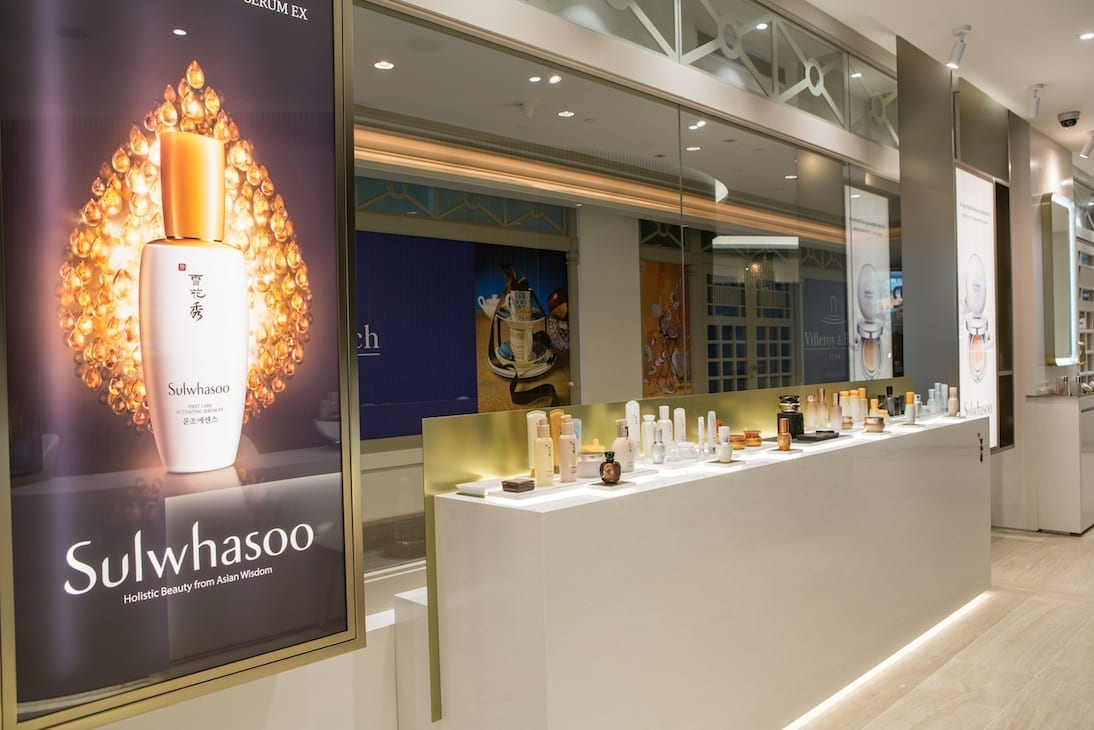
    Amorepacific’s cosmetics brand Sulwhasoo will launch an independent store at France’s largest department store chain Galeries Lafayette this September.

    The French upmarket department store is the largest chain of its kind in the country, and is famous for selling designer labels and luxury beauty brands favored by customers with deep pockets.

    It will offer the brand’s best-selling products, such as its First Care Activating Serum and Concentrated Ginseng Renewing Cream, which are Sulwhasoo’s signature products.

    The store will be designed with oriental herbal medicine motifs, and traditional raw materials such as ginseng displayed, with an aim to attract French customers based on philosophy and authenticity as Korea’s leading cosmetics brand. Sulwhasoo’s products will also be sold on Galeries Lafayette’s online mall.

    The entry into Galeries Lafayette is a meaningful challenge for Amorepacific in that it will target the French market, also known as the birthplace of beauty products. AmorePacific’s first entry into the French market was the export of the “SOON” brand in October 1988.

    In August 1990, AmorePacific established a local corporation in Chartres, produced the Liricos brand and made a discreet foray into France. However, due to the lack of consideration for local customers and the loss of sales rights, the two brands were in a crisis.

    AmorePacific then established a strategy to target the fragrance category in the French cosmetics market. AmorePacific established a factory equipped with ultra-modern facilities in Chartres in April 2004 and took over the luxury brand “Annick Goutal” in August 2011 to strengthen its perfume brand portfolio. The firm is now expanding their perfume business into new overseas markets.

    By entering Galeries Lafayette, Sulwhasoo will continue to strengthen its presence as a true global brand not only in Asia and the Americas but also in the European market, delivering Korean beauty and value throughout the world.

  • Customer traffic dropping fast at Korean online shopping malls

    Customer traffic dropping fast at Korean online shopping malls

    Online shopping malls are fast losing customer traffic, industry data showed , compounding their massive business losses last year. According to the data, the number of unique visitors to the six top online shopping sites totaled 84.86 million last month. This is 9.2 percent less than the same month last year, with each site losing between 2 to 19 percent. For Ticket Monster, the monthly tally for April was 9.91 million, the smallest among the six sites.

    It is the first time that the number fell under the 10-million mark since the latter half of 2014.

    Industry analysts say the market has become overcrowded with both large retailers and smaller competitors all strengthening their online platforms. Customers consequently have scattered in the face of more choices. E-shoppers have also matured, making purchases at select sites best suited for them instead of hopping through different malls.

    A growing number of online customers shop through portals like Naver instead of directly visiting the sites, which is contributing to the decrease in traffic among online malls, analysts said.

    Industry experts estimate that losses by e-shopping sites last year exceeded 1 trillion won (US $892.85 million). Given that most of the companies are making ends meet through monetary increase in transactions, they may be pushed to the brink if the current loss in traffic leads to bigger operational deficits, analysts say.

    “The number of unique visitors is not the absolute indicator,” an industry official said. “However, since it is related to transactions, we are closely watching the situation.”

  • The age of self service data

    The age of self service data

    A recent EY– Forbes Insights research report  clearly shows the value organisations get from the strategic use of data; the most mature respondents of its survey were found to be considerably more likely to enjoy growth in revenues and operating margins of 15% or more, along with significant improvement in their risk profile.  No wonder all areas of the business are looking to data to support their drive for modernisation and transformation.

    A challenge is that across the organisation there are many different requirements being placed on a company’s data – and until now access to analytics was reserved for either the data scientist or business users needed significant IT support, just to get a limited set of standardised set of reports run at set times.

    So how can an enterprise make sure all these demands are met with the right data at the right time and in the right format, giving each department and job function the ability to use data they need – in short, how can we facilitate the age of self service?

    Let’s take two examples of how requirements can differ, and why opening up an organisation’s data to self service should be a priority.

    It is often the Marketing department that is the first to harness data driven technologies and tools.  Those that are the most mature and comprehensive in their use of analytics, as compared to their peers, have been shown to gain a 56% greater return on marketing investments, and 10 times greater year on year increase in annual revenue. Common initiatives focus on seeking cross channel insights, better targeting of customers in real time with the next best offer, improved customer engagement and ultimately demonstrating how their actions contribute to the bottom-line.

    Other areas of the business are also turning to data for help; take HR, for example. Similar to Marketing, companies advanced in employing workforce analytics consistently outperform competition, increasing revenue per employee by up to 26% and being 2.5 times more likely to improve their leadership pipeline. They are looking for analytics to help them identify the employee skills and strengths that will help make an impact on business performance, understand workforce challenges, and better align people strategies with business strategies, so that they can more easily attract, nurture, and retain top talent.

    While the business roles, goals and use of data are different, there are common themes: the need to use multiple data sources, present data visually in a simple and easily understandable way, and demonstrate business impact. To deliver on these business goals, enterprises must empower staff to self service data so that they can be met without the need for expensive, time consuming and sometimes restrictive technical or IT support.

    What does this mean in terms of how data should be handled and distributed in an organisation? How can the age of self service data be made a reality?

    A driving force for democratising data in the workplace is the cloud.  Making enterprise class analytics available to all and from anywhere, quickly and cost-effectively, it is also bringing new and powerful visualisation technologies into the hands of the business user.

    Able to be deployed as a hybrid solution, new cloud-based analytics capabilities can be linked to data sources which can remain either in place, on-premises, in the cloud or a mixture of on-premises and the cloud, giving massive flexibility.  It helps organisations quickly and easily dip a toe in the water and test out the cloud or undertake a managed transition, thereby avoiding a “big bang” approach. Given that most companies have multiple legacy systems at different stages of their lifecycle, it enables them to gain maximum value from past investments.

    Gaining maximum value from these new investments is also key.  With cloud, it can be all too easy for the different departments to go out and buy in a SaaS solution.  This can lead to there being different solutions in place across the company that do not work together and as a result create new data silos.  As the true value of data is gained, when it can be pooled so that everyone can access it and unexpected correlations made, it is essential that IT has a part in the implementation of these new solutions. That way the entire organization’s analytics needs can be catered for and underpinned by a platform for success.

    The age of self service data is a business need today. The key is to look across the business at each job role or line of business and seek to understand their different requirements will evolve for the future, not just today. This approach will also lead IT to be an enabler for an organisation that maximises value from data in unique and impactful ways.

  • Vietnam e-commerce developing quickly

    Vietnam e-commerce developing quickly

    E-commerce in Viet Nam is more developed than some Southeast Asian countries and is poised to expand in coming years, according to a market research company.

    Ashish Kanchan, managing director of Kantar TNS Vietnam, said e-commerce is growing quite positively in Vietnam.

    He classified e-commerce development into three groups — developing customer education for e-commerce, widely prevalent e-commerce, and e-commerce as default purchase channel.

    Currently, Viet Nam is in the fledgling group together with Egypt, Turkey, Thailand, the Philippines, Greece and others. Meanwhile, in some European countries such as the UK, Germany, Demark, Sweden and Norway, and also Singapore, going online and buying online have become a default option.

    Viet Nam is already ahead of some of neighbouring countries like the Philippines, Thailand, and Indonesia and will likely join the next group within the next three years, he said.

    The United States, China, Italy, Hong Kong and Malaysia are among countries in the second group.

    Unlike countries such as Thailand, Indonesia, and India, Viet Nam is not only a mobile phone market, but tablets and laptops are still very prevalent in Viet Nam, he said. Thus, e-commerce companies must develop e-commerce platforms for multiple devices in Viet Nam.

    He urged companies to focus more on brand building as it is extremely important to gain more trust from shoppers.

    Understanding the e-commerce shopper is also very important so that businesses can provide the convenient experience for shoppers.

    Technology changes have ushered in a new era in commerce and digital branding as well as a new set of customer expectations, delegates at a recent Creative Commerce Workshop said.

    Denise Thi, managing director of Isobar Vietnam, said the customer journey has changed a lot over time.

    In the traditional marketing form, the consumer’s buying process was from attention to interest-desire to action. The process now goes from consideration to evaluate, buy, experience, advocate and bond.

    Consumers expect a lot of things, especially memorable experiences.

    To succeed in this new world, the first thing firms need to think of is to repurpose their marketing plan or sale plan to turn any point of contact into a shoppable experience, she said.

    Next, “we need to redesign, not only our campaign engagement but also our brand offerings and points of intervene”.

    The last thing is reposition. “We need to reposition what is the right thing to do first throughout the experience we want to deliver to our customers.”

    Sandipan Roy, chief strategy officer at Isobar in Asia-Pacific region, said: “People will forget what you said, people will forget what you did, but people will never forget how you made them feel.”

    Every shopping moment is an opportunity to tell a story, and every story is an opportunity to sell something, he added.

    It is key for brands to create inspirational stories and experiences through the creative use of digital and technologies, which ultimately lead to a transaction, he said.