Blog

  • Tesco Thailand growth stalls

    Tesco Thailand growth stalls

    Tesco Thailand like-for-like sales are growing “strongly” according to the UK parent’s preliminary results released Thursday.

    Asian commentary took up a very small part of the larger company’s announcement, however the figures showed a dramatic slowdown in sales growth during the second half of the year to February 25, compared with the first half.

    Combined Thailand and Malaysian sales rose 3.3 per cent and 3 per cent respectively in the first two quarters, but plunged to a growth of just 0.4 per cent and 0.5 per cent in the third and fourth quarters. Third quarter sales were affected by Thais mourning the passing of the King in October together with a flat economy in Malaysia. The quarters also compared against strong growth period the preceding year.

    By half-year, Asian sales grew by 3.2 per cent and 0.4 per cent, giving a full-year growth rate of 1.8 per cent.

    Of Thailand, Tesco CEO David Lewis said like-for-like sales grew strongly in Thailand as the company invested in both lowering prices and improving its fresh food proposition.

    “We grew market share and were pleased to retain our number one position for customers for brand and trust,” he said.

    In Malaysia, Tesco’s top-line sales growth was held back by weak consumer spending across the market and a trend away from large stores towards convenience shopping, where the retailer is currently under-represented.

    Total international sales grew by 2.1 per cent at constant exchange rates, including a 0.8 per cent new-store contribution driven by store openings in Thailand which more than offset the impact of store closures, primarily in Europe.

    “International sales growth weakened in the second half due to an increasingly competitive environment in Europe, particularly Poland, and as we annualised a strong performance last year in Asia.”

    Global success

    Tesco’s global group sales rose 4.3 per cent to £49.9 billion, while in the UK like-for-like sales rose 0.9 per cent – the first reported full-year growth since 2009/10.

    The company ended the year with net debt of £3.7 billion, down 27 per cent after £1.9 billion of debt was repaid during the year.

    Lewis says the company is well on track with its reformation program.

    “We are ahead of where we expected to be at this stage, having made good progress on all six of the strategic drivers we shared in October. We are confident that we can build on this strong performance in the year ahead, making further progress towards our medium-term ambitions.

    “Today, our prices are lower, our range is simpler and our service and availability have never been better. Our exclusive fresh food brands have strengthened our value proposition and our food quality perception is at its highest level for five years. At the same time, we have increased profits, generated more cash and significantly reduced debt,” Lewis concluded.


  • Honda to launch all-electric battery car in China next year

    Honda to launch all-electric battery car in China next year

    Japan’s Honda Motor will launch an all-electric battery car in China next year as demand for plug-in electric vehicles (EVs) expands in the world’s largest automobile market, a senior company executive said.

    Yasuhide Mizuno, Honda’s China chief, told reporters on the sidelines of the Shanghai auto show on Wednesday the automaker was “expediting” the development of the EV. He said he expects the car to arrive in showrooms before the end of next year.

    Mizuno added that plug-in hybrid models would likely follow, but did not say when that car might hit the market in China.

    Carmakers in China are scrambling to develop and sell so-called new energy vehicles (NEVs) in anticipation of tougher new rules expected to be implemented as early as next year.

    Those rules will likely require companies to generate as much as eight percent of their China sales with plug-in cars, either fully-electric or plug-in hybrid vehicles.

  • Mobile security a top priority for SEA businesses

    Mobile security a top priority for SEA businesses

    Employee device security and customer experience are top priorities in Southeast Asia for both businesses and IT leaders, a new study indicates.

    The commissioned study on workforce transformation, conducted by Forrester Consulting on behalf of Dell, investigated the key challenges and drivers that businesses are facing in the adoption of workforce enablement technology.

    According to the survey, 81% of respondents are concerned about the legal liability issues arising from Bring Your Own Device (BYOD) policies, while 44% said that organization-wide breaches originate from employee devices.

    The complexity of the IT environment due to diverse devices, coupled with growing sophistication of security threats, outdated security policies and easy information access have made endpoint devices increasingly vulnerable.

    Employees want to work from multiple locations and use several different devices, including their personal devices, at work. Thus, they are demanding faster refresh cycles, enhanced user experience and corporate support for all their devices.

    However, organizations face challenges managing their overall PC lifecycle with 53% of respondents citing complexity from vendor management as an inhibitor for effective management. Meanwhile, the growing sophistication of threats has made old workforce technology vulnerable. 53% of respondents cited that the frequency of security PC breaches is a top concern for firms.

    “The workforce of today is a highly interconnected one with new technologies empowering people to perform at their best. IT and business leaders are embarking on a workforce transformation strategy as they need to equip their workforce with the right devices and software to optimize productivity,” Dell GM of client solutions for South Asia and Korea Rakesh Mandal said.

    “Employee experience is a critical factor in boosting financial revenue and enhancing customer revenue – a continuing priority for Southeast Asia companies as they move into the new age digital economy.”

  • Zalora to stock Abercrombie & Fitch in Asia

    Zalora to stock Abercrombie & Fitch in Asia

    Abercrombie & Fitch has entered into a wholesale agreement with Asia’s online fashion destination, Zalora.

    From next week, Zalora will stock Abercrombie & Fitch in Asia – first Hollister-branded merchandise, followed by Abercrombie & Fitch-branded lines later this month.

    The deal puts authentic Abercrombie & Fitch products into 11 Asian markets including Hong Kong, Singapore, Indonesia, Malaysia, Brunei, the Philippines and Taiwan.

    “This partnership will provide Abercrombie & Fitch access to more than 600 million of Zalora’s online customers,” said Fran Horowitz, CEO of the US fashion giant.

    “We are looking forward to partnering with Zalora to build on our strong base of loyal customers across Southeast Asia. We work hard to connect with customers wherever, whenever, and however they prefer to shop and we continue to invest in relationships and innovation to support that.”

    Horowitz said Zalora provides customers benefits including quick deliveries – as fast as three hours in some markets – and up to 100-day free returns.

  • China’s new cross-border e-commerce rules explained

    China’s new cross-border e-commerce rules explained

    The Chinese government has issued updated guidance on rules for cross-border e-commerce in the world’s second-largest economy, giving stakeholders much-needed clarity on potential changes in policy that have hung over the sector for the past year.

    China’s Ministry of Commerce said in a statement on March 17 that overseas goods purchased online and distributed through bonded warehouses would continue to receive some preferential treatment, avoiding quarantine and quality checks that could have brought the import of many popular foreign products to a halt.

    “We believe this policy move injects confidence into China’s [cross-border e-commerce] industry as it demonstrates the authorities’ determination to provide regulatory clarity and spur growth for the industry,” Fung Global Retail & Technology MD Deborah Weinswig said in an email.

    Dennis Zhang, CEO of Los Angeles-based e-commerce service provider Voyage One, agreed, saying, “It gives everybody, including our clients, peace of mind to let them know that this is something the Chinese government continues to support.”

    Pilot program refined

    Last April, Beijing announced changes to a pilot program meant to bolster Chinese consumers’ ability to buy online directly from overseas merchants via cross-border e-commerce. At the centre of the program are bonded warehouses, where international brands shipped merchandise for sale to Chinese consumers without being subject to normal import duties or rules for quarantine and quality checks on goods such as food, cosmetics and health supplements. The proposed changes would have increased the tariffs paid on that merchandise and removed the preferential regulatory treatment. This caused significant upset among international brands because some of the most popular foreign goods purchased online – the food, health supplements and cosmetics – are also the most tightly regulated by Chinese authorities.

    According to reports, cross-border e-commerce orders plummeted as much as 60 per cent in major trading hubs such as Shenzhen, Zhengzhou, Ningbo and Hangzhou a week after the announcement. A month later, apparently in response to industry concerns, regulators said they would suspend the rollout of the new quarantine and quality check restrictions until the end of this year while leaving in place the higher import tax. In its March 17 announcement, regulators extended that suspension indefinitely, saying that all goods shipped through bonded warehouses would be considered “personal items” and therefore exempt from the stricter regulations.

    The government said it might issue further guidance on cross-border e-commerce before the current rules are formalised on January 1, but the announcement at least gives stakeholders a longer runway with which to prepare for any potential changes.

    “Everything is pretty much business as usual for the rest of this year,” said Ron Wardle, the Shanghai-based China CEO of Export Now, a company that helps retailers sell online in China.

    For Alibaba, by far China’s largest e-commerce player, the news means that the online purchase of overseas goods will continue unabated, with marketing research firm eMarketer predicting the sector will reach $157.7 billion by 2020 from about $86 billion last year.

    Pumping water into pools to raise fish

    Cheng Ouyang, a director at Alibaba’s Cross-Border E-Commerce Research Center, called the announcement a “positive signal” for the sector. Using a popular Chinese idiom to describe the new announcement, Ouyang said the government was “pumping water into pools to raise fish,” which means that Beijing is allowing space for cross-border e-commerce to grow. At the same time, the government will continue to fine-tune its regulations for the sector, while stakeholders are able to take advantage of a burgeoning sales channel for foreign goods.

    Part of the ministry’s announcement also included the addition of five more pilot zones, or testing areas for bonded warehouses, in Dalian, Hefei, Chengdu, Qingdao and Suzhou, bringing the total number to 15. Wardle said the additional zones would allow for faster delivery and reduced shipping costs, “which is great for consumers”.

    Alibaba’s logistics affiliate Cainiao Network said it welcomed the news. “We already have a strong network and will work closely with our partners in the newly announced pilot zones to continuously provide seamless cross-border logistics service and better serve both merchants and consumers,” said James Zhao, director of import logistics at Cainiao.

    While the government’s statement has lent stability to the sector for the moment, Fung Global’s Weinswig said there was still no guarantee about what updates to the policy may look like if they are indeed issued later this year.

    “There are still some unanswered questions,” she said. “Will there be some imports that do not fall within personal items? Is registration for imports required which would slow down [cross-border e-commerce] imports?”

    Wardle, meanwhile, expects that any updates to policy will be a hybrid of those already in place along with recommendations from major players in cross-border e-commerce, such as Alibaba’s cross-border shopping site Tmall Global. Any such model “would benefit both consumers and brands,” he said.

    Whatever the changes, Wardle said he doubts that regulators will backtrack on the progress that has been made in China’s cross-border e-commerce sector. Stakeholders have already made significant investments in infrastructure and resources, while consumers have come to expect access to foreign goods they can’t otherwise get.

    “The floodgates are already open,” he said. “That’s going to be hard to pull everything back.”

  • Prada sales slip 10 per cent to US$3.3 billion

    Prada sales slip 10 per cent to US$3.3 billion

    Sales for luxury group Prada slipped 10.4 per cent for its fiscal year to January 31 to reach €3.1 billion (US$3.3 billion).

    The result is disappointing coming just 24 hours after LVMH reported a 15 per cent increase in sales across its multitude of brands in the latest quarter, albeit that Prada’s figures are for a full year.

    Royalties rose by 3.1 per cent to €44.8 million compared with the previous 12 months, and pre-tax earnings reached €431.2 million, or 13.5 per cent on net revenues. The group’s net income was €278.3 million.

    Prada says it was a challenging 12 months as it made concrete plans for brand development and launched an overhaul of its main processes. This transition phase coincides with the completion of a long-term plan for geographical expansion of its retail network and a bid to achieve an innovative form of integration with the digital universe.

    “The business climate was mired in uncertainty because of ongoing geopolitical tensions of
    global impact, as well as new events that have suddenly changed economic balances around the world,” says the Hong Kong-listed group.

    Meanwhile, stabilisation of some currency trends paved the way for a recovery in domestic consumption, as in China and Russia, although growth in these markets has not yet compensated for the drop in cross-border tourism.

    New designs

    Against this backdrop, the group says it took the initiative on several fronts, starting as always from the development of innovative products. Items were designed for Prada and Miu Miu in every category, particularly leather goods, including iconic handbags and special editions.

    The group also focussed on store renovation with a massive restyling program to create more intimate, exclusive environments, updated to meet new aesthetic guidelines for Prada and Miu Miu.

    During the year the group also made industrial changes under a three-year plan adopted in 2015, which aims to strengthen control over the production process by insourcing “some of the most delicate phases”. These investments are aimed to help preserve the craftsmanship at the heart of the group’s business model, while underscoring its ties to the Italian community and the sustainability of its manufacturing cycle.

    Based in Milan, Prada works with the Prada, Miu Miu, Church’s and Car Shoe brands in the design, production and distribution of luxury handbags, leather goods, footwear, apparel and accessories. The group also works in the eyewear and fragrance industries under specific licensing agreements. Its products are sold in 70 countries through a network including 620 directly run stores and select luxury department stores, independent retailers and franchise stores.

  • Younger buyers seen as key for luxury industry

    Younger buyers seen as key for luxury industry

    The younger generation will be key for the luxury industry in the next decade as it enters a “new normal” characterised by lower growth, new research shows.

    To find success, brands will need to refocus on their customers to better anticipate and cater to their needs, according to US global consulting company Bain & Company, which ran the research for luxury fashion e-commerce group Farfetch.

    The research estimates that millennials will represent 40 per cent of the global personal luxury goods market by 2025, and the characteristics of millennial behaviour are already seeping through to older generations, which accounted for 73 per cent of luxury purchases last year.

    The resultant “millennial state of mind” is characterised by three main traits:

    • Uneasiness. Digital interaction with peers is rising when it comes to choosing a product.
    • Urgency. “I want it fast, and I want it now.” The time to make a purchase is shrinking, with younger customers taking a third less time than older customers to make decisions.
    • Uniqueness. Consumers now expect brands to align with their personal values and passions.

    Online interactions are now influencing 70 per cent of luxury purchases, which means at least one digital interaction has taken place with the brand or the product before those purchases.

    For consumers between 18 and 24 years old, 14 per cent make their first luxury purchase online, and digital traffic to websites of luxury brands is double the number of store visits.

    By 2025, says the research, online and monobrand stores will become the two largest channels for luxury sales, each accounting for 25 per cent.

    Bain & Company believes that stores will continue to play a critical role in the luxury market, accounting for 75 per cent of purchases by 2025.

    Asian consumers will continue to account for more than half of the luxury market, with generation Y (millennials) and generation Z accounting for 45 per cent.

    Headquartered in Boston, Bain & Company has 55 offices in 36 countries.

    Farfetch partners with luxury boutiques and brands and was founded in 2008 by Portuguese entrepreneur José Neves. Its online platform is in nine languages, the company has offices in 11 cities globally and it express ships items to more than 190 countries.

  • Uniqlo Canada expanding to British Columbia

    Uniqlo Canada expanding to British Columbia

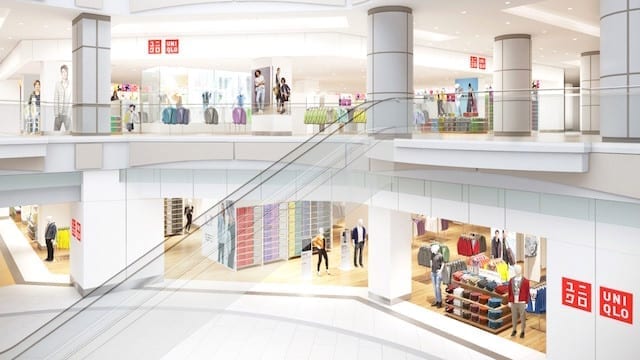
    Uniqlo Canada has announced plans to open its third store.

    Its debut in British Columbia, the store will open late this year, 12 months after Uniqlo entered Canada with an outlet in Toronto.

    Opening at Metropolis at Metrotown in Burnaby, British Columbia, the casual apparel retailer’s store will have 20,630 sqft (1917 sqm) of sales floor and offer its full range of core items.

    “Canada continues to be an important focus for the company globally,” says Uniqlo Canada COO Yasuhiro Hayashi. “This country’s cultural and climatic diversity represents the perfect platform for Uniqlo and our philosophy of LifeWear.”

    Product offerings at the new store will include the brand’s signature collections such as Airism, Cashmere, HeatTech and Ultra Light Down.

    Since opening its first store in Japan in 1984, Uniqlo has expanded to more than 1800 outlets worldwide. It is one of seven brands under the umbrella of Japan’s Fast Retailing.

  • Woodland India eyes Japan, South Korea

    Woodland India eyes Japan, South Korea

    Footwear and apparel firm Woodland India plans to enter the Japanese and South Korean markets in the next 12 months.

    Owned by the Aero Group, the company is also expanding at home with plans to add 120 exclusive outlets across India by the end of next year.

    Woodland India MD Harkirat Singh says the company also plans to grow its presence in multi-brand outlets.
    He says the company clocked revenue of Rs 1200 crore (US$279.9 million) in the last fiscal year and is seeking growth of 15 to 20 per cent going forward.

    Woodland, which makes most of its products in house, is also looking to add to its employee strength.
    Currently, the company has 600 exclusive outlets apart from presence in 5000 multi-brand stores in India.

  • Daimler says yet to choose semiconductor partner for autonomous cars

    Daimler says yet to choose semiconductor partner for autonomous cars

    German automaker Daimler has yet to select a semiconductor provider for its autonomous cars’ development partnership with supplier Robert Bosch, Mercedes-Benz research and development chief Ola Kaellenius said on Wednesday.

    Earlier this month, Daimler and Bosch announced a strategic partnership to develop self-driving cars.

    “We have not selected the computing supplier, and there are several capable options in the market,” Kaellenius told reporters at a roundtable discussion at the Shanghai Motor Show.

    “We are working with several partners in pre-development. What we see being available in the coming years looks very promising,” he said.

    Semiconductor manufacturers including Intel , Nvidia, and Qualcomm have started expanding their automotive product offerings in recent months as self-driving cars drive an “arms race” among suppliers.

  • Jamies’s Italian Siam Discover Joins With Food Panda

    Jamies’s Italian Siam Discover Joins With Food Panda

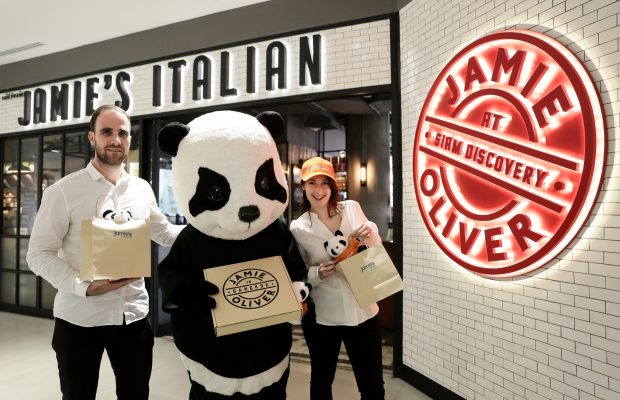
    Jamie’s Italian Siam Discovery is proud to announce that it will launch a food delivery service alongside foodpanda – a popular and reliable food delivery team. Simply place your orders at www.foodpanda.co.th or on “foodpanda” mobile application and enjoy delicious Italian food delivered directly to you! A 40-baht delivery fee will be charged per order.

    Sarah Smith, General Manager of Jamie’s Italian Siam Discovery, says, “Jamie’s Italian Siam Discovery proudly presents our food delivery service, directly delivered to customers in Bangkok. We have joined forces with “foodpanda”, who are renowned for their food delivery service in Bangkok. We are going to launch our delivery service , allowing those who want to keep dry to enjoy Jamie’s Italian food at home. This is a great opportunity for those who haven’t been able to visit the restaurant to try our delicious Italian comfort food, without leaving their home or office.”

    Jamie’s Italian Siam Discovery strives to source only the best free-range, higher-welfare meat and sustainable and ethically produced ingredients. All the recipes are Italian classics with a Jamie twist. The restaurant will also work closely with Thai farmers and suppliers to showcase local produce.

    Menu recommendation

    The menu available on foodpanda has been chosen by the Jamie’s Italian team to give you a taste of Italian home cooking wherever you are. Enjoy antipasti and appetisers, including Ultimate garlic bread, Tomato bruschetta, Primavera bruschetta, Roasted carrot & avocado salad, and Porcini arancini .

    Customers can also choose from a delicious selection of pasta and pizzas – think Sausage casarecce, Tagliatelle Bolognese, Prawn linguine, Penne arrabbiata, Margherita pizza, Gennaro’s Italian sausage pizza, Funghi pizza, Italian hot pizza, and The Parma pizza.

    For mains or sides, customers can enjoy Chicken al mattone, Classic super food salad and the Jamie’s Italian Caesar salad. Plus, you can add delicious sides to your meal, from Crispy polenta chips to Spicy fries, Rainbow slaw, and Rocket salad.

    To finish, you can even order something sweet – try the Epic chocolate brownie, Raspberry rippled pavlova and Tiramisù. Don’t forget to try special drink like Italian lemonade and Italian sodas.

    Jamie’s Italian Siam Discovery and foodpanda are ready to serve you incredible Italian food made with the best ingredients – visit the website www.foodpanda.co.th or the foodpanda mobile application. A 40-baht additional delivery charge will be required per one-time order.

    Those who want to enjoy a full-option dining experience are invited to Jamie’s Italian Siam Discovery on G floor, Siam Discovery. The restaurant opens every day from 12.00 to 22.00 hrs. Bookings are available at www.jamiesitalian.co.th or call 0 2255 5222

  • Chloe Singapore launching at Marina Bay Sands

    Chloe Singapore launching at Marina Bay Sands

    Chloe Singapore will launch its first boutique at The Shoppes at Marina Bay Sands this month.

    Its store’s decor will feature textured furnishings, powdery rose beige tones on the walls and robust architecture complemented with linear lines, reports Buro 24/7.

    The French luxury fashion brand will be offering all ranges of its accessories and ready-to-wear fashion.

    To mark the opening, there will be a limited-edition calfskin and suede Faye bag – only eight pieces made – adorned with patchworks of orchid and phoenix (symbols of its new address).

    Chloe was founded by Gaby Aghion in Paris in 1952.

  • Vietnam beats China, South Africa in new healthcare ranking

    Vietnam beats China, South Africa in new healthcare ranking

    “Vietnam did very well in the study,” said Darrell West, one of the authors of the report.

    The country got the best performance in health system, scoring 19 out of 20, surpassing China and far distancing itself from Southeast Asian peer Indonesia. Nurses and midwives as well as physicians were the contributors to this high score.

    Its weaknesses are in the government’s health management capacity and infrastructure.

    Healthcare investment in Vietnam mostly comes from the public sector. To attract greater private sector investment, the country should improve transparency, make policy reforms and undertake regulatory reviews designed, the report said.

    Vietnam has a growing population, which requires better and more effective health services.

    West recommended Vietnamese leaders seek to improve its medical facilities, diagnostic systems and medical service delivery systems. These kinds of improvements will build confidence among private investors and create a climate where investors feel their financing will yield benefits.

    Vietnam’s high position in this ranking may come as a surprise for many, considering the amount of criticism directed at the healthcare system over the years. But the ranking does not simply reflect the current state, but looks at the potential of improvement brought by research and development.

  • Using artificial intelligence in the supply chain

    Using artificial intelligence in the supply chain

    Leveraging artificial intelligence (AI) for supply chains is an important next step to lower costs, improve productivity and drive growth by helping businesses reduces time-to-market.

    There are many opportunities to utilize AI along the chain from buying raw materials/components, converting them into finished products, selling to customers and delivering to end customers. Supply chains, generally, still comprise large amount of repetitive manual tasks and this is where AI can offer the most value.

    AI can be used in selling to customers using an AI-driven software platform, warehouses, transport, analysis of data and many other areas. AI allows companies to reallocate time and resources to their core business, and other high value, judgment-based jobs by using AI for low value, high frequency activities.

    In an AI-driven selling platform, the chat bots handle many of the sales, customer services and operations tasks traditionally done by humans, for example, interacting with buyers, taking down their orders and passing them on along the supply chain. This way, there is significant reductions in staff costs and also can help to overcome manpower shortage. Moreover, this solution is very applicable to green-field markets where there is explosive growth and multiple languages are required.

    In warehouses, distribution and fulfillment centers, AI can be seen in the use of robotics and sensors for conveying, stacking and retrieval systems, order picking, checking on stock level and re-ordering when stock is low. Furthermore, powerful algorithms also allow AI to automatically adapt in real-time to events in the supply chains, for example the arrival of new orders over the Internet for delivery in a few hours, changes in manufacturing schedules, or even a hiccup in the transportation schedule.

    Amazon is using robotic shelves in warehouses where robots the size and shape of a footstool carry shelves on top. These robots can glide quickly across the floor to rearrange the shelves in neatly arranged rows or bring them over to human workers, who stack them with new products or retrieve goods for packaging.

    Amazon’s robotic shelves also allow more products to be packed into a tighter space. They also make stacking and picking more efficient by automatically bringing empty shelves over to packers or the right products over to pickers. The process is more efficient than having humans walk around, so it also a good example of how automation can be combined with human labor to increase productivity.

    Autonomous vehicles and drones, for example, deploy a combination of sensors and algorithms to perform the complex work of driverless navigating. DHL is using autonomous forklifts and other self-driven equipment in warehouse operations. The next step for autonomous vehicles in logistics is to overcome regulatory and security challenges to deploy them on public roads for goods delivery operations. In the US, the use of drones is governed by the Federal Aviation Administration’s regulation known as Part 107 that went into effect on 29 August 2016.

    Supply chains are generating a huge amount of data and rather than let them go to waste, AI can help businesses make sense of them so that better decisions can be made. AI is able to quickly analyze and organize this data to enable users to see trends, and gain a better understanding of the many variables in the supply chains. Users are thus able to anticipate future scenarios and plan accordingly for uncertainties.

    Driving force of AI

    Powerful algorithms are fueling the rise of using AI in supply chains. Algorithms are instructions to the robots, drones, and autonomous vehicles etc. for calculations, data processing and automated reasoning. In a nutshell, algorithms give instructions on what and how to do in order to reach a specified end goal. More advanced algorithms, rather than follow only explicitly programmed instructions, can even go a step further in allowing AI to learn on its own in what is known as machine learning.

    Using algorithms that continuously and repeatedly learn from new data, machine learning allows AI to find hidden insights without being explicitly programmed where to look. Machine learning is a method of data analysis that automates analytical model building.

    The pioneering technology within machine learning is the neural network, which mimics the pattern recognition abilities of the human brain by processing thousands or even millions of data points. This technology is not just about optimization

    Take the example of supply chains. The algorithms are able to engage in forward thinking to predict all the volatility in the industry, come up with solutions for different scenarios and then base on the available data, choose and execute the most efficient solution. Whenever the AI is faced with a new situation, the algorithms are also adept at making real-time adjustment to pre-programmed instructions. Moreover, compare to humans, the speed and decisiveness of making decisions for AI is so much faster, because for one thing, AI is void of emotion and biasness.

    As a final testament to the power of AI, consider the following example. In January, two researchers from Carnegie Mellon University developed an AI poker player that beat four world champions and won US$1.77 million in poker chips. This is groundbreaking as it signals the ability to deal with incomplete information and to deal with situations that require bluffing and an opponent that generates misinformation.

    AI can process huge amount of possibilities and can outthink humans in terms of unpredictability if the algorithms are programmed correctly.

    AI is the future of supply chains. AI strengthens a company’s core business and opens up new opportunities that can even lead to a new business model.

  • UberEats Korea launch imminent

    UberEats Korea launch imminent

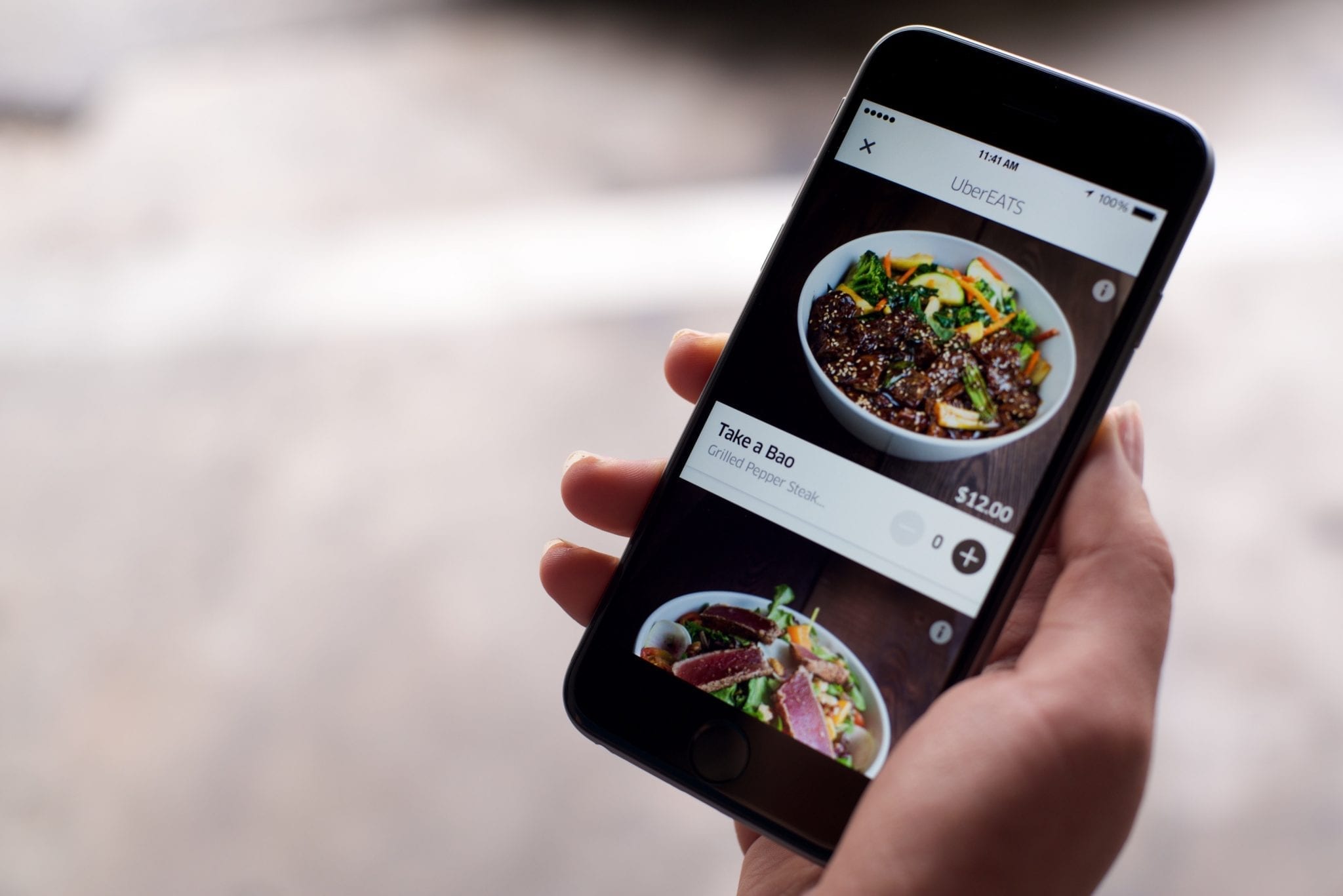
    App-based ride service provider Uber Technologies says it is planning to launch its on-demand restaurant delivery service UberEats in South Korea.

    UberEats Korea will partner with restaurants, with ordering conducted on the company’s web site or with a smartphone app.

    “The company is preparing the local launch of UberEats,” said a spokesman for Uber Korea, the local unit of Uber, on the condition of anonymity. “But at the moment, we have not decided on the exact launch date.”

    Industry sources expect the UberEats Korea delivery service to be introduced within the year.

    UberEats Korea is expected to join other local delivery apps such as Yogiyo, FoodFly and Baedal Minjok. Baedal Minjok is the market leader with more than 50 per cent market share, followed by Yogiyo and Baedaltong, which are both owned by Germany-based Delivery Hero.

    Ordering food by phone is commonplace in South Korea. However, delivery apps have become increasingly popular and now take up nearly 15 per cent of the total food delivery market which is estimated at around 12 trillion won (US$10.5 billion) annually.

    UberEats was launched as a delivery pilot in Los Angeles in 2014. Since then, it has expanded to 58 cities. The service also exists in other major Asian cities including Bangkok, Tokyo and Taipei.