Blog

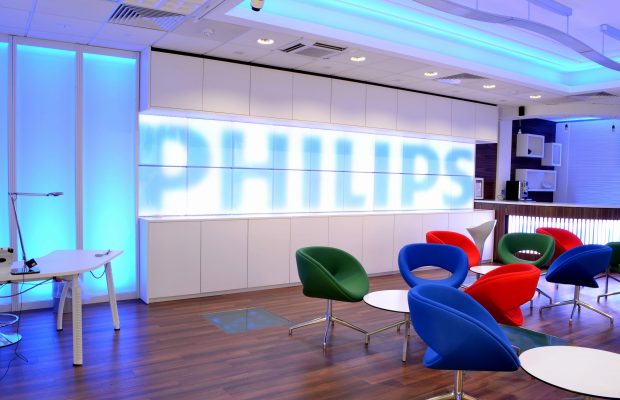
  • Philips Lighting first lighting company to “elluminate” the way forward for Omni-channel retail

    Philips Lighting first lighting company to “elluminate” the way forward for Omni-channel retail

    With the increase in operating costs and growing competition in e-commerce, Singapore’s retailers are realising the importance of leveraging omni-channel retail strategies to bring new and better experiences to today’s shoppers.

    Philips Lighting, a global leader in lighting, has become the first lighting solutions provider to announce the launch of a ‘chatbot’ on their local Facebook page, allowing users to purchase Philips Lighting’s suite of consumer products conversationally through Facebook’s messenger platform.

    Facebook’s users will now be able to get round-the-clock assistance in making their lighting purchase decisions just by interacting with the chatbot on the Facebook Messenger system. The chatbot responds with product recommendations based on the user’s inputs to the chat and allows users to make their purchase directly on the platform itself.

    Besides being the first lighting provider to officially launch a Facebook Messenger Bot, this is also one of the initiatives undertaken by the company for its LEDs Get Smart campaign, aimed at educating consumers on the benefits of installing the right lights at home. Under this campaign, Philips Lighting has also partnered with Lazada Singapore to launch its “first ever specialty e-store” on the e-commerce platform.

    These initiatives are borne from Philips Lighting’s desire to capture the local e-commerce market. A joint report by Temasek Holdings and Google has revealed that the e-commerce market in Singapore is expected to be worth US$5.4 billion (S$7.4 billion) by 2025, and is expected to make up 6.7 per cent of all retail sales in Singapore. As e-commerce gain traction and become a big contributor to the omni-channel retail trend, the firm aims to stay ahead of the game by becoming the first lighting company to tap into this growing segment. The move is also in line with the government’s plans, as revealed in the recent budget announcement, to promote digitalisation in the retail sector.

    Alok Ghose, Managing Director and Cluster Leader for Philips Lighting in Singapore, Malaysia and Exports said: “The partnership with Facebook and Lazada Singapore will serve as an excellent opportunity for Philips Lighting to tap onto the growing e-commerce market segment to unlock new business revenue. These platforms will enable us to bring  light beyond illumination to Singaporean households, connecting their home lighting systems to the Internet of Things, a viable first step in building homes in a Smart Nation.”

  • DataLase & Xerox Team for Late-Stage Inline Digital Printing Solutions

    DataLase & Xerox Team for Late-Stage Inline Digital Printing Solutions

    Xerox, the global leader in digital print technology and services, has signed an agreement with DataLase, the newly acquired SATO subsidiary and inline digital printing experts, to launch a new inkless printing solution that allows brand owners to connect with consumers with personalisation and late-stage ability to differentiate products and packaging.
    Variprint™ is the next generation of revolutionary inline digital printing solutions from DataLase which uses the new Laser Imaging Module (LIM) designed and built by Xerox. The LIM is capable of printing at higher resolutions than most inkjet digital printing solutions, creating sharper images. The LIM can produce greyscale images with a natural resolution up to 1,200 dpi and can digitally print variable information such as graphics, barcodes and text up to 1 metre per second.
    The patented laser reactive pigments are incorporated into a coating that is conventionally printed onto a variety of products or packaging. When exposed to the LIM, a colour change reaction is generated in the coating resulting in a high definition, premium quality, digital print.
    “Building on the huge interest we generated at drupa 2016, the DataLase solution can deliver a unique way to help connect brands with consumers on a one-to-one basis through personalisation and late stage differentiation of products and packaging – such as adding timely local promotions and marketing material. Real time marketing capability on pack is now a reality,” said Dr. Chris Wyres, CEO of DataLase.
    “The digital print and packaging market is growing at a healthy pace,” said Aanand Parthasarathi, Manager, Packaging Programs at Xerox. “Our new lasers, coupled with DataLase technology, will deliver new capabilities in the fulfilment process such as switching languages or a last-minute change in an ingredient list.”
    DataLase is seeing the development of a range of market applications for its technology on a global basis. Its technology can be used across a wide range of product and packaging applications in the food and drink, pharmaceutical, personal care and household sectors for case coding, labelling, product coding and folding cartons.
  • Convenience, food safety matters to Vietnamese consumers

    Convenience, food safety matters to Vietnamese consumers

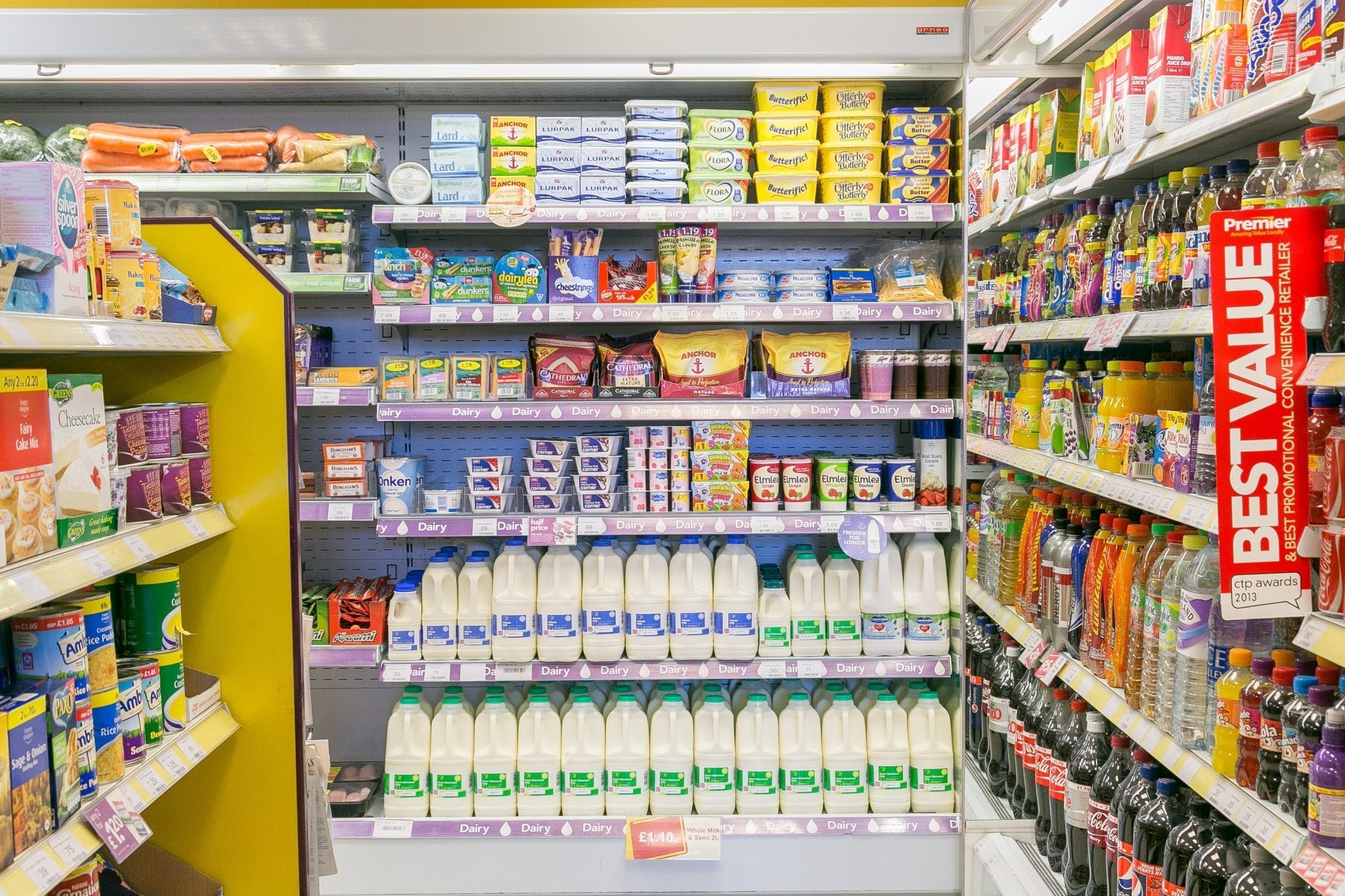
    The retail market in Vietnam is quickly shifting away from traditional live markets to more modernized trade, said Nick Miles, head of Asia-Pacific at IGD, with convenience stores showing the strongest growth prospects.

    There are several factors driving this including a positive economic outlook for the country, a significant increase in gross domestic product per capita and rapidly changing shopper habits.

    The segment has also experienced a shift in shopping behaviours as younger consumers with higher disposable incomes typically make smaller, but more frequent purchases rather than splashing out on a big weekly shop.

    Of note, Mr Miles said young consumers prefer to shop in an air-conditioned environment that has products well-organized on the store shelves and provides seating areas.

    With higher take home pay they are also looking for and willing to pay for higher-quality products than can be found in most traditional live markets.

    While free trade agreements such as the ASEAN Economic Community have given rise to a race for larger supermarkets throughout the country, many stores and individuals have opted to open smaller mini-supermarkets and convenience stores.

    It is also easier to get licences for stores under 500 square metres, said Mr Miles noting that this explains why retailers have been able to expand so speedily in the large metropolitan areas such as Hanoi.

    The study said it expects to see convenience stores in Vietnam to champion innovative new products and formats such as food to go, and begin working collaboratively to develop coordinated supply chains to ensure they are making the most of their growth prospects.

    Vietnam is undergoing an organized retail revolution, explained Luong Quang Thi, general director of domestic refrigerated transport specialist ABA Cooltrans.

    Convenience stores and mini-marts are popping up everywhere, Mr Thi noted, adding that as of last June there were 1,500 mini marts across the country mostly in the larger urban areas.

    Those numbers are expected to continue to mushroom over the next few years, which in turn is fuelling a heightened demand for chilled and frozen foods, setting the stage for the cold chain industry to soar.

    ABA Cooltrans hopes to put itself at the forefront of the Vietnam cold chain expansion, he added.

    The company’s 200 reefer trucks handled 54,000 metric tons in 2016, and a newly acquired 15,000 pallet-capacity cold storage facility in Hanoi saw throughput of 100,000 metric tons.

    Convenience and food safety matters to a typical young Vietnamese consumer nowadays, said Mr Thi, adding that freezing some foods for short or long term use, is essential to prevent foodborne illness.

  • Avaya taps COL as Hong Kong distribution partner

    Avaya taps COL as Hong Kong distribution partner

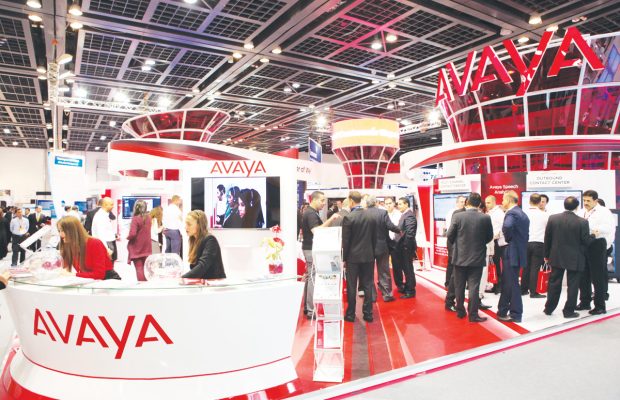
    Business communications and ICT solutions provider Avaya has appointed COL Limited as its distribution partner for the Hong Kong market.

    Under the agreement, the two companies will collaborate to drive adoption of Avaya solutions in the market and helping Hong Kong organizations achieve their digital transformation ambitions.

    COL, a subsidiary of fixed line operator Wharf T&T, will provide the full range of Avaya products – including unified communications and collaboration, contact center, cloud-based communication applications and networking solutions – to resellers in Hong Kong, and later to the wider region. Resellers will be able to offer products to enterprises of all sizes.

    COL has a more than 40 year history in Hong Kong. Its flagship product is its data center and business continuity solution, which has an 80% market share in the financial and multi-national corporation market segments.

    “This distribution agreement signals the start of an exciting time for the industry and for us. Avaya has the reputation, the reach and the commitment to deliver quality communication applications,” COL VP for the business market Kam Poon said.

    “Together and through our resellers, we will make a highly positive impact in delivering future-proof communications solutions to business customers with proven competence to design, build, implement and operate.”

  • Jetstar adds low-cost services between Australia and Vietnam this summer

    Jetstar adds low-cost services between Australia and Vietnam this summer

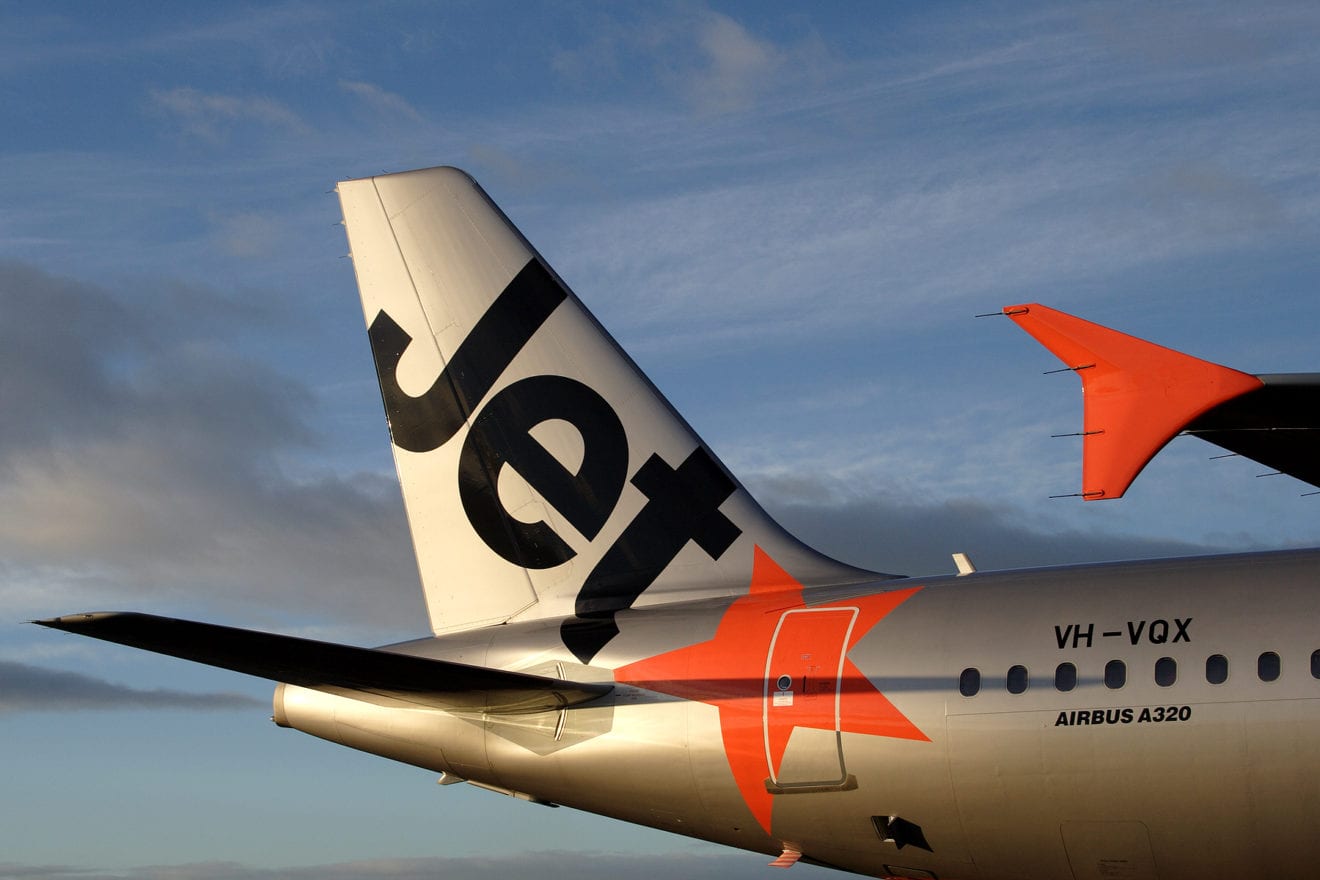
    The Qantas unit hopes to break the monopoly currently held by national carrier Vietnam Airlines, which is also a Qantas partner. Australia’s trade and tourism ministry on Wednesday announced two low-cost direct services from Melbourne and Sydney to Ho Chi Minh City by Jetstar Airways.

    The new services will take off in May this year, Assistant Minister Keith Pitt told a meeting with local media in HCMC.

    Jetstar Airways, a wholly owned subsidiary of Australia’s Qantas Airways, will operate the flights four times a week from Sydney and three times weekly from Melbourne using the Boeing 787 Dreamliner.

    Ticket sales began in January. Flights from Melbourne to HCMC will be launched on May 10, and flights from Sydney will commence one day later, subject to regulatory approval.

    “These flights will stimulate inbound tourism, business and trade to Australia. In the last 12 months, there has been a 21 percent increase in visitors from Vietnam to Australia and we expect to see that grow with the introduction of our low fares on the route,” Paul Rombeek, Jetstar Group’s Global Head of Sales, told the press.

    The new flights from Australia to HCMC by Jetstar Airways would link up to 15 domestic destinations from HCMC thanks to daily services operated currently by Vietnamese domestic partner Jetstar Pacific, Jetstar Group Chief Executive Jayne Hrdlicka said in a statement.

    Jetstar Pacific, 70 percent owned by flag carrier Vietnam Airlines and 30 percent by Qantas, is growing rapidly in an attempt to fend off a competitive threat from domestic budget rival VietJet, she said.

    Vietnam Airlines and Qantas last year said they would invest $139 million to more than double the size of Jetstar Pacific’s fleet to 30 aircraft by 2020.

    Jetstar’s non-stop flights from Australia to Vietnam will break a monopoly of direct services held by Vietnam Airlines, said the report.

    More than 320,000 Australian visitors came to Vietnam last year, up 5.6 percent against 2015. The figure in the first three months this year was over 95,000, up 3.4 percent, according to data of the Vietnam National Administration of Tourism.

  • Consortium contracts ASN for INDIGO cable system

    Consortium contracts ASN for INDIGO cable system

    A consortium consisting of Asian operators, Google and telecommunications infrastructure company Superloop have commissioned a new subsea able system linking Singapore, Indonesia and Australia.

    Singtel, Indonesia’s Indosat Ooredoo as well as Australia’s Telstra and education sector network provider AARNet have joined Google and Superloop’s SubPartners to join the INDIGO cable system.

    The cable system, formerly known as APX West and Central, will be deployed by Alcatel-Lucent Submarine Networks.

    It will span around 9,000km between Singapore and Perth on the west coast of Australia, and onwards to Sydney on the east coast. A ranching unit with two additional fiber pairs will connect Singapore and Jakarta.

    Construction of the cable is expected to be complete by mid-2019. The system will use an open cable two fiber pair desgin, providing consortium members with spectrum ownership and giving them the ability to independently adopt technology advancements and upgrades as required.

    “With internet data consumption growing by 70% in Asia last year alone these sorts of investments in international networks are critical for meeting the needs of connected consumers and businesses,” Telstra group MD for global services and international David Burns said.

    “The construction of INDIGO is timely to meet the rising demand for high-speed broadband between Asia and Australia. This cable system complements our global connectivity that links Asia, the US, Europe, Australia and the Middle East,” Singtel Enterprise VP for carrier services Ooi Seng Keat added.

    Superloop has inherited its membership in the INDIGO consortium via the recent acquisition of subsea cable operator SubPartners for $2.5 million. As part of the acquisition Superloop has provided a guarantee involving the meeting of SubPartners’ construction capex costs for the project.

  • Global telecoms service revenues due to rebound

    Global telecoms service revenues due to rebound

    The global telecommunications services market is on track to rebound after a long period in decline, reaching $1.3 trillion by 2021, MarketLine has projected.

    The market has declined at a negative CAGR of 3.4% between 2012 and 2016 due to downward price pressure motivated by intensifying competition, MarketLine analyst Nicholas Wyatt said.

    “4G mobile internet is now standard in many markets, particularly developed ones, so the only way lots of mobile operators can differentiate themselves from the competition is on price,” he said.

    “This has forced prices down and negatively impacted a market that has reached saturation point in many countries.”

    MarketLine estimates that the wireless segment contributed around $775 billion in sector revenues during 2016, or 64.9% of the $1.2 trillion total market value.

    Growing demand for mobile data is expected to help stimulate a 2.2% CAGR in the market between 2016 and 2021, driving the total market to a value of $1.3 trillion.

    Growth is expected across all regions, with APAC growing slightly higher than the US and Europe due to the region’s relatively lower saturation level.

    “Subscription volumes have plateaued in recent years, but a slight uptick is expected as populations expand and businesses require increasingly mobile staff,” Wyatt said.

  • Australia new vehicle sales edge higher in March

    Australia new vehicle sales edge higher in March

    Australian new vehicle sales bounced modestly in March as the timing of the Easter holidays resulted in more selling days compared to the same month last year.

    The Australian Federal Chamber of Automotive Industries’ VFACTS report out on Thursday showed 105,410 new vehicles were sold in March, up 0.9 percent on the same month last year.

    March this year had two more selling day than in 2016.

    For three months to March, sales were running 0.8 percent behind the same period last year.

    Sales of SUVs continued their domination with a rise of 7.9 percent on March last year, giving them 39.4 percent of the entire market. Sales of passenger vehicles dropped 10.7 percent, extending their long decline.

    Sales of light commercial vehicles jumped 11.3 percent, while sales in the heavy vehicle market rose 11.0 percent.

    Toyota Motor Corp retained first place on the sales ladder with 18.6 percent of the market. Mazda Motor Corp had another strong month taking 9.9 percent.

    Hyundai Motor took third spot with 8.3 percent, ahead of Mitsubishi on 7.3 percent. The Holden unit of General Motors took 6.8 percent and Ford held 6.5 percent.

  • Zalora transforms e-commerce with regional e-fulfillment hub

    Zalora transforms e-commerce with regional e-fulfillment hub

    ZALORA, Asia’s Online Fashion Destination, is pleased to announce the inauguration of its new Regional e-Fulfillment Hub located in Selangor, Malaysia. Covering a total area of 470,000 square feet – approximately the size of nine FIFA football fields – and split across five levels, the e-Fulfillment Hub plays a crucial role in fulfilling thousands of orders per day and facilitating the movement of fashion goods 24/7 across eight markets: Singapore, Malaysia, Brunei, Hong Kong, Macau, Taiwan, Indonesia and Philippines.

    ZALORA gives consumers access to thousands of local and international brands. To ensure the highest level of delivery experience for consumers across all markets, ZALORA invested heavily in building its e-commerce infrastructure from warehousing facilities to last mile delivery fleets. ZALORA is revolutionising the e-shopping experience across Asia Pacific. The Regional e-Fulfillment Hub will be a key driver for ZALORA’s growth as the regional online fashion player in the years ahead.

    Best-in-class facilities and innovative technology

    ZALORA invested resources and time to develop in-house logistics and operations systems:

    One example is Mobile Picking, a customised solution that transmits picking information of customer orders through mobile devices, allowing greater scalability and on-time fulfilment. Since its introduction, picking productivity increased significantly and accuracy is now at 100 percent, due to the real-time item verification.

    To process all orders in real-time, an in-house Order Management System (OMS) was developed for the ZALORA Operations team to track movements of inventory into and out of its warehouses, process orders, manage customer returns and refunds and manage ZALORA’s own delivery fleets.

    By leveraging innovative and cutting edge technologies, ZALORA’s average lead-time from item ordered to delivered is now as low as two days for customers in the region.

    Driving e-commerce growth in the region

    The ZALORA Regional e-Fulfillment Hub holds a single pool of stock for all markets giving the 5-year-old fashion e-tailer the advantage of depth and width. In other words, ZALORA is able to offer a wider selection of goods with higher quantities available for the customers to order. The fulfilment centre can process up to 100,000 items per day and has the storage capacity to hold more than four million items at any time.

    Additionally, ZALORA is one of the few companies in Malaysia to hold the AEO status (Authorised Economic Operator). The AEO status gives ZALORA’s Regional e-Fulfillment Hub a form of “express lane” at customs, making 24/7 cross-border movements seamless and helping ZALORA provide an even faster delivery for its customers. ZALORA is the first and only fashion e-commerce retailer in Malaysia to obtain this status.

    Commitment to provide customers with best possible online shopping experience

    The Regional e-Fulfillment Hub in Malaysia serves as the sole fulfilment centre for Singapore, Malaysia, Brunei, Hong Kong, Macau and Taiwan and at the same time provides stock support for the Philippines and Indonesia markets. The facility’s strategic location and logistics capabilities make it possible for international brands to expand their reach into the Philippines and Indonesia and at the same time, customers are able to access a wide selection of brands and products including Mango, Ray-Ban, Steve Madden, Adidas, Topshop and more.

    ZALORA orders can be easily tracked either through automatic email notifications or by visiting ZALORA’s app or website in the ‘Order Tracking’ section. Thanks to the integration of courier partners into ZALORA’s platforms, the app now allows customers to track their deliveries with real-time updates.

    At the Regional e-Fulfillment Hub, returns are delivered daily where dedicated operators process and clear requests to ensure customers get refunded as soon as possible.

    Partnership with YCH Group

    To tackle an increasingly complex operating environment, ZALORA is collaborating with YCH Group, the region’s leading supply chain specialist. The two partners are working closely together on multiple fronts from infrastructure design, storage, order fulfilment solutions, and procurement. As a long-term strategic partner, YCH is supporting ZALORA’s growth, not only through investment in the e-fulfillment infrastructure, but also by giving the flexibility of future expansion – the warehouse can in fact double its operations area in as fast as six months.

    Parker Gundersen, ZALORA Group CEO commented: “ZALORA has experienced solid growth since it was established in 2012 and as Asia’s online fashion retailer, we’re committed to continuously drive e-commerce progress in the region. Offering the best range of products, coupled with a seamless online shopping experience, we are proud to deliver the first and largest Regional e-Fulfillment Hub. We’re thankful for the support of YCH and other logistics partners in the region, without them we wouldn’t have been able to build the infrastructure we, and our customers, need.”

    “Southeast Asia is poised to become one of the world’s fastest growing regions for e-commerce. We’re proud to partner with the e-commerce fashion market leader ZALORA in its regional growth”, said Margaret Toh, Executive Director of YCH Group. “Driven by innovation and the evolution of the business landscape, working jointly with ZALORA, YCH has transformed efficiency in infrastructure design and configuration, supported by automation to position the Regional e-Fulfillment Hub as a Centre of Excellence for regional e-Commerce fulfilment. Empowered by the synergies brought about by this partnership, our innovative solutions will equip ZALORA with game changing capabilities to remain competitive among its expanding consumer markets.”
  • Vietnamese Prime Minister orders rice revolution to raise quality of production

    Vietnamese Prime Minister orders rice revolution to raise quality of production

    Falling rice exports have prompted the government to rethink its strategy. Renovation at all levels of the government is needed to “create a revolution in quality and a new vision, accompanied by strategic planning in line with globalization, in order for Vietnamese rice to meet consumer demand in Asia and the rest of the world,” Prime Minister Nguyen Xuan Phuc was quoted on Wednesday as saying.

    Vietnam, the world’s third-largest rice exporter after India and Thailand, will launch a comprehensive campaign to overhaul production in order to raise yields, efficiency and export value, according to the government.

    The Southeast Asian nation went through its first rice revolution in the late 1980s. At that time, the country still had to import rice to meet domestic demand, but 1989 marked the first year of Vietnamese rice shipments, with a total of 1.4 million tons shipped overseas thanks to rapid reforms in agricultural production.

    Rice exports peaked at 8 million tons in 2012, but have since dropped due to better production in key markets such as the Philippines, Indonesia and Malaysia, as well as rising competition from India, Pakistan, China, Thailand, Myanmar and Cambodia.

    The Vietnam Food Association has targeted annual shipments of around 5 million tons this year, after sales fell to 4.8 million tons in 2016, the lowest since 2008.

    Despite continued investment, falling rice exports have prompted the government to rethink its strategy.

    Hanoi has classed rice as a strategic commodity to ensure food security for the country’s 93 million people, especially with typhoons, salination and floods posing a major threat.

    Phuc’s instruction came days after the government estimated Vietnam’s rice exports from January-March dropped 24 percent from a year ago to 1.2 million tons, a two-year low.

    Phuc has asked for rice fields to be merged or expanded in suitable areas, while the land damaged by salination should be switched to raising shrimp and other crops.

    He also called for updated agricultural technology to produce varieties with higher yields, while improving storage conditions and avoiding post-harvest losses.

    Modern irrigation systems and infrastructure projects to cope with climate change and rising sea levels are needed, Phuc said.

    Last month, the premier asked government officials to look into human and natural factors as Vietnam seeks to fight the problems threatening to sink the country’s Mekong Delta food basket, which supplies 90 percent of rice for export.

    The future of the delta, home to around 20 million people, is threatened by urbanization and dozens of dams, with more in the pipeline. Flooding and droughts that have led to salination, along with rising sea levels, should also be considered for the region’s development, a World Bank report said.

    The alluvial soil and sediment delivered to the coastal areas in the delta, where the Mekong River enters the East Sea (internationally known as the South China Sea), fell to 75 million tons in 2014 from 160 million tons in 1994, according to data from Vietnam’s National Mekong Committee.

    The WWF said that higher sea levels may inundate half of the delta by the end of the century.

  • Apple has ordered 70 million OLED panels from rival Samsung for upcoming iPhone 8

    Apple has ordered 70 million OLED panels from rival Samsung for upcoming iPhone 8

    Shares of Samsung Electronics got a boost on Tuesday after the report that archrival Apple had ordered 70 million display panels that the South Korean giant specializes in for the upcoming iPhone. Samsung’s stock closed at 2.1 million Korean won, posting a rise of 1.54 percent.

    Citing a supply chain source, Nikkei reported that Apple has placed orders for bendable organic light-emitting diode panels for use in 70 million handsets for the year. OLED offers brighter displays and better power efficiency over liquid crystal displays currently in use.

    Samsung’s OLED displays are used on its own flagship Galaxy devices, and the company is a market leader in the area. Apple is expected to launch three new iPhones later this year, with the anniversary edition iPhone 8 believed to have a slightly curved 5.2-inch OLED screen. This will be the most expensive model. The two other iPhones will have LCD displays. It would be the first time Apple has used OLED displays on its flagship device.

    Quoted IHS Markit analyst David Hsieh as saying that the order for 70 million units of OLED panels is in line with his expectations. He added that Samsung is expecting to produce as many as 95 million units for Apple in 2017, in case demand exceeds expectations. Hsieh also said Samsung is likely to be the sole supplier.

    “It is also possible that some of these 70 million handsets will not be shipped to customers this year and be carried over to next year depending on demand,” Hsieh told.

    The 70 million unit figure gives a sense of the kind of bullish demand Apple is expecting for the anniversary model, which some analysts are suggesting could cost $900 to $1,000.

    But some analysts have said it’s not likely Apple will sell all 70 million OLED iPhones this year looking at previous performance. In the fiscal first quarter, which ended Dec. 31, Apple sold 78.2 million iPhones — latest iPhone 7 and 7 Plus models and older versions.

    Neil Shah, research director of devices and ecosystems at Counterpoint Research, said he expects Apple to be able to sell around 70 million iPhones in total in the final quarter of this year when it releases the new device. But again, not all 70 million will be the OLED devices.

    “Seventy-million units of the OLED iPhone is too high for me at this point,” Shah told.

    The likelihood is Apple will sell some of the OLED phones next year, and at least have some ready in case it sees a pop in demand.

    Leaks and reports suggest that the iPhone 8 could be the most advanced yet with new features such as a front-facing camera with 3-D sensor. Analysts are expecting this to kick of a “supercycle” of iPhone sales.

  • Problems with City pork plan

    Problems with City pork plan

    HCM City’s technology-based programme to control and trace the origin of pork that began recently is encountering difficulties, according to the Department of Industry and Trade.

    Speaking at a regular department press briefing, Nguyễn Phương Đông, its deputy director, said 713 pig farms have registered to participate in the programme, but only 99 put rings with an electronic stamp on their pigs’ legs to aid in individual identification of the animals.

    Even the number that agreed to join the programme had not met the expectations of its managers, he said.

    The reason for this is that the main source of supply for the city is farms and household breeders in neighbouring provinces, who need time to change their farming and trading habits.

    But to ensure the safety of consumers, the department is working with those provinces to organise training programmes for the farmers, he said.

    The city provides small-scale breeders with a 50 per cent subsidy of the cost of the electronic rings for the first month, he said.

    Almost all wholesalers at the city’s Bình Điền and Hóc Môn wholesale markets are taking part in the programme.

    They meet 70-80 per cent of the city’s pork demand.

    Consumers can currently check the origin of pork they buy at nearly 385 modern outlets (supermarkets, convenience stores and food shops) and 140 booths at 23 retail markets.

    The project management board is now working with poultry producers and distributors in the city and neighbouring localities to implement a similar programme in June.

  • AirAsia sets up low-cost airline in Vietnam

    AirAsia sets up low-cost airline in Vietnam

    Malaysian budget airline AirAsia Berhad plans to start a low-cost carrier in Vietnam, co-operating with local businesses to enter the country’s booming travel market, company representatives told Retail News.

    AirAsia signed a shareholders’ agreement with Vietnam’s Gumin Company Limited, Hải Âu Aviation Joint Stock Company and Trần Trọng Kiên, the owner of these two companies, to form the venture last Friday, which the airline announced in a statement to Malaysia’s stock exchange.  

    The carrier, expected to start flying at the beginning of 2018, will need an investment of VNĐ1 trillion (US$44 million), of which AirAsia will hold 30 per cent stake and Gumin will hold 70 per cent.

    Vietnam is the latest country to lure Malaysian billionaire Tony Fernandes, head of AirAsia, who is aspiring to build a low-cost airline network covering Asia, as the 28 per cent growth inVietnam’s aviation market triples the rate in other Southeast Asian countries.

    Vietnam is also the fifth biggest aviation market in the region, after Indonesia, Thailand, Malaysia and Singapore, with a passenger volume that has doubled since 2013 thanks to a middle class population accounting for 25 per cent of the total population by 2010.

    In recent years, AirAsia has established affiliates in Indonesia, Thailand, India and Japan. The airline is betting on low cost airline models for international travel through its AirAsia X subsidiary. Fernandes has also ordered hundreds of Airbus aircraft worth billions of dollars to meet his ambition of growth, and he is in the process of selling a subsidiary specialising in leasing aircrafts to raise cash.

    However, Brendan Sobie, CAPA Centre for Aviation’s analyst, told that AirAsia would face huge challenges, because it entered the Vietnamese market too late. “The market is currently well served by two carriers, VietJet Air and Jetstar Pacific. The growth rate will slow down in the coming years, as the low-cost market is now more mature. ”

    Vietjet Aviation Joint Stock Company shares have grown 52 per cent since its listing on HCM Stock Exchange in February 28.

    According to a report released by ACB Securities in December last year, passenger traffic inVietnam will continue to grow at double digit rates over the next decade, after an annual growth of 17 per cent in the last decade.

  • Smartphones that fold up are coming by 2019, says Samsung engineer

    Smartphones that fold up are coming by 2019, says Samsung engineer

    A Samsung engineer recently said that he expects foldable smartphone displays to be ready for mass consumption in 2019.

    “Because the bezel-free display currently sells so well, we still have enough time to develop foldable displays,” Samsung Display principal engineer Kim Tae-woong. “The technology is expected to be mature around 2019.”

    A foldable display will pave the way for gadgets that can be folded into smaller sizes. Imagine a tablet that can be folded into a smartphone that can be folded into something even tinier and more pocket-friendly.

    Phone-makers have experimented with this sort of “foldable” technology before, though rather unsuccessfully. Kyocera launched a phone on Sprint named the “Echo” that folded in half, but used two separate display panels instead of a truly foldable display.

    A report last summer suggested that Samsung was going to launch a foldable smartphone much sooner. The device, reportedly code named “Project Valley” inside Samsung, was expected to make its debut in February during Mobile World Congress. No such device ever materialized in public view.

    There’s another reason why Samsung may be dragging its feet with foldable screens, though.

    Samsung is currently leading the market in bendable displays. Its curvy displays have been used in its flagship smartphones for the past several years, most recently making an appearance on the Galaxy S8 that launches later this month. They’re used to minimize the bezels on the front of a smartphone, allowing for a display that appears to pour over the edges of the device. Foldable displays will make bendable screens obsolete.

    The comments made by Tae-woong suggest that Samsung is going to take its time perfecting foldable displays, especially while interest in its bendable screens is still growing. Rumor has it, for example, that Apple will finally adopt Samsung’s display technology, possibly employing a bendable AMOLED display in the iPhone 8.

  • Card payment compulsory soon for e-commerce businesses in Vietnam

    Card payment compulsory soon for e-commerce businesses in Vietnam

    E-commerce businesses may have to accept card payments as a way to offering more options of payment when shopping online, an official from the Ministry of Industry and Trade said.

    Võ Văn Quyền, director of the ministry’s Domestic Market Department, was quoted as saying that the department was studying amendments to e-commerce business which might include regulations about compulsory payment methods.

    Accordingly, accepting card payment might be compulsory for e-commerce firms.

    Việt Nam Banking Card Association’s statistics showed that e-commerce payments had seen breakthrough developments in 2012-16 period.

    Payment values by domestic-payment cards jumped 597 per cent and by international cards by 319 per cent in the five-year period.

    As of the end of 2016, payments by the former were worth totally VNĐ3.44 quadrillion (US$150.9 billion) so far and the latter by VNĐ13.4 quadrillion.

    The values are expected to increase rapidly if accepting card payment is made compulsory for e-commerce transactions.

    The ministry’s Department of E-Commerce and Information Technology in March said that e-commerce was growing rapidly in Việt Nam where 90 per cent of population had smart phones which were used at an average 24.7 hours online per week. On average, each Vietnamese used $160 for shopping online per year.

    However, according to the Payment Department under the State Bank of Vietnam, the payment infrastructure in the country remained under-developed and the ratio of online payment in e-commerce remained modest.

    The banking sector would improve the legal framework for e-payment while developing the infrastructure for card payment. In addition, security for online payments must be improved.

    Race for cashless payment, fintech

    Developing cashless payment methods inVietnam had significant room. The Government ofVietnam in a cashless payment project from 2016 to 2020 set a goal that only 10 per cent of transactions in the economy were made in cash.

    A recent survey by Visa Vietnam showed that Vietnamese were now on a trend of using less cash in payment with the ratio of cash payment dropping from 46 per cent in 2015 to 38 per cent last year together with improved trust in electronic payment.

    The survey found that there were 67.4 million banking accounts inVietnam as of 2016, significant increase compared to 16.8 million in 2014 but card payment accounted for just 3 per cent of personal consumption spending in six major cities. Only 50 per cent of e-commerce payment were conducted by card.

    Statistics of the Vietnam Banking Card Association showed that transactions at ATMs were mainly cash withdrawals (86.8 per cent of revenues conducted by domestic payment cards), reflecting the popularity of cash.

    The booming of e-commerce would drive cashless payments inVietnam.

    E-commerce was forecast to grow at 20 per cent per year to reach a revenue of $10 billion by 2020. The Department of e-Commerce and Information Technology said that the e-commerce revenue could be higher as currently the growth rate had reached 25 per cent.

    The association said that digital banking was also gaining popularity together with the application of tokenisation in improving security.

    There were 92.08 million domestic payment cards and 12 million international payment cards in 2016, the association’s statistics showed.

    Vietnam is also seeing a wave of fintech start-ups to promote cashless payment.