Blog

  • TV programme “Startup Nation” to air shortly in Vietnam

    TV programme “Startup Nation” to air shortly in Vietnam

    Vietnam Television (VTV) and HCM Communist Youth Union on Monday announced a new TV programme titled “Startup Nation,” which is expected to promote startups inVietnam.

    The announcement was witnessed by Deputy Prime Minister Vương Đình Huệ, Minister of Science and Technology Chu Ngọc Anh, Minister of Agriculture and Rural Development Nguyễn Xuân Cường, leaders of the youth union and major companies in Vietnam.

    The talk show format will air on VTV1 every Friday evening from April 14 and rebroadcast Saturday afternoon.

    Another programme titled “Startup Coffee” will air from April 10 every morning as part of the programme “Good Morning” on VTV1.

    VTV Director General Trần Bình Minh said the programme producers wanted to deliver a message on startups, which is “Renovation is continuous and enduring. It’s not just a movement but a path for the nation to follow.”

    He said successful businessmen would be invited to “Startup Nation” to share experiences and comment on startup models or business trends in Vietnam and across the world. They could then suggest or invest in promising startup ideas.

    The TV programme is part of the Government’s mission to makeVietnam a nation of startups.

    First Secretary of HCM Communist Youth Union Lê Quốc Phong said the youth would applaud the new programme, which offers them an opportunity to present their startup dreams, and make those dreams a reality.

    Phong said the youth expected relevant agencies to hear their ideas and suggestions thanks to the TV programme and subsequently timely adjust policies to support them.

    In the first quarter of this year, 26,478 new enterprises were established in Vietnam, a record number in the last six years.

    Last year,Vietnam recorded the establishment of 110,100 new enterprises, the highest number compared with the previous years. Last year is the first time the country had more than 100,000 new enterprises in one year, which is said to be the result of the Government’s strong promotion of startups.

    Vietnam is expected to have one million enterprises by 2020.

  • McDonald’s Indonesia to launch mobile app in Q4

    McDonald’s Indonesia to launch mobile app in Q4

    McDonald’s Indonesia celebrates its 25th anniversary this year. The franchise of US-based fast food giant McDonald’s will launch a mobile application to serve customers amid growing technology development.

    Fast food giant McDonald’s Indonesia will launch a mobile application for food orders in the fourth quarter of this year to tap the growing smartphone market and keep up with the shifting customer behavior, a senior company employee said on Thursday.

    Customers can currently order food for delivery through the McDonald’s website, said Michael Hartono, McDonald’s Indonesia’s marketing and communication director.

    The food chain said that a mobile application would give customers easier access to order food order amid growing technology use and development in Indonesia.

    “We are currently developing the application and hope to launch it by the fourth quarter of 2016,” Michael said during an event in Jakarta on Thursday.

    Once it is launched, customers can download the app and click on the menu when they want to place an order, he added.

    McDonalds recorded a stable performance in 2015 amid the global economic slowdown affecting commodity prices and people’s purchasing power, Michael said without giving further details.

    McDonald’s plans to open 15 stand-alone outlets across the country, adding to its 168 outlets in Indonesia.

    The fast food giant aims to record 15 percent sales growth this year, Michael said.

    McDonald’s Indonesia operates under PT Rekso Nasional Food, which holds the franchise license in Indonesia for McDonald’s.

    Free Egg McMuffin

    McDonald’s will give away 1,000 Egg McMuffins at stand-alone stores across Indonesia on March 7 from 6:30 a.m. to 10 a.m. as part of a promotional campaign. They can be obtained at outlet counters or drive-thrus, Michael said on Thursday. A 50 percent discount will also be given on coffee and hash browns during breakfast.

    During what the company calls National Breakfast Day, held since 2013 on the first Monday of March, free souvenirs, such as T-shirts, will be given to selected customers.

    As this year’s event coincides with McDonald’s 25th anniversary, the company will also give free Egg McMuffins to public institutions, such as schools, police posts, firefighters and hospitals.

    Customers at the event could receive discount vouchers for the following day’s meal, Michael added.

  • Jollibee to continue stinging McDonald’s despite labor issues

    Jollibee to continue stinging McDonald’s despite labor issues

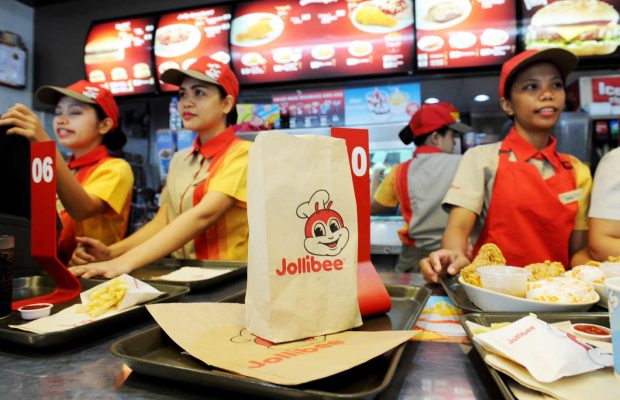
    Jollibee Foods Corporation’s largest brand has been experiencing some financial challenges since July 2016 due to the rising cost of raw materials and contractualization issues in the Philippines. But despite these, the homegrown fast-food chain expects to maintain its lead against rival McDonald’s Philippines, driven by its network expansion and product innovation.

    Jollibee, known for its Chickenjoy fried chicken and sweet spaghetti, told the Philippine Stock Exchange that the brand expects to maintain a “significant lead” over its key competitor in the coming years.

    This was despite two price increases last year due to higher raw material costs and the Philippines’ new regulations on contractualization, which resulted to increased labor expenses.

    “These price increases did not adversely affect consumer purchase volume regardless of income class. Over the past years, the pricing of Jollibee had been at parity with key competitors,” Ysmael Baysa, chief finance officer and corporate information officer of Jollibee, told the local bourse on Wednesday, March 29.

    Baysa said this in reaction to an analyst report from Macquarie, saying that McDonald’s has been closing in on Jollibee in terms of preference and that the new labor rules could affect its leading position in the Philippine market.

    Baysa said Jollibee has been incurring the costs of those steps since the 3rd quarter of 2016.

    Because of this, Jollibee said the cost of labor will be higher in the first half of 2017 versus the same period in 2016. However, the labor cost increase in the 2nd half of 2017 over the same period of 2016 will be at a normal rate.

    At present, Jollibee already has 978 stores nationwide, while McDonald’s has 521 stores.

    David and Goliath

    McDonald’s had said that it plans to open 45 stores this year, while Jollibee said it continues to enjoy higher sales in the Philippines based on its latest financial report.

    Jollibee’s same store sales growth in the Philippines in 2016 stood at 8.3%, driven by higher customer traffic and higher amount of purchases per visit per customer compared with a year ago.

    Moving forward, Jollibee said the growth in its brand in the Philippines will continue at a strong pace, at least sustaining the number of new store openings in the past two years.

    “The Jollibee Group of Companies had faced many challenges in the past. It had emerged stronger from these challenges and its profit recovered quickly. It has one of the most consistent sales and profit growth track records among all public companies in the Philippines, while sustaining one of the highest returns on equity (ROE) at 18% to 22% annually over different economic cycles,” Baysa told the local bourse.

    Overall, Baysa said Jollibee’s share in burgers, fried chicken, and spaghetti “actually increased in 2016 from its key competitor,” which is McDonald’s.

  • Burger King Is Launching an Ice Cream Shake Made from Cereal Favorite Fruit Loops

    Burger King Is Launching an Ice Cream Shake Made from Cereal Favorite Fruit Loops

    Restaurant Brands International is launching the Fruit Loops shake. Yes, for real. The company confirmed to TheStreet the shake will be available for a limited time only at participating restaurants nationwide starting April 17 for a recommended price of $2.99. It’s made from vanilla-flavored soft serve ice cream, Fruit Loops cereal pieces (compliments of Kellogg’s) and sweet sauce.

    Burger King is no stranger to thinking outside the box when it comes to fast-food. The company teamed up with beverage and snack giant Pepsi  last year to develop what it called Mac n’ Cheetos. The snack mashup was a portable combination of mac n’ cheese covered with crispy Cheetos flavor. Last March, it unveiled the “Angriest Whopper,” a burger with a red bun, jalapenos and hot sauce.

    And in September 2016, Burger King sold a black-bunned burger filled with Kraft Heinz’s A1 steak sauce called the Halloween Whopper for a limited time.

  • DHL Express forays into Sarawakian market

    DHL Express forays into Sarawakian market

    International express services provider, DHL Express, has set up a direct presence in East Malaysia through the establishment of a new Gateway in Kuching yesterday.

    As the only international express services company with a direct presence in Sarawak, the new and upgraded Gateway caters to the increasing demand for international trade, supporting businesses operating in and out of the state.

    The Kuching Gateway serves as a clearance point for inbound shipments entering the state, before they are sent to DHL’s four Service Centers in Miri, Bintulu, Sibu, and Kuching for deliveries.

    Strengthening DHL’s network of 23 service centers, 90 service points and 6 gateways in West Malaysia, the Kuching Gateway improves the efficiency and responsiveness to meet the increased demands of customers in Sarawak.

    Speaking at the official launch of the Kuching Gateway, Christopher Ong, Managing Director of DHL Express Malaysia & Brunei said, “Previously operated through an agent, we took over the operations in Sarawak to enhance our services and interact directly with our customers.

    “The new facility delivers top-notch productivity and operational efficiency, with improved speed, reliability and flexibility. This will enable our customers in Sarawak to have greater access to international markets.

    “To provide our customers with peace of mind when they ship with us, we have invested heavily to ensure that the facility is built to TAPA “A” certification standards, to meet our global criteria for operational efficiency, quality and security.

    “The Kuching Gateway provides direct access to our global network of more than 220 countries and territories, allowing businesses in Sarawak to trade in the global marketplace more efficiently than ever before,” he added.

    The official launch of the Kuching Gateway was witnessed by over 30 guests including officers from The Royal Malaysia Customs Department in Kuching.

    DHL offers a portfolio of logistics services ranging from national and international parcel delivery, ecommerce shipping and fulfillment solutions, international express, road, air and ocean transport to industrial supply chain management.

    With about 350,000 employees in more than 220 countries and territories worldwide, DHL connects people and businesses securely and reliably, enabling global trade flows.   it offers specialised solutions for growth markets and industries including technology, life sciences and healthcare, energy, automotive and retail.

  • Honeywell’s New Satellite-Based Connected Worker Solution Keeps Remote Workers Safe

    Honeywell’s New Satellite-Based Connected Worker Solution Keeps Remote Workers Safe

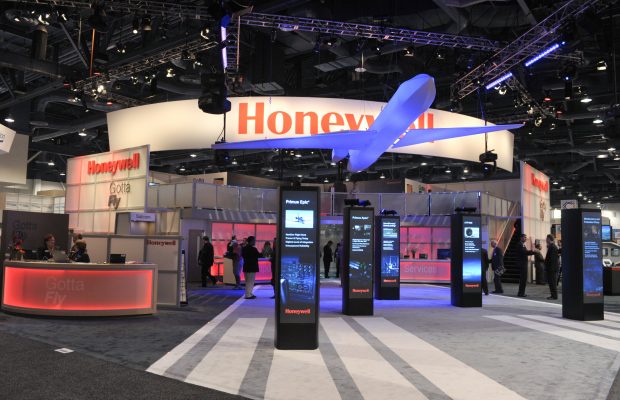
    Honeywell today announced a new satellite-based connected solution to help governments, companies and other organisations monitor the location and safety of workers in remote locations.

    Honeywell’s Personal Tracker utilises Iridium’s low-earth orbit satellite network, the only satellite constellation that provides pole-to-pole coverage, which is necessary for effective remote asset and personnel tracking. The mobile device allows companies to communicate with their workers or track assets anywhere in the world – across oceans, airways and even polar regions.

    “Those responsible for employees in remote locations, especially lone workers who may be performing risky work, increasingly need a reliable method to stay connected to those workers to keep them safe and secure,” said Taylor Smith, president of Honeywell’s Workflow Solutions business. “Honeywell’s connected worker technology and Iridium’s proven platform enable satellite communications from anywhere on Earth. This offers remote workers, such as workers on offshore oil platforms or forestry service workers, peace-of-mind and provides their employers with a valuable communication and search-and-rescue tool for emergency situations.”

    Emergency services, maritime, military and oil and gas workers can share their location with GPS coordinates and send text messages using the enterprise-grade, ultra-rugged device, which is certified to function in hazardous environments where explosions or a fire may occur due to flammable liquids or vapours. It can be used as a stand-alone, two-way communications device or can be clipped to a backpack to serve as a tracking beacon. It can also be paired with an iPhone so that users can access a Honeywell mobile app that offers features such as interactive SOS, messaging, push notifications, trip information and situational awareness.

    For example, in the event of an emergency, an organisation can send push notifications to alert its workers – regardless of their location – and then track their locations and provide updates as they seek shelter.

    The Personal Tracker is exclusive to the Iridium® network. With Iridium’s two-way communication capabilities, even when used as a stand-alone alerting and tracking beacon, the Personal Tracker can receive current location requests and configuration updates over the air.

    “We are proud to work with Honeywell in enabling their connected worker technology, and support their commitment to lone worker safety,” said Bryan Hartin, executive vice president of sales and marketing at Iridium. “This partnership comes at an exciting time for us as we are launching our next-generation global constellation, Iridium NEXT, and continue to expand our growing portfolio of satellite-based solutions for the Internet of Things. The unique architecture of our constellation makes it a natural fit over other providers for mobile applications, especially where safety is concerned. Providing reliable coverage is critical for companies tracking employees and assets located in remote areas, and Honeywell’s new Personal Tracker will make that possible.”

    The mobile device supports Honeywell’s ViewPoint software, a web-based platform that provides organisations with real-time visibility for tracking and monitoring high-value assets such as vehicle fleets and cargo containers. The ViewPoint platform offers organisations and government users advanced features, such as 90-day tracking history, geofencing, scheduling reports, alert management and messaging.

  • Singapore to raise $815m from spectrum auction

    Singapore to raise $815m from spectrum auction

    Singtel has emerged as the biggest spender in Singapore’s latest mobile spectrum auction, bidding nearly half of the total S$1.14 billion ($815.2 million) set to be raised.

    Singtel will pay S$563.7 million for 75MHz of spectrum, consisting of 40 MHz of 700-MHz spectrum, 10 MHz of 900-MHz spectrum, a right of first refusal for a further 10 MHz of 900-MHz spectrum and 15MHz in the 2.5-GHz band.

    The auction of spectrum in the four bands had four winning bidders. StarHub was the next highest bidder, committing to pay S$349.6 million for 30 MHz of 700-MHz spectrum, 20 MHz in the 2.5-GHz band and a right of first refusal to 10 MHz of 900-MHz spectrum.

    M1 bid S$208 million for 20 MHz of 700-MHz spectrum and a right of first refusal to 10 MHz in the 900-MHz frequency band.

    New market entrant TPG Telecom will meanwhile pay S$23.8 million for 10 MHz of 2500-MHz spectrum. TPG last year won the auction to become Singapore’s fourth mobile operator after bidding S$105 million for a provisional allotment of 60 MHz of 900-MHz and 2.3-GHz spectrum.

    A total of 175-MHz of spectrum was allocated during the auction, and this includes the 900-MHz spectrum due to be re-farmed following the retirement of 2G services. But the total allotment was 50 MHz lower than the 225 MHz requested by the industry, because no other spectrum was available for allocation.

  • Massive shift towards hybrid infrastructure underway

    Massive shift towards hybrid infrastructure underway

    By 2020, enterprise spending on cloud, hosted and traditional infrastructure services will be more or less on par, Gartner has predicted.

    The research firm said the growth of cloud and industrialized services and the decline of traditional data center outsourcing (DCO) indicate a massive shift toward hybrid infrastructure services.

    “As the demand for agility and flexibility grows, organizations will shift toward more industrialized, less-tailored options,” said DD Mishra, research director at Gartner.

    “Organizations that adopt hybrid infrastructure will optimize costs and increase efficiency. However, it increases the complexity of selecting the right toolset to deliver end-to-end services in a multi-sourced environment.”

    Gartner predicts that by 2020, 90% of organizations will adopt hybrid infrastructure management capabilities.

    The traditional DCO market is shrinking, according to Gartner’s forecast data. Worldwide traditional DCO spending is expected to decline from $55.1 billion in 2016 to $45.2 billion in 2020. Cloud compute services, on the other hand, are expected to grow from $23.3 billion in 2016 to reach $68.4 billion in 2020.

    Spending on colocation and hosting is also expected to increase, from $53.9 billion in 2016 to $74.5 billion in 2020. In addition, infrastructure utility services (IUS) will grow from $21.3 billion in 2016 to $37 billion in 2020 and storage as a service will increase from $1.7 billion in 2016 to 2.7 billion in 2020.

    In 2016, traditional worldwide DCO and IUS together represented 49% of the $154 billion total data center services market worldwide, consisting of DCO/IUS, hosting and cloud infrastructure as a service (IaaS). This is expected to tilt further toward cloud IaaS and hosting, and by 2020, DCO/IUS will be approximately 35% of the expected $228 billion worldwide data center services market.

  • Cybercriminals building an “army of things”: Fortinet

    Cybercriminals building an “army of things”: Fortinet

    Cybercriminals are building an  “army of things” that is powered by the digital underground, according to Fortinet.

    The security company’s latest Global Threat Landscape Report covering Q4 2016 reveals the methods and strategies cybercriminals employed during the quarter in detail.

    The report confirms that Internet of Things (IoT) devices are sought-after commodities for cybercriminals around the world. Adversaries are building their own armies of “things” and the ability to cheaply replicate attacks at incredible speed and scale is a core pillar of the modern cybercrime ecosystem.

    In Q4 2016, the industry was reeling from the Yahoo data breach and Dyn DDoS attack. Before the quarter was halfway done, the records set by both events were not only broken, but doubled.

    Meanwhile, IoT devices compromised by the Mirai botnet initiated multiple record-setting DDoS attacks. The release of Mirai’s source code increased botnet activity by 25 times within a week, with activity increasing by 125 times by year’s end.

    IoT-related exploit activity for several device categories showed scans for vulnerable home routers and printers topped the list, but DVRs/NVRs briefly eclipsed routers as the thing of choice with a massive jump spanning 6+ orders of magnitude.

    Unlike other parts of the world, vulnerabilities in home routers formed the majority of IoT-based attacks in Asia Pacific. Many home routers are manufactured and deployed in this region, resulting in attacks on them being centered here.

    Mobile malware become a larger problem than before. Though it accounted for only 1.7% of the total malware volume, one in five organizations reporting malware encountered a mobile variant, nearly all was on Android.

    Substantial regional differences were found in mobile malware attacks, with 36% coming from African organizations, 23% from Asia, 16% from North America, compared to only 8% in Europe. This data has implications for the trusted devices on corporate networks today.

  • Hyundai, Kia China sales down 52 pct in March

    Hyundai, Kia China sales down 52 pct in March

    Hyundai Motor, Kia Motors sold 72,032 vehicles in China in March, down 52.2 pct from year earlier. Hyundai Motor China sales 56,026 vehicles in March, down 44.3 percent from year earlier.

    Kia Motors China sales 16,006 vehicles in March, down 68 percent from year earlier.

  • Central bank to launch app for monitoring food prices

    Central bank to launch app for monitoring food prices

    Bank Indonesia (BI) plans to launch a mobile app through which the public and regional administrations can monitor harga pangan (the prices of staple foods) on a daily basis.

    The public would be able to use the app to avoid being deceived, while the regional administrations can use it to observe when prices go too high so they can tackle them faster.

    The public can already download the app or use it on the hargapangan.id website, but it has not been officially launched.

    The program managed by the Information Center for Strategic Food Prices (PIHPS) collects data from traditional markets in 82 cities in all 34 provinces in the country for 10 commodities: rice, shallots, garlic, red chili, birdseye chili, beef, chicken, eggs, sugar and vegetable oil.

    “The PIHPS has been running, but we’ll wait for the official launch,” Dody Budi Waluyo, the BI governor’s assistant for monetary and economic policy, said recently.

    “BI keeps improving the program. We’ll also collect prices not only from traditional markets, but also from modern markets; also maybe from big traders and touch on more commodities, as well as prices at the producers’ level. The point is we keep innovating with this,” he added.

    Previously, BI deputy governor Sugeng told the media that the central bank also plans to create a data system to track supplies of staple foods in the regions.

    All the aforementioned systems were developed so BI and the government could come up with better policies to achieve a 4 to 5 percent inflation rate.

  • New Zealand cellcos propose joint rural expansion program

    New Zealand cellcos propose joint rural expansion program

    New Zealand’s mobile operators Spark, Vodafone New Zealand and 2degrees have submitted a joint proposal to improve rural broadband and mobile infrastructure under two government programs.

    The operators have applied to be selected for the Rural Broadband Initiative Extension and Mobile Black Spot Fund programs.

    If selected, the companies have committed to investing “hundreds of millions of dollars” in the project, including NZ$75 million to deploy the infrastructure, as well as opex costs, spectrum and other resources.

    The operators said their proposed expenditure would more than match the government’s own planned NZ$150 million ($104.6 million) contribution to the program, which would come from the Telecommunications Development Levy.

    Under the proposal, the partners would roll out around 500 new cell sites providing a 25% increase in land coverage across New Zealand, providing access to fast broadband for thousands of rural households and businesses and extending mobile coverage to more than 1,200km of state highways.

    “Rural New Zealand is a key driver of our country’s economic growth and productivity and for these sectors to remain competitive they need fast broadband and mobile coverage – not just in offices, but on farms, in schools, and on the roads,” Vodafone NZ CEO Russell Stanners said.

    “The combination of the Government’s RBI funding and this investment by the three mobile network operators presents a once in a generation opportunity to deliver both competitive ultra-fast broadband and world class 4G mobile infrastructure to areas of New Zealand that today have neither.”

  • AirAsia X in talks with South Korea’s Jeju over Kuala Lumpur service

    AirAsia X in talks with South Korea’s Jeju over Kuala Lumpur service

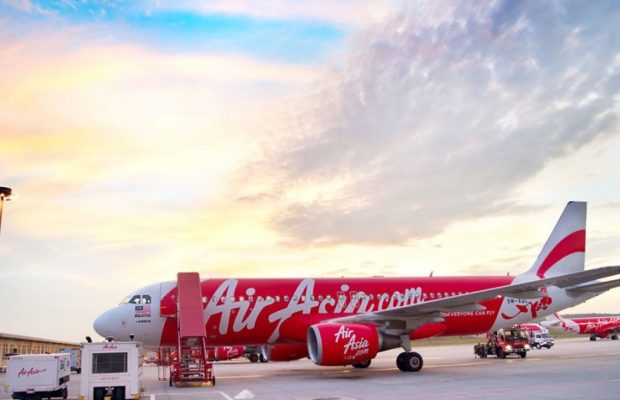
    AirAsia X is in talks with Jeju’s provincial government about direct flights between Kuala Lumpur and the South Korean resort island.

    Jeju officials said discussions were held last week in Kuala Lumpur about frequencies in the absence presently of direct flights. “We hope that we will have flights by the end of this year,” said Seo Hye-jin, a provincial official. “We have been marketing in Southeast Asia since last year.” She declined to speculate on possible frequencies while discussions are ongoing.

    China accounted for almost 96% of the island’s inbound flights in March, according to Jeju tourism officials. There were over 5,000 arrivals from Malaysia in January, making it the second largest source market after China with over 184,000.

    Observers expect Malaysia’s presence in Jeju to increase after the curtailing of Chinese arrivals in the wake of deployment of a new U.S. missile defense system in South Korea.

    China opposes the Terminal High Altitude Area Defense system because of concern about related U.S. surveillance. Seoul and Washington maintain that their sole purpose is to defend against North Korean missile strikes.

    According to travel agencies in China, tours to South Korea were curtailed from Mar. 15 under official pressure, posing a serious threat to the industry there.

    AirAsia X is an AirAsia subsidiary offering long-haul services to 23 destinations in Asia-Pacific, the Middle East, and Africa.

  • Indonesia Mulls Hosting Coffee Exhibition in South Korea Next Month

    Indonesia Mulls Hosting Coffee Exhibition in South Korea Next Month

    The Ministry of Commerce assesses that there is a significant opportunity for exporting coffee commodity to South Korea. To achieve this, the Ministry of Commerce plans to hold an exhibition in South Korea.

    Arlinda Director General of Export Development at the Ministry of Commerce, said that coffee has become a trend in South Korea, especially among young people. Therefore, this trend can be utilized  by Indonesian coffee businesses.

    “There is a significant opportunity for coffee in South Korea. We plan on conducting coffee exhibition there next month, and we must use that trend to engage the South Korean markets,” she said in Jakarta on Tuesday (04/04/2017).

    According to Arlinda, the youth market in South Korea will be easier to engage in because of their penchant to drink coffee. Therefore, Indonesia must provide the highest quality coffee, including  Arabica coffee that is a mainstay product in Indonesia.

    “The trend in young people there is coffee and tea. A seminar on food and beverage can provide us with information on local youths’ tastes. Our specialty is coffee Arabica, and we actually have 32 kinds. We are working with coffee exporters to increase their exports,” she said.

  • Another first for Hactl’s pharma handling

    Another first for Hactl’s pharma handling

    Hong Kong Air Cargo Terminals Limited (Hactl) has been confirmed as complying with all the requirements of IATA CEIV Pharma. Hactl is the first handler in Hong Kong to obtain the certification.

    Hactl’s certification is the result of an initiative sponsored by Hong Kong Airport Authority, in which all relevant industry players at the airport will undergo validation for the IATA CEIV Pharma standard.

    IATA CEIV Pharma represents a co-ordinated effort to ensure competency, as well as operational and technical readiness, for the storage and transportation of pharmaceuticals by air. It is designed to help the industry further develop a network of certified pharmaceutical trade lanes that meet consistent cold-chain management standards and assure product integrity.

    Hactl’s accreditation follows an extensive independent assessment and validation, involving detailed inspections, and personal interviews with managers and supervisors at all levels within Hactl. The assessment and validation covered the company’s quality management system and procedures, personnel, training, documentation, infrastructure and equipment, quarantine procedures, sub-contractor management, self-inspection procedures, transportation and operations. All were found to be fully compliant, with no non-conformances.

    The validation report praised Hactl’s preparations for the audit process, the helpful attitudes of its staff, and its total cooperation. Says IATA’s General Manager, Hong Kong and Macau, Yvonne Ho: “I congratulate Hactl on being the first to receive CEIV certification in Hong Kong.  In doing so, Hactl has achieved an internationally recognized standard for pharmaceutical handling.”

    Adds Hactl’s senior manager – quality assurance, Benny Siu: “We are very pleased with the positive outcome of the IATA CEIV Pharma Validation, and value the cross-departmental team effort that resulted in Hactl becoming the first to obtain this important certification.”

    Mark Whitehead, chief executive of Hactl, concludes: “We applaud the Airport Authority’s initiative in sponsoring this drive to adopt IATA CEIV Pharma in Hong Kong. It’s an excellent example of what can be achieved through collaboration, and will benefit the entire airport cargo community and its customers.”