Blog

  • Globe deploys CEM suite from NICE

    Globe deploys CEM suite from NICE

    Globe Telecom has become the Philippines’ first operator to implement NICE’s Total Voice of the Customer (TVOC) suite to help improve the customer experience.

    The operator has deployed the suite across seven of its customer-facing touchpoints, including the contact center, retail centers, self-service points and outbound calls.

    NICE TVOC combines instant solicited feedback with interaction analytics for insight into the drivers of customer satisfaction.

    This improved visibility has given Globe the ability to take immediate action for recovery, when necessary, as well as to identify best practices to be shared with all service representatives. Insights from the TVOC solution are being used to bring company services in line with customer expectations.

    TVOC is the latest addition to the portfolio of NICE enterprise solutions Globe has implemented, which also include applications for workforce management, interaction analytics and quality optimization.

    “Seeing that telco is a very dynamic space to be in, it is important for us get as much insight as we can about our customers so we can engage them at their ‘moment of truth’ and deliver real impact,” said Rebecca Eclipse, chief customer experience officer at Globe Telecom. “Eventually, this will be our competitive edge, as we can quickly identify opportunities to better serve our customers and immediately take action.”

  • PT Telkom launches pay TV content and ad platform

    PT Telkom launches pay TV content and ad platform

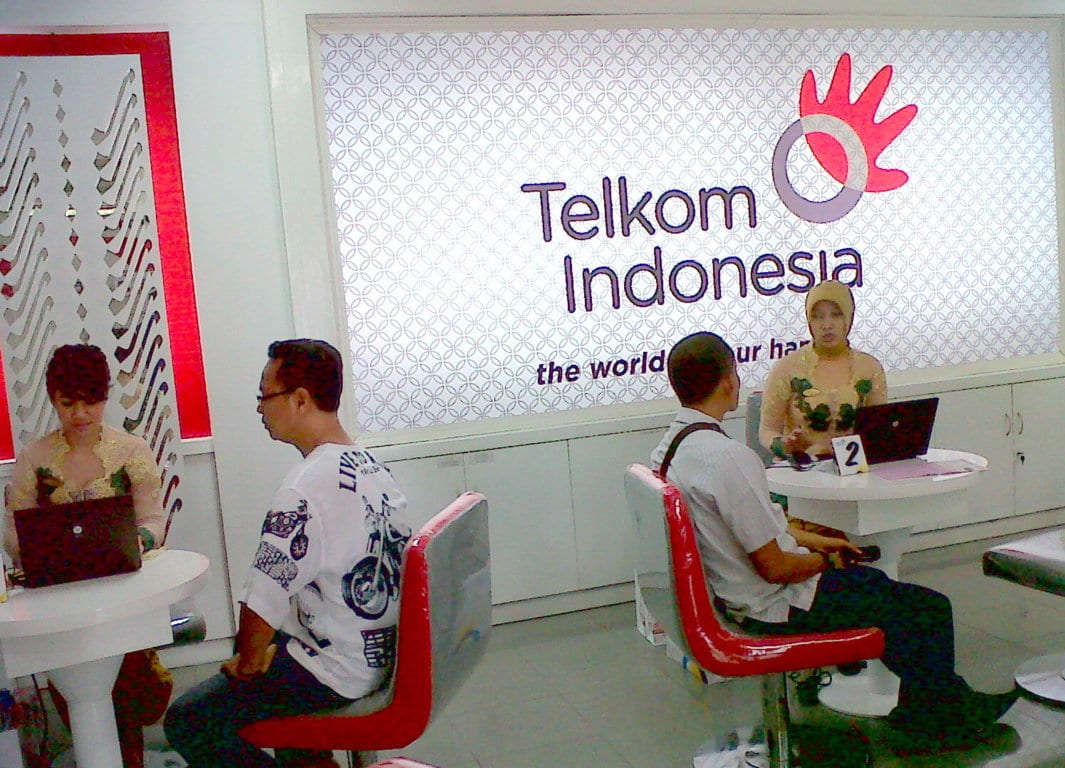
    Indonesia’s PT Telkom, through satellite business unit Metrasat, has launched a new content and advertising solution designed to support the pay TV industry in Indonesia.

    Metrasat, itself a subsidiary of Telkom’s PT Multimedia Nusantara division, has announced the launch of Mediahub.

    The Mediahub project was initiated due to the Indonesian Broadcasting Commission’s regulations restricting foreign commercial advertisement on the foreign channels aired on local pay TV channels in Indonesia.

    MediaHub is the first solution specifically designed to help content providers, advertising agencies, the Ministry of Communication and Informatics of Indonesia, the Indonesian Broadcasting Commission and pay TV operators develop safe and convenient local content, as well as increasing revenue and optimizing cost efficiency.

    It aims to address practical solutions as a content aggregation and distribution service, helping the industry face ever-increasing distribution and monetization challenges. With its playout and ad-insertion system, MediaHub allows selected content to comply with national broadcasting regulations while distributing it in any format required by pay TV operators.

    MediaHub’s proprietary plug-and-play system means it is the only pay TV ad network to support local content developers.

    “Telkom is pleased to launch an integrated solution that not only caters to the telco industry, but is designed to create significant new value for the content and advertising industry in Indonesia,” said Telkom director of enterprise and business services Muhammad Awaluddin. He said the launch is in line with Telkom’s mission of transforming from a telco to a “digico” (digital telecommunications).

    “TelkomMetra focuses on adjacent business supporting the Telco Business and believes that the content industry will grow significantly in the years to come,” added TelkomMetra CEO Teguh Wahyono.

    “However, it will require support from efficient aggregation and distribution services. TelkomMetra will support the content industry by delivering contents effectively and efficiently while complying with Indonesian regulations. We expect local content to grow even more while global content will continue to honor and support Indonesian culture.”

  • Makansutra brings Singapore street hawker food to Manila

    Makansutra brings Singapore street hawker food to Manila

    Singapore food culture company Makansutra has created what it describes as one of the most modern but retro looking heritage food halls in Manila.

    Founded in 1997 by entrepreneur-photojournalist, KF Seetoh Makansutra aims to celebrate and promote food culture through food guides, online content, eateries, specialised events, projects and TV shows. Now it has brought 11 stalls and a refreshment and snack station to a 14,000 sqft prime retail space in the SM Megamall.

    “It has been a year coming, fraught with complex building issues, ingredients sourcing problems, lack of proper local equipments and expertise… among others,” explained Seetoh. “But Makansutra Hawkers has now launched in Manila.”

    Five famous hawkers and street food restaurants from Singapore and Malaysia made their international debut there: Geylang Claypot Rice, Alhambra Padang Satay, HK Street Old Chun Kee, Jin Ji Braised Duck and Kway Chap and the iconic Donald and Lily from Malacca. All, except for Geylang Claypot Rice which is a stall requested by show host Anthony Bourdain for his Bourdain Market in New York, were featured at the recent World Street Food Congress held in Manila.

    Makansutra

    The other stalls were new hawkers licensed under Makansutra and trained by the hawkers in the team. There’s Mian Ji (fried Hokkien prawn mee and soup version), Baoji Xiang (Chicken rice and paper wrapped chicken), Ah Tee (oyster omelette and carrot cake), Adam’s Ribs ( bak kut teh), and Curry Flurry (roti prata, fish head curry and nasi briyani).

    “The hawker centre’s design is a throwback to the era when street food was de rigueur and was like a treat, back in the 1960s and 1970s. We used corrugated zinc sheets for a ceiling and plain polished concrete floor with graffiti on the walls, construction beams smack in the middle of the eatery and the furniture don’t match,” explained Seetoh.

    Makansutra Hawkers is located on the second floor of SM Megamall Building A in Mandaluyong City. It is open from 10am to 10pm.

  • Pokemon Go device launched in Japan

    Pokemon Go device launched in Japan

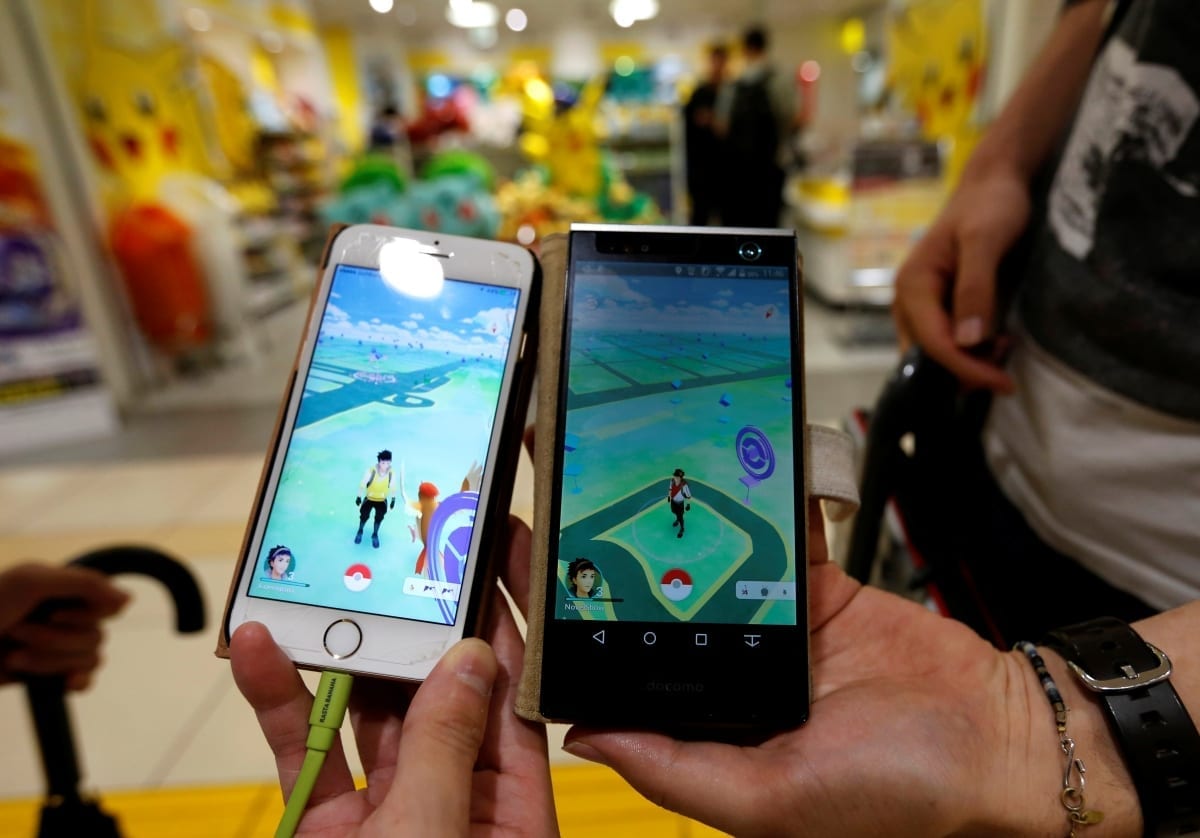
    Hundreds of people have stood in long lines outside Japanese stores to buy the Pokemon Go Plus device.

    In Osaka, around 700 people waited outside a Pokemon Centre shop to buy the device when the store opened at 0800, two hours earlier than usual.

    Pokemon Go Plus allows Pokemon Go players to interact with the mobile game without looking at the phone.

    “(Using the peripheral gear), Pokemon hunting will speed up because I don’t have to stare at the (Smartphone) screen. I want to get them (Pokemon monsters) one after another,” said Kana Sugiura, 29, who was waiting outside the store, to Japanese news agency Kyodo.

    Pokemon Go Plus is a gadget similar to a wristwatch but attached with a clip that connects to the game.

    The device, which costs around US$35 (A$47), is connected to the mobile phone via Bluetooth, and through a led light (green or blue) and vibrations notify the player when there is a ‘poke stop’ or a Pokemon nearby, which can then be captured by pressing the device button without any need for the phone.

    The peripheral add-on is available from Friday in most countries – including Australia, said game developer Niantic in a statement.

  • New roadmap issued for Singapore retail

    New roadmap issued for Singapore retail

    Guidelines aimed at spurring new life into the Singapore retail industry have been launched by the government.

    Its Retail Industry Transformation Map (ITM) follows the release of a food services roadmap as the city-state’s economy slows.

    According to Spring Singapore, an agency under the Ministry of Trade and Industry responsible for helping Singapore enterprises grow, the launch of the Retail ITM takes into consideration such challenges as fewer business travellers, lower spending per individual, and consumer shifts from brick-and-mortar to eCommerce. Consumers have also turned to foreign eCommerce sites to find a wider variety of goods at lower prices.

    “Retailers can look to expand their markets locally and internationally through e-channels,” says Spring Singapore, which encourages retailers to adopt an omni-channel strategy to better reach out and support targeted end-to-end consumer needs across both online and offline channels.

    Singapore has about 21,000 retail establishments which contribute nearly 1.4 per cent to GDP and employ about 3 per cent of the total workforce.

    Aside from optimising productivity, the ITM also aims to focus on innovation and the adoption of new technologies to drive competitiveness. It will also work on the industry’s flexibility to adapt to evolving trends in jobs and skills.

    Strong industry partnerships and internationalisation are considered key elements in pushing the industry’s transformation.

    Doubts over sale

    Meanwhile, the future of the Great Singapore Sale (GSS) could be in jeopardy after 23 years of helping bolster the city’s reputation as an international shopping destination.

    After three years of falling sales during the GSS, the organiser, the Singapore Retailers Association(SRA), and the Singapore Tourism Board (STB) are about to look at the annual event’s direction.

    “We need to discuss if there is a point in continuing it, or whether there is a need to reformat it,” says SRA president R. Dhinakaran after official sale figures confirm that efforts this year to arrest the slide have failed (this year the GSS ran for 10 weeks from June to the middle of last month).

    Singapore Department of Statistics figures released last week show a 3 per cent fall in July retail sales, excluding motor vehicles. This follows a similar dip in June’s figure.

    Orchard Road Business Association (ORBA) executive director Steven Goh believes it is time to reformat the event. He says it should be held when Singaporeans are not away during the school holidays.

    He urges retailers to come to a consensus on saving their best deals for the GSS. “That way, it will be really one-off and impactful.”

    Singapore is also competing with similar events in the region, such as the 1Malaysia Mega Sale Carnival, usually from June to August. Started in 2000, the nationwide promotion includes contests, prizes and street food.

    Launched the same year, the Korea Grand Sale runs from August to October, and January to February each year. It features celebrity performances and opening-day events at the country’s airports.

  • Aeon Mall inviting foreign firms to be tenants

    Aeon Mall inviting foreign firms to be tenants

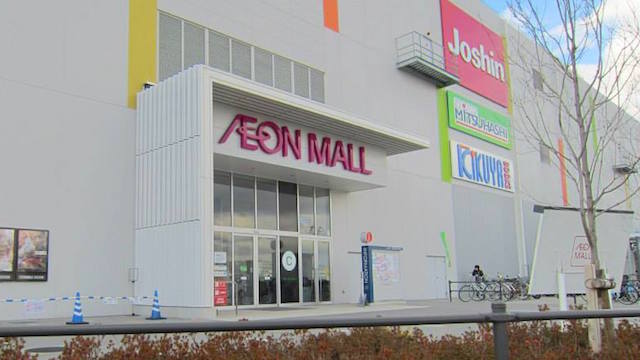
    Aiming to add variety in the face of intensifying competition, Japanese retail giant Aeon Mall is inviting foreign businesses to sign on as tenants in Japan.

    Aeon Mall, which has about 150 shopping centres across Japan, will aim to have its first new-look location open next spring. A new dedicated department includes two staff members assigned to Chinese businesses and three to businesses from members of the Association of Southeast Asian Nations (ASEAN). Tenants from other areas, such as Europe and the US, are also sought.

    A broad range of sectors is being considered, including restaurants, apparel, home products and services. As well as major chains, Aeon is interested in small businesses in the tourism sector.

    Aeon Mall is negotiating arrangements with more than 30 companies already. By inviting multiple tenants all at one time, the company seeks to recreate the feel of an Asian-style “restaurant alley”, for example.

    aeon-mall-japan

    Targeted candidates include foreign companies interested in doing business in Japan but hesitant because they lack knowledge of the market. To help deepen their understanding, Aeon will offer tours of its malls in Japan and abroad.

    Japan’s shopping centre market grew 4.5 per cent last year to 31 trillion yen (US$302 billion), according to the Japan Council of Shopping Centers, but was treading water on an existing-store basis.

    The market’s medium- to long-term outlook is also dim with the shrinking Japanese population and the rise of online shopping.

    “Mass-producing the same type of shopping mall will not lead to substantial growth going forward,” says Aeon Mall president Akio Yoshida. The company last year opened a more experience-focussed mall with an athletic track and racetrack.

  • Coach Tmall flagship abandoned

    Coach Tmall flagship abandoned

    The official Coach Tmall flagship shop has been abandoned.

    Luxury bag brand Coach Inc says it will replace its shop on Alibaba Group Holding’s business-to-consumer sales site by selling directly through its own website and on its WeChat account, the social-media app run by Alibaba rival Tencent Holdings. Coach has offered coupons and launched a media campaign on WeChat.

    A Coach spokeswoman says the company wants to consolidate resources and will continue to look for innovative ways to leverage digital and social platforms.

    Alibaba says Coach products are still available on TMall from other merchants.

    Selling shoes, purses and accessories, Coach was one of the first US luxury brands to launch an official store on the TMall. It started with a temporary pop-up store from December 2011 to January 2012, opening a full store in 2015.

    Early this month, nearly a dozen trade groups wrote to Alibaba complaining that it was not doing enough to combat counterfeits. And the loss of Coach comes as Alibaba faces added scrutiny from a US trade agency as to whether it should be added to a list of marketplaces that are known for selling counterfeits.
    Alibaba’s Taobao consumer-to-consumer marketplace was on the list years ago, but was removed in 2012.

    Meanwhile, LVMH Moët Hennessy Louis Vuitton SE’s Guerlain has just opened a flagship store on TMall, and MakeUp Forever and Sephora, two other brands under the LVMH umbrella, also have TMall stores. Also, the cosmetics unit of Salvatore Ferragamo will launch its store later this month.

  • Huawei unveils newest security solution for SDN

    Huawei unveils newest security solution for SDN

    Huawei has unveiled its latest SDN security solution which promises to “guarantees the security of enterprise tenants’ applications hosted on the cloud”.

    Based on the core component Agile Controller, the solution virtualizes hardware security devices and offers a variety of services for online subscription.

    The automated security deployment capability also greatly improves cloud service protection efficiency.

    While more and more enterprises are using cloud services to reduce costs and improve flexibility, enterprises seldom consider security before this change. As storage, computing, and network resources all become virtualized, manual configuration and adjustment of security resources can no longer adapt to quick service development in a flexible and cost effective way.

    Moreover, cloud-based service deployment eliminates network security boundaries. Virtual networks, especially the virtual machine (VM) layer, urgently need effective security protection.

    As common threats have evolved to advanced persistent threats (APTs) that can hide for a longer period of time and are more difficult to detect, traditional APT defense methods also need to adapt to software-defined network (SDN)environments.

    “As more services are migrating to the cloud, the boundary of security threats becomes blurred,” said Liu Lizhu, GM of Huawei Enterprise Network Product Line’s Security Gateway Domain.

    “Data center services are facing more severe security risks after SDN technology is used, as such no companies, regions, or organizations are free from such risks. Huawei Software-defined Security Solution will guarantee innovative, scalable, and efficient cloud services for tenants and help enterprises accelerate business transformation and upgrade.”

  • Huawei, ZTE launch pre-5G network components

    Huawei, ZTE launch pre-5G network components

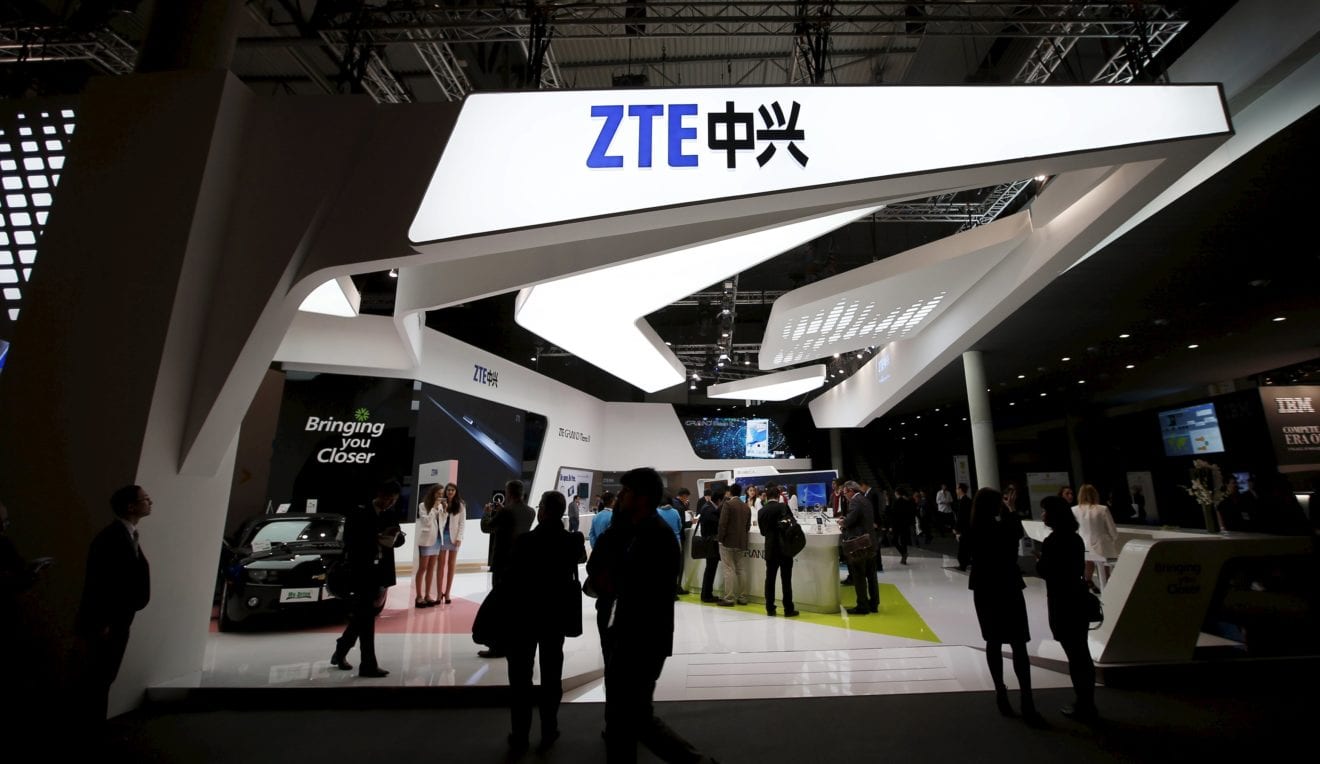
    Huawei and ZTE have both announced the launch of pre-5G products to help operators prepare for the new technology.

    ZTE released its new Pre5G MIMO 2.0 product at the China International Information and Communication Exhibition in Beijing yesterday.

    The new product is aimed at the high-end market to help operators in developed countries meet the challenges of surging traffic demand and limited spectrum resources, by improving single-station spectral efficiency.

    ZTE announced it has started pre-5G network deployment for more than 20 operators in China and other counties.

    Huawei meanwhile unveiled what it said is the industry’s first 5G-oriented mobile edge computing (MEC) offering, MEC@CloudEdge.

    The vendor said the technology is designed to equip today’s mobile networks to meet the requirements of extremely low latency, content localization and ultra-high bandwidth that will need to be met in the 5G era.

    It relies on a cloud-based network architecture to optimize the user experience during activities such as augmented and virtual reality and ultra-HD video streaming

    “MEC@CloudEdge is the first 5G-oriented MEC solution emanating from our R&D labs. It uses new technologies that will enable operators to deploy 5G-oriented networks for sustainable development and to achieve best user experience and faster service innovation,” Huawei president of cloud packet product line Dai Jisheng said.

  • GM Korea to sell 10 Chevrolet Aveo compacts online

    GM Korea to sell 10 Chevrolet Aveo compacts online

    GM Korea said on Sept. 19 it will sell 10 units of its new Chevrolet Aveo compacts via Auction, a local online shopping site affiliated with eBay Korea, on Sept. 26.

    This is the first time in Korea that a carmaker has decided to sell vehicles online.

    Even though the unprecedented online car sale seems more like a marketing activity, industry watchers say other carmakers could follow suit considering consumer reaction, especially among youngsters who prefer online shopping rather than visiting physical shops.

    “Through the collaboration with Auction, we hope to appeal to female drivers in their 30s and 40s, the new Aveo’s target customers,” a GM Korea official said.

    In August, Ticket Monster, a daily-deal site, stirred controversy after it sold 20 Jaguar XF sedans via its website without consulting the carmaker’s UK headquarters. Jaguar Land Rover Korea at the time hinted at a legal action for damage to its brand value and creating confusion.

    The retail price of the Aveo is 17.79 million won (US$16,000). GM Korea plans to offer diverse benefits to those who purchase the car online, including online cash points worth 5 million won.


  • Philippines raises 100 bln pesos through retail T-bond sale

    Philippines raises 100 bln pesos through retail T-bond sale

    The Philippines raised 100 billion pesos ($2.1 billion) from the sale of retail treasury bonds, the government said on Monday.

    The nine-day public offer for 3.5 percent 2026 bonds closed on Sept. 16.

    Proceeds from the sale will be used to finance the government’s plan to increase infrastructure spending.

    ($1 = 47.9100 Philippine pesos)


  • Retail sector jobless rate rises to 5.4pc

    Retail sector jobless rate rises to 5.4pc

    Retail sector jobless rate rises to 5.4pc

    The Secretary for Labour and Welfare, Matthew Cheung Kin-chung, said today that on a year-on-year comparison, Hong Kong’s unemployment rate was 0.3 percentage point higher, with employment dipping for the 16th consecutive period.

    He was responding to the June to August period when both the seasonally adjusted unemployment rate and the underemployment rate was unchanged at 3.4 percent and 1.4 percent.

    Cheung said the retail sector was particularly hard hit by the fall in tourist spending and lackluster local consumption, with its unemployment rate up by 0.9 percentage point over a year earlier to 5.4 percent.

  • China eyes Vietnam’s hundred-billion dollar retail market

    China eyes Vietnam’s hundred-billion dollar retail market

    Miniso has been mentioned repeatedly in local newspapers. The retailer has announced its official presence in Vietnam through a franchise contract signed with Le Bao Minh Group.

    Le Bao Minh’s representative said it plans to open 13 shops in large cities in 2016. Miniso’s official website shows that the company was established by a Japanese named Miyake Junya and a conglomerate from China.

    In April, Alibaba, China’s biggest e-commerce group, spent $1 billion to obtain the right to control Lazada, a well-known e-commerce website.

    Alibaba has shown strong determination to expand its business in SE Asia.

    According to the US Securities And Exchange Commission, Alibaba has outstripped Walmart to become the world’s largest retailer. Its online transaction value accounts for 10 percent of retail transactions in China.Analysts commented that with the investment from Alibaba, Lazada Vietnam would have more opportunities to develop because it would be able to spend more money on advert campaigns and increase goods supply from China.

    While foreign retailers flock to Vietnam, Vietnamese retailers are not yet ready for competition. Some retail chains have been either shut down or sold to foreign partners. There are only several Vietnamese brands still existing, such as Vinmart, Co-op Food and Satra Foods.

    Meanwhile, Vietnamese e-commerce firms, though having been operational for 10 years, still cannot hold the upper hand over Lazada.

    According to Vu Vinh Phu, chair of the Hanoi Supermarket Association, the Vietnamese consumer market is attractive to foreign retailers, as retail turnover was $100 billion last year.

    Vietnam has a large population (over 91 million people), of which 60 percent are young consumers, per capita income at $1,890 in 2015, fast pace of urbanization, and growing middle class.

    Phu noted that retailers now pay special attention to the rural market which is large and unexploited. Online sales have become a growing tendency, which gives goods suppliers opportunities to approach consumers more easily.

    Chinese goods have been mostly penetrating the Vietnamese market across border gates. However, they now have to compete fiercely with Thai and Japanese goods.

    Le Phung Hao, chair of the Vietnam Marketing Association, anticipated that more Chinese goods would be brought to Vietnam thanks to the presence of retail groups from China.

    Instead of dealing with low-quality and smuggled goods flown from remote areas, Vietnam will have to compete with Chinese goods available at luxury shops in large cities.


  • LeCloud, Cisco team up to secure OTT video services

    LeCloud, Cisco team up to secure OTT video services

    Cisco is teaming up with LeCloud Computing to drive the development of Digital Rights Management (DRM) through its leading VideoGuard Everywhere DRM solution.

    The two companies have built a DRM cloud platform that makes cloud services global. It is compatible with multiple DRM protocols and able to provide one-stop solutions.

    With this, the two companies are working together to promote the disruptive transformation of DRM business models and innovation in the global video cloud service ecosystem.

    Cisco VideoGuard Everywhere, an end-to-end video service protection and monetization solution, enabled LeCloud to comply with content protection requirements from English Premier League (EPL) and to meet its aggressive deadline for service launch following a short phase of only eight weeks from project inception to launch, as well as to secure EPL content distributed through its LeSports OTT service.

    VideoGuard Everywhere, which was deployed on LeCloud’s cloud infrastructure and integrated with its cloud-based video services, is also enabling LeCloud’s global efforts to roll out a Video-as-a-Service (VaaS) offering.

    The DRM cloud solution from Cisco and LeCloud helps to optimize the operating cost of business clients and simplify complex IT infrastructure and operation. During the broadcast of this year’s Premier League games in Hong Kong, the excellent performance of the DRM cloud platform was already highly recognized by the IP holders of the Premier League.

  • Ericsson, Google partner on pay TV

    Ericsson, Google partner on pay TV

    Ericsson and Google are partnering to extend the reach of the Ericsson cloud-based MediaFirst TV Platform into the Android TV ecosystem, Google’s operating system for the set-top-box.

    Ericsson MediaFirst is a software-defined, media-optimized end-to-end portfolio suite for the creation, preparation, management and delivery of next generation pay-TV to any screen with an immersive TV viewing experience.

    The integration of Ericsson MediaFirst TV Platform with Android TV will provide an additional pathway to extend MediaFirst cloud-based TV services, including 4K-UHD live TV channels, video-on-demand, catch-up TV and cloud DVR to an even wider subscriber base.

    According to Ericsson, the partnership with Google will give operators the opportunity to benefit from Android TV’s growing presence on connected TV operating systems, without the need for additional hardware costs.

    Operators will be able to partner with manufacturers of Android TV devices to deliver new hardware-based functionality as well as niche over-the-top programming, or deploy additional applications within the Android operating system.

    Additionally, the collaboration will enable Ericsson to deliver multiple, flexible, pre-integrated set-top box solutions that support hybrid configurations for satellite, cable, terrestrial, and fixed and mobile broadband TV.

    “By expanding our range of set-top box options, we are giving Ericsson MediaFirst TV customers the opportunity to deliver cutting-edge, large scale video services and respond to the surge in adoption of smart devices, broadband connectivity and cloud-based delivery,” said Shiva Patibanda, head of business line TV platforms at Ericsson.