Blog

  • Lenovo eyes India as sales plunge in China

    Lenovo eyes India as sales plunge in China

     As part of its plans, Lenovo aims to increase its market share from less than 10% during the January-March quarter by expanding its reach of smartphones in retail outlets. (Reuters)

    As sales slide in its home country China, Lenovo Group is planning to ramp up its presence in India, the world’s second largest smartphone market including expanding its retail presence for its smartphones, extending apps for the local market, and increasing local manufacturing.

    “India for most of our product categories is a key strategic market” said Aymar de Lencquesaing, senior vice president, Lenovo Group, who also leads the Chinese company’s mobile business including R&D, product and supply chain management.

    “We believe this market will continue to grow not only in volume but also in the line-up of premium products,” he said.

    As part of its plans, Lenovo aims to increase its market share from less than 10% during the January-March quarter by expanding its reach of smartphones in retail outlets.

    The company had been predominantly focussing on selling through online channels to increase sales, since it gives better margins by saving on inventory and supply chain costs.

    Lenovo also plans to increase manufacturing of its handsets within India as and when the demand increases, he said.

  • CBRE: Hong Kong becomes the world’s highest-priced office market

    CBRE: Hong Kong becomes the world’s highest-priced office market

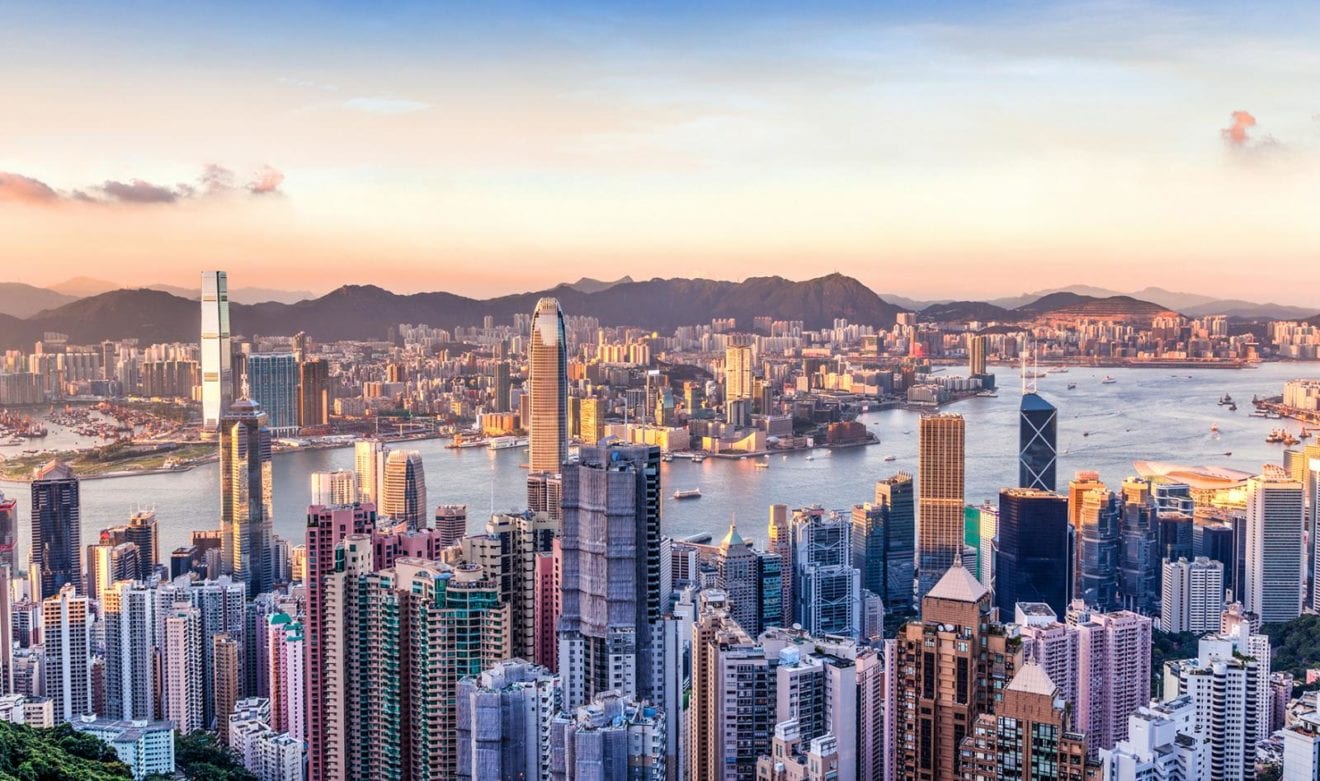
    Hong Kong’s (Central) overall prime occupancy costs of US$290 per sq. ft. per year topped the “most expensive” list, displacing London’s West End (US$262 per sq. ft.). Beijing (Finance Street) (US$188 per sq. ft.), Beijing (Central Business District (CBD)) (US$182 per sq. ft.) and Hong Kong (West Kowloon) (US$179 per sq. ft.) rounded out the top five.

    The study also found that the real estate recovery in Ireland continued to gain momentum, with Dublin, which experienced a 50 percent drop in rents during the downturn, showing the second-largest year-over-year prime occupancy cost increase among the 126 cities surveyed (up 16.6 percent year-over-year)—second only to Hong Kong West Kowloon (up 19.5 percent year-over-year). In North America, real estate fundamentals saw steady improvement with both Atlanta (Downtown) and Seattle (Downtown) among the 10 markets with the fastest growing prime occupancy costs.

    Global prime office occupancy costs—which reflect rent, plus local taxes and service charges for the highest-quality, “prime” office properties—rose 2.4 percent year-over-year, with the Americas up 2.3 percent, EMEA up 2.1 percent and Asia Pacific up 2.7 percent.

    “We expect the global economy to keep growing, and the global service sector, the primary occupier of prime office properties, will continue to expand through periods of volatility, “ said Richard Barkham, global chief economist, CBRE. “Since inflation is low, the growth in prime office occupancy costs is significant for both users and investors.”

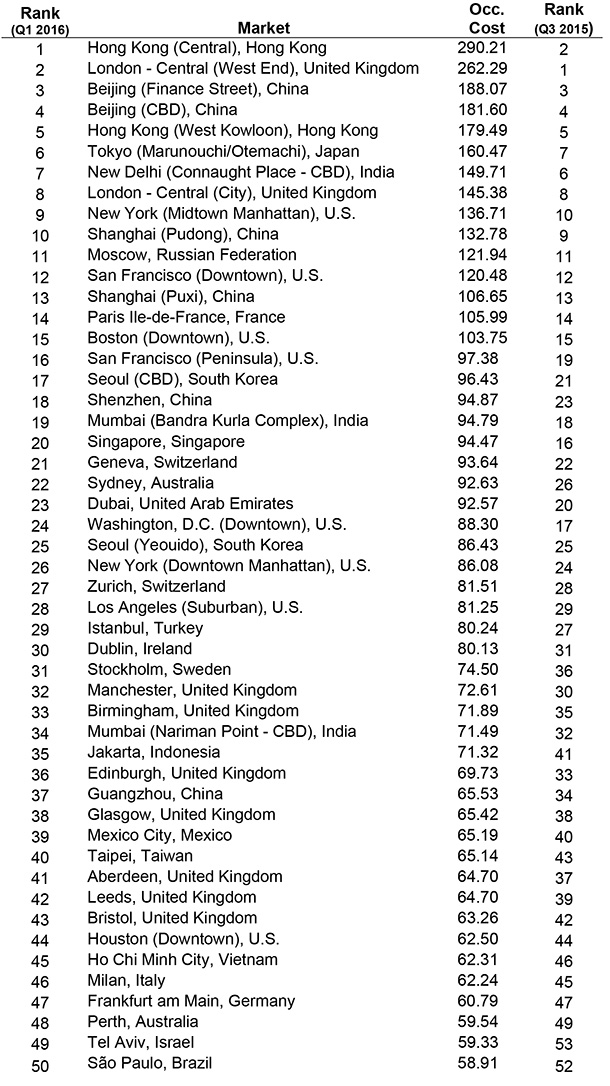
    CBRE tracks occupancy costs for prime office space in 126 markets around the globe. Of the top 50 “most expensive” markets, 20 were in Asia Pacific, 20 were in EMEA and 10 were in the Americas.

    Europe Middle East & Africa (EMEA)
    Europe is benefitting from a cyclical pick-up in consumer spending and business investment, as well as a very competitive currency and intense monetary stimulus, which helped to make Dublin, Stockholm and Barcelona the fastest-growing markets in the region. Most Central and Eastern European markets were down year-over-year, including Moscow, which is still in the midst of a recession. Costs accelerated quickly in South Africa, with Johannesburg, Cape Town and Durban all seeing increases of at least 6.9 percent from year-ago levels.

    Only 11 out of 56 EMEA markets recorded a year-over-year decline in prime office occupancy costs.

    In addition to London West End, the other market from the region in the global top 10 was London City (US$145 per sq. ft.).

    Asia Pacific
    Asia Pacific was home to seven of the top 10 most expensive markets—Hong Kong (Central), Beijing (Finance Street), Beijing (CBD), Hong Kong (West Kowloon), Tokyo (Marunouchi/Otemachi), New Delhi (Connaught Place – CBD), and Shanghai (Pudong).

    The service sector will show particularly strong growth in Asia as pensions and insurance products gain market share. So occupancy cost growth will continue to trend upwards at a moderate pace.

    Hong Kong (Central) is the only market in the world—other than London’s West End—with a prime occupancy cost exceeding US$200 per sq. ft. Hong Kong Central’s double-digit growth in occupancy costs was fuelled by two factors: an ultra-low vacancy rate due to lack of new development and continued demand for high-quality space in prime locations by mainland Chinese companies.

    The most expensive market in the global ranking from the Pacific Region was Sydney (US$93 per sq. ft.), in 22nd place.

    A few key Southeast Asian markets registered decreases, including Singapore and Jakarta.

    Americas
    In the Americas, four markets—Monterrey, Atlanta (Downtown), Seattle (Downtown) and Atlanta (Suburban)—recorded double-digit percentage gains year-over-year.

    New York Midtown, number nine on the global list, remained the most expensive market in the Americas, with a prime office occupancy cost of US$137 per sq. ft.

    Several energy-centric markets experienced material drops in occupancy costs, including Calgary (Downtown and Suburban), Houston (Suburban) and Denver (Suburban).

    In the U.S., economic growth is expected to pick up in the next several quarters following a turbulent opening quarter. Overall, occupier activity sustained last year’s momentum, leading to an increase in occupancy costs in 17 out of 22 U.S. markets covered in this survey.

    Mexico City remained the most expensive market in Latin America, posting an office occupancy cost of US$65 per sq. ft. and ranking as the 39th most expensive market globally. Both Brazilian markets, Rio de Janeiro and São Paulo, saw declines.
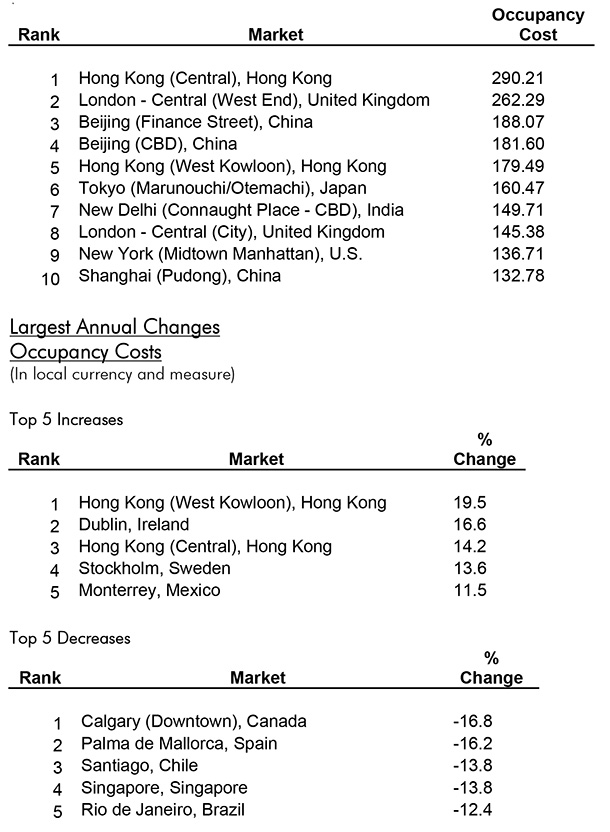
    Microsoft Word - Press release - POOC June 2016_FINAL.docx
    Note: The full Top 50 Most Expensive Markets chart is located at the end of this press release.

    Notes

    1. The Global Prime Office Occupancy Costs report is a survey of office occupancy costs for prime office space in 126 cities worldwide.
    2. The latest survey provides data on office rents and occupancy costs as of March 31, 2016.
    3. The Largest Annual Changes rankings are based upon occupancy costs in local currency and measure. The Most Expensive ranking is based upon occupancy costs in US$ per sq. ft. per annum.
    4. The figures given in this release refer to occupancy cost. This represents rent, plus local taxes and service charges. The occupation cost figures have also been adjusted to reflect different measurement practices from market to market.
    5. Due to methodology changes, comparisons with figures in previously released reports are not valid.
    6. To obtain a full copy of the report or to arrange to speak with a CBRE expert, please contact Robert McGrath (robert.mcgrath@cbre.com).
    Microsoft Word - Press release - POOC June 2016_FINAL.docx

    About CBRE Group, Inc.
    CBRE Group, Inc. (NYSE:CBG), a Fortune 500 and S&P 500 company headquartered in Los Angeles, is the world’s largest commercial real estate services and investment firm (in terms of 2015 revenue). The Company has more than 70,000 employees (excluding affiliates), and serves real estate owners, investors and occupiers through more than 400 offices (excluding affiliates) worldwide. CBRE offers strategic advice and execution for property sales and leasing; corporate services; property, facilities and project management; mortgage banking; appraisal and valuation; development services; investment management; and research and consulting. Please visit our website at www.cbre.com.
     

  • Conrad makes debuts in the Philippines

    Conrad makes debuts in the Philippines

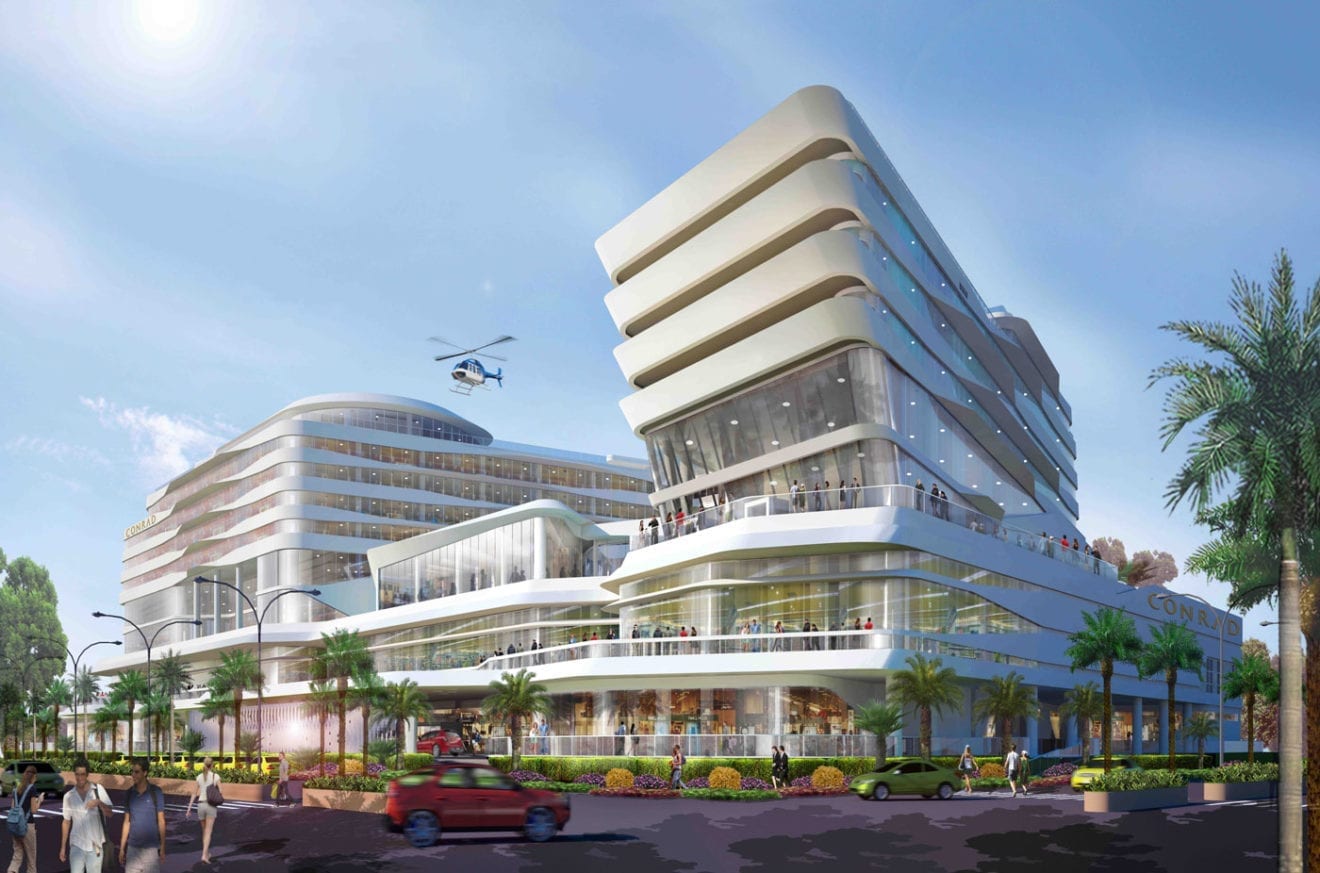
    Last week, the inspired luxury of Conrad Hotels & Resorts makes its debut in the Philippines with the opening of Conrad Manila. Owned by SM Hotels and Conventions Corporation, a subsidiary of SM Investment Corporation and managed by Hilton Worldwide (NYSE:HLT), the 347 room Conrad Manila is located at the forefront of the Mall of Asia complex, in the heart of the 42 hectare Bay City development, a destination earmarked as a shopping, leisure, and business hub.

    “We are delighted to establish Conrad Hotels & Resorts in this vibrant capital of Manila. The award-winning Conrad Manila, which enhances our portfolio, underscores our commitment to delivering best-in-class hotels in key gateway locations that meet the growing needs of global luxury travelers. An inspiring destination, Conrad Manila will delight guests with intuitive and customized service, as well as provide them access to a world of connections and inspired experiences,” said John T. A. Vanderslice, global head, Conrad Hotels & Resorts.

    “The stunning Conrad Manila is an exceptional addition to the Conrad Hotels & Resorts portfolio and we are delighted to be partnering with SM hotels on this exciting project, who share our passion for excellence. Its opening underscores the growth of our portfolio across Asia Pacific and our continued commitment to the dynamic market of the Philippines. This landmark property perfectly complements the vibrancy of this amazing capital city and will set the benchmark for luxury accommodation in Manila,” Martin Rinck, president, Hilton Worldwide, Asia Pacific.

    “We are pleased to work with Hilton Worldwide in bringing the esteemed Conrad brand to Manila. Amidst the robust tourism outlook, the most anticipated opening of Conrad Manila will definitely be a game changer in the already exciting Philippine hotel scene,” says SM Hotels and Conventions Corp. President Elizabeth T. Sy. “We look forward to a fruitful partnership with Hilton Worldwide in further elevating the hotel industry in the country,” adds Ms. Sy.

    Recently awarded the Best in Hotel Development, Best Hotel Architectural Design and Best in Hotel Interior Design at the fourth annual Philippines Property Awards, Conrad Manila’s distinctive architecture is inspired by the shipping vessels that ply the bay. The hotel sits atop the two-level S Maison, a high-end retail complex, and has direct connections via walking bridges to SMX Convention Center, the country’s largest convention space, and is adjacent to SM Mall of Asia, one of the country’s largest malls, as well as Mall of Asia Arena, a 16,000-seater indoor stadium where international shows, concerts and major sporting events are held.

    Poised to be the venue of choice for business, social events, and weddings, Conrad Manila offers four contemporary event halls and two sophisticated ballrooms, spanning more than 4,000 square meters, which are fitted with state-of-the-art audio-visual technology. For intimate al fresco parties, guests can also opt for The Veranda, an outdoor garden space overlooking the city scape.

    At Conrad Manila, all 347 guest rooms and suites are specially designed with an intuitive technology. Upon sensing motion in the room, the air conditioning switches from energy-saving mode to cool, the curtains in the room will automatically open with ambient lighting set to match the time of the day. Guests can instantly feel at home with a 42-inch flat screen HDTV with an IPTV menu, Wi-Fi and wired Internet access, Nespresso machine, Bluetooth-enabled entertainment technology and hydrotherapy rain showers. Suites and executive rooms offer picturesque bay or city views, with access to the Executive Lounge, and bathrooms that feature in-mirrored TV for an uninterrupted entertainment experience.

    Located on the third level of the hotel is the infinity swimming pool, inspired by the pristine coastal seas of the Philippines with its coral shape. Guests may also slip to the 24-hour Fitness Center or the Conrad Spa, which offers a variety of locally inspired treatments using organic ingredients. The spa has six treatment rooms with soaking tubs, a private sauna, and steam facilities.

    The hotel has six restaurants and lounges, including a coffee bar, pool bar, and in-room dining prepared by the culinary team led by Executive Chef Thomas Jakobi. The restaurants and bar at Conrad Manila feature:

    • Brasserie on 3 offers an eclectic mix of sustainable and organic dishes ranging from hearty to healthy dishes. The restaurant also features al fresco dining overlooking the bay, private dining rooms for intimate celebrations, and an exclusive chef’s table, where diners can enjoy a special tasting menu with a curated selection of organic wines.
    • China Blue by Jeremy Leung presents a modern interpretation of the traditional Chinese cuisine, artfully curated by Chinese celebrity master chef, Jereme Leung. A first for a Chinese restaurant in the Philippines to partner with a celebrity chef, China Blue by Jereme Leung takes Chinese dining experience to a new high with its authentic cuisine, modern interiors, and floor-to-ceiling glass windows that offer panoramic bay views.
    • C Lounge is inspired by the city’s distinctive culture and lifestyle, where guests can enjoy a wide selection of beers, liquors, and locally-inspired cocktails. With a laidback vibe during the day, it transforms into a sophisticated destination bar at night. Its al fresco area offers guests an awe-inspiring visual of the Manila sunset.

    Conrad Manila offers the popular Conrad Concierge mobile app, which gives global luxury travelers the ability to customize details of their hotel stay before, during, and after visit via a smartphone or tablet. Whether it’s pre-selecting bath amenities or checking-in while in-transit from the airport, guests can access a variety of features by using the app.

    Conrad Manila participates in the Hilton HHonors®, the only guest loyalty program where guests who book directly throughwww.conradhotels.com have access to benefits including an exclusive member rate that can’t be found anywhere else, free standard Wi-Fi and popular digital tools available exclusively through the industry-leading Hilton HHonors mobile app, where HHonors members can check-in and choose their room at over 20 Conrad hotels worldwide.

    Please visit www.conradhotels.com/manila or call +632 8339999 to learn more about or to connect with Conrad Manila. For more information about Conrad Hotels & Resorts, please visit https://news.conradhotels.com or follow us atwww.facebook.com/ConradHotels, www.instagram.com/ConradHotels, https://twitter.com/ConradHotels.

  • Retail sales surge in Singapore as demand for vehicles grows

    Retail sales surge in Singapore as demand for vehicles grows

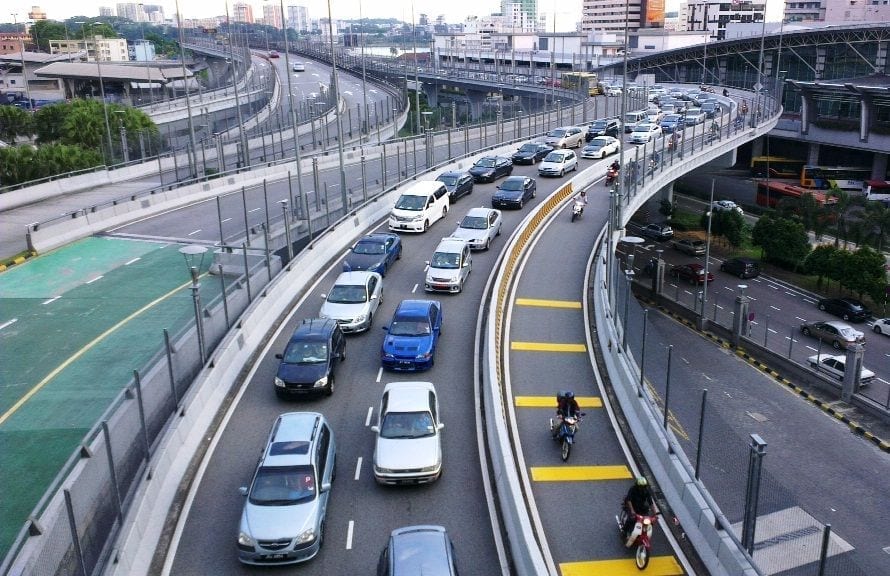
    Singapore’s retail sales for the month of April surged 3.8 percent, taking cues from a boost in vehicle sales for the same period. However, the figures missed market expectations of a 6.1 percent rise in April.

    Singapore’s total retail sales rose 3.8 percent in April from a year earlier, helped by higher sales of motor vehicles, data released by the Department of Statistics showed Wednesday.

    The increase in retail sales moderated from a revised 5.2 percent year-on-year rise seen in March. On a month-on-month and seasonally adjusted basis, total retail sales rose 1.1 percent in April, an improvement from a revised 1.3 percent decline in March.

    Meanwhile, sales of motor vehicles jumped 43 percent on a year-on-year basis. Total retail sales value in April this year was estimated at SGD3.5 billion, higher than the SGD3.3 billion in April 2015. Motor vehicle sales experienced the largest increase, while mini-marts and convenience stores saw sales grow 3.9 per cent in April, year on year.

    Telecommunications apparatus and computers witnessed the sharpest decline, with sales falling 17.1 percent year on year. During the same period, sales of watches and jewellery also fell, declining by 11.3 percent. However, excluding motor vehicles, retail sales grew by a meager 0.1 percent compared to that in March 2016.

    However, sales of food and beverage services fell 1.7 percent from the previous year. The total sales value of food and beverage services in April was estimated at SGD658 million, higher than the SGD647 million the previous year.


  • Changi airport seeks T3 speciality retail partners

    Changi airport seeks T3 speciality retail partners

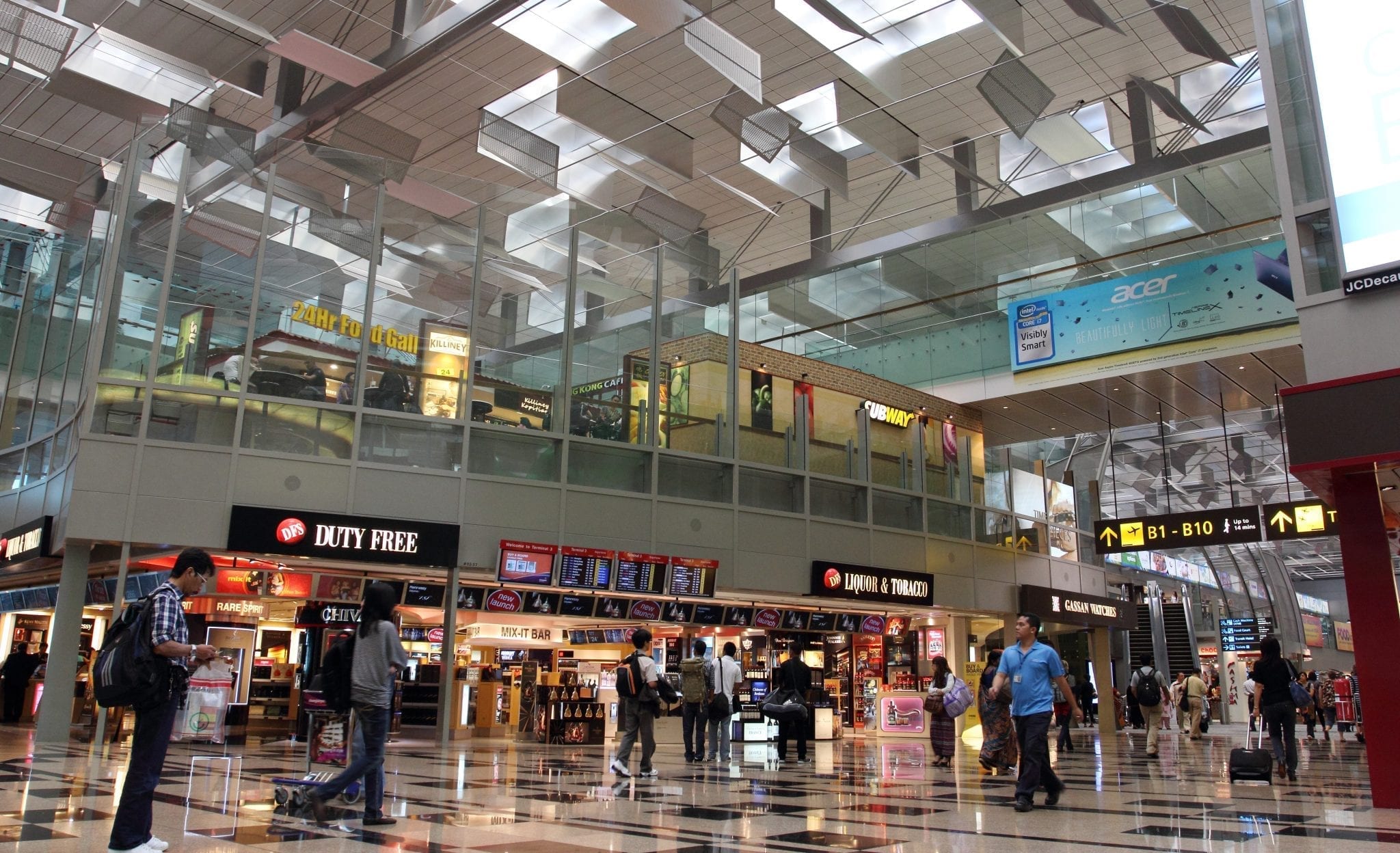
    Changi Airport Group (CAG) is seeking retail partners to operate speciality/brand name concessions at Singapore Changi airport terminal three departure/transit lounge north.

    Concession A spans around 78sq m, while Concession B covers 62sq m. The Concession A contract period is three years, beginning March 9 2017 and ending March 8 2020. For Concession B, the tenancy period is also three years, starting on May 9 2017 and ending on May 8 2020.

    According to CAG, all product categories may be considered, except liquor and tobacco and perfumes and cosmetics.

    CAG added: “We are looking for unique and exciting brands and concepts that are currently not represented at Singapore Changi airport terminal three and will inject buzz and differentiate the retail offerings.”

  • South Korea prosecutors raid more Lotte Group firms

    South Korea prosecutors raid more Lotte Group firms

    South Korean prosecutors carried out further raids on businesses of the Lotte Group, a sprawling conglomerate at the centre of a bribery probe.

    At least 10 divisions were raided including its chemical and confectionery businesses, a spokesman said.

    The raids come after police swooped on the group’s headquarters on Friday.

    This caused the company to pull out of a stock market share sale worth as much as $4.5bn (£3bn).

    The allegations and police action also led Korea’s fifth largest conglomerate to pull out of bidding for the US chemicals company.

    Shares in both the chemical and confectionery group have fallen sharply since Friday’s raid.

    Bid withdrawn

    People familiar with the matter told Reuters that Friday’s raids, which involved about 200 prosecutors and investigators, were part of an investigation into a possible slush fund, although the Seoul prosecutors office could not be reached for comment.

    Lotte’s offer of shares to the public, known as an initial public offering, had been intended in part to simplify the ownership structure and improve corporate governance at the group.

    This followed a bitter feud over succession among the founding Shin family last year drew wide public criticism.

    The group has more than 90 firms in sectors as diverse as beer, hotels and chemicals, and annual revenues of around $60bn, according to the Korea Fair Trade Commission.

  • Benetton Group takes control of Korean operations

    Benetton Group takes control of Korean operations

    In the midst of reorganisation to improve competitiveness, Benetton group has decided to take back its distribution arm in South Korea. Both Benetton brands and Sisley have for a long time been represented in the country via a 50/50 joint venture with a local distributor. The Italian group announced this week it now owns 100% of this structure with the latter becoming one of its subsidiaries.


    Hyung Rae Cho, CEO of the newly created Korean subsidiary – Benetton.

    South Korea is a very important country to the group, since it is the second export market for Benetton after India and the top export country for Sisley. The group’s annual brand sales are estimated at 150 millions euros in the region across 300 points of sale.

    It’s a strategic market too, influential in the Asian region as whole, becoming a sort of base camp for the Italian group.

    Benetton wants to continue in the right direction after taking back the distribution reigns. It revealed it has appointed the country manager of the former structure, Hyung Rae Cho, to the role of CEO of the newly created Korean subsidiary.

  • Samsung to launch cheapest smartphone Galaxy On7 in Korea

    Samsung to launch cheapest smartphone Galaxy On7 in Korea

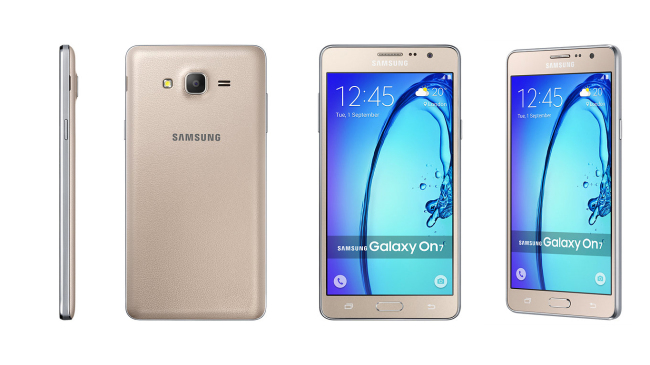
    Samsung Electronics is expected to launch another budget smartphone Galaxy On7 in Korea in the coming weeks via SK Telecom, sources said on June 15.

    The model is the Korean tech giant’s cheapest smartphone that is sold at 10,190 rupees ($153) exclusively in India currently.

    Launched in November, the phone features a 5.5-inch HD Display, a 13 million pixel rear camera, a 5 million pixel front camera and a 3000mAh battery.

    Samsung’s cheapest smartphone Galaxy On7

    Sources said the Korean version could upgrade some features, with its retail price being slightly raised.

    In Korea, Samsung’s cheapest smartphone is Galaxy J3 with a price tag of 231,000 won ($196).

  • Cheesecake Factory China opens at Disney Resort

    Cheesecake Factory China opens at Disney Resort

    US food brand has opened the first The Cheesecake Factory China under a licensing agreement with its affiliate CCD China Operating Corporation.cheesecake_factory_counter

    Being run by Hong Kong-based Maxim’s Caterers, the restaurant is in Disneytown, the shopping, dining and entertainment precinct in Shanghai Disney Resort. The outlet has a menu of more than 200 items – all handmade in-house with fresh ingredients – featuring its signature cheesecakes and desserts.

    “China is an exciting new area of development for us and we are so pleased to be able to bring The Cheesecake Factory’s guest experience to Disneytown,” says The Cheesecake Factory founder/chairman/CEO David Overton, from California.

  • Narrow the range, increase retail sales

    Narrow the range, increase retail sales

    It’s counter-intuitive, but less choice, fewer options and a smaller range of products can often help increase retail sales and customer satisfaction. Who would have guessed?

    Simplified, narrower product ranges are contributing to accelerated customer and corporate purchase decisions, improved productivity, velocity and volume, and, interestingly, fewer instances of buyer remorse.

    Marks & Spencer in Britain has taken the plunge, being rewarded with enhanced performance outcomes. It simply followed the lead of several coffee lounge networks there that introduced a singular, standardised “medium”-sized cup of coffee, regardless of whether a customer wanted a latte, cappuccino, macchiato or something else. Some fast-food outlets are following suit with a single-size burger.

    Consumer responses have been overwhelmingly positive – queues at the ordering counters have shortened and the speed of service improved. There has been some resistance, though. Custom has been lost to those who prefer smaller or larger options.

    However, that leakage in sales was not because of the fewer choices, but rather a disagreement with the single choice imposed by management. There is little evidence of long-term brand damage or negative sentiment about quality or value.

    Fulfils demand

    Simplifying the buying process has long been valued by customers as it fulfils the demand for convenience. Moreover, the policy can be an effective means in the market positioning of brands, companies, products, services or applications. Importantly, it can be, and has proven to be, an effective way to differentiate between competitors and substitutes.

    Single-brand motor vehicle dealerships consistently attain and maintain higher key performance measures than multi-brand outlets. That is important in an industry where much of the “shopping” is done online, with the average time spent on the forecourt of a new-vehicle dealership by intending purchasers being as little as 46 minutes. One outlet visitation is now the industry norm.

    Making the buying process easier is often rewarded with typically higher conversion rates and volumes. Narrowing the range of throat lozenges from an average nine to just three at the pay consoles of service stations did not discerningly affect sales. Moreover, the sales from the freed-up space with alternative products were attractively high.

    Hardware, electrical appliance and toy retailer references to having and promoting the biggest range is seldom attractive to an individual whose needs will usually be fulfilled by one product, service or application – the right, specific product they have visited the store to purchase.

    Choice is, and should be, a measured and subjective assessment based on research, intelligence, judgement and experience.

    Attractive proposition

    Astute business owners and managers are taking the risk of narrowing stock ranges, brands and sizes. They are tolerating some leakage of revenue, but welcoming the increase in profits, customer satisfaction, productivity, velocity and volume.

    The measurement of stock turns is an established monitor of business efficiency. Sadly, too many people in retail are unaware of the principle, and therefore do not monitor and quantify sales and profits performance.

    Narrowing and simplifying choice, appropriately applied, can reduce inventory, shrinkage, insurance premiums, logistics costs and capital-servicing expenses. All round, it is an attractive proposition.

    Fear of the possibility of losses in marginal and incremental sales to isolated and tertiary customer groups can, and does, induce inertia. Decisions have consequences – good and bad, upside and downside. Those seeking to service and satisfy heighten their chances of failure. The alternative is to identify, isolate, analyse and relate to choice customers and choice clients. Most have narrow and specific preferences.

    • Barry Urquhart runs Marketing Focus in Perth, Australia, and is a business strategist, consumer behaviour analyst and keynote speaker. He can be contacted at Urquhart@MarketingFocus.net.au.
  • Chinese retail sales surging ahead

    Chinese retail sales surging ahead

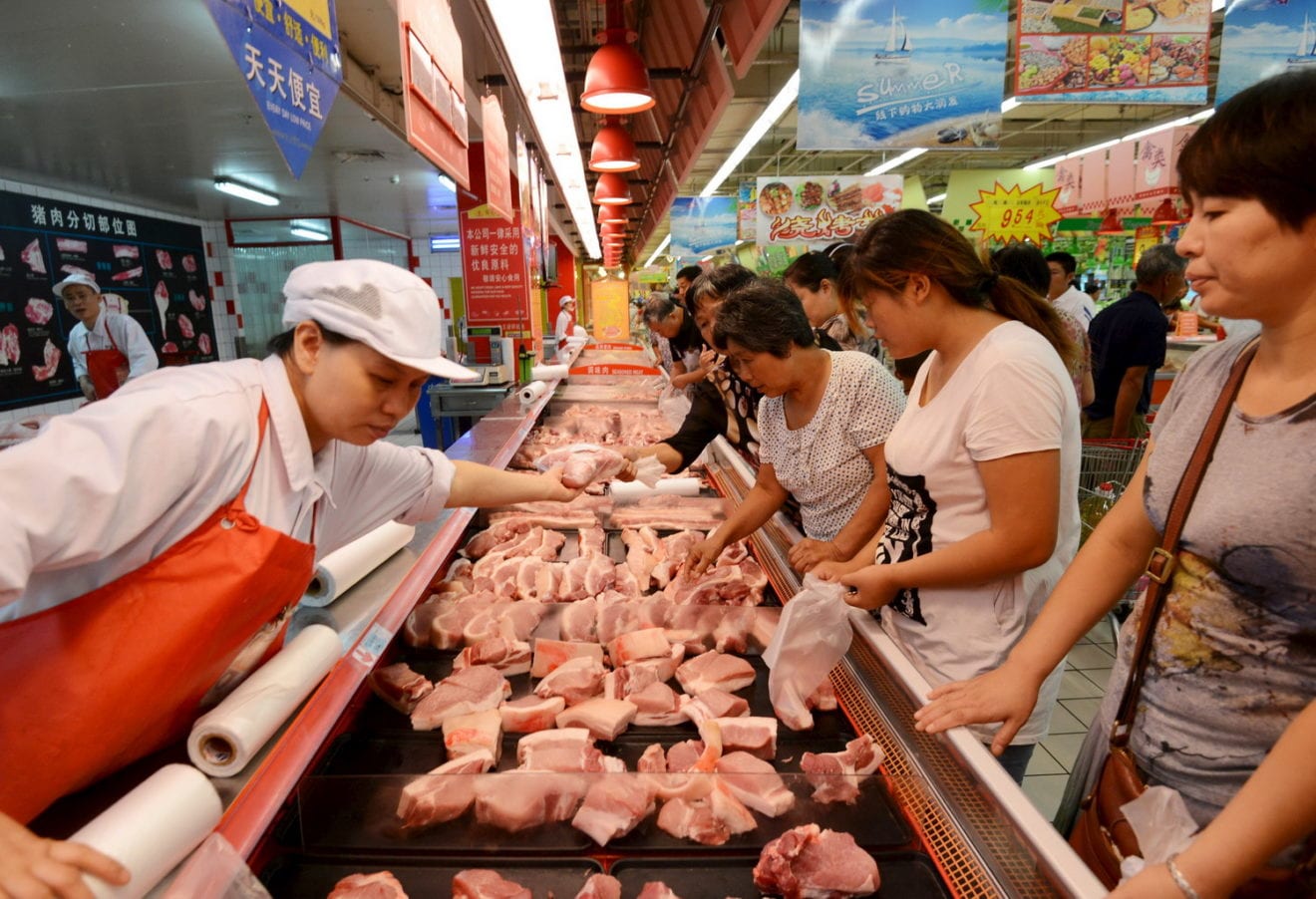
    Chinese retail sales of consumer goods are rising, reaching a total worth of 2661.1 billion yuan (US$403.9 billion) last month, up by 10 per cent year-on-year nominal growth rate (9.7 per cent real growth rate).

    In the first five months of this year, retail sales reached 12,928.1 billion yuan, an increase of 10.2 per cent.

    In urban areas, sales in urban areas were up 9.9 per cent to 2,297.3 billion yuan, while in rural areas sales were up 10.7 per cent to 363.8 billion yuan. In the first five months, urban sales were up 10.1 per cent to 11,116.7 billion yuan, and in rural areas were up 10.9 per cent to 1811.4 billion yuan.

    Catering services last month were worth 287.8 billion yuan, up by 10.9 per cent, while retail goods realised 4,725.9 billion yuan, up by 10.1 per cent.

    For the five months, the national online retail sales of goods and services was 1,808.9 billion yuan, growth of 27.7 per cent. Of this, physical goods earned 1,463.3 billion yuan, up 25.9 per cent and accounting for 11.3 per cent of the total retail sales.

  • Park to replace Tokyo’s Sony Building

    Park to replace Tokyo’s Sony Building

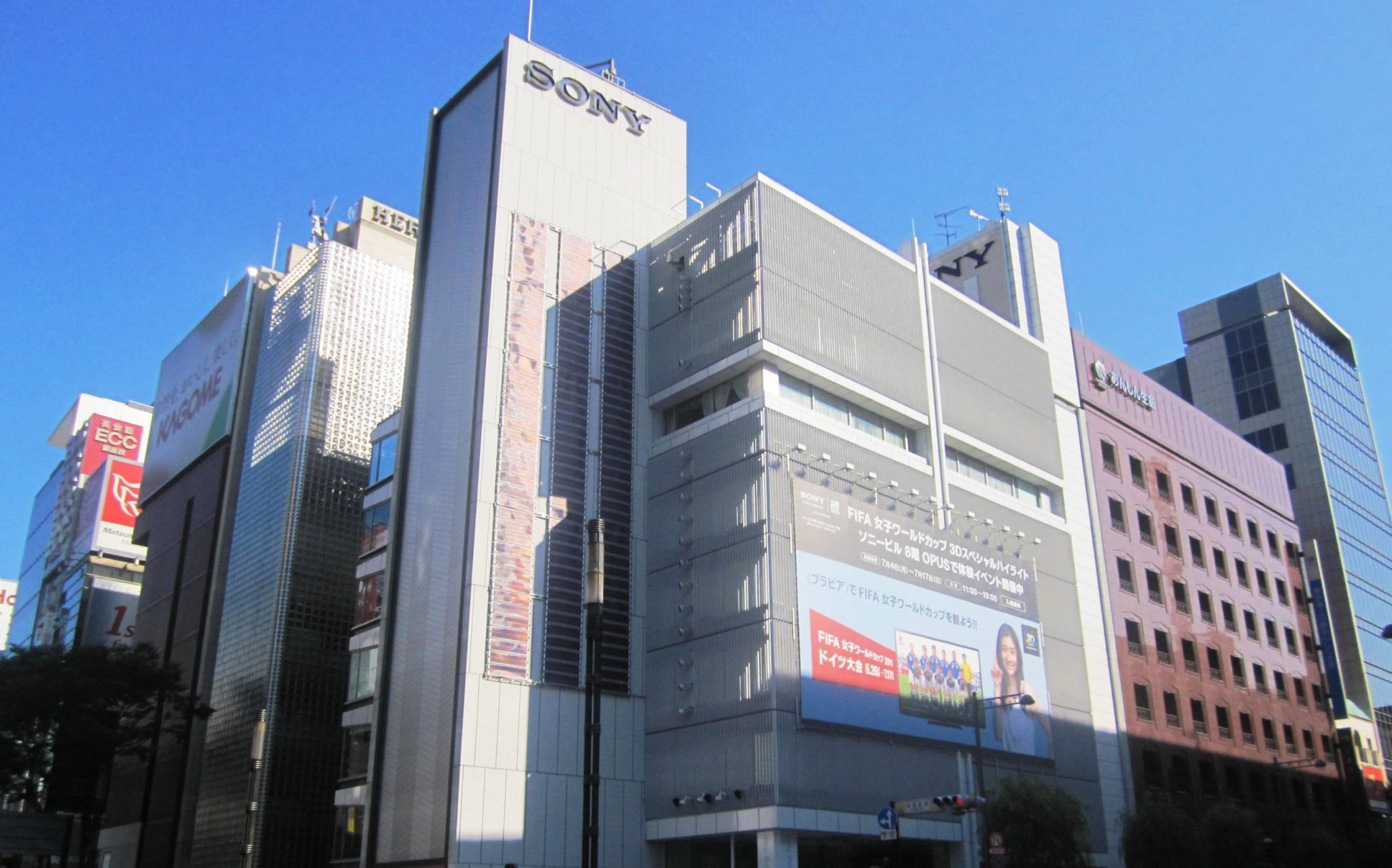
    The Sony Building, a landmark in Tokyo’s Ginza shopping district, will be torn down and replaced with a park.

    This is not the result of a green movement victory over a corporation – it is Sony’s idea, and it is hoping the park will be similar to New York’s Times Square.

    Demolition is scheduled to begin next year, and once the site is cleared it will be opened to the public and remain that way until after the 2020 Olympic Games.

    At the direction of Sony co-founder Akio Morita, the Sony Building opened in 1966 as the “gate of Ginza”. With eight floors above ground and five below, the building occupies a 707 sqm site at the Sukiyabashi intersection and has a total floor space of 8811 sqm.

    Its first to sixth floors are mainly occupied by Sony Store Ginza as well as showrooms for Sony products. The building attracts around 4 million visitors a year.

    After its complete closure in March, the building will be demolished over a period of about 15 months. Once the debris is cleared, Sony will open Ginza Sony Park, hosting concerts and charity events at the site through the autumn of 2020, the year of the Tokyo Summer Olympics. Sony Store Ginza will be relocated temporarily to Ginza Place, a shopping complex scheduled to open soon at the Ginza 4-chome intersection.

    After the Olympics, Sony plans a new building on the park site, expected to be complete in the autumn of 2022.

    Sony president/CEO Kazuo Hirai says the Ginza district rarely has this kind of open space. He says it is a chance to offer something reflecting Japanese culture to foreign visitors.

  • BFood sales rise despite consumer caution

    BFood sales rise despite consumer caution

    Malaysian food outlet group Berjaya Food (BFood) has had an 8 per cent rise in revenue to RM139.05 million (US$34.03 million) for its fourth quarter, ended April 30.

    BFood, which runs Jollibean, Kenny Rogers Roasters (KRR) and Starbucks outlets, says the increase is mainly because of higher sales in existing cafes along with income from new cafes.

    The group’s pre-tax profit dropped to RM7.67 million from RM10.06 million in the same quarter last year, mainly because of a lower contribution from KKR outlets as Malaysian consumers have been more cautious about spending after the implementation of the GST tax, plus the steep depreciation of the ringgit, affecting the profit margin of Berjaya Starbucks Coffee Company (BStarbucks).

    As well as this, during the quarter about RM600,000 was paid to Royal Malaysian Customs Department by BStarbucks for additional import duty and sales tax on purchases from its principal over the past few years.

    For the financial year, the group’s revenue grew 47 per cent to RM554.15 million from RM376.78 million the previous year. The higher revenue was mainly because of the full effect of consolidating BStarbucks, which became a subsidiary the previous financial year.

    With the weak consumer sentiment brought on by the introduction of the GST and various other factors, BFood will be working in a challenging environment in the next financial year, says the group. Nevertheless, it expects BStarbucks to maintain its revenue growth momentum.

  • Losses Likely To Continue For South Korea Market

    Losses Likely To Continue For South Korea Market

    The losing streak has hit four sessions now for the South Korea stock market, which has surrendered more than 55 points or 2.9 percent along the way. The KOSPI now rests just above the 1,970-point plateau, and the market is looking at continued weakness again on Wednesday.

    The global forecast for the Asian markets is negative ahead of key risk events – specifically today’s FOMC’s rate decision, and next week’s Brexit vote. The European and U.S. markets were down and the Asian markets are tipped to follow suit.

    The KOSPI finished modestly lower on Tuesday as losses from the retailers were tempered by support from the technology stocks and shipping companies.

    Among the actives, Samsung Electronics added 0.44 percent, while SK hynix jumped 2.65 percent, Hanjin Shipping surged 6.26 percent, Hyundai Merchant Marine advanced 2.75 percent, Lotte Confectionery skidded 2.54 percent and Lotte Chilsung tumbled 3.93 percent.

    The lead from Wall Street is soft as stocks were down on Tuesday, if well off their worst levels of the day.

    The Dow slipped 57.66 points or 0.3 percent to 17,674.82, while the NASDAQ edged down 4.89 points or 0.1 percent to 4,843.55 and the S&P 500 dipped 3.74 points or 0.2 percent to 2,075.32.

    Traders expressed trepidation ahead of the Federal Reserve’s monetary policy announcement later today. The Fed is widely expected to leave interest rates unchanged, but traders will keep a close eye on the accompanying statement.

    Ongoing concerns about next week’s referendum on whether Britain will remain in the European Union also weighed on the markets.

    In economic news, the Commerce Department reported stronger than expected retail sales growth in May. The Labor Department also noted that import prices surged more than expected in May amid another substantial increase in fuel prices.


  • World Class Treasury Management 2016

    World Class Treasury Management 2016

    Treasury’s world is growing increasingly more complex. Never has it been more important for companies to control cash, working capital and risk on a global basis. Over and above the mandate to excel in these traditional roles, Treasury is called upon to be more strategic in it’s’ activities and to develop a solid business partner relationship across the complex.

    Company Boards and Senior Management are demanding improved visibility and control over risk, optimization of cash and working capital to reduce requirements for external funding and lower cost of operation.

    Treasury departments are challenged to operate efficiently in a global market place in order to support the competitive position of their companies.

    Banks are being pressured to advise their commercial customers Best Practices in the management of risk and global cash.

    This 3 day interactive workshop is designed for two audiences with congruent learning objectives:

    • The workshop is designed to provide Corporate Treasury, Accounting and Finance professionals with current, practical knowledge of the essential elements of Treasury management in a best practices environment. They will learn practical ideas on how to transform their Treasury into a world class operation that operates with better control, improved efficiency at a reduced cost.
    • The workshop will also provide commercial bankers in Treasury sales, product development, internal operations and marketing with an in-depth understanding of their customer’s world, Treasury Best Practice tools and techniques. They will learn how to walk the Treasury solution talk in order to better support client requirements.

    Using case study methodology, computer simulations and worked examples to illustrate key points, the attendees will learn how to apply Best Practice tools and techniques in all areas of global Treasury management in order to improve control, optimize asset utilization, reduce cost and better leverage staff.