Blog

  • UnionPay Expansion Plan With Duty-Free Shopping Privileges

    UnionPay Expansion Plan With Duty-Free Shopping Privileges

    UnionPay International (UPI), an international payment network, has launched the 2016 Global Airport Campaign, its third edition since the inaugural annual campaign in 2014. This year’s Global Airport Campaign is the largest to date, featuring 120 participating duty-free shops at 80 airports, including 16 of the busiest airports across the world. Duty-free outlets located at the Heathrow Airport in London, United Kingdom, Haneda International Airport in Tokyo, Japan, and Chicago O’Hare International Airport in the United States of America are some of the notable inclusions in this year’s campaign.

    As part of the 2016 Global Airport Campaign, UnionPay Cardholders with card numbers starting with “62” can enjoy exclusive shopping discounts, complimentary gifts and more at airports located in 28 countries and regions in Asia Pacific, the Middle East, Africa, Europe and America. Top duty-free groups in the world, including Dufry, DFS, Lotte Duty Free, World Duty Free Group, The Shilla Duty Free Group, Everrich Duty Free, King Power, Blue Sky and China Duty Free are also on board the campaign to offer special shopping privileges to UnionPay Cardholders at participating outlets across the world.

    “We are delighted to launch our biggest ever Global Airport Campaign this year, with participation by over 120 duty-free shopping outlets globally. Over the years, the Global Airport Campaign has seen tremendous growth in size and in scale. This year, the number of participating outlets has doubled that of 2014, with new duty-free groups such as Blue Sky and Loop Duty Free coming on board for the first time. This is testament to the effectiveness of the campaign in boosting traveler spending, and we hope that shoppers will continue to benefit from this campaign and enjoy wonderful shopping experiences at all their favorite destinations across the world,” said Wenhui Yang, General Manager of UnionPay International Southeast Asia.

    In Singapore, the participating duty-free outlets are DFS and The Shilla Duty-Free. Starting this month, shoppers can enjoy up to 5 percent in discounts and vouchers, and participate in lucky dips to win additional shopping vouchers when they pay with their UnionPay cards at Shilla Duty-Free and DFS stores.

    UnionPay Cardholders in Singapore can also enjoy special discounts and privileges at their favourite Asia Pacific destinations such as Bangkok, Bali, Hong Kong, Tokyo, Seoul, Taipei, Kuala Lumpur and London, just to name a few.
    Other participating cities offering exclusive duty-free shopping privileges for UnionPay cardholders include Barcelona, Cape Town, Osaka, Los Angeles, Madrid, Moscow, New York, Paris, Rome, San Francisco and Toronto.
    For the full list of participating duty-free outlets and details of the privileges.

    UPI focuses on supporting the growth of UnionPay’s global business. With an acceptance footprint covering 157 countries and regions globally, UnionPay serves the world’s largest cardholder base by providing quality, cost-effective and secure payment services to over five billion cardholders worldwide.

    In Singapore, UnionPay enables efficient and cost-effective payment services that are tailored to the needs of local businesses and consumers. UnionPay cards are accepted at over 80 percent of retail, lifestyle and food and beverage establishments locally, as well as at almost all the automated teller machines (ATMs) across the island.


  • ShopBack, Budimas, Kechara, NKF, and World Vision Launch #ShopBackGiveBack

    ShopBack, Budimas, Kechara, NKF, and World Vision Launch #ShopBackGiveBack

    ShopBack Malaysia, the top online Cashback site in the country, announces the launch of its inaugural #ShopBackGiveBack initiative today.  Shoppers are now able to channel the Cashback they get from online purchases to four non-profit organisations – Kechara Soup Kitchen (KSK), The Budimas Charitable Foundation (Budimas), The National Kidney Foundation (NKF) of Malaysia, and World Vision Malaysia, to support their projects.

    Each charity organisation is committed to a different cause. For instance, KSK offers the homeless and urban poor vegetarian food, basic medical, as well as job matching and welfare assistance; while Budimas devotes efforts to improving the children’s lives through education, better living environment and food supplies.

    Moreover, NKF Malaysia subsidises dialysis treatment for kidney failure patients; and World Vision Malaysia will dedicate funds toward their work on clean water and healthcare programmes, which will help over 16,000 people in 7 countries.

    To relieve burdens of underprivileged groups, #ShopBackGiveBack enables users to gain incentives in the form of Cashback via their travel, F&B, IT, beauty, healthcare, household and groceries purchases, and then donate it to charity organisations without forking out extra.

     Every effort helps to build a better future

     “The act of giving is embedded in ShopBack’s DNA as the core of our business involves giving Cashback to the online shoppers. Although we are a startup and may have certain resource constraints compared to bigger corporations, we are keen to help and contribute to the best of our capability,” said Gil Carmo, Country Head of ShopBack Malaysia.

    “We believe any effort that we can make today, will create a difference to someone’s world tomorrow. Every kind action counts. This is the same message that we wish to convey to every shopper. We sincerely welcome like-minded companies to join and support #ShopBackGiveBack,” Gil added.

    Established in February 2015, ShopBack Malaysia collaborates with over 500 international and online e-retailers such as Groupon, Lazada, Agoda, TaoBao, Hermo, HappyFresh, Taobao, Zalora and more to incentivise shoppers with up to 30% hard cash whenever they make a purchase online.

    Currently, there are more than 280,000 Malaysians benefiting from ShopBack’s daily Cashback offer and promotions. Anyone can sign up for free and cash out their Cashback once it exceeds RM10, or opt to transfer their extra savings to help the needy through #ShopBackGiveBack.


  • Amazon Named Top Retailer on Social Media

    Amazon Named Top Retailer on Social Media

    Web giant Amazon have been named as the top retail brand on social media, according to Social Insights on the Retail Industry, a report by social media monitoring firm Brandwatch. Making up the top three were two other retailers, Etsy (2nd) and Ebay (3rd), with Walmart the top Bricks & Mortar retailer in fourth. Target made up the top five.

    A comprehensive study analysing and scoring the world’s top retail brands and their visibility, sentiment and mentions on social media, the Retail Social Report examined over 10 million interactions over four months, giving each retailer a score across five categories: Social Visibility, General Visibility, Net Sentiment, Reach Growth and Social Engagement & Content.

    The key findings from the study, which awarded retailers a total score out of a possible 500, included the following:

    • The top five retailers all scored upwards of 300, with Amazon scoring 349, Etsy 336, eBay331, Walmart328 and Target 320
    • Positions 5-10 in the study were held by Toys R Us (with a score of 320), Lowes (315), Kohls (307), Sephora (299) and Bed, Bath & Beyond (292)
    • The individual category winners were: Amazon (General Visibility), Sanborns (Social visibility), Sams Club (Net Sentiment) Kmart (Reach Growth) and Debenhams (social engagement & content
    • Facebook is the clear leader in engagement, with consumers nearly three times as likely to share brands’ content on the platform than they would on Twitter.
    • Surprisingly, 99% of all content retailers share on Facebook is visual, with only 1% exclusively status copy.
    • The average response time from a retailer on social media is 7hours and 33 minutes, with Petco having the quickest average response time

    The study also found that when it comes to responsiveness, retail brands scored better than other industries, such as automotive and television networks with a retailers’ tweets a third more likely to be a direct response to a consumer.

    When it comes to gender, retailers’ online audiences are predominantly female and in terms of engagement, women are twice as likely to comment on a retail brand’s social media post than men are. As an illustration, Amazon’s online audience is 56% female and primarily interested in books and family, Etsy’s audience is 86% female with a core interest in fashion, fine arts and family while eBay’s online audience is 65% female and interested in shopping, fashion and family.

    The report has also identified that consumers have continued to adopt an additional step in their shopping routine, normalising the behaviour of ‘showrooming’. The art of ‘showrooming’ explores the decision making process that consumers implement before they make a purchase. However, pre-purchase research goes both ways with 80% of consumers researching products online before they buy in store, with 41% looking in store before they ultimately purchase items online.

    James Lovejoy of Brandwatch said: “Customer service has always been core to the reputation of the retail industry, but as the number of communications channels increases, providing a quality experience for consumers is increasingly difficult.

    Most retailers now will recognise the important part digital plays and that it is now imperative to develop a clear social media intelligence strategy if retailers want their customers to remain loyal advocates of their brand.”

  • Bo’s Coffee founder selected as high-impact entrepreneur

    Bo’s Coffee founder selected as high-impact entrepreneur

    Having traded a law degree to start a sustainable coffee shop,  is now set to make greater impact on Philippine development.

    Endeavor chose the founder of Bo’s Coffee as the latest Filipino high-impact entrepreneur during its 64th International Selection Panel in Madrid, Spain, held from May 25 to 27.

    A global non-profit group, Endeavor aims to transform emerging economies by providing support to local entrepreneurs capable of creating high-growth businesses. The aim is to help them build companies that others can feed off, creating a healthy job-creating ecosystem similar to Silicon Valley.

    Benitez joins a select group of globally-selected, Philippine-based Endeavor entrepreneurs that include Xurpas founder and president Nix Nolledo and PSG Global Solutions founders Brian Cotter and Vivek Padmanabhan.

    “As a high-impact entrepreneur, Steve convinced panelists of his ability to build a successful business, but just as importantly, he has also supported and mentored other entrepreneurs to grow their own businesses,” said Manny Ayala, managing director of Endeavor Philippines.

    Sustainable scaling

    Benitez recounted how his appreciation for coffee began when he was a law student – he realized that he would rather be a barista than a barrister.

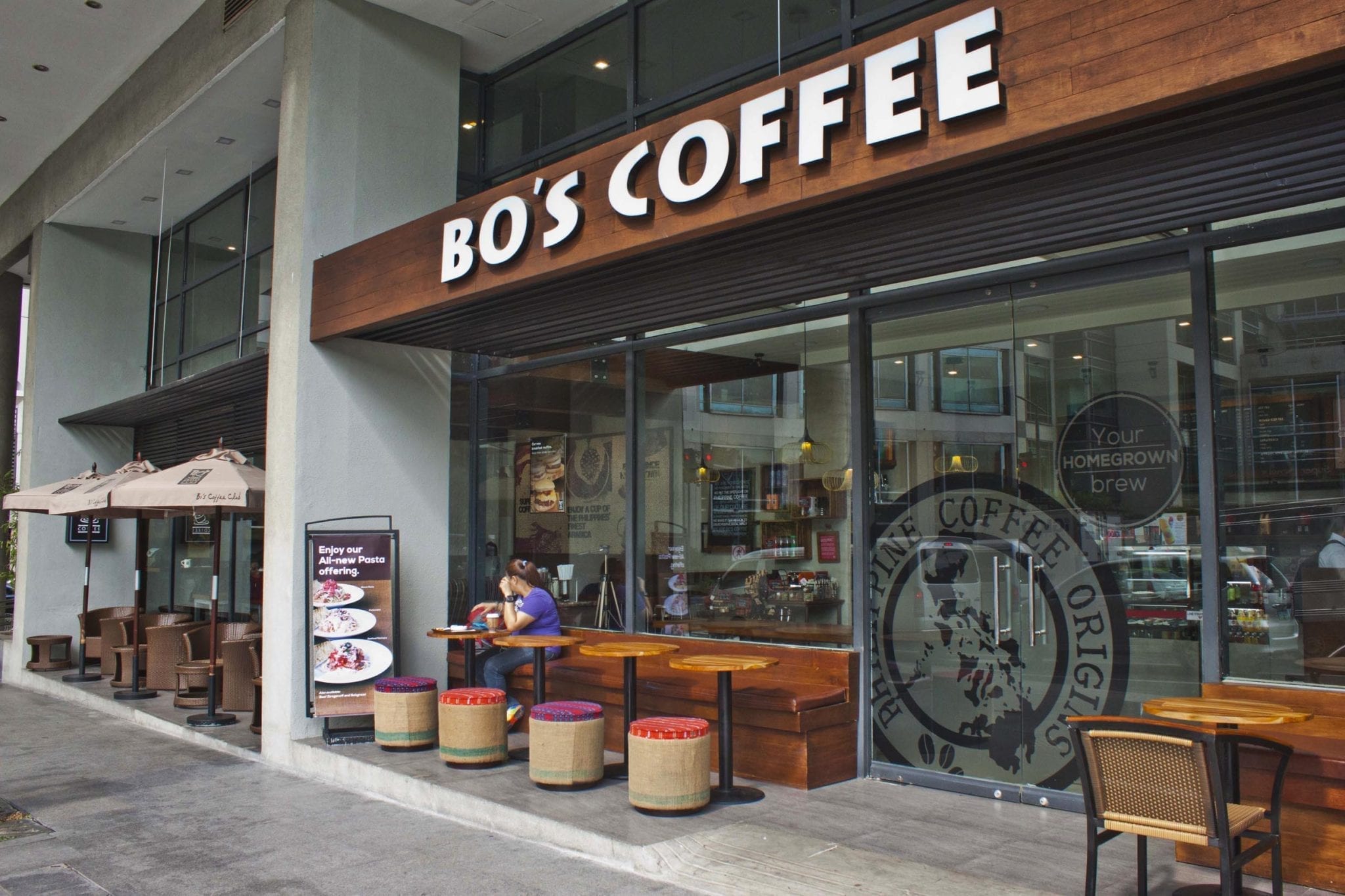
    After a trip to a coffee trade show in the United States, Steve decided to put up his own kiosk in 1996, with an initial capital of P150,000. Bo’s Coffee has since grown to be the largest specialty coffee store in the Visayas and Mindanao.

    The ability to scale up is a major factor in the selection process which Bo’s Coffee continued to exhibit last year, Endeavor pointed out.

    Benitez grew the business to 75 chains with 500 employees in 2015, and the company is planning to at least double in size by 2020.

    Screenshot 2016-06-17 12.42.06

    The firm’s social impact was another consideration for its selection. The panel noted that Bo’s Coffee sets an example for Philippine retail by partnering with social entrepreneurs for its nationwide distribution channel, allowing them to grow alongside the firm.

    These social entrepreneur partners practice sustainability by working with, and sourcing coffee from, local communities.

    As a newly-minted Endeavor high-impact Entrepreneur, Benitez will have access to Endeavor’s global network of over 4,000 business leaders who can help him accelerate the process of scaling up.

    The benefits also extend to free consulting services from top firms Ernst and Young and Bain Consulting, and potential access to Endeavor’s investment fund, should Benitez require it.

    “Bo’s Coffee is well-positioned for growth with plans to expand distribution in Luzon and Metro Manila. Further, Bo’s Coffee will push their message of supporting local communities and sustainability as the Philippines’ best homegrown brew,” Ayala said.

  • China Daily Asia Pacific Retail Leadership Awards Winners Revealed  Retail Gurus

    China Daily Asia Pacific Retail Leadership Awards Winners Revealed Retail Gurus

    Co-organized by the China Daily Asia Leadership Roundtable and the Omni-Channel Retailing Conference, the co-branded session, themed “Defining Next Generation Retail in Asia”, was held today at the Hong Kong Convention and Exhibition Centre. It was the fourth consecutive year China Daily has acted as the only Official Media Partner for this significant industry event. The forum drew more than 150 prominent retail industry players from across Asia.

    Defining Asia’s Next Generation Retail Industry: As Asia continues to drive and lead global economic growth, its retail industry is experiencing a phenomenal era of opportunities and challenges.

    Across Asia, online players are making waves on a huge scale, impacting the market at different levels. On the other hand, brick-and-mortar establishments are revising value propositions to stay competitive. Store design, merchandising, technology, logistics, exchanges, points of sale, and customer service offer up a cocktail that will see retailers taste success or failure in keeping with their mixing skills.

    Most importantly, retail consumers are changing not only in their demographics but also their behavior.

    Mr. ZHOU Li, Editorial Board Member of China Daily Group and Publisher & Editor-in-Chief of China Daily Asia Pacific, welcomed the distinguished session panelists from across Asia — Ms. Gunyarak PIYAKHUN, First Executive Vice-President, Department of Marketing Strategy & Business Intelligence, Siam Piwat Company Limited, Thailand; Mr. Carlson LI, General Manager, UnionPay International Hong Kong Branch; Mr. LI Wenyao, Deputy General Manager, Joy City Property Limited; and Ms. LI Hong, Head of Investor Relations, GOME Electrical Appliances Holding Limited.

    Ms. Gunyarak PIYAKHUN said the most important strategy for future retailers is to engage customers by providing customer experience, and using Omni-channel retailing as a tool to help retailers understand customers in a better way.

    Mr. LI Wenyao noted that as the Chinese mainland’s economy gains momentum, the country’s retail sector will continue to see a bright future. What matters is confidence.

    Ms. LI Hong believes that online shopping does not compete with offline shopping, rather, they complement each other.

    Mr. Carlson LI shared his insights from the online payment perspective. He said UnionPay, apart from offering a payment method to retailers, acts as a marketing platform providing retailers big data analysis to help them lower their marketing and promotion costs.

    This year’s “China Daily Asia Pacific Retail Leadership Awards” were presented at the “Hong Kong Retail Industry Trade Awards Presentation Ceremony” on June 14 in recognition of regional retailers with outstanding achievements which exceeded customers’ expectations through their strategic initiatives in creativity, technology, talent building and customer services.

    The winners of the China Daily Asia Pacific Retail Leadership Awards were:

    GOME Electrical Appliances Holding Limited
    Joy City Property Limited
    Siam Piwat Company Limited, Thailand
    UnionPay International Hong Kong Branch
  • Visa launches #notatourist platform to attract travelers to Thailand with the help of locals and social media

    Visa launches #notatourist platform to attract travelers to Thailand with the help of locals and social media

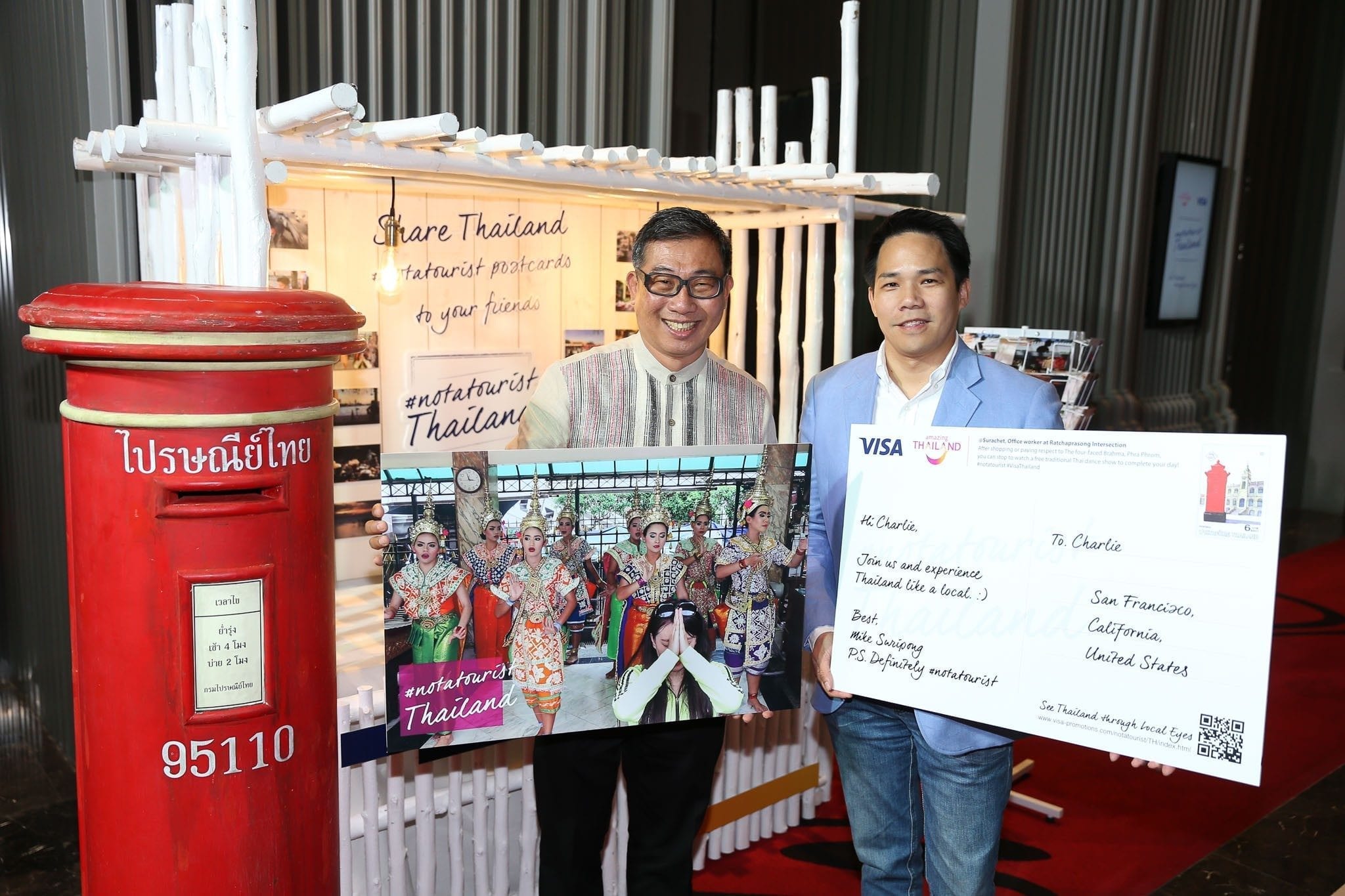
    Travelers looking to experience Thailand like locals can now find ideas and inspiration in Visa’s #notatourist platform. The “Visa #notatourist: See Thailand through Local Eyes” campaign aims to woo residents to share the many local experiences that otherwise might elude travelers on the conventional path.

    The campaign rallies residents in Thailand to share photographs of the different things to do, food to eat, and places to see on social media, namely Instagram and Facebook. With hashtags #notatourist and #VisaThailand, the selected photos will go on Visa’s dedicated website at www.visa-promotions.com/notatourist/TH/. A panel of judges will then select ten to print, creating a total of 100,000 postcards – the quintessential travel souvenir – to be distributed by Tourism Authority of Thailand (TAT) and Visa around the world. There will also be lucky draw for participants at the end of each month within the activity period.[1]

    As one of the most popular destinations in the world[2], with 28 million international visitors last year[3], Thailand’s famous sights and sounds are well-known. While the usual tourist attractions such as Grand Palace and dishes like Pad Thai are worth revisiting, Visa believes that Thailand has more to offer – particularly when recommended by locals.

    Suripong Tantiyanon, Visa Country Manager, Thailand said: “This is an opportunity for people of Thailand to share unique aspects of the country for visitors looking to venture off the beaten path. Visa recognizes the changing expectations of today’s travelers and their reliance on social media when visiting new places. The #notatourist platform will help unearth new ways to discover hyper-local experiences.”


    Complementing existing partnership with TAT, #notatourist platform aims to guide travelers to navigate local experiences, customs and cuisines – all things Thais hold dear but otherwise might be off the radar to some visitors. Residents of Thailand are encouraged to share their favorite places, restaurants, and activities on the social media platform.

    The campaign is part of Visa’s #notatourist initiative, launched globally this year. As one of the most popular travel destinations in the region, Thailand is the first country in Southeast Asia to run this platform.

    “This is our chance to redefine how Thailand will look to visitors in the next ten years and we at Visa are excited to open this up for everyone to participate,” added Mr. Suripong.

    [1] Terms and conditions apply

    [2] In 2015, Thailand ranks 14th in the world on number of international tourist arrivals and 9th in the world for international tourism revenue, according to the latest figures from the UN World Tourism Organization (UNWTO)

    [3] The number of tourist arrivals announced by Tourism Authority of Thailand in their official website on December 2015. (https://www.tatnews.org/thailand-tourism-hitting-record-highs-with-the-arrival-of-the-28-millionth-tourist-for-2015/)

  • WearYouWant establishes itself as a trusted digital partner

    WearYouWant establishes itself as a trusted digital partner

    WearYouWant, Thailand’s leading online fashion and beauty marketplace is fast becoming a trusted digital partner for industry brand names and distributors; creating a solid online presence in Thailand’s booming internet industry. Working with large, international brands and distributors, as well as smaller and more localized businesses, WearYouWant offers a uniquely customized e-commerce platform with a strong focus on targeted visibility and curation of merchants’ products.

    CEO and Co-Founder of WearYouWant Julien Chalte explains how the e-commerce site stands out for businesses.

    “Brands want to go digital, and need to, but may lack the knowhow, time and resources to be hands-on and do so effectively. WearYouWant personalizes the experience, creating and servicing every aspect of a merchant’s outlet, from the graphic design of marketing materials to uploading pack shot images.  

    “When I look at our monthly pay outs to our merchants it is great to see that we are indeed delivering growth to both the smaller independent designer with only one storefront and the big international brands at the same proportional scale. The secret for us has been to keep the dual focus of B2B and B2C and grow the two at the same pace. That has made us and our big and small merchants successful.”

    Minor International PCL, one of Thailand’s leading and largest distributors of lifestyle brands such GAP, Esprit, Bossini and Red Earth, value the partnership with WearYouWant.

    James Richard Amatavivadhana, Chief Executive Officer of Minor International PCL, says, “Digital development is rising so fast in Thailand that it is important for us to incorporate the strongest digital sales channels. The future of retail is changing, but the core principles of trust, confidence and transparency still reign, especially when it comes to e-commerce. WearYouWant has empowered us to grow digitally and has enabled us to create a flagship online outlet allowing widespread visibility to our brands and products as well as an assurance to consumers that the products they shop are genuine.”

    Sam Naghi, owner and MD at Sam’s Sports shop, is another merchant on WearYouWant’s platform selling mainly sport shoes that applauds the e-commerce website for the tremendous impact it has created on the business, by creating visibility and increasing their sales volume online.

    “Partnering with WearYouWant has made a huge difference for us. We have a whole new revenue stream and a digital storefront where both our products and brand gets noticed by customers we would have been unable to reach ourselves”, he said.

    WearYouWant recently received the Best e-Commerce Website Award 2016 from the Ministry of Commerce’s Department of Business Development in two categories:  Best in e-Commerce Management and Best in e-Commerce Trusted Website. The award was presented during the Thailand e–Commerce Day held at e-Biz Expo 2016 at the Queen Sirikit National Convention Center.

    The first half year of 2016 ends 30th June and WearYouWant’s own forecast indicates at this point in time, a 120% growth in turnover in the first half of the year in 2016 compared to first half of the year in 2015.

  • Bolloré Logistics the Only Visionary in Gartner’s Magic Quadrant for Third-Party Logistics Providers, Worldwide

    Bolloré Logistics the Only Visionary in Gartner’s Magic Quadrant for Third-Party Logistics Providers, Worldwide

    Bolloré Logistics* is the Only Visionary in the 2016 Gartner’s Magic Quadrant for Third-Party Logistics Providers, Worldwide, published on May 5th.
    Gartner’s Magic Quadrants are a tactical tool used by decision makers to evaluate the largest third-party logistics providers (3PL) and their abilities to be a global preferred provider.
    “To be positioned as the Only Visionary in this year’s Magic Quadrant is a very positive result for us,” said Thierry Ehrenbogen, Chief Executive Officer at Bolloré Logistics. “We believe this recognition reaffirms our constant search for improvement and our determination to deliver the highest quality of customer service through innovative approaches.”
    Bolloré Logistics was one of 16 third-party logistics companies that meet Gartner’s criteria based on completeness of vision and ability to execute. This year marks the third consecutive year Bolloré Logistics has made it into the quadrant. In April 2015, Bolloré Logistics was recognized as a Leader in the Magic Quadrant for 3PL, Europe.
    *Bolloré Logistics formally SDV

  • China, Hong Kong shares fall as global investors flee risky assets

    China, Hong Kong shares fall as global investors flee risky assets

    China and Hong Kong stocks slumped on Monday morning, with investors joining a global flight from risky assets on lingering economic concerns and rising risks from the UK’s possible exit from the European Union.

    Sentiment was dampened by worries over China’s economic health after data showed slowing growth in fixed asset investments and retail sales, offsetting optimism that MSCI may add Chinese shares to its emerging market index this week.

    China’s blue-chip CSI300 index fell 0.8 percent, to 3,138.06 points by the lunch break, while the Shanghai Composite Index also lost 0.8 percent, to 2,904.23 points.

    Selling was more intensive in Hong Kong, where financial markets are more open and thus more vulnerable to global market volatility. The benchmark Hang Seng index dropped 2.5 percent.

    In June 2015, China’s “Great China Bubble” burst, triggered by the destruction of margin trades, and sending shockwaves across global financial markets.

    “One year after the crash, China’s stocks, bonds, property and currency are still expensive,” wrote Hong Hao, chief strategist of BOCOM International.

    He added that the Shanghai index was still roughly 17 percent above the theoretical support level of 2,500 even after almost halving from last summer’s peak.

    “Although Hong Kong is trying to heal, struggling global markets will be a drag.”

    Global market volatility surged lately as investors fretted ahead of this week’s central bank meetings as well as Britain’s June 23 referendum on whether to remain in the European Union.

    Sentiment was not helped by lacklustre Chinese data.

    Foreign direct investment (FDI) in May fell 1 percent from a year earlier, marking the first year-on-year decline since December, according to data published on Sunday.

    Data on Monday showed that China’s fixed-asset investment growth eased to 9.6 percent in January-May from the same period a year earlier, below market expectations. Industrial output and retail sales data were not encouraging either.

    “Given today’s data, there is higher risk for China to miss the growth target of 6.5 percent y/y in Q2,” ANZ wrote in a research note.

    Shares fell across the board in China and Hong Kong.

  • Card usage adds THB 113 billion to the Thai economy in the past five years – the largest increase in Asia

    Card usage adds THB 113 billion to the Thai economy in the past five years – the largest increase in Asia

    Increased use of electronic payments, including credit, debit and prepaid cards, added US$3.18 billion (approximately THB 113 billion) or 0.19% GDP growth to Thailand’s economy from 2011 to 2015, the largest weighted average increase in Asia, according to research conducted by Moody’s Analytics for Visa.

    Thailand’s growth triples that of the regional average GDP increase of 0.06% with Vietnam following at 0.14% and Singapore at 0.1%. Increased electronic payment usage also created the equivalent to an average of 75,730 jobs in Thailand per year in the same period.

    Suripong Tantiyanon, Visa Country Manager, Thailand said: “These findings reinforce the many positive benefits that electronic payments bring to local economies not just in Thailand but all over the world. This research also suggests that the right public policies can create an open, competitive payment environment, and contribute to economic growth and job creation.”

    “In Thailand, Visa has partnered with financial institutions, merchants, technology companies, and government agencies such as Tourism Authority of Thailand to make electronic payment accessible to everyone – accelerating electronic acceptance, growing commerce both online and offline, facilitating tourism, and in general bringing the benefits of card payments nationwide,” added Mr. Suripong.

    The Moody’s Analytics study analyzed the impact of electronic payments on economic growth across 70 countries between 2011 and 2015. The Visa-commissioned study found that increased use of electronic payment products, including credit, debit and prepaid cards, added US$296B to GDP, while raising household consumption of goods and services by an average of 0.18 percent per year.

    In addition, Moody’s economists estimate that the equivalent to 2.6 million new jobs were created on average, annually, over the five-year period as a result of increased use of electronic payments. The 70 countries in the study make up almost 95 percent of global GDP.

    “Electronic payments are a major contributor to consumption, increased production, economic growth and employment creation,” noted Mark Zandi, Chief Economist, Moody’s Analytics. “Those countries which saw large increases in card usage also saw larger contributions to overall growth in their economies.”

    Findings from the study were shared in the report, “The Impact of Electronic Payments on Economic Growth,” which also indicated that the electronification of payments benefited governments and contributed to a more stable and open business environment. Additionally electronic payments helped to minimize what is commonly referred to as the grey economy — economic activity that is often cash-based and goes unreported.  As a result, electronic payments provided a higher potential tax revenue base for governments, while also bringing the added benefits of lower cash handling costs, guaranteed payment to merchants and greater financial inclusion for consumers.


    Highlights of the global study include:

    • Growth Opportunities:

    Card Penetration: Real consumption grew at an average of 2.3 percent from 2011 to 2015, of which 0.01 percent is attributable to increased card penetration. This implies that card usage accounted for about 0.4 percent of growth in consumption. Since consumption growth is, on average, faster in emerging economies, those countries also have more to gain by increasing card usage.

    Card Usage: Countries with the largest increases in card usage experienced the biggest contributions in growth.  For example, big increases in GDP were recorded in Hungary (0.25%), the United Arab Emirates (0.23%), Chile (0.23%), Ireland (0.2%), Poland (0.19%) and Australia (0.19%). In most countries, card usage increased regardless of economic performance.

    • Contribution to Employment:

    Increased card usage added the equivalent to almost 2.6 million jobs on average, per year, across the 70 countries sampled between 2011 and 2015. Notably, the two countries with the greatest average job increases were China (427,000 jobs added) and India (336,000 jobs added), which both had large gains in employment due to the combination of fast growing labor productivity and increased card usage.

    • Emerging Markets and Developed Countries:

    Both emerging markets and developed countries experienced gains in consumption due to higher card usage. Increased card usage added 0.2 percent to consumption in emerging markets, compared with 0.14 percent in developed countries between 2011 and 2015. The corresponding figures for GDP were 0.11 percent for emerging economies and 0.08 percent for developed countries, and suggests that all markets, regardless of current card penetration rates, can benefit from increases in consumption due to increases in card usage.

    • Potential Future Growth:

    Across the 70 countries in the study, Moody’s found that every 1 percent increase in usage of electronic payments could produce, on average, an annual increase of approximately $104 billion in the consumption of goods and services. Assuming all future factors remain the same, this could result in an annual average increase of 0.04 percent to GDP attributable to card usage.

    The study highlights that expanding electronic payments alone will not necessarily increase a country’s prosperity — it requires the support of a well-developed financial system and healthy economy to have the greatest impact. The report recommends at a macro-level, to encourage the further electronification of payments, countries must promote policies that streamline regulation, create a robust financial infrastructure, and lead to greater consumption.

  • e-Biz Expo 2016 – Thailand’s largest exhibition and trade show on e-commerce, all aspects of e-Business and online technology

    e-Biz Expo 2016 – Thailand’s largest exhibition and trade show on e-commerce, all aspects of e-Business and online technology

    N.C.C Exhibition Organizer Company Limited or NEO, Thailand’s leading organizer of international trade and consumer exhibitions, is organizing the e-Biz Expo 2016, an exhibition dedicated exclusively to all aspects of e-Business and online  technology .

    Held for the second year, the theme of  e-Biz Expo 2016 is Digital in your Hand : Gateway To ASEAN e-Commerce & Digital Business, highlighting the importance of the digital economy. This year, the e-Biz Expo 2016 has received support from both the private and government sectors including the Ministry of Information and Communication Technology, the Department of Business Development, Ministry of Commerce, The Federation of Thai Industries (FTI), Electronic Transactions Development Agency (Public Organization) and Thai e-Commerce Association. Private sectors who have once again gathered this year to provide support to this event include Ascend Group, Kerry Express, Bank of Ayudhya Public Company Limited, Paypaid, Ready Planet , Chinese e-commerce giant Alibaba, and Facebook among others.

    Visitors will have the opportunity  to meet with more than 100 booths providing products and services from leading Thai online and IT companies, representing three essential elements of the online and commerce business: 1) e-Commerce & Cross-Border e-Commerce 2) e-Payment and 3) e-Logistic for Business.

    ssIn addition, this exhibition also features e-commerce seminars and workshops hosted by local and international speakers and experts, business matching activities, and the opportunity to network with people in the e-Commerce business.

    Guest speakers include Jerry Wu Zhu, Director of Alibaba.com Thailand market, Punnamas Vichitkulwongsa, CEO of  Ascend Group Co.,Ltd. and True Money Company Limited,  Ariya Banomyong,  Managing Director of LINE Thailand, Alex Ng, Director and GM of Kerry Express Thailand, President and Founder of  Thai Ecommerce Association Pawoot Pongvitayapanu and MD & Founder Rakuten TARAD.com, Ali A. Fancy, CEO ZALORA (Thailand) Ltd and  Rathiya Issarachaikul, Manager, small and medium business Facebook Thailand and many more.

    Entrance to e-Biz Expo 2016 is free. Tickets to attend seminars cost Baht 3500 for 2 days during June 10th-11th. Tickets at the door are Baht 3800, There will also be workshops on digital marketing and e-commerce which are free to attend.

  • Thailand still a hot destination for package bookings

    Thailand still a hot destination for package bookings

    During the 12 months ending in the first quarter of this year, on average, the booking window of international travellers to Thailand stretched over a month (36 days), |with an average length of stay per booking at three days, according to a survey by |online travel company Expedia group.

    Year-on-year growth shows top destinations in Thailand are Pattaya (up 70 per cent), Bangkok and Chiang Mai (up 60 per cent), Phuket (up 55 per cent) and Koh Samui (up 50 per cent).

    Smaller regions on the rise with eye-catching triple-digit growth include Koh Lipe, Northeastern Thailand, Rayong, Trat and Hat Yai.

    Data from the same period showed that package bookings generated a booking window more than 1.5 times as long as stand lone hotel bookings. In addition, cancellation rates of packages are also much lower compared with standalone bookings.

    Top package-generating markets include Malaysia, Hong Kong, Australia, Singapore and Japan.

    “Delivering global demand for Thai hoteliers is a mission for us,” said Pimpawee Nopakitgumjorn, director of market management at Expedia group. “In particular, Expedia package bookings are attractive because they are a great way for hotels to build a strong base of customers without eroding their retail rates. Last year alone, we sold [more than] 7.1 million packages globally.”

  • King Power buys 39% stake in Thai Air Asia

    King Power buys 39% stake in Thai Air Asia

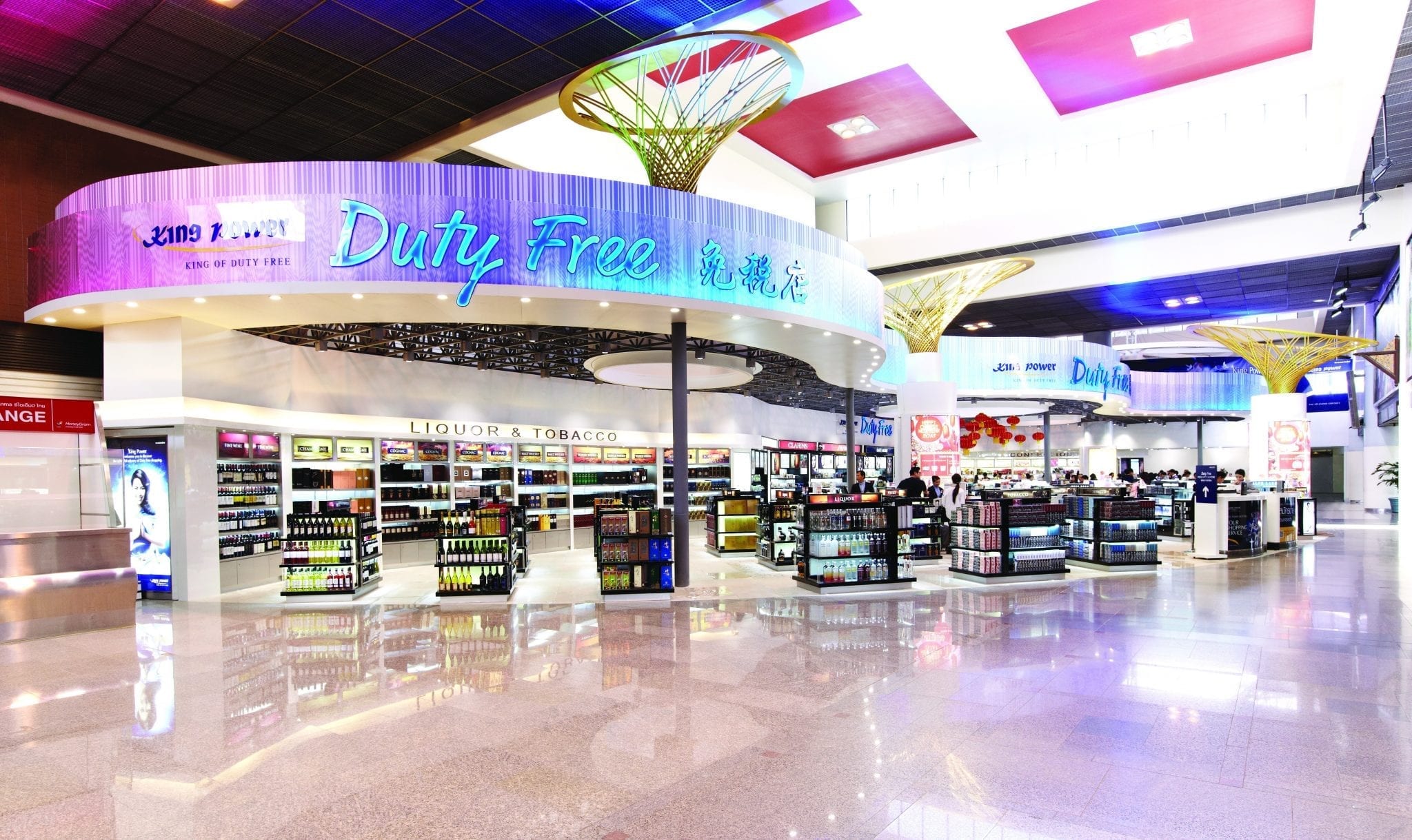
    King Power, the Thai duty-free conglomerate, has bought a US$225 million (S$305 million) stake in Thai Air Asia, the country’s largest budget airline.

    The purchase allows King Power’s billionaire owner Vichai Srivaddhanaprabha to further tap into Thailand’s booming tourism industry and expand beyond his duty-free and hotel portfolio.

    Thai Air Asia is 55 per cent owned by Asia Aviation, a Thai company, with the rest held by the Air Asia group founded by Malaysian entrepreneur Tony Fernandes.

    AirAsia Group Chief Executive Officer Tony Fernandes speaks during a press conference in Kuala Lumpur, Malaysia, Monday, Aug. 11, 2014. AirAsia launched its new "Premium Flex" services providing benefits to travellers.   (AP Photo/Vincent Thian)
    AirAsia Group Chief Executive Officer Tony Fernandes speaks during a press conference in Kuala Lumpur, Malaysia.

    King Power’s purchase of 39 per cent of Asia Aviation from its chief executive (CEO) Tassapon Bijleveld makes it the second largest shareholder of Thai Air Asia.

    Mr Bijleveld, who also serves as Thai Air Asia CEO, will keep 5 per cent of the shares and stay on as chief executive of Asia Aviation, King Power said in a statement yesterday, with the rest of Asia Aviation’s stock owned publicly.

    King Power CEO Aiyawatt Srivaddhanaprabha yesterday said the purchase represents new business opportunities.

    The group will join forces with Thai AirAsia to expand its distribution and retail business, he said.

    The King Power statement also said it was able to snap up the shares at a price “substantially lower” than the market rate because local airlines must legally be more than 50 per cent owned by Thais.

    “Given the restrictive nature of such rules, there are only a handful of Thai individuals who, realistically, would be interested in and could afford the purchase,” it said.

    Polo-loving Mr Vichai, 58, has carefully navigated Thailand’s treacherous political waters of recent years, while taking his King Power empire from strength to strength.

    He has built an estimated fortune of US$2.9 billion since establishing the firm in 1989 – starting with a single shop in Bangkok.

    He hit the jackpot in 2006 when King Power won a monopoly duty- free concession at Bangkok’s cavernous new Suvarnabhumi airport, and with it a captive market of tens of millions of travellers.

    He has since gone on to buy British football club Leicester City, which made history when it won this season’s Premier League.

    Last year, Thai Air Asia carried 14.8 million passengers, and it plans to serve 16.9 million this year. It has said it wants to expand in markets across South-east Asia, China and India.

    King Power said it plans to spend 12 billion baht (S$461.5 million) on buying the remaining 60 per cent of Asia Aviation.

    Mr Vichai’s group is required to make a mandatory offer for Asia Aviation shares it does not already own, the company said on Monday.

    Before the sale, the Thai management had a combined 45 per cent of Asia Aviation.


  • Japan’s Uniqlo targets global stature with fashion identity

    Japan’s Uniqlo targets global stature with fashion identity

    Japanese clothing chain Uniqlo has leveraged its prowess in mass production to build a fashion empire filled with shelves upon shelves of affordable, good quality items like down jackets, underwear and T-shirts.

    Now the 17-nation, 1,734-store retailer is on a quest to beat Western giants like Gap, H&M and Zara to become the world’s biggest apparel maker.

    In the overcrowded, highly competitive casual fashion market, size is important but no guarantee of success: analysts say Uniqlo’s challenge is to carve out a brand identity of its own, going beyond its formula of delivering no-nonsense quality at good prices.

    “To win over consumers and break through the clutter, Uniqlo needs to get even more personal,” says Stuart Green, chief executive of Asia Pacific at Interbrand, which consults and ranks brands.

    “It will be critical for Uniqlo to maintain product quality and, most importantly, create a deeper, more emotional connection with its customers to drive brand loyalty,” he said.

    Interbrand ranks Uniqlo as Japan’s most valuable retail brand, and eighth among Japan’s global brands, including Toyota, Sony and Nintendo. The company’s founder and chief, Tadashi Yanai, is Japan’s richest man, according to Forbes magazine.

    Analysts say that to move it to its next stage of growth, Uniqlo also needs to beef up its digital presence and adapt to non-Asian markets. Winning over the huge market of suburban American shoppers will be crucial.

    Consumers these days are picking brands on digital platforms and social networks, as they increasingly shop online. To cope with the mind-boggling volumes of information online, consumers now rely on brands to serve as filters and curators, Green said.

    To help drive its global expansion, Uniqlo is tapping outside talent.

    It just hired Christophe Lemaire, formerly of Hermes and Lacoste, who started his own Uniqlo line last year, to head its Paris research center.

    In 2014, it brought in a global branding expert, John Jay. An American of Chinese origin, he who worked on ad campaigns for Nike, Coca-Cola and Microsoft, and a fleece campaign for Uniqlo, at U.S. marketing company Wieden+Kennedy.

    “Whether they’re in Beijing or New York, there is a commonality to young people and what they want in life,” Jay, whose title is president of Global Creative at Uniqlo’s parent company Fast Retailing, said at a recent Tokyo event, centered on Uniqlo’s second fashion show ever.

    “We have barely scratched the surface. Our potential is amazing,” he said.

    Uniqlo is still relatively small, with 44 stores in the U.S., 449 stores in China and 846 in Japan, its biggest market. Retail giant H&M of Sweden has 4,000 stores around the world, Gap Inc. of the U.S., 3,700 stores, and Inditex of Spain operates 7,000 Zara, Bershka and other brand stores.

    H&M and Inditex have posted healthy financial results recently, but Gap, which has the Old Navy and Banana Republic brands, is struggling, slashing prices to draw buyers and closing dozens of stores, including some in Japan. The Standard & Poor’s credit rating agency recently downgraded Gap’s debt to junk status.

    Uniqlo’s profits also have slowed recently, hurt by a warm winter that slowed sales of its down jackets, HeatTech underwear and other winter apparel.

    Fast Retailing, with 100,000 employees, forecasts a profit of ¥60 billion ($560 million) for the fiscal year through August, down 46 percent from the previous fiscal year, mainly because of falling profits at Uniqlo.

    Yanai’s turnaround plan includes sweeping cost cuts, improved efficiency, pricing reviews, and, perhaps most importantly, greater flair in the company’s fashion offerings, building on collaborations with designers.

    The company asked Nigo, a Japanese DJ with a reputation for innovation who created The Bathing Ape clothing line, to add more flair and edge to his T-shirts.

    Nigo added to the T-shirt line motifs from pop artist Andy Warhol, music producer and singer Pharrell Williams and from traditional Kabuki theater, in addition to old-time favorites like Mickey Mouse.

    A partnership with Carine Roitfield, former editor-in-chief of Vogue Paris, has brought into Uniqlo stores chic designs unlike most anything else you’d find.

    The company has strengthened its sportswear, signing on tennis stars Kei Nishikori and Novak Djokovic.

    Uniqlo also has partnerships with labels like Liberty London, with its colorful flower-pattern fabrics, and Hana Tajima, a designer who specializes in Muslim clothing such as head scarves and long dresses.

    “Uniqlo has a smart format, which stands out from most of the mass fashion retailers. Less concerned on fashion trends, and more focused on ‘basics’ or ‘investment pieces’ of good fabric and quality,” said Luca Solca, analyst with BNP Paribas. “They are trying to spice this up with designer collaborations.”

    Uniqlo executives believe fashion is globalizing, and people around the world, from China to New York, more or less want the same thing — quality for reasonable prices, and clothes that suit their lives.

    On a recent weekday, the company’s 12-story Ginza store was crowded, as tourists milled around snapping selfies in front of what has become a city landmark.

    Olga Symonenko, an IT worker from the Ukraine, said she had heard about Uniqlo from friends who had been to the store in the U.S.

    “The prices are good, and the quality,” she said, happily clutching two blue dresses. She said she and her husband planned to pick up 20 items.

  • Clevo to sell properties in China

    Clevo to sell properties in China

    Clevo will sell office space and residential units of its IT and consumer electronics retail chain Buynow in China and is poised to float REIT (real estate investment trust) certificates in Taiwan for commercial real estate in China including Buynow stores, department stores and hotels, according to the company.

    Clevo has also approved its 2015 financial report and will issue dividends of NT$1.10 (US$0.03) in cash.

    With growing demand for gaming notebook products, Clevo’s notebook shipments grew strongly in China, boosting its May revenues by 23.1% on year to reach NT$1.63 billion.