Blog

  • Under Armour in trademark fight with Uncle Martian

    Under Armour in trademark fight with Uncle Martian

    Uncle Martian, a new competitor for sportswear brand Under Armour in one of its main markets, China, is in hot water for co-opting the US company’s logo.

    Under Armour uses a U over an inverted U that intersect to form a stylised A. Uncle Martian has the same two-U configuration, but the letters do not touch.

    Apparel manufacturer Tingfei Long Sporting Goods in Fujian province, in southeastern China, is the company behind the new brand, which is offering shoes in its first foray into athletic wear.

    Executive Huang Canlong says the brand aims to be associated with “comfort, excellence and innovation”. He told Shoes.net.cn he wants to create a high-profile brand with “high standards”.
    Out of Baltimore in the US, Under Armour has seen its sales in China almost triple in the first quarter of this year compared with the same period last year.

    Meanwhile, Chinese consumers have been criticising Uncle Martian for its blatant hijack of the Under Armour logo.

    “How come you can’t even design a logo? All you do is plagiarise – don’t you feel it’s disgusting?” one critic wrote on Weibo.
    Another Weibo user, Zhang Gemeng, has pointed out that such blatant copying goes against the national policy of encouraging homegrown creativity.
    “Don’t blame people when they say they look down upon domestic brands,” wrote another user, indicating the move as a “loss of face” for China.

    Under Armour, of course, is also unamused and is pursuing “all business and legal courses of action” according to spokesperson Diane Pelkey.

    “Uncle Martian’s uses of Under Armour’s famous logo, name and other intellectual property are a serious concern and blatant infringement.”

  • Esprit sales flat

    Esprit sales flat

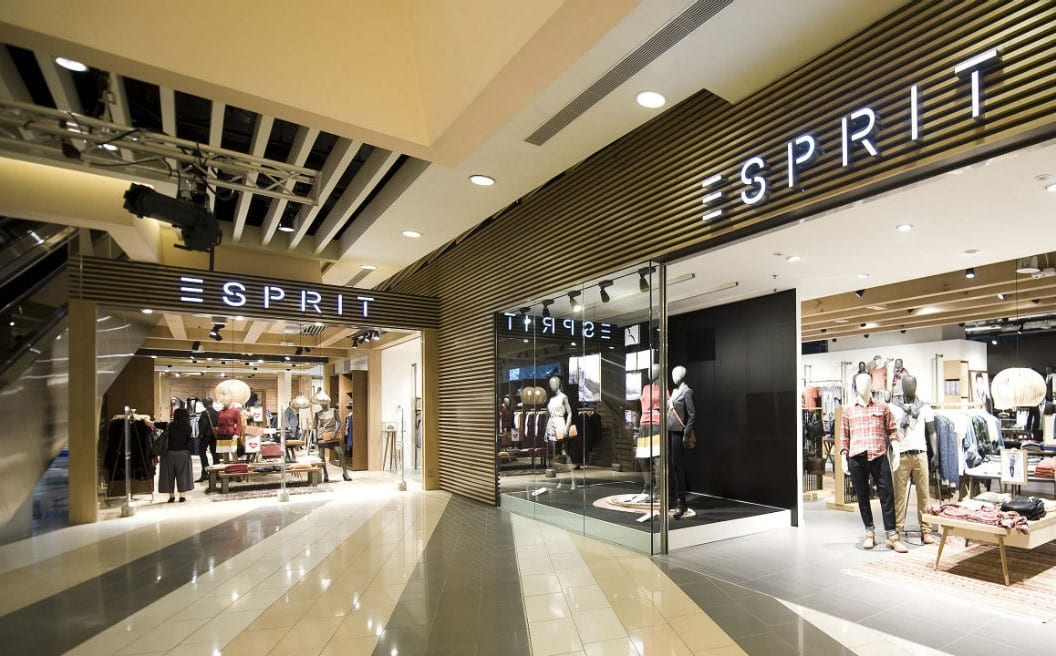
    Reporting “flat” revenue for its third quarter, Hong Kong-listed clothing retailer Esprit Holdings points the finger at negative growth in its Asia Pacific stores, as well as weakness in its wholesale channel.

    There was a marginal decline of 0.1 per cent in Esprit sales for the three months but the company continued to benefit from improved product performance, as well as improved marketing and channel operations.

    Retail revenue (63.3 per cent of the group’s income) grew 3.1 per cent year-on-year, primarily driven by the European region.

    Particularly encouraging for the group was the continuation of the positive trends in several areas. The women’s divisions (including Esprit and EDC branded products) had retail revenue growth of 6.6 per cent for the quarter; plus comparable stores sales growth (including online) was up 10.3 per cent; while online sales totalled HK$984 million (US$126.8 million) – 35.4 per cent of the group’s retail revenue and an increase of 11.7 per cent.

    Performance, meanwhile, was still weak in Asia Pacific (15.2 per cent of the group’s revenue), with revenue tumbling 15.3 per cent.

    Esprit says the performance of Asia Pacific continued to be undermined by a combination of unfavourable macro-factors, including volatility in the financial markets, weak consumer sentiment amid the slowdown of economic growth in China, and reduced tourist flow in the region.

  • Estee Lauder to axe up to 1200  jobs

    Estee Lauder to axe up to 1200 jobs

    Beauty giant Estee Lauder has announced a multi-year initiative named Leading Beauty Forward to build on its strengths and better leverage its cost structure to free resources for investment to continue its growth momentum.

    The plan involves the reduction of between 900 and 1200 jobs – about 2.5 per cent of its workforce – and restructuring on a number of fronts aimed at saving US$250 million to $300 million in overheads.

    “Leading Beauty Forward is designed to enhance the company’s go-to-market capabilities, reinforce its leadership in global prestige beauty and continue creating sustainable value,” the company said in an announcement coinciding with its latest quarterly financial results.

    Globally, net sales for the company’s third quarter to March 31 totalled US$2.66 billion, a 3 per cent increase compared over the $2.58 billion in the prior-year quarter. Net earnings were $265.6 million, down on the $272.1 million of last year.

    Fabrizio Freda, president and CEO of Estee Lauder, said: “We are launching this initiative from a position of exceptional strength. With the aid of our 10-year compass, we are proactively anticipating long-term industry trends and positioning our brands in more promising and faster growing areas. Leading Beauty Forward should further position us better to continue winning on a complex global stage and generate savings to help sustain our long-term sales growth and margin progress.

    “This initiative is expected to provide further resources to invest in brand growth, increase speed-to-market and flexibility in resource allocation, and better leverage growth for continued profitability improvement,” he concluded

    Leading Beauty Forward will begin during the company’s current quarter. Specific initiatives are expected to be approved through to the end of the 2019 fiscal year and be complete by 2021. Key actions include:

    • Better leveraging growth through cost savings, more scalable processes and organisational design;
    • Redesigning select areas of the company’s go-to-market brand, region and affiliate organisations to strengthen capabilities in areas such as digital and retail;
    • Redesigning and restructuring select corporate functions that support the company’s brands, channels and geographies through the development of scalable global and regional shared services with a more efficient cost base;
    • Investing in brand growth, such as new products, social media, communications, in-store merchandising, point-of-sale activities and advertising.

    The company expects to take restructuring and other charges of between $600 million and $700 million, before taxes, consisting of employee-related costs, asset write-offs and other costs associated with implementing these initiatives.

    Estee Lauder said the job cuts will take into account the elimination of some positions, retraining and redeployment of certain employees and investment in new positions in key areas.

  • Lazada Malaysia claims double-digit growth

    Lazada Malaysia claims double-digit growth

    Online retailer Lazada Malaysia claims it had at least double-digit growth in sales last year, yet is still losing money.

    It was a challenging year for retail, says CEO Hans-Peter Ressel of Ecart Services Malaysia, the company behind Lazada Malaysia.

    He says the focus is now on making Lazada’s service more accessible to the “general masses”, particularly those in east Malaysia, starting with improving its logistics and distribution centres in east Malaysia, where the company had 80 per cent sales growth last year.
    However, this growth was lower than in other regions, which saw at least 110 per cent year-on-year growth, says Ressel.

    He says Lazada would appeal to most Malaysians because of its affordability, accessibility and convenience. With its complex supply chain, Lazada and its 10,000 third-party sellers can now offer products below store prices, and many of the 5.5 million items on sale are not even available in stores in Malaysia.

    Lazada had the most application downloads of e-tailers in Malaysia, 2.3 million as at the end of December. Second is 11street.my at half of Lazada’s downloads, while fashion application Zalora had 700,000 downloads.

    Malaysia has 10.3 million smartphone users, according to mobile marketing firm Vserv.
    Ecart Services wants to double its items in inventory to 10 million stock-keeping units this year. The company will also have a third warehouse 16 times larger than its first warehouse in Subang Jaya, plus there is another warehouse and distribution centre in Sarawak.

    Ecart Services’ new loss blew out by 72.94 per cent to RM87.54 million (US$22.28 million) in the financial year ended December 31, but its its top-line growth of 142.22 per cent saw record sales of RM114.81 million from RM47.4 million the previous year. Ressel says the company has yet to break even.

    Following Alibaba Group Holdings’ purchase of Lazada Group, founded by Germany’s Rocket Internet in 2012, Ressel said he looks forward to more synergies between the two eCommerce giants.

    “With Alibaba’s eCommerce knowhow, systems and processes, we will also be better able to help our sellers grow their businesses.”

  • Robotics roll into Indonesian retail with launch of Sphero in Jakarta

    Robotics roll into Indonesian retail with launch of Sphero in Jakarta

    Global robotics firm Sphero has signed a distribution agreement with Halo Robotics to distribute Sphero’s full range of robotic gaming systems in Indonesia.

    Sphero is the creator of intuitive smartphone-controlled robots such as the BB-8 app-enabled Droid popularized in Star Wars, whose enormous popularity has defined a new product category, “connected play.”

    Sphero’s  engaging robotic toys roll and jump in response to voice and app controls, and that constantly improve with regular software updates.

    New products and apps, include Ollie, a rebellious, cylindrical robot that rolls at speeds of up to 15 mph; and SPRK, a clear shelled Sphero, that when coupled with the Lightning Lab app, teaches foundational programming through STEM activities.

    “This is an exciting time for Sphero, and we are excited to celebrate the launch of our long-term connection with Indonesia,” said Aurelien Joly, Sphero’s APAC Channel Director.

    Halo Robotics said the connected play toy market has grown dramatically over the last several years and appeals to a full range of consumer audiences.

    Nearly half of Indonesia’s population of 249.9 million are under the age of 30, with among the world’s fastest-growing consumer demographics for Sphero products. Famously tech-savvy, over 100 million Indonesians will be smartphone users by 2017, laying a strong foundation for app-controlled robots.

  • Hong Kong Airlines passengers flown by Garuda Indonesia

    Hong Kong Airlines passengers flown by Garuda Indonesia

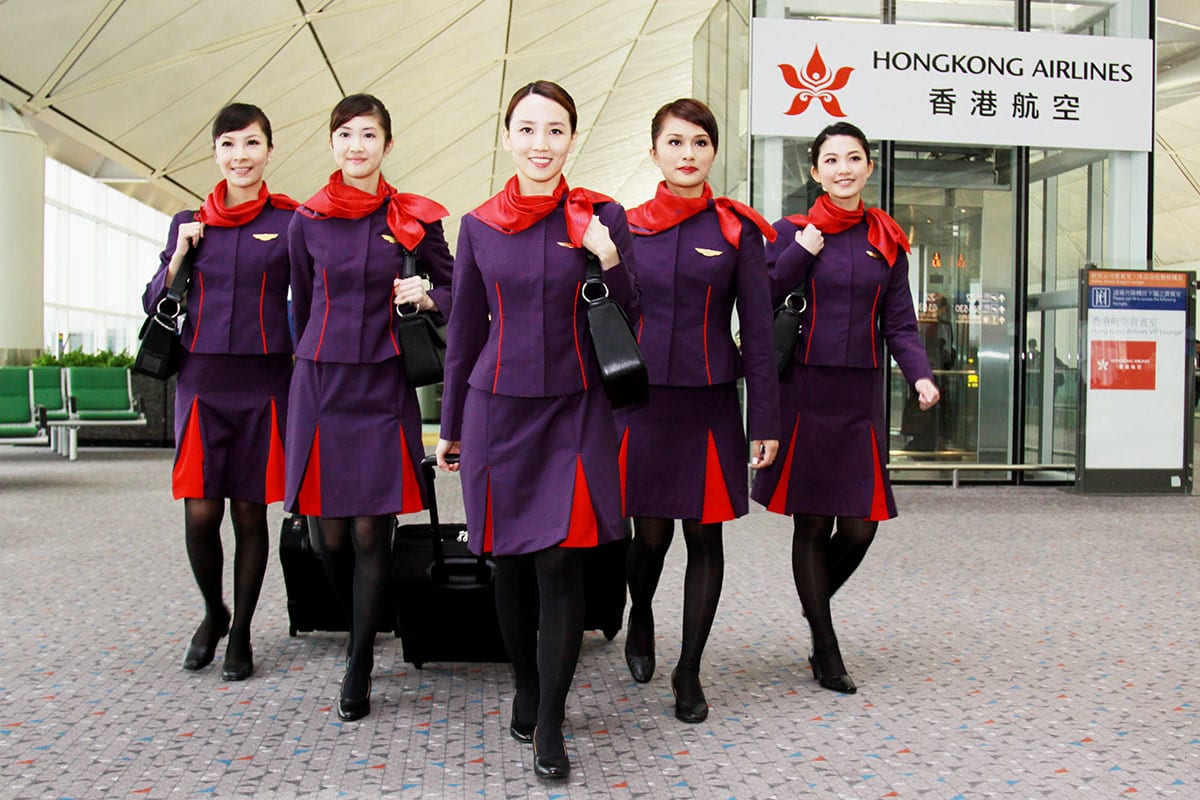
    Some 95 passengers of Hong Kong Airlines flight HX-6704 which encountered severe turbulence have been flown to Hong Kong from Denpasar by a Garuda Indonesia plane later on Saturday.

    “At least 95 passengers of the Hong Kong Airlines plane who survived the turbulence incident have been flown to Hong Kong at 9.35 am Central Indonesia Standard Time (Wita), but the rest have still been given the facility to stay at a hotel to wait for the next scheduled departure,”Ngurah Rai Airport management company PT Angkasa Pura I spokesperson Sherly Yuanita remarked Saturday.

    The severe turbulence on the Hong Kong Airlines flight to Hong Kong over the sky of Kalimantan Island left 17 passengers injured early Saturday morning.

    The ill-fated Hong Kong Airlines plane with 204 passengers and 12 crew members on board took off from Ngurah Rai airport at 1.05 am Wita and was expected to arrive in Hong Kong at 7.05 am local time but the severe turbulence forced it to “return to base.”

    Trikora Harjo, the general manager of PT Angkasa Pura-I remarked that the pilot, Tinios Peter decided to return to Denpasar and landed safely at the airport at 4.28 am Wita.

    “The 12 injured passengers were sent to a hospital in Denpasar soon after the plane landed safely at the Ngurah Rai airport,” he said.

    Turbulence, the most common cause of injury to air passengers, is what nervous fliers fear the most when they board an aircraft.

    Pilots will always keep their seat-belts fastened while seated on an aircraft and will usually advise the passengers to do the same.

    Many different things may cause turbulence, but each and every one of them is known and understood by pilots.

    Turbulence is uncomfortable but not dangerous. It is part of flying, and is not to be feared as different aspects of the weather cause different types of turbulence.

  • Bloomberg TV Indonesia pressed for severance payment

    Bloomberg TV Indonesia pressed for severance payment

    The Legal Aid Center for the Press ( LBH Pers ) and the Manpower Ministry have called on the owner of now defunct station Bloomberg TV Indonesia Rosan Roeslani to pay compensation to its former workers in accordance with the company’s layoff agreement.

    LBH Pers executive director Nawawi Bahrudin said Rosan, who is also chairman of the Chamber of Commerce and Industry ( KADIN ), must comply with the legal agreement.

    “I strongly urge the employer to comply with its legal obligations,” Nawawi told  recently.

    Bloomberg TV Indonesia has failed to pay the compensation by the time stated in the payment agreement attached to the termination of employment letter issued on July 8, 2015.

    Manpower Ministry special staff Dita Indah Sari said as a leader of Indonesia’s industrialists, Rosan should be more sensitive in dealing with labor issues and attentive in treating employees properly.

    “The Manpower Ministry warns the shareholders not to neglect employees’ rights. Otherwise, our legal division will call and examine them,” Dita asserted.

    She added the ministry would continue to supervise the dispute process between the ex- employees of Bloomberg TV Indonesia and the employers until everything was settled, adding that the department’s legal division is ready to help if necessary.

    “I fully support the ex-workers’ struggle,” asserted Dita, a former labor activist who was jailed by President Soeharto’s government.

    The coordinator of ex-Bloomberg TV Indonesia workers Arif Budiman said the former employees had chosen LBH Pers as their representative to submit the lawsuit to the Industrial Relations Court ( PHI ) in the event of a deadlock in the mediation between ex-employees and employers.

    “We urge ex-CEO Adhitya Chandra Wardhana and the owner Rosan Roeslani to cooperate with us and meet the terms of the agreement,” Arif said.

    Bloomberg TV Indonesia owner Rosan Roeslani responded to the demands by saying that his party would settle everything related to the company’s obligation to the workers as soon as possible.

    Rosan established the economic and business focused Bloomberg TV Indonesia, which was operated under holding company PT Idea Karya Indonesia in 2013, and officially closed two years later due to financial concerns.

  • Tourists invisible to Hong Kong retailers

    Tourists invisible to Hong Kong retailers

    While more tourists have been crossing the border for the ongoing Golden Week, there has not been much gold in it for Hong Kong retailers.

    Visitor numbers jumped more than 14.1 per cent on Saturday, the start of the holiday, according to the Hong Kong Immigration Department (IMMD).

    This has mainly been attributed to visitors from the neighbouring Guangdong province, with cheaper hotel rooms and convenient travel making Hong Kong an accessible choice, says the South China Morning Post.

    Statistics show that more than 200,000 visitors arrived on the first day of the national holiday, a jump from last year’s 177,000. But despite the rise, the visitors have been spending less – hardly good news for Hong Kong retailers, who have already been feeling the pinch. With Hong Kong no longer riding the wave as the first port of call for Chinese tourists, retailers were warned last month that they need to discount or die.

    For the new influx of visitors, their travel and buying patterns differ from previous mainland tourists as they are familiar with Hong Kong and tend to visit relatives, go sightseeing and buy from stores in residential areas. Family visitors and Shenzhen residents spiked more than 40 per cent on the first day of the holiday, while those crossing the border on the “L visa” dropped 5 per cent.

    Hong Kong retailers are already branding this the worst-ever Golden Week, with many reporting lower numbers of mainland tourists, fewer tour buses and less spending.

    However, Travel Industry Council executive director Joseph Tung Yao-chung says the divergence between tourist numbers and luxury sales is a “good sign”.

    “The city’s tourism sector is normalising,” he says, with high-quality individual tourists compensating for the loss in mainland tour groups, which have long been criticised for forcing visitors to buy high-priced products at designated shops.

  • Indonesia to promote cruise, yacht destinations in Korea

    Indonesia to promote cruise, yacht destinations in Korea

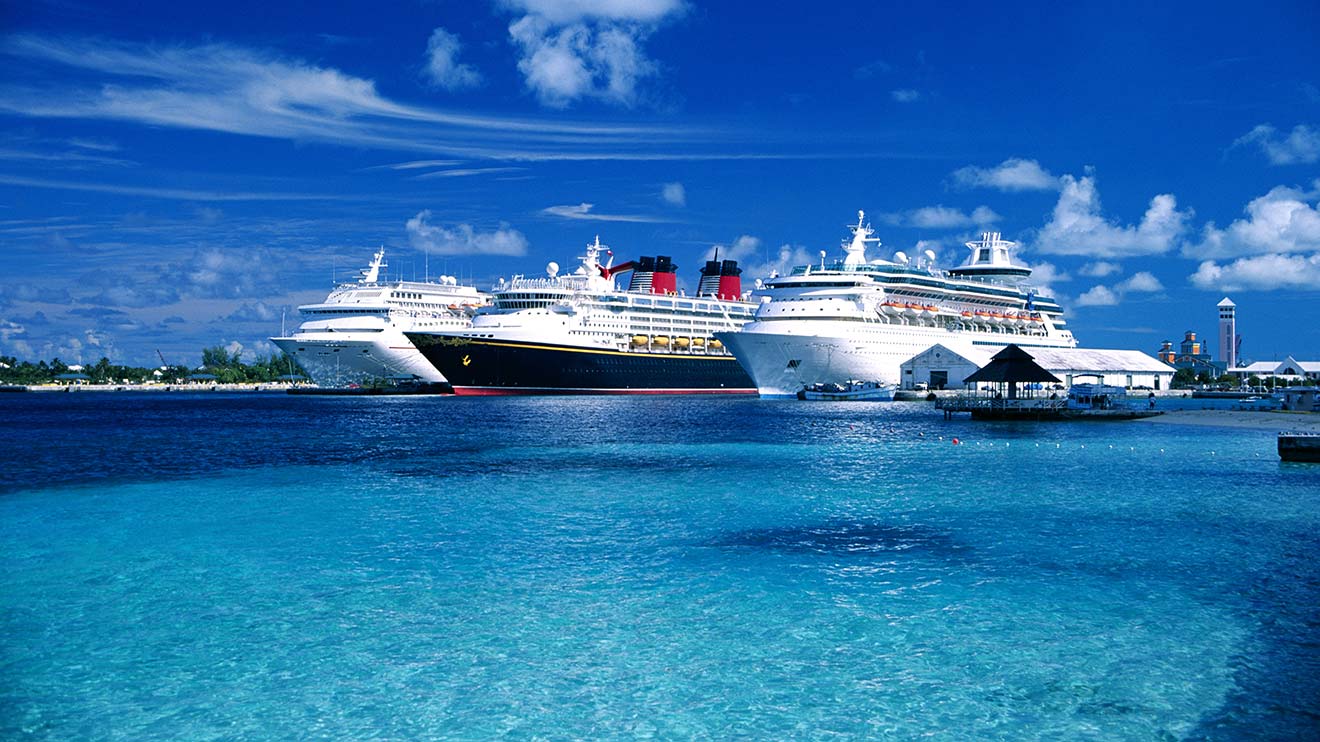
    The Ministry of Tourism will promote Indonesian tourism destinations, especially for cruising and yachting, at the Seatrade Cruise Asia 2016 to be held on May 12-14 in Busan, South Korea.

    During the cruise industry exhibition, the government will introduce Indonesias best cruising and yachting destinations, Deputy of International Marketing Development of the Ministry of Tourism I Gede Pitana stated in a press release here on Thursday.

    The ministry will inform the international companies and yacht owners of the governments step to increase tourist arrivals by simplifying the approval procedure for yachts entering Indonesian waters through the Clearance Approval for Indonesian Territory system.

    “The process to issue an entry permit will take only one hour,” Pitana noted.

    The government is prioritizing 10 yachting destinations, such as Tanjung Kayang Belitung, Tanjung Lesung, Seribu Islands, Mandalika Lombok, Labuhan Bajo, Wakatobi, and Morotai, in which marinas have been built to accommodate yachters.

    For cruise tourism, the five major ports of Belawan in Medan, Tanjung Priok in Jakarta, Tanjung Perak in Surabaya, Benoa in Bali, and Soekarno-Hatta in Makassar will serve as the entry gates to Indonesia.

    Eight marine tourism companies of Indonesia are also participating in the Seatrade Cruise Asia 2016.

    Moreover, the government is promoting its visa-free policy for Korean citizens by advertising its campaigns in the local media and through catalogs placed in Korean high-speed trains.

    The guests at the exhibition will be able to enjoy the performances of Indonesian dancers and several varieties of Indonesian coffee at the Wonderful Indonesia booth at the Seatrade Cruise Asia 2016.

  • Indonesia’s Muslim cyber warriors take on IS

    Indonesia’s Muslim cyber warriors take on IS

    A group of Indonesian “cyber warriors” sit glued to screens, as they send out messages promoting a moderate form of Islam in the world’s most populous Muslim-majority country.

    Armed with laptops and smartphones, some 500 members of the Nahdlatul Ulama (NU) – one of the world’s biggest Muslim organisations – are seeking to counter the Islamic State group’s extremist messages.

    “We’ll never let Islam be hijacked by fools who embrace hate in their heart,” tweeted Syafi’ Ali, a prominent member of the NU’s online army, a typical message to his tens of thousands of followers.

    They are trying to hit back at IS’s sophisticated Internet operations, which have been credited with attracting huge numbers from around the world to their cause.

    Internet propaganda is believed to have played a key role in drawing some 500 Indonesians to the Middle East to join IS, particularly among those living in cities where it is easier to get online.

    The dangers of the growing IS influence in Indonesia were starkly illustrated in January when militants linked to the jihadists launched a gun and suicide bombing attack in Jakarta, leaving four assailants and four civilians dead.

    It was the first major attack in Indonesia for seven years, following a string of Islamic militant bombings in the early 2000s that killed hundreds.

    As well as firing off tweets, the NU members have sought to dominate cyberspace by establishing websites promoting the group’s moderate views, an Android app and web-based TV channels, whose broadcasts include sermons by moderate preachers.

    The initiative has been building momentum for a while but started to pick up pace a few months ago. A handful of cyber warriors operate from a small office in Jakarta, while the rest work remotely, and the group mostly communicate with one another over the web.

    But it will be an uphill battle and the NU, which has been promoting moderate Islam for decades, conceded they have previously struggled to take on IS’s hate-filled messages.

    “NU has for a while wrestled with this radical propaganda,” said Yahya Cholil Staquf, secretary general of the NU, which claims at least 40 million followers.

    “Every time we defeated them, it didn’t take long for them to regain their strength.”

    The online drive comes as the NU is set to take its campaign to promote their tolerant form of Islam onto the international stage this week, with a two-day meeting from tomorrow of moderate religious leaders from around the world.

    They aim to showcase their particular brand of the Muslim faith, known as “Islam Nusantara”, to counter the IS jihadists’ radical interpretation of Islam.

    Meaning “Islam of the Archipelago” – Indonesia is the world’s biggest archipelago, comprising over 17,000 islands – it is accepting of diversity and stresses non-violence.

  • AirAsia Indonesia to end Bali-Kota Kinabalu services

    AirAsia Indonesia to end Bali-Kota Kinabalu services

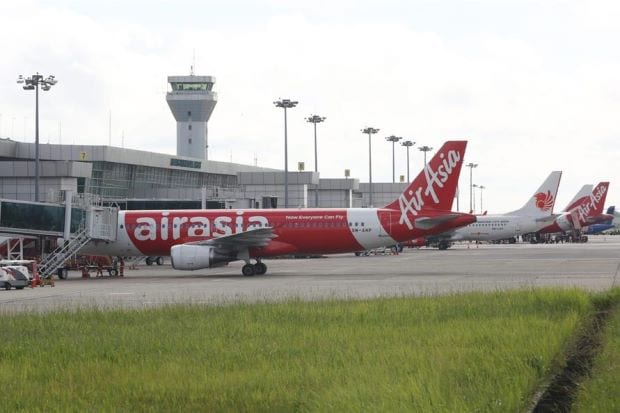
    AirAsia Indonesia will end its thrice weekly Bali-Kota Kinabalu services, effective June 23.

    In a statement, AirAsia Bhd chief executive officer, Aireen Omar, said this was due to the stagnant market growth and insufficient revenues to offset the costs.

    “The operational costs have also increased quite substantially for AirAsia’s operations at Terminal 1 Kota Kinabalu International Airport,” she said.

    Following the termination of the services, the low-cost carrier said it would offer three options for the affected customers.

    The passengers could reschedule their journey with the latest flight on June 21, 2016, depending the availability of seats, it said.

    “They could also opt for creditshells which can be used as payment towards any AirAsia tickets or products and they are valid for six months or 180 days from the date of issuance,” it said.

    AirAsia said it would also offer a full refund of the amount equivalent to customer’s booking.

  • Apple, SAP enter cloud apps partnership

    Apple, SAP enter cloud apps partnership

    Apple and SAP have teamed up to combine native apps for iPhone and iPad with the capabilities of the SAP HANA platform.

    This joint effort will also focus on developing a new iOS software development kit (SDK) and training academy.

    According to the companies, the SAP HANA Cloud Platform SDK will provide businesses, designers and developers the tools to quickly and efficiently build their own iOS apps for iPhone and iPad, based on SAP HANA Cloud Platform, SAP’s open platform as a service.

    These native apps will provide access to core data and business processes on SAP S/4HANA, while taking full advantage of iPhone and iPad features like Touch ID, Location Services and Notifications.

    A new SAP Fiori for iOS design language will advance the SAP Fiori user experience by combining it with a consumer-grade iOS experience to deliver on the robust user needs in the enterprise and enable developers to build next-generation apps.

    SAP will also develop native iOS apps for critical business operations. These apps for iPhone and iPad will be built with Swift, Apple’s modern, secure and interactive programming language, and will offer a familiar user experience with the SAP Fiori for iOS design language.

    “This partnership will transform how iPhone and iPad are used in enterprise by bringing together the innovation and security of iOS with SAP’s deep expertise in business software,” said Tim Cook, Apple’s CEO.

    “Through the new SDK, we’re empowering SAP’s more than 2.5 million developers to build powerful native apps that fully leverage SAP HANA Cloud Platform and tap into the incredible capabilities that only iOS devices can deliver.”

  • Optus commences rollout of VoLTE

    Optus commences rollout of VoLTE

    Australia’s Optus has commenced the rollout of VoLTE technology to Australia’s major capital cities.

    The Singtel subsidiary revealed that its initial rollout will concentrate on the central business district metro areas of Sydney, Melbourne, Brisbane, Adelaide, Perth and Canberra.

    Optus will initially offer VoLTE over Samsung’s flagship Galaxy S7 and S7 Edge smartphones.

    Optus managing director Dennis Wong said the company plans to “continue to add capability to other devices and remains focused on expanding our VoLTE footprint to further locations, particularly in regional Australia.”

    “We’ve been testing and tweaking VoLTE for the best customer experience and we’re excited Optus customers will start to see the benefits of this technology on our 4G Plus network.”

    Last year the operator launched the first commercial 3x LTE-A carrier aggregation network combining one FDD carrier with two TDD blocks. The network combines 1800-MHz and 2300-MHz frequency bands.

    Optus is Australia’s second largest operator after incumbent Telstra, offering both fixed and mobile services as well as satellite and other services.

  • Vodafone’s M-Pesa surpasses 25m active users

    Vodafone’s M-Pesa surpasses 25m active users

    Vodafone has announced that its M-Pesa mobile money service now has more than 25 million active customers.

    Across the M-Pesa footprint in Africa, Asia and Europe, active M-Pesa customers increased by 27.1% to 25.4 million for the 12 months ending in March.

    Vodafone offers M-Pesa in 11 countries, having most recently launched in Albania and Ghana. The service debuted in 2007 in Kenya and Tanzania.

    M-Pesa is also available in India, South Africa, Afghanistan, Mozambique, Lethoso, the Democratic Republic of Congo and Romania.

    In India, Vodafone recently launched an M-Pesa smartphone app to allow customers to pay for goods on Ebay, as well as taxi fares and train tickets on India’s national railways.

    Over the past 12 months Vodafone has entered a series of deals with partners to allow for cross-border and cross-service transactions using M-Pesa.

    These include global agreements with the international money transfer hubs TransferTo and MFS, as well as an arrangement to allow direct-money transfer between M-Pesa and users of MTN Mobile Money in seven East African countries.

    “I am delighted and proud that M-Pesa has reached the 25 million active customers milestone,” Vodafone group director of mobile money Michael Joseph said.

    “M-Pesa continues to expand, evolving beyond traditional money transfers to encompass savings and loans, payment of salaries and benefits, settlement of utility bills and school fees and to enable vital health and agricultural solutions.”

  • Thailand’s AIS faces $71k fine per day

    Thailand’s AIS faces $71k fine per day

    Thailand’s National Broadcasting and Telecommunications Commission has written to AIS warning of $71,114 (2.5 million Baht) a day fines unless they complete the handover of 300,000 subscribers to TrueMove under the mobile number portability system by May 10th.

    Thai language daily Thairath reported that AIS has refused to release the subscribers due to incomplete or erroneous documentation. The story also said that AIS had no problems with Dtac all valid Dtac porting requests had been completed.

    Earlier we reported on how the government was trying to force AIS to sign an MOU with True and allow the NBTC to step in with the final say on MNP with no recourse of appeal.

    AIS did not respond to request for comment by the time of going to press.