Blog

  • Gold Rush Down Under: Massive Queues at Sydney Bullion Stores Amid Investment Frenzy

    Gold Rush Down Under: Massive Queues at Sydney Bullion Stores Amid Investment Frenzy

    In the face of global uncertainty, Australians in Sydney have been flocking to buy gold, a traditionally regarded safe-haven investment. Long queues have formed outside gold bullion stores as people patiently wait their turn to secure this precious metal.

    Gold Buying Rituals Amidst Challenges

    For Prakas, a Nepali Australian, purchasing gold during Diwali, an annual Hindu festival, is a treasured tradition. Yet, this year, this ritual proved to be a daunting task due to the thousands of Australians lining up for gold in Sydney. On October 18, Prakas drove to Sydney’s central business district, only to find approximately 400 people in line at the ABC Bullion store on Martin Place. Disheartened, he returned home. He later attempted to order online, but the expedited process still led him to a two-hour waiting line for online pre-purchasers.

    Gold Demand Skyrockets

    The demand for gold, a traditional hedge in uncertain times and a non-yielding asset, has soared by over 51% this year. This surge is attributed to ongoing geopolitical and trade tensions, as well as anticipated U.S. interest rate cuts. The ABC Bullion store on Martin Place recently experienced an influx of customers, with retirees and families jostling around the entrance in hopes of making a purchase, their presence persisting throughout the day. Jordan Eliseo, the store’s general manager, reported approximately 1,000 customers visiting daily for over a month, with thousands more opting for online purchases. Buyers from across the city arrive as early as 9 a.m. to secure their spots in line, while others wait for hours to make their purchases. To accommodate the rush, Eliseo extended trading hours and added five new staff members in the last two weeks.

    The Gold Market’s Potential Risks

    Despite the current gold-rush frenzy, market experts warn of potential risks in the gold market. Chief economist at a financial services firm, Shane Oliver, expressed concerns that the lengthy queues could be a red flag indicating a speculative market prone to correction. His warning seemed prophetic when, on October 22, gold prices plummeted 6.8% to $4,082.35 per ounce, marking the steepest single-day drop in 12 years. Although the price slightly rebounded later that week, it still ended lower, disrupting a record nine-week rally. Ray Attrill, head of FX strategy at National Australia Bank, noted that the steep fall mirrors a familiar pattern, hinting that a dash for profit was inevitable.

    Questions & Answers

    What is the current trend in the gold market in Sydney?
    A significant surge in gold buying has been observed in Sydney, partly due to its traditional status as a safe-haven asset during times of global uncertainty.

    What challenges are buyers facing in securing gold?
    Buyers are enduring long queues at gold bullion stores and even online pre-purchasers are facing waiting times. The high demand has resulted in extended trading hours and increased staffing at stores.

    What are the potential risks in the current gold market?
    Experts caution that the current trend could indicate a speculative market potentially at risk of a correction. The sharp fall in gold prices on October 22 supports this cautionary stance.


  • UBS Challenges Swiss Court Verdict on Credit Suisse’s AT1 Bond Valuation: A Game Changer in Bank Recovery?

    UBS Challenges Swiss Court Verdict on Credit Suisse’s AT1 Bond Valuation: A Game Changer in Bank Recovery?

    The Swiss Federal Administrative Court issued a partial ruling on October 13, 2025, which put up for debate the legality associated with deeming Credit Suisse’s Additional Tier 1 (AT1) bonds as worthless. The ruling came in response to an appeal lodged by Switzerland’s financial regulator, Finma. Now, UBS has declared its intention to lodge their appeal as well.

    UBS to Appeal Ruling

    In line with the release of its results for the third quarter of 2025, UBS announced its plan to challenge the partial ruling of the Federal Administrative Court relating to the AT1 litigation. The bank clarified that this step is being undertaken with the aim of ensuring that the court considers its perspective regarding the relevant facts associated with the acquisition of the AT1 bonds.

    UBS also emphasized that the appeal is essential in order to preserve the credibility of AT1 instruments, considering the integral role these play in the resolution and recovery process of banks.

    Key Component of the Bailout Package

    UBS highlighted that the devaluation of Credit Suisse’s AT1 instruments was an important part of the bailout package. The bank maintained that the devaluation was in line with the contractual terms of the AT1 instruments and the applicable legislation. It also asserted that the decision taken by Finma was lawful.

    UBS pointed to the conclusions reached by the Parliamentary Inquiry Commission, which determined that Credit Suisse would have faced insolvency without the bailout package and would not have been able to continue its operations after Monday, March 20, 2023.

    Challenging A Questionable Verdict

    In October, the Federal Administrative Court ruled that the legal foundation for Finma’s decision to deem Credit Suisse’s AT1 bonds as worthless was inadequate. Finma has already taken a step to challenge this decision at the Federal Supreme Court, and UBS has now announced its decision to do the same.

    UBS has also addressed several questions related to the AT1 issue on its FAQ page.

    Questions & Answers

    Why is UBS appealing the ruling?
    UBS is appealing the ruling to ensure the court considers their view regarding the acquisition of the AT1 bonds and to safeguard the credibility of AT1 instruments due to their key role in the resolution and recovery of banks.

    Why was the devaluation of Credit Suisse’s AT1 instruments a critical part of the bailout package?
    The devaluation was crucial as it was in line with the contractual terms of the AT1 instruments and the applicable law. Without the bailout package, Credit Suisse would have faced insolvency.

    What was Finma’s decision regarding Credit Suisse’s AT1 bonds?
    Finma decided to render Credit Suisse’s AT1 bonds worthless. However, the Federal Administrative Court ruled that the legal basis for this decision was insufficient. Finma and UBS have both decided to appeal this decision.

  • AI-Driven Defense: Globe Business and Cyble Unite to Reinforce Enterprise Cybersecurity in the Philippines

    AI-Driven Defense: Globe Business and Cyble Unite to Reinforce Enterprise Cybersecurity in the Philippines

    Globe Business has forged a groundbreaking alliance with global cybersecurity powerhouse, Cyble, to launch an innovative AI-focused threat intelligence platform in the Philippines. This collaboration is designed to fortify enterprise cybersecurity and arm organizations with the tools necessary to proactively address emerging cyber threats.

    This strategic partnership emerges amidst an escalating rise in cyberattacks across the nation. During the initial quarter of 2025, it was uncovered that over 1.2 million Filipinos’ credentials had been compromised and found on the dark web. Furthermore, the Philippines continues to grapple with a significant influx of phishing and credential theft incidents, while the evolving use of malware-as-a-service has rendered conventional network defenses increasingly fraught.

    Leveraging AI for Threat Detection

    The partnership leverages Globe Business’s in-depth local enterprise knowledge and Cyble’s cutting-edge AI-driven risk intelligence to enhance early threat detection and response capabilities. The newly introduced platform will collate and scrutinize data from various internet strata, alerting organizations to potential attacks, data breaches, or instances of brand impersonation before they escalate into major crises.

    KD Dizon, the Head of Globe Business, noted:

    “The battle against cybercrime is a contest of intelligence and speed. Our alliance with Cyble is about democratizing that power. It’s about equipping Philippine enterprises with AI-driven foresight, enabling them to transition from merely reacting to breaches to proactively leveraging data-informed resilience.”

    Cyble’s platform employs agentic AI and its unique BlazeAI engine, which continually learns from emerging threat patterns. This system scans over 20 billion pages daily and monitors in excess of 15,000 cybercrime sources in real-time. This robust strategy allows security teams to identify exposed data, fraudulent domains, or network vulnerabilities at an early stage.

    Facilitating Secure Digital Transformation

    Beenu Arora, the Co-founder and CEO of Cyble, remarked:

    “The Philippines confronts some of the world’s rapidly growing cyber risks. By marrying the scale of AI with Globe Business’s local expertise, we aim to help enterprises always maintain a step ahead of attackers.”

    Globe Business emphasizes that this partnership underscores its commitment to facilitating secure digital transformation. It also highlights the increasing demand for AI-driven prevention strategies in cybersecurity, as these strategies offer wide-ranging support for various industries. Banks and financial institutions can identify compromised data early on and halt fraudulent activities, while retail and e-commerce companies can keep an eye on brand misuse and counterfeit products. Additionally, government agencies can also leverage this platform to detect signs of planned breaches or cyberattacks.

    Questions & Answers

    What is the purpose of the partnership between Globe Business and Cyble?
    The partnership seeks to strengthen enterprise cybersecurity in the Philippines by introducing an AI-native threat intelligence platform.

    What capabilities does Cyble’s platform offer to security teams?
    Cyble’s platform uses agentic AI to process over 20 billion pages daily and monitor more than 15,000 cybercrime sources in real time, allowing early identification of exposed data, fraudulent domains, and network vulnerabilities.

    How does this partnership benefit different industries?
    This collaboration supports a variety of sectors. Financial institutions can detect compromised data early on, retail companies can monitor brand misuse, and government agencies can detect signs of planned cyberattacks.

  • Supreme Court Allows Reassessment of Vodafone Idea’s AGR Dues: A Win for 200 Million Consumers

    Supreme Court Allows Reassessment of Vodafone Idea’s AGR Dues: A Win for 200 Million Consumers

    Vodafone Idea (Vi) recently experienced a substantial win in the Supreme Court after the government agreed to revisit its request for additional adjusted gross revenue (AGR) dues from the corporation. The government’s decision is expected to be in accordance with the law.

    Government’s Interest in Vi

    Tushar Mehta, the Solicitor General representing the Union government, presented the case before a bench chaired by Chief Justice of India B.R. Gavai. Mehta noted an extensive shift in circumstances since the most recent AGR litigation involving Vi in the Supreme Court.

    He informed the Court of the government’s significant 49% equity investment in the company, suggesting that the government’s interests were now tightly intertwined with those of the company and, in turn, the public. He added that the company’s decisions directly affect its 200 million consumers, and the government intended to thoroughly examine any issues, such as over-invoicing, to ensure they are adequately addressed.

    Entering the “Policy Domain”

    According to the Court, the matter has transitioned into the “policy domain” due to the government’s substantial equity investment and the involvement of 200 million customers. The Court had no objections to the government’s decision to revisit its demand for additional AGR dues for the fiscal year 2016-2017 and to make an appropriate decision that would serve the larger public interest.

    Vi’s Appeal to the Supreme Court

    Vi had approached the Supreme Court to contest the additional AGR demand issued by the Department of Telecommunications (DoT) for the 2016-2017 period. The corporation argued that the liabilities had already been calculated and shouldn’t be altered or increased. It sought the Court’s dismissal of the additional DoT demand and requested a comprehensive reassessment and reconciliation of AGR dues up until FY 2016-17.

    Previous Rejections

    This most recent litigation follows only months after the Supreme Court denied earlier appeals by Bharti Airtel, Vi, and Tata Teleservices. These companies were seeking relief from paying interest on dues, penalties, and interest on penalties related to their AGR liabilities, citing significant financial constraints.

    In its May verdict, the Supreme Court labelled their pleas as “misconceived.” The Chief Justice had previously stressed the necessity for a conclusion in the AGR litigation. About a year ago, the Supreme Court rejected a curative petition filed by telecom companies, including Bharti Airtel and Vi, against the court’s October 2019 ruling that upheld the DoT’s move to recover approximately INR 92,000 crore in AGR from them.

    Questions & Answers

    What is the government’s stake in Vi?
    The government holds a significant 49% equity investment in Vi.

    What significant shift in circumstances was noted by the Solicitor General Tushar Mehta?
    Tushar Mehta observed a major change in circumstances since the last AGR litigation involving Vi in the Supreme Court, particularly the government’s large equity investment in the company.

    What was Vi’s argument to the Supreme Court against the additional AGR demand?
    Vi argued that the liabilities had already been calculated and should not be altered or increased. The company sought a comprehensive reassessment and reconciliation of AGR dues up until FY 2016-17.

  • Trump’s Truth Social Teams Up with Crypto.com to Revolutionize Online Engagement through Prediction Markets

    Trump’s Truth Social Teams Up with Crypto.com to Revolutionize Online Engagement through Prediction Markets

    Donald Trump’s media company, Trump Media & Technology Group, is set to introduce a new dimension to online engagement through a partnership with Crypto.com. The alliance aims to merge social media, fintech, and prediction trading, a move that could potentially reshape the realm of online interaction.

    Expanding into Prediction Markets

    Trump Media & Technology Group, the organization responsible for the social media platform Truth Social, has recently divulged plans to venture into prediction markets. Leveraging an exclusive collaboration with Crypto.com Derivatives North America (CDNA) – a registered exchange and clearinghouse – Truth Social will pioneer a global first for social media platforms by integrating prediction markets into the user experience.

    The innovative product, dubbed “Truth Predict”, will provide a platform for users to prognosticate a broad spectrum of outcomes. Whether forecasting results of U.S elections or speculating on interest rate decisions, gold prices, inflation figures, or significant sporting events, users will be able to monitor these predictions in real time.

    Transforming Social Dialogue into Market Forecasts

    “Truth Predict will enable our committed users to delve into prediction markets with a reliable network, while also making use of our social media platform to offer entirely unique methods for discussing and comparing their forecasts,” commented Devin Nunes, Chairman and CEO of Trump Media.

    Having amassed over 3 billion dollars in financial assets and achieved a positive cash-flow in its first quarter after becoming a public entity, Trump Media appears to be well-prepared to expand its fintech objectives. Nunes emphasized that the integration epitomizes the company’s aim to “democratize information” and empower users to convert free speech into “actionable foresight.”

    Legally Compliant Approach

    The newly-developed feature will operate within a legally compliant framework courtesy of its partnership with Crypto.com’s CDNA unit. This will provide US users with lawful access to event contracts concerning politics, economics, and financial markets. CDNA’s regulated structure facilitates seamless participation for Truth Social users, effectively bridging the divide between social commentary and capital markets.

    Beta Testing and Global Expansion

    Truth Predict is set to undergo Beta testing on Truth Social ahead of a complete US launch. Upon satisfying regulatory requisites, Trump Media intends to introduce the service on a worldwide scale. If the launch proves successful, Truth Predict could signify the dawn of a new era in online user interaction, merging real-time opinion sharing, market sentiment, and financial involvement on one unified platform.

    Questions & Answers

    What is the primary objective of Trump Media’s partnership with Crypto.com?
    The main aim is to merge social media, fintech, and prediction trading, potentially redefining the online engagement landscape.

    What will the new product “Truth Predict” offer to the users?
    “Truth Predict” will enable users to forecast a wide range of outcomes and monitor these predictions in real time.

    What is the long-term plan for the launch of “Truth Predict”?
    After Beta testing on Truth Social and a full US launch, Trump Media plans to roll out the service globally, subject to regulatory compliance.

  • Indonesian Fashion Brand Buttonscarves Debuts in Singapore with Exclusive Jewel Changi Boutique Launch

    Indonesian Fashion Brand Buttonscarves Debuts in Singapore with Exclusive Jewel Changi Boutique Launch

    Indonesia-based fashion brand, Buttonscarves, has recently established its premiere standalone store in Singapore. The new outlet is conveniently situated in the bustling Jewel Changi Airport.

    Store Overview

    Located on Basement 1 of the complex, this boutique showcases the label’s renowned scarves and brooches. Each item is elegantly displayed in packaging that is perfect for gift-giving. Additionally, the establishment carries exclusive Jacquard Voile scarves, a unique product line that can only be found at this Jewel location.

    Linda Anggrea, CEO of Buttonscarves, commented on the brand’s new venture. She noted that Singapore’s position as a regional hub with significant global reach permits the brand to interact with both local communities and international tourists. This strategic location places Buttonscarves at the center of Southeast Asia’s dynamic fashion scene.

    New Collection Launch

    To coincide with the store’s opening, Buttonscarves has launched the Singapore 2 Series. This novel line is a joint collaboration with the Singapore Tourism Board. The collection, featuring 16 different color variations, is an ode to the city’s cultural diversity and contemporary energy. Two color shades are exclusive to the Jewel Changi Airport store, enhancing the uniqueness of the collection.

    Buttonscarves was established in 2016 and is recognized as a modest fashion and lifestyle brand under the Modinity Group. The brand currently operates over 50 stores spread across Indonesia, Malaysia, and Singapore.

    Questions & Answers

    What products does Buttonscarves sell in its new Singapore store?
    The store showcases the brand’s signature scarves and brooches. It also offers exclusive Jacquard Voile scarves only available at this location.

    What is special about the new Singapore 2 Series collection?
    The Singapore 2 Series, created in collaboration with the Singapore Tourism Board, reflects the city’s cultural diversity and modern energy. It features 16 different color variations, including two shades exclusive to the new store.

    How many stores does Buttonscarves operate?
    Buttonscarves, under the Modinity Group, operates more than 50 stores across Indonesia, Malaysia, and Singapore.

  • Kopi Kenangan Brews Global Expansion Plan After Tasting Success in Malaysia

    Kopi Kenangan Brews Global Expansion Plan After Tasting Success in Malaysia

    Kopi Kenangan, an Indonesian coffee chain, is broadening its presence in Asia, subsequent to achieving profitability in Malaysia, three years after its market launch. Edward Tirtanata, the co-founder and CEO of the company, anticipates closing the current year with 150 branches in Malaysia, before broadening that number to 200 venues next year.

    Tirtanata shared that the company has been persistently opening more than one location per day this year, with approximately 70 new stores expected to launch within the next month.

    Continuing its regional expansion, Kopi Kenangan is planning to penetrate the markets of Taiwan and a Gulf Cooperation Council (GCC) country by mid-next year. Earlier this year, the brand made its first appearance in Australia and anticipates having four stores in operation by the end of the year. Meanwhile, roughly 20 additional outlets are scheduled to open in the Philippines in the latter part of this year and early next year.

    The third quarter of this year saw the company’s revenue increase by 40% year-on-year, a growth attributed to its strategy of adapting flavors, recipes, and prices to accommodate local markets. Tirtanata stated, “If you drink our coffee in Singapore, Jakarta, Malaysia, or New Delhi, it will taste different.” He further emphasized the company’s readiness to innovate and revise their recipes to cater to their diverse customer base.

    Questions & Answers

    What is the planned expansion of Kopi Kenangan within the next year?
    Kopi Kenangan aims to increase its Malaysian outlets to 200 stores. Also planned is the opening of approximately 70 new stores within the next month. Furthermore, the company is set to launch in Taiwan and a Gulf Cooperation Council (GCC) country by mid-next year.

    What contributes to Kopi Kenangan’s revenue growth?
    The company’s strategy of adapting its coffee flavors, recipes, and pricing to fit local markets has played a significant role in its revenue increase of 40% year-on-year in the third quarter.

    What differentiates Kopi Kenangan’s coffee in various locations?
    Kopi Kenangan’s coffee taste differs in various locations such as Singapore, Jakarta, Malaysia, and New Delhi. This is due to the company’s strategy of innovating and revising their recipes to cater to local tastes and preferences.

  • Revolutionizing Tunes: Spotify Unveils Massive Upgrade for Apple TV App Experience

    Revolutionizing Tunes: Spotify Unveils Massive Upgrade for Apple TV App Experience

    Spotify has decided to give some much-needed attention to its Apple TV application by conducting a comprehensive revamp. The upgraded experience boasts improved speed, a significantly better aesthetic, and incorporates vital features that have been absent for a considerable amount of time.

    Revamping Spotify on Apple TV

    Previously, using Spotify on an Apple TV could be described as adequate at best. It functioned, but it seemed more like an afterthought and an awkward adaptation of the original. Spotify is now changing the narrative.

    The company has unveiled a freshly enhanced experience, totally reconstructed from scratch exclusively for tvOS. The reconstruction is not merely a superficial makeover. It’s a fundamental refurbishment based on user feedback, primarily criticisms. The aim is to provide a “faster, smarter, and more visually appealing experience.” The update is currently being rolled out worldwide via the App Store and is expected to reach all users with automatic updates by mid-November.

    What’s New in the Upgraded Spotify Apple TV App

    The revamped app comes with several new features:

    Smarter listening: Users will experience uninterrupted playback, superior remote control via Spotify Connect, and recommendations from an AI-powered DJ.

    Designed for the big screen: A modern interface that genuinely seems at home on tvOS, rather than a magnified phone app.

    Video improvements: Music videos and video podcasts can now be viewed directly on the TV.

    Additional notable features: At last, proper queue management is available. Users can also see lyrics and adjust the playback speed for podcasts.

    The primary motive behind the revamp is to catch up with the competition. The older version of Spotify’s app was not just awkward; it was subpar compared to native rivals. Apple Music on Apple TV is deeply integrated, visually appealing, and comes with features such as Apple Music Sing (the karaoke mode), which maximizes the use of the large screen.

    For quite some time, Spotify subscribers who also used Apple TV were subjected to a substandard experience. It seemed like Spotify had disregarded the platform. This update signifies Spotify’s commitment to improving the user experience and not conceding its position in the market.

    This is particularly relevant for the large number of users who are part of Spotify’s ecosystem but prefer Apple’s hardware. Users no longer have to feel disadvantaged for not using Apple Music.

    Spotify users who primarily use Apple TV for streaming have been eagerly waiting for this upgrade. The old app was reportedly quite poor, slow, unattractive, and lacked basic features such as queue management. Hopefully, this update will elevate the app to a satisfying status.

    Questions & Answers

    What is the goal of the Spotify Apple TV app revamp?
    The goal is to provide a “faster, smarter, more visually appealing experience” for Apple TV users.

    What are the new features in the revamped Spotify Apple TV app?
    The new features include smarter listening, a modern interface designed for a big screen, video improvements, and additional features such as proper queue management, viewing lyrics, and adjustable playback speed for podcasts.

    Why was this update necessary?
    The previous version of the Spotify Apple TV app provided a substandard user experience compared to native apps like Apple Music. The update aims to improve the user experience and make the app competitive in the market.

  • Amazon’s Massive Restructure: 30,000 Corporate Jobs on the Chopping Block

    Amazon’s Massive Restructure: 30,000 Corporate Jobs on the Chopping Block

    Amazon is reportedly planning to eliminate around 30,000 jobs in its corporate division, a move that one analyst referred to as a ‘deep cleaning’ of the organization’s workforce. This reduction would affect about 10% of Amazon’s nearly 350,000 corporate employees. Overall, the company has approximately 1.55 million workers, including non-corporate roles.

    Trimming to Improve Efficiency

    Sources indicate that the primary goal of these layoffs is to reduce costs and rectify a situation of overstaffing that occurred during the height of the pandemic. The spokesperson for Amazon declined to comment on this matter. It is anticipated that these cuts could impact a range of divisions, including human resources, operations, devices and services, and Amazon Web Services. It is also suggested that the specific number of layoffs could fluctuate over time, in line with shifts in the company’s financial priorities.

    In terms of scale, this would be Amazon’s most substantial job reduction since late 2022 when it cut roughly 27,000 roles.

    Analyzing Amazon’s Decision

    Neil Saunders, the Managing Director of GlobalData, commented on the situation, characterizing the impending layoffs as a ‘deep cleaning’ of Amazon’s corporate workforce. He suggested this is part of a broader pattern of efficiency initiatives within the company, aimed at refining the focus of its corporate divisions.

    “Although Amazon could never be described as a flabby organization, it has become more complex and layered over time, and there is scope for some simplification,” Saunders said.

    He drew a distinction between Amazon’s situation and that of other companies, such as Target. According to Saunders, Amazon operates from a position of strength, with positive growth and room for further expansion. However, he warned that even a successful company like Amazon is not immune to the pressures of tight markets and rising fundamental costs. To maintain a robust bottom-line performance, Saunders believes it is necessary for the company to take decisive steps.

    He emphasized that these actions are particularly crucial given the high level of investment Amazon is making in areas like logistics and artificial intelligence. Saunders interpreted these layoffs as a move away from human capital towards technological infrastructure.

    In June, Amazon CEO Andy Jassy hinted at a possible reduction in the company’s corporate workforce due to the increased use of AI tools, particularly for automating repetitive and routine tasks.

    Hiring and Firing

    Despite these layoffs, the retail giant recently announced plans to hire 250,000 temporary workers across its fulfillment and transportation networks in the US in preparation for the upcoming holiday season.

    Questions & Answers

    Why is Amazon planning to lay off up to 30,000 corporate employees?
    Amazon is reportedly planning these layoffs to reduce costs and correct a situation of overstaffing that was exacerbated during the pandemic.

    Which divisions could be affected by Amazon’s layoffs?
    The layoffs could impact a variety of divisions, including human resources, operations, devices and services, and Amazon Web Services.

    Is Amazon hiring new employees despite the layoffs?
    Yes, Amazon recently announced plans to hire 250,000 temporary workers across its fulfillment and transportation networks in the US to prepare for the holiday season.

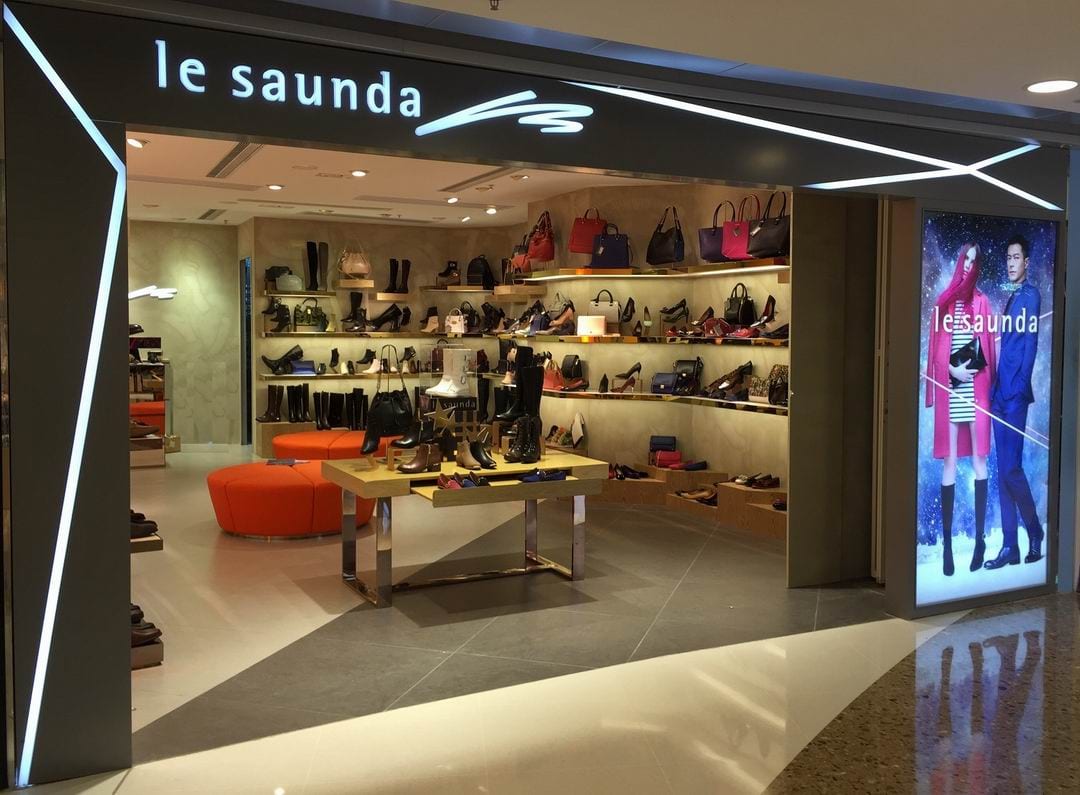
  • Le Saunda in Red: Unsteady Chinese Market Influences Major Losses for Hong Kong Footwear Retailer

    Le Saunda in Red: Unsteady Chinese Market Influences Major Losses for Hong Kong Footwear Retailer

    Le Saunda, a prominent footwear retailer in Hong Kong, recently revealed disappointing financial results for the first half of the fiscal year. The company’s performance reflects a troubling trend, marked by widespread losses across its operations.

    Significant Revenue Drop

    During the six months ending on August 31, Le Saunda’s revenue slumped by 36 per cent. The figures dwindled from RMB146.9 million ($20.66 million USD) to RMB95.8 million ($13.47 million USD).

    Gross Profit and Shareholder Returns Decrease

    The retailer’s gross profit also bore the brunt of financial instability, experiencing a 30 per cent reduction. It plunged from RMB79.4 million ($11.2 million USD) to RMB55.6 million ($7.8 million USD). Meanwhile, shareholder returns nose-dived to a significant loss of RMB31.4 million ($4.4 million USD).

    Reduction in Physical Stores

    The adversity further reflected in the company’s physical presence, with Le Saunda reporting a net reduction of 133 stores in Mainland China, its primary retail market, by the end of the period. This leaves the retailer with only 91 operational stores as against a markedly higher number in the same period from the previous year.

    Global Economic Uncertainties

    Le Saunda attributed its underperformance to a number of factors. The first half of 2025 witnessed frequent fluctuations in international trade relations. Coupled with a sluggish retail environment and low consumer confidence, these developments fostered global economic uncertainties. The company indicated that these conditions have undermined its future growth prospects.

    Questions & Answers

    What was Le Saunda’s revenue for the six months ending August 31?
    Le Saunda’s revenue for this period was RMB95.8 million ($13.47 million USD), marking a 36% drop from the previous year.

    What is the extent of Le Saunda’s gross profit reduction?
    Le Saunda experienced a significant 30% reduction in gross profit, going from RMB79.4 million ($11.2 million USD) to RMB55.6 million ($7.8 million USD).

    How has Le Saunda’s physical store presence been affected?
    Le Saunda reported a net reduction of 133 stores in its key market, Mainland China, leaving it with 91 operational outlets.

  • Revolutionize Your Fitness Journey with Fitbit’s Innovative AI-Powered Personal Health Coach

    Revolutionize Your Fitness Journey with Fitbit’s Innovative AI-Powered Personal Health Coach

    Fitbit Introduces Public Preview of Gemini-Powered Personal Health Coach

    The wearable device company, Fitbit, is unveiling a public preview of its new, Gemini-powered personalized health coach. This rollout serves as an intriguing introduction to the future of personalized fitness, and it will be available for eligible users to test from this week.

    The Launch of Fitbit’s AI-Powered Personal Coach

    Fitbit’s new artificial intelligence (AI)-powered coach, developed using Google’s Gemini technology, is set to revolutionize health and wellness practices. This AI coach is designed to function as a comprehensive fitness trainer, sleep counselor, and health advisor. Users can interact with the coach to establish goals or seek advice on their health-related queries. Examples of prompts that can be used include “Devise a 30-minute upper body workout I can do in my hotel room” or “Why did I wake up tired today?”. This AI can even assist you in framing questions for your next doctor’s consultation.

    However, it’s important to note that this AI coach is currently in its “preview” stage. It is being developed and modified based on active public feedback to improve its efficacy and user experience.

    Missing Features and Workarounds

    Since the AI coach is in its preview phase, it currently lacks some features that are standard in the traditional Fitbit app. Important elements such as health logging (including menstrual health, nutrition, and water logging), key metrics (the stress management score and cardio fitness score), and social features (friends, groups, leaderboards, and badges) are not included in the preview version.

    Recognizing these limitations, Google has designed a mechanism that allows users to switch between the new preview and the standard Fitbit app experience, providing the opportunity to test the AI coach while still being able to access the complete features of the traditional app.

    The Future of Health and Wellness

    This preview stands as a significant step towards Google’s grand vision of AI-driven health and wellness. The potential of a Gemini-powered coach to analyze user data and yield profound, actionable insights is phenomenal. Google emphasizes that the development of this AI coach is being conducted responsibly, backed by scientific evidence, and ensuring user data security and personalization. Early access for dedicated Premium users will enable them to test these potent features and provide valuable feedback.

    This development indicates the direction health and fitness technology is taking, with competitors such as Apple also rumored to be heading in a similar direction with their Health application. While it cannot replace professional medical advice or personalized gym training, this technology can assist in addressing quick health-related queries.

    The current version may be lacking some core features, but the objective of this preview is to provide a hands-on experience of the future of fitness technology, inviting users to be part of this exciting journey.

    Fitbit Premium users are encouraged to explore this new feature. Its easily toggled nature means users can try it with no downside. The updated experience will be available for Fitbit tracker and Pixel Watch owners, starting from October 28th.

    Questions & Answers

    What is the new Fitbit AI coach?
    The AI coach is a new personalized health guide developed by Fitbit, powered by Google’s Gemini technology. It acts as a fitness trainer, sleep counselor, and wellness advisor.

    What features are missing in the AI coach’s preview version?
    The preview version currently lacks certain features such as health logging (including menstrual health, nutrition, and water logging), key metrics, and social features.

    When will the updated experience be available?
    The updated experience will be available for Fitbit tracker and Pixel Watch owners from October 28th.

  • Revolutionizing User Interaction: Google Messages Gears Up for Context-Dependent Menus

    Revolutionizing User Interaction: Google Messages Gears Up for Context-Dependent Menus

    In 2009, the HTC HD2 was launched with a 4.3-inch display, which at the time was considered to be the maximum size for a smartphone screen. The HD2 was powered by the Windows Mobile 6.5 operating system and was applauded for its visually-appealing home screen. For its time, the 4.3-inch screen was considered enormous, with many analysts predicting that smartphone displays would not get any larger.

    Rise of the Phablet

    However, by 2011, Samsung shattered this belief with the introduction of the Samsung Galaxy Note. The device was equipped with a 5.3-inch screen, effectively creating a new category of phones known as “phablets”. The term phablet, a portmanteau of phone and tablet, was coined to describe these larger devices. As the size of Android screens continued to grow, it became increasingly challenging to operate certain apps single-handedly due to the positioning of the app’s elements on a larger screen. Google Messages is one such app.

    The Problem with Large Screens

    Operating these larger phones with one hand can be a struggle, unless, perhaps, one has hands as large as those of NBA Hall of Famer Shaquille O’Neal. In particular, reaching the hamburger menu in the upper right corner of the screen can be quite a stretch. This inconvenient design left many users at risk of straining their hands.

    A New Solution from Google

    In response, Google seems to be ready to replace the hamburger menu on Google Messages with a more user-friendly context menu. This new feature will allow users to access any critical aspect of the app from anywhere in the chat. At present, users must reach the top of the screen to access essential buttons, such as the delete button, by long-pressing a message.

    With the proposed change, a long press on an open chat will show reactions, and tapping the hamburger icon will provide access to options such as Reply, Share, Forward, and View Details. Furthermore, the context menu will dynamically adjust depending on the selected message.

    Enhanced User Experience

    The positioning of these options right under the chat will make it easier for users to select an option without needing to stretch their fingers too far. The new user interface will also make it clearer which chats have been selected. When multiple messages are chosen, a checkmark will appear on the selected messages, simplifying the selection and deselection process.

    Questions & Answers

    What was the screen size of the HTC HD2 launched in 2009?
    The HTC HD2 had a screen size of 4.3 inches.

    What is a phablet?
    A phablet is a category of phones that are larger than traditional smartphones but smaller than tablets. The term is a portmanteau of ‘phone’ and ‘tablet’.

    What changes is Google planning to make to Google Messages?
    Google is planning to replace the hamburger menu in Google Messages with a context menu, making it easier for users to access critical features of the app from anywhere within a chat.

  • Bangkok Tops List as World’s Most Expensive City for Renters, Reveals DWS Housing Affordability Review 2025

    Bangkok Tops List as World’s Most Expensive City for Renters, Reveals DWS Housing Affordability Review 2025

    Bangkok, Thailand’s capital city, has distinguished itself as the least affordable city in the world for renters, as per the Housing Affordability Review 2025. The report, compiled by Germany’s DWS, indicates that the average middle-class family in Bangkok spends nearly 79% of their disposable income on renting a two-bedroom apartment.

    The Root of High Rental Rates

    The city’s inflated rental prices are primarily due to a scarcity of condominiums. The second quarter saw condo availability drop to a 16-year low, a situation exacerbated by climbing construction costs and high-interest rates.

    Global Ranking of Affordability

    Following Bangkok, Mumbai and Mexico City were ranked second and third as the least affordable cities, with renters spending 66% of their disposable income on rent. Hong Kong came in fourth at just over 60%, and Johannesburg, South Africa, was in fifth place at approximately 58%. These cities are part of a group of 24 global cities with the most challenging rental markets. Other Asian cities on this list include Manila, Beijing, Hanoi, and Singapore.

    The study analyzed the rent to median disposable income ratio in 80 cities. A lower ratio signifies more affordable rent, with the worldwide average ratio standing at 38%.

    Cities with More Affordability

    On the other end of the spectrum, Salt Lake City was deemed the most affordable city, with a ratio of 20%. Leipzig and Austin followed closely, both featuring a ratio of 23%.

    Cities that ranked lower in affordability experienced a more significant decrease in affordability ratios compared to those ranking higher. Additionally, these cities saw their remaining spending power increase at a slower rate compared to cities demonstrating more economic resilience.

    Disposable Income After Rent

    The report also calculated the disposable income households have left after paying their monthly rent. Singapore topped the list globally with approximately $8,000 of leftover income, which is twice the global average. San Francisco followed with $7,650, and Abu Dhabi was third with $7,000.

    According to the report, wealthier cities typically benefit from high-income levels and balanced housing costs, which allows residents to retain robust purchasing power even after paying rent.

    Questions & Answers

    What factors contribute to Bangkok’s high rental rates?
    A lack of available condos, heightened construction costs, and high-interest rates are all factors that contribute to Bangkok’s high rental rates.

    Which city has the most affordable rental market?
    Salt Lake City is considered the most affordable city for renters, with a rent to disposable income ratio of 20%.

    Which cities have the highest disposable income after rent payments?
    Singapore, San Francisco, and Abu Dhabi lead the world in terms of disposable income after rent, with Singapore households having an average of $8,000 left over.

  • Dollar Dips Against Dong, Soars to Two-Week High Against Yen Amid Global Trade Talks

    Dollar Dips Against Dong, Soars to Two-Week High Against Yen Amid Global Trade Talks

    The US Dollar’s Fluctuating Performance Against Foreign Currencies

    The US dollar experienced a decline against the Vietnamese dong on Monday morning, while it simultaneously reached its most robust position in over two weeks against the Japanese yen. The greenback was sold by Vietcombank at a rate of VND26,351, marking a 0.004% dip from the weekend. However, the currency witnessed an increase of 0.18% on the black market, bringing it to VND27,750.

    Rate Adjustments by the State Bank of Vietnam

    The State Bank of Vietnam responded to these shifts by lowering its reference rate by 0.004% to VND25,097.

    Global Performance of the US Dollar

    Globally, the US dollar climbed to a high that hasn’t been seen in over two weeks against the yen on Monday, as critical worldwide trade negotiations and central bank meetings commenced. The dollar experienced a 0.15% increase against the yen, bringing it to 153.07 and hitting a peak of 153.17, the highest since October 10th. The dollar index, which assesses the greenback against a select group of peers, rose by 0.05% to reach 98.97.

    Performance Against Other Currencies

    Apart from the yen, the US dollar’s performance against other currencies remained steady. The euro remained at $1.1622 while sterling saw a slight boost of 0.04% to $1.3314. The Australian dollar also gained 0.2% against the greenback, reaching $0.6528.

    Mahjabeen Zaman, head of foreign exchange research at ANZ, suggested in a recent podcast that the strength of the dollar would likely continue in the near term. She stated: “Fed cuts are fully priced in for October and December meetings. So if anything, any cautious communication from the Fed would likely be more supportive for the U.S. dollar.”

    Questions & Answers

    What was the performance of the US dollar against the Vietnamese dong and Japanese yen recently?
    The US dollar declined against the Vietnamese dong, but it reached a more than two-week high against the Japanese yen.

    How did other currencies perform against the US dollar?
    The euro and sterling remained steady against the US dollar, while the Australian dollar saw a slight increase.

    What are the predictions for the near-term performance of the US dollar?
    According to Mahjabeen Zaman, head of foreign exchange research at ANZ, the dollar’s robust performance is expected to persist in the near term.

  • Overnight Race for Affordable Housing: Hanoi Residents Brave the Cold for a Shot at Social Accommodation”

    Overnight Race for Affordable Housing: Hanoi Residents Brave the Cold for a Shot at Social Accommodation”

    In a show of high demand for affordable housing in Hanoi, individuals queued overnight during the past weekend to submit their applications for the social housing project, Calyx Residence. With the limited quantity of 466 apartments available in the development, applicants arrived well before the submission start time at 8:30 am on Sunday, in hopes of securing their chance at purchasing a home.

    Braving the Cold for a Chance at a New Home

    Applicants prepared for a long wait, bringing along food and water to endure the overnight queue in Hanoi’s chilly weather that dipped to 18-19 degrees Celsius. Among those was Tuan, a freelance worker, who arrived as early as 11 pm on Saturday to secure his place in line. Reflecting on the experience, he noted that just a few minutes could have been the difference between his application being accepted or rejected, making the overnight wait a necessary hardship.

    By 6 am on Sunday, the queue had significantly grown. Bich, a resident of Phuc Thinh Commune, arrived at 7 am with her husband, only to find a considerably long line already formed. Despite the high demand that exceeded morning application numbers, those unable to submit their applications were allowed to register and apply the next day.

    Providing Comfort in the Wait

    The Ministry of National Defense’s 319 Corporation, the project developer, acknowledged the situation and provided amenities such as tarps for shelter, drinking water, and dry rations for the people waiting in line.

    The Calyx Residence project, which started construction late last year, is set on a 1.5-hectare plot. It will consist of four nine-story buildings and is projected to be completed by the end of 2026. The majority of the apartments, 419 units, will be sold directly, while 47 others will be subject to rent-to-own agreements. The prices range from VND824 million to VND1.5 billion, translating to approximately VND20.6 million per square meter, significantly less than Hanoi’s average apartment price of VND85.6 million per square meter.

    Rising Demand Meets Limited Supply

    Given the project’s prime location near Co Loa Road, a main artery in Dong Anh, and the rising prices of social housing, it is expected that the competition for securing an apartment in this development will be fierce.

    Despite the launch of several social housing projects in Hanoi, the market remains dominated by commercial developments. This has led to an increase in prices for social housing units, which have risen from VND20 million to VND25-29 million per square meter over the past three years.

    As part of a national plan to build at least one million social housing units, Hanoi is expected to contribute 56,200 units by 2030. The city has set a target to complete 4,670 units this year alone.

    Questions & Answers

    How many apartments are being built in the Calyx Residence project?
    There are 466 apartments being built in the Calyx Residence project.

    What measures were taken to accommodate the people waiting in line to submit their housing applications?
    The project developer, the Ministry of National Defense’s 319 Corporation, provided amenities such as tarps for shelter, drinking water, and dry rations for the people waiting in line.

    Who gets priority for purchasing the housing units?
    Priority is given to those who do not own a house, people in low-income groups, and employees of defense and security agencies.