Blog

  • New technology can identify fakes

    New technology can identify fakes

    Luxury brands affected by Asia’s burgeoning multi-billion dollar piracy trade will soon have a new weapon.

    NEC has revealed new technology that can distinguish even the most sophisticated counterfeit products.

    The technology can read microscopic patterns on anything from luxury handbags to mechanical component.

    And it can track the origin of mass-produced items like clothing by examining what it describes as “object fingerprints” – three-dimensional patterns or irregularities found on the surface of items.

    Tohihiko Hiroaki, assistant GM at NEC’s Information and Media Processing Laboratories, says a customers officer at an airport terminal could take a photo of a specific part of an item using a smartphone, which can then be matched with a database supplied by the manufacturer.

    NEC claims its technology can tell the time and place a product was manufactured.

    “You can identify offspring that come from the same parental mould,” said Hiroaki. “If you take a close look, you can tell one child from another.”

    Further testing lies ahead before the technology is released commercially next year.

  • Now consumers can ‘print’ clothes at home…

    Now consumers can ‘print’ clothes at home…

    A European entrepreneur has created a portable device that allows consumers to automatically create custom clothes from a digital file. Even at home.

    Springwise.com reports that the ‘makers movement’ has come to prominence in the past few years as new technologies such as 3D printing and DIY computers have given consumers better tools to create and produce their own designs and gadgets. Even the fashion industry has received a boost from such innovation, and we’ve already seen sneakers made with a 3D printer.

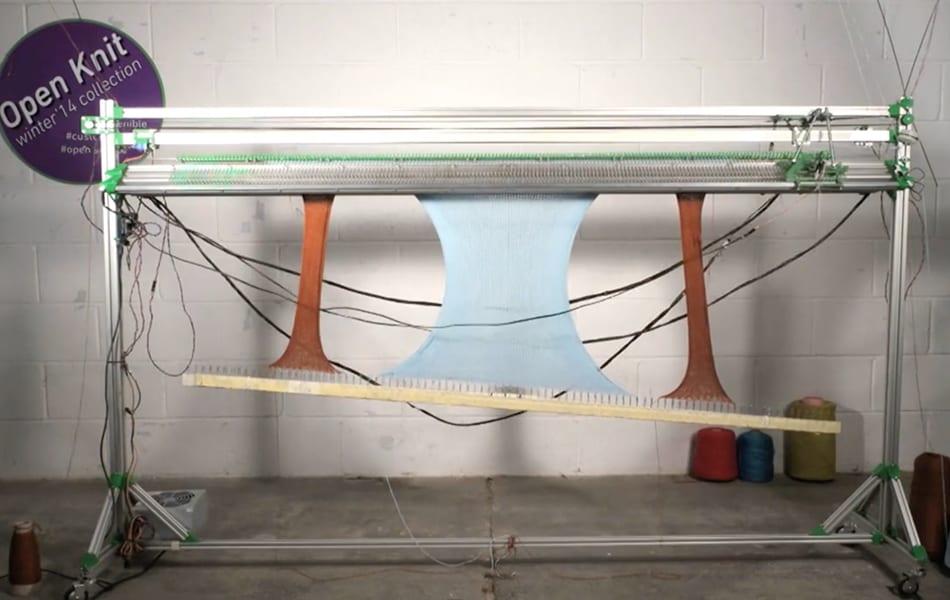
    Now the OpenKnit project has created a device that’s able to automatically create custom clothes from a digital file.

    The machine looks much like a traditional loom, except that it’s hooked up to a robot and computer. Users can either download or create their own design files for printing a garment. After uploading the file to the machine and loading the thread, a carriage moves from side to side to weave the item together using similar technology to a sewing machine.

    A sensor on the top keeps track of the needles and the position of the carriage to ensure the threads don’t get tangled. Using the system, a sweatshirt can be produced on the fly in roughly one hour. The OpenKnit machine is an open source design, and it costs under EUR 550 to build.

    “Since personalization is a key facet of fashion design, it’s easy to see how the possibility of consumers printing their own styles is an enticing one,” explains Springwise.com.

  • Thailand’s RSTA plans to double Ratchaprasong area’s trading value

    Thailand’s RSTA plans to double Ratchaprasong area’s trading value

    Retail, wholesale and hotel operators around Ratchaprasong intersection plan to allocate a combined THB60 billion (USD1.8 million) to make the area an important retail destination in Asean over the next three years.

  • Shanghai Tang flagship launches 360 tour

    Shanghai Tang flagship launches 360 tour

    Two years ago, Richemont-owned luxury fashion brand Shanghai Tang relocated its flagship from the historic Pedder Building into a new location off the usually beaten path of die-hard shoppers.

    The decision was purely financial – the building’s owners ramped up the rental so much, the brand could not justify the overhead; apparently Abercrombie & Fitch considered the investment more palatable.

    The new flagship is located on 1 Duddell St, not far from Pedder St as the crow flies, but a location arguably so obscure most foreigners, as opposed to locals, struggle to find it.

    This week, Shanghai Tang has solved that problem, creating a 360 panoramic online journey through the flagship, accessible online from anywhere in the word.

    The high resolution view  is hosted by Google. Users can use their mouse or trackpad to zoom in on various displays and turn a full circle on each of the store’s three floors.

    “Whether or not you have had the chance to visit us in central Hong Kong, we are proud to introduce our first 360 online virtual tour of our Shanghai Tang Mansion,” the band said in an email to its fan base this week.

  • Parkson in China food foray

    Malaysia’s Parkson has entered into a joint venture to develop a food retailing business in China as it transforms its department store portfolio into lifestyle centres.

    The company’s wholly-owned subsidiary Grand Parkson has teamed with fellow Malaysian company AUM Hospitality (AUMH) which it majority owns, to create Lion Food & Beverage Ventures Limited. Parkson will own 91 per cent of the business, AUMH the balance.

    In a stock exchange announcement, Parkson said the group is undergoing a business transformation in China from a traditional department store model into a lifestyle concept retail business.

    “Our aim is to enhance our customer experience by offering a quality shopping, catering and entertainment experience that encourages repeat customer patronage.

    “F&B is an important component to the shopping experience that the group is offering to its customers. Developing the F&B sector will provide synergies with the group’s existing retail business.”

    The partnership will allow Parkson to leverage AUMH’s expertise and brand resources in the F&B sector.

    “Introducing F&B services will be a major strategic move for the group.”

    AUMH operates restaurant chains in Malaysia under 12 self-owned and franchised brands, including Johnny Rockets, Quiznos and The Library Coffee Bar. It is 60 per cent owned by a subsidiary of Parkson.

    The company has 60 department stores in 36 cities in China.

  • Japan retail sales underwhelm

    Japan retail sales underwhelm

    Japan’s retail sales rose a marginal 0.2 per cent in December – the sixth consecutive monthly year-on-year increase.

    Analysts had expected a stronger one per cent increase, despite challenging economic circumstances largely due to the nation’s declining and ageing population.

    Department stores were the weakest link, with data from the Japan Department Stores Association showing a same-store sales fall of 1.7 per cent year-on-year – the ninth consecutive fall. The fall would have been greater if not for a cushioning effect from increased shopping by Chinese tourists.

    However, contributing to December’s figure was one less Sunday in the month, compared with December 2013, and the association noted that severe severe snowstorms hit northern regions during the month impacting on store footfalls.

    Food and beverage sales in December rose 1.4 per cent, compared with November’s 2.7 per cent. Apparel sales rose 3.1 per cent, down on November’s 4.2 per cent.

    December’s total retail sales of 13.52 trillion Yen marked the highest monthly total since March last year, when shoppers splurged in advance of an April sales tax rise.

    The preliminary data from Japan’s Ministry of Economy, Trade and Industry showed full year figures were more encouraging: an overall increase of 1.7 per cent, compared with a one per cent rise in 2013.

  • Lower Australian dollar means clothing price rise “inevitable”, suppliers say

    Lower Australian dollar means clothing price rise “inevitable”, suppliers say

    Clothing prices are expected to rise across the board for the first time in five years as suppliers and retailers raise prices after a 17 percent slump in the Australian dollar.

    Suppliers have warned retailers that prices for fashion clothing, underwear and basic apparel will rise significantly in the second half of calendar 2015, as currency hedges roll off and new-season stock comes into stores.

    The Australian dollar has fallen 17 percent against the US dollar since June and 10 percent over the past 12 months, pushing up the cost of clothing sourced from China, Bangladesh, Sri Lanka, Thailand and Vietnam.

  • Thailand’s Mangpong turns to attraction of cosmetics

    Thailand’s Mangpong turns to attraction of cosmetics

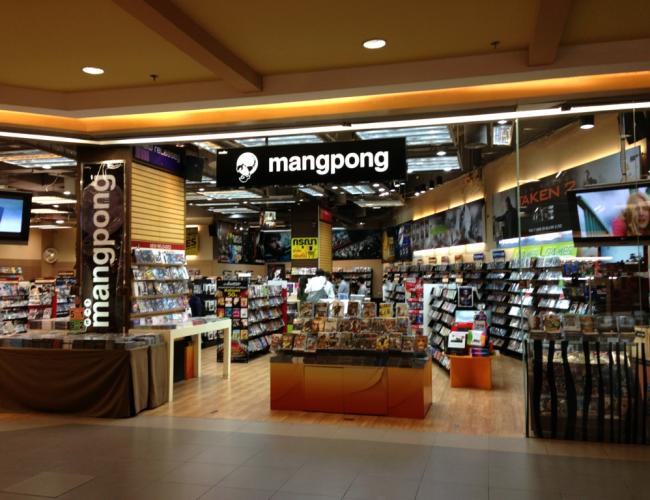
    Thailand’s Mangpong 1989 Plc (MPG) has diversified into the beauty and cosmetics retail chain in a bid to cash in on opportunities from the country’s THB200-billion (USD6.15b) cosmetics market. The company sells and rents home entertainment products.

    It’s looking for new locations to open Stardust beauty shops. It believes the beauty and cosmetics business will generate healthy sales and a good return on investment as Thai women have a modern lifestyle and prefer to be good looking.

    Mangpong has partnered with more than 100 beauty and cosmetics brands to present over 10,000 units from L’Oreal Paris, Anna Sui, Kenzo, Paul Smith and Calvin Klein. The company also plans to launch its own brand in the third quarter this year.

  • Hawaiian coffee concept lands in Seoul

    Hawaiian coffee concept lands in Seoul

    A Hawaiian coffee concept already popular in Tokyo has now made its debut in Korea.

    Lanai Cafe is a Hawaiian Kona Coffee shop serving coffee, pancakes, desserts and drinks.

    Kona is ranked as one of the world’s top three coffee beans alongside Jamaican Blue Mountain and Kenyan Kilimanjaro. It is brewed by pour over for each cup which draws its unique aroma and flavour.

  • Asia Pacific Travel Retail Association launches seminars

    A new schedule of Responsible Retail Training seminars, enhancements to the Duty Free & Travel Retail Database, topical research studies and advocacy support are among the immediate priorities for the Asia Pacific Travel Retail Association (APTRA) this year.

    A wide-ranging research program, conducted for APTRA by M1nd-set, has kicked off this year with a study of the shopping behaviour of Chinese travellers on domestic and international journeys, including their motivations for shopping and not shopping, their product preferences as well as the customer segmentation on selected routes.

    The headline results of this study, which is sponsored by Diageo, will be presented at the TFWA China’s Century Conference, organised in partnership with APTRA, in Shanghai on March 12.

    Future research topics will include the behaviour & attitudes of Asia Pacific (AsPac) travellers (China, Korea, Japan, Thailand, Indonesia, Philippines, Vietnam) in the region; a focus on Russian travellers in Asia Pacific; the behaviour & attitudes of non-AsPac passengers in the region; in-flight shopping – perceptions & the impact of promotions; behaviour & attitudes of AsPac vs non-AsPac passengers in Asia Pacific; evaluation of future in-flight shopping & concepts.

    The Responsible Retail Training Program, which has already been adopted by several major retailers, will be extended to other retailers in the region in order to ensure that there are consistently high standards across the duty free & travel retail spectrum in the Asia Pacific region.

    The APTRA Seminars, aimed at bringing useful insights on successful travel retailing to member companies and at offering networking opportunities to facilitate growth of the industry, will be organised at various locations throughout the year.

    The popular APTRA Duty Free & Travel Retail Database will be populated with the contact details of even more airports, airlines, ferry companies, retailers, distributors and suppliers to facilitate easy access to the right person in the right market.

    Key to the success of duty free & travel retail in the Asia Pacific region is an open dialogue

    between stakeholders and regulatory authorities and in 2015 APTRA will continue its support of this ideal through advocacy.

    APTRA president Jaya Singh said: “These research, training, advocacy and database initiatives are fundamental to the missions of the association, namely safeguarding the interests of all stakeholders and driving industry growth. In the last year we saw our membership grow by 20 per cent and revenues grow by almost 40 per cent as more and more companies recognise the benefits they gain from the work accomplished and the need for a strong regional association.”

    APTRA is the trade association for the duty free and travel retail industry in the Asia Pacific region, serving all members and the industry to help grow the business and protect it when challenges arise. For more information about the work of APTRA visit www.aptra.asia.
     

  • Bang & Olufsen spreads out

    Bang & Olufsen spreads out

    One of the luxury brands in home and car sound systems, Bang & Olufsen (B&O), has readied its retail foray. Till now, operating mostly in the rarefied world of custom-made audio systems installed in the homes of celebrities and business barons, or pre-installed in luxury marques such as Audi, B&O is finally launching stand-alone stores that will not only afford an experience of its products but also, perhaps, whet the aspirations of those dropping by.

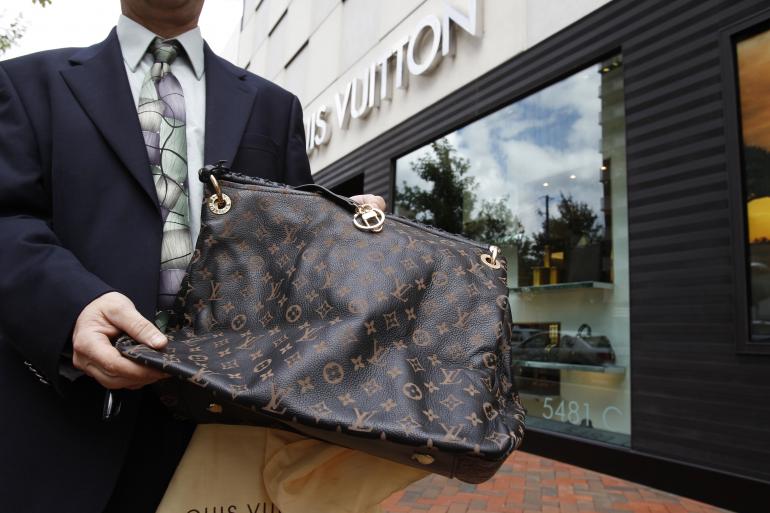
  • Counterfeit appliance business exposed

    Counterfeit appliance business exposed

    Vietnamese authorities have cracked a counterfeit appliance retailing business passing off cheap Chinese appliances as branded European goods.

    Thanh Nien News reports that a company called Romal Vietnam was selling gas ranges, electric stovetops, ovens and blow dryers inside supermarkets, online and at shopping centres in many provinces and cities across the nation.

    A nationwide crackdown has now been launched by teams of inspectors from the National Steering Committee for Combating Smuggling, Commercial Fraud and Counterfeit Goods (also known as Committee 389).

    A Romal Vietnam shop in Hanoi was raided on January 22 and 185 Chinese products bearing Italian and German brand names on labels were seized.

    Another 85 products were seized in the central seaside town of Danang and Ho Chi Minh City police sealed a Romal store after “the manager locked its doors and fled” according to Thanh Nien News.

    The company’s director, Nguyen Thi Ninh, and her husband Nguyen Huy Tho have been summoned by police for questioning. A police source told the newspaper that Ninh, Tho and their employees admitted importing Chinese products from Zhongshan Company in Guangdong since 2008.

    Labelling the goods as European allowed the shop to import the products for between $150 and $200 and sell them for as much as $750 to $800. The fraud had netted the business several hundred thousand dollars annually.

  • Korean d-store sales slide

    Korean d-store sales slide

    South Korea’s department store industry is still struggling to arrest falling sales as consumers tighten spending and turn to online.

    New figures released by the trade ministry Tuesday show sales at top department and discount stores in December fell at a sharper rate than initially expected – by 0.9 per cent compared with the earlier projected 0.3 per cent.

    That makes the fourth successive month that combined sales from stores managed by Hyundai Department Store, Lotte Shopping and Shinsegae Co have declined.

    However, the new data still reflects a significant improvement from the 6.5 per cent drop in November.

    The ministry blamed the slump on falling in-store clothing purchases due to consumers preferring to shop online. Rising sales of food and beverages cushioned the effect of apparel’s fall.

    Discount store sales fell 3.8 per cent in December year-on-year, compared to 4.7 per cent in November.

  • Asia drives skin giant’s growth

    Asia drives skin giant’s growth

    After weeks of retail giants blaming Hong Kong for falling sales, global skincare brand L’Occitane says the city was one of its fastest growing markets in the first nine months of the financial year.

    In a filing with the Hong Kong Stock Exchange, L’Occitane, registered in Luxembourg, reported a 9.8 per cent global sales increase for the nine months to December 31.

    Sales in core Asian markets outperformed all other: In Hong Kong and Macau on a constant currency basis they rose 15.8 per cent, in Japan, by 19.5 per cent and in China by 13.4 per cent.

    The group’s net sales were euro 882.3 million, the 9.8 per cent rise dwarfing the 0.3 per cent improvement for the concurrent period a year earlier.

    Local currency growth was 10.8 per cent.

    L’Occitane said its online retail channel continued to outperform with a 33 per cent year-on-year growth at constant exchange rates during the first nine months.

    Overall Same Store Sales Growth was 5.9 per cent.

    Russia, China and Japan were among countries with strong same store sales growth for the nine months.

    L’Occitane has been investing heavily in store refurbishments and openings during the last two years. It added 75 stores to its global network during the last nine months and upgraded or relocated 86.

    It added 19 stores in China, where it now has 144, four in Hong Kong to expand to 35, three in Japan, (now 107) and one in Taiwan (now 54).

  • PE investor sells Indonesian d-store stake

    PE investor sells Indonesian d-store stake

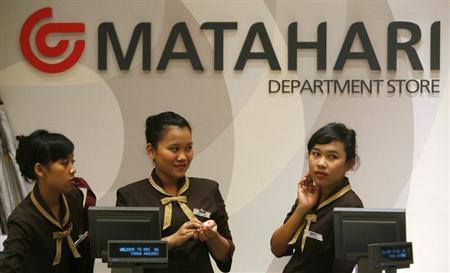
    UK-based CVC Capital Partners has sold a 12 per cent stake in Indonesian retail giant PT Matahari.

    Matahari owns hypermarkets and department stores across the nation – and is actively expanding its footprint as Indonesia’s middle class expands.

    CVC has declined to comment on the transactions, which came to light through regulatory filings.

    The company now has just two per cent of Matahari’s shares, suggesting they, too, will be offloaded in the near future.

    The timing of the transactions has surprised some analysts who have a ‘buy’ rating on the retailer’s stock, suggesting CVC might have extracted more value had it sold later.

    The shares were sold in two blocks – the first for £195 million for eight per cent of the stockholding to mainly institutional investors.

    The second stake, of four per cent, was sold to an unidentified private investor.

    Matahari was founded in 1982. It recently opened its 108th hypermarket and has more planned for the 2015 calendar year.